
Archives

What is the next stage of the Israeli government’s judicial reform?

What is the next stage of the Israeli government’s judicial reform?

MICHAEL STARR


The next bill that the coalition will likely promote is on the Judicial Selection Committee, perhaps the most contentious issue of judicial reform.
.
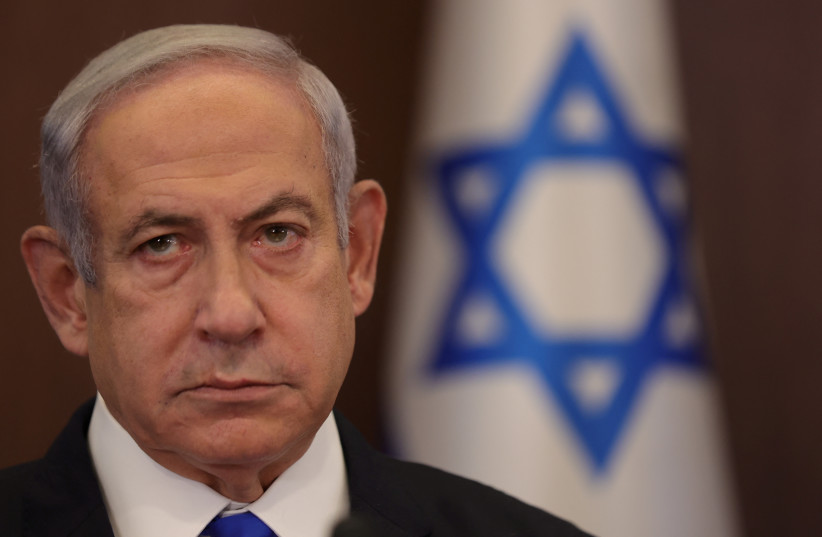
Israeli Prime Minister Benjamin Netanyahu attends the weekly cabinet meeting at the prime minister’s office in Jerusalem, 25 June 2023. / (photo credit: ABIR SULTAN/POOL/VIA REUTERS)

With the passing of the reasonableness standard bill on Monday, leaders on both sides of the debate have indicated that they believe that it is a non-decisive battle in a longer war.

The next bill that the coalition will likely promote, if negotiations don’t resume as Prime Minister Benjamin Netanyahu proposed on Monday night, is on the Judicial Selection Committee.

The Judicial Selection Committee is perhaps the most contentious issue of judicial reform, a matter where experts, NGOs and negotiating parties have said were unable to even approach consensus.

Critics of the current system believe that the panel for appointing judges is not accountable enough to voters, and that the Israel Bar Association and judiciary representatives on the panel form a self-interested majority block that in essence allows judges to self-select their replacements and promotions.

The coalition submitted a bill to change the composition and rules of the committee at the beginning of the year, but its legislative path was blocked by Prime Minister Benjamin Netanyahu in later March just before its final Knesset readings, in response to massive protests that brought the country to a standstill.
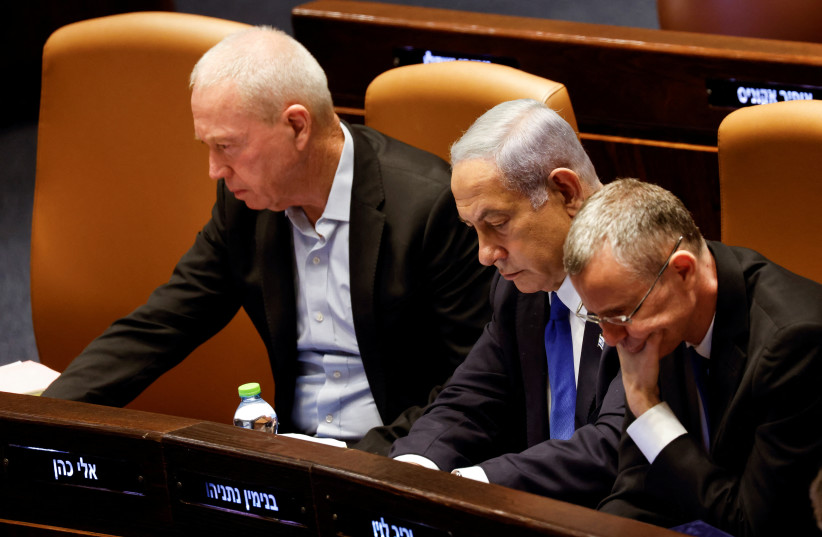
Prime Minister Benjamin Netanyahu sits between Justice Minister Yariv Levin and Defense Minister Yoav Gallant at the Knesset plenum in Jerusalem July 24, 2023 (credit: REUTERS/AMIR COHEN)

The bill would have removed the Bar Association representatives and introduced an expanded panel with more elected officials. Anti-reformists have noted that the roster and new voting rules would have created an automatic majority for any coalition.

Israeli media reported that Justice Minister Yariv Levin, who first announced the reform plan in January, said in closed conversations that after the Knesset recess that starts on July 30, they coalition would next advance the proposal on the Judicial Selection Committee.

Levin is also under pressure to alter the composition as soon as possible. The justice minister said that he would not convene the Judicial Selection Committee until the panel had been reformed.

Legislation amid judicial reform negotiations

Judicial reform negotiations broke down in June over the coalition’s refusal to convene the judicial selection committee to begin appointing judges. This came after the June 20 Bar election saw an anti-reformist camp assume the chairmanship and the majority of the National Council that selects the Bar’s Judicial Selection Committee representatives.

Following this, the Knesset was set to choose its own representatives. Only an opposition member, Yesh Atid MK Karine Elharrar was chosen, while the second seat remained vacant for weeks until Otzma Yehudit MK Yitzhak Kreuzer was elected. The opposition claimed that the delays were part of measures to avoid convening the committee.

Levin has continued to delay the convening of the committee, but now faces added pressure with Yesh Atid and NGOs on Tuesday filing petitions to the High Court of Justice demanding that the panel be assembled. 

The opposition previously said that it would not return to the negotiation table until the committee was convened, the commitment to this precondition may waver with the passing of the first judicial reform bill. If the opposition remains steadfast about this precondition, Netanyahu’s proposal for negotiations until November may remain unheeded, and another bill may be put forward.

It is unlikely, however, that the coalition will advance the previous Judicial Selection Bill. The old bill has been on the Knesset table since March, and could have been advanced with a renewed judicial reform push, but the coalition declined to do so – instead opting for a new bill on a less contentious issue.

At the end of June, Netanyahu told the Wall Street Journal that he would seek to revise the Judicial Selection Committee. This is supported by the coalition’s decision not to advance the old legislation.

While the reasonableness saga is over with the Knesset recess at the end of the month — pending High Court petitions — and dependent on what happens in the months leading up to the Knesset’s return, a new Judicial Selection Committee chapter may begin for the reform.


Zawartość publikowanych artykułów i materiałów nie reprezentuje poglądów ani opinii Reunion’68,
ani też webmastera Blogu Reunion’68, chyba ze jest to wyraźnie zaznaczone.
Twoje uwagi, linki, własne artykuły lub wiadomości prześlij na adres:
webmaster@reunion68.com


Israel is entering a civil war, former prime minister Ehud Olmert says

Israel is entering a civil war, former prime minister Ehud Olmert says

JERUSALEM POST STAFF


Ehud Olmert, the only Israeli prime minister who was convicted of a criminal offense and served a prison sentence, has hitched his cart of a political comeback to the horses of the anarchy, alongside another has been, former prime minister Ehud Barak. On Monday, their side was handed a clear defeat which no burning of bonfires in the streets and clashes with police can erase. And so, without hesitation, Olmert declared a civil war on UK TV’s Channel 4, shocking his interviewer.

Here are the full 58 seconds of his declaration, please note the host’s shock, to which Olmert responds by softening the term from “civil war” to “civil disobedience.” But don’t let that fool you, the man who’s been watching Netanyahu with dripping envy since 2006, like Barak, who’s been dripping the same envy juice since 2000, wants a civil war.


“There is a threat. This is a serious threat,” the former prime minister said. “It’s never happened before and we are going into a civil war now.”
.

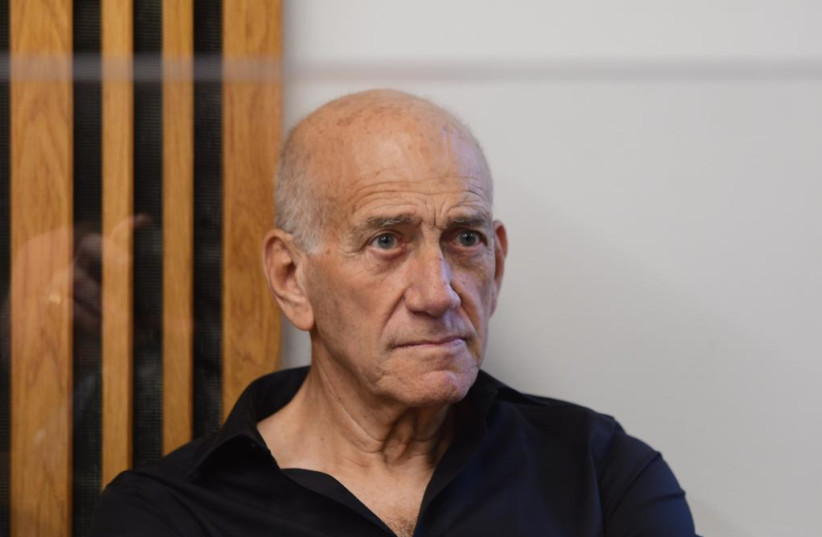
Ehud Olmert at the Jerusalem Post Conference in New York, September 12, 2022 / (photo credit: MARC ISRAEL SELLEM)

In an interview with British news outlet Channel 4 News, former Israeli prime minister, Ehud Olmert, declared that Israel is going into a civil war following Monday’s vote to pass a bill severely restricting the use of the reasonableness standard.

“There is a threat. This is a serious threat,” Olmert said. “It’s never happened before and we are going into a civil war now.”

Many within Israeli society have been expressing their displeasure regarding the government’s judicial reforms. Hundreds of thousands of Israelis have taken to the streets over recent weeks, thousands of IDF reservists have threatened to quit volunteer service, and following the passing of the bill, Israeli medical personnel have elected to strike in protest of the new law. Still, civil war has not broken out in Israel, and Olmert appeared to walk back his statement.


“Civil war?” the Channel 4 News anchor asked Olmert.

“Yeah, I mean, civil disobedience with all the possible ramifications to the stability of the state and to the ability of the government to perform and to the obedience of the large part of the Israeli population,” Olmert clarified.

Ehud Olmert at the Netanyahu’s defamation trial against him, June 12, 2022. (credit: AVSHALOM SASSONI/MAARIV)

Olmert went on to explain that the civil disobedience is being directed toward “a government which is perceived by a large part of the population to be illegitimate. [The] government has decided to threaten the foundations of Israeli democracy. And this is not something that we can accept or that we can tolerate.”

Commenters slam Olmert’s conviction

Many comments on the Channel 4 News Twitter video appeared unimpressed by Olmert’s remarks.

“This old man is a convicted criminal who was in prison because he took a bribe! in cash envelopes, and you believe such a man?!” replied the commentator. Other comments similarly slammed the former prime minister for his conviction.

“Prisoner number 9032478,” another comment read. 

Olmert is not the first to suggest that Israel is on the path to civil war. Many of Israel’s opponents have celebrated what they see as Israel being on its path to destruction. Others have proposed courses of action that Israeli leadership could take in order to mollify that large portion of the country that is upset over the passing of the judicial reform.


Zawartość publikowanych artykułów i materiałów nie reprezentuje poglądów ani opinii Reunion’68,
ani też webmastera Blogu Reunion’68, chyba ze jest to wyraźnie zaznaczone.
Twoje uwagi, linki, własne artykuły lub wiadomości prześlij na adres:
webmaster@reunion68.com

Israel Daily News– July 24, 2023

Israel Daily News– July 24, 2023

ILTV Israel News


A dramatic day in Israel today..unprecedented scenes outside the Israeli Knesset which saw protestors laying down in the streets in Jerusalem as the coalition advanced with the reasonableness bill – a part of its legal reform. And in the midst of everything, Prime Minister Benjamin Netanyahu was released from the hospital with doctors ordering 48 hours of rest following the implantation of a pacemaker. And much more


Zawartość publikowanych artykułów i materiałów nie reprezentuje poglądów ani opinii Reunion’68,
ani też webmastera Blogu Reunion’68, chyba ze jest to wyraźnie zaznaczone.
Twoje uwagi, linki, własne artykuły lub wiadomości prześlij na adres:
webmaster@reunion68.com

Israel Parliament Starts Vote on Limiting Supreme Court Power

Israel Parliament Starts Vote on Limiting Supreme Court Power

Reuters and Algemeiner Staff


An aerial view shows tents erected in demonstration against Israeli Prime Minister Benjamin Netanyahu and his nationalist coalition government’s judicial overhaul near the Knesset, Israel’s parliament, in Jerusalem July 24, 2023. REUTERS/Ilan Rosenberg

Israel‘s parliament on Monday began final voting on contested changes sought by Prime Minister Benjamin Netanyahu to the judiciary as last-gasp talks continued to ease one of the country’s worst political crises set off by his plans.

President Isaac Herzog who called the standoff “a national emergency” was still trying to forge a compromise on the government’s judicial plans which have sparked unprecedented nationwide protests, a person familiar with the matter said.

Police used a water cannon to disperse demonstrators opposed to the judicial campaign by Netanyahu’s nationalist-religious coalition and officers dragged away protesters who had chained themselves to posts and blocked the road outside parliament.

The chances to reach a compromise appeared slim as lawmakers began voting

“You cannot reach agreements that safeguard Israel‘s democracy with this government,” Opposition Leader Yair Lapid told Israeli television channels at the Knesset minutes before the hours-long vote began.

With banks and businesses joining in the protest, pressure mounted on Netanyahu, who was released from hospital on Monday morning after a two-night stay during which he was fitted with a pacemaker.

Netanyahu has been urged by Washington on the one side to reach a compromise with the opposition, while his hard-line coalition partners are pushing for legislation to go ahead with more judicial changes to follow.

The crisis has spread to the military, with protest leaders saying thousands of volunteer reservists would not report for duty if the government continues with the plans and former top brass warning that Israel‘s war-readiness could be at risk.

Nonetheless, commanding a comfortable majority in parliament, Netanyahu’s coalition looked set to win the vote on the bill that limits the Supreme Court’s powers to overrule decisions made by governments and ministers.

‘DISASTER’

“We’re on our way to a disaster,” Lapid told lawmakers during the stormy debate. “If you vote for this bill you will weaken the state of Israel, the people of Israel and the Israel Defence Forces.”

It would be the first change written into law from a package critics fear aims to curb judicial independence, but which Netanyahu – who is on trial on corruption charges he denies – insists are needed for balance among branches of government.

Justice Minister Yariv Levin who has been driving the changes defended the bill, which would amend a law enabling the Supreme Court to void decisions it deems “unreasonable”.

“There’s no reason to fear this amendment. There are many reasons to see it as an important step toward restoring balance between the branches of government as respecting voters’ choice,” said Levin.

Netanyahu’s coalition has been determined to push back against what it describes as overreach by a Supreme Court that it says has become too politically interventionist.

Critics say Monday’s amendment has been rushed through parliament and will open the door to abuses of power by removing one of the few effective checks on the executive’s authority in a country without a formal written constitution.

The government announced its judicial plans in January, soon after it was sworn in, stirring concern among allies abroad for Israel‘s democratic health and denting the economy.

The Shekel has weakened around 8% since.

Israel‘s two biggest banks, Leumi and Hapoalim, said they would allow workers to demonstrate on Monday without losing pay.

A forum of some 150 of Israel‘s largest companies went on strike and Azrieli and Big, two of Israel‘s largest malls, said stores in their shopping centres would remain closed.


Zawartość publikowanych artykułów i materiałów nie reprezentuje poglądów ani opinii Reunion’68,
ani też webmastera Blogu Reunion’68, chyba ze jest to wyraźnie zaznaczone.
Twoje uwagi, linki, własne artykuły lub wiadomości prześlij na adres:
webmaster@reunion68.com


Thousands March as Vote on Curtailing Israel Court’s Powers Nears

Thousands March as Vote on Curtailing Israel Court’s Powers Nears

Reuters and Algemeiner Staff


Protesters march in demonstration against Israeli Prime Minister Benjamin Netanyahu and his nationalist coalition government’s judicial overhaul, at the entrance to Jerusalem, near Motza, July 22, 2023 Photo: REUTERS/Dan Williams

Thousands of Israelis opposed to a judicial overhaul planned by Prime Minister Benjamin Netanyahu marched into Jerusalem on Saturday, as pressure mounts on his rightist government to scrap a bill that would curtail the Supreme Court’s powers.

Netanyahu’s religious-nationalist coalition says the bill, which parliament is scheduled to vote on by Monday, is needed to balance out the branches of power because the Court has become too interventionist.

Critics say it has a crucial role in safeguarding civil rights, in a country that has no constitution and a unicameral parliament dominated by the government.

Carrying blue and white Israeli flags, a column of protesters several kilometers (miles) long marched up the main highway to Jerusalem under a scorching summer sun, to the sounds of beating drums and anti-government chants and cheers.

The marchers have been walking for days, camping out overnight and often met by local residents offering food and drink.

They plan to rally outside parliament ahead of a Sunday debate and subsequent vote on the bill, which would limit the Supreme Court’s powers to void what it considers “unreasonable” government or ministerial decisions.

Protest leader Shikma Bressler, asked if she thought the marchers would manage to stop the vote, said she didn’t know.

“But the vote is not the last step,” she told Reuters. “This is why we are trying to build the forces… in this country to choose right from wrong, to choose light from darkness.”

The bill, its supporters say, is designed to facilitate effective governance with courts still keeping ample judicial oversight. Opponents say the change is being rushed through parliament and will open the door to corruption and abuses of power.

Polls suggest widespread misgivings among Israelis as the planned changes have dented the economy and worried key ally Washington, which has urged Netanyahu – who is on trial on corruption charges that he denies – to seek consensus on judicial reforms.

The crisis has even sown divisions within the military, long viewed as an apolitical melting pot for a fractious society, with concerns about war-readiness voiced on both sides of the debate.


Zawartość publikowanych artykułów i materiałów nie reprezentuje poglądów ani opinii Reunion’68,
ani też webmastera Blogu Reunion’68, chyba ze jest to wyraźnie zaznaczone.
Twoje uwagi, linki, własne artykuły lub wiadomości prześlij na adres:
webmaster@reunion68.com
