Archives

Netanyahu calls out Abbas lies about Jewish history in Jerusalem

Netanyahu calls out Abbas lies about Jewish history in Jerusalem

LAHAV HARKOV


Netanyahu made the remarks in a cabinet meeting at the Western Wall Tunnels, honoring Jerusalem Day, to mark Israel’s reunification of the city and liberation of the Old City in 1967.

.
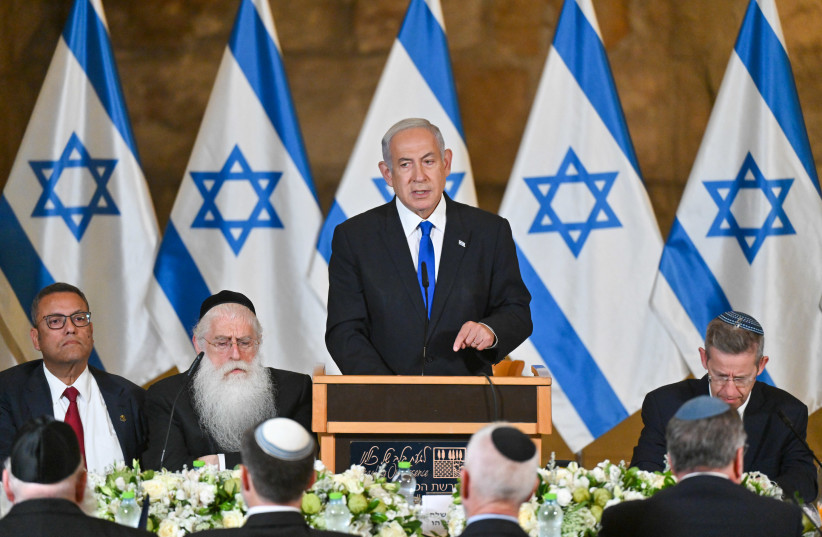
Prime Minister Benjamin Netanyahu speaks at a cabinet meeting next to the Western Wall, May 21, 2023 / (photo credit: KOBI GIDEON/GPO)

The Jewish people have been in Jerusalem for thousands of years and will remain for thousands more, Prime Minister Benjamin Netanyahu said on Sunday, responding to Palestinian Authority President Mahmoud Abbas’s recent claim that Israel is lying about its historic ties to the city.

“Abbas said days ago at the UN that the Jewish people has no connection to the Temple Mount and that east Jerusalem is part of the Palestinian Authority,” Netanyahu said. “Well, it should be brought to his attention that we are holding a special cabinet meeting in honor of Jerusalem at the foot of the Temple Mount that on which King Solomon built the First Temple of the Jewish people, and again, it should be brought to Abbas’s attention, the heart of the historic State of Israel, the City of David, was here 3,000 years ago.”

Netanyahu made the remarks in a cabinet meeting at the Western Wall Tunnels, honoring Jerusalem Day, celebrated last Thursday to mark Israel’s reunification of the city and liberation of the Old City in 1967. The cabinet approved a NIS 60 million budget increase for the Western Wall over the next five years, to upgrade infrastructure and encourage visits to the holy site, as well as archaeology and educational activities.

Abbas claimed at the UN event in honor of “Nakba Day,” marking the “catastrophe” of Israel’s establishment, that Israel “dug under al-Aqsa… they dug everywhere, and they could not find anything.”

“The ownership of al-Buraq Wall [the Western Wall] and al-Haram al-Sharif [Temple Mount] belongs exclusively and only to the Islamic Wakf alone,” he added.
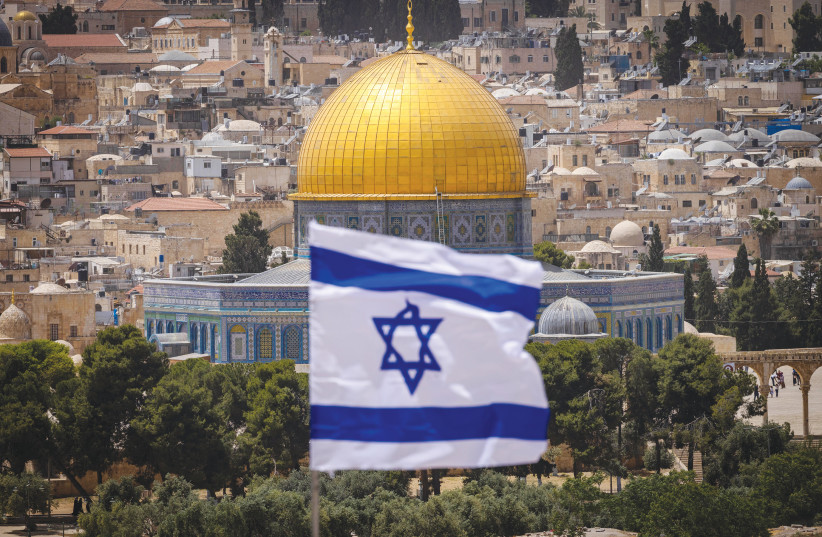
The Temple Mount in Jerusalem. / (credit: OLIVIER FITOUSSI/FLASH90)

The Temple Mount, is the holiest site in Judaism and the third-holiest to Muslims. Al-Aksa is the mosque on the Mount. The Western Wall is a retaining wall of the Mount, dating to the Second Temple.

Netanyahu said that Jerusalem was the Jewish capital 1,100 years before London was the capital of England, 1,800 years before Paris was the capital of France and 2,800 years before Washington D.C. was the capital of the US.

“For 100 generation Jews expressed the special yearning of our people for Jerusalem in three prayers a day and under every wedding canopy,” the prime minister said.

The battle for Jerusalem didn’t end in 1967

The battle for Jerusalem did not end in 1967, he added, saying that he and others have to beat back international pressure on the matter regularly.

“Some prime ministers were willing to give in to these pressures…We acted differently…I am proud of the great merit I had to build new neighborhoods in Jerusalem like Har Homa, Givat HaMatos and Maaleh HaZeitim, in which tens of thousands of Israelis live. We did this under massive international pressure and we stood up to that pressure,” Netanyahu said.

The three neighborhoods the prime minister mentioned are over the 1949 armistice line, known as the Green Line, and were subject to international condemnations.

Netanyahu also said he is proud that the US embassy moved to Jerusalem while he was prime minister and promised more countries will follow suit.

The Reform Movement said that the budget increase for the Western Wall was discriminatory.

“The Western Wall [is] a place that is supposed to be for the entire Jewish people in all of its streams, but in reality includes a [gender] separated plaza that functions as a haredi synagogue in accordance to how the rabbi of the Kotel’s view,” the movement stated. “The egalitarian section, which serves many from Israel and abroad does not get government funding…The time has come to fix this discrimination and understand that there is more than one way to be Jewish, including at the Western Wall.” 


Zawartość publikowanych artykułów i materiałów nie reprezentuje poglądów ani opinii Reunion’68,
ani też webmastera Blogu Reunion’68, chyba ze jest to wyraźnie zaznaczone.
Twoje uwagi, linki, własne artykuły lub wiadomości prześlij na adres:
webmaster@reunion68.com

Who will be first to actively court Christian Zionist Israelis? – opinion

Who will be first to actively court Christian Zionist Israelis? – opinion

CALEV MYERS


Israeli Christians may be a relatively small percentage of Israeli citizens yet they share common values and have a close strategic alliance with the vast majority of Zionists in the world.
.

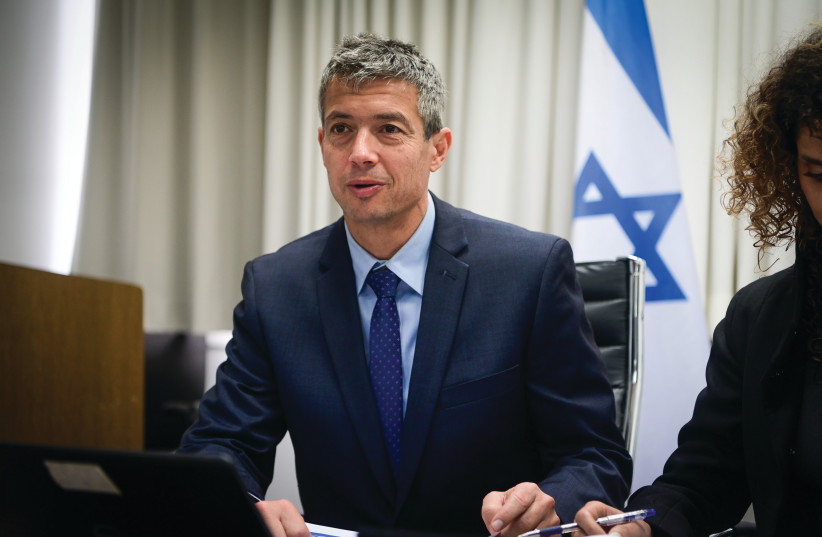
MIGHT YOAZ Hendel be the first Israeli politician not only to reach out to Christian Zionists outside of the country but to those here in Israel? / (photo credit: AVSHALOM SASSONI/FLASH90)

It took months of hundreds of thousands of citizens demonstrating in the streets several times a week in order to finally convince Prime Minister Benjamin Netanyahu to temporarily freeze the legislative blitz that led the Likud and its current coalition partners to pass legal reforms.

By sharp contrast, it took barely four days of friendly concerns expressed by the international evangelical Christian community in order to convince Netanyahu to kill and bury a bill tabled by ultra-religious MK Moshe Gafni to criminalize all forms of talking about one’s religious beliefs with fellow Israelis of a different faith.

How is that possible? Why was it easier for Netanyahu’s evangelical friends to get through to him than entire military units of Israeli patriots who passionately risk their lives in the voluntary service of our nation?

The answer to this enigma is actually quite simple. Netanyahu is aware, probably more than any other Israeli politician, of an indisputable fact: the vast majority of Zionists around the world are not Jewish.

Most Zionists around the world are Evangelical Christians

The 600 million evangelical Christians around the world – men and women who passionately believe in the Bible and see modern Israel as a miraculous fulfillment of Hebrew prophecy – have become an indispensable asset to Israel’s international relations.

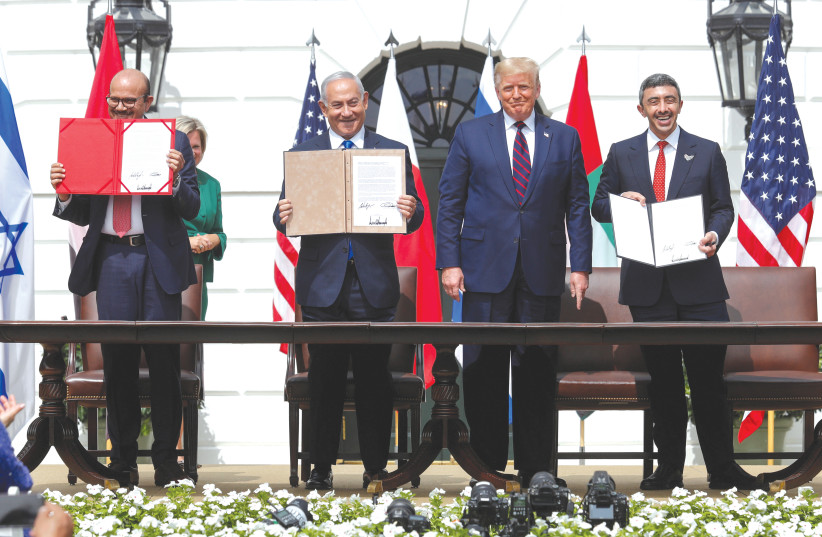
THE HISTORIC Abraham Accords, signed in 2020, have already led to rapid growth in trade and cooperation in a wide range of areas from investment and innovation to food security and health. (credit: TOM BRENNER/REUTERS)

None of the diplomatic achievements of which Netanyahu is most proud of, including the signing of the Abraham Accords, the moving of the US Embassy to Jerusalem, as well as the implementation of crippling sanctions that impeded Iran’s nuclear aspirations during the previous US Administration, would have been possible without the active support of devout evangelical Christians, such as vice president Mike Pence, secretary of state Mike Pompeo and UN ambassador Nikki Haley advising then-president Donald Trump to implement such policies.

EVANGELICALS IN the Trump administration were not advancing these pro-Israel initiatives to help Netanyahu per se. Rather, they were promoting these policies because they genuinely believed they were the right thing to do to strengthen Israel and the Jewish people, bolster US-Israeli relations and advance Arab-Israeli peace. And they were right.

Trump was already pro-Israel coming into office but because of strong Evangelical influence around him he had the political and moral support he needed to do more for Israel than any American president in history.

Compare this to the Biden Administration. Largely devoid of any pro-Israel evangelical influence around him, Biden – who openly says he loves Israel and is a Zionist – is doing very little to help Israel these days.

Who do Christians in Israel vote for?

That said, Israeli politics seem to have a strange disconnect when it comes to Christians. They love and court Christian Zionists who live outside of the country, recognizing that they are critically essential to Israel’s diplomatic influence, not to mention our thriving tourism industry and philanthropic giving to Israel and the Jewish people. Yet how many Israeli politicians love and court Israeli Christians?

On the contrary, Christian minorities within Israel have yet to find their voice in Israeli mainstream politics. The fact is that today there are at least 80,000 Israeli citizens who define themselves both as followers of Jesus and as Zionists. What’s more, these Israeli Christians tend to vote for secular right-wing and Center-Right parties.

This community includes a large portion of immigrants from the former USSR, those with a Jewish father and non-Jewish mother who identify as Christians. It also includes a small portion of the Arab Christian community (including the Arameans who volunteer for military service), as well as some 30,000 citizens who identify as Messianic Jews.

To the best of my knowledge, no political party with any chance of surpassing the threshold in Knesset elections has ever intentionally and consistently courted Israeli Christian minorities in their campaigns.

Why not? In hotly contested elections, every vote counts and the votes of Israeli Christians could prove critical to parties who show them respect and appeal to their concerns.

Consider the voting trends of Yad Hashmona, a small village nestled in the Judean Hills, just outside of Jerusalem, entirely made up of Christian minorities. In previous elections, the National Unity Party of Benny Gantz received approximately 26.67% of vote in Yad HaShmona, followed by Yesh Atid (20%), Yisrael Beytenu (19.17%) and then Likud (15%).

WHY DID so many Christian minorities within Israel vote for Benny Gantz rather than Netanyahu in the previous elections? For the same reason that hundreds of thousands of Israelis are currently demonstrating in the streets: Israeli Christians living as minorities in the land deeply value the democratic nature of the Jewish state that protects their human rights, civil rights and religious freedoms.

Like so many other Israelis, they are deeply concerned that the ultra-Orthodox parties, the Religious Zionist Party and the Otzma Yehudit party pose threats to their rights. What’s more, they view maintaining Israel’s robust and vibrant democracy – and the delicate balance of religion and state within our democratic system – as more essential to their immediate security and well-being than even looming international threats.

In this context, I found interesting a recent poll published by The Jerusalem Post showing that if a new right-wing liberal party (otherwise defined as “libertarian” or “neo-liberal”) were formed by Yoaz Hendel, the former communications minister, it would receive six mandates should elections be held today.

Hendel, who is perhaps most well-known for succeeding to upgrade Israel’s digital infrastructure by deploying optic fiber cables throughout the entire country, has also been a strong voice in the Zionist camp on behalf of equal rights and civil responsibilities. He has consistently expressed his opinion that all citizens, including the ultra-religious, should bear the burden of national service.

Might Hendel be the first Israeli politician not only to reach out to Christian Zionists outside of the country but to those right here in Israel? Should he choose to run and wish to increase his party’s electoral power from six to eight mandates in the next elections, he should consider reaching out directly, respectfully and consistently to the community of Christian minorities in Israel. Someone should.

Israeli Christians may be a relatively small percentage of Israeli citizens yet they share common values and have a close strategic alliance with the vast majority of Zionists in the world. And in Israel’s current political reality, every single mandate makes an enormous difference.


The writer is a senior partner at Yehuda Raveh & Co. Law Offices, where he manages their city center branch in Jerusalem and represents the vast majority of evangelical organizations active in Israel.


Zawartość publikowanych artykułów i materiałów nie reprezentuje poglądów ani opinii Reunion’68,
ani też webmastera Blogu Reunion’68, chyba ze jest to wyraźnie zaznaczone.
Twoje uwagi, linki, własne artykuły lub wiadomości prześlij na adres:
webmaster@reunion68.com


Israel Daily News – May 17, 2023

Israel Daily News – May 17, 2023

ILTV Israel News


Jerusalem flag march taking place tomorrow, and the capital is preparing for the tense day.

Meantime: Elon Musk’s tweet making the phrase “the Jews” enter the list of trending topics on the platform.

And later, ILTV reporting from the kosher and food wine experience, this time, in Tel Aviv.


Zawartość publikowanych artykułów i materiałów nie reprezentuje poglądów ani opinii Reunion’68,
ani też webmastera Blogu Reunion’68, chyba ze jest to wyraźnie zaznaczone.
Twoje uwagi, linki, własne artykuły lub wiadomości prześlij na adres:
webmaster@reunion68.com


Israeli experts create AI to translate ancient cuneiform text – study

Israeli experts create AI to translate ancient cuneiform text – study

JUDY SIEGEL-ITZKOVICH


Researchers at Tel Aviv University (TAU) and Ariel University have developed an artificial intelligence model that can automatically translate Akkadian text written in cuneiform into English.

.

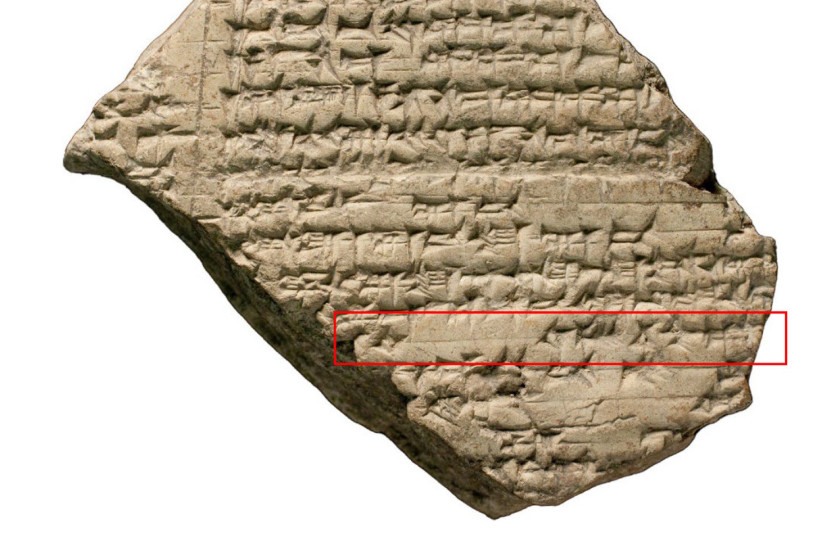
An ancient Assyrian tablet with writing in cuneiform from the Library of Ashurbanipal. /  (photo credit: The Trustees of the British Museum)

Experts in Assyriology – who specialize in the archaeological, historical, cultural and linguistic study of Assyria and the rest of ancient Mesopotamia (Iraq) –spend many years painstakingly trying to understand Akkadian texts written in cuneiform, one of the oldest forms of writing known.

Cuneiform is translated as “wedge-shaped” because in ancient times, people wrote it using a reed stylus cut to make a wedge-shaped mark on a clay tablet.

But now, researchers at Tel Aviv University (TAU) and Ariel University have developed an artificial intelligence model that will save all this effort. The AI model can automatically translate Akkadian text written in cuneiform into English.

Who were the ancient Assyrians?

In 721 BCE, Assyria swept out of the North, captured the Northern Kingdom of Israel and took the Ten Tribes into captivity, after which they became lost to history. Assyria, named for the god Ashur (highest in the pantheon of Assyrian gods), was located in the Mesopotamian plain. Historians note that Assyrian Jews first appeared in that region when the Israelites were exiled there, and they lived continuously alongside the Assyrian people in the territories after the Assyrian exile.

Hundreds of thousands of clay tablets from ancient Mesopotamia, written in cuneiform and dating back as far as 3,400 BCE have been found by archeologists – far more than could easily be translated by the limited number of experts who can read them.

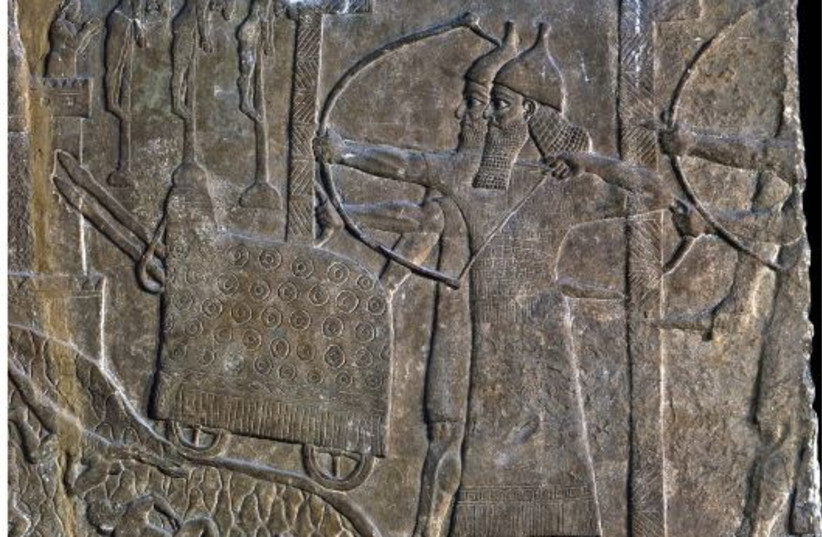
Siege scene with two massive L-shaped shields protecting Assyrian soldiers, in a relief from the palace of Tiglath-Pileser III at Nimrud (credit: Courtesy of the British Museum)

Dr. Shai Gordin of Ariel University and Dr. Gai Gutherz, Dr. Jonathan Berant and Dr. Omer Levy of TAU and colleagues have just published their findings in the journal PNAS Nexus under the title “Translating Akkadian to English with neural machine translation.”

When they developed the new machine-learning model, they trained two versions – one that translates the Akkadian from representations of the cuneiform signs in Latin script and another that translates from unicode representations of the cuneiform signs. The first version, using Latin transliteration, gave more satisfactory results in this study, achieving a score of 37.47 in the Best Bilingual Evaluation Understudy 4 (BLEU4), which is a test of the level of correspondence between machine and human translation of the same text.

The program is most effective when translating sentences of 118 or fewer characters. In some of the sentences, the program produced “hallucinations” – output that was syntactically correct in English but not accurate.

Gordin noted that in most cases, the translation would be usable as a first-pass at the text. The authors propose that machine translation can be used as part of a “human-machine collaboration,” in which human scholars correct and refine the models’ output.

Hundreds of thousands of clay tablets inscribed in the cuneiform script document the political, social, economic and scientific history of ancient Mesopotamia, they wrote. “Yet, most of these documents remain untranslated and inaccessible due to their sheer number and the limited quantity of experts able to read them.”

They concluded that translation is a fundamental human activity, with a long scholarly history since the beginning of writing. “It can be a complex process, since it commonly requires not only expert knowledge of two different languages but also different cultural milieus. Digital tools that can assist with translation are becoming more ubiquitous every year, tied to advances in fields like optical character recognition (OCR) and machine translation. Ancient languages, however, still pose a towering problem in this regard. Their reading and comprehension require knowledge of a long-dead linguistic community, and moreover, the texts themselves can also be very fragmentary.”


Zawartość publikowanych artykułów i materiałów nie reprezentuje poglądów ani opinii Reunion’68,
ani też webmastera Blogu Reunion’68, chyba ze jest to wyraźnie zaznaczone.
Twoje uwagi, linki, własne artykuły lub wiadomości prześlij na adres:
webmaster@reunion68.com


Israel Daily News – May 15, 2023

Israel Daily News – May 15, 2023

ILTV Israel News


One rocket was fired towards Israel on Sunday night from Gaza…But despite this the ceasefire is currently holding.

For the first time in its history the United Nations Is marking Nakba day – Israel’s ambassador to the un is calling on countries to shun the event…

And could King Charles the third be planning a visit to Israel in the very near future?


Zawartość publikowanych artykułów i materiałów nie reprezentuje poglądów ani opinii Reunion’68,
ani też webmastera Blogu Reunion’68, chyba ze jest to wyraźnie zaznaczone.
Twoje uwagi, linki, własne artykuły lub wiadomości prześlij na adres:
webmaster@reunion68.com