
Archive | October 2018

Jan Hartman: Bronię Urbana

Studio OpiniiJan Hartman: Bronię Urbana

Jan Hartman


Jan Hartman

Wprasie pojawiły się jednocześnie dwie aktualne wiadomości na temat Jerzego Urbana. Pierwsza wręcz bulwersująca – otóż po kilkuletnim procesie sędzia Rafał Stępniak z Sądu Rejonowego na Mokotowie skazał Urbana na horrendalną grzywnę 120 tys. zł (trzykrotność tego, co zażądał prokurator) za opublikowanie w 2012 r. w „Nie” wizerunku Jezusa (nawiązującego do ikonografii Najświętszego Serca Jezusa) ze zdziwioną miną.

Nawet jeśli uznać, że twarz Jezusa z Nazaretu jest symbolem religijnym i przedmiotem kultu, to z całą pewnością przekształcenie wizerunku Jezusa w sposób, który nie uwłacza godności uwidocznionej osoby (jakkolwiek sąd twierdzi, że Jezus z „Nie” jest mało inteligentny…), nie jest żadną obrazą ani bluźnierstwem. […]

Zresztą kontekst rysunku bardzo dobrze go uzasadniał. Trudno przypuszczać, by Jezus z Nazaretu (jeśli tylko istniał takowy i faktycznie uważał się za wysłannika Boga), zważywszy na przypisywane mu poglądy, nie zdziwiłby się na wieść, że jego wyznawcy utworzyli imperium o strukturze monarchii absolutnej, z królewską władzą papieży, i to w dodatku imperium prowadzące krwawe wojny i… prześladujące współwyznawców religii wyznawanej przez Jezusa oraz jego współplemieńców, czyli Żydów.

Wolno mieć pogląd przeciwny i z pewnością nie powinno się za to karać, lecz tak samo nie wolno karać nikogo za wyrażenie przypuszczenia, iż hipotetyczny Jezus w hipotetycznej sytuacji powzięcia informacji o Kościele katolickim bardzo by się zdziwił. Ja zresztą tego poglądu akurat nie podzielam – sądzę, że wpadłby w gniew podobny do tego, który okazał w Świątyni, wypędzając z niej kupców. […]

Sąd swoim wyrokiem dał dowód nie tylko kompletnego niezrozumienia przepisu kodeksu karnego (art. 196 kk) mówiącego o obrazie uczuć religijnych, lecz przede wszystkim nieopanowanego fanatyzmu religijnego i serwilizmu politycznego wobec Watykanu i rządzącej Polską partii katolickiej. Wyrok przynosi wstyd polskiemu wymiarowi sprawiedliwości, który w ostatnim czasie zapisał wszak kilka pięknych kart w swej historii, broniąc niezawisłości sędziowskiej przed zakusami autorytarnego narodowo-katolickiego reżimu.

Drugi powód, dla którego mówi się dziś dużo o Jerzym Urbanie, to jego wypowiedź z wywiadu udzielonego pewnej dziennikarce przed premierą filmu „Kler”. Urban wypowiedział się przeciwko tej odmianie antyklerykalizmu, który dobrze życzy Kościołowi bądź w swej hipokryzji i tchórzostwie za takowy się podaje.

Urban powiedział m.in., że chcąc dla Kościoła jak najgorzej, chciałby też, żeby wszyscy księża okazali się pedofilami. Popełnił błąd i w tym punkcie przyłączam się do krytyków jego wypowiedzi – z pedofilii bowiem nie wolno sobie żartować. Po prostu przez szacunek dla ofiar. Co do meritum zaś, to nie tylko wypada z Urbanem się zgodzić, lecz i podziękować mu, że jako jeden z niewielu upomina się w przestrzeni publicznej o prawo do bycia nie tylko niekatolikiem, lecz antykatolikiem, nie tylko krytykiem Kościoła z pozycji dobrze mu życzących i troszczących się o jego dobro, lecz również krytykiem Kościoła i katolicyzmu po prostu.

Czymś żenującym jest panujący w polskim życiu społecznym dogmat, że wolno krytykować Kościół tylko dla jego dobra, a więc „konstruktywnie”. A niby to dlaczego? […] A czy od ateisty można oczekiwać czegoś poza gniewem i wzgardą, gdy słyszą lekkie tam kościelne aluzyjki, że ateista stoi moralnie niżej niż katolik?

A tak przy okazji, to mój pogląd jest taki, że jeśli ktoś naprawdę wierzy w Boga, bałby się tego Boga, chodząc do Kościoła, który nakazuje oddawać cześć boską człowiekowi i przypisującego Bogu ludzkie cechy, jak osobowość, a nawet uczucia. I mam prawdo do takiego zdania, tak jak inni mają prawo twierdzić, że Bóg jest absolutnie jeden i troisty, absolutnie bezcielesny, lecz przebywający ze swym ciałem w niebie itp. Na to przez pokolenia walczyło się ze sprzysiężonymi siłami feudalizmu i katolicyzmu o wolność słowa i opinii, a także wolność religijną, żeby dziś każdy mógł otwarcie i bezpiecznie być katolikiem lub antykatolikiem. Ale tego najwyraźniej jeszcze Polska nie pojmuje. Może dzięki Urbanowi zacznie pojmować, że katolicyzm nie jest nietykalny i poza krytyką?

Gdyby w stanie wojennym, gdy wraz z milionami Polaków oglądałem Urbana kłamiącego w sprawie Jerzego Popiełuszki w reżimowej telewizji, ktoś powiedział mi, że po latach zostanę jego znajomym, żywiącym do niego sympatię i szacunek, pomyślałbym, że zwariował. Wszak „gdyby Urban nosił turban…” itd. Nie usprawiedliwiam ówczesnych wyborów politycznych Urbana, choć jestem w stanie je zrozumieć i nie mam wątpliwości, że prowadząc pionierską w naszym kraju działalność mającą na celu śledzenie ciężkich nadużyć i demoralizacji kleru oraz informowanie o tym opinii publicznej, z nawiązką odpokutował za swoje dawne kłamstwa.

W długim życiu Jerzego Urbana okres służby dla Jaruzelskiego jest tylko jednym z kilku, a pozostałe – działalność dziennikarska, za którą bywał w PRL szykanowany, oraz wydawanie tygodnika „Nie” – były przecież chwalebne i społecznie pożyteczne. Słusznie powiada Urban w inkryminowanym wywiadzie, że jego pismo „Nie” przygotowało grunt pod „Kler”. Tak, bez Urbana, Palikota i kilku innych bylibyśmy dziś jedynie podnóżkiem Watykanu, a rozbestwienie kleru nie miałoby żadnych ograniczeń i hamulców.[…]

Jeśli ktoś uważa piętnowanie złodziejstwa, korupcji, rozwiązłości, pijaństwa i pedofilii wśród kleru – a tym zajmuje się od wielu lat Jerzy Urban – za niegodziwe, złośliwe, przesadne, agresywne i Bóg wie, jakie jeszcze, to niechaj lepiej uważa, bo jak wybroni się przed zarzutem, że staje się w ten sposób wspólnikiem przestępców i oprawców, a wzgardzicielem ich ofiar?

Jerzy Urban ma wiele na sumieniu i jeszcze większe tytuły do chwały. Wiele kłamał, lecz nie tyle co współcześni politycy wiadomych „opcji”. Przyjęty w Polsce powszechnie zwyczaj opluwania Urbana i brzydzenia się nim brzydzi mnie po stokroć bardziej niż sam Urban ze swoimi kłamstwami z czasów stanu wojennego oraz obscenicznymi dowcipami.W tym odruchu awersji do Urbana nie ma nic poza obłudą i stadnym resentymentem. A kto zna Urbana z jego dorobku dziennikarskiego, a zwłaszcza ten, kto zna go osobiście, w każdym znanym mi przypadku ceni go za inteligencję i talent.

Ja też znam Urbana osobiście i mogę powiedzieć, że jest człowiekiem niezwykle miłym, uprzejmym i skromnym. A więc nie tylko inteligentnym, bo to akurat wiedzą nawet jego zagorzali wrogowie. Swoją drogą cieszę się, że rzecznicy rządów PiS, z pewnością prześcigający Urbana w cynizmie i zakłamaniu, tak bardzo nie dorównują mu intelektem. Z pewnością w takim wypadku byłoby nam trudniej obalić ten reżim. …]


Jan Hartman

Blog Autora w portalu Polityka.pl
Tamże pełny tekst
Skróty i wytłuszczenia – redakcja Studia Opinii


Zawartość publikowanych artykułów i materiałów nie reprezentuje poglądów ani opinii Reunion’68,
ani też webmastera Blogu Reunion’68, chyba ze jest to wyraźnie zaznaczone.
Twoje uwagi, linki, własne artykuły lub wiadomości prześlij na adres:
webmaster@reunion68.com




UNPACKING THE ACTUAL IMPACT OF BDS ON ISRAEL’S ECONOMY

UNPACKING THE ACTUAL IMPACT OF BDS ON ISRAEL’S ECONOMY

ADAM REUTER/GLOBES


One of the goals of the Boycott, Divestment, and Sanctions movement is to hurt the Israeli economy. The movement may not be as effective as many believe it to be.

‘INSTEAD OF fighting the Israeli army on the battlefield or killing civilians through acts of terrorism, the BDS movement seeks to destroy Israel’s image in the eyes of the world.’. (photo credit: REUTERS)

Several years ago, I was invited to meet with executives from the Ministry of Strategic Affairs. One of the ministry’s main goals included “combating the delegitimization of Israel.” The purpose of the meeting was a study we conducted at the Financial Immunities company of the effect of BDS on the Israeli economy. To the best of my knowledge, the study we conducted, which began in 2010, was the only one of its kind. It was meant to determine to what extent the Israeli economy was being affected by the BDS organization. The study included queries to hundreds of senior executives of large companies from every economic sector. It was important to Financial Immunities as a company focusing on helping its clients in risk management at both the macro and micro levels, including an individual company.

The results of the study surprised me. I did not expect such a wide gap between the journalists’ reports over the years about the effect of the BDS monster and its actual effects, which were negligible at the most. The study’s figures are correct as of late 2017.

I obtained a hint about the impotence of the BDS organization at the very beginning of the study. I constructed a false digital identity and applied to the organization as a young Australian interested in boycotting Israel. I asked what I should do. In response, the organization sent me a link to a page with hundreds, if not thousands, of names of international companies having connections with Israel. I was told to boycott them. When I saw the list, I burst out laughing. It included most of the companies selling some kind of products around the world. Boycotting them would have prevented me from buying things ranging from basic items at the supermarket to any kind of mobile telephone whatsoever, a refrigerator, or a car.

The more important step was to question the managers of Israeli companies, the most important question being, “Can you quantify in money how much your company lost as a result of the economic boycott created by BDS?” The proportion of Israeli companies able to state that they had been damaged by the sanctions was around 0.75%. The rate of damage of each of them was less than 10% of their turnover, and even that was mostly during Operation Protective Edge; they experienced no damage in other years.

According to our calculations, based on the information we obtained from the companies, the cumulative proportion of economic damage since 2010 was 0.004%. To put it more colorfully, if the Israeli economy’s yearly income were to average NIS 1 million, the damage from the sanctions would have been NIS 40 – a completely negligible amount.

Paradoxically, there were also Israeli companies that benefited from the boycott. How is that possible? I asked the deputy CEO of a well-known Israeli company that holds a chain of stores in Europe, among other things. It was reported that the company had been damaged by the boycott during Operation Protective Edge when BDS activists stood in front of its store in a European capital and called for boycotting its products. To my surprise, the deputy CEO told me that the company had suffered no damage; on the contrary. How? The activists demonstrating in front of the store in London left after two days when journalistic interest waned. After they left, the number of buyers at the store was four times the number on an ordinary day. These were local non-Jewish residents who liked Israel and came especially to buy at the store in order to demonstrate their sympathy for Israel.

At the same meeting with senior staff at the Ministry of Strategic Affairs, they said that the power of the BDS movement existed mainly in the publications of the Israeli press. This was a different problem – probably a matter of our culture – the emotional and panicked response by Israelis to everything, but that could also be one of the indications of our power.


The author is chairperson of Financial Immunities and coauthor of the book, “Israel – Island of Success.”


Zawartość publikowanych artykułów i materiałów nie reprezentuje poglądów ani opinii Reunion’68,
ani też webmastera Blogu Reunion’68, chyba ze jest to wyraźnie zaznaczone.
Twoje uwagi, linki, własne artykuły lub wiadomości prześlij na adres:
webmaster@reunion68.com


Marilyn Monroe’s Annotated Jewish Prayer Book

Marilyn Monroe’s Annotated Jewish Prayer Book Expected To Fetch A Fortune At Auction

Jenny Singer


Marilyn Monroe, thinking about pesukei dezimra (probably)

A bright white prayer book, published in 1922 and owned by American bombshell Marilyn Monroe, will be sold at auction on November 12. Jonathan Greenstein, of the auction house J. Greenstein & Company, says he’s sold Sammy Davis Jr.’s menorah and Alan Dershowitz’s judaica, “But nothing like this — Marilyn Monroe’s personal siddur.”

Hubba hubba.

Monroe hitched her wagon to the Jewish star in 1956, converting when she married playwright Arthur Miller and going on to practice Judaism through the rest of her life, even after the dissolution of the marriage. The Washington Post reports that Monroe marked up her prayerbook — some pages read “omit” or “skip” in the starlet’s hand. Does that mean Marilyn Monroe didn’t say asher yatzar? You only need a few thousand bucks to find out, according to Greenstein, who estimates that it could go for a minimum of $7,000, though more seems likely — in 2010, an x-ray of Monroe’s chest sold for $45,000.

The wear and tear on the prayerbook suggests that Monroe used it regularly — she chose to convert despite lack of pressure from Miller and was open about her love of Judaism. She was drawn, her rabbi Robert E. Goldburg said, to “the rationalism of Judaism.”


Jenny Singer is the deputy lifestyle editor for the Forward. You can reach her at Singer@forward.com or on Twitter @jeanvaljenny


Zawartość publikowanych artykułów i materiałów nie reprezentuje poglądów ani opinii Reunion’68,
ani też webmastera Blogu Reunion’68, chyba ze jest to wyraźnie zaznaczone.
Twoje uwagi, linki, własne artykuły lub wiadomości prześlij na adres:
webmaster@reunion68.com



The accountancy of pain

The accountancy of pain

Robert Service


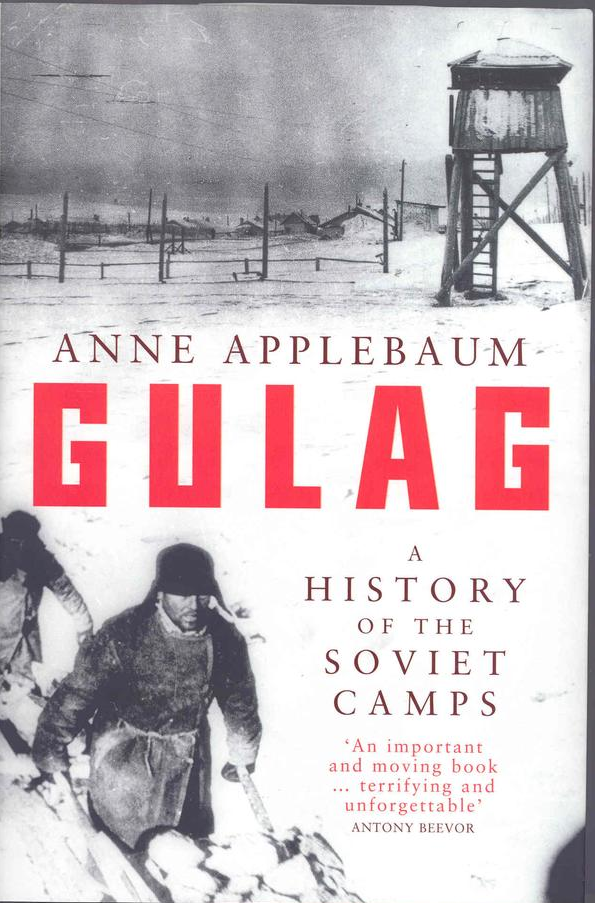
Robert Service reads Gulag by Anne Applebaum, a study of Stalin’s forced labour camps that examines the logistics of the gulag system as well as its horror

Gulag: A History of the Soviet Camps
Anne Applebaum
610pp, Allen Lane, £25

At the end of 1941 Time magazine made Joseph Stalin its Man of the Year. The US had entered the war a few weeks earlier and the USSR had become its main ally in Europe. Stalin’s popularity in New York was not a new phenomenon. He had won the same award two years previously, when the citation had praised his statesmanship in signing a treaty with Adolf Hitler; this had been a period when Soviet armed forces were carrying out a brutal repression in eastern Poland, Lithuania, Latvia and Estonia – and the Soviet-Finnish war was in spate. Time magazine was calibrating its editorial line to the perceived American interests of the moment. And its double award to the Soviet dictator gives the lie to the assumption that only the political left had a soft spot for Stalinism.

Unfortunately Anne Applebaum begins her book on the gulag with this very assumption. Crediting Senator Joe McCarthy with having the right ideas about Stalin, she suggests that his message failed to get across to the public because his style of behaviour brought him into disrepute. This is a garbled version of what happened before and after Stalin’s death. There was never a secret about the forced-labour system in the USSR, and when the cold war erupted after the second world war, plenty of politicians and writers castigated the Soviet order. Not only Harry Truman and Winston Churchill but also George Orwell and Arthur Koestler indicted the terrorist dictatorship in the USSR. Fellow travellers certainly existed. But the situation was complex and ever-changing and it is a pity that Applebaum has repeated a solecism that has become widespread since the fall of communism in Europe.

Yet once she has cleared her throat, she tells a gripping and convincing story about the Soviet camp system. Alexander Solzhenitsyn preceded her, in much more difficult circumstances, with his Gulag Archipelago . He drew on the experiences of himself and his fellow convicts, and read widely in published records and secondary historical accounts. But he wrote before Gorbachev’s perestroika. In recent years the pile of evidence has become mountainous as countless memoirs and documentary collections have appeared. A few scholars were even allowed into the archives of the police. Although this book contains little which has not yet appeared in the Russian press, she has interviewed several survivors of the gulag and has thoroughly examined recent publications. The result is an admirable summary of the present state of our knowledge.

Forced labour had been used by the tsars; but although the communists were not slow to arrest political enemies and conduct terror, it was not until Stalin introduced his first five-year plan at the end of the 1920s that a consolidated system of labour camps was fully established in the USSR. The author highlights the importance of economic motives in the politburo’s policy. The first camps were established in the inhospitable regions of the Russian north, eastern Siberia and elsewhere where natural resources awaited exploitation and where free labourers were reluctant to settle. It was a massive operation requiring a huge structure of personnel and institutions. Over it all stood the OGPU (forerunner of the KGB), soon to be incorporated in the NKVD. Successive police chiefs Yagoda, Yezhov and Beria refined the procedures so that the Main Administration of Camps (the Gulag, in its Russian acronym) might function normally as an integral organ of the Soviet institutional network.

Subordinate to these police chiefs were the territorial leaders of the OGPU-NKVD, each of whom had to fulfil the arrest quotas assigned to their republic or province. They ran their own mini-economies. In their employment were guards, interrogators, journalists, lorry-drivers, railwaymen and informers. With Stalin’s mania for signed confessions, indeed, the demand for shorthand secretaries rose exponentially as the number of arrests soared to a peak in 1937-1938.

While Applebaum is correct in emphasising economics, she might have given more weight to politics. Stalin’s propaganda left no doubt about who dominated Soviet politics. The corollary was that the vast strata of society which had been hurt by state policies knew exactly whom to blame. His campaign of repression, therefore, had a rational basis. Certainly the arrests were arbitrary in the sense that the police picked up millions of people who bore no grudge against him or his regime. But this happened mainly because the Soviet state, including its police, was worse informed and equipped than Hitler’s security agencies in Germany; and the NKVD had to meet the quotas set in the Kremlin regardless of individual guilt or innocence. Nevertheless, Stalin really did have millions of enemies: former Bolshevik oppositionists, priests, ex-Mensheviks, nationalists, kulaks and traders. Deporting all of them to Turkey, as was done with Trotsky in 1929, was impractical. Nor was it safe to dump them unguarded in remote towns of the USSR. Since even Stalin did not see the point of universal extermination, the gulag was his alternative.

Yet what did he intend for the camp inmates? A strength of the book is the author’s insistence that conditions in the camp were meant to be severe but bearable. Only in the second world war, when malnutrition afflicted most people in the USSR, were the rations lowered below those levels. The problem was that the NKVD was corrupt and the food supplies and medicines assigned to the gulag were siphoned off at each stage of delivery to the camps. The consequent need arose for serial replenishment of convicts.

Not that the authorities in Moscow were oblivious to these technical difficulties. (They did not give a toss for the human tragedy or for conventional morality.) Exposures of corruption and maladministration occasionally took place. Indeed confidential reports were produced which proved that the Gulag cost more than it produced for the state. Slave labour was diseconomic. It is one of the merits of Applebaum’s survey that she shows not only the horror but also the stupidity of Vorkuta, Kolyma and Norilsk. Thus it becomes readily explicable why the camps started to be emptied in 1953 almost before Stalin’s corpse had cooled. If anything, the accountancy of forced labour was still worse than the book allows. Soviet uranium, gold, nickel and timber were obtained by the wretches who were tipped like human debris into the remotest and coldest regions. Many hundreds of thousands belonged to groups in Soviet society with expertise and managerial skills. Unfit for hard labour, they were a massive loss to the “free economy”.

In fact, Stalin had a penchant for re-sentencing convicts once their term of forced labour had ended. The question arises how any remained alive when the camps started to be emptied after 1953. The answer is that most survivors had obtained jobs that gave them extra rations or lighter work. Solzhenitsyn was an example. He served his time in a camp dedicated to scientific research where the discipline was tough but the food was sufficient and the climate tolerable. In the worse camps of northern Russia and Siberia a convict needed to get transferred to medical work or to the kitchen in order to get by. The result was that their conditions improved, but this happened at the expense of the rest of the inmates who remained on less than adequate rations.

Bread became the object of obsessive desire. Theft of it was one of the few forms of behaviour which drew universal hostility from prisoners whether they were politicals or ordinary criminals. Few inmates thought murder too strong a reaction for thieving a person’s bread ration.

Although the labour camps were not closed in 1953, the number of inmates was reduced and the degree of state terror was attenuated. Arrests of law-abiding citizens continued to take place under Khrushchev and Brezhnev. Persecution of religious believers was common in the 1960s and the political dissenters of later decades could expect to be thrown in a camp, a psychiatric hospital or else deported. Yet judicial rehabilitation of victims was patchy. Systematic investigations of wrongful arrest and imprisonment were begun by Gorbachev when most victims were already dead. The process continues to this day. Historians have exposed the nature of Stalin’s regime, but trials of known persecutors have been few. It would be difficult to put every guilty official on trial, but Anne Applebaum is right that more could have been done and could still be done.

· Robert Service’s Russia: Experiment With a People, From 1991 to the Present is published by Macmillan.

Since you’re here…
… we have a small favour to ask. More people are reading the Guardian than ever but advertising revenues across the media are falling fast. And unlike many news organisations, we haven’t put up a paywall – we want to keep our journalism as open as we can. So you can see why we need to ask for your help.

The Guardian is editorially independent, meaning we set our own agenda. Our journalism is free from commercial bias and not influenced by billionaire owners, politicians or shareholders. No one edits our Editor. No one steers our opinion. This is important because it enables us to give a voice to the voiceless, challenge the powerful and hold them to account. It’s what makes us different to so many others in the media, at a time when factual, honest reporting is critical.


If everyone who reads our reporting, who likes it, helps to support it, our future would be much more secure.
For as little as £1, you can support the Guardian – and it only takes a minute. Thank you.

Zawartość publikowanych artykułów i materiałów nie reprezentuje poglądów ani opinii Reunion’68,
ani też webmastera Blogu Reunion’68, chyba ze jest to wyraźnie zaznaczone.
Twoje uwagi, linki, własne artykuły lub wiadomości prześlij na adres:
webmaster@reunion68.com


The Jews Have No Historic Right to the Land

Jordanian Archaeologist Mohammad Waheeb Al-Husseini: The Jews Have No Historic Right to the Land

MEMRI


Speaking at a conference held by the Moroccan Organization for Human Rights, Egyptian-German scholar Hamed Abdel-Samad called to stop trying to please the Islamists and said that “whoever wants to embrace the heritage, along with its representatives and theoreticians, and to incorporate them in the enlightenment game is perpetrating a crime.” Abdel-Samad enumerated the principles of enlightenment and said that solutions should not be sought within jurisprudence as these are “nothing but plastic surgery for a lifeless corpse.” It is like an elastic band, he said. “We pull away with our thinking, but then we are pulled back by our fear, of taboos, our fear of prohibitions, and our fear of being punished by the law or by society. There can be no enlightenment where there is fear.” Abdel-Samad posted his speech on his YouTube channel on April 5.


Zawartość publikowanych artykułów i materiałów nie reprezentuje poglądów ani opinii Reunion’68,
ani też webmastera Blogu Reunion’68, chyba ze jest to wyraźnie zaznaczone.
Twoje uwagi, linki, własne artykuły lub wiadomości prześlij na adres:
webmaster@reunion68.com