Archive | April 2021

The Warsaw Ghetto Revolt was initially dubbed ‘fake news’ by some US Jews

The Warsaw Ghetto Revolt was initially dubbed ‘fake news’ by some US Jews

MATT LEBOVIC


New book ‘The Jewish Heroes of Warsaw’ traces the immediate aftermath of Holocaust’s most famous revolt, including the ‘gendering’ of resistance and politicization of its narrative
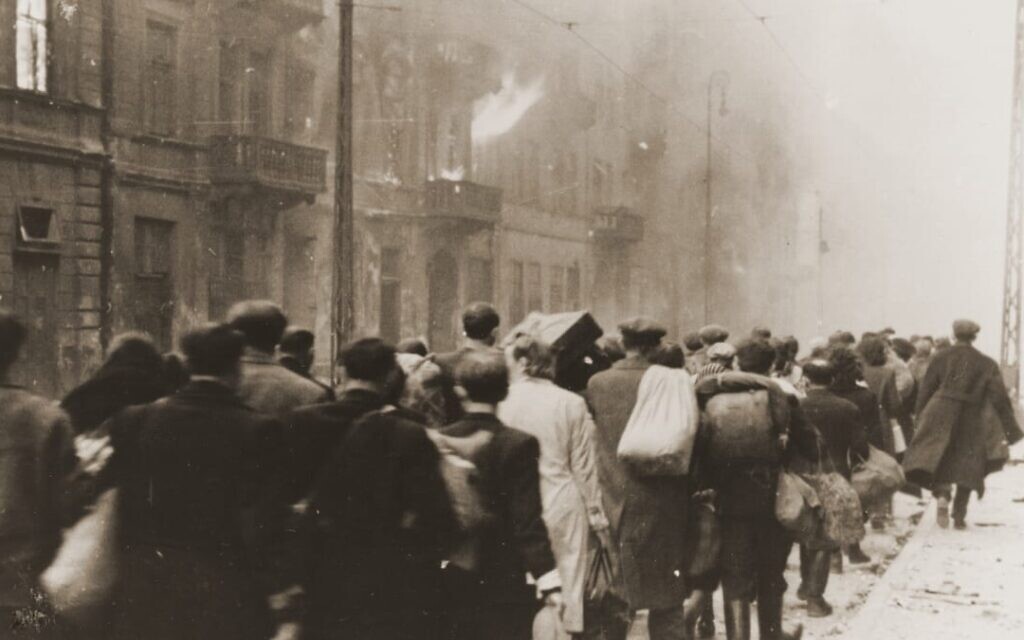
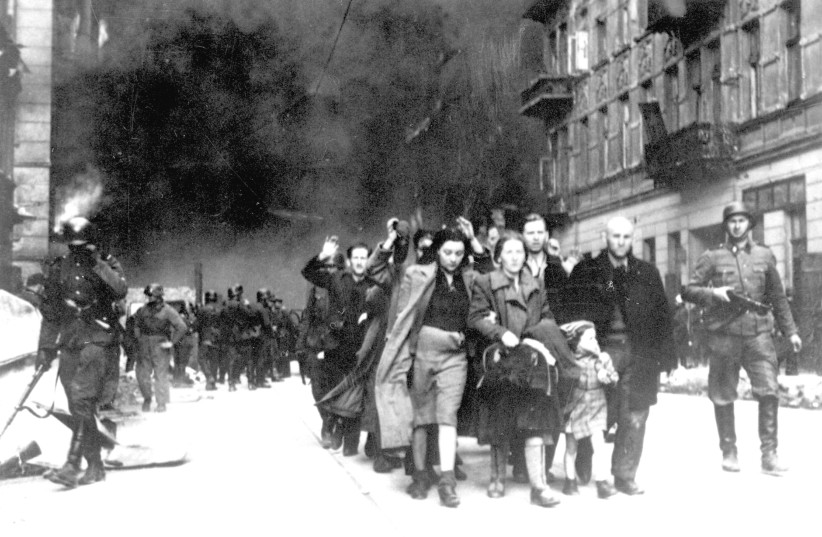
Jews marched out of the ghetto during Warsaw Ghetto Revolt in April and May, 1943 (public domain)

When American political cartoonist Arthur Szyk decided to commemorate the one-year anniversary of the Warsaw Ghetto Revolt, he crafted a montage dedicated to “the heroic battle of our brothers in the war against the Nazi barbarians,” as the caption read.

The image showed a cross-section of Warsaw Jews fighting against a Nazi war machine intent on burning the ghetto to the ground. Most of the ghetto’s 400,000 Jews had already been deported to the death camp Treblinka in 1942, and about 800 people — most of them young adults — participated in armed resistance the following year.

Although Szyk knew that women were involved in the revolt, no woman appeared in his widely circulated image. There were boys with side-curls and men in workers’ caps, as well as resisters with symbols nodding to socialism, Zionism, and Polish nationalism — just no women.

“The memory of the revolt and memory of resistance does end up being very gendered,” said historian Avinoam Patt, whose book — “The Jewish Heroes of Warsaw: The Afterlife of the Revolt” — will be published on May 4.

Among ways in which the revolt was “edited” for American audiences, said Patt, was a “specific type of heroic image that privileged masculine fighters as leaders of the resistance while presenting women as symbols of martyrdom and sacrifice,” he told The Times of Israel in an interview.

In his book, Patt explores the revolt’s immediate afterlife, when Jewish communities began to “process” what took place and shape narratives that still endure. For example, Patt demonstrates how the revolt was memorialized in Israel to enforce Zionist ideology, while American Jews generally framed the revolt as part of Allied war efforts.

“The book looks at the interplay of history and memory,” said Patt, director of the Center for Judaic Studies at the University of Connecticut.
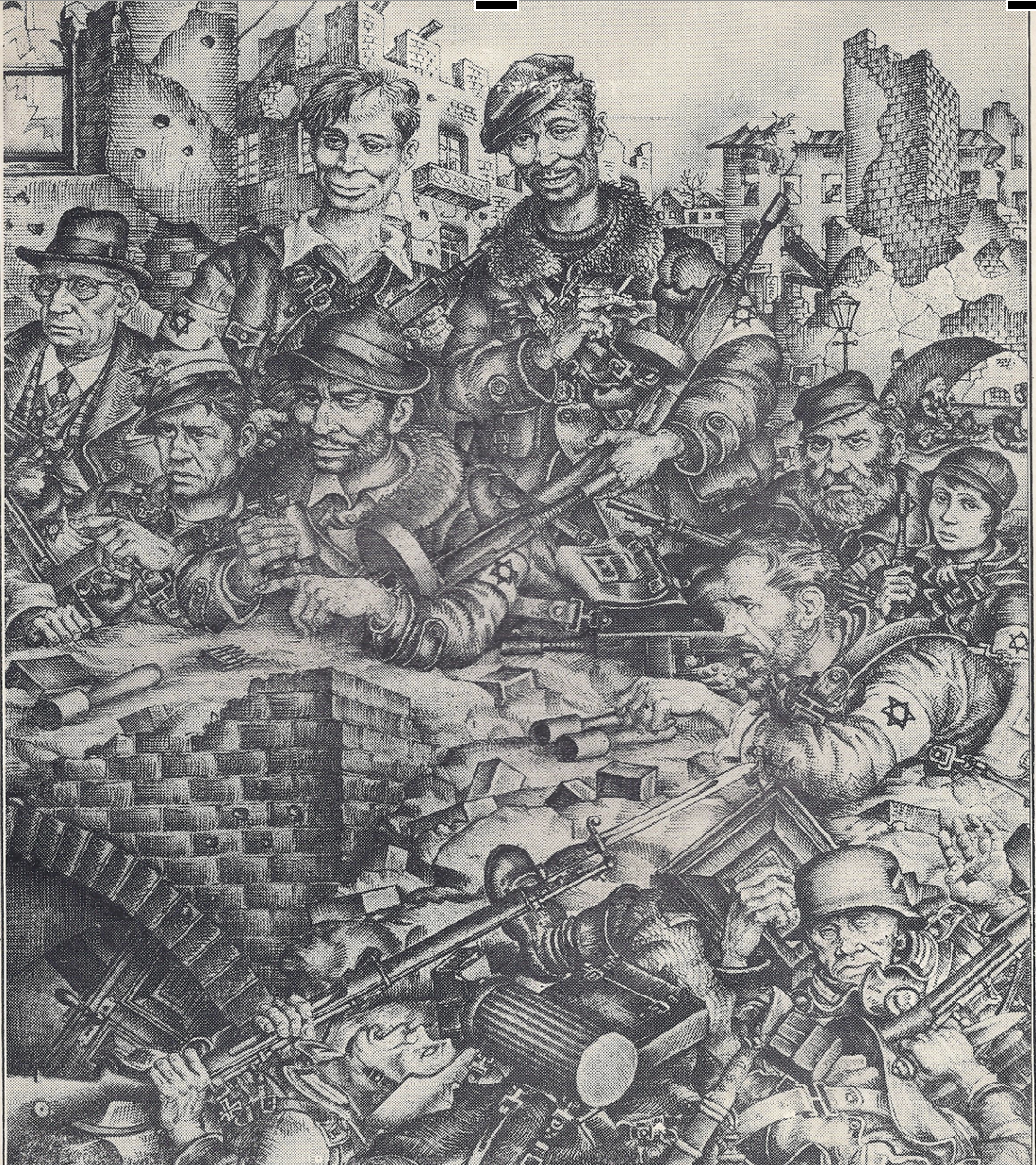
Arthur Szyk’s commemorative montage of the Warsaw Ghetto Revolt (public domain)

When the Warsaw Ghetto Revolt broke out on April 19, 1943, Jews around the world were sitting down for the Passover seder. By this point in the war, it was widely known that millions of Jews were being murdered across Europe. However, in the United States, American Jewish leaders had been unable to catalyze large-scale rescue actions.

News of the revolt hit just as people were shifting from “active rescue efforts” to “memorial mode,” said Patt, and not everyone in the US believed a revolt had taken place.

Historian Avinoam Patt (courtesy)

For example, New York’s influential “Der Tog” would not confirm an uprising took place until May 12. In an editorial, the Yiddish newspaper said the revolt was likely a German “pretext” to conduct a massacre, and that unarmed Jews were not able to hold off an army that devoured Poland in four weeks.

Apart from the stance of “Der Tog,” however, the American Jewish press generally picked up the story. For example, “The Forward” printed a front-page story about the revolt on April 23, just four days after the outbreak of fighting.

In both the US and Israel, media outlets erroneously reported that “Polish commandos” had infiltrated the ghetto to help lead fighting. In fact, no such commandos participated, and the ghetto’s Jewish Fighting Organization managed to obtain only a few weapons from Polish resistance leaders.

‘A revolution in Jewish history’

As Jews slowly learned the identities of Warsaw Ghetto Revolt fighters, fictionalized accounts began to appear. In the Yiddish play, “The Battle of the Warsaw Ghetto,” the heroes were fictionalized to meet the needs of a dramatic NBC radio production, for example.

“In the American context, the identities of the heroes seemed less important,” said Patt. “For Zionist leaders in the Yishuv, the names matter greatly, as they did for Bundists in New York and elsewhere,” he said.

For American Jews, the revolt was most important as a symbol of Jews’ contribution to the Allied war effort, said Patt. The fictionalization of the revolt endured for decades, including the seminal 1961 book, “Mila 18,” by Leon Uris.
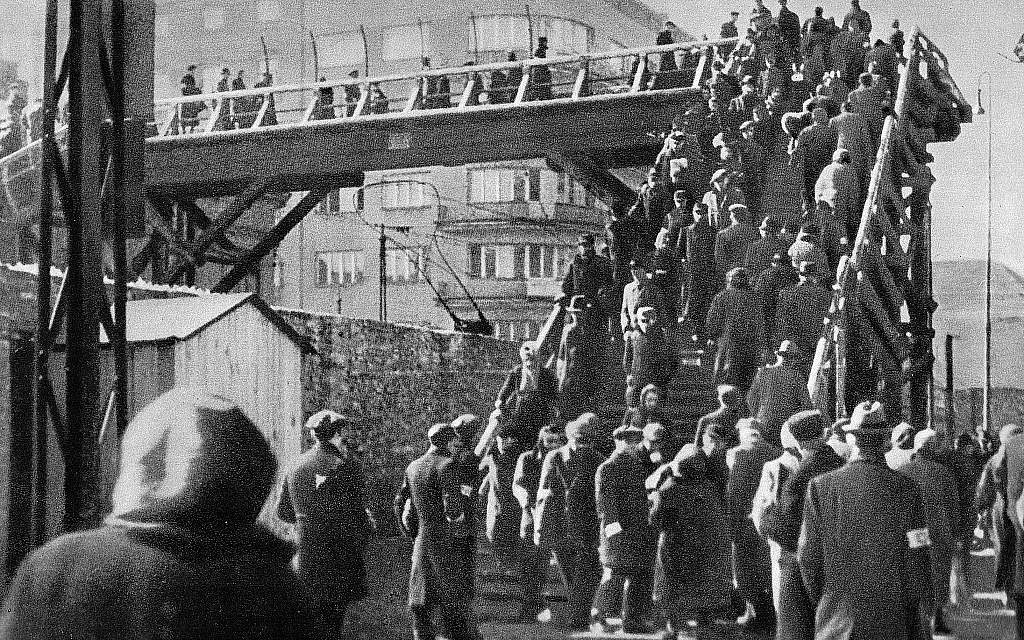
Warsaw Ghetto footbridge connecting cut-off parts of the ghetto from Aryan Warsaw under Nazi occupation (public domain)

“The revolt was interpreted differently by different groups of Jews,” said Patt. “Current social and political agendas shape how history is recorded,” he said.

During the months following the revolt, a public relations battle was waged behind the scenes. Specifically, Zionist leaders were alarmed that Bundist leaders were claiming credit for what took place in Warsaw.

In May 1944, several Zionist leaders hiding in Aryan Warsaw compiled accounts of the revolt from all fighting sectors of the ghetto. The document trove was sent to London, and the name Mordechai Anielewicz — the revolt’s 24-year old leader — entered into Zionist and Jewish history.
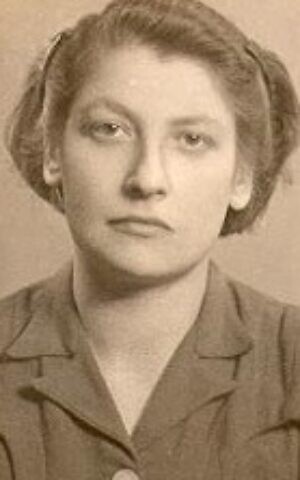
Zivia Lubetkin (public domain)

When Zionist leaders compiled their 120-pages of testimony, they made sure to elevate the movement’s role in unifying resistance movements across the ghettos. The narrative that only Jews can protect themselves contrasted — for example — with the Bundists’ emphasis on Jewish-Polish cooperation.

In Israel, the revolt came to be seen as “a revolution in Jewish history.” The uprising’s first day became an “anchor” for Yom HaShoah and the creation of Yad Vashem, as well as the resistance-oriented nature of Israeli Holocaust memory in general.

One of the “Jewish heroes of Warsaw” featured in Patt’s book is Zivia Lubetkin, whose eight-hour speech about the revolt sent shockwaves through pre-state Israel in June 1946. Along with other former resisters, Lubetkin founded the Ghetto Fighters’ Kibbutz in 1949 to commemorate that chapter of Jewish history.

Still, Patt notes, while certain names of Jewish heroes would be recorded by history, others would fade from collective memory, along with the experiences of the Jewish masses who constituted the bulk of the population in the ghetto.
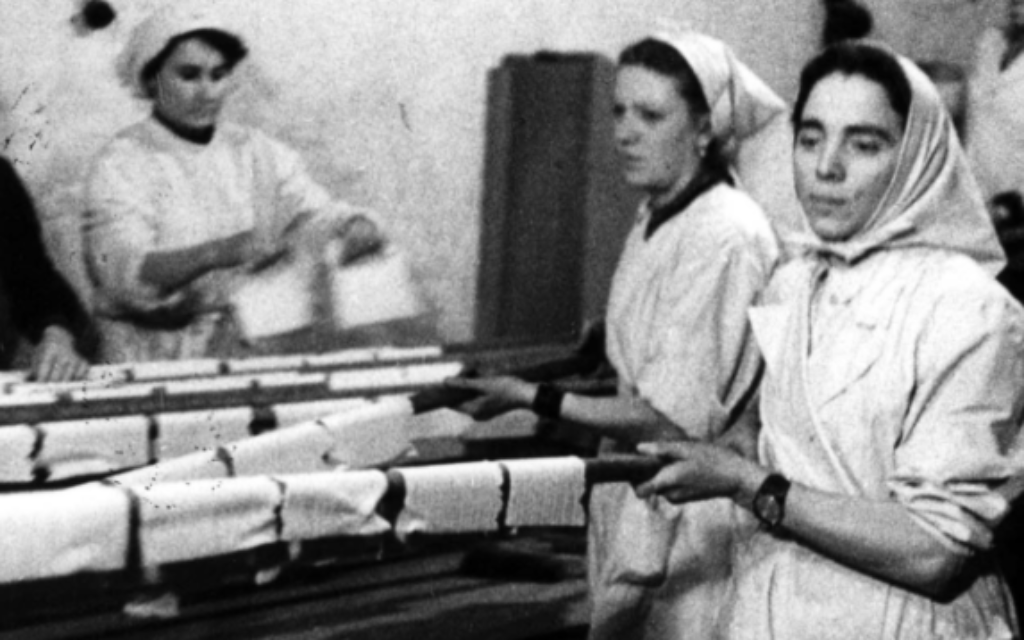
Baking matzah in the Warsaw Ghetto, Nazi-occupied Poland (Courtesy: Yad Vashem Photo Archives 24DO6)

“The symbolic spirit that animated the fighters would be more important than the identities of the actual fighters themselves, just as political interpretations that reinforced the existing worldviews of Jews in Israel and America would matter more than the complexities of wartime behavior that led to the revolt,” said Patt.

“Historians would seek to record the names of heroes in the ghetto; memory only demanded that the Jewish people remember that those heroes had fought for Jewish honor and dignity,” added the historian.


Zawartość publikowanych artykułów i materiałów nie reprezentuje poglądów ani opinii Reunion’68,
ani też webmastera Blogu Reunion’68, chyba ze jest to wyraźnie zaznaczone.
Twoje uwagi, linki, własne artykuły lub wiadomości prześlij na adres:
webmaster@reunion68.com


TV7 Israel News 19.04

TV7 Israel News 19.04

TV7 Israel News


1) Gazan Islamists launched a rocket toward Israel’s southern communities over the weekend – drawing an Israeli retaliatory response.

2) The Foreign Ministers of Cyprus, Greek, Israel and the United Arab Emirates conclude a multilateral meeting – aimed at further deepening regional cooperation on multiple areas of joint interest.

3) U.S. President Joe Biden voices satisfaction that despite the latest developments the Islamic Republic of Iran remains engaged to try and revive the 2015 nuclear agreement.


Zawartość publikowanych artykułów i materiałów nie reprezentuje poglądów ani opinii Reunion’68,
ani też webmastera Blogu Reunion’68, chyba ze jest to wyraźnie zaznaczone.
Twoje uwagi, linki, własne artykuły lub wiadomości prześlij na adres:
webmaster@reunion68.com


Palestyńscy terroryści do Bidena: nie wierz palestyńskiemu kierownictwu

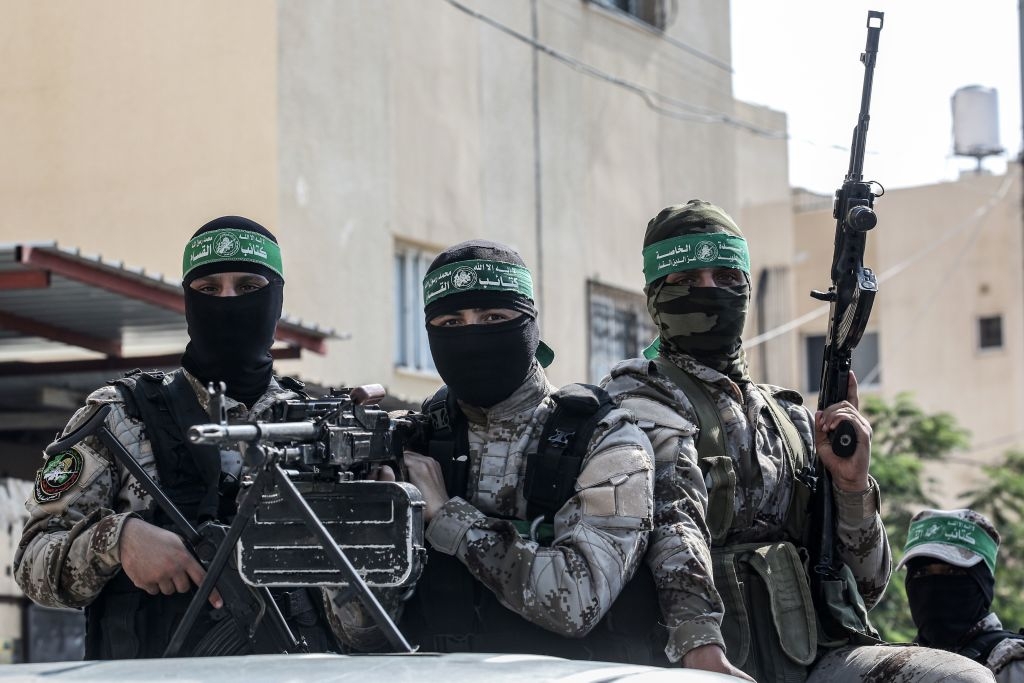
Autonomia Palestyńska twierdzi, że Hamas i inne palestyńskie grupy terrorystyczne wyrzekły się terroru i zaakceptowały prawo Izraela do istnienia. Hamas i palestyńskie frakcje mówią jednak, że nie jest to prawdą i że pozostają oddane “wszystkim formom oporu” wobec Izraela, włącznie z “walką zbrojną”. Na zdjęciu: członkowie Hamasu w Strefie Gazy. (Zdjęcie: Said Khatib/AFP via Getty Images)


Palestyńscy terroryści do Bidena: nie wierz palestyńskiemu kierownictwu

Bassam Tawil
Tłumaczenie: Małgorzata Koraszewska


Autonomia Palestyńska (AP) twierdzi, że Hamas i inne palestyńskie grupy terrorystyczne wyrzekły się terroru i zaakceptowały prawo Izraela do istnienia.

Hamas i palestyńskie frakcje mówią jednak, że nie jest to prawdą i że pozostają oddane “wszystkim formom oporu” wobec Izraela, włącznie z “walką zbrojną”.

Podkreślają także, że nie uznały prawa Izraela do istnienia i są zdecydowane kontynuować walkę “do wyzwolenia całej Palestyny” od rzeki Jordan do Morza Śródziemnego.

Hamas i jego sojusznicy, włącznie z Palestyńskim Islamskim Dżihadem (PIJ) i Ludowym Frontem Wyzwolenia Palestyny (LFWP) mówią w rzeczywistości, że kierownictwo AP kłamie, kiedy mówi, że grupy terrorystyczne zmieniły swoje stanowisko wobec Izraela.

To wywołuje pytanie: komu kłamie kierownictwo palestyńskie i dlaczego?

Odpowiedź: AP kłamie międzynarodowej społeczności, a konkretnie administracji prezydenta USA, Joego Bidena.

Według palestyńskiej strony informacyjnej, Amad, szef Palestyńskiego Głównego Urzędu ds. Cywilnych i członek Fatahu, rządzącej frakcji prezydenta Mahmouda Abbasa, Hussein al-Szejk, wysłał niedawno list do administracji Bidena o rzekomych zmianach polityki palestyńskich grup terrorystycznych.

W liście al-Szejk napisał, że wszystkie palestyńskie “polityczne” frakcje, włącznie z Hamasem, zgodziły się złożyć broń i zaakceptować palestyńskie państwo obok Izraela.

Al-Szejk napisał, że osiągnięto tę domniemaną zgodę podczas spotkania przywódców kilku palestyńskich frakcji we wrześniu 2020 roku. “Został osiągnięty następujący konsensus z wszystkimi politycznymi frakcjami”.

“Zobowiązanie wobec standardów prawa międzynarodowego, zobowiązanie wobec palestyńskiego państwa w oparciu o granice z 1967 r., zobowiązanie wobec OWP jako politycznego parasola i jedynego legalnego przedstawiciela narodu palestyńskiego, zobowiązanie do zasad pokojowego przekazywania władzy poprzez wybory i zobowiązanie do powszechnego (pokojowego) oporu [wobec Izraela]”.

Dwa ważne “zobowiązania” wspomniane w liście odnoszą się do palestyńskiego państwa “w oparciu o granice z 1967 r.” i “pokojowego oporu” wobec Izraela.

Pierwsze sugeruje, że palestyńskie grupy terrorystyczne, które nie uznają prawa Izraela do istnienia, są gotowe zaakceptować palestyńskie państwo tylko na Zachodnim Brzegu, w Strefie Gazy i wschodniej Jerozolimie. Ponadto sugeruje to, że grupy terrorystyczne nie będą dłużej dążyły do “wyzwolenia całej Palestyny” i do zastąpienia Izraela państwem islamskim.

Drugie “zobowiązanie” sugeruje, że Hamas, PIJ i pozostałe grupy terrorystyczne są teraz za “pokojowym” oporem wobec Izraela zamiast rozmaitych rodzajów terroryzmu, włącznie z rakietami, atakami nożowniczymi, strzelaniem i taranowaniem samochodami.

Niemniej wypowiedzi przywódców palestyńskich grup terrorystycznych z ostatnich dni wyraźnie zaprzeczają treści listu wysłanego przez kierownictwo AP do administracji Bidena.

Przywódcy grup terrorystycznych wysyłają administracji Bidena i reszcie świata następujący komunikat: nie wierzcie kierownictwu AP. My nie zmieniliśmy naszej polityki wobec Izraela.

25 lutego Hamas wydał oświadczenie, w którym zaprzeczył, by grupa miała zmienić stanowisko wobec Izraela. “Nasze polityczne i narodowe stanowisko jest dobrze znane i jasne – powiedział Hamas. – Jest wyrażone w naszych oficjalnych dokumentach i publikacjach. Pozostajemy zobowiązani do oporu aż do wyzwolenia [całej Palestyny]”.

Najważniejszym dokumentem, o którym mówi Hamas, jest ich Karta z 1988 roku, która stanowi:

“Ziemia Palestyny jest islamskim Wakf (powiernictwo) dla wszystkich pokoleń muzułmanów do dnia zmartwychwstania. Nie ma prawa oddania jej ani żadnej jej części. Nie ma rozwiązania problem palestyńskiego poza dżihadem (świętą wojną). W walce przeciwko żydowskiej okupacji Palestyny sztandar dżihadu musi zostać podniesiony”.

Zwracając się do konferencji prowadzonej przez Zoom pod tytułem “Zjednoczeni przeciwko normalizacji” [stosunków z Izraelem] przywódca Hamasu Ismail Hanija powiedział 20 lutego, że jego grupa pozostaje zobowiązana do “wszechstronnego oporu” przeciwko Izraelowi. Dodał, że Hamas “będzie prowadził program oporu aż do wyzwolenia ziemi palestyńskiej od rzeki [Jordan] do morza [Śródziemnego]”.

25 lutego cytowano Fathiego Hammada, wysokiego rangą funkcjonariusza Hamasu w Strefie Gazy, który powiedział, że jego grupa pozostaje oddana walce zbrojnej przeciwko Izraelowi. “Wszystkie rodzaje oporu są uprawnione, włącznie z powszechnym i zbrojnym – powiedział Hammad. – Palestyna jest muzułmańską ziemią i nikt nie jest upoważniony do oddania choćby jednego jej centymetra”.

Reagując na list AP do administracji Bidena, marksistowsko-leninowska grupa terrorystyczna, LFWP, zaprzeczyła, by miała zmienić swoją politykę wobec Izraela:

“Ludowy Front Wyzwolenia Palestyny potwierdza, że pozostaje oddany prawu narodu palestyńskiego do całej swojej ziemi od morza [Śródziemnego] do rzeki [Jordan]. Nikt nie ma prawa mówić w imieniu wszystkich [palestyńskich] grup narodowych w sposób, który może być zrozumiany, że oddajemy części historycznej Palestyny”.

Wspierany przez Iran Palestyński Islamski Dżihad także zaprzeczył, jakoby zmienił swoje stanowisko wobec Izraela. Sekretarz generalny PIJ, Zijad al-Nachalah oświadczył, że jego grupa nigdy nie uzna Izraela ani Umów z Oslo, podpisanych przez OWP i Izrael w 1993 i 1995 roku. Podkreślił także potrzebę kontynuowania ataków terrorystycznych i dżihadu przeciwko Izraelowi.

Palestyńskie grupy terrorystyczne z pewnością zasługują na pochwałę za otwarte przedstawianie swoich prawdziwych, ludobójczych zamiarów wobec Izraela. W odróżnieniu od kierownictwa AP, te organizacje terrorystyczne mówią jednym i prostym językiem. Ich komunikat po arabsku i po angielsku jest wyraźny: rozlejemy tyle żydowskiej krwi, ile potrzeba, by oczyścić “Palestynę” z Żydów.

List kierownictwa Autonomii Palestyńskiej do administracji Bidena jest kolejną próbą Abbasa i jego świty, by oszukać Amerykanów i resztę świata i skłonić ich do uwierzenia, że palestyńskie grupy terrorystyczne nie dążą już dłużej do unicestwienia Izraela.

Jest chorym dowcipem mówienie, że Hamas i PIJ popierają “pokojowy” opór, kiedy te dwie grupy krzyczą w dzień i w nocy, że pozostają oddane walce zbrojnej i terroryzmowi.

Abbas stara się nabrać administrację Bidena, by uwierzyła, że udało mu się przekonać grupy terrorystyczne, by zmieniły się w starające się o pokój organizacje. Abbas całkowicie desperacko chce otrzymać amerykańskie fundusze. Kłamie jak najęty, by skłonić administrację Bidena do wznowienia pompowania gotówki do jego reżimu – który jest zbankrutowany w każdym możliwym sensie tego słowa. Zobaczymy, czy administracja Bidena da się nabrać temu mistrzowskiemu magikowi z AP.


Bassam Tawil: Muzułmański badacz i publicysta mieszkający na Bliskim Wschodzie.


Zawartość publikowanych artykułów i materiałów nie reprezentuje poglądów ani opinii Reunion’68,
ani też webmastera Blogu Reunion’68, chyba ze jest to wyraźnie zaznaczone.
Twoje uwagi, linki, własne artykuły lub wiadomości prześlij na adres:
webmaster@reunion68.com


On this day 78 years ago, the Warsaw Ghetto Uprising broke out

On this day 78 years ago, the Warsaw Ghetto Uprising broke out

SARAH CHEMLA


It was the first revolt of the Jews during World War II.

Captured Jews pulled out of Warsaw Ghetto bunkers are led by German Waffen SS soldiers to ‘Umschlagplatz,’ the assembly point for deportation.
(photo credit: Wikimedia Commons)

Exactly 78 years ago on April 19, 1943, the uprising of the Warsaw Ghetto in Poland broke out, in a Europe ravaged by ravaged by Nazi Germany.

The Warsaw Ghetto Uprising began on the eve of the Passover holiday, and continued for an entire month until May 16.

It was the first revolt of the Jewish people during World War II. The Warsaw Ghetto Uprising is considered a clear symbol of Jewish resistance during the Holocaust.

Despite having only a few weapons and material, the resistance fighters succeeded in holding their position against the Nazis longer than any other uprising had done.

Two groups fought separately with minimal coordination. There was the leftist Jewish Fighting Organization (JFO) faction, led by Mordechai Anielewicz and other leaders of Hashomer Hatzair (The Young Guard), as well as the right-wing Jewish Military Union (JMU) faction, led by Pawel Frenkiel.

On May 8, when the Germans discovered the large bunker at 18 Mila Street, which served as the JFO’s command center, most of the leaders and dozens of other fighters refused to surrender to the Germans.
Instead, they all swallowed cyanide pills in a massive act of suicide.

Although his body was never uncovered, it is believed that Anielewicz died on that day at Mila 18.

A total of 13,000 Jews died during the revolt, about half of them burnt alive or suffocated.

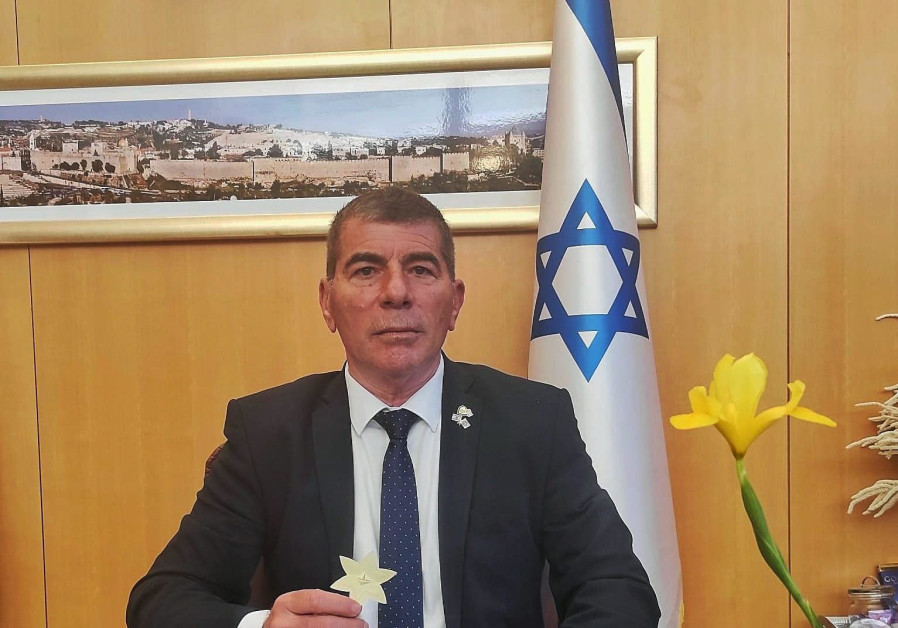
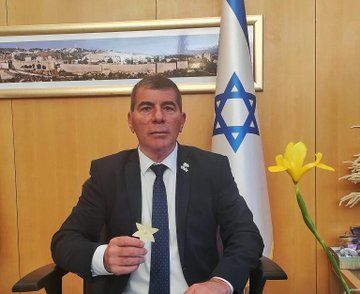
Foreign Ministers of Israel and Poland, Gabi Ashkenazi and Zbigniew Rao, and Ambassadors of Israel and Poland around the world mobilized for the “Yellow Daffodils” campaign to mark the 78th anniversary of the Warsaw Ghetto Uprising.

Israel’s Foreign Minister Gabi Ashkenazi mobilized for the “Yellow Daffodils” campaign to mark the 78th anniversary of the Warsaw Ghetto Uprising. (Foreign Ministry)

Foreign ministers and ambassadors – more than 50 Polish and Israeli ambassadors, from Brazil to Europe, from Kazakhstan to Vietnam – joined the Daffodil Campaign at the invitation of ELNET, a non-profit organization dedicated to strengthening relations between Europe and Israel based on shared democratic values and strategic interests and were photographed wearing a yellow daffodil on the lapel of their suit.

The campaign is an initiative of the Polin Museum of the History of Polish Jews.


Israel Foreign Ministry @IsraelMFA
Foreign Ministers of Israel & Poland, together with the ambassadors of Israel & Poland around the world, have joined the ‘Yellow Daffodil’ campaign commemorating the anniversary of the #WarsawGhettoUprising, which began #OnThisDay in 1943. #NeverForget

Image

mfa.gov.il/MFA/PressRoom/


The yellow daffodil flower was chosen because the late Mark Edelman (1919-2009), the last commander who survived the uprising, received a bouquet of yellow daffodils from an anonymous sender for years on the anniversary of the revolt. .

Following the campaign, hundreds of volunteers in Poland honor the memory of those who fell in the revolt by wearing a yellow daffodil on the anniversary.

In December 2018, Simcha “Kazik” Rotem, a member of the Jewish underground in Warsaw that helped carry out the Warsaw Ghetto Uprising, died at the age of 94.

Rotem, who fought alongside JFO leader Anielewicz, was described as the last survivor of the Warsaw Ghetto Uprising.

During the war, Rotem served as a liaison between the bunker inside the ghetto and the underground on the “Aryan” side of the city. Inside he reported to Anielewicz, and on the Aryan side he reported to Yitzhak Zuckerman, codenamed Antek.

On the fifth anniversary of the outbreak of the Warsaw Ghetto Uprising, April 19, 1948, which took place just 21 days before the State of Israel’s Declaration of Independence and the subsequent attack on Israel by seven Arab armies, the Ghetto Heroes Monument was inaugurated in the Polish capital.

This monument was created by sculptor Nathan Rapoport, who was born in Warsaw and was a member of Hashomer Hatzair, a socialist-Zionist, secular Jewish youth movement in Poland. It is perhaps the most famous Holocaust monument in the world, with more groups on Holocaust trips and tourists holding ceremonies there than at any other location.


Uri Milstein and Tamar Beeri contributed to this report.


Zawartość publikowanych artykułów i materiałów nie reprezentuje poglądów ani opinii Reunion’68,
ani też webmastera Blogu Reunion’68, chyba ze jest to wyraźnie zaznaczone.
Twoje uwagi, linki, własne artykuły lub wiadomości prześlij na adres:
webmaster@reunion68.com


Muranów – Dzielnica Północna – film edukacyjny | Muzeum POLIN

Muranów – Dzielnica Północna – film edukacyjny | Muzeum POLIN

Muzeum POLIN


Film “Muranów – Dzielnica Północna” to opowieść o żydowskiej historii dzielnicy Muranów w Warszawie. Narratorka Ala, młoda warszawska Żydówka, zabiera widzów w multimedialną podróż po różnych miejscach Muranowa i opowiada najważniejsze historie z nim związane z okresu ostatnich stuleci. Film jest zrealizowany w stylistyce youtuberskiej i zawiera animacje oraz archiwalne filmy i fotografie.

Film “Muranów – Dzielnica Północna” jest skierowany do uczniów i uczennic klas 7-8 szkoły podstawowej oraz szkół ponadpodstawowych reż. Łukasz Kamil Kamiński.

Projekt jest finansowany przez Islandię, Liechtenstein i Norwegię w ramach Funduszu EOG oraz przez budżet krajowy


Zawartość publikowanych artykułów i materiałów nie reprezentuje poglądów ani opinii Reunion’68,
ani też webmastera Blogu Reunion’68, chyba ze jest to wyraźnie zaznaczone.
Twoje uwagi, linki, własne artykuły lub wiadomości prześlij na adres:
webmaster@reunion68.com