Archive | April 2022

Wspierane przez państwo Media Narodowe promują antysemicką książkę

Wspierane przez państwo Media Narodowe promują antysemicką książkę

Wiktor Ferfecki


Telewizja należąca do stowarzyszenia dotowanego przez rząd zrobiła promocję książki, według której Żydzi to „plemię pasożytnicze”.

.
Kadr z materiału w Mediach Narodowych poświęconego książce “Poznaj Żyda”

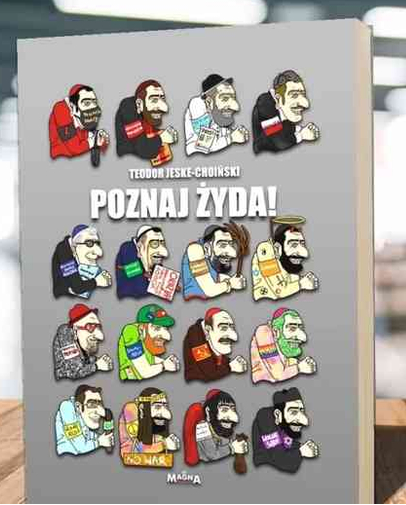
16 stereotypowo przedstawionych Żydów, którzy na ramionach mają opaski z napisami m.in. „rzetelna prasa”, „LGBT” albo „wolne sądy” – takie rysunki trafiły na okładkę nowego wydania książki „Poznaj Żyda!” przedwojennego publicysty Teodora Jeske-Choińskiego. Jej promocję przeprowadził w Wielką Sobotę kanał na YouTubie Media Narodowe.

Audycję zilustrowano obrazkiem przedstawiającym podobny stereotypowy rysunek Żyda. W programie wystąpił wydawca książki Przemysław Holocher. – Żydzi, którzy odnoszą się do Talmudu i kultury wybraństwa, sami tkwią w ogromnej ciemnocie – perorował.

Anna Tatar ze stowarzyszenia antyfaszystowskiego Nigdy Więcej treść audycji uważa za skandaliczną. – Jeske-Choiński był czołowym ideologiem antysemityzmu. Pochwalał m.in. wypędzenie Żydów z Litwy czy pogromy antyżydowskie – przypomina. – Nie ma niczego złego w wydawaniu tekstów mogących być źródłami historycznymi, pod warunkiem, że będą wyposażone w aparat krytyczny. Jednak przedruk tekstu bez słowa komentarza jest niczym innym, jak tylko powielaniem jego tez – dodaje. Jej zdaniem „Poznaj Żyda!” jest po prostu publikacją antysemicką. Zauważa, że już w jednym z pierwszych zdań autor nazywa Żydów „plemieniem pasożytniczym”, które „ssie naszą krew”.

Zdaniem Kalinowskiego rysunek Żyda z garbatym nosem zapowiadający program „jest znanym memem”

Zaś Media Narodowe są wspierane przez państwo. Należą do Stowarzyszenia Marsz Niepodległości Roberta Bąkiewicza, które ze Stowarzyszeniem Straż Narodowa otrzymało 3 mln dotacji z Funduszu Patriotycznego, podległego resortowi kultury. Same Media Narodowe dostały 198 tys. z Narodowego Instytutu Wolności.

Czy Ministerstwo Kultury czuje się współodpowiedzialne za audycje w kanale? Z odpowiedzi, które dostaliśmy z resortu, wynika, że nie. „Projekty złożone w ramach Funduszu Patriotycznego oceniane są przez ekspertów wg kryteriów zawartych w regulaminie funduszu. Eksperci dokonują oceny na podstawie treści wniosków złożonych w ramach konkursu. Ocenie merytorycznej podlegają każdorazowo wyłącznie zadania wskazane we wnioskach” – czytamy.

Instytut Dziedzictwa Myśli Narodowej, który nadzoruje Fundusz Patriotyczny, podkreśla, że obecne wydanie książki „Poznaj Żyda!” jest tylko jednym z wielu, a praca ta jest ogólnodostępna, m.in w formie zdigitalizowanej w bibliotece cyfrowej POLONA.

Problem w tym, że to niejedyna kontrowersyjna audycja Mediów Narodowych. Na początku kwietnia Stowarzyszenie Nigdy Więcej wydało raport na temat hejtu wobec Ukraińców i powielania rosyjskiej propagandy. Sześć razy wspomina on o treściach w Mediach Narodowych, m.in. o audycji z udziałem publicysty Marcina Masnego, który insynuował, że w Ukrainie znajdują się „amerykańskie laboratoria z patogenami”, będące zagrożeniem dla Rosji. I inny publicysta Marian Miszalski rozwijał prorosyjską teorię spiskową, zgodnie z którą Ukraina ma być zasiedlona przez Żydów.

Tomasz Kalinowski, redaktor naczelny serwisu internetowego Mediów Narodowych, podkreśla jednak, że w żaden sposób nie są one antyukraińskie. – W ostatnim czasie zakończyliśmy współpracę z jednym z redaktorów, który przemycał takie treści, a program z panem Masnym został usunięty – mówi. Dodaje, że po pierwszym tygodniu wojny Media Narodowe przeprowadziły charytatywną transmisję dla uchodźców, zrobiły też m.in. wywiad z członkiem parlamentu ukraińskiego i reportaż z Medyki.

A materiał o „Poznaj Żyda!”? Zdaniem Kalinowskiego rysunek Żyda z garbatym nosem zapowiadający program „jest znanym memem”, więc „trzeba podejść do niego z dystansem”.


Zawartość publikowanych artykułów i materiałów nie reprezentuje poglądów ani opinii Reunion’68,
ani też webmastera Blogu Reunion’68, chyba ze jest to wyraźnie zaznaczone.
Twoje uwagi, linki, własne artykuły lub wiadomości prześlij na adres:
webmaster@reunion68.com


Israel, South Africa: Relations stuck in a time warp – opinion

Israel, South Africa: Relations stuck in a time warp – opinion

MARK REGEV


South Africa’s boycott of Israel prevents the sort of fruitful cooperation seen in Israel’s relations across Africa.

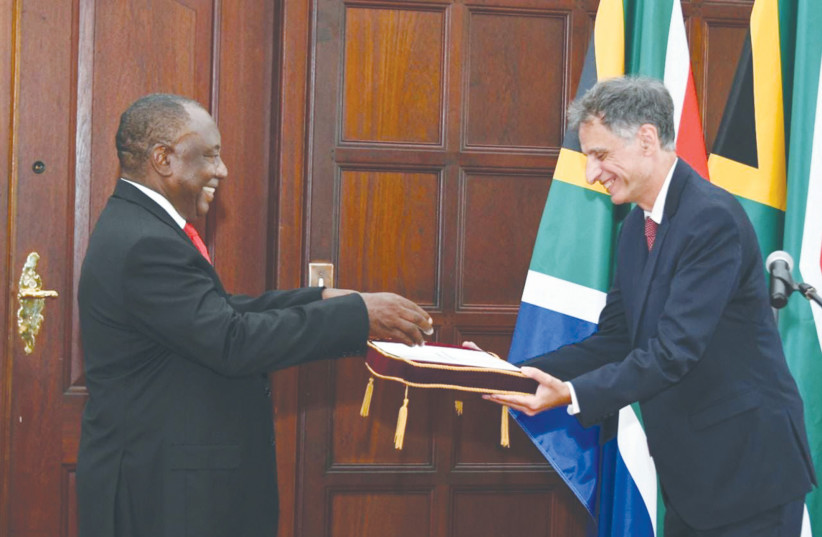
SOUTH AFRICAN President Cyril Ramaphosa smiles as he receives the credentials of new Israeli ambassador Eliav Belotsercovsky in January.
(photo credit: Israel Embassy-South Africa/South African Dept. of International Relations and Cooperation/Twitter)

The institution committed to unity in Africa has been decidedly disunited on Israel. The African Union (AU) has been split over granting Israel official observer status, exposing serious fault lines regarding the Jewish state in the organization that brings together the continent’s 55 countries.

On one side, there is the growing list of African states that have positive ties with Israel and support Israel becoming an AU observer. On the other, there are countries adamantly opposed to upgrading Israel’s status.

Among Israel’s AU friends are states from across sub-Saharan Africa: Cameroon, Chad, DRC, Ethiopia, Ghana, Kenya, Liberia, Malawi, Rwanda, Senegal, Uganda and Zambia, to name but a few. With some of these countries, Israel’s ties date back decades.

As foreign minister from 1956 to 1966, Golda Meir pioneered Israel’s African outreach. Meir’s passion to strengthen Israel’s international standing was matched only by her genuinely held belief that Israel’s own development could be a valuable example to the newly independent countries of the continent.

The woman who went on to become Israel’s fourth prime minister firmly believed that Israel could be Africa’s role model: “Like them, we had shaken off foreign rule; like them, we had to learn for ourselves how to reclaim the land, increase the yields of our crops, irrigate, raise poultry, live together and defend ourselves.”

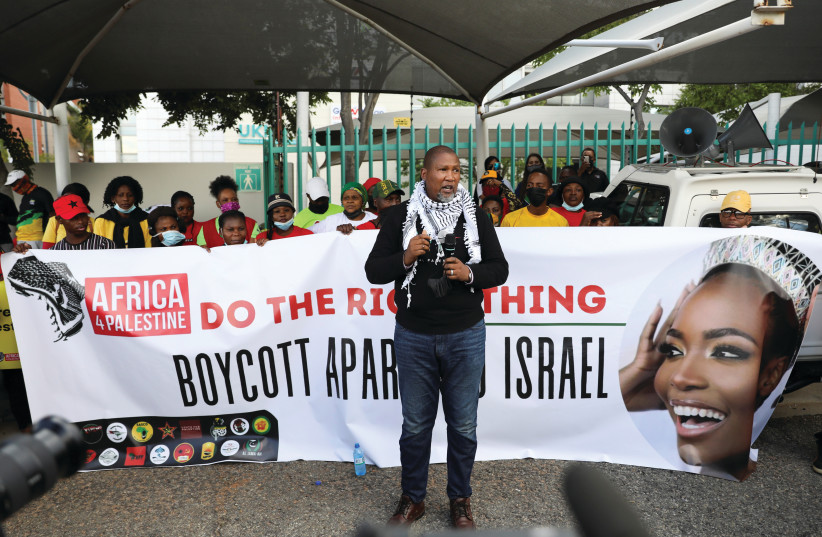
NELSON MANDELA’S eldest grandson, Mandla Mandela, speaks during a protest by Palestinian supporters earlier this month in Johannesburg, calling for Miss South Africa Lalela Mswane to withdraw from the Miss Universe pageant in Israel. (credit: SIPHIWE SIBEKO/REUTERS)

Over half a century later, Israel’s ninth prime minister Benjamin Netanyahu, followed in Meir’s footsteps in prioritizing relations with the continent, declaring that “Israel is coming back to Africa and Africa is coming back to Israel.”

In 2016, Netanyahu became the first Israeli prime minister to visit Africa in decades, his trip including Uganda, Kenya, Rwanda and Ethiopia. In 2017 he became the first ever non-African to address the Economic Community of West African States (ECOWAS) leaders’ summit in Monrovia, during which he met with 10 African presidents.

In the current debate over Israel in the AU, the organization’s Chair, Chad’s Moussa Faki, has supported Israel’s acceptance as an observer. In a speech in February, Faki alluded to Israel’s extensive connections across the continent, pointing to the 44 African states that maintain diplomatic relations with Israel, as opposed to 11 states, only one fifth of the AU membership, that refuse to do so.

Those against upgrading Israel’s status received support from Palestinian Authority Prime Minister Mohammad Shtayyeh, who flew to Addis Ababa to demand the AU not reward Israel “for the apartheid regime it does impose on the Palestinian people.”

Inside the AU, spearheading the effort against Israel are Algeria and South Africa.

The People’s Democratic Republic of Algeria has a revolutionary Arab nationalist tradition dating back to the struggle for independence from France. Algeria is not one of the increasing number of Arab League states that have moved to normalize or liberalize ties with Israel – far from it. Even in the heyday of Oslo, unlike its immediate Arab neighbors Morocco and Tunisia, Algeria refused to allow Israel to open an interest office.

The case of South Africa is more complex. South Africa is both a democracy and, because of its own unique historic experience, espouses a special commitment to combating racism. However, South Africa does not evince any natural affinity with the Middle East’s singular democracy, nor does its sensitivity to racism encompass understanding of antisemitism or appreciation of the Jews’ desire for national freedom and security. Despite the formal diplomatic ties, South Africa’s aversion towards Israel is institutional and ubiquitous.

LAST YEAR, South Africa’s Minister of International Relations and Cooperation, Dr Naledi Pandor, addressed Chatham House on her country’s foreign policy agenda. Before discussing a series of international issues, Pandor first stressed South Africa’s special commitment to the Palestinian people. Only after this obligatory opening, was it possible for the minister to delve into other matters.

Indeed, the Palestinian cause has become the holy grail of South Africa’s ruling African National Congress (ANC), the litmus test for commitment to the ideology of national liberation. Public figures who challenge the prevailing anti-Israel dogma can see their careers suffer.

One example: In 2021 South Africa’s chief justice, Mogoeng Mogoeng, was forced to apologize for expressing support for Israel, having to resign from his position as chancellor of the University of KwaZulu-Natal, ultimately leaving his post as chief justice, as well. Mogoeng’s lapse: He had said in a webinar hosted by this newspaper that “I’m under an obligation as a Christian to love Israel, to pray for the peace of Jerusalem.”

In a similar vein, last November the South African government publicly rebuked Miss South Africa, Lalela Mswane, over her decision to participate in the Miss Universe pageant in Eilat, releasing a statement that “the atrocities committed by Israel against Palestinians are well documented and government, as the legitimate representative of the people of South Africa, cannot in good conscience associate itself with such.”

Earlier this year, South African President Cyril Ramaphosa was himself chided for being photographed smiling during the ceremony where he received the credentials of Israel’s new ambassador Eliav Belotsercovsky. As the criticism came from influential elements inside the African National Congress (ANC) and its tripartite alliance partners, the government immediately released a sharp anti-Israel statement reiterating devotion to the Palestinian cause. Apparently, the ANC orthodoxy demands the head of state frown when meeting Israelis.

All this is highly counterproductive. South Africa’s boycott of Israel prevents the sort of fruitful cooperation seen in Israel’s relations across Africa, which, according to AU Chair Faki, encompass “fields as varied and sensitive as: education/training, defense, security, intelligence, nuclear cooperation, agriculture, technological innovations, health, economy and finance.”

Of late, because of its professed commitment to an ethical foreign policy prioritizing freedom and human rights, South Africa’s government drew accusations of hypocrisy and moral bankruptcy for repeatedly refusing to join the majority at the UN in condemning Russia’s invasion of Ukraine.

Critics charge that South Africa’s leadership is stuck in a time warp, that many in the ANC view the world as if it was still the Cold War of the 1980s when the Communist East wholeheartedly supported the anti-apartheid struggle, while the West (including Israel) was too cozy with the racist white minority regime.

If the current Ukraine crisis drives Pretoria to rethink some warn-out foreign policy axioms, one can only hope that any possible glasnost will also involve looking afresh at South Africa’s reigning self-defeating anti-Israel obsession.


The writer, formerly an adviser to the prime minister, is a senior visiting fellow at the INSS at Tel Aviv University. Follow him at @MarkRegev on Twitter.


Zawartość publikowanych artykułów i materiałów nie reprezentuje poglądów ani opinii Reunion’68,
ani też webmastera Blogu Reunion’68, chyba ze jest to wyraźnie zaznaczone.
Twoje uwagi, linki, własne artykuły lub wiadomości prześlij na adres:
webmaster@reunion68.com


Israeli Artillery Attacks Site of Lebanon Rocket Launch

Israeli Artillery Attacks Site of Lebanon Rocket Launch

i24 News and Algemeiner Staff


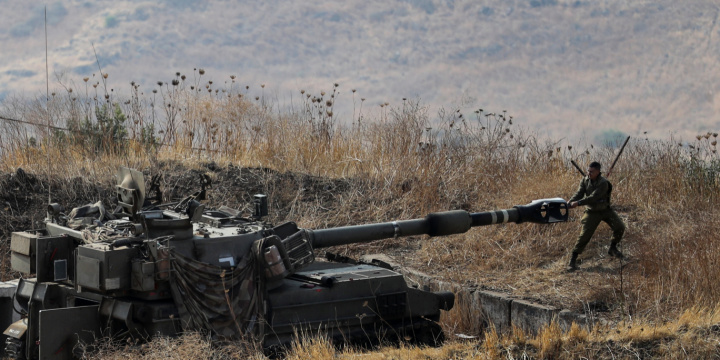
An Israeli soldier cleans the cannon of an artillery unit on the Israeli side of the border with Lebanon, August 6, 2021. REUTERS/Ammar Awad

 Israel’s military said early Monday that its artillery shelled the site of a rocket launched from Lebanon, which hit open land in Israel near the border.

The Israel Defense Forces said an explosion was reported shortly after midnight near the northern Kibbutz Metsuba, just miles from the border with Lebanon.

No alert sirens were triggered by the rocket, according to the military.

The Hezbollah-affiliated Al-Akhbar newspaper said a rocket was shot from the area south of the city Tyre.

Exchanges of fire between Israel and Lebanon since the 2006 Second Lebanon War with Hezbollah are rare. Last August, a rocket attack from Lebanon wounded several Israelis.

Attacks on Israel from Lebanon are generally perpetrated by Palestinian factions in the country, which holds a sizable Palestinian refugee population.
Israel has seen a wave of violence in recent weeks, with Jerusalem’s Al-Aqsa mosque, or Temple Mount, serving as a flash point for clashes that threaten to destabilize other areas, including Israel’s border with the Gaza Strip.


Zawartość publikowanych artykułów i materiałów nie reprezentuje poglądów ani opinii Reunion’68,
ani też webmastera Blogu Reunion’68, chyba ze jest to wyraźnie zaznaczone.
Twoje uwagi, linki, własne artykuły lub wiadomości prześlij na adres:
webmaster@reunion68.com


Wielki rosyjski energetyczny przekręt

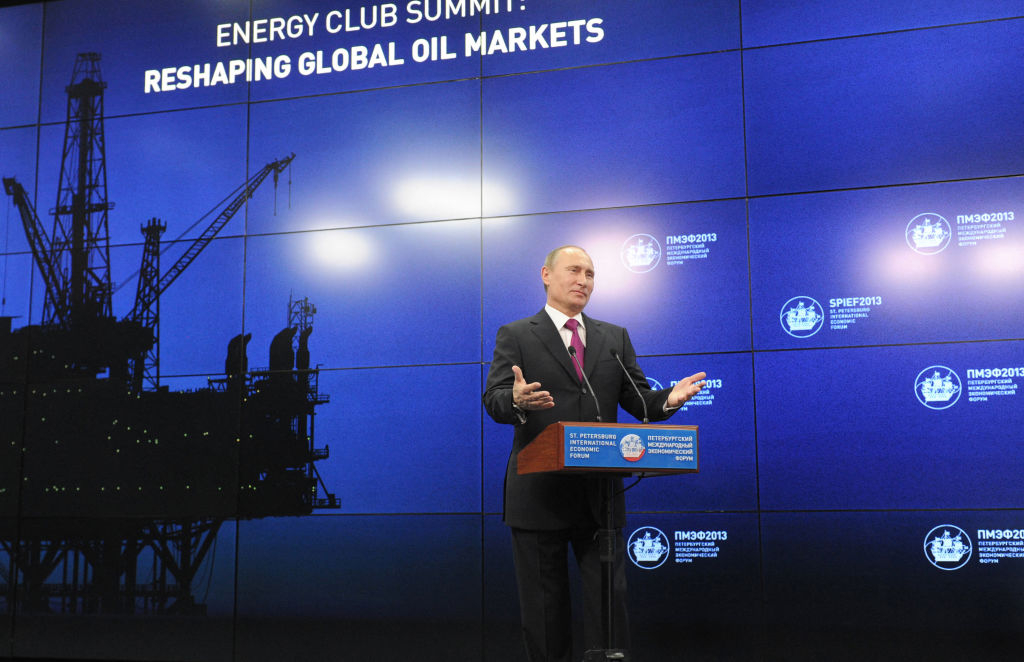
Na zdjęciu: Rosyjski prezydent Władimir Putin przemawia na szczycie Klubu Energii podczas Międzynarodowego Forum Ekonomicznego w St. Petersburgu 21 czerwca 2013 roku. (Zdjęcie: Michaił Klimentie/RIA-Novosti/AFP via Getty Images)


Wielki rosyjski energetyczny przekręt

Giulio Meotti

Tłumaczenie: Małgorzata Koraszewska


“Z szybko zbliżającą się zimą Europa znajduje się w kryzysie energetycznym – i polega na łasce rosyjskiego dyktatora, Władimira Putina. Jest to samodzielnie sprowokowana katastrofa, której przygotowanie trwało latami”.

Tak zaczynał się artykuł redakcyjny z października 2021 roku w “Wall Street Journal”, zanim Rosja zaczęła gromadzić żołnierzy na ukraińskiej granicy i kiedy żaden analityk ani think tank nie wyobrażał sobie, że to co było wówczas niewyobrażalne, jest tuż za rogiem. Dalej w artykule czytamy:

“Europejscy przywódcy wybrali kalectwo w dziedzinie energii w imię programu klimatycznego, który nie wpłynie na klimat, ale podnosi ceny energii, szkodzi konsumentom i przemysłowi, i wzmacnia zbirów na Kremlu.

Wielka Brytania i Unia Europejska zobowiązały się do zerowych emisji netto gazów cieplarnianych do roku 2050, do zamykania elektrowni węglowych i pakowania miliardów w projekty słoneczne i wiatrowe. Niemcy i kilka innych krajów europejskich zakazały szczelinowania. Zamieniło to przywódców europejskich w odpowiednik XVI-wiecznych żeglarzy, którzy modlili się o przychylne wiatry i pogodę, podczas gdy ceny energii podnoszą się i spadają zależnie od stopnia zachmurzenia i siły wiatru.

Niemcy zaszkodziły sobie także, kiedy kanclerz Angela Merkel postanowiła zlikwidować elektrownie jądrowe, reagując przesadnie na wypadek w Fukushimie w 2011 roku”

Konstantin Kosaczew, wpływowy rosyjski ustawodawca, powiedział wcześniej grupie medialnej Bloomberg, że “nie możemy ruszyć na ratunek tylko po to, by kompensować koszty błędów, których nie popełniliśmy”. Taka surowa uczciwość boleśnie kontrastowała z europejską naiwnością.

Przewodnicząca Komisji Europejskiej, Ursula von der Leyen, spotkała się niedawno z aktywistami z inspirowanego przez Gretę Thunberg ruchu “Fridays for Future”, mimo odpowiedzialności tych środowiskowców za energetyczny masochizm Europy, jak nazwał to “Wall Street Journal” w innym artykule redakcyjnym.

Autor Michael Shellenberger, który także ostro krytykuje politykę klimatyczną Europy, napisał niedawno w poście w Substack zatytułowanym “Zielone urojenie Europy dało siłę Putinowi”:

“Kiedy Zachód wpadł w hipnotyczny trans o uzdrowieniu swoich stosunków z naturą, zapobiegnięciu klimatycznej apokalipsie i oddawaniu czci nastolatce o imieniu Greta, Władimir Putin dokonywał swoich posunięć”.

Jeden z powodów katastrofalnych wyborów energetycznych Niemiec – rosyjski gaz i chińskie panele słoneczne zamiast krajowej energii jądrowej i produkcji paliw kopalnych – ujawnił Fabien Bouglé w książce Nucléaire, les vérités cachées (“Energia jądrowa, ukryta prawda”). W niedawnym wywiadzie dla “Le Figaro” powiedział:

“Moje badania pokazały wyraźnie, że Niemcy prowadziły ekonomiczną wojnę przeciwko francuskiej energii jądrowej. W związku z tym przez lata nasi sąsiedzi za pomocą antynuklearnych i środowiskowych NGO starali się oczernić nasz przemysł jądrowy na naszej ziemi, a także w Brukseli. Armia niemieckich lobbystów pracuje z Komisją Europejską, by nie dopuścić do wpisania francuskiej energii jądrowej na listę działań uznanych za ‘zielone’ z powodu jej niskowęglowej natury”.

Jesienią 2021 roku COP26, konferencja klimatyczna ONZ, przedstawiała groteskowy spektakl: rodzaj ekologicznego Wersalu. Bogaci, potężni i cnotliwi tego świata zgromadzili się w Glasgow, by prawić obywatelom zachodnich krajów o tym, jak bardzo szkodzimy planecie naszym stylem życia. Przybyli swoimi prywatnymi odrzutowcami, by narzekać na emisje przemysłu lotniczego. Główny doradca naukowy brytyjskiego rządu, Patrick Vallance, powiedział, że wszyscy powinni jeść mniej mięsa i mniej latać samolotami. A potem przyszła informacja, że 400 prywatnych odrzutowców przyleciało na konferencję klimatyczną ONZ, przywożąc międzynarodowych przywódców i dyrektorów korporacji.

Brytyjski książę Karol orzekł z jednego ze swoich pałaców, że COP26 jest “ostatnią szansą” planety. Brytyjska rodzina królewska latała tak dużo przez ostatnich pięć lat, że mogliby dolecieć na księżyc i z powrotem.

Podczas gdy Niemcy perorowały o klimacie, “Washington Post” informował nas o ich hipokryzji:

“Niemcy przedstawiają siebie jako przywódcę klimatycznego. Nadal jednak zrównują z ziemią wsie dla kopalni węgla… Ziejąca, czarnobrązowa rana w ziemi, która jest niemiecką kopalnią węgla Garzweiler, już połknęła ponad dziesięć wsi. Zburzono stare kościoły i domy mieszkalne, i zdarto ziemię, na której były zbudowane. Ziemia uprawna zniknęła, cmentarze opróżniono”.

Sama kopalnia Lützerath jest dwukrotnej wielkości Manhattanu. To dlatego Niemcy określa się jako najbardziej zanieczyszczający kraj w Europie. Sześć lat temu, w czasach COP21, były polski premier, Jerzy Buzek ostrzegał nas: “nie bądźmy hipokrytami: Niemcy budują dodatkowe kopalnie węgla, by wspierać sektor energii odnawialnej”.

W listopadzie 2021 roku Thomas Friedman napisał w “New York Timesie”:

W niedawnym eseju o rywalizacji wielkich mocarstw i zmianie klimatycznej Rob Litwak, ekspert kontroli zbrojeń w Wilson Center, przypomniał pytanie prezydenta Ronalda Reagana do Michaiła Gorbaczowa, sowieckiego przywódcy, kiedy wybrali się na spacer podczas szczytu w 1985 roku nad Jeziorem Genewskim.

Jak to później ujął Gorbaczow: “Prezydent Reagan nagle zapytał mnie: ‘Co zrobilibyście, gdyby Stany Zjednoczone zostały nagle zaatakowane z przestrzeni kosmicznej? Czy pomoglibyście nam?'” …

W powtórzeniu tej historii Litwakowi chodziło oczywiście o to, że dzisiaj stoimy przed podobnym, światowym zagrożeniem – nie ze strony kosmitów, ale ze strony znacznie lepiej znanej i pozornie dobrotliwej siły: naszego klimatu.

Tak więc postępowi amerykańscy mędrcy w listopadzie marzyli o sojuszu między Zachodem, Rosją i Chinami przeciwko globalnemu ociepleniu. Teraz, kiedy Zachód izolował Rosję, największego dostawcę energii do Europy, nikt już o tym nie mówi.

Zapomniano o spotkaniu w Glasgow w styczniu. Import węgla do Unii Europejskiej już wzrósł o ponad 56% w porównaniu do roku 2021, by przeciwdziałać kryzysowi energii. W Wielkiej Brytanii Coal Authority udzielił zezwolenia kopalni w Walii na podniesienie produkcji o 40 milionów ton przez następne dwadzieścia lat.

Niemcy, które zależą od rosyjskiego gazu, i które mają w rządzie partię Zielonych wraz z socjaldemokratami, były w tak rozpaczliwym położeniu, że musiały zatrzymać zamykanie elektrowni jądrowych. O zamknięciu reaktorów zdecydowała ówczesna kanclerz Angela Merkel po wypadku Fukushimy. Teraz Hans-Werner Sinn, czołowy niemiecki ekonomista, napisał:

“Zarówno na krótką, jak na długą metę Niemcy nie będą w stanie zakończyć importu rosyjskiego gazu bez wywołania ekonomicznego chaosu… Obietnica Niemiec porzucenia węgla i atomu, tych właśnie źródeł energii, które dałyby krajowi pewien stopień samowystarczalności i autonomii, sprowadziła na kraj wielkie niebezpieczeństwo”.

Jak się okazuje, Rosja podobno propagowała, (często używając “brudnych pieniędzy” via Bermudy – gdzie nie trzeba wymieniać nazw darczyńców), “zielone” kampanie przeciwko energii jądrowej, by zapewnić zależność Zachodu od importowanych z Rosji paliw kopalnych. Według artykułu w “The Hill”:

“W 2014 – tym samym roku, kiedy Rosja zaanektowała Krym – ówczesny sekretarz generalny NATO, Anders Fogh Rasmussen, ostrzegał, że Rosja potajemnie działa na rzecz podważenia produkcji paliw kopalnych w Europie i w USA…

Według ‘Guardiana‘, Rasmussen… mówił na prezentacji dla think tanku w Londynie: ‘Spotkałem sojuszników, którzy informują, że Rosja, jako część swoich wyrafinowanych operacji informacji i dezinformacji, aktywnie angażowała się w prace tak zwanych organizacji pozarządowych (NGO) – środowiskowych organizacji działających przeciwko szczelinowaniu – by zachować europejską zależność od importowanego z Rosji gazu'”.

Dominique Reynié, profesor politologii w Institut d’Etudes Politiques w Paryżu, w wywiadzie dla CNews, powiedział niedawno:

Znaleźliśmy pieniądze od Gazpromu w niektórych środowiskowych NGO, które dostarczyły ministrów pewnym europejskim krajom – na przykład, Belgii – którzy następnie w pewnym sensie zwracali przysługę przez obronę odejścia od energii jądrowej”.

Niemiecka Fundacja na rzecz Klimatu i Ochrony Środowiska, która podobno otrzymała ponad 17 milionów euro od Gazpromu, także była oskarżona o to, że jest finansowaną z Moskwy “marionetką”, jak ujawnił “Sunday Times”.

Fundację założyła w tym roku w Mecklenburg-Pomeranii Manuela Schwesig, socjaldemokratyczna premierka landu i sojuszniczka byłego kanclerza Niemiec, Gerharda Schrödera, przewodniczącego firm, które są właścicielami rurociągów Nord Stream i Nord Stream II, zbudowanych do transportu gazu ziemnego z Rosji do Niemiec. Schröder był także członkiem zarządów wspieranych przez państwo rosyjskie firm energetycznych.

Ponadto dochodzenie przeprowadzone przez Unherd ujawniło, że Chiny także finansują zachodnich środowiskowców:

“Kilka przecznic od Placu Tiananmen Square, w ogromnym splendorze Centrum Konferencyjnego Hotelu Pekin, zebrał się we wrześniu tłum wysokich rangą funkcjonariuszy partii komunistycznej, by wygłosić jasny komunikat: przez ‘skupienie się na obcinaniu emisji węglowych… Chiny będą promować zielony rozwój i nieustannie polepszać swoją ekologię’. Doroczne zgromadzenie ogólne Rady Chin ds. Międzynarodowej Kooperacji Środowiska i Rozwoju (CCICED) trwało w najlepsze…

Istotnie, kiedy sala skwierczała optymistyczną ekoretoryką, można było niemal zapomnieć, że Chiny są największym na świecie źródłem gazów cieplarnianych – i że same nowe węglowe elektrownie, które są w trakcie budowy, mają większą moc produkcyjną niż wszystkie instalacje wytwórcze energii w Wielkiej Brytanii…

Według oficjalnego raportu z konferencji ‘zagraniczni członkowie i partnerzy komitetu chwalili chińskie ekologiczne budowanie cywilizacji i ich nowy i większy wkład w promowanie budowania czystego i pięknego świata'”.

Uczestniczyli w tym profesor Lord Nicholas Stern, prezes Grantham Center on Climate Change w London School of Economics, były główny ekonomista Banku Światowego, doradca brytyjskiego rządu w sprawach środowiska; Kate Hampton, szefowa Children’s Investment Fund Foundation (CIFF), która jest podobno finansowana przez miliardera Christophera Hohna, wiodącego filantropa środowiskowego, oraz World Wide Fund for Nature-UK, którego prezesem jest książę Karol.

Kiedy Europa stoi przed samobójstwem energetycznym i tuż przed inwazją rosyjskich wojsk na Ukrainę, o co niepokoi się były sekretarz stanu USA a obecnie “car klimatu”? Niepokoił się o “olbrzymi wpływ emisyjny” wojny, jak również o to, że wojna odciągnie uwagę od walki ze zmianą klimatyczną. “Mam nadzieję, że prezydent Putin pomoże nam nie zboczyć z kursu w sprawie tego, co musimy zrobić dla klimatu” – powiedział do BBC.

A tutaj jest inny przekręt: Nie tylko Niemcy i Francja mają dość rezerw, by zastąpić rosyjski gaz przez ponad 20 lat, ale ich wydobywanie jest zabronione “z przyczyn środowiskowych”.

Dziennikarz Michael Shellenberger napisał:

“Rosja użyła gospodarki wielkości połowy gospodarki Niemiec, by zakończyć epokę post-zimnowojenną i pokonać NATO

Zrobiła to agresją, gazem ziemnym & energią jądrową

Ameryka musi produkować znacznie więcej energii jądrowej, gazu ziemnego i ropy naftowej, albo liberalna, demokratyczna zachodnia cywilizacja będzie martwa”.

Według Ulfa Poschardta w “Die Welt“:

“Władimir Putin może robić to, co chce, tylko dlatego, że widzi słabości Zachodu: Europa, a Niemcy w szczególności, stały się dekadenckie, patrzą z wyższością na tych, którzy osiągają najlepsze rezultaty i poddają się naiwnie urojeniom zeitgeistu… Putin patrzy na Niemcy i widzi federalną republikę klaunów. A klaunów się nie boi”.

Teraz Europa próbuje zredukować swoją zależność od rosyjskiego gazu. Ale co przyjdzie potem?


Zawartość publikowanych artykułów i materiałów nie reprezentuje poglądów ani opinii Reunion’68,
ani też webmastera Blogu Reunion’68, chyba ze jest to wyraźnie zaznaczone.
Twoje uwagi, linki, własne artykuły lub wiadomości prześlij na adres:
webmaster@reunion68.com


Homage to Borodyanka

Homage to Borodyanka

BERNARD-HENRI LÉVY


Bearing witness to the horror and majesty of a ruined, resilient Ukraine.

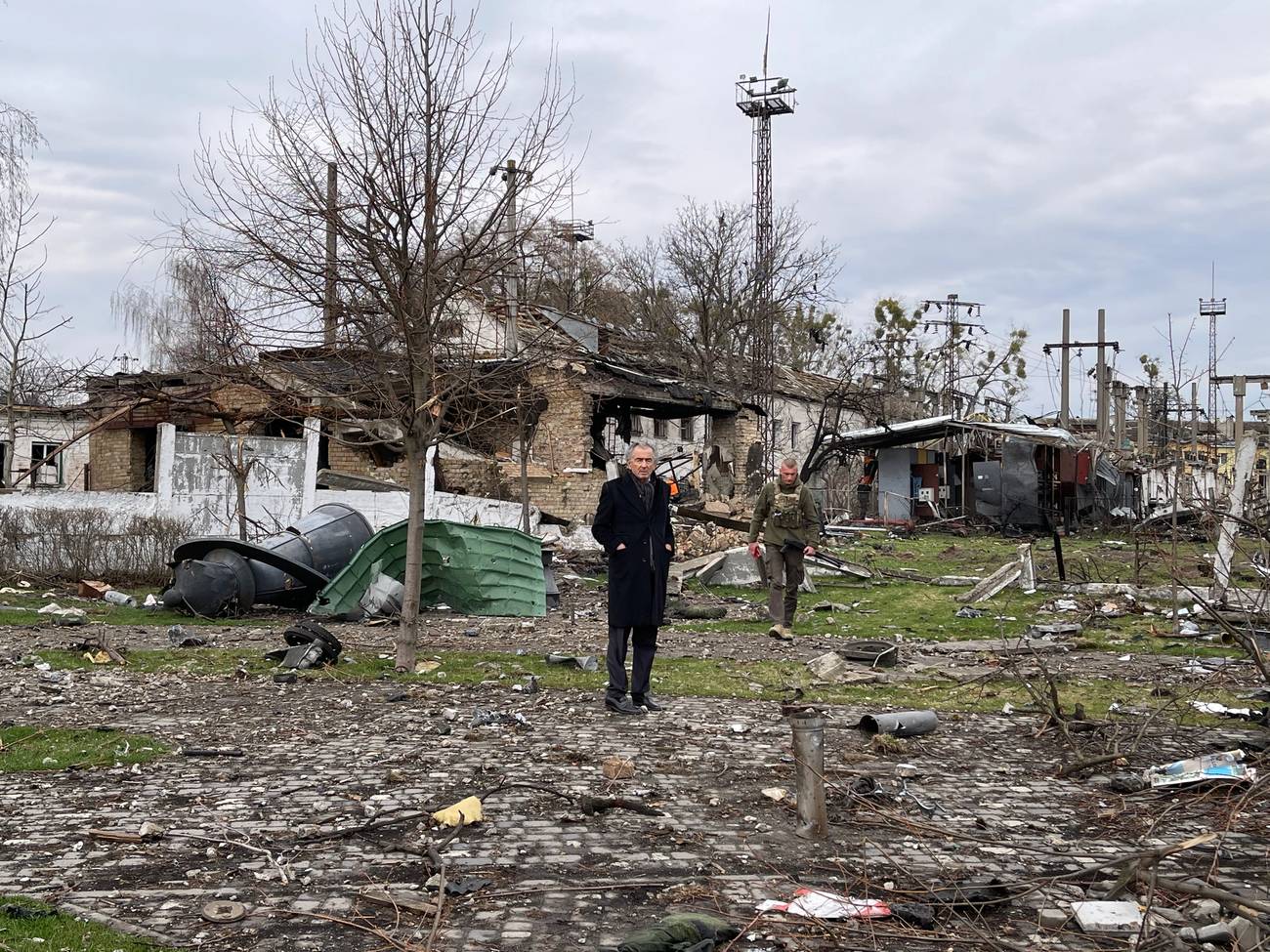
Ruins of BorodyankaGILLES HERTZOG

We arrive by train, from Lviv, to Kyiv. They are fat, blue trains, comfortable, fairly fast, with a reputation, before the war, for being on time. But everyone has in mind the bombing, the day before yesterday (April 9), of the Kramatorsk station, where at least 52 died. So, people are careful. They avoid gathering. Step lively if the platform is exposed. And when the train pulls out, it’s with all lights off, shades drawn in the compartments, and, all during the night, stops in the middle of the countryside, and detours, which causes delays. Soon, though, you think nothing of it. In the wagon, there are volunteers who have put their families out of harm’s way and are returning to combat. A sleeping soldier, his unloaded Kalashnikov hugged to his chest like a baby. A Brit who has come to enlist in the International Brigade created by Zelensky. And people who travel against the current of refugees, having decided, in fear and trembling, to return to their town or village. What’s left of my house? Did they destroy the blue and yellow terracotta ceiling that, for three generations, survived all catastrophes? And the porcelain I left behind, in my haste? And my mother-in-law, whom I’ve heard nothing about since the invasion? That’s what we talk about on the Lviv-Kyiv direct train, crossing, as in a dream, a besieged Ukraine. And that’s what we hear when we are lucky enough to have a good fixer: Serguei O., perfectly Francophone, devotee of Albert Camus and Michel Houellebecq, with the look of James Cagney in The Mayor of Hell and who, after having done, in a past life, “every possible stupid thing imaginable,” rededicated himself to his country’s defense.

In Kyiv, the unexpected. The Russians having, for now, lifted their siege, we hoped for a climate if not of jubilation, then at least liberation. But no. The streets are empty. Stores and churches closed. The Maidan—which I saw in 2014 with Gilles Hertzog and Marc Roussel, packed with people, vibrating with its democratic revolution—is deserted, covered in offset barricades and iron antitank Czech hedgehogs. Everywhere the same terrifying silence as on the dead planets, covered in ice, like steel globes, that serve as background scenery in the novels of Philip K. Dick. To be expected, says Vitali Klitschko, the former boxer-turned-mayor and, since then, war chief, who welcomes us in fatigues in the shadow of a basilica. Don’t be fooled, he insists, with a funny hard look that is no longer that of a friendly giant, the old champ pulling his punches, the soft Dostoyevskian man we met in 2014 at his party headquarters, and who we brought to Paris to meet President Hollande. The Russians have retreated, it’s true. And, because we undid them, they have decided to redeploy in the Donbas and the cities of the south, where the resistance drives them mad. But they could come back. And on the Belarusian border they have machines that can hit us at any moment. Just then, an alert siren wails. He listens. Looks up at the sky knowingly. “No,” he says, “it’s not yet for us.” And then, accusingly: “Be sure to say, when you get back, that each of the missiles they launch on my city is sponsored by the gas you buy from them every day.” A winning but heartbroken smile crosses his lips. The soft man is back, rushing in on the armored one.

In Bucha, like in Irpin, the streets have been cleaned of bodies left behind by the Russians. But the stories of the survivors are as chilling as the images. An old woman whose daughter had been killed before her eyes: She died like an animal, curled up at the end of the night in the last room of her house. Another: She remembers the fat face, the hateful, clenched mouth, of the boy who held her shoulders while the others tormented her; she’ll never forget his cold sweat, tinged with cold soup, and the smell of the cheap booze he chugged straight from the bottle, between swears; nor the words they dared to write, on their way out, on the wall of a nearby house: “From Russian with love.” Another: The Russians had parked cannon transporters in a neighbor’s courtyard; when the Ukrainians counterattacked, the Russians suspected the neighbor of having transmitted their GPS position and executed him with a bullet to the neck. And another woman: Her son had, in his cellphone, images of destroyed tanks—they blew his head off, and then, as if to punish him more, left him to rot for three days, with the soldiers wiping their boots on him like a doormat. And still another who found her husband’s body thrown in a garage: She just buried him, she doesn’t want to speak of it anymore, she folds into tears and silence. Bodies massacred and abused, 16 children killed, the mayor tells us the story of these survivors who were made to wallow in the blood of the dead, that’s what we heard in Bucha.

Night, near Ukrainka, in one of the few houses still standing in this region of ponds, reedy marshes, and pine forests that seems an interminable series of disasters. We are among the fishermen, Serguei tells us. Only that, for a fisherman’s house, this wood building is large. Modern. We can’t push through a door without coming across helmets, piles of bulletproof vests, military maps, computers, and assault rifles. And, if the Dnipro is down there somewhere, in the night, we can make out no boats or nets—and, with their herculean bearing, tussled hair, camo gear, their boots crusted in muck and unlaced, their brusquely vengeful looks when talk turns to the crimes of the Siberian Buryats, the men who greet us look less like toughs, or commandos, and more like sailors. We eat smoked eel, carp, over-boiled meat. We clink shot glasses of horilka, the firewater of “Taras Bulba,” to the glory of Ukraine and its heroes. With tongues loosening, Alexis, the leader, lets us know that we are near Trypillia, cradle of a millenary Ukrainian civilization whose existence revisionist Russian historians work to deny. And, even if there’s no way to get information about his men’s pasts out of him, he ends up telling us that their real jobs, back in Bucha for example, were to “maintain the justice of men.” It’s late. We go to bed. They head back out, heavily armed, into the night, to “maintain justice.” I think of Sarajevo, where the first to the resistance were named Caco, Celo, Juka, and they were both wicked kids and brave.

The Nescheriv monastery is also completely isolated, at the end of a flat road, green-gray under a blue sky, spared the bombings, 60 kilometers south of Kyiv. Set in this bucolic scene, at a bend in the strangely silent river, there is a chapel all gold, painted wood, angels and saints, edifying images, multicolored onions, dedicated to the prophet Jonah. And in this inspired décor live 26 monks, in black habits, thin beards, burning gazes and wolflike faces, praying in rotation 24 hours a day, together with the 40 Donbas refugees they have been sheltering since the start of the war. At some point, Serguei leans in to my ear. “A small problem needing my attention,” he whispers. “I’ll be back in five.” After an hour when he is still not back, I step out myself and find him speaking with a group of armed men who had arrived in 4x4s, visibly worked up. They heard we were here. But most of all I learn that the monastery is, albeit anti-Putin, still dependent on the Patriarchy of Moscow, and therefore suspect in the eyes of the patriots of the territorial defense nearby. Serguei, without losing his cool, shows on his cellphone a photo of us with President Zelensky. Problem solved. And we are cleared for a disquisition from the leader on the War of the Bells, which opposes the monasteries still faithful to the Patriarchy of Moscow to those that took the independence offered in 2018 by the Patriarchy of Constantinople. Abbot Ioasaf, who was a track champion in his youth, is yet to make that jump. For now, he prays for peace, for the glory of Ukraine, and for the 60 cats who also take refuge in the monastery.

As for this other catacomb, I won’t share the location. We are still south of Kyiv. But 4 meters below ground, in a bunker fashioned of piled bricks and cement, made up like a dorm, where a dozen children have spent, for the last five weeks, most of their nights, and, sometimes, their days. There is an adolescent there, from Kharkiv, who has lost—and understood—everything. Another, with an angel’s face, laughing too much, with high rouged cheeks—her mother died in Bucha, pierced by a projectile on her way home from shopping. A brother and sister, younger, who play with Legos, recreating the war and the siege of Mariupol. But there are still others, the youngest, who don’t know what they are doing there, and who, lying on their makeshift mattresses like captive, cold birds, look for new ways to chase their boredom. So, when an alarm sounds, the villagers who take turns watching over them and feeding them tell them it’s the fire trucks. When an explosion is heard in the distance, it’s thunder. And whenever one of the older ones shows them on their phones images of missiles streaking through the sky, they explain to them that it was fireworks. I don’t know if President Zelensky is right to call the destruction of Ukraine that Putin and his cronies have decided on “genocidal.” But we spent a night, that I do know, with children who resembled little Giosué of Roberto Benigni’s Life Is Beautiful, whose father made believe that life in a concentration camp was just a movie set. Who or what should be “denazified”? The Ukrainian nationalists, really? Or the executioners of these children, thin-necked, sunken-eyed, their lives broken?

History is likely to be unkind to Petro Poroshenko. And it’s true that it’s tough luck to have faced down Putin for five years, forced him to negotiate in Minsk and, in the same movement, to have built the new Ukrainian army, only to be succeeded by an astounding young man who started his career as a clown and whose bravery, heroism, and strategic and political intelligence have put him in the skin of a Ukrainian Churchill. But the former president is a good sport. We found him on L Street, behind a basilica of the old city of Kyiv, at the headquarters of a battalion he supervises. And we spent the day, from there, touring the northern zone, beyond Bucha, toward the Belarusian border, where entire villages were annihilated by the retreating Russian army (and I mean the Russian army; not Chechen militias; not Syrian mercenaries). Not once did I catch the former president saying a single bad word about his glorious successor. And not once—over the long day where he happened upon partisans rejoicing to see him here, near them, on this bloody field—did I see him break the patriotic pact he made with Volodymyr Zelensky on day one of the war. This is also beautiful. The national unity, that too is to the glory of Ukraine. When the great rise to the level of the humble, when the same amount of strength and character resides in the high born as in the lowly, it’s proof that a people is rising, and no matter the challenges still to endure, are promised victory.

Everywhere people spoke of Bucha. We heard less about Borodyanka. But the testimony from there, 30 kilometers farther north, past two blown-out bridges along a path of misery the locals call the route of death, is hardly less instructive. This building cut in two by a missile. … This other, reduced to rubble, where rescue workers in yellow vests work this morning in a cloud of dust to dig out the body of a child who has shown no signs of life since yesterday. … This apartment, quartered by drunkards who, wishing to leave no living thing behind, launched a farewell grenade. … The cellar where you could hear them guzzle, sing, fight, play accordion, rape, pillage, and where, because “Ukrainians are rats” and need to be smoked out like rats, they threw another grenade. … A decapitated body covered in black plastic. … An improvised day care where children of the disappeared only know how to sleep one on top of the other, whimpering from fear and cold, saying they can still hear, in their dreams, the screams of drunken soldiers shooting into the air, at night. … The hoarse yelping of dogs searching for their masters. … Braziers, like in the Maidan, where people come to get some soup from humanitarian organizations. … The stench, everywhere, of garbage, gas, and burning cloth. … And then, at the center of the Grand-Place, the bronze statue of the great writer, the conscience of Ukraine, Taras Shevchenko: He got a rocket in the nape; his head, half detached from his bust leans as if about to fall; but no; it holds; and it continues, before the charred buildings, to embody strength of spirit.

And yet, if there were a scale of the worst, you’d have to go elsewhere to find the most dire level. The road back to Kyiv having been washed out by a deluge, we shifted to the southeast, rolling an hour without knowing where we were headed, only to land, midafternoon, in Andrivka. More village than town. There was nothing there, not even a store, much less some military objective. A poor hamlet, totally unimportant, barely a blip on the map, forgotten of God and man. It seems, according to what the inhabitants told us, that this is what happened. A Russian column passes this way. They take quarters and are at ease. After several days there without orders, they begin to understand that things are going badly for the Kremlin and the order will be coming to redirect the troops to the Donbas front. And so, as with all vanquished and cowardly armies, part of it goes mad. Slashing. Bashing. Executing at point blank. Robbing the dead. Looting amid the rubble. We’ll massacre them, the swine, we’ll make them pay. Of this moment of collective punishment remains some soldier’s dog tags, abandoned rations, a pair of boots swapped for those of a killed Ukrainian for their warmth. One should never compare the incomparable. But this carnage against civilians for having lost the war fair and square, this battalion gone insane that before leaving the front takes revenge on the hostages at hand, it brings to mind something for the French. The Das Reich division, called to the Normandy front, which, before deploying elsewhere, takes the population of Oradour-sur-Glane.

It’s nearly curfew. Kyiv becomes a ghost town. Not a pedestrian moves. No cars roll. Checkpoints at each intersection, manned by youths with itchy trigger fingers who know this is the time double agents infiltrate. Thankfully, we have come back to our fishermen. They have the password. They manage to get us, before our train to Lviv and on to Poland, to the Maidan where it all began, and where we set our last rendezvous, at the foot of the column of the archangel Michael: Tatiana Kucher, former mayor of Ukrainka, son of a survivor of Babi Yar, who now runs a powerful NGO helping displaced people, reminds us that on this eve of elections in France, that the far right is 10 times less prevalent here than in Paris. And then, in the darkness of the square, just as we were about to pile into the cars, out of nowhere, like a ghost, a revenant: hatless, black full-length cloak, still severely blond, tightly braided, escorted by just a bodyguard holding her umbrella, the old muse of the Orange Revolution, Yulia Tymoshenko. Is she really here by chance? Or did our old friend Serguei nudge the hand of happenstance? We recall our first meeting, at this same spot, eight years ago, after her liberation from the Kharkiv prison where one of Putin’s minions had thrown her. And the last, five years later, here again in this spot, the night of my first encounter with the man who would eclipse her in bringing to the eyes of the world the colors of a free Ukraine, Volodymyr Zelensky. Beginning and end of story. Acceleration of the times when war succeeds revolution to make heads roll and spin the wheel of fortune. Destinies made. But great peoples endure. As does the strength of a Europe—I depart here the most tragic, cruel, and noble of its theaters. Slava Ukraini!


Translated from the French by Matthew Fishbane.

The author’s new documentary film, The Will to See, featuring reporting from Ukraine, premiers on April 29, 2022, in New YorkLos AngelesWashington, D.C., and San Francisco.


Zawartość publikowanych artykułów i materiałów nie reprezentuje poglądów ani opinii Reunion’68,
ani też webmastera Blogu Reunion’68, chyba ze jest to wyraźnie zaznaczone.
Twoje uwagi, linki, własne artykuły lub wiadomości prześlij na adres:
webmaster@reunion68.com