Archive | November 2022

Dla niego pokój oznacza zabijanie Żydów

Kiedy prezydent Autonomii Palestyńskiej Mahmoud Abbas przemówi do Zgromadzenia Ogólnego ONZ w Nowym Jorku pod koniec tego miesiąca, nie powie swoim słuchaczom, że członkowie jego rządzącej frakcji Fatah szaleją na Zachodnim Brzegu, gdzie przeprowadzają codziennie ataki terrorystyczne przeciwko działaczom palestyńskim i dziennikarzom, a także Izraelczykom. Na zdjęciu: Abbas wygłasza przemówienie w ONZ 27 września 2018 r. w Nowym Jorku. (Zdjęcie: Stephanie Keith/Getty Images)



Dla niego pokój oznacza zabijanie Żydów

Bassam Tawil
tłumaczenie: Małgorzata Koraszewska


Gdy prezydent Autonomii Palestyńskiej Mahmoud Abbas przygotowuje się do wystąpienia na Zgromadzeniu Ogólnym ONZ w Nowym Jorku pod koniec tego miesiąca, pojawiają się coraz więcej sygnałów, że jego ludzie dokonują ataków terrorystycznych przeciwko Izraelowi.

Tak jak robił to w przeszłości, Abbas bez wątpienia ponownie wykorzysta podium ONZ, aby potwierdzić swoją gotowość do zawarcia pokoju z Izraelem i sprzeciw wobec terroryzmu i przemocy. Nie trzeba dodawać, że wykorzysta międzynarodową platformę do rzucenia kolejnych kłamstw i krwawych oszczerstw przeciwko Izraelowi i Żydom.

Jedno jest pewne. Abbas nie powie swoim słuchaczom w ONZ, że członkowie jego rządzącej frakcji Fatah szaleją na Zachodnim Brzegu, gdzie niemal codziennie przeprowadzają ataki terrorystyczne przeciwko palestyńskim działaczom i palestyńskim dziennikarzom, a także Izraelczykom. Ci terroryści, lojalni wobec Abbasa, działają na północnym Zachodnim Brzegu [tj. Judei i Samarii. MK], a konkretnie w palestyńskich miastach Dżanin i Nablus.

Terroryści Abbasa, uzbrojeni w różnego rodzaju broń i ładunki wybuchowe, przemierzają ulice obu miast i otwarcie deklarują swoje poparcie dla terroryzmu.

Terroryści są głównie powiązani z uzbrojoną grupą Fatahu, Brygadami Męczenników Aksa. Inna związana z Fatahem grupa, która niedawno pojawiła się na ulicach Nablusu, nazywa siebie Jaskinią Lwa.

W ciągu ostatnich kilku miesięcy terroryści Fatahu przeprowadzili wiele ataków zarówno na Palestyńczyków, jak i Izraelczyków. Wiadomo również, że wielu terrorystów współpracuje z wspieranymi przez Iran islamistycznymi grupami terrorystycznymi, Hamasem i Palestyńskim Islamskim Dżihadem (PIJ).

Terroryści Fatahu przeprowadzili ostatnio kilka zamachów na Żydów odwiedzających Grób Józefa w Nablusie.

Brygady Męczenników Aqsa wręcz chwaliły się atakami terrorystycznymi w pisemnym oświadczeniu. Grupa przysięgła również, że będzie kontynuować ataki terrorystyczne.

W zeszłym miesiącu armii izraelskiej udało się zlikwidować Ibrahima al-Nabulsiego, jednego z przywódców Brygad Męczenników Aksa w Nablusie, poszukiwanego za przeprowadzenie serii zamachów z bronią palną.

Po jego śmierci przywódcy Fatah zorganizowali konferencję nazwaną imieniem zabitego terrorysty w Ramallah, de facto stolicy Palestyńczyków. Był to gest ze strony Abbasa i jego współpracowników, by uczcić zabitego terrorystę. Abbas zadzwonił nawet do rodziców al-Nabulsiego i dwóch innych terrorystów z Fatah, aby złożyć kondolencje i wychwalać terrorystów jako “męczenników”.

W zeszłym tygodniu izraelscy policjanci aresztowali palestyńskiego terrorystę w mieście Jaffa, niedaleko Tel Awiwu. Terrorysta, który był w drodze do przeprowadzenia ataku, należał do powiązanej z Fatahem grupy terrorystycznej Jaskinia Lwa. Policja znalazła w samochodzie terrorysty pistolet maszynowy i bomby rurowe.

Ostatnio Palestyńczycy ogłosili, że Hamad Abu Jildeh, 24-letni mężczyzna z Dżaninu, zmarł z powodu ran odniesionych podczas starcia zbrojnego z izraelskimi żołnierzami kilka dni wcześniej. Palestyńczycy ujawnili, że Abu Dżildeh był jednym z dowódców Brygad Męczenników Al-Aksa Abbasa. Wideo, jakie pojawiło się na platformach społecznościowych, przedstawiało Abu Dżildeha, gdy strzelał do izraelskich żołnierzy w obozie dla uchodźców w Dżanin. Podczas jego pogrzebu członkowie Fatahu wezwali Palestyńczyków do przeprowadzania kolejnych ataków.

Abu Dżildeh i al-Nabulsi to dwaj spośród kilku terrorystów Fatahu zabitych lub zatrzymanych w ostatnich tygodniach. Terroryści ci należą do frakcji palestyńskiej, którą ludzie Zachodu często określają jako “umiarkowaną”. Dowódcą tych terrorystów jest nie kto inny jak Mahmoud Abbas, który oprócz pełnienia funkcji prezydenta Autonomii Palestyńskiej jest także przewodniczącym Fatahu.

Abbas i wyżsi przywódcy Fatah nie powiedzieli ani słowa przeciwko zaangażowaniu ich ludzi w terroryzm.

Abbas i przywódcy Fatahu nadal gloryfikują terrorystów. Ponadto Abbas odmówił powstrzymania lub rozbrojenia terrorystów. Zamiast tego Abbas i jego rzecznicy nadal, jak zwykle, obwiniają Izrael za ostatni wybuch przemocy na Zachodnim Brzegu. W rzeczywistości mówią, że Izrael nie ma prawa bronić się ani udaremniać ataków terrorystycznych planowanych i przeprowadzanych przez terrorystów, zwłaszcza należących do Fatahu.

Zdaniem Abbasa i innych przywódców palestyńskich, palestyńscy prawnicy, dziennikarze i aktywiści żądający wolności, a także Żydzi powinni po prostu akceptować codzienne ataki terrorystyczne przeciwko nim. Abbas krzyczy “terroryzm” tylko wtedy, gdy Izrael zabije lub aresztuje terrorystę.

To ten sam Abbas, który wkrótce pojawi się na Zgromadzeniu Ogólnym ONZ, aby ponownie odegrać rolę ofiary i oskarżyć Izrael o “ludobójstwo” i “czystki etniczne”. Od kiedy doszedł do władzy w 2005 roku, Abbas okłamuje ONZ i inne instytucje międzynarodowe.

Podążając śladami swojego poprzednika, Jasera Arafata, strategia Abbasa polega na oszukiwaniu świata przez szerzenie fałszywego twierdzenia, że Izrael jest odpowiedzialny za wszystkie nieszczęścia Palestyńczyków – posunięcie to jest próbą ukrycia własnego złego przywództwa.

Podobnie jak Arafat, Abbas będzie nadal mówił o pragnieniu pokoju Palestyńczyków, jednocześnie zachęcając swoich terrorystów z Fatahu do dalszego terroryzmu. Gdyby Abbas naprawdę chciał powstrzymać terrorystów, przynajmniej poinstruowałby swoje siły bezpieczeństwa, aby skonfiskowały nielegalną broń i aresztowały terrorystów.

Abbas jednak tego nie zrobi, ponieważ sam uważa terrorystów za bohaterów i męczenników. Co więcej, nie ma motywacji do rozprawienia się z terrorystami; w końcu nie stanowią zagrożenia dla jego reżimu.

Tymczasem Abbas doskonale wie, że jego podżeganie przeciwko Izraelowi było tak skuteczne, że gdyby kiedykolwiek zawarł pokój z Izraelem, jego własny lud dokonałby jego egzekucji za zdradę.

Abbas podczas swojego przemówienia w ONZ oczywiście nie wspomni o terrorystach Fatahu. Nie będzie też mówił o szerzącej się korupcji w jego rządzie i niewykonywaniu przez siły bezpieczeństwa Autonomii Palestyńskiej ich obowiązku egzekwowania prawa i porządku oraz zapobiegania terroryzmowi.

Państwa członkowskie ONZ powinny przygotować się na kolejną listę kłamstw i oszczerstw Abbasa, obarczające winą wszystkich oprócz niego samego za trwający rozlew krwi. Przydałoby się, gdyby chociaż jeden z przedstawicieli państw członkowskich przerwał litanię Abbasa, by zapytać o rolę jego ludzi w terroryzmie i o to, dlaczego nadal chwali terrorystów, twierdząc równocześnie, że Palestyńczycy rzekomo dążą do pokoju.


Bassam Tawil jest muzułmańskim badaczem i publicystą mieszkającym na Bliskim Wschodzie.


Zawartość publikowanych artykułów i materiałów nie reprezentuje poglądów ani opinii Reunion’68,
ani też webmastera Blogu Reunion’68, chyba ze jest to wyraźnie zaznaczone.
Twoje uwagi, linki, własne artykuły lub wiadomości prześlij na adres:
webmaster@reunion68.com


Norah Vincent’s Gender Trouble

Norah Vincent’s Gender Trouble


JAMES KIRCHICK


The late writer’s lessons on breaking the gender binary
.

‘With the help of a new wardrobe, a shorter haircut, a layer of artificial stubble, an extremely tight sports bra, and a Juilliard voice coach, Vincent lived as “Ned” for 18 months’ANDREW HARRER/BLOOMBERG VIA GETTY IMAGES

When the late writer Norah Vincent decided to live as a man for the purposes of a journalistic experiment, she did so with the expectation that her life would be easier. Men, after all, enjoy many types of structural and social advantages in American society, advantages Vincent explored in her 2006 book chronicling that experiment, Self-Made Man: One Woman’s Journey Into Manhood and Back Again. Much the way that other great immersive journalist, Barbara Ehrenreich, reported on the working poor by laboring in a series of minimum wage jobs (and who happened to die weeks after Vincent’s own death this past summer by suicide at the age of 53), Vincent undertook an investigation into how a more literal version of “the other half” lived.

With the help of a new wardrobe, a shorter haircut, a layer of artificial stubble, an extremely tight sports bra, and a Juilliard voice coach, Vincent lived as “Ned” for 18 months. Throughout her experiment, Vincent successfully passed in various male milieus, from a bowling league to a strip club to a high-powered sales firm straight out of Glengarry Glen Ross, earning the confidence of her many male interlocutors along the way. To her surprise, what she found made her more sympathetic to the plight of men, whom, she wrote, suffered as much or more from society’s gendered expectations than did women.

Vincent’s main takeaway from her time living as Ned was a deeper appreciation for “the toxicity of gender roles” that “had proved to be ungainly, suffocating, torpor-inducing or even nearly fatal to a lot more people than I’d thought, and for the simple reason that, man or woman, they didn’t let you be yourself.” For the male members of our species, this toxicity stems from anxiety over being perceived as feminine, “the result of men actively working to squelch any creeping womanly tendencies in themselves and their brothers.” Ultimately, it “wasn’t being found out as a woman that I was really worried about. It was being found out as less than a real man”—that is, a man who does not conform to stereotypically masculine gender norms. The English language has plenty of words for this type of man—pansy, sissy, fag, queer—all of which denote that class of human being who was, until very recently, among the most despised of minorities: the homosexual.

“The greatest fear of the American male is that he will be homosexual,” I write in my recent book, Secret City: The Hidden History of Gay Washington, and Vincent’s reporting confirmed this. The damaged men with whom she bowled, drank, and ogled women, “took refuge in machismo because they feared inappropriate intimacies between men. A feminized man is a gay man, or so the stereotype goes.” Living in a society that pressures them to exhibit traditionally masculine virtues (“hierarchy, strength, competition”) and smother feminine ones (“supplication, apology and need”), men go through life as if they are under constant surveillance, with dire penalties exacted for falling short. “The worst of this scrutiny,” Vincent wrote, “came from being perceived as an effeminate guy … most men were genuinely afraid, almost desperately afraid sometimes of the spectral fag in their midst.”

Vincent’s response to this social trauma was to advocate an escape from the “straitjacket” of gender, to expand the possibilities of what it means to be a man or a woman. As a proudly butch lesbian, she spoke from personal experience. “I have always lived as my truest self somewhere on the boundary between masculine and feminine,” Vincent wrote. Despite her refusal to fit into a binary box, Vincent was fiercely protective of her femininity, her lesbianism, and her womanhood. She saw no contradiction in her masculine gender presentation and her female sex. Standing nearly 6 feet tall and wearing 11.5 men’s size shoes, Vincent never felt herself “to be a man trapped in the wrong body. On the contrary,” she identified “deeply with both my femaleness and my femininity.”

In the years since Self-Made Man was published, so dramatically has our conversation about gender shifted, and so fearsome are the consequences for questioning the novel dogmas surrounding it, that the book reads like samizdat. While Vincent’s conclusion—that the oppressive conflation of sex and gender should be ruptured—was undoubtedly forward-thinking, today it would strike many progressives as retrograde. For those who fashion themselves insurgents on the newfangled cultural vanguard of the radical transgender movement, gender nonconformity no longer widens the broad spectrum of gender but narrows it by fusing gender expression with biological sex—defining effeminate men as women and masculine women as men.

In her book, Vincent barely addressed the transgender question, doing so only to deny that she identified as the opposite sex. “Am I a transsexual or a transvestite, and did I write this book as a means of coming out as such?” she asked, using words to describe those with a cross-sex identity (and, in the case of “transsexual,” those who had undergone a physical sex change) which have since been replaced with the much more expansive term “transgender.” While Vincent’s answer at the time was no—she “rarely enjoyed and never felt in any way fulfilled personally by being perceived and treated as a man”—today she would be deemed by many to be transgender or nonbinary, whether she liked it or not.

This new understanding of transgender as an internal, subjective feeling that may or may not correspond with one’s objective sex—a philosophy which emerged very recently yet has now been adopted by many American institutions—presents a challenge to homosexuality, a biological reality and facet of the human species that has existed since time immemorial. By their very nature as same sex-attracted persons, gays and lesbians have always been nonconforming in their gender expression and roles.

And as long as the vast majority of humanity is heterosexual, we always will. Because our same-sex attraction defies that which is “normal,” many gay people have been told, particularly at a young age, that we are actually members of the opposite sex trapped in the “wrong body.” This form of homophobia is particularly gruesome in Iran, where gay men are often forced to undergo sex changes in order to rectify their same-sex desires, as well as in certain parts of Africa, where lesbians confront the threat of “corrective rape” to “make” them heterosexual.

In the supposedly more enlightened West, a nonviolent but conceptually similar campaign of erasing homosexuality is afoot. If the oppressive gender norms Vincent critiqued were the product of conservative social conventions, today, in a strange development, those same conventions are being unwittingly reified by progressives under the influence of radical transgender ideology. Under this faddish new dispensation, gender nonconformity, a trait inherent to being homosexual, is being conflated with gender dysphoria, a medical condition. It is having a particularly deleterious effect on gender nonconforming young people—many of whom would otherwise grow up to be gay but who are increasingly being told that their defiance of gender norms is a likely indication that they are the opposite sex. As a result, homosexuality is being transmuted into transgender.

Much of this erasure is due to the linguistic hegemony of the word “transgender.” Until the 1990s, people with a cross-sex identity typically referred to themselves as “transsexuals,” a term that inferred one had undergone a physical sex change. “Transgender,” by contrast, defines a much broader spectrum of identity, encompassing not only those who identify as a member of the opposite sex but increasingly anyone who doesn’t conform to traditional gender roles. This has led to an explosion of young people identifying as transgender.

At increasingly younger ages and in ever larger numbers, masculine girls and effeminate boys are being encouraged not only to explore their gender variance—a perfectly healthy and welcome development—but to embrace a transgender or nonbinary existence. From there, it can be a straight path to irreversible medical interventions—puberty blockers, cross-sex hormones, and surgery—to “correct” their “sex assigned at birth.” Almost 50 years after the American Psychiatric Association removed homosexuality from its list of mental disorders, we have unintentionally achieved a new means of pathologizing it.

Almost 50 years after the American Psychiatric Association removed homosexuality from its list of mental disorders, we have unintentionally achieved a new means of pathologizing it.

Of course, none of this is to say that transgender identity isn’t real or legitimate. But the rapidity with which so many young people are declaring themselves transgender and nonbinary is worthy of skepticism. In 2020, almost 700,000 people in the United States under the age of 25 identified as transgender, nearly double the amount from just three years prior. According to Dutch doctors who have been researching adolescent gender dysphoria for decades, 80% to 95% of pre-pubertal adolescents will desist from their feelings of gender dysphoria by later adolescence, and the vast majority of them will grow up to be gay.

Vincent herself was just such a child. “Practically from birth,” she wrote, “I was the kind of hard-core tomboy that makes you think there must be a gay gene.” Had Vincent been born later, it’s entirely possible that well-intentioned educators, doctors, and other authority figures would have interpreted her gender nonconformity as a sign that she was transgender and encouraged her to transition. Testimonies from an increasing number of “detransitioners”—many of whom attribute their youthful decisions to transition as resulting from internalized homophobia—attest to this phenomenon.

The slow erasure of homosexuality and the concomitant ascendance of transgender in its place extends beyond individuals to the culture at large. The routinization of gender pronouns in email signatures, verbal greetings, and so many other areas of daily life has codified in humorless bureaucratese what had been, for gay men going back generations, a teasing form of endearment (referring to one’s friends as “she” or “her”). Over the past decade, activists, journalists, celebrities, and the New York City government have engaged in a revisionist campaign to rewrite one of the seminal moments in the history of gay liberation, the Stonewall Uprising, by concocting a false narrative that it was led not by gay men and lesbians but “trans women.”

Or consider last year’s remake of West Side Story. Discussing the film, then still in development, in a 2018 interview, Rita Moreno, a star of both the original and the updated version, addressed the evolution of the character Anybodys, a female tomboy whose desperate attempts to join the Jets are stymied due to her being a girl. In 1961, when the original film premiered, the motion picture industry’s infamous “Production Code” prohibited overt depictions of homosexuality. Half a century later, Moreno enthused, Anybodys’ authentic nature could finally be realized on screen. “Anybodys can be what she was always meant to be: a lesbian,” she said. “That’s really what she was and what she was meant to be, but at the time that was as far as they could go.” Upon the film’s release three years later, however, Anybodys had been converted into a transgender man.

One of the great, largely unheralded, accomplishments of the gay rights movement—and of gay people as individuals—was blurring an all-too-rigid gender binary. By expanding our notions of what it means to be a man or a woman, gay people didn’t just liberate themselves from constricting gender stereotypes. They liberated society. Thanks in large part to the courage of an earlier generation of gays and lesbians like Norah Vincent, heterosexual men can express affection for one another with less fear of having their manhood called into question, while heterosexual women face less pressure to conform to traditional (and ruthless) feminine beauty standards. The fear of being called “gay”—a word that, not so long ago, rolled off the tongues of American teenagers as easily as “retard” did decades before—no longer haunts us as it once did. And yet, just as we reached the point where we could celebrate this long overdue disruption of gender norms, a new movement, marching under the banner of “progress,” seeks to reimpose them.


James Kirchick is a Tablet columnist and the author of Secret City: The Hidden History of Gay Washington (Henry Holt, 2022). He tweets @jkirchick.


Zawartość publikowanych artykułów i materiałów nie reprezentuje poglądów ani opinii Reunion’68,
ani też webmastera Blogu Reunion’68, chyba ze jest to wyraźnie zaznaczone.
Twoje uwagi, linki, własne artykuły lub wiadomości prześlij na adres:
webmaster@reunion68.com


Pro-Israel Politicians and PACs Thrive in Red Ripple Election

Pro-Israel Politicians and PACs Thrive in Red Ripple Election

Andrew Bernard


Florida Gov. Ron DeSantis addresses a crowd at the US Embassy in Israel on May 28, 2019. Photo: Governor’s Press Office.

US Jewish organizations on Thursday celebrated the victories of pro-Israel Democratic and Republican candidates in the US midterm elections as a full-scale Republican ‘red wave’ failed to materialize in the House and the Senate remained too close to call.

Of the 365 candidates endorsed by the American Israel Public Affairs Committee (AIPAC), 95 percent won their elections. The wins included a number of Democratic candidates in tight races that Republicans hoped to pick up in regions like South Texas and Virginia. AIPAC launched two political action committees to directly endorse and fund candidates for the first time last year, and said that it had spent $17 million in this year’s election backing pro-Israel Republican and Democratic candidates, including much of the incoming freshman Democratic class.

That spending often put it odds with J-Street, which describes itself as a pro-Israel, pro-peace organization and which endorsed its own slate of progressive candidates. In the closing weeks of the race, AIPAC spent about $1 million to defeat J-Street endorsed progressive Democrat Summer Lee, who is endorsed by the so-called “Squad” of progressive congressional representatives — comprised of Ilhan Omar of Minnesota, Alexandria Ocasio-Cortez of New York, Rashida Tlaib of Michigan, Ayanna Pressley of Massachusetts, and Cori Bush of Missouri — and who has been critical of Israel.

Asked at a Jewish Federation of Greater Pittsburgh forum event in April of this year if Israel was an apartheid state, Lee said: “I don’t necessarily know that I know the answer to that.” Lee also said at the event that US aid to Israel should be conditional.

Lee is predicted to win Pennsylvania’s 12th district, which would make her the only candidate opposed by AIPAC in both the primary and general election to win.

In gubernatorial races, New York’s Governor Kathy Hochul (D) held on against Congressman Lee Zeldin (R) in the closest governor’s race in nearly two decades. Despite endorsements from some Orthodox Jewish leaders for Hochul, Hasidic enclaves like New York City’s Borough Park and upstate Rockland County voted heavily for Zeldin, who is Jewish. New York City’s 48th Assembly District, which includes Borough Park, voted 88% for Zeldin, while Rockland County favored Zeldin by 12. Hochul carried the state overall by about 5%. Rabbi Aaron Teitelbaum, head of the Satmar Haredi community said on Wednesday that Trumpism had “brainwashed” the community and that his decision to endorse Hochul had been an “obvious one.”

“The future of democracy and abortion access were the top two issues driving the Jewish vote, and in key races, those issues delivered wins for Democrats,” said Halie Soifer, CEO of the Jewish Democratic Council of America (JDCA), in a statement. “The election results indicate that the Jewish vote was a key factor behind Democratic wins in close races around the country.”

In Florida, Governor Ron DeSantis is set to defeat former Governor Charlie Crist by almost 20 points thanks in part to shifts among Hispanic and Jewish voters in Miami-Dade county, which had not voted for a Republican since 2002. 


Zawartość publikowanych artykułów i materiałów nie reprezentuje poglądów ani opinii Reunion’68,
ani też webmastera Blogu Reunion’68, chyba ze jest to wyraźnie zaznaczone.
Twoje uwagi, linki, własne artykuły lub wiadomości prześlij na adres:
webmaster@reunion68.com


Kapitalizm to dobra rzecz


Kapitalizm to dobra rzecz

Andrzej Koraszewski


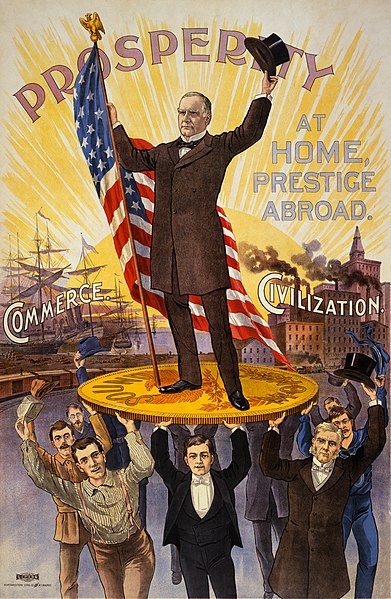
Afisz wyborczy prezydenta Williama McKinleya z 1896 roku (Źródło: Wikipedia)

Jak dowiedziałem się z najlepszego źródła, czyli z „Gazety Wyborczej: Jeśli w Polsce mamy kapitalizm to nie dzięki Balcerowiczowi, ale dzięki „Dynastii”. Ucieszyłem się, że wreszcie będę dobrze poinformowany. Orzeźwiające dziennikarstwo „Wyborczej” pozwala odpocząć od bredni mediów rządowych; spojrzałem na sympatyczną twarz autorki, Marty Górnej i wpadłem w ciąg niekontrolowanych skojarzeń. Przypomniał mi się na początek ciekawy felieton młodego Leszka Kołakowskiego, który w 1956 roku buntował się przeciw tłumieniu studenckich protestów przez milicję i strzelił felieton pod tytułem „Socjalizm to nie pały”. Wyjaśniał w nim czym socjalizm nie jest, a kończył swój wywód pytaniem: „A czym socjalizm jest?” i dał klarowną odpowiedź: „Socjalizm to dobra rzecz”.

Przez chwilę zastanawiałem się nad pytaniem, kto właściwie w Polsce mówi dziś, że kapitalizm to dobra rzecz, jak to robi i kto to może usłyszeć? Pamiętam, że ucieszyłem się, kiedy już we wrześniu 1989 roku powstało w Warszawie Centrum Adama Smitha i byłem głęboko przekonany, że oto pojawiła się grupa ludzi, gotowych podjąć wysiłek wyjaśnienia społeczeństwu, czym jest gospodarka rynkowa, jakie są jej zalety, jakie niesie ryzyko i dlaczego warto być wolnym człowiekiem?

Najwspanialsze jest to, że przez te lata Centrum Adama Smitha wykształciło setki nauczycieli etyki biznesu dla szkół podstawowych, w pełni świadomości, że przedsiębiorczości można uczyć później, ale etyki biznesu trzeba uczyć od najwcześniejszych lat. Dziś po 33 latach działania tej instytucji, oddziały Centrum Adama Smitha są w każdym powiecie, nauczyciele HiT-u obficie korzystają z ich materiałów, dziennikarze codziennie sprawdzają nowości na ich znakomicie prowadzonej stronie internetowej.

Przesadzam? No, może troszkę. Centrum podobno coś robi, pytanie o ich aktywność wywołałoby zapewne konsternację nie tylko wójtów i burmistrzów, ale również prezydentów wielkich miast i przywódców wielkich partii politycznych, o ludziach młodych, szukających odpowiedzi na ważne dla nich pytania nawet nie wspominając.

Czy można młodej, atrakcyjnej kobiecie zadać pytanie: czy pani lubi kapitalizm? – nie przekreślając na starcie nadziei na wspólne śniadanie?

Nie wiem, nie próbowałem tej sztuki.

Inny eksperyment przeprowadzałem wielokrotnie. Zapytaj w dowolnej klasie młodych ludzi wkraczających w dorosłość co sądzą o kapitalizmie, a masz gwarancję usłyszenia, że to złodziejski system, że najgorsze są korporacje, że wszędzie są oszukańcze reklamy, że bogatym trzeba zabrać, a biednym dać. (Możesz się zastanawiać, jakimi drogami mądrości renomowanych mediów docierają do tych, którzy ich nigdy nie czytają, ale to wymagałoby zbadania). Zmień temat na neutralny, (nie ma powodu tego drążyć, dostałeś wyczerpującą odpowiedź). Kiedy zapomnieli już o twoim dziwacznym pytaniu, na które odpowiedź jest przecież oczywista, poproś ich o radę w sprawie zakupu nowego telefonu. Niespodziewanie znajdziesz się w grupie ekspertów. Odpowiedzą, ci, że to zależy od tego, co dla ciebie jest ważne; powiedzą, które modele, z których korporacji są godne zaufania, będą opowiadać o parametrach i cenach, o sensownych kompromisach i o swoich udanych zakupach. (Słuchaj uważnie, rób sobie notatki, bo to ludzie, którzy wiedzą więcej niż ty). Możesz potem przejść do zakupu laptopa i sytuacja się powtórzy. Przejdź do spraw codziennych, do zakupów żywnościowych, a wreszcie do pytania, jak często są zadowoleni z zakupu, a jak często czują się oszukani.

Twoi rozmówcy zaczynają dostrzegać twój łajdacki podstęp. Oszukałeś ich i pokazujesz niespójność między stereotypem, a ich zachowaniem w codziennym życiu. Zaczynają bronić stereotypu, do którego są bardzo przywiązani. Czy uda ci się ich rozśmieszyć dowodami, że jesteśmy istotami pełnymi sprzeczności i że nie tylko księża co innego mówią, a co innego robią?

Nie wiem, czy to „Dynastia” zachęciła Polaków do kapitalizmu, czy raczej transformacja usunęła najgorsze przeszkody do zarabiania na tym, co umiemy, przez dostarczanie ludziom tego, czego poszukują. („Dynastia” mogła popychać do popularnego okrzyku „pierwszy milion trzeba ukraść”).

Nie bez pewnego zdumienia dowiedziałem się, że od kwietnia 2021 zarejestrowana jest w Polsce partia Polska Liberalna–Strajk Przedsiębiorców. Ktoś z moich znajomych podesłał mi link do ich strony na Facebooku, więc powodowany ciekawością zajrzałem i pierwsza rzecz, na którą wpadłem, to wpisy obłąkanych antyszczepionkowców.

Data zarejestrowania tej partii uświadamia natychmiast, że ci liberałowie uświadomili sobie swoje liberalne wartości w pierwszych miesiącach pandemii Covidu, kiedy politycy zastanawiali się, co robić w obliczu zagrożenia masowymi zarażeniami z możliwą wysoką śmiertelnością, prawdopodobieństwem załamania się służby zdrowia oraz grozą gospodarczej recesji, zaś przedsiębiorcy zdawali sobie sprawę, że lockdown oznaczać będzie dla wielu z nich bankructwo, bez możliwości odbudowania działalności.

Dylemat nie był wyłącznie polski. Przeciw sanitarnym restrykcjom buntowali się przedsiębiorcy na całym świecie. Szwedzi zdecydowali się raczej na apele do rozsądku obywateli, mając również nadzieję na odporność stadną, w miarę jak część społeczeństwa przejdzie chorobę i wróci do zdrowia. W zdyscyplinowanym społeczeństwie szwedzkim ta taktyka okazała się w miarę poprawna, próba jej naśladowania przez Brytyjczyków czy Brazylijczyków nie skończyła się dobrze.

Tak czy inaczej, Partia Liberalna – Strajk Pracodawców (czort wie dlaczego „strajk”, kiedy protestowali przeciw przerwie w pracy z powodu ograniczeń sanitarnych) powstała nagle, przyciągając wiele osób sceptycznych co do tego, czy w ogóle jest jakaś pandemia, zwolenników najdzikszych teorii spiskowych, jak również ludzi mających lepszą lub gorszą orientację, o co właściwie chodzi z tym liberalizmem gospodarczym.

Inicjatorem tej nowej partii politycznej był człowiek, który wcześniej dwukrotnie zamierzał zostać prezydentem Polski, zdobywając śladowe poparcie wyborców, który był aktywny w Ruchu Poparcia Palikota, a co więcej zwrócił uwagę na nieprawidłowości finansowe w tym ruchu, o co został przez Palikota pozwany i proces wygrał, bo nieprawidłowości faktycznie były.

Urodzony w 1975 roku Paweł Tanajno w 1989 roku miał 14 lat i brak informacji, czy oglądał „Dynastię”.  Studiował prawo i zarządzanie, odnosi sukcesy w biznesie, a dokładniej w handlu elektroniką. Jego partia ma program powtarzający główne hasła neoliberałów.

  • Chcą państwa gwarantującego obywatelom wolność.
  • Państwa stroniącego od sporów ideologicznych, kulturowych czy religijnych.
  • Państwa ograniczającego swoją działalność do obszarów, na których radzi sobie lepiej niż podmioty działające w ramach wolnego rynku, które mało kosztuje.
  • Państwa szanującego obywateli i gwarantującego równe prawa dla wszystkich.

Nie ma w tym programie informacji o zagrożeniach ze strony „dzikiego kapitalizmu”, wyuczonego na „Dynastii”, w którym cwaniactwo bierze górę nad rzetelnością. Nie ma strategii wymuszania uczciwej konkurencji, nie ma porządnego rozgraniczenia administracji państwowej, samorządowej i prywatnej działalności gospodarczej, jak również obszarów wymagających państwowej regulacji.

Z programu wynika chęć radykalnego ograniczenia wtórnie dzielonej części dochodu narodowego (a tym samym również biurokracji państwowej i samorządowej), ale brak wyraźnego powiedzenia, gdzie są granice takiej redukcji.

Z kapitalizmem ten sam  kłopot co z demokracją, która jest okropnym systemem rządów, ale wszystkie inne okazały się znacznie gorsze. Kapitalizm stwarza niezliczone okazje dla wszelkiego rodzaju cwaniaków, ale oparty na partyjnej lojalności socjalistyczny etatyzm cwaniacy też kochają, chociaż na ogół inni. Kapitalizm okazał się najsprawniejszym systemem zaspakajania potrzeb społecznych, produkcji dóbr i rozwoju technicznego, dzięki najlepszemu wykorzystaniu ludzkiego potencjału, zaradności napędzanej chęcią zysku, a nie tylko pobożnymi życzeniami i przekonaniami o własnej mądrości i szlachetności.

Kościoły, socjaliści i komuniści konkurują ze sobą na polu bezgranicznej troski o ubogich, ale ubóstwo zdecydowanie sprawniej redukuje ten okropny kapitalizm. Innymi słowy, jeśli cenisz lewicowe wartości, takie jak szacunek dla drugiego człowieka, wolność drugiego człowieka, bezpieczeństwo drugiego człowieka, to lepiej, żebyś polubił kapitalizm, bo socjalizm tego nie dostarczy.

Jeśli uważasz, że największym problemem jest bieda, to przeczytaj dane Banku Światowego pokazujące, że w ciągu niespełna 30 lat od upadku ZSRR ilość ludzi żyjących w skrajnym ubóstwie  spadła z 38 procent do 9 procent. Czy jest tu związek? Owszem, wiele krajów porzuciło radziecki model dążenia do szczęścia i dobrobytu.

„Dynastia” może nikogo kapitalizmu nie nauczyła, natomiast ciekawy jest przykład lewicowca, który rzeczywiście próbuje swoje lewicowe wartości wprowadzać w życie.

Paul David Hewson, irlandzki wokalista zespołu U2, występujący pod pseudonimem Bono, od lat jeździ po Afryce, pomagając z własnych pieniędzy, jak i zbierając pieniądze od innych. Niedawno w rozmowie z dziennikarzem „New York Times’a” wyjaśniał dlaczego nie jest mu po drodze z  lewicowymi poglądami na temat zła kapitalizmu i niemoralności milionerów.

„Jako działacz znalazłem się w zupełnie innym miejscu, niż kiedy zaczynałem” – powiedział Bono. „Uważałem, że jeśli tylko dokonamy redystrybucji zasobów, rozwiążemy każdy problem. Teraz wiem, że to nieprawda. Jest zabawny moment, kiedy zdajesz sobie z tego sprawę jako działacz: wyjściem ze skrajnego ubóstwa jest, fuj, handel, jest przedsiębiorczy kapitalizm”.

Oczywiście ten wokalista doskonale wie, że kapitalizm to dzika bestia, że – jak mówi – trzeba go oswoić, ale to kapitalizm wydobył z ubóstwa znacznie więcej ludzi niż jakikolwiek inny –izm, więc jego nie stać na pozerstwo.

Być może warto zdać sobie sprawę, że panowie w czarnych sutannach i towarzystwo w czerwonych krawatach nieustannie głoszą swoją miłość do ubogich, ale dostarczają tylko dużo wrzasku i czy są tego świadomi, czy nie, robią to z chęci zysku. (Czasem nie są w stanie ukryć irytacji z powodu tego, że kapitaliści dostarczają miejsc pracy i tanich towarów i w końcu ci biedni ubodzy kupują sobie takie same towary jak kochający ubogich i to jest naprawdę okropny konsumeryzm.)

Tak więc zgadzam się z Bono, że kapitalizm to dobra rzecz, chociaż dalece niedoskonała, że to jedyny system, w którym można zrobić fortunę na pomysłowości, rzetelności i uczciwości,  chociaż przyciąga wielu pomysłowych udających rzetelnych i uczciwych i warto szukać  sposobów ich wykrywania i karania. Filozofia Robin Hooda przyciąga innych cwaniaków, ale z nimi wartości lewicowych realizować się nie da, a ja nie zamierzam z tych wartości rezygnować tylko dla dobrego towarzystwa sentymentalnych pozerów.

Jeśli idzie o mnie, nie zamierzam głosować na Partię Liberalną, bo nie należy marnować głosów, a dziś najważniejsze jest odsunięcie kochającego ubogich PiS-u. A reszta w rękach kolejnych pokoleń. Część tych młodych ludzi będzie się uczyć kapitalizmu z „Dynasty” i podobnych arcydzieł, a część będzie zdobywając pokątnie wiedzę o tym, że warto dorabiać się na pomysłowości, rzetelności i uczciwości.


Andrzej Koraszewski – Publicysta i pisarz ekonomiczno-społeczny.

Ur. 26 marca 1940 w Szymbarku, były dziennikarz BBC, wiceszef polskiej sekcji BBC, i publicysta paryskiej „Kultury”. Więcej w Wikipedii.


Zawartość publikowanych artykułów i materiałów nie reprezentuje poglądów ani opinii Reunion’68,
ani też webmastera Blogu Reunion’68, chyba ze jest to wyraźnie zaznaczone.
Twoje uwagi, linki, własne artykuły lub wiadomości prześlij na adres:
webmaster@reunion68.com


Biden Wants Talks While China’s Xi Prepares for War


Biden Wants Talks While China’s Xi Prepares for War

Gordon G. Chang


  • The meeting, as crucial as everyone believes it will be, should not occur. It is long past time for America to stop talking with the Chinese regime and start imposing costs for dangerous and other unacceptable behavior.
  • Talking sounds as if it should work but in fact has produced horrible results, for more than three decades. In short, dialogue enables China to buy time and often run out the clock.
  • Biden as president has already had five phone or video calls with Xi, so by now it should be clear what his red lines are. Moreover, on any day, People’s Daily lists them.
  • [T]he Chinese are not real believers in the importance of dialogue; they break it off whenever they feel it is to their advantage.
  • [D]uring summits presidents often convey warnings, seek understanding, or propose joint action. “There is no reason to think Xi Jinping is prepared to seek understanding or would take constructive joint action,” he said. “It also is extremely unlikely that he believes or respects words of warning from the Biden administration. Given that, a side meeting on the margins of the G20 is pointless or counterproductive.” — Steve Yates, chairman of the China Policy Initiative of the America First Policy Institute, to Gatestone, November 2022.
  • It is time… for America to get ready for the war that is coming. That means, among other things, bolstering those defending free societies, not emboldening those intent on attacking them.
  • “Refusing to speak is what children do when they are angry,” the Economist states. No, refusing to speak is what leaders do when speaking for decades has created one of the most dangerous moments in history.

It is long past time for America to stop talking with the Chinese regime and start imposing costs for dangerous and other unacceptable behavior. Pictured: U.S. President Joe Biden participates in a video meeting with Chinese President Xi Jinping on November 15, 2021. (Photo by Alex Wong/Getty Images)

President Joe Biden will meet with Chinese ruler Xi Jinping on November 14 in Bali, Indonesia, on the sidelines of the G20 Summit. The talks will be, as Gideon Rachman wrote, “the first global summit of the second cold war.”

The meeting, as crucial as everyone believes it will be, should not occur. It is long past time for America to stop talking with the Chinese regime and start imposing costs for dangerous and other unacceptable behavior.

Yes, China is crucial to the resolution of every major problem in the world — in large part because it has caused or aggravated them — yet China’s central role does not, as Americans believe, automatically require them to talk to Chinese leaders. Talking at this time, unfortunately, is making problems even harder to resolve.

So why does Biden want to meet Xi?

“What I want to do with him when we talk is lay out what the—what kind of—what each of our red lines are, understand what he believes to be in the critical national interests of China, what I know to be the critical interests of the United States, and to determine whether or not they conflict with one another,” Biden said on November 9 at his press conference, about the upcoming meeting. “And if they do, how to resolve it and how to work it out.”

Biden as president has already had five phone or video calls with Xi, so by now it should be clear what his red lines are. Moreover, on any day, People’s Daily lists them.

A “senior administration official” on November 10 said “the president believes it is critical to build a floor for the relationship and ensure that there are rules of the road that bound our competition.” Biden and his predecessors have spent decades trying to do precisely that, so America should acknowledge that it cannot by dialogue change Beijing’s views or constrain Chinese actions.

Nonetheless, the Economist tells us that “America and China must talk.”

Talk? Dialogue, unfortunately, has great costs. First, as evident during decades of fruitless conversations with China, American presidents regularly postpone taking needed action while talking with Chinese counterparts. Talking sounds as if it should work but in fact has produced horrible results, for more than three decades. In short, dialogue enables China to buy time and often run out the clock.

Second, talks just feed the already inflated sense of self-importance of Chinese officials.

Americans, since the early 1970s, have believed it was in their interest, as well as in the interest of the international community, to establish and maintain regular dialogue with the Communist Party. Therefore, U.S. diplomats have figuratively — and literally — chased after their Chinese counterparts to begin conversations.

American neediness has not escaped the attention of Chinese policymakers. Foreign Ministry spokesperson Zhao Lijian publicly noted on November 10 that the Bali discussions are being held at the request of the American side. Beijing always announces that Washington initiates dialogue, to put American negotiators in inferior bargaining positions.

“There is a negative impact of the president signaling weakness by running after dictator Xi, something that significantly erodes America’s alliance system,” said James Fanell of the Geneva Centre for Security Policy to Gatestone in connection with the G20 meeting.

Third, the Chinese are not real believers in the importance of dialogue; they break it off whenever they feel it is to their advantage. They did so in September, for instance, after Michelle Bachelet, then the U.N. High Commissioner for Human Rights, issued her August 31 report on Beijing’s inhuman treatment of Uighurs and other Turkic minorities.

The ending of the human rights dialogue followed China’s August 5 announcement of the cancellation of phone and in-person meetings with American military leaders and of annual naval meetings conducted under the U.S.-China military maritime consultation mechanism. At the same time, Beijing suspended cooperation on repatriation of illegal immigrants, legal assistance on criminal matters, assistance on transnational criminal matters, cooperation on drug enforcement, and climate change talks.

Steve Yates, the chair of the China Policy Initiative of the America First Policy Institute, tells Gatestone that during summits presidents often convey warnings, seek understanding, or propose joint action. “There is no reason to think Xi Jinping is prepared to seek understanding or would take constructive joint action,” he said. “It also is extremely unlikely that he believes or respects words of warning from the Biden administration. Given that, a side meeting on the margins of the G20 is pointless or counterproductive.”

On the sidelines of multilateral meetings like the G20, the time of an American president is precious. Instead of wasting hours chatting with Xi, Biden should be building or reinforcing relations with allies, friends, and partners as well as potential allies, friends, and partners.

Xi is increasingly sounding bellicose and, worse, unhinged, especially his comments of November 8. Then, he not only talked about preparing for war — we have heard those words before — but he also proclaimed that China’s external situation was “increasingly unstable and uncertain.” Given that no nation threatens China, the comments betray a disturbed state of mind.

It is time, therefore, for America to get ready for the war that is coming. That means, among other things, bolstering those defending free societies, not emboldening those intent on attacking them.

“Refusing to speak is what children do when they are angry,” the Economist states. No, refusing to speak is what leaders do when speaking for decades has created one of the most dangerous moments in history.


Gordon G. Chang is the author of The Coming Collapse of China, a Gatestone Institute distinguished senior fellow, and a member of its Advisory Board.

  • Follow Gordon G. Chang on Twitter

Zawartość publikowanych artykułów i materiałów nie reprezentuje poglądów ani opinii Reunion’68,
ani też webmastera Blogu Reunion’68, chyba ze jest to wyraźnie zaznaczone.
Twoje uwagi, linki, własne artykuły lub wiadomości prześlij na adres:
webmaster@reunion68.com