
Archive | July 2023

Szaleństwo, które stało się legendą. Historia festiwalu w Opolu

Szaleństwo, które stało się legendą. Historia festiwalu w Opolu

Marcelina Obarska

XII Krajowy Festiwal Piosenki Polskiej w Opolu, 1974, fot. audiovis.nac.gov.pl (NAC)XII Krajowy Festiwal Piosenki Polskiej w Opolu, 1974, fot. audiovis.nac.gov.pl (NAC)

“Tak jak stolica Polski jest jedna i nazywa się Warszawa, tak stolicą polskiej piosenki jest Opole”, mówił prezydent miasta nad Odrą w kontekście oficjalnego uznania przydomku “Stolica Polskiej Piosenki” za prawnie chroniony. Nie będzie przesadą stwierdzenie, że na deskach opolskiego amfiteatru przez sześć dekad pisała się polska historia tego gatunku.

Kolacja w SPATIF-ie

Od 1963 festiwal nie odbył się tylko raz – w roku 1982 – z powodu stanu wojennego. Poza tym wyjątkowym dla historii Polski okresem imprezę organizowano zawsze, czasami – jak w roku 1981 czy 2020 – organizowano ją “mimo wszystko”. Prześledzenie losów Krajowego Festiwalu Polskiej Piosenki w Opolu pozwala dostrzec nierozerwalne sprzężenie historii polskiej piosenki z historią przemian politycznych i społecznych, nieprzerwany dialog estetyki z życiem społecznym. Jak narodziła się ta najpopularniejsza w Polsce muzyczna impreza? Zaczęło się od pomysłu dwóch dziennikarzy radiowej “Trójki”, literata Jerzego Grygolunasa i kompozytora Mateusza Święcickiego, których wsparł pierwszy redaktor naczelny stacji, poeta i autor tekstów piosenek Edward Fiszer (spod jego pióra wyszedł między innymi słynny utwór “Pod Papugami” wykonywany przez Czesława Niemena). Obecny dyrektor Muzeum Polskiej Piosenki w Opolu Jarosław Wasik przytoczył w audycji Polskiego Radia anegdotę dotyczącą narodzin tego pomysłu: Grygolunas i Święcicki w trakcie podróży do Warszawy wymienili się ponoć uwagami na temat kondycji ówczesnej muzyki polskiej i zgodnie stwierdzili, że należy stworzyć odpowiedź na zainaugurowany w 1961 roku festiwal w Sopocie, którego pomysłodawcą był Władysław Szpilman i który miał charakter międzynarodowy (jak pisała Lidia Kopania-Przebindowska, “​​Festiwal w Opolu miał stymulować polską twórczość i bronić jej przed zalewem piosenek z Zachodu, sopocki natomiast pełnił funkcję promocyjną”​). 

XII Krajowy Festiwal Piosenki Polskiej w Opolu, 1974, fot. audiovis.nac.gov.pl (NAC)

Stojąc na rogu Wilczej i Alei Ujazdowskich, Jerzy Grygolunas zadał mi pytanie, czy można byłoby zrobić drugi festiwal, konkurencyjny dla sopockiego. Poszliśmy na kolację do SPATIF-u i Jerzy wymyślił, że on to zrobi w Opolu, ponieważ był wielkim sojusznikiem tego regionu.

– wspominał Święcicki w rozmowie zarejestrowanej w 1976 roku.

O tym, jak kształtowała się legenda festiwalu, dowiedzieć się można między innymi z archiwalnych odcinków Polskiej Kroniki Filmowej. Od samego początku przedsięwzięcie spotykało się z entuzjazmem i szybko budowało swoją renomę: już w 1965 roku słynny lektor PKF stwierdzał, że “Opole nie byłoby Opolem bez swojego festiwalu”. Rzeczywiście impreza robiła w mieście niemałe zamieszanie. W ramach III edycji wykupiono aż 38 tysięcy biletów (a samo miasto liczyło wówczas 70 tysięcy mieszkańców).

Odkrycia

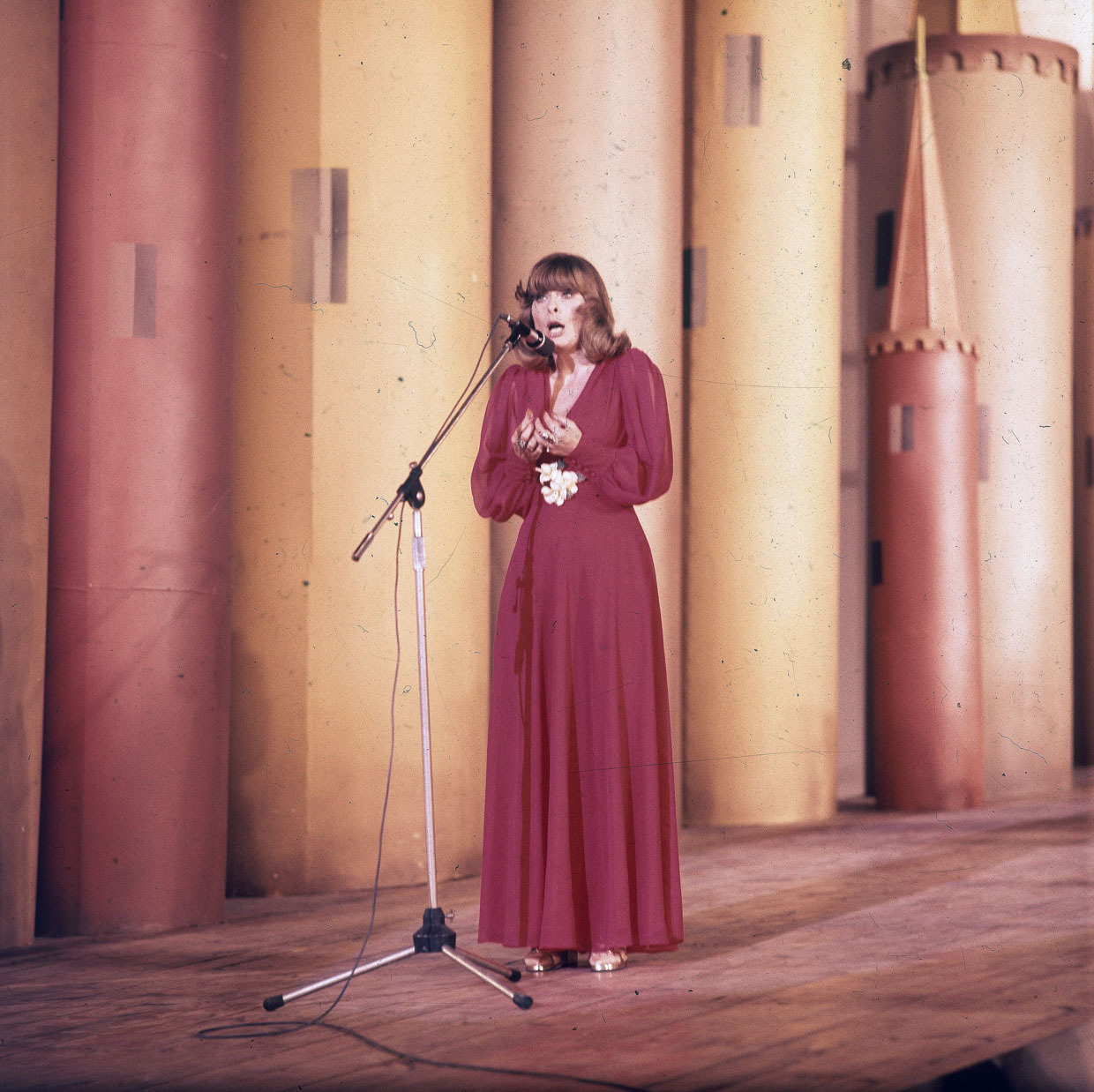
Ewa Dębicka z białym pudlem podczas występu, 1977, fot. audiovis.nac.gov.pl (NAC)

“Na początku ludzie twierdzili, że to szaleństwo, że miasto jest za małe”, wspominał ówczesny przewodniczący Miejskiej Rady Narodowej, Karol Musioł (był także pierwszym prezesem Towarzystwa Przyjaciół Opola i inicjatorem budowy amfiteatru). Szaleństwo przypadło jednak włodarzom miasta do gustu, stawką było przecież stworzenie okazji do wypromowania Opola i regionu. “Pierwszy festiwal był najlepszy”, mówił Musioł w filmie dokumentalnym wyprodukowanym z okazji dziesięciolecia imprezy. Otwierająca edycja Krajowego Festiwalu Polskiej Piosenki w Opolu odbyła się w dniach 19–23 czerwca 1963 roku, w roli konferansjerów na scenie pojawili się Piotr Skrzynecki i Jacek Fedorowicz. Być może nie wszyscy są świadomi – a już z pewnością mało kto pamięta – że inauguracyjna edycja opolskiego festiwalu była momentem odkrycia Ewy Demarczyk, wówczas dwudziestodwuletniej, jednej z najważniejszych twórczyń w historii polskiej muzyki. To wtedy wykonała między innymi legendarną “Karuzelę z Madonnami” z tekstem Mirona Białoszewskiego do muzyki Zygmunta Koniecznego. Demarczyk była objawieniem. Z jej teatralnym, ekspresyjnym, nieco mrocznym występem kontrastowała dwudziestoletnia wówczas Karin Stanek – radosna i żwawa, z gitarą, śpiewająca beztroskie utwory: “Autostop” i “Chłopiec z gitarą”. Cztery lata później na amfiteatralnej scenie wybrzmiał nazywany niekiedy “pierwszym polskim protest songiem” utwór “Dziwny jest ten świat”. Do Niemena trafiła wówczas nagroda Przewodniczącego Komitetu ds. Radia i Telewizji. Rok później – w 1968 – na scenie opolskiego amfiteatru po raz pierwszy stanęła Maryla Rodowicz, wykonując “Zabierz moje sukienki” z tekstem Wandy Warskiej i “Co ludzie powiedzą” ze słowami Agnieszki Osieckiej. Na opolskim festiwalu Rodowicz pojawi się później jeszcze kilkadziesiąt razy. Opole było także pierwszym lub jednym z pierwszych etapów rozpoczynających karierę takich twórczyń, jak, między innymi, Edyta Geppert – to właśnie w ramach opolskiego festiwalu w 1984 wykonała ekspresyjny utwór “Jaka róża, taki cierń”, a dwa lata później wyśpiewała słynne “Och, życie, kocham cię nad życie” (za te występy otrzymała kolejno Nagrodę Główną im. Karola Musioła oraz Grand Prix festiwalu).

“Żyje nam się nie najlepiej”
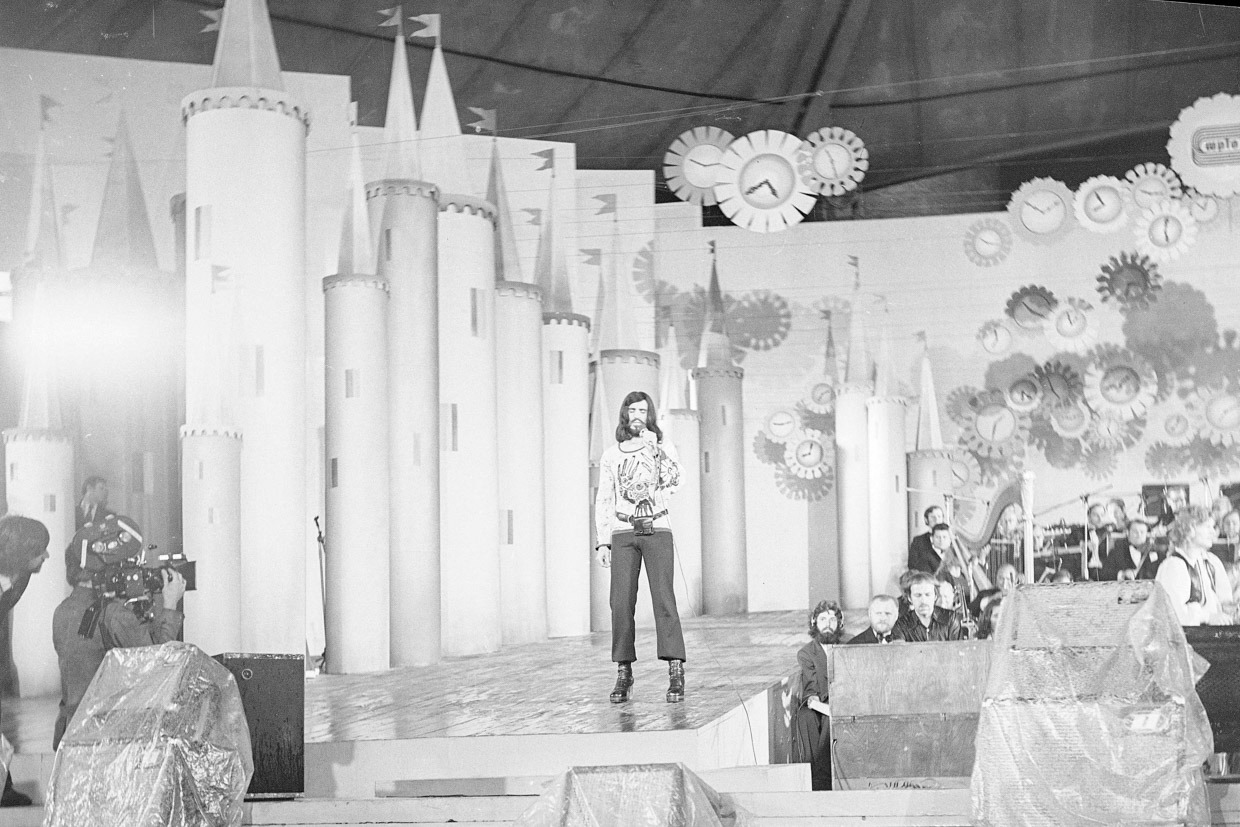
Czesław Niemen podczas występu w 1974 roku, fot. audiovis.nac.gov.pl (NAC)

W historii opolskiego festiwalu odbijają się węzłowe wydarzenia ostatnich kilku dekad. W 1976 roku festiwal rozpoczęty 23 czerwca został skrócony z powodu powszechnych strajków wywołanych podwyżkami cen (24 czerwca premier Piotr Jaroszewicz ogłosił – choć niezupełnie wprost – plan wprowadzenia drastycznej zmiany cen urzędowych produktów żywnościowych; mięso zdrożeć miało o blisko 70, masło o 60, a cukier aż o 90 procent. Protestowały załogi ponad stu zakładów pracy w 24 województwach). W tym roku po raz pierwszy w historii festiwalu nie przyznano nagród głównych. W roku 1980 Kora w “Boskim Buenos” – inspirując się iberoamerykańską prozą, a konkretnie książką “Żeby cię lepiej zjeść” Eduardo Gudiño Kieffera – wyśpiewała tęsknotę za odległym, kolorowym światem tak różnym od szarej PRL-owskiej rzeczywistości.

Kiedy w czerwcu 1981 roku konferansjer Andrzej Jaroszewski otwierał koncert Przeboje sezonu w ramach XIX edycji festiwalu, stwierdził posępnym tonem, że “sytuacja jest, wiemy jaka, żyje nam się nie najlepiej”. To była warta szerszego omówienia odsłona opolskiej imprezy. Czerwiec 1981 roku był samym środkiem karnawału “Solidarności”, główną nagrodę otrzymał wówczas Jan Pietrzak z piosenką “Żeby Polska była Polską”, którą uznano za spontaniczny hymn solidarnościowego ruchu. Wspomniana wcześniej skandalistka Trojanowska razem z zespołem Stalowy Bagaż wystąpiła z obśmiewającym ideologię socrealizmu utworem “Pieśń o cegle”, zakładając krawat Związku Socjalistycznej Młodzieży Polskiej. Związek wystosował niedługo potem oficjalny protest, nazywając ten gest profanacją. Niedługo potem, w roku 1983, wokalistka trafiła na listę osób “niepożądanych w Polsce Ludowej”. Jednym z utworów, które interpretowano niekiedy jako komentarz do bieżącej sytuacji w Polsce było “Wypijmy za błędy” Ryszarda Rynkowskiego z tekstem Jacka Cygana, który to utwór wykonany w 1989 roku, dwa tygodnie po pierwszych wolnych wyborach, przyniósł wokaliście nagrodę w konkursie Premier. Również w XXI wieku wydarzenia społeczne i polityczne naznaczyły historię festiwalu. W 2010 roku w związku z katastrofą smoleńską święto piosenki po raz pierwszy odbyło się we wrześniu, był to też rok, w którym przestrzenią festiwalową, w związku z remontem amfiteatru, stał się kampus Politechniki Opolskiej. Nawet pandemia koronawirusa nie sprawiła, że sytuacja z 1982 roku powtórzyła się: festiwal w 2020 roku przesunięto na pierwszy tydzień września. Całą imprezę zadedykowano natomiast Ewie Demarczyk zmarłej 14 sierpnia tego roku.

Miss Bohdan

Stoją od lewej Kazimierz Grześkowiak, Maryla Rodowicz, Danuta Rinn, Urszula Sipińska, Jacek Nieżychowski, niżej Halina Kunicka, fot. audiovis.nac.gov.pl (NAC)

W ramach festiwalu wielokrotnie przyznano nagrodę Miss Obiektywu – po raz pierwszy w roku 1970, doceniając fotogeniczność Urszuli Sipińskiej. Kolejne nagrody otrzymywały między innymi Maryla Rodowicz (1972) czy Danuta Rinn (w 1974 roku wystąpiła z ikonicznym utworem “Gdzie ci mężczyźni”, który przyniósł jej nagrodę Towarzystwa Przyjaciół Opola). W 1980 roku, w ramach XVIII edycji festiwalu, furorę zrobiła Izabela Trojanowska, wykonująca wówczas “Wszystko czego dziś chcę”. Ten występ, za który przyznano jej Nagrodę Główną, stał się legendarny: z dłońmi w kieszeniach garniturowych spodni, w kamizelce i marynarce, z krótko obciętymi włosami śpiewała utwór interpretowany często jako manifest kobiecej przyjemności seksualnej. Była uosobieniem androgynicznej kreacji, tak popularnej wówczas w krajach zachodnich. Próba wykroczenia (prawdopodobnie jednak bezwiednego) poza binarność płci pojawiła się także rok później, kiedy tytuł Miss Obiektywu trafił do… Bohdana Smolenia. Ponoć cieszył się wówczas, że zrobiono mu więcej zdjęć niż Hannie Banaszak i Małgorzacie Ostrowskiej łącznie.

Ożywienie

Amfiteatr Tysiąclecia w Opolu, fot. Mariusz Przygoda / Forum

Festiwal był nie tylko rodzajem okna wystawowego dla młodych, nieopierzonych jeszcze twórczyń czy twórców, ale także okazją do – jak powiedzielibyśmy dziś – networkingu; spotkania osób działających na co dzień w branży, a niemających ze sobą kontaktu (a czasami i niewiedzących o swoim istnieniu, mówimy przecież o świecie bez internetu). “W tych dniach jest jakieś ożywienie w tej dziedzinie” – twierdził Leszek Bogdanowicz, wieloletni kierownik muzyczny festiwalu. W dokumencie “Dziesiąty raz w Opolu” Jerzego Sztwiertni (1973) Urszula Sipińska mówiła z kolei:

Proszę sobie wyobrazić, że nie ma festiwalu [w Opolu – przyp.red.]. To po prostu nie ma szansy dla nowych piosenkarzy, piosenkarek, zespołów [głos w tle: »Dla niczego nie ma szansy«]. Proszę zobaczyć, co jest w telewizji. Dwa, trzy programy góra. No to wobec tego, gdzie mamy pokazywać swoje piosenki?

W czerwcu 2023 roku zorganizowano jubileuszową, 60. edycję Krajowego Festiwalu Polskiej Piosenki w Opolu. Nie będzie przesadą stwierdzenie, że na deskach opolskiego amfiteatru od 1963 roku kształtowała się historia polskiej piosenki i trudno dziś wyobrazić sobie losy tego gatunku bez imprezy, którą na początku lat 60. wymyślili dwaj młodzi redaktorzy radiowi. “Piosenka powinna być szlagierem, który wszyscy śpiewają”, stwierdza mężczyzna w okołofestiwalowym odcinku PKF z 1972 roku. Niewątpliwie dziesiątki takich szlagierów narodziły się właśnie w Opolu.


Marcelina ObarskaAutor: Marcelina ObarskaAbsolwentka teatrologii na Uniwersytecie Jagiellońskim i Gender Studies w Instytucie Badań Literackich PAN. Doktorantka w Szkole Doktorskiej Nauk Humanistycznych UW. W Culture.pl redaguje dział Teatr i Taniec. Publikuje teksty krytyczne i artykuły o teatrze m.in. w “Didaskaliach” czy “Dialogu”.


Zawartość publikowanych artykułów i materiałów nie reprezentuje poglądów ani opinii Reunion’68,
ani też webmastera Blogu Reunion’68, chyba ze jest to wyraźnie zaznaczone.
Twoje uwagi, linki, własne artykuły lub wiadomości prześlij na adres:
webmaster@reunion68.com


Kabbalah Trees

Kabbalah Trees


J.H. CHAJES


The story of a former converso’s invention of the Lurianic ‘ilan’.

Ilan of the Enrobings, fol. 204b, Jacob Ẓemaḥ, in Hayyim Vital, ‘Ozrot Hayyim,’ 17th-century Italian scriptMOSCOW, RSL, MS GUENZBURG 53, MANUSCRIPT BELONGS TO THE RUSSIAN STATE LIBRARY

At the time of R. Jacob Zemah’s (ca. 1578-1667) arrival, it was still easier to acquire Lurianic treatises in Safed than anywhere else. R. Hayyim Vital (1543-1620) had resettled in Damascus in 1594, Ez Hayyim (Tree of Life—his magnum opus and summa of Lurianic Kabbalah) in tow, but many of his other works had been leaked before his departure. As the story goes, while Vital was briefly incapacitated by illness, a number of his early writings—not including Ez Hayyim—were “borrowed” and copied over three days by 100 scribes. The resulting bootleg treatises were precious contraband; Zemah, a former converso who fled his native Portugal as an adult, spent the last of his savings acquiring these books in Safed. “I sold all the silver and gold that I had and bought books,” he recalled, “and [especially] books of the Rav [Isaac Luria (1534-1572)], may his memory be a blessing in the World to Come.” The investment helped him establish a modest business model that allowed him to continue his important work. Zemah received donations from those whom he permitted to copy his manuscripts. He would then proofread, correct, and annotate the copies. His master copies were standardized and indexed for page-specific cross-referencing. Such assiduous editorial practices were a hallmark of Zemah’s scholarly work throughout his life.

After roughly a dozen years in Safed, Zemah went to Damascus to study with R. Samuel Vital, a great kabbalist in his own right and keeper of his late father’s Ez Hayyim. Why Zemah waited so many years to pursue study with Samuel is unknown; perhaps he did not want to present himself to Vital’s heir before he felt worthy and ready. Although Samuel would eventually allow eminent visitors to inspect the manuscript, during Zemah’s years in Damascus (ca. 1632-1640) the only way to study Ez Hayyim was to listen to Samuel read it aloud. This he did every Friday night and again from midday to nightfall on Saturday. The listeners could not take notes on the Sabbath. The plan had a flaw, however; Zemah remembered what he had heard and reproduced it in writing after the Sabbath ended each week. His library of Lurianic works therefore expanded to include a series of books based on these Saturday night transcriptions, prefaced by apologies for possible errors resulting from lapses of memory.

Zemah resettled in Jerusalem around 1640, the change of place once again effecting a change in his Lurianic library. After nearly two decades of struggling to cobble together a collection of Vital’s writing by hook or by crook—from the contraband treatises in Safed to the books based on Samuel’s recitations in Damascus—Zemah finally hit the proverbial jackpot in Jerusalem. Soon after his arrival, he obtained a significant cache of Vital’s original autograph manuscripts. There was a catch, though: They had been underground for decades. In a fit of neurotic fury, Vital had decided to destroy them before leaving for Damascus, burying them in the genizah of Safed. The manuscripts reached Zemah in various states of decay. One treatise survived miraculously intact, still bound and missing only its title page and some of the letters bordering its damaged margins; Zemah gave it the name Ozrot Hayyim (Treasures of Life). It was an orderly extended exposition of the grand emanatory scheme that Vital distilled after completing his first phase of writing in the years after Luria’s death. The decomposing and disordered pages of Vital’s other books were painstakingly reconstructed and copied by Zemah, who endeavored to reassemble each one in its original form. Zemah ran his own bet midrash in Jerusalem as a restoration and reproduction lab, with as many as nine scribes working under his supervision. No fewer than five “new” Vital works resulted from their efforts.

Zemah’s dedication to restoring each of Vital’s texts—an expression of his antiquarian scholarly sensibilities—was unique. R. Samuel Vital, in his Shmonah shearim (Eight Gates), preferred thematic redaction, as did Zemah’s student R. Meir Poppers. To put this another way, in editing Vital’s texts Zemah strove to recover what had been written, Poppers to create what should have been written. Zemah’s Jerusalem series thus rendered his Safed and Damascus corpora effectively obsolete. But the Jerusalem restorations would soon fall victim to their own success. Not long after Vital’s treatises had been salvaged from oblivion by Zemah and meticulously recreated, they became obsolete thanks to their cannibalization in the eclectic Poppers edition of Ez Hayyim, which quickly became the canonical expression of Lurianic Kabbalah.

These redaction details are relevant to the history of ilanot—or kabbalistic trees, referring to the genre of diagrammatic/arboreal scrolls/rotuli—because Zemah made his pioneering ilan in Damascus. As he described it, the diagrammatic presentation of the ilan was fully annotated and framed by texts and commentaries that included the page numbers of their sources in the master copies of his Damascus library. With the eclipse of that library—first by the new Jerusalem editions and shortly thereafter by the new Poppers edition of Ez Hayyim—the value of Zemah’s fully annotated ilan plummeted rapidly.

Before turning to Zemah’s account of the ilan he made in Damascus, which has not reached us in its original form, it is worth asking what we can learn about Zemah and visual Kabbalah from his diagrams that have survived. He carefully copied the original diagrams in Vital’s autograph works when he restored them in Jerusalem in the 1640s, treating them as authentic expressions of Lurianic thought that deserved the same respect as the texts. The restored volumes painstakingly preserve and present them, and his annotations include diagrams of his own making. These original drawings show Zemah, the visual commentator, thinking with diagrams.

A modest marginal note in Zemah’s own hand provides a fascinating example. The note appears in the oldest known copy of Zemah’s restoration of a buried Vital treatise to which he gave the name Toldot Adam (Generations/History of Adam [Kadmon]); it had lost its title page in the moldy genizah. Vital’s original was composed in the early 1590s as a summary of the emanatory mechanics of Luria’s system, and it came to be known as Mevo she‘arim (Entrance to the Gates). The mid-1640s manuscript, produced in Zemah’s bet midrash atelier, features marginalia and an index in Zemah’s own hand. Near the beginning of the cosmogonic exposition, in which Vital explains the emanation of the Worlds one within another, Zemah poses a question in the margin: Might the Worlds have emanated one after another, each as its own circle? To make his meaning clear, he refers the reader to a diagram he has devised himself, “as in this drawing” (fig. 1). The drawing, a circle in which three smaller circles are aligned vertically, does more than illustrate his question, however: It provides him with the answer. Considering it, Zemah writes, one can immediately see the problems. If each of the internal circles—of which, he points out, he has only bothered to draw three—were independent, their connection to Ein Sof would be identical. There would thus be no difference among them. Furthermore, were they arrayed in such a manner, the vacated space (hallal) within Ein Sof would be in a state of disequilibrium: The top and bottom circle-worlds would be closer to the all-encompassing circle than the middle one. This diagram neither visualizes nor clarifies a text for the reader; it is, to borrow Nelson Goodman’s term, a “counterfactual conditional” diagram visualizing a false “if clause.” Zemah’s diagram presents a false visualization of Vital’s cosmogonic teaching, and by examining it—that is, thinking with it—one can understand why the interpretation it represents is incorrect. This modest figure shows us Zemah’s visual kabbalistic thinking in action and suggests just how deeply implicated diagrams might be in kabbalistic epistemology. Its reception history is also revealing. As a rule, Zemah’s autograph marginalia were integrated by the copyists working under his supervision into the more sophisticated mise-en-page of second-generation manuscripts. In this case, not only was the diagram preserved in such early copies but it was also enlarged, the clearest possible indication of its importance (fig. 2).

Although that earliest copy of Toldot Adam shows us Zemah’s original counterfactual-conditional diagram, it no longer includes large-format foldout diagram pages. We can be certain that these oversize pages were torn out and lost given their preservation in copies in which they have been downsized to fit on a standard page. A fine example can be found in a copy executed by R. Samuel Laniado of Aleppo (d. 1750). Laniado copied Toldot Adam roughly a century after its restoration by Zemah, rendering its large diagrams on octavo-size pages. These allow us to see other facets of Zemah’s relationship to images. As in the last example, they show Zemah reading Vital visually but also demonstrate his conviction that Vital’s images are no less “torah” than his texts. As such, they deserved meticulous preservation even when Zemah had his own, somewhat different visualization of the same material. Zemah took Vital’s diagrammatic expositions seriously, and this fundamental appreciation of the communicative, ideational power of images, coupled with Zemah’s principled antiquarianism, ensured their preservation.

Laniado’s copy, which we have every reason to believe was faithful to its source, presents the reader with two facing pages, each of which is dedicated in its entirety to an intricate diagram (fig. 3). They visualize the same ideational content, so their juxtaposition, rather than conflation, reflects their significance in Zemah’s eyes. Laniado’s marginal notes and his care in producing these finely executed copies show that he took them no less seriously. Zemah captions each with his typical transparency. The first (fol. 49b, reading from right to left) reads, “Zemah: This drawing [ziyyur] I have drawn on the basis of the Rav [Vital] of blessed memory’s words on the preceding page, as you will see.” The second reads, “Zemah: This drawing is as it was drawn and written by the hand of the Rav of blessed memory.” Vital’s diagram was a visualization of the ideas expressed in the text immediately preceding it. Zemah, reading the same text and having carefully scrutinized Vital’s diagram, thought it would be useful for his readers to study his own visualizations as well.

Zemah’s autograph counterfactual diagram, fol. 1b, Hayyim Vital, ‘Mevo she’arim,’ mid-17th-century Eastern scriptRAMAT GAN, BAR-ILAN UNIVERSITY LIBRARY, RARE BOOKS COLLECTION, MOUSSAIEFF MS 1095

The two diagrams, not surprisingly, have much in common. Zemah offered a more thorough graphic elucidation than did Vital by adding details and leaving a bit less to the imagination. Comparing the two, the following differences stand out:

1. Zemah replaced Vital’s semicircles with full circles.

2. Where Vital wrote “the 10 circles of,” Zemah replaced the inscription with 10 circles.

3. Zemah’s reorientation of the diagram enabled him to distinguish between the right and left of the major parzufim. To the central shaft he also added various “windows” (halonot), cosmic “Chutes and Ladders” connecting higher (outer) and lower (inner) elements.

4. Concentric-circle diagrams need to be labeled only on one side—or, as Vital had opted, show a semicircle—because the referent of each band remains constant. The full circles of Zemah’s version nevertheless permitted him to show something that could not be pictured in Vital’s diagram: the linear channel traversing the circles from the top almost to the bottom. The cosmogonic text had explained that the channel had to stop before piercing the bottom. Were it to extend through that bottom, the light of Ein Sof within the channel would reconnect to Ein Sof surrounding the circles, short-circuiting creation and restoring the pre-zimzum (divine auto-evacuation) primordial simplicity. Zemah’s image brings home this point tangibly.

Zemah did not deem it necessary to replicate every last detail of Vital’s diagram in his own, including the inscription of Ein Sof in the outermost ring, the recurring inscriptions of “light surrounding circle/light within circle,” and the innermost circle bearing the label “Beriah klippot” ([World of] Creation—[evil] shells).” After all, his own diagram was not meant to replace Vital’s.

* * *

It should hardly come as a surprise to find Zemah reminiscing in the 1640s about the visually oriented projects that he had undertaken while still in Damascus. Marrying his organizational and pedagogical orientation to his profound appreciation for the power of images, he had created a series of charts. The large format enabled him to present structured presentations of material not easily accommodated on the pages of a book. One, he tells us, was devoted to the grades of prophecy according to Vital’s Sha‘ar ruah ha-kodesh (Gate of the Holy Spirit); we can only presume that it integrated considerable textual material in the framework of a boldly lettered outline. Two others provided kavanot (the intentions that are to accompany the performance of the commandments) for short but significant liturgical performances: the Shema (“Hear, O Israel,” Deut. 6:4) and the Kaddish (sanctification). These kavanot attended to the secrets encoded in every word and the vocalized divine names associated with them; gazing upon these names was essential to the performance of the technique. By transferring them from the crowded pages of handwritten codices to large sheets of paper, Zemah must have hoped to facilitate the successful implementation of these demanding practices. He was ahead of his time and perhaps ours as well; a look at any Lurianic siddur (prayer book) shows just how many pages must be turned to get through these prayers. If he were alive today, Zemah might have suggested praying with a teleprompter app or even designed one himself.

The large-format project to which he devoted his richest account, however, was “an ilan of the parzufim [divine personae of the Lurianic system].” The passage in Zemah’s introduction to his commentary on the Idra rabba, titled Kol be-Ramah (A Voice Is Heard in Ramah, from Jer. 31:15), in which he describes his ilan project, could hardly be more consequential to the history of the genre. The two earliest manuscripts that include the introduction, one in the British Library and the other in the Jewish Theological Seminary, date to the 17th century. They present us with slightly different versions, perhaps reflecting updates made by Zemah over the years to different master copies. Given its significance, I translate the passage as it appears in both versions:

London, BL Add. MS 26997, 1b–2a (Avivi §836)

Afterward, on one large sheet of paper, I wrote an ilan of the parzufim ordered in drawings (mesudarim be-ziyyurim) as mentioned in the books. The parzufim and their subsections are sectioned as they enrobe (mitlabshim) one another. A full explication surrounds, with a reference to the page of the work from which I have copied [each element].

New York, JTS MS 1996, 1b (Avivi §834)

Afterward, on one large sheet of paper, I wrote an ilan of the parzufim, according to the order written in the books. I clarified each and every element (davar). The five parzufim I drew in sectioned units (be-frakim ha-nehelakim) [connected] from one to another and from parzuf to parzuf and from sefirah to sefirah. The explication of every element is written surrounding it, each with a reference to the place from which I took it.

The two versions have much in common. On the basis of content I would be hard-pressed to decide which might have been the first draft and which the second, if indeed the differences reflect Zemah’s own revision. The ostensibly later copy does not necessarily reflect a later version of the text. They are, in any case, in complete agreement on the fundamentals. Zemah drew an ilan of the parzufim on a large sheet of paper; he ordered them in accordance with the teachings in the works of Vital at his disposal; and he framed the diagrams with elucidating texts. Zemah’s use of the term ilan must have been a conscious invocation of the long-established genre. He describes his biur (explication) surrounding the diagrams as anthological and based on primary sources. Zemah provided each with a full reference—using a frequently recurring term in his vocabulary, moreh makom (lit., showing the place)—noting the name of the book from which he had adduced it as well as the precise page number. The assembled sources would have provided basic characterizations of each of the parzufim and detailed the interfaces between them. In fashioning his innovatory ilan in this manner, Zemah was effectively updating the established convention of ilanot. The embedding of texts that taught the fundamentals of kabbalistic cosmogony in and around a large diagrammatic representation of the divine structure was, after all, the essence of the classical ilan. The earliest ilanot arrayed a single introduction to (or “commentary on”) the sefirot on the parchment but, as we have seen, 16th-century ilanot could also be ambitiously anthological. Zemah’s juxtaposition of elucidating primary sources and their diagrammatic representations was therefore traditional.

Teasing out the significance of the differences between the versions, we note that the British Library witness is more concise, thanks to its reliance on kabbalistic shorthand. In it, Zemah describes having divided up the parzufim to show their sections “enrobing one another” (ha-mitlabshim mi-zeh la-zeh). Using the technical language of hitlabshut (enrobing or “engarmentation”) permitted greater brevity of exposition. The longer version, in the New York JTS witness, does not use that term but opts instead for a richer description of the diagrammatic visualization. In it Zemah has “clarified every single thing” (birarti kol davar ve-davar); drawn precisely five parzufim; and pictured them in a manner that reveals their relative positions and precise sefirotic interfaces. He seems pleased by the granularity of his visual exposé, having found a way to show the process of hitlabshut down to “sefirah-to-sefirah” resolution.

This, then, is the verbal description of the first Lurianic ilan. Does it correspond to anything we see among the earliest Lurianic ilanot? I answer with an image (fig. 4). For now, it is sufficient to observe the manner in which the arboreal figures of its bottom half—each representing a parzuf—are interlinked. This array of small trees exposes the minutiae of these enrobings, “sefirah to sefirah.” There is nothing quite like it in the diagrammatic repertoire of the Lurianic kabbalists. Its early incorporation and endurance as a constitutive element of early Lurianic ilanot strengthens the case for attribution to an authoritative creator. In light of its congruence with Zemah’s description of the diagrammatic heart of his ilan, we can presume that this version preserves his innovative visualization, albeit shorn of the original framing commentary.

Zemah’s ilan made its European debut in the diagrammatic appendices to early copies of Vital’s Ozrot Hayyim. Vital’s lucid, concise, and mechanistic presentation of Lurianic cosmology was particularly well-suited to graphical visualization. Even after it was “swallowed up” in Poppers’s Ez Hayyim, it remained a favorite of some kabbalists, first and foremost R. Moses Zacuto (1625-1697). Zemah recovered and restored Ozrot Hayyim in 1643; by 1649, Zacuto had obtained and annotated a copy. The 1649 witness includes a fascinating note by Zacuto in which he asserts that among the schemata rejected by Cordovero were, unbeknown to him, representations of particular parzufim. Thus, Zacuto claimed, a particular array of the sefirot, rejected by Cordovero in Pardes rimonim (Pomegranate Orchard) (6:2:2), in fact represents Arikh Anpin (Long-faced or Patient Divine Persona/parzuf). Zacuto then refers his readers to a diagram of Arikh Anpin based on that configuration, which he himself has drawn and inscribed on the following page (fig. 5). Although it is not found in the 1649 manuscript, subsequent copies of Ozrot Hayyim made under Zacuto’s direction and based on the 1649 master copy often present the “Zemah ilan,” showing the sefirah-to-sefirah networked array of arboreal parzufim, adjacent to the Arikh diagram (fig. 6). Their juxtaposition in these codices undoubtedly inspired their coupling soon thereafter on dedicated parchment rotuli.

The heuristic value of the sefirah-to-sefirah parzufic ilan, which probably reached Zacuto in the late 1640s along with other Zemah materials, would have encouraged him to preserve it. Zacuto saw to its inclusion in the copies of Ozrot Hayyim that he worked diligently to distribute far and wide. Zacuto’s transvalued classical ilan had an important contribution to make, but its raison d’être was certainly not to reveal the manner in which the lower elements of higher parzufim were “enrobed” by the higher elements of lower parzufim, something that Zemah’s ilan accomplished with unrivaled clarity. As these hitlabshuyot (enrobings, plural) were at the core of Lurianic theory and practice, the question of how best to visualize them graphically was of no small importance. Vital’s synoptic circles showed the entire structure at a glance without, however, exposing intra-parzufic interfaces. Zemah seems to have been the first to come up with a workable approach to doing so. Just as Zacuto restored a “rejected” classical arboreal diagram of the sefirot to become the image of Arikh, Zemah, in his own kabbalistic return of the repressed, revived both the iconic classical schema and the ilanot genre to accomplish his goal.

As Vital saw them in a dream, the parzufim were “the picture of the 10 sefirot, three-three-three, one above the other.” Although Zemah’s description of his ilan does not state explicitly that he represented each parzuf as a sefirotic tree, the parzufim are routinely described as configurations of the 10 sefirot; the arboreal schema would be presumed. The tree could also represent the specific “docking” of a higher into a lower parzuf, its hitlabshut, such as the Nezah-Hod-Yesod of one enrobing in the Hesed-Gevurah-Tiferet of another. Even without the inspiration of Vital’s dream, Zemah would have asked himself how best to visualize this process and, more likely than not, arrived at this solution.

Zemah’s work—as a redactor of Hayyim Vital’s texts and as a designer of ilanot—was soon eclipsed by that of his student Meir Poppers. Poppers was not merely another redactor in the chain reaching back to Vital; he was also the kabbalist responsible for editing Vital’s materials into their canonical expression, the work known ever since as Ez Hayyim. By 1651 Poppers had completed his reediting of the entire corpus of Vital’s writings—into which all the Zemah editions were subsumed—under the topical rubrics Derekh (The Path of), P’ri (The Fruit of), and Nof (The Bough/ Crown ofEz Hayyim (Tree of Life/Hayyim). The second and third sections collected the teachings pertaining to the intentional performance of the commandments, various commentaries of canonical literature, and teachings on reincarnation. The first, dedicated to the orderly presentation of the grand Lurianic emanation narrative, quickly became the standard work known simply as Ez Hayyim.

Poppers, like Zemah, took images seriously. He was well aware of Vital’s graphical visualizations and considered them to be of the highest epistemic and hermeneutic value. In one of Vital’s more ambitious efforts, called by Poppers “the drawn page” (daf ha-ziyyur), Poppers believed he had found the key to settling a fraught question of Lurianic exegesis. It was a question that texts alone could not resolve: Where was the precise location on Adam Kadmon from which the nekudim (speckled) lights emerged? The text was clear; they emerged from the tabur.

The problem was whether that term referred to the solar plexus or to the navel. Poppers argued that Vital’s “drawn page” diagram left no room for doubt; it meant the former. The marshaling of a diagram to settle a contested hermeneutical question attests to the authority of Vital’s image in Poppers’ estimation and, more broadly, to the fact that some teachings were more amenable to pictorial than to textual presentation.

Inspired by the precedent set by his illustrious teacher, Poppers also invested his energies in fashioning an ilan. Like Zemah, who thought it appropriate to offer his own more intricate version of a diagram by Vital, Poppers charged himself with pushing the ilanot genre to its very limits.

The excerpt is reprinted with minor modifications from J.H. Chajes, “The Kabbalistic Tree” (2022), with permission of Penn State University Press.


J.H. Chajes is Sir Isaac Wolfson Professor of Jewish Thought at the University of Haifa. He is the author of The Kabbalistic Tree and Between Worlds: Dybbuks, Exorcists, and Early Modern Judaism, co-editor of The Visualization of Knowledge in Medieval and Early Modern Europe, and the director of the Ilanot Project.


Zawartość publikowanych artykułów i materiałów nie reprezentuje poglądów ani opinii Reunion’68,
ani też webmastera Blogu Reunion’68, chyba ze jest to wyraźnie zaznaczone.
Twoje uwagi, linki, własne artykuły lub wiadomości prześlij na adres:
webmaster@reunion68.com


Jewish-Themed Genealogy TV Series ‘Generations’ Set to Premiere on Jewish Life Television

Jewish-Themed Genealogy TV Series ‘Generations’ Set to Premiere on Jewish Life Television

Shiryn Ghermezian


An aerial view of the Museum of Jewish Heritage — A Living Memorial to the Holocaust in New York City. Photo: Gryffindor/Wikimedia.

The first Jewish-themed genealogy television series will air in the fall on Jewish Life Television (JLTV) and is being produced by New York City’s Museum of Jewish Heritage — A Living Memorial to the Holocaust along with its affiliate, the non-profit organization and website JewishGen, and JLTV, it was announced last week.

The show, called Generations, will dive deep in the Jewish lineage of its guests, and “will offer valuable and inspiring insight into family histories and the research it takes to illuminate them, exploring the struggles and accomplishments of those who came before us,” said Jack Kliger, president and CEO of the Museum of Jewish Heritage, in a released statement.

The show’s host will be JLTV Executive Vice President Brad Pomerance, who has previously hosed several award-winning television programs. JLTV is North America’s largest Jewish-themed, English language television network and Promerance said being given the opportunity to host Generations is “one of the most important projects of my career.”

“Discovering one’s family history is a gift and an opportunity to learn more about oneself,” Pomerance explained. “It’s not only where we came from but how the lives of our ancestors shaped who we are today, and how that knowledge could, potentially, change our outlook on life.”

The premiere episode has begun filming and will feature Emmy and Golden Globe award-winning actress Camryn Manheim (Law & Order, The Practice) and her son, actor Milo Manheim (School Spirits, Zombies), as they learn about their Jewish family roots through artifacts including objects, documents and photographs.

The episode will also feature conversations with Camryn’s brother, law professor Karl Manheim, and their 97-year-old mother Sylvia Manheim, who will talk about Camryn and Karl’s maternal and paternal family history.

“Learning about my ancestors and my Jewish heritage holds immense significance for me,” said Camryn. “It allows me to connect with my roots, understand the rich tapestry of my family’s history, and appreciate the unimaginable struggles and triumphs that have shaped my life today. By learning about my ancestors, I am not only honoring their legacy but also gaining a deeper understanding of myself, my identity, and the world around me.”

Milo added that discovering more information about his Jewish ancestry “will provide a deeper understanding of who I am and will further instill a profound sense of pride in my heritage.” He said that by “delving into the past, I will gain insights into the challenges my ancestors faced and the resilience they displayed, inspiring me to embrace my own journey with renewed strength  and determination.”

Th announcement about Generations follows news from the Museum of Jewish Heritage about its plans to establish the Peter and Mary Kalikow Jewish Genealogy Research Center, where visitors will be able to use computer stations to access JewishGen’s genealogy resources as well as the museum’s records and data to learn more about their own Jewish ancestry.


Zawartość publikowanych artykułów i materiałów nie reprezentuje poglądów ani opinii Reunion’68,
ani też webmastera Blogu Reunion’68, chyba ze jest to wyraźnie zaznaczone.
Twoje uwagi, linki, własne artykuły lub wiadomości prześlij na adres:
webmaster@reunion68.com


Turcja: Co powiedziałby ojciec?

Atatürkizm próbował na stworzyć nową tożsamość Turcji jako nowoczesnego państwa, mającego hetyckie i celtyckie korzenie, dystansującego się od “dekadenckiego Orientu” i mającego nadzieję na odzyskanie należnego mu miejsca w rodzinie narodów europejskich. Na zdjęciu: Mustafa Kemal Atatürk rozmawia ze swoimi doradcami, około 1919 r. (Fot. Hulton Archive/Getty Images)


Turcja: Co powiedziałby ojciec?

Amir Taheri


Dziś (tekst pierwotnie opublikowany 28 maja 2023r.) tureccy wyborcy idą do urn, by wybrać swojego prezydenta, podczas gdy specjalna grupa operacyjna pracuje nad ceremoniami z okazji setnej rocznicy powstania Republiki Turcji 29 października 1923 r.

Ale co człowiek, który założył republikę, pomyślałby o dzisiejszej Turcji?

Człowiekiem, o którym mowa, jest Mustafa Kemal Pasza, alias Atatürk (“Ojciec Turków”), charyzmatyczny dowódca wojskowy, który przekształcił okrojone pozostałości Imperium Osmańskiego w aspirujące do nowoczesności państwo narodowe.

Na pierwszy rzut oka Atatürk byłby dumny z tego, co zrobił. Republika, którą założył, jest najstarszą republiką w świecie muzułmańskim i jedną z niewielu, które zostały założone przez władców spoza Zachodu w latach dwudziestych XX wieku i nadal istnieją. Co ważniejsze, Atatürk pozostaje jedyną kultową postacią swoich czasów, która nadal jest szanowana, jeśli już nie czczona, przez wszystkich jego rodaków z całego spektrum politycznego.

A jednak ten ojciec republiki zobaczyłby, że na wiele sposobów jego wnuki zboczyły z drogi, jaką dla nich wytyczył.

Atatürk stworzył republikę wokół armii, która odradzając się z popiołów I wojny światowej, przyjęła rolę gwaranta nowego państwa i ostatecznego arbitra polityki.

Atatürka mogą też dziwić radykalne zmiany ideologiczne, jakich doświadczyła jego armia i republika w ciągu ostatniego ćwierćwiecza. Atatürkizm, by ukuć przydomek, próbował na stworzyć nową tożsamość Turcji jako nowoczesnego państwa, mającego hetyckie i celtyckie korzenie, dystansującego się od “dekadenckiego Orientu” i mającego nadzieję na odzyskanie należnego mu miejsca w rodzinie narodów europejskich.

Atatürk próbował ukształtować tę nową tożsamość, zastępując alfabet arabski zmodyfikowaną wersją alfabetu łacińskiego i usuwając zapożyczone z języka tureckiego arabskie i perskie słowa na rzecz słów zaczerpniętych z języków europejskich, zwłaszcza francuskiego.

Co ważniejsze, Atatürk wprowadził koncepcję sekularyzmu, używając francuskiego terminu laïcité, aby zakończyć wielowiekową mieszankę religii i polityki pod rządami kalifów osmańskich.

Jego “jeden naród pod jedną flagą” stopił różnorodne tożsamości, od ormiańskich i greckich po arabskie i kurdyjskie, w uniwersalną koncepcję tureckości, jednocześnie odrzucając szowinistyczne aberracje, takie jak pan-turkizm i pan-turanizm. [Uwaga tłumaczki: wydaje się, że autor niesłusznie całkowicie pominął rolę Atatürka w ludobójstwie Ormian i Greków. – M.K.]

Dziś jednak Atatürka mogą dziwić radykalne zmiany ideologiczne, jakich doświadczyła jego armia i republika w ciągu ostatniego ćwierćwiecza.

Dzięki serii brutalnych reform prezydenta Recepa Tayyipa Erdoğana, armia jest teraz “wielkim niemym” obserwatorem tureckiej polityki.

Reformy Erdoğana podważyły również nową tożsamość, którą próbował stworzyć Atatürk. Erdoğan próbował ponownie wstrzyknąć w turecką tożsamość dużą dawkę islamizmu w stylu Bractwa Muzułmańskiego. Jednocześnie zachęcał do wyrażania subtożsamości, z których część uzasadniała jego propagowanie islamu tureckiego jako wielkiego namiotu, w którym wszyscy obywatele Turcji mogliby zgromadzić się pod jedną flagą.

W ten sposób Kurdowie, stanowiący około 15 procent populacji, byli w stanie odrzucić narzuconą im przez Atatürka tożsamość “Turków górskich” i we własnym imieniu domagać się większej roli w tureckiej polityce i kulturze.

Laïcité Atatürka również zostało wywrócone do góry nogami. W 1923 roku to państwo kontrolowało meczet za pośrednictwem Ministerstwa Religii. Dziś czasami linia demarkacyjna między państwem a meczetem jest zbyt blada, by wszyscy ją widzieli.

Jeśli chodzi o europejskie aspiracje, Turcja jest teraz bardziej niż kiedykolwiek oddalona od zapewnienia sobie miejsca w europejskiej rodzinie narodów. Nawet pod rządami Osmanów Turcja postrzegała siebie jako mocarstwo europejskie, choć samotne jako “chory człowiek Europy”.

Atatürk może być również przerażony powrotem elementów pan-tureckich i pan-turańskich z szowinistycznym dyskursem, który uważał za odrażający.

Wreszcie, Atatürk z pewnością byłby niezadowolony z rozmiarów korupcji, która przeżarła duże segmenty tureckiego życia publicznego. Mógłby odkryć, że autorytarny styl, który wprowadził, pozostaje nienaruszony, ale jest używany w interesie coraz bardziej zawężających się elit władzy.

Naśladując brytyjski system dwupartyjny, Atatürk stworzył dwie partie: Ludową Partię Republikańską (CHP), aby oferować niejasno socjaldemokratyczną opcję, oraz Partię Sprawiedliwości (Adalet) jako konserwatywny głos z lekkim islamistycznym akcentem. Partie te przekształciły się w szerokie koalicje różnych grup interesu, szukających miejsca przy biesiadnym stole.

Czy Atatürk byłby zaskoczony, gdyby Erdoğan wygrał dzisiejsze wybory? Nie sądzę. Erdoğan ma solidne poparcie w postaci około 30 procent elektoratu i był w stanie dokooptować lub przekupić kilka mniejszych okręgów wyborczych, by głosowały na niego. Od rzekomej próby zamachu stanu w 2016 r. zabiega o dominację w tureckiej polityce poprzez usuwanie jak największej liczby potencjalnych baz opozycyjnych.

Erdoğan przeprowadził czystkę w najwyższym dowództwie armii i zlikwidował sieć islamistycznych klubów i firm związanych z wygnanym islamskim kaznodzieją Fethullahem Gülenem. Wysłał 77 tysięcy prawdziwych lub wyimaginowanych przeciwników do więzienia na różne okresy czasu. Zorganizował procesy 13 500 wybitnych osobistości ze wszystkich środowisk, wyrzucił 2745 sędziów i prokuratorów, nakazał przejście na wcześniejsze emerytury 36 tysiącom nauczycieli i 1755 profesorom uniwersyteckich, dziekanom i rektorom. W sumie Erdoğan zwolnił 100 tys. urzędników, w tym 9 tys. z Ministerstwa Spraw Wewnętrznych, które organizuje wybory.

Co ważniejsze, Erdoğan wzmocnił kontrolę swojej partii nad mediami, zamykając 45 dzienników, 25 tygodników, 23 stacje radiowe, 16 kanałów telewizyjnych i 29 wydawnictw książkowych. Jego represje doprowadziły również do anulowania 50 tysięcy paszportów, uniemożliwiając ich posiadaczom opuszczenie kraju.

Atatürk służył przez 15 lat jako prezydent stworzonej przez siebie republiki, podczas których Turcja była jednym z nielicznych krajów, które uniknęły tsunami inflacji, które nawiedziło Europę i doprowadziło do wyłonienia się Mussoliniego jako władcy Włoch, upadku Republiki Weimarskiej w Niemczech i nadejścia Hitlera.

Dziś Atatürk obserwowałby wyniki wyborów, gdy Turcy stoją w obliczu krachu gospodarczego, a inflacja ustanowiła rekordy niespotykane w ich historii.

“Ojciec” nie byłby zadowolony. Jednak jego jedyną pociechą byłoby to, że 100 lat później większość Turków nadal postrzega go jako jednoczącą postać w czasie, gdy elity przywódcze wszystkich ideologicznych barw próbują ich podzielić.


Zawartość publikowanych artykułów i materiałów nie reprezentuje poglądów ani opinii Reunion’68,
ani też webmastera Blogu Reunion’68, chyba ze jest to wyraźnie zaznaczone.
Twoje uwagi, linki, własne artykuły lub wiadomości prześlij na adres:
webmaster@reunion68.com

The Horror of Being Christian in Muslim Pakistan: Just One Month

The Horror of Being Christian in Muslim Pakistan: Just One Month

Raymond Ibrahim


  • “[T]here was absolutely no case. There was no proof against Noman, and none of the witnesses produced by police could corroborate the blasphemy allegation against him…. This is murder of justice.” — Lazar Allah Rakha, lawyer for Norman Masih, a 22-year-old Christian man, sentenced to death for “blasphemy”, Morning Star News, May 31, 2023,
  • “Several people have been lynched over false accusations of blasphemy in Pakistan. At least 57 cases of alleged blasphemy were reported in Pakistan between Jan. 1 and May 10 [2023], while four blasphemy suspects were lynched or extrajudicially killed during the same period…” — Morning Star News, May 22, 2023
  • “The blasphemy laws have been consistently misused to settle personal disputes, persecute minority groups, and incite mob violence and hatred. We demand prompt action and a collective effort by the government to address these human rights violations.” — Retired Justice Nasira Javaid Iqbal, Morning Star News, May 22, 2023.
  • [A] Muslim policeman, hired to protect a Catholic school run by the Sisters of the Presentation of the Blessed Virgin Mary, instead attacked the school and murdered two young girls. — British Asian Christian Association, May 16, 2023.
  • “[T]he incident [murder] has been officially blamed on the ‘mental health’ of the man, without investigating his possible relations with Muslim extremist groups.” — bitterwinter.org, June 1, 2023.
  • “[W]hy this horrific terrorist event occurred at the missionary school is due to a hatred of education for women, in radicalised Pakistan.” — British Asian Christian Association, May 16, 2023.
  • In yet another incident… a Muslim family — with the aid of police — beat, tortured, and illegally confined a Christian house-cleaner, soon after she tried to resign due to pregnancy…. When her husband, rickshaw driver Gulfam Masih, went to police to report her missing, officers arrested him instead…. Asma [the cleaner] reported her illegal confinement and beating to police, but officers dismissed her complaint without even bothering to question her. Angered that she had the temerity to report them, the Muslim family registered a theft charge against Asma and her husband, which police did take very seriously. — Morning Star News, May 26, 2023.
  • “Many poor Christians are victimized through false allegations, including blasphemy, if they choose to discontinue working for their Muslim employers. The pattern is quite similar when you examine such cases…. The Muslim family used its influence to discharge Asma’s complaint against her torture and then registered a false [report] against the couple to ‘teach them a lesson.'” — Imran Sahotra, the Christian Awakening Movement, Morning Star News, May 26, 2023.
  • “Eventually the mob disappeared… shouting threats of death and the rape of Christian boys and girls if they continued to pursue the police….” — British Asian Christian Association, May 26, 2023.
  • “It must be terrifying… to have suffered such a brazen attack, knowing the next one is days away and the authorities meant to protect you have no desire to help….” — Juliet Chowdhry, Trustee for British Asian Christian Association, May 26, 2023.
  • “The mindset of a whole nation must be changed—empowered Muslims must be taught to respect the minorities living amongst them.” — Juliet Chowdhry, Trustee for British Asian Christian Association, May 26, 2023.

Last month, a Muslim family in Pakistan — with the aid of police — beat, tortured, and illegally confined a Christian house-cleaner for eight days, soon after she tried to resign due to pregnancy. (Image source: iStock. Image is illustrative and does not represent any person in the article.)Last month, a Muslim family in Pakistan — with the aid of police — beat, tortured, and illegally confined a Christian house-cleaner for eight days, soon after she tried to resign due to pregnancy. (Image source: iStock. Image is illustrative and does not represent any person in the article.)

The persecution of Christians in Pakistan — whether at the hands of judges and police, or mobs and rapist gangs — continues to worsen, as evidenced by one fully documented month, that of May 2023.

On May 30, for instance, a Pakistani court sentenced Noman Masih, a 22-year-old Christian man, to death for “blasphemy” (in keeping with Pakistan’s blasphemy statutes, Section 295-C of the Penal Code, which calls for the death penalty for anyone convicted of insulting Muhammad, the prophet of Islam).

Immediately after the sentencing, the accused’s lawyer, Lazar Allah Rakha, said:

“I’m extremely disappointed by the conviction, because there was absolutely no case. There was no proof against Noman, and none of the witnesses produced by police could corroborate the blasphemy allegation against him… Despite so many contradictions in the case, I’m at a loss to understand why Bahawalpur Additional Sessions Judge Muhammad Hafeez Ur Rehman sentenced Noman instead of acquitting him. This is murder of justice.”

Noman was initially arrested four years earlier, in 2019, on “secret information” by police that he had printed insulting images of Muhammad and was randomly showing them to people. However, according to his father, sanitation worker Asghar Masih,

“The allegations… are baseless. Noman was sleeping in the house when he was arrested, but the police have alleged that he was in a park showing blasphemous images to 9-10 people at 3:30 a.m.”

The past four years, the father added, have been very draining for the family, both emotionally and financially:

“Noman’s mother and I yearn for him every day… Our hearts broke today when our counsel informed us about the death verdict. But our faith in Christ has not waivered [sic], and we trust God that He will rescue us from this suffering.”

In another case, on May 18, a few days before that death sentencing, Zahid Sohail, a Muslim police constable on his way to mosque prayers claims that he overheard his neighbors, two teenage Christian boys, Simon Nadeem Masih, 14, and Adil Masih, 18, joking with the name of Muhammad, so he began thrashing the boys.

According to Adil’s father, Babar,

“Sohail initially alleged that he was walking past the two boys when he overheard them ‘disrespecting’ prophet Muhammad and then laughing over it. He started beating Simon, and when Adil tried to save him, Sohail attacked him too.”

Neighbors and passersby soon gathered around. Continues Babar:

“Both boys flatly denied Sohail’s allegation and said they had said nothing that involved a mention of the Muslim prophet. When local elders of the neighborhood asked Sohail to substantiate his accusation, he failed to satisfy them and left.”

Later that evening, however, police officers raided Babar’s house and arrested his son, Adil, as well as Simon, who were then jailed on the charge of insulting Muhammad, again under the blasphemy statutes of the Penal Code, calling for the death penalty.

“We were shocked to learn the contents of the First Information Report [FIR] in which Sohail alleged that Simon had called a puppy ‘Muhammad Ali,’ and both boys then joked about it,” said Babar, adding that the allegation is “completely baseless.” Apparently, Sohail had made no mention of a puppy when he first raised the issue:

“No one in our street has dogs, and neither was there a puppy in the street when this incident took place. Sohail cooked up a false accusation against our children after failing to convince the locals about his earlier allegation.”

On May 19, when police brought Adil to court:

Both boys were in a state of shock and fear and are still unable to understand why Sohail had gotten them arrested.”

At last report, Babar Masih had not told his wife, who has a weak heart and already suffered two strokes:

“She doesn’t know yet that Adil has been arrested on such a serious charge, and I don’t know how long I’ll be able to withhold this news from her. She’ll be devastated…. [W]e don’t know how long our children will be made to suffer in prison due to this false charge—this is sheer injustice.”

The report stated further:

“Several people have been lynched over false accusations of blasphemy in Pakistan. At least 57 cases of alleged blasphemy were reported in Pakistan between Jan. 1 and May 10 [2023], while four blasphemy suspects were lynched or extrajudicially killed during the same period…”

Responding to this spike in numbers, retired Justice Nasira Javaid Iqbal urged the government to reconsider the draconian blasphemy laws:

“The blasphemy laws have been consistently misused to settle personal disputes, persecute minority groups, and incite mob violence and hatred. We demand prompt action and a collective effort by the government to address these human rights violations.”

In yet another case, on May 16, two days before the two Christian teenagers were arrested, a Muslim policeman, hired to protect a Catholic school run by the Sisters of the Presentation of the Blessed Virgin Mary, instead attacked the school and murdered two young girls. According to the initial report,

“[Officer Alam] Khan who was on duty at the main gate, indiscriminately opened fire at the girls in the school-bus, as they were returning home [from attending school]. During the carnage, Ayesha (5 yrs), was killed and six other girls were left injured… [These girls] sustained a mix of minor and major injuries such as a broken arm to a bullet to the head.”

A later report confirmed that two girls — the other girl was aged 9 — were killed in the hail of bullets that Khan sprayed on their van.

Although Khan, who is known to have a violent past, was arrested, officials already appear committed to exonerating him — on the claim that he acted out of “mental illness.” In the words of one report:

“[R]elatives of the victims and supporters of the school are protesting, as the incident has been officially blamed on the ‘mental health’ of the man, without investigating his possible relations with Muslim extremist groups.”

One report offered an additional motive:

“One of the possible answers to why this horrific terrorist event occurred at the missionary school is due to a hatred of education for women, in radicalised Pakistan. Swat has faced several anti-women’s education movements in the past, when it was under the stronghold of the Taliban.”

Discussing this incident, Hannah Chowdhry, a Pakistani law student in the UK, said:

“This police officer was in position to protect these girls yet harboured extremely radical views. It beggars belief that safeguarding measures failed to pick up how inappropriate his deployment at a school was. The man was known to have mental illness and had two previous violent episodes—I’m sure an investigation will reveal a more sinister extremist background.”

In yet another incident reported in May, a Muslim family — with the aid of police — beat, tortured, and illegally confined a Christian house-cleaner, soon after she tried to resign due to pregnancy.

Over the previous five years, Asma Gulfam, a 28-year-old Catholic maid and mother of four, had worked for Huda Adnan. In early April, Asma notified Huda that she was five months pregnant and could not continue working due to a medical condition. Huda, however, refused to consent. A few days later, on Apr. 18, Huda accused the pregnant Christian woman of stealing 1 million rupees (USD $3,490) which had supposedly been forgotten in a bathroom. When she denied it, Huda dragged Asma into a room where four policemen were waiting.

“As soon as they saw me [said Asma], the policemen led by Ijaz [Ahmed, police assistant sub-inspector] started hurling abuses and curses at me. They threatened to tear my clothes if I did not admit to the alleged theft, but when I refused, they pulled my hair and started beating me up mercilessly. During the torture, Ijaz also tried to pull my nails.”

During this assault, the pregnant women “began bleeding from the uterus due to the blows to her abdominal area, but the policemen and her employer’s husband continued hitting her”:

“I cried and screamed for help, but no one came to rescue me. I have worked in that house for so many years, and not once had the couple accused me of any wrongdoing. I worked very hard and honestly, because for me this was a good testimony of my Christian faith. I was held hostage in Huda’s house all this time [eight days] during which I was repeatedly tortured. My assailants rebuked me for being a Christian and said no one could save me from them …”

When her husband, rickshaw driver Gulfam Masih, went to police to report her missing, officers arrested him instead.

“They kept him in illegal confinement for a week and released him on April 26, only after my health worsened.”

He rushed her to a hospital, where a medical examination confirmed that she “had been physically abused…. My unborn child’s life was at serious risk due to internal hemorrhaging, but doctors managed to save it.”

As soon as she was able to, Asma reported her illegal confinement and beating to police, but officers dismissed her complaint without even bothering to question her. Angered that she had the temerity to report them, the Muslim family registered a theft charge against Asma and her husband, which police did take very seriously.

“I can now only appeal to our community leaders and government high-ups to save us and our children from this persecution,” Asma was quoted as saying.

Discussing Asma’s treatment, Imran Sahotra of the Christian Awakening Movement, said:

“Many poor Christians are victimized through false allegations, including blasphemy, if they choose to discontinue working for their Muslim employers. The pattern is quite similar when you examine such cases…. The Muslim family used its influence to discharge Asma’s complaint against her torture and then registered a false FIR [police report] against the couple to ‘teach them a lesson.’ The case shows how the vulnerable Christian community does not have access to justice in Pakistan…. The police officer must be punished, because the poor woman could have lost her unborn child or even died herself due to his torture.”

If this is how Muslim authorities in Pakistan behave, it should be no surprise to learn that the general populace also persecutes and preys on Christians with impunity. Consider two similar stories, also from May:

A group of 17 Muslim men, including known child molesters, according to the report, broke into a church compound on May 13 during a Christian wedding.

“The Muslim men harassed young women and minor boys forcing Naeem Masih and his relatives who were hosting the [wedding] ceremony to ask the paedophiles to leave. The intruders refused to leave, however, and began physically assaulting women and boys; one of them chased a 14 year old boy, Hanook Masih, and bit his bottom. Hanook then slapped the Muslim sexual predator and began to get beaten by several of the Muslim men. At this point it became too much to bear and the Christian men in attendance forcibly removed the Muslim sexual predators from the Church. Some of the men even chose to miss the service to guard the entrance preventing the re-entry of the sexual perverts.”

Discussing these intruders — especially their two ringleaders, both of whom are named Muhammad — Naeem Masih, said:

“[They] ruined my daughter’s wedding and intimidated our guests in such a perverted way—they should be arrested!”

The family — citing the “harassment and sexual assault of minors attending the marriage of his daughter” — filed a complaint with police. The following day, according to Naeem,

“Muhammad Awais arrived at the main corner of our street and began shouting out death threats for any Christian that dared file an application against the paedophile-gang. He abused Christians again using the word choora to insult them with many vulgar expletives.”

Even though the Christian family had not cancelled their complaint, thereby risking their lives, police were extremely slow to move and appear to have been sharing information with the perpetrators. When police finally did register the complaint,

“Muslim families became… enraged. During the early morning of 17th May around 2:30 am, the culprit Muhammad Awais with other armed supporters came … and started firing guns in the air while shouting abuse at local Christians. Hearing the noise, members of the Christian community … arrived at the square and asked Muhammad Awais to stop… The Muslim mob opened fire at the Christians who fortunately succeeded in hiding themselves behind the walls of local buildings. The culprits then aimed their shots at a cross on the main gate of Awami Church and vandalized their security cameras. While this happened Christians hid in their homes terrified that they would be shot and killed if they ventured out. Eventually the mob disappeared, hurling abuse and shouting threats of death and the rape of Christian boys and girls if they continued to pursue the police for an investigation.”

“We were extremely terrified when the Muslim men fired at our men and the church,” continued Naeem. “They intended to kill us!”

Although the Christians again turned to police, this time adding the gunshots to their charges, police, as of last reporting, had not arrested “any of the culprits.”

Discussing this situation, Juliet Chowdhry, Trustee for British Asian Christian Association, said:

“This is a particularly alarming incident. A Muslim gang of sexual perverts with many of them exhibiting bisexual paedophilic behaviour have harassed and sexually assaulted children and women at a public event. I am quite certain that their behaviour would not occur in a mosque or Muslim marriage ceremony. Worryingly, Christians are increasingly being targeted by sex attacks because of their vulnerability. It beggars belief that the local Muslim community are seeking a compromise deal when the perpetrators are known sex offenders … [M]ore must be done by Pak-authorities to prosecute sex-offenders so that such brazen attacks are ended.”

Finally, on May 3, as some young Christian girls were exiting church after a prayer meeting, “several Muslim men starting circling the women on their bikes, catcalling and hooting at them,” notes a report.

“This had been going on for a while and on many occasions Christians from the church requested the men to stop harassing the girls.”

On this particular occasion, a nearby Christian shopkeeper, Akash Masih, intervened on behalf of the girls. He told “the men to not come before the church gates, especially after the church service ends, as the women were scared and uncomfortable.”

The gang responded by calling for more Muslim men to add to their numbers before they jumped and “brutally beat” Akash as well as two other Christian men who had come to his aid.

“Yaqoob Masih (61 yrs) the father Ashan and other elders from the community attempted to stop the beating of the young Christian men, however, the violent Muslim gang could not be stopped and they continued to beat and abuse the Christians.”

Suffering from multiple injuries, 26-year-old Akash Masih later said:

“Over a long period of time, these boys have been harassing our girls, catcalling them and hooting using inappropriate gestures. Enough was enough, it became unbearable. How could we allow them to disrespect our women like this? We contacted local police but they did nothing.”

Although contacting police was ineffective as usual, there was a “price” to pay for doing it. The report states:

“Incensed by the refusal of Christians to back down from their pursuit of justice [by refusing to withdraw their First Information Report], the culprits fomented hatred against local Christians and formed a mob that attacked the houses and businesses of the Christian community on 22nd May. The mob smashed doors and windows, destroyed stalls outside shops, damaged produce and beat Christians. Around 7:30pm Yaqoob Masih [father of Akash] was sitting peacefully in his small grocery shop, when suddenly the violent mob attacked him, his nephew and his wife [graphic video of attack here]. They repeatedly and brutally struck Yaqoob and his nephew with large planks. They continued their destruction by vandalising a shop counter, and then destroyed a monitor and ruined fruit and vegetables. Parveen Bibi (55 yrs), Yaqoob’s wife, was slapped with extreme force and suffered other physical and verbal abuse.”

Yaqoob, his wife and nephew were all hospitalized and left with injuries.

“The injuries have left Yaqoob incapacitated and he has not been back to his shop. He is also suffering from PTSD and anxiety.”

As of the latest report, “police have not yet arrested any of the culprits.”

Discussing their plight, Abid Masih, another local Christian, said:

“This situation will not deter us no matter what happens we will pursue justice. We cannot leave our women vulnerable to the predatory instincts of local Muslims.”

Juliet Chowdhry added:

“This has been an abysmal attack on a vulnerable Christian community. It must be terrifying if not soul-sapping to have suffered such a brazen attack, knowing the next one is days away and the authorities meant to protect you have no desire to help. The men in this community have been brave enough and will continue to defend the women from the harassment of local Muslims. However, with an insouciant local police force it is inevitable that further attacks will occur…. The mindset of a whole nation must be changed —empowered Muslims must be taught to respect the minorities living amongst them.”


Raymond Ibrahim, author of Defenders of the West and Sword and Scimitar, is the Distinguished Senior Shillman Fellow at the Gatestone Institute and the Judith Rosen Friedman Fellow at the Middle East Forum.


Zawartość publikowanych artykułów i materiałów nie reprezentuje poglądów ani opinii Reunion’68,
ani też webmastera Blogu Reunion’68, chyba ze jest to wyraźnie zaznaczone.
Twoje uwagi, linki, własne artykuły lub wiadomości prześlij na adres:
webmaster@reunion68.com