Archive | November 2023

Broken Borders: AP & AP & AP & Reuters Pictures of Hamas Atrocities Raise Ethical Questions

Broken Borders: AP & Reuters Pictures of Hamas Atrocities Raise Ethical Questions

HonestReporting Staff

.

On October 7, Hamas terrorists were not the only ones who documented the war crimes they had committed during their deadly rampage across southern Israel. Some of their atrocities were captured by Gaza-based photojournalists working…

On October 7, Hamas terrorists were not the only ones who documented the war crimes they had committed during their deadly rampage across southern Israel. Some of their atrocities were captured by Gaza-based photojournalists working for the Associated Press and Reuters news agencies whose early morning presence at the breached border area raises serious ethical questions.

What were they doing there so early on what would ordinarily have been a quiet Saturday morning? Was it coordinated with Hamas? Did the respectable wire services, which published their photos, approve of their presence inside enemy territory, together with the terrorist infiltrators? Did the photojournalists who freelance for other media, like CNN and The New York Times, notify these outlets? Judging from the pictures of lynching, kidnapping and storming of an Israeli kibbutz, it seems like the border has been breached not only physically, but also journalistically.

AP: Photojournalists or Infiltrators?

Four names appear on AP’s photo credits from the Israel-Gaza border area on October 7: Hassan Eslaiah, Yousef Masoud, Ali Mahmud, and Hatem Ali.

Eslaiah, a freelancer who also works for CNN, crossed into Israel, took photos of a burning Israeli tank, and then captured infiltrators entering Kibbutz Kfar Azza.

HonestReporting has obtained screenshots of Eslaiah’s now-removed tweets on X in which he documented himself standing in front of the Israeli tank. He did not wear a press vest or a helmet, and the Arabic caption of his tweet read: “Live from inside the Gaza Strip settlements.”

* * *

UPDATE: Shortly after the publication of this article, we were alerted to footage of Hassan Eslaiah next to the Israeli tank. In addition, a photo has surfaced showing Eslaiah with Hamas leader and mastermind of the October 7 massacre, Yahya Sinwar.

In the above video, Eslaiah says in Arabic: “Everyone who were inside this tank were kidnapped, everyone who were inside the tank were kidnapped a short while ago by al-Qassam Brigades [Hamas’ armed wing], as we have seen with our own eyes.”

More photos he took in Kfar Azza show Hamas terrorists trying to breach the Kibbutz’s fence and a burning house inside the community:

Gate Kfar Azza.png

**************************************

Fire-Kfar-Azza-this

* * *

Masoud, who also works for The New York Times, was there as well —  just in time to set foot in Israeli territory and take more tank pictures.

Ali Mahmud and Hatem Ali were positioned to get pictures of the horrific abductions of Israelis into Gaza.

Mahmud captured the pickup truck carrying the body of German-Israeli Shani Louk and Ali got several shots of abductees being kidnapped into the Strip.

Interestingly, the names of the photographers, which appear on other sources, have been removed from some of the photos on AP’s database. Perhaps someone at the agency realized it posed serious questions regarding their journalistic ethics.

Reuters: Lynching as “Image of the Day”

Reuters has published pictures from two photojournalists who also happened to be at the border just in time for Hamas’ infiltration: Mohammed Fayq Abu Mostafa and Yasser Qudih.

They both took pictures of a burning Israeli tank on the Israeli side of the border, but Abu Mustafa went further: He took photos of a lynch mob brutalizing the body of an Israeli soldier who was dragged out of the tank.

Reuters was kind enough to add a graphic warning to the photo caption, but it didn’t prevent editors from shamelessly labeling it as one of the “Images of the Day” on their editorial database.

Let’s be clear: News agencies may claim that these people were just doing their job. Documenting war crimes, unfortunately, may be part of it. But it’s not that simple.

It is now obvious that Hamas had planned its October 7 attack on Israel for a very long time: its scale, its brutal aims and its massive documentation have been prepared for months, if not years. Everything was taken into account — the deployments, the timing, as well as the use of bodycams and mobile phone videos for sharing the atrocities.

Is it conceivable to assume that “journalists” just happened to appear early in the morning at the border without prior coordination with the terrorists? Or were they part of the plan?

Even if they didn’t know the exact details of what was going to happen, once it unfolded did they not realize they were breaching a border? And if so, did they notify the news agencies? Some sort of communication was undoubtedly necessary — before, after or during the attack —  in order to get the photos published.

* * *

REACTIONS UPDATE: After publication of this article, a spokeswoman for the Associated Press quoted by the Daily Wire denied any advance knowledge of the attack, although HonestReporting did not make such accusation. “The Associated Press had no knowledge of the Oct. 7 attacks before they happened,” said Nicole Meir. “The role of the AP is to gather information on breaking news events around the world, wherever they happen, even when those events are horrific and cause mass casualties. AP uses images taken by freelancers around the world, including in Gaza.”

According to a report on Ynet News on November 9, AP has decided to cut ties with Eslaiah. “We are no longer working with Hassan Eslaiah, who had been an occasional freelancer for AP and other international news organizations in Gaza”, their statement said.

Earlier, Ynet News reported that CNN has decided to suspend ties with Eslaiah despite not finding “any reason to doubt the journalistic accuracy of the work he has done for us.”

A day after the publication, Reuters has issued a statement to which HonestReporting replied as follows:

The New York Times stood by its decision to work with freelancer Yousef Masoud, who on October 7 had worked for AP. In a statement on November 9, the paper praised his work claiming that he was “doing what photojournalists always do during major news events.” The Times denied it had prior knowledge of the Hamas attacks, an accusation HonestReporting did not make.

Israel’s Public Diplomacy Directorate at the Prime Minister’s office issued a statement saying it viewed with “severity” the phenomenon of journalists covering Hamas’ atrocities, labeling them as “accomplices to crimes against humanity.” The statement added that the Israeli Government Press office has sent an official complaint demanding explanations and “immediate action” from the relevant media outlets.

The Jerusalem Journalists Association has called on the relevant international media outlets to launch a thorough inquiry into questions arising from this exposure.

* * *

Either way, when international news agencies decide to pay for material that has been captured under such problematic circumstances, their standards may be questioned and their audience deserves to know about it. And if their people on the ground actively or passively collaborated with Hamas to get the shots, they should be called out to redefine the border between journalism and barbarism.

Found this article informative? Follow the HonestReporting page on Facebook to read more articles debunking news bias and smears, as well as others explaining Israel’s history, politics, and international affairs. Click here to learn more!

Photo Credits: Abed Rahim Khatib via Flash90, Structuresxx via Shutterstock


Editors note: The headline of this article has been updated. This story has no connection to the Photographers Without Borders organization and we are happy to clear up any unintentional confusion that may have been caused.


Zawartość publikowanych artykułów i materiałów nie reprezentuje poglądów ani opinii Reunion’68,
ani też webmastera Blogu Reunion’68, chyba ze jest to wyraźnie zaznaczone.
Twoje uwagi, linki, własne artykuły lub wiadomości prześlij na adres:
webmaster@reunion68.com



Studentka niosła antysemicki transparent. Jest decyzja uczelni

Studentka niosła antysemicki transparent. Jest decyzja uczelni

Piotr Drabik


Studentka Warszawskiego Uniwersytetu Medycznego, która na manifestacji propalestyńskiej nosiła antysemicki transparent, została zawieszona – poinformował Onet. “Na WUM nie ma miejsca na jakiekolwiek formy mowy nienawiści czy przemoc” – przekazał w oświadczeniu rektor WUM Zbigniew Gaciong.

.

Antysemicki transparent na demonstracji w Warszawie. WUM zawiesił studentkę
“Na podstawie ustaleń w tym zakresie niezwłocznie podjąłem decyzję o skierowaniu sprawy do Rzecznika Dyscyplinarnego dla Studentów i Doktorantów Warszawskiego Uniwersytetu Medycznego, a następnie również o zawieszeniu studentki” – przekazał w oświadczeniu rektor WUM Zbigniew Gaciong.

Dodał: “Na WUM nie ma miejsca na jakiekolwiek formy mowy nienawiści czy przemoc. Do naczelnych wartości wyznawanych przez Uniwersytet należy przeciwdziałać cierpieniu i zapobiegać chorobom, nieść pomoc chorym bez żadnych różnic, takich jak: rasa, religia, narodowość, poglądy polityczne, stan majątkowy i inne, mając na celu wyłącznie ich dobro i szacunek”.

Rektor Gaciong spotkał się również ze studentami z Izraela, których zapewnił o wsparciu i wszelkim bezpieczeństwie na uczelni. “Wszyscy studenci WUM, którzy poczuli się dotknięci kryzysem na Bliskim Wschodzie, otrzymali informację o pomocy psychologicznej, w ramach Uniwersyteckiej Poradni Psychologicznej. Osoby potrzebujące takiej pomocy zostały poproszone o kontakt z dziekanatami” – podkreślił.


Zawartość publikowanych artykułów i materiałów nie reprezentuje poglądów ani opinii Reunion’68,
ani też webmastera Blogu Reunion’68, chyba ze jest to wyraźnie zaznaczone.
Twoje uwagi, linki, własne artykuły lub wiadomości prześlij na adres:
webmaster@reunion68.com


Nie “tylko Hamas”


Nie “tylko Hamas”

Eugene Kontorovich i Erielle Davidson
Tłumaczenie: Małgorzata Koraszewska


Podczas niedawnej wizyty w Izraelu prezydent Joe Biden twierdził, że większość Palestyńczyków sprzeciwia się barbarzyńskiej walce Hamasu przeciwko państwu żydowskiemu. W tym samym czasie w Waszyngtonie 300-osobowy tłum włamał się do Kapitolu. Choć intruzi przypominali ludzi, których można spotkać w sklepach z żywnością ekologiczną, trafili na pierwsze strony gazet, ponieważ opisali siebie jako Żydów protestujących przeciwko wojnie Izraela w Gazie, nosząc koszulki z napisem: „Nie w naszym imieniu”.

Nie było jednak w Gazie żadnych protestów pod hasłem „Nie w naszym imieniu” przeciwko wojnie Hamasu z Izraelem. Otwarte przeciwstawienie się Hamasowi byłoby oczywiście niebezpieczne. Mimo to, gdy wojsko okalecza i torturuje na śmierć 1500 cywilów i transmituje na żywo taką brutalność, można by się spodziewać, że niewielka liczba honorowych i odważnych dusz zaprotestuje. Węgrzy, Czesi i Polacy żyjący pod sowieckim uciskiem powstawali dziesiątkami tysięcy przeciwko swoim tyrańskim rządom i ich współpracy z Imperium Zła. Choć brutalnie tłumieni, ocalili honor narodowy i stworzyli narrację dla kolejnych demokratycznych rządów. Gdzie jest palestyńska Sophie Scholl? Gdzie jest „Solidarność” w Gazie?

Jeśli wewnętrzne prześladowania były powodem, dla którego Gazańczycy nie protestowali przeciwko niewypowiedzianym okrucieństwom, to z pewnością Palestyńczycy w Judei i Samarii, w imieniu których Hamas twierdzi, że działa, powinni byli wyjść na ulice lub przynajmniej zamieścić na Twitterze oświadczenia, by pokazać swój sprzeciw. Dla wielu celowe zabijanie cywilów powinno było zerwać naturalne więzi lojalności. Tak jednak nie było w przypadku Palestyńczyków pod rządami Fatahu (który rządzi Zachodnim Brzegiem), których reakcje wahały się od świętowania po milczenie. Chociaż Fatah jest reklamowany jako umiarkowany potencjalny następca Hamasu, być może jego poddani również nie czują się bezpiecznie, protestując. A co w takim razie z ogromną diasporą palestyńską z jej głównymi ośrodkami w wolnych krajach, takich jak Chile i Stany Zjednoczone? W rzeczywistości masowe, odruchowe protesty, jakich można by się spodziewać po zwykłym społeczeństwie, są zupełnie nieobecne w całym palestyńskim świecie. Więcej Izraelczyków protestowało przeciwko masakrze Palestyńczyków w Sabra i Szatilla w 1982 r., gdzie kilkaset osób zostało zabitych przez libańskie bojówki chrześcijańskie, niż Palestyńczyków protestowało przeciwko niewyobrażalnej rzezi dokonanej przez Hamas.

Jest smutnym faktem, że Hamas, a przynajmniej jego polityka wobec Żydów, jest dość popularna. Z niedawnego sondażu przeprowadzonego w lipcu 2023 roku przez Waszyngtoński Instytut Polityki Bliskowschodniej wynika, że „57% Gazańczyków wyraża przynajmniej względnie pozytywną opinię o Hamasie – tak samo jak podobny odsetek Palestyńczyków na Zachodnim Brzegu (52%) i Wschodniej Jerozolimie (64%)”. Chociaż poparcie to zmierzono na kilka miesięcy przed październikowymi atakami, poparcie to nie odzwierciedla mechanizmu ignorancji, czyli przekonania, że mieszkańcy Gazy chcieliby, aby autobusy kursowały punktualnie, ale nie znali ludobójczej polityki Hamasu. Karta Hamasu wzywa do eksterminacji Izraela, a organizacja ta od dawna masowo strzela rakietami przez granicę i przekierowuje otrzymywaną pomoc zagraniczną na terroryzm. Pogląd, że przemoc wobec Żydów jest popularna, potwierdza fakt, że inne organizacje terrorystyczne w Gazie, takie jak Palestyński Islamski Dżihad i Jaskinia Lwów, cieszą się jeszcze większym poparciem, a trzy czwarte mieszkańców Gazy wyraża poparcie dla obu grup.

Poparcie Gazańczyków dla Hamasu okazało się niezwykle stabilne. W sondażu przeprowadzonym w 2014 r. przez Palestyńskie Centrum Opinii Publicznej prawie dziewięciu na dziesięciu Palestyńczyków wyraziło poparcie dla ataków terrorystycznych na Izrael.  Popularność Hamasu w Gazie wzrosła gwałtownie w czerwcu 2021 r., zaledwie miesiąc po tym, jak grupa zaczęła odpalać rakiety w kierunku Izraela, co doprowadziło do wojny w Gazie w 2021 r. Sondaż przeprowadzony przez Palestyńskie Centrum Badań Politycznych i Ankietowych wykazał, że 53 procent Palestyńczyków na Zachodnim Brzegu i w Gazie uważało, że Hamas „najbardziej zasługuje na reprezentowanie narodu palestyńskiego i przewodzenie mu”. Rzeczywiście sondaże z marca 2023 roku pokazują, że gdyby w Gazie odbyły się wybory pomiędzy Mahmudem Abbasem, prezydentem Autonomii Palestyńskiej i przywódcą Fatahu, a przywódcą Hamasu Ismailem Haniją, szef Hamasu zdobyłby 61 procent głosów wobec 35 procent głosów dla Abbasa. Przytłaczająca większość palestyńskich cywilów nie jest „umiarkowana” nawet według najłagodniejszych standardów tego terminu.

Zgadza się to z makabrycznymi filmami wideo z „trofeami”, które Hamas opublikował podczas swoich niedawnych ataków i po nich. Na jednym z filmów martwe i nagie ciało młodej kobiety jest obwożone ulicami Strefy Gazy na platformie pickupa w biały dzień, przy hałaśliwych wiwatach setek lub tysięcy okolicznych cywilów. Terroryści i tłum krzyczą „Allahu Akbar!” Co najmniej jeden cywil wspina się przez krawędź pojazdu, aby na nią plunąć. W tym gęsto stłoczonym tłumie nie znalazła się ani jedna starsza pani, która by im zrobiła wyrzuty.

W rzeczywistości, zwykli Gazańczycy ochoczo przyłączyli się do grabieży, gdy Hamas przedarł się przez płot graniczny. Z niedawnych doniesień „Spectatora” oraz filmów nagranych przez napastników wynika, że „cywile i oportuniści. . . usłyszawszy, że granica nagle została otwarta, chwycili za broń i rzucili się, by dołączyć”. Pojawiły się także doniesienia, że niektóre ofiary terroru znały swoich napastników, ponieważ napastnicy wcześniej otrzymali pozwolenia na pracę w ramach izraelskiego programu zezwoleń na pracę  dla mieszkańców Gazy. Oczywiście ludzie, którzy to zrobili, nie odzwierciedlają postaw i poglądów wszystkich Gazańczyków. Ale wymowne jest, że na obszarze znajdującym się w pobliżu granicznego płotu znaczna liczba „zwykłych ludzi” była gotowa pomagać w tych okrucieństwach.

Główny rywal polityczny Hamasu, Fatah, nie jest dużo lepszy. Wyobraźcie sobie, że czyiś przeciwnicy polityczni rozpoczęli masową kampanię rozdzierania na kawałki dzieci na oczach ich rodziców. Nie trzeba utalentowanego polityka, żeby stanowczo zareagować na tak oczywistą zbrodnie popełnioną przez swojego przeciwnika. Zamiast tego Fatah wydał oświadczenie 7 października, w dniu, w którym rozpoczęły się ataki, stwierdzając, że Palestyńczycy mają prawo bronić się przed „izraelskimi zbrodniami i naruszeniami na terenie meczetu Al-Aksa i na terytoriach palestyńskich”. Według oficjalnej palestyńskiej agencji WAFA, Abbas podczas nadzwyczajnego spotkania w Ramallah powtórzył swoje wsparcie dla Hamasu, instruując Autonomię Palestyńską, aby dostarczyła wszystko, co potrzebne, „w celu wzmocnienia niezłomności Palestyńczyków w obliczu zbrodni popełnionych przez izraelskiego okupanta i gangi osadników”.

Obawiając się utraty amerykańskiej pomocy, Abbas w niedawnej rozmowie telefonicznej z prezydentem Bidenem złagodził swoje poparcie dla Hamasu i zażądał uwolnienia izraelskich zakładników, które następnie częściowo wycofał. Jednak kilka dni później jedno z jego ministerstw zacytowało ten sam niesławny hadis z Koranu, który jest wyraźnie cytowany w karcie ludobójczej Hamasu i często cytowany przez islamistów, gdy nawołują do masakry Żydów. Co najbardziej uderzające, Abbas nie wykorzystał masakry do krytyki Hamasu. Wyraźnie doszedł do wniosku, że nie może zyskać żadnej korzyści politycznej nie stając po stronie Hamasu w sprawie zabijania Żydów. Niezależnie od tego, jak jest skorumpowany, Abbas prawdopodobnie zna swoją publiczność lepiej niż Biden.

Krytyki wobec Hamasu nie można też znaleźć na „propalestyńskich” wiecach. Przytłaczającym przesłaniem tych wieców jest to, że masakra Żydów jest przykładem palestyńskiego „wyzwolenia”. W niedawnym wiecu popierającym Hamas w Londynie wzięło udział znacznie ponad 100 tysięcy ludzi, głównie Arabów; była tam zalana krwią kukiełka martwego dziecka, pokazująca to, co Hamas zrobił żydowskim dzieciom w Izraelu; i niezliczone pieśni w języku arabskim wzywające do uśmiercania Żydów.

Protesty te stanowią wyraźny kontrast w stosunku do zachowania irańskiej diaspory, która większość swojego czasu poświęciła protestowaniu przeciwko przemocy stosowanej przez islamski reżim tego kraju.

Niektórzy twierdzą, że obwinianie Gazańczyków za działania Hamasu jest niebezpieczne, ponieważ legitymizowałoby to ataki na ludność cywilną. Jednak zgodnie z prawem wojennym, którego Izrael jest zobowiązany przestrzegać, cywile nie mogą być celem ataków, niezależnie od deprawacji ich poglądów lub politycznego wsparcia dla okrucieństw. W analizie tej sprawy powinno znaleźć się pojęcie odpowiedzialności narodowej. Kraj, który dopuszcza się barbarzyńskich czynów, nie może po prostu zrzucić całej winy na małą klikę, jak chcieli to zrobić Niemcy po II wojnie światowej.

Ta narodowa odpowiedzialność nie ma związku z prowadzeniem wojny, ale ma silny wpływ na jej następstwa. Samo wyeliminowanie Hamasu nie naprawi dziesięcioleci antysemickiej indoktrynacji w Gazie. Ludność cywilna raczej kibicuje gwałtom na żydowskich kobietach, niż czuje do takich czynów odrazę. Każdy rząd palestyński, który zastąpi Hamas, prawdopodobnie w ciągu dekady lub dwóch popadnie w tę samą mentalność. Biden i inni zachodni przywódcy mogą chcieć zignorować rzeczywistość, w której wizja Hamasu jest szeroko rozpowszechniona, ponieważ uznanie tego oznaczałoby porzucenie ich trwającego całą karierę oddania idei rozwiązania w postaci dwóch państw. Niestety, zachodni przywódcy nie uważają masakry Simchat Torah za wystarczający powód, by to zrobić. Jeśli Zachód ma nadzieję na powołanie po wojnie rządu związanego z Fatahem, wszystkie dowody wskazują, że następna tragedia będzie tylko kwestią czasu.


Eugene Kontorovich – Profesor prawa, specjalista w dziedzinie prawa konstytucyjnego, prawa międzynarodowego i prawa gospodarczego. Wykładowca Northwestern University School of Law w Chicago. Obecnie przeniósł się na stałe do Izraela.


Zawartość publikowanych artykułów i materiałów nie reprezentuje poglądów ani opinii Reunion’68,
ani też webmastera Blogu Reunion’68, chyba ze jest to wyraźnie zaznaczone.
Twoje uwagi, linki, własne artykuły lub wiadomości prześlij na adres:
webmaster@reunion68.com

Sanctioning Jew-hatred doesn’t conflict with the First Amendment

Sanctioning Jew-hatred doesn’t conflict with the First Amendment

JONATHAN S. TOBIN


Rep. Rashida Tlaib and those cheering for Hamas have the right to say what they want. But institutions should treat them the same way they would neo-Nazis or Klan members.

.
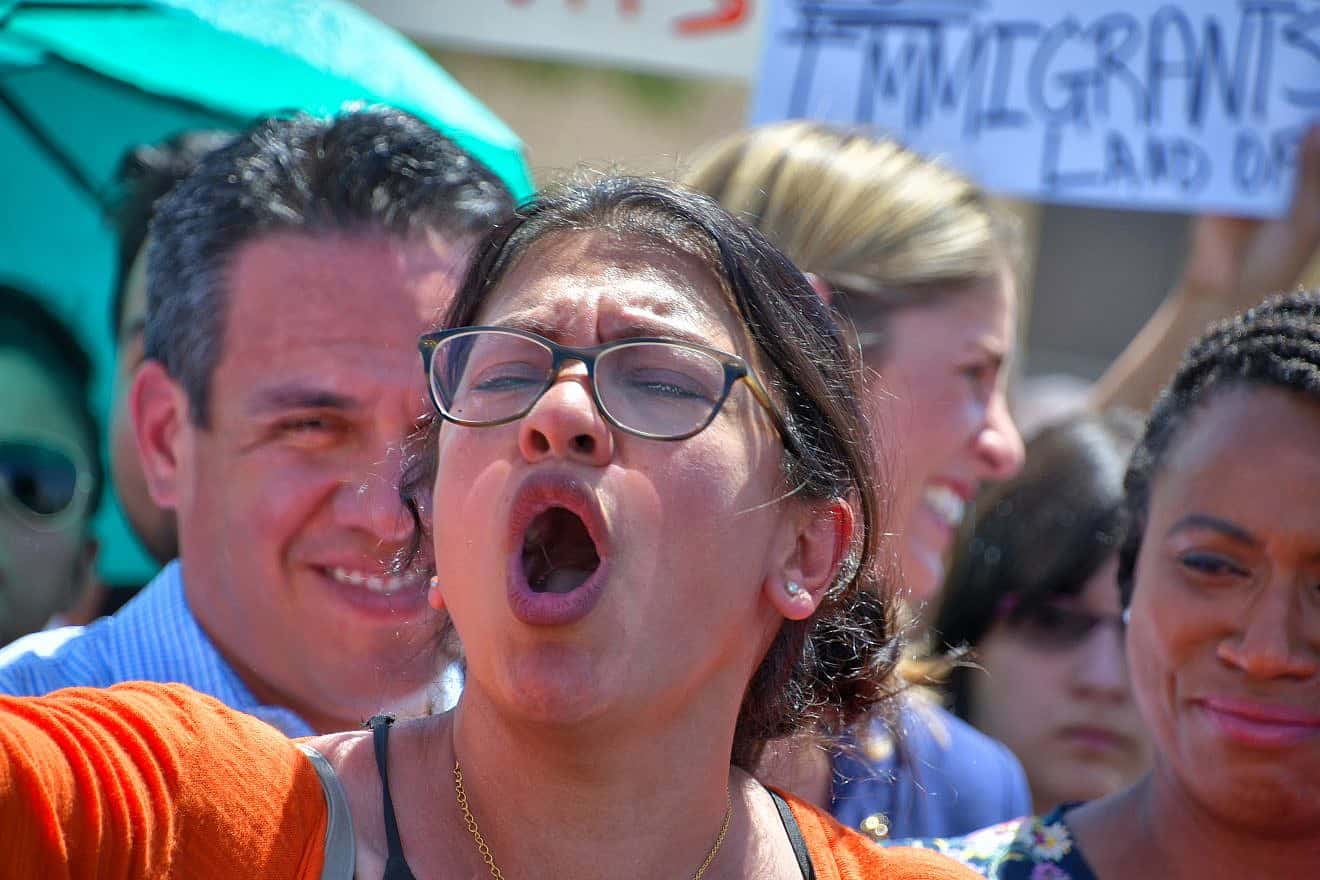
Rep. Rashida Tlaib (D-Mich.) at a protest in Clint, Texas, in 2019. Credit: Grossinger/Shutterstock.

Members of the congressional “Squad” are always at their best when playing the victim. In that light, Nov. 7 was a banner day for Rep. Rashida Tlaib (D-Mich.) as she tearfully assumed the mantle of martyrdom when the U.S. House of Representatives voted to censure her for statements “promoting false narratives regarding the October 7, 2023, Hamas attack on Israel and for calling for the destruction of the state of Israel.”

The ramifications of the censure vote extend far beyond the halls of Congress. A growing chorus of antisemitic invective is being heard on America’s streets and on college campuses. Similar efforts to call out those who call for Israel’s destruction and in favor of terrorist atrocities against Jews are being resisted by those who claim that doing so is an unconstitutional and unethical effort to silence free speech or to enforce a pro-Israel version of cancel culture. Some assert that the anti-Israel protests—even those that clearly cross over into antisemitism—must not only be tolerated but that any effort to punish or subject to public opprobrium those who engage in such vicious behavior is evidence of intolerance of legitimate political opinions. That includes those individuals who feel more than comfortable tearing down posters with the images of men, women and children being held captive in the Gaza Strip by Hamas.

Would they tolerate support for lynching?

Nobody is repealing anyone’s First Amendment right to freedom of expression, no matter how hateful. But the right to say whatever you want—as long as it’s not a direct incitement to violence—doesn’t mean that the rest of society is obliged to treat those engaging in open antisemitism as respectable members of society. We have every right to censure or call them out for doing so. And in the wake of Oct. 7, as expressions of hatred for Jews and Jewish safety are becoming so widespread, it is more important than ever that those who are behaving in this fashion are treated in the same way society disdains neo-Nazis or avowed racists like members of the Ku Klux Klan.

Had a member of Congress expressed open racism against African-Americans, Hispanics or Asians, as well as supported violence against these groups, there would be no hesitation within either party about not just censuring but expelling them.

Elsewhere, the fact that some people openly sympathize with the cause of those advocating for the mass murder of Jews is an unfortunate fact. There is no doubt that universities would expel students or fire professors who supported the lynching of African-Americans or some other act of mass murder. And no law firm, corporation or mainstream publication would hire someone with that on their record. Nor would there be any movement within college administrations to help such people make their way in life, let alone be guaranteed the success that a degree from an elite school can bring.

But when it comes to those engaging in antisemitism, it appears any thought of public ostracism is controversial. This testifies to the mainstreaming of hatred for Jews not so much in the fever swamps of the far right or far left, but in the very institutions of academia, journalism and business that are the loudest in opposing racism against anyone else. 

Indeed, mainstream institutions are slow even to acknowledge how this atmosphere has led directly to violence against Jews, including the apparent killing of a 69-year-old Jewish man in California by a pro-Hamas demonstrator. That publications like The New York Times were reluctant to label this as murder or a hate crime, even after they rushed to assert that the killing of a Muslim boy was the result of Islamophobia, is more evidence of the double standard at play here.  

And that is the true scandal about post-Oct. 7 America.

Tlaib crosses a line

Tlaib’s attacks on Israel and President Joe Biden for his support for the Jewish state, in which she embraced the slogan “From the river to the sea, Palestine will be free”—a call for the elimination of Israel and those who reside in it—led to the censure. Her smears of Israel as an “apartheid state” and false charges that it is committing “genocide” against Palestinians (which, in context, was clearly intended as a defense of Hamas “resistance” efforts) motivated Republicans to move ahead with the measure. 

While Tlaib has disingenuously claimed that the “river to the sea” slogan is “aspirational” and merely an appeal for freedom, she is a supporter of the antisemitic BDS movement and has repeatedly called for Israel’s elimination.

The vote in favor of censure was 234-188 with 22 Democrats breaking party discipline and crossing the aisle to vet to condemn Tlaib while four Republicans bucked their party to oppose it. Three other Democrats and one Republican merely voted “present.”

Given the failure of past attempts to shame Tlaib in this manner, it’s a significant step for the House. Censure has become a largely partisan tool in which both Republicans and Democrats condemn each other’s outliers more to stoke partisan fundraising than any actual outrage. This vote matters because it labels her behavior as being so abhorrent that it forced at least some in her own party to treat it as beyond the pale.

Still, most Democrats didn’t vote for censure. And only 67 signed on to a letter condemning the use of the “from the river to the sea” slogan as an obvious call for genocide of Israel’s Jews, though without naming Tlaib.

The reason for this was partly partisan since in the current political environment, party labels mean far more to most politicians than principles. But according to Rep. Jamie Raskin (D-Md.), who is a popular figure among liberal Jewish Democrats, the real issue was “freedom of speech.”

That’s a similar theme being sounded by those who disagree with efforts to punish students and professors who express support for Hamas and echo Tlaib’s antisemitic libels while also intimidating Jewish students. Similar arguments are heard in defense of those who march in the streets in support of Hamas’s genocidal agenda or who tear down posters with the images of Israelis who have been kidnapped and dragged across the border to the Gaza Strip, where they are being held by Hamas.

Anti-Zionism is antisemitism

As New York Times columnist Michelle Goldberg, another avowed anti-Zionist, wrote this past weekend, as far as many on the political left are concerned, the question is: “When it comes to Israel, who gets to decide what you can or can’t say?” 

But the misnomer here is the false claim that Tlaib or students chanting for an “intifada” are engaging in “criticism” of Israel’s government. If it were merely criticism of Israeli Prime Minister Benjamin Netanyahu or his policies, there would be no issue. But the anti-Zionists don’t want a different Israeli government or a Jewish state with alternative policies or borders. They want to “decolonize” Israel, which is to say, destroy it, evict or kill its Jews and replace it with a Palestinian state. And that state would—inevitably, like every other majority Muslim nation in the region—be one where adherents of other religions would, at best, be a discriminated-against minority whose safety would be subject to the whims of Islamists. 

The reason why anti-Zionists are antisemites, regardless of whether some can claim Jewish ancestry, is that they advocate for treating Jews differently than any other people on the planet. They say that only Jews have no right to life and sovereignty in their ancient homeland, and as such, should be denied the right to self-defense against those seeking to slaughter them. That is what those demanding a ceasefire in Gaza so as to allow Hamas to survive and win the current war are doing, and it’s nothing but discrimination. And let’s be clear: Discrimination against Jews is antisemitism.

This is why the Jewish community has every right to demand that those who call for Israel’s extinction be correctly labeled as antisemites. It is equally hateful to claim that antisemites should be tolerated or treated better than those who advocate for discrimination or violence against other minorities.

The awful atrocities of Oct. 7 were deeply traumatic for all Jews. But that injury has been compounded not just by the indifference of much of the world, including those who publicly comment about any tragedy, but by the way the mass slaughter of Jews has actually encouraged the spread of antisemitism throughout the world.

The problem for Jews is that a percentage of Americans support an ideology—left-wing intersectionality—that is squarely behind such discrimination and ready to rationalize, if not openly back, violence against Jews. We can see how this has already led to violence and the creation of an atmosphere in cities and colleges where Jews have good reason to fear for their safety.

That means that it is incumbent on institutions—whether they are universities, corporations or Congress—to demonstrate that while people who hold such views have every right to speak, march or publish, they do not have a right to be tolerated or treated as a respectable member of society. As long as they are being told by the arbiters of public opinion, like The New York Times, that their advocacy for violence against Jews is something that everyone should accept as legitimate and even acceptable discourse, Jews aren’t safe in America … or anywhere else.


Jonathan S. Tobin is editor-in-chief of JNS (Jewish News Syndicate). Follow him @jonathans_tobin.


Zawartość publikowanych artykułów i materiałów nie reprezentuje poglądów ani opinii Reunion’68,
ani też webmastera Blogu Reunion’68, chyba ze jest to wyraźnie zaznaczone.
Twoje uwagi, linki, własne artykuły lub wiadomości prześlij na adres:
webmaster@reunion68.com


Was the House censure of Rashida Tlaib justified?

Was the House censure of Rashida Tlaib justified?


The Dershow With Alan Dershowitz


This is Alan Dershowitz’s video podcast called The Dershow. We discuss politics, law, the constitution and current events.


Zawartość publikowanych artykułów i materiałów nie reprezentuje poglądów ani opinii Reunion’68,
ani też webmastera Blogu Reunion’68, chyba ze jest to wyraźnie zaznaczone.
Twoje uwagi, linki, własne artykuły lub wiadomości prześlij na adres:
webmaster@reunion68.com