Archive | 2023/11/04

Kto powiedział, że Hamas nie reprezentuje Palestyńczyków?

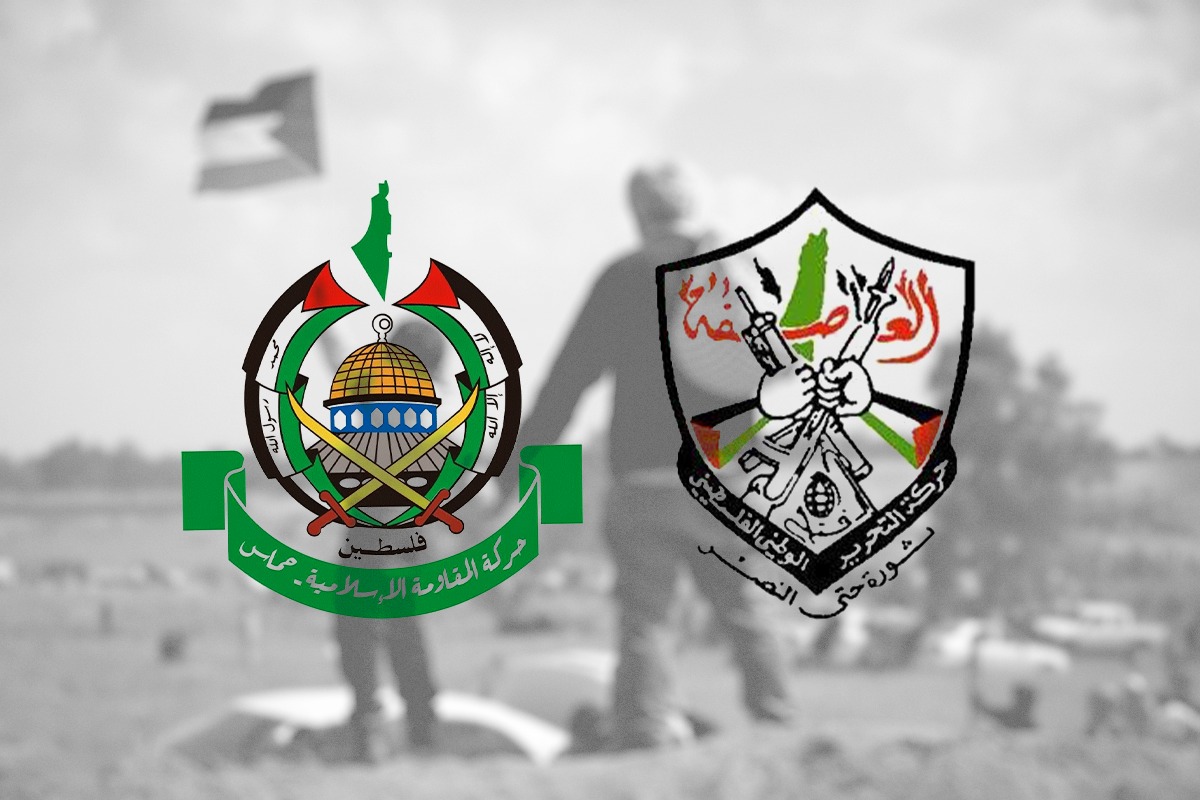
Prezydent Autonomii Palestyńskiej Mahmoud Abbas nie potępił okrucieństw popełnionych przez Hamas 7 października. Milczenie Abbasa jest krzyczącą aprobatą dla masakry setek Izraelczyków. Nie ma co do tego żadnych wątpliwości: zarówno Hamas, jak i Abbas reprezentują większość Palestyńczyków, których celem jest mordowanie Żydów i zniszczenie Izraela. Na zdjęciu: Logo Hamasu i Fatahu


Kto powiedział, że Hamas nie reprezentuje Palestyńczyków?

Bassam Tawil
Tłumaczenie: Małgorzata Koraszewska


W wielu oświadczeniach od czasu masakry dokonanej przez Hamas w Izraelu 7 października prezydent USA Joe Biden stwierdził, że Hamas nie reprezentuje całego narodu palestyńskiego. „Myślę, że Izrael rozumie, że znaczna część narodu palestyńskiego nie podziela poglądów Hamasu i Hezbollahu” – powiedział Biden w wywiadzie dla CBS.

Twierdzenie Bidena powtórzył sekretarz stanu USA Antony Blinken, który powiedział królowi Jordanii Abdullahowi i prezydentowi Autonomii Palestyńskiej Mahmudowi Abbasowi, że Hamas nie reprezentuje narodu palestyńskiego. W rozmowie telefonicznej z Abbasem Blinken „wyraził niezłomne wsparcie Stanów Zjednoczonych dla narodu palestyńskiego, podkreślając, że terroryści Hamasu nie reprezentują Palestyńczyków ani ich uzasadnionych aspiracji do samostanowienia i równej godności, wolności, bezpieczeństwa i sprawiedliwości” – jak informuje Departament Stanu.

Twierdzenie administracji Bidena, że Hamas jest nieistotną grupą terrorystów, która nie cieszy się poparciem wielu Palestyńczyków, jest nie tylko fałszywe, ale i niebezpieczne. To twierdzenie stoi w sprzeczności z rzeczywistością, która dowodzi, że Hamas rzeczywiście reprezentuje znaczną część Palestyńczyków.

Podstawą tej niewygodnej rzeczywistości są badania opinii publicznej przeprowadzone przez Palestyńskie Centrum Sondaży i Badań nad Polityką (PSR) oraz wyniki wyborów do Palestyńskiej Rady Legislacyjnej, samorządów studenckich i związków zawodowych. Opiera się także na masowych demonstracjach i wiecach poparcia dla Hamasu przed i po rzezi z 7 października, podczas której terroryści Hamasu zamordowali ponad 1400 Izraelczyków, a ponad 4000 zostało rannych.

Ostatni sondaż PSR, opublikowany w zeszłym miesiącu, pokazał, że gdyby dzisiaj odbyły się nowe wybory prezydenckie, przywódca Hamasu Ismail Hanija zdobyłby 58% głosów, podczas gdy Mahmoud Abbas otrzymałby jedynie 37%. Sondaż wykazał, że „walkę zbrojną” Hamasu (terroryzm) przeciwko Izraelowi popierało 58% palestyńskiego społeczeństwa. Nieco ponad jedna czwarta (27%) Palestyńczyków uważa, że Hamas najbardziej zasługuje na to, aby reprezentować naród palestyński i przewodzić mu dzisiaj, podczas gdy 24% uważa, że frakcja Abbasa Fatah (rządząca Zachodnim Brzegiem) bardziej na to zasługuje; 44% uważa, że ani jedni, ani drudzy nie są godni reprezentacji i przywództwa.

Inny sondaż PSR, opublikowany w czerwcu ubiegłego roku, wykazał, że 66% Palestyńczyków uważa, że Izrael nie będzie obchodził 100-lecia swojego istnienia, a 51% wierzy, że naród palestyński będzie w stanie „odzyskać Palestynę w przyszłości” (tj. zniszczyć Izrael). Oznacza to, że większość Palestyńczyków podziela pragnienie Hamasu zlikwidowania Izraela, wyrażone w statucie tej grupy terrorystycznej z 1988 roku. Sondaż wykazał również, że 71% Palestyńczyków popiera tworzenie grup zbrojnych w celu mordowania Izraelczyków.

W ciągu ostatnich kilku miesięcy studenci zrzeszeni w Hamasie wygrali wybory na dwóch głównych palestyńskich uniwersytetach na Zachodnim Brzegu [Judei i Samarii]. Na Uniwersytecie An-Najah w Nablusie Blok Islamski Hamasu zdobył większość 40 mandatów w samorządzie studenckim, podczas gdy lojaliści Abbasa/Fataha zdobyli 38 mandatów. Na Uniwersytecie Birzeit, niedaleko Ramallah, de facto stolicy Palestyńczyków, stowarzyszony z Hamasem Islamski Blok Wafa zdobył 25 z 51 mandatów samorządu studenckiego. Na początku tego roku blok studencki Hamasu zdobył także większość mandatów na Politechnice Palestyny w Hebronie. Według Middle East Eye:

„Wybory w Birzeit i An-Najah są uważane za siłę napędową polityki Zachodniego Brzegu. Wyniki tych wyborów odczytywane są jako odzwierciedlenie szerszego społeczeństwa palestyńskiego, jego stanowiska wobec AP i orientacji wyborców we wszelkich szerszych wyborach, które mogą się odbyć w przyszłości. Ponieważ na horyzoncie nie widać wyborów powszechnych w Palestynie, sondaże studenckie są postrzegane jako ‘test pomiaru opinii publicznej’…”

W 2021 r. Abbas odwołał już ogłoszone wybory prezydenckie i parlamentarne w Autonomii Palestyńskiej, gdy zdał sobie sprawę, że jego frakcja Fatahu prawdopodobnie przegra z Hamasem, podobnie jak miało to miejsce w wyborach parlamentarnych w 2006 r. „Decyzja o odwołaniu wyborów wynikała z merytorycznych obaw wszystkich frakcji Fatahu przed porażką z Hamasem” – powiedział dr Ido Zelkovitz, kierownik wydziału studiów bliskowschodnich w izraelskim Jezreel Valley Academic College.

„Podziały w Fatahu i osobiste rywalizacje w jego frakcjach kontrastowały ze zjednoczonym frontem Hamasu prezentowanym przed zaplanowanymi wyborami. Aby uniknąć problemu, Abbas zdecydował się opóźnić wybory, wskazując oskarżycielskim palcem na Izrael za [rzekome] uniemożliwienie głosowania przez odmowę zezwolenia na udział mieszkańców wschodniej Jerozolimy.”

W 2006 roku Hamas odniósł wielkie zwycięstwo, kiedy jego przedstawicieli wygrali wybory parlamentarne. Ze 132 mandatów w Palestyńskiej Radzie Legislacyjnej Hamas zdobył 76 mandatów do 43 zdobytych przez Fatah.

W przeciwieństwie do Bidena i Blinkena Abbas wie, że Hamas rzeczywiście reprezentuje wielu Palestyńczyków i w przeciwieństwie do Bidena i Blinkena Abbas był świadkiem prohamasowskich demonstracji na Zachodnim Brzegu, w tym tych, które miały miejsce kilka kilometrów od jego biura w Ramallah, w następstwa masakry Izraelczyków, w tym kobiet, dzieci i osób starszych, które miały miejsce 7 października. W przeciwieństwie do Bidena i Blinkena Abbas widzi także liczne grupy terrorystyczne powiązane z Hamasem, które pojawiły się na Zachodnim Brzegu w ciągu ostatnich dwóch lat. Grupy te, takie jak Batalion Dżenin i Jaskinia Lwów, są odpowiedzialne za zamordowanie i zranienie dziesiątek Izraelczyków od początku tego roku.

Abbas i jego urzędnicy w pełni rozumieją, że Hamas nie jest grupą obcych, która przybyła z Marsa. „Hamas jest integralną częścią narodu palestyńskiego” – powiedział  w 2014 roku. Była polityczka OWP, Hanan Ashrawi, również potwierdziła znaczenie Hamasu w społeczeństwie palestyńskim:

„Hamas jest integralną częścią narodu [palestyńskiego] i jest jednym z narodowych i społecznych elementów tego ludu”.

Jeżeli zdaniem Bidena i Blinkena Hamas nie reprezentuje Palestyńczyków, jak wyjaśnią fakt, że w zeszłym roku setki tysięcy Palestyńczyków wzięło udział w wiecu tej grupy z okazji 35. rocznicy jej powstania ? Ponadto, jak tłumaczą fakt, że setki palestyńskich mieszkańców Strefy Gazy dołączyły do terrorystów Hamasu, którzy zaatakowali społeczności izraelskie w pobliżu granicy ze Strefą Gazy?

Stwierdzając, że Hamas nie reprezentuje Palestyńczyków, Biden i Blinken sugerują, że Abbas i Autonomia Palestyńska są prawdziwymi i prawowitymi przedstawicielami Palestyńczyków. Warto przypomnieć prezydentowi USA i jego sekretarzowi stanu, że Abbas kończy obecnie 18. rok swojej czteroletniej kadencji. Abbas został wybrany w 2005 roku i od tego czasu Palestyńczycy nie przeprowadzali wyborów prezydenckich. Warto zauważyć, że ostatni sondaż PSR pokazał, że 78% Palestyńczyków nie ufa Abbasowi i chce jego rezygnacji.

Administracja Bidena przedstawia fałszywe twierdzenie, że większość Palestyńczyków jest przeciwna Hamasowi i że Autonomia Palestyńska Abbasa, która nagradza terrorystów mordujących Żydów miesięcznymi stypendiami, jest „partnerem pokojowym” Izraela. Jest to całkowite zniekształcenie rzeczywistości i nie przedstawia prawdy.

Niedawno Abbas przypomniał wszystkim, że jest antysemitą i negacjonistą Holokaustu. Przemawiając 24 sierpnia na spotkaniu Fatahu w Ramallah, Abbas powiedział:

 „Mówią, że Hitler zabijał Żydów, ponieważ byli Żydami i że Europa nienawidziła Żydów, ponieważ byli Żydami. Nieprawda. Jasno wyjaśniono, że [Europejczycy] walczyli z [Żydami] ze względu na ich rolę społeczną, a nie religię […] [Europejczycy] walczyli przeciwko tym ludziom ze względu na ich rolę społeczną w społeczeństwie, która wiązała się z lichwą, pieniędzmi itd.”.

Kiedy Biden i Blinken zrozumieją, że nie ma różnicy między morderczymi przywódcami Hamasu a antysemitą Abbasem? Z pewnością Biden i Blinken są świadomi, że Abbas nie potępił okrucieństw popełnionych przez Hamas 7 października. Milczenie Abbasa jest krzyczącą aprobatą dla masakry setek Izraelczyków. Nie ma co do tego żadnych wątpliwości: zarówno Hamas, jak i Abbas reprezentują większość Palestyńczyków, których celem jest mordowanie Żydów i zniszczenie Izraela.


Bassam Tawil – muzułmański badacz i publicysta mieszkający na Bliskim Wschodzie.


Zawartość publikowanych artykułów i materiałów nie reprezentuje poglądów ani opinii Reunion’68,
ani też webmastera Blogu Reunion’68, chyba ze jest to wyraźnie zaznaczone.
Twoje uwagi, linki, własne artykuły lub wiadomości prześlij na adres:
webmaster@reunion68.com


Nasrallah: Real option of Lebanese front expanding

Nasrallah: Real option of Lebanese front expanding

YAAKOV LAPPIN


Israel’s victory will be a “clear message that will echo for generations,” Israeli Prime Minister Benjamin Netanyahu said.

.
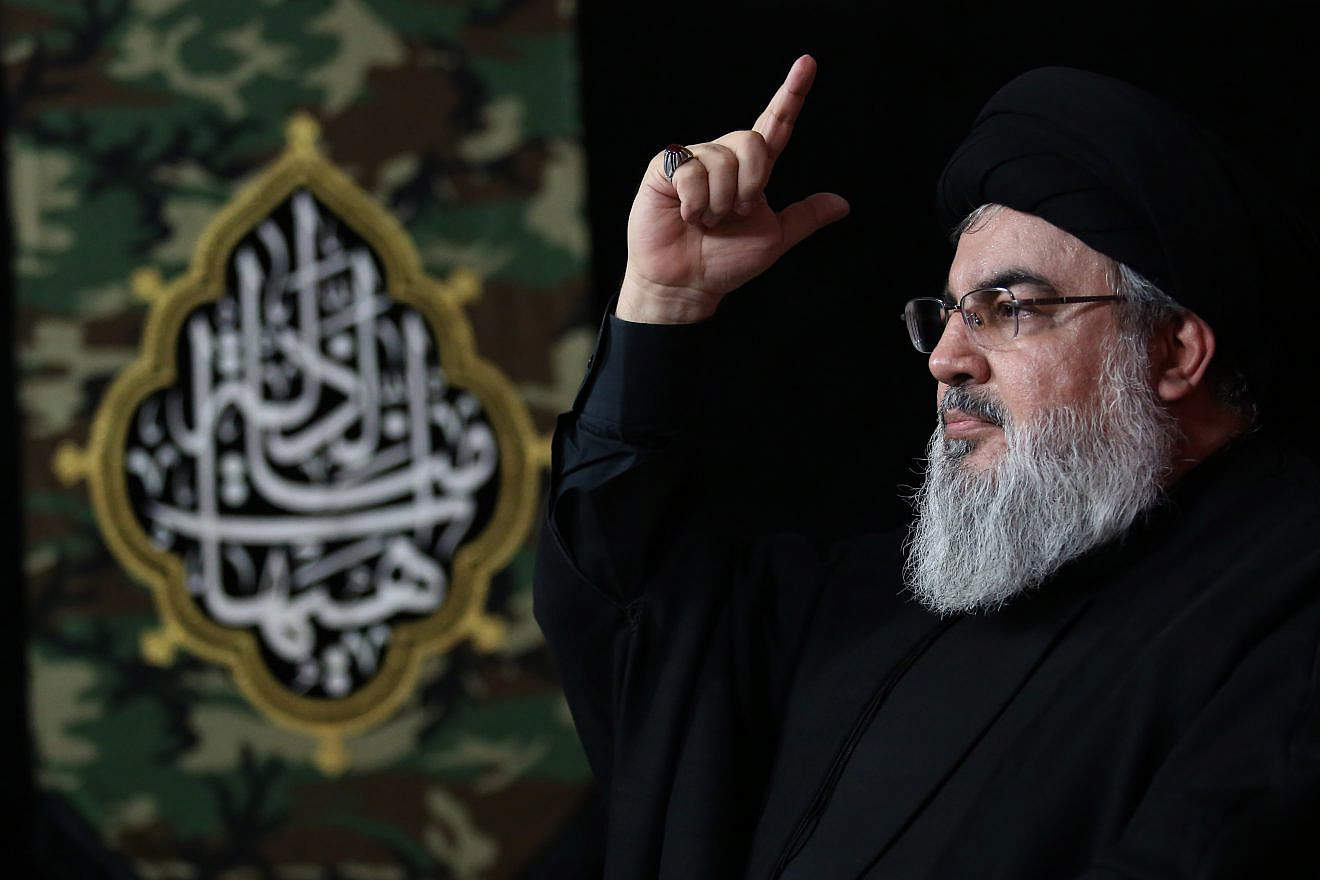
Hassan Nasrallah, leader of Hezbollah, in Beirut on May 8, 2023. Credit: Mohammad Kassir/Shutterstock.

There is a “real” possibility of the Lebanese front with Israel expanding, Hassan Nasrallah, the Hezbollah leader, said on Friday in a lengthy televised address. His speech came a day after the Hezbollah terrorist organization launched attacks all along the Israeli border, targeting both civilians and Israel Defense Forces positions.

“The Lebanese front and the escalation in many directions depends on two things: the progress of events in Gaza and their development, and the second, the activities of Israel in Lebanon,” the Iranian-backed terror chief stated, per Maariv reporting.

“The war has already expanded to more than one front,” Nasrallah said. “We salute the armies of Iraq and Yemen that entered the heart of this blessed campaign.”

He claimed that the mass murder attack by Hamas on southern Israel on Oct. 7 was fully planned and implemented “by the Palestinians.”

“We have two goals before us: stopping the fighting for humanitarian reasons and achieving victory for Gaza and Hamas,” Nasrallah said. “The option that the Lebanese front will expand is very real.”

Nasrallah stated that Hezbollah has been “managing battles with Israel since Oct. 8,” and boasted that Israel “was forced to add soldiers in the north” due to Hezbollah attacks. 

“The missiles from Yemen will reach the military bases in Eilat,” he claimed.

With U.S. Secretary of State Antony Blinken visiting Israel, Prime Minister Benjamin Netanyahu said that Israel rejects temporary ceasefires that do not include the release of hostages.

“We have made clear that we are continuing full force,” Netanyahu said. He added that Israel refuses to transfer fuel to Gaza and objects to transferring cash, all of which could end up in Hamas’s hands.

Israel’s victory will be a “clear message that will echo for generations,” Netanyahu added. “Our enemies will fail in destroying Israel. We will not give up until victory and until we reach all of the objectives we set—destroying Hamas, retrieving our hostages and restoring security to our civilians and children.”

Battles continued into Friday evening in the north, when an IDF tank struck two anti-tank missile launch posts and a military post belonging to the Hezbollah terrorist organization in Lebanese territory adjacent to Yiftahch.

“In the north, we are in expanded operational deployment,” Rear Adm. Daniel Hagari, the IDF spokesman, said on Friday morning. “We hit a number of Hezbollah squads and struck after fire was launched on Kiryat Shmona and Safed. We will continue to strike. We are at very high readiness in the north, and will continue to respond to any event.”

Iran is continuing to sow destruction in the area by encouraging and arming proxies, Hagari said. He noted that Iranian arms are also being used to attack Ukraine, as they were to attack U.S. forces in Iraq. The Iranian axis is “trying to divert us from Hamas. We continue to advance,” he said. “We will know how to respond in any arena.”

As Nasrallah spoke, Esmail Qaani, commander of the Iranian Quds Force, has been traveling to and from Beirut, likely controlling Hezbollah’s actions and statements.

While Israel has stated that its objective is to focus on Gaza, it will also need to prepare for the possibility that Nasrallah will expand the war.

Hezbollah’s firepower is significantly more powerful and longer in range than that of Hamas, and it is the only non-state actor in possession of that caliber of precision-guided missiles in its inventory.

Hezbollah is heavily embedded in civilian populations in south Lebanon, Beirut and the Bekaa Valley. It has more than 20,000 active members and tens of thousands of reservists, and an arsenal of some 150,000 rockets, mortars and missiles.

This includes an estimated 400 long-range missiles and rockets, hundreds of precision-guided munitions, 4,800 mid-range rockets and 65,000 short-range rockets, as well as some 140,000 mortars.

In Judea and Samaria on Friday, IDF units struck terrorists in Jenin both from the air and the ground. The IDF’s official count of hostages stands at 241 at this time, and it has notified the families of 27 fallen soldiers killed in action since the Oct. 27 ground offensive in Gaza, according to the IDF.

“IDF soldiers are encircling Gaza from the air, land and sea, surrounding Gaza City and its environment,” Hagari said on Friday. “Forces are progressing forward and destroying infrastructure over and underground.”

IDF soldiers have taken over many Hamas strongholds and recovered weapons, he added.

Israel is continuing to shed growing light on Hamas’s cynical use of Shifa hospital in Gaza, and the terror group is stealing fuel directly from the hospital, Hagari said.

The IDF released audio of a call that took place on Nov. 2nd with an official in the medical system in Gaza, in which “it was revealed again that Hamas is holding the fuel reserves in the Gaza Strip and is using it,” the Israeli military said.

“The hospital official states that Hamas’s fuel reserves of over half a million liters of fuel are under the Shifa Hospital,” the military added. “The call confirms that Hamas controls the energy and fuel resources in the Gaza Strip and chooses to direct them for terrorism. Moreover, if fuel is allowed to enter the Gaza Strip, Hamas plans to seize those resources.”

Soldiers of the elite engineering Yahalom unit, in cooperation with combat engineers from Battalion 7107, the Armored Corps, the Nahal infantry Brigade and the Negev Brigade exposed and neutralized Hamas’s terror tunnels during special operations inside the Gaza Strip, the IDF announced. 

The troops uncovered tunnel shafts, rigged them with explosives and neutralized the tunnels. In joint operations between Israeli ground troops and the Israeli Air Force, numerous terrorists who fired at Israeli troops were killed over the last few hours, the IDF said on Friday.

IDF reservist troops also identified a terrorist cell exiting a tunnel shaft and directed an aircraft to strike and thwart the terrorist cell. In an additional engagement, numerous terrorists exited a shaft located inside a residence and opened fire on IDF troops, who returned fire and killed several terrorists, the military said.

The Israeli National Security Council and the Foreign Ministry released a warning on Friday calling on Israelis to consider avoiding all non-essential overseas travel. The warning also called on Israelis to avoid displaying any outwardly visible Israeli or Jewish signs, due to the dramatic rise in antisemitism and violence worldwide.


Yaakov Lappin is an Israel-based military affairs correspondent and analyst. He is the in-house analyst at the Miryam Institute; a research associate at the Alma Research and Education Center; and a research associate at the Begin-Sadat Center for Strategic Studies at Bar-Ilan University. He is a frequent guest commentator on international television news networks, including Sky News and i24 News. Lappin is the author of Virtual Caliphate: Exposing the Islamist State on the Internet. Follow him at: www.patreon.com/yaakovlappin.


Zawartość publikowanych artykułów i materiałów nie reprezentuje poglądów ani opinii Reunion’68,
ani też webmastera Blogu Reunion’68, chyba ze jest to wyraźnie zaznaczone.
Twoje uwagi, linki, własne artykuły lub wiadomości prześlij na adres:
webmaster@reunion68.com


Opinion: Nothing has prepared me for the antisemitism I see on college campuses now

Opinion: Nothing has prepared me for the antisemitism I see on college campuses now

ERWIN CHEMERINSKY


A sign at a demonstration supporting Palestinians at Pershing Square in Los Angeles on Saturday. (Gina Ferazzi/Los Angeles Times)

I am a 70-year-old Jewish man, but never in my life have I seen or felt the antisemitism of the last few weeks. I have heard antisemitic things from time to time through my life. I remember as a child being called a “dirty Jew,” and my friends and I being called “Christ killers” as we walked to Hebrew school. I recall a college girlfriend’s parents telling her that she should not go out with me because “Jews are different.” I had an incident in a class I was teaching about the ethics of negotiations, where a student matter of factly said, “the other side will try to Jew you down,” without the slightest sense of how that was a slur.

But none of this prepared me for the last few weeks. On Friday, someone in my school posted on Instagram a picture of me with the caption, “Erwin Chemerinsky has taken an indefinite sabbatical from Berkeley Law to join the I.D.F.” Two weeks ago, at a town hall, a student told me that what would make her feel safe in the law school would be “to get rid of the Zionists.” I have heard several times that I have been called “part of a Zionist conspiracy,” which echoes of antisemitic tropes that have been expressed for centuries.

I was stunned when students across the country, including mine, immediately celebrated the Hamas terrorist attack in Israel on Oct. 7. Students for Justice in Palestine called the terror attack a “historic win” for the “Palestinian resistance.” A Columbia professor called the Hamas massacre “awesome” and a “stunning victory.” A Yale professor tweeted, “It’s been such an extraordinary day!” while calling Israel a “murderous, genocidal settler state.” A Chicago art professor posted a note reading, “Israelis are pigs. Savages. Very very bad people. Irredeemable excrement…. May they all rot in hell.” A UC Davis professor tweeted, “Zionist journalists … have houses w addresses, kids in school,” adding “they can fear their bosses, but they should fear us more.” There are, sadly, countless other examples.

How can anyone celebrate the killing of 260 people attending a music festival, or the brutal massacre of more than 100 people in a kibbutz, or the pulling of people from their houses to take as hostages? If this happened to people who were not Jews would there be such celebrations?

I have heard few campus administrators speak out publicly about the antisemitism that has become prevalent this month. They want to seem neutral or not be perceived as Islamophobic. I understand. I, too, refrained from speaking out against those who defended Hamas’ terrorist attack.

But when do we stop being silent and when do we say the antisemitism must be condemned and it is not acceptable on our campuses? I believe this must be that time.

To be clear, I — and I hope all of us — mourn the loss of life in Israel and in Gaza. There is surely room in our hearts to feel compassion for all who are in danger and all who have lost loved ones. But it is simply wrong to confuse condemning antisemitism with ignoring the plight of the Palestinians.

Of course, criticism of the Israeli government is not antisemitism, any more than criticizing the policies of the United States government is anti-American. I strongly oppose the policies of the Netanyahu government, favor full rights for Palestinians, and believe that there must be a two-state solution. But if you listen to what is being said on college campuses now, some of the loudest voices are not advocating for a change in Israeli policies, but are calling for an end to Israel. Students regularly chant, “from the river to the sea, Palestine will be free” and “We don’t want no two states, we want all of 48,” referring to going back to 1948 before Israel existed.

An oft-repeated mantra among some is that Israel is a settler colonialist country and should be forced to give the land back to the Palestinians. I have no idea how it would be determined who is rightly entitled to what land, but I do know that calling for the total elimination of Israel is antisemitic.

There has been enough silence and enough tolerance of antisemitism on college campuses. I call on my fellow university administrators to speak out and denounce the celebrations of Hamas and the blatant antisemitism that is being voiced.

Students have the right to say very offensive and even hateful things, but school administrators — deans, presidents and chancellors — have free speech rights too. They must exercise them and take a stand even if it will offend some and subject them to criticism.

It is a very difficult time on campuses across the country. Many of our students and faculty members have family and friends in Israel or in Gaza. Many care deeply about the suffering we are seeing, and yet there is no bridge between those who seek the elimination of Israel and those who believe it is essential to have a Jewish state. I hope there will be a time when campus officials can find ways to bring their communities together. But it is not realistic now. This makes it all the more important that they show moral leadership and speak out against the antisemitism that is rampant now, as they would condemn all other forms of racism and hate on campus.


Erwin Chemerinsky is a contributing writer to Opinion and the dean of the UC Berkeley School of Law. His latest book is “Worse Than Nothing: The Dangerous Fallacy of Originalism.”


Zawartość publikowanych artykułów i materiałów nie reprezentuje poglądów ani opinii Reunion’68,
ani też webmastera Blogu Reunion’68, chyba ze jest to wyraźnie zaznaczone.
Twoje uwagi, linki, własne artykuły lub wiadomości prześlij na adres:
webmaster@reunion68.com