
Archive | December 2024

Don’t expect any humor about antisemitic ‘genocide’ smears

Don’t expect any humor about antisemitic ‘genocide’ smears

Jonathan S. Tobin


A comedy club wanted to bring together supporters of Israel and supporters of the Palestinians for a “Don’t Hate. Debate.” The Israel-haters replied: Nothing doing.

A close-up of the neon sign for the Stand Up NY Comedy Club on Manhattan’s Upper West Side, May 8, 2013. Photo by Oliver Morris/Getty Images.

Give the organizers of a proposed “Don’t Hate. Debate.” at a New York City comedy club credit for good intentions. When comedy entrepreneur Dani Zoldan, the owner of Stand Up NY, and marketing executive Robin Lemberg sought to invite performers who were supporters of both Israel and the Palestinians to be part of an evening of “Comics for Conversation,” they discovered something that should have already been obvious.

Whether they are comedians or anyone else, those who identify as “pro-Palestinian” are not any more interested in dialogue about the situation than the Hamas terrorists who started the current conflict with their attacks on southern Israel on Oct. 7, 2023.

Rather than convening a gathering that would allow those on both sides of the divide to hear each other out and perhaps even share a few laughs at the expense of their own cause, the organizers were forced to confront a stark fact about the conflict. Jews like Zoldan who organized a “Comics for Kamala” group during the presidential election may be willing to listen to opposing views in an effort to find common ground and perhaps even a path towards compromise and peace. But those who hate Israel and who have spent the last 14 months since the Oct. 7 massacres spreading lies about the war that aren’t so different from traditional antisemitic blood libels view such opportunities differently. They are incapable of viewing the conflict as anything but a zero-sum game in which supporters of Israel are malevolent individuals to be shunned and denounced as backers of “genocide.”

An unbridgeable gap

The response from the comedians who were invited and others who publicly sided with them was as discouraging as it was emphatic. As the New York Post reported, 21 comedians were invited to join the conversation from the Palestinian side, and all refused. As a result, the show has been canceled.

Palestinian comedian Eman El-Husseini responded by saying, “Thanks for reaching out, but I cannot share the stage with zionazzzis while my people and Arabs in the region are being decimated and genocided so Israelis can have beach houses in more land that’s not theirs.”

Libyan comedian Mohanad Elshieky said in an Instagram post that the event was “a “little debate about why m*rdering children is wrong.”

Others on the left who were invited to attend as audience members were similarly uninterested in being part of anything that might normalize discussions with supporters of Israel.

New Yorker magazine food critic Helen Rosner, who describes herself on her Instagram profile page as “Just another Jew who wants to free Palestine,” poured scorn on the organizers of the event in a thread on the left-wing social media site Bluesky. “Some comedy club in NYC is apparently putting on a “both sides” night about Israel’s annihilation of Gaza,” Rosner wrote. She went on to proclaim that though the invitation expressed the hope that, “My presence would “add to our efforts in building a more inclusive community” … I have zero interest in building an inclusive community that’s inclusive of people whose position is “mass slaughter and dispossession is fine actually.”

The positions expressed by this trio sound extreme, but they are very much in sync with the sort of things said and/or chanted at pro-Hamas rallies on college campuses and in the streets of cities like New York. Moreover, they are a direct reflection of the ideology that drives opponents of Israel. As their comments indicate, the “pro-Palestine” cause is not about seeking a Palestinian Arab state living in peace alongside Israel. It is one that opposes the existence of a Jewish state, no matter where its borders are drawn, because it doesn’t recognize the right of Jews to any part of their ancient homeland.

While Palestinian groups like Hamas openly proclaim their desire to carry out the genocide of the Jews, something that was made clear by the atrocities terrorists undertook on Oct. 7: The “Free Palestine” crowd smears the Israelis for carrying out a fictional genocide. And they view Zionism—the national liberation movement of the Jewish people—as akin to Nazism, which like their genocide claims is a classic inversion of the truth and textbook definition of antisemitism.

What Palestinians want

It’s easy to dismiss this story as a minor kerfuffle about a misguided effort to inject comedy into the debate about the Middle East. But it should be seen as providing more insight into the gap between the two sides than perhaps many liberal Jews who are still seeking dialogue have been willing to admit. The failure of this initiative speaks volumes about how toxic leftist ideas like critical race theory, settler-colonial theory and intersectionality have made dialogue or efforts to promote compromise solutions on a whole range of topics—of which Israel is just one—impossible. It also shows how the pervasive influence of this destructive intellectual fashion is more or less killing comedy.

If the debate about the Middle East were really, as liberals have long insisted, about the imperative for Israel to trade “land for peace” or its need to avoid building homes in Jerusalem or Judea and Samaria, then dialogue intended to build trust on both sides would be not only possible but necessary. But as decades of Palestinian rejection of every compromise offered to them have shown, if that would mean recognition of the legitimacy of a Jewish state in the Middle East, that is a price they are not willing to pay. Meaning, the conflict is not about borders or settlements.

The Palestinian Arabs and their supporters abroad who have rallied to their cause since Oct. 7 have made no secret of the fact that what they desire is turning back the clock to 1948 or 1917 and the elimination of Israel. Being so quick to manufacture lies about Israeli actions and intentions is not just a manifestation of Jew-hatred, though that’s part of it. Those who buy into the myth that Israel is a manifestation of a “settler-colonial” imperialism are drawn inevitably to the conclusion that there is nothing at all to talk about with Israelis or their supporters.

The anti-Israel movement’s adoption of this frame of reference is reflected in more than just the intolerant invective employed in the social-media ravings of those comics and others who believe that even a debate with Zionists would compromise their moral standing as progressives. Much like the best-selling book by anti-Zionist author Ta-Nehisi Coates, their accusations hurled against Israel are not merely divorced from the facts of what has actually happened in Gaza; they ignore the genocidal goals of the Palestinians, their embrace of terrorism and their unwillingness to compromise.

Such sentiments have, due to the progressives’ adoption of woke ideologies that falsely label Jews and Israelis as “white oppressors,” migrated from the ivory towers of academia to the political grassroots. This was made apparent as first President Joe Biden and then Vice President Kamala Harris spent the 2024 presidential campaign trying to placate their party’s left-wing base, which has grown increasingly intolerant of any stand on the Middle East that isn’t resolutely opposed to Israel.

Woke is killing comedy

The impact of these toxic ideas is not limited to politics. It is also a major reason why comedy—or at least the sector of it that is pitched to appeal to the half of the country that didn’t vote for Donald Trump—is dying.

For years, comedians have decried the stultifying impact that a spirit of political correctness has had on their craft. As anyone who has watched the political skits that appear on NBC’s “Saturday Night Live” or the monologues of the late-night comedy shows that don’t appear on Fox News, liberals can only accept humor that pokes fun at their political foes or those who hold different views about religion and culture. Edgy humor that doesn’t respect the shibboleths of woke sensibilities about certain protected minorities is no longer tolerated. Groundbreaking comedians of the past, like Lenny Bruce, had to navigate the intolerance of established society and the conservative values of the 1950s and early 1960s. Today, someone like him doesn’t have to worry about being arrested for offending decency codes. But they would surely be canceled by the left that dominates popular culture.

The result of this cultural trend is that much of what is now considered comedy is humorless virtue-signaling, essentially a nod to audiences’ shared contempt for those outside of their group.

Until mainstream culture shakes itself free of this leftist orthodoxy, efforts to arrange such joint events will always fail. Conversations between pro-Israel and pro-Palestinian comics, as well as their audiences, are impossible in a cultural context where progressives in America have declared that we are all locked in an endless race war between oppressors and victims.

Under these circumstances, pursuing dialogue across the unbridgeable gap between those who want to destroy Israel and those who work to support it is a fool’s errand. And that’s no joke.


Jonathan S. Tobin is editor-in-chief of the Jewish News Syndicate, a senior contributor for The Federalist, a columnist for Newsweek and a contributor to many other publications. He covers the American political scene, foreign policy, the U.S.-Israel relationship, Middle East diplomacy, the Jewish world and the arts. He hosts the JNS “Think Twice” podcast, both the weekly video program and the “Jonathan Tobin Daily” program, which are available on all major audio platforms and YouTube. Previously, he was executive editor, then senior online editor and chief political blogger, for Commentary magazine. Before that, he was editor-in-chief of The Jewish Exponent in Philadelphia and editor of the Connecticut Jewish Ledger. He has won more than 60 awards for commentary, art criticism and other writing. He appears regularly on television, commenting on politics and foreign policy. Born in New York City, he studied history at Columbia University.


Zawartość publikowanych artykułów i materiałów nie reprezentuje poglądów ani opinii Reunion’68,
ani też webmastera Blogu Reunion’68, chyba ze jest to wyraźnie zaznaczone.
Twoje uwagi, linki, własne artykuły lub wiadomości prześlij na adres:
webmaster@reunion68.com

While Houthi missile inbound, IAF jets flew to strike Yemen

While Houthi missile inbound, IAF jets flew to strike Yemen

SHIR PERETS, YONAH JEREMY BOB, AMICHAI STEIN


The strikes began less than an hour after the IDF intercepted a ballistic missile launched toward central Israel by the Houthis.

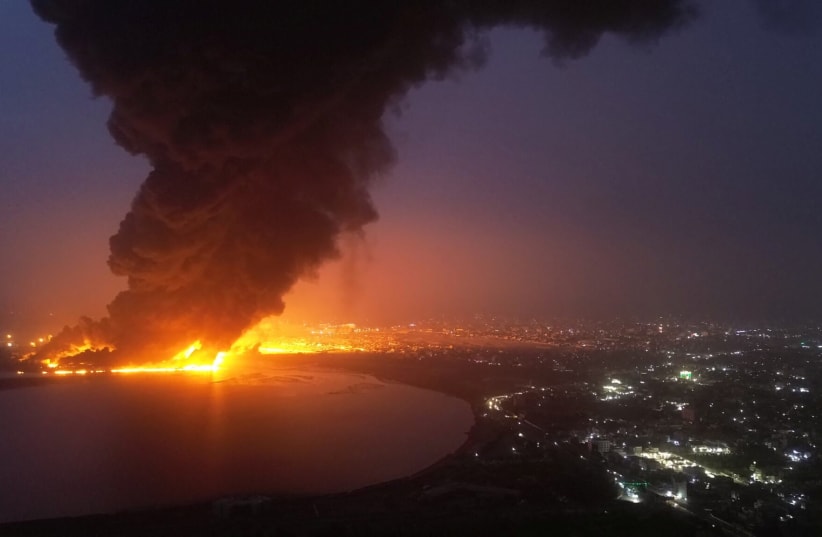
Smoke rises from a fire following an Israeli air strike in Hodeidah, Yemen in this handout photo released on July 20, 2024. / (photo credit: HOUTHI MEDIA CENTRE/Handout via REUTERS)

Israel Air Force (IAF) fighter jets struck Houthi terror targets in the capital of Sana’a in Yemen during the early hours of Thursday morning, as 14 aircraft were already in the air as Yemen fired a ballistic missile towards Israel, the military announced.

The IDF added that the targets Israel struck were used by the Houthis for military purposes, which included smuggling Iranian weapons into the country. The IDF also confirmed that ports and energy infrastructure in Sana’a were hit during the strikes.

A source close to the matter told The Jerusalem Post that Israel gave the US notice prior to the strike in Yemen and that the purpose of the strike was to disable all three Houthi ports in Yemen.

The IDF cited that the US has also attacked Yemen recently, but that given ongoing attacks from the Houthis, “We decided to counter-attack.”

According to the IDF, the Houthis have fired over 200 ballistic missiles and over 170 drones at Israel, with most being shot down by the US or Israel but 22 having penetrated into Israel.

.


Israeli fighter jets have struck military targets in Yemen, targeting the Houthi regime accused of working with Iran and Iraqi militias to threaten Israel. The IDF aims to disrupt the Houthis’ ability to use the region for military purposes, including the smuggling of Iranian weapons.

.

In July, one Israeli was killed in Tel Aviv by a Houthi drone from Yemen.

The IDF decided to attack before the Wednesday overnight attack, and in fact, the 14 aircraft that attacked Yemen were already on their way for the 1,800-kilometer flight to Yemen at the time that the ballistic missile came close to Israel’s territory.

The aircraft appears to have left Israel around 1:00 a.m.

The IDF was unclear on whether the Houthis detected the attack but said there was no clear evidence that this had occurred.

At 3:15 a.m., the first wave of the air force’s attack hit the Yemen coastal area.

At 4:30 a.m., the second wave of the air force’s attack hit the Houthi capital of Sana.

All 14 aircraft returned safely.

The IDF said it had attacked dozens of targets in five main areas.

There were attacks in Hodeidah, Ras Isa, other coast areas, and many smaller ports, such as Al-Salif. Each target area had dozens of targets, especially Sana’a, regarding Houthi electricity and oil.

In addition, eight special large ships were attacked.

Destroying those ships could shut down those ports because these ships can block certain areas and also are often required to pull in other ships to port.

The IDF said that it could take time for the Houthis to find replacements for such unique ships.

Further, the IDF said all the areas attacked helped the Houthis fund their war items and weapons.

The strikes on the terror group were carried out with the direction of the Intelligence Directorate and the Israeli Navy, the IDF said.

Notably, it added that the airstrikes began shortly after the Houthis fired a projectile from Yemen toward central Israel during the early hours of Thursday morning. The projectile was then intercepted by the IAF.

The airstrikes in Yemen reportedly killed nine, Houthi-controlled Al Masirah TV said.

Seven were killed in a strike on the port of Salif and the rest in two strikes on the Ras Issa oil facility, said Al Masirah, both located in the western province of Hodeidah.

The strikes also targeted two central power stations south and north of the capital, Sana’a, it added.

Katz threatens whoever plans on harming Israel 

Katz later reiterated his commitment to operating against all threats posed to the citizens of Israel.

“Last night, we struck the Houthis in Yemen,” the defense minister said.

“I warn the leaders of the Houthi terrorist organization: Israel’s long arm will reach you as well. Those who raise a hand against the State of Israel will have their hand severed, and those who harm us will be struck sevenfold.” 

“We will strike with force and will not allow attacks or threats against the State of Israel.”


Reuters contributed to this report.


Zawartość publikowanych artykułów i materiałów nie reprezentuje poglądów ani opinii Reunion’68,
ani też webmastera Blogu Reunion’68, chyba ze jest to wyraźnie zaznaczone.
Twoje uwagi, linki, własne artykuły lub wiadomości prześlij na adres:
webmaster@reunion68.com

Dlaczego Palestyńczycy nie będą mieli nowych przywódców

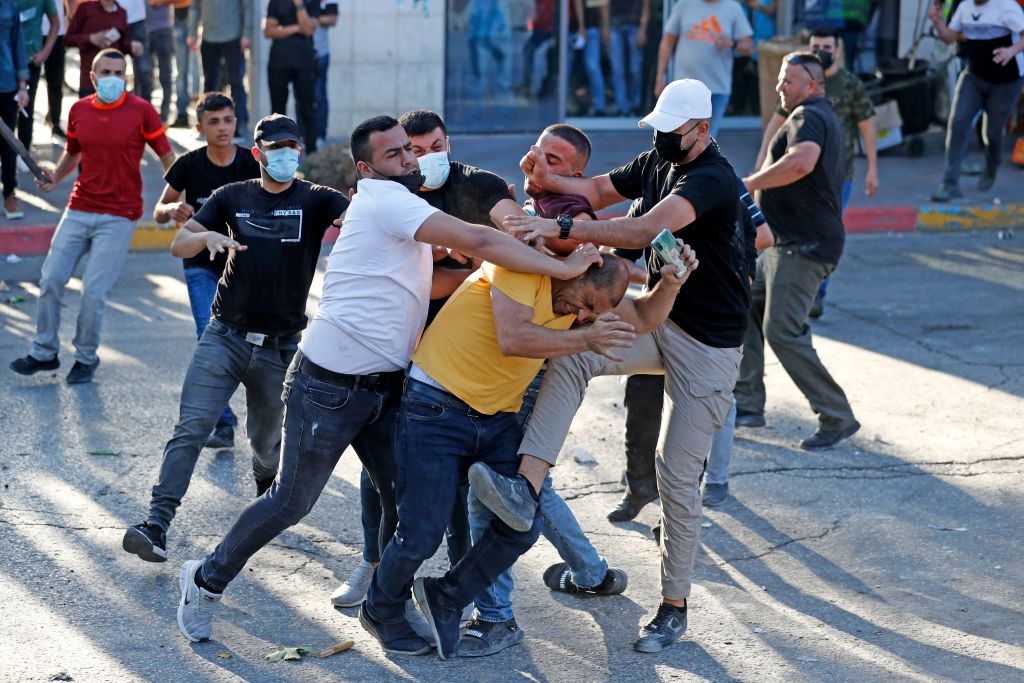
Palestyńczycy wciąż pamiętają, jak działacz polityczny i obrońca praw człowieka Nizar Banat, otwarty krytyk korupcji w Autonomii Palestyńskiej (AP), został pobity na śmierć przez funkcjonariuszy służb bezpieczeństwa AP w Hebronie w 2021 r. Do dziś nikt nie został ukarany za zabicie Banata. Na zdjęciu: Ubrani po cywilnemu funkcjonariusze służb bezpieczeństwa PA biją mężczyznę w Ramallah 26 czerwca 2021 r. podczas demonstracji protestacyjnej przeciwko zabiciu Banata. (Zdjęcie: Ahmad Gharabli/AFP via Getty Images)


Dlaczego Palestyńczycy nie będą mieli nowych przywódców

Bassam Tawil
Tłumaczenie: Małgorzata Koraszewska


Przywódcy Palestyny mają długą historię represji wobec swoich politycznych rywali i oponentów. Przez ostatnie trzy dekady przywódcy Autonomii Palestyńskiej (AP) i Hamasu systematycznie atakowali działaczy politycznych, dziennikarzy, użytkowników mediów społecznościowych, studentów, profesorów i obrońców praw człowieka w ramach trwającej kampanii mającej na celu uciszenie krytyków i odstraszenie innych od wypowiadania się przeciwko brakowi demokracji i wolności słowa.

W 2017 r. Magdalena Mughrabi, zastępczyni dyrektora ds. Bliskiego Wschodu i Afryki Północnej w Amnesty International, ostrzegła, że “w ciągu ostatnich kilku miesięcy nastąpił gwałtowny wzrost ataków na dziennikarzy i media ze strony władz palestyńskich na Zachodnim Brzegu i Hamasu w Strefie Gazy w celu uciszenia sprzeciwu”. Dodała: “To przerażający krok wstecz dla wolności słowa w Palestynie”.

Od tego czasu sytuacja tylko się pogorszyła, gdyż coraz większa liczba Palestyńczyków staje się celem ataków zarówno Autonomii Palestyńskiej, jak i Hamasu.

W 2018 r. Human Rights Watch (HRW) opublikował raport ujawniający 86 przypadków arbitralnych aresztowań i tortur pokojowych dysydentów przez Autonomię Palestyńską i Hamas, oparty na osobistych wywiadach z ofiarami i ich rodzinami. Tortury obejmowały bicie, odosobnienie, bicie po stopach, groźby i drwiny oraz zmuszanie zatrzymanych do przyjmowania różnych bolesnych pozycji przez dłuższy czas. HRW skomentował, że “nawykowe, celowe, powszechnie znane stosowanie tortur, stosowanie podobnych taktyk przez lata bez podejmowania działań przez wysokich rangą urzędników władz w celu powstrzymania tych nadużyć, sprawia, że praktyki te stają się systematyczne”.

W innym raporcie Amnesty International, opublikowanym w 2019 r., stwierdzono, że “palestyńskie siły bezpieczeństwa na Zachodnim Brzegu i w Strefie Gazy rutynowo i bezkarnie stosowały tortury i inne formy złego traktowania”. Odnotowano również, że w ciągu tego roku (2019) zgłoszono 143 zarzuty stosowania tortur na Zachodnim Brzegu i 156 w Strefie Gazy.

Stosowanie siły i tortur wobec własnych obywateli przekształciło kontrolowane przez AP obszary na Zachodnim Brzegu i w Strefie Gazy rządzonej przez Hamas w palestyńskie dyktatury podobne do tych, które od dawna istnieją w większości krajów arabskich. Ponadto doprowadziło to do stłumienia możliwości pojawienia się nowych przywódców zdolnych do poprowadzenia Palestyńczyków w stronę bezpieczeństwa, stabilności i dobrobytu.

To jest główny powód, dla którego dzisiaj jedynym wyborem Palestyńczyków są obecni liderzy Autonomii Palestyńskiej i Hamasu. Trudno znaleźć palestyńskich działaczy politycznych na Zachodnim Brzegu i w Strefie Gazy, którzy zgodziliby się publicznie wypowiedzieć przeciwko Autonomii Palestyńskiej lub Hamasowi, lub choćby domagać się reform i demokracji. Ci działacze boją się wyrażać swoje opinie publicznie, ponieważ nie chcą skończyć w więzieniu Autonomii Palestyńskiej lub Hamasu. Inni boją się śmierci lub zwolnienia z pracy w palestyńskim sektorze publicznym.

Palestyńczycy wciąż pamiętają, jak działacz polityczny i obrońca praw człowieka Nizar Banat, otwarty krytyk korupcji w Autonomii Palestyńskiej, został pobity na śmierć przez funkcjonariuszy służb bezpieczeństwa Autonomii Palestyńskiej w Hebronie w 2021 r. Do dziś nikt nie został ukarany za zabicie Banata.

Rodzina Banata wezwała Międzynarodowy Trybunał Karny (MTK) do ścigania osób odpowiedzialnych, twierdząc, że stracili zaufanie do sądownictwa AP. “Dla tych z nas, którzy żyją w skorumpowanych krajach, gdzie prawdziwa sprawiedliwość jest poza zasięgiem, MTK pozostaje naszą nadzieją na nieupolitycznione dochodzenie i ściganie przestępców” — powiedział brat Banata, Ghassan, przed sądem w Hadze. “Sposób, w jaki [funkcjonariusze służb bezpieczeństwa AP] go zabili i próbują uniknąć kary, odzwierciedla poziom bezkarności i korupcji moralnej, które nękają ten reżim [AP]”.

Rodzina zamordowanego działacza politycznego była na tyle naiwna, by wierzyć, że Międzynarodowy Trybunał Karny albo jakakolwiek inna organizacja międzynarodowa odda im sprawiedliwość.

Międzynarodowy Trybunał Karny nie przejmuje się zbrodniami popełnionymi przez Palestyńczyków przeciwko własnemu narodowi. Zamiast tego antysemicki prokurator sądu jest zajęty poszukiwaniem sposobów ukarania premiera Izraela Benjamina Netanjahu i ministra obrony Joava Gallanta za odwagę walki w wojnie rozpoczętej przez Hamas 7 października 2023 r. Wtedy tysiące terrorystów z Hamasu i “zwykłych” Palestyńczyków najechało Izrael ze Strefy Gazy, mordując 1200 Izraelczyków i raniąc tysiące. Wiele ofiar zostało zgwałconych, ściętych, torturowanych lub spalonych żywcem, podczas gdy 240 innych zostało porwanych do Strefy Gazy, gdzie 101 pozostaje w niewoli.

Represje ze strony AP i Hamasu nie wróżą dobrze przyszłości Palestyńczyków mieszkających na Zachodnim Brzegu i w Strefie Gazy. Palestyńczycy ci zostali pozbawieni nie tylko dużej części międzynarodowej pomocy finansowej – skradzionej przez skorumpowanych przywódców palestyńskich (tutajtutaj i tutaj) – ale także prawa do wybierania nowych przywódców i przedstawicieli w wolnych wyborach.

Ci, którzy mają nadzieję, że pewnego dnia władzę obejmie nowe (i pragmatyczne) palestyńskie przywództwo, mogą się rozczarować. Nawet po odejściu 89-letniego prezydenta Autonomii Palestyńskiej Mahmuda Abbasa jego kumple i najbliższe otoczenie nadal będą rządzić. W żadnym wypadku nie podzielą się tortem z innymi Palestyńczykami.

Jeśli społeczność międzynarodowa chce zobaczyć nowe twarze w palestyńskim kierownictwie, musi wywrzeć presję na Abbasa i kierownictwo “starej gwardii”, aby przestali atakować młodych działaczy politycznych, dziennikarzy i obrońców praw człowieka. Można to zrobić na przykład poprzez groźbę zawieszenia lub odcięcia pomocy finansowej.

To samo dotyczy Palestyńczyków w Strefie Gazy. Żaden Palestyńczyk nie zgodzi się na odgrywanie jakiejkolwiek roli w administracji Strefy Gazy po obecnej wojnie Izraela z Hamasem, dopóki wspierana przez Iran grupa terrorystyczna i jej przyjaciele nadal istnieją. Dlatego konieczne jest całkowite wyeliminowanie Hamasu i upewnienie się, że straci on swoje zdolności wojskowe, polityczne i cywilne w Strefie Gazy. Może to potrwać kilka miesięcy lub lat, ale jest to o wiele lepsze niż zakończenie wojny w sposób, który utrzyma Hamas u władzy.


Bassam Tawil – muzułmański badacz i publicysta mieszkający na Bliskim Wschodzie.


Zawartość publikowanych artykułów i materiałów nie reprezentuje poglądów ani opinii Reunion’68,
ani też webmastera Blogu Reunion’68, chyba ze jest to wyraźnie zaznaczone.
Twoje uwagi, linki, własne artykuły lub wiadomości prześlij na adres:
webmaster@reunion68.com


Islamophobia concerns are attempts to silence critics of Muslim antisemitism

Islamophobia concerns are attempts to silence critics of Muslim antisemitism

Jonathan S. Tobin


The latest Biden-Harris national strategy to combat hate is rooted in the myths of post-9/11 and 10/7 backlashes, and a false analogy to Jew-hatred.

.

Students pray at the Gaza solidarity encampment at George Washington University, in its 12th day, Washington, D.C., on May 6, 2024. Photo by Allison Bailey/Middle East Images/AFP via Getty Images.

It’s possible to argue that anything the Biden-Harris administration does in its final weeks in office is irrelevant and may soon be overturned by President-elect Donald Trump once he is sworn in next month. That may well apply to the announcement last week of a “National Strategy to Counter Islamophobia and Anti-Arab Hate,” issued by the White House. It is nonetheless noteworthy because it reinforces the myth about an American epidemic of anti-Muslim and anti-Arab hate that is routinely published and broadcast by the mainstream media. Equally important, it gives the imprimatur of government approval to a false analogy to the very real problem of antisemitism about which Biden and Harris also issued a “National Strategy” paper last year.

Any discussion of Islamophobia in America must be prefaced by an acknowledgment that hatred directed against racial, ethnic and religious minorities exists. And like any form of prejudice that leads to discrimination or violence, it is deplorable.

Even as we condemn any act in which an Arab or Muslim-American is targeted because of their ethnicity or faith, it is essential to understand that the attention given to Islamophobia is not being driven by anything that could accurately be described as a crisis. Rather, it is part of a false narrative that seeks to divert us from an unpleasant but vital fact about the subject. Most of what those who promote this issue consider Islamophobia is not anti-Muslim or anti-Arab hatred but merely criticism of Muslim and Arab hatred of Jews.

A fake problem

So, while the lame duck administration’s report may be considered a pious affirmation of opposition to prejudice, it doesn’t deserve even the tepid applause it has received. On the contrary, it is a conscious effort to balance a genuine problem with one that is bogus. And in doing so, it undermines the minimal and largely ineffective efforts undertaken by the government to address the very real surge in Jew-hatred that has been building in recent years and then exploded after the Hamas-led terrorist attacks in southern Israel on Oct. 7, 2023.

The notion of an Islamophobia crisis in the United States dates back to the aftermath of the terror attacks carried out by Islamists on Sept. 11, 2001. Seeking to build a broad international alliance against Muslim extremists, President George W. Bush took pains to differentiate what he described as a “war on terror” from a war against Islam. At every possible opportunity, he always described Islam as a “religion of peace,” emphasizing that the efforts to destroy Al-Qaeda and the subsequent military campaigns in Afghanistan and Iraq were not a civilizational clash between the West and Islam. This was technically accurate about the nation’s post-9/11 foreign policy and security goals as well as a reflection of the basic decency of both Bush personally and America’s modern political culture that opposes religious prejudice.

But the harping on the “religion of peace” line tended to obscure the fact that Islamist terrorism was not just the bad behavior of a tiny minority. It was rooted in a widely popular, though not universally supported, version of that faith that had mainstream support in much of the Arab and Muslim world.

There were real-world consequences of this effort. After 9/11, American corporate media and the nation’s cultural institutions prioritized a message that seemed to treat American Muslims as victims. That meant Hollywood largely avoided showing Muslims or Arabs as the bad guys in films or television shows—the opposite of what usually happened in the past when America was at war. It also buttressed the claim that there had been a post-9/11 backlash against them in the United States, despite the complete absence of any objective study or statistics that might have backed up that assertion.

Indeed, when plans (that eventually fell through) for the building of a Muslim community center and mosque in the footprint of the fallen World Trade Center towers were announced in 2010, any objections about the insensitivity and bad taste of the idea were deplored as a form of vile prejudice.

At the time, it was pointed out that the FBI’s statistics about religious hate crimes debunked the idea of such a backlash. Throughout the decade after 9/11, attacks on Muslims were dwarfed by those against Jews. Though the numbers have moved up and down to some extent in the nearly 15 years since then, antisemitic crimes continue to vastly outnumber those that can be connected to Islamophobia. Nevertheless, this fact has consistently been condemned by much of mainstream liberal opinion as wrongheaded, if not prejudicial. Groups that continued to promote the idea of a backlash, like the Council on American-Islamic Relations (CAIR), continued to gain influence rather than being dismissed for being the source of misleading propaganda that aimed to silence critics of Islamic Jew-haters.

False moral equivalence

That became obvious when CAIR was tapped as an official consultant to the Biden-Harris effort against antisemitism, though no Jewish groups were asked to give similar input to the Islamophobia strategy. That this happened despite the group’s origins as a political front for fundraisers for Hamas terrorists and its embrace of antisemitic positions was shocking. But to an administration seeking re-election that regarded Muslims and Arabs as part of the Democratic Party’s base, it was simply good politics. Like Bush’s “religion of peace” mantra, Biden and Harris never seemed able to mention the explosion of antisemitism that happened on their watch without reflexively including a mention of Islamophobia.

After the barbaric atrocities that occurred when Hamas and other Palestinian terrorists infiltrated Israel on Oct. 7, the administration’s obsession with Islamophobia could no longer be dismissed as either meaningless or routine partisan politics.

As the report on Islamophobia that is part of the new national strategy makes clear, Biden and Harris bought the CAIR line that treated the situation on American campuses after Oct. 7 as one in which both Jews and Muslims were at risk. But there is no moral equivalence between the rights of Muslims to advocate for the genocide of Jews with the rights of Jewish students to be able to get to classes and other areas on campus without being blocked, harassed or even subjected to violence.

The situation of Jews and Muslims during the last 14 months is not one of two groups experiencing discrimination or threats. It’s the exact opposite, where the Jews have become the victims of religious and ethnic harassment and assaults. And it is Muslims—along with non-Muslim students, faculty and school employees who subscribe to the toxic beliefs of intersectionality and critical race theory that label Jews and Israelis as “white oppressors”—who are attacking them.

Despite the seemingly innocuous claims of opposition to religious prejudice in the Biden-Harris strategy paper and those who applaud it, the whole point of the exercise is not what it seems. It’s about silencing criticism of Muslim and Arab antisemitism, and treating support for the destruction of the one Jewish state on the planet and the genocide of its population as a reasonable point of view rather than an expression of deplorable hatred that deserves condemnation.

A new backlash myth

Groups like CAIR that purport to represent Muslims and the Biden-Harris strategy paper both seem to be putting forward a new myth about a post-Oct. 7 backlash against Muslims that is even more shameless than the one about 9/11. Whereas the previous myth merely promoted a false claim about Americans targeting Muslims, this new one is actively seeking to deny the reality of a surge in Jew-hatred among Muslims and Arabs while implicitly minimizing or even denying the reality of a surge in antisemitism.

America is not yet like the Netherlands or elsewhere in Europe where anyone, even government officials, who point out that Jew-hatred is mainstream opinion in the Arab and Muslim world can be subjected to prosecution for committing a hate crime. But that is the ultimate goal of the discussion about Islamophobia. The notion that Muslims are under siege when, in fact, they are the ones engaging in hate speech and hate crimes, is problematic. It inevitably leads to efforts to censor or sanction those who point out that those who cry the most about Islamophobia are generally the same people who defend or rationalize antisemitism.

Indeed, in addition to propping up the myth—unsupported by any real data—of Muslims and Arabs facing widespread prejudice, the Biden-Harris document also sounds an ominous note about silencing critics of Islamism. It specifically calls for social-media platforms to “de-rank and stop recommending” content that Muslim groups oppose. In most cases, that references efforts by Jews and others to highlight the way Muslims and Arabs have been promoting antisemitism. That’s a throwback to the way this same administration colluded with Silicon Valley oligarchs to de-platform critics of their repressive and largely useless COVID-19 pandemic policies.

At this point, the clamor about Islamophobia is no longer a politically correct, harmless talking point. It is now part of a general effort to shut down discussion of the engine of the all-too-real uptick in antisemitism.

President-elect Trump has a strong record of support for Israel and opposition to antisemitism on college campuses, as well as Islamist terrorists, and has been falsely branded as a hate-monger by the left for doing so. But like any president, his second administration will be eager to win over critics and voters of all kinds and might be vulnerable to pressure to kowtow to the Islamophobia myth in order to demonstrate that he wants to protect all Americans. That would not only be wrong but would undermine his plans to root out the woke diversity, equity and inclusion (DEI) catechism that is at the heart of the left’s war on American history and Western civilization.

The Islamophobia myth needs to be rejected not only by the federal government but by all institutions and persons that claim to oppose the Jew-hatred that it seeks to cover up. There is no moral equivalence between antisemitism and Islamophobia. Anyone or any group that is truly willing to fight against anti-Jewish prejudice must understand that such a stand is incompatible with efforts to promote a false narrative about Muslims being the true victims of 9/11 or 10/7.


Jonathan S. Tobin is editor-in-chief of the Jewish News Syndicate, a senior contributor for The Federalist, a columnist for Newsweek and a contributor to many other publications. He covers the American political scene, foreign policy, the U.S.-Israel relationship, Middle East diplomacy, the Jewish world and the arts. He hosts the JNS “Think Twice” podcast, both the weekly video program and the “Jonathan Tobin Daily” program, which are available on all major audio platforms and YouTube. Previously, he was executive editor, then senior online editor and chief political blogger, for Commentary magazine. Before that, he was editor-in-chief of The Jewish Exponent in Philadelphia and editor of the Connecticut Jewish Ledger. He has won more than 60 awards for commentary, art criticism and other writing. He appears regularly on television, commenting on politics and foreign policy. Born in New York City, he studied history at Columbia University.


Zawartość publikowanych artykułów i materiałów nie reprezentuje poglądów ani opinii Reunion’68,
ani też webmastera Blogu Reunion’68, chyba ze jest to wyraźnie zaznaczone.
Twoje uwagi, linki, własne artykuły lub wiadomości prześlij na adres:
webmaster@reunion68.com


#MeToo’s Silence on Hamas’ Sexual Violence Exposed: ‘#MeToo, Unless You’re a Jew’

#MeToo’s Silence on Hamas’ Sexual Violence Exposed: ‘#MeToo, Unless You’re a Jew’

Gregory Lyakhov


Partygoers at the Supernova Psy-Trance Festival who filmed the events that unfolded on Oct. 7, 2023. Photo: Yes Studios

The #MeToo movement, once a beacon of hope for survivors of sexual violence, now faces accusations of selective advocacy. Its muted response to the mass atrocities committed during Hamas’ Oct. 7th, 2023, attacks on Israel has brought global criticism. While the movement has supported victims in other instances, its lack of acknowledgment of Israeli victims underscores troubling ideological biases and risks undermining its credibility.

On Oct. 7, Hamas launched a brutal assault on Israel, leaving 1,200 people dead. Survivors and investigators documented horrifying accounts of sexual violence targeting women. Videos , including many circulated by Hamas terrorists, confirmed acts of rape, mutilation, and abduction. By their scale and intent, such crimes violated individual rights and attacked human dignity.

Despite its mission to confront gender-based violence, the #MeToo movement’s leadership remained silent for weeks after the attack. When a statement was finally released, it referred broadly to “civilian atrocities,” avoiding explicit references to the sexual violence or acknowledgment of the crimes’ anti-Jewish motivation. The vague language was an apparent attempt to avoid fully condemning the attacks, and to dilute the specificity of the suffering endured by Israeli women.

While the #MeToo movement was swift and decisive in condemning cases like Hollywood’s Harvey Weinstein scandal or Brett Kavanaugh’s Supreme Court confirmation hearings, a study of its public statements exposes a pattern of prioritizing narratives that only align with left-leaning ideologies, particularly those critical of Israeli policies.

An explanation for #MeToo’s silence may lie in the broader feminist and human rights communities’ frequent alignment with Palestinian causes. While critiques of Israeli governmental policies can be legitimate if they’re aimed at specific Israeli policies but recognize Israel’s right to exist (and don’t spread lies about things like “genocide”), equating such issues with the need to address violence against Israeli women is a dangerous misstep. This approach effectively sidelines survivors based on their nationality or religion, violating the principle of impartial advocacy.

Dr. Einat Wilf, an Israeli academic and former Knesset member, explained this phenomenon as the “intersectional paradox,” where advocacy for human rights is applied selectively. “The refusal to unequivocally condemn Hamas’ actions,” she noted, “suggests that for some activists, the identity of the victim or perpetrator matters more than the act itself.”

The fallout of this selective advocacy is deeply personal for Jewish survivors of sexual violence. Many who once viewed #MeToo as a haven for survivors now feel alienated.

Esther Cohen, an Israeli feminist activist, shared her disapproval: “When Israeli women needed solidarity the most, the movement that stood for ‘believing all survivors’ turned away.”

On university campuses, Jewish students have reported similar feelings of betrayal. Organizations that once encouraged their voices are now hesitant to engage when their narratives challenge popular political stances. This exclusion not only erodes trust in #MeToo, but also weakens the broader feminist movement by dividing it along ideological lines.

The politicization of #MeToo’s advocacy undermines its stated mission to dismantle structures enabling sexual violence. By failing to stand unequivocally with Israeli survivors, the movement effectively normalizes selective outrage. Such an approach could discourage other marginalized communities from seeking #MeToo’s support, fearing their story might be ignored if it doesn’t align with the “correct” narrative.

Moreover, selective advocacy means the#MeToo movement is labeled as hypocritical.

#MeToo has repeatedly called for perpetrators to be named and held accountable, yet it purposely avoided naming Hamas. This reluctance resembles patterns of denial and doubt that the movement initially sought to dismantle.

#MeToo must reaffirm its commitment to universal justice to restore its credibility. Advocacy groups like Jewish Women International have previously called on the movement to condemn all acts of sexual violence, regardless of the victim’s identity or the perpetrators’ political affiliations.

Legal scholar Irwin Cotler has also emphasized the importance of depoliticizing human rights work. “Sexual violence is not a political tool — it is a universal crime that demands a universal response,” Cotler said in a recent interview.

The #MeToo movement faces a defining moment. Its response to the Oct. 7 attacks has revealed deep issues in its approach to advocacy. While it has achieved remarkable success in amplifying survivors’ voices, its reluctance to condemn violence against Israeli women demonstrates the act of selective solidarity.

If #MeToo aspires to remain a credible force for justice, it must end its ideological biases and return to its founding principles of inclusivity and impartiality. Only by doing so can we build a world where all survivors feel seen, heard, and valued — without exception.

But for now, it’s #MeToo unless you are a Jew.


Gregory Lyakhov has written for The Times of Israel, and is a passionate advocate for Israel. He runs a political blog focusing on elections, law, and Israel.


Zawartość publikowanych artykułów i materiałów nie reprezentuje poglądów ani opinii Reunion’68,
ani też webmastera Blogu Reunion’68, chyba ze jest to wyraźnie zaznaczone.
Twoje uwagi, linki, własne artykuły lub wiadomości prześlij na adres:
webmaster@reunion68.com