
Archives

South African Immigrants to Israel Protest Against Former Country Government

South African Immigrants to Israel Protest Against Former Country Government

Troy O. Fritzhand


Virtual visit of the International Court of Justice (ICJ) – YouTube

Dozens of South African immigrants to Israel protested against their former country’s government on Friday, standing with their new home against political and legal attacks from South Africa’s ruling ANC party, highlighted by accusing Israel of “genocide,” last Thursday in the International Court of Justice (ICJ)

“The demonstration is not against South Africa or its people, but against its disgraceful government. I am proud to stand here as an Israeli, but I am ashamed of the government of my homeland, for stooping so low. It is a danger to Judaism,” said David Kaplan, an attendant of the event.

Former Knesset member Ruth Wasserman Lande, who was raised in Cape Town, South Africa before moving to Israel for military service, living in Israel since, added “Justice is with us, the ruling party of South Africa has sold its soul to Iran.”

The protest in Ra’anana in central Israel comes a few weeks after Israel was forced to stand trial at the International Court of Justice in The Hague against charges of “genocide” in its current defensive war against Hamas in Gaza. The charges were filed by South Africa’s government, a noted friend of Hamas leadership and outspoken critic of Israel and the Israeli government.

In South Africa’s case against Israel, the country alleges that the IDF is acting “genocidal in character because they are intended to bring about the destruction of a substantial part of the Palestinian national, racial and ethnical group.”

The suit came as both countries are signatories to the 1948 Genocide Convention, passed after the Holocaust and with the goal of creating proceedings to ensure no genocide like what happened to the Jews of Europe occurs in the future.

Israel said South Africa was acting as “the legal arm of Hamas,” and called the charges “baseless,” especially as the country has been noted to take unprecedented steps to protect civilians in the war. Furthermore, the war began after Israel was attacked by Hamas terrorists on October 7, when they invaded southern Israel, murdering more than 1,200 and taking hostage over 240.

The ICJ refused to grant South Africa’s wish of calling for an immediate ceasefire, but nevertheless ruled to investigate the genocide charges and called on Israel to “take all measures within its power to prevent the commission of all acts within the scope of [genocide].”

Even this past week South Africa continued its attacks, calling for the defunding of Israel, with Foreign Minister Naledi Pandor saying “This necessarily imposes an obligation on all states to cease funding and facilitating Israel’s military actions.”


Zawartość publikowanych artykułów i materiałów nie reprezentuje poglądów ani opinii Reunion’68,
ani też webmastera Blogu Reunion’68, chyba ze jest to wyraźnie zaznaczone.
Twoje uwagi, linki, własne artykuły lub wiadomości prześlij na adres:
webmaster@reunion68.com
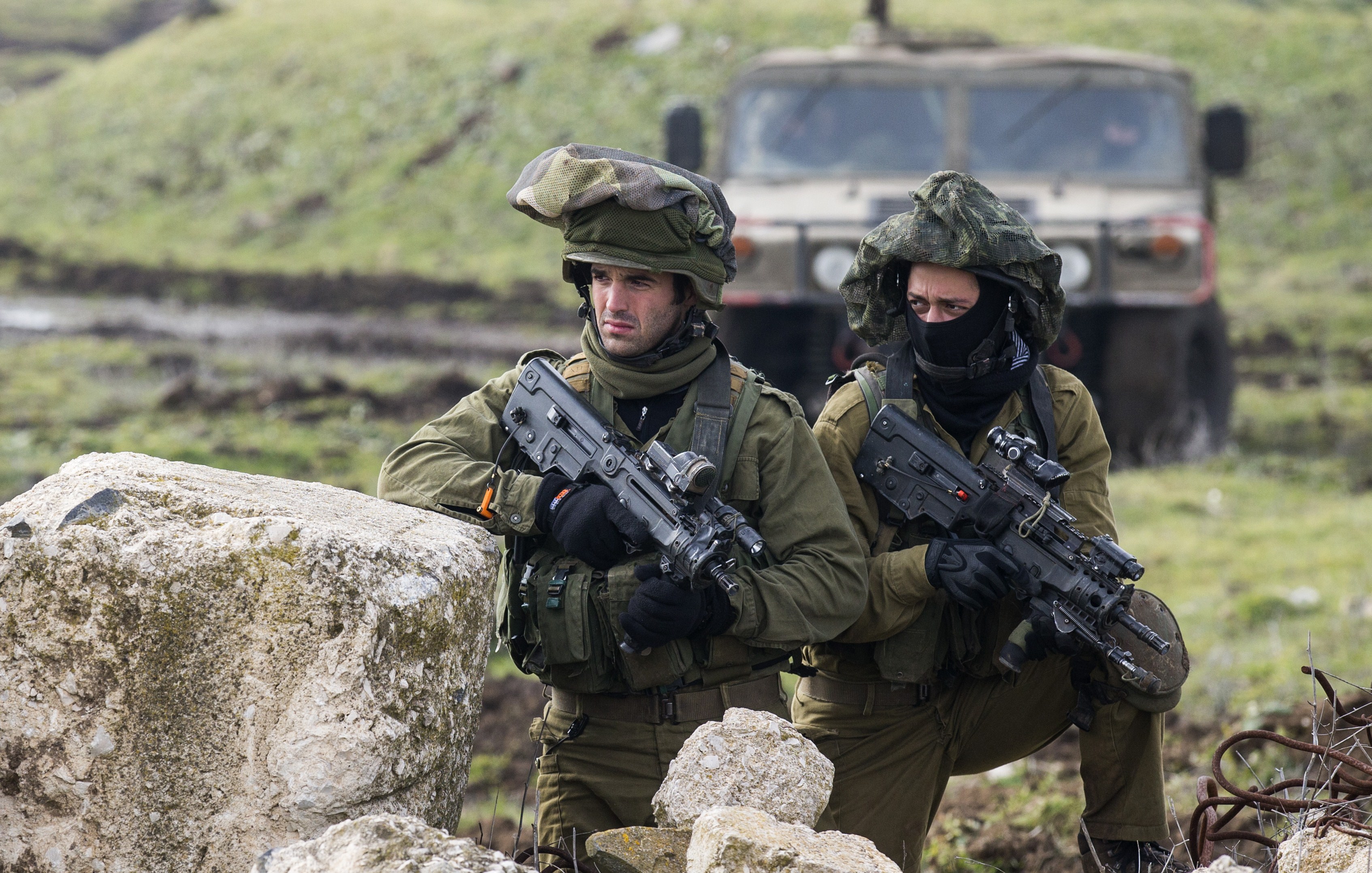

West Point Urban Warfare Expert: IDF ‘Implemented More Measures to Prevent Civilian Casualties Than Any Other Military in History’

West Point Urban Warfare Expert: IDF ‘Implemented More Measures to Prevent Civilian Casualties Than Any Other Military in History’

Jack Elbaum


Photo:JACK GUEZ

The chair of urban warfare studies at West Point’s Modern Warfare Institute released an op-ed on Wednesday arguing that, during Israel’s war on Hamas, the country “has implemented more measures to prevent civilian casualties than any other military in history.”

John Spencer, who served in the U.S. Army for 25 years and did two tours in Iraq, took to the pages of Newsweek to push back on allegations that Israel is indiscriminately targeting civilians and even committing genocide. 

“As someone who has served two tours in Iraq and studied urban warfare for over a decade,” Spencer explained, “Israel has taken precautionary measures even the United States did not do during its recent wars in Iraq and Afghanistan.”

He wrote: “One of the best ways to prevent civilian casualties in urban warfare is to provide warning and evacuate urban areas before the full combined air and ground attack commences. This tactic is unpopular for obvious reasons: It alerts the enemy defender and provides them the military advantage to prepare for the attack. The United States did not do this ahead of its initial invasion of Iraq in 2003, which involved major urban battles to include in Baghdad. It did not do this before its April 2004 Battle of Fallujah (though it did send civilian warnings before the Second Battle of Fallujah six months later).”

“By contrast,” Spencer continues, “Israel provided days and then weeks of warnings, as well as time for civilians to evacuate multiple cities in northern Gaza before starting the main air-ground attack of urban areas. The Israel Defense Forces (IDF) employed their practice of calling and texting ahead of an air strike as well as roof-knocking, where they drop small munitions on the roof of a building notifying everyone to evacuate the building before a strike.”

Israel’s use of hundreds of thousands of leaflets, almost 20,000 cell phone calls, 65,000 texts, and 6,000,000 voicemails to civilians, along with alerting civilians where its ground operations would be on a day-to-day basis, is also unprecedented, says Spencer. Not to mention pausing fighting for four hours “over multiple consecutive days” to allow civilians to leave war zones.

Israel may have needed to take such unprecedented measures because the conditions in which they are fighting are also unprecedented, according to analysts. Gaza is a small piece of land — only 25 miles long and, at its widest point, 7.5 miles wide — and extremely densely populated. To make matters more difficult, there are between 350 and 450 miles of tunnels under the strip, which is only 141 square miles, meaning almost the entire territory has Hamas infrastructure under it.

On this point, Spencer writes, “No military in modern history has faced over 30,000 urban defenders in more than seven cities using human shields and hiding in hundreds of miles of underground networks purposely built under civilian sites, while holding hundreds of hostages.”

Protecting civilians in such an environment is particularly challenging, which is likely one of the reasons Israel took the measures they have.

At the same time, the destruction in Gaza is widespread. More than half of the buildings are likely no longer habitable and the war has created a humanitarian crisis where people are unable to gain access to food and necessary medical care.

Additionally, the Hamas-run Gaza Ministry of Health says almost 27,000 Palestinians have been killed during the war, although it does not differentiate between civilians and terrorists. Based on Israeli and U.S. estimates, the civilian-to-combattant casualty ratio is somewhere between 1.5-to-1 and 3-to-1, which is significantly better than the international average, which is 9-to-1 according to the United Nations, but still means thousands of uninvolved civilians have been killed.

“To be clear, I am outraged by the civilian casualties in Gaza,” Spencer makes sure to emphasize, “But it’s crucial to direct that outrage at the right target. And that target is Hamas.”


Zawartość publikowanych artykułów i materiałów nie reprezentuje poglądów ani opinii Reunion’68,
ani też webmastera Blogu Reunion’68, chyba ze jest to wyraźnie zaznaczone.
Twoje uwagi, linki, własne artykuły lub wiadomości prześlij na adres:
webmaster@reunion68.com


ILTV News Flash- War Day 118, February 01, 2024

ILTV News Flash- War Day 118, February 01, 2024


ILTV Israel News


Zawartość publikowanych artykułów i materiałów nie reprezentuje poglądów ani opinii Reunion’68,
ani też webmastera Blogu Reunion’68, chyba ze jest to wyraźnie zaznaczone.
Twoje uwagi, linki, własne artykuły lub wiadomości prześlij na adres:
webmaster@reunion68.com


TV7 Israel News – Sword of Iron, Israel at War – Day 116

TV7 Israel News – Sword of Iron, Israel at War – Day 116

TV7 Israel News


Zawartość publikowanych artykułów i materiałów nie reprezentuje poglądów ani opinii Reunion’68,
ani też webmastera Blogu Reunion’68, chyba ze jest to wyraźnie zaznaczone.
Twoje uwagi, linki, własne artykuły lub wiadomości prześlij na adres:
webmaster@reunion68.com


Evacuated Southern Residents Find Temporary New Home As War Continues to Rage On

Evacuated Southern Residents Find Temporary New Home As War Continues to Rage On

Troy O. Fritzhand


The residents of Kibbutz Sufa, a southern town of 227, have found a new temporary home more than 3 months after being forced from their homes because of the war. Like the more than 100,000 Israelis displaced from their homes in the north and south, Sufa’s residents were living in a hotel in Eilat, though on Thursday, 30 families moved into their new homes in Ofakim. Another 50 families moved into temporary homes in Ramat Gan.

Residents spoke to Hebrew media, one of them, 22-year-old Yael Alexandrovitz, saying, “The landscape is different and everything is different. We are far from our friends, the families are a little far, but we are surrounded from all directions. I can’t say it’s a happy or sad day for me. There are others who want to come and lay down their heads. On October 7, everything broke and fell apart… [but] the kibbutz won. Most people are still with us.”

Her partner, Elia Lilienthal — who jumped to action on October 7, when Hamas terrorists entered their city during their raid on southern Israel, killing more 1,200 Israelis and taking over 240 hostage — was there for the move. She spoke about her experience on that day: “That day, when everyone was uncertain, I was certain. His walkie-talkie was with me, which allowed me to understand what was going on around me. And I had someone to rely on. That day there was no army and there were no planes… But I had the person I can trust the most. He killed four terrorists outside the house. I feel that I came out stronger mentally than the other people. This was the day that broke everyone.”

The kibbutz was temporarily taken over by Hamas on the day of the attack, with three members being killed. Okafim, where the residents are now living, was also taken over by Hamas, with 50 Israelis being killed by the terrorists.

Another resident, Ziv Chai, said, “We were evacuated to Eilat. I never thought I would live there. It’s a strange city to live in, but I’ve gotten used to the quiet. It’s a little sad to say goodbye to Eilat and go back to a kind of normal life, but I’m glad it’s happening. We hope we can build a life here … I plan to find a job here and just live life. Like everyone else, eventually, I want to return to the kibbutz. This is my home. I don’t really see myself living anywhere else long-term.”

The mayor of Ofakim, Yitzhak Danino, welcomed the new residents, saying, “The terrorists planned one fate for us, and one fate unites us here, together as one people. We are brotherly people. We are happy and proud that we had the privilege of hosting you, and we can assure you that we will do everything to make you feel at home. The residents of Ofakim are warm, loving, and hospitable people, a city of good people, and after October 7, a city of heroic people.”


Zawartość publikowanych artykułów i materiałów nie reprezentuje poglądów ani opinii Reunion’68,
ani też webmastera Blogu Reunion’68, chyba ze jest to wyraźnie zaznaczone.
Twoje uwagi, linki, własne artykuły lub wiadomości prześlij na adres:
webmaster@reunion68.com