Archive | March 2016

US Professor Amazed at Wealth in Gaza City; Notes 900 Mosques, Only 2 Libraries

US Professor Amazed at Wealth in Gaza City; Notes 900 Mosques, Only 2 Libraries

Gaza. Photo: Wikimedia Commons.

A professor at the Jackson School of International Studies at the University of Washington in Seattle visited Gaza City for six hours a few weeks ago, and he was astonished that after reading years of propaganda about how poverty stricken Gazans are, they really aren’t.

I was flooded with impressions as we drove into the old city of Gaza. The first was, unexpectedly, that it looked nothing like India. Given the severe poverty, even humanitarian crisis, that Gaza as a whole is experiencing, I had expected the obvious and wrenching poverty that I had seen in some Indian cities or many other Third World countries, for that matter—collapsing infrastructure, rickety shacks, a surfeit of beggars, children in rags, adults sleeping on the sidewalks. At least in this part of the city and others that I saw later in the day, none of that was visible. Instead, I saw hordes of children going to school, university students walking in and out of the gates of the two universities—both the children and the university students reasonably dressed. I observed morning shoppers buying vegetables and fruits from stands, shopkeepers opening their shops, and people walking purposefully to wherever they were going for the start of the day. There were cranes and construction workers everywhere, with lots of uncompleted buildings being worked on. A garbage truck, with a UN sign on it, was making its rounds.

There was the occasional bombed out building, from the 2014 War. One had the entire top of the building, several stories, simply blown off. But other than those, most buildings were in decent shape, and some apartment buildings were downright nice. There were definitely some junkers on the road, but most of the cars looked like late-model varieties. Some of the side streets were pocked and broken up; the main thoroughfares, though, were in good shape. There were almost no traffic lights, and traffic was a bit chaotic. I must add again that I was in Gaza City (both the old and new parts of the city) only and did not go to some of the outer areas and refugee camps where the bombing in the 2014 war was the heaviest and where, I understand, destruction was massive.

People were certainly not in rags. Men were mostly in chino-type pants and button-down shirts. With very few exceptions, women were covered with the hijab and burka. Perhaps 10-20 percent of them were in black with their faces totally covered. Incidentally, this sort of veiling was not a traditional practice in Palestinian society; it is very much a product of the “new fundamentalism.”

The fascinating people I met during the day actually related to Israel in what I considered a very interesting fashion. In conversation after conversation, there was a kind of by-the-way acknowledgment of the destructiveness of Israel’s policies and, for sure, a general hatred for Israel. But what was striking was how everyone quickly went on from those sorts of almost off-handed comments to criticize how the Hamas government or the people themselves are also responsible for the state of affairs. There was no obsessing about Israel, which I found interesting. Indeed, there might even be a general acceptance of Israel in terms of realizing that Israel will long be part of their future.

Even a professor of international studies had no idea that Gaza didn’t look like the most poverty-stricken parts of Third World countries. The power of anti-Israel propaganda and one-sided media coverage is immense.

And Hamas is building….lots of mosques.

…My final meeting was with a fascinating character, Atef Abu Saif. Atef holds a Ph.D. in political science from the European University Institute in Florence, having worked with a friend of mine, Professor Phillipe Schmitter. Atef is also a novelist. He now teaches political science at Al-Azhar Gaza University and writes frequently, including for the New York Times and Slate. An open member of Fatah (although critical of the Fatah leadership), he has clashed with Hamas on a number of occasions, landing him in jail for short stints.

Atef’s main contention is that there are actually two Gazas. One is the one run by Hamas and includes its supporters. He noted, for example, that there has been a mosque-building binge, leading to a total of 879 mosques in the Strip by 2014, as compared to two public libraries. In his words, “Gaza has become one huge mosque.” The second Gaza consists of the Palestinian public in Gaza, engaged in all sorts of cultural and social activities outside Hamas’s orbit. If not quite a civil society, he intimated, there is a lot that goes on beneath the radar.

My guess is that those libraries were built when Israel controlled Gaza.


twoje uwagi, linki, wlasne artykuly, lub wiadomosci przeslij do: webmaster@reunion68.com



Palestyńczycy chca własnego Knesetu

Gatestone InstitutePalestyńczycy chca własnego Knesetu

Khaled Abu Toameh Tłumaczenie: Małgorzata Koraszewska


  • Co mają wspólnego Haneen Zoabi i Nadżat Abu Bakr?
  • Obie te kobiety są mówiącymi bez ogródek posłankami do parlamentu – Zoabi w Izraelu a Abu Bakr na terytoriach palestyńskich.
  • Zoabi, która pochodzi z Nazaretu, jest obywatelką Izraela. Abu Bakr, z miasta Nablus na Zachodnim Brzegu, jest wybraną posłanką do Palestyńskiej Rady Ustawodawczej (PLC), parlamentu, który praktycznie jest sparaliżowany od 2007 r., kiedy Hamas wygnał Autonomię Palestyńską ze Strefy Gazy.


Haneen Zoabi (po lewej) i Nadżat Abu Bakr (po prawej) są mówiącymi bez ogródek posłankami do parlamentu – Zoabi w Izraelu a Abu Bakr na terytoriach palestyńskich. I na tym zasadzie podobieństwa kończą się.

Ale odważne uczestnictwo w debatach parlamentarnych jest w zasadzie tym, na czym kończą się podobieństwa.

Zoabi, która mieszka w Izraelu, ma inne życie niż jej koleżanka, Abu Bakr, która jest obywatelką palestyńską.

Zoabi, posłanka do parlamentu izraelskiego, jest prowokatorką o długim stażu, która regularnie oburza publiczność izraelską. Dołączyła do flotylli “pomocy” dla Strefy Gazy – co rozwścieczyło wielu Izraelczyków.

Przy innych okazjach jej wypowiedzi były także interpretowane jako pokaz solidarności z wrogami Izraela. Ostatnio otrzymała łagodny wyrok po podpisaniu umowy z oskarżeniem, przyznając się do obrażenia Araba pracującego w policji izraelskiej.

W zeszłym miesiącu Zoabi była ponownie na czołówkach gazet – wraz z dwoma arabskimi posłami do Knessetu, Jamalem Zahalką i Baselwm Ghattasem — spotkała się z rodzinami Palestyńczyków, którzy przeprowadzili zamachy terrorystyczne na Izraelczyków.

Mówi się, że ona i pozostali dwaj posłowie do Knessetu otrzymali zaledwie “lekko po łapach”: zostali na kilka miesięcy zawieszeni w uczestnictwie w spotkaniach komisji parlamentarnych.

Mimo że zachowania i retoryka Zoabi są odrażające dla wielu Izraelczyków, włącznie z niektórymi arabskimi obywatelami Izraela, prezydent Izraela, Reuven Rivlin, wraz z innymi Izraelczykami wystąpili przeciwko usunięciu jej i kilku jej kolegów ze Wspólnej Listy Arabskiej z Knessetu.

“Nie możemy pozwolić, by Knesset, którego członkowie są wybrani przez społeczeństwo, niezależnie obalał wybór społeczeństwa” – powiedział Rivlin , odnosząc się do proponowanej ustawy, która pozwoliłaby członkom Knessetu usunąć swoich kolegów wyrażających poparcie dla terroryzmu.

Wróćmy jednak do pytania: jak wiedzie się Haneen Zoabi i Nadżat Abu Bakr, naszym dwóm parlamentarzystkom?

Podczas gdy Zoabi, arabska, muzułmańska obywatelka Izraela swobodnie wykonuje swoje obowiązki – i korzysta z wolności – Abu Bakr była zmuszona szukać schronienia w budynku Palestyńskiej Rady Ustawodawczej w Ramallah.

Krótko mówiąc, te dwie kobiety żyją w różnych światach.

Od zeszłego tygodnia, kiedy prezydent Mahmoud Abbas nakazał jej aresztowanie, Abu Bakr pozostaje na terenie budynku parlamentu Autonomii Palestyńskiej. Jej przestępstwo: poinformowała o korupcji finansowej ministra, blisko związanego z prezydentem Abbasem.

Twierdzi ona, że minister sprzedawał prywatnie wodę Palestyńczykom i nielegalnie wziął ponad 200 tysięcy dolarów z budżetu palestyńskiego.

Nie jest to jednak jej jedyne przestępstwo. Kolejne dotyczy jej publicznego poparcia strajku nauczycieli na Zachodnim Brzegu. Strajk poważnie skompromitował prezydenta Abbasa i kierownictwo Autonomii Palestyńskiej. Abbas nakazał aresztowanie dziesiątków strajkujących nauczycieli i wysłał setki policjantów na posterunki kontrolne, by udaremnić protest organizowany przez nauczycieli, którzy żądają podwyżki płac i lepszych warunków pracy.

Najwyraźniej Abu Bakr zapomniała, że jest posłanką do parlamentu palestyńskiego, nie zaś izraelskiego. Ona i jej koledzy nie mają prawa krytykować prezydenta Abbasa ani żadnego wyższego rangą funkcjonariusza w Ramallah. Taka krytyka uważana jest za “obrażanie”, a nawet akt zdrady.

Członkowie parlamentu Autonomii Palestyńskiej nie mają takich praw, jakie mają arabscy członkowie parlamentu izraelskiego, Knessetu.

Na przykład, immunitet parlamentarny znaczy, że władze nie mogą zatrzymać lub wezwać na przesłuchanie Zoabi i jej kolegów.

Prawdę mówiąc, w parlamencie palestyńskim nic się nie dzieje. Jest sparaliżowany z powodu konfliktu AP z Hamasem i w zasadzie funkcjonuje tylko jako obiekt dowcipów Palestyńczyków.

Nieobecność działającego parlamentu bardzo odpowiada jednak prezydentowi Abbasowi i jego rządowi. Brak parlamentu oznacza, że nikt nie pociąga ich do odpowiedzialności.

Tymczasem Abu Bakr, posłanka, która ośmieliła się otworzyć usta przeciwko prezydentowi oraz wysokiemu dygnitarzowi Autonomii Palestyńskiej, wpada w łapy palestyńskich sił bezpieczeństwa.

Abu Bakr jest obecnie zbiegiem. Zeszły poniedziałek był szóstym dniem jej ukrywania się w budynku parlamentu. Odmówiła opuszczenia tego budynku lub stawienia się na przesłuchanie i żąda, by Abbas unieważnił nakaz jej aresztowania.

Gdzie jest teraz towarzyszka Zoabi? Posłowie Wspólnej Listy Arabskej milczą w sprawie nękania ich koleżanki – posłanki do parlamentu w Ramallah.

Jakże inny obraz widzielibyśmy, gdyby Abu Bakr została na piętnaście minut zatrzymana na punkcie kontrolnym Izraelskiej Armii Obronnej. W jeszcze krótszym czasie niż kwadrans Zoabi wieszałaby psy na Izraelu za łamanie praw członka parlamentu na terytoriach palestyńskich.

Mamy więc dwie posłanki. Jedna musi szukać schronienia we własnym parlamencie przed aresztowaniem przez palestyńskie siły bezpieczeństwa. Druga ma wszystkie prawa i przywileje innych obywateli Izraela, w tym arabskich, mimo jej niezmiernie prowokacyjnego zachowania.

Jest to różnica między krajem praworządnym, a Autonomią Palestyńską, która przez lata funkcjonuje jako mafia.

Nadżat Abu Bakr i wielu Palestyńczyków marzą o dniu, w którym oni także będą mieli Knesset, prawdziwy parlament, który domaga się odpowiedzialności od swoich przywódców. Obecnie – i w przewidywalnej przyszłości – ten dzień jest tylko sennym marzeniem.

Zoabi i inni arabscy obywatele Izraela nie zamierzają jednak pakować walizek i przenosić się do Ramallah. Wygląda na to, że kolejna dyktatura arabska nie jest ich ideałem.


twoje uwagi, linki, wlasne artykuly, lub wiadomosci przeslij do: webmaster@reunion68.com



BDS is an existential threat

BDS is an existential threat

Tal Keinan


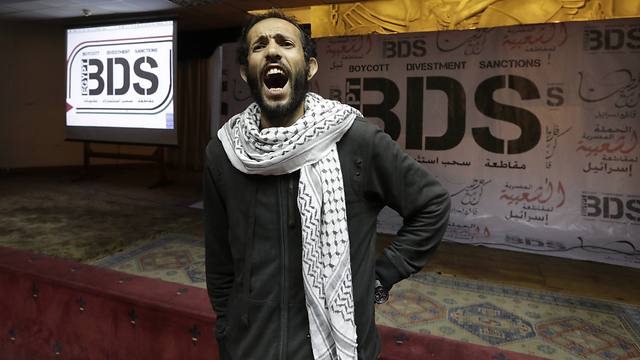
Op-ed: The Israeli economy is under threat from the BDS movement, with severe implications if it succeeds. In order to address this threat, Israel must understand and answer several questions to create a solid front against this movement.

Let’s be clear on the numbers: The BDS movement is strongest in Europe.
In 2014 – the last year there are full numbers for – 35 percent of Israel’s exports went to Europe. Thirty-two percent of the Israeli GDP is comprised of exports. That means that exports to Europe account for 12 percent of Israeli GDP.

Assume that European governments remain supportive of trade with Israel, but that European consumers do not. Governments cannot force consumers to buy Israeli products. Let’s say that the BDS movement succeeds in getting 25 percent of European consumers to boycott Israeli products. That would represent a 2.8 percent drop in Israeli GDP.

As Israel’s current GDP growth rate is 2.5 percent, this would push Israel into recession. Not the cyclical sort of recession that can be moderated by monetary and fiscal policy until economic imbalances correct themselves, but a secular recession, against which internal tools are ineffective.

Photo: AP

Photo: AP

Income inequality grows. Budgets for education, healthcare, infrastructure and defense shrink. Israeli technology exporters move their operations to the United States, taking with them much of the talent that fuels Israel’s economic engine. Imagine the rest of this story for yourself.

We will not succeed in addressing the BDS threat until we see it clearly, and our view is blocked by five camps within Israel:

1. The “Never Heard of It” Camp: Much of Israel is provincial to an extent that would have shocked our cosmopolitan Jewish forebears. We are so out of touch with the global discourse (which is conducted in English) that we cannot see threats approaching until it is too late. In the long term, we need to reclaim our cosmopolitan Jewish legacy. We can only do that in English, but that is a separate conversation. In the short term, it is our leaders’ responsibility to set the public agenda. They have been irresponsible in neglecting this.

2. The “Intel is Here for Good” Camp: This unfortunate quote is attributable to a worldly Israeli politician who should know better. Read the first paragraph of this article and do the math. Intel doesn’t have to leave in order for Israel to be dealt a crushing blow. Boycotters can keep using their Israel-Inside cellphones and navigation apps, and still hurt us. Hypocrites are people (and consumers) too.

3. The “It’s Not Fair!” Camp: I agree. It’s not fair. The double standards versus other progressive democracies facing similar challenges (see US and British forces in Iraq and Afghanistan) are absurd. Popular fixation on this particular conflict, at the expense of multiple incidences of real genocide, real war crimes, and real human rights abuses around the world, is grotesque. So what? The threat to Israel is no less real, and it is our problem alone.

4. The “anti-Semitism” Camp: It may be true that Israel-bashing is the new anti-Semitism. That does not mean that all critics of Israel are motivated by anti-Semitism. Anybody whose knowledge of this conflict is based on current media framing, anti-Semite, philo-Semite or indifferent, is likely to emerge with an anti-Israel bias. But there is a large population that is open to challenging its own views, whom we should not abandon. The anti-Semitism Camp also often alienates true friends of Israel who happen to disagree with Israeli government policy – as many Israelis do.

5. The “We Deserve It” Camp: This camp contends that moral relativism is not a justification for bad policy, so we should use all means at our disposal to bring Israeli policy in line with Jewish values – including embracing those who would boycott us. This is a problem. The BDS movement is not about helping us to become better versions of ourselves. It is the invention of enemies committed to our destruction. If it achieves even modest success, its effects could be irreversible or, worse, instigate an economic death spiral. Our standards are our own matter. Pretending we are somehow aligned with our enemies is dangerous.

We have risen up to existential challenges before, and we will rise to this one. The first step is identifying the threat clearly. Only after we have done so can we begin posing the right policy questions. Who should be representing Israel in international forums? Political appointees or the best experts in public relations drawn from across the Jewish world? What size budget should be earmarked for branding? Is a positive brand just a nice thing to have or is it an asset critical to our long term survival? To what extent should our brand play a role in our policy decisions? How much, for example, should we be willing to pay in order to continue expanding the Jewish population in Judea and Samaria while publicly advocating two states for two peoples?

Some readers will be irked by the question. I am not suggesting an answer here. Answer it yourself. I am only suggesting that, as citizens, we be crystal clear on the benefits and the costs of the decisions we make. Otherwise, they will be made for us, by somebody who benefits, and we will be left to live with the costs.


Tal Keinan is the CEO of Clarity Capital, a New York and Tel Aviv based investment management firm.


twoje uwagi, linki, wlasne artykuly, lub wiadomosci przeslij do: webmaster@reunion68.com



Argentina’s Jewish Leaders Ask for Israel’s Help in Face of Accelerated Assimilation

Argentina’s Jewish Leaders Ask for Israel’s Help in Face of Accelerated Assimilation

Israel Hayom


Sinagoga de la Congregación Israelita Argentina, a synagogue in Buenos Aires. Credit: GameOfLight via Wikimedia Commons.

JNS.org – Leaders of Argentina’s Jewish community have warned that accelerated assimilation by Jews in the South American nation and worldwide is “placing the Jewish people’s future at risk.” The phenomenon, they said, is akin to “quiet terrorism.”

Buenos Aires is home to one of the largest Jewish communities in the world, numbering nearly 300,000 people. Recent data, however, suggests that more 50 percent of young Jews in the country lose touch with their heritage. Community officials said the issue transcends the “classic assimilation” of mixed marriages, and that it seems young Jews increasingly choose to shun their religion and even distance themselves from the State of Israel.

In a letter sent to Prime Minister Benjamin Netanyahu this week, Argentine Sephardic Rabbi Isaac Saka wrote, “This painful situation will lead to future generations, millions of Jews, who will be oblivious to their Jewish identity, and have no affiliation with the State of Israel. Millions of others might know they are Jewish, but they will lack any understanding of their heritage.”

Saka urged Netanyahu to form a special forum comprising the heads of Jewish communities and organizations worldwide to prevent accelerated assimilation, and suggested an international summit “to discuss this urgent, important, and dramatic issue’s implications on the Jewish people’s future.”


twoje uwagi, linki, wlasne artykuly, lub wiadomosci przeslij do: webmaster@reunion68.com


Co śniło się ocalonym z Auschwitz?

Co śniło się ocalonym z Auschwitz?

psz


Wyzwalanie obozu w Auschwitz

„Leżę na stosie trupów. (…) jest mi zimno i nie mogę oddychać. Coś zasłania mi usta. Próbuję usunąć to „coś” z twarzy. Okazuje się, że jest to zimna ręka jednego z trupów” – opisywał swój nocny koszmar Zygmunt Podhalański, numer obozowy 103185. Ci, którzy przeżyli obóz, ale na zawsze pozostali więźniami w swoich zachowaniach, myślach i snach.

„Stale śnią mi się gestapowcy. Po cywilnemu przychodzą po mnie. Ja się kryje, a oni pod oknami chodzą i zaglądają i stale mnie widzą, ja się nie mogę przed nimi skryć” – opisywał swój sen Józef Michalski, numer obozowy 3668*. Pomysł zapytania ocalonych z Auschwitz o sny przyszedł do głowy doktorowi medycyny, także byłemu więźniowi, Stanisławowi Kołodzińskiemu. W 1973 roku rozesłał ankietę do 561 ocalonych z prośbą o spisanie swoich snów. Odpowiedziało 147 z nich, ich relacje zostały zamieszczone w książce „Sny obozowe w pamięci ocalałych z Auschwitz” wydanej przez muzeum Auschwitz.

– Ci którzy przeżyli, do końca życia pozostawali niejako więźniami obozu w swoich myślach, reakcjach, zachowaniu, a także między innymi w snach – pisze w wstępie Piotr Cywiński dyrektor muzeum.

Byli więźniowie przyznawali w ankiecie, że po wyzwoleniu w większości nie byli w stanie spokojnie spać, mieli powracające koszmary związane z obozową przeszłością. Niektórzy odczuwali paniczny lęk przed zaśnięciem.

O czym śnili?

„Znajduje się wśród trupów, z których na próżno chcę się wydostać. Często we śnie uciekam przez psami esesmańskimi”. (Jerzy Rzeźnik 39237)

„Prześladuje mnie widoki powieszonych na szubienicy”. (Bronisław Kaczmarski 87155)

„Jest mi zimno. Dokoła mnie biegają wychudzeni jak ja (…), figurki w pasiakach, wiszących na nich (…). Biegają popędzani ostrym strachem. Rozglądamy się wszyscy za swoimi prześladowcami”. (Krzysztof Hofman 2738)

„Noce nie były czasem normalnego odpoczynku, na pryczach panowało skrajne zagęszczenie, w blokach i barakach zaduch i smród, z każdej strony dochodziły jęki”
„Noce nie były czasem normalnego odpoczynku, na pryczach panowało skrajne zagęszczenie, w blokach i barakach zaduch i smród, z każdej strony dochodziły jęki””

„Otrzymałam polecenie – skąd, od kogo nie wiem – natychmiastowego powrotu do obozu w Oświęcimiu. Popadłam w rozpacz”. (Mieczysława Chylińska 44658)

„Wiem, że jest już dawno po wojnie i że Niemcy skapitulowali, ale ciągle nie wiadomo dlaczego, trzymają nas w obozach. Mówię do więźniarek, że jestem tu po raz drugi, rozpaczam i szukam, gdzie tu jest jakaś brama, jakieś wyjście, którędy można uciec, ale nigdzie nie znajduję wyjścia. Błądzę po ciemnych korytarzach, jakichś lochach pełnych błota i topię się”. (Bronisława Bukowińska 30513)

„Leżę na stosie trupów. (…) jest mi zimno i nie mogę oddychać. Coś zasłania mi usta. Próbuję usunąć to „coś” z twarzy. Okazuje się, że jest to zimna ręka jednego z trupów. Nie mam siły, by zepchnąć ją na bok. Jestem jak sparaliżowany. Czuję coraz większy ucisk na piersi. Całego przenika mnie strach. Umieram…” (Zygmunt Podhalański 103185)

Sny w Auschwitz

Na „Sny obozowe” składa się także część opisująca, co śniło się więźniom jeszcze w czasie przebywania w obozie, gdzie – jak podkreśla Cywiński – warunki do spania były bardzo trudne: – Noce nie były czasem normalnego odpoczynku, na pryczach panowało skrajne zagęszczenie, w blokach i barakach zaduch i smród, z każdej strony dochodziły jęki. Plaga wszy, pluskiew i szczurów nie pozwalała zasnąć na długo – pisze dyrektor muzeum.

„Miałem dwa razy sen (…), że jestem w domu wśród sióstr i rodziców. Sen bł tak realistyczny, że z chwilą usłyszenia „górne łóżka aufstehen”, to zawołanie jakoś do mnie nie dotarło, dopiero gong przywrócił mnie do rzeczywistości obozowej – płakałem jak bóbr”. (Kazimierz Sowa 2412)

„Jestem w towarzystwie przyjaciół (…). Siedzimy przy stole, namawiają mnie, abym jadł, ale uważał, bo w mojej sytuacji skończy się to obżarstwem a nawet śmiercią. Jem – bardzo konkretnie – mięso pieczone na zimno – dużo sosu, boczek pieczony tłusty – pieczywo białe – jem wszystko chytrze, łapczywie. W pewnej chwili (…) słabnę, czuję się źle, słaniam się, walczę, aby utrzymać się na nogach, padam i budzę się…”. (Kazimierz Japołł 9170)

„Śniło mi się, jak na uroczystościach państwowych maszerują Koledzy w pasiakach, z tym że pasiaki były pięknego materiału, a numery nasze były haftowane złotymi nićmi, następnie, że miałem grupę numerów, którymi dowodziłem przy odbudowie kraju”. (Jan Porębski 23812)

„Zawsze „wyprowadzałam” się w nocy do domu, do życia na wolności, tak że po przebudzeniu mogłam sobie śmiało powiedzieć: byłam w domu, najprawdziwszym domu pod słońcem domu”. (Jadwiga Apostoł-Staniszewska 26273).

*W nawiasach podano imiona i nazwiska byłych więźniów wraz z numerami obozowymi, określającymi moment trafienia do Auschwitz.


twoje uwagi, linki, wlasne artykuly, lub wiadomosci przeslij do: webmaster@reunion68.com