Archive | April 2021

Ex-IDF intel. chief: Israel must continue covert ops in Iran

Ex-IDF intel. chief: Israel must continue covert ops in Iran

YONAH JEREMY BOB


Maj.-Gen. (ret.) Aharon Ze’evi-Farkash believes that the Biden administration will not rejoin the 2015 nuclear deal before the June Iranian presidential election.
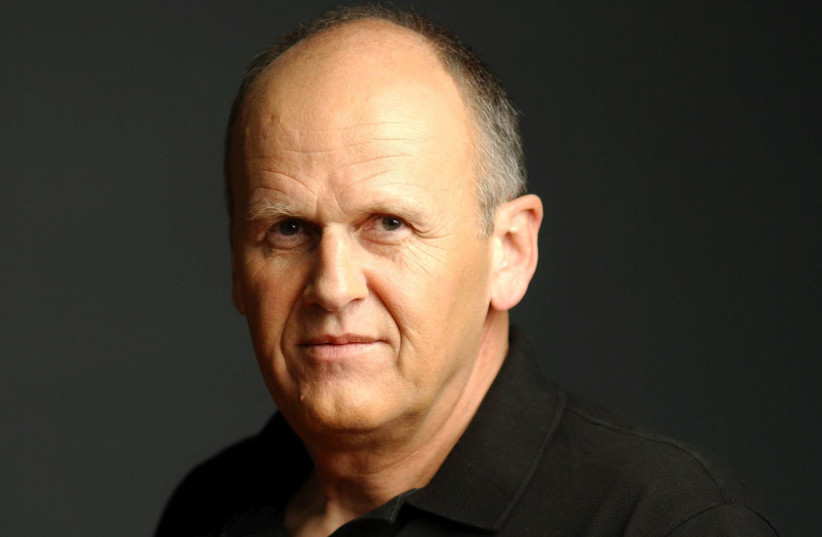
AHARON ZE’EVI-FARKASH served as chief of IDF intelligence from 2001-2006. / (photo credit: COURTESY AHARON ZE’EVI-FARKASH)

“Don’t worry, we are there in Iran; we will make sure they do not cross the line,” said senior Russian officials during a visit to Israel.

It was during Aharon Ze’evi-Farkash’s 2001-2006 term as chief of IDF Military Intelligence.

Ze’evi-Farkash and the Russian officials were debating how much Israel could trust Moscow to be its last line of defense to make sure that the Islamic Republic did not go nuclear, even as Russia was helping Tehran progress in various nuclear realms.

The retired IDF major-general was not satisfied by the initial reassurance, and responded with a characteristic stinging reply, “You’ll make sure? Just like you made sure that China, India and Pakistan would not go nuclear?” (All three countries obtained nuclear weapons – in 1964, 1974 and 1998, respectively – despite Russian opposition.)

A bit taken aback, but never wanting to back off, the Russian officials said, “No, we will really try because it is not good for anyone for Iran to be nuclear,” citing Iran’s Islamic radicalism and the millions of Muslims living in Russia about whom Moscow always has nightmares.

It is with this skepticism that Ze’evi-Farkash comes to the questions of those who think Tehran can be coaxed out of nuclear weapons or that it will give up the pursuit.

Despite his skepticism that Iran can be prevented from getting nuclear weapons indefinitely, he is strongly in favor of putting off that grim day for as long as possible.

Further, Ze’evi-Farkash believes that the Biden administration will not rejoin the 2015 nuclear deal before the June Iranian presidential election.
“I don’t know if they [the Biden administration] will get a completely new or improved deal. Even though [president Donald] Trump is gone, a deal is far-off for the US. There won’t be a deal before June,” he told The Jerusalem Post Magazine in a recent extensive interview.

Continuing over tea and pastries while sitting socially distanced at his spacious home on a gray afternoon, he stated: “There is a big struggle in Iran between extremists and pragmatists. Some accuse [Iranian President Hassan] Rouhani of putting Iran through something intolerable. The US broke the [nuclear] deal, so” there is no reason to make a new deal.

As a result, Iran Supreme Leader Ayatollah Ali Khamenei has stipulated, “First, you get rid of the sanctions. After that, we will come back to the agreement’s provisions” in terms of nuclear limitations.

Getting animated, Ze’evi-Farkash – who made aliyah at 14 from Romania and broke into Israeli society when he was embraced as a true talent by the IDF – said this disagreement between Iran and the US about how to return to the 2015 deal and negotiations “is the Archimedean point. Biden, and the US through his voice, clearly said no.

“Iran will want more and more concessions for agreeing to attend negotiations,” he predicted. “Only Israel can impact the situation,” and it is a separate question whether it will have an impact.

IN ZE’EVI-FARKASH’S view, Prime Minister Benjamin Netanyahu’s overly aggressive tactics banging heads with the US led to the Jewish state being cut out of the Iran nuclear negotiations during the key 2014-2015 period.

PRIME MINISTER Benjamin Netanyahu exposes files proving Iran’s nuclear program in an April 2018 press conference at the Kirya in Tel Aviv. (Photo credit: Miriam Alster/Flash90)

The former Military Intelligence chief recalled that in July-August 2003, during his term, Israel’s more calibrated strategy helped the US and the EU uncover and lead to the elimination of the Islamic Republic’s covert Parchin nuclear facility.

Another element of Ze’evi-Farkash’s criticism of any Netanyahu strategy that entails open confrontation with the US over Iran nuclear issues, as opposed to quieter, behind-the-scenes networking, relates to his nuanced view of the 2015 deal itself.

“The deal is not great. But the situation now is much worse than in 2015. Compare things now to May 2019. Trump had gotten out of the deal in May 2018. For a full year Iran had strategic patience, and they did not move a millimeter besides small issues” related to concealing past knowledge they had acquired.

Next, Tehran “started to threaten: If you don’t come back to the deal, we will do 1, 2, 3 and 4 – increased volume of enrichment, higher-quality enrichment, advanced centrifuges which are six times faster. Now they have enough uranium for two nuclear weapons,” if they decided to break out.

“They have made uranium metal, which looks like pita bread,” he said with a deadpan, “but represents a very advanced stage. They have made it harder for the IAEA to conduct inspections,” with big delays, some of which have not been publicly reported, dating back to December 2020, he said.

The former intelligence chief said, “Under the JCPOA, they wouldn’t have been allowed to make uranium metal for 15 years…. An agreement with holes, and I hope in the future with smaller holes, is still better than an Iran with no deal.”
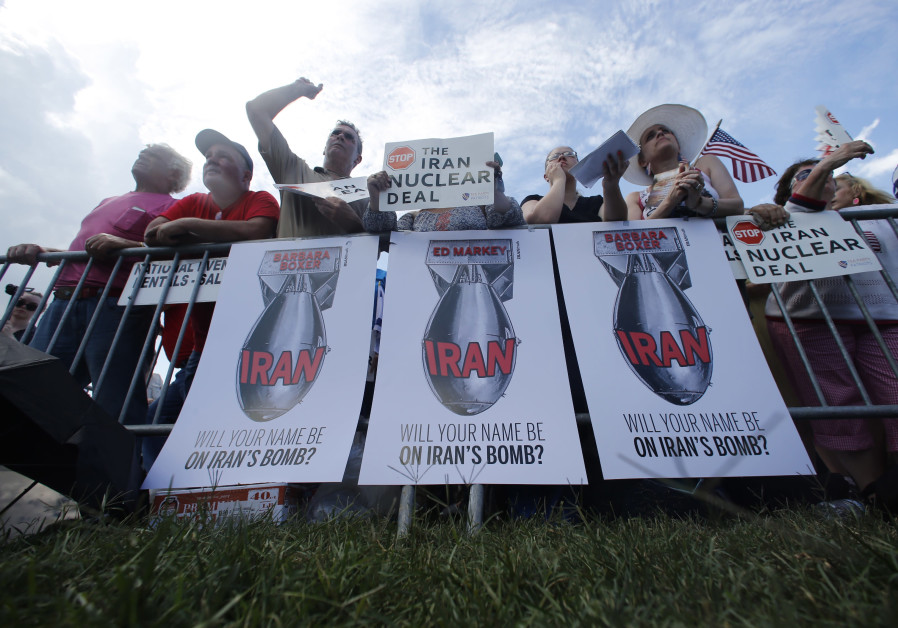
RALLYING AGAINST the Iran nuclear deal on Capitol Hill in Washington, 2015. (Photo credit: Jonathan Ernst/Reuters)

Another problem that Ze’evi-Farkash flagged was the July 2020 $400 billion 25-year deal between Tehran and Beijing regarding oil, cyber, intelligence, nuclear and a variety of other issues.

Although the public narrative at the time of the interview with the Magazine was that the deal would not be final or implemented until sometime in the future, he said that “20% of China’s energy is imported from Iran. There are secret annexes to the China-Iran deal which are already happening, but the deal has not been publicly finalized so as not to anger the Saudis.” Essentially, he had already correctly predicted the deal was happening and would be fully consummated, which occurred last week.

Pointing out that former Bank of Israel governor and US Federal Reserve vice chairman Stanley Fischer has warned that China will pass the US as the world’s premier economic power within 20 years, he added, “with corona – some say by 2025 or 2030.”

While Israel brags about the $3b. in defense assistance it gets annually from the US, he said that the backing China is giving the Islamic Republic dwarfs that sum.

Further, he said that China has enhanced its global image with coronavirus vaccine diplomacy, selling to weaker and needier countries, while the US was focused on its own issues.

He said Chinese support for Iran has and will keep it strong, and cited a special plaque posted at the Isfahan enrichment nuclear facility expressing gratitude to China for its assistance.

In one of his most striking analytical points, he said that Iran does not really care about extending the nuclear limitations beyond the 2030 sunset deadline.

Though Tehran pretends to have a super hard line that the 2030 deadline cannot be extended, he said all of this is negotiation strategy.

Instead, he said, the ayatollahs have tremendous strategic patience and a long-term outlook. As long as they can get to the nuclear threshold at some point without serious resistance or threat from the US, they do not care much about the timeline.

But he warned that the Iranians “are vehemently determined to get to the nuclear threshold” both to secure their regime and to empower themselves regionally – whether it be in 2030 or 2040.

Personally, Ze’evi-Farkash believes that the largest hole in the 2015 nuclear deal was that it permitted Iran to continue developing its ballistic missile program.

He said any new deal “needs to include the ballistic missiles. If they were limited to 1,000 kilometers, Israel could rest” more easily, since the Jewish state is more than 1,000 kilometers away from Iran.

Moreover, he said that sanctions should not be removed until limits on ballistic missiles are added to the deal.

For Ze’evi-Farkash, this issue is especially crucial given that Jerusalem can already see the result of letting an enemy, Hezbollah, reach a point of obtaining a massive missile arsenal within range of the whole country and which can overwhelm Israel’s missile shield.

Stating that the worst part of the threat from Hezbollah is not the more than 150,000 rockets it has, he clarified that the biggest problem is Hezbollah’s potential ability to fire thousands of rockets per day.
This would be too many rockets at once for Israel’s missile defense to prevent significant casualties.

Ze’evi-Farkash said that a big advantage the Islamic Republic has is that it “has a long-term strategy…. We don’t have one. And if we have a long-term strategy, we do not follow it. We only deal with short-term issues,” noting that Israel bungled the Al Ghamr and Baqura territories with Jordan.
His point was that if Netanyahu had spent even a modicum of energy shoring up relations with Jordan, Israel could have leased these areas indefinitely as part of its 1995 peace deal.

Instead, Israel had to return them to Amman because Jordan was furious with general Israeli conduct and was in no mood to grant Jerusalem anything.
In contrast, he said Iran thinks in a long-term, very pragmatic way, saying “even after [the assassination of Mohsen] Fakhrizadeh, they can push off their response. It does not matter if they respond right after the June elections or much later.”

On a related note, he said, “Iran understood that there was a 50/50 chance that Trump would lose the US election, so they made a decision to push off any major moves until after the election.”

Another example where he worries about Tehran’s long-term planning is its ability to threaten Israel from Syria.

To date, Jerusalem has had success with ongoing attacks on Iranian positions and weapons transfers in Syria.

However, he discussed Iran’s new strategic deal with Syria which he said will eventually bring to them an Iranian version of the S-300 or S-400 antiaircraft missile system.

At that point, Israel may no longer have the same operational freedom in Syria that it currently has.

This is because the Islamic Republic is determined “not to allow Israel to do whatever it wants…. This would endanger the sole achievements in Syria of Khamenei and Hezbollah” after pouring in money and soldiers.
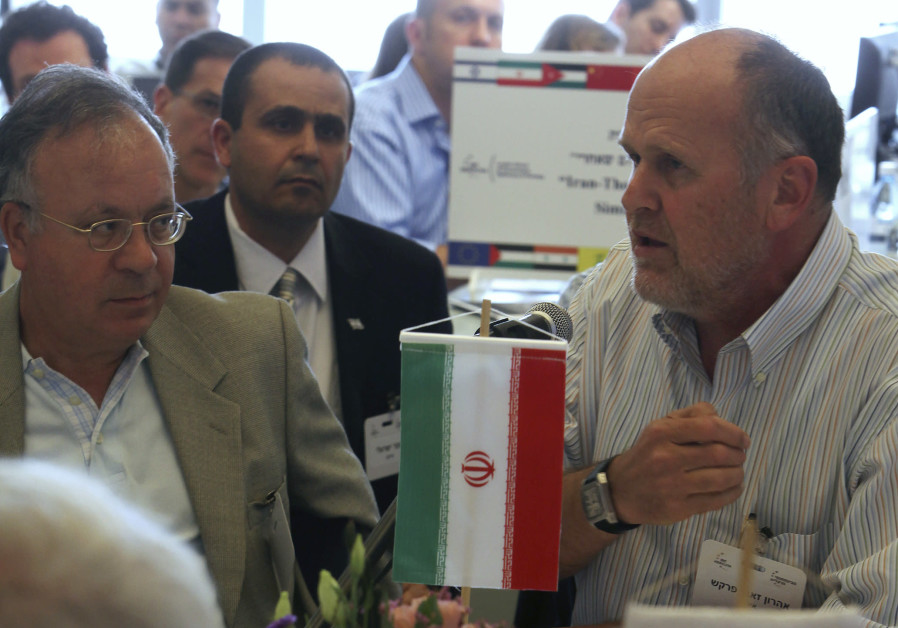
PLAYING IRAN, the retired major-general sits with experts during an Iran war game in Herzliya, 2010. (Photo credit: Nir Elias/Reuters)

ZE’EVI-FARKASH’S ADVICE on dealing with Iran involves a range of moves.
He does not believe broad military force will resolve the standoff with Iran, but at this stage says, “When everyone is trying to define their position, Israel must continue covert operations, not just in Syria – in all places.

“The nation of Israel doesn’t believe in miracles. It’s built on them, but we don’t count on them. We always prepare. So we need to stop things from getting bad with Syria. Some of what we do is publicized, most is not,” he said, waxing a unique mix of bold and philosophical.

In addition, he said that Israel can slow down Iran and adversaries using its cyber capabilities, since “cyber has no boundaries. You can do things without leaving any fingerprints.”

He was referencing foreign reports attributing to Israel cyberattacks on Iran’s port of Bandar Abbas in May 2020 and on its Natanz nuclear centrifuges with the Stuxnet virus in 2009-2010.

Still, Ze’evi-Farkash said using force by itself is not a long-term solution. “We cannot repeatedly attack them [like with Iraq’s and Syria’s nuclear programs]. They are too smart, have too many precision-guided missiles, and will soon have satellites to watch us just like we watch them.”

Moreover, he said that the Islamic Republic’s nuclear program and knowledge are spread out widely and defused among its dozens of universities.
He added that Iran could also retaliate with significant rocket strikes on Israel from Iraq and Yemen, if the Jewish state undertook a broad attack against Tehran’s nuclear program facilities.

In terms of Iran’s top proxy, Hezbollah, he explained incisively that it “suffered its largest blow when we withdrew from Lebanon. They lost legitimacy with everyone for attacking Israel…. What Hezbollah wants is not a war with Israel, but one big short successful battle of a few days where it regains legitimacy.”

This kind of event has happened a few times with short skirmishes between Israel and Hamas.

Ze’evi-Farkash supported and paraphrased the recent speech by IDF Chief of Staff Lt.-Gen. Aviv Kohavi, saying, “Hezbollah has changed Lebanon into an urban war zone. All the houses that have weapons – I am very sorry, don’t sleep there. It is lawful and it is proportionate [to attack such sites]. You, [Hezbollah chief Hassan] Nasrallah are not safe there. I will go after you. Nasrallah understands… Lebanese cities would be destroyed, so he won’t fight beyond a few days or a week.”

MOVING TO the impact of normalization with Arab countries on Israel and the region, he said that the trend “cannot be pushed back” and predicted that there would also be normalization with Saudi Arabia “within six months to one year.”

He said normalization is the one area where Netanyahu acted in a long-term strategic manner and should also be given credit for a “huge achievement.”
In terms of the impact on Iran, he said that “after normalization with the UAE and Bahrain, they feel we are choking them,” creating new allies close to their border, and have inverted Tehran’s preference to pressure Israel with proxies on its border.

Ze’evi-Farkash said the normalization trend “will also be good for Jordan and Egypt…. It is a major change for all of the moderate Sunnis. It is not a surprise that Morocco and others” are joining in.
Though even during his term he had quiet meetings with Arab intelligence officials, he said that the change meant that “after 72 years Israel became an open and official part of the region.”

He said that “the central basis for normalization was the common struggle with the Shi’ite-Iranian crescent and its nuclear program. They [moderate Sunnis] want us to be with them if Iran becomes a nuclear power.
According to Ze’evi-Farkash, another major significant impact of normalization is “there won’t be annexation during the term of the next government whether [led by] Netanyahu” or even others on the political Right – normalization is more important.”

THE FORMER intelligence chief has some other predictions for the future.
In a June 2018 speech, Ze’evi-Farkash had audaciously predicted that by 2025, Israel would have 10,000 satellites and other forms of surveillance which collectively would provide enough constant video surveillance of the Middle East sufficient to carry out targeted killings of terrorists at any time and any place in the region.

Asked if he still stood by this prediction nearly three years later, he responded, “I come back to the IDF chief’s multiyear plan. It speaks explicitly not about merely one unit, but about the entire IDF having the capability to gather real-time intelligence to connect the headquarters, the data and those on the front.”

“Whether from a smaller drone, a larger remotely operated aircraft, special forces, human-operated aircraft or other means, now a mere company commander has intelligence coverage for everything around him at a distance of 500 meters,” he said.

In addition, he said that new levels of technological integration have “made it possible to streamline intelligence collection, planning, selecting targets and carrying out attacks far beyond Gaza and Lebanon,” on a new level which was not previously possible.

A fascinating aspect of Ze’evi-Farkash is that he knew and commanded some current top IDF officials back when they were younger officers.
One story he told the Magazine was about Maj.-Gen. Herzi Halevi.
Halevi eventually followed in Ze’evi-Farkash’s footsteps, serving as Military Intelligence chief from 2014 to 2018, served as OC Southern Command, will become IDF deputy chief of staff in the near future, and is viewed as a potential successor to Kohavi himself.

Yet back when Ze’evi-Farkash was Military Intelligence chief, Halevi was still a mid-level lieutenant-colonel, at the time commander of the General Staff Reconnaissance Unit.

Speaking in metaphors to avoid revealing classified information, Ze’evi-Farkash said, “I won’t forget the event. Halevi needed to go into a ‘zoo’ to find a ‘specific old elephant,’ to lift its left leg up and to see what was written on it.”

Halevi came to Ze’evi-Farkash to sign off on using additional military resources for the operation beyond what was standard and what Halevi could authorize on his own.

He recounted that there was a debate between Halevi and an IDF technology expert about how many soldiers and how many ropes would need to be involved to lift what he called, with a flicker in his eye, the “elephant’s leg.”
Halevi wanted to use a rope, and the technological expert suggested two soldiers. Ze’evi-Farkash ruled in favor of the technological expert, despite Halevi’s argument that he could not complete the mission with two soldiers.

However, when Ze’evi-Farkash arrived to attend a rehearsal of the operation, including a physical mock-up, he saw that Halevi had gone ahead with his single rope idea.

Ze’evi-Farkash seemed to travel back to that moment as he described when “his eyes met Halevi’s determined eyes, and I understood I couldn’t harm his authority in front of his unit, but I also needed to stand up for the authority of the IDF intelligence chief.”

The bottom line from the story is that Halevi is daring, confident and committed to the mission no matter what, and “had a laser-like ability to accomplish unusual and incredible tasks…. I think he would be one of the best IDF chiefs.”

If Halevi follows Kohavi, it would be two consecutive IDF intelligence chiefs ascending to the top job, a major trend reversal from the 2006-2019 period when all of the IDF chiefs had served as OC Northern Command.
Ze’evi-Farkash said an IDF intelligence chief as head of the entire IDF makes a lot of sense because it is one of the only other positions where an individual must interface and learn about all of the arms and dynamics of Israel’s armed forces.

Moreover, he added that the Military Intelligence chief gains rare experience interacting with the heads of the Mossad and the Shin Bet, as well as the prime minister himself.

All of this is a reason to take Ze’evi-Farkash’s views seriously on the dynamic security issues confronting Israel with Iran, Hezbollah, Syria, normalization and the US. 


Zawartość publikowanych artykułów i materiałów nie reprezentuje poglądów ani opinii Reunion’68,
ani też webmastera Blogu Reunion’68, chyba ze jest to wyraźnie zaznaczone.
Twoje uwagi, linki, własne artykuły lub wiadomości prześlij na adres:
webmaster@reunion68.com


Exposing the EU and Palestinian Authority’s Plans to Takeover Judea and Samaria, and Jerusalem

Exposing the EU and Palestinian Authority’s Plans to Takeover Judea and Samaria, and Jerusalem

Ad Kan / עד כאן


After a year of documentation, infiltration, and surveillance of Palestinian Authority senior officers, we reveal the European Union’s masterplan of taking over the Judea and Samaria Judea and Samaria Territories and Jerusalem

Zawartość publikowanych artykułów i materiałów nie reprezentuje poglądów ani opinii Reunion’68,
ani też webmastera Blogu Reunion’68, chyba ze jest to wyraźnie zaznaczone.
Twoje uwagi, linki, własne artykuły lub wiadomości prześlij na adres:
webmaster@reunion68.com


Lękliwe cenzurowanie Dantego i wyznania Adama Michnika


Lękliwe cenzurowanie Dantego i wyznania Adama Michnika

Andrzej Koraszewski


Portret Dantego pędzla Botticellego (Wikipedia)

Podczas święta Wielkiejnocy próbowałem wyłuskać Mahometa z piekła. Za jakie grzechy miałby Prorok siedzieć w chrześcijańskim piekle razem z jakimś papieżem? Ostatecznie to piekło jest chrześcijańskie, to chrześcijański startup, muzułmanie mają własne, nazywa się Jahannam i wygląda na plagiat, ale kto to może wiedzieć? Do chrześcijańskiego piekła Mahometa wpakował Dante, znalazł się tam w VIII kręgu wraz z papieżem Mikołajem III. Z jakiej racji? Kto poecie pozwolił? Czy zdawał sobie sprawę z tego, co robi? Czy wiedział, że może narazić potomnych na poważne przykrości? Nic dziwnego, że współczesna tłumaczka, przygotowując do druku nową edycję jego dzieła, odrobinę zmieniła tekst, odpuszczając sobie i nam imię Proroka.

Jak wyjaśniła później, chciała uczynić tę komedię, boską komedię, bardziej zjadliwą dla szerszej, a szczególnie młodszej  publiczności. „Wiedzieliśmy – powiedziała – że gdybyśmy pozostawili ten fragment, tak jak był on napisany, niepotrzebnie urazilibyśmy bardzo wielu czytelników”.

To niesłychanie optymistyczna wiadomość, że w Holandii wydawca może liczyć na masowe zainteresowanie nowym tłumaczeniem Boskiej komedii. Niektórzy podejrzewają, że ta obawa przed urażeniem uczuć tak wielu czytelników może być związana z lękiem przed tymi, którzy nie muszą niczego czytać, żeby zabić. Ostatecznie tak niedawno francuski nauczyciel stracił głowę, a i Holandia nadal pamięta socjologa i polityka Pima Foruyna, którego zamordowano w 2002 roku, reżysera Theo Van Gogha, zamordowanego w 2004 roku i kilka innych osób, które straciły życie, bo uraziły religijne uczucia. Lęk można zrozumieć, ale zasłanianie go szlachetną wrażliwością wobec uczuć jest nie tylko odrażające, ale i groźne.

Dante uczucia religijne obrażał  świadomie i z premedytacją, zdając sobie sprawę z faktu, że naraża się nie tylko na piekło po śmierci, ale przede wszystkim na całkiem doczesne niebezpieczeństwa ze strony strażników uczuć religijnych.

Nie uświadamiam sobie, żeby jakiś pisarz z muzułmańskiego świata umieścił Proroka w muzułmańskim piekle. Owszem Salman Rushdi napisał powieść Szatańskie wersety, której tytuł związany jest z faktem, iż według dobrze poinformowanych źródeł, niektóre wersety Koranu zostały podyktowane Prorokowi przez Szatana. Powieść uraziła uczucia religijne i w lutym 1989 roku, wielki ajatollah Ruhollah Chomeini ogłosił fatwę wzywającą do zabicia pisarza, obiecując przyszłemu mordercy raj po śmierci i sowitą nagrodę finansową na ziemi.

Ajatollah pisał:

Informuję dumnych muzułmanów na świecie, że autor książki Szatańskie wersety – która jest przeciwko islamowi, Prorokowi i Koranowi – jak i wszyscy, którzy są uwikłani w jej publikowanie i są świadomi jej zawartości, niniejszym są skazani na śmierć.

Pisarz dzięki policyjnej ochronie przeżył, zamordowano jednak dwóch tłumaczy jego książki. Fatwa obowiązuje do dziś, zaś obiecywana nagroda finansowa dla mordercy znacząco wzrosła.

Wtedy uczucia religijne uraziła powieść przypominająca o kuchni, w której pichcono święty Koran, potem było jeszcze wiele innych powodów, wśród których szczególnie głośne było opublikowanie karykatur Proroka, które nie dość, że były karykaturami, to sugerowały, iż jego wyznawcy są tak uduchowieni, że nadzwyczaj często sięgają po nóż, bombę czy karabin.

A jednak wielu autorów z muzułmańskiego świata idzie raczej śladami Dantego, niż śladami tych, którzy nie tylko ze strachu ustępują wobec terroru (co daje się jakoś zrozumieć), ale na domiar złego ukrywają swój strach za ględzeniem o własnej wrażliwości i tolerancji, która w rzeczywistości jest wyłącznie tolerancją dla terroru i barbarzyństwa.

Wafa Sultan jest Arabką. Studiowała medycynę w Syrii, nostryfikowała swój dyplom w Stanach Zjednoczonych i tam zrobiła specjalizację z psychiatrii. Jest ateistką, pisuje również do prasy arabskiej. Jej książka A God Who Hates to historia wychodzenia z pułapki, jaką jest rodzima kultura i rodzima religia. Rodzimy się napiętnowani przez religię i kulturę, która determinuje nasz los i naszą wizję świata. Człowiek stworzył boga — pisze Wafa Sultan — ale ten obraz boga wpływa na psychikę człowieka. Nie pytajcie, co było pierwsze; ważne jest to, że w efekcie mamy zdeformowaną kurę, która znosi zgniłe jaja.

Dzięki wspólnemu znajomemu mamy tę książkę z odręczną dedykacją autorki. Dedykacja dość stereotypowa, bo co można napisać obcym ludziom – „With love and hope”. Lektura książki zmienia te słowa w motto. Jest to bowiem książka nie tylko o koszmarnej pułapce tradycji, ale i książka o miłości i współczuciu opartym na wszechstronnej wiedzy, traktuje również o nadziei, że może kiedyś coś się zmieni.

Kiedyś, podczas wywiadu dla arabskiej telewizji Wafa Sultan stanęła w obliczu pytania, czy chrześcijaństwo jest lepsze od islamu, próbowała się wykręcić, ale prowadzący wywiad nie dawał za wygraną. Mówiła, że islam jest źródłem wszelkiego zła dla mieszkańców krajów muzułmańskich, w końcu jednak zmuszona do odpowiedzi zrobiła krótkie porównanie postaci Jezusa i Mahometa. Ten pierwszy, nauczyciel, przemawiający przeciw gwałtom, ten drugi wojownik, który jednej nocy obciął głowy ośmiuset jeńcom i wziął do swojego namiotu kobietę, której męża, ojca i brata chwilę wcześniej zabił.

Wafa Sultan szybko porzuciła Jezusa i trzymała się dalej już tylko Mahometa, który poślubił sześcioletnią dziewczynkę, ale łaskawie zgwałcił ją, dopiero kiedy miała lat dziewięć, który nieustannie nawoływał do mordowania w imię Allaha, sam był wodzem i zajmował się mordowaniem i grabieżą. Życiorys muzułmańskiego proroka, który jest wzorem dla każdego muzułmanina, to życiorys przestępcy, który powinien być w cywilizowanym społeczeństwie natychmiast aresztowany i na podstawie istniejących dowody skazany na dożywocie bez prawa wcześniejszego zwolnienia. Życiorys masowego mordercy, kryminalisty, bigamisty i rabusia.

Książka innej autorki z muzułmańskiego świata, Egipcjanki, Nonie Darwish Cruel and usual Punishment. The global implication of Islamic law jest przerażającą denuncjacją islamu. Jest to analiza szariatu jako prawa religijno-państwowego, które praktycznie rzecz biorąc przekreśla działanie prawa stanowionego i oddaje mieszkańców państw muzułmańskich w ręce kleru.

Szariat odwołuje się do dowolnie interpretowanego Koranu i innych pism religijnych, odrzuca prawo stanowione, kiedy jest ono niezgodne z „prawem bożym”, posługuje się samosądem i nieustannie wzywa do samosądów. Każdy duchowny może wydawać fatwy wzywające do zabicia każdego, kto zdaniem tego duchownego powinien być zabity. Prawo państwowe nie ściga i miałoby ogromny problem ze ściganiem duchownych otwarcie nakazujących zabicie konkretnej osoby, czy zabijanie przedstawicieli grup religijnych lub etnicznych.

W efekcie szariat oznacza rządy ulicy, religijnych bojówek, organizacji manipulujących tłumami, wobec których rządy są mniej lub bardziej bezsilne, lub stają się ich reprezentantami. Konstytucje i sądy państwowe stają się tylko dekoracją, a różne sekty muzułmańskie walczą ze sobą o to, kto będzie miał największy wpływ na armię i siły bezpieczeństwa.

Narzędziem konkurujących ze sobą sekt są symbole religijne i religijna histeria. Każdy apostata powinien być zabity, a apostatą jest każdy, kto krytykuje lub narusza jakiekolwiek słowo w Koranie czy w hadisach. Mieszkańcy krajów muzułmańskich żyją w nieustannym terrorze, bo zarzut krytykowania czy naruszania pism religijnych nie wymaga sprawdzania ani weryfikacji, może go wysunąć każdy duchowny, a nawet szeregowy wierny.

Nakazywany przez szariat samosąd rozpoczyna się w rodzinie, od wszechwładzy męża nad żoną (żonami) i dziećmi, od formalnego prawa do stosowania przemocy w domu. Szariat, który jeszcze tak niedawno sankcjonował prawo zabicia własnego dziecka, tylko pozornie przystał na ochronę ludzkiego życia i do dziś ściganie tzw. zabójstw honorowych jest praktycznie rzecz biorąc fikcją.

Duchowni, wydający fatwy nakazujące zamordowanie dziennikarza, intelektualisty, czy podżegający do mordowania mniejszości religijnych lub muzułmanów innej niż oni sami denominacji, z reguły nie są ścigani przez prawo. Prawo reaguje, dopiero kiedy zagrożeni czują się sami politycy.

Tych książek autorów z muzułmańskiego świata mamy dosłownie setki i doskonale pokazują mechanizm religijnego terroru oraz powody, dla których holenderski wydawca decyduje się na ocenzurowanie poety, który pisał w czasach, gdy chrześcijaństwo zachowywało się jak dzisiejszy islam, a muzułmanie żyjący w chrześcijańskim świecie często stawali przed wolnym wyborem między okrutną śmiercią a przyjęciem chrześcijańskiej wiary. Sam Dante umarł na wygnaniu, bo w jego rodzinnym mieście groziło mu spalenie na stosie nie tyle za herezję, ile za politykę (co w jego przypadku oznaczało namawianie do osłabienia związków Florencji z Watykanem i głębokie przekonanie, że właściwym miejscem dla urzędującego papieża jest piekło).

Mahomet pojawia się w Boskiej komedii jako postać marginalna:

Z dziurawej kadzi mniej wina wyciecze,
Ile krwi ciekło z rozciętego ducha,
Od samej brody aż poniżej brzucha;
Z kolan drgające zwisały jelita;
Widziałem serce, część wnętrza okryta
Raziła oczy czerwonością nagą.
Podczas gdym jego oglądał z uwagą,
Spojrzał, rękoma pierś rozdarł i rzecze
«Patrz, ja, Mahomed, jak siebie kaleczę!
Przede mną Ali cały we łzach kroczy,
Twarz mu po czaszkę jedną raną broczy;
Szatan tu stoi i z naszej gromady
Każdego bierze na ostrze swej szpady;
Gdy kończym obrót swej bolesnej drogi,
Tu, choć najszersza zamyka się rana
W chwili, gdy stajem przed mieczem szatana.
Lecz ty, kto jesteś, co stoisz bez trwogi?
Może niedługo skoczysz z tej wyżyny,
Gdzie ciebie strącą twoje własne winy?»
— «On nieumarły, nie lżyj go bezkarnie!
On nie na męki wstąpił w wasze progi,
Lecz aby wszystkie tu poznał męczarnie:
Zmarły żywego, po nowej mu drodze,
Przez całe piekło z wyższej woli wodzę».
Mistrz rzekł i dodał: «Prawdzie nie skłamałem».
A na dnie jamy wszyscy potępieńce
Stanęli, patrzą na mnie gronem całem,
Zapominając z podziwu o męce.
— «Jak ujrzysz słońce, powiedz Dulcynowi
Jeśli tu prędko zstąpić nieochoczy,
Niech skupi żywność, śniegiem się otoczy;
Bo jak ci mówię, bez śniegu i głodu,
Nowarczyk w górach niełatwo go złowi».
Tak z podniesioną stopą do pochodu,
Duch Mahometa mówił, potem nogę
Na dłuż prostując poszedł w swoją drogę.

tłum. Julian Korsak

Nic strasznego, a przecież lęk serce ściska jak też to odbiorą młodzi czytelnicy i czy aby nie poczują się urażeni. Trzeba to usunąć, wymazać, okazać życzliwość religii, która przecież sama w sobie nie może być zła.

Wywiad Dominiki Wielowieyskiej z Adamem Michnikiem nosi tytuł „Wierzę w tajemnicę. Ja nie umiałbym powiedzieć, że jestem ateistą”. Wytłuszczone zdanie pod tym tytułem głosi: „Odrzucam myślenie, w którym nie ma miejsca na życzliwość dla Kościoła katolickiego”. Właściwie mogę w tym momencie przestać czytać. Jestem ateistą, bo nie znajduję żadnych powodów do wiary w istnienie istot nadprzyrodzonych, mogę zrozumieć przywiązanie do religii, mam wielu wspaniałych wierzących przyjaciół, wielu wierzących zaliczam do moich wzorów osobowych, ale nie ze względu na ich wiarę, a ich charakter i zachowania niemające nic wspólnego z wiarą (chociaż mogą twierdzić, że do tych zachowań motywowała ich religia). Kościół katolicki uważam za instytucję, która na żadną życzliwość nie zasługuje.

Czytałem dalej już troszkę na siłę, przyglądając się tej nieboskiej komedii. Na pierwsze, długaśne pytanie dziennikarki, kończące się zdaniem „Kościół żądał więcej i więcej, a elity polityczne na wszystko się zgadzały”. Michnik odpowiada:

Jako pierwszy po naszej stronie, nazwijmy ją środowiskiem laickim, zwracałem uwagę, że w walce z dyktaturą komunistyczną i w obliczu gwałcenia godności i praw człowieka siłą rzeczy Kościół jest naszym sojusznikiem, ale sojusznikiem, którego nie znamy.

Krótko mówiąc, autor tych słów przyznaje, że nigdy nie rozumiał, że Kościół katolicki jest instytucją hierarchiczną, zorganizowaną jak partia komunistyczna, nigdy nie zrozumiał, że jest instytucją totalitarną, która nie tylko opierała się demokracji i prawom człowieka w przeszłości, ale pozostaje w opozycji do demokracji, nawet kiedy jest zmuszona do udawania, że ją respektuje. Dał się oszukać i – co gorsza – nadal jest z tego dumny. Nadal nie jest świadomy tego, że otwarci katolicy zostali potraktowani przez polską hierarchię i Watykan instrumentalnie, że wykorzystano naiwność nie tylko wspaniałych wierzących takich jak Tadeusz Mazowiecki, ale naiwność i głupotę ludzi, którzy mieli budować instytucje zabezpieczające przed porwaniem demokracji przez siły antydemokratyczne. Krótko mówiąc, Adam Michnik jest nadal dumny z tego, że otwierał bramy piekła i że niczego się nie nauczył.

Kiedy w Polsce Bolesław Chrobry wyrąbywał toporem drogę chrześcijaństwu, w Aleppo żył poeta, który wyśmiewał michnikowe tajemnice i otwarcie przyznawał się do ateizmu, poprawnie definiując istotę instytucji religijnych.

W czasach renesansu heretycy tylnymi drzwiami wprowadzali do chrześcijaństwa filozofię grecką i rzymską, mając nadzieję na jakieś chrześcijaństwo z ludzką twarzą.

Dziś żyjemy w czasach drugiej kontrreformacji, powrotu tępego religijnego fundamentalizmu, naporu instytucji religijnych na scenę polityczną, ucieczki od nauki i wartości oświeceniowych i strachu przed religijnym terrorem. Pochodzący z Pakistanu Ibn Warraq jest ateistą, ale jest przekonany, że ratunek może przyjść ze strony wierzących humanistów, nadających ludzką twarz życiu religijnemu i świadomych tego, że ich religia pozostanie nieludzka, jak długo życie polityczne nie zostanie zsekularyzowane, a religijność powiązana z tolerancją, empatią i otwartością na naukę (a tym samym na bardziej metaforyczne odczytywanie pism świętych). W jego książkach nie znajdujemy ani śladu życzliwości dla instytucji religijnych, ani tych w świecie islamu, ani tych w świecie chrześcijańskim, ani w żadnym innym. Nie ma wątpliwości, że jego opcją jest pozostawienie Mahometa w piekle, a pewnie i tam posłałby również wielu filozofów bredzących jak Piekarski na mękach o życzliwości dla totalitarnych instytucji.


Andrzej Koraszewski
Publicysta i pisarz ekonomiczno-społeczny

Ur. 26 marca 1940 w Szymbarku, były dziennikarz BBC, wiceszef polskiej sekcji BBC, i publicysta paryskiej „Kultury”.


Zawartość publikowanych artykułów i materiałów nie reprezentuje poglądów ani opinii Reunion’68,
ani też webmastera Blogu Reunion’68, chyba ze jest to wyraźnie zaznaczone.
Twoje uwagi, linki, własne artykuły lub wiadomości prześlij na adres:
webmaster@reunion68.com


The End of PLO Political Hegemony in the West Bank

The End of PLO Political Hegemony in the West Bank

Pinhas Inbari / JNS.org


A Palestinian man walks past a closed school, amid the coronavirus disease (COVID-19) outbreak, in Ramallah in the West Bank February 27, 2021. Photo: REUTERS/Mohamad Torokman

When Palestinian elections were first discussed, the spotlight immediately turned to the struggle between Fatah and Hamas, and the fear that under cover of the elections, Hamas would infiltrate the West Bank. But it soon became clear that the story was not Fatah against Hamas, but Fatah against Fatah.

What is at the root of the Fatah problem? Actually, there are two competing Fatahs.

The first consists of the PLO leadership of the “exile,” with its old roots in today’s Israel, for whom the formative event was the 1948 Nakba. What matters to them is the “right of return” to pre-1967 Israel. Most of them moved to the Palestinian territories after Israel’s withdrawals in the wake of the 1994 Oslo Accords, where they established the Muqata, Arafat’s administrative center in Ramallah. Their primary audiences were the residents of refugee camps in Arab countries, largely in Lebanon.

The second is made up of the Palestinians in the West Bank, who have little or no attachment to the Nakba; what they want is the stabilization of their lives in the West Bank. Until the appearance of the “Tunisian leaders” of the PLO, the Nakba issue was hardly mentioned by Palestinian residents in the West Bank. The Nakba gained momentum when the PLO entered the territories, and the famous statues of “keys to the homes they abandoned” began to show up everywhere. This is the ethos of the Tunisians and the bureaucrats in Ramallah, where the PLO veterans landed, not the residents of Nablus, Bethlehem, and Hebron.

A year ago, I visited Jenin and met with members of the Tanzim grassroots offshoot of Fatah. I was surprised to hear that they wanted one state with Israel, and had stopped believing in the Palestinian state they had fought for all their lives. The reason: They do not believe the “Tunisians” because they are “foreigners,” and the people of Jenin prefer to live with Israel rather than “Ramallah.”

The desire for one state is an opinion heard in broad circles in the West Bank. Palestinian writer Hamada Jaber reported that “according to the Palestinian Center for Policy and Survey Research, Palestinian support for the two-state solution has declined from 55% in 2011 to 39% in 2020 despite the support it has from all Palestinian parties and movements.”

Jaber, who identifies with the Palestinian left, continued, “The depth of the Hamas crisis can be evidenced by its approval of the Fatah movement’s project based on the solution of a Palestinian state on the 1967 borders, at a time when many leaders of the Fatah movement themselves believe that this solution has become impossible and long dead.”

In the past, the idea of one democratic state with the Jews was a ploy to erase Israel via a sophisticated formula, but today, as far as I can understand from conversations on the ground, Israel is a role model in the face of the disappointment from the collapsing Arab countries. We see this phenomenon in eastern Jerusalem, and another aspect of it is the sentiment among Israeli Arabs: “We don’t want to destroy Israel, but to benefit from it.”

Palestinian elite vs. the ‘Tunisians’

A fresh example of the differences between “Tunisians” and locals can be found in an interview given recently by former Palestinian Authority (PA) Prime Minister Salam Fayyad to the daily “al-Quds.” He spoke at length about the needs of the Palestinians in the territories but did not mention a word — or half a word — about the “right of return,” the “struggle,” etc. — slogans propagated by the Tunisians.

The appearance of Fayyad on the political scene is significant. He announced his candidacy as part of an independent list, not in a Fatah context. In fact, even when he was prime minister, he was not a Fatah member. His attempts to get into Fatah failed because the Tunisians accepted into service only locals who bought into the Fatah agenda. They saw Fayyad as an outsider pressed by the donor countries, who did not want to endorse the PLO agenda. Eventually, the Tunisians dumped him.

The phenomenon of an independent list outside of Fatah has more significance: it is the beginning of the end of the PLO’s hegemony in political life in the West Bank. A shocking incident occurred on March 11: Fatah expelled Arafat’s nephew, Dr. Nasser al-Qudwa, the head of the Yasser Arafat Foundation in Ramallah, over his attempt to organize an independent list for the Palestinian elections in May. The candidates on his list include prominent figures from among the Palestinian society — but not from the PLO.

While Fayyad has always been an independent individual, an independent list headed by al-Qudwa points to the end of the PLO’s supreme stature.

I recently received a Fatah document detailing the criteria for candidates to participate in the elections. What caught my eye was the quota set for “locals” — at least a third, with the remaining two-thirds being “representatives of the history of the national struggle,” i.e., Tunisians.

Of course, the leading challengers to PA leader Mahmoud Abbas represent the internal Tanzim — Marwan Barghouti and Mohammed Dahlan.

Jibril Rajoub, another example of the local population (who in the meantime has been enlisted in Qatar’s interests), recently said that the criterion for the post-Abbas leadership is to have spent time in an Israeli prison. In other words, whoever replaces Abbas can only come from the ranks of the local Tanzim — which means the end of Tunisians’ rule.

Whether there is an election in May or not, the demon is out of the bottle, and the fight will not be between Hamas and Fatah but within Fatah itself.


Pinhas Inbari is a veteran Arab affairs correspondent who formerly reported for Israel Radio and “Al Hamishmar” newspaper. He currently serves as an analyst for the Jerusalem Center for Public Affairs.


This article was originally published by the Jerusalem Center for Public Affairs.


Zawartość publikowanych artykułów i materiałów nie reprezentuje poglądów ani opinii Reunion’68,
ani też webmastera Blogu Reunion’68, chyba ze jest to wyraźnie zaznaczone.
Twoje uwagi, linki, własne artykuły lub wiadomości prześlij na adres:
webmaster@reunion68.com


News From Israel- Apr. 08, 2021

News From Israel- Apr. 08, 2021

ILTV Israel News


As Israel commemorates 6 million lives lost in the #Holocaust​, the UAE and Bahrain mark the day as well, for the first time since the #AbrahamAccords​.

The U.S. is back in touch with the #Palestinians​, with a new funding package, but what about a phone call?

Olim demand their families be allowed in the country, and now they just might be.


Zawartość publikowanych artykułów i materiałów nie reprezentuje poglądów ani opinii Reunion’68,
ani też webmastera Blogu Reunion’68, chyba ze jest to wyraźnie zaznaczone.
Twoje uwagi, linki, własne artykuły lub wiadomości prześlij na adres:
webmaster@reunion68.com