Archive | November 2021

Remembrance of Herrings Past

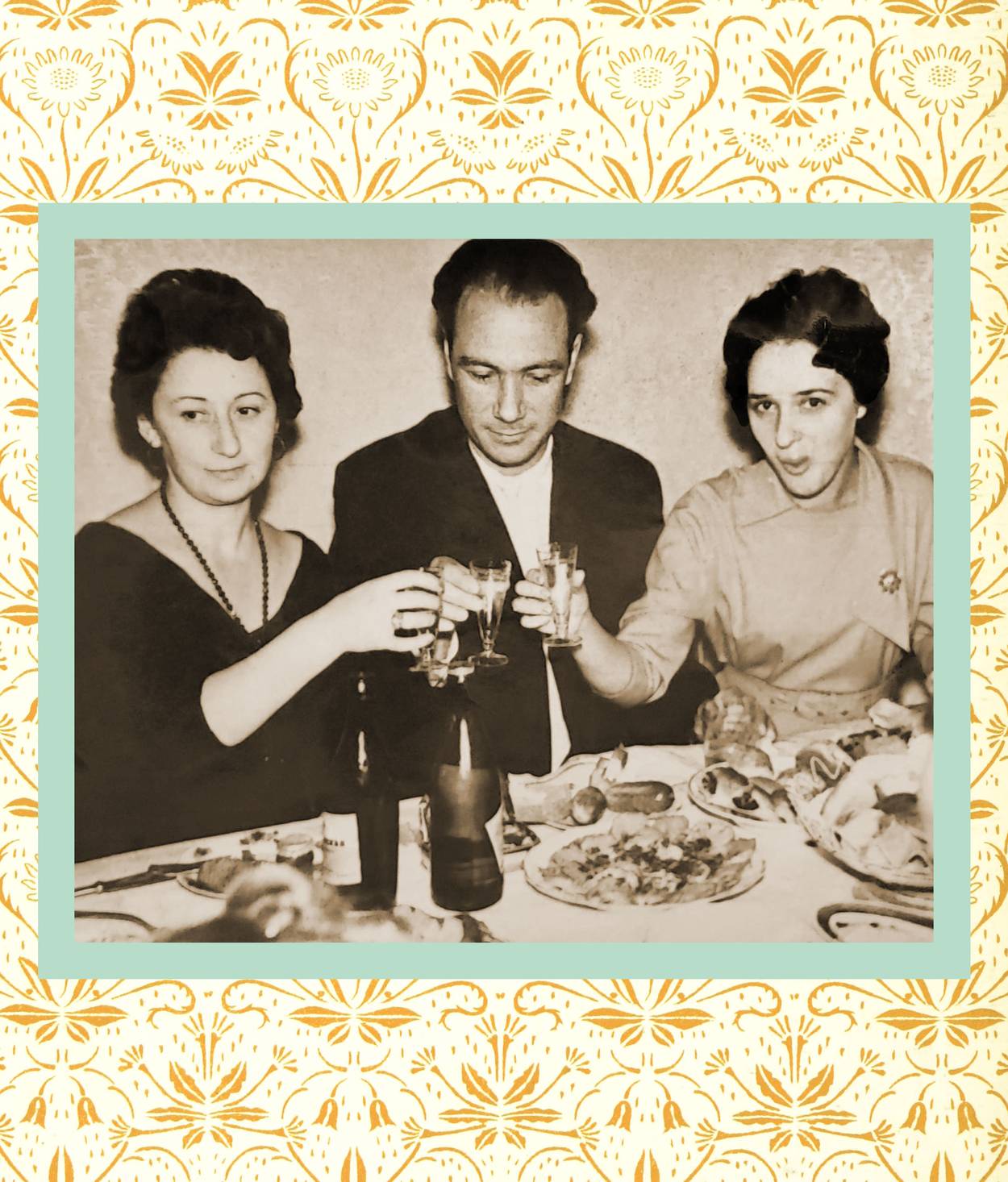
The author’s grandparents, at left, at a dinner party in UkraineORIGINAL PHOTO COURTESY THE AUTHOR


Remembrance of Herrings Past

SAMANTHA SHOKIN


Trying several varieties of forshmak on a recent trip to Ukraine sent me back to my own kitchen, trying to recreate the recipe for minced herring my grandmother used to make.

During my extended stay in Kyiv earlier this year I sat down at the charming Favorite Uncle, one of the city’s many trendy eateries, for a taste of cuisine boasting “the bright personality of the Middle East.” There, I was shocked to find one decidedly non-Middle Eastern menu item: forshmak, aka minced herring, or what poet Jake Marmer describes as “probably the most authentically Jewish herring recipe” there is.

Maybe forshmak served at an upscale Ukrainian restaurant is nothing out of the ordinary, but I hadn’t thought about it since childhood, and simply reading the name on the menu triggered a rush of memories.
Back in the 1990s, I spent my childhood summers at a bungalow colony in the borscht belt that had once been frequented by Yiddish-speaking immigrants not unlike my grandparents. By that point, mountain resorts had long since fallen out of fashion and welcomed a new crop of vacationers: namely, Russian-speaking Jews in search of affordable summer dachas. It was at this bungalow colony that I had my first crush, played my first game of soccer, caught my first fish, and learned the Macarena, subsisting solely on my grandmother’s food—and one food in particular: the visually unappetizing but strangely addicting gray mush known as forshmak. Though the fish-based schmear is not that conceptually different from its North American cousin whitefish salad, somehow it never caught on to the same extent and I had never chanced to see it at any American Jewish delis growing up. Instead, forshmak retained its place as a staple of Russian and Ukrainian fare, and as a child of Soviet Jewish immigrants I used to gobble up my grandmother’s forshmak by the jarful.

There is no discernible reason for a 6-year-old to love the taste of pickled herring (though I suspect it is encoded in my genes). Whatever the reason, my forshmak obsession gave peace of mind to my grandparents, whose patience for picky eaters had long run thin. Having immigrated from Ukraine a decade before I was born, they were no strangers to food shortages and could not shake the notion that a healthy child is a plump child. If I refused to sit down for my grandmother’s three-course meals, whose portion sizes were fit for at least one barrel-chested adult, at least I would eat forshmak. Given its medley of nutritious ingredients—fish, egg, bread, apple, and onion, all ground to a pulp and soaked in vinegar—it was reasonably balanced, and one of the few things I, the kindelah, loved to eat, so they left me alone.

At Favorite Uncle, when my order arrived, I looked at the presentation—a miniature tower of cucumber slices, two hefty slices of black bread, and half a soft-boiled egg tucked into a teacup-size portion of forshmak—and couldn’t help but laugh. If this was once considered poor man’s food, I thought, it sure has come a long way. Adding to my disappointment, the taste was entirely wrong. It wasn’t bad—in fact, by industry standards (if those exist) it would probably be considered quite good—but it lacked that magical, life-affirming flavor of my grandmother’s recipe, the flavor of my childhood summers in the Catskills.

Cooking was my grandmother Raisa’s raison d’etre, and I owe many of my favorite flavor combinations to her, particularly the delectable trifecta of sweet, sour, and savory. Her kitchen was a mashup of hyphenated cuisines—Ukrainian-Jewish, Soviet-American—and the apartment that housed it was a testament to her love of the finer things in life, however unattainable they often were. Forced to leave everything behind in Kyiv save a few trifles and $96 per family member, she insisted on shipping the entirety of her ornate furniture collection abroad shortly before immigrating, baroque paintings and all. Eventually the collection made it to East New York where it ended up furnishing my grandparents’ apartment through the end of their lives. The decor always seemed to me ironic, or aspirational at best, belying their modest means in America.

When my grandmother passed away, it marked the end of any era: Gone were the days of living room dinner parties and champagne-stained carpeting. With my grandparents no longer with us, extended family gatherings became obsolete, and, with their American dreams realized, my parents’ generation preferred to dine out.

Although my family cherishes grandmother Raisa’s handwritten recipe collection, forshmak was among the many dishes that she would prepare from memory, leaving us no written record of her method. Today I appreciate that her recipe was truly unique, with a mouthwatering tartness that I have yet to encounter in the dozens of forshmak variations I’ve since tried from Eastern European groceries and restaurants. And as I discovered in Ukraine, there are as many varieties of forshmak as there are people who make it, Jewish or gentile.

On a visit to Lviv a month after the meal at Favorite Uncle, my husband and I stopped into the very haimish Cafe Jerusalem for a kosher-style lunch complete with three forshmak varieties. Once again, the vinegary taste I so desperately craved was conspicuously absent, making me wonder: Was grandmother Raisa’s recipe really that obscure? Even more surprising was spotting forshmak at the military-themed restaurant Kryivka alongside Ukrainian moonshine and garlic-infused pig fat. That the menu was garishly treyf didn’t bother me at all; tasting forshmak pureed with mayonnaise, on the other hand, felt all but sacrilegious.Having tried so many forshmak varieties to no avail, it was time to attempt my grandmother’s recipe myself. I returned home to New York with a pang of reverse culture shock that could only be remedied by a visit to my parents on Brighton Beach. There my mother joined me in reverse-engineering her mother’s recipe. “The secret is in the black bread,” she said. “In Odessa they used white bread, but in Kyiv, grandma Raisa used only black.”

As my mother and I cut the ingredients down to size, I pictured the magnificent spread of my grandmother’s dinner parties, set to perfection on a folding table in the living room where guests would scurry in from the winter chill, fur coats piled on the bedspread and ladies’ perfume mingling with the scent of piping hot borscht. Despite leaving all their savings in the Soviet Union and only scraping by as immigrants in America, my grandparents never stopped loving to entertain—and though I didn’t realize it as a child, grandmother Raisa was truly an extraordinary hostess.

The ingredients fell from the meat grinder into the mixing bowl, and I scooped them up with the first utensil I could find. Without any need for adjustments, the taste was remarkably spot on. It turns out that the holy grail of forshmak recipes had been waiting for me at home all along—and this time I made sure to write it down..


Samantha Shokin is a writer and musician based in Brooklyn.


Raisa’s Forshmak

Wikipedia

For this recipe you will need a meat grinder.

INGREDIENTS

  • 2brined herrings, deboned and filleted
  • 4slices dark rye bread (Borodinsky or Lithuanian work well)
  • 1cup white vinegar, or enough to soak the bread slices
  • 4hard-boiled eggs
  • 1large Granny Smith apple, cored
  • 1small yellow onion

PREPARATION

  • Step 1

    Cut the ingredients down to size and soak the bread in vinegar for about a minute, draining the excess. Feed the ingredient pieces into the grinder on a medium coarse setting (4-5mm or what you would use for hamburger or sausage meat). The bread should be fed last so that it can push out any pieces that might have gotten stuck. Mix well, serve on toasted black bread and garnish as desired.


Zawartość publikowanych artykułów i materiałów nie reprezentuje poglądów ani opinii Reunion’68,
ani też webmastera Blogu Reunion’68, chyba ze jest to wyraźnie zaznaczone.
Twoje uwagi, linki, własne artykuły lub wiadomości prześlij na adres:
webmaster@reunion68.com


Is Benjamin Netanyahu’s political career over? – opinion

Is Benjamin Netanyahu’s political career over? – opinion

YAAKOV KATZ


There are a number of top members within Likud who hope and pray that after the budget passes, Netanyahu will finally step down.

.

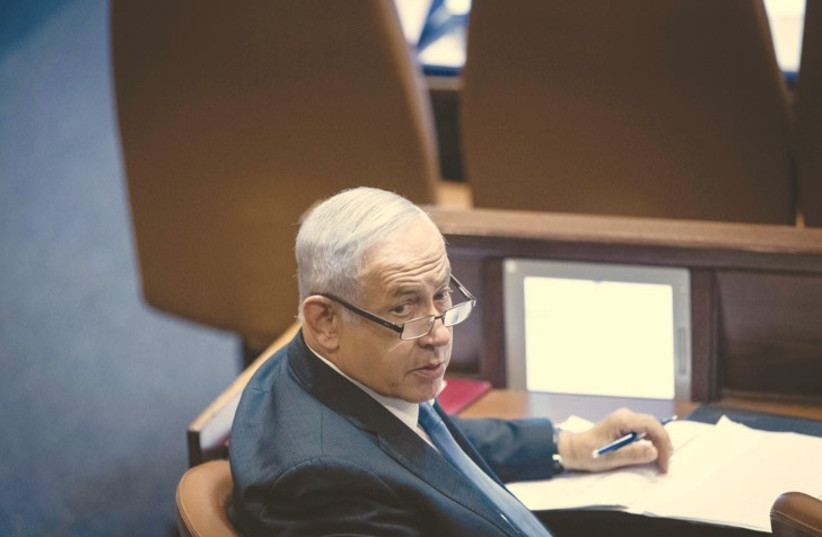
Opposition Leader Benjamin Netanyahu in the Knesset in June.
(photo credit: YONATAN SINDEL/FLASH90)

In the middle of August, former prime minister Benjamin Netanyahu flew to Hawaii, together with his wife, Sara, and their older son Yair.

The trip was memorable for a few reasons. At the time, the Israeli government was warning its citizens against flying overseas due to the onset of the fourth wave of corona.

Netanyahu ignored the warning and boarded a flight to San Francisco, the first time in 12 years that he flew on a commercial flight. There were no charter planes or private jets. Yes, he had security with him, but he was flying like a regular citizen.

One photo in particular told the entire story. It showed Netanyahu waiting in line at what looked like a check-in counter sitting on one of those Smart Carte baggage wagons that you pay for at American airports. He did not look happy.

Inside the Likud, some members like Nir Barkat had a feeling what would happen when the Netanyahus arrived in Hawaii. A tech entrepreneur who made hundreds of millions before entering politics, Barkat had been to Hawaii twice with his family. He told some close associates at the time that there was no way Netanyahu was coming back that quickly.

Israel’s opposition leader Benjamin Netanyahu is seen gesturing at the Knesset, on July 26, 2021. (credit: MARC ISRAEL SELLEM/THE JERUSALEM POST)

He was right. First, Netanyahu extended his trip. Then, when he returned, his wife and son decided to stay a little longer. When Sara’s time came to return to Israel, Yair still had not had enough. He wanted a little more time in paradise.

It was – as Likud members later called it – the “Hawaii Effect.”

According to some, it has not yet completely worn off. Netanyahu, these MKs say, is not the same as he was when the current government was established by Naftali Bennett and Yair Lapid in June.

In those first few weeks, Netanyahu promised anyone who would listen that the new government was going to fall within a matter of weeks. When that didn’t happen, it turned into a matter of months. As recently as last week, he was still telling party members that there was a chance the government would yet fall before the state budget passed.

This column is being written after the 2021 budget passed this week, and before the vote on the 2022 budget. Netanyahu and his associates have tried for weeks to recruit a defector from among the ranks of the so-called “change coalition” to vote against the budget, but so far they have only met failure. Netanyahu even had an embarrassing moment early Thursday morning when he – one of the three longest-serving MKs in the house – accidentally voted with the coalition for one of the budget amendments.

But even without the budget, Netanyahu seems to many in Likud to have checked out of the parliamentarian work that is expected from the leader of Opposition.

Yes, he gives the occasional fiery speech against Bennett, but he has been known to skip votes and important faction meetings, and does not meet with foreign dignitaries visiting Israel. Now this could be his way of protesting the new government – by not meeting with visiting dignitaries and heads of state, he is showing his contempt for the government that he and his followers claim is illegitimate.

On the other hand, he is missing out on an opportunity to show that he is still a statesman who is sought out by foreign officials. As head of the opposition, it is within his right and in line with protocol to ask for those meetings.

Whatever the reason, there are a number of top members within Likud who hope and pray that after the budget passes, Netanyahu will finally step down. In addition to the “Hawaii Effect,” they’re looking for other signs of this happening.

In two months, for example, the security detail that Sara and sons Yair and Avner have grown accustomed to over the last 12 years will suddenly be gone. No longer will there be a car and security guards accompanying the Netanyahus on their trips overseas and their travels throughout Israel.

And then there is Netanyahu’s ongoing trial. On November 16, Nir Hefetz, a former top Netanyahu aide and a star state witness, will begin testifying in Case 4000, the bribery part of the trial pertaining to the Bezeq-Walla affair. Despite Netanyahu’s protests, the trial is moving ahead full steam, and the picture of how he allegedly tried to manipulate coverage in exchange for regulatory benefits is coming together.

So if he wanted to try and make a deal, now might be the best time, because Attorney-General Avichai Mandelblit is set to step down in February.
The search for his replacement has already begun, and while the next attorney-general will need to continue overseeing the trial, whoever gets the job will not be as invested in the outcome. Mandelblit, on the other hand, (even outside the Justice Ministry) knows that his legacy hinges on the Netanyahu trial ending in a conviction.

It was his decision to indict the former prime minister, and whatever happens in the case will determine his legacy. But his replacement will be less dedicated – it will not matter as much to him or her if Netanyahu gets acquitted as it will to Mandelblit.

Netanyahu knows this, and as a result might be inclined to reach a plea deal with Mandelblit now before he steps down in three months. Will he? The option cannot be ruled out.

And this is where it could get really interesting. If Netanyahu suddenly steps down, Likud will need to hold primaries within a couple of months to elect a new chairman.

Party insiders expect a long list of candidates, with some having already announced they will run while others are still waiting in the wings. The leading candidates are Nir Barkat, Israel Katz, Gilad Erdan, Miri Regev and Yuli Edelstein. Others, like Danny Danon, Tzachi Hanegbi and Avi Dichter, are expected to run, but their chances are deemed slim.

The three working the hardest right now are Barkat, Katz and Edelstein. Barkat is using the vast sums of money he has and loopholes in election laws – as long as primaries have not been called there are no limits on how much private money a potential candidate can spend – and he has hired a team of top adviser and pollsters.

Edelstein is also spending a lot of money, which gives him an advantage over other candidates. He has stepped up activity within the party since making his dramatic announcement a few weeks ago that he will run against Netanyahu, and not wait for him to step down like the rest of the candidates have said.

Erdan, who leaves his post in Washington this month as Israel’s ambassador, will remain at the United Nations, but is expected to return immediately to Israel if a primary race were to be called within the party. The last year has burnished his diplomatic credentials, but it has also distanced him from the party’s members – no weddings, bar mitzvahs or central committee barbecues – and he will have an uphill battle to take the top spot. Nevertheless, Erdan is expected to run so he can secure himself a top ranking and reestablish his standing within the party.

Katz is well plugged-in within the party institutions as well as when it comes to the “shetach,” the field of regular party members where he is popular and well-received. This will give him a step up in a future battle.
Many expect that there will not be a winner after one round of voting – because of the packed field of candidates, it is unlikely that anyone will receive the necessary 40% of the vote. If so, there will be a runoff between the two who come out on top.

When a new chairman is elected, that will likely mean the end of the current government. There won’t even be a need for an election. Under Israeli law, a constructive no-confidence motion – if passed – brings down the current government and immediately installs a new one.

The breakdown will look like this: the Likud-Shas-UTJ-Religious Zionist bloc currently counts 53 MKs. New Hope Chairman Gideon Sa’ar has already said that the moment there is a new Likud leader, everything is open again; and Yamina’s Ayelet Shaked has long been praying for a right-wing government. There will also be little need to convince Defense Minister Benny Gantz to bolt the current coalition – he will not want to crown his nemesis, Yesh Atid’s Yair Lapid, as the prime minister, and so he too will likely join a new Likud-led coalition.

Last but not least is Bennett, who would have to return to being the leader of a party of six with all that comes with it – or doesn’t.

Will any of this happen? No one knows. But here is what is clear: Netanyahu’s trial is continuing, and every day that passes reduces the chances that he will ever return. He knows it, as do his fellow party members and the members of the Bennett-Lapid coalition. Passing of the budget will help keep their government together, but they are still far from being out in the clear.


Zawartość publikowanych artykułów i materiałów nie reprezentuje poglądów ani opinii Reunion’68,
ani też webmastera Blogu Reunion’68, chyba ze jest to wyraźnie zaznaczone.
Twoje uwagi, linki, własne artykuły lub wiadomości prześlij na adres:
webmaster@reunion68.com


Śmierć Zygielbojma. Co napisał w ostatnim liście do społeczeństwa i rządu polskiego?

Wojciech Mecwaldowski w filmie ‘Śmierć Żygielbojma’, reż. Ryszard Brylski, dystrybucja: Monolith Films (/ materiały prasowe)


Śmierć Zygielbojma. Co napisał w ostatnim liście do społeczeństwa i rządu polskiego?

Paweł Smoleński


Zanim Szmul Zygielbojm odkręcił gaz, napisał w liście do prezydenta Władysława Raczkiewicza i premiera Władysława Sikorskiego: “Przez śmierć swą pragnę wrazić najgłębszy protest przeciwko bezczynności z jaką świat się przypatruje i pozwala lud żydowski wytępić”.
.

Wydarzenie bez precedensu w historii polskiego kina. Podczas premiery filmu „Śmierć Zygielbojma” reżyser Ryszard Brylski zarzucił władzy – w obecności m.in. ministra Piotra Glińskiego – próbę sprowadzenia jego filmu do „kina rządowej propagandy”.

Film „Śmierć Zygielbojma” kończy się i zaczyna podobnie. Oglądamy wnętrze kuchni, raczej skromne. Różnica polega na obecnych w niej ludziach. W początkowych kadrach kuchnię wypełnia ekipa śledcza i fotograf angielskiej gazety, a na podłodze leżą zwłoki mężczyzny. W końcowych ten mężczyzna, siedząc na krześle, nachyla się nad palnikami i odkręca kurki.

Zaś wszystko, co pomiędzy, to dochodzenie do prawdy. Dlaczego mężczyzna popełnił samobójstwo, skoro – uświadamia nas z ekranu koroner – w Wielkiej Brytanii to przestępstwo i musi się tym zająć policja. Dlaczego to, co miał do powiedzenia zmarły, nie zainteresowało brytyjskich mediów. Oraz – dlaczego ta śmierć przeszła bez echa, skoro zaplanowana była jako krzyk: zobaczcie, co w Polsce z narodem żydowskim wyprawiają Niemcy.

Szmul ZygielbojmSzmul Zygielbojm fot. materiały prasowe

Przed śmiercią napisał list: „Życie moje należy do ludu żydowskiego w Polsce, więc je daję. Pragnę by ta garstka, która ostała się jeszcze z kilkumiljonowego żydowstwa polskiego, dożyła wraz z masami polskimi wyzwolenia, by mogła oddychać w Kraju i w świecie wolności i sprawiedliwości socjalizmu, za wszystkie swe męki i cierpienia nieludzkie. A wierzę, że taka właśnie Polska powstanie i że taki właśnie świat nastąpi”. List odebrali emigracyjny prezydent RP Władysław Raczkiewicz i premier gen. Władysław Sikorski.

Samobójcza śmierć Szmula Mordechaja Zygielbojma, człowieka odważnego, szlachetnego i prawdomównego nie przyniosła skutku. Można ją porównać (w filmie pada takie zdanie) do samobójczej śmierci żydowskich obrońców twierdzy Masada nad Morzem Martwym w 73 r. n.e., kiedy już było jasne, że powstanie przeciwko Rzymowi to klęska. Bez wątpienia to jeden z momentów, kiedy mamy prawo obwiniać Zachód o bezduszność, zimną kalkulację strat i zysków oraz bezczynność. Lecz róbmy to z wyczuciem. Sportretowana w filmie Lidia Ciołkoszowa, socjalistka, działaczka społeczna, kobieta wybitna mówi angielskiemu fotografowi, który szuka sensu w śmierci Zygielbojma, że nawet w wojennym Londynie miał wrogów pośród Polaków, bo antysemityzm to zaraza, na którą nie ma lekarstwa.

ŚMIERĆ ZYGIELBOJMA – zwiastun. W Multikinie 5 listopada

.
Śmierć Zygielbojma – konferencja prasowa

.

Ten Żyd przesadza

Historycy kłócą się o miejsce urodzenia Zygielbojma: Warszawa czy Borowica koło Krasnegostawu? Pochodził z wielodzietnej, bardzo biednej rodziny. Od dziesiątego roku życia pracował w fabryce. Wybitny działacz Bundu, partii sprzeciwiającej się syjonizmowi.

Odpowiedzialny i aktywny obywatel, wierzący, że Polska – przy całym sanacyjnym bagnie, getcie ławkowym i wrzaskach „Żydzi na Madagaskar” – jest ojczyzną Żydów, a emigracja do Palestyny to mrzonki.

Socjalista wrażliwy na krzywdę i wyzysk, zawsze za sprawiedliwością społeczną. Bardziej społecznik niż polityk. Był radnym Łodzi i Warszawy.

'Śmierć Żygielbojma', reż. Ryszard Brylski, dystrybucja: Monolith Films‘Śmierć Żygielbojma’, reż. Ryszard Brylski, dystrybucja: Monolith Films / materiały prasowe

Pod okupacją członek warszawskiego Judenratu. Organizował podziemny opór.

Zagrożony aresztowaniem – wcześniej już siedział na gestapo w alei Szucha – został przez towarzyszy partyjnych nakłoniony do wyjazdu z Polski. W Warszawie, wbrew sobie, zostawił żonę Marię i troje dzieci.

Przez Niemcy, Belgię i Francję dotarł do Nowego Jorku, a stamtąd do Londynu, gdzie wszedł w skład Rady Narodowej RP. Miał dobry kontakt z politykami brytyjskiej Partii Pracy.

Starał się informować zachodnią opinię publiczną i klasę polityczną o losie Żydów w Polsce. Jego apele zbywano okrągłymi zdaniami, a wywiady i artykuły lądowały w prowincjonalnych gazetach. Świat lekceważył Zygielbojma mimo lojalnego wsparcia polskiego rządu na uchodźstwie. Nie wierzono jego informacjom, bo trudno je było potwierdzić. W najlepszym razie uznawano, że Zygielbojm przesadza lub kłamie w dobrej wierze. Prawda o eksterminacji Żydów okazała się w oczach Zachodu zbyt brutalna, by mogła być prawdziwa.

Szmul Zygielbojm: Ten świat oszalał!

To musiała być najbardziej dramatyczna rozmowa w życiu Szmula Zygielbojma. Odbyła się 2 grudnia 1942 r. Do tej pory, gdy opowiadał światu o tragedii Żydów w Polsce, opierał się na raportach polskiego i żydowskiego podziemia, obszernych, lecz siłą rzeczy ogólnych. Operował wielkimi liczbami: w Chełmnie zagazowano 40 tys. Żydów, w Wilnie rozstrzelano 60 tys., z warszawskiego getta wywieziono do Treblinki 100 tys. Po spotkaniu z Janem Karskim, kurierem państwa podziemnego, miał w garści konkret.

Wojciech Mecwaldowski (po lewej) w filmie 'Śmierć Żygielbojma', reż. Ryszard Brylski, dystrybucja: Monolith FilmsWojciech Mecwaldowski (po lewej) w filmie ‘Śmierć Żygielbojma’, reż. Ryszard Brylski, dystrybucja: Monolith Films / materiały prasowe

Karski tak wspominał ich rozmowę: „Był przygnębiony, zdenerwowany, podejrzliwy, a wobec mnie niezupełnie uprzejmy. Gdy skończyłem sprawozdanie, wybuchnął: »Nie mówi mi pan niczego nowego. Ja wiem więcej, niż pan mi powiedział. Ja robię wszystko, co mogę«”.

Lecz po oficjalnej relacji Karski wyjawił Zygielbojmowi, co widział na własne oczy. Dwukrotnie przekradał się do warszawskiego getta, wszedł w niemieckim mundurze do obozu tranzytowego w Izbicy Lubelskiej, który mylnie uznał za koncentracyjny. Opowiadał Zygielbojmowi o głodowej śmierci, chorobach, przeludnieniu. O trupach zbieranych z ulic na drewniane wózki i wywożonych na dotykający getta cmentarz żydowski. O oszalałych z braku żywności i ze strachu. O strzelaniu do Żydów wedle esesmańskich kaprysów.

„Kiedy dodałem jeszcze tę specjalną wiadomość [apel przywódców żydowskich z getta warszawskiego domagających się od żydowskich reprezentantów na Zachodzie działań radykalnych i spektakularnych] – wspominał Karski – zerwał się i zaczął biegać po pokoju, krzycząc: »Ten świat oszalał! Czy pan myśli, że pozwolą mi umrzeć na ulicy? Przyślą policjantów, zaaresztują mnie, poślą do kliniki psychiatrycznej, a nie pozwolą umrzeć na oczach wszystkich«. Biegał tam i z powrotem, powtarzając: »Ten świat oszalał, ten świat oszalał!«”.

'Śmierć Żygielbojma', reż. Ryszard Brylski, dystrybucja: Monolith Films‘Śmierć Żygielbojma’, reż. Ryszard Brylski, dystrybucja: Monolith Films / materiały prasowe

Przywódcy getta żądali, że jeśli nie uda się skłonić Zachodu do konkretnej pomocy opisami żydowskiej tragedii, żydowscy liderzy winni podejmować działania ostateczne, kłaść na szali własne życie. Jedną z metod miały być organizowane w miejscach publicznych strajki głodowe.

Żydzi i Polacy walczą razem

Zygielbojm chciał rozpocząć głodówkę na Downing Street, tuż obok siedziby Winstona Churchilla, lecz odwiedziono go od akcji z góry skazanej na porażkę. 10 grudnia 1942 r. rząd londyński wydał stworzoną na podstawie relacji Karskiego notę na temat terroru i dyskryminacji Żydów. Niewiele później alianci podpisali dokument potępiający Zagładę.

Lecz Zygielbojm żądał (bezskutecznie), apelował o realne wsparcie powstania w getcie warszawskim, które wybuchło 19 kwietnia 1943 r. Wśród bojowców było wielu bundowców, np. Marek Edelman.

Najpewniej miał świadomość, że w sprawie Zagłady rząd polski zachowuje się lepiej niż zachodni sojusznicy. Pisał w 1943 r.: „W tym miejscu muszę wspomnieć, że ludność polska udziela wszelkiej możliwej pomocy i współczucia dla Żydów. Solidarność polskiej ludności ma dwa aspekty: po pierwsze jest to wspólne cierpienie, a po drugie wspólna walka przeciwko nieludzkiemu okupantowi. Walka z prześladowcami jest ciągła, wytrwała, w konspiracji i toczy się nawet w gethcie, w warunkach tak strasznych i nieludzkich, że są one trudne do opisania lub do wyobrażenia (…). Ludność żydowska i polska pozostaje w stałym kontakcie, wymieniając prasę, informacje i rozkazy. Mury getta nie oddzieliły w rzeczywistości ludność żydowską od Polaków. Polskie i żydowskie społeczeństwo wciąż walczy razem o wspólny cel, tak jak walczyło przez wiele lat w przeszłości”.

Zygielbojm był do tego stopnia obywatelem polskim i patriotą, że nie przyszło mu do głowy, by pisać o szmalcownikach i obojętności na żydowski los znacznej części Polaków.

Śmierć Zygielbojma, czyli krzyk do sumienia świata

Lecz pomoc nie nadeszła. Zagładę skrywało milczenie. W USA, gdzie dotarł Karski, nie wierzyli w nią nawet przedstawiciele społeczności żydowskiej. Dlatego Zygielbojm zdecydował się na gest ostateczny. Ale wcześniej wysłał kilka listów.

Do prezydenta Raczkiewicza i premiera Sikorskiego pisał:

„Pozwalam sobie kierować do Panów ostatnie moje słowa, a przez Panów — do Rządu i społeczeństwa polskiego, do Rządów i Narodów państw sprzymierzonych, do sumienia świata. Z ostatnich wiadomości z Kraju wynika bez żadnych wątpliwości, że Niemcy z całym bezwzględnym okrócieństwem [pisownia oryginalna] mordują już obecnie resztki Żydów w Polsce. Za murami ghett odbywa się obecnie ostatni akt niebywałej w dziejach tragedji. Odpowiedzialność za zbrodnię wymordowania całej narodowości żydowskiej w Polsce spada przedewszystkiem na sprawców, ale pośrednio obciąża ona również ludzkość całą, Narody i Rządy Państw Sprzymierzonych, które do dziś dnia nie zdobyły się na żaden czyn konkretny w celu ukrócenia tej zbrodni. Przez bierne przypatrywanie się temu mordowi miljonów bezbronnych i zmaltretowanych dzieci, kobiet i mężczyzn, stały się jego współwinowajcami.

Muszę też stwierdzić, że, aczkolwiek Rząd Polski w bardzo dużym stopniu przyczynił się do poruszenia opinji świata, jednak nie dostatecznie, jednak nie zdobył się na nic takiego nadzwyczajnego, co by odpowiadało rozmiarom dramatu, dokonywującemu się w Kraju.

Z blisko 3 i pół miljona Żydów polskich i około 700 000 Żydów deportowanych do Polski z innych krajów, żyło jeszcze w kwietniu tego roku, według doniesień oficjalnych kierownictwa podziemnego »Bundu«, przesłanych nam przez Delegata Rządu, około 300 000. A mord trwa nadal bez przerwy. Milczeć nie mogę i żyć nie mogę gdy giną resztki ludu żydowskiego w Polsce, którego reprezentantem jestem. Towarzysze moi w ghecie warszawskim zginęli z bronią w ręku, w ostatnim porywie bohaterskim. Nie było mi dane zginąć tak jak oni, razem z nimi. Ale należę do nich, do ich grobów masowych. Przez śmierć swą pragnę wrazić najgłębszy protest przeciwko bezczynności z jaką świat się przypatruje i pozwala lud żydowski wytępić. Wiem jak mało znaczy życie ludzkie, szczególnie dzisiaj. Ale skoro nie potrafiłem tego dokonać za życia, może śmiercią swą przyczynię się do wyrwania z obojętności tych, którzy mogą i powinni działać by teraz jeszcze, w ostatniej bodaj chwili, uratować od niechybnej zagłady tę garstkę Żydów Polskich, jaka jeszcze żyje (…). Żegnam wszystkich i wszystko co mi było drogie i co kochałem” – zakończył Zygielbojm.

'Śmierć Żygielbojma', reż. Ryszard Brylski, dystrybucja: Monolith Films‘Śmierć Żygielbojma’, reż. Ryszard Brylski, dystrybucja: Monolith Films / materiały prasowe

Dlaczego mnie tam nie ma?

Do brata Fajwla napisał: „Jest cicha noc kwietniowa 1943 r. Idę w tłumie ludzi londyńskimi ulicami, a w muskających moje ubranie przechodniach widzę cienie z warszawskiego getta. Otaczają mnie ze wszystkich stron… Dlaczego ich opuściłem? Byłem tam razem z nimi. Dlaczego teraz, w ich ostatnich zmaganiach, nie ma mnie tam? Dlaczego nie walczę razem z nimi na ruinach muru w Warszawie? Dlaczego nie leżę zmiażdżony razem z nimi? Co osiągnąłem? Czy uratowałem choć jedno żydowskie dziecko przed najstraszliwszą śmiercią? Stoję przybity z druzgocącym uczuciem bezsilności… Krzyczę w ciemną noc: »Głuchy świecie! Ratuj! Ratuj! W Polsce mordują Żydów, mężczyzn, kobiety, starców i dzieci…«”.

A do towarzyszy z Bundu mieszkających w USA: „Moi drodzy Leonie i Lucjanie. Proszę Was obu, abyście mi wybaczyli zmartwienia i kłopoty, których Wam przysparzam. Jest późno, nie ma czasu na długie wyjaśnienia i sentymentalizm. Żegnam was, ściskam i całuję, jedyni z moich wszystkich przyjaciół, którzy byliście tak dobrzy, byliście moim życiem, byliście na wyciągnięcie ręki. Z pewnością zrozumiecie wszystko bez wyjaśnień. Zrozumieją mnie także towarzysze z Nowego Jorku i z Polski (jeśli którykolwiek z nich mnie przeżyje – jakim szczęściem i ulgą byłoby wiedzieć, wierzyć, że tak może się stać!). Nie piszę oddzielnie do towarzyszy z Nowego Jorku, jestem już bardzo, bardzo zmęczony. Każdego z naszych ukochanych widzę teraz przed sobą i cieszę się każdym, który żyje. Ściskam każdego z was (…). Moi drodzy przyjaciele, jeśli któryś z Was zobaczy Manię albo któreś z moich dzieci, powiedzcie im, że nigdy nie mogłem sobie wybaczyć, że ich zostawiłem”.

Cicho o tej śmierci

Śmierć Zygielbojma odnotowały brytyjskie gazety w skromnych notkach na ostatnich stronach. Nie wyjawiono jej powodu ani w tym kontekście nie pisano o Zagładzie Żydów w Polsce.

Po wojnie resztówki polskiego Bundu chciały sprowadzić szczątki Zygielbojma do Warszawy. Sprzeciwił się temu Bund amerykański, słusznie tłumacząc, że Żydów, a więc również żydowskich socjalistów w Polsce w zasadzie nie ma. Prochy Zygielbojma w 1961 r. przewieziono do Nowego Jorku. We wrześniu, po uroczystej akademii pogrzebowej w Carnegie Hall, zostały złożone na nowym cmentarzu żydowskim Mount Carmel na Long Island.


Film „Śmierć Zygielbojma” w reżyserii Ryszarda Brylskiego w kinach od 5 listopada, dystrybucja: Monolith Films


Zawartość publikowanych artykułów i materiałów nie reprezentuje poglądów ani opinii Reunion’68,
ani też webmastera Blogu Reunion’68, chyba ze jest to wyraźnie zaznaczone.
Twoje uwagi, linki, własne artykuły lub wiadomości prześlij na adres:
webmaster@reunion68.com


Republican Senator delay Nides’ confirmation as ambassador to Israel

Republican Senator delay Nides’ confirmation as ambassador to Israel

OMRI NAHMIAS


It is still unclear when the Senate will hold a debate and a floor vote on Nides and other State Department nominees.

.

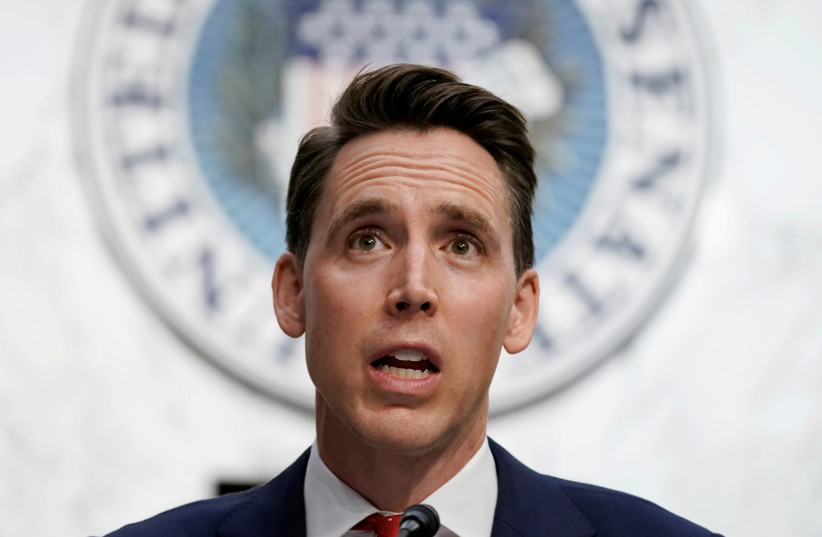
US Senator Josh Hawley speaks during the third day of the confirmation hearing for Supreme Court nominee Judge Amy Coney Barrett / (photo credit: REUTERS)

WASHINGTON – US Senator Josh Hawley (R-MO) voted on Tuesday to block eight of President Biden’s ambassador nominees, including Thomas Nides, who is designated to serve as Ambassador to Israel. Senator Bob Menendez (D-NJ), Chairman of the Senate Foreign Relations Committee, asked the Senate to confirm several nominees by unanimous consent.

Hawley said that he objects on behalf of him and several of his Republican colleagues. “Multiple of my colleagues have objections to all of the nominees, so I will be here to object on their behalf and also on my own behalf with regard to a few of them,” he said.

Prior to the vote, Senate majority leader Chuck Schumer criticized the Republicans for their objection, calling it “obstructionism.”

“The president relies on an army of dedicated public servants who play a critical role in our government,” said Schumer. “But for months, some Senate Republicans have gone to great lengths to place pointless holds on over a hundred of these nominees. The consequence – scores of empty desks in the state department and our embassies and department of treasury and other agencies.”

“These nominees are not controversial,” Schumer continued. “They’re routinely confirmed by consent in this chamber until a few people decide that they wanted to make a big show of this, for whatever reason. No one ever did this before. By this point in the Trump administration, for instance, both sides work together to confirm 32 ambassadors by voice vote. Most of us didn’t like the Trump administration or the people he’s appointing, but we had enough integrity not to let politics enter into what had been routine decisions. Right now, Republican obstructionism has meant only four nominees have been agreed to.”

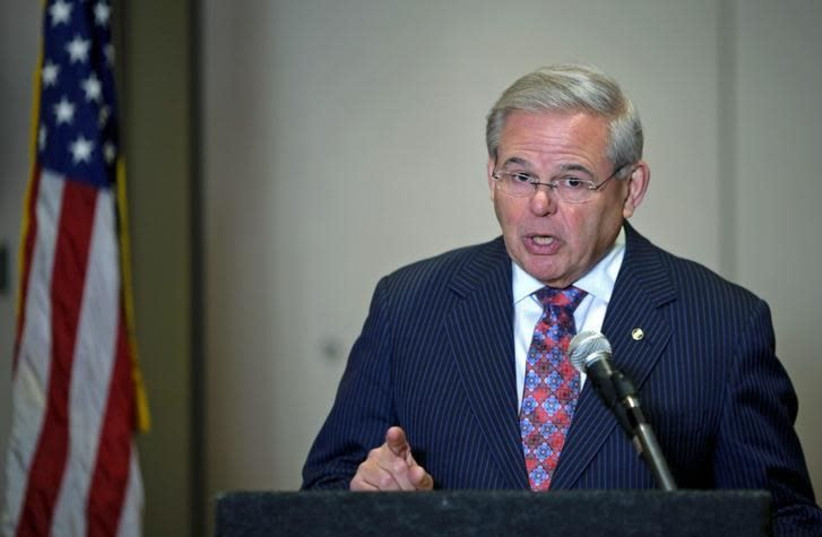
US Senator Bob Menendez. (credit: REUTERS/EDUARDO MUNOZ)

Hawley, in his remarks, rejected Schumer’s criticism. “I agree that many of these nominees are important, and that is, in fact, one of the reasons we should have a vote on them,” he said. “The Senate Majority leader’s comments as if he has no control over the calendar – he’s the majority leader of the United States Senate – he decides when we vote, he decides what we vote on.”

“He’s gaveling us out of session so that members across the aisle can go on a field trip to Glasgow, Scotland,” Hawley said.

Senator Menendez replied to Hawley and said that during the Trump administration, many nominees were approved by a voice vote. “We will have no ambassador in Israel as we deal with the challenges of Iran and others in the region,” Menendez added. “It is mind-boggling; all of those who get up here and talk about our ally, the state of Israel, the importance of the state of Israel, but we won’t have an ambassador there to help us meet the challenges that Israel has.”

The Israel Policy Forum said in a statement on Tuesday: “A strong US-Israel relationship requires strong diplomatic representation, allowing both sides to work in close partnership and resolve disagreements amicably. We are dismayed that Tom Nides, who is unquestionably qualified to serve as ambassador to Israel, continues to be blocked from a swift confirmation on the Senate floor. We call on the Senate to act so that Mr. Nides can begin the critical task of representing the US and its interests in Jerusalem.”


Zawartość publikowanych artykułów i materiałów nie reprezentuje poglądów ani opinii Reunion’68,
ani też webmastera Blogu Reunion’68, chyba ze jest to wyraźnie zaznaczone.
Twoje uwagi, linki, własne artykuły lub wiadomości prześlij na adres:
webmaster@reunion68.com


Student Groups Tell UK Nightclub: Performance by British Rapper Wiley ‘Sends Message That Antisemitism Is Tolerated’

Student Groups Tell UK Nightclub: Performance by British Rapper Wiley ‘Sends Message That Antisemitism Is Tolerated’

Shiryn Ghermezian


Wiley on stage on day 1 of the Fusion Festival, in Cofton Park in Birmingham, England, Aug. 31, 2013. Photo: Katja Ogrin / Reuters

A nightclub in the United Kingdom is facing pressure from a number of student groups to cancel a live performance by British rapper Wiley scheduled for Saturday due to the artist’s antisemitic past.

Wiley, whose real name is Richard Kylea Cowie, is set to perform at the Switch nightclub in Preston as part of the University of Central Lancashire’s (UCLAN) Preston Freshers 2021 line-up of events, which span over the course of two weeks in multiple venues.


Zawartość publikowanych artykułów i materiałów nie reprezentuje poglądów ani opinii Reunion’68,
ani też webmastera Blogu Reunion’68, chyba ze jest to wyraźnie zaznaczone.
Twoje uwagi, linki, własne artykuły lub wiadomości prześlij na adres:
webmaster@reunion68.com