Archive | October 2022

U.S. Presidents Refuse to Protect the U.S. from North Korea’s Nukes

U.S. Presidents Refuse to Protect the U.S. from North Korea’s Nukes

Gordon G. Chang


  • The U.S. has the power to stop North Korean missile tests but has chosen not to do so. This is true not only of the Biden administration but also its predecessors. The U.S. has continually decided to adopt feeble options.
  • Chinese banks have been laundering the North’s proceeds of criminal and prohibited activity for decades. The Trump administration in June 2017 designated, pursuant to Section 311 of the USA PATRIOT Act, China’s Bank of Dandong to be of “primary money laundering concern.” The designation meant the bank could no longer clear dollar transactions through the U.S. banking system.
  • If the designation was meant as a signal, Beijing ignored it. And the Chinese assessed the situation correctly. The Trump administration in 2018 decided not to enforce money-laundering laws against two of the “Big Four” Chinese banks, Agricultural Bank of China and China Construction Bank, which were handling suspicious transactions involving North Korea. Such a designation would have put these banks out of business everywhere outside China, and Beijing, as a practical matter, would have had to stop money-laundering for North Korea.
  • As a result of inaction, President Donald Trump gave Chinese institutions free passes to violate American statutes. The administration’s decision, an abrogation of its responsibility to uphold the law, was deeply prejudicial to its efforts to disarm the Kim regime.
  • The Biden administration has continued Trump’s lax posture.
  • The administration has the goods on the North Koreans and the Chinese but has continually failed to act. “This failure is a choice. The money Kim Jong Un obtains by fraud, computer hacking, and ransomware and which he uses to build bombs to threaten us is being laundered through our banks. We’re giving Xi Jinping and Kim de facto immunity to keep right on doing it.” — Joshua Stanton, sanctions expert, to Gatestone Institute, October 2022.
  • North Korea’s accelerated testing of missiles is a reminder that Kim Jong Un is quickly developing the power to destroy American cities. Perhaps the only things his technicians cannot do is miniaturize a nuclear device and shield it from heat upon reentry to the atmosphere. These are, however, capabilities his military, perhaps with China’s help, will develop soon.
  • Americans might wonder how one of the most destitute regimes on earth can build weapons capable of killing most every American. They may also wonder why Washington has done almost nothing to stop the North Koreans from selling their weapons to Iran, among others.
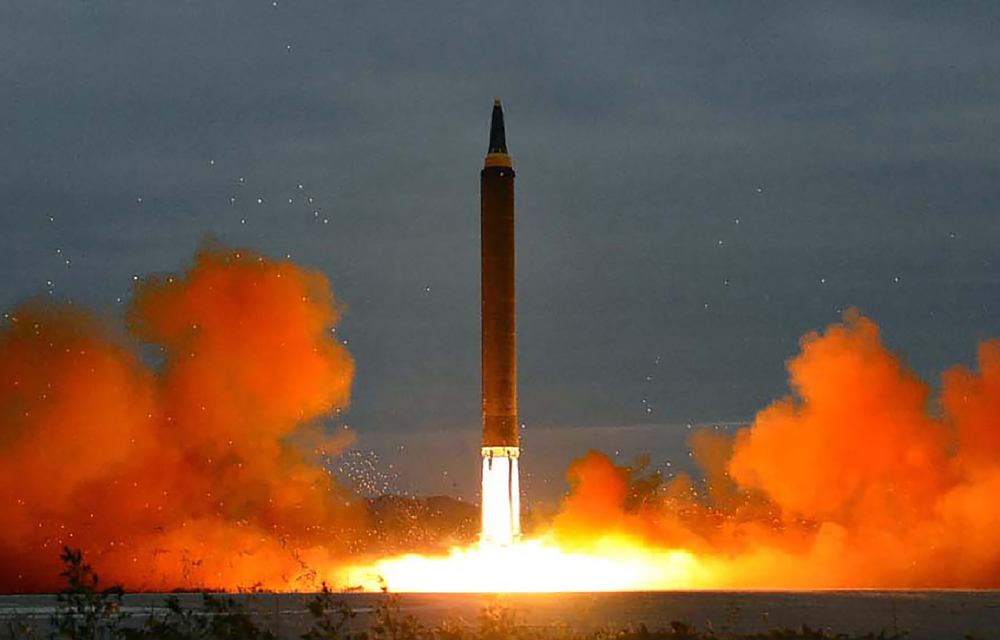
The U.S. has the power to stop North Korean missile tests but has chosen not to do so. This is true not only of the Biden administration but also its predecessors. The U.S. has continually decided to adopt feeble options. Pictured: A launch of the Hwasong-12 ballistic missile from an undisclosed location in North Korea, on August 29, 2017. (Photo by North Korea’s official Korean Central News Agency/STR/AFP via Getty Images)

North Korea launched an intermediate-range ballistic missile on October 4 over Japan. The Hwasong-12 traveled farther downrange than any other of Pyongyang’s missiles. Setting a record pace, the test was the North’s 23rd of the year. Two days later, it fired off two short-range missiles.

The Biden administration has done little to stop the Democratic People’s Republic of Korea (DPRK), so that regime is likely to engage in even more provocative behavior soon.

The U.S., in response to the launch, asked for an emergency United Nations Security Council meeting, which was held on October 5th. As expected, nothing came of the session. China and Russia, blaming the United States for the North Korean launches, blocked any tightening of sanctions.

The Security Council in recent times has been deadlocked because Beijing and Moscow, each with a veto, have been adamant in protecting the Kim regime from international action. In May, both of them vetoed a U.S.-sponsored resolution that would have imposed new sanctions on ballistic missile launches. All other members of the Security Council voted with Washington.

The Asia Times online news platform said that Chinese and Russian diplomats have “knee-capped” the Security Council.

China’s and Russia’s failure “to fully and completely fulfill their obligations… has only, we fear, emboldened the DPRK in undermining the U.N. Security Council, the international rules-based order, and global non-proliferation regime,” said Daniel Kritenbrink, the U.S. State Department’s Assistant Secretary for East Asian and Pacific Affairs, shortly after the October 4 launch.

“I don’t think anyone should doubt our resolve in terms of pursing sanctions and other authority to impose a cost on these actions,” Kritenbrink, the top U.S. diplomat for the region, added.

On the contrary, everybody should doubt American resolve. The U.S. has the power to stop North Korean missile tests but has chosen not to do so. This is true not only of the Biden administration but also its predecessors. The U.S. has continually decided to adopt feeble options.

How so?

Without money, the Kim regime could not, among other things, launch missiles. The United States, without China’s and Russia’s approval, can cut off money to the Kims.

Chinese banks have been laundering the North’s proceeds of criminal and prohibited activity for decades. The Trump administration in June 2017 designated, pursuant to Section 311 of the USA PATRIOT Act, China’s Bank of Dandong to be of “primary money laundering concern.” The designation meant the bank could no longer clear dollar transactions through the U.S. banking system.

If the designation was meant as a signal, Beijing ignored it. And the Chinese assessed the situation correctly. The Trump administration in 2018 decided not to enforce money-laundering laws against two of the “Big Four” Chinese banks, Agricultural Bank of China and China Construction Bank, which were handling suspicious transactions involving North Korea. Such a designation would have put these banks out of business everywhere outside China, and Beijing, as a practical matter, would have had to stop money-laundering for North Korea.

As a result of inaction, President Donald Trump gave Chinese institutions free passes to violate American statutes. The administration’s decision, an abrogation of its responsibility to uphold the law, was deeply prejudicial to its efforts to disarm the Kim regime.

The Biden administration has continued Trump’s lax posture. As sanctions expert Joshua Stanton told Gatestone, Biden “is on track to a record low level of enforcement, both qualitatively and quantitatively.”

“Treasury has issued small civil penalties to an American bank, and Australian shipper, and an American gift card company for unlicensed deals with North Korea,” Stanton points out. “It did not announce any indictments or major penalties against three major Chinese banks that defied a Washington, D.C. grand jury investigation into laundering money for North Korea.” The failure to designate is particularly egregious because these banks had been held in contempt of court.

The administration has the goods on the North Koreans and the Chinese but has continually failed to act. “This failure is a choice,” says Stanton, who also writes on North Korea sanctions issues at One Free Korea. “The money Kim Jong Un obtains by fraud, computer hacking, and ransomware and which he uses to build bombs to threaten us is being laundered through our banks. We’re giving Xi Jinping and Kim de facto immunity to keep right on doing it.”

North Korea, analysts believe, will detonate a nuclear device sometime soon, perhaps later this month or next, in what will be its seventh test of a nuclear device. At some point, the Kim regime will make good on its promise, made in front of a New York City audience in September 2017, to detonate a thermonuclear weapon in the atmosphere over the Pacific Ocean. North Korea in November 2017 tested an intercontinental ballistic missile, the Hwasong-15, which can reach any part of the continental United States.

North Korea’s accelerated testing of missiles is a reminder that Kim is quickly developing the power to destroy American cities. Perhaps the only things his technicians cannot do is miniaturize a nuclear device and shield it from heat upon reentry to the atmosphere. These are, however, capabilities his military, perhaps with China’s help, will develop soon.

Americans might wonder how one of the most destitute regimes on earth can build weapons capable of killing most every American. They may also wonder why Washington has done almost nothing to stop the North Koreans from selling their weapons to Iran, among others.

The answer is that every American president from George H. W. Bush on has refused to wield American power to protect Americans from a known and existential danger.


Gordon G. Chang is the author of The Coming Collapse of China, a Gatestone Institute distinguished senior fellow, and a member of its Advisory Board.


Zawartość publikowanych artykułów i materiałów nie reprezentuje poglądów ani opinii Reunion’68,
ani też webmastera Blogu Reunion’68, chyba ze jest to wyraźnie zaznaczone.
Twoje uwagi, linki, własne artykuły lub wiadomości prześlij na adres:
webmaster@reunion68.com



Israeli Forces Hunt East Jerusalem Checkpoint Attacker

Israeli Forces Hunt East Jerusalem Checkpoint Attacker

i24 News


Israeli Foreign Minister Yair Lapid attends a cabinet meeting at the Prime Minister’s office in Jerusalem June 26, 2022 REUTERS/Ronen Zvulun/Pool

Israeli forces were hunting the assailant behind an attack that killed a soldier at an east Jerusalem checkpoint, authorities said Sunday.

The Israeli army said a soldier was “killed as a result of being critically injured by a shooting attack” that police said had taken place at a checkpoint in east Jerusalem near the Shuafat refugee camp.

The female soldier who died was 18. She was named as Sergeant Noa Lazar from Bat Hefer, according to an Israel Defense Forces statement. She served in the Erez Battalion of the military police at the Shuafat crossing.

Lazar was promoted from the rank of corporal to the rank of sergeant after her death.

Another Israeli was “severely injured,” police said, and a third person, whose identity was not specified, was hit by “shrapnel” in the incident, according to emergency services group Magen David Adom.

The victims were transported to Hadassah Medical Center for treatment. On Sunday morning, the hospital said that the condition of the 30-year-old man seriously wounded in the attack “continues to be difficult” following overnight surgery by a neurosurgical team at Hadassah Ein Kerem.

The male victim was initially described in reports as a security guard.

Police cordoned off the area near the checkpoint and dozens of officers were deployed at the entrance and exit of east Jerusalem, while the Palestinian Red Crescent Society said its medics were being prevented from entering the refugee camp.

Three suspects were captured during the manhunt, with a fourth terrorist suspect still on the loose.

Israeli Prime Minister Yair Lapid described the shooting as a “severe” attack.

“My heart is with the wounded and their families this evening. Terror will not defeat us, we are strong even on this difficult evening,” he said in a statement.


Zawartość publikowanych artykułów i materiałów nie reprezentuje poglądów ani opinii Reunion’68,
ani też webmastera Blogu Reunion’68, chyba ze jest to wyraźnie zaznaczone.
Twoje uwagi, linki, własne artykuły lub wiadomości prześlij na adres:
webmaster@reunion68.com


Sukot – Święto szałasów

Sukot – Święto szałasów

POLIN


NA ZDJĘCIU: MODEL NAMIOTU NA ŚWIĘTO SUKOT, STWORZONY Z DREWNIANYCH RAMEK, KTÓRE OPLECIONE SĄ JASNYM SZNURKIEM. MIĘDZY LINKAMI SZNURKA WPLECIONE SĄ ZIELONE LIŚCIE PALMOWE, FOT. MUZEUM HISTORII ŻYDÓW POLSKICH

Jesienne święto Sukot w kalendarzu żydowskim wypada w dniach 15-21 miesiąca Tiszrej, w kalendarzu gregoriańskim to święto ruchome na przestrzeni września i października. 

Sukot trwa siedem dni i zamyka je Hoszana Raba (pl. Wielka Hosnanna), ostatni najbardziej uroczysty dzień święta. Bezpośrednio po Sukot następują święta Szmini Aceret (pl. Zgromadzenie Ósmego Dnia) i Simchat Tora (pl. Radość Tory).

Sukot należy do cyklu Szalosz Regalim (pl. Trzy Pielgrzymki), czyli grupy wielkich świąt, charakteryzujących się w starożytności pielgrzymką Żydów do Świątyni Jerozolimskiej. Główna nazwa święta – Sukkot (pl. Szałasy), upamiętnia czterdziestoletnią wędrówkę Żydów przez pustynię z niewoli egipskiej do Ziemi Izraela, podczas której mieszkali w szałasach. Inną, rolniczą nazwą święta jest Hag Ha-Asif (pl. Święto Zbiorów), gdyż w Izraelu jest to czas zbiorów jesiennych płodów ziemi. W liturgii święto nosi nazwę Zman Simchatejnu (pl. Czas Naszej Radości), która podkreśla wesoły nastrój i radosne zwyczaje Sukot.

W celu obchodzenia Sukot Żydzi budują szałasy i spędzają w nich czas przez siedem dni święta. Tradycja nakazuje, aby szałas stał się dla Żydów tymczasowym domem, co realizuje się przynajmniej przez spożywanie w nim posiłków W Izraelu oraz w innych krajach o cieplejszym klimacie, wiele osób nie tylko spędza wiele czasu w ciągu dnia, ale także nocuje w szałasach. W krajach, gdzie w Sukot jest chłodno i deszczowo, jak w Polsce, tradycja zwalnia z obowiązku przebywania w szałasie, jeżeli pogoda uniemożliwia spożycie posiłku.

Suka, czyli szałas świąteczny, musi posiadać minimum trzy stabilne ściany, wykonane z dowolnego materiału. Budulcem dachu mogą być wyłącznie rośliny, np. gałęzie drzew, bambus, itp. Suka powinna stać pod otwartym niebem i jej dach powinien być dziurawy, by w nocy widać było z jej wnętrza gwiazdy. Wnętrze szałasu powinno być bogato zdobione malowidłami, owocami, kwiatami, gałęziami drzew owocowych, a czasem nawet kobiercami.

We wszystkie dni święta w synagogach odbywają się hakafot (pl. procesje) oraz rytuał potrząsania wiązką roślin składającą się z: liścia palmy daktylowej (hebr. lulaw), dwóch gałązek wierzby (hebr. arawot) oraz trzech gałązek mirtu (hebr. hadasim). Do wiązki dołącza się owoc etrog, przypominający cytrynę. Trzymając wszystkie arba minim (pl. cztery gatunki) w złączonych dłoniach, potrząsa się nimi w sześciu kierunkach, co symbolizuje wszechobecność Boga.

Szałasy zwykle buduje się na podwórkach, w ogrodach lub na balkonach. Czasami konstruuje się specjalne dachy, które można unieść – wtedy np. strych domu staje się szałasem. Dawniej, szałasy były stałym elementem jesiennego krajobrazu polskich miast i miasteczek. Zgodnie z tradycją, również we współczesnej Polsce obchodzi się Sukot bardzo uroczyście. I chociaż rzadko stawia się szałasy indywidualnie obok własnego domu lub mieszkania, to co roku, głównie przy czynnych synagogach, stawia się wspólnie obszerne suki, w których świętuje całe lokalne zgromadzenie.

Niezwykle ważne w czasie Sukot jest okazywanie gościnności. Przypomina o tym zwyczaj zapraszania do suki na początku każdego dnia święta wielkich bohaterów biblijnych zwanych Uszpizin i Uszpizot (Goście). Na posiłki w suce zaprasza się zarówno przyjaciół, jak i osoby ubogie, bezdomne i samotne. Bardzo ważne jest, aby Sukot obchodzić jak najradośniej. Wraz z gośćmi należy jeść, pić i radować się ze wszystkich darów Boga. W tym okresie tradycyjnie podaje się potrawy słodkie, soczyste oraz faszerowane – pierogi, gołąbki, nadziewaną rybę i wszelkie słodkie wypieki, ciasta i cukierki.


Zawartość publikowanych artykułów i materiałów nie reprezentuje poglądów ani opinii Reunion’68,
ani też webmastera Blogu Reunion’68, chyba ze jest to wyraźnie zaznaczone.
Twoje uwagi, linki, własne artykuły lub wiadomości prześlij na adres:
webmaster@reunion68.com


Żydzi, czyli urzędowy Obcy. Recenzja książki „Europa przeciwko Żydom” Götza Aly’ego [Aneks historyczny]


Żydzi, czyli urzędowy Obcy. Recenzja książki „Europa przeciwko Żydom” Götza Aly’ego [Aneks historyczny]

Lech M. Nijakowski


Żydzi byli w Europie tradycyjnie obcym konstytutywnym, który stał się osnową kultur narodowych. Książka wybitnego historyka wprowadza nas w historię dyskryminowania i zabijania Żydów. To wstrząsający opis ograniczania praw, pogromów i eksterminacji. To obowiązkowa lektura, zwłaszcza dla tych, którzy mówią, że o Żydach pisze się dziś zbyt wiele.

.

Götz Aly, niemiecki historyk i dziennikarz, napisał wiele fundamentalnych prac naukowych. Jest autorem licznych książek na temat narodowego socjalizmu i ludobójstwa Żydów, między innymi klasycznego już „Państwa Hitlera” [1], które wyszło kilka lat temu po polsku. A teraz nakładem wydawnictwa Filtry ukazała się w Polsce jego „Europa przeciwko Żydom 1880–1945”.

Kolejna książka o Żydach? Takie pytanie rezonuje mi w głowie. I pewnie przyjdzie na myśl wielu czytelnikom tej recenzji. Nie ulega wątpliwości, że na temat historii Żydów, zwłaszcza w Europie, i Szoa wyszło już wiele prac, zarówno polskich, jak i zagranicznych autorów. Mówi się nawet o „polskiej szkole historyków Holocaustu”. Nadal jednak nie opisano wielu wymiarów kształtowania dystansu do Żydów. Obecnie można być oburzonym skalą dyskryminowania Żydów – czasy się zmieniły i dziś o pewnych rozwiązaniach nie mówimy publicznie. Ale nadal, mimo istnienia suwerennego państwa żydowskiego, pokutuje tradycyjny antysemityzm, który po Zagładzie jest haniebnym refleksem dawnej wrogości.

Recenzowana książka – bardzo dobra, zaznaczam to już w tym miejscu – zajmuje się okresem między 1880 a 1945 rokiem. Jego schyłek jest oczywisty – to formalny koniec drugiej wojny światowej. Początek związany jest zaś z wprowadzaniem ostrego prawa antyżydowskiego w różnych krajach Europy. W Niemczech w 1880 roku pojawił się nowy termin – „antysemityzm”. A w odpowiedzi na rosnący nacjonalizm powstał ruch syjonistyczny. Te i inne wydarzenia decydują zatem o początku narracji.

Książka składa się z dziewięciu rozdziałów i wstępu. Mówi zarówno o rzeczach szeroko znanych, jak i rozpoznawanych tylko przez specjalistów. Autor pyta o przyczyny rozkwitu antysemityzmu w Europie końca XIX i początku XX wieku. Pokazane zostaje to, jak w różnych krajach tradycyjny antyjudaizm (postawa motywowana wrogością do religii) został w analizowanym okresie przekształcony w nowoczesny antysemityzm, związany z ruchami społecznymi i identyfikacjami politycznymi. Autor korzysta z drukowanych źródeł z epoki, polemik i wspomnień.

Uwaga Autora nie rozkłada się równomiernie na wszystkie kraje europejskie. Wyjaśnia to tym, że około 85 procent spośród zamordowanych w czasie drugiej wojny światowej Żydów pochodziło z Polski, Rosji, Rumunii, Węgier i państw bałtyckich. Dlatego też głównie charakteryzuje te rejony Europy, co nie może nas specjalnie dziwić. 

Przez dekady opis relacji Żydów i innych narodów nie był rzetelny. Przekłamany obraz świata przetrwał do lat osiemdziesiątych XX wieku. Zmiana nadeszła dopiero po zakończeniu „zimnej wojny”. Jednak w wielu miastach niepamiętanie o przeszłości jest nadal regułą. Autor przywołuje przykład Poznania, gdzie do 2011 roku kryta pływalnia funkcjonowała w Nowej Synagodze. Moim zdaniem, w Polsce – która nie chce się przyznać do wielu zbrodni – dobrze widać, jak łatwo prawdę składa się na ołtarzu narodowych mitów. 

Antyżydowska przemoc

Książka Aly’ego jest przede wszystkim wstrząsającym opisem antyżydowskiej przemocy. Zarówno tradycyjnej, która kończyła się pogromami i masakrami, jak i nowoczesnej, która doprowadziła do ludobójstwa Żydów. Wstrząsające jest to, że przemoc opisana w tej książce była powszechna – dotyczyła różnych warstw i zawodów i mało kogo pozostawiała poza swoją grawitacją. Naziści i inni zbrodniarze odpowiedzieli na potrzeby ludzi, którzy domagali się mordu i redystrybucji dóbr. Wspomagały to przekonanie teorie spiskowe, które są w książce dobrze opisane. Europa przez lata dyskryminacji i zbrodni wychowała wielu morderców, którzy dojrzeli do eksterminacji. Albo mordowania własnymi rękami, albo odwracania wzroku i przydatnej obojętności.

„Europa przeciwko Żydom…” pokazuje różne rozwiązania narodowe, uderza powszechność nienawiści do Żydów. „Miliony Europejczyków życzyły sobie zniknięcia Żydów, milczały podczas wywózek i czerpały zyski z tego, co zostało po wymordowanych” [s. 38] – napisał Autor, pisząc o 1945 roku. Ale zdanie to można uogólnić na cały opisywany okres. Niemieckie ludobójstwo – w którym brały udział liczne europejskie narody – nie narusza ciągłości niemieckiej i europejskiej historii. Antyżydowska przemoc to nie epizod do opisania, ale kluczowa składowa europejskiej tożsamości. Tylko dzięki temu możemy sięgnąć po historyczną prawdę i spróbować opisać marginalizowany rdzeń naszej nienawiści. Autor umiejętnie łączy dążenia wolnościowe ludzi z antyżydowską przemocą. Tym samym motywacja sprawców jest złożona, nie ogranicza się do fanatyzmu. Antysemityzm w różnych krajach stanowił osnowę wielu ruchów, choć często skrywał się przed oczami świadków.

W książce szczegółowo opisane są wybrane pogromy (na przykład w Kiszyniowie w 1903 roku czy we Lwowie w 1918 roku), a Aly pokazuje nie tylko etiologię przemocy, ale także narodowe mity, które były wykorzystywane do różnych celów (Peter Glick pokazał, że nawet mechanizm kozła ofiarnego może opierać się na pozytywnej ideologii, wzmacniającej grupę [2]). Autor rozwija „socjologię pogromów” [s. 197], która pokazuje jego naukowy profil i może zainteresować czytelników. Szczególnie wstrząsające są pogromy po drugiej wojnie światowej. Wcześniejsze próbujemy tłumaczyć, pokazując ideologiczne zaczadzenie sprawców, co oczywiście jest operacją bardzo wątpliwą, ale ratującą naszą pamięć. W tym kontekście pojawia się ponownie Polska i pogrom w Kielcach czy Krakowie.

Ten powszechny udział ludzi w grabieniu i mordowaniu Żydów nakłada dziś na ich potomków szczególne moralne zobowiązania. Nadal jednak w Polsce powtarzane są antyżydowskie hasła, nadal oczernianie Żydów służy mobilizacji Europejczyków do różnych celów. Mało który naród stał się tak ważnym zwornikiem europejskich uprzedzeń i tym samym tożsamości. Żyjemy w długim cieniu antyżydowskiej dyskryminacji i przemocy. 

Wypierana pamięć

Książka jest także traktatem o polityce historycznej, choć to drugoplanowy temat. W wielu miejscach Autor wspomina o przemilczeniach i zapominaniu o żydowskim cierpieniu. To, jak społeczeństwa zapominają, może być opisane przez socjologa, gdyż podlega warunkom społecznym, jak pamięć zbiorowa. Bez wątpienia winien temu jest między innymi wielki rabunek, o którym pisze Aly. Ludzie bardzo niechętnie wydawali po drugiej wojnie światowej żydowskie mienie, znajdując dla swego postępowania różne uzasadnienia. Czasami było to zwykłe kłamstwo. Z pewnością jednak strategie te przełożyły się to na powikłaną politykę pamięci.

Autor przygląda się postępowaniu z żydowskim dziedzictwem w różnych krajach, opisuje niszczenie cmentarzy. Nie ma tu prostych racji, pokazane są złożone postawy, motywy i różne okoliczności. Jednak Autor skłonny jest podkreślać nienawiść do Żydów, która uzasadniała masową kradzież i niszczenie znaków pamięci żydowskiej. 

Co ważne, Autor nie powiela mitów, które wspierałyby jego lewicową narrację tożsamościową. Krytycznie odnosi się chociażby do przemian w Rosji, pokazując, jak antyżydowska przemoc uruchamiana była przez bolszewików i służyła ich politycznym celom. „Za zasłoną socjalistycznej równości kwitł ludowy antysemityzm” [s. 271] – podkreśla Aly, który pokazuje, jak rodził się socjalistyczny antysemityzm.

Wielu Europejczyków nie chce dziś dyskutować o antyżydowskiej przemocy. A jak pokazuje recenzowana książka, była to istotna składowa ruchów emancypacji społecznej i narodowego wyzwolenia (na przykład we Francji). Dotyczy to także polskich debat, w których nie podjęto wielu ważnych tematów [3].

„Europa przeciwko Żydom…” porusza wiele interesujących zagadnień, które historykom są dobrze znane, ale z pewnością powinna się z nimi zapoznać szeroka publiczność. Zwłaszcza że lubimy w Polsce dyskutować o historii i kondycji moralnej Żydów. Czas więc najwyższy, aby kompetencja polskich dyskutantów była wyższa.

Recenzowana książka powinna zainteresować zarówno laików, jak i specjalistów, przede wszystkim ze względu na interpretację przeszłości. Dla jednych będzie to popularny wykład o historii europejskich Żydów (tematowi temu można poświęcić wielotomowe wydawnictwa), dla innych kolejna interpretacja trudnej przeszłości. Nie ulega wątpliwości, że nadal jej nie przepracowaliśmy i mamy moralny obowiązek, aby czytać i dyskutować o żydowskim cierpieniu, które było przez lata ceną europejskiej tożsamości.


Przypisy:

[1] Götz Aly, „Państwo Hitlera”, przeł. Wojciech Łygaś, Wydawnictwo Oficyna Wydawnicza Finna, Rotmanka 2014.
[2] Peter Glick, „Jagnięta ofiarne w wilczym przebraniu. Zawistne uprzedzenia, ideologia i czynienie z Żydów kozłów ofiarnych”, przeł. Anna Czarna [w:] Leonard S. Newman, Ralph Erber (red.), „Zrozumieć Zagładę. Społeczna psychologia Holokaustu”, Wydawnictwo Naukowe PWN, Warszawa 2009, s. 103–130.
[3] Michael C. Steinlauf, „Pamięć nieprzyswojona. Polska pamięć Zagłady”, tłum. Agata Tomaszewska, Wydawnictwo Cyklady, Warszawa 2001.


Książka:

Götz Aly, „Europa przeciwko Żydom 1880–1945”, przeł. Joanna Czudec, Wydawnictwo Filtry, Warszawa 2021.


Zawartość publikowanych artykułów i materiałów nie reprezentuje poglądów ani opinii Reunion’68,
ani też webmastera Blogu Reunion’68, chyba ze jest to wyraźnie zaznaczone.
Twoje uwagi, linki, własne artykuły lub wiadomości prześlij na adres:
webmaster@reunion68.com


Glamping With God

Glamping With God


LISA J. WISE


As Sukkot approaches, applying the lessons of home improvement to our own bodies

.
LISK FENG

Every year when I was growing up, my father’s first act as Yom Kippur ended surprised me. Before he took a sip of juice or a bite of babka to break the fast, he went down to the basement to get a long wooden board. Heading out to the dark backyard, he began the new year with a mitzvah, and ceremoniously started building our sukkah. Though young, I knew this to be sheer madness as sizzling golden cheese blintzes patiently awaited dollops of sour cream.

The day after Yom Kippur 2020, squeezed in a tiny dressing room under harsh fluorescent bulbs, I began the ceremonial ritual of relinquishing my street clothes for blue hospital gowns—two of them, “for optimum coverage.” I took longer than usual primping. Looking at my pale reflection in the mirror, I adjusted the neckline and contorted myself, tying strings in impossible-to-reach places. I patted down my hair and smoothed over my cheeks, wishing I’d brought lip gloss. Taking even more care than I did dressing for synagogue, I fussed before entering the MRI. I was preparing to meet my Maker. The one who hovers in oncology radiology waiting rooms. The real one.

It turns out God does not only work in mysterious ways. God also works quickly. Just a few days before, I was lying inside a CT scanner to explore the cause of new persistent symptoms. On Yom Kippur, while I fasted and prayed in synagogue, multiple voicemail messages were being left reporting findings of a worrisome, growing cyst. My medical team needed to schedule more investigation. Now we were taking a closer look to see if that pouch was packing heat.

Half of me was certain, after recklessly Googling late at night, that my cancer (or a new worse cancer) had advanced rapidly, offering less than a five-year survival rate. For the past decade, I lived with Waldenstrom macroglobulinemia, a rare lymphoma that had responded well to chemotherapy, immunotherapy, and surgery but carried an increased risk of secondary cancers, or the dreaded “transformation.” I feared ovarian cancer was coming out to play.

The other half—the hopeless optimist (denier?) part of me—was certain this was a false alarm. A near-miss story we’d all laugh about over French toast at brunch one day. My loving husband of 30 years and my two grown children would tell the tale of when Mom totally lost it, as they passed buttery maple syrup around the festive table. My imagination, anxiety, and sketchy medical knowledgehad simply gotten the best of me.

All mankind will pass before You like members of the flock. Like a shepherd pasturing his flock, making sheep pass under his staff, so shall You cause to pass, count, calculate, and consider the soul of all the living. You shall apportion the fixed needs of all Your creatures and inscribe their verdict.

From the liturgical poem “Unetaneh TokefLet Us Speak of the Awesomeness,” recited on Rosh Hashanah and Yom Kippur

Entering the hospital waiting room, I was not alone. Other gowned women wordlessly waited their turn, flipping through magazines, sipping barium, simmering softly. Anxiety bubbled beneath the rough institutional carpet. The soundtrack to our solemn waiting game was a giant, blaring television demanding our full attention. As we prepared for critical diagnostic tests and potentially life-changing news, each of us faced an enormous flat screen conspiratorially set to HGTV, the home improvement channel.

We were forced to watch couple after couple passionately disputing square footage, kitchen farm sinks, outdoor rock showers, and the brilliance of bidets. Each decision was debated as if their lives depended on it. We gowned ghosts in the waiting room stared wide-eyed and worried, silently mesmerized, watching the drama intently. Not looking away, as if our lives depended on it.

Yom Kippur might get most of the attention, but the life-affirming lessons of Sukkot bring it all home.

It is a mystery who chose this channel for every waiting room television. Do hospital administrators believe it’s the most benign, least offensive thing on TV? Or is it a coded message about our own brokenness? Will a structural renovation be performed on us that will elicit ooohs and aaahs when the final results are revealed? Or are some of us not deemed “fixer-upper worthy,” destined to become helpless teardowns?

Our test results will tell us a lot. Who will live and who will die? But more importantly, who will renovate and who will sell?

On Rosh Hashanah will be inscribed and on Yom Kippur will be sealed how many will pass from the earth and how many will be created; who will live and who will die; who will die at his predestined time and who before his time; who by water and who by fire, who by sword, who by beast, who by famine, who by thirst, who by storm, who by plague, who by strangulation, and who by stoning.

We stand in the shadowed hope of a cure and endure side effects that leave ruthless scars, radiation burns, surgical stitches, debilitating nausea, loss of appetite, hairlessness, breathlessness. The trick is to hold on to your spirit when the body falters.

In one shared space, tired homes and exhausted patients are stripped to their bare-naked frames as experts find hidden leaks, clogged pipes, disastrous drips, and unexpected blockages threatening to shut the whole system down. Fluids must flush in and out smoothly in order for this project to flow. Specialists marvel over frayed cords, precarious wiring, and overloaded circuits causing pins and needles, sharp shooting shocks, or the nothingness of numbness. Once opened, it is found that our control box is much more of a mess than anticipated. Everything will cost more than expected and take longer to fix than promised. Nothing is up to code.

Seeking multiple bids and expert opinions, teams will arrive on the scene with specialized tools for invasive poking, robotic prodding, and careful measuring. Unforgivingly bright lights will peer into the most hidden, darkened crevices. The only “best” option may sometimes be a sledgehammer. Brace yourself.

When the dust settles, there will be analysis and assessment of the next action to take. Tough choices demanding the weighing of risks, costs, and stress. Vastly over budget and way past sworn deadlines, these moments have a way of breaking both promises and hearts. Who can handle waiting for test results, managing the fear of recurrence, shouldering the hidden costs, surviving the ache of not knowing. … There is so much not knowing.

Who will rest and who will wander, who will live in harmony and who will be harried, who will enjoy tranquility and who will suffer, who will be impoverished and who will be enriched, who will be degraded and who will be exalted.

Desperately chasing peace, we run from a constant state of anxiety. We strive to be meditative, mindful, and mantra-dependent. We light scented candles, fill bedtime journals, and determinedly downward-dog our damned asses. But nothing diminishes the shadowy awareness of how fleeting, vulnerable, and risky this all is. It will be over sooner than we’d like.

I want to stand up and warn both headstrong homeowners and gowned ghosts alike to cut bait and run. Burn the house, trash the tchotchkes, kiss it all goodbye. Whether you have 200 years or two days left, you need far less than you think. The only necessity is love—deep, true, unconditional love—of all those you cherish most. I know firsthand. I have a basement and garage filled with dead family members’ belongings. I do not see dead people. … I only see their clutter.

Which brings us, mercifully, to the holiday of Sukkot, immediately following Yom Kippur. This festival celebrates all that is impermanent, inside and out. Leaving the safety and comfort of our homes—just as the days shorten and sunlight wanes—we step outside to sit in a flimsy hut providing no real protection from the elements. We are instructed to live in this booth for a week, to clearly see the starry skies through the branched roof. Out in the darkness of night, we face the cold, unsafe, utter unknown. But we are taught to look upward, illuminated by stars, and embrace our own fragility while still feeling joy. Sukkot is literally the “holiday of our happiness,” but it is also the festival of frailty. Anxiety tends to fade beneath the sukkah’s canopy of coziness, an ultimate glamping with God.

Sitting in tiny huts on rickety folding chairs, the fantasy of false security is stripped away and we are liberated to feel victorious in our own vulnerability. I finally understand what my father, the soft-spoken, distinguished, humble, and wise pediatrician, was teaching us every year after the fast: Yom Kippur might get most of the attention, but the life-affirming lessons of Sukkot bring it all home. This trip may not last forever, but if you can taste goodness and grace without being paralyzed by the gnawing dread of mortality, peace under the stars is forever yours.

But … repentance, prayer, and charity remove the evil of the decree.
(Recited aloud in unison by hazzan and congregants)

My late father understandably struggled with Unetaneh Tokef after my mother and sister both died prematurely of cancer. Coming from a cancer-cluster family, eventually I simply stopped reciting certain lines. But Dad wrestled with it each year, striving to make it still meaningful. He taught me to view the final words of this liturgical poem as comfort, a recipe for resolution: “But … honest self-reckoning, selfless service, and acts of lovingkindness will help you rise above the bitterness of a life that is all too fleeting.”

A technician in scrubs stands in the doorway, waiting patiently as I gather up my belongings and bid adieu to the blaring TV. I will miss the grand finale, where the architectural makeover is revealed and (hopefully) saves the dueling couple’s stress-fractured marriage. Inside the MRI scanner, hearing the rat-tat-tap drumming of its asynchronous beat, I close my eyes to the encircling beige plastic walls and imagine the boundless sky reaching beyond my sukkah’s rooftop. Smelling pine needles instead of antiseptic cleanser, I float into the vastness of what lies above. One decision becomes crystal clear: This Sukkot, I will host a festive brunch in my delicate little booth. Holding close all those whom I love, I will bask in joy while passing around hot golden stacks of French toast served with a sweet side of laughter.


Lisa J. Wise is working on an essay collection about family legacy, loss, laughter, and living fearlessly with third-generation lymphoma.


Zawartość publikowanych artykułów i materiałów nie reprezentuje poglądów ani opinii Reunion’68,
ani też webmastera Blogu Reunion’68, chyba ze jest to wyraźnie zaznaczone.
Twoje uwagi, linki, własne artykuły lub wiadomości prześlij na adres:
webmaster@reunion68.com