Leader of Israeli opposition Benjamin Netanyahu speaks during a meeting with his Likud party in the Knesset, the Israeli parliament, in Jerusalem June 14, 2021. Photo: REUTERS/Ronen Zvulun
Every Jewish American home library should have at least two books by authors named Netanyahu.
“Self-Portrait of a Hero,” the collection of letters by Jonathan Netanyahu, originally published in 1980, is a Zionist classic.
“The Origins of the Inquisition in Fifteenth Century Spain,” Benzion Netanyahu’s 1995 masterpiece, is one of the best works ever written about antisemitism.
What makes Benjamin Netanyahu’s new book “Bibi: My Story,” worthy of being added to the shelf in a place of honor alongside the other two is, strangely enough, precisely the light it sheds on how the author—Israel’s longest-serving prime minister—exists in relation to his older brother and father.
Benjamin Netanyahu’s challenge as an author is in some ways the same challenge he faced as a soldier and as a Zionist activist and leader: his older brother and his father got there earlier, and in such a profoundly excellent way, that their achievements are nearly impossible for Benjamin Netanyahu to top.
It’s worth remembering that due to Benjamin Netanyahu’s constant media spotlight, the other Netanyahus have receded. Jonathan Netanyahu died in 1976 after leading a successful Israeli military raid to liberate hostages held by terrorists in Entebbe, Uganda. Benzion Netanyahu died in 2012, and his activism—as opposed to his scholarship—took place in the 1930s and 1940s.
The genius of Benjamin Netanyahu’s new book, though, is the way it makes the other two Netanyahus, and their influence on him, come alive. Benjamin Netanyahu quotes his father warning in 1933 about “the Holocaust facing the Jewish people.” As Benjamin Netanyahu tells it, in the 1940s, his father figured out that “influencing Republican policy was the best way to influence Democratic Party.” Benzion Netanyahu briefed Senate Republican Leader Robert Taft on the case for a Jewish state, and in 1944, the Republicans adopted a platform “calling for unrestricted Jewish emigration to the Land of Israel and for the establishment of a Jewish state there.”
As for Jonathan Netanyahu, or Yoni, Benjamin served in the same elite special forces combat unit as his older brother. They both were educated in part in Cambridge, Massachusetts. The closest analogy in American history would be President Kennedy. JFK’s father was also a significant public figure. And Kennedy’s older brother and fellow Harvard graduate was killed in action in World War II, while JFK narrowly survived his own combat perils.
This is, in other words, not a standard, instantly forgettable, self-serving, score-settling campaign biography. It’s better than that, not only for its insight into what makes Netanyahu tick, but also for the insights into his policies. The account of how Israel’s GDP per capita grew to 19th in the world from 50th—surpassing Britain, France, Japan, Italy, and Spain—is a case study: tax cuts, welfare reform, deregulation, privatization. Netanyahu describes it as the transformation of Israel from a semisocialist country to a capitalist one.
It’s not a perfect book. There are more minor errors than there should be: a reference to the “diplomatic core,” to political consultant “David Shrum,” to lunching with Henry Kissinger at the “Four Seasons Hotel” (rather than the Four Seasons restaurant at which Kissinger was a regular). And while Netanyahu does own up to some tactical and political errors, I wish he’d have been a little less defensive, and a little more reflective, when it came to the assassination of Yitzhak Rabin.
But those are quibbles. If Netanyahu emerges from Israel’s November 1 election as again the prime minister of Israel, the world will understand him and his country better as a result of this book. And if he remains in opposition, or retires from politics, at least he will have the satisfaction of having succeeded as an author alongside his late brother and father. He’s added his telling of his own story—unfinished, but remarkable nonetheless—to the narrative of the Jewish people.
Ira Stoll was managing editor of The Forward and North American editor of The Jerusalem Post. His media critique, a regular Algemeiner feature, can be foundhere.
Zawartość publikowanych artykułów i materiałów nie reprezentuje poglądów ani opinii Reunion’68,
ani też webmastera Blogu Reunion’68, chyba ze jest to wyraźnie zaznaczone.
Twoje uwagi, linki, własne artykuły lub wiadomości prześlij na adres: webmaster@reunion68.com
Tablet’s French literary ancestor was founded by three Warsaw-born brothers who were high school friends and classmates of Marcel Proust, and who published everyone from André Gide to Paul Claudel. Then came the Dreyfus affair.
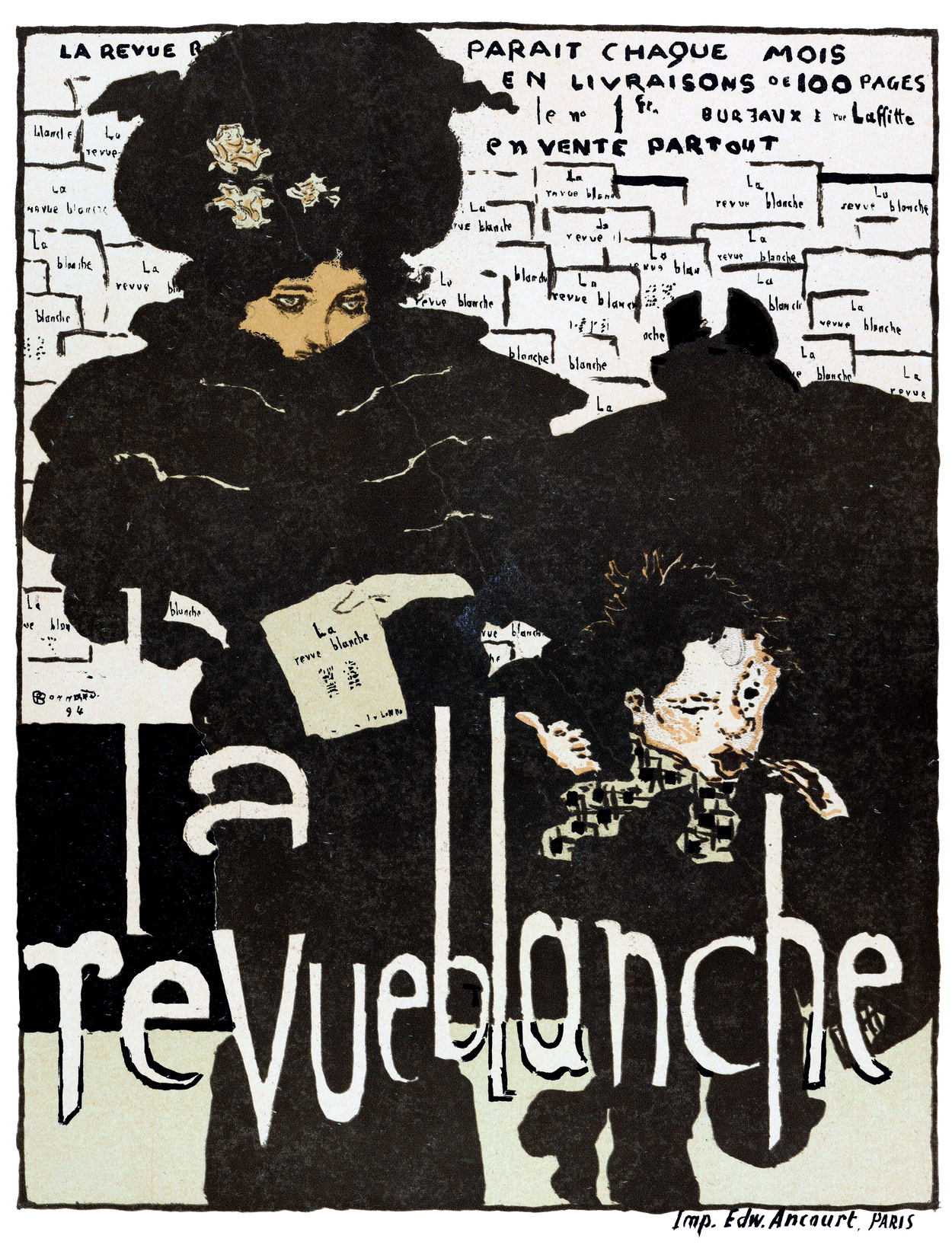
Revue blanche magazine poster, 1890sCALIMAX/ALAMY
To burrow through the issues of La Revue blanche, the French political and cultural journal that was published from 1891 to 1903, is to experience awe at the breadth, reach, and openness of an important section of the French intellectual world of the time. In many ways, La Revue blanche can be said to define that world. Any random volume of the review can represent its entire run, demonstrating its impressive variety and cosmopolitanism. Volume 9, from 1895, includes an excerpt from André Gide’s early novel Paludes, translations from Edgar Allan Poe, August Strandberg, Alexander Herzen, and Knut Hamsun, along with essays by the great novelist and diarist Jules Renard. Among the poets we find Paul Claudel, Stéphane Mallarmé, Paul Verlaine, and Francis Jammes. Art was a strong point of La Revueblanche, and the three issues of this volume were illustrated by Toulouse-Lautrec and Félix Valloton.
The magazine was owned and edited by the Warsaw-born Natanson brothers, Alexandre, Thadée, and Alfred. The sons of a banker father who settled in France when the brothers were young, they attended one of France’s most prestigious high schools, the Lycée Condorcet, where Marcel Proust was among their friends. Their university studies destined them for lives among the solid bourgeoise, but it was the arts that drew them.
La Revue blanche, founded in Liège in 1889 but transferred to Paris in 1891, was in a sense a tribute to the success of Jewish emancipation, which had occurred a century earlier, thanks to the French Revolution. The Jewish presence in the pages and leadership of the review is unmistakable, cutting across political ideologies.
Sitting alongside the Natanson brothers at the head of the review was Lucien Muhlfeld, secretary of the editorial committee and former librarian at the Université de Paris. For 10 years, the future Jewish socialist prime minister of France Léon Blum wrote articles and theater and book reviews, both under his own name and pseudonymously. Among the magazine’s other Jewish contributors were the novelist Tristan Bernard, the first Dreyfusard; the anarchist Bernard Lazare; and the pacifist and Esperantist Gaston Moch.
This Jewish role did not pass unnoticed. In a February 1898 article in the antisemitic newspaper La Libreparole, its publisher and editor, Edouard Drumont, author of the bestseller La France juive (Jewish France), described La Revueblanche as: “This little world led by the two [sic] Polish Jewish Nathanson [sic] brothers, is made up of the young Jewish litterateurs Gustave Kahn, Romain Coolus, Lucien Muhlfeld, Fernand Gregh, Marcel Proust, Tristan Bernard, [and] Léon Blum.” Drumont called them “a handful of Jews, newly disembarked in this country whom he strangely accused of having “introduced anti-Semitism into all souls and corporations.” It was this Jewish presence, and the review’s support for causes like the defense of Alfred Dreyfus that led Drumont, the most vocal antisemite of the time, to call the magazine “an intellectual Dreyfus,” i.e., a traitor to France.
Despite Drumont’s view of the review, it at times demonstrated a certain ambiguity, if not indifference, to Jewish matters, particularly prior to the Dreyfus affair. In 1895, early in the days of the Dreyfus affair, which began the year before with the arrest for espionage of Alfred Dreyfus, LaRevue blanche spoke out against attacks on the Armenians by the Turks and the repression of Spanish anarchists, but said not a word about the antisemitic riots in Algiers or of Captain Dreyfus. It is both a sign of the review’s openness but also of lack of sensitivity to Jewish issues that in 1896 it published an article in praise and in memory of the Marquis de Morès, a vocal and militant member of the Ligue anti-semitique who was killed that same year while leading a failed crusade against the Jews of North Africa. The historian of the review Paul-Henri Borrelier was right in describing the pre-Dreyfus Revue’s “uncertain combat against antisemitism.”
The very first article in La Revue blanche’s first Parisian issue in 1891 proclaimed its editors’ and publishers’ intentions for the magazine: “This is hardly a fighting review. We propose neither to undermine established literature nor to supplant the already organized young literary groups. Put simply, we want to develop our personalities.”
Whatever was said in this unsigned statement, assumed to have been written by Lucien Muhlfeld, the magazine’s editorial secretary, if ever an intellectual review was a “fighting review” in all senses of the term, it was La Revue blanche. Over the years, it less and less disguised its anarchist-tinged political colors. But it was also and most importantly, a “fighting review” on the cultural front. The editors gave room in its pages to the most groundbreaking new writers, as it had promised “undermin[ing ] established literature” and supplanting “already organized young literary groups.”
An all-but-unknown writer appeared in an 1893 issue, publishing a strange rewriting of Flaubert’s Bouvard etPecuchet, in which Flaubert’s heroes express antisemitic sentiments. The two men speak of the Jews’ “odd practices, unintelligible vocabulary”; of how “they all have hooked noses … vile souls turned strictly to self-interest … And what is more, they formed a kind of vast secret society.” The author of the piece, Marcel Proust, explained the clear Jew-hatred by saying, “Of course, the opinions attributed to Flaubert’s two famous characters are in no way those of the author.” Though this article would appear in his book Les Plaisirs et les jours, Proust, the Natanson’s high school classmate, was not as yet living up to the potential his supporters at La Revue blanche saw in him. It was only 20 years later, in 1913 that the first volume of A la recherche du temps perdu would appear.
The Dreyfus affair radically changed La Revue blanche. As the historians Pascal Ory and Olivier Barrot wrote, “From 1898, the editorial committee of gifted minds would become the headquarters of a general staff, the site of one of the greatest human rights enterprises of world history, virtually the seat of a party, but one unlike any other since it was that of the Dreyfusards.”
La Revue blanche’s hesitation before joining the fight for the captain was common on the French left: Defending an officer was not the top priority of anti-militarists like the editors and writers at La Revueblanche. The Jewish presence on the magazine could not but have played a role in this engagement. How could it not, given the antisemitic wave the controversy unleashed across France? Even so, it was in all probability more the review’s general nonconformity that led it to this commitment to defend Dreyfus.
The magazine’s first blow in defense of Dreyfus was published in February 1898 in an article titled, “A Protest.” The review admitted its previous silence, its “abstention” from comment on “the ongoing appalling trial,” The review’s editors’ confidence in the justice system had been destroyed by the trial and verdict, and they expressed their shock that the clear evidence in support of Dreyfus’ innocence and the quality of his defenders “are no longer enough for a judicial proceeding to be judged in keeping with the elementary guarantees of fairness.” Their anger was boundless: “For the first time, not only is light not cast, but it is now forever impossible that it be cast.”
The antisemitism the case had given rise to, which included anti-Jewish riots and demonstrations, was cause for great alarm: “We protest against public opinion, duped and fantasized, which refuses to see the danger to which the booted bureaucracy exposes us.” Yet the review’s mixed attitude to Jewishness is also made clear in this defining article on their greatest political cause. Standing matters on their head, they wrote: “In this racial persecution there is a superstition like the Judaism of its origins which takes us back to the time when Jews believed in the Talmud.”
But the principal point was that “we invite to join us all those who think freely, who seek a justice rendered in keeping with the law and who, hating all forms of autocracy, accept military autocracy less than any other.”
The review published an homage to Emile Zola after the publication of his “J’Accuse,” and, in a scathing article by Lucien Herr, librarian at the Ecole normale supérieure, it broke with Maurice Barrès, the nationalist and literary figure who had until then been the spiritual guide of many of the magazine’s writers, when he came out against Dreyfus. Herr wrote angrily, directly addressing this voice of France, that “The French soul was only ever great and strong at those moments when it was welcoming and generous. You want to bury it under a paralytic stiffness in which are placed rancor and hatred.”
The great poet and essayist Charles Péguy, who would be killed in battle during World War I, decried the “universal demoralization of an entire people, ratified by the court martial in Rennes [which condemned Dreyfus] was assuredly the consummation of the crime.”
The Dreyfus affair was not the only social battle in which the Revue engaged. In 1897, across two issues, it published a remarkable “Enquete sur la Commune,” a series of brief, firsthand accounts of the great uprising of 1871 whose specter still haunted France. A century and a half later it remains one of the best accounts of that event.
The repressive legislation passed in response to the anarchist bombing wave of the early 1890s, laws which effectively banned anarchist propaganda and activity of any kind, was harshly criticized in the pages of La Revue blanche. The strongest criticism was an article signed “Un Juriste.” The author described the legislation as, “Everyone admits that these laws never should have been our laws, the laws of a republican nation, of a civilized nation, of an honest nation. They stink of tyranny, barbarism, and falsehood.” The pseudonymous author was the future three-time prime minister of France, Léon Blum.
An 1898 volume of anti-militarist articles released by the review’s book publishing arm, provocatively titled L’Armée contre laNation (the army against the nation) would lead the minister of war to press a charge of defamation against the publishers, a charge the Natansons were able to successfully defend themselves against by claiming the book contained nothing but articles that had already been published elsewhere and not been found criminal.
By the turn of the century French intellectuals began withdrawing from the political field. Charles Péguy later described the letdown felt during and after the Dreyfus affair by lamenting that “everything begins in mysticism and ends in politics.” At the same time, the editorial staff and stable of writers at the review had turned over several times. One of its later editors, Urbain Gohier, was a barely disguised antisemite who would become an important figure on the anti-Jewish fringe. Yet the quality of the contributors was still high. If Mallarmé’s poetry no longer appeared in its pages, the young Guillaume Apollinaire did. Alfred Jarry became a regular contributor, the Revue publishing his masterpiece, Ubu Roi, as well as Octave Mirbeau’s classic Diary of aChambermaid, serially and in book form by its Editions de la Revue blanche. That enterprise also published what is considered to be France’s first bestseller, a translation of—of all things—the Pole Henryk Sinkiewicz biblical epic Quo Vadis.
By the first years of the 20th century only one Natanson brother, Thadée, remained on the magazine. Embroiled in a lengthy divorce, he seemed to have grown tired of the magazine. It was losing money, but then, according to Thadée’s wife, later famous as Misia Sert, that had always been the case. In 1903 La Revue blanche published the last of its 237 issues. Its closing was in no way an indication of failure. It had set out to be the voice of a new France, of a more open country, both politically and culturally, and was, in the end, both its begetter and its voice.
Mitchell Abidor is a writer and translator who has published over a dozen books on French radical history.
Zawartość publikowanych artykułów i materiałów nie reprezentuje poglądów ani opinii Reunion’68,
ani też webmastera Blogu Reunion’68, chyba ze jest to wyraźnie zaznaczone.
Twoje uwagi, linki, własne artykuły lub wiadomości prześlij na adres: webmaster@reunion68.com
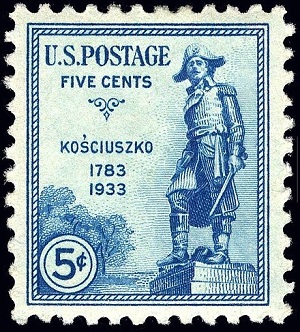
Amerykański znaczek pocztowy z Kościuszką wartości 5 centów
Powróciła marksowska idea, że państwo jest aparatem ucisku i wyzysku. Tym razem dowiadujemy się tego nie z Anglii a ze Stanów Zjednoczonych, ucisk i wyzysk jest teraz nie tyle klasowy, ile rasowy, biali i podobni do białych, uciskają i wyzyskują kolorowych, reszta tych nowych modnych bzdur jest plagiatem. Koncepcje Karola Marksa oparte były na licznych poprawnych obserwacjach, charakteryzowało je jednak fatalne uproszczenie i tragiczna w skutkach propozycja rewolucyjnej naprawy świata.
Pomysł zniesienia społeczeństwa klasowego był interesujący i wydawał się bardzo moralny. Propozycja wymordowania tych, którzy mają lepiej, przez tych, którzy mają gorzej, w celu osiągnięcia powszechnego braterstwa nie przyniosła jednak oczekiwanych rezultatów. Nadal marzymy o lepszym państwie, w którym jest prawo i sprawiedliwość.
Co ma do tego religia, dzieci i Żydzi? Nie tylko Karol Marks podejrzewał, że religia jest doskonałym narzędziem manipulowania ludzką świadomością, a instytucje religijne mają tendencję do sojuszu z wyzyskiwaczami.
Rewolucja francuska, kiedy wpadła w amok terroru, taśmowo obcinała głowy arystokratów i biskupów, a następnie tych, którzy mieli niewłaściwe idee powszechnego braterstwa. Karol Marks miał nadzieję, że następnym razem pójdzie lepiej, zaś mniej rewolucyjne próby naprawiania świata, czy to te brytyjskie, czy amerykańskie, nie wydawały mu się interesujące. Mylił się (błąd jest rzeczą ludzką); ta rewolucja, która odwoływała się do jego myśli, przyniosła miliony trupów, nie przyniosła żadnego braterstwa, nie zlikwidowała wyzysku i ucisku ani nie przyniosła powszechnego dobrobytu.
Karol Marks w swoim słynnym artykule „Zur Judenfrage” z 1844 roku pisał przywołując przykład Ameryki, że świeckie państwo nie ma religii państwowej, ale nie znosi ani religii, ani własności. Jego zdaniem chrześcijanie stają się Żydami, bo ziemską religią Żydów są pieniądze, emancypując się Żydzi stają się potęgą finansową, bo Żydzi to zapaleni kapitaliści.
(Dyskusja czy Karol Marks był antysemitą, czy był tylko bardzo światłym myślicielem, trwa do dziś, ale powoli osiada, wypychana przez inne ważne tematy).
Jeff Jacoby z „Boston Globe” przypomniał niedawno wymianę poglądów w 1820 roku między amerykańskim Żydem, lekarzem, przedsiębiorcą i działaczem, a Thomasem Jeffersonem. Jacob de la Motty przesłał byłemu prezydentowi kopię przemówienia, które wygłosił w synagodze. Jefferson odpisał, że jest satysfakcjonujące, iż Stany Zjednoczone są pierwszym krajem w historii, który udowodnił światu dwie zbawienne prawdy, że człowiek może rządzić swoim losem oraz że wolność religijna jest najskuteczniejszym lekarstwem na spory religijne. Zasada obywatelskiego rządu brzmi: „podzieleni trwamy, zjednoczeni upadamy”.
Jefferson podkreślał to, co mówił również Waszyngton, że państwo musi zdecydowanie odmówić poparcia jakiegokolwiek wyznania, nie wolno walczyć z religią, ale nie wolno również dopuścić do sojuszu żadnej grupy wyznaniowej z władzą świecką.
Jacoby pisze, że Amerykanie toczą wściekłe spory o edukację, o podatki, o dyskryminację, ale spory międzyreligijne są rzadkie. Można z tym dyskutować, gdyż w sporach o edukację wyłażą często spory religijne, ale prawdą jest, że to rozwiązanie na długo wyciszyło waśnie religijne. Czy to znaczy, że w Ameryce nie ma uprzedzeń na tle religijnym? Oczywiście, że są, ale dotychczas były mniejsze niż w innych krajach. Uprzedzenia wobec Żydów przywędrowały tu z Europy, a obecnie są wzmacniane przez muzułmanów i przebudzoną lewicę, jednak przez dwa stulecia wielu uważało, że od czasów starożytnych Ameryka jest najbardziej życzliwym dla Żydów krajem na świecie.
W tym samym roku, w którym Jefferson korespondował z Amerykaninem wyznania mojżeszowego, w Polsce Stanisław Kostka Potocki wprowadzał (za Wolterem i za Staszicem) oświeceniową wersję antysemityzmu.
Wolter nie oskarżał już Żydów o bogobójstwo ani o zatruwanie studni, ani o porywanie chrześcijańskich dzieci. Ten wielki myśliciel wyjaśniał swoją niechęć w sposób znacznie bardziej oświecony: „Żydzi są ignoranckim i barbarzyńskim narodem, którzy od dawna zjednoczył najbardziej plugawą chciwość z najbardziej obrzydliwymi przesądami i najbardziej niezwyciężoną nienawiścią do każdego narodu, który ich toleruje i wzbogaca”.
Stanisław Kostka Potocki nie okazuje wrogości, zgoła przeciwnie, uważa, że gdyby tylko Żydzi porzucili swoją religię, stroje i obyczaje, żyliby jak wszyscy i nikt nie zwracałby na nich uwagi. Kłopot z nimi, bo trzymają się swoich obyczajów i chcą być Żydami. Szlachta też jest tu winna, bo łupi ich jak może, a oni potem odbijają to sobie na chłopach. Opanowali prawie cały handel, głównie na wsiach, rozpijają chłopów, bo im szlachta daje w pacht wyszynk alkoholu. Ponieważ Potocki prezentuje swoje poglądy w formie powieści, więc nie jest to wywód spójny. Autor pisze o rzetelności i dobrej organizacji Żydów, określa ich jednak mianem „przeklętych, ale w gruncie rzeczy potrzebnych gości, których trzeba zastąpić w przemyśle i handlu”. Krótko mówiąc, mamy tu wstęp do późniejszych haseł: nie kupuj u Żyda, nie pracuj u Żyda, nie odzywaj się do Żyda i bij Żyda. Równocześnie sygnalizuje wiarę w asymilację, z przekonaniem, że wina za jej brak leży po ich stronie.
Drugim polskim przedstawicielem oświeceniowego antysemityzmu był Stanisław Staszic, który na cztery lata przed publikacją „Podróży do Ciemnogrodu” wydał broszurę, O przyczynach szkodliwości Żydów. Staszic, który doskonale zdawał sobie sprawę z tego, że największym problemem polskich klęsk jest przywiązanie szlachty do pracy niewolniczej, w swoich poglądach na temat Żydów łączy tradycyjne uprzedzenia religijne z oświeceniowymi mądrościami i nieskrywanym rasizmem.
Żydzi byli zarazą wewnątrz, zarazą ciągle polityczne ciało słabiącą i nędzniącą. Chociażby nawet to ciało nie było podzielone, chociażby po podziale zjednoczone zostało, przecież z tą wewnętrzną skazą nigdy nie nabierze właściwych sobie sił, ani czerstwości, musi być zawsze tylko słabe, wynędzniałe i nikczemne.
Ksiądz Stanisław Staszic zrzucił sutannę i gloryfikował deizm, więc był często uważany za heretyka, ale ta część jego spuścizny była przez kler ceniona i do dziś jest wynoszona na piedestał.
Nasz najbardziej znany przedstawiciel oświecenia proponował przymusową asymilację Żydów przez zamknięcie ich w gettach, (które ładnie nazwał „obwodami”), polonizację, ograniczenie roli rabinów. Żyd po resocjalizacji mógłby opuścić obwód i ewentualnie żyć wśród Polaków.
Największy zarzut Staszica, ten sam co u Potockiego – rozpijanie chłopów i przedsiębiorczość, która blokuje przedsiębiorczość chłopów i mieszczan. Czytając inne pisma Staszica wiemy, iż zdawał sobie sprawę, że to nie Żydzi blokują chłopską przedsiębiorczość. O zaborach pisał: „Paść może i naród wielki, zniszczeć tylko nikczemny”. Tę nikczemność konsekwentnie odnosił do szlachty:
Macież wy miłość ojczyzny? Nie obywatelami, ale nieprzyjaciółmi Polski jesteście! Więcej szkodzicie temu krajowi, niżeli szkodzili Moskale, Szwedzi, Niemcy, Turcy i Tatarzy. Tych okrucieństwo padło na niektórych i skończyło się w lat kilka, wasze okrucieństwo trapi nie tylko żyjących, ale nadto kładzie się przeszkodą wieczną, aby Polska mogła ze sławą powstać…”
W książce Potockiego jeden z sarmackich bohaterów mówi: “Ach szczęśliwe feudalności czasy, kiedy wszyscy inni ludzie byli niczym, a szlachta wszystkim, kiedyż znowu przyświecicie światu?” Ta sarmacka szlachta pokazywana jest w jego książce jako tępa, zapita, okrutna, przesądna i pobożna.
Dlaczego zatem marzący o emancypacji chłopów zwolennicy oświecenia żywili tak głęboką nienawiść do Żydów? Ponieważ byli widoczni, rzucali się w oczy swoją obcością, więc nasi oświeceni szczerze wierzyli, że gdyby tylko ci Żydzi przestali wyglądać jak Żydzi, gdyby się asymilowali, to oni natychmiast przestaliby ich nienawidzić.
W kolejnym stuleciu widzieliśmy falę asymilacji Żydów w krajach najbardziej rozwiniętych. Nienawiść zmieniła formę; po dalszych stu latach nienawidzono Żydów za ich nadreprezentację w nauce, w wolnych zawodach, w literaturze i sztuce. Przyjaciel przesłał mi cytat z książki Kurskiego, (której nie czytałem), rozmowy Ignacego Paderewskiego z brytyjskim historykiem i politykiem Lewisem Bernsteinem Namierem (Ludwik Bernstein Niemirowski, z rodziny polskich zasymilowanych Żydów, który po studiach we Lwowie wyjechał najpierw do Francji, a potem do Anglii, gdzie zmienił nazwisko na Namier). Tę rozmowę Namier opisał tak:
– Żydzi w Anglii mówią po angielsku – zaczął Paderewski. – Żydzi we Francji po francusku, w Niemczech po niemiecku. Dlaczego Żydzi w Polsce nie mówią po polsku?
– A czy chciałby pan, by mówili po polsku? – zapytałem w odpowiedzi. – Proszę wziąć pod uwagę – powiedziałem – że w Niemczech Żydzi stanowią około jednego procentu wysoko wyedukowanej populacji, a jednak to wystarczy, by potężnie wpłynąć na niemiecką literaturę, muzykę, prasę i teatr. Co to będzie oznaczać dla polskiej kultury, jeśli polscy Żydzi, którzy stanowią 10 proc. populacji, porzucą jidysz i zaczną uczyć się polskiego? […]
Po chwili refleksji Paderewski powiedział: – Może i ma pan rację, ale przynajmniej niech mówią po hebrajsku, a nie w jidysz, bo to nam działa na nerwy.
– Jako syjonista z pewnością życzyłbym sobie, by przyswoili hebrajski – odpowiedziałem – ale proszę pozwolić sobie powiedzieć, że gdy już pan porzucił pomysł, by mówili po polsku, to w którym z języków będą się porozumiewać, jest już tylko ich sprawą.
W dwudziestym wieku antysemityzm był już napędzany wielkim przerażeniem z powodu asymilacji Żydów i wielką chęcią pozbycia się nazbyt skutecznej konkurencji w prestiżowych zawodach. Pojawiły się nowe oczekiwania – ograniczenia lub zakazu studiów, ograniczenia dostępu do niektórych zawodów, bojkotu ekonomicznego i towarzyskiego. (Nic dziwnego, że wszyscy urodzeni w Polsce nobliści w naukach ścisłych otrzymywali swoje nagrody jako obywatele innych krajów).
W XXI wieku antysemityzm ponownie się nasila, tym razem w imię solidarności z palestyńskimi terrorystami (bo z pewnością nie w imię solidarności z Palestyńczykami). To jest naprawdę irytujące, że Żydzi na skrawku ziemi, z której niegdyś ich wypędzono, stworzyli kwitnące państwo dające swoim obywatelom równe prawa dla siebie i dla mieszkających wśród nich mniejszości. Golda Meir na pytanie egipskiego prezydenta Anwara Sadata o to, kiedy będzie pokój między Żydami i Arabami odpowiedziała, że „Pokój na Bliskim Wschodzie będzie dopiero wtedy, kiedy Arabowie będą kochali swoje dzieci bardziej niż nienawidzą Izraela”.
Ten cytat przypomniał mi się, kiedy patrzyłem na tabelkę opublikowaną niedawno w londyńskim „Timesie” pokazującą różnice w wynagrodzeniu pracowników najemnych w zależności od wyznania. Pokazujący ją amerykański bloger, Elder o Ziyon, zwraca uwagę, że nie towarzyszyły jej wyjaśnienia powodu publikacji, ani próba wyjaśnienia powodów tych różnic.
Wysokość wynagrodzenia z godzinę pracy zatrudnionego w zależności od wyznania.
A sprawa jest ze wszech miar ciekawa.
Trudno sobie wyobrazić, żeby jakikolwiek brytyjski pracodawca pałał taką miłością do Żydów i Hindusów, żeby im za samo wyznanie płacił więcej niż ateistom i chrześcijanom. Ta tabelka prawdopodobnie odzwierciedla przeciętne różnice w wykształceniu i kwalifikacjach, te zaś mogą wynikać z odmiennej kultury miłości do własnych dzieci. Przez wiele lat mieszkaliśmy w Londynie w hinduskiej dzielnicy i patrzyliśmy ze zdumieniem na sąsiadów przejmujących angielskie sklepiki, kioski z gazetami, z żywnością, stacje benzynowe, pracujących po 16 godzin na dobę, żeby ich dzieci mogły uczyć się w lepszych szkołach, a potem na najlepszych uniwersytetach. Nazywano ich czasem „Żydami Londynu”.
Dziś w Polsce oświatą rządzi minister Czarnek, rodzice protestują, ale tylko niektórzy, Konfederaci krzyczą „Polska to nie Polin”, rządy mamy pobożne, walczące o chrześcijańskie wartości. Patrz Kościuszko na nas z nieba. (Kościuszko w niebo nie wierzył, a przedstawicielem był raczej oświecenia amerykańskiego niż francuskiego, z przyczyn podanych przez Jeffersona).
Andrzej Koraszewski
Publicysta i pisarz ekonomiczno-społeczny.
Ur. 26 marca 1940 w Szymbarku, były dziennikarz BBC, wiceszef polskiej sekcji BBC, i publicysta paryskiej „Kultury”. Więcej w Wikipedii.
Zawartość publikowanych artykułów i materiałów nie reprezentuje poglądów ani opinii Reunion’68,
ani też webmastera Blogu Reunion’68, chyba ze jest to wyraźnie zaznaczone.
Twoje uwagi, linki, własne artykuły lub wiadomości prześlij na adres: webmaster@reunion68.com
A report in Tasnim describes how Iran went from being terrorized by missiles to creating accurate missiles that are being used throughout the region.
.
New Iranian “Kheibarshekan” missiles are seen in an undisclosed location in Iran, in this picture obtained on February 9, 2022. / (photo credit: IRGC/WANA (West Asia News Agency)/Handout via REUTERS)
As Iran supplies Russia with drones and there are concerns Iran may supply Moscow with ballistic missiles, the issue of Iran’s missile program is increasingly important globally. In addition, Iran’s missiles threaten Israel and US forces in the region and also destabilize the Middle East through threats to the Gulf, Iraq and other countries.
Iran’s Tasnim News ran an interesting article on Saturday focusing on the history of Iran’s missile program. The article begins by profiling Hassan Tehrani Moghaddam, an Iranian military officer in the Aerospace Force of the Islamic Revolutionary Guard Corps. He was born in 1959 and died in 2011. He is credited with being a major designer of the Iranian ballistic missile project. Tasnim News notes that while he began as a largely unknown figure, his fame grew over time. He was initially an artillery officer in the IRGC.
“The IRGC missile unit was formed with imported missiles, and even the firing of those missiles was done by others, but gradually Hassan Tehrani Moghadam and his comrades learned to shoot, manipulate and upgrade missiles, and finally build missiles,” the report says. Iran tried building short-range missiles at first. This was likely back in the era of the Iran-Iraq war. The report includes historic conversations with those who knew Moghaddam.
According to this report, Iran first acquired the Scud B missile from Libya in 1963. During the war with Iraq in the 1980s, Iran faced a shortage of weapon systems to oppose the Iraqi invasion.
“The war started when we were empty-handed. The weapons we had in the Corps were light weapons such as Brno, M1K, Kalashnikov and Zh3,” the report says. Eventually, the soldiers received mortars and artillery. The Iraqis meanwhile had received the Scud B from the Soviet Union. “Some time after the start of the war, rockets started raining on the cities,” the report notes. Indeed, Iraq used missiles and rockets to spread terror and try to weaken Iran’s ability to continue the war.
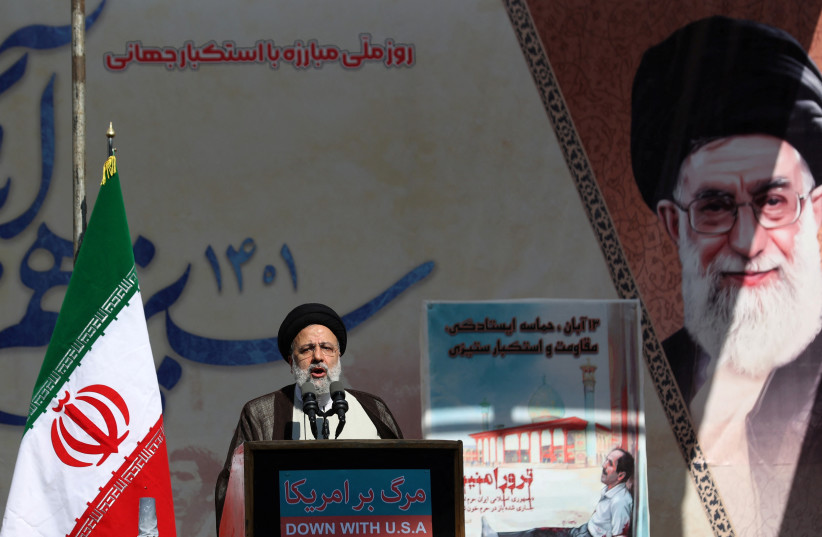
Iran’s President Ebrahim Raisi speaks during the 43rd anniversary of the U.S. expulsion from Iran, in Tehran, Iran November 4, 2022 (credit: MAJID ASGARIPOUR/WANA (WEST ASIA NEWS AGENCY) VIA REUTERS)
Iran focused on developing its own missiles to counter the Iraqis. “The Minister of the IRGC, continued to purchase rockets and a group of IRGC Artillery units was also engaged in training courses….Hassan Tehrani Moghadam, who was in charge of IRGC artillery and had taken important measures to increase the range and power of fire until then, was appointed to form a missile unit.”
Iran began by using Katyusha rocket engines in rockets and approached Syria and Libya for missiles. “Syria said that it cannot give missiles to Iran and that it is under severe pressure from the Soviet Union and their advisors who are in that country, but it can train Iranian forces,” the Tasnim report says. Muammar Gadaffi in Libya was more supportive.
However, the support didn’t last long; when Libya and Iraq had better relations the support stopped and Libyan advisors stop helping the Iranians. “A team that came from Libya fired missiles at several targets, including the Kirkuk refinery and the Rafdin Bank in Baghdad,” the report says.
The Scud B missile had an error of up to 1.5km, meaning that if you fired the rocket it might hit as much as 1.5km from the target. That made it extremely inaccurate. The report says that the ability of Iran to hit the Kirkuk refinery and target Sudanese and Egyptian volunteers serving with the Iraqis was mostly good luck.
“When Iran fired missiles at Iraq and those missiles hit important targets, Libya was under pressure from the Soviet Union. Therefore, on the anniversary of the establishment of the Baath party, Gaddafi told Saddam that he will give him a gift on this day, and that is that no more missiles will be fired from Iran toward Iraq.”
Iran’s missile men, Hashemi Rafsanjani and Hassan Tehrani Moghadam sought new ways to respond. “Hassan ordered a missile and a platform to be prepared for us to fire…We identified 32 defects and it took several days to fix each one somehow. We asked for help from all the forces that were in academic and industrial jihad.”
Meanwhile, Iran received support from Syria and was able to send men to Syria to train
The story of the rocket program continues by looking at Iran’s response to Iraq’s use of missiles against Iran’s cities. Many Iranians were being killed and Iran had only limited success responding. The article claims that both the Soviets and the US were helping Iraq at the time.
Iran’s missiles, which it had received from Libya, were also apparently defective, the report claims. The Iranians had to work to make them usable, and the missiles were taken apart and reassembled. “We did this. It also worked in the tests. The main faults were in the guidance system,” the report says.
“From the beginning, Hassan Tehrani Moghadam emphasized self-sufficiency in the scientific field and the use of rockets. His command and guidance in missile matters was divine guidance.”
Tasnim News
The report then turns to the modern-day and recent conflicts between Israel and Hamas. Iran sees Hamas’s success in making rockets as a kind of legacy of its own hardship in the 1980s. Iran has also supported Hezbollah expand its missile program over the last decades.
“Hezbollah has the ability to fire hundreds of missiles at the occupied territories every day. Any war with Hezbollah will lead to the destruction of the Zionist regime.”
Tasnim
Iran has also improved multi-stage missiles that can carry payloads into orbit. But the process of reaching self-sufficiency in rocketry was a long one. “Despite the fact that we had good experiences in the field of liquid fuel, we did not have much experience in the field of solid fuel,” the report notes. “Liquid fuel engine technology is a complex technology. For this reason, we had to enter the field of solid-fuel rockets. Of course, at some point, some people wanted to take this issue from the Air Force and give it to the Ground Force, but Tehrani Moghadam stood up and did not let this happen. We believed that in the future our best and most accurate rockets would be solid fuel rockets.”
Iran’s missile men faced hurdles with the solid fuel rockets they were working on. Guiding them was difficult, the report says. Eventually, they did design engineers that could “steer,” the report says. “Tehrani Moghadam designed a liner to fill the space between the fuel and the engine body.”
Iran built a series of missiles called Fateh, which became increasingly effective and also reached new levels of precision in terms of their ability to hit targets. According to the report, the origins of the Fateh missiles were in Iran repurposing the SAM 2 “surface-to-air missiles into surface-to-surface missiles.” The developments eventually led to the Fateh 110 missile. Initial challenges at guidance and control were overcome.
“Of course, all these processes were very time-consuming. For example, to convert a metal rocket engine into a composite engine, Tehrani Moghadam designed a composite factory, and after that, the main focus of that factory was designing composite engines. When we tested the first engine they produced on the test stand, numerous holes were created in the body of this engine, but after many trials and errors, this engine also achieved positive results and reached mass production.”
The overall goal here was self-sufficiency so that Iran could build and design its own rockets and missiles. The outcome of the difficulties of the 1980s can be seen today. Iran’s ballistic missiles continue to reach new ranges and new levels of precision. Iran also builds precision-guided munitions and drones.
This plethora of weapon systems has now influenced the region. It not only gave Hamas new abilities in the last two decades such that Hamas rockets went from traveling a kilometer or two, to reach most of Israel. Iran also expanded the Hezbollah program exponentially, giving it huge capabilities to target Israel.
In the last seven years, Iran boosted the ability of the Houthis in Yemen so that they could target Saudi Arabia and the Gulf states as well as target chips in the Gulf of Oman. Now Iran is arming Russia so it can terrorize Ukraine. Although the article doesn’t touch on this, it’s important to understand the Iranian IRGC mindset in order to understand its next goals. It’s also important to understand the technical abilities and history of Iran’s various weapon programs.
Zawartość publikowanych artykułów i materiałów nie reprezentuje poglądów ani opinii Reunion’68,
ani też webmastera Blogu Reunion’68, chyba ze jest to wyraźnie zaznaczone.
Twoje uwagi, linki, własne artykuły lub wiadomości prześlij na adres: webmaster@reunion68.com
Netanyahu addressing major issues at the Jewish republican conference in Vegas
–
The 2022 World Cup starting today in Qatar to the delight of millions but isn’t going without criticism
–
And an incredible project bringing attention to IDF veterans suffering with post-traumatic stress.
Zawartość publikowanych artykułów i materiałów nie reprezentuje poglądów ani opinii Reunion’68,
ani też webmastera Blogu Reunion’68, chyba ze jest to wyraźnie zaznaczone.
Twoje uwagi, linki, własne artykuły lub wiadomości prześlij na adres: webmaster@reunion68.com
 ‘Bibi’ Offers Close-Up Look at Israeli Politician in Family Context
 Leader of Israeli opposition Benjamin Netanyahu speaks during a meeting with his Likud party in the Knesset, the Israeli parliament, in Jerusalem June 14, 2021. Photo: REUTERS/Ronen Zvulun