Archive | February 2024

Marian Turski: cykl „Birkenau”, dzieło Gerharda Richtera, wstrząsa

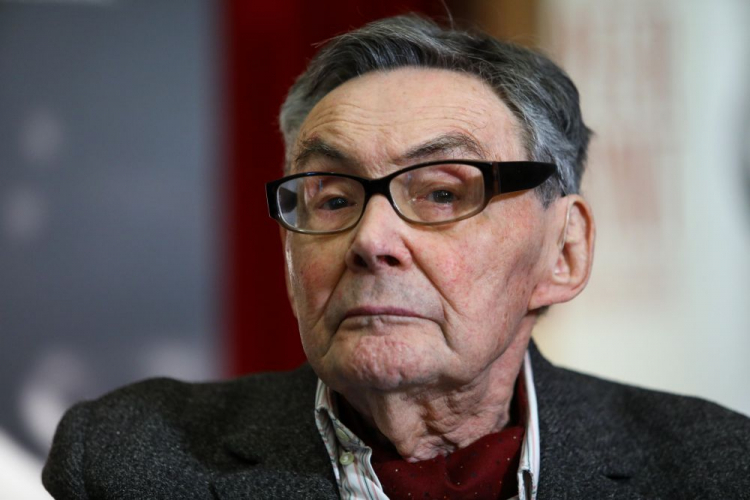
Marian Turski. Fot. PAP/R. Guz


Marian Turski: cykl „Birkenau”, dzieło Gerharda Richtera, wstrząsa

Marek Szafrański


Abstrakcyjny cykl „Birkenau” Gerharda Richtera, odnoszący się do Holokaustu, na stale będzie prezentowany od piątku w Międzynarodowym Domu Spotkań Młodzieży w Oświęcimiu. W przeddzień otwarcia wystawy były więzień Auschwitz Marian Turski powiedział, że dzieło to wstrząsa na całym świecie.

„Cykl +Birkenau+ wstrząsa; wstrząsa na całym świecie. To, że Richter je przekazał, (…) jest rzeczą, za którą jesteśmy mu niesłychanie wdzięczni” – powiedział Turski, który jest przewodniczącym Międzynarodowego Komitetu Oświęcimskiego.

Całość dzieła, które będzie prezentowane w specjalnie wzniesionym na terenie MDSM budynku, tworzą cztery abstrakcyjne kompozycje, wykonane w 2014 roku w technice wydruku na płytach metalowych, ośmiometrowe szare lustro, a także kopie czterech zdjęć zrobionych potajemnie w 1944 roku przez członków Sonderkommando, czyli specjalnej grupy więźniów, w większości Żydów, których Niemcy wykorzystywali do usuwania ciał zgładzonych w komorach gazowych. Fotografie dokumentują mord na Żydach i palenie zwłok. Powstały w pobliżu komory gazowej i krematorium V w obozie Birkenau. Richterowi posłużyły za podstawę do stworzenia abstrakcyjnych dzieł.

Marian Turski przypomniał, że poza tymi czterema zdjęciami nie ma innych fotografii, których autorami byli więźniowie, a nie oprawcy. „To był wyjątkowy przypadek. Przypuszczamy, że wykonał je grecki Żyd Alberto Errera z Sonderkommando. (…) Znaleźli wśród rzeczy ludzi rozebranych aparat fotograficzny, w którym było siedem niewykorzystanych klatek. Zabrali go. Trzy klatki zostały prześwietlone. Pozostały cztery. Zdjęcia zostały zrobione ukradkiem. Nie są mistrzowskie, ale są wyjątkowej wagi. (…) One weszły do kanonu wiedzy o Auschwitz i Birkenau” – powiedział.

Christoph Heubner, wiceprzewodniczący Międzynarodowego Komitetu Oświęcimskiego, za sprawą którego dzieło Richtera trafiło do Oświęcimia, powiedział, że poświęcone jest ono tym, którzy mieli odwagę, narażając się na śmierć, wykonać zdjęcia, by pokazać światu prawdę. „Te zdjęcia Richarda poruszyły” – mówił.

Christoph Heubner, wiceprzewodniczący Międzynarodowego Komitetu Oświęcimskiego, za sprawą którego dzieło Richtera trafiło do Oświęcimia, powiedział, że poświęcone jest ono tym, którzy mieli odwagę, narażając się na śmierć, wykonać zdjęcia, by pokazać światu prawdę. „Te zdjęcia Richarda poruszyły” – mówił.

Heubner zwrócił uwagę, że w samym pawilonie – taki był zamysł autora – istotny jest moment odbicia obrazu w szarym lustrze, umiejscowionym vis a vis prac. „Przez to każdy, kto tam wchodzi, staje się jakby częścią tej instalacji” – wyjaśnił.

Christoph Heubner zaznaczył, że istnieją cztery równoważne dzieła „Birkenau” Richtera. Pierwsze znajduje się w Galerii Narodowej w Berlinie, drugie w Bundestagu, trzecie jest prezentowane w różnych miejscach na świecie, a czwarte na stałe trafiło do Oświęcimia.

Oficjalne otwarcie pawilonu, w którym wystawiony jest cykl, odbędzie się w piątek. Ekspozycja będzie dostępna od 28 lutego.

Gerhard Richter jest jednym z najwybitniejszych żyjących artystów. Urodził się 9 lutego 1932 roku w Dreźnie. W 1951 roku rozpoczął studia na tamtejszej Akademii Sztuk Pięknych. Tworzy sztukę abstrakcyjną. Charakterystycznym motywem jego prac jest fotografia, nawet jego obrazy przypominają niewyraźne, rozmyte zdjęcia.

Richter udostępnił jedną z edycji dzieła „Birkenau” Międzynarodowemu Komitetowi Oświęcimskiemu cztery lata temu, jako stały depozyt na wystawę w Oświęcimiu. On też stworzył koncepcję budynku wystawowego. Powstanie obiektu było możliwe dzięki darowiźnie firmy Volkswagen AG.

Międzynarodowy Dom Spotkań Młodzieży został otwarty w grudniu 1986 r. z inicjatywy niemieckiej organizacji „Akcja Znaki Pokuty”. Wpływ na powstanie placówki mieli byli więźniowie. Pierwsze grupy młodzieży niemieckiej przyjechały do Domu jeszcze w grudniu 1986 r. W 1999 r. zakończyła się budowa całego kompleksu placówki.

Międzynarodowy Komitet Oświęcimski został założony w 1952 r. przez byłych więźniów niemieckiego obozu Auschwitz. To najstarsza organizacja więźniarska. Do jej zadań należy informowanie świata o historii obozu, reprezentowanie interesów byłych więźniów oraz walka z rasizmem i antysemityzmem, a także przejawami negacji Holokaustu. Przewodniczącym Komitetu jest Marian Turski, więziony w łódzkim getcie oraz niemieckim obozie Auschwitz. (PAP)


Zawartość publikowanych artykułów i materiałów nie reprezentuje poglądów ani opinii Reunion’68,
ani też webmastera Blogu Reunion’68, chyba ze jest to wyraźnie zaznaczone.
Twoje uwagi, linki, własne artykuły lub wiadomości prześlij na adres:
webmaster@reunion68.com



Oct. 7 Was Worse Than a Terror Attack. It Was a Pogrom.

Oct. 7 Was Worse Than a Terror Attack. It Was a Pogrom.

DEBORAH DANAN


‘Let me know of one Palestinian in Gaza who tried to save a Jew and maybe I’ll change my mind’

.
Palestinians cross the Gaza-Israel border fence in Khan Yunis, in the southern Gaza Strip, on Oct. 7, 2023 / © YUSEF MOHAMMED/IMAGESLIVE VIA ZUMA PRESS WIRE

Eyal Barad was in the safe room of his home in Nir Oz for more than 12 hours on Oct. 7 while Palestinians went on a rampage of his Gaza envelope kibbutz, eventually kidnapping or murdering more than a quarter of its residents.

Every so often, Barad, 40, was forced to cover his 6-year-old daughter’s mouth with his hand to stifle her squeals. The little girl, who is autistic, thought the whole thing was a game. Most of the time, though, Barad was glued to his phone, watching the live feed of a camera he had recently installed outside his home to monitor speeding cars. Images from the feed, which I obtained, show Palestinian women and children—some appearing as young as 8 years old—taking part in the horror of that day.

Survivors’ accounts, video evidence, and the interrogation recordings of apprehended Palestinians paint a damning picture of the complicity of Gazan civilians both in the Oct. 7 attack, in which more than 1,200 people were murdered and 240 people were abducted to Gaza, and its aftermath. It is one that has sparked a debate in Israel that challenges the inclination to draw distinctions between ordinary Palestinian civilians of Gaza—often referred to in Israel as bilti meuravim (uninvolved)—and their terror leaders. For many, Oct. 7 reeked of something that Jews have been familiar with for centuries; a phenomenon where not just a vanguard, but a society at large participates in the ritual slaughter of Jews.

Around 700 Palestinians stormed Barad’s kibbutz of Nir Oz—less than a five-minute drive from Gaza—that day, CCTV footage shows. The overwhelming majority of those, estimated by Eran Smilansky, a member of the kibbutz’s security squad, to be around 550, were civilians. They were largely unarmed and not in uniform. Some of those civilians carried out wholesale acts of terror themselves, including rape and abduction—and in some cases, the eventual sale of hostages to Hamas—while others abetted the terrorists. Others still simply took advantage of the porous border to loot Israeli homes and farms, including stealing hundreds of thousands of shekels in agricultural equipment.

‘The reality proves that there’s no such thing as a bilti me’urav (uninvolved) in Gaza. All of Gaza is Hamas.’

Similar scenes played out in several of the more than 20 brutalized Israeli communities. In one video that has become emblematic of the debate around the “uninvolved,” an elderly Palestinian man with walking sticks is seen hobbling at an impressive clip along with the rest of the mob through the breached gate of Be’eri.

Differentiating between terrorists and civilians is tricky, particularly since Hamas terrorists often wear civilian clothing, a tactic evident in the ongoing war in Gaza. However, other indicators help make this distinction, such as the absence of weapons and the fact that many were filmed crossing the border barefoot or even on horseback. Even senior Hamas official Mousa Abu Marzouk readily admitted that Gaza civilians had taken part in the Oct. 7 atrocities.

One video shows a group of men in civilian clothing beating a soldier while a separate image shows another group of what appears to be civilian men celebrating atop the smoking husk of a burned-out tank. In the infamous 47-minute terror reel of the Oct. 7 atrocities, Palestinians in civilian clothing are seen beating elderly hostages with sticks. Another repeatedly screams “Allahu akbar!” as he decapitates a Thai farm worker with a garden tool.

Barad’s speed camera in Nir Oz includes images of a Palestinian girl riding a stolen bike. In another, a Palestinian woman is seen pointing out Barad’s neighbor’s home to a uniformed terrorist. An image captured later shows a resident of that home being hoisted onto a motorcycle to be taken into Gaza.

But it’s the testimonies of the survivors that provide the clearest evidence that Oct. 7 was not just a terrorist attack, but a pogrom.

Batya Holin is a photographer and peace activist from Kfar Aza, which alongside Nir Oz and Be’eri, was one of the heaviest-hit communities. Holin had developed a friendship with a Gazan photographer, Mahmoud, with whom she arranged a joint exhibit last year of photos of her kibbutz and his village in the Gaza Strip. On the morning of Oct. 7, Mahmoud called and interrogated Holin, asking her how many soldiers were in her vicinity. That was when Holin realized that Mahmoud had given the photos of her village to Hamas. “Whoever says there are people there who are uninvolved, here is the proof,” she told Israel’s Channel 13 News. “They are all involved. They are all Hamas.”

Echoing Holin’s testimony, former hostage Nili Margalit said that “civilians, regular people,” abducted her to Gaza in one of the kibbutz’s golf carts. Likewise, an NBC News investigation found that Noa Argamani was likely kidnapped by a civilian mob. A video of her abduction shows her unarmed captors wearing regular clothes. Argamani may have been later handed over or sold to Hamas.

Natali Yohanan, 38, recounted hearing a Palestinian woman enter her home with two men. The woman stayed there for several hours, intermittently cooking for her male companions, watching Netflix, and ransacking her clothes. The men would occasionally try to break open the safe room door, where Yohanan, her husband, and two young children, were hiding.

“She started singing and asked them, are you hungry? Are you thirsty? She went into my fridge and heated up food,” Yohanan said. “She was very relaxed and seemed happy. She stole my credit card, my passport, and my clothes—even some of my underwear—but the clothes she didn’t want she folded and put on the bed. It was so strange.”

Then there are the Gazans who worked at the kibbutzim. Yohanan’s husband, a farmer, is one of many people in the Gaza periphery communities who hired Palestinian workers from Gaza. Like many others I spoke to, Yohanan believed that the terrorists were acting on inside knowledge obtained by those Gazan workers. Israel had gradually raised the number of work permits in the months leading up to Oct. 7 with an estimated 18,500 Gazans working in Israel before the onslaught. The thinking behind the policy was that economic incentives to the residents of the Strip would sustain the fragile peace. Hanan Dann, from Kfar Aza, told me that he was “glad that workers from Gaza were coming to Israel to have jobs and meet Israelis, to see that we’re not all devils.”

In several of the devastated communities, detailed maps were found on the bodies of dead terrorists, maps that residents say could have only been drawn up by people with intimate knowledge of the area. Gazan workers relayed an extensive range of information to Hamas that enabled the terror group to plan its attack with extraordinary meticulousness, including the identities and residences of security heads, the locations of electric boards and communications systems and how to disable them.

The workers’ betrayal left an indelible mark on the surviving kibbutzniks, leading many to reexamine previously held beliefs about their Palestinian neighbors. Nir Oz, like many of the other ravaged kibbutzim in the area, was home to scores of peace activists, many of whom volunteered for a program known as Road to Recovery, driving sick Gazans to Israeli hospitals for treatment. Many now believe that while there are Gazans who want to live in peace, they do not represent the majority; or, as one survivor summed it up to AFP, “there are more who don’t want us alive.”

Irit Lahav, whose parents were from Nir Oz’s founding members, described the community as a “peace lovers’” kibbutz. “It broke my heart. How can we ever get over this sense of betrayal?” Lahav, who shuttled Palestinian cancer patients several hours from the border with Gaza to their treatments in central Israel, told me. “The Palestinian public simply hates us.”

Not everyone, however, was surprised by the involvement of Gazan civilians. “I don’t differentiate between them and Hamas,” Nir Shani told me. “Let me know of one Palestinian in Gaza who tried to save a Jew and maybe I’ll change my mind.” Shani’s teenaged son Amit was taken hostage and later released as part of a prisoner exchange at the end of November. Shani is from Be’eri, also home to lifelong peace activists, including Vivian Silver, the founder of Women Wage Peace, and Yocheved and Oded Lifshitz. Silver was murdered and the Lifshitzes were taken hostage. Yocheved was later released but Oded remains in Gaza. “They are people of peace who were always supporting Palestine,” the couple’s grandson Daniel said of them. He recounted how bystanders in Gaza spat on his grandmother, who was thrown over the back of a motorcycle after being pummeled in the ribs by her captors.

In one viral video, the near-naked and bloodied body of Shani Louk, an Israeli German who was abducted from the Nova music festival but who was later declared dead, is seen being paraded through the streets of Gaza in the back of a pickup truck. Hordes of Palestinian civilians are cheering, spitting and slapping Louk’s deformed figure while chanting “Allahu akbar.” The last tranche of hostages to be released in November’s truce saw crowds of Palestinians line the streets, jeering as the Red Cross ambulances passed by. The aunt of released hostage Eitan Yahalomi said that after the arrival of her 12-year-old nephew into Gaza, “all the civilians, everyone, beat him.”

IDF Sgt. Adir Tahar was murdered and decapitated during the invasion while manning a post near the Erez border crossing. His father, David, was forced to bury his son’s body without his head. An interrogation of two Palestinians by Israel’s Shin Bet security agency revealed that the remains of the head—which had been mutilated until it barely resembled a human skull—were kept in the freezer of an ice cream store in Gaza. One of the men had tried to sell the head for $10,000. The man in question was a Palestinian civilian and not a Hamas operative, Tahar told me. The Shin Bet did not respond to a request for confirmation in time for publication.

“The reality proves that there’s no such thing as a bilti me’urav (uninvolved) in Gaza,” Tahar said. “All of Gaza is Hamas.”

In several cases, Palestinian families held hostages in their homes. Released hostage Mia Schem said she was being held by a family in Gaza. “Entire families are in the service of Hamas,” she told Channel 13. Avigail Idan, the 4-year-old Israeli American whose parents were murdered, was also held in the homes of several Palestinian families. When former hostage Russian Israeli Roni Krivoi remarkably managed to escape his captors during an Israeli air raid, he hid alone for several days before being discovered by Gaza civilians, he said, who returned him to Hamas.

“There are no innocent civilians. Not one. They don’t exist,” Schem said. “All of them there are terrorists.”

Another hostage, 17-year-old Agam Goldstein-Almog, agreed with Schem. She said that she was brought to a school and “a nice lady offered us water, a mattress, and a place to sleep” and assured her the place was safe. “I turned to my mother and said, ‘Mom, there are good people in the world. And five minutes later they fired a barrage of rockets from the school [into Israel] and everyone was shouting, ‘Allahu akbar, Allahu akbar,’ and I told her, ‘Scratch that, they’re all the same.’”

“If we previously believed that there was a chance for peace, we’ve lost all faith in these people, especially after we were there and among the population,” Goldstein-Almog added.

There have been scores of examples of Gazan civilians in various professions who appear to be, at the very least, in the “service of Hamas.” From New York Times, Associated Press, and Reuters photojournalists breaking the Oct. 7 breach into Israel (with one spotted brandishing a grenade), to UNRWA staffers who have praised the attackskept hostages in their homes (a claim the U.N. agency strongly denies), and covered up the existence of tunnel shafts and weapons caches in their schools. One teacher at an UNRWA school in Khan Yunis, Jawad Abu Shamala, was a member of Hamas’ leadership in charge of its funds.

The director of the Kamal Adwan Hospital in northern Gaza, Ahmad al-Kahlout, confessed to Israeli security forces in December that his hospital doubled as a military facility for Hamas. He admitted to being recruited to the terror group and receiving military training, and added that there were other “doctors, nurses, paramedics, and clerks” who were also military operatives in Hamas’ Izz ad-Din al-Qassam Brigades. His last remarks in the video, released by the IDF, may suggest that he did not have a choice. Calling Hamas leaders “cowards,” al-Kahlout said, “they ruined us.” Similar claims can be found in several videos by ordinary Gazans, some of whom were silenced mid-sentence. One clip cited by The Wall Street Journal prompted Hamas to issue a warning against publishing any materials it deems “offensive to the image of the steadfastness and unity of our people in Gaza.”

Then again, a survey conducted in December by the Palestinian Center for Policy and Survey Research found that while about one in five Gazans polled blamed Hamas for their suffering in the war, 57% of Palestinians in Gaza (and 82% in the West Bank) continued to support Hamas’ decision to attack Israel. Moreover, support for the terror group overall (42%) has increased since Oct. 7.

While many Palestinians have occasionally expressed dissatisfaction with aspects of Hamas’ governance, such as electricity shortages or tax hikes, its actions as a “resistance” faction are viewed favorably. Take, for example, the words of a banker from Gaza City cited in the WSJ report: “I hate Hamas, the government. I never respected them. But the militants? I believe in them so much, they are sacrificing their souls for the sake of Palestine.”

Seasonal expressions of discontent are not a new phenomenon. There have been protests against the group in 2017, 2019, and as recently as last summer. Benny Avital, a member of Nir Oz’s civilian security team, told me that prior to Oct. 7, the protests in Gaza had fueled hopes that “the Gazan people will rise up against” their leaders.

Several notable Israelis have expressed similar sentiments. Singer-songwriter Idan Raichel, who in the past has described his music as a bridge for peace with Israel’s Arab neighbors, said last week that Gaza civilians should do more to “rise up against Hamas,” and the fact that they don’t means that “most of them should be treated as involved.”

Even Israel’s President Isaac Herzog, who’s more dovish than the right-wing government, has pointed the finger at Palestinian civilians in Gaza. “It is an entire nation out there that is responsible,” Herzog said almost two weeks after the attacks. “It is not true this rhetoric about civilians not being aware, not involved. It’s absolutely not true. They could have risen up. They could have fought against that evil regime which took over Gaza in a coup d’etat.”

For Avital and other Israelis, there is no longer any middle ground after Oct. 7.

“For us now, there is bad and good. Before we were sure there was something in the middle. Now we understand there is nothing in the middle. There are people who want to kill you and there are us, who just want to live a quiet life.”


Deborah Danan is a journalist and communications consultant based in Jaffa, Israel. Her work as an investigative reporter has taken her across the Middle East, from Gaza to Jerusalem to Cairo to Amman.


Zawartość publikowanych artykułów i materiałów nie reprezentuje poglądów ani opinii Reunion’68,
ani też webmastera Blogu Reunion’68, chyba ze jest to wyraźnie zaznaczone.
Twoje uwagi, linki, własne artykuły lub wiadomości prześlij na adres:
webmaster@reunion68.com


Israel Daily News – War Day 125 February 08, 2024

Israel Daily News – War Day 125 February 08, 2024

TV7 Israel News


Zawartość publikowanych artykułów i materiałów nie reprezentuje poglądów ani opinii Reunion’68,
ani też webmastera Blogu Reunion’68, chyba ze jest to wyraźnie zaznaczone.
Twoje uwagi, linki, własne artykuły lub wiadomości prześlij na adres:
webmaster@reunion68.com


Hamas zgadza się na rozejm, ale na własnych warunkach. Postulaty są nie do spełnienia

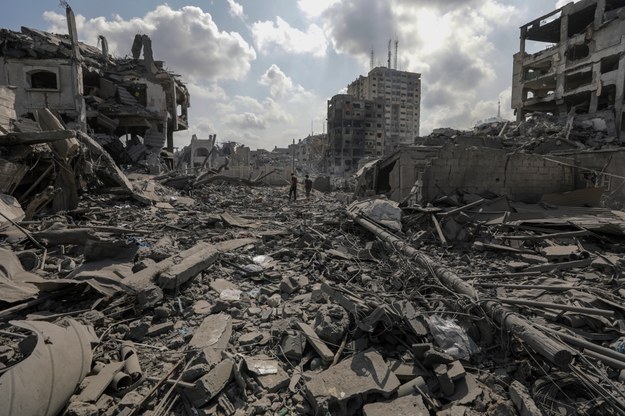
Niszczenia w Strefie Gazy po izraelskich nalotach/MOHAMMED SABER /PAP/EPA


Hamas zgadza się na rozejm, ale na własnych warunkach. Postulaty są nie do spełnienia

Marta Urzędowska


Terroryści z Hamasu odpowiedzieli na ofertę rozejmu złożoną przez Izraelczyków za pośrednictwem amerykańskich i arabskich mediatorów. Poza wymianą izraelskich zakładników na palestyńskich więźniów domagają się wycofania izraelskich sił z Gazy, co dziś wydaje się nierealne.

Szczegóły oferty podaje Reuters. Porozumienie, które próbują wynegocjować Amerykanie, Katarczycy i Egipcjanie, to szansa na wstrzymanie walk w Strefie Gazy, gdzie od czterech miesięcy trwa krwawa wojna. Zaczęła się atakiem Hamasu na Izrael, w którym terroryści zabili 1,2 tys. osób, a 250 porwali do Gazy. W odpowiedzi izraelska armia prowadzi w enklawie naloty i inwazję lądową, w których zginęło ponad 27 tys. Palestyńczyków, w większości cywilów.

Izrael: Kilkudziesięciu zakładników nie żyje

Opisywane przez Reutersa porozumienie ma dać szansę na przerwanie walk i uwolnienie zakładników, którzy nadal pozostają w rękach palestyńskich terrorystów. Około połowy porwanych zwolniono w listopadzie, przy poprzednim zawieszeniu broni i wymianie zakładników na palestyńskich więźniów w izraelskich więzieniach.

W środę izraelskie władze poinformowały, że spośród 130 zakładników, którzy nadal pozostają w Gazie, co najmniej 30 nie żyje, choć nie podano, czy zginęli z rąk terrorystów, czy w izraelskich nalotach. Według niepotwierdzonych źródeł cytowanych przez „Guardiana” być może nie żyje też 20 kolejnych porwanych, co oznaczałoby, że do uwolnienia zamiast 130 osób pozostało ok. 80. Nie poinformowano, czy zabici zakładnicy to cywile, czy żołnierze.

Porozumienie, które dziś jest negocjowane z Hamasem, opracowane zostało przez Izrael, USA, Katar i Egipt i tydzień temu przekazane terrorystom, którzy jednak – jak podaje BBC – potrzebowali dłuższego czasu na zastanowienie, bo propozycje były „niejasne i mętne”.

Jak informuje stacja, umowa prawdopodobnie objęłaby sześciotygodniowe zawieszenie broni, podczas którego pewna liczba zakładników zostałaby wymieniona na więźniów. Jednak poza tym terroryści domagają się, by izraelskie siły w pełni wycofały się z Gazy.

Hamas domaga się też pomocy w odbudowie enklawy i pozwolenia mieszkańcom, których setki tysięcy uciekły przed wojną na południe enklawy, by wrócili do domu. Terroryści chcieliby też, by ranni w Gazie mieli zapewnioną możliwość przewiezienia ich do szpitali za granicą.

Postulaty Hamasu nie do spełnienia. Izrael nie wycofa się z enklawy

Choć Izrael i USA poinformowały, że przyglądają się odpowiedzi Hamasu i propozycjom terrorystów, jasne jest, że nie wszystkie postulaty będą mogły zostać spełnione. Amerykański prezydent Joe Biden nazwał propozycje Hamasu „nieco przesadzonymi”, co sugeruje, że Izraelczykom może być trudno spełnić te żądania.

Szczególnie trudny jest warunek wycofania izraelskiej armii z Gazy. Izrael od początku zapowiadał, że wojna w enklawie potrwa do czasu, gdy Hamas zostanie w pełni unicestwiony, a izraelski premier Beniamin Netanjahu jeszcze w ostatnich dniach przypominał, że izraelskie siły będą wojować do „ostatecznego, totalnego zwycięstwa”.

Izraelczycy na pewno nie odpuszczą też polowania na najważniejszych przywódców grupy, wśród nich na Jahję Sinwara, który osobiście zaplanował atak z 7 października i który ukrywa się w tunelach na południu Gazy – najpewniej w Chan Junus.

Jasne jest też, że nawet gdyby wojna miała się trwale zakończyć, izraelskie siły nie wycofają się w pełni, bo muszą pilnować bezpieczeństwa na miejscu. Choć Izraelczycy zapewniają, że nie chcą ponownej okupacji Strefy Gazy, jednocześnie podkreślają, że będą pilnować, by po pierwsze, Hamas już nigdy nie urósł w enklawie w siłę, a po drugie – by miejscowi terroryści już nigdy nie zagrozili państwu Izrael.

Blinken z Izraelczykami opracują odpowiedź dla Hamasu

Postulat Hamasu, by Izraelczycy całkowicie wycofali swoje wojska z Gazy, jest sprzeczny również ze stanowiskiem Ameryki – Waszyngton, choć apeluje do izraelskich sił, by skuteczniej chroniły palestyńskich cywilów, jednocześnie nie odmawia Izraelczykom prawa do walki i nie domaga się trwałego rozejmu.

W regionie przebywa amerykański sekretarz stanu Antony Blinken, który razem z Izraelczykami zastanawia się, jak zareagować na propozycję Hamasu. Amerykański dyplomata przyznał we wtorek w Katarze, że „nadal pozostaje wiele pracy do wykonania”. Jednocześnie dodał, że wierzy w szanse dogadania się co do wymiany zakładników na więźniów, choć przyznał, że osiągnięcie trwałego pokoju będzie wymagało od regionalnych przywódców „trudnych decyzji”.

Amerykanom zależy na rozejmie w Gazie, by uspokoić napięcia w całym regionie. Miejscowy konflikt rozlewa się bowiem także na inne kraje – sojusznicy Hamasu w Jemenie, Syrii, Iraku i Libanie również uderzają w interesy Izraela i USA, a ponieważ są wspierani przez Teheran, z każdym dniem rośnie ryzyko wciągnięcia Ameryki w dużą wojnę w regionie.

Hamas: Niech Ameryka zdecyduje, czy chce by ta wojna trwała

Terroryści nie tracą rezonu. Ważny przedstawiciel biura politycznego Hamasu, Muhammad Nazzal, w rozmowie z Al-Dżazirą przekonywał, że nie ustąpią choćby na jotę. Zapewniał, że – w porównaniu z przekazaną im propozycją Izraelczyków, ich własna wersja projektu porozumienia jest „bardziej szczegółowa” i zawiera „czasowe limity”. – Żaden z tych detali nie może być naruszony. Izraelska maszyna śmierci musi zostać zatrzymana, chcemy zobaczyć, jak izraelskie siły okupacyjne wycofują się całkowicie ze Strefy Gazy – wyliczał dodając, że „odpowiedź Hamasu jest realistyczna, a żądania – sensowne”.

Jednocześnie Nazzal pożalił się, że Izraelczycy „nie podchodzą do dealu poważnie”, ale zapewnił, że – jeśli rozejm wejdzie w życie – będzie go pilnować pięciu „gwarantów”: Katar, Egipt, Turcja, Rosja i ONZ. – Spodziewamy się, że ruszą negocjacje. A kiedy już się rozpoczną, wszelkie przeszkody da się ominąć, trzeba tylko dograć szczegóły – dodał.

Na pytanie Al-Dżaziry co sądzi o wypowiedzi Bidena, że terroryści swoimi postulatami przeholowali, stwierdził, że „nie spodziewał się po amerykańskim prezydencie niczego lepszego”. – Jest całkowicie uprzedzony, jest zaangażowany w wojnę w Gazie, daje Izraelczykom polityczne i prawne wsparcie i popiera wszystko, co robi Netanjahu – wyliczał. – Oczekujemy od administracji USA ostatecznej decyzji: Chcą, żeby ta wojna była kontynuowana, czy chcą trwałego rozejmu? – dodał.


Zawartość publikowanych artykułów i materiałów nie reprezentuje poglądów ani opinii Reunion’68,
ani też webmastera Blogu Reunion’68, chyba ze jest to wyraźnie zaznaczone.
Twoje uwagi, linki, własne artykuły lub wiadomości prześlij na adres:
webmaster@reunion68.com


White People Are Going to Colonize Mars, and Other Fears From Today’s Campuses

White People Are Going to Colonize Mars, and Other Fears From Today’s Campuses

EMILY BENEDEK


When Ilya Bratman—the Moscow-born linguist and head of eight CUNY and SUNY Hillels—looks out at the students facing him, he sees a familiar threat

.
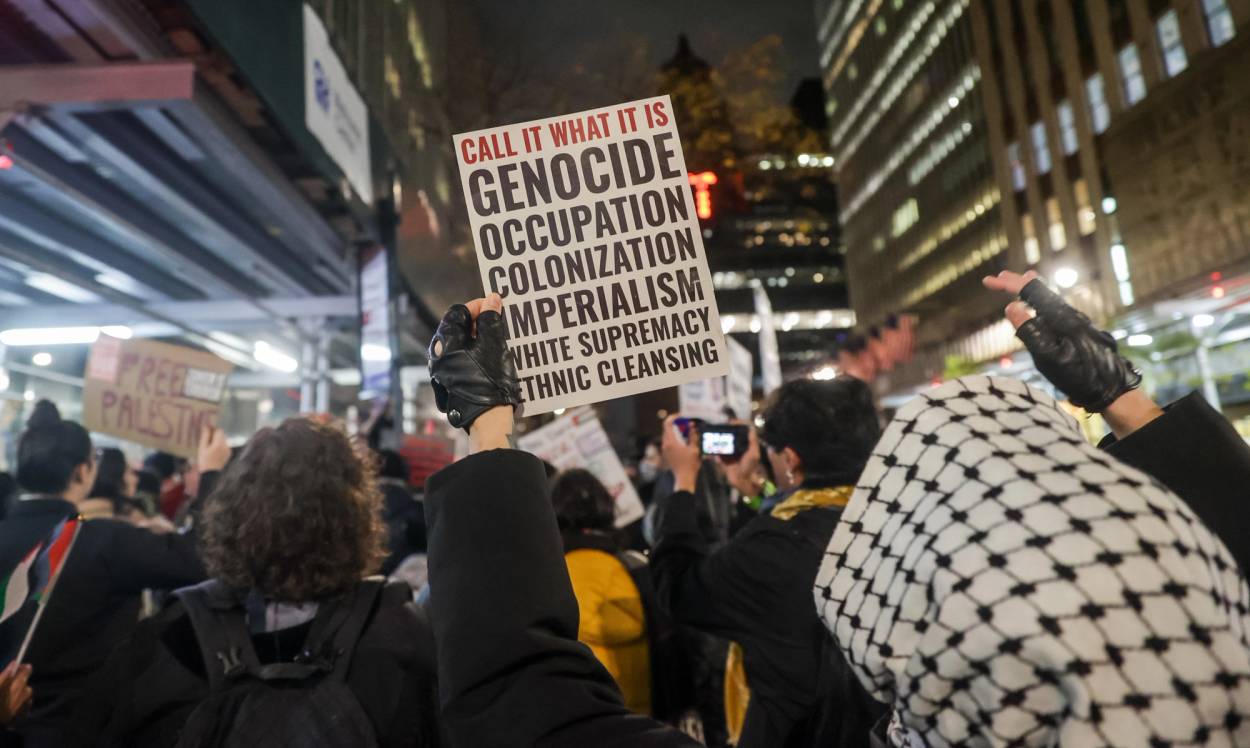
City University of New York (CUNY) alumni who support Palestine, protest outside of Chancellor office of CUNY at Midtown Manhattan in New York, United States on December 05, 2023. / SELCUK ACAR/ANADOLU VIA GETTY IMAGES

It was a belated awakening. For many American Jews, Oct. 7 uncovered the deep rot in the elite institutions they had invested in for decades, psychically and financially. A recent poll found that 73% of Jewish students experienced or witnessed antisemitic incidents since the beginning of this academic school year, a 22-fold increase over the year before. Jewish students have been punched, spat upon, assaulted with sticks, shouted at, and corralled by students in kaffiyehs.

But it shouldn’t have come as a surprise that the DEI regime has fostered the flourishing of campus antisemitism under the Palestinian banner. Having established Jews as members of the “oppressor” class and defined “justice” as the dismantling of this class, the officially sanctioned ideology has given license to the Palestinian vanguard to demand fulfillment of the progressive promise, “by any means necessary,” while turning Jewish students into piñatas.

In New York City public colleges, a kippa-wearing, red-headed leprechaun named Ilya Bratman—former U.S. Army tankist, applied linguist, long-distance runner, and immigrant from the former Soviet Union—has witnessed up close the socialization of young Americans into this toxic worldview. A teacher of English composition at Baruch and John Jay colleges who holds a Ph.D. in education from the Jewish Theological Seminary, he also serves as executive director of Hillel at eight CUNY and SUNY colleges.

On the day we met, Bratman was hosting dinner for 200 Jewish students at a synagogue on 23rd Street near Lexington Avenue. After passing a phalanx of security guards into a social room, they began filling their plates with grilled meat and salads prepared by Bratman’s favorite Georgian caterer.

The narrative of victimhood has become welded to these young people’s identity, leading to a sense of grievance toward America.

After the students use cookie cutters to shape chocolate chip cookie dough into Stars of David, Bratman grabbed a microphone and stepped forward. “Last week, everybody was already seated in my 8:00 a.m. class, and a student comes in and she says to me, “Wow, I can’t believe you bombed that hospital last night and killed all those people.”

The social room, for the first time, went dead quiet.

The student of course was referring to deaths and injuries at the Al-Ahli Hospital in Gaza, whose courtyard was hit on Oct. 17 by a rocket misfired from inside Gaza by Palestinian Islamic Jihad, but which was widely misreported as having been the result of an Israeli missile.

Bratman’s reaction, as a teacher, was to affirm the importance of sound reasoning and argumentation—and, of course, language. “I told her, ‘Wow, I can’t believe you forgot completely everything I taught you about the accusative voice and the proper use of the pronoun ‘you,’ because you just said that ‘I’ did this,” he recounted. “‘I’ bombed the hospital. What hospital? Where? Who?’”

He went on. “Did you hear that Hamas said they did it?” Bratman said he asked the student, referring to a conversation Israel had recorded between two terrorists apparently acknowledging the bombing was an own goal.

The student’s response was emblematic of the sectarian worldview into which young Americans are regimented, whereby the value, even the truthfulness, of an argument or action is assessed based on the identity of its author, rather than on its own merits. “I will never believe that,” she told him, “even if they came to my face and say, ‘Hamas, we did it.’ I will never believe it.”

Bratman told me the students think he’s a fool to read the newspapers and interrogate different sources in search of the truth. They tell him that mainstream media is all fake news, and they get their information from TikTok, which is real people talking about real things. “I’ve seen it,” they tell him. “On Instagram, on TikTok, I’ve seen it.”

“They don’t read anything. They just read headlines and pictures and memes. And they base their whole worldview on a set of memes.”

Ilya Bratman was born in Moscow. He emigrated to the U.S. in 1992 with his parents, graduated from college at the University of Pittsburgh in 1999, then joined the U.S. Army, where he served four years in active duty and four years in the reserves.

Bratman believes strongly in America and the American dream. Teaching American students in New York City has brought him face-to-face with an entirely different worldview—one that appears to be particularly common among students from officially sanctioned “minority” backgrounds. The students don’t appreciate what a gift they’ve been given to live in America. Instead, they are lost in a zero-sum game of calculating relative oppressions. This fixation stops them from learning, Bratman believes, in part because it assures them that they will fail.

In his composition classes, he explained, he tries to get his students to create and support an argument. One week, he asked them to write about space exploration. Should we go to space? Or should we not?

One girl argued in favor of space travel because “white people will move to space, maybe to Mars, or wherever,” creating a gap, or an opening into which the “indigenous brown and black people can move up in the class structure and fill that gap left behind by the white people who will move to Mars.”

“There’s a lot to unpack there, isn’t there?” Bratman responded. “First of all, the belief in this structure where white people are on top, everybody else on the bottom, and the only way to move up is if the white people leave.”

Another girl wrote that no, we should not have space travel because then the white people would colonize the Martian people, as they always do, and ruin the Martians’ lives.

Bratman said he asked, “Does it help you to blame somebody? Do you actually become better? Do you strive further? Do you succeed better because you can blame someone?”

He told me the students have no answer, but they know life “is a victimhood competition. I’m a victim and therefore you owe me, and therefore I don’t have to do anything because I cannot succeed.”

The narrative of victimhood has become welded to these young people’s identity, leading to an increased detachment from, and a sense of grievance toward, America—the irony of course being that they and their parents chose to immigrate here. One girl in the class told him: “I am here in this country against my will.” Bratman asked her: “Who’s holding you? Tell me, please. I’m frightened for you,” showcasing his high-energy, high-drama style. “Everybody’s laughing, and I asked her, ‘Where are you from?’ And she says, ‘Haiti.’ OK. ‘And where were you born?’ And she says, ‘Brooklyn.’”

“So you’re actually from Brooklyn. Your parents are from Haiti,” he repeated. “Who’s holding you back? Do you really want to go to Haiti today? You should actually go and see what life is like in a noncapitalist, depressed country that is in a desperate economic struggle. Or go to Gaza to a totalitarian, autocratic, hateful, homophobic nation. Or go to North Korea, go to Iran, go to all the places as a young woman, and see what life is really like.”

“None of that is understood,” he told me. “The students are pawns of teachers who want them to believe they can never succeed. And these teachers have been spectacularly successful at convincing them it is true.”

Bratman teaches his Jewish students to adopt a different approach to the world—one anchored in tradition, learning, and the study of Jewish texts. At the dinner in the 23rd Street synagogue, he invited the students to let him know if they’d like to join him in studying Pirkei Avot in honor of IDF soldiers called up for duty. He also has a club of about 80 boys who are laying tefillin every day.

Bratman told me that, in spite of the recent stresses, he’s not worried about his Jewish students. “Ninety-nine point nine percent of them are rational people who go out and get jobs, they get married and I go to their weddings and brises.”

But there is something terribly wrong with the others, he believes. “A lot of these students, they’re nice, they’re wonderful people, right? But they look at me as a Jew, and say, ‘well, you know, because you’re supportive of this Israel story and Israel narrative, you kind of stand with the oppressor, you know, and I’m Hispanic or Black and I have to stand with the oppressed. Or I’m gay and I have to stand with the oppressed.”

Bratman’s worry is that these students, by adopting a worldview of grievance, are keeping themselves down with imaginary obstacles and denying their own volition. “What they don’t understand is that [these invented obstacles] are all surmountable. It’s my mission to uplift and empower these young people to actually strive for the opportunities that exist and to dispel the false and limiting idea that it’s all impossible.”

Bratman told me he had a student at John Jay whom he will never forget, a student struggling mightily at school. “I had many conversations with him,” Bratman said. “I’d say, ‘come, come on, keep going, keep going.’ And he said, ‘No, I’m thinking of dropping out.’”

“And I’m like, no, no, get through this class. I got you. I got you. And I carried him through this course. And on the last day he came to see me, and he said, ‘I dropped out of all the classes except for yours. Everybody in my family, including my mother and my grandparents—I don’t know my father—my uncles and everybody said, ‘What are you doing? Why are you going to college? You can get a job now for $20 an hour, and when you graduate, you’re gonna get a job for $20 an hour. What’s the purpose?’”

Bratman seemed genuinely sad—not angry or offended, just sad—about what he heard next. “No one ever believed in me,” the student said. “I can’t believe that the first and only person who’s ever believed in me is a white Jew.”


Emily Benedek has written for Rolling Stone, The New York Times, Newsweek, The Washington Post, and Mosaic, among other publications. She is the author of five books.


Zawartość publikowanych artykułów i materiałów nie reprezentuje poglądów ani opinii Reunion’68,
ani też webmastera Blogu Reunion’68, chyba ze jest to wyraźnie zaznaczone.
Twoje uwagi, linki, własne artykuły lub wiadomości prześlij na adres:
webmaster@reunion68.com