Archive | June 2024

Izrael: Niedługo kończymy intensywne walki w Gazie. Ale nie wojnę

Strefa Gazy, ciała Palestyńczyków, którzy zginęli w ataku Izraela, 21 czerwca 2024 roku (Fot. REUTERS/Mohammed Salem)


Izrael: Niedługo kończymy intensywne walki w Gazie. Ale nie wojnę

Marta Urzędowska


Izraelski premier Benjamin Netanjahu jasno wypowiedział się na temat przyszłości Autonomii Palestyńskiej.

– Intensywna faza walki z Hamasem niedługo się zakończy – stwierdził premier Izraela Benjamin Netanjahu w udzielonym 23 czerwca wywiadzie dla Kanału 14 izraelskiej telewizji. Po czym zastrzegł: „To nie znaczy, że niedługo skończy się wojna”.

Ta trwa w palestyńskiej enklawie od 7 października, kiedy terroryści z Hamasu zaatakowali Izrael, zabijając 1,2 tys. osób. W odwetowych działaniach izraelskich armii, które trwają do dziś, zginęło ponad 37 tys. Palestyńczyków, a dwa miliony mieszkańców Gazy cierpią z powodu dramatycznej sytuacji humanitarnej.

Netanjahu: Skończymy walczyć w Rafah, przerzucimy się na granicę z Libanem

W czasie, gdy trwają dyplomatyczne wysiłki krajów arabskich i Zachodu, by zakończyć wojnę w Gazie, izraelski premier studzi nadzieje. W wywiadzie zapewnił, że izraelska armia nie przestanie walczyć, dopóki Hamas nie zostanie w pełni wyeliminowany, choć izraelscy wojskowi przyznają w ostatnich dniach, że to zwyczajnie niemożliwe, bo Hamas to nie tylko grupa terrorystyczna i ruch zbrojny, ale też idea oporu wobec Izraela, żywa w sercach miejscowych Palestyńczyków.

Netanjahu zapowiedział, że kiedy skończy się trwająca od maja ofensywa na południu enklawy, głównie w okolicach miasta Rafah na granicy z Egiptem, stacjonujące tam oddziały zostaną przerzucone na północ, na granicę z Libanem, gdzie nasila się napięci na linii Izrael-Hezbollah. Libańscy terroryści od początku wojny w Gazie w ramach solidarności z Hamasem ostrzeliwują tereny izraelskie, na co Izraelczycy odpowiadają bombardowaniem.

W ostatnich dniach wymiana ognia wyraźnie się nasiliła, a obie strony zaczynają sobie wygrażać wojną. Gdyby faktycznie do niej doszło, mogłaby poważnie zdestabilizować region, bo oznaczałaby wciągnięcie w konflikt całego Libanu, a także potężnego sponsora Hezbollahu – Teheranu.

Benjamin Netanjahu: “Nie jestem gotowy, by tworzyć tam Palestynę”

Izraelski premier zdecydowanie odrzucił powracające sugestie, że po wojnie Gaza, którą wcześniej rządzili terroryści z Hamasu, mogłaby być rządzona przez palestyńskich przywódców z Zachodniego Brzegu Jordanu, czyli Autonomię Palestyńską, choć taką propozycję popiera Joe Biden.

– Będziemy tu mieli dwie rzeczy; Z jednej strony konieczna będzie trwała wojskowa demilitaryzacja prowadzona przez izraelskie siły zbrojne – wyliczał Netanjahu. – Z drugiej – trzeba będzie stworzyć cywilną administrację, przy czym mam nadzieję, że uda się to zrobić przy wsparciu i zarządzaniu pewnych krajów regionu, myślę, że to byłoby właściwe – tłumaczył.

Powiem za to, na co nie jestem gotowy: nie jestem gotowy, by tworzyć tam palestyńskie państwo. Nie jestem gotowy, by przekazać to Autonomii Palestyńskiej. Nie, na to na pewno nie jestem gotowy

– uciął.

Jak na razie ofensywa w Rafah nie ustaje, Izraelczycy prowadzą też naloty na miasto Gaza, w których zginął dyrektor od sytuacji kryzysowych w miejscowym ministerstwie zdrowia.

Netanjahu stwierdził też, że – choć jest gotowy zgodzić się na czasowy rozejm, którego celem byłoby doprowadzenie do zwolnienia porwanych przez Hamas izraelskich zakładników – chce po nim wrócić do wojny. To sprzeczne z wcześniejszymi propozycjami Izraela, zatwierdzonymi przez Waszyngton, zgodnie z którymi po dealu i zwolnieniu zakładników miałoby nastąpić trwałe zawieszenie ognia.

Minister obrony poleciał do Waszyngtonu. Porozmawia z Amerykanami o kolejnej fazie wojny

W czasie gdy Netanjahu przedstawia swoją wizję dalszych walk i losu Gazy po wojnie, minister obrony w jego rządzie, Joaw Gallant poleciał do Waszyngtonu rozmawiać o tym samym z amerykańskimi sojusznikami. Dyskusje mają też – poza Gazą – dotyczyć napięć na granicy z Libanem.

Gallant ma się spotkać z najgrubszymi rybami amerykańskiej administracji – sekretarzem stanu, Antonym Blinkenem, szefem CIA Williamem Burnsem, sekretarzem obrony Lloydem Austinem i doradcą Białego Domu ds. bezpieczeństwa Jakem Sullivanem.

Jak przypomina dziś „New York Times” to Gallant w ostatnich miesiącach proponował trzyetapowy przebieg walk w Gazie. Po początkowych intensywnych nalotach na cele i infrastrukturę Hamasu miał nastąpić okres operacji lądowych, których celem byłoby „eliminowanie przyczółków oporu”. Faza trzecia miała polegać na bliżej nieokreślonym „stworzeniu nowej rzeczywistości dla obywateli Izraela w kwestiach bezpieczeństwa”.  Jak zapowiadał przed obecną wizytą w Waszyngtonie, będzie rozmawiała z Amerykanami i „planie przejścia do fazy trzeciej”.

Kwestia rozejmu w Gazie jest ściśle powiązana z wydarzeniami na północnych granicach Izraela, bo Hezbollah podkreśla w kolejnych oświadczeniach, że będzie walczył z Izraelczykami tak długo, jak długo potrwa wojna w palestyńskiej enklawie.


Zawartość publikowanych artykułów i materiałów nie reprezentuje poglądów ani opinii Reunion’68,
ani też webmastera Blogu Reunion’68, chyba ze jest to wyraźnie zaznaczone.
Twoje uwagi, linki, własne artykuły lub wiadomości prześlij na adres:
webmaster@reunion68.com


Salman Rushdie’s Beautiful Revenge

Salman Rushdie’s Beautiful Revenge

LIEL LEIBOVITZ


A hideous attack is transformed into a statement of bloodied but unbowed humanism

.
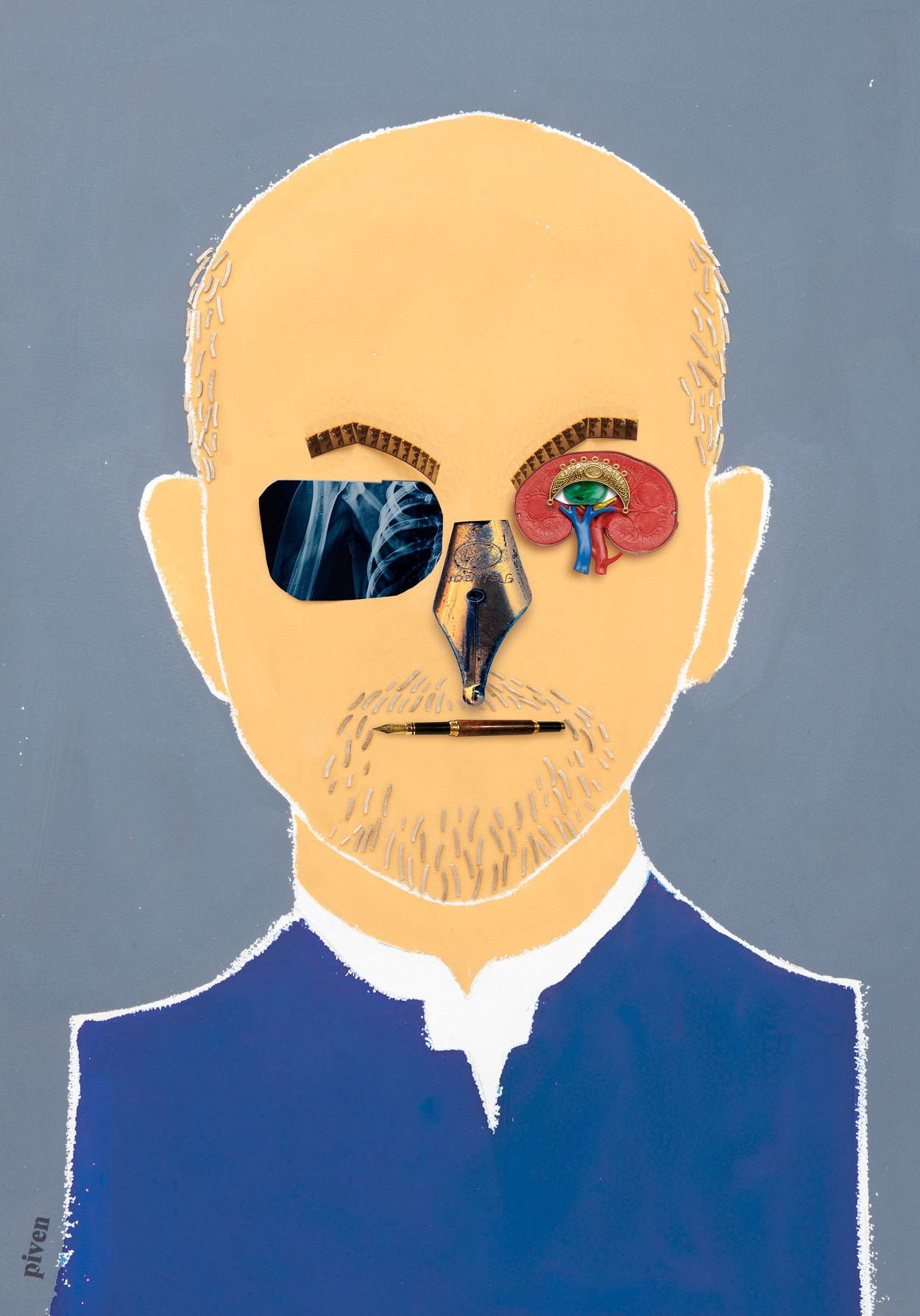
HANOCH PIVEN

There’s a story in the Talmud about a rabbi, Elazar Ben Durdaya, who loved nothing more than whoring. He’d spend every shekel he had frequenting the finest ladies on offer, and so when he heard one day that a new pro had set up shop in some distant town, he filled his purse with coins and made the long journey. (Yes, this story is in Talmud.) Money exchanged hands, clothes peeled off, and just as Elazar was having his fun, the prostitute let out a mighty fart. (Still the Talmud….)

“Know,” the gassy gal told the stunned rabbi Elazar, “that just as this wind I’d passed could never return to my flatulent behind, so, too, would you never be able to find forgiveness for your sins.”

This drove poor Elazar mad. He ran outside, naked, and began to beg for forgiveness. He asked the hills and the mountains, the sun and the moon, the stars and the constellations all to intervene on his behalf, to tell the Almighty that he wasn’t all that bad after all. The hills and the moon and the stars all refused. They had, they told Elazar, better things to do. Finally, Elazar had an epiphany. “The matter,” he told himself, “depends on nothing other than myself.” And with that, he sat by the side of the road, placed his head between his knees, and begged God to take him. A moment later, he was dead, and a voice from above informed his friends that the sinful Rabbi Elazar had gone straight to heaven.

The wisest among them, Rabbi Yehuda HaNassi, heard this and started weeping. “There is one who acquires his share in the World-to-Come only after many years of toil,” he said, “and there is one who acquires his share in the World-to-Come in one moment.” It took but one moment of clarity and introspection for Elazar to redeem himself after a lifetime of sin.

There’s much to love about this wild story, with its surreal and ribald premise, but the best thing about it, maybe, is that it doesn’t really need that last bit about divine forgiveness. It would’ve worked just as well had it ended with the naked Elazar, teary and transformed. Why? Because the story isn’t really about God at all. It’s about Man, his hilarious appetites, his lofty aspirations, and the rare and terrifying moments in which he steps up—or, in this case, sits down—for something more beautiful and true and everlasting than himself.

I thought about the story of Rabbi Elazar a lot while reading Salman Rushdie’s latest, Knife: Meditations After an Attempted Murder. The author’s experience, as that subtitle suggests, was far less piquant: He was stabbed 15 times by an assailant while giving a talk on stage in Chautauqua, lost an eye, and spent more than a year recovering from his ordeal. But the account he produced, though brief, is Talmudic in its spirit. It leaves nothing out, lets nothing solid melt into metaphor, and insists that no matter how compromised we may find ourselves, the road to somewhere better is never blocked.

Which, given Rushdie’s circumstances, is a tall order. Long before he himself makes this point, movingly, in the book’s final pages, its cover gives away the plot: the letter “I” in the title is designed to appear like a gash, as if a knife had just sliced through the slim, sand-colored volume itself.

A knife attack, this gash suggests, is a powerful thing. It can do much more than merely rip into flesh or sever a nerve. Even worse, it can pin an author to the circumstances of his injury, and make him watch, helpless and enraged, as the only thing he’d ever wanted to be judged by, his work, goes unheeded and unloved.

Rushdie, of course, is no stranger to this danger: His gorgeous 1988 book, The Satanic Verses—which led the Ayatollah Khomeini, Iran’s Supreme Leader, to issue a fatwa calling for Rushdie’s assassination—was discussed by too many and read by too few, casting a shadow over an even larger talent that was forced to propel itself out of the front pages or gossip columns and back into the book section, one excellent novel at a time.

But the fatwa was a what-if; the stabbing—which resulted in four wounds to Rushdie’s stomach, three to his neck, one to his right eye, one to his thigh, and one to his chest—was something very different. It happened, and it left the author, 75 years old at the time of his 27-second encounter with his assailant, at death’s door.

How, then, might a writer begin to make sense of something so momentous and so monstrous? A lesser writer than Rushdie might’ve, say, let those 27 seconds rush wild before turning the torrent of terror into a rivulet of self-pity and truisms about “resilience” or “the human spirit.” Or he might’ve gone the path of self-effacement, eager to understand not what was happening to him but what had happened to his assailant, interviewing the attacker and his family and putting them at the center of the work. Rushdie, Hallelujah, is wiser.

His first major insight, one he shares with the rabbis of the Talmud, is this: whatever else we may be, we’re all first and foremost embodied creatures. Fear, hope, love are grand, but none may flourish without fingers, skin, glands. Other literary lions might not have been too keen to deliver an account of their urethra, especially in a state of frailty, but Rushdie is braver. He is human, and nothing human is foreign to him. This candor helps him parry the knife. Look, he seems to be saying with every honest and heartbreaking—and, sometimes, hilarious—account of another body part behaving badly, here I am, not a victim but a writer, connecting with you now by working the magic only great books can work and making you feel what I feel, an almost magical act of transitive empathy.

And as goes the body, so does the mind. Rushdie’s deep thoughts are all here for us to admire, but the mind, especially an interesting one, isn’t crystalline. It’s muddied by lesser thoughts, some pitiful and others funny, and it’s precisely the joy of finding a pebble in the reflecting pool that makes reading such a thrill.

In Knife, Rushdie offers us the only antidote that can sustain us. It is love.

Rushdie gives us pebbles aplenty. Here he is, for example, traveling back to the scene of the attack, almost a year to the day after his encounter with the knife. He is nervous, obviously, and unsure, but when he sees a sign for a local New York State town named Fredonia, his minds adds another letter and off we go to Freedonia, and Duck Soup, and some of Groucho’s most uproarious one-liners. A good author cuts such distractions out of the final manuscript because he wants to seem smarter. A great author leaves them in because he knows it means he is human (and, perhaps even more relevantly here, alive.)

As the book rushes towards its center of gravity, however, mind and body alike take a back seat to the two gargantuan struggles that make Knife so compelling.

The first is with the assailant. Rushdie refers to him simply as the A—as in the attacker, but also the asshole, the dumb kid from New Jersey who was radicalized on a trip to Lebanon and spent years in his mother’s basement, playing video games and watching inflamed sermons online. Rushdie toys with the idea of confronting his stabber, as Samuel Beckett, another celebrated stabee, once confronted the pimp who had plunged a blade into his chest, but he thinks better of it. The A, he argues, had his turn. He applied his sharp tool, and now it was the writer’s turn to brandish sharp tools of his own and imagine a conversation in which, because it is taking place in the writer’s imagination, the A has no choice but to show up and answer truthfully.

The exchange is unsentimental. Neither Rushdie nor his conjured marauder slip into grandstanding. The A admits to having his worldview shaped by Imam Yutubi, whose bile he’d snarfed online instead of seeking more substantive stuff from more serious people in person. Rushdie attempts gentle questions about doubt and translation and mercy. The conversation goes nowhere.

Which is precisely its point. Rushdie has no interest in offering us the comfort of some serviceable explanation, some vantage point from which, if we wish, we may begin to understand, maybe even empathize with, the A. The A, scarlet letter in human form, is a shameful embodiment of all that lies on the other side of compassion. He’s not here for us to engage with; he’s here for us to resist.

The same, Rushdie believes, is true of God—which is why the book’s second great struggle is with the Creator Himself. You may think that a septuagenarian who faced down a much younger, much stronger armed attacker and prevailed would be tempted to entertain a belief in some higher, benevolent power. You may even expect an author whose books show no shortage of fantastic occurrences—you may even call them miracles—to have a late-in-life epiphany, rushing into the arms of a God whose existence he’d always denied.

Thanks, says Rushdie, but no thanks: “my godlessness,” he writes, “remains intact.” Deities, he argues matter-of-factly, were something the human race needed long ago, like young children need their parents when they are too small to feed themselves or tie their own shoelaces. Now that the species is all grown up, “we—or, let me more modestly say, I—have no need of commandments, popes, or god-men of any sort to hand down my morals to me. I have my own ethical sense, thank you very much. God did not hand down morality to us. We created God to embody our moral instincts.” This sort of sentiment is what passes for dogma these days among our self-appointed intellectual and moral betters, the sort who can easily explain each and every evil as an emanation of right-wing bigotry and absolutely nothing else.

Here, too, Rushdie stands apart. Nothing about his pronouncements is facile or blithe. Sure, he allows himself a dig or two at the 45th President and his hardy supporters, but he’s just as sharp when taking issue with the cowardly peers who failed to stand up for the embattled satirists of Charlie Hebdo when they were slaughtered by gunmen in 2015 because the magazine had poked fun at Islam. The same moral clarity led Rushdie earlier this year to rebuke American college students cheering on a “fascist terrorist group,” and to question the current desirability of a Palestinian state. “If there were a Palestinian state now,” he told a German interviewer, “it would be run by Hamas and we would have a Taliban-like state. A satellite state of Iran. Is this what the progressive movements of the Western Left want to create?”

It’s hard to imagine that this statement won Rushdie many new fans in what passes for the smart set these days. It’s just as hard to imagine that his adherence to the great yet battered ethos of humanism would win him any new fans among the hardened ranks of conservatives eager to exterminate the brutes. Rushdie doesn’t seem to care. He isn’t interested in culture wars, even if he understands that we have very real enemies. He is a true Cosmopolitan, even if he knows that every polis, as Bernard-Henri Lévy had observed, had always been judicious about just who and just what it chose to let in. He knows the power of hate. He’d seen what it can do. And in Knife, he offers us the best—the only—antidote that can sustain us.

It is love.

Whatever else it is, Knife is also the account of Rushdie falling in love with his wife, the poet, artist, and novelist Rachel Eliza Griffiths. We get their meet-cute story—following Griffiths to a balcony at a party, the author, smitten, walks into a glass door, passes out, requires care, and is delighted when the lovely woman he was hoping to woo is the one offering it. We read as Rushdie—again, unencumbered by fame or expectations of mirthless profundity—giddily shares his infatuation with his inamorata. We also feel Griffiths’ terror when she’s told that her husband, lying bleeding on stage after the attack, might not make it, and we witness her resilience as she helps Rushdie slowly regain his life force after the attack.

These are not trivial asides, to be done away with quickly before attending to the weightier stuff, like violence or religion or politics. They are, Rushdie understands, the main attraction.

Herein lies the book’s true power, the thing that makes it indispensable. It is one thing for a survivor of a political assassination to stand tall and vow that he’ll fight on; it’s another thing altogether for him to use the very same stage to declare that he also loves his wife. The former is an abstraction, and a rather limp one at that; the latter is a blueprint for life.

Those of us lucky enough to have been in love know its power. We know, too, that there’s no more urgent conversation for us to have. We may make strong pronouncements about believing in God or refuting His existence. We may rant about geopolitics or economics or any of the other forces we cannot possibly begin to understand, let alone control. But when we quiet down and look around and ask what truly matters, what we see is each other, the people we love and who love us in return. This feeling, call it humanism if you must, is the soil in which all faith in a better tomorrow is rooted. And in Salman Rushdie, it has found its great and unbowed bard.


Liel Leibovitz is editor-at-large for Tablet Magazine and a host of its weekly culture podcast Unorthodox and daily Talmud podcast Take One. He is the editor of Zionism: The Tablet Guide.


Zawartość publikowanych artykułów i materiałów nie reprezentuje poglądów ani opinii Reunion’68,
ani też webmastera Blogu Reunion’68, chyba ze jest to wyraźnie zaznaczone.
Twoje uwagi, linki, własne artykuły lub wiadomości prześlij na adres:
webmaster@reunion68.com


Graphic New Hamas Video Shows Abduction of Three Hostages Into Gaza

Graphic New Hamas Video Shows Abduction of Three Hostages Into Gaza

Debbie Weiss


Disturbing footage of Hamas terrorists abducting three Israeli hostages from the Nova music festival on Oct. 7, 2023, including Eliya Cohen (pictured). Photo: Screenshot

Disturbing footage of Hamas terrorists abducting three Israeli hostages from the Nova music festival, including dual US citizen Hersh Goldberg-Polin, was released for the first time on Monday evening.

The two-minute bodycam footage shows Hersh Goldberg-Polin, Or Levy, and Eliya Cohen bloodied but alive in the back of a pickup truck while being taken to Gaza, the Hamas-ruled enclave from which the Palestinian terrorist group launched its Oct. 7 invasion of and brutal rampage across southern Israel.

The families of the three made the decision to release the footage to highlight the “neglect” of the Israeli government in failing to secure their return 262 days after their abduction.

“Hersh, Eliya, and Or were kidnapped alive and so they have to return, today. Every day that passes endangers the abductees and may torpedo the ability to bring them home,” the Hostages and Missing Families Forum said in a statement.


WARNING: Viewer discretion advised. Some readers may find the following footage, which includes graphic content, disturbing and upsetting.


Goldberg-Polin, Cohen, and Levy were all in the same roadside bomb shelter when Hamas terrorists lobbed grenades inside.

Goldberg-Polin, who sought shelter with his friend Aner Shapira, had his arm blown off below the elbow. The video shows the 23-year-old American-Israeli clutching his arm with bone protruding out of it bound by a makeshift tourniquet.

Shapira caught seven of the grenades thrown inside the bomb shelter and managed to throw them back outside at the terrorists. The eighth grenade killed him.

Israeli Prime Minister Benjamin Netanyahu responded to the new footage, saying it “breaks all of our hearts, and once again underlines the cruelty of the enemy that we have vowed to eliminate.”

“We will not stop the war until we bring all of our 120 loved ones home,” Netanyahu said, referring to the hostages still in Gaza. Over 250 people were initially kidnapped during the Oct. 7 massacre in which 1,200 people were killed. More than 100 hostages were released as part of a temporary truce in November, and Israeli forces have rescued others, both living and deceased, as part of their ongoing operations in Gaza.

Or Levy, 33, and his wife Einav attended the music festival, arriving in the early morning shortly before terrorists overran the area. The couple took refuge in the same shelter as Goldberg-Polin and Shapira. Einav was killed and Or was taken hostage. They left an only child, Almog, who will turn three years old on Tuesday.

Eliya Cohen arrived at the festival with his girlfriend Ziv Abud, her nephew, and the nephew’s girlfriend. When the attack began, the four sought refuge in the shelter. Abud’s nephew and his girlfriend were murdered. Cohen was kidnapped from the shelter, while Ziv survived by being buried under the bodies for six hours.

On April 24, Hamas released a propaganda video showing Goldberg-Polin for the first time since his capture. The footage revealed he was missing his right lower arm.

In the undated three-minute video, Goldberg-Polin mentioned being held captive for “nearly 200 days,” suggesting a recent filming date. His mother, Rachel Goldberg-Polin, cited Israeli video experts as concluding that the footage was very recent.

Hamas murdered more than 360 people at the Nova festival and kidnapped a further 40. They also maimed and sexually assaulted both men and women at the scene.

Also on Monday evening, the Israel Defense Forces (IDF) revealed that hostage Sergeant Major Mohammed Alatrash, a tracker in the Gaza Division, was killed while battling Hamas terrorists on Oct. 7, new findings have shown. Alatrash’s body was taken into Gaza. He was survived by two wives and thirteen children, the youngest of whom was born a month before his murder.


Zawartość publikowanych artykułów i materiałów nie reprezentuje poglądów ani opinii Reunion’68,
ani też webmastera Blogu Reunion’68, chyba ze jest to wyraźnie zaznaczone.
Twoje uwagi, linki, własne artykuły lub wiadomości prześlij na adres:
webmaster@reunion68.com


Biden’s whole-of-government hostility to Israel

Biden’s whole-of-government hostility to Israel

CAROLINE B. GLICK


The administration demands Jerusalem implement a policy of backing the establishment of a Palestinian state.

.
President Joe Biden announces a proposed ceasefire between Israel and Hamas in Gaza, May 31, 2024. Photo by Chip Somodevilla/Getty Images

The top U.S.-Israel story of the week is the prospect of a massive ground war in Lebanon.

The main question dominating the discourse is whether the Biden administration intends to provide Israel with the munitions it requires to prosecute such a war successfully. The White House says it has Israel’s back. But recent U.S.-Israel backstories indicate that Israeli anxiety about the U.S. position on munitions is well founded.

Two back stories that have generated minor splashes signal clearly that contrary to President Joe Biden’s oft repeated “ironclad commitment to Israel’s security,” his administration is implementing a whole-of-government policy of criminalizing Israel and its citizens.

The first story relates to stepped-up U.S. sanctions against Israeli nationals and organizations. The second is the reported change in U.S. policy regarding visa and immigration applications from Israeli citizens.

Immediately after the Hamas-led Palestinian invasion and slaughter of Oct. 7, the Egyptian government announced that contrary to the binding requirements of international humanitarian law, Egypt would prohibit Gaza residents from transiting Gaza’s international border into Egypt to seek refuge either in Egypt or in third countries through Egypt.

Far from opposing Egypt’s unlawful action, the U.S. administration supported it. Egypt was not responsible for protecting the residents of Gaza from the war their regime opened against Israel. Israel was.

Days after Oct. 7, the administration began demanding that Israel provide a constant and ever-growing supply of food, water, medicine and other goods to the residents of Gaza. As the administration routinely ratcheted up its demands, it cited wholly unsupported, and now discredited, claims from the U.N. that Gaza was on the verge of famine.

Although the Netanyahu government quickly folded under the administration’s barely disguised threats to accuse Israel of war crimes, the Israeli public has been all but united in its opposition to the U.S. position.

Videos from Gaza have emerged daily since November showing Hamas gunmen seizing the aid trucks and shooting civilians who try to seize bags of flour and other goods from the trucks. Last week, former U.S. Middle East envoy Dennis Ross reported on his X account, “A UN official told me lately that 80 percent of the humanitarian assistance going into Gaza has been looted by criminal gangs or Hamas.”

After Israel began permitting hundreds of truckloads of supplies to enter Gaza directly from Israel in late January, a Direct Polls survey found that 82% of Israelis believed that the trucks should only be allowed to enter Gaza if Hamas released all the hostages.

A near consensus view in Israel throughout the past eight and a half months is that the humanitarian aid undermines the war effort by keeping Hamas fully supplied; maintains Hamas’s grip on power by enabling the terror regime to control who gets fed and cared for; and endangers IDF soldiers on the ground in Gaza.

Tzav 9 (aka “Emergency Orders”) is a protest group that a handful of concerned Israeli citizens formed in January to protest the truck convoys. With no funding or institutional backing, Tzav 9 called for citizens to show up at crossing points between Israel and Gaza to block the trucks from passing into Gaza. The call resonated so deeply with the public that within days of Tzav 9’s first call, Israelis from all walks of life were camping out in the field by the crossing points and walking for hours to arrive at the crossing points at dawn, day after day after day.

Hostages’ families, families of soldiers fighting in Gaza, and victims of the Oct. 7 slaughter led many of the protests. More than 15,000 Israelis from all sectors of society participated in the protest group’s actions in the intervening months. Tzav 9’s operations were legal, falling under the definition of protected speech. On occasions where protesters broke the law, they were physically removed from the protest sites by police and arrested.

The administration made no secret of its anger over these lawful political protests. U.S. officials from Biden down roundly condemned Tzav 9’s protests.

Rather than accept the right of Israelis to oppose the administration’s policies, on June 14, the State Department sanctioned Tzav 9. It ordered a freeze on whatever assets it may have, threatened sanctions against any organization or individual that supports Tzav 9’s work, and banned Tzav 9’s representatives from entering the U.S.

The basis for the sanctions was President Biden’s Executive Order 11415 from Feb. 1. That order makes Israelis liable for sanction if they “undermine the foreign policy objectives of the United States, including the viability of the two-state solution and ensuring Israelis and Palestinian can attain equal measures of security, prosperity, and freedom.”

Order 11415 relates only to action in Judea and Samaria, and is arguably irrelevant to Tzav 9, whose operations are directly solely against the resupply of Hamas in Gaza.

But no matter.

The fact that the administration is using Order 11415 against Tzav 9, a popular protest group whose positions are supported by the vast majority of Israelis, demonstrates that although the order was billed as targeting “extremist settler violence,” it was really conceived as a way to sanction the up to 80% of Israelis who oppose the administration’s positions on the war in Gaza, and more broadly, oppose its determination to establish a Palestinian state.

The administration’s move to sanction Tzav 9 set shock waves through Israel. It raised fears that consensus organizations including the Regavim Movement and government ministers, first and foremost Finance Minister Bezalel Smotrich, may soon be sanctioned by the U.S.

Regavim uses the legal system and public awareness campaigns to protect Israel’s state lands in Judea and Samaria, the Negev and the Galilee against illegal encroachment. Recently, Regavim published a massive report documenting the depth and breadth of the U.S.-funded, -armed and -trained Palestinian security forces’ engagement in terrorism.

Regavim has provided logistical support for Tzav 9’s lawful protests. Like its efforts on behalf of Tzav 9, Regavim’s other actions and campaigns enjoy the support of the majority of Israelis.

Smotrich has been widely condemned by progressives inside and outside the administration for refusing to transfer funds to the Palestinian Authority due to its support for terrorism. Smotrich has also be singled out for calumny for refusing the authorize the destruction of Israeli building projects that leftist NGOs supported by the U.S. and other foreign governments claim are unlawful.

Last Tuesday, Sen. Chris Van Hollen (D-Md.) raised the specter of sanctioning Smotrich during a Senate hearing with Assistant Secretary of State for Near Eastern Affairs Barbara Leaf. Van Hollen asked whether Smotrich’s actions place him in violation of Biden’s executive order, and Leaf said that indeed, they do.

In other words, as it has Tzav 9, the administration may sanction Regavim and Smotrich for their lawful actions—backed by a wide majority of Israelis—because the administration demands that Israel implement a policy of backing the establishment of a Palestinian state, a move rejected by 99 out of 120 members of Knesset.

This brings us to U.S. immigration policy regarding Israeli nationals.

Last Thursday,

 Yediot Achronot’s veteran reporter Itamar Eichner published a bombshell report titled “U.S. asks Israelis applying for green card whether they committed war crimes.”

Eichner reported a number of instances where IDF veterans and reservists applying for U.S. entry permits ranging from tourist visas to green cards have faced detailed interrogations—under oath—regarding their service in the IDF.

For instance, Yuval, an Israeli high-tech manager working in Silicon Valley, assumed everything was in order with his green card application and was stunned to receive a letter from the U.S. Citizenship and Immigration Services (USCIS) requiring him to submit a sworn affidavit describing his military service in granular detail.

Among other things, the letter inquired, “Did you participate as a combatant in battles during your military service? If so, please describe your activity/role in these battles; Did you command soldiers in the army? If yes, please describe the aspects of your command; Have you ever guarded (or commanded others to guard) detainees? Did you use explosives during your military service? If so, detail the types of weapons or explosives you were trained on.

“Have you ever actually used weapons or explosives? If so, what weapons or explosives did you use? How did you use weapons or explosives? On how many occasions did you use weapons or explosives? How often did you use weapons or explosives? Did you use a weapon and/or an explosive against another person? If so, the circumstances must be detailed, and explain why you used a weapon and/or an explosive against another person/people.”

In other words, as it has Tzav 9, the administration may sanction Regavim and Smotrich for their lawful actions—backed by a wide majority of Israelis—because the administration demands that Israel implement a policy of backing the establishment of a Palestinian state, a move rejected by 99 out of 120 members of Knesset.

This brings us to U.S. immigration policy regarding Israeli nationals.

Last Thursday, Yediot Achronot’s veteran reporter Itamar Eichner published a bombshell report titled “U.S. asks Israelis applying for green card whether they committed war crimes.”

Eichner reported a number of instances where IDF veterans and reservists applying for U.S. entry permits ranging from tourist visas to green cards have faced detailed interrogations—under oath—regarding their service in the IDF.

For instance, Yuval, an Israeli high-tech manager working in Silicon Valley, assumed everything was in order with his green card application and was stunned to receive a letter from the U.S. Citizenship and Immigration Services (USCIS) requiring him to submit a sworn affidavit describing his military service in granular detail.

Among other things, the letter inquired, “Did you participate as a combatant in battles during your military service? If so, please describe your activity/role in these battles; Did you command soldiers in the army? If yes, please describe the aspects of your command; Have you ever guarded (or commanded others to guard) detainees? Did you use explosives during your military service? If so, detail the types of weapons or explosives you were trained on.

“Have you ever actually used weapons or explosives? If so, what weapons or explosives did you use? How did you use weapons or explosives? On how many occasions did you use weapons or explosives? How often did you use weapons or explosives? Did you use a weapon and/or an explosive against another person? If so, the circumstances must be detailed, and explain why you used a weapon and/or an explosive against another person/people.”

Revital, a reserve combat soldier Eichner spoke to, related that she had traveled to Europe after completing reserve duty in Gaza and was hoping to continue on to the U.S.

A consular officer in a U.S. consulate in Western Europe questioned her for half an hour about the nature of her service in Gaza, and then informed her that she was barred from entering the U.S.

Until recently, Israelis were subjected to questioning about their IDF service that was little different from questioning citizens of other allied nations, like France or Britain, received. Interviewed by Eichner, Israeli immigration attorney Liam Schwartz said there is no question that the policy has changed.

“An investigation that seeks explanations about how, when and why weapons and/or explosives were used against another person is intended to understand if you have committed war crimes. A question regarding the custody of detainees is intended to ‘catch’ the military personnel and police officers who participated in the arrests in the West Bank. A demand for information regarding the active participation as a combatant in battles may also be used by the authorities for the purpose of formulating their position in relation to acts defined as genocide,” Schwartz said.

Conditions in the U.S. are currently not amenable to a government move to criminalize either the IDF or Israeli soldiers and officers. But those conditions may change. In the meantime, the Biden administration is amassing a large database of sworn statements from soldiers and officers that can be manipulated to be used against them and the country.

Since last Wednesday, when Prime Minister Benjamin Netanyahu revealed that the administration largely stopped providing Israel with vital munitions six months ago, the administration has been issuing breathless, infuriated, self-righteous non-denials every day.

Never mind that it was the administration, not Netanyahu, that began leaking its policy of “slow walking” munitions, including artillery and tank shells and JDAM kits and aerial bombs, in January.

hostility towards Israel, a hostility exposed by its sanctions against law abiding Israelis advancing consensus positions, and its new immigration policies, both show that the smart money is on Netanyahu. Not only is the Israeli leader telling the truth. His decision to expose the administration’s dirty, double-game against the Jewish state was absolutely necessary.


Zawartość publikowanych artykułów i materiałów nie reprezentuje poglądów ani opinii Reunion’68,
ani też webmastera Blogu Reunion’68, chyba ze jest to wyraźnie zaznaczone.
Twoje uwagi, linki, własne artykuły lub wiadomości prześlij na adres:
webmaster@reunion68.com


Israel Defense Chief to Discuss Gaza, Lebanon on U.S. Trip

Israel Defense Chief to Discuss Gaza, Lebanon on U.S. Trip

Reuters and Algemeiner Staff


Israeli Defense Minister Yoav Gallant speaks during a joint press conference with U.S. Secretary of Defense Lloyd Austin at Israel’s Ministry of Defense in Tel Aviv, Israel Photo: December 18, 2023. REUTERS/Violeta Santos Moura/File Photo

Israeli Defense Minister Yoav Gallant headed to Washington on Sunday to discuss the next phase of the Gaza war and escalating hostilities on the border with Lebanon, where exchanges of fire with Hezbollah have stoked fears of wider conflict.

Iran-backed Hezbollah began attacking Israel shortly after Hamas’ Oct. 7 assault sparked the war in Gaza, and the sides have been trading blows in the months since then. Hezbollah has said it will not stop until there is a ceasefire in Gaza.

“We are prepared for any action that may be required in Gaza, Lebanon, and in more areas,” Gallant said in a statement before setting off to Washington, where he said he would meet his counterpart Lloyd Austin and Secretary of State Antony Blinken.

Earlier in June, Hezbollah targeted Israeli towns and military sites with the largest volleys of rockets and drones in the hostilities so far, after an Israeli strike killed the most senior Hezbollah commander yet.

U.S. envoy Amos Hochstein visited Israel and Lebanon last week in an attempt to cool tensions, amid an uptick in cross-border fire and an escalation in rhetoric on both sides. An Israeli soldier was severely wounded on Sunday by a drone strike, the military said.

Some Israeli officials have linked the ongoing Israeli push into Rafah – the southern area of Gaza where it says it is targeting the last battalions of militant Islamist group Hamas – to a potential focus on Lebanon.

Gallant appeared to make the same link in his statement.

“The transition to Phase C in Gaza is of great importance. I will discuss this transition with U.S. officials, how it may enable additional things and I know that we will achieve close cooperation with the U.S. on this issue as well,” Gallant said.

Scaling back Gaza operations would free up forces to take on Hezbollah, if Israel were to launch a ground offensive or step up its aerial bombardments.

POST-WAR PLAN

Officials have described the third and last phase of Israel’s Gaza offensive as winding down fighting while stepping up efforts to stabilize a post-Hamas rule and begin reconstruction in the enclave, much of which has been laid to waste.

Gallant, a member of Prime Minister Benjamin Netanyahu’s Likud party, has sparred with the premier in the past few months, calling for a clearer post-war plan for Gaza that will not leave Israel in charge, a demand echoed by the White House.

Netanyahu has been walking a tightrope as he seeks to keep his government together by balancing the demands of the defense establishment, including ex-generals like Gallant, and far-right coalition partners who have resisted any post-Gaza strategy that could open the way to a future Palestinian state.

The head of Israel’s parliamentary Foreign Affairs and Defense Committee, Yuli Edelstein, told Army Radio on Sunday that fighting Hezbollah would be complex either way, now or later.

“We are not in the right position to conduct fighting on both the southern front and the northern front. We will have to deploy differently in the south in order to fight in the north,” said Edelstein, also a Likud member.

Edelstein criticized a video by Netanyahu released last week in which the prime minister said the Biden administration was “withholding weapons and ammunitions to Israel.” The video led to a spat with the White House.

President Joe Biden’s administration paused a shipment of 2,000 pound and 500-pound bombs in May over concerns about their impact if used in densely-populated areas of Gaza. Israel was still due to get billions of dollars worth of U.S. weaponry.

“I hope that in the discussions behind closed doors much more will be achieved than by attempts to create pressure with videos,” Edelstein said, referring to Gallant’s trip.


Zawartość publikowanych artykułów i materiałów nie reprezentuje poglądów ani opinii Reunion’68,
ani też webmastera Blogu Reunion’68, chyba ze jest to wyraźnie zaznaczone.
Twoje uwagi, linki, własne artykuły lub wiadomości prześlij na adres:
webmaster@reunion68.com