Archive | 2026/06/05

Israel, Lebanon agree on plan to drive Hezbollah north of the Litani River


Israel, Lebanon agree on plan to drive Hezbollah north of the Litani River

Mike Wagenheim


“We brought the people of Lebanon to the understanding that we’re not the enemy. Hezbollah is,” said Yechiel Leiter, Israel’s U.S. ambassador.
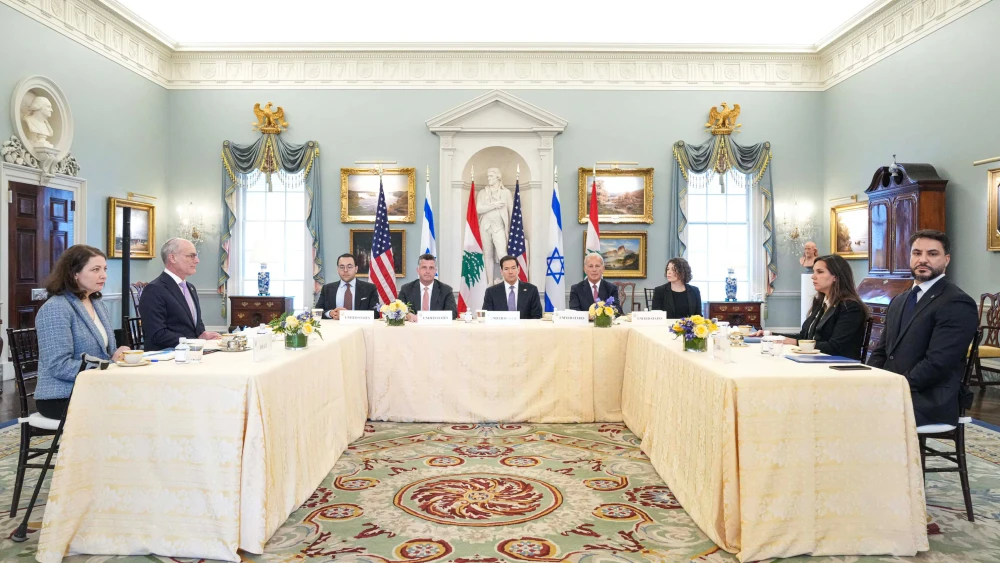
U.S. Secretary of State Marco Rubio joins working-level peace talks with Israeli Ambassador to the United States Yechiel Leiter and Lebanese Ambassador to the United States Nada Hamadeh Moawad at the Department of State in Washington, D.C., April 14, 2026. Credit: Freddie Everett/U.S. State Department.

After a marathon negotiating session of over eight and a half hours at the U.S. State Department, Israel and Lebanon announced an agreement to “swiftly advance the creation” of so-called pilot zones to gradually drive out the Hezbollah terror organization from south of the strategic Litani River in southern Lebanon, and immediately replace control of those positions with Lebanese Armed Forces troops.

The agreement, brokered by the United States, came at the conclusion of the second day of the fourth round of the historic direct talks between Jerusalem and Beirut in Washington.

A ceasefire agreed to by the two sides is contingent on a “complete cessation of Hezbollah fire and the evacuation of all Hezbollah operatives from the South Litani Sector,” according to a joint statement released by the trilateral participants.

The completed steps “will enable progress towards a comprehensive peace and security agreement,” the statement reads.

“I think we achieved something today which is relatively unprecedented,” Yechiel Leiter, Israel’s ambassador to the United States, told the press. “We brought the people of Lebanon to the understanding that we’re not the enemy. Hezbollah is, and now we’re going to work together to rid the country of this Iranian proxy on Israel’s border, which deprives Israel of its security and the Lebanese people of their freedom.”

Leiter again led talks on behalf of Israel. Simon Karam, a former Lebanese ambassador to Washington and now a special presidential envoy, headed up the Lebanese side, with Dan Holler, State Department counselor, serving as lead mediator and facilitator.

In response to a query from JNS about how the pilot zones would work, Leiter said the 2,000 or so Hezbollah terrorists operating south of the Litani will be guaranteed safe passage north.

“But after a certain amount of time, which is not very long, if they don’t make their way back to the north, then they know exactly what’s coming, and Lebanon understands what’s coming,” said Leiter.

The pilot zone project will be “guided” by the United States, said Leiter, with special units in the Lebanese army to take control of various areas and gradually spread out throughout the south, “so we don’t go into another pattern where Israel leaves, Hezbollah comes back, and we go through the same thing for the past 40 years.”

Leiter said those involved in the talks “are full of hope that this time it will succeed, because we see that the people of Lebanon are committed to freeing their country from this malign influence of Hezbollah and Iran,” adding that there may be “some ups and downs, but we are determined together with Lebanon to implement this ceasefire.”

Hezbollah, he said, is “on their knees and they will continue to be, if not on their knees, on the floor,” and the LAF’ expansion in the south will allow Israel and Lebanon to “slowly reach a state of normalization.”

All sides said the future of the Israel-Lebanese relationship is not to be dictated by outside actors who would “hold Lebanon’s future hostage,” and that Jerusalem and Beirut, who have technically been in a state of war since 1948, “have no hostile intent toward one another and committed to continuing direct negotiations to build confidence, resolve all outstanding issues and work toward a comprehensive agreement.”

The three countries also condemned Iran’s attacks throughout the region and its ongoing destabilizing activities. Hezbollah serves as an Iranian proxy.

The statement said continued negotiations are not to run “through any separate track,” alluding to Iran’s demands that a ceasefire between Israel and Hezbollah be put in place as part of a potential deal between Washington and Tehran.

“The most important thing is to understand this: Iran is disconnected from what is happening in Lebanon,” said Leiter. “We insist on that. The United States insists on that, and we hope it stays that way.”

Israel and Lebanon are set to reconvene for a fifth round of U.S.-brokered talks on both the political and security tracks during the week of June 22, ”with a view toward reaching a comprehensive agreement.”

In response to a question from JNS, Leiter confirmed the next round of discussions will be held at the ambassadorial level. He added that a trilateral meeting between U.S. President Donald Trump, Israeli Prime Minister Benjamin Netanyahu and Lebanese President Joseph Aoun, which Trump teased weeks ago, but which was rejected by Aoun, is “something that we’re working on. We want to see it happen at the right time. We believe it’s going to happen. We want to have everything prepared and set the stage for it to succeed. So we’re working on it.”

Trump is “putting all his weight behind these attempts” to broker peace, said Leiter, dismissing comments Trump made this week expressing frustration at Netanyahu’s policies in Lebanon as a “lover’s spat” that doesn’t define their relationship.

“When we’re so close, we’re going to have conversations that sometimes are heated, but the bottom line is that America, Israel and Lebanon are united in keeping Iran out of the equation,” Leiter said. “We hope that we’re going to succeed, because we have this power when we operate together.”

Mike Wagenheim is a Washington-based correspondent for JNS, primarily covering the U.S. State Department and Congress. He is the senior U.S. correspondent at the Israel-based i24NEWS TV network.


Zawartość publikowanych artykułów i materiałów nie reprezentuje poglądów ani opinii Reunion’68,
ani też webmastera Blogu Reunion’68, chyba ze jest to wyraźnie zaznaczone.
Twoje uwagi, linki, własne artykuły lub wiadomości prześlij na adres:
webmaster@reunion68.com

SPRZEDAWANIE PALESTYNY


SPRZEDAWANIE PALESTYNY

Pat Johnson


Gdyby nie było stosów palestyńskich ciał do wykorzystania, „propalestyńskie” grupy na Zachodzie musiałyby je sobie wymyślić. W rzeczywistości właśnie to zrobiły.

.

To jak Black Friday dla martwych Palestyńczyków.

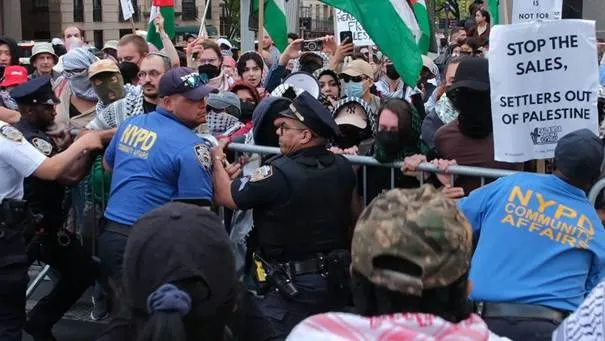
Około setki zbirów zebrało się pewnego wieczoru w tym tygodniu przed synagogą Park East w Nowym Jorku, aby „protestować” przeciwko izraelskim targom nieruchomości.

Protestujący skandowali hasła takie jak „Stop sprzedaży skradzionej ziemi” oraz „Palestyna nie jest na sprzedaż”, choć część okrzyków — nieuchronnie — poszła znacznie dalej, w tym wyraźniue ludobójcze, a dziś już rutynowe „Globalizować intifadę” oraz eliminacjonistyczne „Izrael nie powinien istnieć”.

Po pierwsze, jeśli waszym największym zmartwieniem na świecie jest dziś kupowanie i sprzedawanie mieszkań, to być może wasza perspektywa na sprawy globalne jest trochę wypaczona.

Argument brzmi, że „targi” rzekomo obejmowały nieruchomości w żydowskich społecznościach na Zachodnim Brzegu, co dla niektórych jest kontrowersyjne.

Ale kiedy „protestujący” skandują „Izrael nie powinien istnieć”, nie chodzi już o osiedla, Zachodni Brzeg ani o uprawniony komentarz polityczny.

Po drugie, jak pisałem już jakiś czas temu — jeśli uważacie, że problemem są Żydzi budujący różne rzeczy, to naprawdę powinniście się opamiętać.

Pomijając rolę nieruchomości (!) w tej dyskusji, jestem niemal pewien, że zbliżamy się do momentu, w którym izraelski prelegent mógłby przyjechać do północnoamerykańskiej synagogi, by ogłosić rozwiązanie kryzysu klimatycznego, lekarstwo na wszystkie rodzaje raka albo innowację kończącą światowy głód, a i tak wataha wyjących fanatyków otoczyłaby budynek, wrzeszcząc o żydowskiej krwi. Ale dobrze.

Mój zasadniczy punkt jest jednak taki, że w tym oburzeniu dostrzegłem coś szczególnie ironicznego. Hasło „Palestyna nie jest na sprzedaż” było godne uwagi ze względu na zdumiewający brak samoświadomości protestujących.

Ci sami ludzie, którzy wrzeszczeli przed synagogą o krwawej zbrodni, od dekad sprzedają Palestynę.

Niegdyś poważane organizacje pozarządowe, takie jak Amnesty International, Human Rights Watch, Oxfam, Lekarze bez Granic i inne, zamieniły swoje organizacje w ideologiczne sklepy z tandetą, sprzedające najbardziej prymitywne wersje palestyńskiej narracji.

Chciałbym przypomnieć, że według ONZ na świecie jest 305 milionów ludzi stojących w obliczu poważnych, wręcz dramatycznych kryzysów humanitarnych.

Dwa miliony z nich znajdują się w Gazie.

Ale jeśli spojrzeć na listy z prośbami o datki wysyłane przez te organizacje „praw człowieka”, można odnieść wyraźne wrażenie, że te dwa miliony ludzi w Gazie to jedyni cierpiący — albo przynajmniej jedyni, którzy mają znaczenie.

Coś tu się dzieje i bardzo łatwo to dostrzec.

Ludzie kochają martwych Palestyńczyków.

Gdyby nie było stosów palestyńskich ciał do wykorzystania, „propalestyńskie” grupy na Zachodzie musiałyby je sobie wymyślić.

W rzeczywistości — w bardzo bezpośrednim sensie — właśnie to zrobiły.

Zagraniczni „propalestyńscy” aktywiści walnie przyczyniają się do śmierci Palestyńczyków.

Oto jak to działa: Hamas rozpoczyna konflikt. Prowokuje najsilniejszą armię regionu do wojny. Maksymalizuje liczbę palestyńskich ofiar i skalę zniszczeń, umieszczając swoje instalacje wojskowe w cywilnych dzielnicach, szkołach, meczetach i szpitalach. Wypycha kobiety i dzieci na linię frontu. Przebiera terrorystów za lekarzy i dziennikarzy. Przywódcy i watażkowie ukrywają się w umocnionym podziemnym świecie stworzonym za miliardy dolarów międzynarodowej pomocy (albo w luksusowych kurortach Kataru). Cywile pozostają bezbronni w strefie wojny stworzonej przez ich własnych przywódców. Konsekwencje są nieuniknione. Zdjęcia obiegają świat. Łatwowierni ludzie, którzy nic nie wiedzą, obwiniają Izrael.

Najdziwniejsze jest to: miliony ludzi odmówią uznania prawdziwości tego, co właśnie napisałem, twierdząc, że żaden naród nie mógłby być tak bezduszny i zły.

Jednocześnie bezkrytycznie przyjmą cały wachlarz absurdalnych fikcji o Izraelczykach dopuszczających się „ludobójstwa”, o „masowym zabijaniu” Palestyńczyków i o każdej możliwej niegodziwości.

Traktują teorie spiskowe jak fakty. Ale uparcie odmawiają uznania palestyńskiego spisku — który nie jest teorią — prowadzącego do dziesiątek tysięcy martwych Palestyńczyków.

Śmiercionośna strategia Hamasu nie działałaby bez entuzjastycznej dystrybucji prowadzonej przez zagranicznych handlarzy nazywających siebie „propalestyńskimi”. Rozpowszechniając pozbawione kontekstu obrazy martwych i okaleczonych Palestyńczyków oraz zrównanych z ziemią palestyńskich miast, ci handlarze tragedią zapewniają, że zniszczenie hurtowo dostarczane przez Hamas zalewa rynki konsumentów w Ameryce Północnej, Europie i Australii, którzy zdają się mieć nienasycony apetyt na makabrę.

To trochę jak pornografia dziecięca — końcowi konsumenci nie produkują materiałów ani nie dokonują bezpośrednio przemocy. Ale bez popytu podaż by wyschła.

Hamas produkuje stosy martwych Palestyńczyków, ponieważ tego domagają się zachodni konsumenci.

„Propalestyńscy” aktywiści konsekwentnie ignorują pochodzenie „produktu” (martwych Palestyńczyków) tak samo, jak sprytni klienci nigdy nie zastanawiają się nad dziecięcą pracą niewolniczą, katastrofą ekologiczną czy innymi okrucieństwami stojącymi za ich koszulką za 4 dolary z Bangladeszu albo awokado za 50 centów z Kenii.

Martwi Palestyńczycy są produktem wabikiem. Ale prawdziwym produktem, który Hamas masowo sprzedaje, jest całe pokolenie zachodnich idiotów. Zagraniczni aktywiści widzą te ciała i — podobnie jak w przypadku keffiyeh wyprodukowanych przez chińskich robotników przymusowych, które noszą — nie interesują ich szczegóły, źródło pochodzenia ani instrukcja użytkowania. Tak jak drobne bangladeskie palce szyjące koszulkę z napisem „Koniec pracy dzieci!” — katastrofalne konsekwencje ich „propalestyńskiego” aktywizmu nie są czymś, nad czym ci aktywiści się zastanawiają.

Zachodni konsumenci opowiadają sobie pocieszające kłamstwa. Ten dolar tygodniowo, który dzieci dostają za szycie naszych ubrań, to przecież dużo pieniędzy tam, skąd pochodzą.

Być może największym kłamstwem jest to, że „propalestyński” rzeczywiście znaczy to, co sugeruje.

W rzeczywistości zagraniczny ruch „propalestyński” jest wielkim supermarketem anihilacji Palestyńczyków.

Grupa aktywistów może mieć problem z „targami” izraelskich nieruchomości, ale ideologiczny handel tandetą, którym sami się zajmują, jest czymś o wiele, wiele gorszym. Sprzedawanie Palestyny to coś więcej niż transakcje nieruchomościowe. Chodzi o najbardziej realne transakcje z możliwych: handel ludzkim życiem dla ideologicznego zwycięstwa i samozadowolonego popisywania się niczym jednorazowe kreacje na Met Gali.

„Kogo masz na sobie?” — można wyobrazić sobie pytanie paparazzich.

„Rodzinę Barghoutich z Chan Junus!” — odkrzykuje modny aktywista.

Jako konsumenci i trybiki podtrzymujące globalny łańcuch dostaw palestyńskiej niedoli, „propalestyńscy” aktywiści są jednocześnie łowcami okazji krążącymi po galeriach handlowych i entuzjastycznymi sprzedawcami wciskającymi tandetny towar.

Klienci szukają czegoś taniego i efektownego, czegoś, co noszą prawie wszyscy, ale co — paradoksalnie — ma sygnalizować indywidualny styl.

„Może coś z martwym Palestyńczykiem?” — pyta znudzony sprzedawca składający spodnie.

„Właśnie o tym myślałem” — odpowiada klient. „Macie mój rozmiar?”

„Sprawdzę na zapleczu. Mamy całe stosy.”


Link do oryginału:

Pat’s BEATEN WITH A SHTICK Substack
SELLING PALESTINE
About 100 thugs converged outside Park East Synagogue in New York City one night this week to “protest” an Israeli real estate expo…
Read more

Zawartość publikowanych artykułów i materiałów nie reprezentuje poglądów ani opinii Reunion’68,
ani też webmastera Blogu Reunion’68, chyba ze jest to wyraźnie zaznaczone.
Twoje uwagi, linki, własne artykuły lub wiadomości prześlij na adres:
webmaster@reunion68.com


French Far-Left Leader, Presidential Candidate Under Fire for Antisemitism Threatens Israel With Military Force


French Far-Left Leader, Presidential Candidate Under Fire for Antisemitism Threatens Israel With Military Force

Ailin Vilches Arguello


[Wikipedia: Jean-Luc Mélenchon, född 19 augusti 1951 i Tanger, Marocko, är en fransk politiker. Mélenchon var medlem i Parti Socialiste (PS) från 1976 till 2008. Han lämnade PS 2008 och grundade tillsammans med Marc Dolez 2009 det ekosocialistiska ”Parti de Gauche” (PG) som han var med och styrde fram till 2014.]
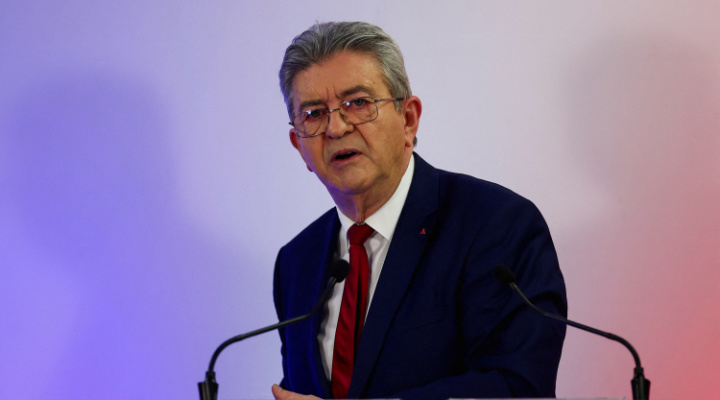
Jean-Luc Melenchon, leader of French far-left opposition party La France Insoumise (France Unbowed – LFI), delivers a speech during a campaign rally to support the list “Etre Bondy” for the upcoming mayoral election in Bondy near Paris, France, March 4, 2026. Photo: REUTERS/Abdul Saboor

The leader of France’s largest leftist coalition in parliament and a 2027 presidential candidate appeared to threaten Israel with international military action, marking the latest controversy surrounding the longtime anti-Israel lawmaker, who critics have accused of helping fuel the ongoing surge in antisemitism across France.

On Sunday, Jean-Luc Mélenchon claimed that Israeli Prime Minister Benjamin Netanyahu is seeking to occupy southern Lebanon, where Israeli forces have been fighting the Iran-backed terrorist group Hezbollah, and called for an international military deployment against Israel.

“Israel is invading and annexing all of southern Lebanon. Netanyahu has raised his flag over Beaufort Castle. This French name should remind us of the thousand-year history that binds us to Lebanon. We owe the Lebanese people aid, solidarity, and support in the face of genocidal forces,” Mélenchon wrote in a post on X.

“The aircraft carrier would serve as a more useful symbol in the Mediterranean than in the Strait of Hormuz, to remind Netanyahu that his interference in our elections and his invasions of our allies’ territories are viewed as threats by the French,” he continued. “The UN Security Council must condemn Israel and organize the withdrawal of its forces from the occupied territory.”

.

In a second post, Mélenchon even called on French President Emmanuel Macron to form an international coalition “to send troops under his military command to oversee the withdrawal of the Israeli army and protect the immediate ceasefire that must be imposed on the invader.”

Far from his first controversy, far-left La France Insoumise (LFI) leader Mélenchon — who has announced his candidacy for next year’s presidential election — has been repeatedly criticized by French Jews as a threat to their community as well as those who support Israel.

Mélenchon has a long history of pushing anti-Israel policies and of making antisemitic comments — such as suggesting that Jews killed Jesus, echoing a false claim that was used to justify antisemitic violence and discrimination throughout the Middle Ages in Europe.

Last week, Israel’s ambassador to France, Joshua Zarka, said Mélenchon’s rhetoric toward Jews “reminds [him] of Hitler,” warning that some French Jews are now hiding their identities to get through daily life amid an increasingly hostile climate in which such rhetoric fosters hatred.

“The way Jean-Luc Mélenchon speaks in front of a crowd reminds me of Hitler. The way he uses the idea of uniting against one enemy by speaking of Israel is similar to the way Hitler used to speak about the Jews,” the Israeli diplomat told Fox News Digital in a recent interview.

Mélenchon has previously said that “antisemitism remains residual in France,” remarks critics said downplayed a sharp surge in anti-Jewish hatred that erupted following the Hamas-led invasion of and massacre across southern Israel on Oct. 7, 2023.

He has also appeared to openly support Hezbollah and referred to the French Jewish community as “an arrogant minority that lectures to the rest.”

In the wake of the Oct. 7 atrocities, Mélenchon and his party also issued a statement declaring the attacks “an armed offensive of Palestinian forces” as a result of continued Israeli “occupation.”

Despite a sharp rise in antisemitism in France, Mélenchon’s rhetoric and policy positions have appeared largely unchanged, with critics accusing him of contributing to an increasingly hostile climate for Jews through inflammatory anti-Israel language.

According to a newly released report by the French Interior Ministry, anti-religious incidents have surged sharply across the country since the outbreak of the war in Gaza, fueled by a dramatic rise in antisemitic acts and, to a lesser extent, anti-Muslim incidents.

“These anti-religious acts undermine freedom of conscience and the free exercise of religion,” the report says. “They weaken national cohesion and threaten the very balance of our society.”

Since 2015, anti-religious acts have surged sharply across France, with patterns varying significantly between faiths, but antisemitic incidents now make up more than half of all such attacks.

In the last 10 years, antisemitic incidents have steadily increased, reaching a record peak in 2023 following the Oct. 7 attacks.

“The resurgence of antisemitic acts began as early as the day after Oct. 7, 2023, even before any Israeli response,” the report notes, highlighting a staggering 1,209 percent increase between September and October of that year.

Although anti-Jewish hate crimes in France declined slightly in 2025, the report says they still remain at “a historically high level,” accounting for roughly 53 percent of all anti-religious acts and marking a 203 percent increase compared to 2022. Jews make up less than 1 percent of France’s population.

French officials also warn that the figures are likely “underestimated,” noting that many victims of anti-religious attacks never file formal complaints.

Among the most alarming trends identified in the report is the growing number of attacks targeting individuals — representing 67 percent of antisemitic acts — alongside a sharp rise in physical assaults against Jews, with violent incidents tripling since 2022.

Earlier this year, the French Interior Ministry released a report revealing a troubling rise in antisemitic incidents documented in a joint dataset compiled with the Jewish Community Protection Service.

Antisemitism in France remained at alarmingly high levels last year, with 1,320 incidents recorded nationwide, as Jews and Israelis faced several targeted attacks amid a relentlessly hostile climate despite heightened security measures, according to the data.

Although the total number of antisemitic outrages in 2025 fell by 16 percent compared to 2024’s second highest ever total of 1,570 cases, the report warned that antisemitism remained “historically high,” with more than 3.5 attacks occurring every day.

Over the past 25 years, antisemitic acts “have never been as numerous as in the past three years,” the report said, noting a dramatic spike following the Hamas-led Oct. 7 attack.


Zawartość publikowanych artykułów i materiałów nie reprezentuje poglądów ani opinii Reunion’68,
ani też webmastera Blogu Reunion’68, chyba ze jest to wyraźnie zaznaczone.
Twoje uwagi, linki, własne artykuły lub wiadomości prześlij na adres:
webmaster@reunion68.com