Archives

The Americanization of the Israeli-Palestinian Debate

The Americanization of the Israeli-Palestinian Debate

Matti Friedman


Israel, like America, is deeply messed up. But it’s messed up in completely different ways.
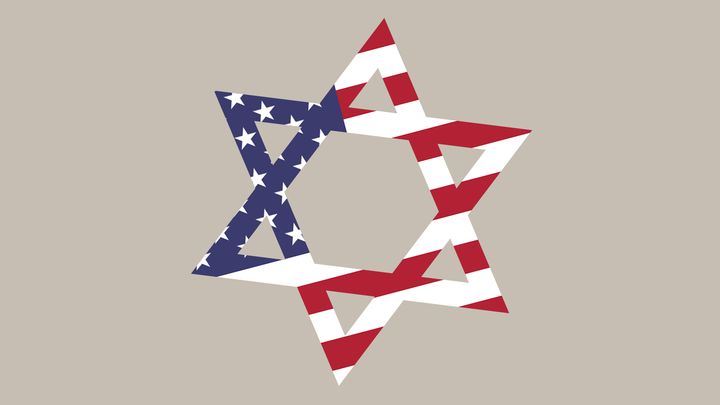
THE ATLANTIC

Rereading exodus, the schmaltzy 1958 best seller about Israel that became a Hollywood movie starring Paul Newman, I was surprised by something I hadn’t noticed as a teenager. The author, Leon Uris, describes a utopia of brave young pioneers in khaki shorts, farming when possible and fighting when necessary, quoting Bible verses as they hook up in ancient ruins, and so forth. But the novel isn’t just a fantasy about Israel, as I’d remembered, or even primarily that: It’s about America. Exodus says less about the country where it’s set than about an American tendency, one very much in evidence this month, to imagine people here in Israel as a reflection of themselves.

“She was one of those great American traditions like Mom’s apple pie, hot dogs, and the Brooklyn Dodgers” is how Uris describes his main female character, Kitty Fremont, a nurse who isn’t Jewish but finds herself embroiled in Israel’s War of Independence. The male lead, Ari Ben Canaan, is a blond frontiersman, tough yet sensitive, who knows his way around good cognac, the foxtrot, and an automatic rifle. He’s a Jew worthy of the great American tradition embodied by Kitty, and Exodus ends with them together. That seems, in fact, like the point of the book.

When Uris was writing in the 1950s, most Israeli Jews were natives of the Islamic world who’d either been drawn to the new state or forced from their home by their former neighbors. Many of the rest were survivors of the Holocaust trying to hack out a living without losing what was left of their mind. They lived alongside a sizable Muslim Arab minority, a remnant of those displaced by the war, feared as a fifth column and kept under military rule. Kibbutznik pioneers like Ari Ben Canaan were never more than a tiny share of the population—and as committed socialists, would never have gone anywhere near the foxtrot. Few people here were blond. A more representative hero for Exodus would have been the Arabic-speaking seamstress from the Jewish ghetto in Marrakech.

But Exodus wasn’t about representation, or about a strange country in the Middle East. It was an attempt to get American readers to look at Israel and see themselves. Ari Ben Canaan was a hero from the America of Ernest Hemingway and John Wayne. He was a blue-eyed, chiseled, gorgeous Paul Newman.

Although a close relationship between America and Israel has been taken for granted over the past half century, it solidified only once Americans decided that Israelis were like them. In novels and countless press reports about pioneers and fighters in the ’50s, “Israel and Jews came to be perceived as masculine, ready to fight the Cold War alongside America,” the scholar Michelle Mart wrote in her study of the topic, Eye on Israel. “By contrast, Arabs were increasingly stigmatized as non-Western, undemocratic, racially darker, unmasculine outsiders.”

“In the images of Israelis, then,” she wrote, “Americans constructed their own self-image at mid-century.”

That construction has been on my mind this month as disturbing events unfolding here have been picked up and interpreted abroad. Many Americans are now using their image of home to construct their image of Israel. Indeed, for some on the progressive left, the conflict between Jews and Muslims 6,000 miles east of Washington, D.C., has become jumbled up with American ideas about race.

“What they are doing to the Palestinian people is what they continue to do to our Black brothers and sisters here,” Representative Rashida Tlaib of Michigan shouted to applause at a rally earlier this month, leaving listeners to ponder the word they. Celebrities tweeted the phrase “Palestinian Lives Matter,” echoing the American protests for racial justice. “Until all our children are safe,” Representative Cori Bush of Missouri told the House, “we will continue to fight for our rights in Palestine and in Ferguson.”

I first encountered this sort of American projection about 15 years ago, as a local reporter working for a U.S. news service. A few Israeli motorists had been murdered by Palestinian gunmen on a road between Jerusalem and Tel Aviv that cuts through the West Bank. The army had closed the road to Palestinian traffic, allowing access only to drivers, Jews and Arabs, with Israeli license plates. This decision was effective; the shootings stopped. One of my colleagues in the bureau, a recent arrival from America, asked if we could now say that the road was “segregated.”

Since arriving from Canada as a teenager in the mid-’90s, I’d always tried to understand this place, with its singular complications and steep inequalities, on its own terms. But I realized that when many Westerners peer out at the world, what they’re really looking for is a mirror.

The story of the Jewish minority in Europe and in the Islamic world, which is the story of Israel, has nothing to do with race in America. My grandmother’s parents and siblings were shot outside their village in Poland by people the same color as them. If you stand on a street in the modern state of Israel and look at passersby, you often can’t tell who’s Jewish and who’s Arab. Many Israelis are from Arab countries, and for the 6 million Jews living in the heart of the Arab world (300 million people) and in the broader Islamic world (1.5 billion people), the question of who’s the minority is obviously a tricky one. Most Black people here are Jews with roots in Ethiopia. The occupation of the West Bank is supported by many Israelis mainly because they have rational fears of rockets and suicide bombings, tactics that weren’t quite the ones endorsed by the American civil-rights movement. All of this is to say that although Israel, like America, is deeply messed up, it’s messed up in completely different ways.

Nonetheless, the belief in a fundamental similarity has caught on. While following the protests in Ferguson, Missouri, in 2014, which to me seemed just and necessary, I saw a sign that read from ferguson to palestine. This was puzzling: American soldiers still occupied Iraq and Afghanistan, and American aid money was flowing to repressive regimes throughout the Middle East and beyond. If activists were seeking foreign inspiration for a domestic movement, they had hundreds of ongoing ethnic conflicts to choose from. But something about Palestine struck Americans as relevant to their own experience.

That sentiment has moved into elite opinion. In 2019, The New York Times published an op-ed by the respected scholar Michelle Alexander, the author of an important book on incarceration, that described Israel’s conflict with the Palestinians as “one of the great moral challenges of our time,” the scene of “practices reminiscent of apartheid in South Africa and Jim Crow segregation in the United States.” The essay didn’t explain why this conflict constitutes one of the great moral challenges or offer any indication that the author had ever visited Israel. Last year the Times ran an essay by the author Viet Thanh Nguyen, a Pulitzer Prize winner and a college professor in Los Angeles, that ridiculed “white writers” for their “white privilege,” identified the American dream as “settler colonialism,” and then segued into an attack on Israelis as settler colonialists.

For these Americans, distant Jews have become an embodiment of the American evil, racial oppression. People have always projected fantasies onto other places and groups, but this particular type of projection, in which Jews are displayed as the prime symbol of whatever’s wrong, has a long history. When it surfaces, it usually heralds an impatience with logical analysis and normal politics, and a move toward magical thinking.

In some ways, Americans haven’t progressed from the “Israeli” pioneer of Exodus, who’s white and blond and seems so awfully familiar. We’re still stuck with Ari Ben Canaan— except now he’s a racist. And if Palestinians were disdained in the old novels and reportage as non-Western, dark, and unmasculine, they’re still more or less kept in the same world of stereotypes—except those attributes are no longer considered negative. This helps explain, for example, the passivity of Palestinians in many Western accounts of what’s going on here, and why Western reporters are drawn to the tragedy of Palestinian civilians while remaining relatively uninterested in the ruthless strategy and significant accomplishments of the Palestinians’ Iran-backed military force, Hamas. In both the old and new versions of the fantasy, Israelis are actors and Palestinians are props.
Western observers are often tempted to see foreign countries as mirrors of their own, because it makes a story more compelling for members of their audience, who are interested—who isn’t?—mainly in themselves. And it means they can analyze other societies without going to the considerable trouble of studying them, learning their language, or even visiting. So Narendra Modi of India is Donald Trump, and France’s problem is racial inequality, and Dutch conservatives are Republicans. It’s seductive to think that everything you need to know you learned back in Berkeley.

But believing that foreign countries operate according to American logic is a recipe for confusion, even disaster. Many Americans looking at Iraq in the early years of this century, for example, saw a democracy-in-waiting stymied only by a cruel dictator. America then took steps that resulted, directly and indirectly, in hundreds of thousands of deaths, including those of more than 4,500 American soldiers, with little to show for it. The world is not a mirror. The world is a kaleidoscope that can be understood only by people who are experts in each individual shard, and even then only partially.

The truth is that Israel is a small country in the Middle East that has nothing to do with the demons stalking America. We have our own demons. Conflating them won’t make either country’s problems easier to understand or solve.


MATTI FRIEDMAN is an Israeli journalist and the author, most recently, of Spies of No Country: Secret Lives at the Birth of Israel.


Zawartość publikowanych artykułów i materiałów nie reprezentuje poglądów ani opinii Reunion’68,
ani też webmastera Blogu Reunion’68, chyba ze jest to wyraźnie zaznaczone.
Twoje uwagi, linki, własne artykuły lub wiadomości prześlij na adres:
webmaster@reunion68.com


Militia-like pro-Palestinian gangs attack Jews across US, West – analysis

Militia-like pro-Palestinian gangs attack Jews across US, West – analysis

SETH J. FRANTZMAN


The militia-style of ISIS, now under the Hamas banner, appears to have come to more western countries under the guise of pro-Palestinian activism.

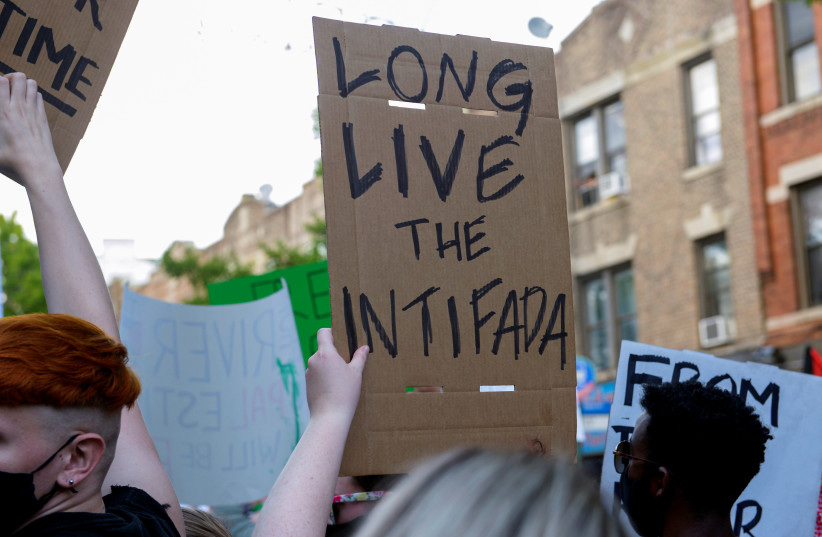
‘Long live the Intifada’: Palestinians and pro-Palestinian supporters protest against Israeli attacks on Gaza amid days of conflict between the two sides, in Brooklyn, New York, US, May 15, 2021. / (photo credit: RASHID UMAR ABBASI / REUTERS)

Attacks on Jews from London to California now appear to be a series of systematic assaults by groups of far-right style pro-Palestinian men organized in militia-like groups. They have included convoys of cars calling on people to rape Jewish women and targeted attacks on Jews eating dinner or working in areas known to have high levels of Jews. This is not spontaneous or random, Jews have been targeted for two weeks under the guise of the war in Gaza.

Here is what we know about some of the groups of men in militia-like targeted attacks on Jews across western countries. In Canada men went to Cote-Saint-Luc, where there is a sizable Jewish community, and yelled antisemitic comments. Two were arrested. The violence against Jews in Montreal appears not to have been covered well, but attackers were armed and sought out Jewish neighborhoods.

In Edmonton, reports say that men went to a Jewish area near Beth Israel Synagogue shouting “free Palestine” and seeking out Jews. They asked people “do any Jews live here.” People went to the west end of Edmonton also “seeking Jews,” according to reports.

In New York City, the militias targeted the Diamond District where the JTA notes there are many Jewish-owned businesses. “One person was burned when two fireworks were thrown from a car.” Some American Jews feel the need to remove their kippahs or Star of David necklaces or even Mezuzahs.

In one week in the US there were 193 antisemitic incidents. In most of the world there were zero violent antisemitic incidents. While attacks on Jews are common in the US and New York in particular, there was a major rise. The types of incidents also point to a similar trend of young aggressive men riding around in cars seeking out and attacking Jews. It is different from the series of recent attacks on synagogues in Riverdale which was done before the conflict and for which one person was arrested and then released without needing to pay bail. Progressive Jewish activists said that having police protect Jews places of worship could be racist because Jews are “white.” That was before the recent series of attacks.

In another convoy of vehicles, the JTA story by Ben Sales says that “pro-Palestinian men in a caravan chased an Orthodox Jewish man.” The militias hunted down Joseph Borgen, who was wearing a kippah, and beat him in Manhattan. The article notes that “Waseem Awawdeh, 23, has been arrested in connection with the beating and charged with a hate crime, gang assault and other charges.”

The attacks in New York are done by men with faces wrapped in khaffiyah’s, similar to how militants wrap their faces in Gaza or Iraq. The men sometimes wear military-style clothes as well, one man can be seen with what looks like a tactical vest. In another video posted online, a car with a Palestinian flag appeared to do donuts at Washington Square Park in New York.

In Los Angeles, a convoy of pro-Palestinian militia-types attacked Jewish people at a sushi restaurant. It is being investigated as a hate crime. The convoy in this case included numerous large men who appeared to search for and target Jews. Video from Times Square showed numerous angry aggressive men, some with Palestinian flags, trying to attack a pro-Israel event.

Many of the men covered their faces, wrapped in black cloths, balaclavas or scarves. Another video shows gangs of men swinging fists and attacking those they think are Jews. These are gangs of men, almost no women present, who set out to find Jews and assault them. There is no pretense of this being a protest. The men dress as militants, not protesters. The use of the car convoy, with megaphones and men hanging out windows, is a relatively new phenomenon and appears systematically planned across numerous cities in western countries.

Another pro-Palestinian gang sought to target Teaneck, New Jersey, where many Jews live. They planned it for Shabbat on May 22.

Many incidents are occurring. Alex Zeldin whose handle is @Jewishwonk wrote “I wore my kippah on my way to get the last of my groceries on the Upper West Side ahead of Shabbos. Just had a pair of teens follow me for a block yelling antisemitic slurs and making threats.”

In Germany a report at the Guardian notes “most violent incidents were in the southern Berlin district of Neukölln, where demonstrators who had gathered to show solidarity with Palestinians burned Israeli flags, chanted anti-Israel slogans and flew Hamas banners.”

The German anti-Jewish attacks may have been fueled from Ankara where the pro-Hamas ruling party has used its diaspora for years to increase extremism. In Mannheim there were arrests made for hate speech. “In Cologne, a further pro-Palestine protest drew 800 participants, twice the number, before police broke it up. There were also large gatherings in Hamburg, Leipzig, Frankfurt, Stuttgart and Hanover, where calls were made for the dissolution of Israel.”

At a pro-Palestinian demonstration in Gelsenkirchen one fascist yelled out “s**t Jews.” At the same demonstration, that targeted a synagogue, Turkish flags were flown. Israeli flags have been burnt. In Munich a man was called a “Jewish pig” and attacked, although it was not clear if it was linked to anti-Israel incidents. Now synagogues need protection.

In the UK, the pro-Palestinian militias organized a convoy of cars from Bradford that was seen with Palestinian flags on it “touring Jewish areas of north London,” according to the Jewish Chronicle. At least one person shouted “F**k the Jews, rape their daughters”. More attacks on Jews were planned. Several arrests were made. The JC reported that “the CST said it had been ‘deluged’ with reports from St John’s Wood, Hendon, Hampstead, Golders Green, and Swiss Cottage in Finchley Road.” Four men were arrested on suspicion of racially aggravated public order offenses.

By May 21, after most of the worst violent incidents had occurred, there was a coordinated campaign among some on the far-left who had been inciting against Israel during the conflict to condemn the attacks. US Senator Bernie Sanders wrote that “we’ve recently seen disturbing antisemitic attacks.”

Congress member Ilhan Omar wrote that the attacks were “horrific and unacceptable. Nobody should face threats and harassment based on their religion or ethnicity.” Alexandria Ocasio-Cortez wrote on May 22 wrote “we will never, ever tolerate antisemitism here in NY or anywhere in the world. The recent surge in attacks is horrifying. We stand with our Jewish communities in condemning this violence.”

If Not Now wrote “We condemn in the strongest terms the antisemitic acts in recent days. These isolated incidents don’t represent the Palestinian rights movement, which is grounded in values of freedom and justice, not hate and bigotry.”

Since the Gaza conflict began, many anti-Israel progressive Jewish activists in the US have written on social media about the need to distance themselves from Israel. They argue that “we’re creating, flourishing, safe, Jewish lives” in the US and that to defeat Israel the diaspora needs to create inclusive communities.” It does not appear any of these groups protested physically against the antisemitic militia attacks.

There is a difference between the ostensibly progressive anti-Israel voices or pro-Palestinian demonstrators and the militant militia-like pro-Palestinian convoys of men who adopt the tone, aggression and comments of far-right militias. These types of militant groups, their dress, manner and actions, are common in Iraq, Hamas in Gaza and other places. These are properly called far-right style groups, either Islamists or Palestinian nationalists. No investigation has been launched seeking to analyze why this conflict resulted, only several days after it began, in systematic attacks on Jewish communities and areas from Germany to the UK, Canada and the US.

In previous conflicts in Israel there have been large anti-Israel rallies. However, the use of car convoys, megaphones and groups of men seeking out Jews and beating them while targeting Jewish areas appears to not only support a pattern of targeted hate violence, but also similar methods and means.

It also appears that the coordinated attacks knew the location of large Jewish communities, systematically seeking them out in Montreal, Edmonton, New York, Los Angeles, London and places in Germany. This was not a series of pro-Palestinian demonstrations that happened to include some antisemitism. This was convoys of cars filled only with men going to Jewish areas, with the men covering their faces, and shouting anti-Jewish abuse and attacking people. Within days of the conflict the methodology appeared to be a message of “find the Jews, get the Jews in your local community.”

Who organized this and how it was disseminated across different communities thousands of miles from each other is unclear. That it appears to be militia-style hate crime sectarian violence is clear. These attacks were not about Israel. They were about ethnically cleansing the streets of London, Canada, the US and other countries of Jews and anyone who wears a kippah or works in a Jews areas or goes to synagogue. Convoys of men waving flags calling to “rape their daughters” is what ISIS did in Iraq. The militia-style of ISIS, now under the Hamas banner, appears to have come to more western countries under the guise of pro-Palestinian activism.

There were no rallies like this in Russia, Poland, Ukraine, Hungary, Vietnam, South Korea, Singapore, India, Japan or many other non-western countries. This is something that happened in mostly English-speaking countries, such as the US, Canada and UK, the countries that claim to be tolerant, democratic and against hate. There have been no large protests against the attacks.


Zawartość publikowanych artykułów i materiałów nie reprezentuje poglądów ani opinii Reunion’68,
ani też webmastera Blogu Reunion’68, chyba ze jest to wyraźnie zaznaczone.
Twoje uwagi, linki, własne artykuły lub wiadomości prześlij na adres:
webmaster@reunion68.com

Over 130 Hollywood Elites Sign Open Letter Against Israel Conflict Misinformation on Social Media

Over 130 Hollywood Elites Sign Open Letter Against Israel Conflict Misinformation on Social Media

Shiryn Ghermezian


The Hollywood sign in Los Angeles, California. Photo: Wikimedia Commons.

More than 130 members of the entertainment industry have signed an open letter calling on celebrities and influencers to stop spreading false information about the Israeli-Palestinian conflict.

“We call on our colleagues and friends in the entertainment community to stop posting misinformation and one-sided narratives that only work to inflame the conflict instead of bringing about peace,” the May 14 open letter stated. “When lives are at stake, we all bear responsibility to unite rather than divide. Incendiary language only benefits those at the extremes who have no interest in peace. Our thoughts are with all Israelis and Palestinians who are experiencing unfathomable levels of fear and violence, and hope for the day when both peoples can live side by side in peace.”

It added, “While we may have differing opinions on the conflict, it is never okay for Hamas to publicly call for the killing of civilians, use civilians as human shields, and rain down missiles indiscriminately on civilian populations with no care about who is killed — Arab or Jew.”

The letter’s signatories include KISS  frontman Gene Simmons, Grammy Award-winning artist Michael Bublé, songwriter-producer Diane Warren, “The View” co-host Meghan McCain, actress Selma Blair, actress Emmanuelle Chriqui, Disturbed frontman David Draiman, actor David Mazouz, and singer Matisyahu, among many others. It was published by Creative Community for Peace, an apolitical, non-profit entertainment industry organization.

“Misinformed and fallacious memes being posted by those far away from the conflict are being taken for truth,” said Ari Ingel, director of Creative Community for Peace. “This distorted version of reality is being spread online and then amplified by influencers, which only fans the flames of hatred and has real life consequences.”

Ingel told Variety he hopes the open letter will also inform people that “Hamas is playing a leading role in this violence.”

“While we may have differing views on whether the evictions are legitimate or not legitimate, that doesn’t take away from Hamas firing these missiles indiscriminately at civilian populations in Israel, which affects Arabs and Jews,” Ingel explained. “People need to call on [Hamas] to stop firing missiles and stop inflaming the situation.”


Zawartość publikowanych artykułów i materiałów nie reprezentuje poglądów ani opinii Reunion’68,
ani też webmastera Blogu Reunion’68, chyba ze jest to wyraźnie zaznaczone.
Twoje uwagi, linki, własne artykuły lub wiadomości prześlij na adres:
webmaster@reunion68.com


Celebrity Interior Designer Urges Hollywood to ‘Educate Yourselves’ Before Posting About Israel-Palestinian Conflict

Celebrity Interior Designer Urges Hollywood to ‘Educate Yourselves’ Before Posting About Israel-Palestinian Conflict

Shiryn Ghermezian


Ryan Saghian. Photo: YouTube screenshot.

An Iranian Jewish interior designer who boasts a celebrity clientele called on social media users, and especially those in Hollywood, to do their research surrounding the ongoing violence between Israel and the Palestinians before posting messages online.

“I urge my fellow colleagues, friends, clients and Hollywood celebrities to avoid posting from the perspective of what’s ‘trending’ and to really educate yourselves and use your platforms for good,” said Ryan Saghian, the youngest designer ever awarded Interior Designer of the Year by the city of Los Angeles.

The 28-year-old — who has been featured in Elle Decor, Architectural Digest and Vogue — shared his comments on Thursday in an Instagram post. He uploaded a slide that featured his statement, which has since gone viral among Israel supporters. Saghian began by saying “You bet your ass I stand with Israel, the one and only Democratic Nation in the Middle East that has equal rights for every single person no matter their sex, race, religion, and sexual orientation.”

“And you bet your ass I stand with the Palestinians people, who deserve all the same equal rights as us,” he continued. “I do not, however, stand with Hamas, a declared terrorist organization governing these territories and who’s [sic] hate for Israel and Jews comes before helping their own people.”

Saghian, who competed on Bravo’s Best Room Wins in 2019, then explained that although in the past he has avoided making “political commentary” on his Instagram page, “this is not political, this is personal,” and spoke about his family fleeing Iran during the 1979 revolution, when Jews were “no longer welcome.” He ended with a photo of two men embracing in a kiss, one wearing a kipah and the other an keffiyeh. He also wrote in the Instagram post’s caption “#istandwithisrael  #istandwithpalestine #idonotstandwithhamas.”

His remarks come after numerous celebrities and high-profile figures have posted on social media about their solidarity with the Palestinians amid the continued violence in the Middle East, while also accusing Israel of “ethnic cleansing,” “apartheid,” and conducting a “crime against humanity.”


Zawartość publikowanych artykułów i materiałów nie reprezentuje poglądów ani opinii Reunion’68,
ani też webmastera Blogu Reunion’68, chyba ze jest to wyraźnie zaznaczone.
Twoje uwagi, linki, własne artykuły lub wiadomości prześlij na adres:
webmaster@reunion68.com


Celebratory Singing at the 50th Anniversary of the Reunification of Jerusalem

Celebratory Singing at the 50th Anniversary of the Reunification of Jerusalem


Israel Video Network


Zawartość publikowanych artykułów i materiałów nie reprezentuje poglądów ani opinii Reunion’68,
ani też webmastera Blogu Reunion’68, chyba ze jest to wyraźnie zaznaczone.
Twoje uwagi, linki, własne artykuły lub wiadomości prześlij na adres:
webmaster@reunion68.com