Archives

Israel must take control of its own fate

Israel must take control of its own fate

ORI WERTMAN


The common argument among opponents of the plan is that the annexation/disengagement/sovereignty act would damage the peace treaty with Jordan and could lead to a third Palestinian intifada.
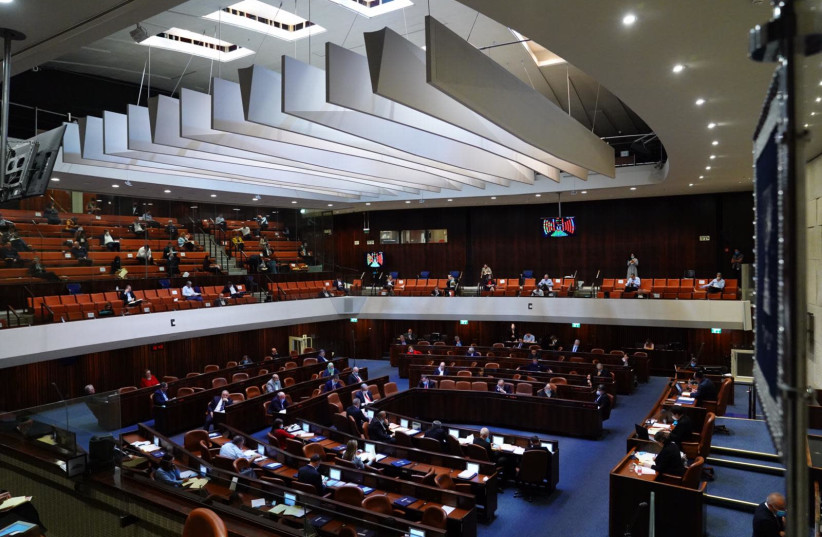
Knesset meeting to pass bills to create coalition government on May 6, 2020 / (photo credit: ADINA WALLMAN)

The State of Israel stands at a historic crossroads. This July, the Knesset is expected to decide on the course of applying sovereignty over the Jordan Valley and the West Bank settlement blocs, thus determining the boundaries of the Jewish state. However, while the imminent step is gaining consensus among the Israeli public, which most of it supports, there are voices among the political system and former senior officials in the defense echelon against an Israeli unilateral move.

The common argument among opponents of the plan is that the annexation/disengagement/sovereignty act would damage the peace treaty with Jordan and could lead to a third Palestinian intifada. Historically, the situation in which Israel faces important decisions is no stranger to it. Since the establishment of Israel, the Israeli leadership needed to decide about the fate of the Jewish state. This was the case before previous major events in the history of Israel, such as the declaration of statehood in 1948, the Six Day War in 1967 and the Oslo Accords in 1993-1995. In each of these cases, voices were heard claiming that the move posed a serious security threat and should therefore be avoided.

Although today there is a consensus that the decision to declare the establishment of Israel was a sagacious move, this was not the case among the leadership of the Yishuv before the May 1948 declaration. The dire military situation in which the Jewish military forces prevailed, the American pressure against the upcoming declaration and the danger of invasion by Arab armies led many among the Jewish leadership to contemplate whether the declaration of establishing a Jewish state was the right act at that time. While David Ben-Gurion, Moshe Sharett and others endorsed the declaration of the establishment of a Jewish state at the end of the British Mandate, there were other voices who opposed the move.

The US government also urged the Yishuv leadership to postpone or even suspend the declaration of the state and, alternatively, to sign a truce to end the war between Jews and Arabs. Thus, at the Mapai senior leadership were those who rejected the declaration announcement on the expiry of the British Mandate, including Yosef Shprintsak, Eliezer Kaplan, David Remez and Pinchas Lavon. They contended that under the current conditions, the Yishuv leadership would be better off postponing the declaration of the establishment of a Jewish state. Alternatively, they suggested that the Yishuv should accept the American proposal for a truce with the Arabs. Shprintsak even claimed that the declaration would be an irresponsible step, warning that it would lead to the destruction of the entire Yishuv. Eventually, as we know, despite the many risks, the Yishuv leadership decided to declare the establishment of a Jewish state in May 1948, and the State of Israel became an existing fact.

EVEN BEFORE the decision to go to the Six Day War, there were those among the Israeli leadership who warned against launching a preemptive strike against Egypt. In the eyes of the IDF’s senior command headed by then chief of staff Yitzhak Rabin, Nasser’s announcement regarding the blockade of the straits was perceived as a declaration of war against Israel, which requires an immediate military response. However, while the IDF senior command supported the launch of a preemptive strike against the Egyptian military forces concentrated in the Sinai desert, most government ministers opposed the war.

Their main argument was that Israel should not enter into a military campaign without the backing of the US government. Some of the ministers even warned that launching a war alone would lead to the destruction of the Jewish state. This argument was the result of the Sinai War of 1956, followed by a severe crisis between Israel and the Eisenhower government, and hence the Israeli conclusion was that they should not be involved in any military initiative against the Arabs without securing the support of the American administration. Even in the above case, despite all the risks, Israel decided to launch a preemptive attack against the Egyptian army, a move that resulted in the great victory of the Six Day War.

A similar situation also occurred before and during the Oslo Accords. Although the main goal of Rabin’s government was to separate Israelis and Palestinians and thus prevent a situation of a binational state, there were voices claiming that the agreements with the PLO posed a great risk. The opponents of the Oslo process, headed by then Likud leader Benjamin Netanyahu and current prime minister, claimed that the agreements with Arafat would lead to the establishment of a Palestinian terrorist state within the 1967 borders, which would jeopardize the security of Israeli citizens. Like the two cases mentioned above, the Israeli government had decided to act in spite of the risks, and the Oslo Accords have become a definite fact. Eventually, although the agreements did not include a Palestinian Israeli peace agreement, they achieved a de facto separation between the two peoples and significantly removed the danger of the binational state.

In conclusion, history demonstrates that before any fateful decision regarding the future of the State of Israel, the views among its leadership were divided. In this context, it can only be determined retrospectively whether the move was right or wrong. However, history shows us that by being at an important crossroads, it was better for the Jewish people to take the initiative and decide for themselves about their own fate and not leave the decision to others. Even today, Israel is at a crossroads and the danger of a binational state is on the horizon. Therefore, since there is no Palestinian partner for peace, Israel must take control of its own fate and unilaterally shape its borders while maintaining its security interests.


The writer is a doctoral candidate and research assistant at the International Centre for Policing and Security at the University of South Wales, and is a member of the team of experts of the MirYam Institute.


Zawartość publikowanych artykułów i materiałów nie reprezentuje poglądów ani opinii Reunion’68,
ani też webmastera Blogu Reunion’68, chyba ze jest to wyraźnie zaznaczone.
Twoje uwagi, linki, własne artykuły lub wiadomości prześlij na adres:
webmaster@reunion68.com


Alfabet Kisiela

Alfabet Kisiela

  Video Studio Gdańsk


Miłosz, Gomułka, Giedroyć i wielu innych… Wybitni pisarze i politycy, sławni kompozytorzy i policjanci, tym razem – jako żywi ludzie. Widziani bystrym okiem Stefana Kisielewskiego, ze wszystkimi ich śmiesznostkami, przywarami ale i wielkością, w jego błyskotliwych dykteryjkach. Niekonwencjonalnie oceniani przez Kisiela, który ich znał i pamiętał.


Zawartość publikowanych artykułów i materiałów nie reprezentuje poglądów ani opinii Reunion’68,
ani też webmastera Blogu Reunion’68, chyba ze jest to wyraźnie zaznaczone.
Twoje uwagi, linki, własne artykuły lub wiadomości prześlij na adres:
webmaster@reunion68.com


Iran & Hezbollah vow to remain in Syria despite Israeli attacks – TV7 Israel News

Iran & Hezbollah vow to remain in Syria despite Israeli attacks

  TV7 Israel News


1) The Secretary General of the Lebanese Iranian-proxy Hezbollah confirmed Israel’s increased attacks on weapons-manufacturing sites in Syria; all the while denying Iran’s active operational involvement in the war-torn country.

2) Iran’s Islamic Revolutionary Guards have reportedly stepped up efforts to transfer, by means of aerial shipments, numerous advanced precision-guided Fateh-110 missiles to Syria.

3) Air Travel is gradually returning to (what can be called) a new normal, after weeks of bare minimum flights.


Zawartość publikowanych artykułów i materiałów nie reprezentuje poglądów ani opinii Reunion’68,
ani też webmastera Blogu Reunion’68, chyba ze jest to wyraźnie zaznaczone.
Twoje uwagi, linki, własne artykuły lub wiadomości prześlij na adres:
webmaster@reunion68.com


Der szwarcer jungermanczik (rozdział II)

Der szwarcer jungermanczik (rozdział II)

JANKEW DINEZON


Fragment okładki „Chiduszu” 8/2019 będącej ilustracją do powieści Jankewa Dinezona „Der szwarcer jungermanczik”. Autorka: Edyta Marciniak

POCZĄWSZY OD „CHIDUSZU” 8/2019 PUBLIKUJEMY W ODCINKACH PIERWSZE TŁUMACZENIE NA JĘZYK POLSKI POWIEŚCI JANKEWA DINEZONA DER SZWARCER JUNGERMANCZIK (CZARNY MŁODZIENIASZEK). POWIEŚĆ, PO OPUBLIKOWANIU W 1877 ROKU, STAŁA SIĘ PIERWSZYM JIDYSZOWYM BESTSELLEREM – LOSY ROZY I JÓZEFA PRZEŻYWAŁ NIEMAL KAŻDY POLSKI ŻYD [CZYTAJ WIĘCEJ O AUTORZE POWIEŚCI]. CHOĆ DO NIEDAWNA ZAPOMNIANY, JANKEW DINEZON BYŁ SWEGO CZASU JEDNYM Z NAJWAŻNIEJSZYCH PISARZY JIDYSZ. PO ŚMIERCI SPOCZĄŁ WRAZ Z PRZYJACIÓŁMI – PERECEM I AN-SKIM – W JEDNYM GROBOWCU NA CMENTARZU ŻYDOWSKIM W WARSZAWIE.

PONIŻEJ PREZENTUJEMY DRUGI ROZDZIAŁ POWIEŚCI.  

1.

PÓŁNOC W BESMEDRESZU

2.

LIST

Kilka tygodni później znów widzimy naszego Józefa, gdy do późna w nocy siedzi nad lekturą. Tym razem czyta kilka gęsto zapisanych kartek papieru. Był to list, który napisał do rodziców. Czytał go już któryś raz z kolei, a gdy tylko kończył, zaczynał od nowa:

Kochana i najdroższa Mamo!

Wiem, że zraniłem Cię, nie pisząc tyle czasu. Z pewnością jednak nie będę musiał zbyt długo prosić o wybaczenie, gdyż jestem przekonany, że nie myślisz o mnie źle. Wiem, jak bardzo mnie kochasz. Twój Józef kocha Cię równie mocno. Nie jestem winien trosk i bólu, których Ci przysporzyłem – tak się po prostu zdarzyło. Nie chciałem Cię martwić, postanowiłem więc zacisnąć zęby i przeczekać trudną sytuację, w której się znalazłem. Wolałem opowiadać Ci tylko o rzeczach przyjemnych. Taka matka jak Ty zasługuje na to, by słuchać wyłącznie dobrych nowin! Widzisz, Bóg nas nie opuszcza, a jego łaska jest wszędzie. 

W besmedreszu było mi źle. Nie mogłem się przyzwyczaić do twardej ławki, do zimna, do bycia „próżniakiem”… Nie ukrywam, że byłem bliski rzucenia tego wszystkiego. Poważnie rozważałem powrót do domu. Wiem, że przyjęłabyś mnie znów pod swój dach, ale z pewnością płakałabyś też nad moim nieróbstwem. Jedynie ból, który z pewnością bym Ci sprawił, nie pozwolił mi zrobić tego, co chciałem.

Lecz na moje szczęście – choć sam doprawdy nie wiem, czy można to tak nazwać – Bóg zesłał mi brata. Tak go nazywam, choć w rzeczywistości jest mi nawet bliższy niż brat. Zaprosił mnie do swojego domu, gdzie znalazłem nowych rodziców. Nową matkę. 

Kochana Mamo! Wiem, że nie obrazisz się za to, że pozwalam sobie nazywać obcą kobietę tym świętym imieniem, którym człowiek nazywać powinien tylko jedną w swoim życiu kobietę. Kochasz mnie, gdyż jestem Twoim rodzonym synem. Nie potrafisz mnie nie kochać. Będąc tak dobrą i oddaną, czujesz przecież, że obce dziecko nie zajmie mojego miejsca w Twoim sercu. Jestem Ci bliższy niż wszyscy inni. 

A co byś pomyślała, gdybym powiedział Ci, że zupełnie obca kobieta jest mi tak oddana, tak dla mnie dobra i być może – ukarz mnie, Boże, jeśli to grzech tak mówić – kocha mnie równie mocno, jak Ty?

Ta zesłana mi przez Boga kobieta nieustannie sprawuje nade mną pieczę. W środku nocy przychodzi okryć mnie kołdrą. Moje skarpetki, często mokre lub podarte, rano znajduję czyste i pocerowane. Zauważyłem też, że nie pozwala nikomu innemu pościelić mojego łóżka. Wczoraj w nocy poprawiała mi poduszkę. Czułem, jak jej ciepłe, matczyne dłonie podtrzymują moją głowę, jak jej ciepłe usta składają mi na czole pocałunek pełen troski. Słyszałem, jak szepce: „Jak matka mogła spuścić z oczu takie dziecko? Teraz ja będę ci matką. Panie tego świata, pobłogosław mnie takim synem!”. 

Słyszałem i czułem to wszystko, lecz udawałem, że śpię. Serce biło mi mocno i ze wzruszenia ledwie mogłem złapać oddech. Westchnienie wyrwało mi się spod serca, a w odpowiedzi usłyszałem jak echo jej westchnienie, które wydała z siebie, gdy na czubkach palców wychodziła z pokoju. Natłok myśli w głowie nie pozwolił mi już tej nocy zasnąć. 

Przypomina mi się dzieciństwo – gdy opowiadałaś mi Twoje kochane historyjki, a ja zwierzałem Ci się ze wszystkich sekretów. Przysięgam, że nigdy Cię nie okłamałem. Nie musiałem – nie ukarałaś mnie przecież nigdy: ani gdy coś zniszczyłem, ani gdy popełniłem jakiś błąd. Opowiadałaś mi tylko, jak Ciebie karcono w młodości, dzięki czemu rozumiałem, w jaki sposób sam mam się poprawić. Obiecywałem sobie wówczas, że nie dopuszczę do Ciebie żadnych zmartwień. Z całych moich dziecięcych sił starałem się nie robić tego, co Tobie się nie podobało. Byłaś mądrą matką, wiedziałaś, jak wychować syna. Nie traktowałaś mnie tak, jak rodzic traktuje dziecko, lecz jak starsza, bardziej doświadczona siostra, która opiekuje się młodszym bratem. Nigdy nie zapomnę widoku Twoich łez, gdy wyjeżdżałem. A jak odwdzięczyłem się za całe dobro, które mi darowałaś? Nijak, nic dla Ciebie nie zrobiłem. Lecz czym dziecko może odwdzięczyć się matce? Tylko tym właśnie słowem: „matka”. Dobra, rozumna kobieta wie, ile wdzięczności kryje się w tym jednym, najważniejszym słowie. Tobie jednej ta zapłata się należy. 

Wybacz mi więc, że nazywam teraz tym imieniem obcą kobietę. Ale znów, tylko w ten sposób mogę wyrazić swoją wdzięczność za całą jej dobroć i troskę. Wybacz jej, Matko. Wybacz i mi, gdyż pociesza mnie to, że chociaż tyle mogę dla niej zrobić. Moja miłość do Ciebie pozostaje niezmieniona i nadal jest tak samo silna. Lecz tę drugą matkę też muszę kochać!

Piszę do Ciebie z ich domu. Brat, o którym wspominałem, zaprosił mnie tutaj, bym się z nim uczył. Jest jeszcze bardzo dziecinny, niewinny i pełen młodzieńczej radości. Ma dwie siostry, które także uczę. Jedna ma lat siedemnaście lub osiemnaście i nazywa się Roza. To imię do niej pasuje – jest jak piękna róża w zadbanym ogrodzie. Tak rozkwita mądra dziewczyna przy wyrozumiałych, dobrych rodzicach. Skromna, unika niepotrzebnych słów, znana jest ze swej dobroci. Lecz mnie najbardziej podoba się w niej to, że nie wywyższa się nad biedniejszych od siebie, nad mniej wykształconych, tak jak to często robią ludzie z jej stanu. Podobno kiedyś była wesoła, lecz dziś jest zamyślona i cicha. Nie rozmawialiśmy jeszcze ze sobą dłużej. Wymieniliśmy tylko kilka zdań, których nie da się uniknąć, gdy mieszka się pod jednym dachem.

Młodsza siostra nazywa się Ruchame. Tak nazwał ją kiedyś znajomy rodziny i od tego momentu wszyscy jak gdyby zapomnieli, że tak naprawdę nadano jej inne imię, na cześć babci. Ruchame to mądra i ładna dziewczyna, ma niebieskie oczy i jasne włosy. Jest wesoła i zabawna, a tak jak światło przepędza ciemność, tak widok jej miłej twarzy odgania smutki i troski. Gdzie tylko się pojawi, zaraz słychać śmiech i śpiew. To dobre i kochane dziecko, jest dla mnie jak siostra i nazywa mnie swoim Josefke. Uczę ją czytać i pisać. Jest mądra i uczy się prędko, ale – jak wiele zdolnych dzieci – nie należy do najpilniejszych. 

Nie wspomniałem o wynagrodzeniu. Mam dach nad głową i wyżywienie, przyjaciół i rozrywkę, niczego mi nie brakuje. Sam uczę się bardzo dużo, przyznaję, że również niemieckiego i rosyjskiego. Choć z tym muszę uważać, bo nie chcę, żeby moja druga matka, bardzo pobożna Żydówka, zaczęła się o mnie martwić.

Wysłałem ojcu długi list, w którym poruszam zagadnienia związane z Torą. Mam nadzieję, że już mi wybaczył. Proszę Cię, dopilnuj, żeby mi odpisał. Nie zasługuję na jego złość, jestem przecież dzieckiem uczciwym i przyznaję wprost, że nie uczę się tylko Gemary. Inny by kłamał, lecz ja tak nie potrafię. 

Bądź zdrowa, pozdrów wszystkich. Całuje i kocha Cię mocno Twój syn,

Józef

PRENUMERATA
Skończył czytać swój list i zamyślił się głęboko. Serce wezbrało mu od uczuć. Już kilka dni temu zauważył, że coś zakłóca jego spokój. 

– Może nie powinienem był pisać matce o Rozie – powiedział do siebie. – Jeszcze pomyśli sobie Bóg wie co? Ale nie, nie będzie mnie o nic podejrzewać, zna mnie i wie, że nigdy niczego przed nią nie ukrywałem. I cóż w tym takiego, że opisuję jej towarzystwo, w którym się znalazłem? Charakter Rozy, jej godność i uczciwość zasługują na to, bym o niej rozmyślał. Dlatego nie będę się wstydził! Znam siebie i wiem, że mam czyste intencje!

Zasnął. 

Śpij spokojnie, Józefie – mówimy mu – dopóki możesz się oszukiwać, a myśli pozwalają ci spać. Dobrej nocy!


Oryginalny tytuł powieści:

 הנאהבים והעימים, אָדער: דער שוואַרצער יונגערמאַנטשיק 

(Ha-neehawim weha-neimim, oder: Der szwarcer jungermanczik)

w dosłownym tłumaczeniu brzmi: Ukochani i mili albo Czarny młodzieniaszek


Zawartość publikowanych artykułów i materiałów nie reprezentuje poglądów ani opinii Reunion’68,
ani też webmastera Blogu Reunion’68, chyba ze jest to wyraźnie zaznaczone.
Twoje uwagi, linki, własne artykuły lub wiadomości prześlij na adres:
webmaster@reunion68.com


For Italian Jews, the ‘smell of death’ is all around

For Italian Jews, the ‘smell of death’ is all around

CNAAN LIPHSHIZ / JTA


Isolated and worried, thousands of Italian Jews have turned to their communal media and institutions for a lifeline and sense of solidarity.

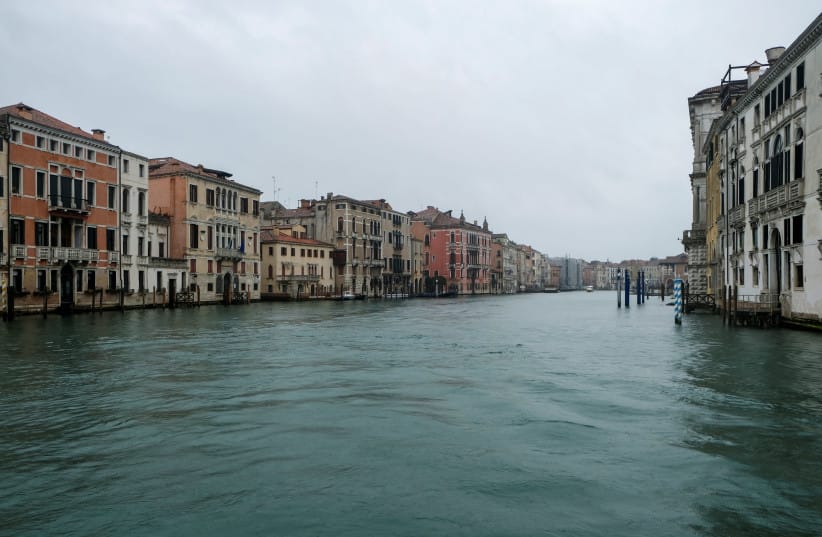
An empty canal is seen after the spread of coronavirus has caused a decline in the number of tourists in Venice, Italy, March 1, 2020 / (photo credit: REUTERS/MANUEL SILVESTRI)

At least twice a day, Micol Naccache breaks down in tears over what the coronavirus is doing to her city of Milan and its Jewish community.

A high school teacher and mother of two, Naccache describes herself as “an optimistic person.” But she is struggling to stay positive following the death of one of her friends from the disease, whose outbreak in Milan earlier this month forced all of Italy into a lockdown that has been in force now for three weeks.

“I smell death around me, it’s the first time something like this has happened to me,” said Naccache, 48, who begins each day by disinfecting her entire home with alcohol spray, partly for protection and partly as a distraction. “It’s like in a war, where you walk on and people are dying around you. I don’t see them dying but I can feel it, death all around me.”
More than 7,500 people have died in Italy of COVID-19, the largest death toll of any country. Some 800 people are dying each day of a disease that has overwhelmed local health services.

Isolated and worried, thousands of Italian Jews have turned to their communal media and institutions for a lifeline and sense of solidarity.
One of the victims last week was Giorgio Sinigaglia, a friend of Naccache and fellow member of the Jewish Community of Milan. Sinigaglia was a 54-year-old engineer and father of four. The week before that, the virus claimed Michele Sciama, a former leader of the community.

The pandemic has killed at least five Jewish people in Milan, and all of them have been buried at the Jewish cemetery, said Alfonso Arbib, the community’s rabbi. Their bodies have not been prepared in accordance with Jewish religious laws, or tahara, which involves washing the corpse, among other rituals.

“It’s not safe,” Arbib said, “and preserving life is the most important thing right now.”

Several others from the community have died in recent days, he said, though it’s not immediately known if their passing was due to COVID-19. Arbib also said that among several others who have contracted the virus, some are fighting for their lives.

Last week, images of army trucks bringing bodies to be cremated in the northern city of Bergamo stunned Italy. Arbib said the scenes were particularly shocking for Jewish Italians, whose faith forbids cremation.
“So far, we’ve been able to prevent this because burials are still allowed under certain conditions, but it is a concern that this would no longer be possible if the death toll keeps climbing,” he said.

Funerals are limited events these days, with only 10 mourners from the immediate family allowed to attend. The customs of sitting shiva and nichum avelim – Judaism’s seven days of mourning at the deceased’s home and visits there during the period by relatives, friends and acquaintances – have been made impossible because of the country’s lockdown.

“Losing a loved one without saying goodbye is really painful,” Stefania Sciama, the daughter of the former community leader of Milan, told The Times of Israel in an interview published Thursday. “My father died alone and now I can’t even comfort my mother.”

Her mother, Viviane, is alone at her home and keeps in contact with other relatives through video chats.
errifying Liliana Segre, 89. She’s a Jewish senator from Milan and a Holocaust survivor.

“I have to tell the truth, the thing that scares me the most is to die alone,” she told Moked, the Jewish-Italian news service, on Tuesday. “I have already seen those who died alone, but I didn’t think I, too, would be on the frontline.”

Milo Hasbani, the president of the Jewish Community of Milan, a nonprofit representing most of the city’s Jewish institutions, is feeling “powerless to help the people I’m responsible to help, and it’s a very difficult feeling,” he told the Jewish Telegraphic Agency.

“There is actually little I can do in practical terms when I can’t leave my house. It’s very tough.”

The community in Milan did manage to organize an assistance service for the elderly who were left alone, including the delivery of groceries and medicines to their homes. It also has harnessed video chat and streaming platforms to preserve a sense of togetherness.

Arbib gives daily lessons on the Torah over Facebook to dozens of viewers. Each time one of his congregation members dies, he dedicates the following lesson to the deceased and delivers an obituary as his followers add their own words in text comments.

The Milan community’s website, Mosaico, has published an obituary about each person it has lost to the disease and invited readers to add their own words in the comments. The one about Sinigaglia, the engineer, has received about 200 comments, including by close friends recalling moments they shared with him. Encouragements and condolences have been sent to his widow and children.

“I’m not a fan of Facebook and internet communication, I’m more of an old-school guy, especially when it comes to offering condolences,” Hasbani said, “but now we have nowhere but the internet to come together to mourn. So that’s what you’re seeing.”

At a “difficult moment of social isolation and solitude,” the website is geared toward facilitating “emotional closeness and sharing of pain,” said Fiona Diwan, the editor in chief of the website and Milan’s Jewish monthly, Bet Magazine.

”When hugs, sociability and the possibility of burying one’s loved one are missing, only the written words remain,” she said.
Naccache, the teacher, tunes in to lessons by a rabbi and author from Rome, Benedetto Carucci Viterbi.

“He gives beautiful lessons that really resonate with me and give me power to go on,” she said.

Her children, aged 8 and 10, attend Milan’s Jewish school, La Scuola Ebraica, which has 500 students. Like most other schools in Italy, it has switched to remote studying, but “it’s very difficult for students to concentrate,” said Naccache, who also teaches law and economics remotely at a different school.

On March 9, hundreds of Italian Jews tuned in to a livestreamed reading of the Scroll of Esther for Purim carried on the Zoom video chat platform. Rabbi Ariel Finzi of Naples read the text while sitting on a baroque-style couch, presumably at his home. Participants from all across Italy left encouraging words on the chat’s text box.

“It was a powerful moment, we were all in our homes but you could really feel the community around you,” said Adam Smulevich, a journalist for Moked, the news and information service of the Union of Italian Jewish Communities, which represents the country’s approximately 30,000 Jewish citizens.

Moked, which was founded in 2009, has become a central vehicle for connecting households grieving over the coronavirus crisis in isolation.
Following the lockdown, Moked upped its production of articles and launched video editions that are streamed on Facebook. It also produces at least three newsletters each day with content from its some 100 contributors, as well as a magazine and a children’s newspaper each month.

“At first it was farther away and now it’s coming closer, it feels pretty close now,” said Daniel Reichel, a Milan-based journalist who is on Moked’s staff of five.

Italian Jews are coming together through their community’s websites, media and streamed sermons, but “also on family WhatsApp groups,” he said. Reichel’s family, which is spread across Italy and in Israel, created its first such family group to stay connected through the crisis.

But Reichel, 33, has limited time to use it and engage with his relatives. These days, Moked’s journalists wake up at the crack of dawn and work until about 10:30 p.m., he said.

“Our responsibility is important on normal days, but now it’s double: We need to provide information, of course, but also offer encouragement, sometimes a distraction, fight loneliness, inspire and fight fake news,” Reichel said. “But it’s also about offering a lifeline, being present in the lives of people who became very alone, very fast.”


Zawartość publikowanych artykułów i materiałów nie reprezentuje poglądów ani opinii Reunion’68,
ani też webmastera Blogu Reunion’68, chyba ze jest to wyraźnie zaznaczone.
Twoje uwagi, linki, własne artykuły lub wiadomości prześlij na adres:
webmaster@reunion68.com