Archives

„Mit: «Izrael manipuluje Trumpem»…


„Mit: «Izrael manipuluje Trumpem»…

Pierre Rehov


W ostatnich tygodniach w amerykańskiej debacie politycznej ponownie pojawiło się dobrze znane oskarżenie — takie, które istnieje od dziesięcioleci, zmieniając się wraz z każdym kolejnym kryzysem, ale nigdy całkowicie nie znikając. Według rosnącego chóru głosów, z których część była niegdyś mocno zakorzeniona w ruchu konserwatywnym, decyzja Donalda Trumpa o militarnej konfrontacji z Iranem nie wynika z kalkulacji strategicznej, lecz z wpływu Izraela.

Teza ta jest równie przewidywalna, co destrukcyjna: mówi się nam, że Stany Zjednoczone są wciągane w wojnę nie we własnym interesie, lecz w interesie państwa żydowskiego.

Ta narracja, niegdyś ograniczona do marginesów, została ostatnio podjęta przez postaci o bardzo różnych profilach. Z jednej strony medialne osobowości, takie jak Tucker Carlson czy Candace Owens, otwarcie przyjęły retorykę, która przestaje już rozróżniać między krytyką polityki Izraela a wrogością wobec samego Izraela — często zsuwając się, cienko zamaskowana, ku czemuś znacznie starszemu i znacznie brzydszemu. Ich publiczność jednak się kurczy, a ich wpływ coraz bardziej rozmywa się przez własne ekscesy. Z drugiej strony stoją bardziej wyważone głosy, takie jak Joe Kent, były urzędnik ds. walki z terroryzmem za czasów Trumpa, którego rezygnacji towarzyszyły ostrzeżenia, że Stany Zjednoczone mogą zostać wciągnięte w kolejne bagno na Bliskim Wschodzie.

Ta obawa — przed długotrwałą, niemożliwą do wygrania wojną — nie jest bezpodstawna. Amerykańska pamięć naznaczona jest Irakiem, Afganistanem, a wcześniej Wietnamem. Każdy z tych konfliktów zaczynał się od ograniczonych celów, by przerodzić się w długotrwałe zaangażowanie o niejasnym zakończeniu i wysokich kosztach. Podnoszenie widma strategicznego przeszacowania nie tylko jest rozsądne — jest konieczne. Jednak utożsamianie tej obawy z twierdzeniem, że amerykańska polityka jest dyktowana przez Izrael, oznacza niezrozumienie zarówno natury irańskiego reżimu, jak i logiki obecnej konfrontacji.

Islamska Republika Iranu nie jest jedynie kolejnym regionalnym przeciwnikiem. To państwo rewolucyjne, którego doktryna strategiczna pozostaje zasadniczo niezmieniona od 1979 roku. Jego celem nigdy nie była zwykła koegzystencja, lecz ideologiczna ekspansja — poprzez wojny zastępcze, działania asymetryczne i systematyczną destabilizację na całym Bliskim Wschodzie. Hezbollah w Libanie, szyickie milicje w Iraku, Huti w Jemenie — to nie są niezależni aktorzy, lecz elementy spójnej strategii projekcji siły przy jednoczesnym zachowaniu wiarygodnego zaprzeczenia.

Sprowadzanie amerykańskiej reakcji na ten system do izraelskiej agendy oznacza ignorowanie podstawowej rzeczywistości: Iran nie jest wyłącznie wrogiem Izraela. Jest przeciwnikiem Stanów Zjednoczonych samym w sobie — takim, który przez dziesięciolecia konsekwentnie atakował amerykańskie interesy, personel i sojuszników. Przekonanie, że Waszyngton potrzebowałby zewnętrznej perswazji, aby stawić czoła takiemu reżimowi, nie jest analizą — jest projekcją.

Co ważniejsze, zaciemnia to szersze ramy strategiczne, w których należy rozumieć obecne wydarzenia. Doktryna Donalda Trumpa — często podsumowywana, a czasem karykaturowana jako „pokój poprzez siłę” — nie powstała w reakcji na niedawne wydarzenia. Jest stałym motywem jego publicznych wypowiedzi od dekad, jeszcze zanim wszedł do polityki. Założenie jest proste: trwałej stabilności nie osiąga się poprzez ustępstwa wobec wrogich reżimów, lecz poprzez wiarygodne pokazanie, że agresja pociąga za sobą nieakceptowalne koszty.

W tym kontekście Iran nie jest przypadkiem odosobnionym. Jest częścią szerszej architektury geopolitycznej, w której reżimy autorytarne — czy to w Caracas, Teheranie, czy gdzie indziej — funkcjonują jako węzły w sieci, która ostatecznie przecina się ze strategicznymi ambicjami Chin. Niedawna presja wywierana na Wenezuelę, a następnie obecna konfrontacja z Iranem, odzwierciedlają raczej sekwencję niż przypadek. Osłabianie tych reżimów nie polega na ochronie Izraela, choć może mieć taki skutek; chodzi o demontaż struktur przyczyniających się do szerszego antyzachodniego układu.

Obawa przed kolejnym „scenariuszem irackim” opiera się również na błędnej analogii. Iran nie jest Irakiem z 2003 roku ani Afganistanem z 2001. To państwo o głębokiej tożsamości historycznej, wysoko wykształconej populacji i znaczącej klasie średniej. Warunki, które umożliwiły powstanie dżihadystycznych proto-państw takich jak ISIS, po prostu nie istnieją w tej samej formie w irańskim społeczeństwie. Ideologiczna sztywność reżimu nie znajduje odzwierciedlenia w społeczeństwie, którym rządzi. Wręcz przeciwnie — powtarzające się fale protestów w ciągu ostatnich dekad, kulminujące w masowych powstaniach ostatnich lat, ujawniły głęboką przepaść między państwem a społeczeństwem.

Ta przepaść spotkała się z nadzwyczajną przemocą. Islamska Republika wielokrotnie pokazywała, że jej podstawowym odruchem w obliczu wyzwania nie jest reforma, lecz represja. Masakra więźniów politycznych w 1988 roku, która pochłonęła tysiące ofiar, nie była anomalią, lecz precedensem. W ostatnim czasie reakcja reżimu na ogólnokrajowe protesty osiągnęła poziom brutalności trudny do pojęcia — doniesienia, w tym artykuł TIME ze stycznia 2026 roku powołujący się na anonimowych wysokich urzędników irańskiego Ministerstwa Zdrowia, wskazują, że nawet 30 000 osób (lub więcej) mogło zostać zabitych w ostrej fazie represji w dniach 8–9 stycznia, choć tak wysokie szacunki pozostają kwestionowane i niezweryfikowane niezależnie, w warunkach blokady komunikacyjnej i oficjalnych zaprzeczeń. Dokładna liczba może nigdy nie być znana. Pewien jest natomiast wzorzec: system, który przetrwa dzięki miażdżeniu własnego społeczeństwa.

Interpretowanie reakcji Trumpa na takie wydarzenia jako produktu wpływu Izraela oznacza pozbawienie amerykańskiej polityki zarówno sprawczości, jak i wymiaru moralnego. Sugeruje, że oburzenie wobec masowych represji musi być importowane, zamiast wynikać z najbardziej podstawowych zasad osądu politycznego.

Nie oznacza to jednak negowania znaczenia Izraela w równaniu strategicznym. Przeciwnie — Izrael stanowi jednego z najcenniejszych sojuszników Stanów Zjednoczonych, nie tylko politycznie, ale i operacyjnie. Jego zdolności wywiadowcze, szczególnie poprzez Mossad, wielokrotnie dostarczały informacji, których żaden inny aktor w regionie nie jest w stanie zapewnić. Jego doświadczenie militarne, ukształtowane w dekadach bezpośredniej konfrontacji z tymi samymi pełnomocnikami, których wykorzystuje Iran, jest atutem, a nie obciążeniem. Współpraca między oboma krajami nie jest dowodem manipulacji; jest racjonalnym zbiegiem interesów sojuszników stojących wobec wspólnego zagrożenia.

Przekonanie, że taka współpraca w jakiś sposób umniejsza amerykańską suwerenność, odzwierciedla głębsze nieporozumienie — takie, które coraz częściej pojawia się w niektórych segmentach amerykańskiej prawicy. W próbie unikania zagranicznych uwikłań część środowisk przesunęła się w stronę strategicznego izolacjonizmu, myląc wycofanie z roztropnością, a sceptycyzm z jasnością osądu. W tym ujęciu każdy sojusz staje się podejrzany, a każda zbieżność interesów reinterpretowana jako zależność.

Świat jednak nie funkcjonuje w izolacji. Współcześnie władza realizowana jest poprzez sieci, partnerstwa i wspólne cele. Porzucenie ich w imię wypaczonej autonomii nie wzmacnia Stanów Zjednoczonych — przeciwnie, osłabia je.

Debata wokół Iranu nie dotyczy zatem wyłącznie taktyki militarnej czy opcji dyplomatycznych. Chodzi o zdolność odróżnienia uzasadnionej ostrożności od błędnej podejrzliwości. Tak — Stany Zjednoczone muszą unikać błędów przeszłych interwencji. Tak — muszą określać jasne cele i opierać się pokusie otwartych, bezterminowych zobowiązań. Ale muszą też rozpoznawać moment, w którym bezczynność niesie własne ryzyko — gdy pozwolenie reżimowi na kontynuowanie jego kursu prowadzi nie do stabilności, lecz do eskalacji.

Twierdzenie, że Trump jest manipulowany przez Izrael, oferuje wygodną narrację. Upraszcza złożoność, przerzuca winę na zewnątrz i zwalnia jego zwolenników z ciężaru analizy strategicznej. Czyni to jednak kosztem rzeczywistości. To, co się dzieje, nie jest produktem obcego wpływu. Jest konsekwencją długotrwałej konfrontacji między rewolucyjnym reżimem a globalnym mocarstwem, które — przynajmniej na razie — uznało, że koszt bezczynności stał się zbyt wysoki.

I ta decyzja, niezależnie od tego, czy się z nią zgadzamy, jest jednoznacznie amerykańska.


Link do oryginału: https://pierrerehov.substack.com/p/the-israel-is-manipulating-trump

Pierre Rehov –  The “Israel Is Manipulating Trump” 
In recent weeks, a familiar accusation has resurfaced in American political discourse—one that has existed for decades, mutating with each new crisis but never quite disappearing. According to a growing chorus of voices, some of them once firmly anchored within the conservative movement, Donald Trump’s decision to confront Iran militarily is not the result of strategic calculation, but of Israeli influence…
Read more

Zawartość publikowanych artykułów i materiałów nie reprezentuje poglądów ani opinii Reunion’68,
ani też webmastera Blogu Reunion’68, chyba ze jest to wyraźnie zaznaczone.
Twoje uwagi, linki, własne artykuły lub wiadomości prześlij na adres:
webmaster@reunion68.com



Who’s the Boss?


Who’s the Boss?

Lee Smith


Joe Kent is out the door at the ODNI after blasting President Trump’s Iran policy. Is his boss Tulsi Gabbard next?

Director of National Intelligence Tulsi Gabbard testifies during a House Select Intelligence Committee hearing on March 19, 2026 in Washington, D.C. /  Heather Diehl / Getty Images

The podcasters and senior Trump administration officials who attached themselves like parasites to the president to draw power from him because they have no power of their own are losing in Iran. They’re losing because they have no influence over Trump or his MAGA base, which supports the campaign to stop the terror regime’s nuclear program, by anywhere from 82% to 95%. They’re losing because they lost the argument over Israel on the ground, where Prime Minister Benjamin Netanyahu is proving to be America’s greatest wartime ally since Winston Churchill held off the Nazis until Franklin Delano Roosevelt brought America into World War II. And since the anti-Trump resistance is losing like Iran is losing, also like the Islamic Republic, they’re emptying their arsenal in scattershot fashion in the hope that they’ll hit something to ward off total defeat for at least one more day.

For instance, a U.S. law enforcement source tells Tablet that before Joe Kent hit the antisemitic podcast circuit to make the case that Israel killed Charlie Kirk, the former director of the National Counterterrorism Center (NCTC) claimed that the late pro-Trump activist was assassinated by Iran.

The source says that “Kent has zero evidence to support any of his speculative claims,” and yet it’s not hard to see why the U.S. Army combat veteran who served 11 tours in the global war on terror has made a 180-degree turn: Kent is reportedly under FBI investigation for leaking classified information to the media, so he’s instrumentalized the antisemitic paranoia prevalent in right-wing podcast circles to deflect attention away from his alleged misdeeds by implying he’s being hounded because he’s critical of Israel.

The Jewish state’s magical mind-control of American foreign policy was the central theme of the resignation letter Kent posted publicly last week. Kent can’t support the war because, according to him, not only did Israel, and “its powerful American lobby” pressure Trump into war with Iran, but also it forced America into the Iraq war and caused the Syrian civil war, during which Kent’s first wife, a Navy cryptologist, was killed by ISIS terrorists.

Kent has earned Americans’ sympathy for his suffering and their respect for his service, but he is no more entitled to plot against the president than was John Brennan. Indeed, set aside their partisan alignments (Republican, not Democrat) and the specific content of the op (Israel, not Russia), and it’s clear that Kent’s claims that Trump is controlled by high-ranking Israeli officials are no different from the former CIA director’s serial lies during Trump’s first term that the president was a Kremlin asset.

It’s a continuation of the same information operation weaponized to subvert Trump’s foreign policy, and the current crop of schemers can no longer hide under a MAGA skin suit—not since Trump called out schemer prince Tucker Carlson. “He’s not MAGA,” Trump told the media earlier this month. “MAGA is saving our country. MAGA is making our country great again. MAGA is America first, and Tucker is none of those things. And Tucker is really not smart enough to understand that.”

The ODNI was a relatively safe place to put Gabbard, especially since the main mission was to shrink the office with an eye to shutting it down. Instead, she built out a base from which to undermine Trump’s Iran policy.

Reports identify Carlson as a likely destination for Kent’s leaks, which became so frequent that the White House brought it to the attention of Kent’s boss, Director of National Intelligence Tulsi Gabbard. Whether she ignored White House requests to fire Kent, as some sources say, is irrelevant: It is her job to protect the president’s policy, whether she likes it or not, by stopping the leaking in one way or another. Because she didn’t, it seems she wasn’t told the FBI was investigating her subordinate.

Gabbard hired Kent as her chief of staff in February 2025, and in July he was confirmed to lead the NCTC, a unit under her direction. When Gabbard was nominated for the post, Republican lawmakers were aware of her record of attacking Trump’s foreign policy, especially on Iran. She criticized him during his first term for withdrawing from Barack Obama’s nuclear deal with Iran and said there was no imminent threat that justified the January 2020 targeted assassination of Iranian terror master Qassem Soleimani.

“I just came from the intelligence briefing that the administration came and brought to Congress,” Gabbard told the media after the Iranian terrorist was liquidated. She said there was no justification “for this illegal and unconstitutional act of war that President Trump took” and no “compelling information to prove their point of imminence, and really it brings us to the central question here, which is: Is our country’s national security better off because of Donald Trump’s actions and decision? And the answer to that is, no.”

Carlson had interviewed her in May 2019 for his Fox News show when she said: “How does a war with Iran serve the best interest of the American people of the United States? And the fact is it does not.” She continued, “It better serves the interest of people like Bibi Netanyahu and Saudi Arabia, who are trying to push us into this war with Iran.” It’s not hard to notice her rhetoric tracks with the poisonous accusations Kent injected into his resignation letter.

After Gabbard’s unsuccessful run for the Democratic Party’s 2020 nomination, she switched parties in 2022 and campaigned for Trump in 2024. Trump nominated her to the DNI post and Carlson ran point for her, enjoining podcast guests like pro-China and anti-Trump ideologue Jeffrey Sachs to add their voice to the chorus of those who believed Gabbard was “the most important appointment of the Trump administration.”

Carlson threatened to harass Republican lawmakers if they didn’t fall in line. “If there are Republican senators who are voting against Tulsi Gabbard confirmation,” he said at a Turning Point USA meeting, “you will know that person is not only my enemy … that person is an enemy of the United States. Period. It’s really that simple.”

Carlson’s hectoring showed that he saw Gabbard as a partner inside the administration who, given her track record, would help stop Trump from fulfilling the promises he’d made during his three campaigns to stop Iran from getting the bomb. Even Republican senators not entirely satisfied that Gabbard was willing to loyally serve the president believed she couldn’t do much damage as DNI, as it’s essentially an administrative post responsible for the intelligence community’s budget. Because the Office of the Director of National Intelligence has no role in operations or investigations, it was a relatively safe place to put Gabbard, especially since the main mission was to shrink ODNI with an eye to shutting it down. Instead, she built out a base from which to undermine Trump’s Iran policy.

Even before starting his second term, Trump publicly warned his deputies not to bring anyone into the administration who’d been part of the Charles Koch network, whose think-tank experts favor a restoration of Obama’s nuclear deal and amicable relations with a terror state that since the 1979 Islamic Revolution has, together with its proxies, made a habit of kidnapping and torturing Americans and killed thousands of us.

And yet last March, Gabbard named Daniel Davis, a foreign-policy analyst at the Charles Koch-backed Defense Priorities, to a top spot at ODNI. Davis was in line to be deputy director for mission integration, responsible for preparing the presidential daily briefing. This raised concerns that an official in charge of the president’s briefing who was opposed to the president’s policies—and Davis was at odds with Trump not only on Iran, but also on China, Russia, Hamas, and pro-Hamas campus protesters—might try to curate intelligence so as to steer the commander in chief away from his preferences and toward Davis’ own.

Due to public outcry from Trump allies on Capitol Hill, prominent media and social media figures, and donors, Davis was replaced before he even officially started. Gabbard’s second pick for the same job was William Ruger, who worked at the Charles Koch Institute. Recently, Gabbard hired another former Defense Priorities adviser, Dan Caldwell, who worked under Pentagon chief Pete Hegseth before he was removed from his post for reportedly leaking to the media.

She wasn’t just staffing DNI with aides intent on protecting Iran from Trump. According to U.S. officials, she was also freezing out pro-Israel candidates. “She and her team actively campaigned against people going into the administration who saw Israel as a key ally,” one senior government official told Tablet. “And they viewed the Koch implants across the administration as an ally in that mission.”

Last year, Gabbard tried to move the country’s counterintelligence (CI) mission from the FBI to the ODNI. “Thanks to Kash Patel fighting Gabbard’s empire-building attempt, control of CI operations remained with FBI, which has the deep expertise in countering foreign espionage threats,” the senior government official told Tablet. “Had Tulsi succeeded in moving FBI CI ops to DNI, our country’s premier counterespionage service would have been in disarray and unable to respond to the surging Iranian threat.”

Or she would’ve buried the threat altogether for fear of giving the president and his top national security officials more reason to end the 47-year threat for good. Indeed, last March, she undercut Trump when she testified on Capitol Hill that the U.S. intelligence services “assess that Iran is not building a nuclear weapon and Supreme Leader Khamenei has not authorized the nuclear weapons program he suspended in 2003.”

If, as Gabbard testified, Iran wasn’t building a bomb, then Trump’s vows to end Iran’s nuclear program either through diplomacy or force were ridiculous. But Iran didn’t suspend the program in 2003, as Israel’s 2018 seizure of Iran’s nuclear archives made plain. And by the time of Gabbard’s testimony, Iran had enough material to make at least 10 bombs.

On an X post that gave video evidence that she’d testified Iran wasn’t building a bomb, she gaslighted Trump supporters by blaming the media for “intentionally taking my testimony out of context and spreading fake news as a way to manufacture division. America has intelligence that Iran is at the point that it can produce a nuclear weapon within weeks to months, if they decide to finalize the assembly. President Trump has been clear that can’t happen, and I agree.”

And yet in June, with preparations for the first round of strikes on Iran’s nuclear facilities in their final stages, she posted a video warning of a “nuclear holocaust” and chastised “warmongers” for bringing the world “closer to the brink of nuclear annihilation than ever before.” Trump was angry. And when reporters asked questions about Gabbard’s earlier assessment that Iran was not building a bomb, the president chafed. “She’s wrong,” said Trump. “I don’t care what she said.”

Sources told Tablet that Gabbard “doesn’t get invited to meetings anymore.” Kent essentially confirmed that when he told one podcaster that the images of Gabbard in Washington while Trump and top national security officials like Secretary of State Marco Rubio and CIA Director John Ratcliffe were directing the war from Mar-a-Lago accurately represent the fact that she’s been locked out. Gabbard brought it all upon herself.

After Kent published his resignation letter, Gabbard posted on X to explain that her job is to help “coordinate and integrate all intelligence to provide the President and Commander in Chief with the best information available to inform his decisions. After carefully reviewing all the information before him, President Trump concluded that the terrorist Islamist regime in Iran posed an imminent threat and he took action based on that conclusion.”

What was missing was the Trump appointee’s public support for her boss’s decision, whether she privately agreed or not, and criticism of the accusations her former deputy leveled at her boss. Later, reports surfaced that she met with Kent and Vice President JD Vance before the former NCTC director posted his letter. Vance, according to the reports, “encouraged him to be respectful to POTUS.”

It seems Kent ignored the vice president’s advice, because accusing the commander in chief of being fooled into a war that serves the interests of a foreign power is a calculated insult. Yet when asked about Kent’s letter, Vance simply replied, “If you are on the team and you can’t help implement the decisions of his administration—he has the right to make those decisions—then it’s a good thing for you to resign.”

This is something like passive-aggressive insubordination. The United States is joined with Israel in a major military campaign against Iran, and two of the president’s Cabinet members can’t bring themselves to denounce the abject lies published by a former Trump aide that characterize the president as a lackey of a foreign power and vilify a wartime ally—charges clearly designed to drive down support for the Iran campaign.

Gabbard’s testimony on Capitol Hill last week was similarly jarring. Yes, as she said under oath, the job of an intelligence chief is to give the president the information he needs to make decisions to protect American lives and defend our interests. But as a political appointee testifying before a congressional panel comprising Trump opponents, she must also defend the policies of the president she serves. That she did not, while failing to call out the destructive conspiracy theories of a former subordinate, is more evidence that her priority is not to advance the president’s Iran policy, but rather to undermine it.

When asked this weekend about Gabbard’s future, Trump told the media she’s doing a good job. That’s not evidence that her post is safe, but that the president’s top priority right now is to win a war to secure American peace and prosperity, not confront an official whose efforts have repeatedly gone in the other direction.


Zawartość publikowanych artykułów i materiałów nie reprezentuje poglądów ani opinii Reunion’68,
ani też webmastera Blogu Reunion’68, chyba ze jest to wyraźnie zaznaczone.
Twoje uwagi, linki, własne artykuły lub wiadomości prześlij na adres:
webmaster@reunion68.com


UK Art Exhibit Condemned for Displaying Drawings With Antisemitic Tropes ‘Worse Than Nazi Propaganda’


UK Art Exhibit Condemned for Displaying Drawings With Antisemitic Tropes ‘Worse Than Nazi Propaganda’

Shiryn Ghermezian


Demonstrators hold Israeli and British flags outside the Law Courts, during a march against antisemitism, after an increase in the UK, during a temporary truce between the Palestinian Islamist terrorists Hamas and Israel, in London, Britain, Nov. 26, 2023. Photo: REUTERS/Susannah Ireland

An art exhibition that opened this weekend in Margate, a seaside town in England, features nearly 100 drawings that promote antisemitic tropes, feature swastikas, target Jewish or Israeli individuals, and deny violence that took place during the Hamas-led terrorist attack in Israel on Oct. 7, 2023.

“Drawings Against Genocide” at the Joseph Wales Studios will be open until March 29 and is organized by the groups Art for a Free Palestine and Thanet for Palestine. The artist behind the drawings is Matthew Collings, a 70-year-old writer and former art critic who has been openly critical of Israel. There are roughly 100 drawings in the exhibit critical of Israel, Jews, the “Israeli lobby,” and more, according to Art for a Free Palestine.

One drawing in the exhibit shows members of a so-called Israel lobby that is “nuts and utterly in control,” while other drawings accuse Israel of apartheid and committing a genocide against Palestinians. Several drawings feature a Nazi swastika, often alongside the flag of Israel, while one artwork in particular depicts ancient Israelites with horns. A separate piece shows two Sotheby’s auctioneers eating babies with blood dripping from their teeth and one of them is Sotheby’s French-Israeli owner Patrick Drahi. The drawing claims he is a “fanatic Zionist” who eats babies alive.

.

Another drawing in the exhibit shows an Israel Defense Forces (IDF) soldier spewing blood from their mouth and hands, while another shows an IDF soldier standing over a pool of blood and a human skull. A separate drawing denies that sexual violence took place during the Hamas terrorist attack in Israel on Oct. 7, 2023, while another falsely claims there is “no reliable evidence whatsoever” about some of the violence that took place during the massacre.

Israeli Prime Minister Benjamin Netanyahu is depicted naked in one drawing while spewing blood from his mouth and the piece suggests that he is trying to “change reality” with hypnotism in his desire to “invade Iran.” Other drawings target the chief executive of the Jewish organization Community Security Trust, pro-Israel writer and journalist David Collier, and even film director Quentin Tarantino, who lives in Israel with his family.

“This is the recycling of classic antisemitic tropes dressed up as activism,” Collier told The Algemeiner. “When swastikas and dehumanizing imagery are normalized in an art gallery, it tells you something has gone badly wrong.”

“I am currently looking out at a UK landscape in which Jewish people are murdered while going to pray on Yom Kippur, and ambulances owned by a Jewish charity are torched,” he added. “If the government and the police do not start connecting the dots between antisemitism masquerading as pro-Palestinian activism and the real-world violence we see unfolding before us, then the situation for British Jews will only get worse.”

The Combat Antisemitism Movement said the drawings are “worse than Nazi propaganda” and feature “monstrous blood libels.” The grassroots nonprofit organization Stop the Hate UK said the drawings display the artist’s “obsessive hatred of Jews” that is “dressed up as art.”

“The artist makes sure to include lots of bank notes and blood. All the old tropes,” the group noted in a post on X. “The British Jewish community are fed up of being told this sickening hate is ok. It’s not.” Stop the Hate UK also shared on X a video of the exhibit’s alleged curator saying “globalize the intifada” and “from the river to the sea,” a slogan that calls for the dismantling of the State of Israel and for it to be replaced by “Palestine.”

The exhibit has also been publicly condemned by the UK’s Shadow Home Secretary Chris Philp and several other groups, including the Jewish Leadership Council, Labour Against Antisemitism, and Campaign Against Antisemitism in statements given to The Telegraph. The exhibit was reported to local police, but they have taken no action, and it remains open.

The Thanet district council, led by the Labour Party, was criticized for promoting the exhibition after its tourism website, Visit Thanet, provided information about its dates and venue, but the webpage has since been deleted.

Collings said in an Instagram post that the drawings are “directed against the horrific genocide against the Palestinians being perpetrated by Israel.”

Art for a Free Palestine said the exhibit “is about raising consciousness and welcoming people to learn about the UK government’s connections to the Israeli lobby and its continued manufacturing of precision weapons on UK soil that are used to target and murder civilians in Gaza.” The drawings, the group added, “teach us the way in which our politicians and mainstream media use propaganda to lie and manipulate the general public in order to cover up the slaughter of thousands of Palestinians.”


Zawartość publikowanych artykułów i materiałów nie reprezentuje poglądów ani opinii Reunion’68,
ani też webmastera Blogu Reunion’68, chyba ze jest to wyraźnie zaznaczone.
Twoje uwagi, linki, własne artykuły lub wiadomości prześlij na adres:
webmaster@reunion68.com


Bartosz T. Wieliński: Łukaszenka żąda za uwolnienie Andrzeja Poczobuta wysokiej ceny

Akcja solidarności z więzionym w kolonii karnej Andrzejem Poczobutem. Fot. PAP/Artur Reszko


Bartosz T. Wieliński: Łukaszenka żąda za uwolnienie Andrzeja Poczobuta wysokiej ceny

Józef Krzyk (PAP)


25 marca mija pięć lat od osadzenia Andrzeja Poczobuta – dziennikarza współpracującego z „Gazetą Wyborczą” i działacza polskiej mniejszości na Białorusi w kolonii karnej. – Stał się dla Aleksandra Łukaszenki czymś w rodzaju karty przetargowej – mówi w rozmowie z PAP Bartosz T. Wieliński, zastępca redaktora naczelnego „GW” i przyjaciel Poczobuta.

PAP: Od września 2025 r. władze Białorusi uwolniły już trzy grupy więźniów politycznych, ale w żadnej z nich nie było przetrzymywanego od pięciu lat w kolonii karnej Andrzeja Poczobuta. Dlaczego?

Bartosz Wieliński: Nie doszło do tego z zasadniczego powodu. Andrzej Poczobut stał się dla Alaksandra Łukaszenki czymś w rodzaju karty przetargowej. Gotów byłby uwolnić polskiego dziennikarza – naszego kolegę – ale w zamian za spełnienie różnych warunków. Rzecz w tym, że żąda bardzo wygórowanej ceny. Z wypowiedzi samego Łukaszenki wynika, że chciałby wymienić Andrzeja Poczobuta za złapanych przez polskie służby swoich agentów lub za tych, którzy wpadli w innych państwach NATO. W negocjacje zaangażowali się Amerykanie i między innymi z tego powodu na wolność wyszło wielu innych więźniów mińskiego reżimu. O uwolnieniu Andrzeja Poczobuta Łukaszenka chciałby jednak – tak przynajmniej deklarował – rozmawiać wprost ze stroną polską. Być może właśnie dlatego amerykańskie pośrednictwo nie było dotąd skuteczne. Łukaszenka najwyraźniej uznał, że więcej korzyści odniesie w rozmowach z Warszawą.

PAP: A na czym Łukaszence zależy?

B.W. Trudno to jednoznacznie określić, bo na życzenia Łukaszenki składają zarówno konkretne cele polityczne, jak i spełnienie żądań, które wynikają jedynie z jego urojeń. Łukaszenka uroił sobie na przykład, że w Polsce jest szkolony jakiś legion, który miałby go siłą odsunąć od władzy. Domaga się też zaprzestania działalności w Polsce grup, które miałyby doprowadzić do wybuchu kolejnych protestów w Białorusi. Nie da się o takich sprawach poważnie rozmawiać. Z drugiej strony Łukaszence zależało też na otwarciu czasowo zamkniętych przejść na granicy z Polską. Ten warunek został już jednak przez polską stronę spełniony, a niestety nie poszły w ślad za tym żadne kroki z ich strony gdy idzie o Andrzeja Poczobuta.

PAP: Czy ktoś może wpłynąć na decyzję Łukaszenki?

B.W. Tylko Władimir Putin, ale to nie jest osoba, na pośrednictwo której ktokolwiek racjonalnie myślący w Polsce chciałby liczyć.

PAP: A Stany Zjednoczone?

B.W. Łukaszenka był rozczarowany Amerykanami. Spodziewał się więcej od Donalda Trumpa. Domaga się pełnej legitymizacji jego reżimu. Po sfałszowanych przez niego wyborach w 2020 roku w demokratycznym świecie nie jest traktowany jako praworządny prezydent. W rezultacie ograniczone już wcześniej kontakty z Białorusią po 2020 roku jeszcze bardziej zostały zredukowane. Tymczasem Łukaszence się marzy międzynarodowe uznanie i wizyta w Gabinecie Owalnym – rozmowa z Donaldem Trumpem jak równy z równym. Gdy usłyszałem o tym pół roku temu uznałem, że oszalał, ale teraz okazuje się, że Amerykanie sygnalizują gotowość do organizacji tego spotkania.

Łukaszenka ma ambicje pośredniczyć między Trumpem a Putinem. On pozycjonował się jako ten, przez którego z Zachodu przechodzą sygnały do Rosji. Przykładem takiego nastawienia Łukaszenki są rozmowy mińskie z lat 2014-2015. W stolicy Białorusi podpisano wtedy wielostronne umowy, które miały doprowadzić do rozwiązania konfliktu na Ukrainie. Zanim się okazało, że Putin nie ma zamiaru żadnych umów dotrzymywać, Łukaszenka przedstawiał się jako osoba, która przynosi pokój.

Teraz, od wybuchu pełnoskalowej agresji Rosji na Ukrainę, sytuacja w pewnym stopniu jest podobna. Choć wojska rosyjskie atakują Ukrainę z terytorium Białorusi, to Łukaszenka próbuje się przedstawiać jako bezstronny i neutralny. Liczy, że to jemu – z poparciem administracji amerykańskiej – przypadnie rola gospodarza rozmów kończących wojnę w Ukrainie.Dziwne, że w Waszyngtonie są złudzenia co do faktycznej pozycji Łukaszenki w jego relacjach z Putinem.

PAP: Można odnieść wrażenie, że wsadzając Andrzeja Poczobuta do kolonii karnej Łukaszenka nie starał się nawet o to, żeby zarzuty wobec polskiego dziennikarza brzmiały wiarygodnie. Sąd skazał go za podżeganie do nienawiści narodowej i gloryfikowanie nazizmu. 

B.W. W gruncie rzeczy te zarzuty można odebrać jako element polityki zastraszania własnego społeczeństwa, jaką od dawna prowadzi Łukaszenka. To swego rodzaju komunikat do wszystkich niepokornych i wątpiących w nieomylność reżimu: możemy uwięzić każdego i nie potrzebujemy nawet wiarygodnego pretekstu.

PAP: Co wiadomo o warunkach, w jakich obecnie przebywa Andrzej Poczobut?

B.W. Jest całkowicie odcięty od świata. Nawet jego żonie uniemożliwiono kontaktowanie się z nim. Kolonia karna, w której przebywa, przypomina to co się działo w sowieckim gułagu. Ludzi niszczy się tam pracą ponad siły, pozbawieniem opieki medycznej, kompletną izolacją, a także osadzaniem pod byle pretekstem w karcerze.

Rozmawiał Józef Krzyk (PAP)


Zawartość publikowanych artykułów i materiałów nie reprezentuje poglądów ani opinii Reunion’68,
ani też webmastera Blogu Reunion’68, chyba ze jest to wyraźnie zaznaczone.
Twoje uwagi, linki, własne artykuły lub wiadomości prześlij na adres:
webmaster@reunion68.com


Disarming Hamas Must Remain Trump’s Top Priority in Gaza


Disarming Hamas Must Remain Trump’s Top Priority in Gaza

Con Coughlin


  • Several members of Trump’s Board of Peace, especially Turkey and Pakistan, have expressed serious concerns about, if not outright hostility to, disarming Hamas, a factor that many believe has resulted in talks on the disarmament of the terror group being put on hold.
  • Mladenov’s optimism about persuading Hamas to disarm, however, was not shared by the terrorist organisation itself. A Hamas official, who spoke on condition of anonymity, stated that, while the terrorist group had received a written document, it denounced the initiative as a “take it or leave it” offer. He said Hamas would first wait to see the outcome of the Iran war before responding.
  • Hamas’s refusal to provide a clear-cut commitment to meeting the disarmament demand, moreover, comes at a time when it continues to consolidate its hold over Gaza, especially since the start of the Iran war. In an attempt to control Gaza’s civilian population, Hamas has been enforcing price controls and managing the distribution of goods arriving from outside the Strip, moves that suggest it has no intention of relinquishing its grip over Gaza.
  • Trump must not abandon his demand that Hamas fully disarm before going forward with his Gaza peace plan.

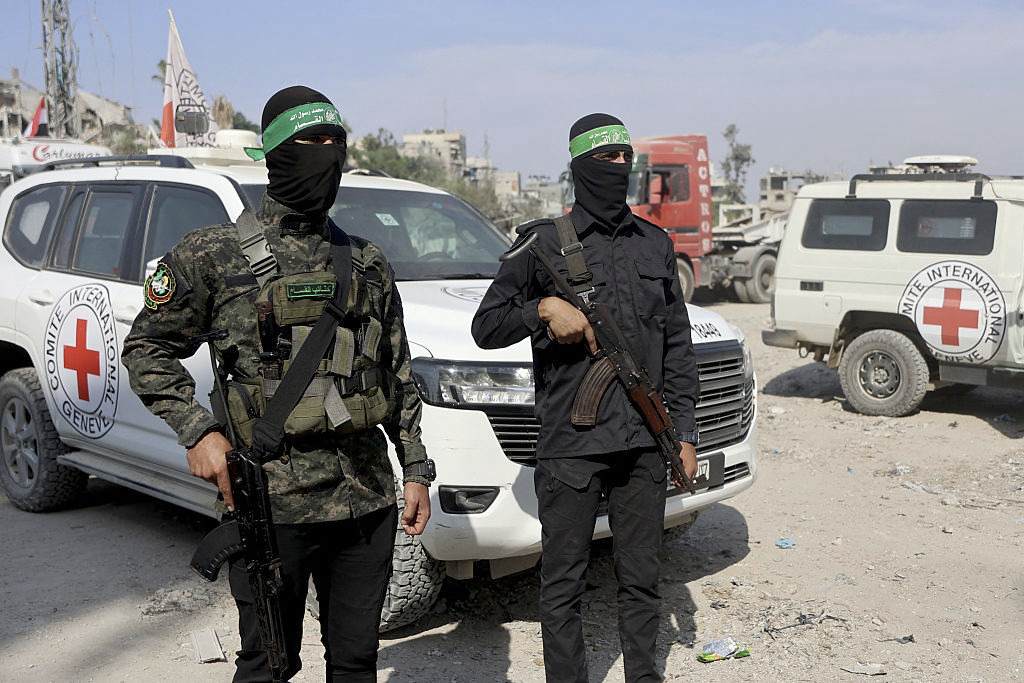
US President Donald Trump must not abandon his demand that Hamas fully disarm before going forward with his Gaza peace plan. Pictured: Hamas terrorists in Gaza City on November 2, 2025. (Photo by Omar Al-Qataa/AFP via Getty Images)

US President Donald Trump’s ambitious plan to bring lasting peace to Gaza risks being completely ruined after suggestions that members of his Board of Peace are not fully committed to disarming Hamas terrorists, a key requirement of the Trump administration’s peace plan.

Prior to the war in Iran, Trump made disarming Hamas his top priority as he sought to implement his ambitious 20-point peace plan for Gaza’s reconstruction. As the president wrote on his Truth Social platform in January in response to Hamas’s continuing prevarication over the disarmament demands, “they can do this the easy way, or the hard way.”

Since then, the Trump administration’s focus on disarming Hamas appears to have taken a back seat as the American leader has become preoccupied by the challenges of the war in Iran since launching Operation Epic Fury on February 28.

Despite the fact that Iran for decades has been one of Hamas’s most devoted supporters, providing funds and military equipment for its terrorist infrastructure, the demand for the terror group to disarm has been put on hold for the duration of the conflict, a move many believe could be a first step by some members of the Board of Peace to abandon completely the demand for Hamas to disarm.

Several members of Trump’s Board of Peace, especially Turkey and Pakistan, have expressed serious concerns about, if not outright hostility to, disarming Hamas, a factor that many believe has resulted in talks on the disarmament of the terror group being put on hold.

There are even concerns that Trump’s own envoys involved in negotiations taking place in Cairo to safeguard the existing ceasefire might be tempted to water down the disarmament demands in return for making progress on other areas of the peace plan, such as increasing aid and NGO access to Gaza.

The Gaza ceasefire has been under serious strain since the start of the Iran war, prompting members of the Board of Peace to attend meetings with Hamas representatives in Cairo aimed at easing tensions.

Following the meetings, Israel announced that it would soon reopen the sole crossing for pedestrians between Gaza and Egypt, shut since the air campaign against the Iranian regime began. One official said ​he believed the Israeli announcement was a direct result of the meeting between Hamas and the board.

Trump’s board was represented at the talks with Hamas by Aryeh Lightstone, an American aide to Trump’s special ​envoy Steve Witkoff. A US official said that Lightstone had attended Gaza-related meetings in Cairo in the past several days, without confirming whether he met with the Hamas delegation.

In an attempt to break the impasse over the disarmament issue, mediators meeting in Cairo said in an interview with NPR that they had given Hamas a formal proposal to lay down its weapons. The proposal calls for Hamas and all other terrorist groups in Gaza to hand over all weapons, making an emerging governing authority responsible for all the arms.

The proposal is said to call for a comprehensive framework to ensure the “complete handover” and “full decommissioning” of arms belonging to Hamas and all other armed groups in Gaza, and that if Hamas accepted the proposal, it would ensure large-scale reconstruction of Gaza.

Nickolay Mladenov, the former UN diplomat charged with implementing Trump’s plan for postwar Gaza, said that the ceasefire’s mediating countries had agreed on a “framework” to see Gaza rebuilt, but that Hamas must be disarmed.

He said executing on the framework “requires one clear choice: full decommissioning by Hamas and every armed group, with no exceptions and no carve-outs.”

Mladenov’s optimism about persuading Hamas to disarm, however, was not shared by the terrorist organisation itself. A Hamas official, who spoke on condition of anonymity, stated that, while the terrorist group had received a written document, it denounced the initiative as a “take it or leave it” offer. He said Hamas would first wait to see the outcome of the Iran war before responding.

Hamas’s refusal to provide a clear-cut commitment to meeting the disarmament demand, moreover, comes at a time when it continues to consolidate its hold over Gaza, especially since the start of the Iran war. In an attempt to control Gaza’s civilian population, Hamas has been enforcing price controls and managing the distribution of goods arriving from outside the Strip, moves that suggest it has no intention of relinquishing its grip over Gaza.

Another key factor that could have an important positive bearing on the future of Trump’s Gaza peace plan is that, with the war against Iran in full flow, Washington has received the support of its long-standing Gulf allies, who now find themselves the target of unprovoked Iranian missile attacks.

Trump must not abandon his demand that Hamas fully disarm before going forward with his Gaza peace plan.


Con Coughlin is the Telegraph‘s Defence and Foreign Affairs Editor and a Distinguished Senior Fellow at Gatestone Institute.


Zawartość publikowanych artykułów i materiałów nie reprezentuje poglądów ani opinii Reunion’68,
ani też webmastera Blogu Reunion’68, chyba ze jest to wyraźnie zaznaczone.
Twoje uwagi, linki, własne artykuły lub wiadomości prześlij na adres:
webmaster@reunion68.com