Archives

China Is About to Lose Its Cuban Military Bases


China Is About to Lose Its Cuban Military Bases

Gordon G. Chang


  • Friends of Havana blame the U.S., but the Trump administration had to act before China turned the island into a military bastion.
  • Declassified intelligence showed that Chinese signals-intelligence collection facilities had been operating in Cuba since at least 2019.
  • “China and Cuba are negotiating to establish a new joint military training facility on the island, sparking alarm in Washington that it could lead to the stationing of Chinese troops and other security and intelligence operations just 100 miles off Florida’s coast.” — The Wall Street Journal, June 20, 2023.
  • President Donald Trump acted before the Chinese could base missiles in Cuba.
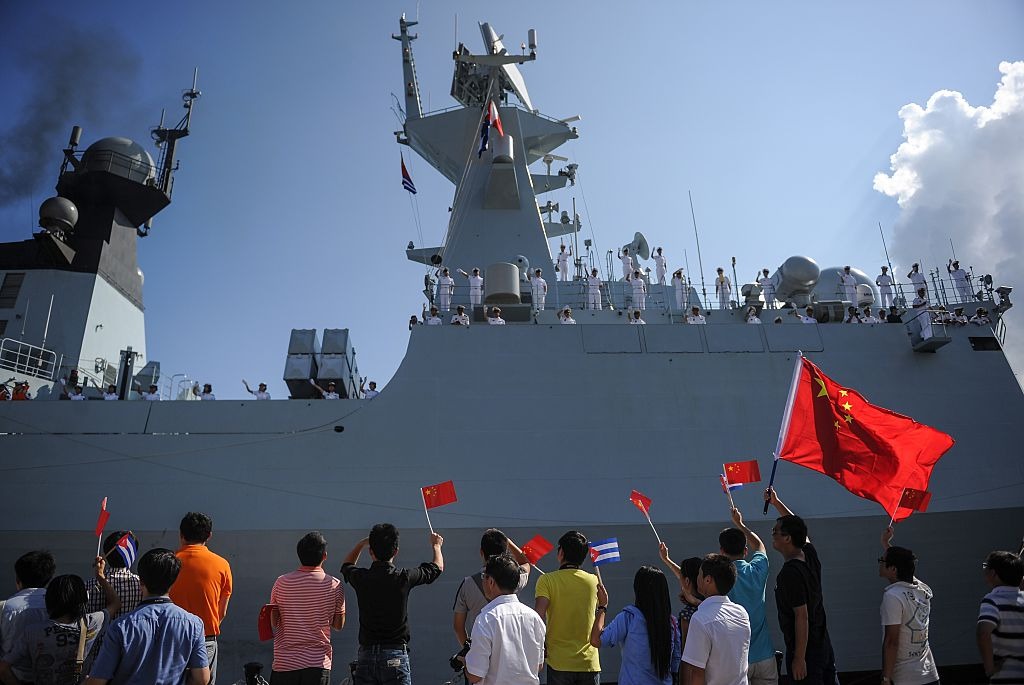
“China and Cuba are negotiating to establish a new joint military training facility on the island,” reported the Wall Street Journal in 2023. So, whatever one thinks of the harsh consequences of the U.S. naval embargo, the Havana regime, by allowing the Chinese to have the run of the island, does pose a threat to the United States. Pictured: People wave the flags of Cuba and China as several Chinese Navy vessels enter the port of Havana on November 10, 2015. (Photo by Yamil Lage/AFP via Getty Images)

Cuban society, due to a U.S. naval embargo, is close to collapse.

Friends of Havana blame the U.S., but the Trump administration had to act before China turned the island into a military bastion.

America took control of Venezuela’s national oil company, PDVSA, after the January 3 raid that resulted in the capture of Nicolás Maduro and his wife. Then the U.S. stopped the flow of Venezuelan oil to the Cuban regime.

At the same time, the Trump administration, by threatening tariffs on oil suppliers, imposed a de facto oil embargo on Havana. The U.S. Navy has deterred vessels from unloading cargo in Cuba.

To get through the American picket line, tankers have been employing deceptive tactics. For instance, the Hong Kong-flagged Sea Horse, carrying gasoil, was falsely broadcasting that it was “not under command” and drifting in the Sargasso Sea for almost three weeks. In reality, the ship spoofed its location and probably unloaded 190,000 barrels in Cuba in the early part of this month.

A delivery from the Sea Horse, according to the Windward site, would be “the first confirmed arrival of a refined products cargo at the island since early January.”

As a result of the American actions, Cuba has almost run out of energy. The Cuban grid has collapsed three times so far this month, throwing the island into darkness.

“Why is the U.S. doing this?” asks Cambridge University’s Jostein Hauge on X, referring to the blockade on Cuba. “For no reason other than its dislike of the Cuban regime. Cuba poses no threat to the U.S.”

Really?

“China uses Cuba as a platform for many of its regional intelligence and security operations,” Joseph Humire, then executive director of the Center for a Secure Free Society, told this author in 2021.

There is, most prominently, the Lourdes facility just west of Havana near Bejucal, once the Soviet Union’s largest listening station outside its borders. The Chinese are thought to have taken over the facility shortly after the fall of the USSR.

China now has more than just Lourdes. A December 2024 Center for Strategic & International Studies report identifies three more likely Chinese listening posts in Cuba. There is the Soviet-era Calabazar, and a second, Wajay, appears to have been built after the fall of the Soviet Union. There is also a new station, El Salao.

The CSIS report notes that unconfirmed accounts of China’s intelligence presence on the island began with the visit of China’s Defense Minister General Chi Haotian in 1999.

The Chinese may have been operating listening posts in Cuba since 1993, R. Evan Ellis of the U.S. Army War College told Gatestone at the beginning of last year.

China and Cuba, the Wall Street Journal reported in June 2023, agreed in principle to establish a new listening site on Cuban soil. The Biden administration denied the report, but two days later declassified intelligence showing that Chinese signals-intelligence collection facilities had been operating in Cuba since at least 2019.

Cuba is an ideal location to surveil America. “Sitting less than 100 miles south of Florida, Cuba is well-positioned to keep watch on sensitive communications and activities, including those of the U.S. military,” the CSIS report states. “The southeastern seaboard of the United States brims with military bases, combatant command headquarters, space launch centers, and military testing sites.”

Moreover, Cuba is an ideal location for a Chinese military base. “China and Cuba are negotiating to establish a new joint military training facility on the island, sparking alarm in Washington that it could lead to the stationing of Chinese troops and other security and intelligence operations just 100 miles off Florida’s coast,” reported the Wall Street Journal in 2023.

China stated that the Wall Street Journal report was “totally mendacious and unfounded,” but it is nonetheless evident that China wants an enhanced facility on Cuba, just as it has established de facto military sites throughout Latin America.

Moreover, President Donald Trump acted before the Chinese could base missiles in Cuba.

So, whatever one thinks of the harsh consequences of the U.S. naval embargo — there is a worsening humanitarian crisis in Cuba now — the Havana regime, by allowing the Chinese to have the run of the island, does pose a threat to the United States.


Gordon G. Chang is the author of Plan Red: China’s Project to Destroy America, a Gatestone Institute distinguished senior fellow, and a member of its Advisory Board.


Zawartość publikowanych artykułów i materiałów nie reprezentuje poglądów ani opinii Reunion’68,
ani też webmastera Blogu Reunion’68, chyba ze jest to wyraźnie zaznaczone.
Twoje uwagi, linki, własne artykuły lub wiadomości prześlij na adres:
webmaster@reunion68.com


Izraelczycy zabili dowódcę floty Gwardii Rewolucyjnej. Był zwolennikiem zamknięcia Cieśniny Ormuz

Teheran (Fot. REUTERS/Majid Asgaripour)


Izraelczycy zabili dowódcę floty Gwardii Rewolucyjnej. Był zwolennikiem zamknięcia Cieśniny Ormuz

Marta Urzędowska


Izraelska armia zabiła Alirezę Tangsiriego, dowódcę floty irańskiej Gwardii Rewolucyjnej – podają izraelskie media. Jednocześnie Izraelczycy obiecali, że pozwolą żyć irańskiemu szefowi dyplomacji i przewodniczącemu parlamentu.

Informację o śmierci dowódcy floty Gwardii Rewolucyjnej jako pierwszy podał „Times of Israel”, powołując się na źródła w izraelskim rządzie. W południe doniesienia gazety potwierdził izraelski minister obrony, Israel Katz. – Tahgsiri był bezpośrednio odpowiedzialny za akt terrorystyczny, jakim jest bombardowanie i blokowanie Cieśniny Ormuz – oświadczył dodając, że wraz z nim zginęło też wielu innych „wysokiej rangi oficerów marynarki”.

Alireza Tangsiri zginął w izraelskim nalocie na Bandar Abbas w południowym Iranie, niedaleko Cieśniny Ormuz. Jak informują izraelskie źródła cytowane przez „New York Times”, Izraelczycy dopadli go w mieszkaniu, gdzie ukrywał się z innymi oficerami Gwardii.

Irańczycy na razie nie komentują informacji o śmierci Tangsiriego. 

Tangsiri pomógł zamknąć Cieśninę Ormuz. Chwalił się jej blokowaniem

Tangsiri był ważnym dowódcą. Osobiście nadzorował testowanie przez gwardzistów dronów i pocisków, za co Amerykanie już dwa razy nałożyli na niego sankcje – ostatnio w 2023 r. Od początku obecnej wojny był zwolennikiem zamknięcia Cieśniny Ormuz i regularnie chwalił się w sieciach społecznościowych skutecznością, z jaką Irańczycy blokują kluczowy przesmyk.

Dlatego też znalazł się na liście  ważnych irańskich oficjeli i wojskowych, których chcą wyeliminować Izraelczycy. W czasie wojny, którą rozpoczęli wraz z USA 28 lutego, atakując cele w Iranie, Izrael koncentruje się właśnie na zabijaniu irańskich przywódców, w przeciwieństwie do Amerykanów, którzy skupiają się na niszczeniu irańskiego potencjału obronnego.

Izrael po kolei eliminuje ważnych Irańczyków

W pierwszym dniu ataków zginął ajatollah Ali Chamenei, sprawujący władzę polityczną, wojskową i duchową, którego Irańczycy szybko zastąpili jego synem Modżtabą. W tym samym dniu zginął szef sztabu armii Abdolrahim Musawi, minister obrony Aziz Nasirzadeh, dowódca Gwardii Rewolucyjnej Mohammed Pakpour i Ali Szamkani – bliski doradca ajatollaha i ważna postać w aparacie bezpieczeństwa Iranu.

Z kolei 17 marca w izraelskim nalocie zginął Ali Laridżani – drugi najważniejszy Irańczyk, szef Rady Bezpieczeństwa Narodowego, który faktycznie sprawował władzę w kraju w sytuacji, kiedy Modżtaba – najpewniej ranny na początku wojny – dowodzi Iranem wyłącznie na papierze, nie pokazując się publicznie i nie wygłaszając oświadczeń.

Sami Izraelczycy chwalili się, że zabijając Laridżaniego, wyeliminowali „faktycznego lidera” Iranu. W tym samym dniu zginął też Gholamreza Solejmani, dowódca paramilitarnych bojówek basidżi, podlegających Gwardii Rewolucyjnej i słynących z brutalnego tłumienia antyrządowych protestów.

18 marca w kolejnych izraelskich atakach zginął Esmail Chatib, minister wywiadu, twardogłowy duchowny i polityk, który latami blisko współpracował z Chameneim seniorem, a od 2021 r. stał na czele potężnego aparatu wywiadu.

Izrael oszczędzi szefa MSZ i przewodniczącego parlamentu

Jednocześnie pojawiają się doniesienia, że Izrael zrezygnuje z zabicia dwóch ważnych irańskich polityków – ministra spraw zagranicznych Abbasa Aragcziego, i przewodniczącego parlamentu, Muhammada Bagera Galibafa.

Decyzja o wykreśleniu ich z izraelskiej listy osób do wyeliminowania ma wynikać z nacisków Pakistanu, który pośredniczy między Amerykanami i Irańczykami w nieformalnych dyskusjach na temat ewentualnego rozejmu.

Zabezpieczenie losu dwóch ważnych oficjeli ma być jednym z warunków stawianych przez Teheran. Informację jako pierwszy podał Reuters, powołując się na źródła w Islamabadzie. 

Izraelczycy mieli ich już namierzonych i chcieli ich wyeliminować, ale powiedzieliśmy USA, że jeśli ich też wyeliminują, nie będzie już z kim rozmawiać, i Amerykanie kazali Izraelczykom odpuścić

– przekonuje źródło agencji.

Informację o zdjęciu Irańczyków z listy podawał też „Wall Street Journal”, jednak bez wspominania o udziale Pakistańczyków.

USA i Iran od kilku dni przerzucają się sprzecznymi doniesieniami w sprawie ewentualnych rozmów na temat rozejmu. Donald Trump zapewnia, że prowadzi z Irańczykami „bardzo dobre rozmowy”, irańscy urzędnicy publicznie zaprzeczają. Amerykanie domagają się od Teheranu pełnej rezygnacji z programu nuklearnego i balistycznego. Iran odpowiada, że skończy wojnę „na własnych warunkach”, a amerykańskie odrzuca.


Redagowała Ludmiła Anannikova


Zawartość publikowanych artykułów i materiałów nie reprezentuje poglądów ani opinii Reunion’68,
ani też webmastera Blogu Reunion’68, chyba ze jest to wyraźnie zaznaczone.
Twoje uwagi, linki, własne artykuły lub wiadomości prześlij na adres:
webmaster@reunion68.com

NYC Council approves buffer zones around houses of worships, schools as part of legislative package against Jew-hatred


NYC Council approves buffer zones around houses of worships, schools as part of legislative package against Jew-hatred

Jessica Russak-Hoffman


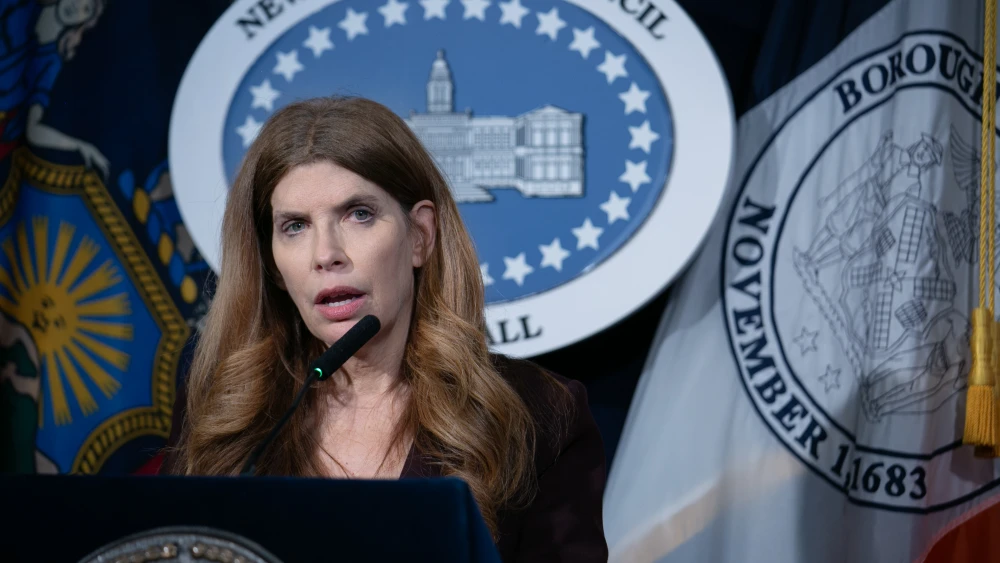
Julie Menin, speaker of the New York City Council, speaks at a press conference at City Hall ahead of a vote on a package of bills that fight hate, including antisemitism, March 26, 2026. Credit: Will Alatriste/NYC Council.William Alatriste

The New York City Council passed legislation on Thursday that creates protective perimeters around houses of worship and schools during protests, part of a package designed to combat Jew-hatred and hate crimes across New York City following an uptick of antisemitism and a series of demonstrations outside Jewish institutions.

“I am immensely proud of the legislative package the council passed today to combat hate, including my legislation to help protect safe access to houses of worship,” stated Julie Menin, the first Jewish speaker of the New York City Council. “This is an urgently needed and carefully crafted bill that will ensure transparency, accountability and community engagement in NYPD plans to respond to protests—three pillars to protecting both public safety and free speech rights alike.”

Measures 1-B and 175-B, which Menin advanced, empower the New York City Police Department to set limits on how close demonstrators can gather near entrances to synagogues, religious schools and similar institutions to ensure unobstructed and safe access.

1-B passed with a veto-proof majority of 44 out of 51 members, but 175-B, which addresses educational institutions, passed with 30 to 19, making it subject to a veto by the mayor. Members who voted in favor of the package of bills but voted no on 175-B expressed concerns over legal issues and how it would affect student protests on campuses. Zohran Mamdani, the New York City mayor who has been a harsh critic of Israel and who has said, via a spokeswoman, that synagogues violated international law when they host pro-Israel events, has suggested he could be reluctant to sign the bill.

Before the vote, Menin said that there was a 182% increase in antisemitic incidents in the city in January, and that churches had been vandalized and that there was a 69% increase in anti-Muslim hate crimes in 2024. “The increase in hateful acts across the city is absolutely abhorrent and we have to do something about it,” she said in a press conference.

Left-wing groups, including the New York chapter of the Democratic Socialists of America, opposed the measure, encouraging their members to contact city council representatives to “hold the line against this crackdown on our right to protest.” During the vote, the New York Civil Liberties Union and a coalition of anti-Israel advocacy groups protested outside City Hall.

Rabbi Josh Joseph, executive vice president and chief operating officer of the Orthodox Union, told JNS that “with record incidents of antisemitic violence and last week’s targeted attack on preschool children at a temple in Michigan, the threats faced by synagogues and schools are not theoretical.”

.
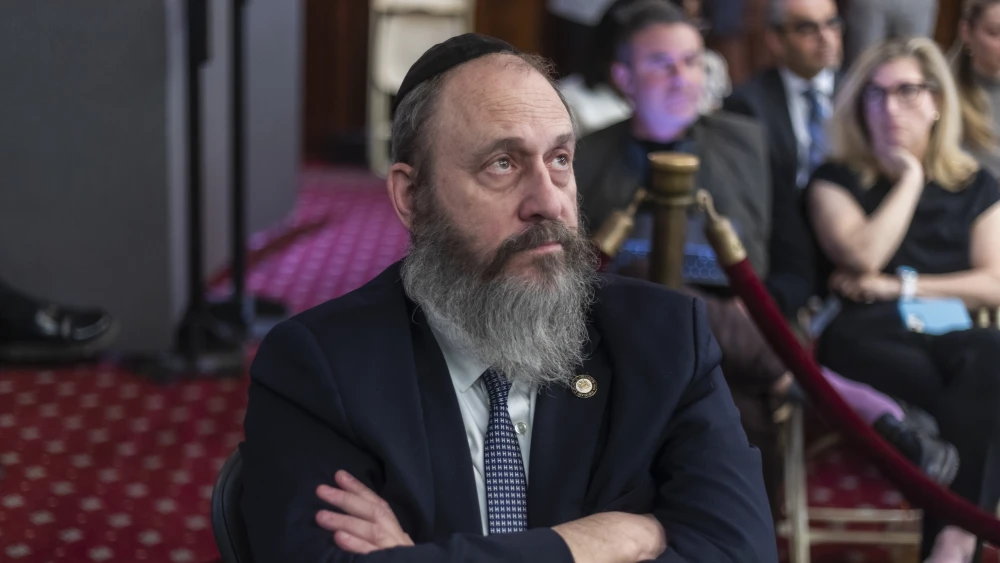
Simcha Felder, a member of the New York City Council and of its Jewish Caucus, at a council meeting, March 26, 2026. Credit: Emil Cohen/NYC Council.

Law enforcement needs the appropriate resources and laws to protect our community and our constitutionally guaranteed right to worship God according to our faith,” he said.

Sydney Altfield, CEO of Teach Coalition, part of the OU that advocated for the legislation, told JNS it has been “inspiring to see faith communities unite in support of this critically needed legislative package.”

“This legislative package reflects the reality that our institutions, synagogues, schools and houses of worship all require protection, ensuring safe access during protests without limiting the fundamental right to peaceful protest,” Altfield said.

Mark Goldfeder, director and CEO of the National Jewish Advocacy Center, told JNS that “religious liberty means more than the theoretical right to pray.”

“It means the practical ability to walk into your synagogue, church, mosque or temple in peace,” he said. “No New Yorker should have to run a gauntlet of intimidation just to enter a house of worship.”

Avi Posnick, executive director StandWithUs Northeast and New England, was present at the council meeting. “These are common sense pieces of legislation, rooted in law, that help protect the Jewish community and all communities while at the same time ensuring First Amendment rights,” Posnick said.

The buffer-zone bill “is another step forward in protecting house of worship and ensuring our community is safe,” he said.

Rabbi Marc Schneier, president of the Foundation for Ethnic Understanding, said that he presented a buffer zone plan to Mamdani shortly after the latter’s election.

.

Eric Dinowitz, a member of the New York City Council and chair of its Jewish Caucus, at a council meeting, March 26, 2026. Credit: Emil Cohen/NYC Council.

“When I first told mayor-elect Mamdani at the time about this idea, he was completely on board,” Schneier told JNS.

The rabbi added that he is proud of Menin “for taking action so quickly, especially as it was clear the mayor once again flip-flopped when it comes to protecting New York’s Jewish community and New Yorkers of all faiths.”

“No one should have to be worried about protesters harassing them when entering a house of worship,” Schneier told JNS.

Rabbi Mark Wildes, founder and director of the Manhattan Jewish Experience on the Upper West Side, said that the measure means houses of worship “can remain safe spaces for people to gather and practice their religion.”

“The fundamental right to free speech must be balanced with the right to exercise one’s religion,” he told JNS. “Both are core constitutional values that deserve protection. Establishing an appropriate buffer zone is the one way to ensure that both rights are respected, allowing worshipers safe access to their places of worship while preserving the ability to protest.”

Legal advocates say protests have crossed from protected speech into targeted intimidation.

Jayne Zirkle, director of communications at the Lawfare Project, told JNS that “what we are seeing outside synagogues, Jewish schools and community spaces is not peaceful protest” and that “it is targeted harassment fueled by dangerous anti-Israel and anti-Jewish rhetoric.”

Stu Smith, an investigative analyst at the Manhattan Institute, called the passage of the legislation “a massive win on so many levels for religious Americans, for constitutional order and for simple human decency.”

“George Washington said the American government should give ‘to bigotry no sanction, to persecution no assistance,’” Smith told JNS. “Thomas Jefferson wrote that no one should be ‘restrained, molested or burthened’ on account of religion.”

“Protecting people from harassment as they worship is squarely in that American tradition,” he said.

The package of measures passed today also included 22-A, which requires the city’s education department to distribute materials to students about the risks of social media and online hate; 297-A, which requires the mayor to establish an agency to provide religious and nonprofit institutions with support in establishing emergency plans; and 388-A, which establishes a hot line for reporting discrimination.


Jessica Russak-Hoffman
Jessica Russak-Hoffman is a writer in Seattle.

Zawartość publikowanych artykułów i materiałów nie reprezentuje poglądów ani opinii Reunion’68,
ani też webmastera Blogu Reunion’68, chyba ze jest to wyraźnie zaznaczone.
Twoje uwagi, linki, własne artykuły lub wiadomości prześlij na adres:
webmaster@reunion68.com

Palestyńczycy: nadal zdeterminowani, by sprzymierzać się z wrogami Zachodu

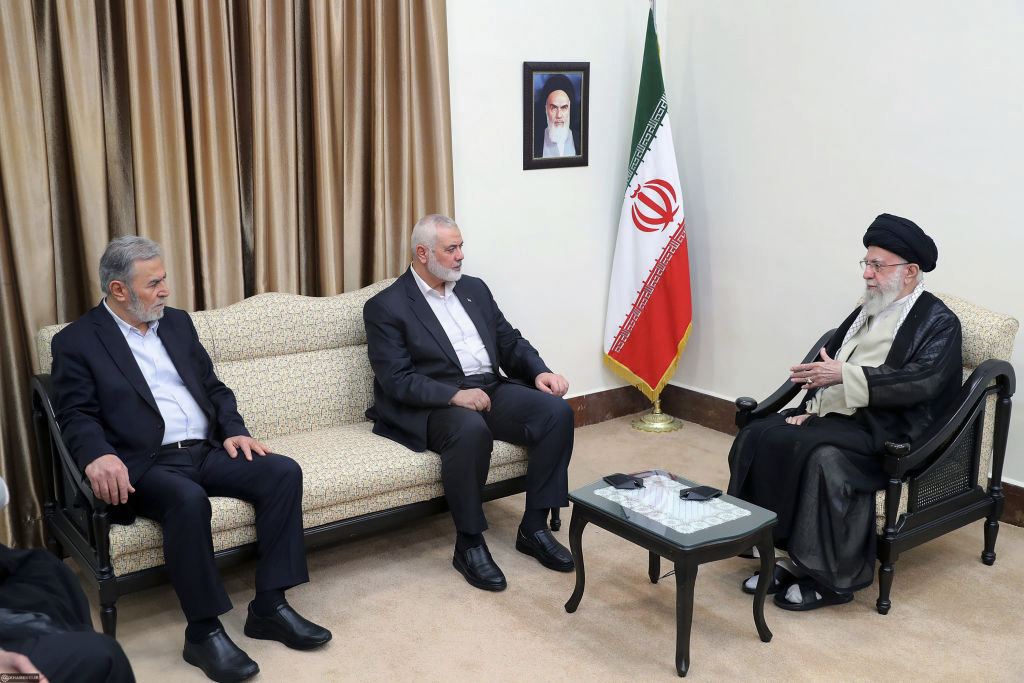
Na zdjęciu: nieżyjący już Najwyższy Przywódca Iranu ajatollah Ali Chamenei (z prawej) spotyka się ze nieżyjącym już Ismailem Haniyehem (w środku), szefem biura politycznego Hamasu, i Ziyadem an-Nachalahem, sekretarzem generalnym Palestyńskiego Islamskiego Dżihadu, 30 lipca 2024 roku. (Zdjęcie: Biuro Prasowe Najwyższego Przywódcy Iranu za pośrednictwem Getty Images)


Palestyńczycy: nadal zdeterminowani, by sprzymierzać się z wrogami Zachodu

Khaled Abu Toameh
Tłumaczenie: Andrzej Koraszewski


Palestyńskie deklaracje poparcia dla irańskiego reżimu należy postrzegać jako bezpośrednie zagrożenie nie tylko dla Izraela, lecz także dla USA. Na zdjęciu: nieżyjący już najwyższy przywódca Iranu ajatollah Ali Chamenei zapowiada uzbrojenie Zachodniego Brzegu. (Znaczną część tej zapowiedzi zdołał wykonać przed odejściem ze stanowiska.)

Krótko po rozpoczęciu nalotów na Iran 28 lutego kilka palestyńskich ugrupowań, w tym Hamas i Palestyński Islamski Dżihad (PIJ), wydało ostre potępienia Izraela i USA oraz wyraziło poparcie dla irańskiego reżimu. Wezwały także Arabów i muzułmanów do zjednoczenia się przeciwko Izraelowi i Stanom Zjednoczonym.

Palestyńskie poparcie dla irańskiego reżimu nie było zaskoczeniem. Przez dziesięciolecia reżim w Teheranie zapewniał znaczące wsparcie finansowe i militarne zarówno Hamasowi, jak i PIJ. To wsparcie stanowi fundament irańskiej strategii “Osi Oporu”, której celem jest projekcja wpływów regionalnych w celu przeciwdziałania interesom Izraela i USA na Bliskim Wschodzie.

W przeszłości Palestyńczycy poparli inwazję irackiego dyktatora Saddama Husajna na Kuwejt w 1990 r.

W 2003 r. Palestyńczycy wyszli na ulice, by wyrazić poparcie dla Saddama Husajna przeciwko amerykańskiej inwazji. Niektórzy z nich skandowali: “Drogi Saddamie, zbombarduj Tel Awiw”. Wielu Palestyńczyków opowiadało się również po stronie wspieranej przez Iran organizacji terrorystycznej Hezbollah w poprzednich rundach walk z Izraelem.

W konsekwencji Palestyńczycy utracili poparcie kilku państw arabskich, w tym tych, które wcześniej udzielały im pomocy finansowej, zwłaszcza Arabii Saudyjskiej i Kuwejtu.

Od tego czasu, według różnych doniesień, Iran przekazuje palestyńskim organizacjom terrorystycznym do 100 mln dolarów rocznie, z czego większość trafia do Hamasu. Dokumenty przejęte przez Siły Obronne Izraela (IDF) w 2024 r. ujawniły, że Iran przekazał około 154 mln dolarów zbrojnemu skrzydłu Hamasu w latach 2014–2020. Irański reżim zapewnił ponadto Hamasowi wiedzę techniczną umożliwiającą lokalną produkcję rakiet w Strefie Gazy. Członkowie zbrojnego skrzydła Hamasu, Brygad al-Kassam, przeszli również specjalistyczne szkolenia w Iranie z zakresu obsługi bezzałogowych statków powietrznych oraz sabotażu celów wojskowych.

Bez wsparcia Iranu Hamas nie byłby w stanie przeprowadzić 7 października 2023 r. inwazji na Izrael oraz zamordować, torturować, okaleczać, gwałcić i uprowadzić setek Izraelczyków oraz cudzoziemców.

PIJ jest również w znacznym stopniu uzależniony od Iranu, otrzymując około 70 mln dolarów rocznie, a także broń, szkolenia techniczne i wsparcie logistyczne ze strony irańskiego Korpusu Strażników Rewolucji Islamskiej (IRGC).

Sprzymierzając się z irańskim reżimem, palestyńskie organizacje terrorystyczne sprowadziły śmierć i zniszczenie na własny naród w Strefie Gazy, zwłaszcza po inwazji na Izrael w 2023 r. Grupy te nie dbają jednak o dobro i bezpieczeństwo swoich ludzi i są gotowe poświęcić tysiące Palestyńczyków w ramach dżihadu (świętej wojny) mającego na celu zniszczenie Izraela.

Zlikwidowany najwyższy przywódca Iranu Ali Chamenei nigdy nie ukrywał swoich poglądów na temat Izraela i USA. Jeszcze w ubiegłym roku nazwał Izrael “rakowym guzem” i określił USA mianem wspólnika jego zbrodni. Podobnie jak jego palestyńscy pełnomocnicy, Chamenei był zawsze gotów poświęcić jak największą liczbę Palestyńczyków w ramach dżihadu przeciwko Izraelowi i USA. Rok wcześniej powiedział ówczesnemu przywódcy Hamasu Ismailowi Haniji:

“Boska obietnica wyeliminowania syjonistycznego bytu [Izraela] zostanie spełniona i ujrzymy dzień, w którym Palestyna powstanie od rzeki do morza”.

W ciągu kilku godzin od rozpoczęcia obecnej izraelsko-amerykańskiej ofensywy przeciwko Iranowi Hamas oświadczył:

“Islamski Ruch Oporu (Hamas) w najostrzejszych słowach potępia amerykańsko-syjonistyczną agresję przeciwko Islamskiej Republice Iranu i podkreśla, że ta amerykańsko-syjonistyczna agresja stanowi bezpośrednie uderzenie w cały region oraz zamach na jego bezpieczeństwo, stabilność i suwerenność.

Potwierdzając naszą solidarność z Islamską Republiką Iranu w obliczu agresji, wzywamy naród arabski i islamski do zjednoczenia się i okazania solidarności w celu udaremnienia tej agresji oraz jej celów…”

Wysoki rangą przedstawiciel Hamasu Bassem Naim, który prowadzi wygodne życie w Katarze, twierdził, że atak na Iran był “podyktowany wyłącznie dostosowaniem się do celów strategicznych i ekspansjonistycznej agendy syjonistycznego bytu, kierowanego przez [premiera Izraela] Benjamina Netanjahu”.

Według PIJ:

“Jawna amerykańsko-izraelska agresja rozpoczęta przez administrację prezydenta Donalda Trumpa i rząd zbrodniarza wojennego Benjamina Netanjahu przeciwko Islamskiej Republice Iranu stanowi niebezpieczną eskalację zagrażającą naszemu regionowi oraz narodom naszej arabskiej i islamskiej wspólnoty. Jest to kontynuacja agresywnego podejścia mającego na celu przerysowanie map regionu na korzyść syjonistycznego bytu, likwidację sprawy palestyńskiej oraz złamanie woli wolnych narodów. Odważny naród irański ma prawo do obrony. Narody naszej arabskiej i islamskiej wspólnoty oraz synowie naszego narodu palestyńskiego są wzywani do zwarcia szeregów i ujednolicenia stanowisk w celu przeciwstawienia się temu agresywnemu planowi, który jest wymierzony we wszystkich”.

Ludowy Front Wyzwolenia Palestyny (PFLP), frakcja OWP (na której czele stoi prezydent Autonomii Palestyńskiej Mahmud Abbas), wezwał “siły wyzwoleńcze i miłujących wolność ludzi na całym świecie do ogłoszenia solidarności z Iranem i eskalacji masowych protestów w różnych miejscach”.

Palestyńska grupa zwana “Ruchem Fatah Intifady” oświadczyła:

“Ogłaszamy naszą pełną solidarność z Islamską Republiką Iranu, reprezentowaną przez jej mądre przywództwo, armię, ruch oporu oraz bratni naród. Islamska Republika ma prawo odpowiedzieć i bronić się. Administracja amerykańska jest największym wrogiem postępu narodów naszego regionu i naszej wspólnoty”.

Te palestyńskie oświadczenia należy postrzegać jako bezpośrednie zagrożenie nie tylko dla Izraela, lecz także dla USA. 

Niestety Palestyńczycy nie wyciągnęli wniosków z samobójczych decyzji, które podejmowali w przeszłości, gdy decydowali się sprzymierzać z wrogami Izraela i Stanów Zjednoczonych.

Palestyńskie organizacje terrorystyczne, które nadal kontrolują Strefę Gazy, z Hamasem na czele, wydają się zdeterminowane, by kontynuować swój dżihad przeciwko Izraelowi, pomimo śmierci i zniszczeń, jakie sprowadzają na Palestyńczyków.

“Rada Pokoju” prezydenta USA Donalda Trumpa nigdy nie będzie w stanie zapewnić bezpieczeństwa i stabilności na Bliskim Wschodzie, dopóki ugrupowania te będą utrzymywać cywilną i wojskową obecność w Strefie Gazy. Palestyńczycy po raz kolejny pokazali, że nie wahają się stawać po stronie wrogów Izraela i USA.

Usunięcie irańskich mułłów od władzy nie wystarczy. Izraelsko-amerykańska operacja wojskowa powinna zostać rozszerzona o pełnomocników irańskiego reżimu.


Khaled Abu Toameh jest wielokrotnie nagradzanym dziennikarzem mieszkającym w Jerozolimie.


Zawartość publikowanych artykułów i materiałów nie reprezentuje poglądów ani opinii Reunion’68,
ani też webmastera Blogu Reunion’68, chyba ze jest to wyraźnie zaznaczone.
Twoje uwagi, linki, własne artykuły lub wiadomości prześlij na adres:
webmaster@reunion68.com

Israel needs to understand that victory must come both on front line and courtroom – editorial


Israel needs to understand that victory must come both on front line and courtroom – editorial

JPOST EDITORIAL

A coalition of groups come together behind banners to march from Westminster to the US embassy holding signs and flags during the ‘Stop The War’ rally against the strikes on Iran in London, England, March 7, 2026 / (photo credit: Martin Pope/Getty Images)

From the opening hours of the war with Iran on February 28, the fighting spread far beyond launch sites, air defenses, and nuclear facilities. Reuters reported that the campaign began with joint US-Israeli strikes and quickly drew Iranian missile fire at Israeli population centers. On Saturday night alone, Iranian missiles hit Arad and Dimona, wounding scores of civilians, including children.

At the same time, a legal and political campaign was already taking shape around the war. NGO Monitor’s March 8 report cataloged statements from international NGOs and Israel-based advocacy groups that framed the conflict as unlawful aggression while, in its account, giving scant attention to Iran’s nuclear violations, its arming of Hezbollah, Hamas, and the Houthis, and its missile attacks on Israeli civilians.

The examples are not abstract. NGO Monitor quoted B’Tselem as warning on February 28 that Israel would use the Iran campaign to expand “ethnic cleansing” in the West Bank and intensify its “genocidal assault” in Gaza. It cited Breaking the Silence urging the public not to let the bombing of Iran distract from Gaza and the West Bank. It cited Human Rights Watch statements accusing Israel and the US of unlawful attacks and possible war crimes.

Reuters then reported on March 16 that the chair of a UN fact-finding mission told the Human Rights Council that an Israeli strike on Evin prison amounted to a war crime, while Israel said the target was being used for intelligence operations against it.

Israel has also seen how wartime decisions are pushed into rapid legal review at home. Reuters and The Jerusalem Post reported in late February that 17 NGOs and the Association of International Development Agencies petitioned the High Court of Justice against new Israeli rules requiring organizations operating in Gaza and the West Bank to provide staff details. The court issued a temporary injunction while it considered the case.

Emergency workers gather in the early hours of March 22, 2026 at the site of an Iranian missile strike hours earlier in Arad, Israel. Dozens were wounded in the strike, which Israel’s air-defence system failed to intercept. (credit: Erik Marmor/Getty Images)

Lawfare is a strategic arena

Whatever one thinks of that petition, it showed how policy made during war can be rerouted almost immediately into judicial and diplomatic pressure.

The Post believes Israel should preserve dissent, judicial review, and a free civic sphere even during war.

Those are strengths of a democracy at war. They are also openings that hostile actors and aligned advocacy networks can use.

That is the point Israel has resisted stating plainly. Lawfare is a strategic arena. A report drafted in Tel Aviv, London, or New York can travel quickly into a UN chamber, an international legal filing, a sanctions campaign, or a media narrative that hardens before the battlefield picture is even clear.

Israel’s enemies do not operate under similar constraints. Hezbollah does not answer to Israel’s High Court. Hamas does not submit its targeting choices for judicial scrutiny. Iran does not revise doctrine because an NGO issues a press release. Israel does because it is a democracy.

A serious country can acknowledge that reality without trying to silence criticism. Every petition is not sabotage.

Every NGO report is not malicious. Israel benefits from scrutiny, and honest criticism has often improved public policy. Still, a state at war has every right to ask when oversight remains oversight and when it begins functioning, deliberately or otherwise, as part of an external pressure system that narrows its freedom to act.

The Iran war sharpened that distinction. The same period that produced fresh Iranian strikes on Israeli towns also produced international legal rhetoric that moved with remarkable speed toward charges of aggression and war crimes. That pattern deserves public and governmental attention. It deserves more than ritual praise for democracy followed by strategic passivity.

The Post supports stronger disclosure rules for foreign governmental funding, fuller transparency around advocacy networks operating during wartime, and a careful examination of whether some groups are serving as domestic watchdogs, international litigators, or both. Israel should approach that work with precision and restraint. It should refrain from using harsh methods and engaging in political scheming. It should also stop behaving as though legal and diplomatic warfare sit outside the conflict.

Israel needs a democracy that understands the war it is fighting. Military strength remains essential. So do legal and political self-defense. If a country achieves victory in the air but fails in the courtroom, the UN, and the court of public opinion, it will realize too late that these fronts are interconnected.


Zawartość publikowanych artykułów i materiałów nie reprezentuje poglądów ani opinii Reunion’68,
ani też webmastera Blogu Reunion’68, chyba ze jest to wyraźnie zaznaczone.
Twoje uwagi, linki, własne artykuły lub wiadomości prześlij na adres:
webmaster@reunion68.com