Archives

From the Editor: The Oct. 7 Massacre, Three Years Later


From the Editor: The Oct. 7 Massacre, Three Years Later

Aaron Kliegman


A woman reacts as she visits the site of the Nova music festival, where partygoers were killed and kidnapped during the deadly Hamas-led Oct. 7, 2023, attack, on the third anniversary of the attack, near Reim, southern Israel, Oct. 7, 2026. Photo: REUTERS/Ronen Zvulun

I was on my tractor, using a bush hog to cut my front field, when I realized that the attack in Israel on Oct. 7, 2023, was something unprecedented.

Admittedly, I don’t observe Shabbat in the strictest sense, but I also try not to be plugged into the outside world. So, what started as a small trickle of information from occasional glances at my phone turned into a flood of rumors, news reports, and story fragments, as I tried to understand what was happening and the truth began to emerge.

Invasion. Massacre. Atrocities. Kidnappings. The details were blurry, but the broader picture was clear: This wasn’t another terrorist attack. This was war. And the scale of the fighting would be much bigger than the typical flare-ups in Gaza.

Israelis of course suffered the brutality of Oct. 7 directly. But for Jews in the diaspora, the massacre and the ongoing surge in global antisemitism it unleashed have traumatized the collective Jewish soul, digging deep enough to resonate globally.

All those black and white images of the Holocaust suddenly became filled with color. Textbook illustrations of medieval blood libels turned into actual people. Stories of pogroms in the Russian Empire became more than images in one’s head. These atrocities actually happened, to real people, and no matter how modern and sophisticated we think we are, there’s no law of history to prevent them from happening again.

For many Jews, the historical persecution they learned about was important abstractly but irrelevant to their lives. Sure, mobs once attacked their ancestors simply for being Jews, but that was a problem of a different world. Not here. Not now.

Practically overnight, everything changed.

Today’s Jews became part of the millennia-long story of Jew-hatred, from the Babylonian exile to the totalitarians of the last century. History became daily life, hitting Jews everywhere (often literally) as a horrific wakeup call.

The anniversary of the Oct. 7 massacre is above all a day to remember what happened in southern Israel — the scale, the brutality, and, crucially, the bravery of so many heroes — to ensure it is not forgotten and key lessons don’t fade.

However, beyond the Middle East, Oct. 7, 2023, was also a turning point for the diaspora and even the broader Western world, one of those rare dates powerful enough to divide history simply into the world before and the world after.

As readers of The Algemeiner know well, dozens of countries experienced massive surges in antisemitic incidents following Hamas’s attack, and that uptick has continued since then. Even in places where numbers have dipped over the past year, antisemitism remains well above pre-Oct. 7 levels. More troubling, the number of violent incidents has recently spiked to all-time highs in several countries. Antisemites are getting bolder and more ambitious with their hate.

This antisemitism comes in the context of a post-Oct. 7 political reality dominated by conspiracy theories and extremism.

In France and Germany, the far-left and far-right parties are both on the rise, poised to crowd out the center as they duel for power. Meanwhile, riots have broken out on the streets of France in what seems to be a uniting of leftists and Islamists to undermine the country.

In the UK, the Green Party just passed a resolution equating Zionism with racism and calling for a Palestinian state to replace Israel. That came after the Labour government sanctioned Israeli settlements, along with other European governments and Canada. Listening to the officials who announced the sanctions, you’d think these countries don’t have any problems of their own except for resolving the Israeli-Palestinian conflict.

As for the US, the Democratic Socialists of America, an objectively antisemitic organization, is attempting a not-so-hostile takeover of the Democratic Party, facing little resistance. And many Republicans, especially younger ones, are going further down the populist-isolationist pit, a descent that ends somewhere decidedly anti-conservative.

A common theme is that in all these countries, conspiracy theories are infecting more minds than ever, spurred by failure of institutions and boosted by the reach of modern technology. And if it wasn’t obvious, all conspiracy theories ultimately lead to antisemitism, the great explainer of what’s wrong with the world and why it’s always someone else’s fault. In a post-Oct. 7 world, this often takes the form of wild accusations against Israel.

Such chaos existed before, but Hamas terrorists and their Western sympathizers poured gasoline on simmering fires across the West that were already creating disunity.

The irony is that Israel will be fine. Its economy has proven remarkably resilient. Its deterrence has been restored. And its tech sector will continue to make the Jewish state an essential partner for any country wanting to be secure and prosperous in the 21st century.

Yes, Israel’s relationships with many Western governments have declined. But they’ve improved in places such as Africa, Latin America, and, most importantly, the Middle East itself. The one wild card that really matters is the US, where declining public support for Israel could become a real issue.

That important note aside, the tragedy of Oct. 7 forced Israel to once again get serious about the realities of being a small country living in the world’s most chaotic region. And it produced a younger generation of heroes who make supporters of the country hopeful for the future.

As for the West, well, Oct. 7 was also a dividing line in history. Except three years later, we see a civilization heading in the wrong direction, desperately in need of wise leadership and spiritual revival.


Aaron Kliegman is the executive editor of The Algemeiner.


Zawartość publikowanych artykułów i materiałów nie reprezentuje poglądów ani opinii Reunion’68,
ani też webmastera Blogu Reunion’68, chyba ze jest to wyraźnie zaznaczone.
Twoje uwagi, linki, własne artykuły lub wiadomości prześlij na adres:
webmaster@reunion68.com


Śledztwo w sprawie lotu flydubai: Pilot napastnik zaatakował kapitana siekierą. Miał radykalne poglądy

Flydubai. Zdjęcie ilustracyjne (Fot. REUTERS/Ammar Awad)


Śledztwo w sprawie lotu flydubai: Pilot napastnik zaatakował kapitana siekierą. Miał radykalne poglądy

Marta Urzędowska


Drugi pilot, który próbował przejąć kontrolę nad samolotem linii Flydubai lecącym do Izraela, był radykałem, miał skłonności samobójcze, a kapitana zaatakował nie nożem, lecz siekierą awaryjną – podają władze Zjednoczonych Emiratów Arabskich, które prowadzą śledztwo.

Prokurator generalny ZEA Hamad Sajf asz-Szamsi potwierdził, że incydent, do jakiego doszło w ub. tygodniu na pokładzie linii flydubai, był atakiem terrorystycznym.

Dodał, że trwają dochodzenia, które mają ustalić okoliczności, motywy oraz ewentualne powiązania osób związanych z tym incydentem.

Samolot, na pokładzie którego rozegrał się dramat, leciał 30 września z Dubaju do Tel Awiwu z ponad 170 osobami na pokładzie. Jeden z pilotów zaatakował drugiego i próbował rozbić maszynę. Interweniowali pasażerowie, którzy obezwładnili napastnika, a podróżujący samolotem w roli pasażerów dwaj piloci posadzili maszynę w Arabii Saudyjskiej.

Napastnik miał radykalne poglądy

Śledztwo w sprawie napaści prowadzą Zjednoczone Emiraty Arabskie, gdyż pilot był zatrudniony przez emirackie linie, a maszyna wystartowała z Dubaju. W śledztwie uczestniczą też służby izraelskie – na pokładzie byli niemal wyłącznie Izraelczycy i od początku istniało podejrzenie, że mogło chodzić o atak terrorystyczny.

Wśród nowych informacji, jakie napływają ze śledztwa, pojawiły się doniesienia, że napastnik nie użył – jak relacjonowali wcześniej świadkowie – noża, ale siekiery awaryjnej. Są one na pokładach większości samolotów pasażerskich.

Jak podkreśla BBC, rodzaj użytej broni stanowi kluczową kwestię dla śledczych, biorąc pod uwagę rygorystyczne środki bezpieczeństwa stosowane w samolotach.

Pilot, który zaatakował kapitana Smita Machchhara, to Omańczyk – Oman nie ma relacji z Izraelem. W ostatnich dniach media zidentyfikowały go jako Hamama al-Hammamiego.

Prokurator generalny Emiratów poinformował państwowe media, że śledztwo jest kontynuowane, a celem jest ustalenie wszystkich okoliczności zdarzenia i motywu sprawcy.

Napastnik tracił poprzednie posady, bo był radykałem?

Jak informuje BBC, Hammami wcześniej pracował w innych liniach, jednak został wykluczony ze szkolenia lotniczego z powodu obaw związanych z jego radykalnymi poglądami i dostał inne stanowisko w narodowych liniach lotniczych Omanu. Z kolei CNN podaje, że Hamami został w ubiegłym roku zwolniony z poprzedniej pracy w narodowych liniach lotniczych Omanu w związku z obawami dotyczącymi jego ekstremistycznych poglądów. Izraelski urzędnik poinformował CNN, że al-Hammami pracował dla flydubai zaledwie osiem miesięcy.

Według dwóch źródeł cytowanych przez stację, Hammami jest obywatelem Omanu, urodził się w Emiratach, jego ojciec jest Omańczykiem, matka – Syryjką. Nie jest jasne, jak trafił do flydubai i dlaczego pozwolono mu pilotować samolot pełen Izraelczyków.

W profilu na LinkedIn pod nazwiskiem Hamam al-Hammami podano, że pracował on w Oman Air przez siedem lat, odchodząc z pracy w lutym 2025 r., a następnie dołączył do marokańskich linii lotniczych Royal Air Maroc w czerwcu 2025 r. i odszedł z nich w styczniu 2026 r.

Szukał żony, która zasłaniałaby twarz i była gotowa rzucić pracę

Podczas gdy Emiratczycy i Izraelczycy próbują ustalić szczegóły incydentu, w niedzielę władze australijskie poinformowały, że prowadzą własne dochodzenie w sprawie „powiązań” napastnika z Australią, ale nie podały żadnych szczegółów.

ABC informuje, że w 2014 r. Hammami dostał wizę studencką i w latach 2015–2017 studiował w Australii. W 2019 r. jego wiza została unieważniona, bo nie był zapisany na żadne studia. Jak podaje ABC, spece od terroryzmu sprawdzą, czy mężczyzna uległ radykalizacji w czasie pobytu w Australii.

Po wyjeździe z Australii Hammami ukończył trzyletni kurs prowadzony przez brytyjski Buckinghamshire New University i w 2023 r. uzyskał dyplom z zarządzania lotnictwem. Jak opowiadał w rozmowie z Fox News premier Izraela Benjamin Netanjahu, napastnik po obezwładnieniu miał krzyczeć do pasażerów: „Zabijcie mnie, zabijcie mnie!”.

Jest więc jasne, że miał skłonności samobójcze. Wydaje się bardzo prawdopodobne, że zamierzał doprowadzić do katastrofy samolotu

– zauważył premier, dodając, że napastnik „przeszedł radykalną indoktrynację islamistyczną”.

CNN przeanalizowała wpisy Hammamiego na Twitterze, które zostały już usunięte. W niektórych mężczyzna żalił się, że matka nie jest w stanie znaleźć mu żony, która zgodziłaby się na jego warunki: noszenie nikabu, czyli chusty zasłaniającej twarz, i porzucenie pracy zawodowej po ślubie.

„Wszystkie odmawiały, zaczęły się zgadzać dopiero, kiedy matka powiedziała, że jestem pilotem” – chwalił się.

Ostro krytykował też miejsca, gdzie razem pracują mężczyźni i kobiety. „Ile szanowanych, religijnych dziewcząt zostało zrujnowanych w środowiskach pracy, w których pracują osoby obu płci, gdzie zostały poddane manipulacji?” – czytamy w poście ze stycznia 2022 r.

Zaatakowany pilot: Zrozumiałem, że samolot spada. Musiałem zadziałać

Pilot, który został zaatakowany, to pochodzący z Indii Smit Machchhar. Cytowany przez BBC relacjonuje, że kiedy po ataku leżał ranny na podłodze, zrozumiał, że samolot spada i musi działać natychmiast.

Powiedziałem sobie, że muszę podjąć ostatnią próbę, by otworzyć drzwi od wewnątrz

– opowiada. Ostatecznie to, że je uchylił, umożliwiło pasażerom wejście do kokpitu i uratowało samolot przed katastrofą.

ISRAEL-GULF/FLIGHT-PILOT Hamdan ibn Muhammad Al Maktum, wicepremier ZEA, odwiedza w szpitalu Smita Machchhara, pilota, który zapobiegł katastrofie samolotu flydubai.

Machchhar został przewieziony do szpitala w Arabii Saudyjskiej, gdzie wylądował samolot, a następnie przetransportowany helikopterem do Abu Zabi. – Jest w dobrym stanie i szybko wraca do zdrowia – poinformowała ambasada Indii w Zjednoczonych Emiratach Arabskich.

– Jestem przekonany, że wyzdrowieję i znów będę sprawny i zdrowy – powiedział pilot BBC.

Netanjahu w rozmowie z CNN w ub. tygodniu stwierdził, że zaatakowany pilot i pasażerowie, którzy obezwładnili napastnika, „zdołali zapobiec katastrofie na miarę wydarzeń z 11 września 2001 r.”


Redagowała Ludmiła Anannikova


Zawartość publikowanych artykułów i materiałów nie reprezentuje poglądów ani opinii Reunion’68,
ani też webmastera Blogu Reunion’68, chyba ze jest to wyraźnie zaznaczone.
Twoje uwagi, linki, własne artykuły lub wiadomości prześlij na adres:
webmaster@reunion68.com


The real lesson of Oct. 7? Stop appealing for sympathy


The real lesson of Oct. 7? Stop appealing for sympathy

Jonathan S. Tobin


After three years of rejection and antisemitism, Jews must cease asking for pity and second-guessing failed efforts at explaining themselves, and instead project strength.
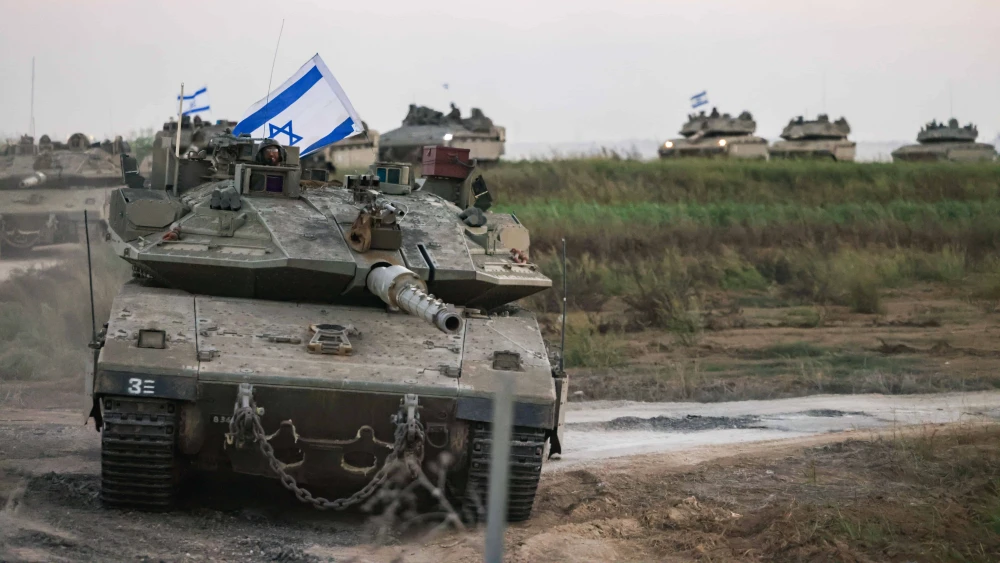
A convoy of Israel Defense Force tanks heads to the southern Israeli border with Gaza on Oct. 12, 2023. Photo by Chaim Goldberg/Flash90.

After three years of failure, it’s time to try something else. That’s the lesson that Jews and those who purport to speak for them and/or the pro-Israel community should be thinking about on the third anniversary of the Oct. 7 massacre.

For three years, the Jewish world has been stunned by the reaction to the Hamas-led Palestinian Arab terror attacks on Israeli communities on Oct. 7, 2023. But it’s time to stop. More to the point, it’s also necessary to cease appealing for sympathy or understanding.

The expectation on the part of most Jews and Israelis, as well as those who are their friends in the days that followed, was that world opinion would swing behind the Jewish state in the aftermath of that horrific orgy of mass murder, torture, rape, kidnapping and wanton destruction. And there was, in fact, some initial sympathy for Israel, even in the media that is so quick to denounce it.

The turn against Israel

Within days, however, that changed. Once it was clear that Israelis were not going to simply accept their victimization and would act to end the threat of more such atrocities, what passes for enlightened liberal opinion, along with some elements on the far right, voiced outrage. That outrage was not aimed at the crimes of the Palestinians. Nor was it a response to the evidence that their leaders and most of the population have meant what they said when they repeatedly rejected an independent state alongside Israel and would settle for nothing less than the destruction of the Jewish state.

Instead, the spectacle of Jews defending themselves and moving to eliminate a threat that no sovereign nation would tolerate on its border was too much for a world that has largely regarded Jewish power of any kind as intolerable. Even before the Israel Defense Forces began their offensive into Gaza to attempt to eliminate Hamas’s ability to make good on their promises to repeat Oct. 7-style massacres, anti-Israel protests began. More importantly, world leaders called for caution and restraint that they would never demand of their own countries under similar circumstances.

The United States was an initial exception to that rule. Yet within weeks, the administration of President Joe Biden, which had supported Israel’s goal of eliminating Hamas, shifted to a more equivocal stance. What ensued was a year-long dance in which the United States sought to pressure the government of Israeli Prime Minister Benjamin Netanyahu to stop seeking victory. Washington even demanded that Jerusalem accept an outcome in which the continued hold on power on the part of the Islamist terrorists who had ruled Gaza as an independent Palestinian state in all but name since 2007 was to be tolerated.

Biden’s shift was clearly a reaction to liberal and left-wing opinion in his own Democratic Party. After Oct. 7, Democrats, who had already been turning against Israel over the course of the previous decade under the administration of President Barack Obama, overwhelmingly took the side of the Palestinians against the Israelis.

The same was true around the globe as Western European nations—influenced by both the influx of Muslim immigrants from the Middle East and North Africa, and by Marxist and left-wing parties that reviled Zionism—expressed their horror at the idea of Israel pursuing a war to defeat Hamas.

Disingenuous ‘criticism’

Israel’s foes claim that the revulsion was the product of an unusually harsh and “disproportionate” offensive in Gaza in which its military indiscriminately killed large numbers of civilians, including women and children. The Jewish state was accused of “genocide” and causing mass starvation. Indeed, so ubiquitous were these accusations in mainstream media outlets and popular culture that few liberals or left-wingers dared to question them or consider them debatable.

This critique was—and remains—entirely disingenuous. Israel’s military used more restraint in the difficult conditions of urban warfare and, as impartial military experts testified, killed a far lower percentage of civilians than in any other such confrontation in modern-day history.

Hamas hid behind Palestinian civilians and did everything to expose them to death. They stored weapons in schools and hospitals. They stole food meant for residents that the Israelis moved from one part of the Strip to another to keep them out of the way of airstrikes and other military efforts to bring back men, women and children dragged by Hamas on Oct. 7 into the coastal enclave. With the international aid it had received prior to Oct. 7, Hamas had built a tunnel network under Gaza that might be termed the world’s largest bomb shelter, the size of the New York City subway system. But no civilians (other than the hostages, many of whom were hid there) were allowed into them. They were only for terrorist fighters, their commanders and their supplies.

There was no “genocide” or Gaza famine. There isn’t any such thing going on today. Nonetheless, much of the world believes it.
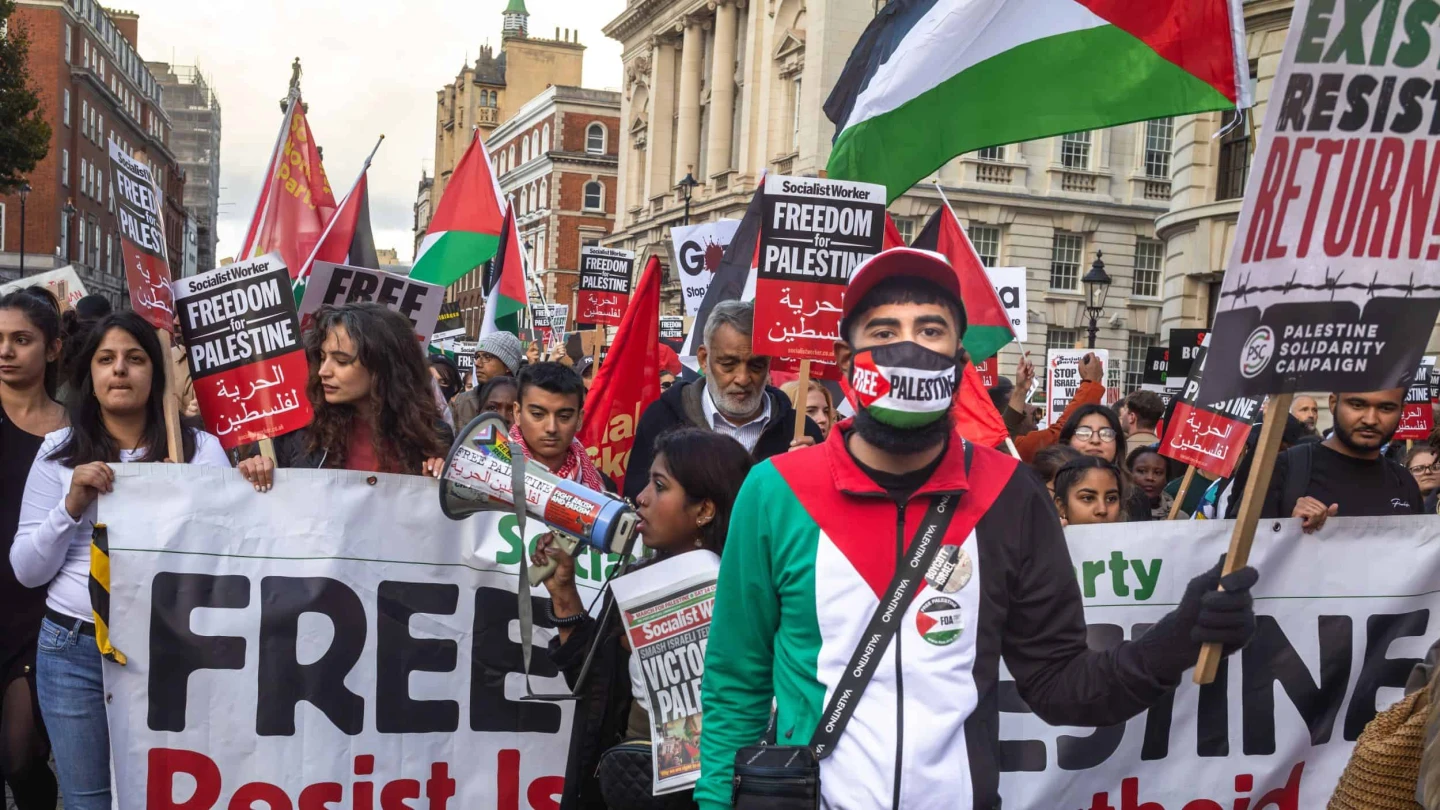
Anti-Israel and pro-Palestinian demonstrators march through central London in support of the Hamas terrorist group, Oct. 14, 2023. Credit: Andy Soloman/Shutterstock

The atrocities of Oct. 7 were denied, even though Hamas and other Palestinian terrorists had documented them with GoPro cameras and social-media uploads (one infamously called his parents to brag about how many Jews he killed that day). The victims, including raped women and men, were ignored or not believed. Posters of the kidnapped, even of a 9-month-old baby, were torn down on the streets of American and European cities. Mass rallies were held to bolster support for Hamas on the streets of those cities and on college campuses.

The main reason for the lack of sympathy for Israel wasn’t because Netanyahu or members of his cabinet were unlikable or too truculent, or because his government failed to mount an effective public diplomacy campaign (though it should have done better). Nor was it because pro-Israel supporters in the United States were equally ineffective in making the case for the Jewish state or against intransigent Palestinian Arabs and their terrorist leaders.

The deck was stacked against Israel long before Oct. 7. Like the American education system, the corporate media had largely been captured by left-wing ideologues who believed in political activism, not journalism. And it, too, adopted the skewed ideas of critical race theory, intersectionality and settler-colonialism that exacerbated racial tensions among the general population, as well as falsely labeled Israelis and Jews as “white” oppressors and their Palestinian opponents as “people of color.” That meant the former were always in the wrong, no matter what they did, and the latter in the right, no matter how awful their crimes.

They’re not listening

While Israel and its supporters might have done better in their efforts to inform the world about Oct. 7 and the century of Palestinian rejectionism that preceded it, the notion that the global audience or even the bulk of the base of the Democratic Party was open to being educated about any of this was unfounded. The red-green alliance of Marxists and Islamists that are skewing European politics and ideas about Israel and the Jews has also secured a beachhead in America, as the success of antisemitic figures like New York City Mayor Zohran Mamdani and Michigan Democratic U.S. Senate nominee Dr. Abdul El-Sayed demonstrates.

A world that had decided that the Jews and their state were singular villains, and thus guilty of horrible crimes, was certainly influenced by social-media algorithms and biased media. But their receptiveness to the blood libels about genocide and famine in Gaza or to the lie that Israel is an “apartheid” state wasn’t due to the lack of a proactive information task force in the Israeli prime minister’s office or the failure of much of the organized Jewish world. Having been marinated in the toxic doctrines that taught them the Israelis were the bad guys, liberal opinion was already lost to the Jewish state even before the bodies were buried after Oct. 7.

The only sectors of global or American society that remain impervious, or at least less vulnerable, to the onslaught of Hamas propaganda masquerading as progressivism are among those on the right who have already rejected these doctrines. That’s provided that they are not also being seduced by the wave of Jew-hatred on the far right that employs traditional antisemitic tropes.

Once we acknowledge all of this, the question remains: What do we do about it?

The first thing is for the Jews to stop appealing for sympathy that isn’t coming.

It should have been apparent from the outset that centering pro-Israel advocacy on the victimization of Jews on Oct. 7 or on the appalling treatment of the hostages taken that day was a mistake. It only excited antisemites. And, rather than elicit empathy, it seems to have convinced many others to believe that the Palestinians had a good reason to murder the Jews.

A futile quest

In this sense, it was much like Israel’s misguided and failed efforts to trade “land for peace” throughout the previous three decades. That did more to convince world opinion that the Jews were possessors of stolen property, rather than high-minded people who were willing to compromise their rights and even their security to achieve an end to the conflict. But now, the pleas for understanding seem only to have reinforced the growing chorus of those who believe Zionism—the anti-colonial and national liberation movement of the Jews—equals racism.

Unlike the recent past, the real debate about the Middle East isn’t about a two-state solution the Palestinians never wanted. It now centers on whether all of the Jewish state, including the kibbutzim and other communities near the Gaza Strip whose liberal-minded inhabitants were slaughtered along with everyone else on Oct. 7, is stolen land. That goes hand in hand with the idea that its occupants are foreign colonizers in their homeland, where they are the indigenous people who are only getting what they deserve.

Rather than members of the Jewish community wracking their brains trying to solve the puzzle about how to convince those who aren’t listening to hear sound historical arguments, they need to stop centering so much of their efforts on this futile quest.

It’s true that losses in the information world have real consequences, and that the attempts to isolate Israel diplomatically and economically pose a grave danger to it. But if the Jews should have learned anything in the last century when the world stood by as the Holocaust went on for years, it’s that the most important task facing them is to strengthen their state and its ability to defend Jewish life.

As horrible as the catastrophe of Oct. 7 was, in the three years that have followed, Israel’s defeats of Hamas and Hezbollah—plus the fall of a longtime brutal dictator in Syria—and their Iranian paymasters and sponsors have done more to make Jewish lives safer than all of the clever arguments put forward by its most able public information advocates.

That doesn’t give the Israeli government—or Diaspora leaders and groups—a pass for doing so poorly at explaining the situation. And it certainly doesn’t excuse a tech-savvy Jewish state for not being as nimble as it should have been in employing new media and Internet technologies to make their arguments against those spreading blood libels and antisemitism.

Still, delusions should be discarded about the chances that appeals aimed at inspiring sympathy for Jewish victims will move the needle on international or even American public opinion for those who have bought the pro-Hamas narrative hook, line and sinker. As Dara Horn has written, the world may “love dead Jews,” but what that really means for us today is that their abhorrence of Jews with power is undiminished.

A just cause

What Israel and its defenders must exude is strength, confidence in their justice of their cause, and a willingness to be undaunted by the lies and smears spread about them. Rather than seeking to debate or persuade those crying “genocide” primarily to give the world a pass for permitting the actual genocide of European Jewry during the Holocaust, we must dismiss them as hate-mongers unworthy of intellectual refutations.

As much as Jews everywhere must continue to mourn the victims of Oct. 7, as well as the heroic soldiers of the Israel Defense Forces who fell or were wounded in the ongoing effort to defeat terrorists, they should quit waiting for others to join them.

The real lesson of Oct. 7 is no different from that of the thousands of years of Jewish history that preceded it. Weakness and faith in the kindness of those ready to believe that Jews are the cause of whatever it is they fear most or the greatest societal problems they face is a formula for disaster.

Just as in the past, those who think that destroying the Jewish state will be the first step toward the liberation of the world’s oppressed peoples are not persuadable. But they can be defeated.

A proud declaration of Jewish rights and faith is far more likely to inspire friendship and alliances. That’s a lesson that should resonate for Israelis. But it must also be one adopted by Diaspora Jews perplexed by a wave of bigotry and vitriol they never anticipated and struggle to cope with. Unless and until they realize that they must defend themselves first—and worry about what everyone else thinks later—will they find a way to live in a world where Jew-hatred has again become fashionable.


Jonathan S. Tobin is editor-in-chief of the Jewish News Syndicate, a senior contributor for The Federalist, a columnist for Newsweek and a contributor to many other publications. He covers the American political scene, foreign policy, the U.S.-Israel relationship, Middle East diplomacy, the Jewish world and the arts. He hosts the JNS “Think Twice” podcast, both the weekly video program and the “Jonathan Tobin Daily” program, which are available on all major audio platforms and YouTube. Previously, he was executive editor, then senior online editor and chief political blogger, for Commentary magazine. Before that, he was editor-in-chief of The Jewish Exponent in Philadelphia and editor of the Connecticut Jewish Ledger. He has won more than 60 awards for commentary, art criticism and other writing. He appears regularly on television, commenting on politics and foreign policy. Born in New York City, he studied history at Columbia University.


Zawartość publikowanych artykułów i materiałów nie reprezentuje poglądów ani opinii Reunion’68,
ani też webmastera Blogu Reunion’68, chyba ze jest to wyraźnie zaznaczone.
Twoje uwagi, linki, własne artykuły lub wiadomości prześlij na adres:
webmaster@reunion68.com


Wojna w Izraelu. Hamas zaatakował na południu kraju, Netanjahu zapowiada “odwet, jakiego nie znali”

Atak na Izrael (Atak na Izrael/Fot. Hassan Eslaiah / AP Photo)


Archive | 2023/10/07


Wojna w Izraelu. Hamas zaatakował na południu kraju, Netanjahu zapowiada “odwet, jakiego nie znali”

Bartosz T. Wieliński / Łukasz Grzymisławski


Masakrują nas. Nie ma wojska od sześciu godzin. Ludzie błagają o litość – donoszą mieszkańcy żydowskich osiedli w południowym Izraelu. Po niespodziewanym i wielkim ataku terrorystów Hamasu izraelskie wojsko rozpoczęło uderzenia odwetowe .
Najpoważniejsza sytuacja panuje w 20-tysięcznym mieście Sderot położonym tuż przy granicy z kontrolowaną przez Hamas Strefą Gazy.

Rano do miasta wjechały półciężarówki wypełnione uzbrojonymi w kałasznikowy i granatniki RPG hamasowcami. Terroryści strzelali do wszystkiego, co się rusza. Na zamieszczonych w internecie zdjęciach widać m.in. ciała cywilów zabitych na przystanku autobusowym. Hamasowi udało się zająć komendę policji i przejąć magazyn uzbrojenia. Na filmach widać też zamaskowanych terrorystów, którzy zajmują pozycje przy głównych drogach w centrum miasta i na dachach okolicznych budynków.

Wiele raportów wskazuje na to, że izraelscy cywile są brani przez hamasowców jako zakładnicy i wywożeni do Strefy Gazy. Są też doniesienia o egzekucjach.

Hamasowcy chwalą się także zdobycznym izraelskim sprzętem. To głównie lekkie pojazdy. Z nagrań wynika jednak, że udało się im zniszczyć co najmniej jeden czołg Merkava. *************


Napływają również informacje o wejściu terrorystów do miasta Aszkelon położonego 7 km od granic Strefy Gazy. Tam również trwają walki i są ofiary wśród cywilów. Zaatakowano także inne osiedla. “Jesteśmy masakrowani. Nie ma wojska. Minęło już sześć godzin. Ludzie błagają tu o litość” – dziennik “Haarec” cytuje rozmowę z mieszkańcem jednego z kibuców w południowym Izraelu.

Największy atak o dekad i wielki blamaż izraelskich służb

Bezprecedensowa ofensywa Hamasu to wielka kompromitacja izraelskiego aparatu bezpieczeństwa.

Rano na Izrael odpalono ze strefy Gazy ponad 5 tys. pocisków. Jednocześnie rozpoczął się atak lądowy, po przełamaniu izraelskich pozycji na granicy terroryści z Hamasu wjechali do Izraela półciężarówkami i quadami. W powietrze wzbili się także paralotniarze, którzy mieli dotrzeć do bardziej oddalonych celów niż Sderot i Aszkelon. Do walk po stronie Hamasu przyłączyli się bojownicy Islamskiego Dżihadu. Walki wybuchły w Jerozolimie. Z Hamasem solidaryzuje się także sponsorowany przez Iran i kontrolujący południowy Liban Hezbollah. Zresztą obie organizacje są powiązane z Teheranem, sprzymierzeńcem i dostawcą uzbrojenia dla Rosji.  

Hezbollah pogratulował Hamasowi, ale w powściągliwy sposób, sugerujący, że sam nie zamierza angażować się w wojnę z Izraelem. W oświadczeniu opublikowanym w serwisie informacyjnym Al Manar Hezbollah stwierdził, że “uważnie śledzi wydarzenia na scenie palestyńskiej” i pozostaje “w bezpośrednim kontakcie” z przywódcami palestyńskich grup zbrojnych. Hezbollah uznaje atak Hamasu za “sygnał dla każdego, kto chce tzw. normalizacji, zwłaszcza tych, którzy dążą do nawiązania stosunków dyplomatycznych z Izraelem”. To zapewne dotyczy krajów Zatoki Perskiej, w szczególności Arabii Saudyjskiej, która ustala obecnie z USA warunki potencjalnego uznania przez Rijad państwa Izrael.

Jak to możliwe, że Izrael dysponujący potężnym aparatem bezpieczeństwa i jednymi z najlepszych służb wywiadowczych świata nie wykrył przygotowań do ataku?

Powtórka z wojny Jom Kippur?

Sytuacja przypomina wydarzenia sprzed półwiecza. 6 października 1973 r. wspólny atak wojsk syryjskich i egipskich całkowicie zaskoczył Izraelczyków. Niewiele brakowało, żeby syryjskie kolumny pancerne przebiły się przez izraelską obronę i wdarły się w głąb kraju. Izrael uratował wówczas heroizm obrońców, którzy nie byli w ogóle uprzedzeni o szykowanej przez sąsiadów napaści. Wówczas atak Syrii i Egiptu miał miejsce w dzień Jom Kippur, jedno z najważniejszych żydowskich świąt. Teraz Hamas zaatakował w święto Simchat Torah.

Jedno z możliwych wyjaśnień przeoczenia przygotowań do ataku są trwające w Izraelu od miesięcy przepychanki w sprawie niezależności sądownictwa. Rząd Benjamina Netanjahu pochłonęła walka o pozbawienie niezależności Sądu Najwyższego, przeciwko czemu regularnie na ulicach izraelskich miast protestują setki tysięcy ludzi. Teraz, w obliczu napaści Hamasu, wszelkie protesty zostały zawieszone przez samych organizatorów i opozycję, a do jednostek wracają rezerwiści, którzy w ramach protestu przeciwko rządowi od miesięcy odmawiali służby.

Netanjahu w orędziu ogłosił, że Izrael znajduje się w stanie wojny, a wojsko już rozpoczęło uderzenia odwetowe. Poderwano helikoptery szturmowe, które patrolują tereny w pobliżu Strefy Gazy, szukając oddziałów Hamasu zmierzających do izraelskich miast. Strefę Gazy zaatakowało izraelskie lotnictwo. Siły izraelskie zbierają się pod miastem Sderot, wkrótce ma dojść do uderzenia na Hamas

Do tej pory potwierdzono śmierć co najmniej 22 Izraelczyków. Ale ta liczba z pewnością wzrośnie. Daniel Hagari, rzecznik izraelskiej armii, przyznał, że “kraj czekają trudne godziny”. Według ministerstwa zdrowia Izraela w szpitalach przebywa już blisko 600 rannych w wyniku ataków.

Podobnie resort zdrowia Autonomii Palestyńskiej mówi już o wielu zabitych i dziesiątkach rannych i ogłasza stan alarmowy we wszystkich szpitalach.

Ze świata płyną głosy wsparcia dla Izraela, m.in. od kanclerza Niemiec Olafa Scholza, premiera Holandii Marka Ruttego, premiera Wielkiej Brytanii Rishiego Sunaka, szefa Rady UE Charlesa Michela – wszyscy jednoznacznie potępiają terrorystyczny atak Hamasu.


Zawartość publikowanych artykułów i materiałów nie reprezentuje poglądów ani opinii Reunion’68,
ani też webmastera Blogu Reunion’68, chyba ze jest to wyraźnie zaznaczone.
Twoje uwagi, linki, własne artykuły lub wiadomości prześlij na adres:
webmaster@reunion68.com


Biden wspiera Izrael: Atak Hamasu najbardziej krwawym dniem od Holokaustu

Izraelscy żołnierze patrolują okolice kibucu Be’eri, 11 października 2023 r. /Fot. Ohad Zwigenberg / AP Photo


Archive | 2023/10/12


Biden wspiera Izrael: Atak Hamasu najbardziej krwawym dniem od Holokaustu

Marta Urzędowska


Prezydent Joe Biden w kolejnych oświadczeniach ostro krytykuje atak Hamasu na Izrael. Izraelska armia kontynuuje bombardowanie rządzonej przez radykałów Strefy Gazy i bierze na celownik ich przemytnicze tunele. Potwierdzają się koszmarne doniesienia, że hamasowcy ścinali głowy niemowlętom

– Atak Hamasu był najbardziej krwawym dniem dla Żydów od czasów Holokaustu – ocenił w środę Joe Biden. – To była kampania czystego okrucieństwa. Nie tylko nienawiści, ale czystego okrucieństwa, wymierzona w żydowski naród – dodał amerykański prezydent, przemawiając do przedstawicieli żydowskiej społeczności w Ameryce zebranych w środę w Białym Domu.

Izraelska armia: Nie mogliśmy uwierzyć, że nawet Hamas mógł się tego dopuścić

– Milczenie oznaczałoby współudział, dlatego nie będę milczał – dodał Biden w swoim przemówieniu. Powtórzył, że ponownie – już po raz czwarty od ataku Hamasu – rozmawiał z izraelskim premierem Beniaminem Netanjahu i zapewnił, że Ameryka „zwiększa” dodatkową pomoc wojskową dla Izraela.

Z Izraela wciąż płyną kolejne doniesienia o szczegółach ataku, który w ostatnią sobotę palestyńscy radykałowie z Hamasu przypuścili na kraj. Odpalili w jego kierunku tysiące rakiet, jednocześnie wysyłając do izraelskich miast i osiedli terrorystów, którzy z niespotykanym okrucieństwem zabijali izraelskich cywilów i żołnierzy. Liczba ofiar w Izraelu przekroczyła 1,2 tys. osób, wśród zabitych jest wiele kobiet i dzieci. Tysiące osób są ranne, 150 zostało porwanych.

W czwartek izraelska armia ostatecznie potwierdziła wcześniejsze doniesienia mediów, a także słowa Bidena, z których wynikało, że terroryści, zabijając całe izraelskie rodziny, postępowali wyjątkowo bestialsko – ścinali głowy nawet niemowlętom.

– Przyznaję, zajęło nam trochę czasu, by naprawdę zrozumieć i zweryfikować te doniesienia, bo nie mogliśmy uwierzyć, że nawet Hamas mógłby dopuścić się takiego barbarzyństwa – tłumaczył w oświadczeniu Jonathan Conricus, rzecznik izraelskiej armii. – Teraz mogę już z pewnością powiedzieć, że to właśnie zrobili. Okaleczone ciała były wszędzie – dodał.

WHO: W Gazie gorzej już być nie może

Izraelskie samoloty prowadzą odwetowe naloty w rządzonej przez Hamas Strefie Gazy. Choć izraelskie bombowce biorą na cel głównie bazy i sprzęt radykałów, w nalotach ginie też wielu cywilów. W sumie liczba ofiar przekroczyła już tysiąc osób, ponad 5 tys. osób jest rannych, a pracownicy organizacji humanitarnych i Światowa Organizacja Zdrowia (WHO) alarmują, że sytuacja w Strefie jest dramatyczna – szpitale są pełne rannych, kończą się leki, brakuje sprzętu medycznego.

Szef organizacji w regionie Richard Brennan potwierdza, że także wcześniej szpitale w Gazie były słabo wyposażone, a dziś brakuje w nich dosłownie wszystkiego – od opatrunków, poprzez łóżka, po najbardziej podstawowe leki. – Gorzej już być nie może – alarmuje. – Nie chodzi tylko o zniszczenia, ale o presję psychiczną, nieustanne bombardowanie, utratę kolegów z personelu medycznego – wylicza.

Izrael w ramach działań odwetowych odciął Gazę od dostaw jedzenia, leków, paliwa i prądu, a w czwartek minister ds. energii Israel Katz potwierdził, że dostawy nie zostaną wznowione, dopóki terroryści nie uwolnią izraelskich zakładników.

Zniszczony przez izraelskie naloty meczet w Chan Junus w Strefie Gazy, 8 października 2023 r. Fot. Yousef Masoud / AP Photo

To prawdziwy dramat dla 2,5 mln mieszkańców Strefy, którzy z powodu stosowanej od kilkudziesięciu lat blokady enklawy przez Egipt i Izrael i tak ledwo wiążą koniec z końcem. Tysiące ludzi próbują uciekać przed nalotami, choć w odciętej od świata Strefie, gdzie nie ma nawet bunkrów, trudno się ukryć. Jak podaje ONZ, już 338 tys. osób uciekło ze swoich domów.

Naloty prowadzone są od soboty. W czwartek nad ranem, jak potwierdza armia – przeprowadzono kolejne, „na wielką skalę”, wymierzone w cele Hamasu w Gazie. Nebal Barsahk, rzecznik palestyńskiego Czerwonego Półksiężyca, alarmuje, że bombardowanie niemal nie ustaje. – Nie ma nawet jednej spokojnej minuty, dlatego liczba ofiar cały czas rośnie – tłumaczy w oświadczeniu cytowanym w „Guardianie”. W dodatku w jedynej miejscowej elektrowni skończyło się paliwo, co budzi obawy, że w przepełnionych szpitalach zabraknie prądu i nie będą w stanie funkcjonować.

Jednocześnie komentatorzy przewidują, że Izrael zdecyduje się także na ofensywę lądową. Na razie gromadzi czołgi i setki tysięcy rezerwistów pod granicą z Gazą.

Kair ostrzegał już trzy dni przed atakiem

W czwartek w region leci amerykański sekretarz stanu Antony Blinken. Jego wizyta ma pokazać poparcie Ameryki dla Izraela. Sekretarz ma też pomóc w negocjacjach w sprawie uwolnienia przez radykałów izraelskich zakładników, wśród których są Amerykanie.

Blinken odwiedzi też Jordanię, by rozmawiać o eskalacji przemocy w regionie. Do wymiany ognia z Izraelem dochodzi też bowiem na granicy z Libanem i Syrią. Blinken spotka się również z palestyńskim prezydentem Mahmudem Abbasem.

Jednocześnie mnożą się spekulacje na temat udziału w ostatnim ataku wspierającego Hamas od lat Iranu. Biden w środę stwierdził, że wysłanie w region amerykańskich okrętów i samolotów, które są przemieszczane bliżej Izraela, powinno być sygnałem dla Teheranu. – Pokazaliśmy im wyraźnie, że powinni uważać – stwierdził amerykański przywódca.

Jednak anonimowy amerykański urzędnik, dobrze znający szczegóły sprawy, sugeruje w rozmowie z AP, że irańskie władze nie wiedziały o planowanym ataku palestyńskich radykałów. Także rzecznik Białego Domu John Kirby przyznał w środę, że waszyngtońska administracja „nie ma żadnych informacji, które konkretnie potwierdziłyby, że Irańczycy wsparli ten atak albo byli zaangażowani w przeszkolenie terrorystów”.

Za to Michael McCaul, szef komisji spraw zagranicznych w Izbie Reprezentantów, w środę przekazał dziennikarzom, że izraelskie władze zostały ostrzeżone o zbliżającym się ataku przez Egipcjan. – Wiemy, że Egipt ostrzegł ich trzy dni wcześniej, że coś takiego może się wydarzyć – oświadczył po spotkaniu ze specami od wywiadu. – Nie chcę wchodzić w tajne szczegóły, ale było wyraźne ostrzeżenie – dodał.

Izrael na czas wojny ma rząd jedności

Jak opisuje BBC, rodziny i bliscy porwanych Izraelczyków skontaktowali się z izraelskim negocjatorem Gershonem Baskinem, który pomógł doprowadzić przed laty do zwolnienia uprowadzonego przez Hamas izraelskiego żołnierza Gilada Shalita, przetrzymywanego przez porywaczy przez pięć lat.

Baskin potwierdza w rozmowie ze stacją, że rozmawia z radykałami, „próbując ich przekonać, by zwolnili kobiety i dzieci i pozwolili dostarczyć zakładnikom leki”. – Sądzę, że oni sami są zaskoczeni sukcesem swojej operacji. Tym, że udało im się porwać tyle osób – tłumaczy. – Uważam, że nie będą gwałcić kobiet ani torturować cywilów, choć nie jestem pewien, czy to samo dotyczy porwanych żołnierzy – dodaje.

Podczas gdy Izraelczycy próbują otrząsnąć się z szoku po największym ataku w historii ich kraju, premier Netanjahu ogłosił, że na czas wojny udało się stworzyć rząd jedności, w którym zasiądzie m.in. Benny Ganc, ważna postać opozycji i były minister obrony.

– Każdy członek Hamasu jest już martwy – stwierdził Netanjahu w przemówieniu wygłoszonym w telewizji w środę wieczorem. – Zmiażdżymy ich, zniszczymy – wygrażał. Z kolei Ganc zapewnił Izraelczyków, że nowo utworzony rząd jest „zjednoczony” i gotowy „zetrzeć Hamas z powierzchni ziemi”.

W piątek o sytuacji w Izraelu i Strefie Gazy na kryzysowym spotkaniu będą dyskutować członkowie Rady Bezpieczeństwa ONZ.


Zawartość publikowanych artykułów i materiałów nie reprezentuje poglądów ani opinii Reunion’68,
ani też webmastera Blogu Reunion’68, chyba ze jest to wyraźnie zaznaczone.
Twoje uwagi, linki, własne artykuły lub wiadomości prześlij na adres:
webmaster@reunion68.com