
Archives

Hamas recruits the world to retain its power


Hamas recruits the world to retain its power

Natan Galula


“Any governing body established in Gaza without the destruction of Hamas will be a puppet government,” Israeli NGO Ad Kan tells JNS.
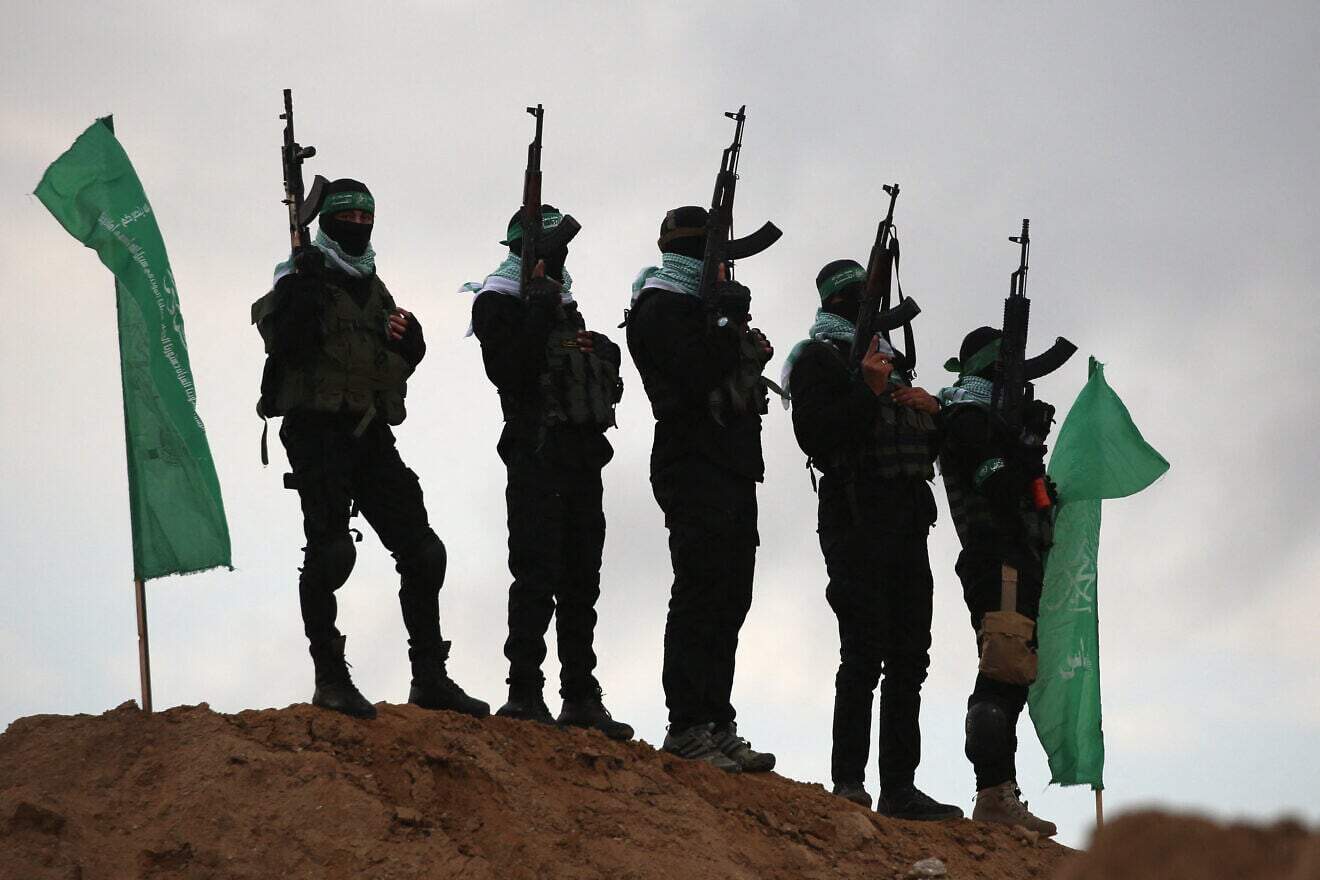
Hamas terrorists in Khan Yunis, the southern Gaza, before the Islamist group handed over of the bodies of four Israeli hostages on Feb. 20, 2025. Photo by Eyad Baba/AFP via Getty Images.

The invasion of thousands of Hamas and other Palestinian terrorists from Gaza into Israel on Oct. 7, 2023, “was for us, and for the vast masses across the world, not merely a military event but a moment of glorious birth and an emergence of a liberated consciousness free from deception or falsification,” Hamas wrote in English and Arabic in a formal document released on Dec. 24.

The dictatorship still ruling most Gazans after two years of war, sparked by its incursion into the northwestern Negev, butchering roughly 1,200 people and abducting 251 more, has signaled no willingness to disarm—a demand stipulated in Phase 2 of U.S. President Donald Trump’s 20-point peace plan.

The Israel Defense Forces hold about 54% of Gaza’s territory, east of the so-called Yellow Line that runs through the Strip. The start of the second phase of Trump’s plan was announced last week and is set to involve an interim “technocratic” Palestinian administration to govern the territory under Israeli control, along with the full demilitarization of Gaza.

In the paper published online by its media propaganda wing, the Hamas Media Office, the terror group frames the Oct. 7 massacre of 1,200 men, women and children in southern Israel—dubbed the Al-Aqsa Flood—as a calculated and “natural response” to Israel’s supposed oppression; hails Gaza’s “steadfastness” as a testament to its victory; boasts of the stalling of Israel’s normalization with Arab and Muslim states; calls for intensified legal pressure on Israel in the global arena; and presents its plans for the future, including expanding its rule to Judea and Samaria.

Gilad Ach, CEO of Israeli NGO Ad Kan, told JNS that the growing confidence expressed in the Hamas manifesto “reveals a troubling strategic reality that extends far beyond the Gaza Strip.

“It shows that while a sense of conclusion and victory has taken hold in Israel, from the perspective of Hamas and other Islamist organizations, [the two-year war] is merely another phase in an ongoing struggle against the State of Israel—a struggle being waged simultaneously from Gaza and from Judea and Samaria,” he said.

Meir Ben Shabbat, head of the Misgav Institute for National Security and Zionist Strategy, and a former Israeli national security adviser, told JNS on Tuesday that although Hamas suffered a significant setback during the war, “It is not a fatal blow.

“Hamas is no longer in a position where it feels its very existence is under threat; it remains the primary power in the Gaza Strip, deeply embedded in the population and in Gaza’s civilian systems. It skillfully exploits humanitarian aid and supplies entering the Strip for its own purposes,” Ben Shabbat said.

The Islamist group has rejected calls to lay down arms on a number of occasions. In December’s document, it defiantly dismisses the possibility.

“Attempts to isolate Hamas contradict the right of peoples to armed resistance and their right to freely choose their representatives,” Hamas writes in the paper titled “Our Narrative … Al-Aqsa Flood: Two Years of Steadfastness and the Will for Liberation.”

Two-faced Hamas

Ad Kan (“It Stops Now” in Hebrew), a group dedicated to exposing anti-Zionist organizations, released a document in Hebrew on Jan. 11 analyzing Hamas’s propaganda paper.

The paper is a calculated appeal to the international community, the Israeli NGO says. Its use of terms such as “justice,” “freedom” and “human rights,” while largely avoiding religious jargon, frames the Palestinian cause as a universal national struggle for liberty; Islam is sidelined as a secondary cultural ingredient.

The document’s main objective is to confer international legitimacy on Hamas as the unquestionable ruler of the Palestinians, while at the same time to justify its war against Israel by appealing to international law and United Nations resolutions, according to Ad Kan.

Hamas’s latest manifesto, the NGO continues, builds on a similar paper published in January 2024, yet is more ambitious in scope. If the 2024 paper conveyed an apologetic tone, just three months after the atrocities of Oct. 7, 2023, the new one aims to redefine the public discourse, portraying Hamas as an integral component of Palestinian society, rooted in its “national fabric.”

In contrast, another Hamas document, published internally in Arabic in July 2024, is steeped in religious language, replete with quotations from the Quran, and calls for a unified Islamic front against Israel, Ad Kan notes.

A poll carried out between Oct. 22 and 25, conducted by the Ramallah-based Palestinian Center for Policy and Survey Research, found that 78% of Arabs in Judea and Samaria object to Trump’s demand to disarm Hamas, even if it meant the renewal of active warfare, with 55% of respondents in Gaza saying the same.

Figures such as these, Ben Shabbat told JNS, “clearly demonstrate who we are dealing with. The Palestinian public in Gaza was not kidnapped by Hamas; a large portion of it supports it.

“These figures are a slap in the face to anyone talking about a Palestinian state. They require us in Israel to be sober-minded, not to be seduced by illusions, to act on our own to defend ourselves, and to watch morning and night the footage from Oct. 7 and the high levels of Palestinian public support for that horrific massacre,” Ben Shabbat said.

The Hezbollah model

“The deliberate evolution of Hamas’s rhetoric over the years, strategically adapted to the international arena and Western audiences, reflects a clear-eyed understanding that winning minds and legal battles may advance its strategic objectives as much as, or even more than, armed struggle,” Ad Kan states in its analysis of the “Our Narrative” paper.

A part of Hamas’s evolution is its agreement to a Palestinian technocratic government to run civilian matters in the Gaza Strip.

Ad Kan writes that this “is a tactical deception. The organization makes clear that it will not accept disarmament or any foreign foothold. The implication is that any governing body established in Gaza without the destruction of Hamas will be a puppet government, operating under the patronage of a terrorist organization that will continue to strengthen itself under the cover of international reconstruction.”

Ben Shabbat told JNS that Hamas’s stance is not new. Its willingness to relinquish civilian governance would “free [it] to rebuild its military capabilities” while benefiting “from resources raised by the new administration for Gaza.”

The former national security adviser compared this initiative to the Hezbollah terrorist organization’s modus operandi in Lebanon. “Hamas knows how to operate effectively even when formal power is in other hands. The Hezbollah-ization of Gaza under such circumstances is not a far-fetched scenario,” he said.

“Hamas will not truly disarm,” he continued. “It may stage some sort of show, reach understandings about integrating its armed operatives into enforcement mechanisms, or agree to other absurd arrangements—all of which share one common denominator: Hamas would retain military capabilities,” he said.

Past vows by Trump and Israeli Prime Minister Benjamin Netanyahu to disarm Hamas must be translated into a timetable and a clear, binding definition of what “disarmament” entails. “We must show determination and complete the mission in Gaza until all the [war] objectives we defined are fully achieved,” Ben Shabbat said.

Next, Judea and Samaria

Eyal Ofer, a former Israeli government adviser and an expert on “Hamas economics,” told JNS on Wednesday that the Hamas paper treats the Oct. 7 onslaught as a roaring success that changed the course of history.

From a situation where the world has largely lost interest in the Israeli-Palestinian conflict, Oct. 7 “has set history back on a path that, in [Hamas’s] view, leads to the destruction of the State of Israel,” said Ofer.

Materially, the terror group needs external funding to reconstruct Gaza, train a new generation of fighters and find new ways to smuggle arms into the Strip, “but Hamas views these as technical problems, which will be solved with time,” he added.

While Israelis focus on the military aspect of the war, preventing Hamas from ever again executing another Oct. 7-style invasion, “from Hamas’s perspective, it already carried out Oct. 7. Now they’re looking at the next stage,” Ofer said.

“What we see as the destruction of Gaza, the dismantling of tunnels and rockets, targeted assassinations of [senior] Hamas officials—they see as something different: a strategic shift.

“The [‘Our Narrative’] paper discusses how they created a situation in which the Abraham Accords and the normalization process, including global legitimacy for Israel, have been completely turned around. Today, the world views Israel as a pariah state; a state that, from their angle, commits genocide, starves a population, and stands on trial in The Hague. As far as they are concerned, they have isolated Israel and have united not just the Palestinians but the entire Arab and Muslim world to their side,” Ofer said.

In the paper’s “Current Stage Priorities” section, points Nos. 5 and 9 underline the importance Hamas places on strengthening ties with Qatar, Egypt and Turkey, the countries that brokered the Gaza truce. China, Russia and Algeria are also mentioned favorably for their role in curbing pro-Israel initiatives in the U.N. Security Council.

A complete Israeli withdrawal from the Gaza Strip and the establishment of a Palestinian administration to handle the reconstruction efforts are listed as Hamas’s two most urgent priorities.

Ofer says that Hamas welcomes an alternative authority in Gaza so it can work behind the scenes toward the next stage, which is to take over the Palestinian Authority, i.e., Judea and Samaria.

“Eventually, there will be elections,” Ofer said. “From the world’s perspective, if Gaza becomes a normal state that is being rehabilitated, then the next step will be to hold elections. … So [Hamas is] looking how in 15 years it will take over [all the Palestinian territories], while, globally speaking, viewing its situation today as much better than it was on Oct. 6, [2023].”

‘Complete the mission’

Brig. Gen. (res.) Erez Winner, a research fellow at the Israel Center for Grand Strategy and former head of the operational planning team in the IDF Southern Command, told JNS that “Hamas is trying to project a more favorable reality, much like the Iranians are now trying to project that they are threatening the United States and Israel.”

Since Oct. 7, “Hamas has been hit across every dimension. It has lost most of its capabilities, most of its senior commanders, and most of the territory of the Gaza Strip—yet it remains undefeated. Why has it not been defeated? Largely because of us,” Winner said.

“Ultimately, the IDF’s campaign was deficient for several reasons: the hostage issue, a reluctance to confront the question of civilian governance, and the unavoidable fact that terror and guerrilla forces embedded in civilian environments cannot be defeated without control over resources and administration,” he said.

And yet, despite Israel’s mistakes, “We have reached an agreement that is not bad at all for us and not good at all for them. … The [ceasefire] deal stipulates clearly that there won’t be an armed [Hamas], a [Hamas] government, a behind-the-scenes [Hamas] government modeled after Hezbollah—this won’t be,” he underscored.

Since the Islamist group will not voluntarily lay down its weapons, and since no external force other than Israel will forcefully disarm it, “within the next two months, which is the deadline that Trump gave them, we will have to act and complete the mission,” Winner said.

Ad Kan’s Gilad Ash sounded a cautious note, saying that “a comprehensive decisive strategy” is required to defeat Hamas and its ideology in all arenas.

“Without a deep shift in strategic conception and determined action in Judea and Samaria as well, Israel will continue moving from one round of conflict to another—until the next disaster,” he said.


Zawartość publikowanych artykułów i materiałów nie reprezentuje poglądów ani opinii Reunion’68,
ani też webmastera Blogu Reunion’68, chyba ze jest to wyraźnie zaznaczone.
Twoje uwagi, linki, własne artykuły lub wiadomości prześlij na adres:
webmaster@reunion68.com


Columbia University Leaves Door Open for Student Who Called for Death of Zionists to Return to Campus


Columbia University Leaves Door Open for Student Who Called for Death of Zionists to Return to Campus

Dion J. Pierre


Khymani James, ex-Columbia University student who filmed himself saying Zionists should be murdered. Photo: Screenshot

Columbia University has denied the reapplication of a student who said Zionists do not deserve to live and are lucky he has not resorted to killing them himself but left the door open to the anti-Israel protest leader returning to campus this fall, according to documents filed in a New York court.

Khymani James filmed himself making the comments during the 2023-2024 academic year, a period in which Columbia students amassed in the hundreds to set up a “Gaza Solidarity Encampment” on the New York City campus to show solidarity with Hamas in the aftermath of the Palestinian terrorist group’s Oct. 7, 2023, massacre across southern Israel.

“These are all the same people. The existence of them and the projects they have built, i.e. Israel, it’s all antithetical to peace. It’s all antithetical to peace. And so, yes, I feel very comfortable, very comfortable, calling for those people to die,” James said in 2024.

“Zionists don’t deserve to live,” he continued, proclaiming that people should “be grateful that I’m not just going out and murdering Zionists.”

James warned, “I don’t fight to injure or for there to be a winner or a loser. I fight to kill.”

Facing criticism from lawmakers and Jewish advocacy groups over its hesitance to discipline students who perpetrated antisemitism, Columbia suspended James in April 2024, saying he would be eligible to return in the fall of 2025. In response, he sued the university, alleging that the measure was racist and aimed at “privileging a subset of Jewish people.”

The suit charged twice that Columbia University favored Jews over “nonJews [sic].”

“James as a person of color is squarely within a protected class of black and brown-skinned students who have been the major targets of Columbia’s disciplinary actions arising from pro-Palestinian expression,” the suit stated. “James has been a victim of Columbia’s anti-Palestinian bias, severely punished, though not himself a Palestinian, as a supporter of the rights of Palestinian people. Third, James has been a victim of reverse discrimination, as Columbia privileges a class of self-described ‘Zionist Jewish’ people over everyone on campus who does not share their views.”

Since being suspended, James has continued to endorse political violence as a means of resolving ideological disputes. In September 2024, he expressed support for the assassination of conservative activist Charlie Kirk at Utah Valley University and called for additional killings, saying, “MORE. MORE!!! … Down with all fascists.”

In a newly revealed letter filed in December as an exhibit in the lawsuit, Columbia refused James’ request to return to campus in the fall of 2025.

One year later, in August 2025, Columbia again rejected his request to reenroll in a second letter filed in the lawsuit. Both letters were first reported by the Washington Free Beacon.

“Your written submissions do not demonstrate a clear understanding of the impact of your conduct,” the second letter to James stated.

Written by a college dean whose name is still redacted from the document, it explained that James’ online speech since being suspended prevented his re-enrollment, as it showed “insufficient ‘reflection on your activities’ that resulted in your suspension.” The letter cited that James had defended his wish to kill Zionists while being suspended and publicly said on social media that “anything I said, I meant it.”

“Your use of language tending to reaffirm those statements during your suspension raises serious concerns about your readiness to return to Columbia and engage with others appropriately,” the letter continued. “That only reinforces our concerns, rather than alleviates them.”

However, the university stressed that James was entitled to due process and would be “eligible to reapply to return” for the fall 2026 semester.

“You will be eligible to reapply to return for the fall 2026 semester under the conditions provided for in your Aug. 7, 2024, suspension letter,” it added. “It is our hope that you will use the months ahead to engage in more substantive and careful reflection on the behaviors that led to your suspension.”

The potential for James to return prompted concerns that Columbia may be reverting back to a cavalier attitude toward antisemitism, after pledging to never again allow brazen affronts to the civil rights of Jewish students who were assaulted, harassed, intimidated on campus.

“Universities should take responsibility for the students they admit to their campuses,” US Rep. Tim Wahlberg (R-MI), chairman of the US House Committee on Education and the Workforce, told The Algemeiner on Friday. “Under federal civil rights law, Columbia has the duty to prevent antisemitic harassment on its campus. I expect that Columbia’s incoming president will take this responsibility seriously.”

Columbia’s decision not to permanently expel James comes as the school continues to face scrutiny for its handling of antisemitism and pro-Hamas activism on campus.

This year, the university retained a professor who celebrated Hamas’s Oct. 7, 2023, massacre across southern Israel — in which the Palestinian terrorist group sexually assaulted women and men, kidnapped the elderly, and murdered children in their beds — allowing him to teach a course on the history of the Israeli-Palestinian conflict.

The professor, Joseph Massad, teaches modern Arab politics and intellectual history. On Oct. 8, 2023, he published an encomium to Hamas in The Electronic Intifada which lauded the Oct. 7 atrocities as “astounding,” “awesome,” “incredible,” and the basis of future assaults on the Jewish state. Additionally, Massad went as far as to exalt the Hamas paragliders who flew into a music festival to slaughter the young people attending it as the “air force of the Palestinian resistance.”

“Perhaps the major achievement of the resistance in the temporary takeover of these settler-colonies is the death blow to any confidence that Israeli colonists had in their military and its ability to protect them,” Massad wrote.

In July, former interim university president Claire Shipman said the institution will hire new coordinators to oversee complaints alleging civil rights violations; facilitate “deeper education on antisemitism” by creating new training programs for students, faculty, and staff; and adopt the International Holocaust Remembrance Alliance (IHRA) definition of antisemitism — a tool that advocates say is necessary for identifying what constitutes antisemitic conduct and speech.

Shipman also announced new partnerships with the Anti-Defamation League (ADL) and other Jewish groups while delivering a major blow to the anti-Zionist movement on campus by vowing never to “recognize or meet with” the infamous organization Columbia University Apartheid Divest (CUAD), a pro-Hamas campus group which had serially disrupted academic life with unauthorized, surprise demonstrations attended by non-students.

However, it’s unclear to what extent Columbia will follow through on these initiatives under new leadership.

Columbia recently hired a new university president, Jennifer Mnookin. As chancellor of University of Wisconsin-Madison, Mnookin struck a deal with pro-Hamas protesters that called for hiring Palestinian instructors and once issued a “land acknowledgement,” a hallmark of leftist ideology which fostered popular support against the higher education establishment. In 2020, she endorsed the Black Lives Matter (BLM) movement even as some of its supporters started riots, promoted antisemitism, and demoralized law enforcement.


Follow Dion J. Pierre @DionJPierre.


Zawartość publikowanych artykułów i materiałów nie reprezentuje poglądów ani opinii Reunion’68,
ani też webmastera Blogu Reunion’68, chyba ze jest to wyraźnie zaznaczone.
Twoje uwagi, linki, własne artykuły lub wiadomości prześlij na adres:
webmaster@reunion68.com

Początek końca dla ajatollahów

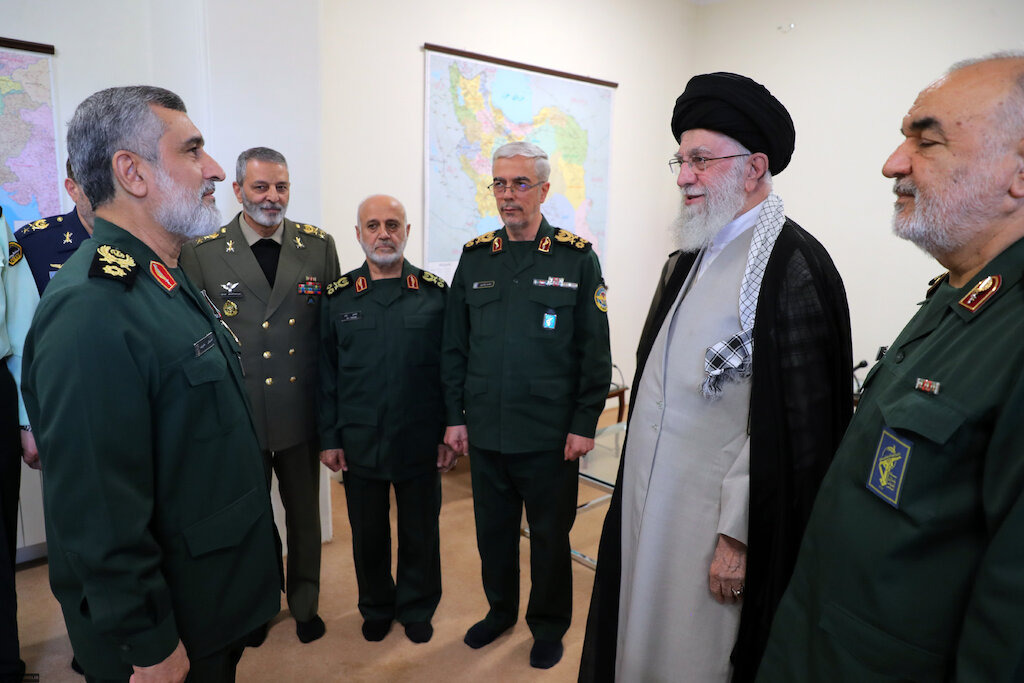
Prezydent Donald Trump zmienił psychologiczną równowagę sił między Waszyngtonem a Teheranem w sposób, na jaki nie odważył się dotąd żaden amerykański przywódca. Po raz pierwszy od ustanowienia Islamskiej Republiki irańscy przywódcy mierzą się z prezydentem USA, który – jak wierzą – jest gotów zrealizować swoje groźby. Reżim w Teheranie po raz pierwszy rozumie, że masowe egzekucje, eskalacja regionalna czy przyspieszony rozwój broni nuklearnej nie spotkają się już z “wyrazami zaniepokojenia”, lecz z odpowiedzią siłową. Na zdjęciu: Najwyższy Przywódca Iranu, ajatollah Ali Chamenei, podczas spotkania z najwyższymi dowódcami Korpusu Strażników Rewolucji Islamskiej w Teheranie, 6 października 2024 roku. (Źródło zdjęcia: Biuro Najwyższego Przywódcy Iranu)


Początek końca dla ajatollahów

Majid Rafizadeh
Tłumaczenie: Andrzej Koraszewski


Dzięki administracji Trumpa i Izraelowi nigdy w swej czterdziestosześcioletniej historii reżim irański nie był słabszy. Nigdy, od rewolucji islamskiej ajatollaha Ruhollaha Chomeiniego w 1979 roku, duchowny system władzy nie stanął w obliczu takiej konwergencji wewnętrznego buntu, gospodarczego załamania, militarnej podatności i psychologicznej porażki. Nigdy ajatollahowie nie byli tak obnażeni i tak przerażeni własnym społeczeństwem. To historyczne osłabienie jest efektem długotrwałej presji i — przede wszystkim — odwagi narodu irańskiego, który powstał przeciw systemowi rządzącemu ich życiem od pokoleń poprzez więzienia i egzekucje.

Fundamenty Islamskiej Republiki — jej roszczenie do boskiej legitymacji, przemoc, mit nietykalności i kontrola nad gospodarką — wszystkie jednocześnie się kruszą. Reżimy rzadko upadają tylko dlatego, że są nielubiane. Upadają, gdy strach zmienia stronę. Dziś strach nie jest już wyłącznie udziałem społeczeństwa — sięgnął sięgnął najwyższych szczebli władzy.

Z tego powodu ten moment nie jest czasem na wahanie czy kompromisy, lecz na intensyfikację presji. Historia pokazuje, że systemy autorytarne często trwają nie dlatego, że są silne, ale dlatego, że ich przeciwnicy zbyt szybko tracą cierpliwość, jedność lub nadzieję. Iran stoi dziś na rozdrożu. Jedna ścieżka prowadzi do transformacji demokratycznej. Druga – do przetrwania jednego z najbardziej brutalnych ideologicznych reżimów współczesności.

Jeśli spojrzeć uczciwie, tylko trzy siły naprawdę planują koniec tego radykalnego systemu i pracują na rzecz wolności w Iranie. Reszta społeczności międzynarodowej, w najlepszym wypadku, obserwuje z dystansu; w najgorszym — umożliwia trwanie reżimu poprzez handel, normalizację dyplomatyczną lub milczącą współwinę. Trzy decydujące siły to: prezydent Donald Trump i jego administracja, rząd Izraela pod przewodnictwem Benjamina Netanjahu oraz sam naród irański.

Trump przełamał wzorzec, który utrwalał się przez dekady. Po raz pierwszy od utworzenia Islamskiej Republiki irańscy przywódcy stanęli wobec amerykańskiego prezydenta, którego obawiają się w sposób realny. To zmiana strategiczna. Trump łączy dwa narzędzia, których dyktatury boją się najbardziej: moralną jasność i gotowość do użycia siły.

W sferze słów Trump złamał obowiązujące tabu. Zwrócił się do Irańczyków jako do politycznych podmiotów, pochwalił ich odwagę, uznał ich walkę za uprawnione dążenie do wolności. Reżimy potrzebują psychicznej izolacji obywateli, by utrzymać władzę. Uznanie z zewnątrz ją podważa.

W sferze działań Trump wzmocnił słowa konkretną presją: sankcje traktowano jak broń ekonomiczną, uderzającą w finansowe arterie reżimu. Urzędnicy odpowiedzialni za represje zostali objęci sankcjami. Co najważniejsze, groźby militarne zostały spełnione.

Rezultat? Realny strach u szczytów władzy. Pojawiły się doniesienia o transferach ogromnych sum pieniędzy za granicę przez elitę władzy — w próbie zabezpieczenia majątku na wypadek upadku reżimu.

Izrael stanowi drugi filar tej bezprecedensowej presji.
Przez lata Teheran kreował się na nietykalne centrum regionalnej osi, osłonięte przez zachodni strach przed eskalacją. Ten mit został obalony. Izraelskie uderzenia w infrastrukturę reżimu – szczególnie związaną z programem nuklearnym – pokazały, że niebo Iranu nie jest nietykalne, jego sekrety są znane, a obrona – bez znaczenia.

Znaczenie tych działań uderza w sam rdzeń mitu Islamskiej Republiki. Reżim przez dekady budował obraz boskiej nietykalności. Gdy izraelskie operacje dotarły w głąb Iranu, ta narracja runęła. Społeczeństwo zobaczyło, że władza nie potrafi ochronić nawet najwrażliwszych instalacji. Elity dostrzegły, że propaganda może zostać obalona w trzy godziny.

To militarne upokorzenie miało efekt psychologiczny, jakiego same sankcje nie mogłyby osiągnąć. Przekazało Irańczykom: Islamska Republika, która rości sobie prawo do pełnej kontroli nad waszym życiem, nie potrafi nawet zadbać o własne bezpieczeństwo.

Najważniejszą siłą w tym historycznym momencie nie była jednak ani Ameryka, ani Izrael. Był nią naród irański.

Przez lata amerykańscy prezydenci woleli postrzegać protesty w Iranie jako niezadowolenie ekonomiczne. Tymczasem najnowsze fale demonstracji ujawniają społeczeństwo, które nie chce już reform. Chce końca reżimu.

Te protesty — wywołane przez utratę siły nabywczej i niemożność dalszego życia w milczeniu, podczas gdy skorumpowana elita się bogaci — szybko przybrały charakter polityczny. Hasła przeszły od cen do odrzucenia całego systemu.

Reżim odpowiedział masakrami i aresztowaniami. Całe dzielnice zostały sterroryzowane. Wyłączano internet, by stłumić koordynację.

Mimo to wiele krajów europejskich i szerzej — Zachód — milczy. To forma współudziału. Europejscy politycy dużo mówią o prawach człowieka, a jednocześnie utrzymują relacje z najbrutalniejszymi reżimami świata. Potępiają represje, ale językiem wyważonym i niekonfrontacyjnym. Martwią się o “stabilność”, ignorując fakt, że to irański reżim destabilizuje region, wspiera wojny, dostarcza broń Rosji do użycia przeciw Ukrainie i organizuje zamachy na europejskiej ziemi.

Ironią losu jest to, że Europa sama cierpi z powodu polityki Iranu – poprzez terroryzm, uchodźców i zagrożenia bezpieczeństwa – a mimo to nie wspiera jedynej siły, która może rozwiązać problem u źródła: irańskiego społeczeństwa. W zamian oferuje deklaracje, konferencje i moralną paplaninę.

Dlatego ekonomiczna presja na Teheran musi być nieustanna. Sankcje nie mogą służyć medialnym nagłówkom, lecz muszą rzeczywiście ograniczać możliwości finansowe służb bezpieczeństwa Iranu, Korpusu Strażników Rewolucji i aparatu represji.

Presja militarna musi pozostać realna: odstraszanie ratuje życie. Gdy reżim wierzy, że może zabić bez konsekwencji – robi to. Gdy boi się odpowiedzi — powstrzymuje się. Groźby Trumpa zmieniły kalkulacje w Teheranie. Gdy Trump się waha, Iran zabija (tak było m.in. tutaj, tutaj, tutaj i tutaj). Usunięcie tego strachu byłoby prezentem dla reżimu.

Presja moralna również musi trwać. Irańczycy muszą wiedzieć, że ich walka jest widziana i szanowana. Milczenie zabija nadzieję. Uznanie ją wzmacnia.

Tylko trzy siły naprawdę pchają historię w kierunku wolności: Stany Zjednoczone, Izrael i sam naród irański. Razem stworzyły największe zagrożenie dla Islamskiej Republiki od jej powstania.

Nie wolno zmarnować tej szansy. Reżim irański znalazł się w potrzasku. Odpuścić teraz — to dać mu czas na odbudowę machiny represji. Zachód musi zdecydować: albo stanie po stronie społeczeństwa walczącego z brutalnym, fundamentalistycznym systemem, albo będzie się przyglądał, jak ten system odzyskuje władzę przelewając krew.


Zawartość publikowanych artykułów i materiałów nie reprezentuje poglądów ani opinii Reunion’68,
ani też webmastera Blogu Reunion’68, chyba ze jest to wyraźnie zaznaczone.
Twoje uwagi, linki, własne artykuły lub wiadomości prześlij na adres:
webmaster@reunion68.com


This entry was posted on 2026/02/05, in Ze Swiata.

No Imminent Attack on Iran as Washington Reportedly Deploys Additional Air Defenses


No Imminent Attack on Iran as Washington Reportedly Deploys Additional Air Defenses

i24 News and Algemeiner Staff


A Lockheed Martin Terminal High Altitude Area Defense (THAAD) missile interceptor is seen during the third annual “Made in America Product Showcase” on the South Lawn of the White House in Washington, U.S., July 15, 2019. Photo: REUTERS/Kevin Lamarque – RC1C57519ED0/File Photo

A US military strike on Iran is not expected in the immediate future, Pentagon officials said Sunday to The Wall Street Journal, as Washington focuses on strengthening air defenses across the Middle East to prepare for potential Iranian retaliation and a wider regional conflict.

While the US military is capable of carrying out limited strikes if ordered by President Donald Trump, officials say a broader, decisive attack would likely trigger a substantial response from Tehran.

Such a scenario would require far more extensive defensive coverage to protect American forces, Israel, and key regional allies.

The United States already maintains air defense systems in the region, including naval destroyers equipped to intercept aerial threats.

However, the Pentagon is now reinforcing those defenses by deploying additional Patriot and THAAD missile systems to U.S. Central Command areas.

These systems are expected to be stationed at American bases in Qatar, Saudi Arabia, and Jordan, according to officials familiar with the plans.

Regional partners are also accelerating their own defensive preparations. Gulf states have begun strengthening missile defense capabilities, anticipating that any large-scale US action against Iran could prompt missile launches targeting US installations and Israel.

A senior Gulf official told The Wall Street Journal that Saudi Arabia has already received several THAAD batteries it recently purchased.

The military buildup comes as tensions between Washington and Tehran continue to escalate rhetorically, even as diplomatic channels remain open. Earlier Sunday, Iran’s Supreme Leader Ayatollah Ali Khamenei warned that any American strike would spark a regional war, dismissing threats against Iran as nothing new.

At the same time, President Trump has publicly emphasized diplomacy. Speaking to reporters aboard Air Force One late Saturday, he said Iran is “seriously talking” with the United States and expressed hope that negotiations could lead to a deal that would prevent Tehran from acquiring nuclear weapons.

U.S. officials say this dual-track approach, maintaining military pressure while reinforcing defenses, reflects an effort to deter Iran without rushing into a conflict that could rapidly spiral beyond control.


Zawartość publikowanych artykułów i materiałów nie reprezentuje poglądów ani opinii Reunion’68,
ani też webmastera Blogu Reunion’68, chyba ze jest to wyraźnie zaznaczone.
Twoje uwagi, linki, własne artykuły lub wiadomości prześlij na adres:
webmaster@reunion68.com


Anti-Hamas Militias Step Up Attacks Across Gaza, Targeting Terror Leaders and Expanding Operations


Anti-Hamas Militias Step Up Attacks Across Gaza, Targeting Terror Leaders and Expanding Operations

Ailin Vilches Arguello


The head of an anti-Hamas faction, Hussam Alastal, fires a weapon in the air as he is surrounded by masked gunmen, in an Israeli-held area in Khan Younis, in the southern Gaza Strip, in this screenshot taken from a video released Nov. 21, 2025. Photo: Hussam Alastal/via REUTERS

Anti-Hamas militias across Gaza appear to be taking concrete, coordinated steps to disrupt the ruling terrorist group, carrying out targeted attacks and expanding their operations in a bid to weaken Hamas’s hold on the territory.

This past weekend, the Popular Forces armed group captured Hamas commander Adham al-Akar in Israeli-held Rafah, in southern Gaza, as militia forces ramp up efforts to curb the Islamist group’s influence and prevent it from regaining control in the war-torn enclave.

In a social media video released after the operation, militia leader Ghassan al-Duhaini is seen with Akar, sending a warning to the Palestinian terrorist group that its fighters will be “punished like the victims of the Spanish Inquisition.”

Following a successful operation in southern Gaza, the Popular Forces handed Akar over to Israeli authorities, the Israeli broadcaster Kan News reported.

According to Joe Truzman, senior research analyst at the Foundation for Defense of Democracies (FDD), a Washington, DC-based think tank, this latest development adds to growing evidence that militia forces are carrying out offensive operations against Hamas while seeking to expand their influence in the territory.

“It’s only in the past few months that we’ve started to observe these militias actively carrying out attacks against Hamas,” Truzman told The Algemeiner. “We’re seeing increasing evidence that they are actively going after Hamas, targeting both members and senior leadership with some success.”

Last month, Hussam al-Astal, leader of the Counterterrorism Strike Force – another prominent anti-Hamas militia based in Khan Younis, a city in southern Gaza – claimed responsibility for killing Mahmoud al-Astal, head of the city’s criminal police unit and a senior Hamas member.

The group also took responsibility for an offensive operation in the Abu al-Saber area of Shaboura Camp in Rafah, which left two Hamas members dead and a third in custody.

Even with notable successes against the Palestinian terrorist group, Truzman warned that these militia forces could face significant strategic challenges in the near future.

“My concern is how they will do beyond their current areas of operation. So far, I haven’t seen any indication that these militias are entering Hamas-controlled territory,” Truzman told The Algemeiner.

“At the end of the day, they are making progress, but will it be enough to bring down Hamas? Not in this way,” he continued. “They need much more support — money, weapons, and fighters — to make a real impact against Hamas. I’m skeptical, but I do see that they are making progress.”

With the region preparing to implement the second phase of US President Donald Trump’s Gaza peace plan, the Israel Defense Forces (IDF) will be expected to withdraw slowly from its current positions if Hamas fulfills its obligations to disarm — a step the terrorist group has repeatedly refused to take.

Truzman argued that such Israeli pullbacks would leave anti-Hamas militias — currently operating in Israeli-controlled areas — at a strategic disadvantage.

“In my opinion, these militias are able to survive because they operate under the IDF’s protection, either directly or indirectly,” Truzman told The Algemeiner.

Under Trump’s 20-point Gaza peace plan, a multinational peacekeeping force — the International Stabilization Force (ISF) — is supposed to oversee security in Gaza and replace the IDF’s current role once it forms. However, Truzman warned that this force will not be focused on supporting the anti-Hamas militias, ultimately undermining their position and leaving them more vulnerable to the terrorist group’s violence.

“The situation will allow Hamas and its allies the freedom to operate in territory where they were previously restricted by the ceasefire agreement and the presence of the IDF,” Truzman said.

“This gives Hamas and other terror groups the advantage they need to go after these militias,” he continued.

However, the analyst also expressed skepticism about how the Israel-Hamas ceasefire will play out, noting that much depends on Hamas’s disarmament, which is crucial for the militias and their protection against attacks.

“I don’t think Hamas will give up its arms in any meaningful way,” Truzman told The Algemeiner.

“And if they don’t, the IDF could end up staying in their current positions, which would actually benefit these militias by giving them the cover they need to continue fighting Hamas,” he added.

Some experts have even suggested the possibility of these groups joining the ISF in a post-war Gaza scenario, integrating them into the force and potentially giving them the protection they need against Hamas and its brutal crackdown on dissent.

Even with an uncertain future, anti-Hamas militias across the enclave have recently intensified their offensive operations, shifting their approach with new tactics to fight the Islamist group, including targeting officers in Hamas’s security services and members of its armed wing, the al-Qassam Brigades, near their homes, according to a report by Saudi outlet Asharq Al-Awsat.

In response, Hamas has reportedly increased alert levels and tightened personal security, warning members to remain vigilant, vary their routes, minimize phone use to avoid tracking, and be on the lookout for potential surveillance.

Shortly after the US-backed ceasefire to halt fighting in Gaza took effect last year, Hamas moved to reassert control over the war-torn enclave and consolidate its weakened position by targeting Palestinians who it labeled as “lawbreakers and collaborators with Israel.”

Since then, Hamas’s bloody crackdown has escalated dramatically, sparking widespread clashes and violence as the group moves to seize weapons and eliminate any opposition.

Social media videos widely circulated online have shown Hamas members brutally beating Palestinians and carrying out public executions of alleged collaborators and rival militia members.

As they continue to come under attack, both the Popular Forces and the Counterterrorism Strike Force vowed to unite against the Islamist group, emphasizing that both had “agreed the war on terror will continue.”


Zawartość publikowanych artykułów i materiałów nie reprezentuje poglądów ani opinii Reunion’68,
ani też webmastera Blogu Reunion’68, chyba ze jest to wyraźnie zaznaczone.
Twoje uwagi, linki, własne artykuły lub wiadomości prześlij na adres:
webmaster@reunion68.com