Archive | 2026/11/06

Pułapka “zawieszenia broni” Putina

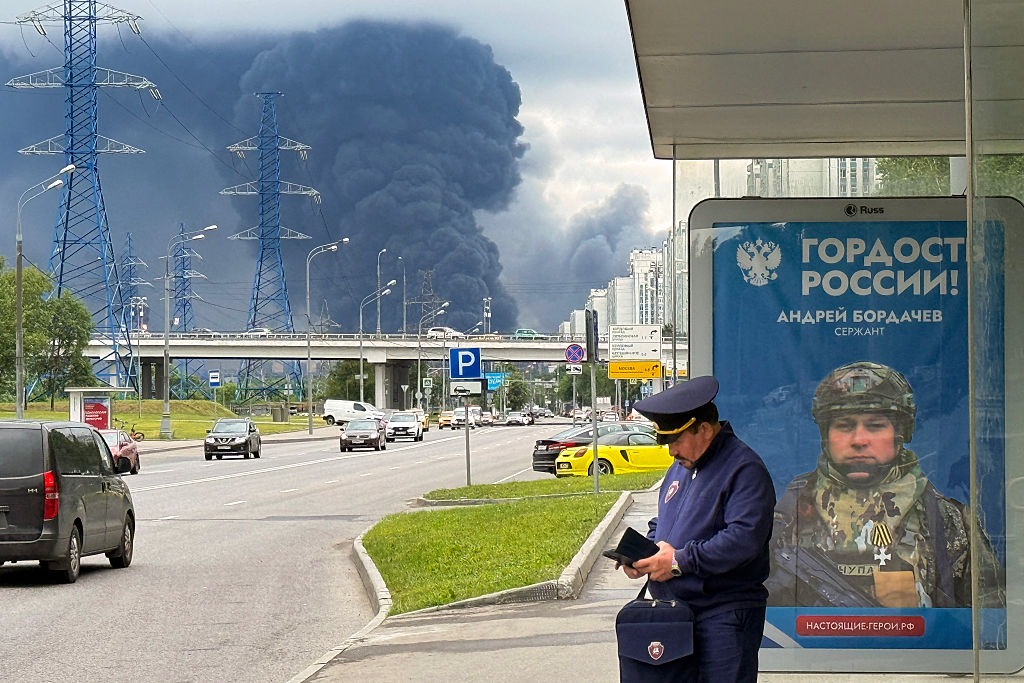
Na zdjęciu: dym unosi się nad rafinerią ropy naftowej należącą do Gazprom Nieft, położoną na obrzeżach Moskwy; 18 czerwca 2026 r. (Zdjęcie: AFP via Getty Images)

Pułapka “zawieszenia broni” Putina

Pierre Rehov Tłumaczenie: Andrzej Koraszewski


Wojny na wyniszczenie wygrywa ten, kto jest w stanie dłużej za nie płacić. Władimir Putin od ponad czterech i pół roku stawia na to, że zachodni partnerzy Ukrainy zmęczą się wcześniej, niż wyczerpie się rosyjski skarbiec. W ciągu trzech dni Waszyngton sprawił, że ten zakład przyniósł Putinowi największe korzyści od wielu miesięcy.

9 października prezydent Donald Trump ogłosił porozumienie z Kremlem w sprawie dostaw oleju napędowego. Następnego dnia zasugerował, że Ukraińcy powinni znaleźć sobie nowego prezydenta. 11 października obwieścił “ENERGETYCZNE ZAWIESZENIE BRONI”, o którym Kijów nie został poinformowany, a którego Moskwa nie zamierzała potwierdzić. Kilka godzin później rosyjskie pociski uderzyły w elektrociepłownię CHP-5 w ukraińskim Charkowie.

Kreml uzyskał złagodzenie sankcji i doprowadził do otwartego konfliktu między Waszyngtonem a Kijowem, nie podejmując ani jednego zobowiązania, którego realizację można byłoby zweryfikować.

Najbardziej przerażające w tym prezencie Trumpa dla Putina – który z pewnością zostanie wykorzystany do finansowania kolejnych ataków na Ukrainę – jest to, że cała ta gratka wystarczy na zaspokojenie amerykańskiego zapotrzebowania na olej napędowy zaledwie przez dziewięć dni.

Rosja ma natychmiast dostarczyć ponad 300 tysięcy ton oleju napędowego, a w kolejnych miesiącach jeszcze kilka milionów ton. Amerykański Departament Skarbu wydał ogólne zezwolenie na sprzedaż i import rosyjskiego oleju napędowego do 7 kwietnia 2027 roku. Jest to pierwsze od czasu rosyjskiej inwazji odstępstwo od sankcji dotyczących tego paliwa, którego obowiązywanie wykracza poza zwyczajowe 30 dni.

Decyzja zapadła trzy tygodnie po podpisaniu przez Trumpa ustawy sankcyjnej noszącej imię zmarłego senatora Lindseya Grahama, zobowiązującej prezydenta do nałożenia do 18 października ceł sięgających 100 procent na największych nabywców rosyjskiej ropy i gazu. We wrześniu ceny oleju napędowego osiągnęły historyczne maksimum, wzrastając o 68 procent w ciągu roku. Trump ma więc powody, by na kilka tygodni przed wyborami uzupełniającymi do Kongresu martwić się sytuacją kierowców ciężarówek i rolników.

Analitycy rynku energetycznego wątpią jednak, by porozumienie doprowadziło do trwałego spadku cen. Większość dostaw zostałaby po prostu przekierowana od innych odbiorców. Umowa zapewni natomiast dopływ pieniędzy do Moskwy, która w lipcu zakazała eksportu oleju napędowego po tym, jak ukraińskie ataki dronów ograniczyły rosyjską produkcję mniej więcej o jedną trzecią. Rosja może teraz przedstawiać wznowienie eksportu jako przysługę wyświadczoną Trumpowi.

Ukraińskie naloty są najskuteczniejszym narzędziem wywierania presji gospodarczej na Rosję, a ich powodzenie jest po części zasługą Waszyngtonu. W pierwszej połowie 2026 roku liczba ukraińskich ataków na rosyjskie rafinerie wzrosła jedenastokrotnie. Było to możliwe między innymi dzięki amerykańskim informacjom wywiadowczym, które pomagały ukraińskim dronom omijać rosyjską obronę przeciwlotniczą.

10 października Trump powiedział dziennikarzom, że Zełenski “niech lepiej, do cholery, przestanie”. Wypowiedział te słowa w tygodniu, w którym Rosja przeprowadziła ponad 200 ataków na ukraińskie elektrownie i sieci przesyłowe oraz kolejnych 17 na obiekty gazowe i naftowe. W rosyjskich atakach zginęło ponad 150 Ukraińców. Była to trzecia wielka fala rosyjskich uderzeń na Ukrainę w ciągu czterech dni.

Sojusznicy Ukrainy mogą oczywiście zasadnie dyskutować o wyborze celów ukraińskich ataków. Jednak żądanie, by Kijów oszczędzał rosyjską infrastrukturę naftową, podczas gdy rosyjskie drony nadal pozbawiają ukraińskie miasta energii elektrycznej, mówi Putinowi dokładnie, czyje straty Waszyngton jest gotów tolerować.

Ogłoszone następnie zawieszenie broni nie miało ani opublikowanych warunków, ani mechanizmu weryfikacji. Zełenski oświadczył, że dowiedział się o nim dopiero teraz, i obiecał go przestrzegać, jeśli Rosja zrobi to samo. Moskwa niczego nie potwierdziła, po czym zaatakowała Ukrainę.

Przedstawiciel Białego Domu wyjaśnił później, że Trump miał na myśli porozumienie na zasadzie “rafineria za rafinerię”, a dopiero w dalszej kolejności ewentualne wstrzymanie ataków na elektrownie i sieci energetyczne.

Ta asymetria jest groteskowa.

Ukraina ma tylko jedną rafinerię, poważnie uszkodzoną już dawno temu przez rosyjskie ataki, i importuje potrzebne jej paliwa. Tymczasem rozległa rosyjska sieć rafinerii stała się najbardziej odsłoniętą flanką rosyjskiej gospodarki.

Rozejm ograniczony do rafinerii chroniłby więc największą słabość Rosji, pozostawiając ukraińską sieć elektroenergetyczną narażoną na dalsze ataki w miarę zbliżania się zimy. To odpowiada Putinowi, który – według źródeł znających jego sposób myślenia – nie chce żadnego energetycznego rozejmu przed zimą. Liczy na to, że przerwy w dostawach prądu podczas zimowych mrozów zmuszą Ukraińców do ustępstw, których jego armia nie zdołała wywalczyć.

Ten scenariusz już znamy.

W marcu 2025 roku Putin odrzucił zaproponowane przez Waszyngton pełne, trzydziestodniowe zawieszenie broni i zgodził się jedynie na wstrzymanie ataków na infrastrukturę energetyczną. W ciągu kilku godzin obie strony znów wysyłały przeciwko sobie drony.

14 września Trump ogłosił kolejny rozejm energetyczny, którego nie potwierdziła żadna ze stron konfliktu. Kreml nazwał go “bardzo dobrym pomysłem” i zażądał zniesienia sankcji. Następnego dnia rosyjskie pociski uderzyły w stacje paliw w Kijowie, a Ukraina zaatakowała rosyjską rafinerię.

Każda taka częściowa przerwa w działaniach wojennych pozwala Moskwie zdobywać dyplomatyczne punkty i domagać się ulg gospodarczych, podczas gdy bombardowania trwają nadal.

Porozumienie, które chroniłoby rosyjskie dochody, podczas gdy Ukraińcy marzliby w ciemnościach, byłoby zwycięstwem Kremla przebranym za sukces amerykańskiej dyplomacji.

Tymczasem presja wywierana jest niemal wyłącznie na Kijów.

Dwóch ukraińskich urzędników twierdzi, że ich amerykańscy odpowiednicy zagrozili wstrzymaniem wymiany informacji wywiadowczych oraz dostaw w ramach programu PURL – finansowanego przez NATO mechanizmu dostarczania amerykańskiej broni – jeśli podczas rzekomego rozejmu Ukraina będzie atakować rosyjskie obiekty energetyczne.

Jeden z najbliższych współpracowników Zełenskiego potwierdził otrzymanie takich gróźb, podczas gdy przedstawiciel władz amerykańskich zaprzeczył, by je formułowano.

Po wstrzymaniu bezpośredniej amerykańskiej pomocy wojskowej informacje wywiadowcze i program PURL, w ramach którego w pierwszym roku dostarczono uzbrojenie o wartości 6,7 miliarda dolarów, pozostają ostatnimi rzeczywistymi instrumentami wpływu Waszyngtonu na sytuację na polu walki.

Wykorzystywanie tych instrumentów przeciwko napadniętemu państwu, podczas gdy wobec Rosji nie wysuwa się porównywalnych żądań – a najwyraźniej nie wysuwa się żadnych żądań – utwierdza Putina w przekonaniu, że przedłużanie wojny przynosi coraz większe amerykańskie ograniczenia nakładane na Ukrainę i otwiera drogę do rosyjskiego zwycięstwa.

Trump twierdzi, że Zełenski “mógł zawrzeć wiele porozumień”.

W rzeczywistości nie mógł – przynajmniej żadnego, które zapewniałoby Ukrainie choćby minimum bezpieczeństwa, a przecież tylko tego Zełenski od początku się domagał.

Jeżeli Rosja zachowa część wschodniej Ukrainy, zyska dogodną drogę do Kijowa, a zarazem wyśle innym agresorom sygnał, że zbrojne podboje się opłacają. Dla komunistycznego przywódcy Chin Xi Jinpinga połowa Tajwanu zapewne wygląda znacznie atrakcyjniej niż żaden Tajwan.

Waszyngton dysponuje lepszymi narzędziami.

Może uzależnić dalsze łagodzenie sankcji od pisemnych, wzajemnych zobowiązań zakazujących ataków zarówno na rafinerie, jak i na sieci energetyczne. Może cofnąć zezwolenie na import rosyjskiego oleju napędowego w chwili wznowienia rosyjskich ataków. Stany Zjednoczone mogą też kupować to paliwo od dostawców spoza Rosji.

Premier Kanady Mark Carney oświadczył zresztą, że jego kraj ma mnóstwo oleju napędowego na sprzedaż.

Moskwa od lat kwestionuje prawomocność władzy Zełenskiego, a teraz do tego chóru dołączył Trump.

Pięcioletnia kadencja Zełenskiego rozpoczęła się w 2019 roku i w normalnych okolicznościach powinna zakończyć się w maju 2024 roku. Jest to zatem kwestia, którą można zasadnie poddawać dyskusji.

Jednak artykuł 19 ukraińskiej ustawy o stanie wojennym zakazuje przeprowadzania wyborów prezydenckich i parlamentarnych podczas jego obowiązywania. Parlamentarna grupa robocza, w której uczestniczą przedstawiciele Centralnej Komisji Wyborczej, uznała, że przeprowadzenie głosowania w warunkach stanu wojennego nie jest możliwe.

Komisja uważa, że po zakończeniu stanu wojennego potrzebnych będzie sześć miesięcy przygotowań, między innymi po to, by umożliwić udział w wyborach 6,5 miliona Ukraińców przebywających za granicą.

11 października Zełenski zaproponował przeprowadzenie wyborów pod warunkiem, że Rosja zgodzi się na sześćdziesięciodniowe zawieszenie broni. Tym samym przerzucił na Moskwę ciężar udowodnienia dobrej woli.

Odpowiedź nadeszła w ciągu doby.

Rzecznik Kremla Dmitrij Pieskow odrzucił propozycję, powtarzając, że Rosja nie chce zawieszenia broni. Zaproponował jedynie, by Putin wstrzymał ostrzał w samym dniu wyborów, ponieważ sześćdziesiąt dni pozwoliłoby Ukraińcom “przegrupować się, wylizać rany i kontynuować wojnę”.

Według Zełenskiego Rosja przedstawiła identyczną propozycję jednodniowego wstrzymania ognia już w lutym.

Zainteresowanie Putina ukraińską demokracją sięga więc jedynie tak daleko, jak możliwość przeprowadzenia wyborów pod ostrzałem, kiedy rosyjskie rakiety mogą swobodnie wpływać na przebieg kampanii.

Trump ma prawo odczuwać frustrację z powodu Zełenskiego. Jednak domagając się nowego przywódcy Ukrainy, przyznaje Moskwie prawo głosu w sprawie, o której powinni decydować wyłącznie ukraińscy wyborcy.

Siedmiu amerykańskich senatorów, w tym czterech republikanów, zażądało od administracji zmiany kursu. Argumentują, że porozumienie w sprawie oleju napędowego stoi w bezpośredniej sprzeczności z ustawą z 2022 roku zakazującą importu rosyjskich surowców energetycznych.

Ponadto to Putin rozpoczął wojnę, łamiąc Memorandum Budapeszteńskie z 1994 roku, które gwarantowało, że w zamian za rezygnację Ukrainy z broni jądrowej Rosja nie dokona na nią inwazji. Stany Zjednoczone również były sygnatariuszem tego memorandum. Ukraina wywiązała się ze swoich zobowiązań.

Trump szczyci się umiejętnością rozpoznawania niekorzystnych umów.

Ta umowa zapewnia Putinowi nowe dochody na finansowanie wojny, której nie chce zakończyć, i chroni rosyjskie rafinerie, które stały się jego najsłabszym punktem. Tymczasem ukraińska sieć energetyczna nadal pozostaje celem ataków w obliczu nadchodzącej zimy, a ukraińskie niebo wciąż jest otwarte dla rosyjskich pocisków i dronów.

Dopóki Rosja nie przestanie atakować ukraińskich domów, szpitali i sieci elektroenergetycznej, każde amerykańskie ustępstwo jest zaliczką na poczet wojny, której chce wyłącznie Putin.


Zawartość publikowanych artykułów i materiałów nie reprezentuje poglądów ani opinii Reunion’68,
ani też webmastera Blogu Reunion’68, chyba ze jest to wyraźnie zaznaczone.
Twoje uwagi, linki, własne artykuły lub wiadomości prześlij na adres:
webmaster@reunion68.com



The Genocide Slur Is Not Just for Jews


The Genocide Slur Is Not Just for Jews

John Spencer


A member of the Syrian Democratic Forces, backed by U.S. special forces, stands on a building near Raqa’s stadium as they clear the last positions on the frontline on October 16, 2017 in the Islamic State group’s crumbling stronghold. / BULENT KILIC/AFP via Getty Images

Judging Israel’s wartime behavior through epithets, TikTok clips, and faulty balance sheets poses a direct danger to American lives

The casual use of the word genocide to target Israel is not only a slur—it is also dangerous to Americans. That’s because, if this ahistorical, amoral, and largely evidence-free way of judging war is allowed to take hold in public discourse and, worse, harden into international legal practice, it will not remain confined to one conflict or one ally. It will be turned on the United States and every other military that may have to fight and win in cities.

Israel is not the endpoint of the debate over the rules of war in the age of TikTok. It is the test case. If the rules are rewritten here, American soldiers will inherit them in the next urban war.

I hope we never see another Gaza war again, a war in which an enemy builds a strategy around civilian suffering not as the tragic cost of fighting that’s to be avoided whenever possible, but as the path to victory itself—a strategy of human sacrifice for political gain. These slogans of genocide and the normalization of lawfare risk stripping any law-abiding military of the ability to defend itself or protect innocent civilians from harm.

This matters because the legal and moral test is not whether the death toll in a given battle or conflict is high or low: That number can often be a measure of how determined an adversary is to keep fighting. The test is how a force fights. Proportionality is not a civilian death quota. It is an assessment of whether expected incidental harm would be excessive in relation to the concrete and direct military advantage anticipated—a judgment made under uncertainty, with imperfect information, against an adaptive enemy. Precautions are not a public relations checklist. They are measures that are feasible under the circumstances, balancing mission accomplishment and force protection.

The problem is the framework that is increasingly being normalized, in which lawfare replaces law, moral arithmetic replaces judgment, statistics replace intent, and civilian deaths become proof of illegality by default.

Genocide under international law requires intent to destroy a protected group in whole or in part. That intent is the defining legal element. Without it, the charge collapses. When genocide becomes a label applied whenever civilian casualties are high, the term loses meaning, and law becomes a weapon rather than a restraint.

There has been no genocide in Gaza. Israel has not intentionally targeted civilians. Its intent has been to return hostages, dismantle Hamas as a military and governing organization following the Oct. 7 mass casualty attack, and do so while sustaining civilian life under extraordinarily difficult combat conditions. Intent matters. Context matters. Law matters.

Israel has taken more measures to reduce civilian harm than any military in history operating in dense urban terrain against an enemy deliberately embedded among civilians. These measures include mass warnings before strikes, evacuation corridors coordinated at scale, daily humanitarian pauses, precision targeting based on layered intelligence, and operational restraints that deliberately increase risk to its own soldiers to reduce harm to civilians. No other military facing an enemy that systematically hides among the population has attempted civilian harm mitigation at this scale, over this duration, while under constant attack.

Hamas, by contrast, has openly declared and operationalized a strategy of using civilians as shields. It has tortured, sexually abused, starved, and murdered hostages. It has threatened civilians who attempt to leave combat zones or accept unauthorized aid. All of this constitutes war crimes. When international discourse erases this distinction and instead accuses the defender of genocide, it does not protect civilians. It rewards the most cynical and unlawful tactics in modern warfare.

The genocide accusation collapses further when measured against observable reality rather than slogans. Israel has conducted this war while facilitating a scale of humanitarian assistance, medical access, vaccination campaigns, and civilian protection measures unprecedented in a conflict where the defending force does not control the territory and the enemy does. Aid, food, water, fuel, medical supplies, and vaccines have entered Gaza throughout the war, even as Hamas retained territorial control and continued fighting. Israel coordinated humanitarian corridors, medical evacuations, and pauses in combat while under attack. No historical case of genocide includes a state feeding, vaccinating, providing medical care to, and sustaining the civilian population of the territory in which it is supposedly committing extermination.

Wanting to destroy your enemy is not genocide. It is war. War is not illegal, and in some cases, it is necessary. The aim of many of those accusing Israel of genocide is in fact to make it impossible for any law-abiding nation to defend itself against those who openly proclaim their desire to destroy us, and imagine that our adherence to law and to norms of conflict will assist them in achieving their aims.

I have watched this trap coming for years. Urban warfare is my profession. I have advised four-star generals and other senior U.S. Army leaders through strategic research groups from the Pentagon to the U.S. Military Academy. For more than a decade, I have researched, written, lectured, advised, and taught exclusively on how wars are fought in cities and what that means for strategy, law, and civilian protection. I designed and taught the only course built specifically to improve the ability of division and brigade commanders and their staffs to plan, conduct, and sustain large-scale urban operations. From Iraq’s Fallujah and Mosul to Gaza, the pattern is consistent: As war becomes more urban, legitimacy becomes more contested, and adversaries increasingly weaponize civilian harm, information, and legal narratives to constrain democratic militaries.

Lawfare is not a slogan or a metaphor. It is the deliberate use of legal frameworks, legal language, and legal institutions as weapons to achieve military or political objectives that cannot be achieved on the battlefield. In urban warfare, where civilians, infrastructure, and combatants are inseparable, lawfare becomes especially potent. Legal accusations are used to delegitimize an opponent’s operations, constrain commanders’ decisions, fracture alliances, and shift attention away from enemy conduct and military necessity. At the same time, armed groups use those same narratives to legitimize their own tactics, including embedding among civilians, using protected sites for military purposes, and engineering humanitarian crises to generate international pressure.

Well-intentioned efforts to reduce civilian harm can often produce perverse incentives when they become political slogans rather than operational guidance grounded in the law of armed conflict. I warned years ago that the Political Declaration on Explosive Weapons in Populated Areas, while born of understandable humanitarian concern, would have exactly this effect if interpreted as a blanket condemnation of certain weapons or effects rather than a call for disciplined, context-based decision-making. I saw the same thinking embedded in much of the criticism of Israel’s use of 2,000-pound bombs in urban areas—criticism often stripped of the history and context of why such munitions might be required against Hamas fighters buried in tunnels and bunkers underground.

But doesn’t prohibiting the use of powerful weapons save lives? Very often, the answer is no, it does not. Vilifying a munition in the abstract, rather than assessing the legality and the necessity of its use in context, can prolong battles and ultimately cost more lives. When such initiatives become rigid political tests instead of legal standards applied to real battlefield conditions, they push fighting deeper into cities and put more civilians at risk. While the intent may be to limit collateral damage, the likely effect is to validate and encourage the very tactics that make urban warfare so deadly: human shields, the military use of protected sites, and the deliberate blending of fighters into the population.

That is why the current genocide discourse is so corrosive. Criticism of allies is not and has never been the problem. Democracies argue. Democracies investigate. Democracies debate. Within Israeli society, every political decision related to the country’s wars is hotly and publicly debated by politicians, commentators, ex-generals, human-rights organizations, and the mothers and other family members of combatants. On both the American left and the right, there is no visible lack of criticism of Israel—much of it nonsense.

The problem is the framework that is increasingly being normalized, in which lawfare replaces law, moral arithmetic replaces judgment, statistics replace intent, and civilian deaths become proof of illegality by default. That framework does not restrain war. It rewards the worst forms of it. It creates a future in which lawful self-defense becomes politically and legally impossible for the very states that attempt to fight within the law, while armed groups are free to violate every rule and be rewarded with political and moral legitimacy.

The new pseudo-legal framework that has been pioneered by critics of Israeli wartime behavior leans heavily on moral equivalency presented as empathy. The argument is simple and emotionally powerful, a perfect fit for the age of instant social media outrage: If every child’s life has equal value, then any military action that results in civilian death must be immoral. Just look at your screen.

The moral premise is true. The conclusion is false. This framing deliberately erases the most basic distinction in both moral reasoning and the law of war: the difference between deliberate murder and unintended collateral harm, between civilians targeted as a strategy and civilians tragically harmed despite a force’s effort to distinguish and take feasible precautions. The law of war does not ask whether all deaths of children are equally sad or whether images of dead bodies in a hospital corridor are equally disturbing. It asks whether civilians were targeted, whether force was proportionate to a legitimate military objective, and whether feasible precautions were taken, given conditions on the ground. Lawfare seeks to dissolve those distinctions.

Israel is not the endpoint of the debate over the rules of war in the age of TikTok. It is the test case. If the rules are rewritten here, American soldiers will inherit them in the next urban war.

Just war theory is the moral foundation of the modern law of armed conflict. It begins with the recognition that civilian deaths in war are tragic and morally weighty. But it also insists that tragedy alone does not determine legality or morality. Jus in bello is built on discrimination and proportionality, not on the fantasy of bloodless war or a morality in which both sides must be harmed equally. The purpose of restraint is not to make war painless. It is to limit suffering while preserving the possibility of lawful self-defense against enemies who will not be restrained.

The most damaging move in today’s discourse is the treatment of numbers as verdicts. Civilian-to-combatant ratios are presented as legal conclusions. Counts of destroyed buildings are treated as evidence of intent. Claims about food supplies, aid convoys, and infrastructure damage are wielded as if they automatically determine whether a military is complying with international law. Context is dismissed as excuse-making. Command intent is treated as propaganda. Enemy conduct is minimized or ignored. This is not analysis. It is the conversion of war into a spreadsheet and then the conversion of that spreadsheet into a moral tribunal.

Our current global infatuation with civilian-to-combatant ratios or aggregated death totals is not and cannot be how war works. Raw numbers are not law. They are not proof of distinction or proportionality. They are not evidence of intent. They are, at best, one contested data point among many. In urban warfare, they are almost always unknowable in real time.

Yet in Gaza, the world has watched casualty figures released within minutes of operations, updated daily with a precision down to single digits, often presented as an emotional plea rather than an analytical assessment, as if the most important legal and moral questions could be resolved by an accountant’s ledger. This is unprecedented in modern conflict, especially in dense urban combat, and it is operationally implausible on its face.

In Gaza, numbers are announced almost immediately despite rubble, tunnel collapses, secondary explosions, and active firefights. Determining who was present in a structure, who was directly participating in hostilities, who was coerced into remaining, and who was killed by regrettable but unavoidable secondary effects requires investigation, intelligence fusion, and time. Treating instantaneous casualty reporting as legal truth is not accountability. It is epistemic fiction.

At the same time, there is a powerful and understandable human impulse to compare Gaza to something else. To another battle. Another city fight in Iraq or Syria. Another war that might help make sense of the suffering. Inevitably, such comparisons drift toward hyperbole—the point of which is to overthrow the process of reasoned distinction-making through which law-bound nations act while declaring the enemy’s most heinous actions to be permissible in the face of an absolute world-historical evil that is often named but never demonstrated.

The sad truth is that there is no meaningful comparison to Gaza. Israel is not fighting a counterinsurgency shaped over two decades with control of terrain and population. It is not a conflict in which civilians had viable options to flee to neighboring states. It does not involve the obliteration of a city by a wonder weapon. It’s a war fought in a sealed enclave where one side spent more than 20 years preparing the battlefield, constructing hundreds of miles of tunnels beneath homes, hospitals, schools, and streets, and where civilians have not been permitted safe passage through borders such as Egypt. It is also a war being fought in the age of instantaneous global communication, when algorithms on platforms like TikTok, X, and others push the most horrific images of war to billions of people in real time.

Some of the images we see from Gaza are tragically real. Others are fabricated, misleading, or stripped of context that would give them meaning. All are consumed faster than facts can be verified. In this environment, people understandably struggle to know what is true or false, legal or illegal, moral or immoral, as war unfolds in real time. This confusion does not restrain violence. It incentivizes lawfare and accelerates the collapse of legitimacy in ways that the world’s armies have never experienced before.

In Gaza, one side follows the law of war as a matter of doctrine and accountability. Hamas, as a matter of strategy, deliberately seeks to erase the distinctions the law depends on. Hamas fighters do not wear uniforms. They operate from within civilian structures. They embed command centers in hospitals, weapons in schools, and fighters in residential buildings. They deliberately exploit civilian density and protected sites to complicate targeting and magnify poststrike narratives. Under those conditions, it is impossible for any outside observer to distinguish in real time who was participating in the hostilities and who was not. It is especially impossible for a Hamas-controlled authority to credibly separate combatants from civilians, given that its incentives lie in every case in the opposite direction.

This is not an argument for indifference to civilian suffering. The opposite is true. Civilian deaths should never be minimized or excused. They should be investigated, understood, and punished when unlawful. A professional military should always seek to reduce civilian harm, not because it is politically convenient, but because it is morally right and strategically wise.

But moral seriousness is often something entirely different than the moral theater that plays well on social media. Moral seriousness does not declare guilt by statistics. It does not erase the difference between deliberate murder and collateral harm. It does not treat the kidnapping and murder of civilians as morally interchangeable with deaths caused in the course of lawful military operations against an enemy that embeds among civilians. That equivalency is not compassion. It is a surrender of judgment.

The United States has lived this reality in its own urban fights long before Gaza. In Fallujah, Ramadi, Tal Afar, and Mosul, and Syria’s Raqqa, American forces confronted enemies who deliberately embedded among civilians, transformed mosques, schools, hospitals, and apartment blocks into defensive strongpoints, and waged information warfare alongside kinetic combat. The United States adapted tactics, improved intelligence, tightened targeting processes, and increased precision. It did what professional militaries do.

But no amount of adaptation can eliminate civilian harm in major urban combat. That is not a moral failure. It is the nature of war in cities. History proves this at scale. When American forces fought to liberate the Philippines’ Manila in 1945, the battle became one of the most destructive urban fights of World War II. Over four weeks of combat, approximately 100,000 civilians were killed alongside roughly 17,000 Japanese defenders. Thousands of American and Allied civilians were held as internees, along with prisoners of war, inside the city. The devastation was immense. Yet no serious legal or historical analysis frames the United States as having committed genocide in Manila. The intent was not to destroy the Filipino people. It was to defeat an enemy that turned a city into a fortress and carried out systematic atrocities against civilians. Civilian death, however tragic, did not redefine lawful military necessity as criminal intent then, and it cannot be allowed to do so now.

The Korean War underscores the same point even more starkly. Roughly 2 million North and South Korean civilians were killed over 37 months of war. If the same statistical logic now applied to Gaza were imposed retroactively, stripped of context about who died, how they died, and who killed them, that figure would translate into more than 54,000 civilian deaths every single month. Yet the Korean War is understood, correctly, as a lawful collective defense against invasion, not as a genocide.

This is what happens when the laws of armed conflict are replaced by statistical absolutism. Law becomes a tool of political warfare. Legal terms become slogans. The side that fights lawfully becomes uniquely vulnerable, judged not by intent or conduct, but by the inevitable suffering that accompanies urban combat.

When civilian suffering becomes the decisive weapon, advantage flows to those who want civilians to suffer. If accusation and optics define legality, the optimal strategy is to embed among civilians, prevent evacuation, fight from protected sites, and manipulate information so that every death becomes ammunition. That is not the protection of civilians. It is the exploitation of them.

If this logic becomes the standard, the result will not be fewer civilian deaths. It will be more. The new standard by which Israel “committed genocide” in Gaza will validate hostage taking, the use of human shields, the engineering of humanitarian crises, and the manipulation of casualty figures as weapons. It will tell future adversaries that the fastest way to defeat a democratic military is not to fight it, but to endanger civilians until the defender is condemned for trying to stop the violence. In that world, urban areas become more lethal, not less. Civilians become more vulnerable, not more protected.

The implications for the United States military are direct and dire. Every serious contingency in the Pentagon’s war-planning scenarios involves dense urban terrain. Defending Seoul, Taipei, or NATO’s eastern flank means fighting in cities where civilians cannot be separated from the battlefield and where adversaries are trained to exploit information and lawfare as much as maneuvers and firepower. If civilian harm alone becomes proof of criminality, democratic militaries face an impossible choice: Fight and be condemned, or refrain and concede defeat.

Accusations of genocide being leveled against Israel do not merely constitute baseless defamation of an ally, as I have personally seen with my own eyes during six research trips to Gaza over the course of the war. It is a weapon aimed at lawful self-defense. The tragedy of civilian suffering in war is real. It should never be denied. But turning tragedy into a legal verdict without proof of intent is not moral progress. It is paralysis.

If baseless slander becomes law, lawful self-defense becomes impossible. And if lawful self-defense becomes impossible, democracies will have lost the next wars before they begin.


John Spencer is the Executive Director of the Urban Warfare Institute. He is the coauthor of Understanding Urban Warfare.


Zawartość publikowanych artykułów i materiałów nie reprezentuje poglądów ani opinii Reunion’68,
ani też webmastera Blogu Reunion’68, chyba ze jest to wyraźnie zaznaczone.
Twoje uwagi, linki, własne artykuły lub wiadomości prześlij na adres:
webmaster@reunion68.com
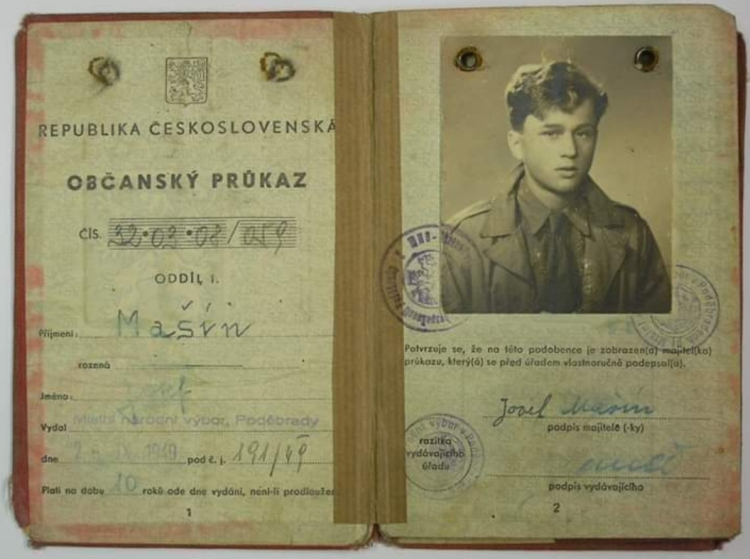

W USA zmarł Josef Maszin, ostatni żyjący członek grupy walczącej zbrojnie z komunistami


W USA zmarł Josef Maszin, ostatni żyjący członek grupy walczącej zbrojnie z komunistami

Piotr Górecki (PAP)


Źródło: en.wikipedia

W wieku 94 lat w Santa Barbara w USA zmarł Josef Maszin, uczestnik czechosłowackiego ruchu oporu przeciwko komunizmowi – poinformowała w Pradze organizacja Pamięć Narodu. Był ostatnim żyjącym członkiem trzyosobowej grupy, która w latach 50. ubiegłego wieku przedarła się na Zachód.

Działalność grupy Maszina z lat 50. nawiązywała do walki jego ojca z Niemcami podczas II wojny światowej. Josef i jego brat Citrad, jako nastolatkowie byli członkami tego oddziału. Ojciec został schwytany przez Niemców, skazany na śmierć i rozstrzelany 30 czerwca 1942 roku.

Po objęciu władzy w Czechosłowacji przez komunistów w lutym 1948 roku bracia utworzyli grupę partyzancką. Chcieli szkodzić reżimowi, licząc na starcie mocarstw zachodnich ze Związkiem Radzieckim.

Dokonywali akcji sabotażowych, a później, gdy ich działalność została wykryta, postanowili opuścić kraj. W 1951 roku w poszukiwaniu broni włamali się na posterunek policji. Zabili dwóch milicjantów. W 1952 r. napadli na samochód wiozący wypłatę i zastrzelili cywila – kasjera.

Przekraczając granicę ze wschodnimi Niemcami, zastrzelili trzech niemieckich żołnierzy straży granicznej. Z pięciu członków grupy na Zachód przedostało się dwóch braci i jeden z ich przyjaciół.  

Działalność grupy Maszina budzi kontrowersje i spory, nie tylko wśród historyków. Są szczególnie gwałtowne, gdy dyskutowane są kandydatury jej członków do najwyższych odznaczeń państwowych. Obaj bracia byli kilkakrotnie do nich zgłaszani, ale żaden z prezydentów Republiki Czeskiej nigdy im ich nie przyznał.


Zawartość publikowanych artykułów i materiałów nie reprezentuje poglądów ani opinii Reunion’68,
ani też webmastera Blogu Reunion’68, chyba ze jest to wyraźnie zaznaczone.
Twoje uwagi, linki, własne artykuły lub wiadomości prześlij na adres:
webmaster@reunion68.com