
Archives

Iran’s ‘day after’ debate shifts from regime change to who governs next – editorial


Iran’s ‘day after’ debate shifts from regime change to who governs next – editorial

JPOST EDITORIAL


As Reza Pahlavi steps forward with a detailed post-regime vision, the conversation is shifting to what comes next and whether anyone is prepared for it.

A demonstrator holds a placard during a protest against the Iranian government held by supporters of the Iranian royal family in exile, who marched through central London past the Iranian embassy to the Israeli embassy, in London, Britain, March 8, 2026 / (photo credit: REUTERS/YANN TESSIER)

As the Islamic Republic trembles under internal dissent and external pressure, a once-theoretical question is becoming urgent: What comes the day after? For decades, Western policymakers focused on how to constrain Iran

Now, as Reza Pahlavi steps forward with a detailed post-regime vision, the conversation is shifting to what comes next and whether anyone is prepared for it.

A recent Jerusalem Post report pointed to a striking reality. “Unlike many opposition figures, Pahlavi is not only calling for regime change but presenting a plan for what follows.” That distinction matters.

His proposed Iran Prosperity Project outlines a structured transition beginning the moment the Islamic Republic falls, including a provisional governing body, the restoration of order, and a rapid move toward a national referendum and elections within months.

That approach reflects lessons learned from the region. As a Post analysis noted, “Regime change without a clear framework risks repeating the failures seen in Iraq and Libya.” Those examples continue to shape how policymakers think about Iran. The collapse of a regime, on its own, does not produce stability.

A protestor holds an image of Iranian Crown Prince Reza Pahlavi during a demonstration against the Iranian government, in New York City, March 15, 2026; illustrative. (credit: Reuters/Adam Gray)

It can just as easily produce a vacuum, competing militias, foreign interference, and years of bloodshed. That is precisely why planning matters now, before events begin moving faster than policymakers can manage.

Iran’s future: Roadmap or chaos after regime collapse

The substance of Pahlavi’s road map is therefore central to the discussion. His proposals include dismantling the Islamic Republic’s constitutional framework, replacing it with a democratic legal order, and maintaining continuity in essential services – from energy to financial systems – to prevent state collapse.

In theory, it offers a structured transition from upheaval to governance. It also tries to reassure Iranians that the fall of the regime would not have to mean the collapse of the state itself.

But theory is not reality.

The first question is legitimacy. Pahlavi’s name carries historical weight, both positive and negative. For some Iranians, particularly in the diaspora and among monarchist circles, the slogan “Javid shah” (Long live the shah) reflects a longing for pre-revolutionary stability.

For others, it raises memories of authoritarian rule and inequality. A transition led, even temporarily, by a figure tied to Iran’s past may struggle to unify a divided public.

The second question is internal traction. This paper’s coverage has highlighted Pahlavi’s growing visibility and his calls for Iranians to prepare for a decisive “final call” against the regime.

Visibility abroad, however, does not automatically translate into authority on the ground. Revolutions are shaped inside the country, on the streets, within the security forces, and across the networks that sustain power. Exiled leadership can inspire, but it cannot substitute for internal organization and legitimacy.

A third issue is the role of external actors. Israel and the US may help shape the strategic environment that weakens the Islamic Republic, but they cannot determine Tehran’s political future.

Even planning for a “day after Iran” scenario requires restraint. Transitional periods carry risks, including nuclear uncertainty, score-settling inside the regime, ethnic and regional fragmentation, and a scramble for control among armed factions.

Still, dismissing Pahlavi’s plan would be a mistake.

For the first time in years, there is a structured attempt to answer a question that has long hovered over discussions about Iran: If not the Islamic Republic, then what? His framework, while contested, provides a starting point.

It signals that regime change can be paired with an effort to preserve order, restore services, and create a path toward public legitimacy rather than chaos.

Iran’s future will not be decided by any single figure. It will emerge from a convergence of forces: protesters in Tehran, workers in provincial cities, elements within the security establishment, and voices in exile seeking to influence events.

The challenge is to remove a regime and replace it with something durable.

History offers a clear lesson. Revolutions are judged not only by how regimes fall but by what follows. Institutions must be rebuilt. Security must be restored without returning to repression. Political legitimacy must be earned over time.

Pahlavi’s vision attempts to address that gap. Whether it can succeed remains uncertain. But the existence of a plan, however debated, already changes the conversation.

For years, the question of Iran’s future was deferred. That is no longer the case.

If the Islamic Republic collapses tomorrow, the vacuum will not wait. The question is whether anyone is ready for what comes next.


Zawartość publikowanych artykułów i materiałów nie reprezentuje poglądów ani opinii Reunion’68,
ani też webmastera Blogu Reunion’68, chyba ze jest to wyraźnie zaznaczone.
Twoje uwagi, linki, własne artykuły lub wiadomości prześlij na adres:
webmaster@reunion68.com


Lebanon Expels Iranian Ambassador as Israel Creates New ‘Security Zone’ in Campaign to Counter Hezbollah


Lebanon Expels Iranian Ambassador as Israel Creates New ‘Security Zone’ in Campaign to Counter Hezbollah

Ailin Vilches Arguello


Smoke rises after an Israeli strike, amid escalating hostilities between Israel and Hezbollah, as the US-Israeli conflict with Iran continues, in southern Lebanon, March 24, 2026. Photo: REUTERS/Stringer

Lebanon declared Iran’s new ambassador to the country, Mohammad Reza Sheibani, persona non grata on Tuesday and ordered him to leave by Sunday, as relations with Tehran sharply deteriorate amid tensions over the Iranian regime’s continued support for Hezbollah and interference in Beirut’s affairs.

Lebanese Foreign Minister Youssef Raggi announced the decision, accusing Tehran of violating diplomatic norms and interfering in Lebanon’s security, amid the regime’s backing of the Lebanese terrorist group Hezbollah.
.

Even though Sheibani served as Iran’s ambassador to Lebanon in the 2000s, he was only reappointed to the role in February and had not yet presented his credentials.

Israeli Foreign Minister Gideon Saar praised Lebanon’s move, calling it a “justified and necessary step against the state responsible for violating Lebanon’s sovereignty, for its indirect occupation through Hezbollah, and for dragging [the country] into war.”

“We call on the Lebanese government to take practical and meaningful measures against Hezbollah, whose representatives still serve as ministers within it,” the top Israeli diplomat wrote in a post on X.
.

This latest diplomatic escalation comes after a week of high-level meetings between Lebanese officials and regional leaders, many from countries that have faced Iranian missile and drone attacks or uncovered Hezbollah-linked networks on their soil.

Experts say the move also serves as a diplomatic signal toward Israel, as Beirut seeks to show a firmer stance against the Iranian proxy’s terrorist activities within the country ahead of possible future negotiations with Jerusalem

Last week, Raggi condemned the discovery of Hezbollah terrorist cells in Kuwait and the United Arab Emirates, expressing Lebanon’s solidarity with both states and reiterating that all military and security operations conducted by the Iran-backed group remain banned under Lebanese government authority.

The Lebanese diplomat also condemned Iran’s attacks on Saudi Arabia, warning that continued escalation by Tehran risks widening instability across the Gulf and further threatening regional security and economic cooperation.

“By targeting Arab and Islamic countries, Iran is attempting to hijack their security and peace and trade them for its own opportunistic objectives,” Raggi said during a diplomatic visit to Riyadh.

“The most dangerous aspect of these attacks is that they are directed against countries that have consistently pursued a policy of de-escalation with Iran. These are countries that have always adhered to good neighborly relations, extended bridges of cooperation, and strived to prevent the region from sliding into conflict … What message is Iran sending to our region when moderation is rewarded with aggression?” he continued.

In an interview with Saudi outlet al-Hadath on Sunday, Lebanese Prime Minister Nawaf Salam also condemned Iran’s role in the conflict, saying “the war was imposed on us,” and accused its Islamic Revolutionary Guards Corps (IRGC) of directing Hezbollah’s military operations from behind the scenes.

“These people have forged passports and entered the country illegally,” the Lebanese leader said.

“Is it our role to provoke [Israel] or to avenge the death of [Iran’s Supreme Leader Ayatollah Ali Khamenei]? That is not the role of Lebanon. This war is by definition the war of others on our soil,” Salam continued.

Earlier this month, the Lebanese government formally declared Hezbollah’s military operations illegal, though the army has so far refrained from intervening to halt the group’s military activity in the country’s southern region, even as Israeli strikes continue across the area.

“I am not calling for a confrontation with Hezbollah. On the contrary, I want to avoid such a confrontation. But I do not accept yielding to Hezbollah’s blackmail, and I ask the group to respect government decisions,” Salam told al-Hadath.

“Ending this conflict in Lebanon is our top priority, and we are deploying every necessary diplomatic effort, including our proposal for direct negotiations,” he continued.

On Tuesday, Israeli Defense Minister Israel Katz announced that Israeli forces will deploy across southern Lebanon up to the Litani River and crease a “security zone” until the threat of Hezbollah is removed, saying they would “control the remaining bridges and ‌the security zone ‌up to the Litani” and create a “defensive buffer.”

In recent weeks, Israel has conducted strikes targeting Hezbollah, particularly south of the Litani River, where the group’s operatives have historically been most active against the Jewish state.

For years, Israel has demanded that Hezbollah be barred from carrying out activities south of the Litani, located roughly 15 miles from the Israeli border.

According to Katz, the Israel Defense Forces (IDF) are now moving into Lebanon to establish what he described as a “forward defensive line,” targeting Hezbollah infrastructure and destroying buildings he said were being used as operational “terrorist outposts.”

“The principle is clear: Where there are terror and missiles, there will be no homes and no residents, and the IDF will be inside,” he said.

Since Hezbollah joined the conflict in support of Iran at the beginning of the month, Israeli officials report the group has carried out over 900 coordinated attacks, showing a notable rise in cross-border activity and an expansion of operations across the region.


Zawartość publikowanych artykułów i materiałów nie reprezentuje poglądów ani opinii Reunion’68,
ani też webmastera Blogu Reunion’68, chyba ze jest to wyraźnie zaznaczone.
Twoje uwagi, linki, własne artykuły lub wiadomości prześlij na adres:
webmaster@reunion68.com


Rozbijanie dyskusji: Jak proislamscy komentatorzy kształtują telewizyjne debaty


Rozbijanie dyskusji: Jak proislamscy komentatorzy kształtują telewizyjne debaty

Nervana Mahmoud


Od czasów moich studiów uniwersyteckich debatowałam z osobami określającymi się jako islamiści i śledziłam ich wystąpienia w telewizji oraz na platformach cyfrowych. Z biegiem czasu powtarzające się taktyki „dyskutowania” stają się trudne do zignorowania. Niezależnie od tego, czy jest to panel akademicki, program nadawany na Bliskim Wschodzie, czy konfrontacyjne show w zachodniej telewizji, schematy są uderzająco podobne — i często skuteczne.

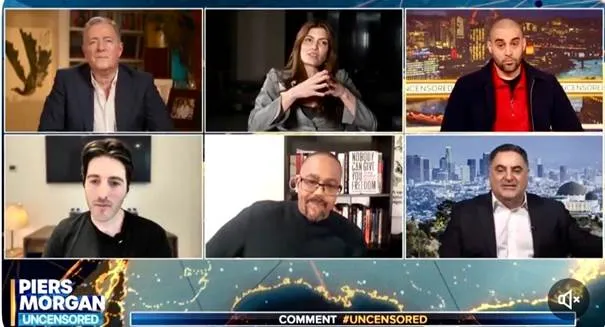
Programy, w których czas wypowiedzi jest ograniczony, takie jak te prowadzone przez Piersa Morgana, szczególnie sprzyjają tym metodom. Format premiuje szybkość, emocjonalne formy przekazu i jego kondensację, a niechlujną analizę dowodów. Goście, którzy potrafią błyskawicznie zmieniać temat, mogą zdominować czas antenowy, jednocześnie uniemożliwiając oponentom przedstawienie uporządkowanej repliki.

Niedawny odcinek programu Piers Morgan Uncensored zatytułowany „Is the UK Being ‘Invaded’, and Has It Lost Its Culture to Radical Islam?” [Czy Wielka Brytania została ‘najechana’ i czy traci swoją kulturę na rzecz radykalnego islamu?] stanowił wyraźną ilustrację tego zjawiska.

Zamiast bezpośrednio odnieść się do pytania, dwoje gości szybko przekierowało dyskusję na Izrael, rzekomo wszechogarniającą kontrolę polityczną oraz wprowadziło niezwiązaną z tematem teorię spiskową łączącą relacje o brytyjskich gangach wykorzystujących seksualnie nieletnie dziewczęta z aferą Epsteina. Żaden z tych wątków nie dotyczył pierwotnego tematu, a mimo to pochłonął cenny czas i zmusił pozostałych uczestników do reagowania na niezwiązane z głównym tematem wątki.

To przesunięcie — od konkretnego problemu krajowego do globalnych geopolitycznych pretensji — nie jest przypadkowe. Jest to strategiczne przeformułowanie, które zmienia moralne pole debaty i znacząco utrudnia rzeczową analizę.

1. Makro-przekierowanie

Najczęstszą taktyką jest przejście od wąsko zdefiniowanego pytania do szerokiej narracji o globalnej niesprawiedliwości. Dyskusja o lokalnej przestępczości staje się rozmową o polityce zagranicznej; pytanie o ideologię zamienia się w debatę o dyskryminacji. Oponent zostaje zmuszony do obrony przed abstrakcyjnymi globalnymi zarzutami zamiast odnosić się do sedna sprawy.

2. Pozycjonowanie moralne

Uniwersalny język — sprawiedliwość, godność, wolność — łączy się z podkreślaniem zbiorowej wiktymizacji. Przedstawiający się przede wszystkim jako reprezentanci uciskanej grupy, mówcy przesuwają debatę z poziomu ideologii na poziom etyki, sprawiając, że krytyka wygląda jak wrogość wobec tej grupy, a nie jak dyskusja o konkretnych zjawiskach społecznych.

3. Warunkowe potępienie

Zamiast jasno i bezpośrednio potępić konkretne przestępstwa czy ekstremistyczne grupy, mówcy wprowadzają hierarchię krzywd: przemoc państwową, historyczne niesprawiedliwości lub niezwiązane z tematem debaty konflikty. Pierwotne pytanie rozpływa się w szerszym porównaniu, w którym nikt nie ponosi jednoznacznej odpowiedzialności.

4. Język legalistyczny

Odwołania do zbrodni wojennych, rezolucji ONZ i prawa międzynarodowego nadają wypowiedziom pozór autorytetu i powagi — szczególnie w dynamicznych debatach, w których widzowie nie są w stanie w czasie rzeczywistym zweryfikować twierdzeń. Rejestr jest techniczny i świecki, nawet jeśli w innych kontekstach centralne miejsce zajmują argumenty religijne.

5. Nakładanie wielu wątków

W jednej odpowiedzi kompresuje się wiele punktów — politykę zagraniczną, stronniczość mediów, swobody obywatelskie, historyczne krzywdy. Nagromadzenie twierdzeń sprawia, że ich systematyczne odparcie w ograniczonym czasie staje się niemal niemożliwe. Celem jest przeciążenie, a nie pogłębienie analizy.

6. Nośność zamiast głębi

Zamiast szczegółowych, tematycznie adekwatnych dowodów używa się statystyk o silnym wydźwięku, anegdot lub rozpoznawalnych nazwisk. Nacisk kładzie się na zapamiętywalność i rezonans emocjonalny, a nie na analityczną precyzję.

Choć techniki te nie są unikalne dla jednej ideologii i są powszechne we współczesnym przekazie politycznym, komentatorzy powiązani z islamizmem stosują je w sposób bardziej systematyczny i wyczerpujący, co pokazał panel u Piersa Morgana.

Dlaczego te taktyki działają

Strategie te odnoszą sukces nie dlatego, że są silniejsze pod względem faktograficznym, lecz dlatego, że wykorzystują strukturę telewizyjnej debaty: ograniczony czas, rozproszoną uwagę i premiowanie retorycznej pewności siebie. Metodyczna, oparta na dowodach odpowiedź może sprawiać wrażenie powolnej tylko dlatego, że format nie pozwala na pełne wyjaśnienie.

Frustracja jest więc przewidywalna. Krytycy, którzy reagują emocjonalnie — przerywając lub okazując irytację — wzmacniają narrację, że nie potrafią odpowiedzieć na moralne ramowanie przeciwnika.

Jak odpowiadać

Unikanie debaty nie jest rozwiązaniem. Nie jest nim również próba dorównania szybkości retorycznej równie szybką retoryką. Skuteczniejsze podejście wymaga dyscypliny:

• Kontroluj temat: powtarzaj pierwotne pytanie i odrzucaj dygresje.
• Nazwij unik: krótko wskaż zmianę tematu i wróć do sedna.
• Bądź zwięzły: krótkie podsumowania trudniej wykoleić.
• Zwracaj się do publiczności: percepcja ma znaczenie równie duże jak treść.
• Zachowuj spokój: opanowany sposób mówienia podważa próby prowokacji.

W tym konkretnym programie Andrew Gold, prowadzący Heretics, poradził sobie z wymianą zdań skutecznie, pokazując, że opanowanie, kontrola tematu i zwięzłe repliki mogą być skuteczniejsze niż reagowanie na dygresje.

Telewizyjne debaty są spektaklami kształtowanymi przez taktykę, tempo i sygnały emocjonalne. Sukces zależy od klarowności, dyscypliny i odporności na wciąganie na retoryczny teren wybrany przez drugą stronę. Celem nie jest konfrontacja sama w sobie, lecz kontrola przekazu i logiczna spójność.

Gdy unik spotyka się z precyzją i opanowaniem, jego siła maleje, a dyskusja może powrócić do meritum zamiast dryfować w stronę spektaklu.


Link do oryginału:

 Nervana Mahmoud
Framing the Argument: How Islamist Commentators Shape TV Debates
Since my university years I have debated self-identified Islamists and followed their appearances across television and digital platforms. Over time, certain recurring media tactics become difficult to ignore. Whether on a campus panel, a Middle Eastern broadcast, or a confrontational Western programme, the patterns are strikingly similar—and often effe…
Read more

Zawartość publikowanych artykułów i materiałów nie reprezentuje poglądów ani opinii Reunion’68,
ani też webmastera Blogu Reunion’68, chyba ze jest to wyraźnie zaznaczone.
Twoje uwagi, linki, własne artykuły lub wiadomości prześlij na adres:
webmaster@reunion68.com


Are American Universities the Next Front in a Gulf Rivalry?


Are American Universities the Next Front in a Gulf Rivalry?

Nira Broner Worcman


Pro-Hamas demonstrators at Columbia University in New York City, US, April 29, 2024. Photo: REUTERS/Caitlin Ochs

A recent report by the US House Committee on Education and the Workforce on antisemitism in higher education delivers a stark conclusion: In the wake of the Hamas-led Oct. 7, 2023, attack on Israel, many US campuses have shifted from being sites of debate to environments where hostility toward Jewish students is increasingly normalized. The report documents rising harassment, rhetoric that blurs into justification of violence, and a growing reluctance by university leaders to enforce their own rules when speech is framed as political activism.

That warning points to a broader institutional problem. Universities are not only struggling to respond to ideological extremism; they are also increasingly embedded in global networks of funding, influence, and political engagement. In this environment, they risk becoming more than passive hosts of debate, emerging as spaces where external conflicts are projected inward, including the strategic rivalry between Gulf states now playing out on Western campuses.

Earlier this year, the United Arab Emirates suspended government scholarships for students planning to attend British universities, citing concerns about Islamist radicalization on UK campuses. For decades, Western institutions were viewed across the Arab world as gateways to modernity — exporters of science and pluralism. Now an Arab state is signaling that those campuses may no longer be ideologically neutral.

Britain’s situation reflects long-standing policy choices. The United Kingdom does not formally designate the Muslim Brotherhood as a terrorist organization and has long served as a hub for Brotherhood-linked activism. British academia enrolls significant numbers of Qatari students and maintains financial and institutional ties with Doha, placing campuses within a broader ecosystem of Qatari engagement and soft power. That matters because Qatar and the UAE sit on opposing sides of a wider Gulf competition over political Islam.

Since the signing of the Abraham Accords in 2020, the UAE has positioned itself as a regional actor seeking stability, economic integration, and the containment of Islamist influence. Qatar, by contrast, continues to host Muslim Brotherhood figures and Hamas political leaders while expanding its global reach through media and partnerships with research institutions and universities.

The United Kingdom may have presented the most immediate concern for Emirati policymakers. But the broader question of ideological influence within Western institutions extends beyond Britain. Nowhere is that dynamic more consequential than in the United States.

Disclosures filed with the US Department of Education show that American universities have reported receiving more than $4 billion from Qatar over the past two decades, placing the Gulf state among the largest foreign funders of US higher education. Institutions such as Cornell University, Georgetown University, Northwestern University, and Texas A&M University have reported substantial Qatari funding supporting research programs, faculty, and academic centers.

Foreign partnerships and international funding are common in global higher education and do not automatically translate into political influence. The concern arises not from these relationships themselves, but from the political environment in which they operate — particularly when ideological movements tied to geopolitical actors become increasingly visible in campus activism.

Recent events on American campuses help explain why this matters. After the Oct. 7, 2023, attacks, universities including Harvard, Columbia, UCLA, and NYU witnessed demonstrations that in some cases moved beyond criticism of Israeli policy into justification of violence, calls for a “global intifada,” and rhetoric widely understood by Jewish students as eliminationist. Congressional hearings later exposed how difficult it had become for some university leaders to state clearly that calls for genocide violate campus rules when framed as political expression.

The issue is not protest itself, which is intrinsic to academic life, but ideological activism that normalizes movements rejecting liberal democratic principles. In such an environment, Gulf rivalry intersects with Western institutional hesitation, and campuses risk becoming arenas not merely of debate but of strategic signaling.

If Abu Dhabi concludes that British universities are incubating ideologies it considers destabilizing, the same logic could extend to the United States. American universities are even more globally influential than their British counterparts, educating future ministers, financiers, and opinion leaders from across the Middle East — making them higher-value terrain in any competition over ideas.

Whether the UAE would take similar measures regarding US institutions remains uncertain. The strategic partnership between Washington and Abu Dhabi is deeper than the UAE’s educational ties with Britain. And while the United States does not designate the entire Muslim Brotherhood as a Foreign Terrorist Organization, it does designate Hamas — which originated as a Palestinian branch of the Brotherhood — as a terrorist group.

The UAE’s decision regarding British scholarships should therefore be seen as part of a broader regional struggle over political Islam and the future direction of the Middle East. If that struggle is increasingly playing out on Western campuses, Americans should ask a sober question: Are their universities merely observers of this rivalry — or are they becoming its next front?


Nira Broner Worcman is a Brazilian journalist, CEO of Art Presse Communications, and author of A Sisyphean Task (translated from the Brazilian edition, Enxugando Gelo), on media coverage of the war between Israel and terrorist groups. She was a Knight Science Fellow at MIT and earned her master’s degree at NYU’s Science, Health, and Environmental Reporting Program.


Zawartość publikowanych artykułów i materiałów nie reprezentuje poglądów ani opinii Reunion’68,
ani też webmastera Blogu Reunion’68, chyba ze jest to wyraźnie zaznaczone.
Twoje uwagi, linki, własne artykuły lub wiadomości prześlij na adres:
webmaster@reunion68.com


Iran fires two missiles at US-UK military base beyond known Iranian military range – WSJ


Iran fires two missiles at US-UK military base beyond known Iranian military range – WSJ

JERUSALEM POST STAFF

A US Air Force B-2 Spirit stealth bomber departs from Diego Garcia, British Indian Ocean Territory, to conduct a combat mission, April 19, 2025. / (photo credit: US Air Force photo by Tech. Sgt. Anthony Hetlage)

Iran fired two ballistic missiles at a joint US-UK military base, Diego Garcia, the Wall Street Journal reported Friday night, citing multiple US officials.

One of the missiles failed in flight, and a US warship fired an interception at the other. At this time, it has not been determined if an interception was made, but neither missile hit the base, officials told WSJ.

Diego Garcia is located about 4,000 kilometers from Iran, double the 2,000-kilometer range that Iranian Foreign Minister Abbas Araghchi said Iran’s ballistic missiles had last month.

A banner with a photo of a new hypersonic ballistic missile called ”Fattah” and with text reading ”400 seconds to Tel Aviv” is seen on a street in Tehran, Iran June 8, 2023 (credit: MAJID ASGARIPOUR/WANA (WEST ASIA NEWS AGENCY) VIA REUTERS)

Iran ‘in advanced stages of development’ of long-range missiles

According to a report published by Israel’s Alma Research and Education Center at the start of the war, Iran’s missile inventory primarily consists of short-range ballistic missiles, which reach up to 1,000 kilometers, and medium-range ballistic missiles, which can reach as far as 3,000 kilometers.

However, the Center added that “according to various reports, long-range ballistic missiles are currently in advanced stages of development.”

Diego Garcia is located on an island in the middle of the Indian Ocean and functions as a strategic base, from which the US hosts bombers, nuclear submarines, and guided-missile destroyers, WSJ wrote. 


Zawartość publikowanych artykułów i materiałów nie reprezentuje poglądów ani opinii Reunion’68,
ani też webmastera Blogu Reunion’68, chyba ze jest to wyraźnie zaznaczone.
Twoje uwagi, linki, własne artykuły lub wiadomości prześlij na adres:
webmaster@reunion68.com