
Archive | 2026/05/02

UNIFIL manipuluje danymi


UNIFIL manipuluje danymi

Elder of Ziyon


UNIFIL zgłosił ponad 10 000 izraelskich naruszeń rezolucji 1701 od czasu zawieszenia broni w listopadzie 2024 roku. Ta liczba (lub jeszcze wyższe) jest szeroko przytaczana jako dowód na to, że Izrael nie przestrzega porozumień.

Ile naruszeń Hezbollahu UNIFIL zgłosił w tym samym okresie?

Tu sprawy zaczynają się komplikować.

Liczba dotycząca Izraela jest precyzyjna, skumulowana i przygotowana pod nagłówki. Rzecznik UNIFIL przekazał ją agencjom informacyjnym w okolicach pierwszej rocznicy zawieszenia broni: ponad 8100 naruszeń w przestrzeni powietrznej, ponad 2600 działań naziemnych na północ od Niebieskiej Linii, ponad 1000 trajektorii ostrzału.

Liczba dotycząca Hezbollahu nie pojawia się nigdzie w porównywalnej formie. Nie została wspomniana podczas tej samej konferencji prasowej.

Okresowe raporty Sekretarza Generalnego ONZ dotyczące rezolucji 1701, przedstawiane Radzie Bezpieczeństwa, klasyfikują co prawda broń powiązaną z Hezbollahem na południe od rzeki Litani jako naruszenia — sformułowania są jednoznaczne. Raporty podają liczby: 194 składy broni odkryte w jednym okresie, 225 w kolejnym, ponad 360 pod koniec 2025 roku. Może to więc sprawiać wrażenie, że UNIFIL bezstronnie raportuje naruszenia do ONZ.

Nie jest to nawet bliskie prawdy, jeśli przyjrzeć się temu, co uznaje się za pojedyncze „naruszenie”.

W przypadku Izraela pojedynczy lot bojowy liczony jest według liczby samolotów, a nie jako jedno zdarzenie. Większość naruszeń nie dotyczyła zresztą izraelskich myśliwców, lecz dronów — a pojedynczy lot drona nad Libanem może zostać policzony jako wiele naruszeń. Dron utrzymujący się w powietrzu przez wiele godzin, zmieniający kierunek lub wysokość, dzielony jest na odrębne trajektorie — każda stanowi osobny wpis w rejestrze. Jedna misja rozpoznawcza wzdłuż Niebieskiej Linii może sama wygenerować pięć lub dziesięć naruszeń.

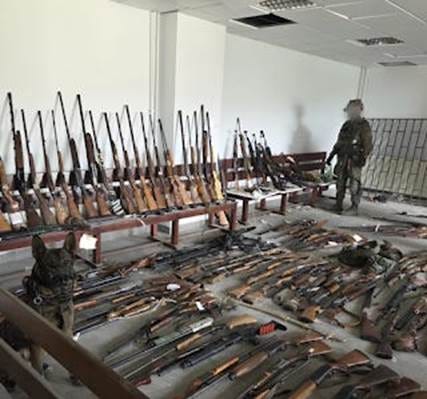
Porównajmy to z tym, jak UNIFIL raportuje odnajdywane składy broni. Każdy skład liczony jest jako jeden, niezależnie od tego, czy zawiera trzy stare karabiny, czy tysiąc rakiet. Pudełko po butach z zardzewiałymi magazynkami do AK i tunel wypełniony przeciwpancernymi pociskami Kornet to oba przypadki „jednego składu”.

Naruszenia izraelskie liczone są w najmniejszych możliwych jednostkach. Naruszenia Hezbollahu — w największych możliwych agregatach.

Jest jeszcze gorzej. UNIFIL liczy tylko to, o czym wie bezpośrednio lub poprzez LAF (Libańskie Siły Zbrojne). Tymczasem Hezbollah otwarcie chwali się, że wprowadza w błąd władze libańskie, ujawniając przestarzałe składy, które można zniszczyć, podczas gdy rzeczywiste, aktywne magazyny podziemne oraz składy ukryte w domach cywilnych przy granicy pozostają nietknięte. Dowódca, który powiedział NPR: „dawaliśmy im puste skrzynki albo kilka starych rzeczy do wysadzenia”, opisywał dokładnie ten materiał, który składa się na ponad 360 zgłoszonych przez UNIFIL „składów”. Jedyny wskaźnik, którym UNIFIL mierzy zgodność Hezbollahu, jest wskaźnikiem, którym Hezbollah jawnie manipuluje.

100 naruszeń w jednej szkole

Gdyby UNIFIL liczył naruszenia Hezbollahu w taki sam sposób, w jaki liczy naruszenia Izraela, wówczas każdy karabin, każdy granat, każdy RPG, każda rakieta, każdy pocisk moździerzowy, każda wyrzutnia, każdy ładunek wybuchowy, każdy Kornet byłby osobnym naruszeniem rezolucji 1701 — bo nim jest. Przedwojenny arsenał Hezbollahu na południe od Litani szacowano w źródłach otwartych na dziesiątki tysięcy rakiet, tysiące pocisków przeciwpancernych, dziesiątki tysięcy RPG i broni strzeleckiej, a także znaczne ilości moździerzy, granatów i ładunków wybuchowych. Siły Obronne Izraela przejęły już ponad 85 000 sztuk broni i wyposażenia wojskowego podczas częściowego przeszukania około 30 wiosek. Donoszono, że batalion inżynieryjny 603A znalazł i zniszczył ponad 1000 obiektów infrastruktury terrorystycznej, z „niekończącą się” ilością broni, w zaledwie pięć tygodni działań. Ostrożne szacunki liczby pojedynczych egzemplarzy broni na południe od Litani — z których każdy stanowi naruszenie 1701 — sięgają setek tysięcy. Jeśli doliczyć pojedyncze jednostki amunicji i naboje — milionów. Nie jest to bardziej absurdalne niż liczenie jednego drona patrolującego Niebieską Linię jako dziesięciu naruszeń, jak czyni UNIFIL.

A broń to tylko połowa problemu. Rezolucja 1701 zakazuje obecności „jakiegokolwiek uzbrojonego personelu, zasobów lub broni” poza LAF i UNIFIL na tym obszarze. Każdy uzbrojony bojownik Hezbollahu na południe od Litani stanowi osobne naruszenie, niezależnie od tego, co posiada. Samą jednostkę Radwan szacowano przed wojną na kilka tysięcy bojowników rozmieszczonych na południu, a łączna liczba uzbrojonego personelu Hezbollahu w tym rejonie była znacznie wyższa. To kolejne tysiące naruszeń, których UNIFIL nigdy nie policzył.

Nie znajdzie się żadnej konferencji prasowej, na której UNIFIL stwierdziłby, że Hezbollah naruszył rezolucję 1701 setki tysięcy razy.

UNIFIL manipuluje danymi. Maksymalizuje liczbę naruszeń Izraela i minimalizuje liczbę naruszeń Hezbollahu — zarówno pod względem liczby, jak i charakteru. I to jeszcze zanim uwzględni się długą, udokumentowaną historię przymykania oczu na to, co Hezbollah faktycznie budował w południowym Libanie — osiemnaście lat, podczas których zgromadził arsenał dziesiątek tysięcy rakiet i pocisków, sieć tuneli porównywalną z Gazą oraz infrastrukturę jednostki Radwan w odległości metrów od pozycji UNIFIL, podczas gdy UNIFIL niemal niczego nie raportował.

Krążąca w światowych mediach liczba 10 000 nie jest dowodem na niewłaściwe działania Izraela. Jest dowodem na stronniczość — i bezużyteczność — UNIFIL.


Link do oryginału:

Elder’s Substack
UNIFIL cooks the books
UNIFIL has reported over 10,000 Israeli violations of Resolution 1701 since the November 2024 ceasefire. This number (or larger ones) are widely quoted as evidence of Israel not adhering to agreements…

Zawartość publikowanych artykułów i materiałów nie reprezentuje poglądów ani opinii Reunion’68,
ani też webmastera Blogu Reunion’68, chyba ze jest to wyraźnie zaznaczone.
Twoje uwagi, linki, własne artykuły lub wiadomości prześlij na adres:
webmaster@reunion68.com



Jewish American Heritage Month: US Jews face a unity test – opinion


Jewish American Heritage Month: US Jews face a unity test – opinion

WILLIAM C. DAROFF

An American Jewish man praying / (photo credit: REUTERS)

May marks Jewish American Heritage Month, a time to reflect on a history marked by movement from margin to belonging.

Jews arrived in North America in 1654, when a small group landed in New Amsterdam – now New York City – seeking something rare in Jewish history: the ability to live openly, to build families and institutions, and to participate fully in civic life without surrendering their identity. That promise did not always hold. But it proved real and durable enough to take root.

Over more than three and a half centuries, Jewish Americans helped shape the country they joined. In law, science, culture, and public life, they became participants in the American project rather than observers at its edges. They shaped American constitutional life, advanced scientific discovery, and defined elements of American culture.

That record reflects a deeper alignment between the Jewish experience and American possibility: a shared emphasis on learning, responsibility, community, and the belief that the future can improve on the past.

But the story does not move in a straight line.

Members of the congregation listen to remarks by US President Barack Obama (not pictured) on Jewish American History Month at the Adas Israel Congregation synagogue in Washington May 22, 2015. (credit: REUTERS/JONATHAN ERNST)

Jewish Americans have faced periods of exclusion and hostility, from formal barriers in universities and professions to open antisemitism. Each time, the response did not retreat. It drove adaptation: building institutions, strengthening communal life, and deepening engagement with the broader society.

Antisemitism no longer hidden in the US

In the aftermath of the October 7 massacre, those patterns have reasserted themselves with force. Antisemitism no longer sits at the margins. It appears on campuses, in public spaces, and in civic life, often framed in political language but unmistakable in its targets. Assumptions that once felt settled no longer hold.

American Jewish history does not turn on any single difficult moment. It turns on what follows: the capacity to endure, to adapt, and to keep building. In that sense, the American Jewish experience reflects something larger.

For over 3,500 years, Jewish history has followed a similar arc, facing disruption, responding with resilience, and rebuilding with purpose. The American chapter does not stand apart from that story. It continues under conditions that remain exceptional in Jewish life.

The freedoms that drew earlier generations remain intact. The institutions that sustained Jewish life still stand. The broader American framework, imperfect but resilient, continues to offer possibilities that remain rare in Jewish history.

This is more than a celebration. It is a recognition of continuity. The story of Jewish life in America has always paired challenge with achievement, and its trajectory reflects how each generation responds.

The designation of Jewish American Heritage Month reflects that progress, established through bipartisan legislation and formally recognized in 2006 by President George W. Bush, affirming that Jewish contributions are not peripheral to the American story but integral to it, and as someone who worked closely with Senator Arlen Specter, Congresswoman Debbie Wasserman Schultz, and the White House at the time, nearly twenty years ago, to make that recognition official, I view it as part of a broader, ongoing effort to ensure that role is understood.

We are not where we began. The distance traveled matters.

The task now is clear: confront present challenges without losing sight of what we have built, and ensure that the next generation inherits not only resilience, but the conditions that sustain it.

One thread runs through this history: cohesion. American Jewish life has never been monolithic. Religious, political, and cultural differences persist. But at decisive moments, a sense of shared fate prevails. Unity without unanimity defines that balance.

Institutions were built to sustain a broader communal fabric: federations, schools, synagogues, community centers, and civic organizations grounded in the idea that Jewish continuity is a collective responsibility.

That instinct toward unity now faces a real test. Disagreement is inevitable and often healthy. Fragmentation carries risk, especially under external pressure. The strength of American Jewish life depends on the ability to hold differences within a framework of mutual obligation: to argue, even sharply, without losing sight of a shared inheritance and a common future.

At a time of renewed uncertainty, that balance is not a luxury. It is a necessity. The future of American Jewish life will depend on whether we sustain it.


The writer is CEO of the Conference of Presidents of Major American Jewish Organizations, the umbrella organization for the American Jewish community. His opinions do not necessarily represent those of the Conference’s 50 Jewish organizations from across the political spectrum. Follow him @Daroff


Zawartość publikowanych artykułów i materiałów nie reprezentuje poglądów ani opinii Reunion’68,
ani też webmastera Blogu Reunion’68, chyba ze jest to wyraźnie zaznaczone.
Twoje uwagi, linki, własne artykuły lub wiadomości prześlij na adres:
webmaster@reunion68.com


Israel’s Eurovision Delegation Departs for Austria Led by Singer Noam Bettan


Israel’s Eurovision Delegation Departs for Austria Led by Singer Noam Bettan

Shiryn Ghermezian


Noam Bettan, Israel’s representative for the Eurovision Song Contest 2026, poses in this undated handout photo. Photo: Courtesy of Kan, Timor Elmalach/Handout via REUTERS

The Israeli delegation for the 70th Eurovision Song Contest, led by Israel’s representative in the competition Noam Bettan, departed the Jewish state on Friday morning and traveled to Austria for the annual event taking place this month.

Israel’s national airline El Al shared photos on Facebook of Bettan aboard the plane taking him to Vienna, where he will compete in the Eurovision with his original song “Michelle.” The song features lyrics in Hebrew, French, and English. Bettan, 27, will perform the track at the Eurovision with five dancers on stage, Israel’s national broadcaster Kan announced.

The Ra’anana native, whose parents are French, will represent his home country in the Eurovision this year after winning the latest season of the Israeli televised singing competition “Hakochav Haba” (“The Next Star”) in January.

“I am very happy and excited to represent our beautiful country in the biggest music competition in Europe, on the biggest stage in the world,” Bettan said before taking off on Friday morning, as reported by Kan. “I am coming with an open heart, and I want to give all the light and love I receive from everyone, back to the whole world … We have given our souls to bring the most amazing performance possible on stage with lots of surprises. There is going to be great joy on stage! It is a great privilege and responsibility, and I will do everything to represent with honor.”

El Al CEO Levi Halevi said he is confident Bettan will be successful in the competition. “Noam is going to represent us in a challenging time when it is of great significance to represent the country with honor around the world,” he added.

The first semi-finals for the Eurovision, in which Bettan will perform, will take place on May 12, followed by another semi-final on May 14. The grand final will be held on May 16.

Thirty-five countries are participating from around the world. Ireland, Slovenia, and Spain have announced they will not air the 70th Eurovision Song Contest or compete because of Israel’s participation. Iceland and the Netherlands will also not compete in the Eurovision this year due to Israel’s inclusion, but they will broadcast the competition.

Eurovision Song Contest Asia will launch in November 2026 and will be hosted in Bangkok, Thailand.


Zawartość publikowanych artykułów i materiałów nie reprezentuje poglądów ani opinii Reunion’68,
ani też webmastera Blogu Reunion’68, chyba ze jest to wyraźnie zaznaczone.
Twoje uwagi, linki, własne artykuły lub wiadomości prześlij na adres:
webmaster@reunion68.com