
Archives

‘Buffer zone’ bill will pass into law this week, NYC Council speaker says


‘Buffer zone’ bill will pass into law this week, NYC Council speaker says

Debra Nussbaum Cohen


“I want to make no apology about insisting on a proportionate response to disproportionate discrimination,” Julie Menin said.

New York City Council speaker Julie Menin is honored by COJO Flatbush, on right is Rep. Dan Goldman (D-N.Y.), March 15, 2026. Credit: Credit Alex Krales/NYC Council Media Unit.

The New York City Council intends to pass a bill creating a protest-free “buffer zone” around houses of worship and a measure to create a hotline for reporting antisemitic and other hate crimes this week, according to Julie Menin, the council speaker.

Both bills were debated during a recent 10-hour city council hearing, during which officials from the city, NYPD and Jewish organizations testified, as well as members of the public, including those who opposed and supported the proposed laws.

The first Jew to serve as speaker of the 51-member council, Menin announced the impending passage of the bills at an annual legislative breakfast held by the Council of Jewish Organizations of Flatbush, Brooklyn, on Sunday.

COJO gave the council member its distinguished leadership award. Menin opened her remarks by citing the upsurge of Jew-hatred in New York and nationally, most recently the attack on a Reform synagogue with a preschool in West Bloomfield, Mich., a Detroit suburb.

“With hate crimes against Jews constituting more than any other group of hate crimes in our great city combined, I want to make no apology about insisting on a proportionate response to disproportionate discrimination,” Menin said.

She noted that for her, it is personal.

“My mother’s mother barely made it through” the Holocaust in Hungary, she told attendees. Her mother’s father was murdered “just because he happened to be born Jewish,” she said.

She promised increased funding for “small schools and houses of worship that do not have adequate resources.”

“We will provide those security resources,” she said.

New York City Council speaker Julie Menin is honored by COJO Flatbush, March 15, 2026. Credit: Credit Alex Krales/NYC Council Media Unit.

NYC Comptroller Mark Levine introduced Rep. Dan Goldman (D-N.Y.), who was awarded COJO’s distinguished statesman award.

Levine began by speaking Hebrew. “Boker tov,” he said, “good morning.”

He also spoke Hebrew when he was sworn in on a Chumash, a Five Books of Moses, on Jan. 1.

“I got a lot of heat for it online,” he said. “So I decided I’m just going to speak more Hebrew. I really don’t care.”

Levine, whose role is essentially that of New York City’s chief financial officer, said that he is committed to investing the city’s pension funds in Israel, among investments in many other countries.

“We have a diversified portfolio invested in every economy including investments in the State of Israel,” he said. “I have a fiduciary responsibility  here beyond politics, and I promise you I will never back down on that commitment.”

Levine’s predecessor as comptroller was Brad Lander, who is now facing off against Goldman in the upcoming Democratic primary election to represent New York City’s 10th District, which encompasses lower Manhattan and communities along the western edge of Brooklyn.

Lander, who endorsed Zohran Mamdani during the latter’s successful mayoral run, has criticized the Israeli government. Mamdani has said that the city should boycott Israel financially and that he would have the Israeli prime minister arrested in New York City.

Goldman was elected in 2022 to Congress, where he now co-chairs the House Bipartisan Task Force on Combating Antisemitism.

MeninNew York City Council speaker Julie Menin is honored by COJO Flatbush, March 15, 2026. Credit: Credit Alex Krales/NYC Council Media Unit.

In his remarks accepting COJO’s award, Goldman said that “antisemitism isn’t rising. It is skyrocketing on both the left and the right.”

“It is my firm belief that fighting antisemitism must be a bipartisan effort, because if fighting antisemitism or even supporting Israel becomes a partisan football, then Jews lose and Israel loses,” he said.

“I will always stand up for the Jewish community and always stand up for the State of Israel, the only Jewish state in the world,” he said.

Goldman promised “to push bills that increase funding to combat antisemitism on campus and to expose who is giving and what countries are giving money to our universities, and what they are getting back.”

That has also been a focus for the Trump administration, which has released extensive data on which countries are funding which U.S. universities and to what extent.

“I will continue to call out antisemitism wherever it exists, on the left or the right,” Goldman said. “That is how we must lead on this issue.”

At the event, Letitia James, the state attorney general, introduced New York City Police Department Commissioner Jessica Tisch.

After receiving COJO’s distinguished public service award, Tisch spoke about the double Torah portion, about constructing the Tabernacle in the desert at the end of the book of Exodus, read in synagogues worldwide on the prior day.

Tisch, who like the other honorees is Jewish, likened it to the work that COJO’s lay leadership does to support social services for the Brooklyn Jewish community.

“Moses gathered the people to contribute their talents and resources so that the entire community could build something sacred together,” she said.


Zawartość publikowanych artykułów i materiałów nie reprezentuje poglądów ani opinii Reunion’68,
ani też webmastera Blogu Reunion’68, chyba ze jest to wyraźnie zaznaczone.
Twoje uwagi, linki, własne artykuły lub wiadomości prześlij na adres:
webmaster@reunion68.com


Iran’s ‘Missile City’: Underground Arsenal Exposes the Strategic Failure of Containment


Iran’s ‘Missile City’: Underground Arsenal Exposes the Strategic Failure of Containment

Amine Ayoub


Smoke rises after reported Iranian missile attacks, following United States and Israel strikes on Iran, as seen from Doha, Qatar, March 1, 2026. Photo: REUTERS/Mohammed Salem

The Islamic Revolutionary Guard Corps (IRGC) has released propaganda footage of an underground complex it calls “Missile City,” a vast network of tunnels packed with suicide drones and ballistic missiles.

The video, complete with a ticking clock and endless rows of Shahed drones and rockets, was released days after the US-Israeli strike that eliminated Supreme Leader Ayatollah Ali Khamenei. Far from idle boasting, this imagery constitutes hard evidence of Tehran’s long-term strategic calculus: to build an asymmetric arsenal capable of exhausting Western and Gulf defenses, while advancing toward nuclear breakout.

The footage proves, once and for all, that Iran cannot be left alone to develop its weapons programs.

The operational logic on display in the video is ruthlessly efficient. Shahed drones cost roughly $16,000–$20,000 apiece, and require minimal production time. Western interceptors, by contrast, are prohibitively expensive: a single Patriot missile reaches $3.75 million, while THAAD systems can exceed $10 million per battery.

The United Arab Emirates has already spent up to $567 million to achieve a 92 percent interception rate against 541 Iranian projectiles. Analysts warn that at current expenditure rates, Gulf stockpiles could be depleted within mere days. Tehran, meanwhile, launches more than 2,500 drones daily, deliberately flooding air-defense systems in a classic “use it or lose it” attrition strategy. A handful of these low-cost weapons have already penetrated, striking the US Consulate in Dubai and oil facilities in Saudi Arabia. Israel has publicly conceded that Iran retains “significant capacity” to strike its territory. 

This asymmetry is not accidental. Instead, it is the direct legacy of years of flawed Western policy.

The 2015 Joint Comprehensive Plan of Action (JCPOA) — known as the “Iran nuclear deal” — and subsequent sanctions relief funneled billions into the IRGC’s coffers. Those funds built the very tunnels now on display — facilities that complement, rather than compete with, Iran’s nuclear infrastructure.

While diplomats in Washington and Europe spoke of “containment” and “diplomatic engagement,” the regime invested in cheap, mass-produced delivery systems that serve as both conventional terror weapons and potential nuclear platforms. The giant portrait of Khamenei overlooking the arsenal in the video underscores continuity: regime succession has not altered strategic intent. The new leadership is already signaling that the death of one man changes nothing.

The broader regional implications are dire. Iran’s proxies — Hamas, Hezbollah, and the Houthis — operate as forward-deployed extensions of this same doctrine. The underground city provides the logistical backbone for sustained campaigns that have already forced British nationals into desperate evacuations from Oman, and paralyzed commercial aviation across the Gulf. More than 11,000 flights canceled, 130,000 British citizens registered as stranded, and millions of dollars burned daily in defensive munitions illustrate the unsustainable cost of passive defense.

Each intercepted drone represents a strategic victory for Tehran: it drains the defender’s treasury while Iran’s own production lines continue unimpeded.

The video also demolishes the remaining arguments for strategic patience. The containment theory, advanced by the Obama administration and others, assumed that economic pressure and diplomacy could restrain Iranian adventurism. Instead, sanctions relief and nuclear negotiations bought Tehran the time and money to construct precisely the infrastructure now threatening the region.

Every drone swarm launched at US bases or Gulf ports is financed by the very restraint the West once praised as “prudent.” The Iranian regime has demonstrated that it will not negotiate away its core capabilities; it will merely hide them deeper underground.

The only viable policy response is offensive degradation of Iran’s military-industrial infrastructure. Limited strikes against missile-production facilities and underground command nodes are no longer optional; they are prerequisites for restoring deterrence. Washington and Jerusalem must reject any return to the JCPOA framework or similar half-measures. Instead, sustained pressure — targeted sanctions on IRGC-linked entities, accelerated support for Gulf air-defense replenishment, and, where necessary, direct kinetic action against “Missile City” facilities — must be paired with a clear message: the era of allowing the regime to arm itself in the shadows is over. 

Iran’s underground arsenal is not a sign of strength but of strategic exposure. It reveals a regime that has gambled everything on the West’s reluctance to act decisively. The footage from “Missile City” is therefore not merely propaganda; it is a policy indictment. It proves that containment has failed, that diplomacy without enforcement is suicidal, and that the US, Israel, and their allies have no choice but to dismantle Tehran’s weapons empire before it achieves its ultimate objective. The survival of regional stability and the credibility of American power now depend on recognizing this reality and acting upon it — swiftly and without apology.


Amine Ayoub, a fellow at the Middle East Forum, is a policy analyst and writer based in Morocco. Follow him on X: @amineayoubx


Zawartość publikowanych artykułów i materiałów nie reprezentuje poglądów ani opinii Reunion’68,
ani też webmastera Blogu Reunion’68, chyba ze jest to wyraźnie zaznaczone.
Twoje uwagi, linki, własne artykuły lub wiadomości prześlij na adres:
webmaster@reunion68.com


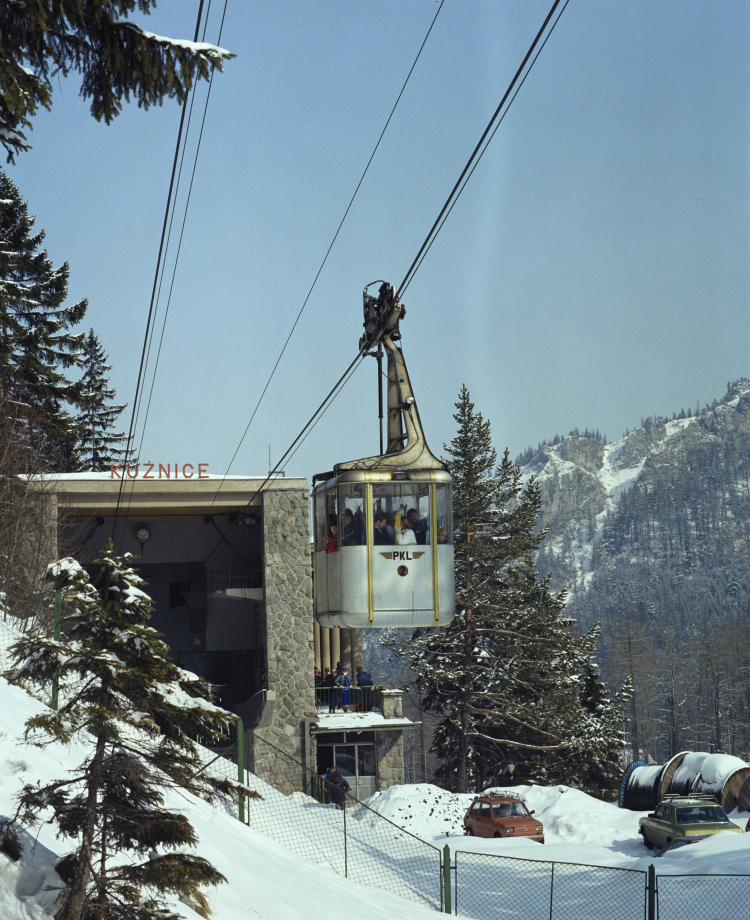
Historia jednej fotografii z Bazy Zdjęć PAP: 90 lat temu pierwsi turyści wjechali na Kasprowy Wierch

Stacja kolejki linowej na Kasprowy Wierch w Kuźnicach. Fot. PAP/Stanislaw Momot


Historia jednej fotografii z Bazy Zdjęć PAP: 90 lat temu pierwsi turyści wjechali na Kasprowy Wierch

Tomasz Szczerbicki (PAP)


15 marca 1936 r. pierwsi turyści wjechali kolejką linową na Kasprowy Wierch. Wcześniej projekt ten był krytykowany przez prasę i organizacje społeczne, pisano, że jest „niezgodny z racjonalną turystyką górską”. Kolejka okazała się jednak prawdziwą żyłą złota dla branży turystycznej Podhala.

Kolejka linowa na Kasprowy Wierch została wybudowana w rekordowym czasie siedmiu miesięcy – 24 lipca 1935 r. powołano spółkę Towarzystwo Budowy i Eksploatacji Kolei Linowej Zakopane (Kuźnice) – Kasprowy Wierch, a tydzień później rozpoczęto pierwsze prace terenowe, czyli wytyczenie drogi umożliwiającej dowóz materiałów na miejsce budowy. W czasie robót trwających całą zimę materiały budowlane dostarczano ciężarówkami na Myślenickie Turnie, następnie wozami konnymi w okolice schroniska na Hali Gąsienicowej, a dalej wnosili je na plecach tragarze oraz kilka koni huculskich. 15 marca 1936 r. pierwszy wagonik kolejki linowej wjechał z Kuźnic na Kasprowy Wierch.

>Była to pierwsza tego typu inwestycja w Polsce. Składała się z dwóch niezależnych od siebie odcinków: z Kuźnic na Myślenickie Turnie i z Myślenickich Turni na Kasprowy Wierch. Na każdym odcinku na jednej linie zawieszone były dwa wagony – jeden poruszał się do góry, a drugi na dół.

Głównym pomysłodawcą i inicjatorem budowy był inż. Aleksander Bobkowski, ówczesny prezes Polskiego Związku Narciarskiego, wiceminister komunikacji, który w 1926 r. na kongresie w Lahti został wybrany do rady Międzynarodowej Federacji Narciarskiej (FIS). To właśnie dzięki jego zaangażowaniu Zakopane dwukrotnie otrzymało organizację narciarskich mistrzostw świata – w 1929 i 1939 r. Budowa kolei linowej na Kasprowy Wierch była inicjatywą związaną z planowanymi Mistrzostwami Świata FIS w narciarstwie alpejskim oraz równolegle w narciarstwie klasycznym w 1939 r. w Zakopanem.

Na prezentowanej fotografii, wykonanej w marcu 1985 r. przez Stanisława Momota, widać wagonik kolejki linowej przy stacji w Kuźnicach. Subskrybenci serwisu PAP mogą pobrać tę fotografię bezpłatnie do zilustrowania tego tekstu.

Jedną z trudności, z jakimi musieli się mierzyć budowniczy kolejki, były zimowe warunki, inną – nastawienie społeczne. Niemalże cała polska prasa – niezależna i rządowa – krytykowały tę inwestycję. Aby przekonać opinię publiczną do celowości ej budowy i jej perspektywicznych korzyści, w październiku 1935 r. zorganizowano wycieczkę dla dziennikarzy na teren budowy kolejki. Efekt był przeciwny do zamierzonego, krytyka w prasie się wzmogła.

„Wbrew opinii sfer turystycznych i naukowych, wbrew stanowisku Państwowej Rady Ochrony Przyrody i uchwałom wielu protestujących organizacji oraz Polskiego Towarzystwa Tatrzańskiego, wbrew wzburzeniu szerokich sfer społeczeństwa, a szczególnie kół młodzieżowych i harcerskich, Towarzystwo Kolejki Linowej na Kasprowy Wierch w Tatrach prowadzi dalej budowę” – napisano w miesięczniku „Ziemia” w lutym 1936 r.

„Budowę kolejki we wnętrzu Tatr uważamy za niezgodną z racjonalną turystyką górską ze względu na sprzeczność kolejki z ideowymi i wychowawczymi wartościami tej turystyki. Dla turystów górskich najistotniejszym momentem uprawiania turystyki jest wycieczka, przeżycie górskie wśród pierwotnej i nieskażonej przyrody” – takie oficjalne stanowisko na początku 1936 r. opublikowało w prasie Polskie Towarzystwo Tatrzańskie.

Inwestorzy jeszcze zwiększyli tempo budowy. Prace prowadzone były na dwie i okresowo trzy zmiany przez tysiąc pracowników.

Głównym udziałowcem spółki Towarzystwo Budowy i Eksploatacji Kolei Linowej Zakopane (Kuźnice) – Kasprowy Wierch było Ministerstwo Komunikacji, miało 51 proc. akcji. Mniejszościowymi udziałowcami byli m.in. Polskie Koleje Państwowe, Biuro Podróży „Orbis”, Liga Popierania Turystyki oraz kilka organizacji lokalnych. Budowa kolejki kosztowała astronomiczną wówczas sumę około 2 mln złotych, ale – jak latem 1939 r. pisała prasa – inwestycja zwróciła się już po trzech latach działalności.

Kolejka szybko stała się żyłą złota nie tylko dla jej właścicieli, rozwinęła również ruch turystyczny w Tatrach. Dopływ funduszy do tego regionu zamienił dotychczasową krytykę w słowa pochwały. Nawet najwięksi wrogowie kolejki stali się jej sprzymierzeńcami. Kolej była też kluczowa dla pracy ratowników górskich oraz dla funkcjonowania najwyżej położonej stacji meteorologicznej w kraju.

W lipcu 1937 r. wprowadzono urzędowe ceny przejazdów kolejką na Kasprowy Wierch. Bilet z Kuźnic na Myślenickie Turnie (stacja pośrednia) kosztował 4 zł. Za przejazd całą trasą z Kuźnic na Kasprowy Wierch trzeba było zapłacić 6 zł. Bilet powrotny kosztował połowę ceny wjazdu. Dla porównania wykwalifikowany robotnik w fabryce zarabiał wówczas 120-150 zł miesięcznie. Podobne wynagrodzenia otrzymywali urzędnicy niskiego szczebla i nauczyciele.

Do wybuchu II wojny światowej popularność kolejki na Kasprowy Wierch rosła z każdym miesiącem. W lutym 1947 r. „Biuletyn Turystyczny” informował, że w 1938 r. wjechało nią na Kasprowy Wierch 92 tys. pasażerów, a w 1946 r. – 142 tys. Po wojnie zapomniano już zupełnie o krytyce inwestycji, a w grudniu 1950 r. napisano w „Przeglądzie Sportowym”: „Codziennie do stacji kolejki linowej na Kasprowy Wierch w Kuźnicach zmierzają niekończące się pielgrzymki wczasowiczów, w nadziei emocjonującej przejażdżki do słynnego w całej Europie ośrodka narciarstwa wysokogórskiego.

Dziś Grupa Polskie Koleje Linowe, zarządca kolejki linowej na Kasprowy Wierch, działa również w innych górskich lokalizacjach w Polsce: Górze Parkowej i Jaworzynie Krynickiej w Krynicy-Zdroju, Palenicy w Szczawnicy, Mosornym Groniu w Zawoi, Górze Żar w Międzybrodziu Żywieckim oraz w bieszczadzkiej Solinie.
– Wypracowany dorobek oraz społeczne znaczenie Grupy PKL sprawiają, że jej funkcjonowanie stanowi istotny element tożsamości gospodarczej i turystycznej Podhala oraz innych regionów górskich. Jesteśmy jednym z największych pracodawców w regionie i pozostajemy otwarci na realizację inwestycji oraz inicjatyw wspólnie z lokalnymi samorządami – powiedział Daniel Pitrus, prezes zarządu Grupy PKL, z okazji 90-lecia kolejki na Kasprowy Wierch.
Z okazji jubileuszu kolejki Grupa PKL organizuje na Kasprowym Wierchu pokaz zabytkowego sprzętu narciarskiego z lat 30., a w znajdującej się tam restauracji zostanie zaserwowany jubileuszowy tort dla turystów.
Archiwum fotograficzne Polskiej Agencji Prasowej liczy kilkadziesiąt milionów zdjęć i wciąż wzbogaca się o nowe kolekcje. Jego zasoby sięgają lat 20. XX wieku i stanowią ważną część dziedzictwa narodowego. Zatrzymane w kadrach obrazy rejestrują każdy aspekt życia społecznego, politycznego, gospodarczego, kulturalnego i religijnego na przestrzeni ostatnich 100 lat.
Profesjonalna digitalizacja zasobów fotograficznych PAP umożliwia szeroki do nich dostęp przez stronę PAP (https://fotobaza.pap.pl/). Nad prawidłową identyfikacją oraz szczegółowym opisem zdjęć pracuje zespół specjalistów, przeglądając materiały źródłowe w czytelniach i archiwach. Klienci są na bieżąco informowani o nowych zdjęciach w Bazie Fotograficznej PAP.


Zainteresowała cię ta historia? Zapisz się na newsletter PAP Fotobox (https://rejestracja.pap.com.pl/fotobox) i co miesiąc odkrywaj m.in. archiwalne kadry dotyczące postaci, miejsc i wydarzeń.

Zawartość publikowanych artykułów i materiałów nie reprezentuje poglądów ani opinii Reunion’68,
ani też webmastera Blogu Reunion’68, chyba ze jest to wyraźnie zaznaczone.
Twoje uwagi, linki, własne artykuły lub wiadomości prześlij na adres:
webmaster@reunion68.com


What Is the BBC Telling Children About Iran’s Nuclear Program?


What Is the BBC Telling Children About Iran’s Nuclear Program?

Hadar Sela


A satellite image shows un‑buried tunnel entrances at Isfahan nuclear complex, in Isfahan, Iran, Nov. 11, 2024. Photo: Vantor/Handout via REUTERS

On February 28, the BBC published an uncredited report headlined “US and Israel launch attacks on Iran” on its CBBC (Children’s BBC) website’s Newsround page.

Newsround is described as “the home of trusted news for kids and young people,” and is aimed at children between the ages of six and 12.

That report opens as follows: [emphasis added]

The US and Israel have launched attacks on Iran, which is a country in the Middle East.

US President Donald Trump said in a video that the American military has begun “major combat operations” in Iran.

In a statement, Israel’s Prime Minister Benjamin Netanyahu said that his country was working with the US to remove what he called a threat to both countries.

It comes after US talks with Iran to try and stop them from developing a nuclear weapon, something that Iran denies it is doing.

In a later section sub-headed “What are nuclear weapons,” the BBC’s young audiences are told that:

Iran has been long suspected of trying to build a nuclear bomb, which it has always denied.

It says its nuclear research is for peaceful purposes, like making electricity. For many years a United Nations body (called the IAEA) has said that Iran has not been following rules on sharing information about its nuclear programme.

While this is by no means the first time that the BBC has amplified Iran’s denials concerning its nuclear program, it is particularly disappointing to see the younger generation being fed that disinformation, especially given that the BBC has itself reported in the past that:

Nuclear power stations typically need about 3-5% of this enriched uranium to generate a controlled nuclear reaction that releases energy.

But when the aim is to make a nuclear weapon, a much higher proportion of uranium-235 is needed – about 90%.

The BBC knows full well that Iran’s levels of enrichment of uranium-235 have reached at least 60% — a level which has no civilian use and is far higher than needed to “make electricity.”

It also knows that Iran has actively (and in violation of international agreement) prevented the IAEA from inspecting its nuclear facilities, including the storage site for some of its highly enriched uranium.

The BBC is no doubt familiar with the long history of the Iranian regime’s nuclear aspirations, as well as its more recent developments.

The BBC also ought to be able to inform its younger audiences about that regime’s history of using proxies and ballistic missiles to attack Israel — and of its repeated threats to destroy the country. However, this “trusted news” article airbrushes all such important context and instead tells readers that:

Israel and Iran have been enemies for many years, but in recent times the tension between the countries has resulted in military attacks on each other.

If, for reasons best known to itself, the BBC thinks that it is ticking the impartiality box by uncritically amplifying the Iranian regime’s redundant denials concerning its nuclear program, it should at least also provide the background information that would enable its audiences — whether adults or children — to put those denials into their appropriate context.

The failure to do so means that Britain’s national broadcaster simply continues to promote the disinformation put out by a repressive, theocratic regime.


Hadar Sela is the co-editor of CAMERA UK – an affiliate of the Committee for Accuracy in Middle East Reporting and Analysis (CAMERA), where a version of this article first appeared. 


Zawartość publikowanych artykułów i materiałów nie reprezentuje poglądów ani opinii Reunion’68,
ani też webmastera Blogu Reunion’68, chyba ze jest to wyraźnie zaznaczone.
Twoje uwagi, linki, własne artykuły lub wiadomości prześlij na adres:
webmaster@reunion68.com


Trump Rejects Efforts to Launch Iran Ceasefire Talks, Sources Say


Trump Rejects Efforts to Launch Iran Ceasefire Talks, Sources Say

Reuters and Algemeiner Staff


US President Donald Trump speaks on the day he honors reigning Major League Soccer (MLS) champion Inter Miami CF players and team officials with an event in the East Room of the White House in Washington, DC, US, March 5, 2026. Photo: REUTERS/Jonathan Ernst

President Donald Trump’s administration has rebuffed efforts by Middle Eastern allies to start diplomatic negotiations aimed at ending the Iran war that started two weeks ago with a massive US-Israeli air assault, according to three sources familiar with the efforts.

Iran, for its part, has rejected the possibility of any ceasefire until US and Israeli strikes end, two senior Iranian sources told Reuters, adding that several countries had been trying to mediate an end to the conflict.

The lack of interest from Washington and Tehran suggests both sides are digging in for an extended conflict, even as the widening war inflicts civilian casualties and Iran’s closure of the Strait of Hormuz sends oil prices soaring.

US strikes on Iran’s Kharg Island, the country’s main oil export hub, on Friday night underscored Trump’s determination to press ahead with his military assault. Iran’s new Supreme Leader Mojtaba Khamenei has vowed to keep the Strait of Hormuz shut and threatened to step up attacks on neighboring countries.

The war has killed more than 2,000 people, mostly in Iran, and created the biggest-ever oil supply disruption as maritime traffic has halted in the Strait of Hormuz, through which a fifth of the world’s oil is transported.

ATTEMPTS TO OPEN LINES OF COMMUNICATION

Oman, which mediated talks before the war, has tried multiple times to open a line of communication, but the White House has made clear it is not interested, according to two sources, who like others in this story were granted anonymity in order to speak freely about diplomatic matters.

A senior White House official confirmed Trump has rebuffed those efforts to start talks and is focused on pressing ahead with the war to further weaken Tehran’s military capabilities.

“He’s not interested in that right now, and we’re going to continue with the mission unabated. Maybe there’s a day, but not right now,” the official said.

During the first week of the war, Trump wrote on his Truth Social platform that Iran’s leadership and military were so battered by US-Israeli strikes that they wanted to talk, but that it was “Too Late!” He has a history of shifting foreign policy stances without warning, making it hard to rule out that he might test the waters for restarting diplomacy.

“President Trump said new potential leadership in Iran has indicated they want to talk and eventually will talk. For now, Operation Epic Fury continues unabated,” a second senior White House official said when asked to comment on this story.

The Iranian sources said Tehran has rejected efforts by several countries to negotiate a ceasefire until the US and Israel end their airstrikes and meet Iran’s demands, which include a permanent end to US and Israeli attacks and compensation as part of a ceasefire.

Egypt, which was involved in mediation before the war, has also tried to reopen communications, according to three security and diplomatic sources. While the efforts do not appear to have made progress, they have secured some military restraint from neighboring countries hit by Iran, according to one of the sources.

Egypt’s foreign ministry, the government of Oman and the Iranian government did not respond to requests for comment.

POSITIONS HARDEN ON ALL SIDES

The war’s impact on global oil markets has significantly increased the cost for the United States.

Some US officials and advisers to Trump urge a quick end to the war, warning that surging gasoline prices could exact a high political price from the president’s Republican Party, with US midterm elections looming.

Others are pressing Trump to maintain the offensive against the Islamic Republic to destroy its missile program and prevent it from obtaining a nuclear weapon, according to Reuters reporting.

Trump’s rejection of diplomatic efforts could indicate that, for now, the administration has no plans for a quick end to the war.

Indeed, both the United States and Iran appear even less willing to engage than during the opening days of the war, when senior US officials reached out to Oman to discuss de-escalating, according to several sources.

One source said Iran’s top security official, Ali Larijani, and Foreign Minister Abbas Araghchi had also sought to use Oman as a conduit for ceasefire discussions that would have involved U.S. Vice President JD Vance.

But those discussions have not materialized.

Instead, Iran’s position has hardened, said a third senior Iranian source.

“Whatever was communicated previously through the diplomatic channels is irrelevant now,” said the source.

“The Guards strongly believe that if they lose control over the Strait of Hormuz, Iran will lose the war,” the source added, referring to the Islamic Revolutionary Guard Corps, an elite paramilitary force that controls large parts of the economy.

“Therefore, the Guards will not accept any ceasefire, ceasefire talks, or diplomatic efforts, and Iran’s political leaders will not engage in such talks despite attempts by several countries.”


Zawartość publikowanych artykułów i materiałów nie reprezentuje poglądów ani opinii Reunion’68,
ani też webmastera Blogu Reunion’68, chyba ze jest to wyraźnie zaznaczone.
Twoje uwagi, linki, własne artykuły lub wiadomości prześlij na adres:
webmaster@reunion68.com