Archives

Israel, US strike Iran


Israel, US strike Iran

Charles Bybelezer, Adam Haskel


Defense Minister Israel Katz warned that a missile and drone attack targeting Israeli civilians was expected “in the immediate future.”
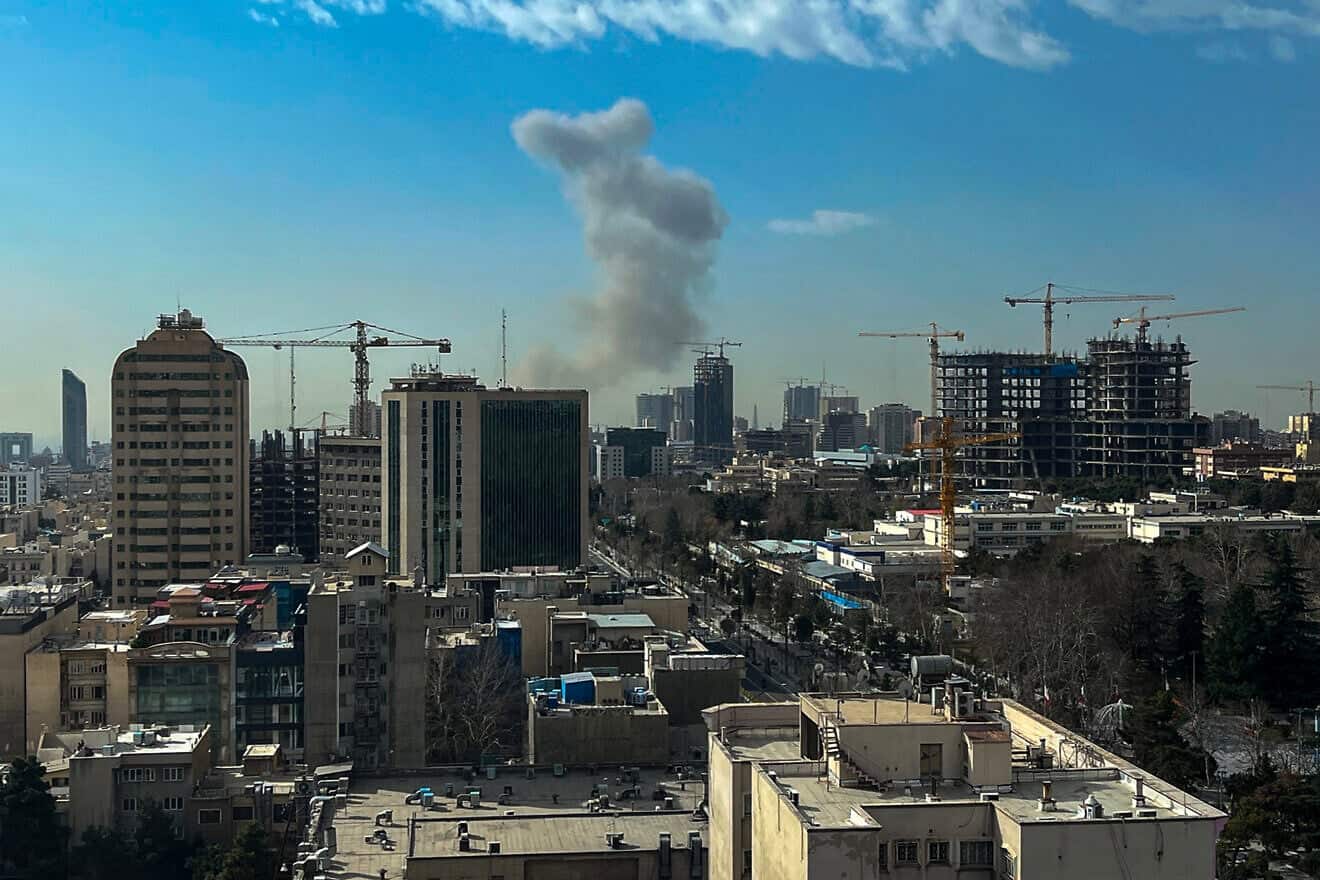
A plume of smoke rises following an explosion in Tehran on Feb. 28, 2026. Photo by AFP via Getty Images.

The Israel Defense Forces launched a preemptive strike against Iran on Saturday morning to neutralize threats against the Jewish state, Defense Minister Israel Katz announced.

He signed an order declaring a special state of emergency across the entire country.

The Israeli military later confirmed that Iran fired ballistic missiles, and that defense systems were operating to intercept the enemy projectiles.

President Donald Trump said in a video posted to Truth Social that the United States military began “major combat operations” in Iran.

“Our objective is to defend the American people by eliminating imminent threats from the Iranian regime, a vicious group of very hard, terrible people. Its menacing activities directly endanger the United States, our troops, our bases overseas and our allies throughout the world,” he said.

“For 47 years, the Iranian regime has chanted ‘Death to America’ and waged an unending campaign of bloodshed and mass murder targeting the United States, our troops, and the innocent people in many, many countries,” Trump continued.

The U.S. president noted that Iran is the “world’s number one state sponsor of terror, and just recently killed tens of thousands of its own citizens on the streets as they protested.

“It has always been the policy of the United States, in particular my administration, that this terrorist regime can never have a nuclear weapon. I’ll say it again: they can never have a nuclear weapon.”

Trump, on the 10th day of his deadline for Iran, added, “For decades, and decades, they rejected every opportunity to renounce their nuclear ambitions, and we can’t take it anymore.”


.

Israeli Prime Minister Benjamin Netanyahu on Saturday said the operation was launched to remove “the existential threat posed by the terrorist regime in Iran,” while thanking our “great friend, President Donald Trump, for his historic leadership.”

Netanyahu stressed that for decades, the ayatollah “has spilled our blood, murdered many Americans, and massacred its own people. This murderous terrorist regime must not arm itself with nuclear weapons that would allow it to threaten all of humanity,” he said.

“Our joint action will create the conditions for the courageous Iranian people to take their destiny into their own hands. The time has come for all segments of the Iranian people—the Persians, the Kurds, the Azeris, the Baluchis and the Ahwazis—to throw off the yoke of tyranny and bring about a free and peace-loving Iran,” continued Netanyahu.

The prime minister emphasized that in the coming days the Israeli home front will be required to demonstrate “endurance and fortitude.”

“Together we will stand, together we will fight, and together we will ensure the eternity of Israel,” he said.

According to Iranian media, explosions were heard in Tehran and other cities, targeting the Ministry of Intelligence, the Ministry of Defense, the office of Supreme Leader Ali Khamenei, and the Atomic Energy Organization of Iran.

The Parchin military complex, located 19 miles southeast of Tehran, was also reportedly attacked. There were also reports in Iran of cyberattacks.

The IDF operation was codenamed “Lion’s Roar.” June’s 12-day operation against the Islamic Republic was named “Rising Lion.”

Following a situational assessment, the IDF announced immediate changes to Home Front Command guidelines, moving all areas of the country from Full Activity to Essential Activity.

Under the guidelines, educational activities, gatherings, and workplaces are prohibited, except in essential sectors.

The warning came as sirens blared throughout Israel and alerts were sent to cell phones.


Zawartość publikowanych artykułów i materiałów nie reprezentuje poglądów ani opinii Reunion’68,
ani też webmastera Blogu Reunion’68, chyba ze jest to wyraźnie zaznaczone.
Twoje uwagi, linki, własne artykuły lub wiadomości prześlij na adres:
webmaster@reunion68.com



Israel Shores Up Air Defenses, Expected to Hit Iran Launchers Early to Ease Stockpile Strain


Israel Shores Up Air Defenses, Expected to Hit Iran Launchers Early to Ease Stockpile Strain

Debbie Weiss


An Israeli air defense system intercepts a ballistic missile barrage launched from Iran to central Israel during the missile attack, June 20, 2026. Photo: Eli Basri / SOPA Images via Reuters Connect

Israel is slated to spend billions shoring up its air defenses against another Iranian missile campaign, and with dwindling interceptor stockpiles a subject of speculation and growing concern, missile-defense experts say the next round of escalation would likely place more weight on offensive action.

With the prospect of another confrontation on the horizon as negotiations between the US and Iran look increasingly unstable, the debate over the volume and price of interceptors in a major exchange has resurfaced. During the 12-day war in June, Israeli media reported that in some cases the Air Force did not intercept Iranian missiles because of limitations in interceptor availability — allegations the defense establishment has denied.

Missile-defense analyst Tal Inbar said while Israel keeps its remaining interceptor inventory and replenishment pace a secret, domestic production levels have ramped up significantly since June.

Still, he said Israel drew lessons from the war and has adopted “adaptive tactics,” including putting more emphasis on early strikes designed to cut the number of missiles that need to be intercepted.

“There is an ongoing operation, if a war starts, to find and hit the launchers in Iran,” he told The Algemeiner. “Every missile that we can destroy over Iran is one less missile that we have to intercept, so we won’t deplete our interceptor arsenal.”

Israel’s air defenses range from Iron Dome, built for short-range rockets such as those fired from Gaza and Lebanon, to David’s Sling for medium-range threats and the Arrow systems for long-range ballistic missiles such as those launched from Iran, a distance of nearly 1,000 miles. Iron Dome interceptors are generally estimated to cost in the tens of thousands of dollars, while Arrow interceptors can run into the millions per unit, meaning a sustained Iranian barrage could translate into billions of dollars in defensive fire.

US defenses face their own resupply strain after multiyear demand tied in part to Ukraine. Aegis-equipped US ships have also been intercepting missiles and drones over the Red Sea, adding to demand for US interceptors. For example, during the 12-day war, THAAD batteries in the region fired more than 150 interceptors in under two weeks, about a quarter of the system’s lifetime production. The Pentagon has since moved to expand interceptor output across multiple systems as well as THAAD, including Patriot and SM-3.

According to a Wall Street Journal report published over the course of the war, both the US and Israel’s anti-ballistic Arrow system were running low on interceptors.

Israel Aerospace Industries (IAI) said it had increased production. Arrow-4, which is set to replace Arrow-2 for within-atmosphere interceptions, is also in the latter stages of development and is scheduled for deployment in the coming months, IAI CEO Boaz Levy said last week, “increasing Israel’s interception success rates.” Arrow-3 is “exo-atmospheric,” designed to engage ballistic missiles outside the atmosphere.

Advisers to US President Donald Trump have privately pushed for Israel to strike Iran ahead of any US action, Politico reported on Thursday, citing two people familiar with the discussions, with one saying “the politics are a lot better if the Israelis go first.”

US Vice President JD Vance said Thursday there was “no chance” a strike against Iran would turn into a protracted war, the Washington Post reported.

USS Gerald R. Ford, the world’s largest aircraft carrier, arrived at Israel’s coast on Friday.

Israel has also been preparing for the likelihood that Hezbollah, the Iran-backed terrorist group in Lebanon, would join any confrontation. Over the past week the Israeli military has intensified strikes on Hezbollah-linked operatives and infrastructure, including launch sites and weapons stockpiles, as part of an effort to weaken the Iranian proxy group’s ability to join the Islamic Republic in a war. Twelve senior operatives were killed this month alone, Israel’s Channel 12 reported.

According to Inbar, who is a senior research fellow at the Missile Defense Advocacy Alliance, the cost to Iran as the attacker is far lower per unit, creating an economic asymmetry that becomes more consequential the longer a barrage lasts. “Almost every time, an interceptor costs more than the missile that you want to intercept,” he said. “Defense is much more expensive than offense.”

Still, he cautioned that the comparison ignores the damage prevented by interceptors. “You cannot compare the price of the Arrow 3 to you losing a hospital or a power plant.”

The latest round of US-Iran diplomacy produced conflicting assessments, with mediator Oman saying there was “significant progress” during Thursday’s talks in Geneva while the Journal reported that the sides were “still far apart on key issues.”

In comments published Friday, Iranian Foreign Minister Abbas said any deal would require Washington to drop “excessive demands.”

Meanwhile, Hebrew-language media cited unnamed senior officials as saying that a US strike was once again starting to look more probable in the coming days. US Central Command chief Navy Adm. Brad Cooper briefed Trump on Thursday on potential military options against Iran, according to ABC news.

The US on Friday authorized “non-emergency” staffers at its embassy in Jerusalem to leave the country citing “safety risks.”

Also on Friday, Canada urged its citizens to “leave Iran now,” warning that hostilities could start with “no warning.”


Zawartość publikowanych artykułów i materiałów nie reprezentuje poglądów ani opinii Reunion’68,
ani też webmastera Blogu Reunion’68, chyba ze jest to wyraźnie zaznaczone.
Twoje uwagi, linki, własne artykuły lub wiadomości prześlij na adres:
webmaster@reunion68.com


Dwa potępienia, jeden moralny upadek


Dwa potępienia, jeden moralny upadek

First One Through


Według jakiegokolwiek zwykłego standardu moralnego zamordowanie wiernych w domu modlitwy powinno wywołać oczywistą reakcję: należy nazwać zbrodnię zbrodnią, domagać się sprawiedliwości, stanąć po stronie ludzi i rządu będących celem ataku. Bez zastrzeżeń. Bez równoważenia. Bez politycznych klauzul.

Organizacja Narodów Zjednoczonych tak właśnie postępuje — chyba że ofiarami są izraelscy Żydzi.

Wystarczy przeczytać dwa oświadczenia wydane przez António Guterresa po dwóch atakach na miejsca kultu: jednym na meczet w Pakistanie, drugim na synagogę w Jerozolimie. Kontrast ujawnia całkowity moralny upadek w sercu tej światowej instytucji.

Ma to tym większe znaczenie, że oświadczenie dotyczące Jerozolimy wydano jeszcze przed odpowiedzią Izraela na 7 października 2023 r. Przed wojną z Hamasem. Przed kontrofensywami. Przed choćby jednym izraelskim działaniem militarnym, które ONZ miała później przywoływać jako uzasadnienie swojej postawy.

Powściągliwości nie wzywano z powodu działań Izraela. Wzywano do niej unikając wezwania do sprawiedliwości.

Obraz zawierający tekst, zrzut ekranu, Czcionka, numer

Zawartość wygenerowana przez AI może być niepoprawna.

Oświadczenie Sekretarza Generalnego ONZ António Guterresa z lutego 2026 r. w sprawie zamachu bombowego na meczet w Pakistanie

W przypadku Pakistanu Sekretarz Generalny „z całą stanowczością potępia” atak na wiernych. Domaga się, aby sprawcy zostali „zidentyfikowani i postawieni przed wymiarem sprawiedliwości”. Zapewnia o „solidarności Organizacji Narodów Zjednoczonych z rządem i narodem Pakistanu” oraz jednoznacznie umieszcza tę zbrodnię w kontekście globalnej walki z terroryzmem i brutalnym ekstremizmem.

Tak wygląda moralna jasność.

Tymczasem w Jerozolimie, gdy w 2023 roku — w Międzynarodowy Dzień Pamięci o Ofiarach Holokaustu — zamordowano Żydów przed synagogą, usłyszeliśmy szept. Sekretarz Generalny „potępia” atak. Składa kondolencje. Zauważa, że atakowanie miejsca kultu jest odrażające. A następnie zmienia ton — nie w kierunku sprawiedliwości, nie w kierunku odpowiedzialności, nie w kierunku solidarności z państwem zobowiązanym do ochrony swoich obywateli.

Przechodzi do powściągliwości.

Obraz zawierający tekst, zrzut ekranu, Czcionka, numer

Zawartość wygenerowana przez AI może być niepoprawna.

Oświadczenie Sekretarza Generalnego ONZ António Guterresa ze stycznia 2023 r. w sprawie zabójstwa Żydów przed synagogą w Jerozolimie

Synagoga staje się geograficznym szczegółem. Morderstwa zostają włączone w „obecną eskalację w Izraelu i na okupowanym terytorium palestyńskim”. Nie ma żądania ścigania zabójców. Nie ma solidarności z rządem Izraela. Nie ma uznania, że odstraszanie wymaga konsekwencji.

To nie jest dyplomatyczna ostrożność. To moralna abdykacja.

Nie zaczęło się to wraz z Guterresem

Gdyby był to jedynie idiosynkratyczny rys jednego Sekretarza Generalnego zbliżającego się do końca swojej dziesięcioletniej kadencji, można by to zbyć jako kwestię tonu lub temperamentu. Tak jednak nie jest.

W 2014 roku, po tym jak arabscy terroryści wtargnęli do synagogi w Jerozolimie, uzbrojeni w tasaki do mięsa, i zarąbali żydowskich wiernych, Ban Ki-moon wydał oświadczenie o dokładnie tej samej strukturze.

Obraz zawierający tekst, zrzut ekranu, Czcionka, dokument

Zawartość wygenerowana przez AI może być niepoprawna.

Oświadczenie Sekretarza Generalnego ONZ Ban Ki-moona ze stycznia 2014 r. w sprawie zamordowania Żydów w synagodze w Jerozolimie

„Zdecydowanie potępia” atak. Składa kondolencje. A następnie — natychmiast — przechodzi „ponad dzisiejszym nagannym incydentem”, by mówić o „starciach między palestyńską młodzieżą a izraelskimi siłami bezpieczeństwa”. Masakra zostaje zatopiona w „sytuacji”. Zabójcy znikają w kontekście.

Nie ma wezwania do postawienia sprawców przed wymiarem sprawiedliwości.
Nie ma solidarności z rządem Izraela.
Nie ma potwierdzenia obowiązku Izraela do wyeliminowania zagrożenia.

Zamiast tego Ban Ki-moon wzywa przywódców „po obu stronach” do działania, apeluje do wszystkich stron o unikanie „prowokacyjnej retoryki” i przedstawia rzeź Żydów w synagodze jako destabilizujący element konfliktu — nie jako terroryzm wymagający eliminacji.

Inny Sekretarz Generalny. Ta sama choreografia.

Wyjaśnienie nie jest tajemnicą, ponieważ Organizacja Narodów Zjednoczonych nie przedstawia palestyńskiej przemocy jako ekstremizmu.

Ekstremizm, w doktrynie ONZ, to coś, co dzieje się gdzie indziej — wobec państw walczących z dżihadystami, powstańcami czy transnarodowymi siatkami terrorystycznymi. Palestyńskie morderstwo natomiast traktowane jest jako wyraz walki politycznej: osadzane w kontekście krzywd, łagodzone narracją, wchłaniane w permanentny spór. To przemoc, którą należy zarządzać, a nie pokonać.

Dlatego w Pakistanie domaga się sprawiedliwości, a w Jerozolimie — powściągliwości. Jedno mieści się w ramach pojęcia ekstremizmu według ONZ. Drugie nie.

„Powściągliwość” w tym kontekście nie jest apelem o pokój. Jest wetem wobec sprawiedliwości.

Gdy mordowani są Żydzi, ONZ dopuszcza żałobę, lecz odmawia sprawczości. Kondolencje składa się rodzinom, podczas gdy legitymizacja żydowskiej samoobrony i żydowskiej suwerenności zostaje po cichu wstrzymana. Oferuje się współczucie — lecz wyraźnie brakuje solidarności z państwem.

Globalna instytucja powołana w cieniu Holokaustu nie potrafi powiedzieć wprost, że Żydzi zamordowani w synagogach zasługują na tę samą moralną reakcję jak każda inna. Nie potrafi powiedzieć, że żydowska suwerenność jest pełnoprawna. Nie potrafi powiedzieć, że po żydowskim rozlewie krwi musi nastąpić sprawiedliwość.

A bezpaństwowi Arabowie z Palestyny — jej wieczni „uchodźcy” — muszą otrzymać rozgrzeszenie.

Izrael powinien wyciągnąć jedyny wniosek, który ma znaczenie: Organizacja Narodów Zjednoczonych nie jest moralnym kompasem ani organizacją humanitarną. Jest wyłącznie instrumentem politycznym.


Link do oryginału: https://primarybowman.com/2026/02/09/two-condemnations-one-moral-collapse/?utm_source=substack&utm_medium=email

First One Through (Israel Analysis), 9 lutego 2026


Zawartość publikowanych artykułów i materiałów nie reprezentuje poglądów ani opinii Reunion’68,
ani też webmastera Blogu Reunion’68, chyba ze jest to wyraźnie zaznaczone.
Twoje uwagi, linki, własne artykuły lub wiadomości prześlij na adres:
webmaster@reunion68.com


Netanyahu’s coalition threatens Jewish unity with law banning pluralistic Kotel prayers – opinion


Netanyahu’s coalition threatens Jewish unity with law banning pluralistic Kotel prayers – opinion

RABBI JACOB BLUMENTHAL/JTA, RABBI RICK JACOBS/JTA


Under the bill, anyone who publicly leads or engages in prayer contrary to the Rabbinate’s directive would face up to seven years in jail.

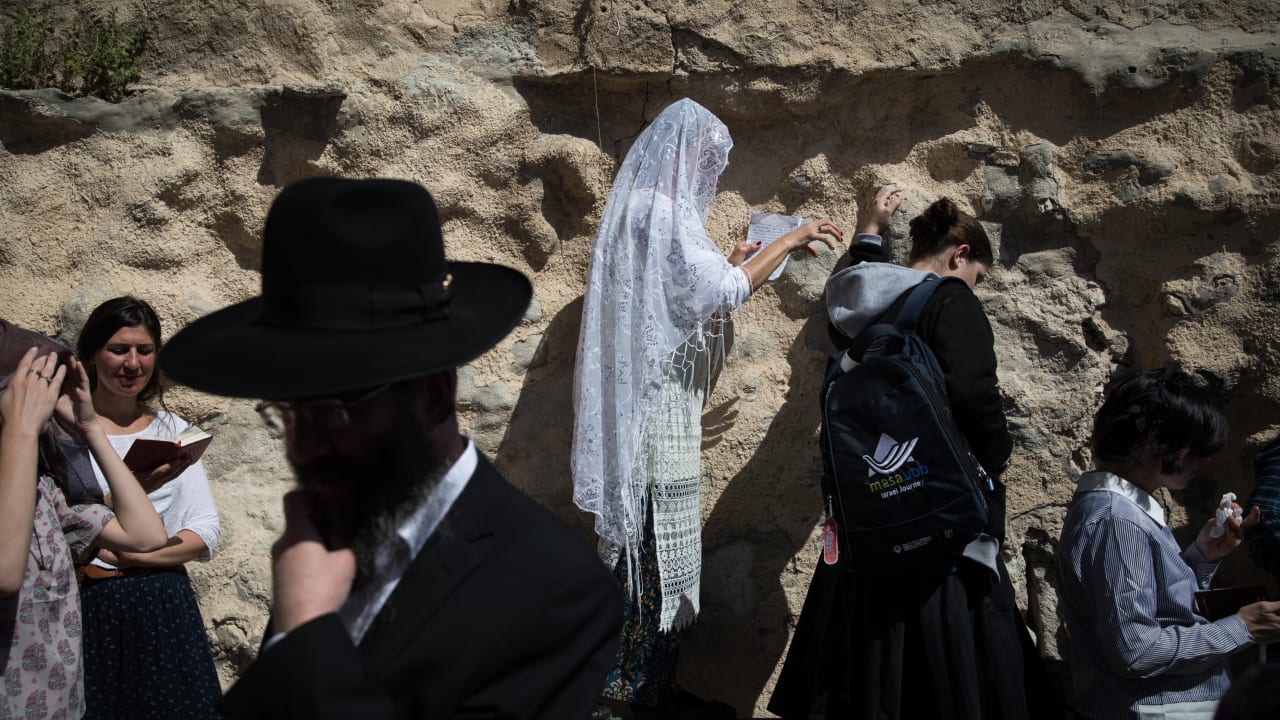
A Jewish woman covered in a white prayer shawl prays in front of the Western Wall in Jerusalem’s Old City, during the Jewish holiday of Passover, April 2, 2018 / (photo credit: HADAS PARUSH/FLASH90)

During the recent Conference of Presidents of Major Jewish Organizations’ mission to Israel, Prime Minister Benjamin Netanyahu demanded that Jews around the world stand strong and unified in support of Israel and against antisemitism. “Fight, fight, fight,” he told us, celebrating Jewish strength and unity in the face of existential challenge.
Indeed, since Oct. 7, Israel has waged a multifront war to defend itself against terrorists and their sponsors. Despite navigating a wide array of views among our own members about how Israel should execute the war, Diaspora communities have stood by Israel while facing resurgent and lethal antisemitism.

Yet now, forces in Israel’s own government are threatening a war on another front – against the Jewish people themselves. And it is the prime minister who is silent.

Members of his coalition are pushing legislation in the Knesset that would prohibit any religious services or activities at the Kotel that do not meet the approval of the Haredi (ultra-Orthodox) chief Rabbinate. Under the bill, anyone who publicly leads or engages in prayer contrary to the Rabbinate’s directive would face up to seven years in jail.

As leaders of two of the largest global Jewish movements, which together represent more than 3 million Jews, we know too well what would happen if this became law. Egalitarian, non-Orthodox approaches, such as mixed seating, would be banned. Women would have no space to read Torah or lead prayer. Birthright Israel and many others would no longer have a place to gather as a mixed group at Judaism’s holiest site.

A general view of Jerusalem’s Old City shows the Western Wall, Judaism’s holiest prayer site, in the foreground and the Dome of the Rock, located on the compound known to Muslims as Noble Sanctuary and to Jews as Temple Mount, in the background June 24, 2019 (credit: AMMAR AWAD / REUTERS)

Think of thousands of families from places such as Florida, New Jersey, Buenos Aires, Tel Aviv, and beyond who want to celebrate their daughter’s bat mitzvah in an intergenerational moment of Jewish pride at the holiest site in our holiest city – only to face seven years in prison.

And the prime minister is silent.

Latest challenge to secure religious pluralism

This legislation is just the latest challenge in our movement’s years-long efforts to secure religious pluralism at the Kotel. We know that touching the stones and feeling closer to the ancient Holy of Holies can offer deep spiritual and religious connections. That’s why the Kotel should be a strong symbol of Jewish resilience, unity, and spirit. It should reflect the diversity of our people and our approaches to prayer and Jewish life.

In 2016, a previous Netanyahu-led government approved a compromise to establish a new section of the Kotel for egalitarian prayer to recognize pluralism. In that area, located south of the more established space run according to haredi tradition, families and groups may gather without a mechitza, or separation by gender. Liberal Jews can pray and celebrate according to our traditions and practices.

Yet, after a lengthy and challenging negotiation process in which all parties made painful compromises, Netanyahu immediately set the agreement aside, and successive governments have never fully implemented the plan.

In practice, the southern egalitarian prayer section is a vibrant space, with thousands coming daily for prayer and to celebrate b’nai mitzvah and other happy occasions. However, even as the Israeli government provides millions of shekels annually for upkeep of the northern section of the Kotel, it has refused to provide equal or adequate funding for security and upkeep to the southern section. Our space lacks full access for those with physical disabilities, its flooring is rotting, and visitors have not been able to touch the actual wall since a stone fell there seven years ago.

Last week, the Israeli Supreme Court took an important step to push the government to fulfill its 2016 commitment by directing it to stop dragging its feet and finally meet its obligations. In response, MK Avi Maoz, with the support of Justice Minister Yariv Levin and others within the current governing coalition, has sponsored the bill demanding that the entire Kotel, including the area of pluralistic Jewish expression, be brought under the Chief Rabbinate’s control.

By aligning with only the 15% of Jews worldwide who are haredi, Maoz is declaring war against the vast majority of the Jewish people. Despite the dream articulated in “Hatikvah” to be “a people living freely in their Land,” there will be no freedom of religion at Israel’s holiest site. Extremism and coercion will be the law of the land.

Maoz and his allies see the vitality of non-Haredi religious expression as something to be controlled and repressed – not just at the Kotel, but throughout the State of Israel and beyond.

In contrast, we believe in religious pluralism and Jewish unity, without seeking to tell others how to “do Jewish.” We see it as a sign of strength and vibrancy and know that true Jewish unity does not require uniformity of practice or approaches to prayer.

That stance should start with the prime minister.

Our Diaspora communities have “fought, fought, fought” for Jewish strength and Israel for generations, and especially since Oct. 7. It’s time for the prime minister to “fight, fight, fight” for the unity and strength of the Jewish people, demand that members of his coalition reject this bill and respect Jewish pluralism.


The views and opinions expressed in this article are those of the author and do not necessarily reflect the views of JTA or its parent company, 70 Faces Media.


Zawartość publikowanych artykułów i materiałów nie reprezentuje poglądów ani opinii Reunion’68,
ani też webmastera Blogu Reunion’68, chyba ze jest to wyraźnie zaznaczone.
Twoje uwagi, linki, własne artykuły lub wiadomości prześlij na adres:
webmaster@reunion68.com


New Location of London Bakery Founded by Israeli Vandalized With Anti-Israel, ‘Free Gaza’ Graffiti


New Location of London Bakery Founded by Israeli Vandalized With Anti-Israel, ‘Free Gaza’ Graffiti

Shiryn Ghermezian


April 4, 2025, London, England, United Kingdom: Exterior view of a Gail’s bakery in Covent Garden. Photo: ZUMA Press Wire via Reuters Connect

A newly opened London branch of a popular bakery founded by an Israeli baker was vandalized on Wednesday night with anti-Israel graffiti as the chain was accused of funding “Israeli tech.”

Photos and videos shared on social media show that the new Gail’s Bakery location, which opened this week near the tube station in the Archway neighborhood, had splattered red paint on its walls and graffiti that read “Free Gaza,” along with another message that said “Boycott Gail’s Funds Israeli Tech.”

Police were called to the scene on Wednesday night, but the vandals had fled before officers arrived, according to a spokesperson for the Metropolitan Police.

“Our bakeries are places for the community, and no one – whether that’s our bakery teams or our customers – should feel targeted or unsafe,” a spokesperson for Gail’s told The Algemeiner following the vandalism. “We are a British business with no specific connections to any country or government outside the UK. Our focus right now is on working with the authorities and making sure our people feel safe and supported.”

An anti-Israel demonstration also took place at the same Gail’s location this week, according to multiple reports. Videos online show protesters standing outside Gail’s holding signs including a massive banner that said, “Boycott Israel for Genocide and War Crimes in Gaza.” Another sign held by a protester read “No to Gail’s” and accused the American investment firm Bain Capital, which acquired a majority stake in Gail’s parent company Bread Holdings in 2021, of having “links to Israeli war-tech.”

Bain Capital was among the more than 200 venture capital funds that signed an open letter in support of Israel following the Hamas-led massacre in southern Israel on Oct. 7, 2023. The company has investments in Israel, including in cybersecurity, artificial intelligence, and software companies. In October 2025, CTech reported that Bain Capital had invested more than $150 million into Israeli companies over the past year.

Gail’s was founded by Israeli baker Gail Mejia in the 1990s and serves freshly handmade bread, pastries, and cakes. Its first store opened in 2005 in London’s Hampstead High Street with the help of Israeli entrepreneur Ran Avidan, and today, there are hundreds of locations in and around London. Gail’s was voted the best bakery chain in Britain last year. Meija and Avidan no longer have any involvement in the company.

The European Jewish Congress condemned the “deeply concerning” anti-Israel graffiti found on Gail’s Bakery. “Targeting a local business because of perceived Jewish or Israeli associations reflects a troubling normalization of hostility that must be firmly rejected,” the EJC wrote in a post on X. “Such acts have no place in our societies and must be unequivocally condemned.”

In a statement given to The Algemeiner, the Campaign Against Antisemitism called on London’s Metropolitan Police to ensure those responsible for the vandalism are punished for their actions.

“In case anyone required further proof that this is not a peaceful movement, here it is. This is yet more blatant thuggery from pro-Palestine extremists trying to pass off intimidation and vandalism, driven by a blind hatred for the world’s only Jewish state, as progressive activism,” said a CAA spokesperson. “Smashing up a branch of Gail’s does nothing to advance peace in the Middle East; it simply spreads hate on British streets.”

Last summer, hundreds of people signed a petition criticizing the opening of a Gail’s in east London and several of them said they opposed the new location because of the bakery’s “Zionist” ties, according to The Jewish Chronicle. In a statement released to The Guardian at the time, the company reiterated that it is “a UK-based business with no specific connections to any country or government outside of the UK and does not fund Israel.”

In an interview with The Times in 2024, Gail’s co-founder and CEO Tom Molnar denied the “ludicrous” accusations that the company is owned by Israel or funds the Jewish state.

“Gail’s proudly has Jewish roots and there’s plenty of stuff out there celebrating our heritage and history, but it’s not true it’s Israel-owned,” he said. “There’s some just crazy stuff on the web thinking we are funding Israel, which is just completely ridiculous. We’re a wholly UK-based business, paying UK taxes, it’s just ludicrous and I think it needs to be called out.”


Zawartość publikowanych artykułów i materiałów nie reprezentuje poglądów ani opinii Reunion’68,
ani też webmastera Blogu Reunion’68, chyba ze jest to wyraźnie zaznaczone.
Twoje uwagi, linki, własne artykuły lub wiadomości prześlij na adres:
webmaster@reunion68.com