Archives

Epstein Files Spark Global Surge in Antisemitism on Social Media, Study Finds


Epstein Files Spark Global Surge in Antisemitism on Social Media, Study Finds

Ailin Vilches Arguello


Late financier and convicted sex offender Jeffrey Epstein is seen in this image from the US Justice Department’s file of Epstein, released by the House Oversight Committee Democrats Washington, DC, US, on Dec. 18, 2025. Photo: House Oversight Committee Democrats/Handout via REUTERS

The public release of millions of files related to the late financier and sex offender Jeffrey Epstein has ignited a storm of antisemitism online, with social media platforms becoming flooded with Nazi glorification, anti-Jewish conspiracy theories, and coordinated hate campaigns, according to a new report.

On Tuesday, the Germany-based nonprofit Democ — an association of journalists, academics, and media professionals dedicated to documenting and countering anti-democratic movements — published a new study exposing the scope, narratives, and tactics fueling unprecedented online antisemitism, while revealing the systemic failure of platform moderation to stop it.

Following the US Justice Department’s release last month of millions of documents collected in the criminal cases against Epstein and his associates, Democ reported an explosive surge in antisemitic content across multiple social media platforms, fueling a massive and coordinated wave of online hate.

According to the study, antisemitic users are exploiting Epstein’s Jewish heritage as a pretext to openly express hatred toward Jews, amplifying conspiracy theories that falsely attribute the sex abuse scandal entirely to the Jewish community. 

For example, the report found that just 55 Instagram Reels offering explicitly antisemitic takes on the Epstein scandal were viewed 114.4 million times, receiving over 6.7 million likes and more than 82,000 comments.

“On Instagram, we are seeing an unprecedented and seemingly endless stream of antisemitic videos related to the Epstein case,” Grischa Stanjek, managing director of Democ, told the German newspaper Die Welt.

With antisemitic videos traced to the US, Pakistan, Spain, and Germany, Stanjek warned that the phenomenon has become a global surge, constantly fueled by new posts and hateful comments — some even openly glorifying Adolf Hitler.

“The views on explicitly antisemitic videos and comments about Hitler now exceed the reach of major media outlets,” she said.

“The Epstein scandal could unleash a wave of antisemitism on a scale comparable to the coronavirus pandemic or the events of Oct. 7,” Stanjek continued, referring to the Hamas-led invasion of and massacre across southern Israel on Oct. 7,  2023.

Democ’s analysis reveals that the Epstein case, which has captured international media attention, is being twisted to fuel dangerous conspirative narratives rooted in long-standing myths of Jewish control and influence.

For example, one video cited in the report, with over 17.8 million views, falsely identifies Epstein as Israeli, suggesting a connection between his identity and his crimes.

The newly released report also explains that online users exploit subtle references to glorify Hitler or spread antisemitic content undetected, and some avoid directly sharing swastikas by combining them with other symbols.

“If the Austrian painter had won, we wouldn’t be in this timeline,” wrote one user, whose post received 127,772 likes.

According to Democ, referring to Hitler as “the painter” — a nod to his early artistic ambitions — is a tactic used to bypass social media platforms’ automated filters and detection systems.

Given the alarming algorithmic amplification of hate speech and systemic moderation failures, Stanjek urges social media platforms to take decisive action against antisemitic content, including its removal.

“The algorithm detects interest in antisemitic takes on the scandal and amplifies it,” Stanjek said. “It becomes increasingly common: Epstein as the devil, Hitler as a hero.”

“Meta aims to promote more freedom of expression … But fear of overregulation should not let open antisemitism and glorification of Hitler reach millions of viewers,” he continued.


Zawartość publikowanych artykułów i materiałów nie reprezentuje poglądów ani opinii Reunion’68,
ani też webmastera Blogu Reunion’68, chyba ze jest to wyraźnie zaznaczone.
Twoje uwagi, linki, własne artykuły lub wiadomości prześlij na adres:
webmaster@reunion68.com


Asymetria jest faktem


Asymetria jest faktem

Anna Grabowska (Anne Goldschmid)


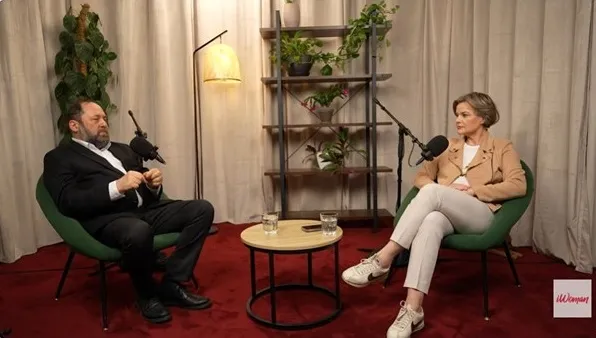
Rozmowa Moniki Richardson z Janem Hartmanem w programie „Po prostu pytam” jest dosyć ciekawa, odsłania napięcie, które dziś definiuje znaczną część publicznej debaty, to swoiste napięcie między analizą a rozstrzygnięciem. Hartman proponuje język, który ma obejmować wielość możliwości, mapować pojęcia, rekonstruować konteksty i ujawniać warunki tego dyskursu. To jego heurystyka, rozumiana jako poruszanie się po przestrzeni możliwych interpretacji, zanim zapadnie jakiekolwiek rozstrzygnięcie. W tym sensie heurystyka nie jest metodą w ścisłym znaczeniu, raczej postawą intelektualną. Postawą autorefleksji, dystansu i nieufności wobec nieprzemyślanych i szybkich odpowiedzi. Hartman przedstawia ją jako własny projekt filozoficzny, próbę wyjścia poza linearny model myślenia, czyli: pytanie – odpowiedź – wniosek. Zamiast tego proponuje mapowanie wariantów, rozpisywanie napięć, rozumienie warunków, które stoją za stanowiskami. To podejście jest dla mnie uczciwe intelektualnie i w wielu punktach nawet przekonujące. Zgadzam się z Hartmanem, że rzeczywistość rzadko daje się zamknąć w prostych formułach, że język debaty publicznej bywa nadmiernie uproszczony, a refleksja wymaga przecież świadomości własnych ograniczeń. Zgadzam się również z jego diagnozą dotyczącą przemilczania odpowiedzialności Hamasu w części zachodniej debaty, to przemilczenie istnieje i deformuje obraz wojny.

Problem zaczyna się jednak w miejscu, w którym heurystyka staje się nie tyle narzędziem rozumienia, ile mechanizmem zawieszenia rozstrzygnięcia. Poruszanie się po przestrzeni tych możliwości może prowadzić do szczególnej ostrożności, ale może też prowadzić do rozmywania odpowiedzialności. Mapuje się warianty, zamiast wskazywać sprawczość. Ale opisuje się napięcia, zamiast nazywać asymetrię. W rozmowie o wojnie to nie jest drobna różnica. Hartman mówi, że każda wojna rodzi winy po obu stronach, i w sensie ogólnym trudno przecież temu zaprzeczyć. Historia wszystkich konfliktów zbrojnych pokazuje, że naruszenia prawa wojennego zdarzają się w każdej armii. W tym punkcie moja zgoda jest oczywista. Nie istnieje i nie istniała wojna, która jest moralnie czysta. Nie oznacza to jednak symetrii odpowiedzialności za samą wojnę.

I tutaj według mnie pojawia się zasadnicze napięcie. Izrael nie wywołał tej wojny, to fakt. Jej początkiem był atak Hamasu, akt przemocy o charakterze strategicznym, a nie incydentalnym. Wojna Izraela jest odpowiedzią na tę właśnie strategię i próbą jej neutralizacji. Można tu dyskutować o metodach, można krytykować decyzje rządu, można nawet wskazywać błędy – ale nie można uznać, że odpowiedzialność za istnienie tej wojny rozkłada się równo. To właśnie moment, w którym heurystyka przestaje wystarczać.

Hartman trafnie zauważa, że przemilczanie roli Hamasu jest formą stanowiska. To jeden z najmocniejszych elementów jego wypowiedzi i punkt, w którym się z nim zgadzam. Niestety w debacie europejskiej często widoczna jest asymetria oczekiwań, od Izraela żąda się zakończenia wojny, podczas gdy od Hamasu – zniknięcia z obrazu. Ta asymetria istnieje i jest aż nadto widoczna.

Nie zgadzam się natomiast z sugestią symetryzmu moralnego, który momentami pojawia się w jego opisie wojny. Uznanie tragedii cywilów nie oznacza relatywizacji przyczyn konfliktu. Empatia nie jest żadnym argumentem politycznym, jeśli zastępuje analizę sprawczości.
Izrael może być krytykowany – i powinien być krytykowany jak każde państwo demokratyczne. Nie oznacza to jednak, że istniała realna alternatywa dla konfrontacji z Hamasem. Państwo, którego bezpieczeństwo zostało naruszone w takiej skali, nie ma wielu scenariuszy działania. Z perspektywy strategicznej wybór był ograniczony. To nie jest obrona rządu, tylko opis sytuacji.
W tej części rozmowy ujawnia się szerszy problem – granica między krytyką polityczną a uprzedzeniem. Hartman mówi o antysemityzmie jako zjawisku, które nie znika, lecz zmienia język, i to również jest diagnoza, której nie można zignorować. W wielu krajach Zachodu krytyka Izraela stała się przestrzenią, w której napięcia wobec Żydów mogą być artykułowane w formie pośredniej. To zjawisko istnieje, choć jego skala i formy pozostają sporne.

Podobnie ważny jest wątek Polski. Pytanie, czy młodzi Żydzi powinni rozważać emigrację, nie jest wyłącznie pytaniem o poziom antysemityzmu, lecz o poczucie bezpieczeństwa symbolicznego, o to, czy tożsamość wymaga od nas ciągłego uzasadniania. W tym sensie rozmowa Hartmana dotyka realnego doświadczenia, nawet jeśli dla niektórych jego wnioski są zbyt kategoryczne.
I właśnie tu pojawia się punkt, w którym zgoda i mądra polemika mogą współistnieć. Zgoda, że antysemityzm nie jest reliktem przeszłości i polemika, czy jego istnienie prowadzi automatycznie do jednego wniosku o przyszłości i wyjeździe. Nie będę tu nic wtrącać, bo kiedyś już przedstawiłam moje stanowisko na ten temat.

Wtrącę może krótko o czymś zauważalnym dla widza – słuchacza: zapowiedź wyznaczyła temat, którego rozmowa nie utrzymała, a prowadząca nie przywróciła osi, oddając strukturę programu gościowi. (W rozmowie z Hartmanem problemem była nadmierna miękkość prowadzenia; w niedawnej rozmowie z Lipszycem – jego przeciwieństwo: prowadzenie, które nie tyle moderuje myślenie, ile je dyscyplinuje, przycina i podporządkowuje wywód z góry założonej tezie).

W tym sensie głos Hartmana pozostaje głosem ważnym. Nawet tam, gdzie budzi wyraźny sprzeciw, jest próbą myślenia, a nie reprodukowaniem gotowych pozycji moralnych. Na tle rozmów takich jak ta z Lipszycem, gdzie konflikt zostaje sprowadzony do retoryki słuszności i emocjonalnej jednoznaczności, jego wypowiedź pozostaje intelektualnie poważniejsza i bliższa rzeczywistości. Tam, gdzie pojawia się pewność, Hartman wprowadza problem. I dlatego jego głos jest ważny, podobnie jak ważny był głos Agnieszki Holland w innej rozmowie, głos konsekwentnie przerywany, osłabiany i traktowany jak zakłócenie, bo nie mieścił się w z góry ustalonej tezie. Bo ostatecznie ta rozmowa nie jest o wojnie. Jest o tym, gdzie wolno jeszcze żyć bez tłumaczenia własnego istnienia.

Można jednocześnie widzieć dramat cywilnych ofiar i uznać, że Izrael nie miał alternatywy wobec wojny z Hamasem. To nie jest sprzeczność – to elementarna uczciwość opisu. Problem zaczyna się wtedy, gdy w imię moralnej równowagi zaciera się różnica między obroną a strategią przemocy. Bo kiedy ta różnica znika z języka, znika również z debaty. A kiedy znika z debaty, bardzo szybko znika z rzeczywistości.

Link do rozmowy Moniki Richardson z Janem Hartmanem


Anna Grabowska (Anne Goldschmid) – urodzona i mieszkająca we Francji wspaniała syjonistka z solidnymi polskimi i żydowskimi korzeniami. Autorka udzieliła pozwolenia na publikację niektórych wpisów z jej Facebooka w „Listach z naszego sadu”.


Zawartość publikowanych artykułów i materiałów nie reprezentuje poglądów ani opinii Reunion’68,
ani też webmastera Blogu Reunion’68, chyba ze jest to wyraźnie zaznaczone.
Twoje uwagi, linki, własne artykuły lub wiadomości prześlij na adres:
webmaster@reunion68.com


When it comes to civil discourse, there’s no choice between dogs and humans


When it comes to civil discourse, there’s no choice between dogs and humans

Jonathan S. Tobin


Those who were appalled by Rep. Randy Fine saying he preferred canines to Muslims were right, even if what he was responding to was also appalling.
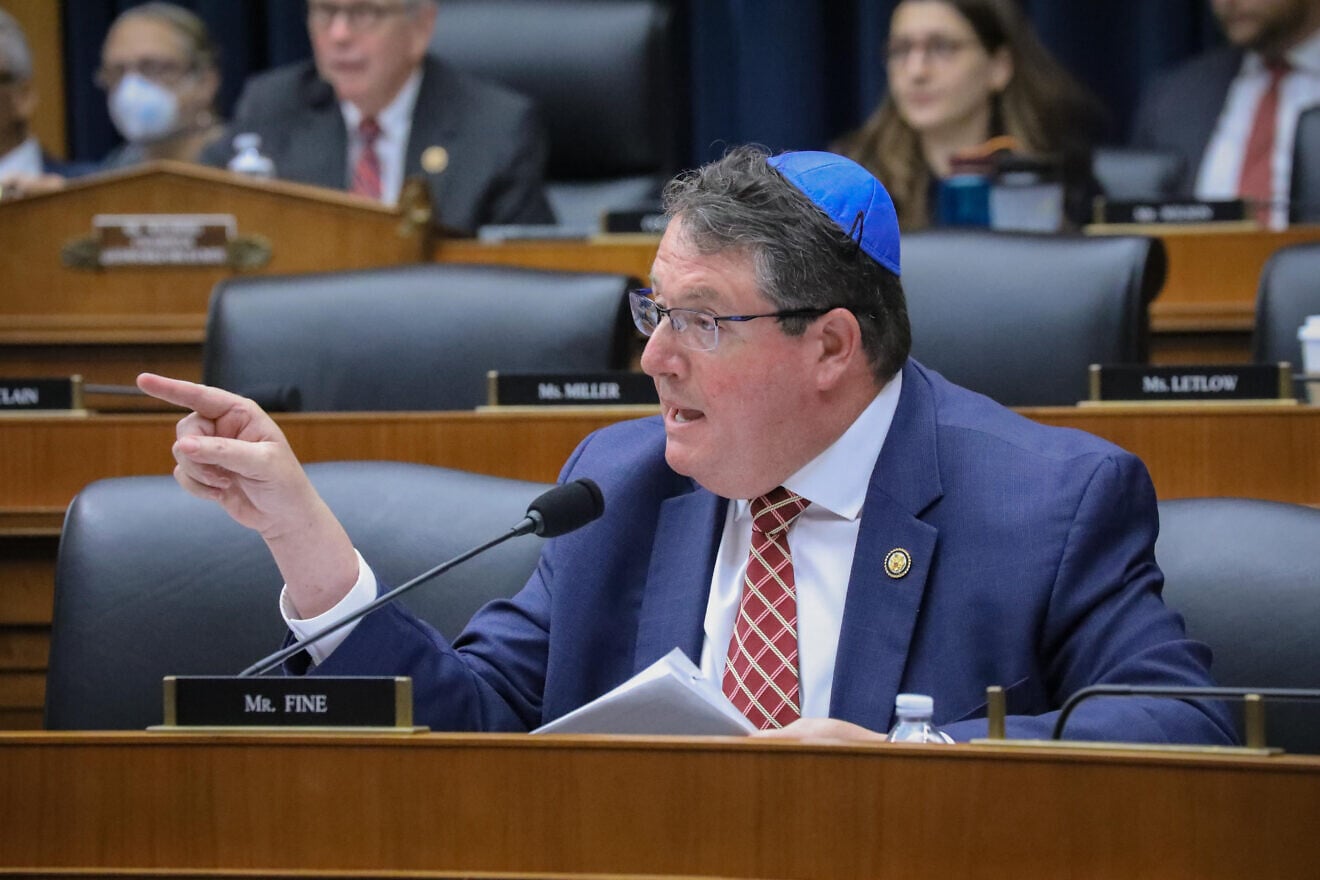
Rep. Randy Fine (R-Fla.) speaks during a House committee hearing about antisemitism on campus with leaders from Georgetown University, City University of New York and University of California, Berkeley, July 15, 2025. Credit: Courtesy of the House Committee on Education and Workforce.

In a gentler era of American politics, politicians generally didn’t say awful things and get away with it. But, as most of us may have noticed over the last decade or more, we no longer live in such a time.

And that is the context for the latest kerfuffle in which a social-media post has generated outrage and calls for punishment for the offender. The perpetrator is Rep. Randy Fine (R-Fla.), who is no stranger to controversy. He was responding to a post on X by Nerdeen Kiswani, founder of the Within Our Lifetime anti-Israel group and a prominent ally of New York City Mayor Zohran Mamdani.

An open antisemite

Kiswani first came to the public’s attention by giving a commencement speech replete with antisemitism at the graduation ceremony for the City University of New York’s Law School. Her genocidal goal is the destruction of the State of Israel, a position that has led her to share platforms with Mamdani. She frequently proclaims that the objective of eradicating Israel must be achieved “by any means necessary.”

Unlike Mamdani, who supports the dismantling of the Jewish state but claims to oppose violence, Kiswani isn’t shy about backing terrorism against Israelis and Jews, including lauding the Hamas-led terrorist attacks in southern Israel on Oct. 7, 2023. The rallies she has organized have supported the actions of terror groups like Hamas, Hezbollah and the Houthis, not to mention Iran’s missile attacks on Israel.

She also appears to be an advocate of imposing Sharia, or Muslim religious law, in America, especially with respect to the treatment of dogs. That seemed to be the point of a Feb. 12 post, which she later claimed was satire. In it, she complained about dog owners not picking up after their pets in the aftermath of a large snowfall in New York City: “Finally, NYC is coming to Islam. Dogs definitely have a place in society, just not as indoor pets. Like we’ve said all along, they are unclean.”

At that point, Fine, who is Jewish and, like a lot of prominent people, seems to spend far too much time on social media, responded: “If they force us to choose, the choice between dogs and Muslims is not a difficult one.”

And that is why virtually the entire Democratic Party congressional caucus, backed by many prominent Jews, is calling for Fine to be censured for what they believe is brazen Islamophobia.

The dogs’ champion

Fine is, predictably, unembarrassed by the brouhaha. To the contrary, he has gloried in the attention it has brought him. His X feed is now a nonstop deluge of pictures and caricatures of dogs who are protesting Muslim anti-canine sentiments and intentions. To each post criticizing him, he responds with a cartoon image of a dog over the Revolutionary War slogan of “Don’t Tread on Me.”

His barb aimed at Kiswani has seemed to make him the hero not only of some dog lovers but also of many others who are angry about the way people like Kiswani have helped normalize antisemitism in American political discourse. More than that, the vast majority of what radical groups like the Council on American-Islamic Relations (CAIR) claim is Islamophobia is, in fact, usually an effort to take note of and criticize Muslim antisemitism that has become commonplace, especially since Oct. 7.

In the eyes of his supporters, Fine is merely fighting fire with fire, and if Muslims are offended, so be it.

In part, this is just another chapter in the story of the coarsening of American political discourse. Fault for this is usually attributed to President Donald Trump. He does deserve a good deal of the blame because of many statements, especially on social media, in which he trolls his opponents in a manner that is often as humorous as it is hyperbolic. But they are also sometimes vulgar and misogynistic, or even—as with a recent post in which he depicted former President Barack Obama and his wife, Michelle, as gorillas—arguably racist.

A zero-sum game

He is far from alone in being an offender in this respect. Where the president has really broken new ground is how he is utterly indifferent to criticism or shame for what would have been widely deprecated as bad behavior. Part of this is because his supporters are delighted, rather than outraged, by his skewering of liberal foes, even when it is unfair or wrongheaded. That’s because they view his barbs as just desserts for arrogant credentialed elites who look down on their fellow citizens and have imposed their own arbitrary standards of behavior that often involve canceling anyone who disagrees with them.

He has also come to understand that he—or anyone who shares his conservative views—will be damned by his critics, no matter what they do or say. And he has concluded that apologizing, even when wrong, merely strengthens one’s opponents. Since he and others on the right believe that liberals are not held to the same standards, there’s no point in ever backing down, even when you are obviously out of line.

So, by doubling down on his supposed championing of dogs at the expense of Muslims, Fine is merely following the same pattern that Trump has established.

Many on the right, most of whom might never themselves speak or post in such an outrageous manner, think this is just fine. That’s because they see political combat, even when it is conducted in this sort of juvenile manner, as part of an existential civilizational conflict in which the stakes are incredibly high.

It’s the same sort of thinking that inspired Michael Anton, an academic who served in the George W. Bush administration, to write the famous essay, “The Flight 93 Election,” in the Claremont Review of Books in 2016 under a Latin pseudonym. In it, he argued that electing someone who might truly overturn norms like Trump was necessary if the nation was to be saved from the left. Anton, who served in both the president’s first and second administrations, was not arguing in favor of social-media posts that were either vulgar or clearly prejudiced against faith or ethnic groups, such as Fine’s anti-Muslim riposte. But the point is, once you see all political arguments or discourse as a zero-sum game, anything goes.

More than that, those who subscribe to this thesis—as the many people who posted their support for Fine’s position—believe that not giving an inch to the other side is not merely defensible but laudable.

This may make sense in an exchange of insults on X. But is it good for the country, or consistent with traditional Western ideas of ethics or Jewish values? Clearly, that is not the case.

It must be pointed out that even in a time in which political discourse has been coarsened, and politics is a zero-sum game, there are still some things decent people simply shouldn’t say. And among them are statements that express direct religious bias.

Fine’s defenders may assert, with some justice, that antisemites like Kiswani don’t have the same scruples about insulting their opponents that the congressman’s critics expect of him. While it may be a double standard, shouldn’t we expect a member of Congress to behave with more manners than the leader of a pro-genocide group whose name states its goal of destroying the Jewish state within the lifetimes of its members?

Animals or humans?

I share the sentiments of those who are disgusted by Kiswani’s prejudice against dogs and deeply offended by her suggestion, whether in jest or not, that Americans adopt Muslim taboos about living with humanity’s best friends.

But Fine’s quip about preferring dogs to Muslims is not consistent with the values of his faith. Fine wears a kippah on the floor of the House, in part, he says, to demonstrate solidarity with Jews who are faced with intimidation and violence by Israel-bashers and Jew-haters like Kiswani. But while Judaism forbids cruelty to animals, it is equally clear that it requires us to prioritize human life over them. As prominent Jewish writer and talk-show host Dennis Prager teaches, the fact that so many contemporary Americans openly admit that they think that the lives of their pets are of equal or greater value to them than those of human beings who are strangers is part of the price we are paying for the decline of religious faith.

People of faith, especially those steeped in the Judeo-Christian tradition, believe that human beings are created, as the Torah teaches, in the image of God. We may love our pets, and they may love us. But their rights are not more important than those of human beings, even those with whom we have profound political, religious and ethical disagreements, such as Muslims who may agree with Kiswani.

So, to state, as Fine has done, that dogs should be chosen over Muslims isn’t just offensive or politically incorrect. It’s profoundly wrong. Seen in that light, it should be considered, along with the many instances of left-wing members of Congress like Reps. Ilhan Omar (D-Minn.) and Rashida Tlaib (D-Mich.) of antisemitism, worthy of censure.

Instead of taking sides in this scrum, thoughtful Americans, including those who are angry about the stands that Kiswani and her allies, like Mamdani, take about Jews and Israel, need to refuse to go down the rabbit hole of mutual delegitimization.

The point is, in a free country not governed by Sharia law, we don’t have to choose between having dogs and tolerating fellow Americans who are Muslims—some of whom, like Kiswani, believe in and say awful things. Indeed, our faith in the values of Western civilization, of which Judaism helps form the foundation, compels us to value their lives and to protect their rights.

Nor do we have to choose between opposing Kiswani’s brand of Jew-hatred and the sort of civil discourse that is necessary to ensure that the American constitutional republic survives and thrives. Trump has taught conservatives that if they are to defeat the toxic Marxist left, they must be as tough and as unashamed to engage in political combat as their opponents. But that doesn’t excuse comments that are prejudiced.


Jonathan S. Tobin is editor-in-chief of the Jewish News Syndicate, a senior contributor for The Federalist, a columnist for Newsweek and a contributor to many other publications. He covers the American political scene, foreign policy, the U.S.-Israel relationship, Middle East diplomacy, the Jewish world and the arts. He hosts the JNS “Think Twice” podcast, both the weekly video program and the “Jonathan Tobin Daily” program, which are available on all major audio platforms and YouTube. Previously, he was executive editor, then senior online editor and chief political blogger, for Commentary magazine. Before that, he was editor-in-chief of The Jewish Exponent in Philadelphia and editor of the Connecticut Jewish Ledger. He has won more than 60 awards for commentary, art criticism and other writing. He appears regularly on television, commenting on politics and foreign policy. Born in New York City, he studied history at Columbia University.


Zawartość publikowanych artykułów i materiałów nie reprezentuje poglądów ani opinii Reunion’68,
ani też webmastera Blogu Reunion’68, chyba ze jest to wyraźnie zaznaczone.
Twoje uwagi, linki, własne artykuły lub wiadomości prześlij na adres:
webmaster@reunion68.com


German Minister Walks Out After Berlinale Winner Accuses Germany of Aiding Gaza ‘Genocide’ in Acceptance Speech


German Minister Walks Out After Berlinale Winner Accuses Germany of Aiding Gaza ‘Genocide’ in Acceptance Speech

Shiryn Ghermezian


Director Abdallah Al-Khatib accepts the GWFF Best Feature Film Debut Award for “Chronicles From the Siege,” during the awards ceremony at the 76th Berlinale International Film Festival in Berlin, Germany, Feb. 21, 2026. Photo: REUTERS/Axel Schmidt

German Minister of Environment Carsten Schneider walked out of the awards ceremony at the 76th Berlin International Film Festival (Berlinale) on Saturday after a Palestinian-Syrian filmmaker accused Germany of being “partners in the genocide in Gaza by Israel” during his acceptance speech.

Schneider left the room following the remarks made by Abdallah Al-Khatib, whose film “Chronicles From the Siege” won the Berlinale’s best first feature award in the Perspectives section. “The Federal Minister considers these statements unacceptable and therefore left the event during the speech,” a spokesperson for Schneider said on Sunday, as cited by several media outlets. The minster was the only representative of the German government to attend the awards ceremony, a spokesman for his ministry told the German Press Agency.

Al-Khatib, who lives in Germany and wrote and directed “Chronicles From the Siege,” delivered his acceptance speech on stage with a keffiyeh draped on his shoulder.

“Some people told me, maybe you have to be careful before you say what I want to say now, because you are a refugee in Germany, and there are so many red lines. But I don’t care. I care about my people, about Palestine,” he said. “So, I will say my final word to the German government. You are partners in the genocide in Gaza by Israel. I believe you are intelligent enough to recognize this truth, but you choose to not care.” The filmmaker also held a Palestinian flag on stage and ended his speech with a call for a “free Palestine from now to the end of the world.”

“We will remember everyone who stood with us, and we will remember everyone who stood against us,” Al-Khatib added. He also claimed Palestinians in the Gaza Strip are living under “siege” and “occupation.”

Other Berlinale award winners also used their acceptance speeches to express solidarity with Palestinians or criticize Israel’s military actions in Gaza, during the country’s war against Hamas terrorists who orchestrated the deadly terrorist attack in southern Israel on Oct. 7, 2023.

While accepting the Golden Bear for best short film for “Someday a Child,” Lebanese filmmaker Marie-Rose Osta condemned Israeli bombings in Gaza and Lebanon, and what she called a “collapse of international law,” while also accusing the Israeli government of “genocide.”

“The people of Palestine, you are not alone,” said Turkish filmmaker Emin Alper, whose film “Salvation” won the Grand Jury Prize. “The people of Iran suffering under tyranny, you are not alone, the people of Kurdistan [you] are not alone. And my people, you are not alone,” he added.

Indian author Arundhati Roy pulled out of the Berlinale this year after jury president Wim Wenders said during the opening press conference that filmmakers should stay out of politics.

Earlier this month, more than 100 artists in the film industry – including Javier Bardem, Mark Ruffalo, and Tilda Swinton – signed an open letter criticizing the Berlinale for its “silence” about the situation in Gaza during the Israel-Hamas war and accused Israel of “ongoing genocide of the Palestinians in the Gaza Strip.”

“We call on the Berlinale to fulfil its moral duty and clearly state its opposition to Israel’s genocide, crimes against humanity and war crimes against Palestinians, and completely end its involvement in shielding Israel from criticism and calls for accountability,” the letter stated.


Zawartość publikowanych artykułów i materiałów nie reprezentuje poglądów ani opinii Reunion’68,
ani też webmastera Blogu Reunion’68, chyba ze jest to wyraźnie zaznaczone.
Twoje uwagi, linki, własne artykuły lub wiadomości prześlij na adres:
webmaster@reunion68.com


„Dla Was, niezapomnianych…” – wystawa poświęcona żydowskim rodzinom związanym z Płockiem

W Archiwum Państwowym w Płocku (Mazowieckie) otwarto wystawę „Dla Was, niezapomnianych…” poświęconą żydowskim rodzinom związanym z tym miastem. Przygotowana przez Fundację Nobiscum ekspozycja upamiętnia 85. rocznicę deportacji Żydów z płockiego getta


„Dla Was, niezapomnianych…” – wystawa poświęcona żydowskim rodzinom związanym z Płockiem

Archiwum Państwowe w Płocku


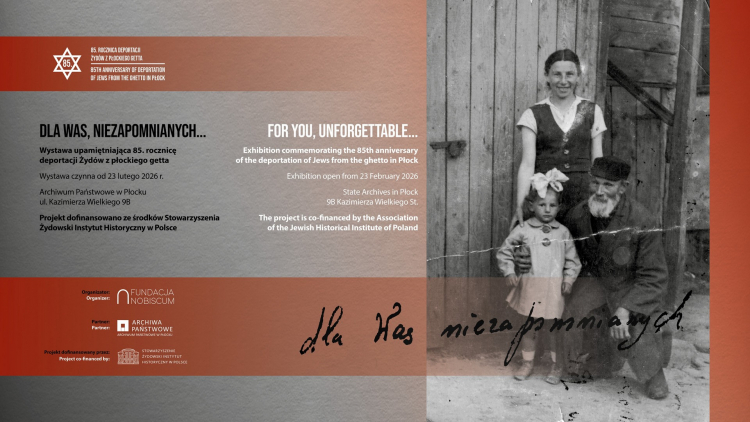
W Archiwum Państwowym w Płocku (Mazowieckie) otwarto w piątek wystawę „Dla Was, niezapomnianych…” poświęconą żydowskim rodzinom związanym z tym miastem. Przygotowana przez Fundację Nobiscum ekspozycja upamiętnia 85. rocznicę deportacji Żydów z płockiego getta.

W otwarciu wystawy uczestniczyli przybyli specjalnie na tę okazję z zagranicy, razem z najbliższymi, potomkowie płockich Żydów, w tym z rodzin Bomzonów, Brygartów, Winogronów i Minców. Na ekspozycji zobaczyć można w sumie 70 zdjęć, również z ich rodzinnych zbiorów.

Wystawa prezentuje też dokumenty z zasobów płockiego Archiwum Państwowego, przybliżające dzieje miejscowej społeczności żydowskiej w latach 1939-1945. Są to m.in. archiwalia z zespołów akt miasta, starostwa powiatowego i sądu grodzkiego, zwłaszcza z okresu II wojny światowej.

– Jesteśmy w Płocku, gdzie w 1941 r. cała społeczność Żydów została deportowana. To brutalnie przerwało ich życie tutaj, ale nie wymazało z historii tego miasta – powiedział dorastający w RPA, a następnie mieszkający w Izraelu Ze’ev Bomzon, którego dziadek Julius pochodził z Płocka.

Podkreślił, że rodzina Bomzonów, spokrewniona z płocką rodziną Brygartów, mieszkała w tym mieście do II wojny światowej od sześciu pokoleń.

– Jesteśmy dumni z tak bogatego dziedzictwa. Jesteśmy dumni z naszych polskich, żydowskich korzeni. Mamy nadzieję spędzić tu jeszcze wiele czasu, poznać naszą rodzinę i naszą wspólną historię – mówił następnie Robert Winogron, który przyjechał do Płocka z Kanady.

Dzieląc się historią swojej rodziny, wspominał, że jego dziadek Jakub był w Płocku lekarzem, który odpowiadał za opiekę medyczną w tamtejszych szkołach, a ojciec Ryszard, urodzony w tym mieście w 1922 r., w sierpniu 1939 r., mając 17 lat, wstąpił jako ochotnik do wojska polskiego i w czasie walk z Niemcami trafił do niewoli, a potem do kolejnych obozów jenieckich.

Tytuł wystawy upamiętniającej 85. rocznicę deportacji Żydów z płockiego getta – jak wyjaśniła wiceprezeska Fundacji Nobiscum Gabriela Nowak-Dąbrowska, zarazem historyczka, genealożka i badaczka historii lokalnej społeczności żydowskiej – nawiązuje do fotografii przedstawiającej Chawę Papierczyk, z domu Lichtensztajn, z córką Rachelką i dziadkiem Ickiem Grosmanem, opatrzonej datą 13 czerwca 1940 r. i dedykacją: „Na pamiątkę dla rodzeństwa i mężowi, dla Was niezapomnianych…”.

Nowak-Dąbrowska zwróciła uwagę, że dziś w przestrzeni publicznej do głosu dochodzą osoby, które zaprzeczają zbrodniom nazistowskim, kwestionują istnienie komór gazowych w Auschwitz, skalę zagłady Żydów podczas II wojny światowej i głoszą antysemickie hasła. Podkreśliła jednocześnie, że słowa z fotografii Chawy Papierczyk, adresowane do najbliższych, stają się aktualnie czymś więcej.

– My wszyscy tu obecni chcemy i będziemy pamiętać. Sprzeciwiamy się kłamstwom i antysemityzmowi – powiedziała Nowak-Dąbrowska. Jak zaznaczyła, przygotowana we współpracy z płockim Archiwum Państwowym wystawa jest przede wszystkim dla tych niezapomnianych 8,7 tys. płockich Żydów, których imiona, a wraz z nimi pamięć o nich Fundacja Nobiscum stara się przywracać od wielu lat.

W czasie II wojny światowej, we wrześniu 1940 r., Niemcy utworzyli getto w Płocku, do którego przesiedlali również Żydów z okolicznych wsi i miasteczek. 21 lutego 1941 r. rozpoczęli jego likwidację, która trwała do początku marca. Prawie wszyscy deportowani zginęli w niemieckich obozach zagłady.

Społeczność żydowska w Płocku należała do najstarszych w Polsce. W 1939 r. płoccy Żydzi obchodzili 700. rocznicę obecności w tym mieście – stanowili wtedy tam ok. 30 proc. ludności. Holokaust przeżyło kilkuset płockich Żydów. Po zakończeniu II wojny światowej zaczęli wracać do rodzinnego miasta, jednak większość z nich w kolejnych latach wyemigrowała z Polski, głównie do Izraela i Stanów Zjednoczonych.

Projekt wystawy „Dla Was, niezapomnianych…” poświęconej żydowskim rodzinom związanym z Płockiem otrzymał dofinansowanie Stowarzyszenia Żydowski Instytut Historyczny w Polsce. Fundacja Nobiscum, dzięki wsparciu Forum Dialogu, opracowała również okolicznościową broszurę i nową bazę danych, która zostanie udostępniona na stronie jewishplock.eu – zaktualizowana baza z imionami i nazwiskami płockich Żydów powstała na podstawie dokumentów archiwalnych z okresu II wojny światowej.

Fundacja Nobiscum powstała w 2018 r. W 2019 r. uruchomiła portal jewishplock.eu, gdzie umieszczono kilkaset fotografii i reprodukcji dokumentów, w tym pochodzących z rodzinnych archiwów potomków płockich Żydów mieszkających obecnie za granicą, które wcześniej nie były publikowane. Także w 2019 r. zainicjowano projekt „Pamięć. Płock 1939”, portalu upamiętniającego imiennie Żydów mieszkających w tym mieście do II wojny światowej.

W 2023 r. Fundacja Nobiscum wydała „Małą księgę imion” 1680. dzieci z płockiego getta. W 82. rocznicę jego likwidacji przez Niemców wszystkie odczytano na tamtejszym Cmentarzu Żydowskim. Na pomniku poświęconym ofiarom Holokaustu złożono wówczas kamyki z imionami dzieci z płockiego getta.

W ramach upamiętnienia płockich Żydów, ofiar Holokaustu – jak zapowiedział tamtejszy samorząd – w sobotę, 21 lutego, w południe na rogu ul. Bielskiej i ul. Kwiatka, w dawnym sercu historycznej dzielnicy żydowskiej, odegrany zostanie uroczyście hejnał miasta. (PAP)


Zawartość publikowanych artykułów i materiałów nie reprezentuje poglądów ani opinii Reunion’68,
ani też webmastera Blogu Reunion’68, chyba ze jest to wyraźnie zaznaczone.
Twoje uwagi, linki, własne artykuły lub wiadomości prześlij na adres:
webmaster@reunion68.com