
Archives

The Epstein files’ toxic mix of true crime and conspiracy theories


The Epstein files’ toxic mix of true crime and conspiracy theories

Jonathan S. Tobin


The mistaken belief that the sex offender’s vast network of connections explains all that is wrong or evil in the world fits easily into the way antisemitism is spread.

Jeffrey Epstein, 27, in a personals ad published in the July 1980 issue of “Cosmo” magazine. Credit: Stephen Ogilvy/Public Domain via Wikimedia Commons.

The federal government’s release of the latest tranche of files related to the case of convicted sex offender Jeffrey Epstein set off another surge in interest in a case that continues to possess a hold on the imaginations of growing numbers of people. The new batch of Epstein files this week consists of 3 million pages of documents, 2,000 videos and 180,000 images. Going through it is providing work for an army of journalists and a hobby for a horde of amateur sleuths and other obsessives.

Given the sheer volume of material, the files seem to provide something for everyone. But it’s not likely to satisfy most or really any of the people who are taking deep dives into the files and those who are mentioned in them. That’s not because it isn’t filled with juicy tidbits of information about a great many celebrities. It’s due to the fact that the case has become more than just an investigation into the horrible deeds of a wealthy hedonist and his clique. Ever since Epstein’s suicide in a New York City jail (an event which is itself a subject of controversy), it has morphed into something far more than a particularly vile example of true crime or a tale of sexual perversion.

A collection of theories

It’s now a conspiracy theory—or rather, a large collection of them all housed under the title “Epstein files.” And like all conspiracy theories, those who have embraced it are convinced that it will provide answers to all the questions about the world that trouble them and solutions to its problems.

In this way, a sex-trafficking ring isn’t just a shocking story of how lawbreakers sought to exploit and game the system. Instead, it has become the key to understanding what they are sure is an evil cabal running the world. They think it is the key that will enable them to unlock the deep-seated wrong at the heart of the national soul of America and discredit the people they already didn’t like.

As such, it has become something of a funhouse mirror in which those who latch onto it interpret the story through the lens of every other pathology of 21st-century life: paranoia about governments, hyper-partisanship, and inevitably, antisemitism.

Those who think the biggest problem in the world is President Donald Trump and his Republican supporters search the files in hopes of finding the silver bullet that will finish off their bête noire. The same is true for those who think of Democrats in the same way, especially about former President Bill Clinton, the commander-in-chief who was first coined with the phrase “derangement syndrome.” And for those who think that Israel and the Jews are the answer to every question they have about why things are bad, Epstein is, similarly, the entry point for a new round of crackpot blood libels.

No one is likely to be fully satisfied, even after every document, video and image is eventually unearthed and analyzed. And, as with other conspiracy theories, Epstein connoisseurs will claim that the real truth—the proof they’ve been searching for—was covered up or destroyed by the guilty parties, thus ensuring that the lunacy can go on forever.

That’s not to say that there won’t be some examples where the files will prove the undoing of some public figures, including perhaps a few that never met or had anything to do with Epstein.

Political fallout

For example, British Prime Minister Keir Starmer, already mired in a political slump, as well as the focus of deep dissatisfaction from both opponents and fellow Labour Party members, could conceivably be toppled from his post because of the files. Starmer isn’t in the files, but he appointed one of Epstein’s many cronies, Peter Mandelson, as Britain’s ambassador to the United States. He claims that Mandelson lied to him about his ties to Epstein. Still, the investigation has led to resignations and a criminal investigation into the ambassador revealing government secrets, which raises the possibility that the entire mess could sink Starmer. The idea that he, as opposed to Trump, could be the main casualty of this scandal is both ironic and infuriating to those on the left who have seized on it as the answer to their prayers.

It’s hard to think of a precedent for the Epstein case. It’s far from the only example of large-scale sex trafficking, in addition to the exploitation of women and girls by powerful men and their enablers. But it is singular in that it was carried out by someone who was not merely wealthy (and Jewish), but who seemed to make it his business to know a vast cross-section of the rich and the famous—powerful persons among the governing classes, in addition to writers and artists.

Epstein was an Olympic-level networker. If you were anyone who was anyone in high society, politics or celebrity-hood during the period when he was flaunting his wealth, the files give the impression that the odds are that you were invited to some kind of function or sought a connection to the man.

Trump and Epstein were clearly friendly for a long time, but eventually, they quarreled. Those who hate Trump are counting on the unsavory, though not criminal, stories associated with that friendship—or some as of yet undiscovered tidbit discrediting the president.

Given the fact that Trump has been elected president twice, despite the public knowing about his decades of public and private indiscretions, anything in the files is unlikely to do him in. Yet his opponents hold onto the hope that it will, waiting with the same dogged determination that their counterparts on the right seek details about the friendship between Epstein and the Clintons. That power couple will be dragged before Congress to talk about Epstein with the same low likelihood that anything found or said will do more than compound the embarrassment the case has already caused them.

Epstein’s Israeli crony

Former Israeli Prime Minister Ehud Barak is in the same boat as Bill and Hillary Clinton. He had business dealings with Epstein and even sought to involve him in Israeli politics. Some of the email messages in the Epstein files show how he sought to get his help in opposing Israeli Prime Minister Benjamin Netanyahu in the 2019 elections. It also showed that Barak had made a sexist comment amid his usual rants trashing the prime minister, and Israel’s religious and Mizrachi population that support him, as well as revealing a sexist comment made by Barak.

Does that mean that Barak was involved in Epstein’s sexual crimes? No. And there’s no proof to hint at that. But that isn’t stopping Likud supporters, including his longtime foe Netanyahu, from exploiting it to his detriment and forcing Barak to make the sort of public denials that do more harm than good to those who have to utter them.

That’s the problem with the publicity given to the files. For example, Commerce Secretary Howard Lutnick is under fire for two documented meetings with Epstein, though in both instances, he had his wife with him, and, again, there’s not even a suggestion of wrongdoing about them. But partisans are still saying with a straight face that anyone who had lunch with the financier, as Lutnick did, is “shamefully complicit” in his crimes.

It isn’t really fair. Then again, no one needs to mourn for the trouble Epstein is causing Trump, the Clintons, Barak or Lutnick, all of whom knew what they were getting into when they entered political life. Being in the spotlight and profiting from it in one way or another brings with it the possibility that someone you know is going to do things you will have to answer for, whether you are actually complicit in them or not.

The connection to Jew-hatred

What is of far greater concern is the conviction that what we know about Epstein’s crimes is just the tip of the iceberg, which plays into the grandfather of all conspiracy theories: antisemitism. 

The willingness of a prominent Jew-hater like former Fox News host and current podcaster Tucker Carlson to use the Epstein case as fodder for his obsession with discrediting Israel and the Jews is bad enough. But that inspired fellow political commentator Megyn Kelly to unapologetically and repeatedly mimic the assertion that Epstein was a Mossad agent. Another conservative in the media, Ben Shapiro, who has clashed with Carlson for his antisemitism and Kelly for her stance of neutrality on that subject matter, pointed out that there is just as much evidence for a claim that Epstein was working for aliens from outer space. But that doesn’t stop people who should know better from associating Israel and the entire Jewish people with all things evil in the world.

The way the case is being used by antisemitic conspiracy mongers ought to be a warning to everyone else speculating on it and hoping that it will somehow further some political or policy agenda of their own. The crimes Epstein committed warrant scrutiny, and those about whom there is reasonable suspicion and even some proof that they were involved in his sexual misdeeds, such as Britain’s Prince Andrew, need to be held accountable. But the enthusiasm for the story ought to be tempered by a sober admission that the obsession with the case is primarily a sign of the declining health of our society.

Conspiracy theories have already taken over so much of national and even international discourse. As the coverage of Israel’s two-year war against Hamas in Gaza revealed, the belief that Jews are either running the world or committing “genocide,” even when they are the ones under attack from genocidal Islamist terrorists, is rooted in myths that date back to the Tsarist forgery,  Protocols of the Elders of Zion.

Along with a bifurcated partisan press and the impact of social media, these theories turn every discussion toxic. They send people down rabbit holes with no exit ramp, rather than engaging in serious debate about the many issues that divide the country right now.

The Epstein scandal is a terrible story, but it is not the great puzzle at the heart of America’s national existence.

Each end of the political spectrum—first, the right wing, and now the left, since Trump returned to the White House—has seized on it as the secret formula by which they can unravel all that is wrong and vindicate their pre-existing prejudices and opinions about everything. That is itself a symptom of rot in contemporary culture. And those who fan these conspiratorial flames with smears based on guilt by association aren’t brave voices speaking up for truth. They are, like those who exploit it to point fingers against the Jews, regardless of where they sit on the political spectrum, irresponsible demagogues doing real harm.
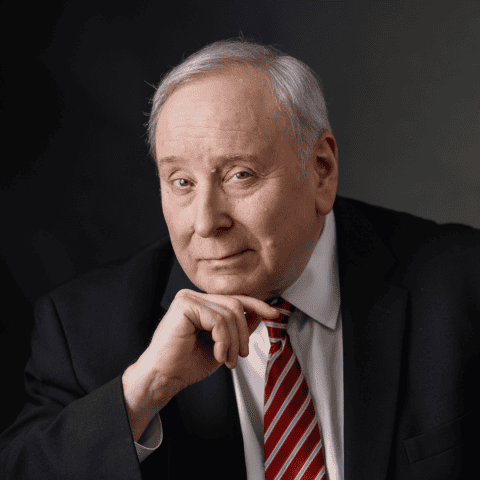

Jonathan S. Tobin is editor-in-chief of the Jewish News Syndicate, a senior contributor for The Federalist, a columnist for Newsweek and a contributor to many other publications. He covers the American political scene, foreign policy, the U.S.-Israel relationship, Middle East diplomacy, the Jewish world and the arts. He hosts the JNS “Think Twice” podcast, both the weekly video program and the “Jonathan Tobin Daily” program, which are available on all major audio platforms and YouTube. Previously, he was executive editor, then senior online editor and chief political blogger, for Commentary magazine. Before that, he was editor-in-chief of The Jewish Exponent in Philadelphia and editor of the Connecticut Jewish Ledger. He has won more than 60 awards for commentary, art criticism and other writing. He appears regularly on television, commenting on politics and foreign policy. Born in New York City, he studied history at Columbia University.


Zawartość publikowanych artykułów i materiałów nie reprezentuje poglądów ani opinii Reunion’68,
ani też webmastera Blogu Reunion’68, chyba ze jest to wyraźnie zaznaczone.
Twoje uwagi, linki, własne artykuły lub wiadomości prześlij na adres:
webmaster@reunion68.com


Gaza Peace Plan Stalls Amid Reports of US Allowing Hamas to Keep Some Arms, Israel Readying New Offensive


Gaza Peace Plan Stalls Amid Reports of US Allowing Hamas to Keep Some Arms, Israel Readying New Offensive

Ailin Vilches Arguello


Israeli military vehicles drive past destruction in Gaza, as seen from the Israeli side of the Israel-Gaza border in southern Israel, Jan. 21, 2026. Photo: REUTERS/Amir Cohen

The US-backed plan to end the war in Gaza appears to have hit major roadblocks, with Hamas reportedly being allowed to keep some small arms and Israel readying its military for a new offensive to disarm the Palestinian terrorist group.

According to a New York Times report, officials involved in the US-led Board of Peace have drafted a plan that would let Hamas retain small arms while giving up longer-range weapons, a move Israeli officials warn would let the terrorist group maintain its grip on Gaza.

The compromise could further strain the already fragile ceasefire, under which further Israeli military withdrawals from Gaza are tied to Hamas’s disarmament.

The draft plan reportedly calls for a “phased disarmament” of Hamas over several months, with heavy weapons “decommissioned immediately.” However, details remain unclear on where surrendered arms would go or how the plan would actually be enforced.

The initial framework would also require “personal arms” to be “registered and decommissioned” as a new Palestinian administration takes charge of security in the war-torn enclave.

Israel has previously warned that Hamas must fully disarm for the second phase of the ceasefire to move forward, pointing to tens of thousands of rifles and an active network of underground tunnels still under the Islamist group’s control.

If the Palestinian terrorist group does not give up its weapons, Israel has vowed not to withdraw troops from Gaza or approve any rebuilding efforts, effectively stalling the ceasefire agreement.

The Israel Defense Forces (IDF) currently occupy 53 percent of the Strip, with most of the Palestinian population living in the remaining portion of the enclave under Hamas control.

Israeli Prime Minister Benjamin Netanyahu has insisted the country will not accept anything less than the full demilitarization of Gaza, pledging to prevent Hamas from carrying out another attack like its Oct. 7, 2023, invasion of and massacre across southern Israel. The attack, in which Hamas-led Palestinian terrorists killed 1,200 people, kidnapped 251 hostages, and perpetrated rampant sexual violence, launched the war in Gaza, where Hamas had total governing control before Israel’s military campaign.

Under US President Donald Trump’s 20-point Gaza peace plan, phase two would involve deploying an international stabilization force (ISF), beginning large-scale reconstruction, and establishing a Palestinian technocratic committee to oversee the territory’s administration.

According to media reports, the ISF could total around 20,000 troops, though it remains uncertain whether the multinational peacekeeping force will actually help disarm Hamas. Indonesia, one of the contributing members, announced this week that it could provide up to 8,000 soldiers.

Hamas has repeatedly rejected disarmament, with senior official Khaled Meshal most recently suggesting that the group has never agreed to surrender its weapons.

“As long as there’s an occupation, there’s resistance,” Meshal said during the Al Jazeera Forum in Doha on Sunday.

Amid rising tensions, Israel is planning to resume military operations in the Gaza Strip to forcibly disarm Hamas, with the Times of Israel reporting that the IDF is drawing up plans for a renewed major offensive.

Israeli Defense Minister Israel Katz warned that Hamas will be disarmed by force if it continues to violate the ceasefire and pose a threat to Israel’s security.

“If Hamas does not disarm in accordance with the agreed framework, we will dismantle it and all of its capabilities,” the Israeli defense chief said this month.

Since the ceasefire took effect last year, both sides have accused each other of violations. This month, Israeli officials said that Hamas “has violated the agreement and focused its efforts on restoring its military capabilities.”

If Israel undertakes a renewed offensive, it could be far more intense than the IDF’s previous operations in Gaza over the past two years of conflict, which were constrained by efforts to protect the hostages.

Israeli officials have insisted that Hamas terrorists will continue fighting as long as they have access to weapons.

Last week, the IDF announced that a Hamas terrorist responsible for a deadly 2004 double suicide bombing, which killed 16 Israeli civilians and wounded over 100, was killed in an Israeli airstrike in the Gaza Strip.

The operation was part of a series of targeted strikes against terrorist operatives, carried out in response to an attack by gunmen on Israeli troops in the northern Gaza Strip, during which a reservist officer was seriously wounded.

Captured in 2004 and sentenced to prison, Basel Himouni was later released and exiled to Gaza in a 2011 deal, in which Israel exchanged 1,027 terror prisoners for captive IDF soldier Gilad Shalit.

According to the IDF, since his release, Himouni “returned to recruiting attackers and directing terrorist activity.”


Zawartość publikowanych artykułów i materiałów nie reprezentuje poglądów ani opinii Reunion’68,
ani też webmastera Blogu Reunion’68, chyba ze jest to wyraźnie zaznaczone.
Twoje uwagi, linki, własne artykuły lub wiadomości prześlij na adres:
webmaster@reunion68.com


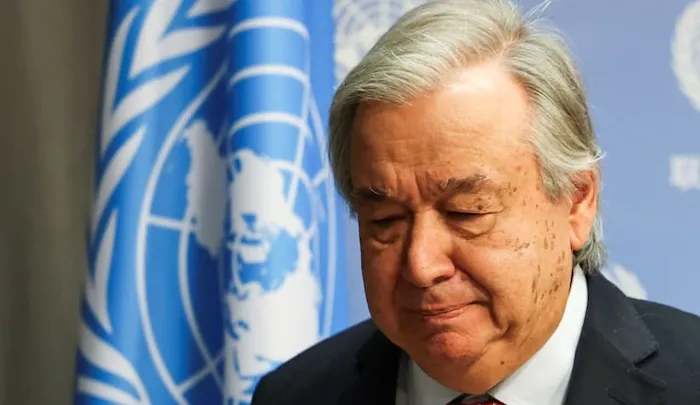
Guterres ostrzega, że ONZ jest zagrożona „finansowym upadkiem”


Guterres ostrzega, że ONZ jest zagrożona „finansowym upadkiem”

Hugh Fitzgerald


No proszę. Ta najbardziej skorumpowana i demoralizująca spośród organizacji międzynarodowych, Organizacja Narodów Zjednoczonych, znalazła się na skraju bankructwa. Kwoty, które wcześniej zapewniał jej największy darczyńca, Stany Zjednoczone, zostały obcięte o wiele miliardów dolarów, ponieważ Waszyngton słusznie zidentyfikował ONZ jako niewyczerpane źródło antyizraelskiej propagandy oraz – poprzez swoje złośliwe zniekształcanie obrazu państwa żydowskiego – jako nieustannego propagatora antysemityzmu. Również wiele innych krajów, w tym Chiny, Rosja, Arabia Saudyjska, Meksyk i Wenezuela, z powodów niezwiązanych z Izraelem, zalega z wpłatami składek naliczonych na rzecz ONZ.

Sekretarz generalny Antonio Guterres ubolewa nad tym stanem rzeczy i ma nadzieję zawstydzić USA – kraj, który wstrzymał największą część swojej obowiązkowej składki i który obciął o wiele miliardów także swoje dobrowolne wpłaty – aby uregulowały należności i przywróciły swoje hojne dobrowolne darowizny. Te zaległości, w swoim szczycie w 2022 roku, przekraczały 15 miliardów dolarów, lecz w tym roku wyniosą zaledwie 2 miliardy. Amerykanie nie ustąpią w kwestii nowych, drastycznie obniżonych wpłat na rzecz ONZ, przynajmniej tak długo, jak prezydentem jest Donald Trump, a sekretarzem stanu Marco Rubio. Więcej na temat publicznego lamentu Guterresa nad opłakanym stanem finansów ONZ można przeczytać tutaj: „Szef ONZ Guterres ostrzega przed ‘nieuchronnym finansowym upadkiem’ ONZ, wskazując na nieopłacone składki”, Jerusalem Post, 30 stycznia 2026 r.

Szef ONZ poinformował państwa członkowskie, że organizacji grozi „nieuchronny finansowy upadek”, wskazując na nieopłacone składki oraz zasadę budżetową, która zmusza globalne ciało do zwracania niewydanych środków – wynika z listu, do którego w piątek dotarła agencja Reuters.

Sekretarz generalny ONZ Antonio Guterres wielokrotnie mówił o pogłębiającym się kryzysie płynności finansowej organizacji, lecz jest to jak dotąd jego najostrzejsze ostrzeżenie. Pojawia się ono w momencie, gdy jej główny darczyńca, Stany Zjednoczone, wycofuje się z multilateralizmu na wielu frontach.

„Kryzys się pogłębia, zagrażając realizacji programów i niosąc ryzyko finansowego załamania. A sytuacja w najbliższej przyszłości jeszcze się pogorszy” – napisał Guterres w liście do ambasadorów datowanym na 28 stycznia.

Stany Zjednoczone drastycznie ograniczyły dobrowolne finansowanie agend ONZ i odmówiły uiszczenia obowiązkowych wpłat na regularny budżet oraz budżet misji pokojowych.

Prezydent USA Donald Trump stwierdził, że ONZ ma „wielki potencjał”, ale go nie realizuje, i powołał Radę Pokoju, która – jak obawiają się niektórzy – może podważyć pozycję starszej organizacji międzynarodowej.

ONZ nie ma już „wielkiego potencjału”. Miała go kiedyś – w bezpośrednich latach powojennych – i przez pierwsze dwadzieścia lat swojego istnienia, od 1945 do 1965 roku, wykonywała pewną pożyteczną pracę, zwłaszcza za pośrednictwem UNESCO, w dziedzinach kultury i edukacji. Później jednak zarówno blok komunistyczny, jak i blok muzułmański państw członkowskich stawały się coraz bardziej głośne w ONZ, przekształcając ją w narzędzie swoich antyzachodnich kampanii. Blok komunistyczny zniknął, lecz muzułmański blok 57 państw zdołał uczynić rzekome grzechy państwa żydowskiego głównym przedmiotem obrad Zgromadzenia Ogólnego, które przyjęło więcej rezolucji potępiających Izrael niż wszystkich rezolucji potępiających pozostałe 192 państwa członkowskie razem wzięte. Kiedyś ONZ była kierowana przez zaawansowane kraje Zachodu; dziś to kraje Trzeciego Świata, a zwłaszcza państwa muzułmańskie, rozciągnęły swoją władzę w sposób kapilarny na całą ONZ i jej agendy składowe.

Założona w 1945 roku ONZ liczy 193 państwa członkowskie i działa na rzecz utrzymania międzynarodowego pokoju i bezpieczeństwa, promowania praw człowieka, wspierania rozwoju społecznego i gospodarczego oraz koordynowania pomocy humanitarnej.

Tak przynajmniej twierdzi sama ONZ. Wielu z nas wie, że dawno przestała ona promować prawa człowieka, a zamiast tego wykorzystuje to hasło do forsowania antyzachodniej, a zwłaszcza antyizraelskiej agendy. Nie tyle „wspiera rozwój społeczny i gospodarczy”, ile raczej stara się zwabić kraje Zachodu do przekazywania ogromnych sum na utrzymanie i wyżywienie beznadziejnych przypadków Trzeciego Świata. To właśnie w korytarzach ONZ zaczęły rozbrzmiewać podstępne wezwania do ‘reparacji’ od Zachodu dla Trzeciego Świata.

To Stany Zjednoczone są, zdaniem Guterresa, największym dłużnikiem. USA są winne ONZ około 1,5 miliarda dolarów z tytułu regularnego budżetu oraz dodatkowe 1,5–2,4 miliarda dolarów na operacje pokojowe, co łącznie daje potencjalnie ponad 4 miliardy dolarów zaległości na początku 2026 roku.

USA wykorzystują siłę portfela – a dokładniej siłę wstrzymania pieniędzy – aby wywrzeć presję na ONZ i zmusić ją do porzucenia swojej złośliwej obsesji na punkcie Izraela. Jak dotąd to nie zadziałało, ale według najnowszego ostrzeżenia Guterresa ONZ stoi w obliczu ‘finansowego upadku’. Wkrótce się przekonamy, czy ONZ zdoła zakończyć swoją obsesję na punkcie Izraela, aby skłonić Waszyngton do uregulowania zaległości i przywrócenia dawnych, wysokich dobrowolnych wpłat do agend ONZ.

Nie sądzę, aby ONZ była w stanie się zmienić; jej antyizraelska wrogość jest zbyt wyraźna i zbyt długotrwała, by organizacja mogła odzyskać moralną równowagę. Pozwólmy więc ONZ spokojnie tracić na znaczeniu i wpływach, a spróbujmy czegoś nowego: ligi krajów o podobnych poglądach, głównie z Europy oraz Ameryki Północnej i Południowej. Wydaje się, że właśnie to Trump ma na myśli, tworząc swoją Radę Pokoju, którą postrzega jako alternatywę dla ONZ.

Obsesja na punkcie Izraela, która doprowadziła do amerykańskich cięć zarówno w obowiązkowych, jak i dobrowolnych wpłatach, jest tylko jednym z powodów finansowych problemów ONZ. Skandaliczne wydatki tej organizacji muszą się skończyć. Tysiące członków jej rozbudowanej biurokracji znane są z podróżowania po świecie pierwszą klasą i zatrzymywania się w pięciogwiazdkowych hotelach. Otrzymują oni wygórowane pensje, znacznie wyższe niż osoby na porównywalnych stanowiskach w sektorze prywatnym. Sam Antonio Guterres zarabia więcej niż prezydent Trump. Biurokracja ONZ jest rozdęta: sam Sekretariat zatrudnia na całym świecie 40 tysięcy osób. Jeśli doliczymy wszystkie agendy, fundusze i programy powiązane z ONZ (takie jak UNICEF czy WHO), łączna liczba pracowników w szeroko rozumianym systemie ONZ wynosi 116 tysięcy. W ciągu najbliższych dwóch–trzech lat personel ten powinien zostać zredukowany o dwie trzecie. Ponadto pracownicy ONZ powinni podróżować nie pierwszą, lecz ekonomiczną klasą, i zatrzymywać się nie w pięciogwiazdkowych, lecz w hotelach średniej klasy. Ogromny personel ONZ przywykł do poziomu luksusu, który budzi wściekłość. Należy sprowadzić tych biurokratów na ziemię, aby żyli jak reszta z nas.

Tylko w ten sposób – poprzez zakończenie obsesji antyizraelskiej i radykalne ograniczenie wydatków – ONZ będzie miała szansę uniknąć „finansowego upadku”, który właśnie przepowiedział Guterres.


Link do oryginału: https://jihadwatch.org/2026/02/guterres-warns-the-un-is-in-danger-of-financial-collapse

Jihad Watch, 4 lutego 2026


Zawartość publikowanych artykułów i materiałów nie reprezentuje poglądów ani opinii Reunion’68,
ani też webmastera Blogu Reunion’68, chyba ze jest to wyraźnie zaznaczone.
Twoje uwagi, linki, własne artykuły lub wiadomości prześlij na adres:
webmaster@reunion68.com

Turkey’s nuclear path is a risk Israel cannot ignore


Turkey’s nuclear path is a risk Israel cannot ignore

Noa Lazimi


Ankara is using nuclear technology strictly for civilian purposes, but the infrastructure it is building could pave the way toward military applications.

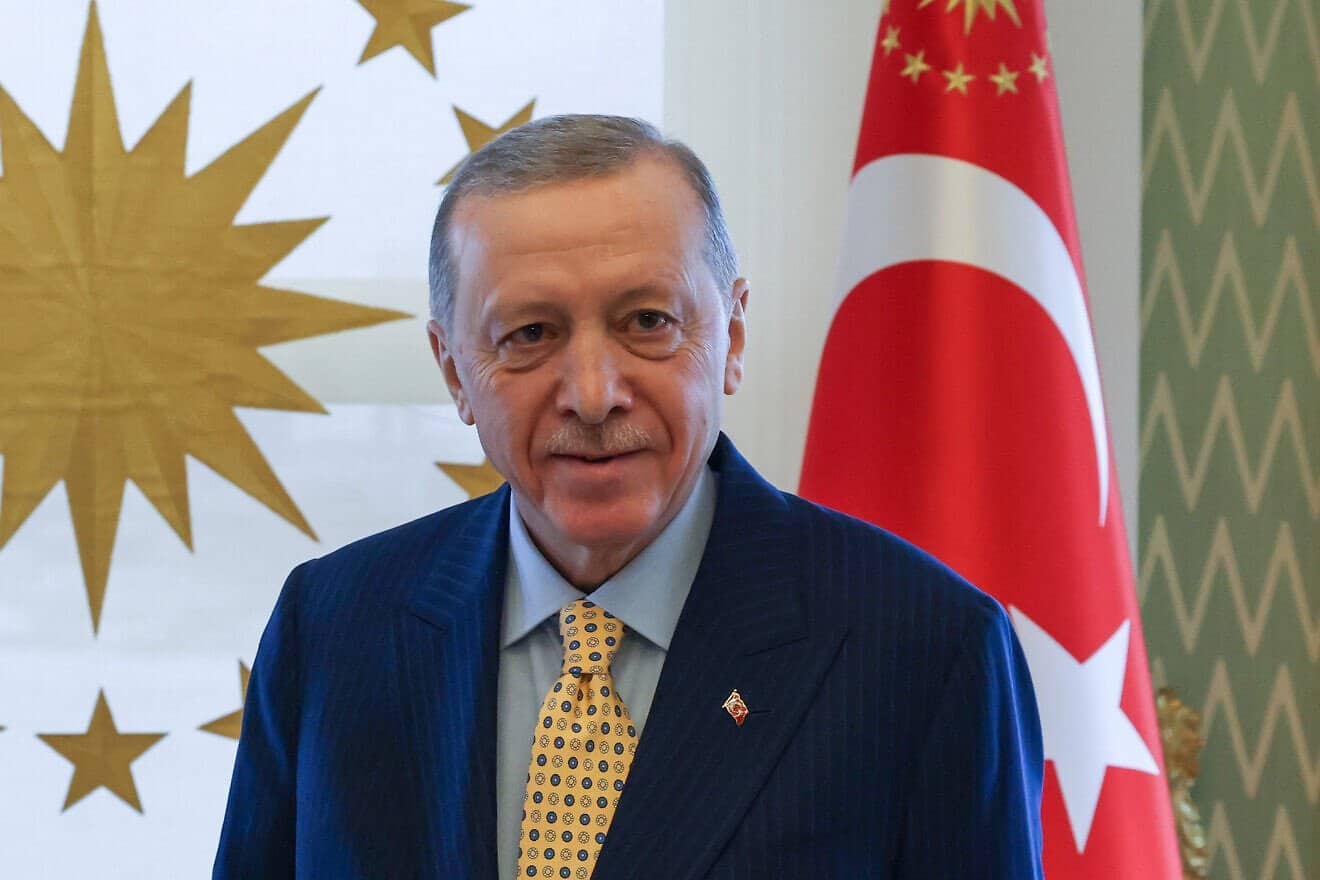
Turkey’s President Recep Tayyip Erdoğan attends a meeting at Vahdettin Palace in Istanbul on Jan. 26, 2024. Photo by Rory Arnold/No. 10 Downing Street via Wikimedia Commons.

Since joining NATO in 1952, Turkey has relied on the alliance’s nuclear umbrella and has hosted several dozen U.S. nuclear bombs at the Incirlik Airbase. At the same time, Turkey itself does not possess nuclear weapons, in line with its commitments under the Nuclear Non-Proliferation Treaty, which it signed in 1969.

In recent years, however, senior officials have periodically raised, in public, Turkey’s “right” to develop and obtain nuclear weapons. In a speech in September 2019, Turkish President Recep Tayyip Erdoğan argued it was unfair that his country was not allowed to develop nuclear weapons while other states possessed them or were working to acquire them.

In July 2025, Turkish Foreign Minister Hakan Fidan voiced dissatisfaction with the nuclear treaty, which he said suffers from “structural injustice” by preserving the strategic supremacy of the five permanent U.N. Security Council members, all of which hold nuclear weapons.

In his view, only one aspect of the treaty is implemented in practice—preventing the spread of nuclear weapons, while progress on nuclear disarmament and assistance to other countries developing nuclear energy for peaceful purposes is not being upheld.

These statements have been voiced against the backdrop of Turkey’s concerns over its neighbor and long-time rival Iran’s race toward nuclear weapons. They also come alongside Israel’s existing capabilities, according to reports. 

Ankara has not stood idly by. In 2018, it began building the Akkuyu nuclear power plant, financed and operated by the Russian state nuclear corporation Rosatom. Under the deal with Russia, estimated at $24 billion, the Akkuyu plant is expected to include four reactors and is planned to supply roughly 10% of Turkey’s annual electricity consumption.

It is important to note that this is a civilian nuclear program intended to generate electricity, not a military program that would require higher levels of uranium enrichment. Still, the practical implication is that an infrastructure base is being built that could, under certain conditions in the future, help pave a path toward a military track.

Warming ties with Pakistan

Turkey’s warming ties with Pakistan, the only nuclear-armed Islamic country, also appear intended to diversify Ankara’s support pillars in this arena. That rapprochement has been reflected, among other things, in the significant assistance Turkey provided Islamabad in its confrontation with India. Closer relations with Pakistan could help Turkey acquire knowledge and capabilities that, over time, would enable it to build nuclear power plants independently.

Nuclear ambitions are closely tied to Turkey’s self-perception as a regional power with aspirations to revive an Ottoman-style sphere of influence. Turkey is pouring enormous resources into its defense industries, and it is difficult to imagine it voluntarily giving up on the development of nuclear weapons that could one day add a significant layer to its power projection and deterrence.

Domestically, not everyone is enthusiastic about the nuclear energy projects being advanced by the government. Opposition lawmakers have raised serious concerns about the risks involved in operating nuclear power plants, including ecological damage and environmental challenges, as well as unease over deepening Turkish dependence on Russia.

Still, it should be assumed that as long as Erdoğan remains in power, and likely under his successors as well, Turkey will continue its efforts to develop nuclear capabilities.

Israel would be wise to include the scenario of Turkish progress toward nuclear capabilities in its strategic planning and regional risk assessment, even if it unfolds gradually over a long period. Even if such a process is not expected to materialize quickly, the very existence of an accumulated pathway of knowledge, infrastructure and international ties could alter the regional deterrence balance and shape Ankara’s behavior in regional flashpoints.


Noa Lazimi is a fellow at the Misgav Institute for National Security.
Originally published by Israel Hayom.


Zawartość publikowanych artykułów i materiałów nie reprezentuje poglądów ani opinii Reunion’68,
ani też webmastera Blogu Reunion’68, chyba ze jest to wyraźnie zaznaczone.
Twoje uwagi, linki, własne artykuły lub wiadomości prześlij na adres:
webmaster@reunion68.com


Faith in Judaism Demands Grappling With Sacred Words


Faith in Judaism Demands Grappling With Sacred Words

Pini Dunner


A Torah scroll. Photo: Wikimedia Commons.

The Reformation firebrand Martin Luther was not a gentle soul. He was brilliant, courageous, and historically transformative, but he was also volatile, cruel, and spectacularly foul-mouthed. When Luther disliked someone, he didn’t merely disagree with them – he eviscerated them.

His pamphlets dripped with bile, his language was obscene, and when it came to Jews, his writings were vicious, laying the groundwork for some of the darkest chapters of later European history. None of this, to be clear, negates the fact that Luther correctly identified real corruption and hypocrisy within the Catholic Church of his day.

Luther’s stock response to his critics within the Church was deceptively simple: prove me wrong from the text of the Bible. If it wasn’t written explicitly in Scripture, he dismissed it as human invention, manmade directives masquerading as divine command.

He had no time for tradition, accumulated wisdom, or interpretation; everything was suspect unless it could be nailed down to “chapter and verse,” as he liked to put it. Luther’s position appeared principled and even pious, but it placed enormous – and ultimately destructive – weight on the written word alone.

Of course, as is often the case with sweeping theological positions, consistency proved difficult. At one point, Luther came up against a short New Testament text that stubbornly refused to cooperate with his theology. The Epistle of James insists that faith without works is dead, a line that clashed directly with Luther’s doctrine of salvation by faith alone.

In a telling moment, Luther remarked, “We should throw the Epistle of James out of this school, for it doesn’t amount to much.” Instead of wrestling with the verse or considering how generations of Christians had understood it, he dismissed the book altogether. And that was that. If it didn’t fit, it didn’t count.

The episode is almost comic, but it exposes the fatal fault line in Luther’s entire approach. A theology that insists on absolute fidelity to the text grants enormous power to the reader. When interpretation is denied, selection takes its place.

From a Jewish perspective, there is something eerily familiar about this obsession with textual literalism. The Second Temple–era Sadducees rejected ancient traditions and rabbinic interpretation in favor of the bare biblical text.

Centuries later, the Karaites would do the same, insisting that anything not spelled out explicitly in the Torah was illegitimate. Their position was internally consistent – and completely unworkable. A faith that forbids interpretation does not preserve religious observance; it paralyzes it.

The Torah reveals its intention regarding the centrality of interpretation at the very moment of revelation in Parshat Yitro. When God speaks at Sinai, He does not present the Jewish people with a comprehensive legal code, nor does He offer an exhaustively detailed constitution. Instead, He presents ten short statements – majestic and memorable, but remarkably sparse.

Do not murder. Do not steal. Do not commit adultery. Honor your parents. These are not radical moral breakthroughs. Any functioning society would struggle to survive without them.

Even the commandments that sound more overtly theological – belief in God, rejection of idolatry, observing Shabbat – are delivered with little definition or elaboration. What does it mean to believe? What counts as idolatry? What does remembering Shabbat actually require? The text does not say.

That silence is no oversight. If the Torah had intended to function as a closed book, the Ten Commandments as they are presented would be inexplicably inadequate. They contain no legal thresholds, no procedural detail, and no guidance for variation or complexity.

“Do not steal” tells us nothing about business partnerships, contracts, fraud, or intellectual property. “Do not murder” offers no framework for intent, self-defense, negligence, or the rules of war. “Remember the Sabbath day” may be stirring rhetoric, but as law, it is unusable. What, precisely, are we supposed to remember? And what are the practical applications?

The answer, of course, is that the Torah itself never expected these questions to be answered by the text alone. The Ten Commandments were never meant to stand by themselves. They are headline principles – foundational truths that demand explanation, expansion, and application.

And the Torah provides that expansion not in footnotes or appendices, but through an interpretive process that unfolds across generations. The law was not frozen at the moment of revelation; it was activated by it.

This is where Judaism parts ways decisively with Luther’s instinctive literalism. At Sinai, God makes clear that the written word is sacred – but it is not sufficient. Meaning is not trapped inside the text; it emerges only through engagement with it. So how does the Torah move from lofty principle to lived law?

The answer Judaism gives is Torah Shebaal Peh, the Oral Law. This is not a later workaround or a rabbinic ploy to fill in gaps, but an interpretive framework indicated by the way the text itself was given. The written Torah is the text God gave us at Sinai; the Oral Law is the method He gave us to understand it.

That method is neither whimsical nor arbitrary. It is disciplined, structured, and demanding. The Talmudic sage Rabbi Yishmael articulated thirteen interpretive principles – rules for extracting meaning from text through literary association, contextual reading, and logical deduction.

Verses illuminate one another. Words echo elsewhere. Broad principles generate specific applications. Law emerges not because it is spelled out, but because it is derived.

And then there is another category altogether: traditions that do not emerge from textual analysis at all. The Torah commands us to bind tefillin – but never tells us their shape, their color, or even how many compartments they should contain. These, too, are traditions transmitted through the Oral Law.

The Torah prohibits “work” on the seventh day but offers no definition of what work means – until the Oral Law teaches that the categories of creative labor are learned from the acts required to build the Tabernacle.

This is why the demand to “prove everything from the text” is not piety but misunderstanding. The Torah does not operate like a legal statute book, and it never pretended to be one.

Seen this way, the Ten Commandments are not deficient because they lack detail. They are magnificent precisely because they force us beyond the page. They announce that God speaks – and then expect human beings to listen, interpret, and take responsibility for what those words will mean in the real world.

Martin Luther believed that unless an idea could be anchored explicitly in the biblical text, it was suspect and therefore expendable. In theory, that sounds like reverence. In practice, it collapses the moment the text refuses to cooperate. Judaism chose a different path.

The Ten Commandments stand at the center of our faith not because they tell us everything we need to know, but because they tell us so little. They are moral declarations without detail, principles without procedure – and for that very reason, they demand interpretation rather than submission.

Faith, in Judaism, is not proven by quoting sacred words, but by grappling honestly with what those words require of us.

Ultimately, this is what the revelation at Sinai teaches us about Judaism. God gives us a text — but also a task. He entrusts human beings with the responsibility to interpret, apply, and live His word in a world that is endlessly complex and morally demanding.

The Torah is certainly sacred, but it is not self-sufficient. It comes alive only when it is studied, debated, transmitted, and lived.


The author is a rabbi in Beverly Hills, California.


Zawartość publikowanych artykułów i materiałów nie reprezentuje poglądów ani opinii Reunion’68,
ani też webmastera Blogu Reunion’68, chyba ze jest to wyraźnie zaznaczone.
Twoje uwagi, linki, własne artykuły lub wiadomości prześlij na adres:
webmaster@reunion68.com