Archives

Cezar w Białym Domu


Cezar w Białym Domu

Melanie Phillips


To był tydzień, w którym znaczna część Zachodu uświadomiła sobie, że stary ład światowy przestał istnieć. Rodzi się nowy porządek — i wcale im się to nie podoba. I nie jest wcale oczywiste, że Izrael może spać spokojnie.

Administracja Trumpa przybyła na Światowe Forum Ekonomiczne w Davos — w samo serce liberalno-uniwersalistycznego bastionu — by oznajmić reszcie Zachodu, że globalizacja dobiegła końca. Zawiodła Europę i Stany Zjednoczone, zaszkodziła ich dobrobytowi i wzrostowi, a także uzależniła je — i uczyniła podległymi — innym, w tym również ich wrogom.

Światowi przywódcy, zmuszeni wysłuchać tej tyrady, wciąż byli oszołomieni po tym, jak prezydent USA Donald Trump zagroził przejęciem Grenlandii i ukaraniem państw, które wyrażą sprzeciw. W Davos wycofał się z tego i zawarł ramowe porozumienie z szefem NATO Markiem Rutte w sprawie bezpieczeństwa Arktyki — co brzmi jak działanie mocno spóźnione, ale potrzebne w obronie wolnego świata.

Co zdumiewające, nawet tak zagorzały zwolennik uniwersalizmu jak premier Kanady Mark Carney przyznał uczestnikom forum, że gra o globalny porządek dobiegła końca. Wiele państw dochodzi dziś do wniosku, że muszą zyskać większą autonomię strategiczną. „Kiedy zasady przestają cię chronić” — powiedział — „musisz chronić się sam”.

Doprawdy? Lepiej późno niż wcale? Niekoniecznie.

Carney i inni liberalni liderzy, którzy ubolewają nad końcem globalistycznego porządku, w rzeczywistości jedynie przyznają, że Waszyngton nie będzie go już dłużej tolerował. Nie są jednak skłonni przyznać, że przez lata wspierali międzynarodowy ład, który obiecywał liberalne ideały, a w rzeczywistości przynosił coś wręcz przeciwnego.

To ci sami przywódcy, którzy nadal rozwijają relacje gospodarcze z Chinami — jednym z głównych zagrożeń dla wolności i bezpieczeństwa na świecie.

To ci sami przywódcy, którzy przez ponad cztery dekady prowadzili politykę ustępstw wobec fanatycznego reżimu islamskiego w Iranie — reżimu, który eksportował terroryzm i masowe mordy, dążył do zdobycia broni jądrowej, prowadził wojny zastępcze przeciwko Izraelowi i uciskał własny naród. Przez ostatnie tygodnie, gdy co najmniej 16 500 Irańczyków zostało zamordowanych w próbie obalenia reżimu, ci światowi liderzy milczeli — i nie zrobili niemal nic.

Nawet teraz Francja, Hiszpania i Włochy blokują uznanie Korpusu Strażników Rewolucji Islamskiej — głównego narzędzia globalnej agresji reżimu — za organizację terrorystyczną.

Przywódcy z Davos wciąż pozwalają Rosji prać brudne pieniądze w swoich stolicach i ograniczają się do bezsilnego załamywania rąk w sprawie Ukrainy.

Nie podoba im się przywództwo oparte na sile, jakie reprezentuje Trump. A jednak to właśnie te kraje bezlitośnie szykanują Izrael w jego najtrudniejszych chwilach.

Karzą go za to, że się broni przed ludobójstwem, powielają kłamstwa Hamasu jako prawdy i wspierają Palestyńczyków w ich dążeniu do unicestwienia Izraela — finansując Autonomię Palestyńską, która nagradza zamachowców i wychowuje dzieci w duchu morderczej nienawiści do Żydów.

Ich hipokryzja w udawanym oburzeniu na to, czym stały się dziś Stany Zjednoczone, jest więc iście epicka. A jednak „nowy ład” Trumpa również powinien budzić poważny niepokój.

Trump zaprosił do swojego „Rady Pokoju” — organu, który ma ponoć wprowadzić erę pokoju i dobrobytu w Strefie Gazy — Katar i Turcję. A przecież oba te kraje są śmiertelnymi wrogami Izraela, Żydów i Zachodu.

Jak pisze Khaled Abu Toameh na łamach Gatestone, żadne z tych państw nie wierzy w jakikolwiek proces pokojowy między Izraelem a światem muzułmańskim. Przeciwnie — wciąż wspierają islamistów popierających terrorystów.

Międzynarodowa Unia Uczonych Muzułmańskich, której głównymi sponsorami są Katar i Turcja, wydała w zeszłym roku fatwę wzywającą świat islamu do prowadzenia wojny świętej (dżihadu) „przeciwko syjonistycznemu bytowi i wszystkim, którzy z nim współpracują”, nawołując do utworzenia zjednoczonego islamskiego sojuszu militarnego.

Na początku tego miesiąca wydała kolejną fatwę, w której ogłoszono „zakaz normalizacji stosunków z syjonistycznym wrogiem [Izraelem] w jakiejkolwiek formie”.

Nie mniej niepokojąca jest sytuacja w Syrii. Trump zachwyca się nowym prezydentem tego kraju, byłym dowódcą Al-Kaidy i ISIS, Ahmedem al-Sharaa, określając go jako „twardego” i „przystojnego”, traktując go jak zreformowanego lidera, który może odegrać istotną rolę w nowym, pokojowym Bliskim Wschodzie.

Tymczasem w ostatnich tygodniach siły al-Sharaa, wspierane przez Turcję, masakrują Kurdów — niegdyś nieocenionych sojuszników USA, którzy teraz zostali przez nie porzuceni.

Na początku tygodnia Tom Barrack, ambasador USA w Turcji, powiedział o kurdyjskich milicjach — Syryjskich Siłach Demokratycznych (SDF) — że ich pierwotne zadanie, czyli walka z ISIS, „w dużej mierze się zakończyło”. Według niego to Damaszek jest dziś gotów przejąć odpowiedzialność za bezpieczeństwo, w tym za więzienia, w których przetrzymywano bojowników ISIS.

W rezultacie — co jest absolutnie szokujące — więźniowie ISIS pilnowani dotąd przez Kurdów zostali pozostawieni samym sobie. Część z nich po prostu uciekła, zmuszając dowództwo USA do natychmiastowej interwencji i przeniesienia ich do Iraku, aby nie wpadli w ręce syryjskiego reżimu.

Al-Sharaa ma na koncie masakry Druzów, chrześcijan i Alawitów. Gdy tylko będzie miał okazję, skieruje swoje działa przeciwko Izraelowi.

Jeśli ktoś jeszcze zastanawia się, jak to możliwe, że administracja amerykańska tak dramatycznie nie rozumie fanatyzmu islamistów, powinien posłuchać szokujących wypowiedzi specjalnego wysłannika Trumpa, Steve’a Witkoffa. Ten stwierdził w Davos: „Iran musi zmienić swoje postępowanie… jeśli da do zrozumienia, że jest gotów to zrobić, myślę, że uda się dojść do rozwiązania dyplomatycznego”.

A więc nawet teraz administracja Trumpa zdaje się wierzyć, że fanatyczni ajatollahowie z Teheranu to rozsądni ludzie, którzy w imię pragmatyzmu porzucą to, co uważają za swój boski obowiązek: zniszczenie Izraela i Zachodu.

Tymczasem to właśnie Witkoff zapewniał wcześniej świat, że 800 irańskich demonstrantów schwytanych przez reżim i zagrożonych egzekucją zostanie ocalonych. Jeśli reżim nie zdążył ich zabić, zanim się wypowiedział, to nadal systematycznie to robi.

Witkoff twierdził też, że Hamas nie jest „ideologicznie nieprzejednany”, a władcy Kataru porzucili radykalizm i dziś są „naszymi sojusznikami”.

To po prostu niepojęte, że taki człowiek może być „specjalnym wysłannikiem” prezydenta Stanów Zjednoczonych — i to w tak dramatycznym momencie dla świata.

Ponad dwa tygodnie temu Trump zapewnił bohaterskich demonstrantów w Iranie, że „pomoc już nadchodzi”. Do tej pory nie nadeszła, a tysiące zostało zamordowanych i torturowanych. Amerykańska koncentracja sił wojskowych w regionie sugeruje, że USA albo szykują się do uderzenia na Iran, albo spodziewają się irańskiego ataku. Ale kto to wie?

Obecnie opinia publiczna dzieli się między tych, którzy twierdzą, że Trump ratuje świat, a tych, którzy uważają, że go niszczy.

Rzeczywistość jest taka, że nie jest ani faszystą, ani rasistą, ani szaleńcem — to raczej samozwańczy cesarz. Domaga się lojalności, kieruje się transakcyjnością, narcyzmem i żądzą odwetu, a swoje cele osiąga siłą.

Nie jest to ideał. Ale Trump działa z miłości do Ameryki, cywilizacji zachodniej i narodu żydowskiego. Jego polityczni przeciwnicy natomiast kierują się nienawiścią do Ameryki, cywilizacji zachodniej i narodu żydowskiego — lub obojętnością wobec tych, którzy tej nienawiści ulegają.

Trudno więc mówić o jakimś wyborze.

Nowy ład Trumpa wyłonia się z katastrofalnego upadku starego. Międzynarodowe prawo i instytucje ponadnarodowe powstały po to, by ograniczyć imperialną samowolę w imię pokoju, wolności i sprawiedliwości. Dziś ten porządek zdradził i porzucił pokój, wolność i sprawiedliwość. Efektem jest Cezar w Białym Domu.

Trump to najlepszy przyjaciel, jakiego Izrael kiedykolwiek miał w Białym Domu. Ale to nie czyni go idealnym. Może być największą nadzieją dla Żydów, może dokonywać wielkich rzeczy — a jednocześnie pozostać człowiekiem ułomnym. Te wady mogą czasem powstrzymać go przed właściwym działaniem i pchnąć go ku tragicznym błędom.

Nam wszystkim pozostaje tylko wstrzymać oddech.


Link do oryginału: https://www.jns.org/a-caesar-in-the-white-house/

JNS, 22 stycznia 20216

Melanie Phillips – Brytyjska dziennikarka i autorka. Jej najnowsza książka The Builder’s Stone: How Jews and Christians Built the West and Why Only They Can Save It jest już w sprzedaży. Prowadzi również stronę internetową: melaniephillips.substack.com.


Zawartość publikowanych artykułów i materiałów nie reprezentuje poglądów ani opinii Reunion’68,
ani też webmastera Blogu Reunion’68, chyba ze jest to wyraźnie zaznaczone.
Twoje uwagi, linki, własne artykuły lub wiadomości prześlij na adres:
webmaster@reunion68.com

Don’t mourn the Holocaust while supporting the genocide of living Jews


Don’t mourn the Holocaust while supporting the genocide of living Jews

Jonathan S. Tobin


Has education failed? Reject programs and ceremonies that enable false analogies and allow fashionable opinion to demonize Israel and legitimize antisemitism.

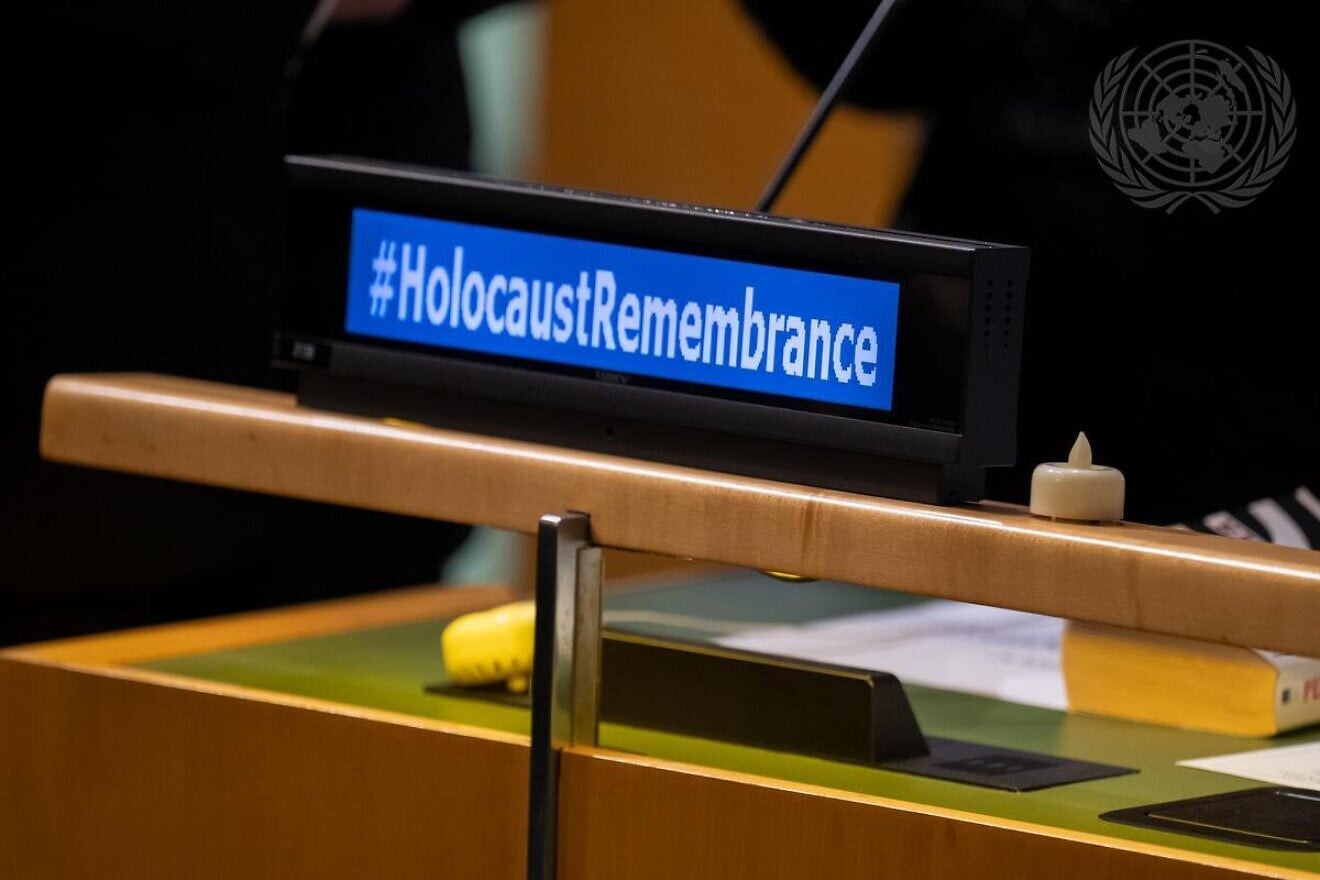
At the U.N. Holocaust Memorial Ceremony on the theme of Holocaust Remembrance for Dignity and Human Rights, Jan. 27, 2025. Credit: Manuel Elías/U.N. Photo.

What does it say about a country where some rudimentary knowledge about the Holocaust is commonplace, but where misleading analogies about it are a routine occurrence in public discourse?

You can ask the same question about the use of the most important term to come out of the Shoah.

The word “genocide” was coined in its aftermath to describe the systematic mass slaughter aimed at the extermination of a single people. But in a country where it is estimated that about three-quarters of American K-12 students get lessons on the murder of 6 million Jews by the German Nazis and their collaborators, it is regularly misapplied to the efforts of the descendants of the survivors of the Holocaust to defend themselves against an attempted genocide.

What has been taught?

As the world commemorates International Holocaust Remembrance Day this week on Jan. 27, the most important question to be asked about public discussion is not so much how to expand education programs devoted to the subject. Rather, it is whether Americans are being taught anything that will help them to understand the subject or what it means today. Even more to the point, it may be necessary to acknowledge that much of what is being taught in schools or said at the ceremonies that will mark this day may actually be doing more harm than good.

As a result, the reaction of the Jewish community to the fuss made about the date ought not to be gratitude for the undoubted efforts of many educators and public officials for keeping the memory of the Six Million alive. Rather, it should be to doubt not only the value of these efforts, but to tell many of them that we’d appreciate it if they simply stopped talking about it.

The point being: If you are promoting memorialization of the Shoah while at the same time dishonoring the memory of the heroes and martyrs of the Holocaust by appropriating their fate to promote some entirely unrelated cause or to express particular displeasure with someone or political foes, the response of the Jewish world should be to tell them to stop.

Even more important, those who cry crocodile tears about the suffering of dead Jews who were slaughtered by their persecutors more than 80 years ago, while smearing live Jews with false charges of genocide, have forfeited their right to speak about the subject.

Unfortunately, that is the proper response this year to all too much of what will be said at countless commemorations of the Holocaust. The subject has been weaponized for political purposes or even to buttress the surge of antisemitism that has spread around the globe since the Hamas-led Palestinian Arab attacks in Israel on Oct. 7, 2023.

One fact that should be noted is that the Jewish people have still not recovered demographically from the disaster of the Holocaust, during which approximately one-third of all Jews alive in 1939 were murdered. Today, the global Jewish population is still far smaller by a factor of about 3 million people than it was in 1939, with half the Jews alive today living in Israel.

Yet many of those who will publicly beat their breasts on Jan. 27 in sorrow about the Six Million are effectively neutral or even in support of the war that Palestinians—backed by much of the Arab and Muslim world, and fashionable opinion elsewhere—are waging against Jews.

Rather than joining them alongside political leaders, journalists, scholars and celebrities who have been part of a growing effort to demonize the one Jewish state on the planet, the response of the community to such events should be a loud and emphatic, “No, thank you!” Honoring the memory of the Holocaust is a sacred obligation. Yet it cannot be done effectively or have any real meaning in a context divorced from the current struggle for Jewish survival against a rising tide of bigotry, hatred and violence.

Denial and false analogies

It is entirely true that Holocaust deniers are not only still among us, but that their visibility and ability to reach the ignorant and ever-gullible consumers of conspiracy theories is greater than ever. For that, the internet can be thanked for the way it has enabled fringe figures once confined to the fever swamps of public discourse to be visible to large audiences. The willingness of podcasters, like former Fox News host Tucker Carlson, to mainstream hateful figures like faux historian Daryl Cooper and neo-Nazi Nick Fuentes plays a large part in this.

But as much as the promotion of these hate-mongers’ lies about the past remains problematic, far too much discourse is distorted among those who don’t believe such falsehoods, though still decide to traffic in Holocaust language and references.

When Minnesota Gov. Tim Walz compared efforts by federal officials to enforce existing laws against illegal immigrants, especially those who have committed crimes, to the efforts of Nazis seeking to capture Jews like Holocaust diarist Anne Frank, the problem isn’t just the cynical appropriation of her memory to pursue a political agenda. Walz is far from the first to behave in this manner. Some on the political right have done the same thing when it comes to opposition to abortion. But in recent years, opponents of President Donald Trump have made false comparisons of him to Adolf Hitler or claimed that he is a Nazi or fascist. It has become so ubiquitous that it almost isn’t worth it to single any of the offenders out.

The problem is not that Walz is unaware of the Holocaust. We know he is not. He is like so many people who have come of age in an era when most Americans possess at least a rudimentary understanding of the basic facts about what happened under the Third Reich. And yet, he and the many others who invoke Frank’s name or use epithets linked to the Holocaust when attacking political foes apparently don’t understand it at all.

Far too much of what passes for Holocaust education is rooted in an attempt to universalize it—to render it not merely more understandable to contemporary audiences but to separate it from its context and the history of antisemitism. In that way, some otherwise well-meaning educators have sought to use it to teach everyone to be nicer to each other and to avoid slipping into racial or religious prejudices. But as scholar Ruth Wisse has taught, antisemitism is not a garden-variety form of hate or intolerance. And it is not merely the oldest hatred. Rather, it is specifically used as a political weapon over and above the way imperfect human beings are prone to slip into unkind or even mean behavior.

The cost of universalizing

The universalization of the Holocaust and the way students are taught a slimmed-down summary of this chapter of history—in brief lessons crammed into the school year—has had unforeseen consequences. It has led to something that survivors, whose numbers are fewer and fewer every year, never envisioned when they began the campaign to spread knowledge of their experiences.

The Holocaust has become a metaphor for anything that people dislike. The predilection to treat anyone with whom we strongly disagree as if they were Hitler is not just a product of the hyperpartisan tone of 21st-century politics or the extreme polarization of the Donald Trump era. It is also the result of the way it has been universalized to the point where many, if not most, ordinary people think it was just a bad thing that happened a long time ago—not the specific result of millennia of Jew-hatred and the powerlessness of nearly an entire people.

Equally unfortunate is the way much of the educational establishment has embraced toxic leftist ideas like critical race theory, intersectionality and settler-colonialism. So-called “progressive” teachings have largely captured primary, secondary and higher education to the point where a generation of Americans has been indoctrinated into believing not merely in concepts that exacerbate racial divisions, but ones that promote the idea that Jews and Israelis are “white” oppressors.

This movement produced the pro-Hamas campus mobs that have targeted Jewish students for intimidation, discrimination and violence since Oct. 7 at universities around the world. Participants are shockingly ignorant of the history of the Middle East, even as they chant slogans endorsing Jewish genocide (“From the river to the sea”) and terrorism against Jews everywhere (“Globalize the intifada”). What they have also done is to appropriate the word genocide, which Holocaust survivor and lawyer Raphael Lemkin coined to describe the Nazi effort to exterminate the Jewish people.

Their claim that Israel’s just war of self-defense against Hamas terrorists is “genocide” is a blatant lie. If applied to any other conflict, it would mean that every war that has ever been fought, including the one waged by the Allies against the Nazis, would be considered genocide. That not only drains the word of its actual meaning. It is, like the libelous efforts to smear Jews as Nazis, a classic trope of antisemitism.

Yet many on the political left, which has embraced this lie about Israel, are also prepared to join in mourning the Holocaust. Some, including that small minority of Jews who, for distorted reasons of their own, join in these antisemitic denunciations of Israelis and their supporters, even claim that they are inspired by the history of the Shoah to speak out against Israel now. Some even support efforts to eradicate the Jewish state—a result that could only be accomplished by the sort of genocidal war that Hamas and its allies are waging.

Our answer to them and others who are either silent about the misappropriation of the Holocaust or join in the blood libels against living Jews while lamenting the fate of dead Jews must be unequivocal.

Prioritize the defense of living Jews

We must tell those, like Walz, who misappropriate the memory of the Six Million, or utter such falsehoods about genocide, like New York City Mayor Zohran Mamdani and others on the intersectional left wing of the Democratic Party, that Holocaust commemorations should be off-limits to them.

The same applies to global organizations like the United Nations, which in 2005 voted to establish International Holocaust Remembrance Day on the anniversary of the liberation of Auschwitz on Jan. 27, 1945. These agencies that claim to speak for human rights and justice for all countries in the world have become cesspools of antisemitism and engines of the war against the Jewish state.

For too long, too many members of the Jewish community have treated the promotion of Holocaust education or ceremonies honoring the dead as more important than efforts to defend the living. 

It’s also true that, as important as teaching young Jews about the Shoah is, it must be linked to learning about the importance of Israel, as well as the life-affirming nature of their heritage and faith.

Above all, we must stop allowing the memory of what happened 80 years ago on Europe’s soil to be used by those who support or are neutral about those seeking to carry on the Nazi project of Jewish genocide. The failure to call an end to this misuse of Jewish history will only contribute to more tragedy.


Jonathan S. Tobin is editor-in-chief of the Jewish News Syndicate, a senior contributor for The Federalist, a columnist for Newsweek and a contributor to many other publications. He covers the American political scene, foreign policy, the U.S.-Israel relationship, Middle East diplomacy, the Jewish world and the arts. He hosts the JNS “Think Twice” podcast, both the weekly video program and the “Jonathan Tobin Daily” program, which are available on all major audio platforms and YouTube. Previously, he was executive editor, then senior online editor and chief political blogger, for Commentary magazine. Before that, he was editor-in-chief of The Jewish Exponent in Philadelphia and editor of the Connecticut Jewish Ledger. He has won more than 60 awards for commentary, art criticism and other writing. He appears regularly on television, commenting on politics and foreign policy. Born in New York City, he studied history at Columbia University.


Zawartość publikowanych artykułów i materiałów nie reprezentuje poglądów ani opinii Reunion’68,
ani też webmastera Blogu Reunion’68, chyba ze jest to wyraźnie zaznaczone.
Twoje uwagi, linki, własne artykuły lub wiadomości prześlij na adres:
webmaster@reunion68.com


Jewish Cemetery Desecrated in Barcelona, More Than 20 Graves Vandalized


Jewish Cemetery Desecrated in Barcelona, More Than 20 Graves Vandalized

David Swindle


Photo of vandalized tombstones in Barcelona via Federation of Jewish Community of Barcelona (CJB).

Vandals on Sunday targeted the Jewish cemetery in Barcelona, desecrating more than 20 graves and smashing tombstones.

The crime comes amid a sharp rise in antisemitic incidents and anti-Israel sentiment across Spain, whose Jewish community has expressed alarm over the increasingly hostile environment.

“We have seen how, at demonstrations, online and on the street, hate speech against Jews became routine. Then signs appeared across the city. Later, posters were hung on public buildings with slogans,” the Jewish Community of Barcelona said in a statement. “After that, a map was published marking Jewish targets, including a school. And now, the desecration of graves. This is not random. This is an escalation. From slogans to marking. From marking to threats. And from threats to action.”

The statement referred to an online platform mapping Jewish-owned businesses, schools, and Israeli-linked companies in Catalonia, a region in northeastern Spain.

A spokesperson for the Catalan police told Agence France Presse that “we are aware of the [cemetery] incident and have opened an investigation,”

The European Jewish Congress (EJC) condemned the vandalism on X.

“What we are seeing is not isolated. It is part of a wider escalation that begins with words, continues with targeting and intimidation and ends in acts like this,” the EJC said. “When hate is normalized in public discourse, the step to physical action becomes smaller.”

Israel’s Foreign Ministry also released a statement with photos of the crime, saying, “We condemn the vandalism of the Jewish cemetery in Barcelona. This despicable act is a result of the anti-Israel campaign by the Sánchez government. We stand with Spain’s Jewish community. Antisemitism must never be normalized and must be firmly rejected in all societies.”

In September, Lorenzo Rodríguez, mayor of Castrillo Mota de Judíos in northern Spain, warned that Spanish Prime Minister Pedro Sánchez had fueled antisemitic sentiment.

“The government is fostering antisemitism that will prove deeply damaging for Spain,” Rodríguez said. “Sánchez’s moves are less about serious foreign policy and more about deflecting attention from his trials and failures in governance.”

Rodríguez described his view that Spain “isn’t leading anything — it’s merely whitewashing Hamas and other terrorist groups.”

Sánchez had told members of his Socialist Workers’ Party that month that Israel should not be allowed to participate in international sports and that the Jewish state “cannot continue to use any international platform to whitewash its image.”

Spain’s Culture Minister Ernest Urtasun has expressed similar calls for boycotting Israel, saying, “We have to make sure that Israel does not take part in the next Eurovision,” referring to the international song contest.

Madrid has been one of the West’s fiercest critics of Israel’s defensive military campaign in Gaza following Hamas’s Oct. 7, 2023, invasion of and massacre across southern Israel.

“What [Israeli] Prime Minister [Benjamin] Netanyahu presented in October 2023 as a military operation in response to the horrific terrorist attacks has ended up becoming a new wave of illegal occupations and an unjustifiable attack against the Palestinian civilian population – an attack that the UN special rapporteur and the majority of experts already describe as a genocide,” Sánchez said in a televised speech last year.

The diplomatic tension between the two nations reached a boiling point in September, when Madrid recalled its ambassador.

The American Jewish Committee (AJC) describes Barcelona as notable for its anti-Israel sentiment, characterizing its position as an “outlier status.”

The AJC wrote in May 2023 that in February of that year, “Barcelona Mayor Ada Colau announced that Spain’s second-largest city would sever ties with its twin city Tel Aviv. The move answered the demands of anti-Israel activists who in January had petitioned the city council to condemn Israel.”

The Anti-Defamation League’s Global 100 report names Spain as one of the most antisemitic countries in Europe (ranked 15 out of 18 in the region), with 26 percent of adults — 10.4 million people — expressing belief in six or more bigoted tropes against Jews.

The Spanish Jewish community recently filed complaints over an online platform that targeted Jewish establishments.

First reported by the local Jewish outlet Enfoque Judío, the interactive map — known as Barcelonaz — was launched by an unidentified group claiming to be “journalists, professors, and students” on the French-hosted mapping platform GoGoCarto.

As a publicly accessible and collaboratively created online platform, the map marked over 150 schools, Jewish-owned businesses — including kosher food shops — and Israeli-linked as well as Spanish and international companies operating in Israel, labeling them as “Zionist.”

Jewish leaders in Spain strongly denounced the BarcelonaZ initiative, warning that it fostered further discrimination and hatred against the community amid an increasingly hostile environment in which Jews and Israelis continue to be targeted.

Amid the backlash, GoGoCarto announced it had removed the BarcelonaZ project from its website after local groups denounced the initiative as blatantly antisemitic and dangerous.


Zawartość publikowanych artykułów i materiałów nie reprezentuje poglądów ani opinii Reunion’68,
ani też webmastera Blogu Reunion’68, chyba ze jest to wyraźnie zaznaczone.
Twoje uwagi, linki, własne artykuły lub wiadomości prześlij na adres:
webmaster@reunion68.com


Dlaczego Zachód jest podzielony w kwestii islamu politycznego

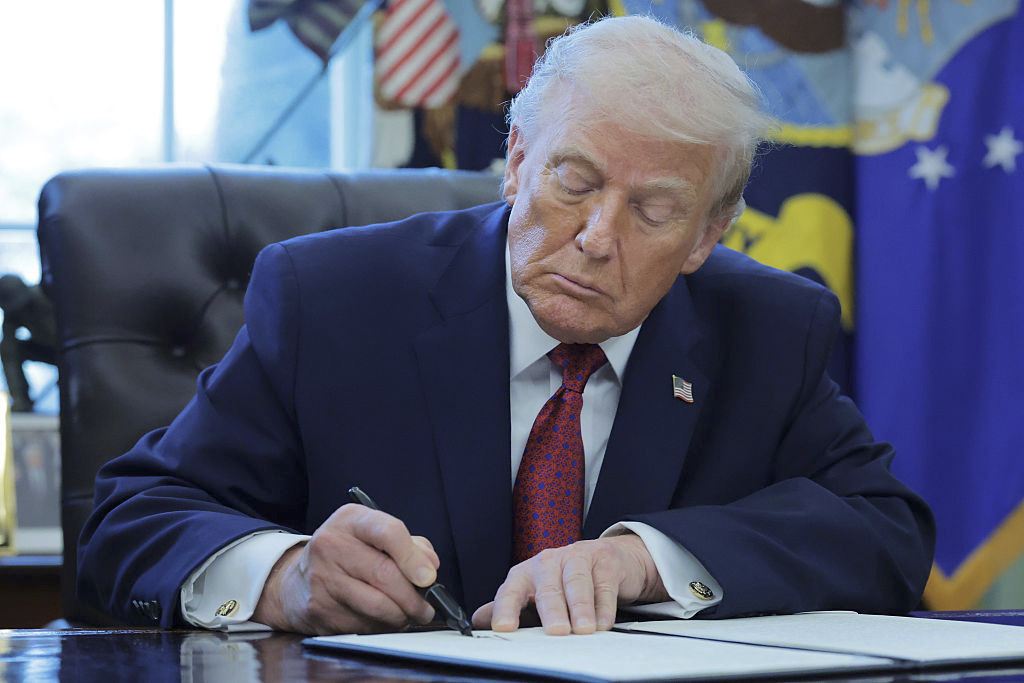
Na zdjęciu: Prezydent USA Donald J. Trump podpisuje rozporządzenie wykonawcze w Białym Domu, 15 grudnia 2025 r., w Waszyngtonie. (Zdjęcie: Anna Moneymaker/Getty Images)


Dlaczego Zachód jest podzielony w kwestii islamu politycznego

Pierre Rehov
Tłumaczenie: Andrzej Koraszewski


24 listopada 2025 r. prezydent USA Donald J. Trump podpisał rozporządzenie wykonawcze, które rozpoczęło formalny proces uznania niektórych oddziałów Bractwa Muzułmańskiego za zagraniczne organizacje terrorystyczne (FTO) oraz globalnych terrorystów specjalnie oznaczonych (SDGT). Rozporządzenie nakazuje sekretarzom stanu i skarbu ocenę oddziałów Bractwa w krajach takich jak Egipt, Jordania i Liban oraz podjęcie działań na podstawie amerykańskiego prawa antyterrorystycznego, by odebrać im zasoby i zdolności operacyjne — posunięcie to zostało wprost powiązane z priorytetami bezpieczeństwa narodowego po inwazji Hamasu na Izrael 7 października 2023 r. i jej konsekwencjach na Zachodzie. Nakreślono harmonogram przedstawienia rekomendacji w sprawie konkretnych oddziałów.

W ten sposób Trump podjął najbardziej zdecydowaną próbę od dekad zmierzenia się z islamistycznymi sieciami politycznymi, które w Waszyngtonie długo były traktowane jako element debaty politycznej, a nie jak śmiertelne zagrożenie dla bezpieczeństwa.

Tymczasem po drugiej stronie Atlantyku reakcja na ten sam nurt ideologiczny nie mogła być bardziej odmienna. W Unii Europejskiej i wielu jej głównych stolicach islam polityczny — często reprezentowany przez organizacje powiązane z Bractwem Muzułmańskim — nadal stanowi element szerszego podejścia opartego na “dialogu z islamistami”. Czy można sobie wyobrazić “dialog z bolszewikami” albo “dialog z III Rzeszą”? Islamscy ekstremiści są traktowani jako uprawniony głos w społeczeństwie obywatelskim i w debacie publicznej. Europejscy decydenci na ogół odrzucają twarde środki prawne, zamiast tego angażując ekstremistyczne sieci muzułmańskie jako interesariuszy w ramach “multikulturowych” modeli rządzenia. Ten kontrast między konfrontacyjnym stanowiskiem Waszyngtonu a ugodowym podejściem Brukseli odzwierciedla głęboki strategiczny rozdźwięk w sposobie, w jaki Zachód postrzega islam polityczny.

To wyraźnie kontrastuje z amerykańską strategią konfrontacji. Administracja Trumpa postrzega Bractwo Muzułmańskie nie jako partnera reform politycznych, lecz jako zagrożenie dla bezpieczeństwa narodowego. Rozporządzenie z listopada 2025 r. podkreśla związki Bractwa z działalnością terrorystyczną, w tym z Hamasem i innymi organizacjami terrorystycznymi. Dyrektywa prezydenta zobowiązuje administrację do zgromadzenia dowodów, które umożliwią uznanie tych struktur za organizacje terrorystyczne, co pozwoliłoby na penalizację wspierania ich oraz ograniczenie ich działalności międzynarodowej.

Ten krok jest efektem wieloletnich debat w administracji i Kongresie USA na temat tego, czy Bractwo spełnia kryteria organizacji terrorystycznej. Historycznie rzecz biorąc, USA odróżniały ugrupowania dżihadystyczne (takie jak Al-Kaida czy ISIS) od islamistycznych ruchów politycznych, jak Bractwo Muzułmańskie, które uczestniczyły w wyborach lub działały w społeczeństwie obywatelskim. Jednak narastająca przemoc islamistyczna i globalna sieć Bractwa skłoniły Waszyngton do zmiany podejścia. Równolegle Kongres USA prowadzi nowe działania ustawodawcze zmierzające do wprowadzenia ram prawnych dla takiego uznania.

W Europie sytuacja wygląda inaczej. UE i stolice państw członkowskich nadal angażują się w dialog z organizacjami powiązanymi z Bractwem Muzułmańskim, oferując im finansowanie, miejsce w konsultacjach obywatelskich i udział w programach polityki multikulturalnej. Przykładem może być Forum Europejskich Organizacji Młodzieży i Studentów Muzułmańskich, które działa w instytucjach unijnych i choć zaprzecza powiązaniom z Bractwem, to niektóre raporty wskazują na takie związki.

Organizacje afiliowane przy Bractwie są obecne w całej Europie — nie tylko wśród studentów. Federacja Organizacji Islamskich w Europie, założona w 1989 roku i mająca siedzibę w Brukseli, stanowi parasol dla dziesiątek ugrupowań islamskich i jest uznanym partnerem instytucji unijnych. Choć przedstawia się jako reprezentantka głównego nurtu muzułmanów, badania akademickie i polityczne wykazują jej głębokie powiązania z Bractwem Muzułmańskim i globalną ideologią islamistyczną.

Europejska polityka “dialogu” wynika z szeroko rozpowszechnionego przekonania, że włączanie “różnorodnych głosów” w struktury społeczne i polityczne ogranicza radykalizację. Krytycy uważają jednak, że angażowanie grup o ideologicznych powiązaniach z islamizmem normalizuje nurty odrzucające wartości liberalne i relatywizuje ekstremizm.

Belgii, zwłaszcza w Brukseli — siedzibie instytucji UE — ta dynamika jest szczególnie widoczna. Raporty parlamentarne ujawniły znaczne fundusze z programów unijnych przekazywane organizacjom powiązanym z Bractwem, co wzbudziło niepokój niektórych eurodeputowanych.

We Francji, rządowy raport z 2025 roku stwierdzał, że sieci Bractwa rozszerzają wpływy przez szkoły, meczety i NGO-sy, kamuflując cele ideologiczne integracją i pomocą społeczną. Prezydent Emmanuel Macron zwołał posiedzenie rządu, by przedyskutować tezy raportu jako zagrożenie dla laickiej republiki. Mimo to pojawiły się oskarżenia o stygmatyzację i upolitycznienie diagnozy.

Podobne napięcia widoczne są w Niemczech, gdzie Wspólnota Islamska Niemiec (IGD) działa legalnie mimo uznania przez służby za centralną strukturę Bractwa. W Szwecji, po publikacji francuskiego raportu, minister Mats Persson powołał zespół ekspertów, ale napotkał silny sprzeciw ze strony socjaldemokratów.

Na całym kontynencie ekstremistyczne organizacje muzułmańskie tworzą sieci edukacyjne i młodzieżowe. We Francji zidentyfikowano setki takich stowarzyszeń, powiązanych z ideologią Bractwa.

Zjawisko “entryzmu“, czyli taktyki infiltracji struktur demokratycznych przez grupy ekstremistyczne, umożliwia islamistom zdobywanie wpływów, kształtowanie debaty publicznej i normalizowanie skrajnych poglądów. W efekcie Zachód asymiluje się do islamu, a nie odwrotnie.

Krytycy wskazują, że europejskie zaangażowanie w sieci Bractwa ma też wpływ na politykę wobec Izraela, gdzie niejednoznaczność UE w ocenie islamu politycznego przyczyniła się do wzrostu radykalizacji i antyizraelskich nastrojów wśród młodych muzułmanów i nie tylko muzułmanów.

Podsumowanie:
Rozporządzenie Trumpa redefiniuje debatę strategiczną — priorytetem staje się bezpieczeństwo narodowe, a nie miraż “dialogu” czy “akomodacji”. Różnice między Europą a USA ukazują głębokie pęknięcie w rozumieniu islamu politycznego: Europa stawia na integrację i inkluzywność, USA — na konfrontację z ideologiami zagrażającymi demokracji.


Pierre Rehov, prawnik (Uniwersytet Paris-Assas), jest francuskim reporterem, powieściopisarzem i dokumentalistą. Autor sześciu powieści, m.in. Beyond Red Lines, The Third Testament i Red Eden. Jego najnowszy esej 7 octobre – La riposte stał się bestsellerem we Francji. Reżyser 17 filmów dokumentalnych kręconych m.in. w strefach wojennych Bliskiego Wschodu, koncentruje się na terroryzmie, uprzedzeniach medialnych i prześladowaniach chrześcijan. Ostatni film Pogrom(s) analizuje wielowiekową nienawiść do Żydów w cywilizacji muzułmańskiej jako główną przyczynę masakry z 7 października.


Zawartość publikowanych artykułów i materiałów nie reprezentuje poglądów ani opinii Reunion’68,
ani też webmastera Blogu Reunion’68, chyba ze jest to wyraźnie zaznaczone.
Twoje uwagi, linki, własne artykuły lub wiadomości prześlij na adres:
webmaster@reunion68.com

Concern about antisemitism on the right isn’t a plot against Vance


Concern about antisemitism on the right isn’t a plot against Vance

Jonathan S. Tobin


The vice president won’t distance himself from a dogmatic faction of Jew-haters led by Tucker Carlson. That’s why some Republicans are drawing conclusions about him.

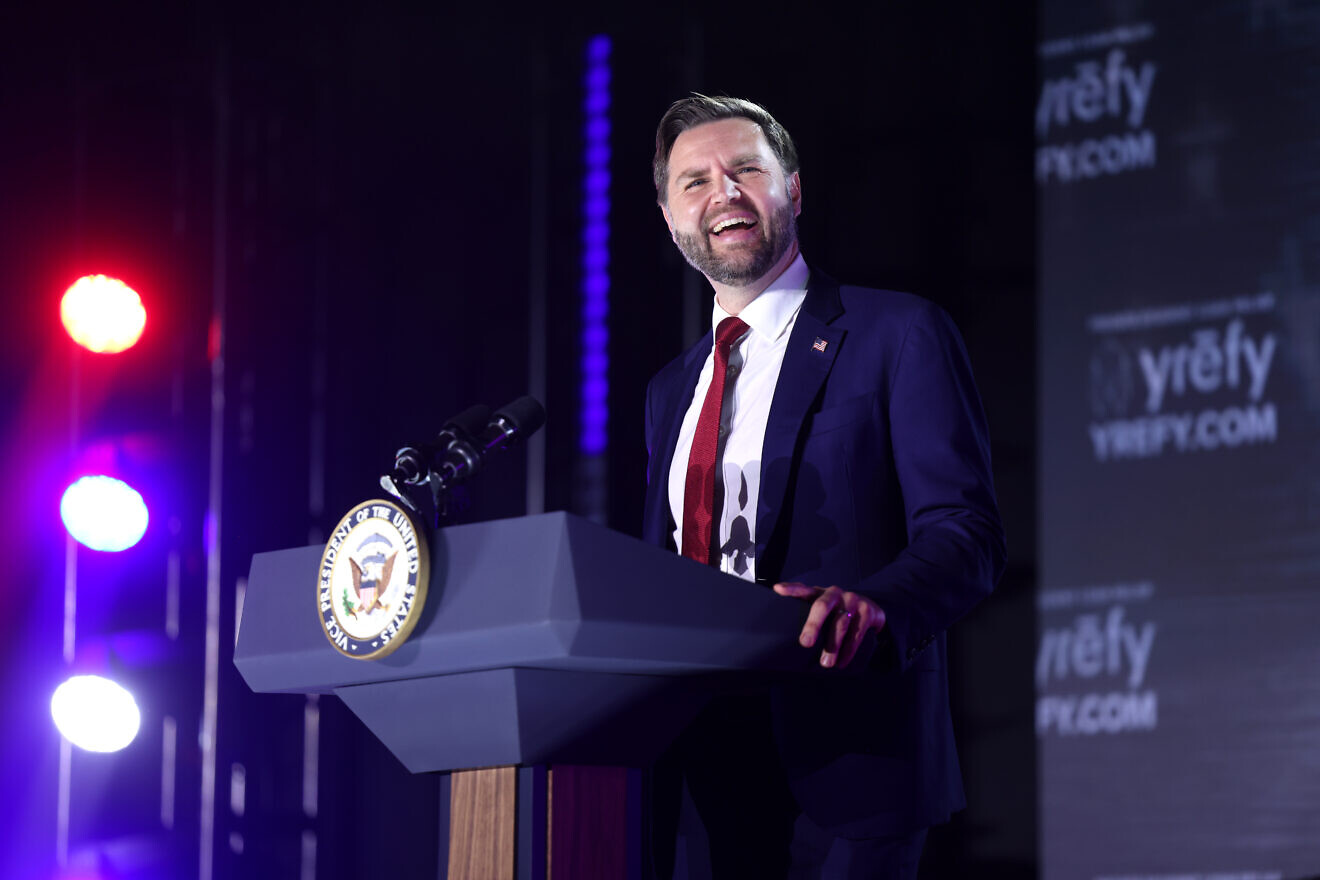
U.S. Vice President JD Vance speaks with attendees at the University of Mississippi tour stop of the “This Is The Turning Point” tour at the SJB Pavilion in Oxford, Miss., Oct. 29, 2025. Credit: Gage Skidmore via Creative Commons.

Believe it or not, 18 months from now, the 2028 presidential race will already have begun. And, assuming that there will actually be a real contest for the Republican nomination, some of Vice President JD Vance’s fans aren’t waiting until the summer of 2027 to begin laying the groundwork for his campaign.

Apparently, their goal is to frame the battle as one between the 41-year-old man who is currently a heartbeat away from the presidency and the former discredited GOP establishment. By that, they refer to those who used to run Washington along with the Democrats before President Donald Trump came down the escalator in Trump Tower in June 2015 and into the country’s political life.

An unwelcome discussion

They are also claiming that those who have noticed the rise of antisemitism inside the Republican Party and the conservative movement in the past year are doing so only to discredit Vance. That was the argument of a recent column in The Spectator by Daniel McCarthy, the editor of the paleoconservative journal Modern Age. It was more or less the same argument made by John Henry Davidson in The Federalist last November as a way to dismiss the criticism of Kevin Roberts, the president of the Heritage Foundation, for his defense of far-right podcaster Tucker Carlson. It also seemed to be the vice president’s explanation for the controversy with comments that he has made about the trouble revolving around whether some people “don’t like Israel.”

That Vance realizes the importance of the issue was made clear last month in his much-anticipated address to the Turning Point USA AmericaFest. There, he declared that the entire discussion about antisemitism among conservatives was not merely unwelcome, but something that was being used to create unnecessary divisions and to distract the right from its main job of defeating the political left.

In his speech, he made it clear that he saw the issue as one of freedom of expression. In this way, he depicted those who are angry about the surge of Jew-hatred around the globe and in the United States as trying to “cancel” conservatives. Following the lead of Carlson and others on the far right, he opposes the backlash against the former Fox News host’s platforming of antisemitism and Holocaust denial. Vance seems to view anger about this as no different from the deplorable manner in which leftists silenced dissent against their toxic doctrines during the moral panic about race following the death of George Floyd over the course of the Black Lives Matter summer of 2020.

The problem with this is more than the fact that this is an utterly disingenuous evaluation of the controversy that has divided the right in the months since the assassination of Turning Point USA founder Charlie Kirk. Since then, Carlson hosted neo-Nazi “groyper” leader Nick Fuentes in a chummy interview on his podcast. In the past year since hosting faux historian and Holocaust denier Daryl Cooper, Carlson’s show has been largely devoted to platforming virtually anyone who will bash Israel and promote the idea that Jews are controlling American foreign policy and the media, all classic tropes of Jew-hatred. He has also become an uncompromising defender of Qatar, the country that is funding Islamist propaganda and terrorism.

Candace Owens, another popular though thoroughly unhinged right-wing podcaster, has gone even further down the rabbit hole of antisemitism and conspiracy theories. She alleges that the Jews and Israelis are guilty of Kirk’s murder on the Utah Valley University campus and various other crimes while also seeking to promote age-old hard-core tropes about the Jews, such as depicting the Talmud as a hate tract.

Vance thinks that he ought not to be asked to condemn these lunatics or even to distance himself from Carlson, a friend who did a lot to foster his political career. Indeed, he remains close to him, reportedly having lunch with the podcaster in the White House on Jan. 9, after which Carlson was allowed to sit in on a meeting between Trump, Vance and oil executives when Venezuela was being discussed.

Megyn Kelly’s temper tantrum

He’s not alone. Megyn Kelly, another heretofore responsible conservative voice who has condemned antisemitism and supported Israel, now believes that it is unreasonable to ask her to do the same when it comes to her friends Carlson and Owens. Indeed, she is so angered by these requests that she has turned on both Jews and Israel.

In what can only be described as a childish tantrum aired in an appearance on Carlson’s show this week, she has declared that she would “rather die” than condemn the anti-Jewish hate flowing from that program or that of Owens. Furthermore, she says she now believes that the media is controlled by Jews “who are not telling the truth about Israel,” as if the overwhelming majority of corporate legacy media hasn’t been mainstreaming Hamas propaganda ever since the terrorist attacks on Oct. 7, 2023. Echoing Carlson, she repeats that the issue isn’t Muslim antisemitism and support for Islamist terror, but that Jews and friends of Israel are responsible for promoting hatred of Muslims in America.

It’s important to remember that Carlson and Kelly are not insignificant figures on the far right but influential media personalities with vast followings on social media, as well as millions of viewers and listeners of their shows. Though Owens and Fuentes don’t have the veneer of respectability that Carlson and Kelly acquired during their stints as prime-time Fox News hosts, they have audiences that number in the millions. More to the point, among them are a sizable percentage of the many young Republicans and conservatives currently working in official Washington.

While Kirk was a strong believer in debate with anyone on anything, he labored to keep his organization free of the influence of Fuentes and the groypers. Now that he’s gone, there is no one to guard the gates of conservatism. Indeed, Vance and others on the right seem to be taking the position that in the post-BLM era, any sort of gatekeeping, even to keep out the most vicious hate-mongers, is wrong.

Is Trump a ‘neoconservative’?

For Vance and his media cheerleaders, any efforts to get him to take a side in the debate about whether there is room in the conservative movement for antisemites are not merely a distraction from the right’s main task of taking on the left. They feel that it’s all just a trick by neoconservatives to win back control of the Republican Party by thwarting the ambitions of Vance.

This is ludicrous for a number of reasons.

Neoconservatism, per se, was a movement that was deeply important and indeed crucial to moving on from the dominant liberalism of the mid-20th century and to winning the Cold War against the Soviet Union. Since then, it has become identified with the failed wars in Iraq and Afghanistan. But to the extent that it actually means anything in 2026, it is merely a way for some on the right to refer to what they think are Jews and others who support Israel. It is a boogeyman with which they can link to any cause they don’t like. It’s also the way they refer to opposition to the kind of extreme isolationism promoted by the likes of Carlson, who more often than not can be found speaking up for any opponent of the United States, whether in Moscow, Tehran or Caracas. That includes not merely Russian President Vladimir Putin, the Qataris and the Iranians (who have started broadcasting Carlson on the Islamic Republic’s state propaganda network). It also includes former Venezuelan president and narco-terrorist Nicolás Maduro, whom Carlson praised for his opposition to gay marriage.

What makes all this even crazier is that there is no differentiation between what these defenders of Vance label as neoconservatism or Bush-era Republican establishmentarians and the actual foreign policy of the Trump administration in which he is serving. As Trump has repeatedly made clear, there is no real daylight between the positions of the United States and Israel on the key issues of Gaza and Iran, which is completely at odds with what Carlson, Kelly and their groyper fans are supporting. Trump’s definition of “America First” is nothing like the “America Only” doctrine that Carlson backs.

Moreover, the administration has prioritized the battle against antisemitism, as was illustrated by the tough tactics that the president has employed against elite universities that tolerated and encouraged the pro-Hamas mobs that targeted Jewish students since Oct. 7.

Moral obfuscation

Yet when asked by CNN’s Scott Jennings to declare that the conservative movement has no room for antisemitism on his radio show, as with every previous opportunity he has been given to put himself on the right side of the issue, Vance prevaricated. While condemning Jew-hatred, he did it in the same manner that many on the left do so—by coupling it to other issues, thereby denying the very real and growing problem.

As writer Liel Liebovitz noted, his response was “malicious moral obfuscation” and not the kind of moral clarity that Americans have a right to expect from a vice president, let alone someone who aspires to the presidency.

Bringing this up is inconvenient for those who see Vance as the future of the Republican Party, as well as the man who can shift the GOP away from the stalwart pro-Israel policies and implacable opposition to anti-Jewish positions that Trump has brought it. 

But doing so is not part of a plot to derail Vance’s 2028 candidacy. To the contrary, as the current frontrunner to succeed Trump, conservatives of all stripes want Vance to take stands that are not just moral but also popular, and thus likely to help Republicans hold onto the White House.

Carlson and now Kelly may think a neo-Nazi like Fuentes is smart and represents views that everyone should listen to. But those individuals who think being soft on antisemitism is smart politics don’t really know anything about the American people. Mimicking the left’s hatred for Israel and alliance with Islamists that has been evident since Oct. 7 is not a winning formula for a party, the vast majority of whose voters are supporters of the Jewish state.

It’s not unfair to ask Vance to take a stand on what is clearly one of the great moral issues of our time, as well as one linked to the defense of Western civilization, against those on the left who wish to tear it down. His failure to do so—and his determination to stick with his buddy Carlson—isn’t a distraction or an attempt to force him into a struggle session in which he does the bidding of a mythical all-powerful Israel lobby. It’s a test of his character. Unfortunately, much like Megyn Kelly, he’s currently failing it.


Jonathan S. Tobin is editor-in-chief of the Jewish News Syndicate, a senior contributor for The Federalist, a columnist for Newsweek and a contributor to many other publications. He covers the American political scene, foreign policy, the U.S.-Israel relationship, Middle East diplomacy, the Jewish world and the arts. He hosts the JNS “Think Twice” podcast, both the weekly video program and the “Jonathan Tobin Daily” program, which are available on all major audio platforms and YouTube. Previously, he was executive editor, then senior online editor and chief political blogger, for Commentary magazine. Before that, he was editor-in-chief of The Jewish Exponent in Philadelphia and editor of the Connecticut Jewish Ledger. He has won more than 60 awards for commentary, art criticism and other writing. He appears regularly on television, commenting on politics and foreign policy. Born in New York City, he studied history at Columbia University.


Zawartość publikowanych artykułów i materiałów nie reprezentuje poglądów ani opinii Reunion’68,
ani też webmastera Blogu Reunion’68, chyba ze jest to wyraźnie zaznaczone.
Twoje uwagi, linki, własne artykuły lub wiadomości prześlij na adres:
webmaster@reunion68.com