
Archives

Ustawa o usługach cyfrowych: mechanizm masowej cenzury


Ustawa o usługach cyfrowych: mechanizm masowej cenzury

Drieu Godefridi


Według krytyków unijna Ustawa o usługach cyfrowych (DSA) w praktyce zmusza amerykańskie platformy do pełnienia roli „policji słowa” na rzecz UE, pod nieustanną groźbą dotkliwych sankcji. W ten sposób DSA wywołuje eksterytorialne skutki, wykraczające daleko poza Europę. To kluczowa kwestia: każdy amerykański użytkownik platformy X może zostać przez nią ukarany za wyrażenie opinii. W praktyce DSA stosowany jest więc wobec wszystkich Amerykanów. Ten wymóg stanowi ewidentny przykład imperializmu normatywnego, który charakteryzuje Unię Europejską od ponad dwóch dekad.

Jedyną możliwą techniczną alternatywą byłoby stworzenie oddzielnych platform – X-USA i X-EU – co byłoby zaprzeczeniem samej idei globalnej sieci i internetu jako takiego.

Komisja Sprawiedliwości Izby Reprezentantów USA potępiła ten system jako formę „zorganizowanej cenzury”, w ramach której UE „uzbraja” organizacje pozarządowe, by zmuszały amerykańskie firmy technologiczne do usuwania treści, które są zgodne z prawem USA, ale uznane za „problematyczne” w Europie.

Kary mogą sięgać 6% globalnych obrotów firmy, co w przypadku podmiotów takich jak Meta czy Google oznacza potencjalne miliardy euro. W razie braku współpracy platformy mogą nawet zostać czasowo zablokowane na rynku unijnym.

W środowisku ścisłego egzekwowania przepisów platformy są silnie motywowane do nadmiernej moderacji, by ograniczyć ryzyko regulacyjne, co prowadzi do usuwania treści, które są całkowicie legalne. Mówimy tu o ok. ośmiu milionach postów miesięcznie usuwanych w UE – nie licząc całkowitych banów, np. dla rosyjskich mediów.

Priorytetem jest walka z treściami nielegalnymi. Zgodnie z przepisami UE i prawem krajowym należą do nich mowa nienawiści (np. nawoływanie do przemocy na tle rasowym czy religijnym), treści terrorystyczne, materiały z wykorzystywaniem seksualnym dzieci, towary podrabiane i produkty niebezpieczne… A jednak centralny problem pozostaje: „nienawiść” nie została nigdzie zdefiniowana w przepisach.

Warto podkreślić, że dezinformacja sama w sobie nie jest nielegalna. DSA wymusza więc aktywną cenzurę treści, które są zgodne z prawem – ale nie podobają się europejskim książętom i ich legionom cenzorów.

Amerykańska wolność słowa nie przetrwa w cieniu „Wielkiego Brata” zwanego DSA.

Czym jest DSA?

DSA, przyjęty przez Unię Europejską w 2022 r., a w pełni obowiązujący od lutego 2024 r. w stosunku do tzw. bardzo dużych platform internetowych (VLOP) – takich jak X, Facebook, TikTok czy Google – nie jest oficjalnie przedstawiany jako instrument „zorganizowanej cenzury”. W założeniu ma być ramami regulacyjnymi dla usług cyfrowych, chroniącymi użytkowników przed nielegalnymi treściami, ryzykiem systemowym oraz nieprzejrzystymi praktykami platform.

Jednak coraz więcej krytyków – zwłaszcza w USA, m.in. Elon Musk oraz republikańscy kongresmeni – postrzega DSA jako mechanizm masowej cenzury. Ich zdaniem ustawa narzuca biurokratyczny nadzór nad wolnością wypowiedzi i umożliwia selektywne tłumienie poglądów opozycyjnych.

Na wstępie trzeba zaznaczyć, że DSA dotyczy wszystkich pośredników cyfrowych (platform, dostawców hostingu i powiązanych usług), choć obowiązki są znacznie bardziej rygorystyczne wobec VLOP-ów, czyli platform mających ponad 45 milionów użytkowników miesięcznie w UE.

Kto cenzuruje? (Zaangażowane podmioty)

Cenzura – przemianowana na „moderację” – nie jest bezpośrednio sprawowana przez UE ani przez rządy krajowe. Została delegowana na same platformy, które działają pod ścisłym nadzorem administracji krajowych. Efektem jest zdecentralizowany, lecz silnie kontrolowany system, który krytycy określają jako biurokratyczną „industrializację moderacji”.

Platformy cyfrowe są głównymi wykonawcami tej polityki. Mają one obowiązek aktywnie moderować treści, a w przypadku VLOP-ów wymagania są szczególnie surowe. Muszą one przeprowadzać analizy „ryzyk systemowych”, takich jak rozpowszechnianie dezinformacji, oraz wdrażać proaktywne działania, w tym algorytmy wykrywające i zespoły moderatorów. Platformy poniżej progu 45 milionów użytkowników mają mniej obowiązków, ale i tak muszą reagować na zgłoszenia.

Komisja Europejska pełni rolę głównego nadzorcy VLOP-ów. Może wszczynać postępowania, żądać dostępu do danych i nakładać grzywny. Przykładowo, w grudniu 2025 r. nałożono na X karę 120 mln euro za rzekomy brak przejrzystości w praktykach moderacyjnych – zwłaszcza dotyczących tzw. „niebieskich znaczników”, które miały ostrzegać przed treściami rzekomo promującymi dezinformację.

UE wyznacza też tzw. „zaufanych sygnalistów” – zazwyczaj są to organizacje pozarządowe, których zgłoszenia muszą być traktowane priorytetowo. W oficjalnym wykazie figurują organizacje uznawane za lewicowe lub skrajnie lewicowe, jak HateAid (Niemcy) czy UNIA (Belgia).

Każde państwo członkowskie UE wyznacza krajowego koordynatora ds. usług cyfrowych (DSC) – np. ARCOM we Francji czy BNetzA w Niemczech – który nadzoruje platformy niebędące VLOP-ami i współpracuje z UE. To oni zajmują się skargami lokalnymi i nakładają sankcje. Najbardziej restrykcyjne kraje, jak Niemcy i Francja, mają nieproporcjonalny wpływ na cały system, co prowadzi do obniżania standardów wolności słowa w całej UE – treść zgłoszona w jednym kraju jest w praktyce zgłaszana w całej Unii.

Dodatkowo, każda osoba może zgłosić treść przez mechanizm „zgłoś i działaj” (notice-and-action). Zaufani sygnaliści, akredytowani przez DSC, mają uprzywilejowaną pozycję: ich zgłoszenia są traktowane priorytetowo i często skutkują szybkimi usunięciami.

W grudniu 2025 r. Stany Zjednoczone zakazały wjazdu pięciu Europejczykom, w tym byłemu komisarzowi Thierry’emu Bretonowi, za wywieranie presji na amerykańskie platformy internetowe.

Jak to działa? (Mechanizmy)

DSA tworzy szczegółowy, zorganizowany proces, który krytycy porównują do taśmy produkcyjnej cenzury.

  1. Zgłoś i działaj: Każdy może zgłosić treść jako nielegalną. Platformy muszą ją szybko przeanalizować – często w ciągu 24–48 godzin. W przypadku VLOP-ów wykorzystywane są również algorytmy AI do skanowania treści.
  2. Analiza ryzyka systemowego: VLOP-y muszą przeprowadzać coroczne audyty ryzyka, w dziedzinach takich jak dezinformacja, zagrożenia dla zdrowia psychicznego czy procesów demokratycznych, oraz wdrażać środki zaradcze, np. depriorytetyzację postów.
  3. Obowiązki w zakresie przejrzystości: Platformy muszą uzasadniać każdą decyzję o usunięciu treści (art. 17 DSA), publikować półroczne raporty (np. 41,4 mln usuniętych treści w UE w I połowie 2025) i oferować mechanizmy odwoławcze. W praktyce są one nieprzejrzyste i powolne, co zachęca do prewencyjnej cenzury.

Organy UE i DSC prowadzą też kontrole, np. poprzez „tajemnicze zakupy”, by sprawdzić przestrzeganie przepisów, jak w przypadku handlu nielegalnymi produktami na Temu.

Wysokość grzywien może sięgnąć 6% globalnego obrotu firmy. W razie braku współpracy możliwa jest tymczasowa blokada platformy na terenie UE.

Na jakiej podstawie? (Kryteria „moderacji”)

Kryteria moderacji nie są jednolite ani jasno określone. Opierają się na prawie unijnym i krajowym, co sprawia, że system jest nieprzejrzysty i podatny na nadużycia. Termin „nienawiść” nie ma spójnej definicji, co pozwala na jego dowolną interpretację.

Nielegalne treści to priorytet. Należą do nich: mowa nienawiści, treści terrorystyczne, wykorzystywanie dzieci, podróbki, niebezpieczne produkty (np. „lalki pedofilskie” na Temu).

Ale to, co uznaje się za „nienawiść”, zależy od ideologicznej interpretacji. Nazwanie polityka „skrajną prawicą” nie jest ścigane, natomiast wskazywanie na związki między islamską imigracją a antysemityzmem – już tak.

W rzeczywistości pojęcie „nienawiści” jest używane jako pretekst do cenzurowania opinii niezgodnych z lewicową ortodoksją.

W USA obowiązuje zasada: państwo nie może zakazywać wypowiedzi wzywających do użycia siły lub łamania prawa, chyba że mają one na celu i są zdolne do wywołania bezpośrednich działań bezprawnych. Jest to ochrona wynikająca z Pierwszej Poprawki.

Druga kategoria dotyczy „ryzyka systemowego”, tylko dla VLOP-ów. Obejmuje szkody dla nieletnich, przemoc, uzależniające treści czy dezinformację – np. dotyczącą zdrowia publicznego, wyborów czy szczepionek. Te treści nie są nielegalne, ale uznawane za szkodliwe, co prowadzi do ich degradowania lub cenzury.

W 2025 roku stu ekspertów ds. wolności słowa ostrzegło, że DSA doprowadzi do „rozbicia globalnej wolności słowa”.

Amerykańska wolność słowa nie przetrwa w cieniu „Wielkiego Brata” zwanego DSA.


O autorze: – Drieu Godefridi – prawnik (Université Saint-Louis, Uniwersytet w Louvain), filozof, doktor teorii prawa (Sorbonne – Paris IV). Przedsiębiorca, dyrektor europejskiej grupy edukacyjnej oraz PAN Medias Group. Autor książki The Green Reich (2020).

Link do oryginału: https://www.gatestoneinstitute.org/22180/digital-services-act-censorship

Gatestone Institute, 9 stycznia 2026


Zawartość publikowanych artykułów i materiałów nie reprezentuje poglądów ani opinii Reunion’68,
ani też webmastera Blogu Reunion’68, chyba ze jest to wyraźnie zaznaczone.
Twoje uwagi, linki, własne artykuły lub wiadomości prześlij na adres:
webmaster@reunion68.com



Iran’s Revolution


Iran’s Revolution

Bernard-Henri Lévy


The people urging President Trump to negotiate with the Iranian regime don’t understand what they are looking at

A billboard of Iran’s Supreme Leader Ali Khamenei set ablaze in Tehran during nationwide protests in January 2026 / X.com

I tremble as I write these lines.

For Iran—brave and heroic Iran—trembles on the edge of a horrific bloodbath.

And I have no doubt that the fascist regime of the mullahs will take, if it can, a terrible revenge on the civilians who are defying it.

But the reality is clear.

What has been happening for the past eight days in the cities of ancient Persia is not a revolt. It is a revolution. The difference? Both tiny and immense. A revolt—Iranians have known at least five revolts in the past 15 years—demands reform, the mitigation of misery, negotiation. A revolution expects none of that and does not accommodate, at all, the hated order of things; it does not seek the adjustment of the regime, but its replacement.

Tocqueville: A revolution begins when people cease to imagine the future as an anamorphosis of the past.

Hannah Arendt: An insurrection challenges power; a revolution rejects its very principle and foundation.

This kind of event is rare in human history. But this is where the Iranians now stand. When they say, “Death to Khamenei,” they have crossed that threshold and entered this new era of both hope and tragedy.

Of course, the uprising may still be crushed. Of course, we are speaking of thousands of women and men executed in the secrecy of the electronic night that has fallen over the country. And, of course, we know of revolutions that ended drowned in blood.

But what has been has been. The Iranian women and men who have shouted at the top of their lungs that they want to live, but are ready to die for that, will not turn back. They will no longer accept the offers of negotiations made by cornered ayatollahs.

Those who fail to understand this are grotesque.

To those who still dare to reduce this conflagration to some so-called American Zionist plot—shame on them.

They are already and forever in the dustbins of History.

Small-minded, petty spirits, obsessed with order in all things, are choking: “How can this be a revolution? A revolution requires a leader; it wants to see only one head; and we see no head, except that exile, that ghost of Pahlavi …”

Oh, the fools! Oh, the ignorant! And History, thank heaven, has so much more imagination than they do!

First of all, why not Pahlavi? What do they know about him, other than that he is his father’s son? And what do they know of the mysterious alchemy that arises between a people and a man—any man—once he finds the right words at the right moment and the honorable gestures at a time when honor itself is lacking?

But above all, it does not matter. History does not wait for events to present themselves with a cast list, an organizational chart, and approved spokespersons.

And if revolutions, by definition, have no laws, there is nevertheless this rule: Revolutions choose their faces as they move forward; it is revolutions that create the men called to embody them, not already-named men who lead revolutions.

No one knew Danton or Robespierre on the eve of 1789. No one knew Lenin when he boarded his sealed train in Zurich for Petrograd. And on the eve of Solidarity, Lech Wałęsa was just another worker in Gdańsk, who spoke poorly and prayed a lot and whose most notable feat was climbing over a wall to enter a striking shipyard.

Calm down, good souls who demand a man!

That man will come. And it may very well be a woman.

And now Trump … ah, Trump! How, ask the same people, can Iranian revolutionaries dare to call for help from a scoundrel, a fascist, a certified counterrevolutionary like Trump?

Yes, ladies and gentlemen, you who never stop giving lessons—this is where your ignorance becomes obscene.

For no one knows whether Trump will respond to this desperate call. It is perfectly possible that, if he were to strike, it would be Venezuela-style—opening the door to “a magnificent deal with a tremendous guy” salvaged, at the last minute, from the ruins of the old regime.

But we have known since Machiavelli that a man without virtue can, unknowingly, perform a virtuous act.

We have known since Hegel that the great turning points of History are often accomplished, as if by ruse, by men who have no idea what they are doing—and even less what they are unleashing.

From some Roman emperor bringing about, without truly intending it, the 2,000-year reign of Christianity, to Napoleon Bonaparte, that tyrant who exported the spirit of 1789 by war—how many men unworthy of what they nevertheless made possible!

If Trump, by caprice, narcissism, or calculation, were to decide to strike the Iranian regime—and if, by striking it, he were to hasten its collapse—he would be absolved of nothing.

But History would have to be seen as it is: ironic, unjust in its instruments, but just in its effects—and one would say of the act that it was great, even if the man was not.


Translated by Emily Hamilton


Bernard-Henri Lévy is a philosopher, activist, filmmaker, and author of more than 45 books including Israel Alone, The Genius of Judaism, American Vertigo, Barbarism with a Human Face, Who Killed Daniel Pearl?, and The Empire and the Five Kings. His fourth film on Ukraine, Our War, was released in June 2025.


Zawartość publikowanych artykułów i materiałów nie reprezentuje poglądów ani opinii Reunion’68,
ani też webmastera Blogu Reunion’68, chyba ze jest to wyraźnie zaznaczone.
Twoje uwagi, linki, własne artykuły lub wiadomości prześlij na adres:
webmaster@reunion68.com


Powolna i cicha islamska transformacja Zachodu


Powolna i cicha islamska transformacja Zachodu

Hugh Fitzgerald


Za sprawą przemian demograficznych oraz ideologicznej infiltracji, islam nieustannie – choć powoli – zdobywa zachodnioeuropejskie państwa. Więcej na temat marszu islamu ku zwycięstwu w Europie można przeczytać tutaj: „Islamizacja zachodnich demokracji: wielkie, niebezpieczne i ciche przejęcie” autorstwa Eliyahu Haddada, Jerusalem Post, 31 grudnia 2025 r.:

To, co niegdyś wymagało 500 lat militarnych podbojów, dziś dokonuje się w zaledwie 50 lat dzięki imigracji i zmianom demograficznym. Populacja muzułmanów w Europie wzrosła z poniżej 1% w 1970 roku do prognozowanych 10–14% w roku 2050 – to prawdziwa transformacja.

Obecnie w Europie żyje 46 milionów muzułmanów, przy całkowitej populacji wynoszącej 745 milionów.

Zachodnia cywilizacja stoi dziś nie w obliczu podboju, lecz zastąpienia – i to przy wykorzystaniu własnych mechanizmów demokratycznych oraz ideologicznego paraliżu.

Ta transformacja jest „cicha” nie dlatego, że jest niewidoczna – zmiany są oczywiste – lecz dlatego, że w społeczeństwach zachodnich dyskusja na ten temat została zdelegalizowana. Przejęcie odbywa się na dwóch frontach: fizycznym, poprzez zmiany demograficzne, oraz ideologicznym, za sprawą wojny cyfrowej.

Liczba muzułmanów w Europie rośnie z trzech powodów. Po pierwsze – trwa nieprzerwana imigracja muzułmanów, legalna i nielegalna, na poziomie około dwóch milionów rocznie. Po drugie – muzułmanki mają znacznie wyższy wskaźnik dzietności niż rdzenne Europejki, których współczynnik urodzeń spadł poniżej poziomu zastępowalności pokoleń (2,1). Matki muzułmańskie rodzą średnio o jedno dziecko więcej niż matki niemuzułmańskie. Po trzecie – każdego roku kilkaset tysięcy Europejczyków przechodzi na islam.

Fizyczne zastąpienie nie wymaga inwazji – wystarczą otwarte granice, zachęty socjalne i różnica w dzietności, która gwarantuje wzrost liczby muzułmanów przy równoczesnym załamaniu populacji rdzennych mieszkańców.

Podbój ideologiczny wykorzystuje media społecznościowe w bezprecedensowy sposób. Państwa takie jak Iran, Katar i Turcja inwestują miliardy w sieci botów oraz medialne imperia propagujące narracje proislamskie i antyizraelskie.

Katarska stacja Al Jazeera stała się jedną z największych organizacji medialnych na świecie, a jej dziennikarzom zaleca się, by w każdej relacji przemycali propagandę wspierającą islam i potępiającą Izrael. Izrael jest jedynym krajem na świecie, który zakazał działalności Al Jazeery na swoim terytorium. Oprócz Al Jazeery, zarówno Zjednoczone Emiraty Arabskie, jak i Arabia Saudyjska posiadają dobrze finansowane, państwowe rozgłośnie medialne. Wśród autorów Wikipedii liczba muzułmańskich redaktorów przewyższa liczbę żydowskich w stosunku 40 do 1; wywarli oni ogromny wpływ na sposób, w jaki świat postrzega konflikt arabsko-izraelski, przygotowując dziesiątki milionów czytelników Wikipedii do negatywnego odbioru państwa żydowskiego, jednocześnie przedstawiając grupy terrorystyczne – Hamas, Hezbollah oraz Hamas – jako prowadzące uzasadniony „opór”.

Bractwo Muzułmańskie działa poprzez pozornie niezależne kanały: media, organizacje pozarządowe, partie polityczne i meczety. Stosując strategię „cierpliwego ekstremizmu”, oddziały Bractwa przedstawiają przemoc jako „opór”, a hasła o charakterze ludobójczym jako „antykolonializm”, tym samym zyskując poparcie zachodnich progresistów…

Bractwo Muzułmańskie skutecznie „przejęło” zachodnich „progresistów”. Jego członkowie są obecni nie tylko w świecie islamskim, lecz także w krajach zachodnich. Bractwo kontroluje meczety, posiada własne media – w tym kilka kanałów satelitarnych – prowadzi organizacje pozarządowe i partie polityczne. Zarządza ogromną siecią szkół, także na Zachodzie, które często ukrywają swoje powiązania z Bractwem.

Wybór Zohrana Mamdaniego na burmistrza Nowego Jorku symbolizuje przejście od ostrożnej imigracji do aktywnego przekształcania amerykańskiej polityki. To pierwszy muzułmański burmistrz największego miasta w USA…

Mamdani nie zamierza poprzestać na zarządzaniu Nowym Jorkiem. Chce wpływać na politykę USA wobec muzułmanów i Izraela na poziomie krajowym, kontynuując swoją linię obrony islamu i Hamasu oraz ataków – na wszelkie możliwe sposoby – na państwo żydowskie, które oskarża o „ludobójstwo”.

Miasto Hamtramck w stanie Michigan stało się pierwszym amerykańskim miastem, w którym cała rada miejska składa się z muzułmanów – i natychmiast zakazała wywieszania flag Pride w miejscach publicznych. Muzułmanie należą dziś do największych grup etnicznych w Michigan, a ich poparcie miało rzekomo zapewnić Trumpowi zwycięstwo w tym kluczowym stanie.

W tym miejscu autor się myli: wyborcy muzułmańscy w Michigan nie przyczynili się do zwycięstwa Trumpa, choć sami lubią tak twierdzić. Muzułmanie stanowią jedynie 1,8% głosujących w wyborach prezydenckich w tym stanie. Ich wpływ był nieistotny.

Największą innowacją Bractwa Muzułmańskiego jest zastąpienie podboju fizycznego podbojem cyfrowym. Iran operuje największą na świecie siecią botów. Katarska Al Jazeera dociera do 430 milionów widzów w 150 krajach, systematycznie kształtując narracje antyizraelskie. Skutki są zdumiewające: 50% Amerykanów w wieku 18–29 lat sympatyzuje dziś bardziej z Palestyńczykami niż z Izraelczykami – to całkowite odwrócenie tendencji poprzednich pokoleń.

Al Jazeera ma większy globalny zasięg niż jakakolwiek inna firma medialna poza BBC. Dostarcza swojej widowni nieustanny strumień dezinformacji i kłamstw, które ukształtowały narrację o Izraelu i odwróciły dużą część opinii publicznej świata przeciwko państwu żydowskiemu. Wbrew często powtarzanym hasłom o tym, jakoby „Żydzi kontrolowali media”, obecność izraelska w mediach jest pięćdziesięciokrotnie mniejsza niż samej Al Jazeery. Rodzina Al Thani, która rządzi Katarem, zainwestowała miliardy dolarów w rozwój Al Jazeery – jej sieci transmisyjnej i dziennikarzy; Izrael nie jest w stanie konkurować z takim finansowaniem.

Być może najbardziej podstępna jest manipulacja Wikipedią. Przy sześciu miliardach odwiedzin miesięcznie, redaktorzy promujący narrację propalestyńską przewyższają liczebnie tych proizraelskich w stosunku 40 do 1, co zapewnia systematyczne wypaczenie przekazu w największym na świecie źródle wiedzy.

Arabowie doskonale rozumieją, że Wikipedia to dziś pierwsze miejsce, do którego kieruje się większość świata w poszukiwaniu nie tylko bieżących informacji, ale i kontekstu historycznego konfliktów, w tym wojny arabsko-izraelskiej. Trzeba przekonać decydentów, by przeznaczyli więcej środków na rekrutację i opłacenie uczestników tej niekończącej się Bitwy o Wikipedię.


Link do oryginału: https://jihadwatch.org/2026/01/the-slow-and-silent-islamic-transformation-of-the-west

Jihad Watch, 4 stycznia 2026


Zawartość publikowanych artykułów i materiałów nie reprezentuje poglądów ani opinii Reunion’68,
ani też webmastera Blogu Reunion’68, chyba ze jest to wyraźnie zaznaczone.
Twoje uwagi, linki, własne artykuły lub wiadomości prześlij na adres:
webmaster@reunion68.com

Don’t invoke the Holocaust in debate about ICE


Don’t invoke the Holocaust in debate about ICE

Jonathan S. Tobin


Liberal Jews are rallying behind the partisan effort to use the death of Renee Good to end the enforcement of immigration laws. That isn’t defending Jewish interests or values.

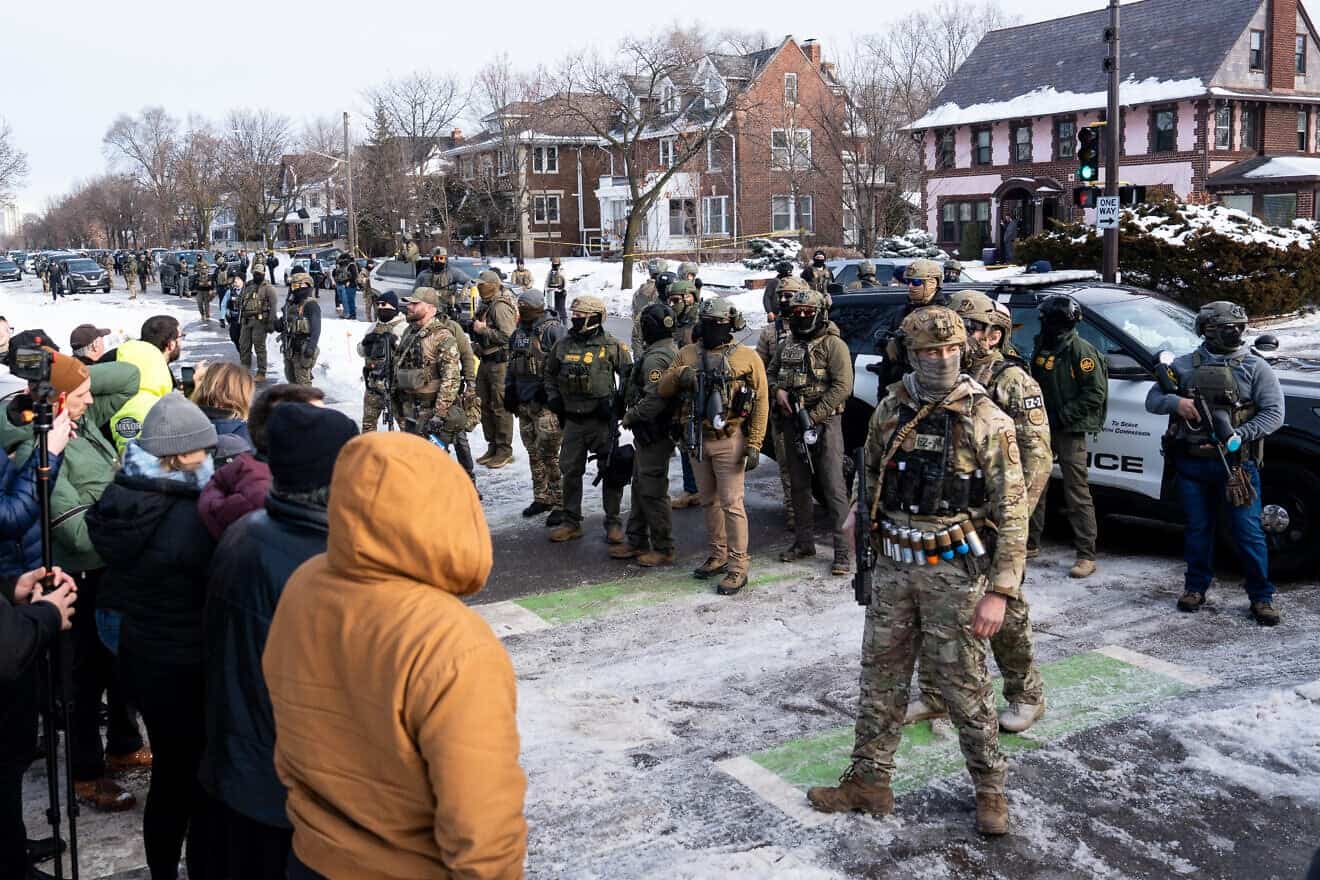
Portland Avenue and 34th Street in South Minneapolis, where an ICE agent shot a woman leaving an immigration protest by car, later identified as 37-year-old Renee Good, Jan. 7, 2026. Credit: Chad Davis Photography/Flickr via Wikimedia Commons.

Is it 2020 in America all over again? To some extent, the fatal shooting of Renee Good in Minneapolis by an agent of the U.S. Immigration and Customs Enforcement (ICE) on Jan. 7 has become a rerun of the events that followed the killing of George Floyd by a police officer in the same city on May 25, 2020. While the cases are very different, both tragic deaths almost immediately became fodder for an emotional national argument that transcends or even obscures the particular details of the incidents.

What happened to Good on a street in Minneapolis has fomented an angry dispute not only about whether the agent who fired on her had a reason to shoot, but also has become a referendum on President Donald Trump’s determination to use ICE to enforce immigration laws. As such, reactions to the incident are a Rorschach test about opinions on not just Trump, but whether the agency’s arrests of illegal immigrants are sound public policy. Inevitably, liberal and left-wing Jewish groups have been weighing in on the controversy in the wake of Good’s death, joining the calls for the abolition of ICE and ending the enforcement of immigration laws.

Demonizing ICE

This position is a reminder of the demands for defunding the police that were widespread after Floyd’s killing. But while the national reaction to the death of a 37-year-old mother has not reached the same level of hysteria as it did over Floyd, it has provoked a loud and divisive politicized debate. Since last year, pundits, politicians and protesters have used language to describe ICE’s conduct to bolster the argument that the policy being pursued by the government was not just misguided but something far worse.

The issue of what to do about illegal immigration is one about which reasonable people can differ. The problem is that many on the political left now treat any concern about the issue as illegitimate or proof of racism and xenophobia.

The massive flood of several million migrants into the United States without permission during the four years of the Biden administration had seemed to shift the discussion on the issue. The harmful impact of what amounted to an invasion of illegals lowered working-class wages, raised housing costs and overwhelmed the social service agencies of many communities. As such, it was a major factor in Trump’s 2024 re-election and caused many Democrats to mute their previous support for amnesty for illegals and/or support for government benefits for them.

The spectacle of ICE agents carrying out raids since Trump returned to the White House a year ago, however, has been portrayed in much of the liberal media as not only an abuse of government power but an authoritarian policy aimed at arresting innocent people.

The agency’s actions are part of an effort to make good on Trump’s promise to deport at least some of what may be as many as 20 million to 30 million people, rather than the 11 million to 14 million figure usually cited in the media (a 2018 Yale University study showed that the number then was more than 22 million—a number undoubtedly boosted by the invasion of illegals that happened on President Joe Biden’s watch).

Inappropriate analogies

Democratic politicians like Minnesota Gov. Tim Walz have called ICE “Trump’s modern-day Gestapo.” Gov. JB Pritzker of Illinois, who is Jewish and ought to know better, told NPR last September that due to ICE’s actions, the United States is “essentially” becoming “Nazi Germany.” The use of this kind of inflammatory rhetoric has only gotten worse since Good’s death, as, among others, various New York Times columnists have called the agency a “secret police,” as well as a fascist force whose main intent is to silence political dissent against Trump.

This is being echoed by a collection of leftist Jewish groups not merely to condemn Good’s killing, but to call for the abolition of ICE and a return to Biden’s lawless “open borders” policy. Not coincidentally, some of these same groups, like T’ruah, have been in the forefront of those attacking Israel’s efforts to defend itself since the Hamas-led Palestinian Arab attack on Oct. 7, 2023. The Jewish Council on Public Affairs, a coalition of liberal community-relations councils, has not only joined the ranks of those mourning Good but attacked ICE for encouraging racism and militarizing communities.

This is hardly surprising, given the way that liberal Jews and some of their organizations have treated the issue of illegal immigration. Most American Jews, like most Americans, in general, are the descendants of immigrants. Still, the effort to portray the current dilemma as no different from the situation in the early or mid-20th century is both unpersuasive and disrespectful to the past.

For several years, the use of inappropriate analogies between illegal migrants in the United States and Holocaust victims has become commonplace. Actress Natalie Portman, who portrayed Anne Frank on Broadway as a teenager, compared the Holocaust diarist to those seeking to evade American law enforcement. She wasn’t alone. In 2023, Biden also spoke of the flood of illegals coming into the country on his watch as akin to the victims of the Shoah.

Such analogies are both outrageous and divorced from the facts. While conditions in Central America or other nations, whose citizens have sought to cross into the United States without going through the legal process, may not be good, very few of these millions of illegals are in the position Jews were in the Europe of the 1930s and ’40s, literally fleeing for their lives because they were members of a group marked for death.

While sympathy for immigrants may be understandable, no matter how they entered, it’s not an issue where order should be tossed aside; that only shows contempt for the rule of law and for Americans harmed by this policy.

The Reform movement came perilously close to counseling its congregations not to cooperate with federal agents if they sought to search synagogues for lawbreakers, while still claiming that they were not giving legal advice. The Conservative movement joined in a lawsuit brought by a variety of liberal faith groups that sought to make their institutions the moral equivalent of medieval European cathedrals, where those on the run from the law could claim “sanctuary.”

This effort to demonize ICE seems to be rooted in a viewpoint that regards laws against illegal immigration as invalid—in essence, an effort to declare that the United States, alone among the nations, has no right to determine who may or may not enter and under what circumstances. It also reflects a highly selective and hypocritical attitude toward the question of whether it is appropriate to harass or even attack law-enforcement officers when they are carrying out their duties.

When police shoot protesters

One day before the Minneapolis shooting was the anniversary of the Capitol riot on Jan. 6, 2021. Those events five years ago quickly morphed from a disgraceful incident into one in which Trump acted recklessly, turning it into a political weapon his opponents then tried to employ to discredit all who had voted for him and to brand half of the country as opponents of democracy. Politics aside, Jan. 6 was an example of what happens when activists think that they have the right to ignore or abuse law enforcement.

The beatings of Capitol Police who attempted to stop the rioters from entering the halls of Congress are frequently cited as a great crime that should not be forgotten. But it’s also important to remember that, misleading news reports notwithstanding, the only person actually killed that day was not one of the policemen but one of the rioters, 35-year-old Air Force veteran Ashli Babbitt. A conspiracy theorist, she was in the process of breaking the law by illegally entering the Capitol and deserved to be punished for that.

Babbitt was unarmed, though, and posed no immediate physical threat to the Capitol Police officer who shot her dead. Had that officer killed a BLM protester under such circumstances, he would probably have been prosecuted and convicted of murder, like Floyd’s killer. Instead, he evaded accountability and was praised for carrying out his duties by the same people now comparing the agent who killed Good to Hitler’s murderers.

The circumstances of Good’s death are also highly controversial, and the question of whether the ICE agent broke the law has not been clarified by the various videos of the incident that have been released. Even if he was wrong to fire his weapon at her, that doesn’t mean he had no reason to fear for his life. Nor does it obscure the fact that she and others had been actively seeking to prevent ICE agents from obeying lawful orders to arrest illegals.

That ought not to be interpreted as a license by officers to fire when they should not. That’s true even if the officer in question had previously been the victim of an incident in which he was dragged by a felon—seeking to avoid arrest—behind the wheel of a car. Yet the notion that she was merely an innocent bystander or protester who was murdered by Trump’s “Gestapo” is to ignore both the facts and the context of the situation. Whatever their motives or intentions, when people impede law enforcement, it’s bound to lead to unfortunate results, no matter what government agents do.

Just as Floyd’s killing became fodder for a national moral panic about race that was largely unjustified, Good’s death is also being inappropriately employed for political purposes.

However horrific Floyd’s death was, the incident was seized upon as proof that the unjustified killings of blacks in America by police were a routine event and that the United States was still an irredeemably racist nation more than half a century after the triumph of the civil-rights movement. That was a myth rooted in falsehoods. But it didn’t stop many on the political left from using this widespread belief, fueled by media misinformation, as justification for advocacy for defunding the police. It led to a summer of demonstrations that rocked major cities, with millions participating, as well as hundreds of “mostly peaceful” riots that led to the deaths of at least 19 people and as much as $2 billion in damage to property, including federal, state and municipal buildings.

The response to Good’s death has not been as extreme. But it is also being interpreted as justifying the rhetoric about Trump being a fascist and ICE as his Storm Troopers.

That, too, is unjustified.

The images coming from ICE raids may disturb anyone sympathetic to illegal immigrants. But the reason for them is that for decades, under both Democratic and Republican presidents, illegal immigration was allowed to continue, and millions evaded the law with impunity. As with any act of law enforcement, the case of each individual can be argued on its own. Nevertheless, the notion that it is wrong for officials to arrest those who have evaded deportation orders or are flouting the law is simply untenable. It would not be applied to any other form of law-breaking. The reason in this case is that the issue has become a political football for Trump’s opponents.

The rule of law is a Jewish value

Those who say that the efforts of ICE violate Jewish values are misinterpreting those beliefs. Sympathy for the stranger is part of the Jewish tradition. So, too, is the concept of obeying the laws of the nation where Jews reside.

There is nothing in Judaism or Jewish history that ought to dictate whether the United States should have open borders or that those who enter it illegally should do so with impunity, regardless of the deleterious impact this has on most Americans. Illegal immigration does not harm corporations that rely on it to depress working-class wages. Nor does it bother members of the country’s credentialed elites (Jews among them) who rely on such workers to perform menial tasks at wages lower than they would have to pay U.S. citizens. But that is not a reason to view those living outside the law as being no different from those who fled the Nazis.

That said, non-enforcement of immigration laws does harm Jews in other ways.

The unregulated torrent of people over the border (before Trump effectively halted the flood of illegals) raised questions about the flow of not merely illegal drugs and sex trafficking but also terrorists, especially at a time of rising antisemitism. Similarly, ICE’s efforts to arrest those who had violated the terms of their visas by taking part in illegal pro-Hamas protests and acts of intimidation aimed at Jews are also part of Trump’s campaign against campus antisemitism. Abolishing ICE wouldn’t just mean open borders; it would facilitate the way Marxist and Islamist mobs seek to make it an open season on American Jews.

Left-wing Jews are, like everyone else, free to advocate for a return to Biden’s lax policies or to change the laws to give amnesty for illegals or to make it easier for migrants to enter the country. But what happened to Renee Good is no reason to end efforts to enforce existing laws. Nor should anyone rush to judgment about the circumstances of her death in a way that creates a precedent that legitimizes efforts to obstruct law enforcement that no sensible person should wish to set.

Equally important, it is wrong to treat this issue as one even remotely comparable to what happened in Nazi Germany to 6 million Jews, who were legal, productive citizens of the European countries in which they lived. Doing so doesn’t just dishonor the Holocaust. It undermines the rule of law, which is, in America and elsewhere, essential to Jewish security.


Jonathan S. Tobin is editor-in-chief of the Jewish News Syndicate, a senior contributor for The Federalist, a columnist for Newsweek and a contributor to many other publications. He covers the American political scene, foreign policy, the U.S.-Israel relationship, Middle East diplomacy, the Jewish world and the arts. He hosts the JNS “Think Twice” podcast, both the weekly video program and the “Jonathan Tobin Daily” program, which are available on all major audio platforms and YouTube. Previously, he was executive editor, then senior online editor and chief political blogger, for Commentary magazine. Before that, he was editor-in-chief of The Jewish Exponent in Philadelphia and editor of the Connecticut Jewish Ledger. He has won more than 60 awards for commentary, art criticism and other writing. He appears regularly on television, commenting on politics and foreign policy. Born in New York City, he studied history at Columbia University.


Zawartość publikowanych artykułów i materiałów nie reprezentuje poglądów ani opinii Reunion’68,
ani też webmastera Blogu Reunion’68, chyba ze jest to wyraźnie zaznaczone.
Twoje uwagi, linki, własne artykuły lub wiadomości prześlij na adres:
webmaster@reunion68.com

China Warns Against Foreign ‘Interference’ in Iran as Trump Mulls Response to Regime Crackdown


China Warns Against Foreign ‘Interference’ in Iran as Trump Mulls Response to Regime Crackdown

Algemeiner Staff


A demonstrator lights a cigarette with fire from a burning picture of Iran’s Supreme Leader Ayatollah Ali Khamenei outside the Iranian embassy during a rally in support of nationwide protests in Iran, in London, Britain, Jan. 12, 2026. Photo: REUTERS/Toby Melville

China on Monday expressed hope that the Iranian regime would “overcome” the current anti-government protests sweeping the country, warning against foreign “interference” as US President Donald Trump considered how to respond to Iran’s deadly crackdown on nationwide protests.

“China hopes the Iranian government and people will overcome the current difficulties and uphold stability in the country,” Chinese foreign ministry spokesperson Mao Ning told reporters during a press conference.

“China always opposes interference in other countries’ internal affairs, advocates that all countries’ sovereignty and security should be fully protected by international law, and opposes the use or threat of force in international relations,” she continued. “We call on parties to act in ways conducive to peace and stability in the Middle East.”

The comments came as Iran continued to face fierce demonstrations, which began on Dec. 28 over economic hardships but escalated into large-scale protests calling for the downfall of the country’s Islamist regime.

If the regime in Tehran was seriously weakened or potentially collapsed, it would present a problem for a strategic partner of Beijing.

China, a key diplomatic and economic backer of Tehran, has moved to deepen ties with the regime in recent years, signing a 25-year cooperation agreement, holding joint naval drills, and continuing to purchase Iranian oil despite US sanctions.

China is the largest importer of Iranian oil, with nearly 90 percent of Iran’s crude and condensate exports going to Beijing. Traders and analysts have said that Chinese reliance on Iranian oil will likely increase and replace Venezuelan oil after US forces captured Venezuela’s President Nicolas Maduro earlier this month.

Iran’s growing ties with China come at a time when Tehran faces mounting economic sanctions from Western powers, while Beijing itself is also under US sanctions.

According to some media reports, China may be even helping Iran rebuild its decimated air defenses following the 12-day war with Israel in June.

The extent of China’s partnership with Iran may be tested as the latter comes under increased international scrutiny over its violent crackdown on anti-regime protests.

US-based rights group HRANA said by late Monday it had verified the deaths of 646 people, including 505 protesters, 113 military and security personnel, and seven bystanders. The group added that it was investigating 579 more reported deaths and that, since the demonstrations began,10,721 people have been arrested.

Other reports indicated the number of protesters killed by the regime numbers were well into the thousands, but with the regime imposing an internet blackout since Thursday, verification has been difficult.

Trump has said he will intervene against the regime if security forces continue killing protesters. Adding to threats of military action, Trump late on Monday announced that any country doing business with Iran will face a new tariff of 25 percent on its exports to the U.S.

“This order is final and conclusive,” he said in a social media post.

According to reports, Trump was to meet with senior advisers on Tuesday to discuss options for Iran, including military strikes, using cyber weapons, widening sanctions, and providing online help to anti-government sources.

Iran has warned that any military action would be met with force in response.

“Let us be clear: in the case of an attack on Iran, the occupied territories [Israel] as well as all US bases and ships will be our legitimate target,” Iranian parliament speaker Mohammad Baqer Qalibaf told a crowd in Tehran’s Enqelab Square on Monday, adding that Iranians were fighting a four-front war: “economic war, psychological warfare, military war against the US and Israel, and today a war against terrorism.”

However, the White House stressed that Trump hopes to find a diplomatic resolution.

“Diplomacy is always the first option for the president,” White House press secretary Karoline Leavitt told reporters on Monday.

“What you’re hearing publicly from the Iranian regime is quite different from the messages the administration is receiving privately, and I think the president has an interest in exploring those messages,” she said.

Iranian Foreign Minister Abbas Araqchi told Al Jazeera that he and US envoy Steve Witkoff have been in contact.

Trump said on Sunday the US could meet Iranian officials and he was in contact with Iran’s opposition.


Zawartość publikowanych artykułów i materiałów nie reprezentuje poglądów ani opinii Reunion’68,
ani też webmastera Blogu Reunion’68, chyba ze jest to wyraźnie zaznaczone.
Twoje uwagi, linki, własne artykuły lub wiadomości prześlij na adres:
webmaster@reunion68.com
