
Archives

Reshaping the Diaspora: Israeli Migration Is Changing Jewish Life Across Europe


Reshaping the Diaspora: Israeli Migration Is Changing Jewish Life Across Europe

Ailin Vilches Arguello


Pro-Israel demonstrators gathered at Bebelplatz in central Berlin on Nov. 30, 2025, before marching toward the Brandenburg Gate. Participants held Israeli flags and signs condemning rising antisemitism in Germany. Photo: Michael Kuenne/PRESSCOV/Sipa USA via Reuters Connect

Even as antisemitic incidents across Europe reach levels unseen in decades following Hamas’s Oct. 7, 2023, massacre across southern Israel, Jews and Israelis continue to move to the very cities where Jewish identity feels most fraught — creating an unlikely, though often uneven, pattern of demographic renewal at the heart of today’s Jewish diaspora. It is a quiet shift that persists against all odds: growth where fear might suggest retreat.

Despite an increasingly hostile social and political climate, Jewish life in much of Europe is not shrinking. In some places, it is holding steady — and in others, growing. Indeed, according to recent demographic reports, Israeli immigrant communities in Europe are among the fastest-growing Jewish communities in the world.

In Berlin, Hebrew can be heard on park benches and in co-working spaces. In Amsterdam, Jewish schools report steady enrollment and new Hebrew-speaking parents arriving each semester. In London cafés, Israeli students trade WhatsApp groups for housing and internships, while British Jewish institutions describe newcomers who arrive anxious but eager to build communities. Meanwhile, new Chabad houses continue to open across the continent.

Today, Europe is home to nearly 30 percent of all Israelis living outside the country — roughly 190,000 to 200,000 people — with their population steadily increasing across the continent, according to a report from the Institute for Jewish Policy Research (JPR).

JPR data shows that Israel-born Jews now make up nearly 50 percent of the Jewish population in Norway, 41 percent in Finland, and over 20 percent in Bulgaria, Ireland, Spain, and Denmark.

Over the past decade, the number of Israeli-born Jews has grown significantly in Baltic countries (135 percent), in Ireland (95 percent), in Bulgaria (78 percent), in the Czech Republic (74 percent), in Spain (39 percent), in the Netherlands (36 percent), in Germany (34 percent), and in the UK (27 percent).

Europe today is witnessing both rising antisemitism and a growing presence of Israelis — a dynamic that upends long-held assumptions about Jewish life on the continent and challenges popular narratives about Jewish “safety” and migration in the post-Oct. 7 era. Demographers, Jewish leaders, and recent residents describe a moment defined not by disappearance, but by movement, recalibration, and — in some places — cautious renewal.

“You can really see the growth in recent years,” said Shai Doitsh, who lives in Berlin and serves as the director of community development at Israeli Community Europe (ICE) — a nonprofit organization dedicated to supporting Israeli immigrants in 16 cities across the continent. “Our Shabbat dinners keep getting bigger, services are fuller, events are livelier. You can feel a vibrant, thriving Jewish life across the cities we serve.”

A Post–Oct. 7 Europe Transformed

The paradox is clear: antisemitism has reached levels not seen in decades, yet European Jewish communities are being stabilized — and in some cases subtly grown — by Israeli arrivals. Europe today hosts more Israel-born Jews than ever before, and many are arriving even as hostility rises.

“There’s no denying the risk and rising antisemitism, but Jewish life isn’t shrinking — it’s growing,” Doitsh told The Algemeiner, adding that ICE is even opening new centers in other European countries to meet higher demand for community services.

This quiet influx is unfolding against one of the most challenging climates European Jews have faced in the 21st century.

Governments and Jewish security organizations across the continent have documented a dramatic rise in anti-Jewish hate crimes since the Oct. 7 atrocities. Germany recorded more than 2,000 antisemitic incidents in 2024 — nearly double pre-Oct. 7 levels. While Germany’s Jewish population has grown in some urban centers, the rise in antisemitic crimes has prompted heightened security in schools, synagogues, and community hubs.

In the UK, the Community Security Trust (CST) — a nonprofit charity that advises Britain’s Jewish community on security matters — recorded 1,521 antisemitic incidents from January to June this year. This was the second-highest number of antisemitic crimes ever recorded by CST in the first six months of any year, following 2,019 incidents in the first half of 2024.

Last month, hundreds of anti-Israel demonstrators gathered outside St. John’s Woods Synagogue in London to protest the war in Gaza. In widely circulated social media videos, protesters are seen chanting, “We don’t want no two states, Palestine 48,” and “From the river to the sea, Zionism is f– treif.”

France presents a similar pattern. According to the French Interior Ministry, the first six months of 2025 saw more than 640 antisemitic incidents, a 27.5 percent decline from the same period in 2024, but a 112.5 percent increase compared to the first half of 2023, before the Hamas-led invasion of southern Israel. 

Across the country, Jewish families have reported removing mezuzot, changing children’s school routes, and avoiding synagogues unless armed security is present.

In France, rising antisemitism and economic factors have led to slight declines in the number of Jewish households, particularly in Paris and Marseilles. While French Jews continue to live, work, and participate in communal life, emigration to Israel and other European countries slightly outpaces arrivals.

Smaller European nations — including Spain, Belgium, and Central/Eastern European states — have seen modest Israeli migration, sometimes doubling small local communities.

Amid this increasingly fraught climate, Doitsh said a real sense of vulnerability persists, affecting people’s daily lives as community members and families take new precautions about where they go and what they wear.

For the first time in years, ICE-sponsored events across multiple countries have even had to introduce security. He also noted that organizers are changing event locations and keeping addresses private.

“The community is now dealing not only with antisemitism but with violence, hostility, and open hatred. Many people feel unsafe in their daily lives,” Doitsh said. 

Yet fear has had a counterintuitive effect: strengthening community life.

“Antisemitism has reinforced community ties,” said Professor Sergio DellaPergola, chairman of JPR’s European Demography Unit and a leading scholar of Jewish population studies. “People seek solidarity and connection. When they feel vulnerable, they look for their own community.”

The Truth Behind the Numbers: An Uneven Trend 

Though Israeli-born Jewish communities in Europe have grown substantially in recent years, the trend remains complex and uneven throughout the region.

“This is not a moment of large waves of Jewish migration,” Dr. Daniel Staetsky, senior research fellow at JPR, told The Algemeiner. “What we are observing are moderate but meaningful movements, and they vary significantly by country.”

While the total Jewish population in Europe may not be growing substantially in absolute numbers, its composition is changing dramatically. This shift reflects two interconnected trends: the demographic decline of native European Jews and the rising number of Israeli Jews relocating to the continent. Even modest arrivals can have a significant impact against the backdrop of an aging Jewish population.

“In Western Europe, immigration from Israel has helped stabilize Jewish populations and, in some cases, create slight increases,” DellaPergola told The Algemeiner. “But these increases occur against a background of demographic decline, especially in countries like Germany and Italy, where fertility is very low.”

In other words, Israeli immigration helps keep European Jewish populations stable, masking the underlying decline of “native” communities where low fertility would otherwise shrink the absolute number of Jews.

Western European nations such as Germany and the Netherlands have seen their Jewish numbers bolstered in recent years by Israelis seeking economic opportunities, academic programs, and, paradoxically, a sense of stability.

In Germany, Israeli arrivals are concentrated in Berlin, Frankfurt, and Munich. Hebrew-language classes and Jewish cultural programming have expanded, stabilizing what would otherwise be a declining population due to low fertility. Security concerns remain elevated, but the communities themselves report renewed energy.

In the Netherlands, slow but steady Israeli immigration helps counterbalance demographic decline. Amsterdam schools, synagogues, and youth programs increasingly rely on this influx.

“Immigration from Israel has played a stabilizing role for countries like the Netherlands,” Staetsky said. “It is not large enough to reverse aging or lower fertility, but it slows decline and creates demographic balance.”

Meanwhile, Britain’s Jewish community has remained largely steady at around 313,000, compared with approximately 300,000–320,000 a decade ago. 

According to a 2018 JPR study, high birthrates among Haredi Orthodox Jews are responsible for the recent growth in the number of British Jews after decades of decline. Births in the British Jewish community have reportedly exceeded deaths every year since 2006, implying “Jewish demographic growth in the United Kingdom.”

France’s Jewish population, at roughly 438,500 today, was estimated to be over 500,000 in the mid-2010s — a gradual decline tied in part to emigration and rising antisemitism. 

Eastern European Jewish communities, particularly in the Baltics, are also shrinking due to low fertility and ongoing migration, as increasing numbers make aliyah to Israel. 

DellaPergola told The Algemeiner that this trend reflects long-term structural factors rather than a sudden ideological shift.

“There is a dynamic flow,” he said. “Many Israelis move to Europe, but simultaneously many European [Jews] move to Israel. You have arrivals and departures, and the result in most countries is relative stability.”

However, DellaPergola also acknowledged that the war in Israel has dramatically altered migration patterns.

In 2024, approximately 80,000 Israelis left the country while only 24,000 returned, creating an unprecedented negative migration balance of almost 58,000 people, according to the Israeli Bureau of Statistics.

“I expect this trend to continue into 2025, marking a second consecutive year of negative migration, something unprecedented,” DellaPergola said. 

Some of these emigrants may be responsible for the recent growth of Israeli communities in Europe, according to Staetsky.

Earlier this year, a study by the Israel Democracy Institute found that over one in four Israelis are contemplating leaving the country, pointing to the high cost of living, security and political concerns, and “the lack of a good future for my children” as key factors. Of those considering emigration, the European Union is the top destination (43 percent), surpassing North America and Canada (27 percent).

A Demographic Paradox

Staetsky emphasized that most Jewish migration today is not driven by ideology or fear alone. 

“Migration trends reflect a balance of economic and social considerations,” he told The Algemeiner. “People move where they believe opportunity is strongest.”

Europe’s future as a Jewish center is far from assured. Fertility rates across the continent remain low. Political volatility is rising. Trust in public institutions varies sharply by country. For many Israeli families abroad, Europe is not necessarily a permanent destination but part of a global career trajectory. 

This uncertainty is not abstract. For some Israelis living in Europe, it has become deeply personal. Take the case of Benjamin Birley — an Israeli Jew living in Rome and a social media influencer — whose experience lays bare the strain many Jews say they now feel in their everyday lives.

Birley came to Italy to pursue a doctoral degree and has spent the past several years there. But he says the climate has shifted sharply, with the Israeli–Palestinian conflict seeping into daily interactions in ways he describes as “unbearable.” Even though he must return to finish his program, he has decided to leave Europe temporarily and go back to Israel “to get some fresh air and breathe.”

“Italy in general has a lot of anti-Israel sentiment,” Birley told The Algemeiner. “There is just a relentless Palestinianism that is always in the media, in the culture, in your local café.”

“If you’re Jewish or Israeli and you’re openly Jewish or Israeli in Italy, you have to be prepared for endless conversations and debate and hostility with random people who literally have no idea what they’re speaking about. And for me that was just not a sustainable way to live,” he said. 

DellaPergola cautioned against long-term predictions. “I believe it is not worth making projections given the difficult and uncertain times European Jewish communities are experiencing,” he said. 

If there is a takeaway, it is not a grand demographic narrative but a more complex and human one: Israelis and Jews are weighing fear against opportunity, identity against mobility, history against present-day realities. They are choosing Europe not because it is uniquely safe, but because it still offers possibility — even amid threat.

The story of Jews in Europe after Oct. 7 is not retreat. It is one of presence and a quiet reshaping of diaspora patterns in a world where the old certainties no longer hold.

While Europe’s Jewish future remains uncertain, it is being rewritten, not erased.


Zawartość publikowanych artykułów i materiałów nie reprezentuje poglądów ani opinii Reunion’68,
ani też webmastera Blogu Reunion’68, chyba ze jest to wyraźnie zaznaczone.
Twoje uwagi, linki, własne artykuły lub wiadomości prześlij na adres:
webmaster@reunion68.com


Importowana niewdzięczność


Importowana niewdzięczność

Paul Finlayson


Dlaczego znaczące odłamy mniejszości imigrantów zwracają się przeciwko demokracjom, które ich uratowały? 

To osobliwa cecha współczesnego Zachodu, że historie, z którymi najbardziej powinniśmy się zmierzyć, są właśnie tymi, od których najbardziej uciekamy. Dlatego zaczynamy — nie od sloganów, nie od frazesów politycznych, nie od odruchowego samozadowolenia, które stało się znakiem rozpoznawczym naszej klasy politycznej — lecz od niewygodnego faktu: w trzech z najbezpieczniejszych demokracji świata mężczyźni uratowani przez te demokracje przelali krew swoich wybawców.

To zmusza nas do ponownego spojrzenia na prawdę, którą udajemy, że nie znamy: że wdzięczność nie jest prostym bilansem zysków materialnych, ani odruchem wyuczonym przez awans społeczny, lecz stanem duchowym — postawą duszy, a nie konta bankowego.

Można żyć w komforcie i nadal być pełnym żalu; można zostać ocalonym od niebezpieczeństwa i mimo to czuć się nieustannie skrzywdzonym. Wdzięczność wymaga wewnętrznej orientacji na pokorę, pamięć i wyobraźnię moralną — cechy, których nie da się wyprodukować żadnym programem socjalnym, zasiłkiem azylowym ani seminarium integracyjnym. A gdy tych cech brakuje, nawet najbezpieczniejsze azyle świata mogą stać się sceną groteskowej niewdzięczności.

W Waszyngtonie, afgański obywatel — ewakuowany z ruin upadłego państwa, obdarzony azylem, mieszkaniem i nowym życiem — otworzył ogień do dwóch żołnierzy Gwardii Narodowej. W Londynie, młody mężczyzna o imieniu, z brutalną ironią, Dżihad zamordował żydowskich cywilów na ulicach kraju, który udzielił mu schronienia. W Kanadzie byliśmy świadkami, jak osoby ubiegające się o azyl — zakwaterowane w bezpłatnych hotelach i wspierane zasiłkami — dopuszczały się ataków nożami, aktów ekstremizmu i prób zamachów bombowych. To nie są przypadki większości. Nawet nie są częste. Ale są prawdziwe — a rzeczywistości należy się zaszczyt uznania.

Zanim przejdę do głębszych przyczyn takich aktów, muszę zacząć od czegoś osobistego — doświadczenia, które w najbardziej upokarzający sposób nauczyło mnie, czym naprawdę jest wyobcowanie. Wiele lat temu mieszkałem we Francji. Mój francuski był żałosny, mój dochód ledwo zasługiwał na to miano, a moja obecność społeczna balansowała gdzieś między „nieistniejący” a „mebel”. Miałem co jeść i gdzie spać — technicznie byłem w komforcie, jak na standardy uchodźcze (choć uchodźcą nie byłem, tylko 19-letnim studentem na wymianie) — ale byłem egzystencjalnie wygłodzony.

Spacerując po Paryżu, nikt mnie nie obrażał ani nie atakował; byłem po prostu niewidzialny. Francuzki nie zwracały na mnie uwagi. Pracodawcy patrzyli przeze mnie. Sprzedawcy pozostawali uprzejmie obojętni. Moje potrzeby materialne były zaspokojone, ale psychiczne — już nie. I to, jak później zrozumiałem, jest bardziej zabójcze.

Kiedy później szukałem pracy w Londynie, to uczucie się pogłębiło. Londyn to wspaniałe miasto, jeśli się wspinasz; to zimna metropolia obojętności, jeśli nie. Nie byłem biedny, nie byłem uciskany, nie groziło mi niebezpieczeństwo — ale byłem nieistotny. A nieistotność, odkryłem, może być o wiele bardziej demoralizująca niż ubóstwo.

Ludzie wyobrażają sobie, że jeśli twoje podstawowe potrzeby są zaspokojone — dach, jedzenie, dochód — to jesteś zadowolony. Ale to kłamstwo opowiadane tylko przez tych, którzy nigdy nie doświadczyli głębokiego wykorzenienia. Dach nad głową to nie godność. Jedzenie to nie przynależność. Zasiłki to nie sens życia. Bóg — albo jeśli ktoś woli, ewolucja — zaprogramował ludzi do pracy, do wnoszenia wkładu, do bycia potrzebnym. Kiedy byłem bezrobotny, nawet mając dochód, czułem się zawstydzony, bezużyteczny i duchowo odcięty od świata. Komfort materialny bez celu to jak moralna sedacja.

Nie byłem uchodźcą. Moje traumy były trywialne w porównaniu z ich doświadczeniami. Ale emocjonalny rezonans był prawdziwy. A jeśli ja, wyposażony w edukację, obywatelstwo, znajomość języka i zachodnią kulturę, czułem się zdruzgotany niewidzialnością we Francji i Londynie — to co musi czuć młody Afgańczyk, Somalijczyk czy Syryjczyk, mieszkający samotnie w kanadyjskim hotelu, nieznający języka, bez przyjaciół, bez perspektyw, bez uznania i bez żadnej wyobrażalnej przyszłości?

Tu zaczyna się ta opowieść — ale nie kończy.

Bo, bądźmy uczciwi, większość imigrantów rzeczywiście się integruje, i to w sposób bardziej godny niż przyznają polityczni cynicy. Statystyki Kanady wskazują, że 67% imigrantów wierzy, iż poszanowanie praw człowieka to wspólna kanadyjska wartość. 62% deklaruje poszanowanie prawa. Połowa wierzy w równość płci. Niemal połowa w różnorodność kulturową. W Ontario i w Atlantyckiej Kanadzie 63% imigrantów deklaruje „bardzo silne poczucie przynależności”. To nie są dane o radykałach. To dane o ludziach budujących nowe lojalności i nowe życie. Zdecydowana większość imigrantów pracuje, wnosi wkład i wzmacnia społeczeństwo, które ich przyjęło.

Ale społeczeństwa rzadko upadają przez większości. Większość społeczeństwa regularnie płaci rachunki; mniejszości podpalają.

W całej Europie — globalnym poligonie dla eksperymentu azylowego — obraz staje się mroczniejszy. W Szwecji 36,6% migrantów deklaruje brak jakiejkolwiek więzi z sąsiadami. W Niemczech około 33% mówi to samo. Gdy jedna trzecia przybyszów nie czuje żadnego społecznego związku, nie mamy już do czynienia z odosobnionym problemem — to już strukturalne pęknięcie.

Dodajmy do tego realia życia imigranckich mężczyzn w wielu europejskich miastach: wysokie bezrobocie, praktycznie zerowe szanse na związki, dyskryminację mieszkaniową, gettoizację, bariery językowe i narastającą społeczną niechęć. Rodowici Europejczycy w przeważającej większości uważają, że poziom imigracji jest zbyt wysoki — 70 do 80% w Niemczech, Włoszech i Hiszpanii; około 70% w Wielkiej Brytanii; większości także w Skandynawii. Imigranci żyją w tym zimnym klimacie. Czują go, oddychają nim, przyswajają go.

Ja czułem ten chłód w Paryżu. Czułem go w Londynie. On niszczy.

Ale dla młodych mężczyzn — młodych, samotnych, bezrobotnych, straumatyzowanych, seksualnie niewidzialnych, językowo upośledzonych — ten chłód staje się jadem.

Większość uchodźców przybywających na Zachód to mężczyźni po dwudziestce. Ale zatrzymajmy się przy tym słowie — większość. W dyskursie brzmi uspokajająco, niemal niewinnie, jakby sugerowało bezpieczeństwo lub normalność. Ale „większość” to po prostu 51%. A co, jeśli prawdziwa liczba to 80%? Czy to wystarczy? Nie. A jeśli to 90%? Nadal nie wystarczy. Bo gdy mamy do czynienia z wielkimi przepływami demograficznymi, niewielkie odsetki dysfunkcji — 1%, 2%, 3% — nie są wcale małe. One są katastrofalne. Nie potrzeba 30% nowo przybyłych, by zaczęli używać przemocy, żeby wywołać kryzys społeczny. Wystarczy jednocyfrowy procent w odniesieniu do dziesiątek tysięcy młodych, samotnych, ekonomicznie zależnych mężczyzn, by zmienić życie publiczne, politykę bezpieczeństwa, dzielnice i narodową psychikę. Okłamujemy się w tej sprawie, bo ta matematyka jest niewygodna — ale matematyka nie przejmuje się naszym komfortem.

Nie mają rodzin. Brakuje im języka, statusu, perspektyw i wspólnoty. Nie mogą znaleźć pracy. Nie mogą znaleźć przynależności. Nie mogą znaleźć partnerek. Nie mogą znaleźć sensu. A na ten niedostatek nakłada się presja teologiczna i kulturowa, której niemal nikt nie odważa się nazwać: wielu z nich wychowywano w duchu koranicznego zapewnienia, że „Jesteście najlepszym narodem, jaki powołano dla ludzi” (Koran 3:110). W dużej części świata muzułmańskiego nauczanie to nie funkcjonuje jako moralna aspiracja, lecz jako cywilizacyjne prawo nabyte. Tymczasem tutaj, na Zachodzie, przybywają i brutalnie konfrontują się z odwrotnością tej narracji: nie są „najlepsi” w niczym. Są — choć nie ze swojej winy — na samym dole. Bez pracy. Niewidzialni. Społecznie zbędni. Upokorzeni. A skoro Prorok nie może się mylić, umysł szuka winnych gdzie indziej. I tak pojawia się pytanie zakazane: Czyja to wina, że zawiodłem? Kraju gospodarza? Niewiernych? Żydów? Kobiet, które na mnie nie patrzą?

I tu, z wyczuciem, ale uczciwie, pojawia się kolejny element dossier tabu: ci młodzi mężczyźni są niemal w całości samotni pod względem seksualnym. Nie z wyboru, lecz z powodu okoliczności. W ich ojczyznach intymność ma charakter strukturalny, rodzinny i oczekiwany. Na Zachodzie — jest społeczna, językowa, ekonomiczna i kulturowa — czyli rozgrywa się dokładnie na tych polach, na których są najmniej przygotowani. Przyjeżdżają w tym samym wieku, w którym zachodni młodzi dorośli budują życie romantyczne i seksualne; oni są z tego wykluczeni. Młody mężczyzna, który czuje się nieatrakcyjny, niechciany, nieistotny i zasadniczo niewidzialny, nie jest po prostu samotny — on jest egzystencjalnie zagubiony. A zagubieni mężczyźni bywają niebezpieczni — dla siebie i, niestety, także dla innych.

Do tej mieszanki dodajmy wielką iluzję: mit Zachodu jako krainy, gdzie trawa jest zawsze bardziej zielona. Imigranci słyszą opowieści — częściowo prawdziwe, często wygodne dla opowiadających — od ludzi, którzy nie chcą przyznać, że ich własna droga była wyczerpująca, upokarzająca, a czasem głęboko rozczarowująca. Spójrzmy na odsetek imigrantów, którzy po cichu wracają do domu — nie jest on mały i z pewnością nie jest to statystyka, którą rządy chcą promować. Imigracja to brutalnie trudny proces. Wiem to doskonale: moja żona jest imigrantką, mój pasierb jest imigrantem, moja teściowa jest imigrantką, a moja babcia też nią była. Pierwsze lata to droga przez mękę. Każdy imigrant płaci psychiczną cenę. A mimo to zbudowaliśmy całą mitologię, która twierdzi dokładnie odwrotnie.

Jeszcze pogarszamy sytuację systemem azylowym, który w praktyce nagradza fikcję. Pewien prawnik zajmujący się uchodźcami powiedział mi wprost: „To wszystko ściema.” Praca ta polega już mniej na prawie, a bardziej na literaturze — tworzeniu narracji, które zaspokoją biurokratyczny głód ofiary. Modnym obecnie scenariuszem jest historia prześladowanego homoseksualisty, z identycznie opisanymi traumami, identyczną chronologią, identycznymi olśnieniami — które w tajemniczy sposób znikają natychmiast po uzyskaniu statusu. System stał się zakładnikiem własnego spektaklu współczucia.

A potem przychodzi rozczarowanie. Ludzie przyjeżdżają z oczekiwaniem, że Wielka Brytania, Dania czy Kanada natychmiast uleczą ich nieszczęście. Tymczasem znajdują biurokrację, izolację, nudę, bezrobocie i emocjonalną zimę — dosłowną i metaforyczną. Gdy napompowane nadzieje zderzają się z społeczną niewidzialnością, seksualną izolacją, językową niemocą i gospodarczą stagnacją — rozpacz przeistacza się w żal.

Szwecja to studium przypadku migające w neonowych kolorach. W paroksyzmie moralnej próżności przebranej za hojność, szwedzkie państwo otworzyło szeroko granice i pogratulowało sobie „człowieczeństwa”. Rezultat: wojny gangów, zamachy bombowe, społeczeństwa równoległe, miasta — kiedyś idylliczne — dziś zdominowane przez strach. Kraj złożony w ofierze na ołtarzu pozornej cnoty.

Musimy wreszcie zacząć mówić jak dorośli. O tym, kto się integruje, a kto nie. O odsetkach, które wyglądają na małe, ale stają się wybuchowe. O tym, dlaczego niektórzy imigranci rozkwitają, a inni się rozpadają. O kłamstwach, które mówimy nowoprzybyłym — i o tych, które mówimy sobie. Bo to nie tylko kwestia stabilności narodowej; to kwestia szczęścia i godności ludzi, którzy tu przyjeżdżają.

Ustawiamy tych ludzi na kursie ku porażce. A gdy porażka staje się powszechna, nie pozostaje grzecznie prywatna. Wylewa się na plac publiczny — w statystykach przestępczości, w pęknięciach kulturowych, a czasem, tragicznie, we krwi.


Tytuł oryginału: Imported ingratitude. Why a Minority – but Significant Number – of Immigrants Turn Against the Democracies That Saved Them.

Freedom to Offend, 27 listopada 2025


Paul Finlayson – kanadyjski nauczyciel akademicki, wykładowca marketingu na University of Guelph-Humber, od listopada 2023 roku zawieszony i w 2025 roku ostatecznie wyrzucony z pracy w związku z zarzutem uporczywego dementowania kłamstw o Izraelu. Nie jest Żydem, gdyby ktoś pytał.


Zawartość publikowanych artykułów i materiałów nie reprezentuje poglądów ani opinii Reunion’68,
ani też webmastera Blogu Reunion’68, chyba ze jest to wyraźnie zaznaczone.
Twoje uwagi, linki, własne artykuły lub wiadomości prześlij na adres:
webmaster@reunion68.com

Washington State University’s Jewish Quarterback Explains How Religion Fuels His On-Field Success


Washington State University’s Jewish Quarterback Explains How Religion Fuels His On-Field Success

Shiryn Ghermezian


Oct. 18, 2025: Washington State Cougars QB #4 Zevi Eckhaus throws from his own end zone during a NCAA football game between the University of Virginia Cavaliers and the Washington State Cougars at Scott Stadium in Charlottesville, Virginia. Photo: Justin Cooper/Cal Sport Media/Sipa USA via Reuters Connect

Zevi Eckhaus, the Jewish starting quarterback for the Washington State University Cougars, detailed in a recent interview a ritual he does at every football game to thank God for his success.

“Every game, I go to the 18-yard line, get down on a knee, and pray — just thank Him for all He’s done for me and continues to do,” the Culver City, California, native told the Seattle-based Substack newsletter The Cholent. “Playing football is something I do, but the human I am — that’s a lot more. I’m not that person without God.”

The number 18 holds significance in Judaism. “Chai” is the Hebrew word for life and its two letters in the Hebrew alphabet have numerical values that add up to 18.

“I’m a big believer that everything that’s done is through God,” Eckhaus said. “Every time I put on my pads and go outside and throw a football, I know that’s with God’s help. Football and anything I do in my life is completely intertwined with my religion.”

Eckhaus previously played for the Bulldogs at Bryant University in Smithfield, Rhode Island. He is currently one of the few Jewish players in NCAA Division I football. He graduated from Washington State in May with a bachelor’s degree in social sciences and is currently pursuing a master’s in strategic communication. He prays “every single day” with tefillin, small leather boxes with straps traditionally wrapped on one’s head and arm at the start of weekday morning prayers, and observes the Jewish holidays. However, keeping Shabbat and kosher poses difficulties because of his career, he told The Cholent.

“Shabbos is still tricky because we play on Saturdays,” he explained. “Eating kosher all the time is also hard because of the cafeteria and being at the facility most of the day. But I wake up every morning and put on tefillin. I read mishnayos every week. There’s a small Hillel group here I can meet with sometimes. I try to keep as much as I can with my religion.”

He also explained that the Cougars have been very accepting and welcoming of him being an observant Jew, saying, “There is no judgement.”

“I even had two Palestinian offensive linemen in my college career, and those guys were some of the nicest to me,” he added. “There’s no bickering or tension around religion, at least not in my experience.”

Eckhaus went to the Cheder Menachem elementary and middle school in Los Angeles, and his mother did not allow non-kosher food into their home when he was growing up, he told The Cholent. “We were not extremely Orthodox in the household,” he noted. “We didn’t keep kosher 100 percent of the time … outside the house we sometimes ate non-kosher. Inside the house she kept everything pure.”

“My mom wanted us to have a strong connection with religion because that’s what she grew up with,” he told the newsletter. “As we got older, past bar and bat mitzvah age, she kept the regimen in the house but allowed us to do our own things.”

On Saturday night, the Cougars finished the 2025 regular season by beating the Oregon State Beavers 32-8 and securing bowl eligibility. Eckhaus told The Cholent he would love to continue playing football for as long as possible and his dream is to compete in the NFL. After his athletic career ends, he hopes to be a sports analyst or a sports commentator.


Zawartość publikowanych artykułów i materiałów nie reprezentuje poglądów ani opinii Reunion’68,
ani też webmastera Blogu Reunion’68, chyba ze jest to wyraźnie zaznaczone.
Twoje uwagi, linki, własne artykuły lub wiadomości prześlij na adres:
webmaster@reunion68.com

Venezuela’s Anti-US Alliances


Venezuela’s Anti-US Alliances

Lawrence A. Franklin


  • Perhaps more significant to US strategic interests [than Venezuela’s trafficking illegal drugs] is Maduro’s cooperation with an anti-American alliance of autocracies, including Russia, Cuba, China and Iran.
  • Iran’s regime, both before and after a number of visits to Venezuela, delivered military drones to Venezuela and has been strengthening Venezuela’s military, thereby enabling Venezuela to threaten its neighbors, including Guyana, Trinidad and Colombia, as well as the US.
  • Cuba’s role in Venezuela is even more invasive than that of Iran.
  • Russia’s role in helping to buttress Maduro’s regime includes arms sales, joint army and air force exercises, Russian naval warship visits, and the stationing of Russian defense advisors in Venezuela. In turn, Russia receives Venezuelan oil at below-market prices.
  • China has extended an estimated $60 billion in loans to Venezuela.
  • The main reason for the charge of Maduro’s illegitimacy stems from the view that Venezuela’s presidential elections have been fraudulent. Opposition protests have failed to dislodge the socialist regime, which has so far been sustained by Chinese loans, Russian weapons and Cuban troops. The Venezuelan people, disenfranchised and disarmed, have, in addition, been bullied into submission by regime-sponsored neighborhood revolutionary leftist gangs called “colectivos.”
  • The Trump administration appears to be hoping that its current sanctions on Venezuela will be harsh enough for Maduro’s supporters to oust him without the US having to become militarily involved. Trump recently suggested the possibility of a land invasion, about which he did not sound overly enthusiastic. If nothing is done, however, Maduro will simply continue to wreck the formerly wealthy country while its people carry on in squalor.

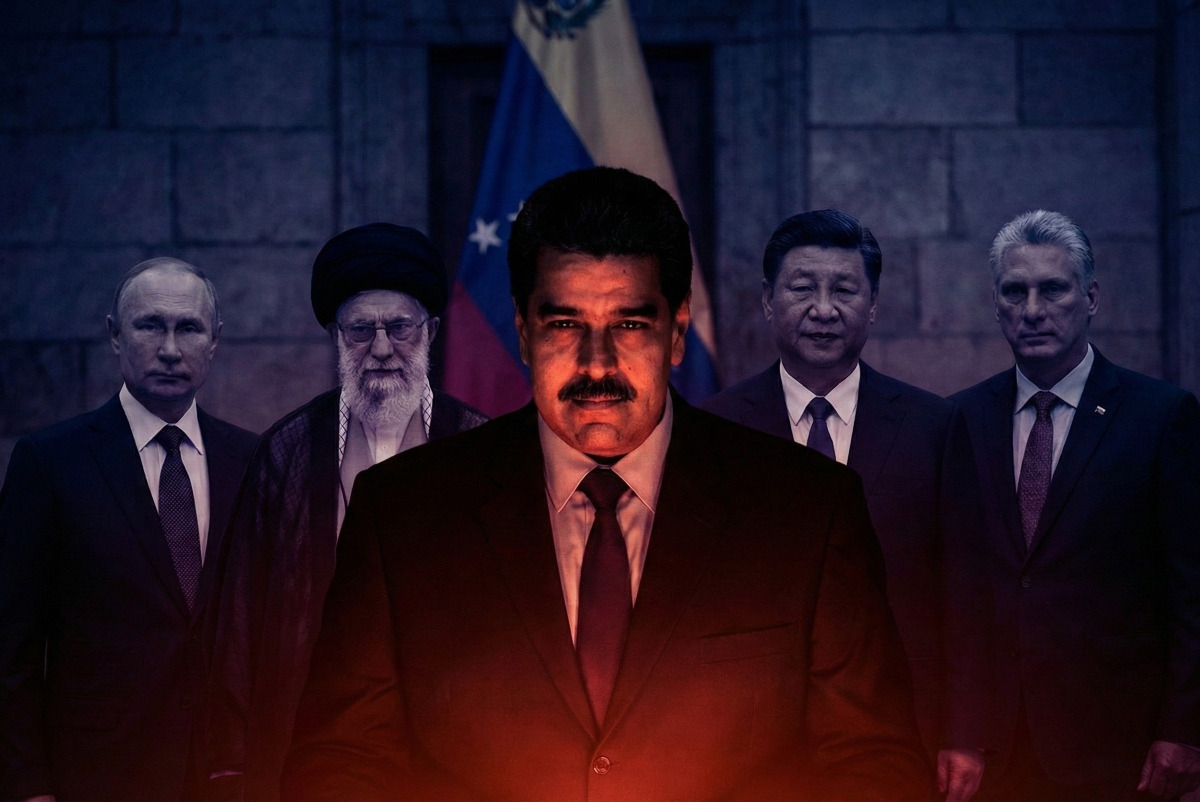
Venezuela under Nicolás Maduro, in addition to facilitating the trafficking of illegal drugs into the United States, cooperates with an anti-American alliance of autocracies, including Russia, Cuba, China and Iran. Venezuela’s comprehensive links with its authoritarian allies must be severed forcibly if necessary, to protect US interests and preserve the Monroe Doctrine. (Illustrative image by Google Gemini)

US President Donald J. Trump’s condemnation of Venezuela’s illegal leader Nicolás Maduro includes his regime’s facilitation of trafficking illegal drugs into the United States. The leader of Venezuela’s democratic opposition, Nobel Peace Prize laureate Maria Corrina Machado, has accused Maduro of being chief of a criminal narcotics organization, Cartel de los Soles (“Cartel of the Suns”). US military forces have destroyed several speedboats laden with cocaine and other illegal drugs leaving Venezuelan ports.

Perhaps more significant to US strategic interests is Maduro’s cooperation with an anti-American alliance of autocracies, including Russia, Cuba, China and Iran. The US has deployed military aircraft and a fleet of 22 warships to the area, to which Russian President Vladimir Putin has responded by “signal[ing] its willingness to supply Venezuela with advanced hypersonic missiles, including the nuclear-capable Oreshnik.”

Maduro’s regime is also alleged to have helped arm a terrorist faction of the Colombia-based Marxist terrorist group, the Revolutionary Armed Forces of Colombia (FARC), in its decades-long campaign to overthrow Colombia’s government. Venezuela’s regime also reportedly has ties to Hezbollah drug-trafficking organizations, which have cells in Venezuela and Colombia.

Iran’s regime, both before and after a number of visits to Venezuela, delivered military drones to Venezuela and has been strengthening Venezuela’s military, thereby enabling Venezuela to threaten its neighbors, including GuyanaTrinidad and Colombia, as well as the US. Iranian and Russian military advisors have directed military drills on land and in the seas adjacent to Venezuela. Iran’s Islamic Revolutionary Guard Corps (IRGC) has delivered several high-speed missile attack boats to Venezuela.

Iran and Venezuela also long ago established an air bridge between Tehran and Caracas. The flights are manned by Iranian crews and enable both countries to maintain secrecy in the global transport of weapons and terrorist operatives. In 2022, IRGC-linked aircraft flew several missions carrying only Iranian and Venezuelan nationals. One aircraft was a formerly Iranian-owned Boeing 747 with no cargo aboard.

During Maduro’s visit to Iran in 2022, the two countries signed a cooperation treaty, which includes agreements on science and technology as well as deals on agriculture, communications, culture and tourism. The Maduro regime has been so welcoming to Iranian intelligence agents that some of Hezbollah’s long-established Latin American network at the tri-border nexus of Brazil, Argentina and Paraguay has been overtaken by Hezbollah activities on Venezuela’s Margarita Island.

Venezuela’s startling provision of one million hectares (roughly 2.5 million acres; nearly 4,000 square miles) of farmland to Iran in 2022 was kept under wraps until Iranian agrarian economist Ali Revanizadeh disclosed it to the Venezuelan media.

The land grant was ostensibly to be used to grow staple crops such as corn and soybeans, allowing water-starved Iran to better feed its population, now in the throes of a crushing drought. Iran’s current use of Venezuela, however (herehere and here), combined with the IRGC, raises the possibility that Iran and its surrogate terrorist groups such as Hezbollah and Hamas might be using the vast acreage for military and terrorist operations.

Iran’s alliance with Venezuela most importantly provides Tehran with opportunities to target US interests in Latin America and the southern United States. More than 1,500 Iranians attempted to enter the US through the southern border under the Biden administration; 700 were released into the US. It is unclear if these illegal aliens may well be manning Iranian terrorist cells in the US, or commissioned to execute intelligence or terrorist-support operations.

Maduro’s links to Iranian intelligence agencies are, in addition, being used to execute operations inside the US. Iranian terrorists planned to kidnap anti-Islamic regime activist Masih Alinejad from her Brooklyn home, and transport her by speedboat to Venezuela.

Latin America’s Iranian Hezbollah network appears to be propping up the Maduro regime in an oil-for-gold scheme.

Cuba’s role in Venezuela is even more invasive than that of Iran. US sources relate that there are about 15,000 Cubans in Venezuela. Some are counterintelligence officers, whose job is to purge any Venezuelan military officers whose loyalty to Maduro is found suspect. One source claims that Maduro’s personal bodyguards are also mostly Cuban. Venezuela reportedly hosts Cuban infantry troops commanded by two Cuban generals. Havana has also dispatched to Venezuela doctors, teachers, nurses and engineers. These Cubans are presumably helping to fill the void left by Venezuela’s middle-class professionals who fled abroad.

Russia’s role in helping to buttress Maduro’s regime includes arms sales, joint army and air force exercises, Russian naval warship visits, and the stationing of Russian defense advisors in Venezuela. In turn, Russia receives Venezuelan oil at below-market prices.

China has extended an estimated $60 billion in loans to Venezuela. Beijing’s investments in Venezuela are largely tied to the country’s oil industry. Some of Venezuela’s debt is being serviced by deliveries of petroleum to China. As other sectors of Venezuela’s economy continue to decline, the Maduro government may be forced to pay back its debts to China by transferring more of his country’s sovereign assets to Beijing.

More than fifty countries in the free world consider the Maduro regime illegitimate. This view also seems to be shared by millions of Venezuelans, nearly eight million of whom have fled the country’s political oppression and economic collapse.

The main reason for the charge of Maduro’s illegitimacy stems from the view that Venezuela’s presidential elections have been fraudulent. Opposition protests have failed to dislodge the socialist regime, which has so far been sustained by Chinese loans, Russian weapons and Cuban troops. The Venezuelan people, disenfranchised and disarmed, have, in addition, been bullied into submission by regime-sponsored neighborhood revolutionary leftist gangs called “colectivos.”

The massive interference in Venezuela’s affairs by adversaries of the US should raise concerns for the continent’s democracies and whether Caracas is still independent. American and Latin American democratic states need to monitor how much Venezuelan sovereignty has already been surrendered to authoritarian enemies of freedom. Venezuela’s comprehensive links with its authoritarian allies must be severed forcibly if necessary, to protect US interests and preserve the Monroe Doctrine.

The Trump administration appears to be hoping that its current sanctions on Venezuela will be harsh enough for Maduro’s supporters to oust him without the US having to become militarily involved. Trump recently suggested the possibility of a land invasion, about which he did not sound overly enthusiastic. If nothing is done, however, Maduro will simply continue to wreck the formerly wealthy country while its people carry on in squalor.


Dr. Lawrence A. Franklin was the Iran Desk Officer for Secretary of Defense Rumsfeld. He also served on active duty with the U.S. Army and as a Colonel in the Air Force Reserve.


Zawartość publikowanych artykułów i materiałów nie reprezentuje poglądów ani opinii Reunion’68,
ani też webmastera Blogu Reunion’68, chyba ze jest to wyraźnie zaznaczone.
Twoje uwagi, linki, własne artykuły lub wiadomości prześlij na adres:
webmaster@reunion68.com
Forum w Dosze o potrzebie utworzenia „państwa palestyńskiego”


Forum w Dosze o potrzebie utworzenia „państwa palestyńskiego”

Hugh Fitzgerald


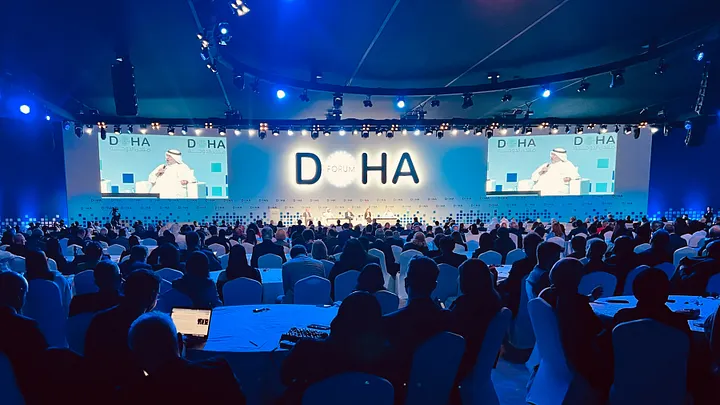
Forum w Dosze odbywa się w stolicy Kataru – paskudnym, małym królestwie nad morzem, które jest prywatną własnością rodziny Al Thani. To jej członkowie zajmują wszystkie kluczowe stanowiska w państwie. Mamy emira, Jego Wysokość Szejka Tamima bin Hamada Al Thaniego, który przejął władzę po swoim ojcu, Szejku Hamadzie bin Khalifie Al Thanim – „Ojcu Emira”, nadal wpływowej postaci, choć już nie odwiedza codziennie biura. Mamy też Jego Ekscelencję Szejka Mohammeda bin Abdulrahmana bin Jassima Al Thaniego, który pełni funkcję premiera oraz ministra spraw zagranicznych. Jest Szejk Hamad bin Jassim bin Jaber Al Thani, były premier, obecnie prominentny biznesmen. Jest Szejk Joaan bin Hamad Al Thani, zaangażowany w sport i bezpieczeństwo. Jest Jego Ekscelencja Szejk Meshal bin Hamad Al-Thani, ambasador Kataru w Stanach Zjednoczonych. Obecnym ambasadorem Kataru w Wielkiej Brytanii jest J.E. Szejk Abdullah bin Mohammed bin Saud Al Thani. Ambasador Kataru w Niemczech i Czechach nosi to samo imię i nazwisko. Z kolei ambasadorem we Francji jest J.E. Szejk Ali bin Jassim Al Thani. W Rosji Katar reprezentuje J.E. Szejk Ahmed bin Nasser Al Thani. Stałą Przedstawicielką Kataru przy ONZ jest Sheikha Alya Ahmed Saif Al-Thani. Pełnomocnikiem Nadzwyczajnym i Pełnomocnym Kataru do… cóż, rozumiecie. To naprawdę utalentowana rodzina.

Katar liczy trzy miliony mieszkańców, z czego zaledwie 300 tysięcy to obywatele Kataru. Pozostałe 2,5 miliona to zagraniczni pracownicy – niewolnicy zarobkowi katarskich panów – którzy świadczą im wszelkie możliwe usługi: od chirurgii serca po pielęgnację drzew.

Katar zawdzięcza swoje miejsce w globalnym krajobrazie tylko jednemu: jest trzecim największym producentem gazu ziemnego na świecie. Dzięki dochodom ze sprzedaży tego surowca państwo to może sobie pozwolić na wszelkiego rodzaju dywersyjną działalność, w tym na wspieranie tych, którzy – gdyby tylko mogli – zniszczyliby państwo żydowskie. Kulturalnie i intelektualnie nic nieznaczący, moralnie odrażający, żyjący w luksusie nie dzięki pracy czy przedsiębiorczości, ale z powodu geologicznego przypadku – Katar wykorzystuje Forum w Dosze, by wypolerować swój wizerunek. A w naszym świecie, w którym czci się pieniądz, uchodzi mu to na sucho.

Forum w Dosze, z udziałem rozmaitych wielkich panjandrum z całego świata, ma sprawiać wrażenie, że Katar to poważny, refleksyjny i godny podziwu uczestnik spraw międzynarodowych – kraj mający „wagę”. Oczywiście, wielu uczestników Forum – zwłaszcza ludzie z mediów oraz byli urzędnicy – według pogłosek otrzymuje spore honoraria za samą obecność.

Przypomnijmy: głównym zagranicznym sponsorem Hamasu jest właśnie Katar. Przywódcy Hamasu żyją w luksusie w Dosze. Katar od lat dostarcza Hamasowi fundusze, broń i wsparcie dyplomatyczne. Więcej na temat tegorocznego Forum w Dosze można przeczytać tutaj: „Tucker Carlson głównym mówcą Forum w Dosze, co wywołuje sprzeciw środowisk proizraelskich”, Jerusalem Post, 5 grudnia 2025:

Prawicowy komentator Tucker Carlson został ogłoszony jednym z głównych mówców Forum w Dosze, co zaostrza rosnący spór wewnątrz obozu pro-Trumpowskiego na temat powiązań Kataru z Hamasem oraz jego roli jako globalnej platformy dla ruchów islamistycznych.

Działaczka z Florydy, Laura Loomer, bliska sojuszniczka prezydenta USA Donalda Trumpa, zwróciła uwagę na udział Carlsona w poście na platformie X w czwartek, udostępniając zrzut ekranu ze strony internetowej Forum w Dosze, na którym były gospodarz Fox News figuruje na oficjalnej liście prelegentów. Loomer od miesięcy oskarża Carlsona o zbyt pobłażliwe podejście wobec Kataru i Iranu oraz o osłabianie poparcia dla Izraela.

Strona internetowa Forum w Dosze potwierdza, że Carlson i jego partner medialny, współzałożyciel Daily Caller Neil Patel, biorą udział w tegorocznej edycji, która odbywa się w dniach 6–7 grudnia pod hasłem „Sprawiedliwość w działaniu: od obietnic do postępu”.

Czy uczestnicy dyskusji o „sprawiedliwości w działaniu” będą mówić o konieczności utworzenia państwa palestyńskiego, co wiązałoby się z wepchnięciem Izraela w granice zawieszenia broni z 1949 roku? Oczywiście, że tak. Mogą też poruszyć temat konieczności wypłaty reparacji przez „Zachód” krajom Trzeciego Świata – m.in. za niewolnictwo i zmiany klimatyczne.

Jeśli chodzi o pierwszą kwestię, to w Dosze nie padnie ani jedno słowo o arabskim handlu niewolnikami – rozpoczętym wcześniej, zakończonym później i pochłaniającym znacznie więcej ofiar niż transatlantycki handel niewolnikami prowadzony przez Europejczyków i Amerykanów. Jeśli zaś chodzi o „zmiany klimatu” i potrzebę, by „uprzemysłowione narody” – czyli głównie Europa i Ameryka Północna (Chiny są w takich debatach zawsze pomijane) – wypłacały rekompensaty biedniejszym krajom za skutki huraganów, powodzi, suszy i innych zjawisk naturalnych, to nikt w Dosze nie odważy się wspomnieć, że największymi przeciwnikami idei „odchodzenia od ropy i gazu” na każdym szczycie klimatycznym – w tym na tym niedawno zakończonym w Belém w Brazylii – są państwa Zatoki Perskiej: Arabia Saudyjska, Zjednoczone Emiraty Arabskie i Katar.


Link do oryginału” https://jihadwatch.org/2025/12/the-doha-forum-to-discuss-the-need-for-a-palestinian-state

Jihad Watch, 7 grudnia 2025


Zawartość publikowanych artykułów i materiałów nie reprezentuje poglądów ani opinii Reunion’68,
ani też webmastera Blogu Reunion’68, chyba ze jest to wyraźnie zaznaczone.
Twoje uwagi, linki, własne artykuły lub wiadomości prześlij na adres:
webmaster@reunion68.com