Archive | 2026/05/05

Liban: od “Szwajcarii Bliskiego Wschodu” do marionetki Iranu

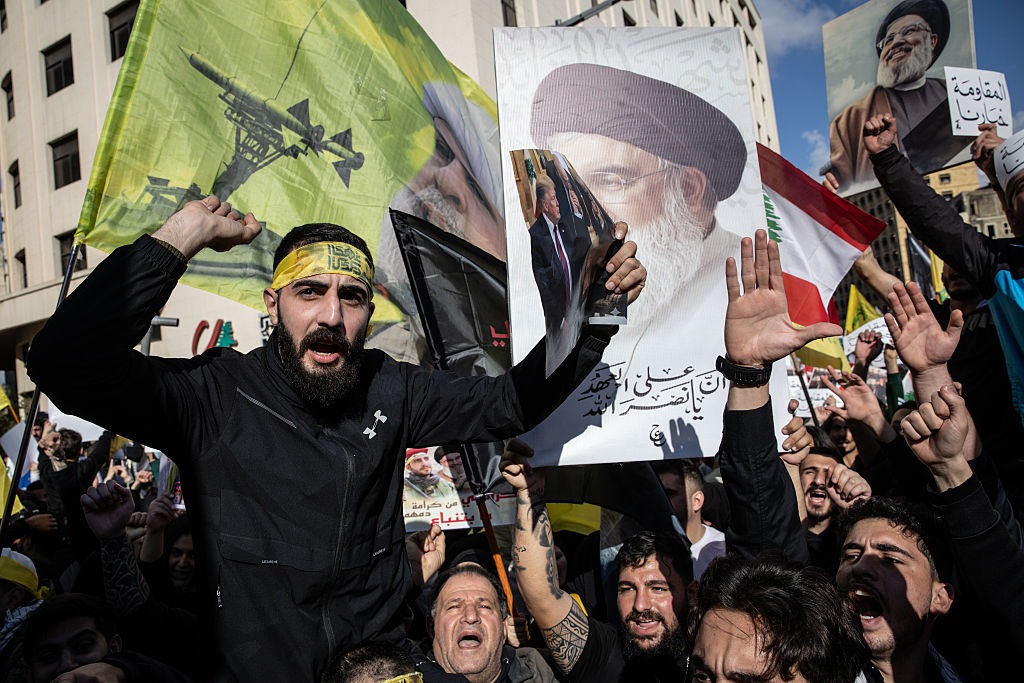
Liban faktycznie stał się protektoratem Iranu. Konsekwencje dla jego mieszkańców są katastrofalne. Na zdjęciu: Zwolennicy Hezbollahu organizują antyrządowy protest 11 kwietnia 2026 roku w Bejrucie w Libanie. (Zdjęcie: Chris McGrath/Getty Images)

Liban: od “Szwajcarii Bliskiego Wschodu” do marionetki Iranu

Khaled Abu Toameh
Tłumaczenie: Andrzej Koraszewski


Gdy rząd libański przygotowywał się do udziału w rozmowach z Izraelem w Waszyngtonie, prowadzonych przy mediacji USA, Hezbollah — wspierana przez Iran organizacja terrorystyczna — ogłosił swój werdykt: żadnych negocjacji, żadnych kompromisów. Tylko wojna.

Rozmowy, które odbyły się 14 kwietnia, mają na celu zapewnienie “długoterminowego bezpieczeństwa północnej granicy Izraela”, przy jednoczesnym wsparciu wysiłków Libanu na rzecz “odzyskania pełnej suwerenności nad swoim terytorium”.

W telewizyjnym wystąpieniu sekretarz generalny Hezbollahu, Naim Qassem, nazwał rozmowy “bezcelowymi” i ponownie potwierdził, że jego organizacja nie złoży broni. Odnosząc się do wypowiedzi premiera Izraela Benjamina Netanjahu, że broń Hezbollahu musi zostać zlikwidowana, a Izrael dąży do rzeczywistego porozumienia pokojowego z Libanem, Qassem oświadczył:

“Nie spoczniemy, nie zatrzymamy się i nie poddamy. Pozwolimy, by pole walki przemówiło samo za siebie. Pozostaniemy na nim do ostatniego tchu”.

Qassem dodał:

“Odrzucamy negocjacje z uzurpującym bytem… Wzywamy do historycznej i heroicznej postawy poprzez odwołanie tego spotkania negocjacyjnego”.

Wafiq Safa, wysoki rangą przedstawiciel Hezbollahu, powiedział agencji Associated Press, że jego organizacja odmówi podporządkowania się jakimkolwiek porozumieniom wynikającym z bezpośrednich rozmów Libanu z Izraelem:

“[J]eśli chodzi o rezultaty tych negocjacji między Libanem a izraelskim wrogiem, w ogóle nas one nie interesują ani nas nie dotyczą… Nie jesteśmy związani tym, na co się zgodzą”.

Te wypowiedzi nie są jedynie retoryką. Stanowią deklarację, że to Hezbollah, a nie rząd libański, zdecyduje, czy Liban pójdzie na wojnę, czy wybierze pokój.

Dzisiejszy Liban niewiele przypomina kraj, którym kiedyś był.

Przed wojną domową w latach 1975–1990 Liban znany był jako “Szwajcaria Bliskiego Wschodu”. W latach 60. i 70. cieszył się znacznym dobrobytem, surowymi przepisami o tajemnicy bankowej oraz reputacją bezpiecznego, neutralnego centrum finansowego dla kapitału regionalnego i międzynarodowego. Jego sektor bankowy należał do najbardziej zaawansowanych w świecie arabskim. Przyciągał inwestycje zagraniczne i uczynił z Bejrutu jedno z wiodących centrów finansowych świata.

Francuski dziennikarz Julien Ricour-Brasseur napisał w 2021 roku w “Middle East Eye”:

“Libańczycy, którzy nie chcą podejmować desperackiej próby przeprawy przez Morze Śródziemne, tłumnie udają się do urzędów, by uzyskać wizy do jakiegokolwiek możliwego miejsca. Szukają czegoś poza morzem, gdzie kusi blask zieleni — zielone światło nadziei — i dolara…

Historia Libanu mogłaby zaczynać się tak: Dawno, dawno temu istniało państwo znane jako Szwajcaria Bliskiego Wschodu. I szczerze mówiąc, na tym historia się kończy”.

Liban wyróżniał się także różnorodnością wyznaniową i pluralizmem religijnym — miejscem, gdzie liczne społeczności muzułmańskie i chrześcijańskie współistniały w ramach stosunkowo otwartego systemu politycznego. Jego geografia — łącząca ośnieżone góry nadające się do sportów zimowych z wybrzeżem Morza Śródziemnego — czyniła go ważnym celem turystycznym. W szczytowym okresie Liban miał jeden z najwyższych poziomów PKB na mieszkańca w regionie i był postrzegany jako oaza stabilności w burzliwym regionie Bliskiego Wschodu. Ten Liban jednak już nie istnieje.

Dekady wojny domowej, korupcji i paraliżu politycznego były głównymi siłami napędzającymi jego upadek. Jednak pojawienie się Hezbollahu jako uzbrojonego państwa w państwie oraz jego powtarzające się wojny z Izraelem w imieniu irańskich patronów są kluczowymi czynnikami, które przyczyniły się do załamania Libanu.

Liban jest obecnie państwem upadającym. W 2022 roku Organizacja Narodów Zjednoczonych napisała:

“Destrukcyjne działania politycznych i finansowych przywódców Libanu odpowiadają za zepchnięcie większości społeczeństwa w ubóstwo, co stanowi naruszenie międzynarodowego prawa praw człowieka — powiedział w opublikowanym dziś raporcie specjalny sprawozdawca ONZ ds. skrajnego ubóstwa i praw człowieka, Olivier De Schutter…

‘Bezkarność, korupcja i nierówności strukturalne zostały wbudowane w zepsuty system polityczny i gospodarczy zaprojektowany tak, by zawodzić najuboższych — ale nie musi tak być’ — powiedział De Schutter, niezależny ekspert powołany przez Radę Praw Człowieka ONZ.

‘Elity polityczne wiedziały o nadchodzącej katastrofie przez lata, ale niewiele zrobiły, by jej zapobiec. Osoby dobrze powiązane wyprowadzały nawet swoje pieniądze za granicę…

‘Polityka banku centralnego doprowadziła w szczególności do spirali spadku wartości waluty, zniszczenia gospodarki, wymazania oszczędności życia wielu ludzi i pogrążenia społeczeństwa w ubóstwie'”.

Co gorsza, Liban faktycznie stał się protektoratem Iranu. Konsekwencje dla jego mieszkańców są katastrofalne.

Hezbollah wciągnął Liban w dwa zgubne konflikty z Izraelem w ciągu zaledwie ostatnich trzech lat.

Pierwszy miał miejsce po inwazji Hamasu na południowy Izrael 7 października 2023 roku, kiedy Hezbollah rozpoczął ostrzał Izraela z terytorium Libanu jako “front wsparcia” dla swoich sojuszników terrorystycznych w Strefie Gazy.

Druga wojna, którą Hezbollah rozpoczął przeciwko Izraelowi, nastąpiła po izraelskich i amerykańskich atakach na cele irańskie w czerwcu 2025 roku. Hezbollah ponownie rozpoczął ataki rakietowe i dronowe na Izrael w “geście solidarności” z irańskim reżimem. Obie rundy walk przyniosły mieszkańcom Libanu kolejne zniszczenia, przesiedlenia i załamanie gospodarcze.

Schemat jest już jasny: Hezbollah wybiera śmierć i zniszczenie, a Libańczycy płacą za to cenę.

Utworzony, finansowany i uzbrojony przez reżim irański Hezbollah nadal działa jako najpotężniejszy pośrednik Iranu na Bliskim Wschodzie. Jego przywódcy deklarują lojalność nie Libanowi, lecz mułłom w Iranie. Jego arsenał nie znajduje się pod kontrolą państwa libańskiego. Decyzje o wojnie i pokoju dyktowane są przez regionalną strategię Iranu, a nie przez interesy narodowe Libanu.

Choć nie były to formalne negocjacje pokojowe, spotkanie w Waszyngtonie w tym tygodniu sygnalizowało możliwy krok w kierunku bardziej uporządkowanego dialogu i normalizacji między Izraelem a Libanem.

Pokój między Libanem a Izraelem przyniósłby przede wszystkim korzyści mieszkańcom Libanu. Ustabilizowałby kraj, otworzył drogę do odbudowy gospodarczej, przyciągnął inwestycje i rozpoczął proces odwracania dekad upadku państwa. Co ważniejsze, przywróciłby Libanowi to, co Hezbollah mu odebrał: zdolność działania jako suwerenne państwo realizujące własne interesy narodowe.

Wezwanie przywódcy Hezbollahu do odwołania rozmów w Waszyngtonie odzwierciedla obawy tej organizacji terrorystycznej, że dyplomacja mogłaby się powieść i że Liban mógłby zacząć uwalniać się spod wpływów reżimu irańskiego. Dla mieszkańców Libanu pokój z Izraelem mógłby oznaczać coś bardziej podstawowego: szansę na odzyskanie swojego kraju z cyklu wojny, śmierci i zniszczenia. Dopóki ta rzeczywistość się nie zmieni, Liban pozostanie uwięziony nie tylko w konflikcie z Izraelem, ale także w głębszym kryzysie suwerenności, tożsamości i przetrwania.


Khaled Abu Toameh jest nagradzanym dziennikarzem mieszkającym w Jerozolimie.


Zawartość publikowanych artykułów i materiałów nie reprezentuje poglądów ani opinii Reunion’68,
ani też webmastera Blogu Reunion’68, chyba ze jest to wyraźnie zaznaczone.
Twoje uwagi, linki, własne artykuły lub wiadomości prześlij na adres:
webmaster@reunion68.com


The dawn of a new world order


The dawn of a new world order

Melanie Phillips


An increasingly hostile public in the United States has little idea of the necessity and importance of the war against Iran.

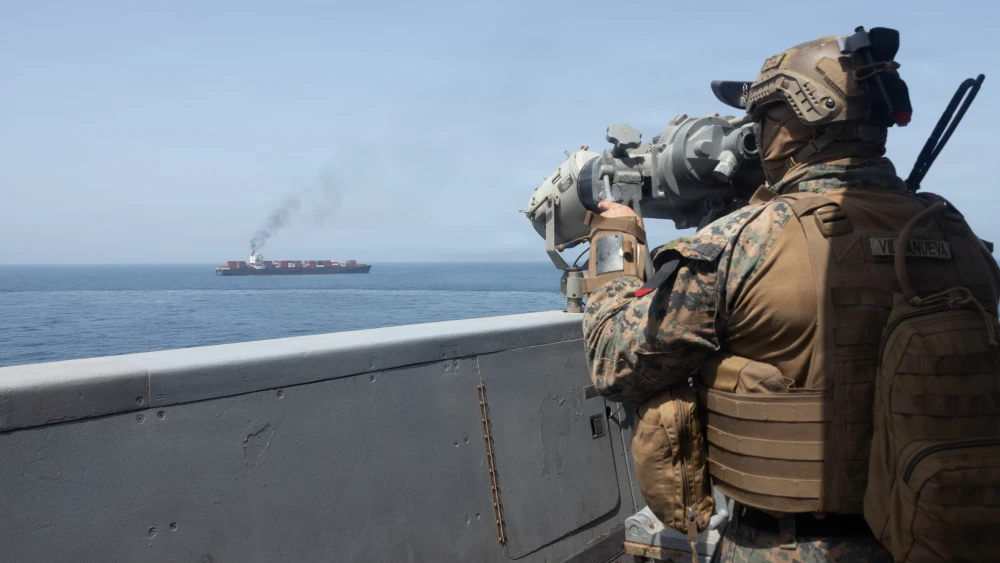
U.S. forces patrol the Arabian Sea near M/V Touska after the Iranian-flagged vessel attempted to violate the U.S. naval blockade, April 20, 2026. Credit: U.S. Navy.

Most people in America are against the war with Iran, as they are in Britain, too.

Very few, however, actually understand why this war is as necessary as it is unavoidably complex.

Few seem aware that Iran has been actively at war against America for the past 47 years. Few seem to grasp that Iran’s fanatical Islamic regime has killed hundreds of U.S. servicemen, perpetrated numerous attacks on U.S. bases, committed countless terrorist atrocities and taken Americans hostage.

Few grasp that U.S. and Israeli intelligence had discovered that Iran was poised to create both a nuclear bomb and a missile arsenal so enormous and so buried underground that no one would ever be able to tackle the mortal threat posed by the regime.

Instead, the American and British public have been fed a remorseless mainstream media narrative framed entirely by obsessive hatred of U.S. President Donald Trump and Israeli Prime Minister Benjamin Netanyahu. This presents the war as a reckless choice into which Trump was bounced by Netanyahu, that it was always going to be a disaster, and that it’s already been lost.

Israel, however, which is desperate for the Iranian regime to be prevented from ever harming it again, fears that Washington is once again leaving it hanging out to dry. The Israeli public thinks that Trump’s ceasefire—and then its extension—shows that he hasn’t got the commitment to see this thing through. They fear that he seeks to make a deal he can call victory, but that will leave the Tehran regime in a position where it can rearm and come back even more deadly than before.

Others, though, think that Trump is displaying strategic brilliance. They point out that he’s flipped the script over the Strait of Hormuz by turning Iran’s supposed chokepoint for the world into a deadly weapon against the regime itself.

America’s blockade of the Strait is causing Tehran to lose hundreds of millions of dollars a day in vital revenue, while the buildup of oil will potentially cripple the oil wells themselves and put them out of further use.

The fact is that this war is neither won nor lost. Both sides say they have the upper hand. Everything depends on Trump. His repeated outbursts on Truth Social, which often seem to contradict each other, are giving many people severe emotional whiplash.

No one knows how this is going to end. But it’s very alarming that opposition to the war in America is feeding into a growing general public animus against Israel.

Public opinion shows that the majority of Americans are now more sympathetic to the Palestinian Arabs than to the Israelis. In a Pew Research Center survey conducted in March, 60% of U.S. adults held an unfavorable view of Israel, including 80% of Democrats and 41% of Republicans.

This animus, reversing decades of general public support for Israel, is due to three things: the education system, social media and increasing political hostility on both sides of the aisle.

Some of this is due to the funding of anti-Israel materials in the education system by Qatar. But mostly, it’s due to the Marxist, “anti-colonialist” and anti-Western orthodoxy that has been standard in the universities for years, which has now infused the K-12 syllabus in schools and frames Israel falsely as a colonialist oppressor.

With the education system having widely replaced teaching how to think with what to think, young people have become vulnerable to the enormous pressure of the fashionable consensus. This is disseminated, in turn, by social media, which presents cranks and oddballs as having credibility, and who are accordingly believed by the credulous and ignorant.

At the same time, the political world is increasingly abandoning the rational center ground for extremism. The left has entered into an unholy alliance with Islamists in the common aim of overturning the West—even though their intended replacement societies are the polar opposite of each other—and of hatred of Israel, the Jewish people and Judaism.

Last week, 40 of 47 Democrats voted for a resolution blocking the sale to Israel of bulldozers, while 36 opposed the sale of thousand-pound bombs—in the middle of a war in which America and Israel are fighting side by side.

The frontrunner in Maine’s Democratic Senate primary, Graham Platner, who has a Nazi-associated tattoo on his chest, wrote in 2014 of Hamas military tactics: “From a strictly professional standpoint, this was a damn fine looking and successful raid against a superior opponent. I dig it.”

The Republican Party is fracturing along similar lines, with a significant faction claiming that Israel drags the United States into foreign wars—a charge now given rocket fuel by the war against Iran—such as the 2003 war in Iraq.

This claim is idiotic and untrue. Israel’s prime minister at the time, Ariel Sharon, advised Washington against the Iraq war, while successive U.S. presidents have repeatedly restrained Israel from doing what it has needed to do to keep itself safe.

Now the left is joining the right in this particular canard. Last weekend, the former Democratic presidential candidate and U.S. vice president, Kamala Harris, spoke about the war to a Democratic convention, saying that Trump “got pulled into it by Bibi Netanyahu, let’s be clear about that.”

And Rahm Emanuel, the White House chief of staff under former president Barack Obama, said on Bill Maher’s TV talk show that there should be no more U.S. taxpayer support for Israel, which should “get the same deal that any one of our allies does,” and that the United States “should never spill any blood for the State of Israel’s security.”

This was an odious and twisted remark. American military assistance to Israel requires much of that funding to be spent on American-made defense systems. This means that the United States profits hugely from the aid flowing back into the American economy through supporting domestic manufacturing, defense jobs and technological development.

Other allies, such as Japan and Germany, have thousands of U.S. troops stationed on their soil at huge expense. And Israel is a unique ally in that it provides America with priceless intelligence, military expertise and technological developments.

These Democrats are singing from the same Jewish-conspiracy song sheet as the vicious Republican faction led by podcast host Tucker Carlson.

Disturbingly, U.S. Vice President JD Vance has refused to repudiate this faction. So if he becomes the Republican presidential candidate in 2028 against an anti-Israel Democrat, Israel’s supporters may feel presented with a choice between the devil and the deep-blue sea.

Israel’s governing class is all too aware of this deeply troubling American trajectory. Concern about Trump’s successor has meant that Israel has begun to develop its own arms industry to reduce its dependency on the United States. The Jewish state is also acutely aware that many American Jews are turning against it, since some three-quarters of them are signed up to the Democratic Party and to progressive ideologies that are anti-Israel and anti-West.

Israel is accordingly developing new partnerships, notably with India and Africa. Whatever the eventual outcome of the Iran war, it is clear that Israel has become the main regional power in the Middle East.

If the Tehran regime finally bites the dust, Israel will be at the heart of trade and infrastructure links that will hugely reduce the blackmail power of Russia, China and North Korea, the evil empire that has revolved around the Iranian regime.

Growing anti-Israel animus in the United States isn’t just a warning sign for American Jews. It suggests that America is going the same way as Europe, if more slowly. Britain and Europe are in the process of succumbing to Islamization and destroying their own historic culture and identity. If Republicans can’t hold the line for the defense of civilized values, then America will be lost.

This is an inflection point for civilization, and Israel is poised to become the fulcrum of a new world order.

Israel is very concerned that it may be losing America. America should be no less concerned that it’s losing Israel.


Melanie Phillips, a British journalist, broadcaster and author, writes a weekly column for JNS. Currently a columnist for The Times of London, her new book, Fighting the Hate: A Handbook for Jews Under Siege, has just been published by Wicked Son. Her previous book, The Builder’s Stone: How Jews and Christians Built the West and Why Only They Can Save It, was published in 2025. Access her work at: melaniephillips.substack.com.


Zawartość publikowanych artykułów i materiałów nie reprezentuje poglądów ani opinii Reunion’68,
ani też webmastera Blogu Reunion’68, chyba ze jest to wyraźnie zaznaczone.
Twoje uwagi, linki, własne artykuły lub wiadomości prześlij na adres:
webmaster@reunion68.com


Israel Estimates US Blockade of Strait of Hormuz to Slash Iran Oil Exports by 80%


Israel Estimates US Blockade of Strait of Hormuz to Slash Iran Oil Exports by 80%

Ailin Vilches Arguello


A vessel at the Strait of Hormuz, off the coast of Oman’s Musandam province, April 12, 2026. Photo: REUTERS

As Iran struggles to rebuild damaged military and energy infrastructure amid the current ceasefire, Israel estimates that a US naval blockade of Iranian ports will slash the regime’s oil exports by roughly 80 percent, nearly severing one of Tehran’s last remaining economic lifelines.

According to Israeli security assessments, the US closure of the Strait of Hormuz — a critical global energy chokepoint through which about one-fifth of the world’s oil supply passes — triggered an immediate and dramatic collapse in Iran’s revenue that will lead to a loss of more than $1 billion a month, Walla reported.

US President Donald Trump has claimed the regime is losing about $500 million a day as a result of the blockade. Some experts, such as Miad Maleki of the Foundation for Defense of Democracies think tank, have put the figure at roughly $450 million lost in daily economic activity for Iran.

Regardless of the specific amount, given that energy exports remain the backbone of the regime’s economy, what is left of oil revenues now amounts to little more than a fragile lifeline keeping Tehran temporarily afloat as financial pressure continues to mount.

Even with the naval blockade in place, Iranian authorities have managed to maintain a limited flow of exports by transporting oil from inland production fields to the Gulf of Oman through the multi-billion-dollar Gura–Jask pipeline, an overland route that moves roughly 300,000 barrels per day to global markets.

Israeli officials assess that the blockade and resultant shortfall for Tehran could set off a chain reaction of disruptions, including the shutdown of entire segments of the oil industry.

They also point to severe damage across Iran’s petrochemical and defense sectors, which together have cost an estimated 100,000 jobs at multiple levels, arguing that the cumulative impact is pushing the Iranian regime into a corner.

After repeated efforts to bring Iran back to the negotiating table, the Trump administration escalated pressure on Tehran earlier this month by imposing a naval blockade on vessels entering or leaving Iranian ports through the Strait of Hormuz, aiming to force a deal that would bring an end to the conflict.

Since the start of the war earlier this year, Iran has used control over the Strait of Hormuz as a major source of leverage, militarizing the waterway and sharply restricting maritime traffic through one of the world’s most critical shipping corridors.

Iran has also signaled it intends to maintain control over the strategic shipping lane even after the war ends, potentially imposing transit fees framed as compensation for wartime damage.

After Trump extended the ceasefire indefinitely on Tuesday to allow for renewed diplomatic efforts, it now remains to be seen whether Iran will agree to return to negotiations, as questions persist over whether both sides can bridge widening differences to restart talks.

According to The New York Times, US officials previously proposed a 20-year halt to Iranian uranium enrichment, which Iranian negotiators countered with a five-year suspension that Washington rejected. The White House has also reportedly insisted that Iran dismantle major enrichment sites and surrender more than 400 kilograms of highly enriched uranium.

Even as the regime faces one of its most severe economic crises in decades, Iranian authorities have continued pouring billions into rebuilding military and nuclear infrastructure and supporting regional proxy forces, prioritizing strategic confrontation with Israel over urgent domestic needs such as the country’s worsening water crisis.

The regime has spent billions of dollars supporting its terrorist proxies across the Middle East and operations abroad, with the Quds Force, Iran’s elite paramilitary unit, funneling funds to the Lebanese group Hezbollah, in defiance of international sanctions.

According to the US Treasury Department, Iran provided more than $100 million per month to Hezbollah in 2025, with $1 billion representing only a portion of Tehran’s overall support for the terrorist group, using a “shadow financial system” to transfer funds to Lebanon.


Zawartość publikowanych artykułów i materiałów nie reprezentuje poglądów ani opinii Reunion’68,
ani też webmastera Blogu Reunion’68, chyba ze jest to wyraźnie zaznaczone.
Twoje uwagi, linki, własne artykuły lub wiadomości prześlij na adres:
webmaster@reunion68.com