Archives

Handlarze śmiercionośnym fentanylem

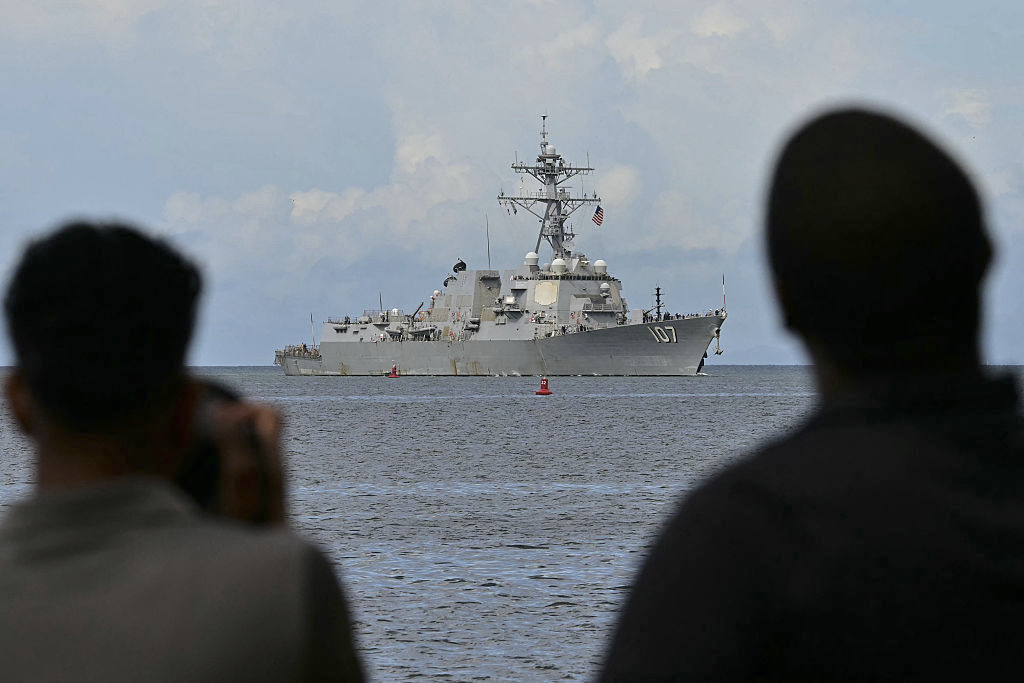
Na zdjęciu: USS Gravely wpływa do Port-of-Spain w Trynidadzie i Tobago, 26 października 2025 roku, w ramach wspólnych ćwiczeń u wybrzeży Wenezueli. (Zdjęcie: Martin Bernetti/AFP via Getty Images)


Handlarze śmiercionośnym fentanylem

Lawrence Kadish
Tłumaczenie: Andrzej Koraszewski


Prawnicy zajmujący się sprawami międzynarodowymi wciąż debatują, czy działania militarne USA wymierzone w przemytników narkotyków pływających po morzu mogą być dozwolone w ramach prawa międzynarodowego.

Pozwolę sobie zadać inne pytanie: jeśli ci, którzy próbują przywieźć śmiercionośny fentanyl do naszych społeczności, chodziliby po naszych ulicach i rozdawali swoje śmiertelne dawki niczego niepodejrzewającym — czy nie nazwałbyś ich najemnymi mordercami? Czy nie domagałbyś się w procesie kary śmierci za spustoszenie, przemoc, żałobę i nieszczęście, które spowodowali?

Gdy z zagranicy Al-Kaida i Państwo Islamskie mordowały Amerykanów, nie było wahania przed ich eliminacją. Przywódca Al-Kaidy Osama bin Laden, jak również jego współpracownik Ayman al-Zawahiri, zostali usunięci bez ceregieli, a siły USA bez wahania likwidowały niezliczonych bojowników Państwa Islamskiego na polu bitwy.

Dlaczego więc nie użyć siły śmiercionośnej przeciwko podobnie zabójczym siłom, zanim wypełnią swoją śmiertelną misję na terytorium naszego kraju?

Do tej pory ci przemytnicy narkotyków, którzy corocznie zabijają ponad 100 000 Amerykanów przez ostatnie kilka lat — co odpowiada jednej dużej katastrofie lotniczej dziennie — używali wszelkich możliwych środków, by sprowadzać do kraju coraz silniejsze trucizny. Od samolotów po mini‑łodzie podwodne, od kurierów przedzierających się przez nasze granice po ukrywanie narkotyków w legalnych towarach — ci przestępcy działali bezkarnie zbyt długo.

Prezydent Donald J. Trump zmienił ich kalkulację szans na przeżycie, nie mówiąc już o oczekiwaniu nielegalnych zysków.

Prezydent rozumie on, że tradycyjne działania organów ścigania nie poradziły sobie z zagrożeniem. Fentanyl i inne trujące substancje nadal zalewają nasze społeczności. Międzynarodowa współpraca w zapobieganiu tym masowym morderstwom od dawna jest problematyczna.

Co przemytnicy‑mordercy rozumieją najlepiej? Siłę Nieuchronną siłę, która uderza pociskami z armat sił zbrojnych USA.

Tak więc uczeni w prawie mogą nadal debatować, rozważać i wyrażać opinie na temat użycia marynarki wojennej USA do wykrywania i niszczenia przemytników narkotyków na wodach międzynarodowych, ale jedno jest pewne. Teraz wielu przemytników-morderców siedzi obok swoich łodzi i rozważa ryzyko wypłynięcia na morze.

Trump wyraźnie dał do zrozumienia. Biały Dom będzie traktował międzynarodowy przemyt narkotyków jako przestępstwo zagrożone najwyższą karą oraz jako zagrożenie dla bezpieczeństwa narodowego i będzie działał odpowiednio.


Lawrence Kadish zasiada w Radzie Gubernatorów Gatestone Institute.


Zawartość publikowanych artykułów i materiałów nie reprezentuje poglądów ani opinii Reunion’68,
ani też webmastera Blogu Reunion’68, chyba ze jest to wyraźnie zaznaczone.
Twoje uwagi, linki, własne artykuły lub wiadomości prześlij na adres:
webmaster@reunion68.com


Can’t fight the Muslim Brotherhood while groveling to Qatar


Can’t fight the Muslim Brotherhood while groveling to Qatar

Jonathan S. Tobin


The Trump administration’s move toward designating the Islamist group as terrorists is long overdue. But it makes no sense to treat the Brotherhood’s sponsor as an ally.
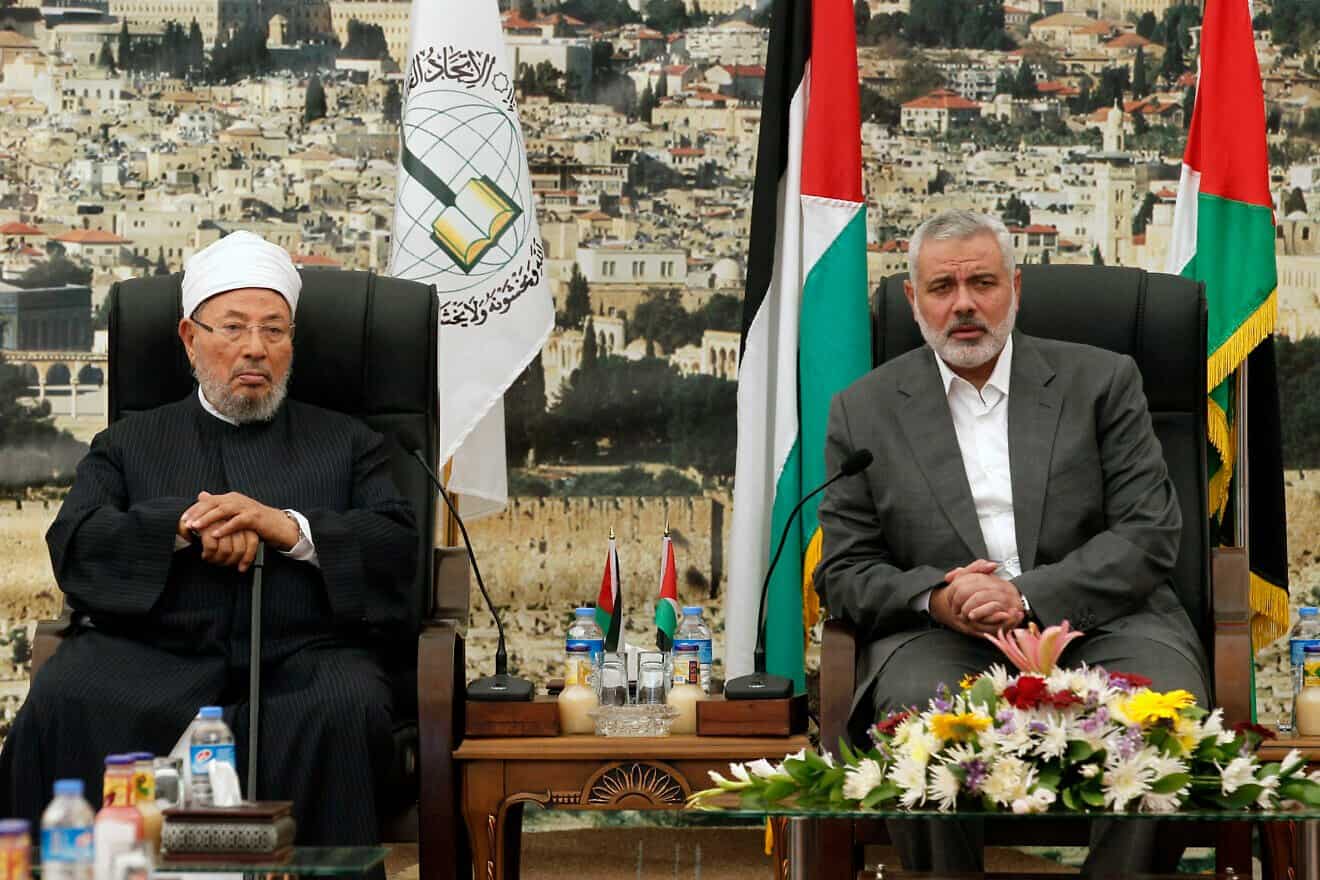
Egyptian cleric and chairman of the International Union of Muslim Scholars Yusuf al-Qaradawi (left) with Hamas senior leader Ismail Haniyeh in Gaza City on May 9, 2013. Al-Qaradawi arrived the day before for his first visit to the Gaza Strip with a delegation of Muslim scholars. Photo by Mohammed Abed/AFP via Getty Images.

President Donald Trump finally took the first step on Nov. 24 toward an action that many of his allies and supporters have been calling for since his first term in office. He signed an executive order setting “in motion a process by which certain chapters or other subdivisions of the Muslim Brotherhood shall be considered for designation as Foreign Terrorist Organizations.”

The Brotherhood is a transnational Islamist group that spreads fundamentalist Sunni Muslim ideology around the world, preaching hatred for and war against the West—co-religionists who do not share their extremism, as well as for Israel and Jews. It acts as a support network for terrorists such as Hamas, which was founded as an offshoot of the Muslim Brotherhood, as well as for those who are working to undermine or overthrow non-Islamist governments in Arab and Muslim countries, such as those in Egypt, Lebanon and Jordan.

The grandfather of jihadism

The Brotherhood is an open and avowed enemy of the United States and is allied to many of those with American blood on their hands. As U.S. Secretary of State Marco Rubio has said, “the Muslim Brotherhood is the progenitor” and “the grandfather of all modern global jihadism.”

Moreover, to speak, as the executive order does, of only the group’s “military wing” being subject to sanctions as a result of the designation is to fall into the trap of thinking that organizational divisions within the group are meaningful distinctions with respect to terrorism and other illegal acts. As is the case with Hamas and Hezbollah, these are distinctions without a difference. Though different branches have different roles in their war on the West, all have the same objectives.

So, the question to be asked about Trump’s decision is not why the United States has done something that many Arab and Muslim countries, who rightly fear the group, have already done, and which members of the administration, including the secretary of state and White House staffer Sebastian Gorka, have openly called for. It’s why didn’t this happen in Trump’s first term or earlier in his second? And, just as importantly, why is the executive order Trump signed so narrowly drafted and tentative in its approach?

The answer is that the Muslim Brotherhood has powerful friends, both foreign and domestic, who seem to have Trump’s ear. In particular, the emirate of Qatar, which has spent vast sums freely to acquire enormous influence over the worlds of American business, education and politics, doesn’t want the administration to act against the group.

The question the executive order raises goes to the heart of the struggle to determine Trump’s Middle East policy. While the president has always been eager to fight Islamist terrorism and support American allies, such as Israel and moderate Arab governments that the Brotherhood is seeking to destroy, he is also clearly enamored of and influenced by Qatar and the American friends the emirate has purchased.

As a result, this order may turn out to be nothing more than an impotent gesture rather than a genuine policy shift aimed at combating a sly and dangerous foe of the United States. Unlike many other such orders that have flowed in plentiful numbers from the Oval Office as Trump has undertaken a comprehensive effort to overturn many of the policies of his predecessor and beloved by the Washington establishment, this one leads to no immediate action. Indeed, unless the forces within the administration that have pushed for the designation of the Brotherhood are ready to spend political capital and really fight to commit the government to rolling back the influence of the Islamist group, this may be as far as Trump goes on the issue.

A contradictory policy

This highlights a basic contradiction in Trump’s stance. You can’t seriously fight the Brotherhood and its terrorist offshoots like Hamas while at the same time cozying up to the government that is their chief donor and protector. Yet that’s exactly what the administration has done.

Qatar is not just the object of Trump’s trademark flattery when he is seeking to engage with allies or adversaries and to get them to do what he wants. It is being treated as a full-fledged ally of the United States and even as a nation whose security will be treated as a national priority to the point of recently issuing a White House statement to the effect that, “The United States shall regard any armed attack on the territory, sovereignty or critical infrastructure of the State of Qatar as a threat to the peace and security of the United States.”

That gives Qatar, which hosted the spiritual leader of the Brotherhood Yusuf al-Qaradawi and his successors, as well as the leaders of Hamas, impunity to act as a headquarters for international terrorism.

The argument in favor of close relations with the Gulf state, despite it being integral to the spread of terror and the Islamist ideology that is its foundation, rests on the notion that the emirate is an essential middleman in the effort to contain the threat from radical Muslims. 

A successful foreign policy often requires leaders to see the world in shades of gray as opposed to merely black and white. So, it is arguable that there are times when the United States may want to deal with a treacherous government such as that of Qatar, in spite of its record and actions. But what the Trump administration—and, to be fair, what was also true of the Biden administration, which made it a major non-NATO ally—has done is to skew the balance between the two countries in favor of Doha.

Doha needs America, not the other way around

Qatar has played a double role in the region for years, simultaneously hosting a major regional U.S. airbase and a wide array of terrorist functionaries. The Al Udeid base is well-suited to help America project power in the Persian Gulf, especially after Biden’s catastrophic withdrawal from Afghanistan, in which the United States abandoned the Bagram base there to the Taliban. Moreover, Qatari officials have also been the intermediaries by which the United States was able to broker the ceasefire-hostage release deal with Hamas that halted the war in Gaza with Israel.

These are not unimportant considerations. But the problem with embracing Qatar is the misnomer that Washington needs the emirate more than it needs Washington. The truth is quite the opposite. Other nations in the Gulf could host that base. And it is equally obvious that playing the role of go-between with Hamas allows Qatar to both launder its international image and help its terrorist friends survive the war they started with the atrocities committed on Oct. 7, 2023.

By committing itself to an alliance with Qatar, the United States isn’t engaging in a productive transaction with a problematic frenemy. It is completely undermining any effort to craft a coherent anti-terrorism policy and setting itself up for more misery in the years to come. And a half-hearted executive order with no teeth in it about the Muslim Brotherhood can’t rectify this mistake.

Why is Washington so willing to ignore the obvious and embrace Qatar?

A great deal of attention has been focused on Qatar’s “gift” of a 747 jetliner to Trump to serve as a new Air Force One to replace one of the two other ones that have been in use for that purpose for the last 35 years. But that is more symbolism than a bribe. The plane will require extensive renovations for it to be used to securely transport a president, which will likely cost more than double its value at a reported $200 million. But the Qatari plane is still believed to be likely to wind up at a Trump presidential library and museum.

But whatever one thinks of the airplane, the answer as to how the emirate has acquired so much traction in Washington is no secret. Qatar’s influence-buying operation, which operates on a virtually unprecedented scale, has been enormously successful in either persuading many American leaders of its value as an ally to cause them to downplay its role in promoting terrorism or in purchasing them outright.

Israel-bashers like former Fox News host Tucker Carlson and his counterparts on the left, like congressional far-left “Squad” members Reps. Ilhan Omar (D-Minn.) and Rashida Tlaib (D-Mich.), often speak as if supporters of the Jewish state, specifically the AIPAC pro-Israel lobby, have bought an alliance with the United States. But the truth is that the amounts spent by AIPAC and pro-Israel sources on lobbying in Washington or in supporting political candidates are dwarfed by the vast sums expended by Qatar in the United States.

Influence buying

Doha is involved in lobbying, though it exerts more influence as a major player in the business world, creating connections with a broad array of political affiliations on both sides of the aisle. In this way, it has used its financial clout to help and/or bail out some prominent persons, such as Trump’s foreign envoy Steve Witkoff, with purchases amounting to hundreds of millions of dollars. It has also invested heavily in American media outlets that add to its ability to project its views on the world. That is in addition to the clout it has via its Al Jazeera news station, which dominates the market in the Arab and Muslim world.

Just as important is the way Doha has poured money into academia, essentially purchasing the Middle East studies departments at many prestigious institutions of higher learning. Qatar isn’t just the largest foreign donor to American education. It has played a part in ensuring that these schools are uniformly bastions not only of anti-Zionism, but also of exponents of anti-Western and anti-American ideologies.

The point here is that the differences with Qatar go far beyond the obvious ones in terms of the values of a diverse democracy and those of an Islamist absolute monarchy. Qatar does business with the West while playing both ends against the middle in a never-ending game of diplomacy with Washington in a way that can be represented as similar to that of any nation with interests that don’t coincide with those of the United States. The regime’s real goals, however, are no different from those of the Brotherhood—namely, to undermine and subvert the West.

Both Qatar and the Islamist government of Turkey, which plays its own double role seeking a restoration of the old Ottoman Empire and supporting terror groups like Hamas while also remaining a NATO member, have clout in Washington. They also sit on both sides of the American dispute with an aggressive, terror-supporting Islamist regime in Iran. They and their American clients and auxiliaries have a pro-Islamist agenda and were able to stop the first Trump administration from taking action against the Brotherhood. And they have helped limit its current tentative steps toward designating it as a terrorist group and, no doubt, think they can prevent the follow-up necessary to put the executive order into effect.

The irony here is that while the portion of the political right led by Carlson that is hostile to Israel, and soft or even welcoming to antisemitism, likes to speak of defending “America First” or “America only” policy priorities against those who support the alliance with Israel, who are falsely labeled “Israel firsters.” But they seem completely uninterested in noting the way a country like Qatar is actively seeking to undermine a bipartisan American foreign-policy goal of opposing Islamist terror that threatens the West. While Carlson falsely labels Qatar as a faithful U.S. ally and trashes Israel as manipulating Washington against its own interests, the truth is just the opposite. The real opponents of “America First” are not supporters of Israel but the pawns, both witting and unwitting, of the jihadists of Qatar and the Brotherhood.

Trump’s choice

Trump faces an important choice about the Muslim Brotherhood. If he allows this toothless order to be as far as he goes with respect to efforts to stop this dangerous group, then he will be demonstrating that the administration is hopelessly compromised by its ties to Qatar. That ought not to happen. The president needs to understand the dire nature of the threat from fanatic Islamic terrorists, along with the insidious impact the Brotherhood’s Qatari funders and hosts are having on American media, culture and education. And, as he’s done time and again on many issues—not least his support for Israel—he needs to ignore the voices telling him that protecting U.S. interests means groveling to establishment thinking and Islamists.

The time is long past due for the United States to recognize that it is at war with the Brotherhood and act accordingly. If it doesn’t, it will just be setting in motion a process by which those who seek to spill American blood as well as that of Israelis will be given a leg up in their generational war against the West. That is something an administration that represents its policies as a clean break from the failed ideas of the Washington establishment and which says it is all about defending Americans, should avoid at all costs.
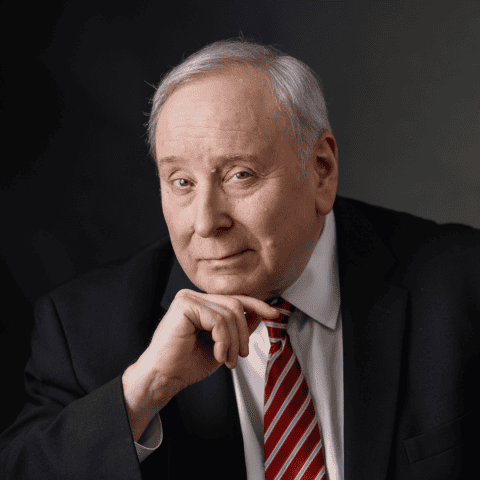

Jonathan S. Tobin is editor-in-chief of the Jewish News Syndicate, a senior contributor for The Federalist, a columnist for Newsweek and a contributor to many other publications. He covers the American political scene, foreign policy, the U.S.-Israel relationship, Middle East diplomacy, the Jewish world and the arts. He hosts the JNS “Think Twice” podcast, both the weekly video program and the “Jonathan Tobin Daily” program, which are available on all major audio platforms and YouTube. Previously, he was executive editor, then senior online editor and chief political blogger, for Commentary magazine. Before that, he was editor-in-chief of The Jewish Exponent in Philadelphia and editor of the Connecticut Jewish Ledger. He has won more than 60 awards for commentary, art criticism and other writing. He appears regularly on television, commenting on politics and foreign policy. Born in New York City, he studied history at Columbia University.

Zawartość publikowanych artykułów i materiałów nie reprezentuje poglądów ani opinii Reunion’68,
ani też webmastera Blogu Reunion’68, chyba ze jest to wyraźnie zaznaczone.
Twoje uwagi, linki, własne artykuły lub wiadomości prześlij na adres:
webmaster@reunion68.com


Outgoing NYC Mayor Adams Says He’s Concerned About Safety of Jewish New Yorkers Under Successor Mamdani


Outgoing NYC Mayor Adams Says He’s Concerned About Safety of Jewish New Yorkers Under Successor Mamdani

Shiryn Ghermezian


New York City Mayor Eric Adams (L) speaks with Combat Antisemitism Movement (CAM) CEO Sacha Roytman at a special event in Tel Aviv, Israel, Nov. 16, 2025. Photo: CAM

Outgoing New York City Mayor Eric Adams said on Sunday that Jewish New Yorkers should be worried about their safety and the prevalence of antisemitism in the city when Mayor-elect Zohran Mamdani takes office in January.

“If I were a Jewish New Yorker, I would be concerned about my children,” he added. “When it comes down to the energy that is brewing, there’s a level of concern that I know I have. And we need to be honest about the moment, because people want to sugarcoat the moment.”

Mamdani, a far-left democratic socialist and anti-Zionist, is an avid supporter of boycotting all Israeli-tied entities who has been widely accused of promoting antisemitic rhetoric. He has repeatedly accused Israel of “apartheid” and “genocide”; refused to recognize the country’s right to exist as a Jewish state; and refused to explicitly condemn the phrase “globalize the intifada,” which has been associated with calls for violence against Jews and Israelis worldwide.

Mamdani was elected as the new mayor of New York City earlier this month, beating former New York Gov. Andrew Cuomo and Republican candidate Curtis Sliwa. Adams, who was running for reelection as an independent, pulled out of the mayoral race in late September.

Leading members of the Jewish community in New York have expressed alarm about Mamdani’s victory, fearing what may come in a city already experiencing a surge in antisemitic hate crimes.

The Combat Antisemitism Movement (CAM) hosted a special gathering on Sunday in Tel Aviv’s Dubnov Gallery to honor Adams’ strong support for Israel and the Jewish communities in New York over the past four years, particularly after the Hamas-led terrorist attacks in Israel on Oct. 7, 2023, and the global rise in antisemitism that followed. When it comes to confronting the rise in antisemitism, Adams was asked if he thinks anything has changed in New York over the last two years – following his famous “We Are Not Alright” speech in the aftermath of Hamas’s Oct. 7 atrocities.

“No, we’re not [alright],” Adams replied. “We’re far from being alright. We’re going in the wrong direction.”

The outgoing mayor said that antisemitism is becoming “cool and hip” among younger generations due in large part to social media indoctrination, and organized efforts to normalize and spread anti-Israel and anti-Jewish false narratives. He called on Jewish organizations and their allies to formulate and carry out a “well-executed business plan” to fight antisemitism. He also expressed concern that the incoming Mamdani administration will not push forward on efforts to unite the city.

“I knew part of the role [as mayor] was to heal the city and bring us together, and there’s more healing to do. And I’m not confident that this incoming administration understands that,” he explained. “A lot of the work that we’ve started on many areas, but particularly the area of healing and bringing our city together, I think we are going to lose some ground on that, and that sort of troubles me.”

Adams stressed that leaders must not stay silent about hatred, urging Mamdani to understand that “being a mayor is both substantive and symbolic. They both go together. Your words can translate into the actions of others. Even if you disagree, you must be a leader for everyone.”

“The symbolism … There are things that we do to send a symbol that one is welcome. And he has failed to do that,” Adams said. “You cannot be slow on defining that you do not embrace a ‘globalize the Intifada.’ The symbolism of being a leader is just as important as the substance. I think he must stand up and show that he can be a leader of the city with all of this diversity. Even if you don’t agree or disagree, you must be a leader for everyone in the city because your words actually can translate into the actions of others.”

In his opening remarks at Sunday’s event, CAM CEO Sacha Roytman highlighted Adams’ longtime commitment to combating antisemitism.

Adams created the first-of-its-kind mayor’s office dedicated to combating antisemitism; signed an executive order adopting the International Holocaust Remembrance Alliance (IHRA) definition of antisemitism; established the city’s first Jewish Advisory Council; and launched the New York City-Israel Economic Council. He participated in CAM’s Mayors Summit Against Antisemitism in Athens, Greece, in 2022.

“You stood before leaders from across the globe and said that mayors must act and must not allow antisemitism to rise in their cities,” Roytman said.

“After Oct. 7, when antisemitism surged, you were out in the streets standing with us,” he continued, referring to Adams. “Your famous words — ‘We are not alright’ — still echo in our minds, because that is exactly how we feel when we see antisemitism rising and when we see who New York elected as its next mayor.”

“Your voice brings people together — Jews and Muslims, African Americans, and so many others,” Roytman added. “The friendship between Jews and the Black community is essential. Together, we can push back against hatred and build a better world.”

Reflecting on his tenure as mayor, Adams, who is Black, described it as “a relay” and talked again about Mamdani taking over in January.

“You run your mile and you hand a baton off, and my transition team, we’re going to do everything possible to hand off lessons learned, some of the things that we thought were great, and some of the things we could have done differently,” he said.

Adams also hinted that he might have a future connection to Israel. “I want to start speaking to the real estate agents here so I can find my place in Israel,” he concluded.


Zawartość publikowanych artykułów i materiałów nie reprezentuje poglądów ani opinii Reunion’68,
ani też webmastera Blogu Reunion’68, chyba ze jest to wyraźnie zaznaczone.
Twoje uwagi, linki, własne artykuły lub wiadomości prześlij na adres:
webmaster@reunion68.com


Izrael zabił w Libanie dowódcę Hezbollahu. Co z zawieszeniem broni?

Transparent przedstawiający nieżyjących już przywódców Hezbollahu Hassana Nasrallaha i Hashema Safieddine’a umieszczono w miejscu izraelskiego ataku, do którego doszło 23.11.2025. Według izraelskiego wojska, w ataku powietrznym zginął najwyższy rangą oficer Hezbollahu. Doszło do tego po zawarciu rozejmu rok temu przy pośrednictwie USA na południowych


Izrael zabił w Libanie dowódcę Hezbollahu. Co z zawieszeniem broni?

Robert Stefanicki


W niedzielnym nalocie zginął Ali Tabatabai, jeden z najważniejszych dowódców wojskowych Hezbollahu. Prezydent Libanu apeluje do społeczności międzynarodowej o “zdecydowaną interwencję”.

Pomimo trwającego od roku rozejmu Izrael często dokonuje uderzeń na cele Hezbollahu w południowym Libanie. W minioną niedzielę (23 listopada) doszło do pierwszego od miesięcy ataku na obrzeżach Bejrutu.

W Haret Hreik, bastionie Hezbollahu, izraelskie rakiety zniszczyły wielopiętrowy budynek.

Izraelski atak wywołał panikę wśród mieszkańców, w popłochu opuszczali oni swoje domy. Gruz ze zniszczonego budynku zlatywał na przejeżdżające ulicą samochody.

Libańskie ministerstwo zdrowia poinformowało, że w wyniku izraelskiego ataku zginęło 5 osób, a 28 zostało rannych.

Bombardowanie Libanu. Izrael przekroczył “czerwoną linię”

Jeszcze tego samego dnia zarówno izraelska armia, jak i Hezbollah poinformowały o śmierci Alego Tabatabaia, libańskiego dowódcy Hezbollahu.

Jak donosi Reuters, szyicka organizacja w komunikacie oddała hołd „wielkiemu dowódcy dżihadu”, który „do ostatniej chwili swojego błogosławionego życia pracował nad stawieniem czoła izraelskiemu wrogowi”.

Mahmoud Kmati, zastępca szefa biura politycznego Hezbollahu, stojąc w pobliżu zbombardowanego budynku, oświadczył reporterom, że Izraelczycy przekroczyli „czerwoną linię”. Zapytany, czy organizacja odpowie na atak, odparł, że „wszystko jest możliwe”.

Siły Obronne Izraela podkreśliły, że podtrzymują swoje zaangażowanie w przestrzeganie zawieszenia broni. Weszło ono w życie rok temu, po 14 miesiącach wymiany ognia. Jednak od początku Izrael i Liban obwiniają się wzajemnie o naruszenia warunków rozejmu.

Uszkodzony budynek po ataku izraelskiego wojska (23.11.) na bojownika libańskiego ugrupowania Hezbollah, powiązanego z Iranem, na południowych przedmieściach Bejrutu w Libanie, 23 listopada 2025 r. Fot. REUTERS/Mohammed Yassin

Izraelska armia w listopadzie zintensyfikowała ataki powietrzne na południowy Liban, aby — jak twierdzi — udaremnić odrodzenie się sił militarnych Hezbollahu. Chodzi też o przymuszenie rządu i armii Libanu, żeby szybciej doprowadziły do rozbrojenia szyickiej organizacji, co stanowi kluczowy punkt porozumienia o zawieszeniu broni.

Liban. Rozbrojenie Hezbollahu nie będzie proste

Hezbollah twierdzi, że zastosował się do wymogów zakończenia swojej obecności wojskowej w regionie przygranicznym w pobliżu Izraela i przekazał kontrolę nad tym rejonem armii libańskiej. Jednak złożyć broni nie chce.

Rząd Libanu chciałby osłabienia Hezbollahu, jednak musi liczyć się z tym, że organizacja cieszy się dużym poparciem ludności szyickiej.

Źródło rządowe cytowane przez izraelski dziennik „Haaretz” twierdzi, że powtarzające się ataki i odmowa wycofania się armii Izraela z pięciu miejsc na południu Libanu osłabia legitymację władz w Bejrucie, “odbiera przestrzeń” potrzebną do rozbrojenia Hezbollahu i utrzymuje jego popularność na wysokim poziomie — pomimo, jak podkreślił rozmówca izraelskiego dziennika, szerokiego poparcia społecznego dla rozbrojenia tej grupy.

Rząd Josepha Aouna uznał izraelskie naloty za poważne naruszenia warunków rozejmu i wezwał społeczność międzynarodową do wywarcia presji na Izrael, mającej skłonić ten kraj do zaprzestania bombardowania Libanu.

Ostatnią wojnę między Hezbollahem a armią izraelską zapoczątkował brutalny atak Hamasu na Izrael dokonany 7 października 2023 roku. Libański sojusznik palestyńskich terrorystów rozpoczął wówczas ostrzał rakietowy północnego Izraela, a Izrael odpowiedział tym samym.

We wrześniu 2024 roku zginął najwyższy przywódca Hezbollahu, Hassan Nasrallah. Do czasu zawieszenia broni, które nastąpiło kilka tygodni później, IDF (Izrael Defense Forces, izraelska armia) zabiła niemalże całe dowództwo wojskowe organizacji.

Hezbollah w Libanie. USA nałożyły sankcje na Tabatabaia

Według reportera portalu Axios urzędnicy amerykańscy stwierdzili, że Izrael nie powiadomił Waszyngtonu z wyprzedzeniem o ataku. Amerykanie natomiast wiedzieli o planowanej eskalacji w Libanie.

Stany Zjednoczone nałożyły sankcje na Tabatabaia w 2016 roku i obiecały nagrodę do 5 milionów dolarów za informacje na jego temat. Tabatabai dowodził elitarnym oddziałem Hezbollahu, który wspierał Baszara al-Asada w Syrii i szkolił siły Hutich w Jemenie. Huti i Hezbollah utrzymują bliskie stosunki z Iranem.

Mężczyzna idzie obok uszkodzonego pojazdu, niedaleko miejsca izraelskiego ataku, do którego doszło 23.11., w jego wyniku zginął najwyższy rangą oficer Hezbollahu. Stało się to po zawarciu rozejmu przy pośrednictwie USA rok temu na południowych przedmieściach Bejrutu w Libanie, 24 listopada 2025 r. Fot. REUTERS/Mohamed Azakir

Agencja Reuters zauważa, że do ataku pod Bejrutem doszło na tydzień przed pierwszą podróżą zagraniczną papieża Leona XIV do Libanu. Wielu Libańczyków liczyło na to, że wizyta ta będzie sygnałem, iż kraj zmierza ku lepszej przyszłości.

Jak informuje “Haaretz”, zdaniem izraelskich funkcjonariuszy wywiadu Hezbollah, aby uniknąć eskalacji, może odpowiedzieć na atak w Bejrucie poza Libanem, zamiast bezpośrednio zaatakować Izrael. Liczą się oni z próbą zamachu na żydowskie miejsca, lokalizacje utożsamiane z Izraelem lub Izraelczykami na całym świecie.


Redagowała Iwona Görke


Zawartość publikowanych artykułów i materiałów nie reprezentuje poglądów ani opinii Reunion’68,
ani też webmastera Blogu Reunion’68, chyba ze jest to wyraźnie zaznaczone.
Twoje uwagi, linki, własne artykuły lub wiadomości prześlij na adres:
webmaster@reunion68.com


Imported Lessons of Hate


Imported Lessons of Hate

Guy Goldstein and Leo How a curriculum built to radicalize children in the Middle East found its way into Western classroomsearlman


How a curriculum built to radicalize children in the Middle East found its way into Western classrooms

In his recent article The Textbooks of Hatemy friend Leo Pearlman drew attention to something the world still refuses to confront. He showed the lessons placed in front of Palestinian children each morning. He showed how their schools teach martyrdom before literacy, how their maps erase Israel, how their heroes are the murderers of families, and how every exercise prepares a child to die. He showed the way an entire society shapes its next generation for endless war. His point was simple and brutal. If this is what you teach a child, peace is not possible.

What Leo described belongs to a specific place and a specific conflict, yet the structure behind it is not confined by geography. Its logic travels. It moves through institutions willing to adopt its language and its posture. Over time that structure appeared in Western universities, where activism replaced scholarship, and from there it moved into teacher training, curriculum design, and finally the materials used in public schools. The vocabulary changed. The framing softened. The core stayed intact.

The educational model crafted by the Muslim Brotherhood and adopted by Hamas and the Palestinian Authority follows a blueprint. Identity is taught as permanent grievance. History is taught as theft. Opponents are taught as monsters. Violence is taught as virtue. These points are not accidental notes in the curriculum. They are the soul of the Brotherhood’s ideology. The entire system is built to deliver that worldview year after year until a child accepts it as truth. Once you understand that architecture, you begin to recognize its shadow. Another population has been taught the same emotional grammar, not through jihad and bloodshed, but through the language of social justice and decolonization.

In the period following the collapse of the Soviet Union, during the golden age of Western liberal idealism, we believed that education would become a vehicle for peace. We imagined that if the Middle East could absorb Western schooling, it would also absorb Western values: pluralism, democracy, tolerance. This was the hope that education could finish what war never could. That we might finally beat our swords into ploughshares.

What we failed to recognize was that the Muslim Brotherhood (and, before them, their Soviet allies) had understood the power of education much earlier than we had. They had already built schools, written curricula, trained teachers, and constructed an ideological system designed not to open minds, but to lock them. And long before Western policymakers even noticed what Palestinian children were learning, those adversaries had begun to invest in the indoctrination of the West.

American universities were the first entry point. Departments that once taught languages and history turned into ideological training grounds. Israel became the permanent villain. The West became a colonial crime scene. Resistance became a moral category. Graduates mentored in this worldview became the next generation of curriculum writers, union activists, educational consultants, and teacher trainers. Their work did not remain on campus. It became the material used in public schools.

The real world examples are no longer isolated or ambiguous. A national teachers union sent an educational resource to millions of educators featuring a map that erased Israel entirely. The material linked to sites defending violent movements as liberation and framing the destruction of the Jewish state as justice. Teachers were encouraged to use this content with children under the banner of Indigenous awareness. The resemblance to the maps used in Palestinian Authority schools was unmistakable. The ideological message was the same even if the tone was softened.

Curriculum programs developed at major universities show the same shift. One widely used program originally presented the Israeli and Palestinian narratives side by side. Later versions treated Israel solely as an illegitimate settler project while describing Palestinian violence as resistance. These changes were introduced quietly. Teachers using these materials had no idea they reflected the influence of foreign funded partners and activist networks.

Ethnic Studies courses in multiple states followed the same script. Zionism appeared in lists of oppressive systems. Israel was defined as apartheid. BDS was presented as a human rights movement. Jewish students who objected were treated as representatives of privilege. In one California classroom a teacher used an anti Zionist sect as the only Jewish voice for an entire lesson and paired it with material depicting support for Israel as racism. The state later ruled that lesson discriminatory.

Teacher training followed the same trajectory. Workshops told educators to present Palestinian violence as a reaction to structural injustice. Others instructed teachers to frame the conflict through domestic racial politics. Some sessions encouraged role playing exercises where one group of students acted as resisters and the other as occupiers. These activities always cast one side as morally pure and the other as morally corrupt. Students learned a simple equation. Resistance is good. Power is evil. Context and complexity do not matter.

These ideas have measurable consequences. Young Americans now express views that previous generations would not recognize. Large numbers believe Israel should not exist. Many rationalized mass murder after the attacks of October 2023. Support for violence justified by grievance has risen sharply. These shifts track closely with the adoption of the frameworks now common in classrooms. When you train a generation to see the world through the lens of oppressor and oppressed, the conclusions follow naturally.

This ideology is not limited to Israel though, and once you start to teach your children the same lessons Palestinian children have been indoctrinated in, they will come to believe the same things that Palestinian children are groomed to believe. That is the part most people refuse to see.

When you teach Western children the moral architecture designed to radicalize Palestinian youths, you cannot contain the hostility toward only Israel, or even just the Jews. You produce hostility toward the West itself. You teach them that their own civilization is illegitimate. You teach them that every institution is a mask for domination. You teach them that political power is earned through uprising. You teach them that violence becomes noble when renamed resistance.

The evidence of this broader collapse is already visible. When teenagers circulated Bin Laden’s letter to America as if it were a piece of wisdom, they were not discovering a new idea. They were recognizing a worldview they had already been taught. When young Americans celebrated the murder of an insurance executive by Luigi Mangione as revolutionary justice, the response came from the same instinct that romanticizes violence as liberation. When domestic political disputes erupt into street riots presented as mostly peaceful, the logic behind those explosions is the logic of intifada, imported from a region where stability is equated with oppression.

This belief system is anti Western by design. It is anti liberal in its conclusions. It is anti democratic in its instincts. It rejects compromise as treason. It rejects order as violence. It rejects disagreement as war. It produces students who chant for the collapse of the very freedoms that allow them to protest. It produces headlines that treat arson and assault as political expression. It produces a culture where grievance is currency and destruction is catharsis.

Leo wrote about the children of the Middle East because he wants them to live in a world where peace is possible. His article showed how their leaders rob them of that future by teaching them to hate, to die, and to dehumanize. The tragedy is that Western schools, through a lack of vigilence and invasive ideology, have begun to teach their own students a worldview built on the same logic. Not in the same crass words, not with the same explicit call to martyrdom, but an intellectualized version of the same structure that makes extremism feel righteous and violence feel holy.

A society that teaches its children that moral truth belongs only to the aggrieved is a society preparing itself for fracture. A society that teaches its children that destruction is a legitimate political language is a society with no defenses left. A society that borrows its educational instincts from regions trapped in perpetual conflict eventually inherits the same instability.

Leo exposed what happens when you poison a generation at the source. The task now is to recognize that a diluted form of the same poison has entered our own classrooms. If education is to mean anything, it must return to the work of fact, inquiry, and moral responsibility. It cannot be allowed to replicate the ideological machine Leo revealed. The stakes are no longer limited to the Middle East. They are now the future of the societies that once believed education would protect them from the very ideas they have now welcomed inside.


Zawartość publikowanych artykułów i materiałów nie reprezentuje poglądów ani opinii Reunion’68,
ani też webmastera Blogu Reunion’68, chyba ze jest to wyraźnie zaznaczone.
Twoje uwagi, linki, własne artykuły lub wiadomości prześlij na adres:
webmaster@reunion68.com