Archive | May 2022

Znieść „Dzień Nakby

Znieść „Dzień Nakby

Bassem Eid
Tłumaczenie: Małgorzata Koraszewska


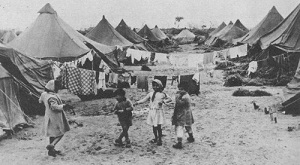
Izraelski obóz przejściowy żydowskich uchodźców z krajów arabskich.

Kto na Bliskim Wschodzie nie doznał traumy wstrząsów ostatniego stulecia? Wszyscy upamiętniamy historię naszych rodzin i cenimy miejsca, w których żyliśmy, jednak tylko przywódcy palestyńscy zrobili z pamięci o wysiedleniu ideologiczną broń i przekształcili ją w oskarżenie o ludobójstwo. „Dzień Nakby”, który obchodzony jest co roku 15 maja, został ustanowiony w 1998 roku przez byłego przywódcę Autonomii Palestyńskiej – i  międzynarodowego terrorystę – Jasera Arafata, aby zmienić Dzień Niepodległości Izraela w festiwal pretensji i oskarżeń. Sam fakt istnienia Izraela został nazwany „katastrofą” – nakba po arabsku — ale nie jest nią przesiedlenie, które dotknęło obie strony w późniejszej wojnie, w tym czystki etniczne wszystkich Żydów z tego, co nazwano potem Zachodnim Brzegiem i Wschodnią Jerozolimą. A podczas i po izraelskiej wojnie o niepodległość w 1948 roku, setki tysięcy Żydów zostało wygnanych z ziem arabskich; co jest w rzeczywistości prawdziwą nakbą.

Podczas wojny w 1948 roku, w brytyjskiej Palestynie Mandatowej żydowskie społeczności zostały wykorzenione i wygnane ze swoich domów w Gusz Ecjon i Atarot na dzisiejszym Zachodnim Brzegu przez dowodzony przez Brytyjczyków Transjordański Legion Arabski. Starożytna społeczność żydowska w Hebronie, gdzie znajduje się Makpela (Grota Patriarchów) – miejsce pochówku biblijnych przodków Abrahama, Izaaka i Jakuba – została już wygnana przez arabskie zamieszki w 1929 roku i władze brytyjskie uniemożliwiły jej powrót.

Na początku XX wieku populacja Bagdadu była w jednej trzeciej żydowska i podobnie jak dzisiejsze Wzgórze Świątynne, było tam wiele miejsc, które były wspólne dla wyznawców żydowskich i muzułmańskich, takie jak Grób proroka Ezechiela w al-Kifl, w którym od wieków jest i meczet, i synagoga. W 1941 roku, podczas krótkiego, wspieranego przez nazistów zamachu stanu, kierowanego przez Raszida Ali al-Gailaniego, antysemickiemu tłumowi pozwolono mordować i gwałcić członków społeczności żydowskiej w Bagdadzie w pogromie zwanym Farhud. Irak prześladował również swoją społeczność żydowską po uzyskaniu przez Izrael niepodległości. Do 1951 roku Izrael uratował drogą lotniczą prawie całą iracką populację żydowską w „ Operacji Ezra i Nehemiasz ”.

Społeczność żydowska w Jemenie została również uratowana przez rodzące się państwo żydowskie w latach 1948-49, w ciągu roku od uzyskania przez Izrael niepodległości, w „Operacji Skrzydła Orłów”. Według legendy, wielu jemeńskich Żydów nigdy wcześniej nawet nie widziało samolotu i potraktowało je jako dosłowne wypełnienie biblijnej obietnicy, że ci „którzy czekają na Pana […] wzniosą się na skrzydłach jak orły” (Izajasz 40:31).

W sumie ponad 850 000 Żydów zostało zmuszonych do ucieczki z krajów arabskich do Izraela, a potem ponad 70 000 Żydów z Iranu po rewolucji islamskiej w 1979 roku. Podobnie jak w Iraku, w Iranie znajdowały się miejsca wielowyznaniowe honorowane przez obie religie, takie jak Grobowiec Królowej Estery w Hamadanie w Iranie. W „Dniu Nakby” 2020 wandal podpalił części świątyni w wyniku prawdopodobnego przestępstwa z nienawiści.

Świat arabski doświadczył więcej wysiedleń niż niemal jakikolwiek inny region, o czym mogą świadczyć współczesne populacje uchodźców z Iraku i Syrii. Chociaż moja rodzina jest muzułmańska, urodziłem się w żydowskiej dzielnicy Starego Miasta w Jerozolimie, wówczas pod kontrolą Jordanii. W 1966 roku, kiedy miałem 8 lat, jordański rząd przeniósł moją rodzinę na północ od Jerozolimy do obozu uchodźców Szuafat. To rząd Jordanii, a nie rząd Izraela, uczynił mnie uchodźcą.

Różnica między kulturą palestyńską, w której celebruje się krzywdy, a kulturą izraelską, która idealizuje wolność, jest wyraźna. Na przykład populacja mniejszości chrześcijańskiej gwałtownie spadła na terytorium kontrolowanym przez Autonomię Palestyńską. W Betlejem zmniejszyła się z 84 procent do 22 procent tylko przez ostatnie dziesięć lat. Tymczasem partia oparta na islamie odgrywa kluczową rolę w obecnym rządzie Izraela, a izraelski Sąd Najwyższy powołał niedawno swojego pierwszego muzułmańskiego sędziego, Chaleda Kabuba.

Palestyńczycy powinni czcić nasze bogate dziedzictwo i, podobnie jak nasi żydowscy kuzyni, opłakiwać nasze straty. Ale teraz jest czas na wynegocjowanie pojednania, a nie na utrwalanie wielopokoleniowego poczucia krzywdy. „Dzień Nakby” jest częścią problemu mentalności ofiary, a nie przyszłościowym rozwiązaniem. 

Pojednanie ma miejsce tylko wtedy, gdy obie strony cofają się o krok i uznają wspólne cierpienie. „Dzień Nakby” działa na odwrót. Podczas gdy Izrael trzykrotnie oferował Palestyńczykom pokój, godność i niezależność, Jaser Arafat zapoczątkował – a Mahmoud Abbas nie zdołał powstrzymać – brutalnej kultury drugiej intifady 2000-05 lat. Można uznać, że ustanowienie „Dnia Nakby” w 1998 roku było przygotowaniem do tej intifady.

Fetyszyzowanie samego istnienia Izraela jako katastrofy jest wypaczeniem, które rani nasze dzieci i prowadzi je do wojny i samobójczych zamachów bombowych. Prawie 1 milion Żydów na ziemiach islamskich stanęło w obliczu własnej Nakby po odzyskaniu przez Izrael niepodległości. Być może, gdyby więcej Palestyńczyków to zrozumiało, lepiej zrozumielibyśmy naszych izraelskich sąsiadów.

Musimy uczyć nasze dzieci o naszych sąsiadach, szukać zrozumienia i opowiadać się za pokojem. Przywódcy palestyńscy powinni zakończyć podżeganie przeciwko Izraelowi i Żydom – w tym szerzenie antysemickich stereotypów – w edukacji publicznej i mediach. Zamiast tego palestyńscy uczniowie i obywatele powinni poznać historię, radości i traumę naszych sąsiadów, Izraelczyków, z którymi mamy wiele wspólnego. W ten sposób możemy położyć podwaliny pod nowy Bliski Wschód, a miasta takie jak moje rodzinne Jerycho w Dolinie Jordanu mogą rozkwitnąć jako ośrodki międzynarodowej współpracy i handlu. Można to osiągnąć tylko wtedy, gdy nauczymy się rozumieć cierpienie naszych sąsiadów i przestaniemy wyolbrzymiać własne.


Bassem Eid – Znany palestyński działacz na rzecz praw człowieka. Urodził się w 1958 roku w Jerozolimie wschodniej, gdzie nadal mieszka. Początkowo zajmował się naruszaniem praw człowieka przez żołnierzy Izraelskiej Armii Obronnej, stopniowo rozszerzając swoje zainteresowania o naruszania praw człowieka przez władze Autonomii Palestyńskiej i palestyńskie służby bezpieczeństwa. W 1996 roku założył organizację, Palestinian Human Rights Monitoring Group in 1996, która przerwała działalność w 2011 roku. Obecnie pracuje jako badacz i analityk w izraelskiej telewizji. Ujawnianie naruszeń praw człowieka przez Palestyńczyków wobec Palestyńczyków dostarczyło mu tysiące wrogów wśród sympatyków Palestyńczyków.


Zawartość publikowanych artykułów i materiałów nie reprezentuje poglądów ani opinii Reunion’68,
ani też webmastera Blogu Reunion’68, chyba ze jest to wyraźnie zaznaczone.
Twoje uwagi, linki, własne artykuły lub wiadomości prześlij na adres:
webmaster@reunion68.com


‘Say Yes to the World’ but No to the Jews: Lufthansa’s Antisemitic Scandal

‘Say Yes to the World’ but No to the Jews: Lufthansa’s Antisemitic Scandal

Ben Cohen


Lufthansa Airbus A319 aircraft as seen flying and landing at Brussels Zaventem International Airport BRU in the Belgian capital. Photo: Nicolas Economou via Reuters Connect

It took several days, but eventually, the world’s media grasped why the scandal at Frankfurt Airport last week, when more than 100 Orthodox Jews were prevented by the German airline Lufthansa from boarding a connecting flight to Budapest, was so shocking.

It was Dan’s Deals, a travel website popular with the Orthodox Jewish community in New York, that originally broke the story of the ordeal of 127 Orthodox Jews who traveled in separate groups and different classes on a journey that began at New York’s John F. Kennedy Airport on May 4. The website diligently pieced together the voices of several passengers who alleged that Germany’s national airline had collectively punished those on the plane who were visibly Jewish.

Reportedly, a dispute over masking requirements broke out as Flight #LH401 winged its way across the Atlantic. While many airlines have abandoned the mask mandate, Lufthansa is still obliged by German law to enforce one. According to the witnesses who spoke to Dan’s Deals, a handful of Jewish and non-Jewish passengers objected to the instruction or didn’t wear their masks in the required fashion. At one point, the captain of the aircraft made a cockpit announcement warning those individuals who didn’t cooperate that they might be denied boarding onto connecting flights in Frankfurt.

Once the plane landed in Frankfurt, a large number of its passengers made their way to the departure gate for a Lufthansa flight Flight #LH1334 to Budapest, Hungary, where many were headed for a pilgrimage to the grave in Hungary of the Hasidic sage Yeshaya Steiner. At the gate, they learned to their disbelief that Lufthansa agents were refusing to board any passengers who looked visibly Jewish.

The rationale for this blatant discrimination was explained in no uncertain terms to a Jewish passenger by a Lufthansa agent. When the passenger pointed out that non-Jewish travelers had been permitted to board the connection to Budapest, asking pointedly why it was “only the Jewish people paying for other people’s crimes,” the agent responded, “because it’s Jews coming from JFK.” When the passenger expressed his shock, the agent responded, in broken English: “If you want to do it like this, Jewish people were the mess, who made the problems.”

The incredulous passenger then asked: “So Jewish people on the plane made a problem, so all Jews are banned from Lufthansa for the day?” The agent answered: “Just from this flight.”

To add insult to injury, some of the Jewish passengers were confronted by a layer of armed police who stood between them and the departure gate. In a scene that conceivably would have won critical praise had it been staged in a dark historical comedy, one of the distressed passengers asked plaintively, “Why do you hate us?” as the officers grimly surveyed them. Then someone else said the word “Nazi,” leading to a gasp of disapproval from the small crowd.

In Germany, it’s a crime to call a police officer a “Nazi,” just as it’s a crime to deny the Holocaust or brandish a swastika. But sometimes, you have to exercise your judgment. Either blissfully unaware of the optics or indifferent to them, one of the offended police officers began barking in a thick German accent, “Who said the ‘N’ word? Who was it??” at the assembled Jews. To their credit, they responded to his angry request with appropriate indifference. “We don’t know,” said one of them.

By collectively punishing all the Orthodox Jews who flew instead of identifying and taking action against the specific passengers who allegedly violated the masking policy, Lufthansa engaged in blatant antisemitic discrimination. The reasoning of the ground staff has yet to be officially explained, but it doesn’t take a leap of the imagination to conclude that in their eyes, all of these Hasidim look the same and behave the same — a prejudiced logic that, sadly, many other minorities are also familiar with.

Perhaps the worst aspect of this scandal is Lufthansa’s refusal to recognize that its staff treated Jewish passengers with contempt that was rooted in antisemitic imagery. An apology posted only once the world’s media feasted on images of anxious-looking Jews being persecuted in a German airport was directed at “all the passengers unable to travel on this flight, not only for the inconvenience, but also for the offense caused and personal impact.” But the statement did not deal with the core of the problem; the antisemitic thinking that resulted in discriminatory action against an entire group based on their ethnicity.

A large part of the shock value around this story lies in the fact that it occurred in Germany, of all places, and with Lufthansa. Founded in 1926, the airline profited handsomely from the use of slave labor during the Nazi era before it was reconstituted in 1953 under the chairmanship of Kurt Weigelt, a Nazi businessman who served a two-year prison sentence for war crimes. One would like to think that Weigelt’s spirit has been banished from Lufthansa’s boardrooms and airport hubs; the spectacle in Frankfurt would suggest otherwise.

Lufthansa can yet emerge from this appalling episode with its credibility intact. For that to happen, it needs to recognize that its ground staff implemented an antisemitic policy and apologize for that offense specifically. And it needs to publicly announce the payment of substantial compensation to all those who missed their connecting flight — not just for the inconvenience but for the trauma that accompanies a victim’s experience of discrimination.

Until that happens, no Jewish customer can regard Lufthansa as simply one of the world’s more decent airlines. Some chatter on social media has suggested that a boycott of the airline would be the correct path to take. My answer to that is that travelers should exercise their consumer choice, as Lufthansa is hardly the only airline that flies to Europe. But a formal boycott may, at this stage, be a step too far. Let us see first whether Lufthansa can grasp the enormity of its original offense; whether, indeed, the Holocaust contrition that the Germans are famous for goes more than just skin deep.


Ben Cohen is a New York City-based journalist and author who writes a weekly column on Jewish and international affairs for JNS.


Zawartość publikowanych artykułów i materiałów nie reprezentuje poglądów ani opinii Reunion’68,
ani też webmastera Blogu Reunion’68, chyba ze jest to wyraźnie zaznaczone.
Twoje uwagi, linki, własne artykuły lub wiadomości prześlij na adres:
webmaster@reunion68.com


Satellite images show complete destruction of Syrian site hit by Israel

Satellite images show complete destruction of Syrian site hit by Israel

ANNA AHRONHEIM


It reportedly was the 12th Israeli attack on Syrian territory since the beginning of the year and came after the Israeli Air Force struck the SSRC.

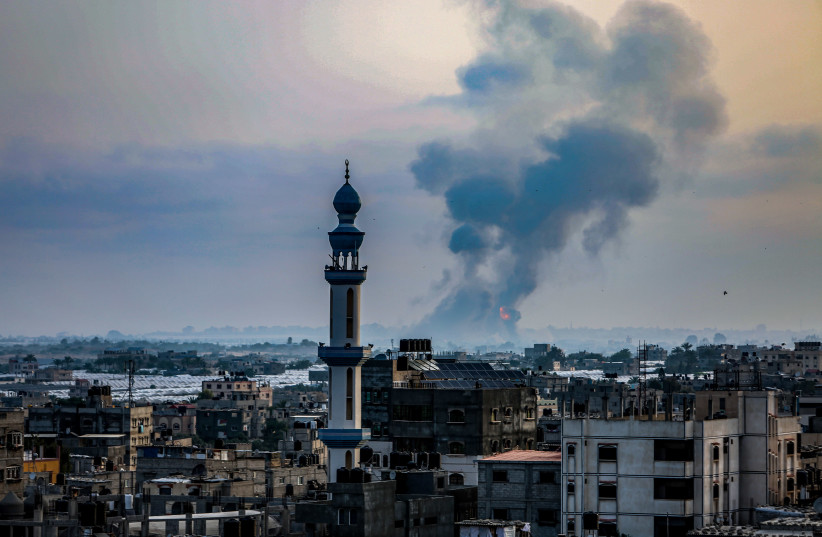
Smoke and flames rise after an Israeli airstrike in a site of the Izz al-Din al-Qassam Brigades, the armed wing of Hamas, in the west of Khan Yunis, in the southern Gaza Strip, on May 11, 2021. / (photo credit: ABED RAHIM KHATIB/FLASH90)

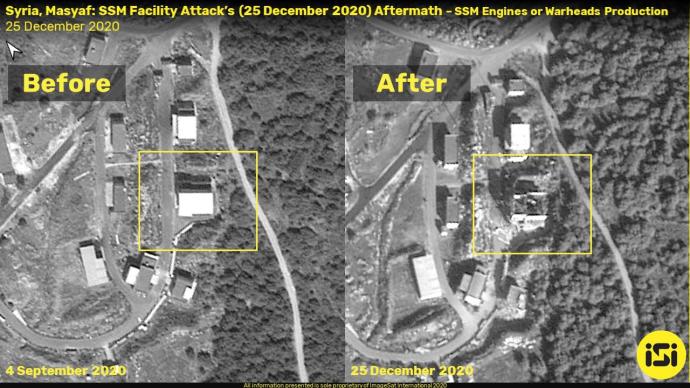
Images published by Israeli intelligence firm ImageSat International (ISI) of a site allegedly struck by Israel on Friday show the complete destruction of the site.

According to ISI, the structures that were hit served as an entrance to underground tunnels and were completely destroyed by the airstrikes. The same structures were hit on September 2018 in another strike blamed on Israel and were rebuilt.

The Britain-based Syrian Observatory for Human Rights, which monitors the Syrian civil war, said that at least eight missiles were fired toward weapons depots and sites belonging to Iranian militias.

A five-man crew of a Pantsir missile defense system was killed after firing toward IAF jets. Another seven civilians were injured.

According to SOHR, it was the 12th Israeli attack on Syrian territory since the beginning of the year. The report by ISI said that the strikes came after the Israel Air Force struck the SSRC east, north and west on April 9th.

“ISI assesses that this underground facility is related to SSRC facility in Masyaf,” the report said.

There have been numerous airstrikes in the Masyaf area which is thought to be used by Iran as a base for their militia forces. The area is also where Syria’s Scientific Studies and Research Center (SSRC), known also by its French name Centre D’Etudes et de Recherches Scientifiques (CERS) is located.

Israeli officials have repeatedly voiced concerns over Iran’s entrenchment in Syria and the smuggling of sophisticated weaponry to Hezbollah from Tehran to Lebanon via Syria, stressing that both are red lines for the Jewish State.

Israel has been carrying out its war-between-wars campaign for close to a decade in an attempt to prevent Iran from entrenching itself in Syria and to stop Tehran from smuggling advanced weaponry.

The Iranian Revolutionary Guard Corps and its Quds Force were the main targets of Israel’s war-between-wars campaign, known in Hebrew as MABAM. Over the years it has carried out thousands of kinetic strikes, in Syria and further from its borders, by land, sea, air as well as cyberkineticly in order to prevent the Iranian regime from reaching its goal of regional hegemony as well as becoming a nuclear state.

Israel has repeatedly increased its strikes in Syria despite an increase in tension with Russia which is enormously influential after they intervened in 2015 on the side of President Bashar Assad. 

Israel and Russia have a safety mechanism in place in order to make sure that Moscow is informed ahead of Israeli action. 

In July 2019, ISI released satellite imagery that showed the complete deployment of four Russian-made S-300 missile defense systems in Masyaf.

Russia delivered the launcher, radar and command-and-control vehicle of the advanced air-to-surface missile system to the Assad regime after a Russian reconnaissance plane was downed by Syrian air defenses during an Israeli airstrike on Iranian targets.

The Syrian Arab Army is equipped with a range of older Russian-made surface-to-air missile systems such as the SA-2, SA-3, SA-5, SA-6,-SA-8, SA-11, SA-17, SA-19, SA-22, and Pantsir 1 air defense systems.

Russia has also deployed their advanced S-300 and S-400 air defense batteries but has not given them to the Syrians, rather they man themselves. They have yet to be used against Israeli jets, in part due to the ongoing safety mechanisms in place between Jerusalem and Moscow.

While the response time by Syrian SAMs to Israeli operations has become quicker and they have fired over a thousand missiles toward Israeli jets in the past seven years, they have been unable to stop them from carrying out their missions.


Zawartość publikowanych artykułów i materiałów nie reprezentuje poglądów ani opinii Reunion’68,
ani też webmastera Blogu Reunion’68, chyba ze jest to wyraźnie zaznaczone.
Twoje uwagi, linki, własne artykuły lub wiadomości prześlij na adres:
webmaster@reunion68.com


Niemcy pstrykają fotki. Unikatowe zdjęcia z getta

Fragment okładki książki: Ian Baxter ‘Getta w okupowanej Polsce. Rzadkie fotografie z archiwów wojennych’, tłum. Fabian Tryl (Wydawnictwo Naukowe PWN)


Niemcy pstrykają fotki. Unikatowe zdjęcia z getta

Joanna Banaś


Stanął blisko, może metr od jej stóp. Skadrował, nacisnął migawkę. Szczupłe łydki, wiotkie uda osoby, która gwałtownie schudła. Płaszcz okrywa ciało, twarzy na zdjęciu nie widać. Czy dlatego, że byłoby to zbyt okrutne, czy po prostu zniszczyłaby świetną kompozycję?
.

19 września 1941 r. sierżant Heinrich skończył 43 lata. Z okazji urodzin dostał przepustkę. Ze swoim znakomity aparatem wszedł na teren warszawskiego getta. Na jego widok Żydzi zdejmowali czapki. Zużył kilka rolek filmu.

W książce Iana Baxtera „Getta w okupowanej Polsce” znalazło się także wykonane przez Jösta zdjęcie ciała leżącego u podnóża schodów. Znów świetny kadr.

Co myślał, gdy tak umiejętnie fotografował na ulicach ciała martwych i umierających Żydów? Opisy, którymi opatrzył poszczególne zdjęcia, świadczą o tym, że patrzył na nich bez emocji. A jednak głęboko schował te klisze na wiele lat. Dopiero w 1982 r. przekazał 140 zdjęć reporterowi „Sterna” Güntherowi Schwarbergowi, który doprowadził do ich wydania w formie książkowej.

Stacjonujący w Warszawie w 1941 r. radiooperator Willy Georg, wówczas 30-letni, pstrykał pamiątkowe fotki sobie i kolegom z oddziału. Jego oficer wysłał go na teren getta, by fotografował wszystko, co zobaczy. I tak zrobił. Żandarmi kazali mu wprawdzie wyjąć film z aparatu, ale nie sprawdzili kieszeni. Miał w nich cztery już naświetlone klisze. Książkę zawierającą te fotografie opracowaną przez Rafaela Scharfa opublikował dopiero pół wieku później.

Zdjęcia Jösta i Georga wykorzystał w swojej książce-albumie o gettach na ziemiach polskich Ian Baxter, brytyjski historyk wojskowości, autor kilkudziesięciu książek poświęconych III Rzeszy, m.in. o powstaniu warszawskim i obozie koncentracyjnym Auschwitz-Birkenau. „Getta w okupowanej Polsce” skonstruował według klasycznego schematu: tło historyczne, życie codzienne w getcie, likwidacja, powstanie w getcie warszawskim, opis gett na ziemiach polskich. Ale najważniejsze oczywiście są zdjęcia, które każą nam nie zapomnieć o tych, którzy w tej opowieści są najważniejsi. O oczach starego Żyda w czapce z głową owiniętą szalikiem. O buzi przedwcześnie postarzałego dziecka śpiącego na chodniku z głową na krawężniku. O niezwykle szykownej kobiecie na ulicy warszawskiego getta, która wygląda, jakby świat dookoła w ogóle jej nie dotyczył.

Większość fotografii, głównie pochodzących ze zbiorów Amerykańskiego Muzeum Pamięci Holokaustu (USHMM) oraz National Archives and Records Administration (NARA), pokazuje gettową codzienność – kolejki po wodę, po jedzenie, kontrole na ulicach, handel na targowiskach. Potem pojawiają się ludzie leżący na ulicach i wpychani do pociągów w jedną stronę. Furmanki, na których Żydzi wwozili do getta cały dobytek, zastępują porzucone na chodniku walizki tych, którym rzeczy już się nie przydadzą.

I wreszcie, jak cios w twarz: z najwyższego piętra palącej się kamienicy wyskakuje kilkuosobowa rodzina, która nie miała już dokąd uciec. Żołnierze w czarnych mundurach dobijają dwoje przerażonych dzieci siedzących wśród mnóstwa nagich, martwych ciał. Na szubienicy wiszą ciała członków lwowskiego Judenratu.

A w międzyczasie obserwujemy szefa administracji łódzkiego getta Hansa Biebowa, starannie ostrzyżonego, elegancko ubranego, wyraźnie zadowolonego z siebie, także gdy udaje, że nie pozuje do zdjęcia. I wyprostowanego jak struna SS-Gruppenführera Jürgena Stroopa w wianuszku podkomendnych podczas pacyfikacji warszawskiego getta. Ich też powinniśmy pamiętać.

Redaktor Grzegorz Antoszek w polskim wydaniu książki do tekstów opracowanych przez Iana Baxtera dodał przypisy, które niekiedy uzupełniają, a niekiedy prostują odautorskie informacje. Niestety, muszę też odnotować, że polskie wydawnictwo nie postarało się przy przygotowywaniu książki do druku – naliczyłam trzy błędy ortograficzne po polsku i dwa w niemieckich słowach. Niektóre zdjęcia zostały pomieszane i nie zgadzają się ich podpisy. Szkoda, bo to ważna pozycja.


Ian Baxter „Getta w okupowanej Polsce. Rzadkie fotografie z archiwów wojennych”
Tłum. Fabian Tryl
Wydawnictwo Naukowe PWN

Ian Baxter 'Getta w okupowanej Polsce. Rzadkie fotografie z archiwów wojennych', tłum. Fabian TrylIan Baxter ‘Getta w okupowanej Polsce. Rzadkie fotografie z archiwów wojennych’, tłum. Fabian Tryl Wydawnictwo Naukowe PWN


Zawartość publikowanych artykułów i materiałów nie reprezentuje poglądów ani opinii Reunion’68,
ani też webmastera Blogu Reunion’68, chyba ze jest to wyraźnie zaznaczone.
Twoje uwagi, linki, własne artykuły lub wiadomości prześlij na adres:
webmaster@reunion68.com


Israel’s Minister of the Hyphen

Israel’s Minister of the Hyphen

MATTI FRIEDMAN


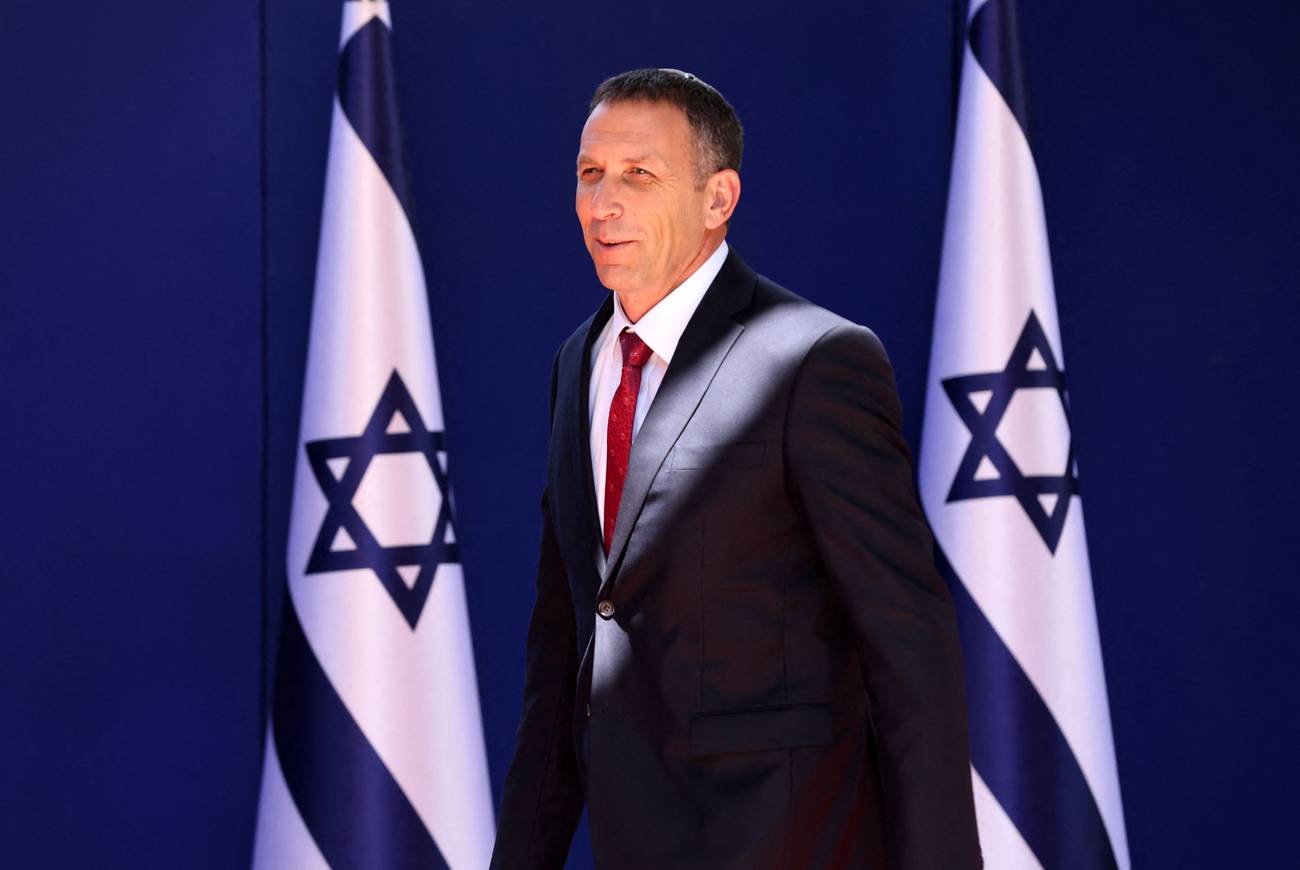
Minister of Religious Services Matan Kahana arrives at the president’s residence in Jerusalem on June 14, 2021EMMANUEL DUDANDE/AFP VIA GETTY IMAGES

.

Matan Kahana’s lonely battle to build a religious-Zionist-labor-Orthodox-democratic Jewish state

It’s impossible to understand Matan Kahana, the surprise star of the current Israeli government, or to grasp the spirit of the coalition that has governed here for the past year, without the idea of the hyphen. The hyphen lies at the heart of the worldview of Kahana, a blunt ex-military officer who has stirred up more controversy, and has been called more awful names, than any other figure in the embattled government where he serves in what is usually a political backwater, the Ministry of Religious Services. The hyphen is at the heart of the crisis currently threatening to splinter the government, and will play a role in whatever political constellation ends up taking shape.

When Kahana, who is 49, was growing up in the 1980s, “be the hyphen” was an educational message drilled into religious-Zionist kids. The hyphen referred to what connected terms like “religious-Zionist,” for example, or “Jewish-democratic,” or “Israeli-Jewish,” or the community’s triangle of values: Torah of Israel-Land of Israel-People of Israel. These are all ideas with inherent tensions, sometimes just barely held together by bars of horizontal ink. Kahana’s generation was going to embody the connection. They were going to excel at Talmud and at physics. They were going to be outdoorsy, salt-of-the-earth Israelis like the atheist kibbutzniks, and they were going to pray three times a day. They’d be right wing in their outlook but would serve in the army with the most left-wing Israelis, dying with them and for them if necessary. They’d take part in democratic politics, and they’d build settlements in the Land of Israel, demography be damned. The country’s contradictions would yield to their willpower and grit. That’s what they meant by “being the hyphen.”

As Kahana, speaking of his generation, put it in a recent speech to an audience of religious Zionists, “We showed that it’s possible to do two things at once—to learn Torah and serve in the army. To excel and lead in the world of action, and to fear God. To disagree, but to fight to stay brothers.” The speech was delivered with the characteristic force of someone used to leading soldiers, and with a sense that all of this is coming apart. “Our rabbis, the great men of our generation,” he said, addressing the rabbinic leadership present in the auditorium, “you told us that our job was to be the hyphen—to connect the people of Israel to a life of Torah and labor.”

But now that he and his friends had done just that, rising through the ranks of the army and the civil service and taking their place in the center of Israeli society, they were being vilified by some of the same rabbis and political leaders for forming a government with the Israeli center and left. “The extremism afflicting religious Zionism,” he said, “is splitting the Jewish people.” Last week, pressure from the hard right succeeded in peeling off a member of his own party, Idit Silman, who shocked her colleagues by abandoning the unity coalition and defected to the rightist opposition led by Benjamin Netanyahu. Another member had already jumped ship months before. Silman’s move has left the Knesset deadlocked and the coalition with just 60 votes, not enough to pass legislation.

It’s difficult to think of someone who embodies the hyphen more than Matan Kahana. The oldest of five siblings in a family with roots in Germany, the son of an electrical engineer who was badly wounded in battle in 1967 but fought in two subsequent wars as an officer in the reserves, Kahana attended high school at Netiv Meir, a competitive yeshiva in Jerusalem that educated several generations of the religious-Zionist elite. The school’s fortunes faded in the late 1990s when the principal, Zeev Kopolovitch, went to jail for sexually abusing pupils.

The crimes on the charge sheet happened after Kahana graduated, and he wasn’t among the victims. But the affair was an earthquake for the sector known to Israelis as the “knitted kippahs,” undermining the faith of many in their leadership and institutions. It contributed to the current disarray among religious Zionists, who today are hardly a coherent group at all, but a loose affiliation of Israelis who vote for different political parties and don’t listen to the same rabbis, or listen to rabbis at all. “This is the privatization generation in the religious Zionist world,” the journalist Yair Ettinger, one of the best observers of religion in Israel, wrote in a book called Prumim, or “frayed,” published in Hebrew in 2019 and due out in English later this year. (The title is a play on “knitted,” as in “knitted kippahs.”)

“It is stronger, more diverse, more extreme, more moderate, more divided, more sectarian, and more nonsectarian all at once,” he wrote. “It is no longer united around a common focal point, but neither is it split into two coherent camps with their own centralized leaderships. It spans the vast space between conservatism and modernity.” That’s Kahana’s world.

Setting off for the army in the summer of 1990, Kahana was accepted by the commando unit Sayeret Matkal, one of the military’s toughest and most selective outfits, the same one that produced Prime Ministers Netanyahu and Ehud Barak, among many other famous Israelis. The unit had long been dominated by secular kibbutzniks, the country’s old elite, but when Kahana arrived things were already changing. Of 12 soldiers who managed to make it through training, four were observant, a number the unit hadn’t seen before and didn’t really know how to swallow. Their officer initially thought his orders superseded religious commandments, like prayer.

I met Kahana at the Ministry of Religious Services, which looks like the office of a small insurance company, complete with couches of fake black leather that have known better days and the backsides of many clerks and rabbis. I asked him what he thought happened to the kibbutzniks, or their secularist descendants, who’d once dominated the country’s institutions and politics. Why, in so many influential positions, are you now far more likely to find someone shaped by religious Zionism?

“In the end, there has to be a spirit behind the action,” he answered. “Sometimes, when something is difficult, you need to be able to come up with an explanation for why you should do it anyway, even though it may be uncomfortable and against your instincts. We have those explanations. We believe in God and the State of Israel, the first flowering of our redemption, and we embody what I believe to be the right connection between a life of Torah and a life of work. That’s why our young people are still full of energy.”

Whatever the reason, his army squad illustrated the trend. One of the four other kippah-wearing soldiers with him from basic training was Emmanuel Moreno, later a legendary war hero who died as a lieutenant-colonel leading a raid inside Lebanon in 2006. Another was Naftali Bennett, currently the prime minister.

Serving in Sayeret Matkal is a stamp of accomplishment and can be a ticket into the top of Israeli society, but when he reached the end of his service, Kahana didn’t join Bennett and his other comrades back in civilian life. Instead he tried out for flight school, the only military branch more illustrious than the one where he’d just served. He got in, and spent the next 25 years flying F-16s, commanding a squadron and finally retiring a colonel in 2018. After that, he joined Bennett in his new political party Yamina (“Rightward”), just as Netanyahu was beginning to lose his grip and leading Israel into a spiral of inconclusive elections. He was an anonymous member of the party at the time of the big bang of Israeli politics last summer, when Bennett led “Rightward” leftward, abandoning Netanyahu and forming a coalition that included not just the left-wing parties Meretz and Labor but also a party of conservative Muslims. Although Rightward had only six Knesset seats, Bennett became prime minister in a rotation deal with the centrist Yair Lapid, and suddenly Kahana was at the center of power.

No one sane dreams of being the minister of religious services, which has always mostly entailed channeling funding and patronage to an Ottoman religious bureaucracy in charge of things like religious courts and ritual baths. But Kahana claims this was the only job he wanted. He felt the Jewish-democratic state splintering and identified this office as the fulcrum. “I wanted this ministry,” he told me, “because I think someone like me can be the connecting hyphen.”

Kahana came to the attention of many Israelis for the first time last June, after the formation of the new government, amid a furious day in the Knesset during which the Likud and the ultra-Orthodox parties, shocked to find themselves removed from power after 12 years, shouted down the coalition’s speakers and disrupted attempts by the new government to present its platform. Lawmakers representing the ultra-Orthodox, a 10% minority that has long controlled the religious bureaucracy, were ripping into the new coalition as anti-religious—even though it was headed by Bennett, the country’s first observant prime minister. The ultra-Orthodox MKs had been shouting at Bennett and Kahana to “take off their kippahs.”

At the podium, a furious Kahana directed a startling attack at one of the most vociferous of those lawmakers, Moshe Gafni. It wasn’t one of the usual critiques you hear coming from the left in the Knesset, but a deeply religious one. “I ask you, MK Gafni—when did you ever lie in the rain in an ambush, in terrible cold, and recite the shemonah esreh prayer while lying down? Has that ever happened to you?” Kahana roared. (The shemonah esreh must be recited standing up, and doing so lying down—in this case, to avoid enemy detection—is highly unusual.) Of course the ultra-Orthodox politician, like most of his voters, had never been anywhere near military service. “And when did you and Deri pray to God before going into battle? When did that happen?” he continued, mentioning another ultra-Orthodox politician. “Who on earth are you to teach us about the sanctification of God’s name?” By the end of the exchange Gafni seemed deflated, and the new minister had gained admirers among Israelis watching him on TV.

The religious-secular fight has been going on since the creation of the state and is familiar to everyone here, but Kahana was saying something different. He wasn’t speaking against religion—he was saying that he was religion, that his religious Zionism was as authentic as the non-Zionist stringency of the ultra-Orthodox, if not more so. He wasn’t throwing out the rabbinic bureaucracy. He was saying the wrong rabbis were in charge.

It wasn’t long before Kahana’s ambitious legislative agenda became clear: a revolution that would end the ultra-Orthodox monopoly on the country’s religious officialdom. The rabbinate’s notoriously corrupt hold on kashruth supervision would be shattered and privatized. This was successfully done. Record numbers of women have already been appointed heads of local religious councils. His next goal, now complicated by the coalition crisis, is to move Jewish conversion from the auspices of the chief rabbinate, which is controlled by the ultra-Orthodox, to city rabbis, who are at least potentially more flexible, and more Zionist, and thus more sympathetic to the idea that conversion should be made more inviting in the interest of national cohesion. That move is designed to make it easier for Israelis who aren’t Jewish according to Jewish law to opt into Judaism. There are hundreds of thousands such citizens, mainly immigrants from the Soviet Union, some of them Kahana’s former comrades-in-arms.

All of this was fought out in the Knesset over the past 10 months, hindered by the fact that Kahana’s party has been afflicted not only by defections but by dispiriting poll results. He and Bennett have much support and sympathy from the center and left, but those people will never vote for him, and the party’s actual constituency is slim. Kahana’s changes have been met with furious resistance not only from ultra-Orthodox rabbis and politicians but from many hardliners inside the religious-Zionist camp who have moved far from the Israeli mainstream. Kahana and his political allies have been called the worst names that can be summoned up from the dark depths of Jewish history: Nazis, obviously, but also Antiochus, the evil king from the Hanukkah story, and apostates, Hellenizers, Sadducees. Israeli political discourse isn’t polite, but at least it’s historically resonant.

This could easily be misunderstood by onlookers abroad, particularly liberal Western Jews eager to see someone take on the hegemony of the ultra-Orthodox. Kahana is not a liberal. He’s a different kind of religious conservative. “Israel is an Orthodox country,” he told me, and will remain that way in the absence of a wave of new immigrants from liberal Jewish denominations. A compromise to allow non-Orthodox prayer at the Western Wall should have passed years ago, he said, but he’s not going to be the one to pass it now, because doing so would endanger the coalition’s fragile hold on power. “I don’t want to disappoint my Reform brothers, and I’m choosing my words carefully—my Reform brothers,” he said. “But I’m an Orthodox Jew, a conservative.” Part of this insistence is an attempt to protect his flank from attempts to portray him as a closet liberal intent on undermining traditional Judaism. But it’s mostly genuine. His reforms are not aimed at weakening the Jewish DNA of the state, but the opposite. He wants a more Jewish Israel. “The less we force Judaism,” he said, “the more people will choose it.”

These guys are standing up to the rabbis as no one has in the history of the state.
The story of Kahana and the ethos of the “hyphen” is bigger than him alone, and explains much about the current political moment, which can be bewildering to outsiders (and to insiders). The hyphen will continue to matter even if the government falls. It would be an overstatement to say that there’s a new political elite in Israel, but there’s certainly a new group key to the balance of power—one that’s a bit tricky to pin down, because it doesn’t conform to the simplistic ways we’ve always described our politics, and also because these people are spread over several political parties in the coalition.

They include, most obviously, Bennett, the first kippah-wearing prime minister, but also Yoaz Hendel, the communications minister, who’s in a different political party and doesn’t wear a kippah most of the time, and Elazar Stern, the intelligence minister, who’s from a third political party, and members of the Knesset like Moshe Tur-Paz, an important figure from the world of education, who’s in a fourth. There are other examples. What they share are roots in religious Zionism and often significant experiences as commanders in the army, where they grappled with Israeli society firsthand. (It’s significant that of the two extreme figures leading the rival Knesset faction called Religious Zionism, the lawmakers Betzalel Smotrich and Itamar Ben-Gvir, representing the far-right side of the world of the “knitted kippahs,” the former performed abbreviated service in a desk job and the latter didn’t serve at all.) When Kahana talks about patriotic Israelis who aren’t Jewish according to Orthodox law and who need an easier path to conversion, he’s not imagining an abstraction—he’s thinking about specific people like a woman from the air force squadron he commanded, Daria Leonteev, a bomb-loader of Soviet extraction who’s as good an Israeli as they come, but whose kids won’t be Jewish according to Jewish law. This upsets him personally, and he often mentions her in interviews.

For years, many on the Israeli left warned that the religious Zionists of the settlement movement were taking over the army, and that they took orders from rabbis, not from their commanders. One essay from 2014, by the sociologist Yagil Levy, was titled “The Theocratization of the Israeli Military.” A moment of truth arrived last spring, when the titanic political struggle that had dragged Israel through four elections came to a head, and the balance of power turned out to lie with Bennett and Kahana, the kind of people who were supposedly theocratizing the army. Not only did they not take power from Israeli liberals, but they actually put liberals back in power for the first time in years. And not only do they not blindly obey rabbis, as the journalist Yair Ettinger told me: “These guys are standing up to the rabbis as no one has in the history of the state. That’s wild, and it’s the heart of the story.” The process turned out to be a lot more complicated than the critics had thought, if not precisely the opposite.

Whatever the course of Israeli politics in the next few years, and whatever the personal fortunes of Matan Kahana and his comrades, old designations like “settlers,” “right wing,” and “knitted kippahs” aren’t going to be particularly helpful in understanding what’s going on, because those generalizations no longer predict political behavior. The people who believe that the unity of Israel, its people, and institutions is a religious value as important as any other will be key to events, whether they’re in power or out. As the country is subjected to forces of political disintegration, the people of the hyphen will try to hold things together.


Matti Friedman is a Tablet columnist and the author, most recently, of Who by Fire: Leonard Cohen in the Sinai.


Zawartość publikowanych artykułów i materiałów nie reprezentuje poglądów ani opinii Reunion’68,
ani też webmastera Blogu Reunion’68, chyba ze jest to wyraźnie zaznaczone.
Twoje uwagi, linki, własne artykuły lub wiadomości prześlij na adres:
webmaster@reunion68.com