Archive | June 2024

Nigdy nie obwiniamy Hamasu o nic


Nigdy nie obwiniamy Hamasu o nic


Brendan O’Neill
Tłumaczenie: Małgorzata Koraszewska


Po uratowaniu czterech izraelskich zakładników nadszedł czas, żeby zachodnia lewica nie odbierała Hamasowi zasług za osiągnięcie czystego zła.

Ratowanie zakładników jest teraz zbrodnią wojenną. W istocie, jest to „poważna, bardzo poważna zbrodnia wojenna”. Tak twierdzi Owen Jones z „Guardiana”, który jest oburzony „faktem”, że żołnierze IDF wykorzystali ciężarówkę z pomocą humanitarną*, aby wkraść się do miasta Nuseirat, gdzie uratowali czterech zakładników ze szponów Hamasu i jego lokalnych bandziorów. Kenneth Roth, do niedawna szef Human Rights Watch, również wścieka się z powodu wybryków IDF, przypominając Izraelowi, że ma prawny obowiązek „nie przebierać żołnierzy za cywilów”. Ci ludzie są wariatami. Czego oczekują od IDF? Że zapukają do drzwi faszystów przetrzymujących ich rodaków i powiedzą: „Czy możemy prosić o zwrot naszych Żydów?”

W Internecie bulgocze oburzenie z powodu izraelskiej akcji ratunkowej w Nuseirat. Ludzie mówią, że to krwawy dowód izraelskiego szachrajstwa. Od „zbrodni wojennej” komandosów  ubranych w cywilne ubrania po późniejsze walki uliczne i naloty, w wyniku których zginęło wielu cywilów – była to niegodziwa masakra, twierdzi antyizraelski tłumek. Zgadzają się z Hamasem, który oskarżył Izrael o dokonanie „złożonej zbrodni wojennej” w Nuseirat. W całej tej kipieli komentarzy brakuje tylko jednej rzeczy: jakiegokolwiek uznania odpowiedzialności Hamasu za spowodowanie tej piekielnej sytuacji. Kiedy Hamas zdobędzie wreszcie uznanie za swoje czyste zło?

Z tego, co wiemy, operacja w Nuseirat była trudnym i odważnym zadaniem. Nadano jej nazwę „Nasiona lata”. Zostało to zaplanowane bardzo szczegółowo, a IDF zbudowało nawet makiety dwóch budynków mieszkalnych, w których, jak sądzili, przetrzymywani byli czterej zakładnicy, żeby przygotować się na wszelkie ewentualności. Według doniesień siły specjalne udawały wysiedlonych mieszkańców Gazy. Powiedzieli miejscowym, że wprowadzają się do tych budynków mieszkalnych. Ale kiedy już znaleźli się w środku, rozpoczęli operację, zabijając ludzi pilnujących zakładników i zabierając zakładników do helikopterów.

Kiedy Hamas zrozumiał, co się dzieje, ostrzelał żołnierzy IDF, według doniesień, z AK-47 i używając granatników RPG, urządzeń wybuchowych i pocisków moździerzowych. Wywiązała się bitwa. Wezwano izraelskie lotnictwo. Wielu zginęło. Według Izraela mniej niż stu; według ministerstwa zdrowia kierowanego przez Hamas w Gazie jest ich ponad 270.

Wszystkie oskarżycielskie palce są skierowane na Izrael. Nie tylko, jak zazwyczaj, palce izraelofobicznej „lewicy”, ale także mediów głównego nurtu. „Izraelska operacja ratuje czterech zakładników i zabija dziesiątki Palestyńczyków” – głosi nagłówek CNN. BBC stała się niemal placówką propagandy Hamasu, publikując pierwszy nagłówek na temat nalotu. „Ministerstwo zdrowia Gazy twierdzi, że w wyniku uwolnienia izraelskich zakładników zginęło 274 Palestyńczyków” – oznajmiono milionom ludzi, którzy czerpią swoje wiadomości z BBC. Ten nadawca publiczny epatował odbiorców nie faktem wyzwolenia czterech Izraelczyków z niewoli rasistowskiej grupy terrorystycznej, ale fałszywym twierdzeniem Hamasu, że Izrael (i tylko Izrael) spowodował śmierć cywilów w Nuseirat.

Klasa polityczna stoczyła się jeszcze niżej. „Guardian” donosi, że w europejskich kręgach politycznych panuje „oburzenie” w związku z ostatnią „masakrą” w Gazie. Najwyższy dyplomata UE, Josep Borrell, nazwał to „kolejną masakrą ludności cywilnej”. Francesca Albanese, specjalna sprawozdawczyni ONZ ds. terytoriów palestyńskich, stwierdziła, że operacja w Nuseirat jest dowodem „ludobójczych zamiarów” Izraela. Oskarżyła Izrael o zabicie „co najmniej 200 Palestyńczyków, w tym dzieci”, a wszystko to podczas „perfidnego ukrywania się w ciężarówce z pomocą humanitarną”. To „humanitarny kamuflaż” ludobójstwa – grzmiała.

Naprawdę żyjemy w epoce stawiania moralności na głowie. Każdego dnia ma miejsce złowrogie przeinaczanie prawdy, by pasowała do ideologicznych uprzedzeń tych, którzy nienawidzą Izraela. Hamas ukrywa zakładników, których porwał z festiwalu muzycznego Nova, na gęsto zaludnionym obszarze cywilnym, ale to Izrael jest oskarżany o „perfidię”. Hamas celowo umieszcza swoje żydowskie ofiary wśród kobiet i dzieci w zatłoczonym obozie dla uchodźców, a mimo to Izrael oskarża się o używanie „humanitarnego kamuflażu”. Hamas powstał z wyraźnym zamiarem mordowania Żydów i realizował swoje zamiary przy użyciu brutalnej siły 7 października, dokonując rzezi ponad tysiąca Izraelczyków, a mimo to Izrael jest potępiany jako „ludobójczy”. Rasistowskich porywaczy zakładników ponownie przedstawia się jako ofiary, a wyzwolicieli porwanych jako przestępców. To jest jedno wielkie kafkowskie kłamstwo za drugim.

Gdzie jest Hamas w całej politycznej wściekłości z powodu tego, co wydarzyło się w Nuseirat? Zrobiono go niewidzialnym, usunięto z narracji, by winę można było zrzucić na Izrael. Hamas nie zasługuje na ani jedną wzmiankę w tym wściekłym bełkocie Franceski Albanese. Czy ona nie wie, że Hamas rozpoczął bitwę pod Nuseiratem, strzelając ze swojej śmiercionośnej broni w stronę IDF w tłumie cywilów? A może jej to nie obchodzi? Trzeba wyjść poza nagłówki gazet o Izraelu „zabijającym 274 Palestyńczyków”, aby odkryć, że IDF znalazło się „pod ciężkim ostrzałem” i „toczyło intensywną wymianę ognia” z hamasowcami. Określanie reakcji armii na kule i rakiety terrorystów jako „ludobójstwo” jest niedopuszczalną manipulacją organizowaną dla cynicznych celów politycznych.

A oto prawda: Hamas jest odpowiedzialny za każdą śmierć w Nuseirat. Jest również dosłownie odpowiedzialny za niektóre z nich, chyba że oczekuje się od nas wiary, że można strzelać granatami i pociskami moździerzowymi na obszarze pełnym ludności cywilnej i żaden ze śmiercionośnych ładunków nie dosięgnie niewinnego człowieka. I to Hamas jest moralnie odpowiedzialny za to wszystko, za całe cierpienie, które widzieliśmy w sobotę podczas operacji wyzwalania czterech Izraelczyków z niewoli antysemitów. Z prostego powodu: Hamas jest autorem tej piekielnej wojny i jej inicjatorem. Hamas i tylko Hamas sprowadził wojnę do Nuseirat.

Bitwa w Nuseirat tak naprawdę obnaża nie „ludobójcze zamiary” Izraela, ale zło Hamasu. Fakt, że Hamas umieścił czterech zakładników w zatłoczonej dzielnicy cywilnej, potwierdza jego bezduszne lekceważenie zarówno Palestyńczyków, jak i Izraelczyków. To, że rozpoczął krwawą bitwę z IDF, podczas gdy kobiety robiły zakupy, a dzieci bawiły się, potwierdza jego terrorystyczną obojętność na rany i utratę życia niewinnych ludzi. To, że priorytetowo potraktował walkę z IDF i zatrzymanie zakładników jako ważniejsze niż ochrona ludności cywilnej Nuseirat przed krzywdą, potwierdza, jak gorliwą i szaloną stała się jego antyizraelska i antyżydowska doktryna. Jest to ruch, który bardziej ceni zabicie Żyda niż uratowanie Palestyńczyka. Jego okrucieństwo nie ma sobie równych w epoce nowożytnej.

A jednak wszystko to jest wybielone. Rzadko wspomina się o „zamiarach” Hamasu, rzadko komentuje się jego bezwzględność, a kwestia jego moralnej odpowiedzialności nigdy nie jest nawet poruszana. Zamiast tego nastawienie antyizraelskie infantylizuje Hamas i przedstawia Izrael jako jedynego prawdziwego, świadomego aktora w tym konflikcie. Jest tu bigoteria, a nawet coś w rodzaju rasizmu. Istnieje rasizm polegający na obwinianiu Żydów za wszystko, ale także rasizm polegający na nie obwinianiu Palestyńczyków za nic, jak gdyby byli dziećmi, które tak naprawdę nie odpowiadają za wyrządzane zło.

Ale Hamas to nie są dzieci. Są antysemickimi podżegaczami wojennymi. Rozpoczęli tę wojnę, która była nieszczęściem zarówno dla Izraelczyków, jak i dla Palestyńczyków, i nie chcą jej zakończyć przez zwrócenie wszystkich zakładników. Będzie dobrym dniem dla państwa żydowskiego, narodu palestyńskiego i świata, kiedy wreszcie położy się kres temu barbarzyńskiemu ruchowi.


Brendan O’Neill znany brytyjski publicysta i komentator polityczny, wieloletni naczelny redaktor „Spiked” publikujący często w „The Spectator”. W młodości zapalony trockista, członek Rewolucyjnej Partii Komunistycznej i autor artykułów w „Living Marxism”. (Jak się wydaje, z tamtych poglądów została mu wiedza o tym, jak ideologia może odczłowieczać.)


Zawartość publikowanych artykułów i materiałów nie reprezentuje poglądów ani opinii Reunion’68,
ani też webmastera Blogu Reunion’68, chyba ze jest to wyraźnie zaznaczone.
Twoje uwagi, linki, własne artykuły lub wiadomości prześlij na adres:
webmaster@reunion68.com


Blinken: Hamas response to hostage proposal is unworkable

Blinken: Hamas response to hostage proposal is unworkable

CHARLES BYBELEZER


“Hamas has proposed numerous changes to the proposal. … Some of the changes are workable, some are not,” the secretary of state said.


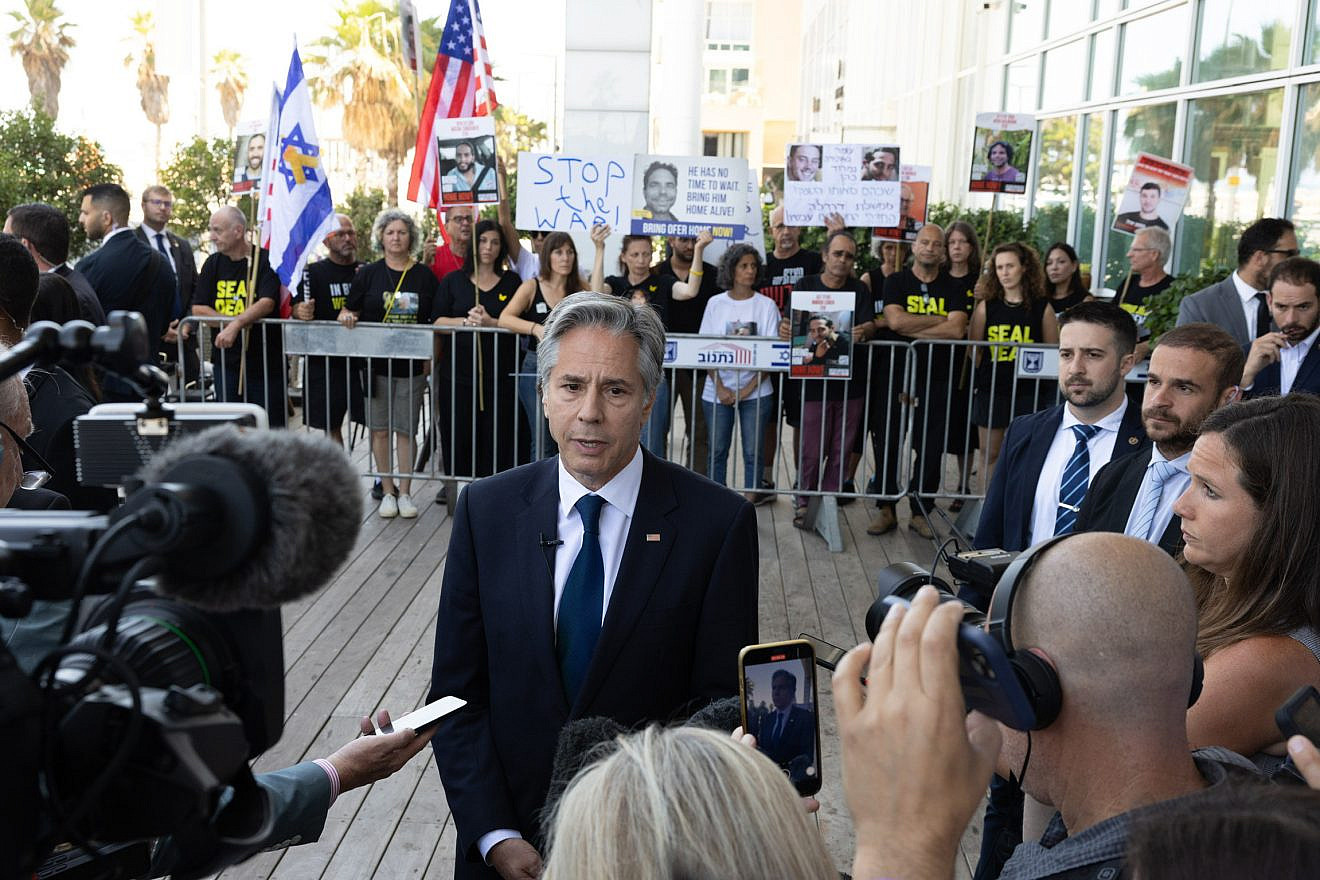
Secretary of State Antony Blinken talks to reporters in Tel Aviv, June 11, 2024. Photo by Chuck Kennedy/U.S. State Department.

Hamas’s official response to Israel’s hostages-for-ceasefire proposal included modifications that are not workable, U.S. Secretary of State Antony Blinken said on Wednesday.

“Hamas has proposed numerous changes to the proposal that was on the table. … Some of the changes are workable, some are not,” Blinken said in a press conference alongside Qatari Prime Minister Mohammed bin Abdulrahman Al Thani in Doha.

“A deal was on the table that was virtually identical to the proposal that Hamas made on May 6—a deal that the entire world is behind, a deal Israel has accepted. Hamas could have answered with a single word: ‘Yes,’” the secretary said.

“Instead, Hamas waited nearly two weeks and then proposed more changes, a number of which go beyond positions that had previously taken and accepted,” added the top American diplomat, who was in Israel for a two-day visit earlier this week.

“As a result, the war Hamas started on October 7 with its barbaric attack on Israel and on Israeli civilians will go on. More people will suffer, more Palestinians will suffer, more Israelis will suffer.”

Blinken nevertheless said that “in the days ahead, we are going to continue to push on an urgent basis with our partners, with Qatar with Egypt, to try to close this deal. Because we know it’s in the interests of Israelis, Palestinians, the region, indeed the entire world.”

On Tuesday night, Hamas submitted to Egyptian and Qatari intermediaries its formal response, including “amendments” to the proposal that Israel said were tantamount to a rejection.

An anonymous Israeli official was widely cited panning the terrorist group, which had “changed all of the main and most meaningful parameters” of the deal.

Reuters reported on Wednesday, citing two Egyptian security officials, that Hamas is seeking written guarantees from the Biden administration for a permanent ceasefire and the withdrawal of IDF troops from the Gaza Strip as a condition for signing off on the proposal.

The report also said Hamas wants explicit guarantees over the transition from the first phase of the plan, which includes a six-week truce and the release of some hostages, to the second phase, which includes an end to the war and Israeli pullback.

Hamas also proposed a new timeline for the phases.

The White House

On May 31, President Joe Biden laid out the terms of the proposal in an address from the State Dining Room at the White House.

“The first phase would last for six weeks,” he said. “Here’s what it would include: a full and complete ceasefire. The withdrawal of Israeli forces from all populated areas of Gaza. Release of a number of hostages, including women, the elderly, the wounded, in exchange for the release of hundreds of Palestinian prisoners.”

That phase, which would also include the return of the remains of dead hostages and the daily delivery of 600 trucks of aid to Gazans, would lead to an indefinite period of negotiations between Israel and Hamas to end the war, Biden said.

“During the six weeks of phase one, Israel and Hamas would negotiate the necessary arrangements to get to phase two, which is a permanent end to hostilities,” the president added. “The proposal says if the negotiations take longer than six weeks from phase one, the ceasefire will still continue as long as negotiations continue.”

The United States, Egypt and Qatar “would work to ensure negotiations keep going until all the agreements are reached and phase two is able to begin,” Biden added.

In the second phase, “Israeli forces will withdraw from Gaza” and “release additional Palestinian prisoners in exchange for the release of all remaining living hostages,” the president said. Quoting the text of the proposal, he said that at that point, the ceasefire would become “the cessation of hostilities permanently.”

The third phase would include the reconstruction of Gaza and the return of any remaining dead hostages. During this stage, the international community would ensure that Hamas does not rearm.

Last week, leaders of 16 countries, including many whose citizens were taken hostage by Hamas on Oct. 7, issued a statement backing the proposal. Noting that Jerusalem was “ready to move forward” with the terms, they called on the Gaza-based terrorist group to “close this agreement.”

“There is no time to lose,” read the statement signed by the leaders of Argentina, Austria, Brazil, Bulgaria, Canada, Colombia, Denmark, France, Germany, Poland, Portugal, Romania, Serbia, Spain, Thailand and the United Kingdom. The United States also signed the statement.

On Monday, the United Nations Security Council adopted a U.S.-drafted resolution backing the three-phase plan to end the war. Noting that Israel had accepted it, the resolution calls for Hamas to do the same, and for both sides to “implement its terms without delay and without condition.”

In an interview with Time magazine published earlier this month, Biden described the Israeli ceasefire offer as “very generous.”

“The last offer Israel made was very generous in terms of who [Palestinian prisoners] they’d be willing to release, what they’d give in return, et cetera. Bibi [Prime Minister Benjamin Netanyahu] is under enormous pressure on the hostages … and so he’s prepared to do about anything to get the hostages back,” said Biden.


Zawartość publikowanych artykułów i materiałów nie reprezentuje poglądów ani opinii Reunion’68,
ani też webmastera Blogu Reunion’68, chyba ze jest to wyraźnie zaznaczone.
Twoje uwagi, linki, własne artykuły lub wiadomości prześlij na adres:
webmaster@reunion68.com


Academy Museum of Motion Pictures ‘Immediately’ Revises Controversial Exhibit on Jewish Founders of Hollywood

Academy Museum of Motion Pictures ‘Immediately’ Revises Controversial Exhibit on Jewish Founders of Hollywood

Shiryn Ghermezian


The first Oscars. Photo: Courtesy Margaret Herrick Library, Academy of Motion Picture Arts and Science

The Academy Museum of Motion Pictures in Los Angeles announced on Monday that it will make changes to its new exhibit about the Jewish roots of the Hollywood film industry after it was criticized by Jewish activists and members of the entertainment industry.

The museum said in a statement to the The Hollywood Reporter that it “heard the concerns from members of the Jewish community,” takes the concerns “seriously,” and is ”committed to making changes to the exhibition to address them.”

“We will be implementing the first set of changes immediately — they will allow us to tell these important stories without using phrasing that may unintentionally reinforce stereotypes. This will also help to eliminate any ambiguities,” the museum added, before stating that it is “convening an advisory group of experts from leading museums focused on the Jewish community, civil rights, and the history of other marginalized groups to advise us on complex questions about context and any necessary additions to the exhibition’s narrative.”

“We are deeply committed to telling these important stories in an honest, respectful, and impactful way,” the museum said in conclusion.

The Academy Museum of Motion Pictures opened on May 19 its first permanent exhibition, titled “Hollywoodland: Jewish Founders and the Making of a Movie Capital.” The exhibit highlights the “Jewish founders of the Hollywood studio system” and “tells the origin story of filmmaking in early 20th-century Los Angeles, spotlighting the impact of the predominately Jewish filmmakers whose establishment of the American film studio system transformed Los Angeles into a global epicenter of cinema.”

Jewish activists and members of the film and television industry criticized the exhibit for its negative portrayal of Jewish studio founders and filmmakers, claiming that the exhibit focused more on their flaws than their achievements. The critics accused the exhibit of promoting “antisemitic tropes” and attacked the museum for describing the Jewish filmmakers with words like “oppressive,” “harmful,” “predator,” and “tyrant.”

The museum announced changes to “Hollywoodland” on Monday before an open letter published by a group called United Jewish Writers further condemned the exhibit.

“While we acknowledge the value in confronting Hollywood’s problematic past, the despicable double standard of the ‘Jewish Founders’ exhibit, blaming only the Jews for that problematic past, is unacceptable and, whether intentional or not, antisemitic,” read the open letter. “We call on the Academy Museum to thoroughly redo this exhibit so that it celebrates the Jewish founders of Hollywood with the same respect and enthusiasm granted to those celebrated throughout the rest of the museum.”

United Jewish Writers also claimed that the exhibit is “the only section of the museum that vilifies those it purports to celebrate.” The open letter was signed by more than 300 Jewish members of the entertainment industry, including actor David Schwimmer and showrunner Amy Sherman-Palladino.


Zawartość publikowanych artykułów i materiałów nie reprezentuje poglądów ani opinii Reunion’68,
ani też webmastera Blogu Reunion’68, chyba ze jest to wyraźnie zaznaczone.
Twoje uwagi, linki, własne artykuły lub wiadomości prześlij na adres:
webmaster@reunion68.com


Izrael cierpi na nadmiar demokracji

Antyrządowe protesty w Tel Awiwie (Zrzut z ekranu wideo)


Izrael cierpi na nadmiar demokracji


Victor Rosenthal
Tłumaczenie: Małgorzata Koraszewska


Państwo Izrael jest dziś bardziej zagrożone niż kiedykolwiek od 1948 r., włącznie z 1973 rokiem. Ugrzęzło w Gazie, podczas gdy jego wrogowie czekają na swoją kolej w Libanie, Syrii, AP, Jemenie, Iraku i Iranie – który może już posiadać broń nuklearną. Bezprecedensowa kampania podżegania antysemickiego niszczy poparcie społeczne dla Izraela na całym świecie, a rząd za rządem karze go, uznając „Państwo Palestyna” na jego terytorium. Im bardziej ludobójczy są jego wrogowie, tym częściej jest fałszywie oskarżany o ludobójstwo. Jego decyzja o ustawieniu się jako satelita Stanów Zjednoczonych przyniosła gorzkie owoce, ponieważ o polityce USA w coraz większym stopniu decydują elementy pragnące zniknięcia Izraela; jednocześnie wrogowie USA traktują go jako forpocztę amerykańskiej potęgi, którą należy wyeliminować.

Elity polityczne, wywiadowcze i wojskowe Izraela okazały się niekompetentne. Nie udało im się przewidzieć, zapobiec, ani nawet skutecznie zareagować na inwazję z 7 października. Zamienili militarne sukcesy wojny w coś, co wydaje się być poddaniem się wszystkim żądaniom Hamasu.

Przez lata kreowali wizerunek Izraela jako worka treningowego, a nie dumnego i potężnego narodu, jakim jest. Pomimo naszej armii uzbrojonej w broń nuklearną, pozwolili Iranowi otoczyć nas swoimi grupami terrorystycznymi, a nawet ustanowić w Libanie siły odstraszające, którym boimy się rzucić wyzwanie. Pozwolili samemu Iranowi zdobyć broń nuklearną.

W dniu 13 kwietnia 2024 r. Iran przeprowadził atak na Izrael, w którym wykorzystano setki dronów, rakiet manewrujących i rakiet balistycznych, co było największym takim atakiem w historii wojskowości. Wszystkie oprócz kilku zostały przechwycone przez Izrael z pewną pomocą USA i innych; koszt tej operacji obronnej dla Izraela oszacowano na ponad 1 miliard dolarów. Gdyby atak się powiódł, cele wojskowe i infrastrukturalne uległyby ogromnym zniszczeniom, a także byłoby bardzo wiele ofiar śmiertelnych. Izrael odpowiedział kilka dni później, niszcząc jakieś instalacje radarowe w Iranie. Słabość reakcji Izraela była wynikiem nacisków USA i odstraszającego efektu irańskiego pełnomocnika Hezbollahu

W kraju nasi przywódcy pozwolili AP na systematyczne pożeranie części Strefy C w Judei/Samarii, która na mocy traktatu międzynarodowego powinna znajdować się pod pełną izraelską kontrolą. Zezwolili, a następnie legitymizowali nielegalne osadnictwo Beduinów na Negewie. Pozwolili na rozkwit arabskich syndykatów przestępczych na Negewie i w Galilei, a także w miastach arabskich i miastach mieszanych arabsko-żydowskich.

Dziesiątki tysięcy obywateli Izraela uciekło ze swoich domów: na południu ze strachu przed odradzającym się terroryzmem Hamasu, a na północy przed codziennymi bombardowaniami Hezbollahu rakietami i bronią przeciwpancerną, które spustoszyły miasta i miasteczka w okolicy. Kiedy to piszę, w północnych miastach płoną wielkie pożary wywołane rakietami Hezbollahu.

Nasze rządy są nieskuteczne, są sparaliżowane sporami w kwestiach takich jak reforma sądownictwa i projekt charedim, nękane przez potężne lobby i grupy, którymi manipulują różne podmioty polityczne. Dwie największe mniejszości, izraelscy Arabowie i charedim, utrzymują w naszym państwie autonomiczne „państwa”, w których prawa i nieformalne porozumienia regulujące resztę populacji niekoniecznie mają zastosowanie.

Wielu izraelskich Arabów, z godnym uwagi wyjątkiem Druzów i niewielkiej liczby Beduinów, nie akceptuje zasady, że Izrael jest państwem żydowskim, nie służy w wojsku i w wielu przypadkach unika płacenia podatków i innych obowiązków. Charedim odmawiają służby wojskowej i utrzymują system edukacji, w którym nie naucza się „świeckich” przedmiotów, takich jak matematyka i współczesny język hebrajski.

Z powodu wojny żołnierze rezerwy mają teraz służyć przez 90 dni w roku, co jest destrukcyjne dla życia rodzinnego, pracy, a zwłaszcza niezależnych przedsiębiorstw. Jednocześnie dziesiątki tysięcy uczniów jesziwy zostało zwolnionych z poboru. Próby zmiany tego stanu spotkały się z demonstracjami blokującymi główne drogi i groźbami obalenia rządu ze strony polityków charedich. Rządy izraelskie od dziesięcioleci bezskutecznie próbują znaleźć kompromis umożliwiający podział obciążeń związanych z bezpieczeństwem.

***

Co można zrobić? Co trzeba zrobić, aby zachować państwo żydowskie, zapobiec kolejnemu rozproszeniu Żydów i przywrócić Izraelowi rolę obrońcy społeczności żydowskich w diasporze? Jak zawsze, istnieją odpowiedzi krótkoterminowe i długoterminowe. Dziś naszym najważniejszym zmartwieniem musi być wojna w Gazie. Dopóki Hamas będzie nadal kontrolował Strefę, faktycznie stracimy dużą część naszego kraju, która pozostanie niezdatna do zamieszkania, a Siły Obronne Izraela będą unieruchomione i niezdolne do reagowania na inne zagrożenia. Co ważniejsze, jeśli Izrael zostanie pokonany przez taktykę terroru Hamasu – i nie dajcie się zwieść, porozumienie na wzór tego ogłoszonego w zeszłym tygodniu przez prezydenta USA będzie odebrane przez cały świat jako miażdżąca porażka – nasi wrogowie na wszystkich frontach przyniosą nam więcej 7 październików.

Strategia zwycięstwa Hamasu zależy od dwóch głównych słabości Izraela: publicznej troski o zakładników (i manipulacji tą obawą przez działaczy politycznych sprzeciwiających się rządowi) oraz podatności Izraela na naciski amerykańskie.

Okrucieństwo Hamasu i sytuacja zakładników rozdziera serca wszystkich Izraelczyków. Ale jeśli nie zdarzy się cud, nie ma rozwiązania, które sprowadzi ich do domu za cenę, na jaką naród może sobie pozwolić. Musimy powiedzieć ich rodzinom: nie możemy przehandlować państwa żydowskiego za waszych bliskich. Musimy zrobić wszystko, co w naszej mocy, aby ich ocalić, ale nie możemy w tym celu poddać się naszemu morderczemu wrogowi. Złudzeniem jest myślenie, że możemy zgodzić się na 6-tygodniowe zawieszenie broni (nie wspominając o innych żądanych ustępstwach), biorąc pod uwagę presję ze strony Ameryki i innych frontów wojny, a następnie powrócić, aby wykończyć Hamas. To się nie zdarzy.

Administracja USA zrobiła i nadal robi wszystko, co w jej mocy, poza interwencją wojskową po stronie Hamasu, aby uniemożliwić Izraelowi osiągnięcie zdecydowanego zwycięstwa. Izraelscy przywódcy muszą zrozumieć, że nie możemy wygrać, jeśli będziemy przestrzegać dyrektyw Waszyngtonu. Muszą powiedzieć Amerykanom wszystko, co chcą usłyszeć, ale rozkazać IDF dokończyć robotę, odsunąć Hamas od władzy i zniszczyć jego potencjał militarny.

***

Pisanie tego jest bolesne, ale obawiam się, że nasz obecny rząd może nie być w stanie podjąć działań niezbędnych do przetrwania państwa. Co gorsza, struktura polityczna naszego państwa może być źle przystosowana do przetrwania na dzisiejszym Bliskim Wschodzie.

Podsumowałbym problem stwierdzeniem, że Izrael cierpi na nadmiar demokracji. Jest wiele rzeczy wspaniałych w prawdziwie demokratycznym państwie: teoretycznie potrafi ono zachowywać się sprawiedliwie wobec jednostek o różnorodnych interesach i potrzebach. Jest to sposób na dostosowanie polityki kraju do „powszechnej woli” społeczeństwa, według słów Rousseau. Niestety są pewne szczególne sytuacje, w których demokracja nie jest optymalna.

Jednym z nich jest stan wojny. W czasie wojny należy podejmować decyzje, które sprzyjają zwycięstwu, ale powodują cierpienie społeczeństwa lub wpływowych grup. Często takich decyzji nie można podjąć w sposób demokratyczny.1 Przykładem jest pytanie, czy Izrael powinien zaakceptować porozumienie, które uwolni część zakładników, ale także uwolni wielu uwięzionych terrorystów i nałoży ograniczenia na prowadzenie wojny.

Innym problematycznym przypadkiem są duże mniejszości, które wykorzystują instytucje demokratyczne, takie jak wybory, do prowadzenia „polityki tożsamości”, a nie polityki zorientowanej na konkretne problemy. W Izraelu, oprócz podziałów etnicznych i religijnych, spotykamy ugruntowane podgrupy ideologiczne. W latach 2019–2021 w połączeniu z naszym skomplikowanym systemem wyborczym doprowadziły do czterech wyborów parlamentarnych w ciągu dwóch lat. Napięcie między wybranym Knesetem a niezależną biurokracją, która reprezentuje dawną elitę rządzącą Izraela, gwarantuje impas w ważnych kwestiach. Ponadto trwająca niemal dekadę próba obalenia premiera Netanjahu przy wykorzystaniu wymiaru sprawiedliwości, przy wsparciu większości mediów i środowiska akademickiego, odwracała uwagę i obciążała obie strony.

Izrael jest niemal stale pogrążony w wojnie i obdarzony dużymi mniejszościami etnicznymi/religijnymi. Zatem jego aspiracje do bycia państwem demokratycznym działają przeciwko możliwości stworzenia skutecznego rządu. A wyzwania stojące przed małym państwem żydowskim na Bliskim Wschodzie absolutnie wymagają przywództwa, które funkcjonuje optymalnie.

Biorąc pod uwagę stosunki władzy w naszym społeczeństwie politycznym, jest mało prawdopodobne, aby istniała gładka droga, (na przykład wspólnie wykuta konstytucja), do nowej formy rządów. Jednak odpowiedzialność państwa wobec obywateli i narodu żydowskiego jako całości wymaga, aby w każdym przypadku dokonało ono tej zmiany, niezależnie od zakłócenia normalnego życia, jakie może to za sobą pociągać.
________________________

1 Ale czy demokracje nie pokonały nazistów podczas II wojny światowej? W rzeczywistości zarówno Roosevelt, jak i Churchill zachowywali się jak dosłowni dyktatorzy. A Stalin…


Victor Rosenthal – Urodzony w Stanach Zjednoczonych, studiował informatykę i filozofię na University of Pittsburgh. Zajmował się rozwijaniem programów komputerowych. Mieszka obecnie w Izraelu. Publikuje w izraelskiej prasie. Jego artykuły często zamieszcza Elder of Ziyon.


Zawartość publikowanych artykułów i materiałów nie reprezentuje poglądów ani opinii Reunion’68,
ani też webmastera Blogu Reunion’68, chyba ze jest to wyraźnie zaznaczone.
Twoje uwagi, linki, własne artykuły lub wiadomości prześlij na adres:
webmaster@reunion68.com


Notes from the safest place in Europe for Jews

Notes from the safest place in Europe for Jews

JONATHAN S. TOBIN


Hungary’s government is despised by liberals. But Budapest is Israel’s only real ally in the European Union and, as long as Viktor Orbán remains in power, the Jews there are safe.

.
Viktor Orbán, Hungary’s prime minister, arrives to attend in an informal meeting of heads of state or government in Prague on Oct. 7, 2022. Credit: Alexandros Michailidis/Shutterstock.

This is a perilous time to be a Jew. The world responded to the greatest mass slaughter of Jews since the Holocaust with a surge of antisemitism and sympathy for those who committed the atrocities of Oct. 7, rather than its victims. Israel’s efforts to eradicate the genocidal terrorists of Hamas who launched that attack have not just been opposed but demonized in a way that enlightened liberal opinion did not condemn the orgy of murder, rape, torture, kidnapping and wanton destruction that occurred on that day.

And while Jews everywhere celebrated the heroic rescue of four hostages this past weekend by Israeli security forces, the same mainstream corporate media that has been acting as Hamas’s stenographers throughout the eight months of the current war reacted by emphasizing the deaths of the Palestinians holding them captive.

Yet as bad as the situation has become in the United States, where elite college campuses have become hotbeds of support for Hamas, it is arguably worse in Europe. It is not just a matter of the governments of Western Europe opposing Israel’s military campaign and seeking to prevent the defeat of Hamas in concert with the Biden administration. Spain, Norway and Ireland chose to reward the Palestinians for their terrorism by formally recognizing their fictional statehood. More than that, a sinister red-green alliance of leftists and supporters of political Islam has created a situation in which Jewish communities throughout the continent feel themselves under siege. Many are choosing not to wear religious markers such as kippahs and Stars of David, and still others have taken off the mezuzahs once affixed to their homes.

But not in Hungary.

Spend a week in that Eastern European country, as I just did, and the one thing you can count on is that you won’t see its landmarks being the site of mass demonstrations of supporters of jihad and Hamas terror, as is the case elsewhere, including the United States. That is something that would be unimaginable right now in America, but the reason is that the Hungarian government has banned pro-Hamas demonstrations. They’ve deemed it an open expression of antisemitism and a threat to public order. Their rationale is to treat pro-Hamas activism as morally equivalent to open advocacy for Nazism, which in Hungary and most other places in Europe is illegal.

A safe place in Europe

As I discovered in conversations with both liberal and Orthodox Jews, as well as non-Jews, the Jewish community in Budapest feels safe in a way that is not the case in London, Paris or Berlin. When you visit Hungary, no one tells you not to wear kippahs or Jewish stars in public. Orthodox Jews are not an uncommon sight on the streets of the Hungarian capital and act as if they have no fear of being attacked for their beliefs.

Meanwhile, the Hungarian government is easily the Jewish state’s best friend in Europe. As knowledgeable sources have made clear to me, Budapest is Jerusalem’s only reliable ally within the European Union, always ready to disrupt the E.U. Commission’s quest for consensus on behalf of its consistent anti-Israel agenda, sometimes displaying more willingness to fight supporters of the Palestinians than the Israelis themselves.

Understanding Orbán

What is the reason for this alliance that, at least on its surface, has little basis in the history of the Jewish experience in Hungary? It boils down to the decisions of a single highly controversial person: Hungarian Prime Minister Viktor Orbán.

Orbán, widely despised by American liberals, is routinely denounced as a tyrant and opponent of democracy, or as an ally of the even more-hated Russian President Vladimir Putin. He’s often accused of being an antisemite because of his long-standing feud with the Hungarian-born leftist billionaire George Soros, who remains a convenient punching bag for Orbán and his Fidesz Party. Fidesz is often likened to other right-wing populist parties that are on the rise in Europe. Such comparisons, as well as those of Orbán to former U.S. President Donald Trump or Israeli Prime Minister Benjamin Netanyahu, with whom he has close relations, are simplifications or just plain misleading. Love him or hate him, Orbán is a remarkable and singular figure. Though this is just one prism through which one can view him, his stance as a bulwark against European antisemitism needs to be both understood and appreciated.

His career began in the last decade of the Soviet Empire when, as a young law student and activist, he was part of the opposition to the Communist government. It is no small irony (and one that is often pointed out in debates about him today in Hungary) that he earned a scholarship to Oxford University in Great Britain—from the Soros Foundation since during that era, the billionaire’s philanthropy was primarily focused on promoting freedom behind the Iron Curtain. After the fall of the Berlin Wall and the birth of Hungarian democracy, Fidesz grew from its student-activist origins into a parliamentary faction that was considered a moderate liberal party. But under Orban’s leadership, it turned to the right on social issues while becoming populist in terms of its opposition to pure market capitalism.

In a stunning victory, Orbán led Fidesz to power for the first time in Hungary’s 1998 elections. He served as prime minister for four years in what was generally considered a successful term in office but failed to win re-election in 2002.
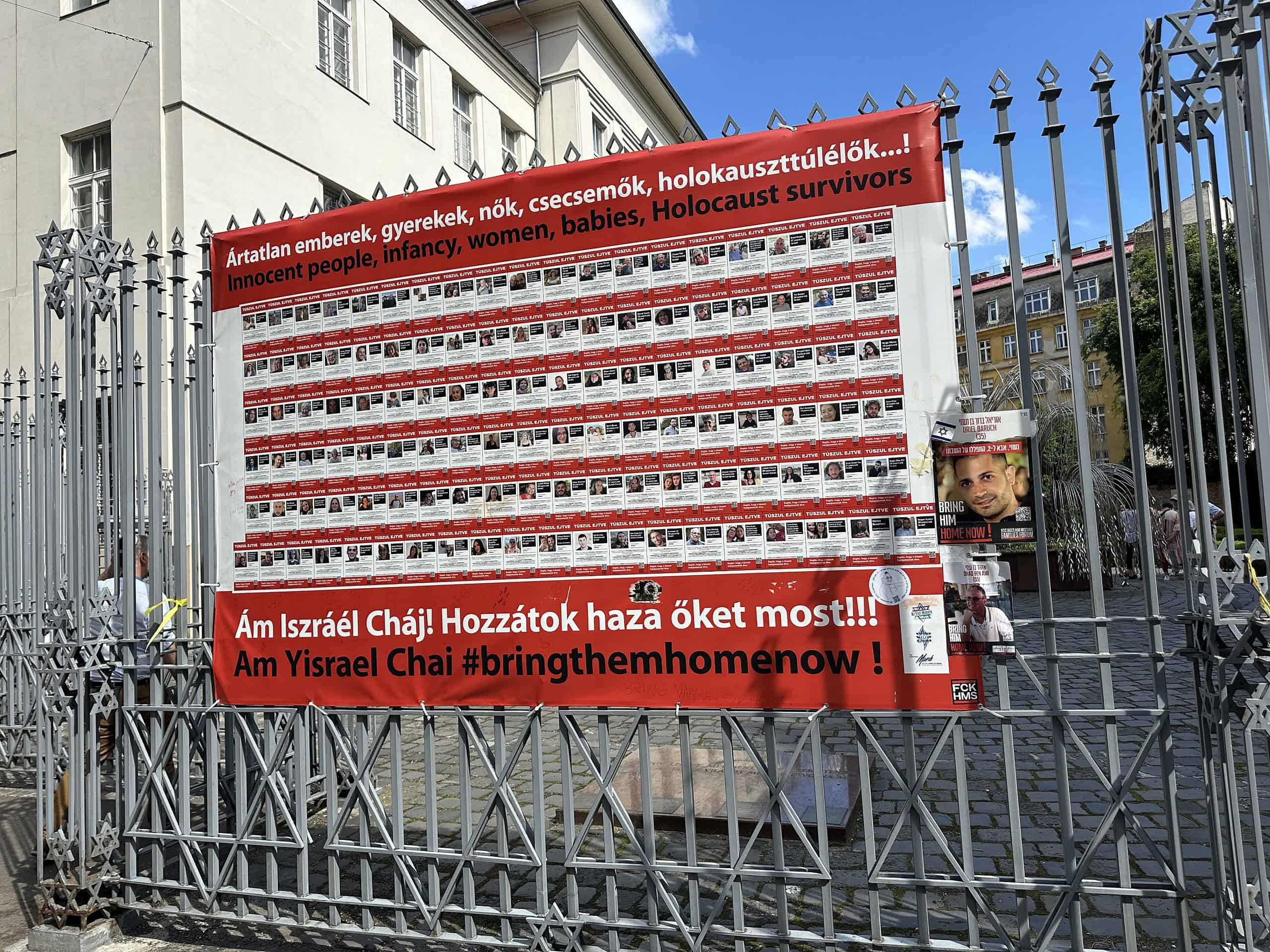
A poster in Budapest of the hostages taken by Hamas terrorists on Oct. 7 into captivity in the Gaza Strip, June 2024. Photo by Jonathan S. Tobin.

Not unlike Netanyahu, who also served a single term as Israel’s prime minister from 1996 to 1999 before being defeated, Orbán learned from his mistakes. His victory in 2010 was also similar to that of Netanyahu, whose return to power in 2009 was as much the function of the political incompetence and the abysmal policy failures of his opponents as his own brilliance, Orban became prime minister again after liberal leader and Prime Minister Ferenc Gyurcsány (whose wife, Klára Dobrev, who is Jewish, now leads one of the parties opposing Orbán) was caught on tape boasting of lying nonstop to the public to hold onto power.

Is he an authoritarian?

Since then, Orbán has consolidated and retained power by skillful maneuvering with the aid of wealthy supporters who dominate the Hungarian media. His government has been notoriously corrupt, though whether it is more corrupt than those in many other post-Communist nations (such as Ukraine, whose far more flagrant political and economic corruption has been ignored because of the Russian invasion) is debatable.

With only slightly more than three decades of experience as a free country, Hungary is far from being a perfect democracy. And while he is routinely denounced as an authoritarian, there are no political prisons or gulags in Hungary, and his opponents are free to denounce him wherever they like. Though Orbán ruthlessly uses the advantages of incumbency to keep winning elections to the dismay of foreign critics, his political opponents have gained ground in recent years and control the country’s largest cities, including Budapest.

Klára Dobrev. Credit: Wikimedia Commons.

Indeed, even as right-wing populist parties won victories across the continent in Sunday’s elections for the parliament of the European Union, Fidesz saw its margin of support reduced because of the emergence of a new party led by a former supporter Peter Magyar, who ran on an anti-corruption platform.

All of this means that for all its flaws, Orbán’s Hungary is a democracy. His supporters don’t dominate Hungary’s press to any greater degree than the left dominates the corporate media in the United States or Israel. That many of those who call him an authoritarian cheered on the Russia collusion hoax employed by Democrats to hamstring the Trump administration, the conspiracy of Internet moguls and mainstream media outlets to cover up evidence of Biden family corruption in the final weeks of the 2020 election and then the attempt by Democrats to bankrupt and then imprison the leader of the opposition to the current U.S. government (something Orbán has never stooped to) shows how lacking in credibility that charge truly is.

But if Orbán isn’t really an authoritarian, then why does the left hate him so much?

Part of it stems from a 2014 speech in which he said his vision for Hungary was for an “illiberal democracy.” Since then, neither he nor his allies have ever been able to adequately explain what that phrase meant. But suffice it to say that it represented a desire to push back against the free-market capitalist spirit that dominates the E.U., which, in the view of some of the union’s smaller countries, stands for the domination of the continent’s economy by Germany and other Western powers.

It also symbolizes his embrace of social conservatism. Hungary, like the rest of Europe, is afflicted by rapidly declining birth rates, as well as a collapse of faith in traditional values and faith. Orbán has prioritized policies that reward families for having more children, and he opposes the embrace of the LGBTQ+ agenda in a way that no other European or American leader has done. Still, there are no anti-gay laws or prohibitions, and discrimination on the basis of sexual orientation is illegal in Hungary. Yet unlike in the rest of Europe or the United States, public buildings in Budapest are not bedecked with rainbow flags during the gay-pride month of June.

But as grievous as that may be in the eyes of many people, it is his stand against unlimited immigration, especially from the Middle East and North Africa, that has earned Orbán the enduring enmity of liberals. While much of the E.U.—and specifically, Germany under the leadership of former Chancellor Angela Merkel—threw open the gates of their nations to largely Muslim emigrants and millions of refugees from the Syrian civil war in the 2010s, Orbán viewed this wave of immigration as a threat to Hungary’s identity and future.

While much of Europe is being transformed by mass immigration, Hungary has held the line against it and helped lead other Eastern European countries to do the same.
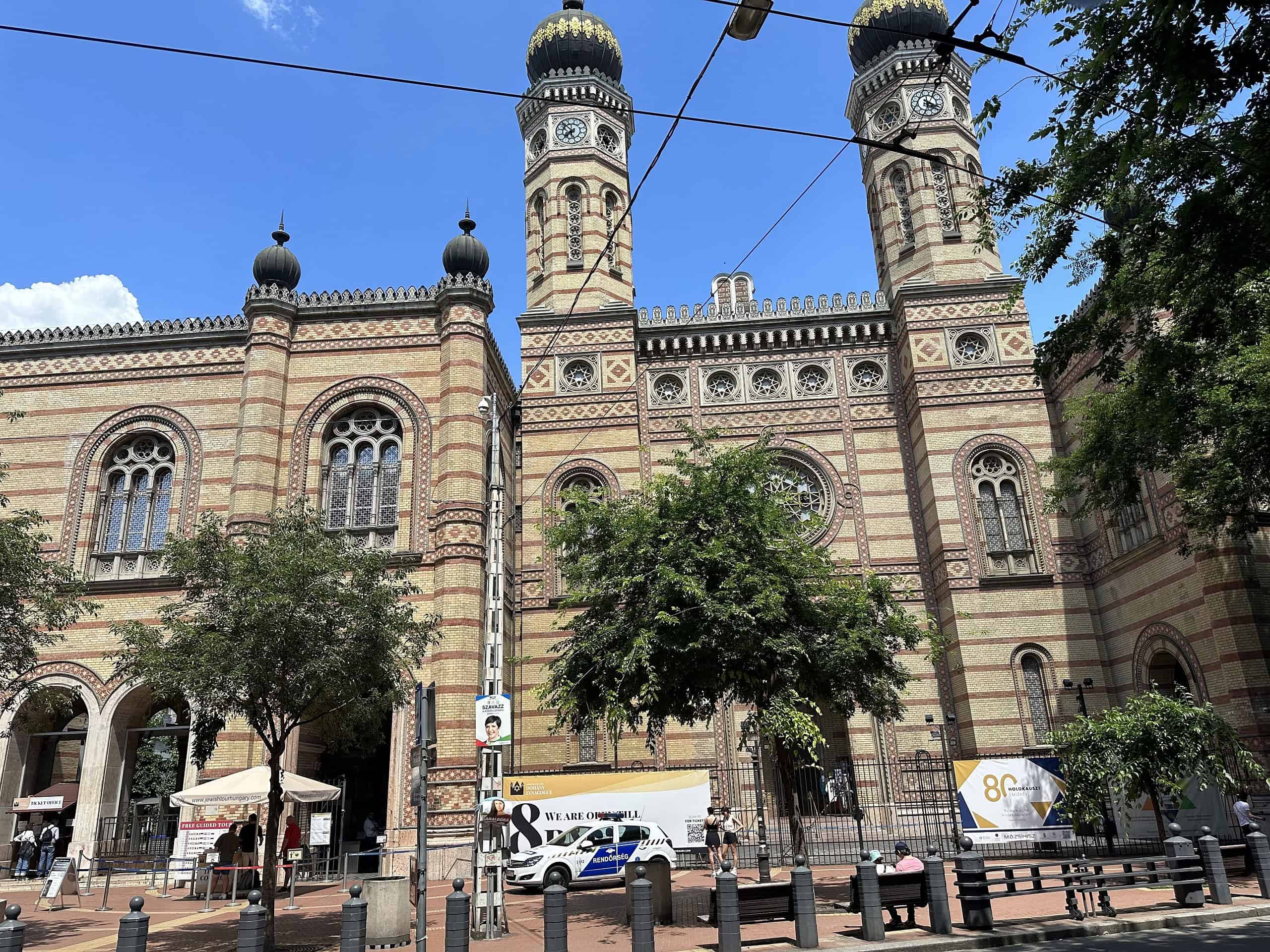
The Great Synagogue (also known as the Dohány Street Synagogue) in Budapest, Hungary, in June 2024. Photo by Jonathan S. Tobin.

The difference in Hungary

With memories of the long Soviet occupation, as well as their nation’s heroic and tragic 1956 revolt against communism (during which the United States and NATO never lifted a finger to help them) not forgotten, it would be a mistake to see Orbán or most Hungarians having much sympathy for Putin or Russia. However, they also have the same history of resentment against Ukrainians and are deeply suspicious of the West. Their history as the only non-Slavic or Germanic people in the region, coupled with having a language that is unrelated to any other in Europe other than Finland, marks them as outliers.

That explains a lot about both their past (during which they suffered terribly during invasions of Europe by Mongols and Ottomans) and the present, including Orbán’s dubious decision to embrace China as an alternative to domination by Western Europe or the United States. Still, there is a common ground between the ideas that motivate Fidesz and that of other conservative movements around the globe, reflected in the work of the Danube Institute think tank, whose members I spoke with. Yet Hungary is a special and different place, and Hungarian policies and ideas should be viewed in their own context and not that of other nations.

Hungary, Great Synagogue of Budapest, InteriorThe Great Synagogue (also known as the Dohány Street Synagogue) in Budapest, Hungary, in June 2024. Photo by Jonathan S. Tobin.

The key is immigration

If you want to know why Hungary is a place where Jews live in safety when compared to nations like Britain and France, which are considered far more democratic by observers, a big part of the answer lies in Orbán’s immigration policies. If there is no red-green alliance in Budapest that can send throngs of protesters to the streets to intimidate both governments and Jews—as is the case in London and Paris—it is because there is no large Muslim immigrant community there that seeks to impose their culture and antisemitic views on their new homes.

Liberal observers viewed with alarm the gains of populist parties that are against unlimited immigration in the E.U. elections, as well as other recent votes. While some of these parties have roots in the continent’s fascist past, their popularity is based on the justified fears of people about their nation’s future so long as they cannot control their borders or prevent their heritage from being transformed into something they no longer recognize by Muslim immigrants who don’t share their cultural or political values.

To confuse opposition to Soros with antisemitism might be more understandable in Hungary with its unfortunate history. But there, the billionaire is a symbol not so much of Jewish villainy as of support for leftist policies that hurt Hungarians, much as his campaign to elect pro-crime prosecutors in the United States has done more damage to America than perhaps that of any other individual. To label Orbán an antisemite because of his Soros-bashing isn’t any more legitimate than when Democrats do the same to Republicans in the United States over their noticing the baleful influence of his massive giving to leftist (including anti-Israel) causes.

In Hungary, Fidesz joined with other parties to essentially drive the openly antisemitic Jobbik Party out of the mainstream in the last decade. Both Jews and non-Jews I spoke with conceded that antisemitism—which played a major role in the past there, and evidence of which is abundant in the Holocaust memorials in Budapest that commemorate the slaughter of most of its Jewish population in 1944—is far from dead in Hungary. Indeed, polls have shown that antisemitic attitudes are present in a significant percentage of the population and perhaps far higher than in other countries where Jews do live in fear.

An uncertain future

Hungarian Jews have a history of engagement with their nation. It was a stronghold of the Haskalah, or Jewish Enlightenment, in the 19th century as Jews embraced secular learning and integration into their host countries. The beautiful Great Synagogue in Budapest was built by and is still run by the Neolog movement, which is somewhat analogous to Conservative Judaism in the United States. Zionist leaders like Theodor Herzl (who was born across the street from the Great Synagogue) and Moses Hess were Hungarian.

Budapest, Hungary, “Shoes in Danube River”“Shoes on the Danube River” memorial to Hungarian Jews killed during World War II and the Holocaust, many of whom were shot, killed and thrown into the Danube in Budapest, June 2024. Photo by Jonathan S. Tobin.

While Orthodox Judaism is undergoing something of a revival there thanks to the brilliant outreach efforts of the Chabad-Lubavitch movement, which has close ties to Orbán, the majority of the approximate 100,000-strong Hungarian Jewish community are still loosely affiliated with the Neolog stream. The majority of them are politically liberal and oppose Orbán. But even liberal Jews told me that they understood that he was the main reason why antisemitism was kept in check and they are so secure. Though only a fool would underestimate or count him out, sooner or later, his time in power will come to an end. When that happens, Hungary’s status as a bright spot for Jews as well as a fiercely loyal ally of Israel will be in doubt.

For now, that means a stay in Budapest means encountering a nation where there is no sign of the antisemitic surge that is part of everyday life in Western Europe and even the United States. 

Mass pro-Hamas demonstrations, such as the disgraceful orgy of Jew-bashing that took place last weekend across from the White House in Washington, D.C., or the besieging of a showing of a film about the attack on the Nova music festival in New York City don’t happen in Budapest. The capital’s synagogues don’t have to worry about antisemitic graffiti and the poster of the Israeli hostages taken by Hamas on the gates of the Great Synagogue hangs proudly and untouched by vandals. And rather than sniping at Israel or supporting efforts to criminalize its efforts to defeat Hamas and rescue its hostages, Hungary is holding the line in defense of the Jewish state.

To many who think Orbán is beyond the pale, his support for Jews and Israel is an unimportant detail.  Yet at a time when Jewish lives and rights are at risk everywhere, to ignore the truth about Hungary and the Jews today would be as irresponsible as it would be self-destructive.


Jonathan S. Tobin is editor-in-chief of JNS (Jewish News Syndicate). Follow him @jonathans_tobin.

Zawartość publikowanych artykułów i materiałów nie reprezentuje poglądów ani opinii Reunion’68,
ani też webmastera Blogu Reunion’68, chyba ze jest to wyraźnie zaznaczone.
Twoje uwagi, linki, własne artykuły lub wiadomości prześlij na adres:
webmaster@reunion68.com