Archive | July 2024

Temple Mount earth-filtering project discovers ancient clay tokens

Temple Mount earth-filtering project discovers ancient clay tokens

JUDY SIEGEL-ITZKOVICH


Tokens found in Temple Mount Sifting Project excavations may have been used by ancient pilgrims.

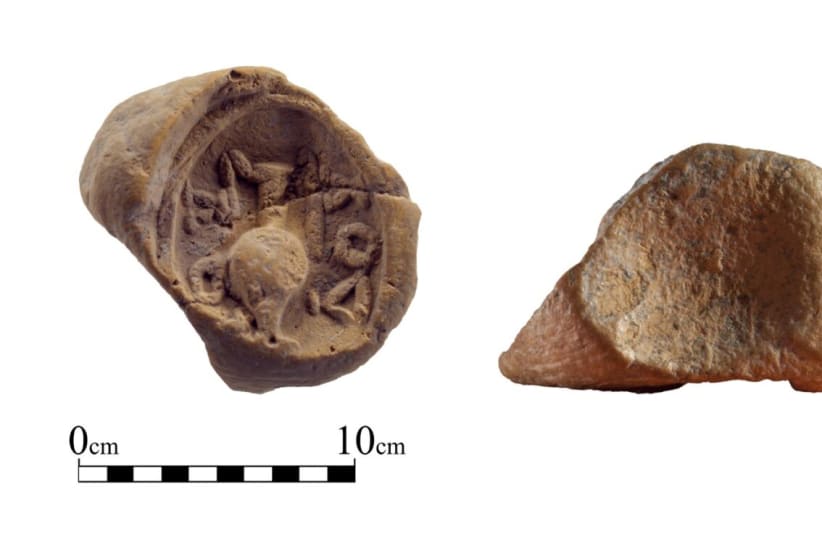
The clay token found in the sifting of dirt from the Temple Mount bearing the Greek Inscription ΔΟΥ-ΛΟ[Υ] (DOULOU) / (photo credit: ZACHI DVIRA)

More than a decade ago, a tiny clay token with a seal imprint depicting a wine jar (amphora) with a Greek inscription was discovered by a team working on the Temple Mount Sifting Project. Due to its resemblance to another clay token with an Aramaic inscription that had been found near the Temple Mount, scholars have wondered whether these sealings functioned as tokens for exchanging offerings used by pilgrims who ascended to the Temple.

Archaeologists are still trying to understand the nature of the 2,000-year-old mysterious clay token that was found in September 2011 while sorting pottery shards collected from previous siftings at the site. Archaeologist Gal Zagdon, who was in charge of the sifting facility, noted a tiny, irregularly shaped clay object. Upon closer inspection, it was clear that it was not a potsherd but a tiny lump of clay with a seal impression on it. Unlike common clay sealings (sometimes named bullae), its back side was pinched, suggesting it was a type of token given by hand to the recipient, unlike a sealing that was attached to a knot securing a document or container.

The seal impression depicts an amphora known from the second half of the first century CE (about 100 years before the Second Temple’s destruction). Six Greek letters appear around the wine jar; one of them was not well preserved in the imprint. The reading of the inscription, done with the kind help of Dr. Leah Di Segni of the Hebrew University of Jerusalem (HU) – an expert in ancient Greek epigraphy – resulted in the letters ΔΟΥ-ΛΟ[Υ] (DOULOU), the genitive (the grammatical case that marks a word, usually a noun, as modifying another word) of the personal name Doulês. Such a name was common in Thrace, Macedonia and the northern regions of the Black Sea – areas where Jews had settled by the late Hellenistic-Early Roman periods.

The token may have been used as payment by pilgrims ascending to the temple

Two months after the discovery of the Greek token, another very similar one was found in excavations at the drainage channel under Robinson’s Arch (below the Western Wall’s southern section), directed by Eli Shukrun and Prof. Ronny Reich of the Israel Antiquities Authority (IAA).

This token bore an Aramaic inscription that had initially been translated by the archaeologists as “pure to God.” However, HU Talmudic scholar Prof. Shlomo Naeh later suggested that the token was used by pilgrims ascending to the Temple as a token to receive their offerings after payment, with the writing on the sealing intended to prevent forgeries by including the abbreviations of the sacrifice type, the day, the month, and the name of the priestly division of that week.

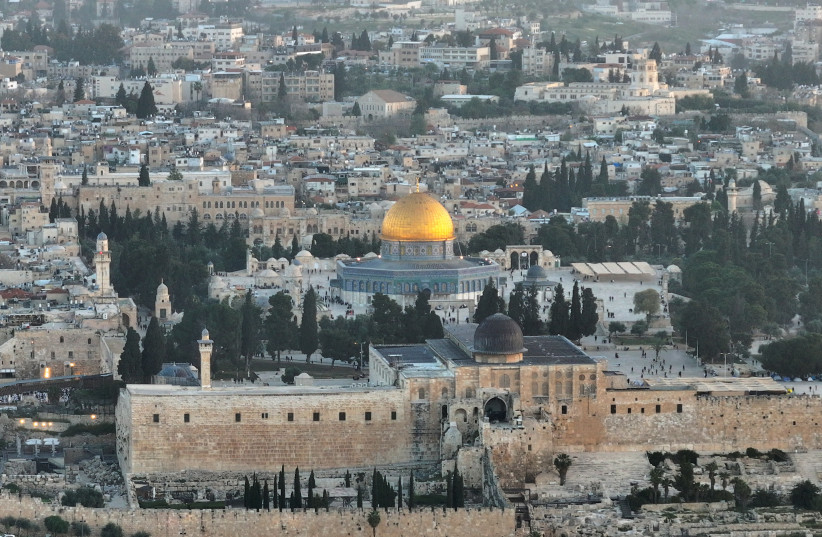
A drone view shows the Dome of the Rock on the Temple Mount, at sunrise on the last Friday of Ramadan, amid the ongoing conflict between Israel and Hamas, in Jerusalem’s Old City April 5, 2024. (credit: ILAN ROSENBERG/REUTERS)

This practice is described in Mishna tractate Shekalim (5:4), the art of the oral Jewish law compiled in the 2nd century CE. Other scholars, including Prof. Ze’ev Safrai and Dr. Avi Shweika, criticized this interpretation and suggested other meanings for the token.

The Aramaic token adds further context to the Greek-inscribed token from the Temple Mount. Notably, it depicts a wine jar, aligning with the Mishnaic text that discusses nesachim, a term for the wine libation poured on the Temple altar and also used to refer generally to all the offering components. The researchers said it is plausible that this token was intended for Greek-speaking pilgrims, possibly including Jews from the diaspora. Significantly, the Mishna confirms the presence of Greek writing in the Temple, noting in another chapter of Tractate Shekalim (3:2) that baskets in the treasury chamber were marked with Greek letters.

In research conducted for the Hebrew University Institute of Archaeology, Dr. Yoav Farhi examined several clay tokens found in Jerusalem. Among them the two mentioned above, another token from the Temple Mount Sifting Project with a poorly preserved impression and another found in 1970 during the Jewish Quarter excavations by Prof. Nachman Avigad that bore a seal impression depicting a chalice symbol that also appeared on shekel coins from the last days of the Second Temple period, typically interpreted as one of the Temple vessels. Farhi confirmed Di Segni’s reading of the Greek inscribed token from the Temple Mount and examined the composition of the clay of the tokens, with the help of Prof. Yuval Goren from Ben-Gurion University, finding similarities between the token from the Jewish Quarter and that from the Temple Mount.

Clay sealings from the Early Roman period (the last two centuries of the Second Temple period) are very rare finds in Israel, and those with a pinched reverse side are not known from any other sites. All four tokens studied by Farhi were found in the proximity of the Temple Mount, and were likely associated in some way with the activities that took place in the Temple. Their style is completely different from that of other known tokens from the Roman world.

Many questions remain unanswered regarding these tokens: Who used them? Who issued them? How were they used? What is the significance of the wine jar symbol on the Greek inscribed token? Who was Doulês? Is the last letter in this name, which was poorly preserved, really an Upsilon? Are there other possible readings of this inscription?

The Temple Mount Sifting Project launched exactly 20 years ago aims to recover archaeological artifacts from 400 truckloads of soil rich with archaeological artifacts removed from the Temple Mount and dumped in the nearby Kidron Valley. This soil had been excavated illegally by the Waqf during construction activities in the late 1990s. The project’s goal is to salvage as many artifacts as possible from the discarded soil and study them extensively to shed new light on the archaeology and history of the Temple Mount. The sifting is carried out as a tourism-education attraction, with over 250,000 people participating so far, an unprecedented phenomenon in the history of archaeological research. The project has yielded more than half a million artifacts that are kept in its storage awaiting scientific and more widely popular publication.

As a result of the war, the Temple Mount Sifting Project has been plunged into a state of uncertainty regarding its future operations. Most of the project’s major donors have redirected their resources to support issues directly connected to the war, leaving the sifting operation facing potential closure in the coming months. In the last year, the project was approved for several government grants, and one was received just a few days before the war started. Still, all other grants are now on hold due to the government reallocating all available budgets to war-related issues.


Zawartość publikowanych artykułów i materiałów nie reprezentuje poglądów ani opinii Reunion’68,
ani też webmastera Blogu Reunion’68, chyba ze jest to wyraźnie zaznaczone.
Twoje uwagi, linki, własne artykuły lub wiadomości prześlij na adres:
webmaster@reunion68.com


Bauman: bohater ze znakiem ujemnym

Bauman: bohater ze znakiem ujemnym

Z Bronisławem Wildsteinem
rozmawia Karolina Wigura


Autorka: Joanna WitekAutorka: Joanna Witek

„Całe jego myślenie wyrasta z jego doświadczeń w latach 40. Z rewolucji, w której uczestniczył, a która miała przez krew i przemoc stworzyć nowy świat. To była próba destrukcji fundamentalnej tożsamości ludzkiej w imię jakiegoś widma człowieka, o którym nic nie wiemy. I do tego wszystkiego nie miał odwagi autor «Płynnego lęku» się później przyznać, a jego interpretacje są w jakimś sensie kontynuacją dawnego stylu myślenia”.
Karolina Wigura: W poglądach różni nas niemal wszystko, jednak chciałabym poznać pańskie stanowisko na temat Zygmunta Baumana, jako osoby o poglądach prawicowych i konserwatywnych. Wielokrotnie występował pan w roli jego krytyka. Może zacznijmy od najprostszego pytania. Jak ocenia pan jego dorobek i biografię?

Bronisław Wildstein: Nie jestem krytykiem Baumana!

Naprawdę? Przynajmniej kilkakrotnie wypowiadał się pan o nim zdecydowanie krytycznie.

Wypowiadałem się doraźnie, w konkretnych sprawach, natomiast nie zajmowałem się próbą głębszej analizy jego myśli. Uważam jednak, że dyskusja o Baumanie ma głęboki sens, pomimo że jestem prawicowcem i konserwatystą. Chociaż wolałbym, aby pani słuchała moich argumentów, a nie traktowała je, jak zaznacza pani na wstępie, jako syndrom prawicowca. To oczywiście złożona sprawa, bo fakt, że filozof, myśliciel zachowuje się nieprzyzwoicie, może stać się nawet dodatkowym asumptem do dyskusji o nim. Może, nie musi. Uważam, że nie można całkowicie odrąbać jego skandalicznej biografii od jego twórczości. Jest to możliwe tylko teoretycznie. Możemy wyobrazić sobie myślicieli, co więcej, istnieją tacy, którzy zachowywali się rozmaicie, ale ich teksty mają z tym średni związek. Jednak zwykle człowiek nie bardzo może istnieć w dwóch różnych wymiarach i jego refleksja ma związek z biografią. U Baumana rzuca się to w oczy.

A zatem rozmawiajmy. Istnieje zasadnicza dysproporcja między tym, jak o Baumanie rozmawia się na Zachodzie, a jak w Polsce. Tam dyskutuje się przede wszystkim o jego koncepcji płynnej nowoczesności. Opublikowano kilka krytycznych omówień jego twórczości i zbiory najważniejszych tekstów. U nas panuje silna polaryzacja. Po jednej stronie stają ci, którzy twierdzą, jak pan, że Bauman zachowywał się w latach 40. skandalicznie, należał do KBW i informacji wojskowej, a w takim razie jego filozofia nie ma żadnej wartości. Z drugiej stają apologeci jego książek, pisanych począwszy od lat 90. Odsuwają oni każdą wątpliwość na temat biografii…

Dla mnie jest to zrozumiałe. Bauman jest jakimś bohaterem naszej historii. Że ze znakiem ujemnym, to inna sprawa, ale jest postacią, reprezentantem naszej najnowszej historii, która nie jest w sensie całościowym ani opowiedziana, ani przemyślana. Nic więc dziwnego, że wywołuje namiętne reakcje. Na Zachodzie jego biografia jest zmistyfikowana, w dużej mierze dzięki jemu samemu i jego zabiegom. Ale też dla wielu tam jest niewygodna i pomijana, bowiem wpisuje się w określony spór. Nie udawajmy, że tego sporu nie ma – rozgrywa się on między dominującą ideologią lewicowo-liberalną a jej przeciwnikami.

Wróćmy jednak do Baumana…

Nie twierdzę, że Bauman nie był wybitnym myślicielem dlatego, że miał paskudną biografię. Jakość jego refleksji możemy ocenić niezależnie od tego. Był dość powierzchowny – choć, przyznaję, błyskotliwy. Posługiwał się formą felietonu, ciągami impresji, asocjacji, zamiast głębszej analizy, która wymaga dyscypliny intelektualnej. Otóż Bauman jest reprezentatywny dla lewicowo-liberalnego nurtu myślenia, o którym zacząłem mówić. Tego nurtu, który naznaczył w ostatnich dekadach nie tylko Polskę, ale i Europę. To są dawni marksiści, dawni radykalni lewicowcy, którzy sparzyli się na marksizmie, ale nie rozliczyli go, nie przemyśleli, nie stanęli twarzą w twarz ze swoim własnym doświadczeniem, co mogłoby mieć dla nich twórcze konsekwencje. Były, oczywiście, od tej reguły, wyjątki. Wybitnym przykładem jest Leszek Kołakowski.

Choć, przyzna pan, on także nie jest pozytywnym bohaterem polskiej prawicy. Rozumiem jednak, że ma pan na myśli, iż jego rozliczeniem były „Główne nurty marksizmu”, a także inne teksty, na czele ze słynną polemiką z Thompsonem, zatytułowaną „Moje słuszne poglądy na wszystko”.

Nie tylko. Cała jego późna twórczość, która coraz bardziej przybiera metafizyczny wymiar, w podtekście jest najgłębszą rozprawą z lewicowym myśleniem. Dla mnie jest bohaterem pozytywnym, chociaż jestem z prawicy. Natomiast Bauman reprezentuje świadomość zmistyfikowaną. W jego przypadku brak rozliczenia z ideologią, która prowadzi do totalitaryzmu, powoduje, że brnie on dalej w tym samym kierunku. Cały ten dyktat dominującej, lewicowo-liberalnej ideologii ma dla mnie znamiona miękkiego totalitaryzmu.

Totalitaryzmu? Czy to nie przesada?

czytaj dalej tu: Bauman: bohater ze znakiem ujemnym


twoje uwagi, linki, wlasne artykuly, lub wiadomosci przeslij do: webmaster@reunion68.com


Christians Prefer Living in Israel, Not the Palestinian Authority

Christians Prefer Living in Israel, Not the Palestinian Authority

Bassam Tawil


  • Among the top 50 countries in which Christians were persecuted in 2023 were Yemen, Libya, Iran, Afghanistan, Iraq, Morocco, Qatar, Egypt, Turkey, and other Middle Eastern and Muslim-majority countries. Israel, needless to say, was not on the list.
  • Despite these disturbing statistics, US television personality Tucker Carlson, in his interview with the Bethlehem pastor, chose to single out Israel, the only country where Christians feel safe and where their number is increasing every year. Carlson did not bother to ask the pastor about the persecuted Christians of Egypt.
  • Carlson chose to interview Isaac, who has long history of promoting falsehoods about Israel and the Arab-Israeli conflict in his roles as pastor, academic dean of Bethlehem Bible College (a self-identified “Palestinian Christian Evangelical university college” that promotes a “Palestinian Christian theology”), and director of the “Christ at the Checkpoint” conferences — the infamous venue where anti-Israel libels are proclaimed in the name of Christian love, justice and peace.
  • “[T]hose of us who track these things know that Munther Isaac has long been the high priest of antisemitic Christianity; sadly, he spreads his hate from the city of Jesus’ birth.” — Rev. Johnnie Moore, president of the Congress of Christian Leaders, jewishinsider.com, April 11, 2024.
  • “We have a mafia here that is seizing Christian-owned lands. I protested against this Muslim mafia, and I even called a large gathering. I invited 80 people to my home. That same night, fliers were distributed in Bethlehem threatening to kill me. Of course, I am worried about the future of Christians here. Looking at the facts on the ground, you can see that there is no future for the Christians here. We are melting; we are disappearing. I fear the day will come when our churches will become museums. That is my nightmare.” — Samir Qumsieh, prominent Christian leader near Bethlehem, to Gatestone, April 2024.
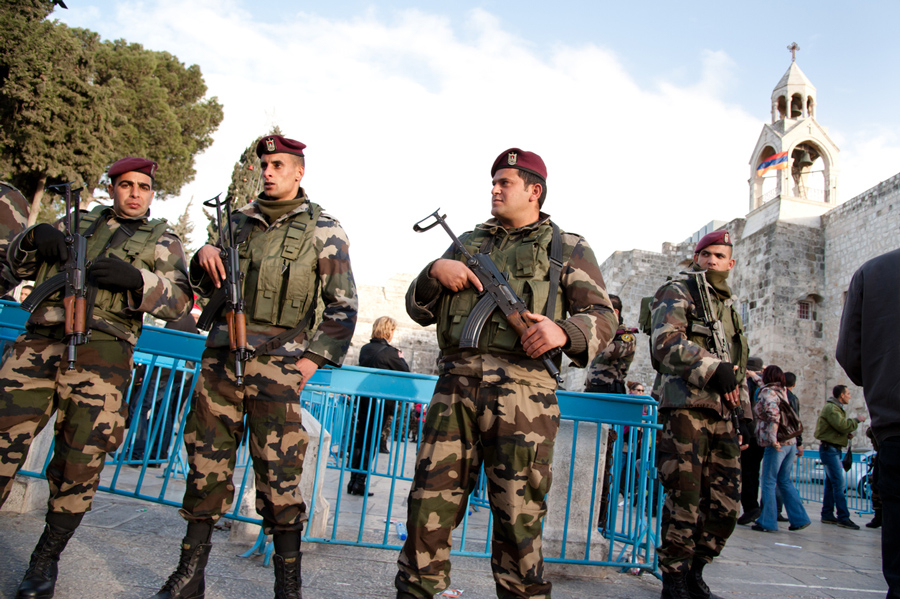
Since the Palestinian Authority (PA) assumed control of Bethlehem in 1995, the Christian share of the population has dropped from 65% to only 12% today. By contrast, the Christian population in Israel has been on the rise in recent years. “Most of us 180k Christian Israelis prefer to live under Israel freely rather than under a Palestinian Islamic Authority regime controlling Bethlehem. Israel gives us freedom while living under Arabs has been genocidal for Christians all across the Middle East,” says Shadi Khalloul, a Christian Maronite who describes himself as a “patriotic Israeli.” Pictured: PA policemen stand in Manger Square, Bethlehem, in front of the Church of the Nativity. (Image source: iStock)

On the same day that US television personality Tucker Carlson interviewed a pastor from Bethlehem who falsely accused Israel of mistreating Christians, Israel’s University of Haifa announced the appointment of Professor Mona Maron as Rector. A Maronite Christian from the village of Isfiya, near Haifa, Maron has been a trailblazer for the integration and advancement of women in the sciences, particularly within the Arab community. She was the first Arab woman from her village to earn a doctoral degree and Israel’s first Arab professor of neuroscience.

“I am grateful for the trust I received from the members of the University senate and look forward to taking up the position,” Maron said.

“First and foremost, the University of Haifa is a home for me. A home that welcomed me into its ranks more than 30 years ago, as an undergraduate student, then as a faculty member in the neurobiology department and now with the Rector’s role.”

Unlike Maron, the Bethlehem pastor, Munther Isaac, does not live in Israel and is not an Israeli citizen. Isaac lives and works in the West Bank city of Bethlehem, which has been controlled by the Palestinian Authority (PA) for the past three decades. Yet, the fact that Isaac does not live in Israel did not stop Carlson from providing him with a platform to flood Israel with hatred.

In 1948, Christians made up 85% of Bethlehem’s population. Under Jordanian occupation between 1948 and 1967, the Christian share of the population declined to 40%. Israel then assumed control of Bethlehem from 1967 to 1995. By 1993, the Christian share of the city’s population rose from 40% to 65%. Since the Palestinian Authority assumed control of Bethlehem in 1995, the Christian share of the population has dropped, to only 12% today.

By contrast, the Christian population in Israel has been on the rise in recent years. According to Israel’s Central Bureau of Statistics (CBS), about 187,900 Christians live in Israel, making up 1.9% of the population. In 2021, the population grew by 1.4% to 182,000, and in 2022, there was about 2% growth to 185,000, according to the CBS. This contrasts not only with Bethlehem, but most countries in the Middle East, where Christian populations are declining due to the “horrifying growth” of the persecution of Christians, according to the organization Open Doors, which puts out an annual “World Watch List” of places that Christians suffer very high or extreme levels of persecution and discrimination for their faith.

Among the top 50 countries in which Christians were persecuted in 2023 were Yemen, Libya, Iran, Afghanistan, Iraq, Morocco, Qatar, Egypt, Turkey, and other Middle Eastern and Muslim-majority countries. Israel, needless to say, was not on the list.

According to Open Doors:

“More than 365 million (one in seven) Christians face high levels of persecution for their faith – and persecution is becoming dangerously violent in countries on the World Watch List.

“Attacks on churches and Christian properties sky-rocketed in 2023, as more Christians than ever reported violent attacks.”

Last year, the organization revealed, 4,998 Christians were murdered in several countries around the world. Nigeria remains the deadliest place to follow Jesus; 82% of the murders occurred there. In addition, 14,766 churches and Christian properties were attacked last year, especially in India, China, Nigeria, Nicaragua, and Ethiopia.

Despite these disturbing statistics, Carlson, in his interview with the Bethlehem pastor, chose to single out Israel, the only country in the Middle East where Christians feel safe and where their number is increasing every year. Carlson did not bother to ask the pastor about the persecuted Christians of Egypt.

The British newspaper The Guardian reported on January 10, 2018:

“Christians in Egypt are facing unprecedented levels of persecution, with attacks on churches and the kidnap of girls by Islamist extremists intent on forcing them to marry Muslims, a report says.

“In the past year, Egypt has moved up an annual league table of persecution of Christians compiled by the charity Open Doors. According to its World Watch List, North Korea is still the most dangerous country in the world in which to be a Christian, and Nepal has had the biggest increase in persecution.

“But Egypt, home to the largest Christian community in the Middle East, is of particular worry. Officially about 10% of the 95 million population are Christian, although many believe the figure is significantly higher.”

Carlson also did not bother to ask about the Christians of Syria, whose number has dropped from 1.5 million to 300,000. On November 18, 2022, The Syrian Observer reported:

A report published by the Catholic charity, Aid to the Church in Need, revealed that Christians in Syria are suffering more repression and persecution now than when the Islamic State (ISIS) took control of large areas of the country in previous years.

The organization’s director in the Netherlands, Peter Broders, lamented the recent increasing persecution of Christians, saying: ‘What struck me the most was that our Christian brothers in the Middle East (Syria, Palestine and Iraq), the birthplace of Christianity, are now suffering worse than they were in the days of ISIS.'”

Here’s another inconvenient truth that Carlson and the Bethlehem pastor did not discuss: The Christian population in Iraq has been steadily declining for decades, from around 1.4 million in 2003 to about 250,000 today. Archbishop Michale Najeeb of Mosul, Iraq, said that Christians in the country continue to endure intimidation and violence from local militias and that most of their houses, which were destroyed by ISIS, remain in rubble.

If Carlson really wanted to learn about the situation of Christians in Israel, he should have interviewed Christian citizens of Israel, and not a pastor living under the Palestinian Authority, whose Basic Law stresses that “Islam is the official religion… The principles of Islamic Shari’a shall be a principal source of legislation.”

Carlson could have interviewed, for example, Shadi Khalloul, a Christian Maronite who describes himself as a “patriotic Israeli.”

Here is what Khalloul had to say about Carlson’s interview with the Bethlehem pastor:

“I am Native Christian living in Israel who speaks the language of Jesus Christ.

“Most of us 180k Christian Israelis prefer to live under Israel freely rather than under a Palestinian Islamic Authority regime controlling Bethlehem. Israel gives us freedom while living under Arabs has been genocidal for Christians all across the Middle East.

“Tucker, I invite you to visit our Aramaic Christian Galilee center. Don’t be deceived by collaborators of the Satan.”

Instead, Carlson chose to interview Isaac, who has long history of promoting falsehoods about Israel and the Arab-Israeli conflict in his roles as pastor, academic dean of Bethlehem Bible College (a self-identified “Palestinian Christian Evangelical university college” that promotes a “Palestinian Christian theology”), and director of the “Christ at the Checkpoint” conferences — the infamous venue where anti-Israel libels are proclaimed in the name of Christian love, justice and peace.

For many years, the Committee For Accuracy in Middle East Reporting and Analysis (CAMERA) has exposed the deceptiveness in Isaac’s teachings, as well as the fallacious theological and historical foundation of the narrative promoted by Bethlehem Bible College and Christ at the Checkpoint. Examples of that documentation can be seen here here, and here.

“In light of the blatantly anti-Jewish activism of Isaac and these institutions, it is appalling that Carlson would provide a platform for such thinly-veiled hatred,” CAMERA noted.

“Carlson’s conversation with Isaac promoted multiple false claims including the alleged mistreatment of Christians by Israel, the cause of the significantly diminished Christian population of Bethlehem, and reasons behind the current suffering of Gazan civilians. The obvious agenda behind Carlson’s line of questions and Isaac’s libelous answers was the demonization of Israel and all elected officials and Christians who dare to support the Jewish State.

“Thanks to Carlson, anti-Israel Christian Palestinians have found a new outlet through which to propagate their deceptive propaganda, rooted in theological, historical and geo-political error. It is irresponsible, and in fact dangerous, for Carlson to facilitate the presentation of blatant lies and antisemitic libels when there is an unprecedented rise in Jew-hatred worldwide and Israel is in the midst of an existential war initiated by terrorists who seek its annihilation.”

On October 8, 2023, Isaac gave a sermon in which he said that Hamas’ attacks on Israel the day before – in which 1,200 Israelis were slaughtered, was a logical outcome.

“What is happening is an embodiment of the injustice that has befallen us as Palestinians from the Nakba until now,” Isaac said, using the Arabic word for “catastrophe,” that Palestinians use to mark the creation of Israel in 1948.

On Christmas Eve last year, Isaac said that “if Jesus were to be born today, he would be born under the rubble in Gaza.”

Isaac is a board member of Kairos Palestine, an organization launched in 2009 whose founding document makes antisemitic statements, such as engaging in Replacement Theology — which “basically sees the Church replacing Israel” — to deny the Jewish people’s historic connection to Israel. The Kairos Document calls the Torah a “dead letter… used as a weapon in our present history in order to deprive us of our rights in our own land.” The document also states that “Christian love invites us to resist,” and describes the First Intifada, a campaign of bloody attacks on Israelis, as a “peaceful struggle.”

Isaac is also the director of the Bethlehem Bible College’s biannual “Christ at the Checkpoint” annual conferences, meant to promote Palestinian nationalism among Christian leaders, or as they put it, “challenge evangelicals to take responsibility to help resolve the conflicts in Israel-Palestine by engaging with the teaching of Jesus.” Its manifesto states that “the occupation is the core issue of the conflict.”

Among the antisemitic statements made at the conference over the years, collected by NGO Monitor, an organization that researches the activities and funding of nonprofits relating to the Arab-Israeli conflict:

  • “If God wanted the Jews to have the land… I didn’t want that God anymore!”
  • “If you put King David, Jesus and [Israeli Prime Minister Benjamin] Netanyahu [through a DNA test], you will get nothing, because Netanyahu comes from an East European tribe who converted to Judaism in the Middle Ages.”
  • “Jews who reject Jesus Christ are outside the covenant of grace and are to be regarded as children of Hagar,” as opposed to Abraham and Sarah. This final quote is from Stephen Sizer, a British pastor who has engaged in Holocaust denial and blaming Israel for 9/11.

“[T]hose of us who track these things know that Munther Isaac has long been the high priest of antisemitic Christianity,” said Reverend Johnnie Moore, president of the Congress of Christian Leaders, “sadly, he spreads his hate from the city of Jesus’ birth.”

“Since Oct. 7,” Moore added, “Isaac seems to have graduated from being an anti-Zionist Lutheran preacher to a terror sympathizer. There’s really just no other way to describe him.”

Jonathan Elkhoury, a Christian refugee from Lebanon granted Israeli citizenship, said he was “appalled and ashamed” at Carlson’s choice to invite Isaac onto his show, preferring “rhetoric of lies and misinformation about Israel or its treatment of minorities” rather than “a voice that speaks about Christian life in the Holy Land.”

“Tucker Carlson should have taken his platform more seriously, and not invited political activists, in the disguise of a religious robe, to support the ongoing dehumanization of Israelis and the denial of the right of Israel to exist…

“Hamas prevented Christians [from] celebrat[ing] their holidays freely under its control since taking power, and Christians under the PA have faced many ongoing threats and attacks. The last one of them was an attack on the Jacob’s Well monastery in Nablus by a Palestinian mob last January.”

Finally, if Carlson really wanted to learn about the plight of Christians in Bethlehem, he should have interviewed Samir Qumsieh, a prominent and brave Christian leader from the town of Bet Sahour (near Bethlehem).

Unlike Isaac, Qumsieh speaks the truth about the challenges facing Christians living under the Palestinian Authority.

In an interview with Gatestone Institute, Qumsieh said:

“We have a mafia here that is seizing Christian-owned lands. I protested against this Muslim mafia, and I even called a large gathering. I invited 80 people to my home. That same night, fliers were distributed in Bethlehem threatening to kill me. Of course, I am worried about the future of Christians here. Looking at the facts on the ground, you can see that there is no future for the Christians here. We are melting; we are disappearing. I fear the day will come when our churches will become museums. That is my nightmare.”


Bassam Tawil is a Muslim Arab based in the Middle East.


Zawartość publikowanych artykułów i materiałów nie reprezentuje poglądów ani opinii Reunion’68,
ani też webmastera Blogu Reunion’68, chyba ze jest to wyraźnie zaznaczone.
Twoje uwagi, linki, własne artykuły lub wiadomości prześlij na adres:
webmaster@reunion68.com


American Jews Widely Support Israel, Feel More Connected to Their Jewish Identity Since Oct. 7, New Survey Shows

American Jews Widely Support Israel, Feel More Connected to Their Jewish Identity Since Oct. 7, New Survey Shows

Shiryn Ghermezian


People wave Israeli flags following the release of hostages who were seized during the Oct. 7 attack by Palestinian terrorist group Hamas and held in the Gaza Strip, in Ofakim, Israel, Nov. 30, 2023. Photo: REUTERS/Alexander Ermochenko

Most American Jews have felt a stronger connection to Israel and their Jewish identity in the aftermath of the Oct. 7 Hamas terrorist attacks, according to a new survey by the American Jewish Committee (AJC).

The AJC’s 2024 Survey of American Jewish Opinion, published on Monday, revealed that 85 percent of American Jewish adults believe it is important for the US to continue to support Israel following the Oct. 7 attacks, with 60 percent rating it as “very important.” Meanwhile, 57 percent of American Jews said they have felt more connected to Israel or their Jewish identity since the Hamas massacre, and when asked what they have done to feel more connected, 25 percent acknowledged donating to a Jewish and/or Israel-related cause. Seventy-eight percent of Jews also said they are paying more attention to news about Israel now than compared to before Oct. 7.

A total of 1,001 Jewish adults aged 18 or older were interviewed online for the survey by the research company SSRS from March 12-April 6, with a 3.9 percent margin of error.

“Despite rising antisemitism making Jews feel less safe, American Jews are defiantly proud about who they are and even more connected to Israel,” said AJC CEO Ted Deutch.

American Jews were also asked in the survey about the rise in antisemitism in the United States to record levels since the Oct. 7 attacks.

The survey found that 93 percent think antisemitism in the US is a problem and 87 percent agreed that it has increased since the Oct. 7 attacks, with 55 percent saying anti-Jewish hatred has increased “a lot” since then. Forty-five percent reported feeling unsafe expressing their views about Israel on social media, and 64 percent said discourse about the Israel-Hamas war has affected their personal or work relationships in at least one way.

However, only seven percent of respondents said they considered moving to another country due to antisemitism in the US, and more than one in ten American Jewish adults ended a friendship or relationship since Oct. 7 because the person expressed antisemitic views. Forty-two percent of American Jews admitted feeling unsafe wearing Jewish symbols, such as a Star of David, in public since Oct. 7 .

Among those surveyed, 62 percent said they received Jewish education about Israel in at least one place, including synagogue, a Jewish day school, yeshiva, or camp.


Zawartość publikowanych artykułów i materiałów nie reprezentuje poglądów ani opinii Reunion’68,
ani też webmastera Blogu Reunion’68, chyba ze jest to wyraźnie zaznaczone.
Twoje uwagi, linki, własne artykuły lub wiadomości prześlij na adres:
webmaster@reunion68.com


GMINA CENTRUM: JAK NIE PISAŁO SIĘ O GAZIE

ADAM LIPSZYC – Eseista i tłumacz, pracuje w Instytucie Filozofii i Socjologii PAN, uczy w Szkole Nauk Społecznych, w Collegium Civitas oraz na Uniwersytecie Muri im. Franza Kafki. Laureat nagrody „Literatury na Świecie” im. Andrzeja Siemka, nagrody Allianz Kulturstiftung i Nagrody Literackiej Gdynia. Zajmuje się filozoficznymi konsekwencjami psychoanalizy, filozofią literatury i dwudziestowieczną myślą żydowską. Ostatnio opublikował książki „Czerwone listy. Eseje frankistowskie o literaturze polskiej” (Kraków, 2018) i „Freud: logika doświadczenia. Spekulacje marańskie” (Warszawa, 2019).


GMINA CENTRUM: JAK NIE PISAŁO SIĘ O GAZIE

ADAM LIPSZYC


Nie wydaje mi się, żeby Izrael był państwem żydowskim. Żydem to jestem ja.

O Gazie nie pisało się w następujący sposób. Najpierw się udawało, że ma się inne sprawy na głowie. W światku akademickim jesień to pora sprawozdań i deadline’ów, więc było na co się powołać. Potem sprawozdania zostały złożone i nie pisać było coraz trudniej, a jednak nie pisało się dalej. No bo czytało się mejl od znajomej spod Tel Awiwu: jej dwudziestoletnia córka w jednym tygodniu musiała stawić się na trzech pogrzebach. No bo przyjaciółka rodziny przysłała filmik z apelem o uwolnienie zakładników, okropnie kiczowaty, ale co robić.

Myślało się też o dziadku komuniście, który po wojnie wrócił z Londynu budować nową Polskę („Rzućcie mnie na najtrudniejszy odcinek”) i sprawdzić, czy naprawdę z jego rodziny nikt nie został przy życiu (nie został), a już w 1951 roku złożył podanie o paszport, bo chciał jechać do Izraela (nie dostał). Myślało się o dziadku syjoniście, który wraz z bratem dał nogę z łódzkiego getta (reszta klanu poszła z dymem) i wojnę przesiedział na Uralu, po Marcu wylądował w Izraelu i jako jedyny z całej rodzinnej bandy głosował na prawicę. Pod koniec życia trochę zmiękł i siedząc ukosem do telewizora, mówił: „Ja tam temu Rabinowi źle nie życzę”, ale dziś chyba jednak popierałby tę wojnę.

Myślało się o Putinie, Iranie. I o tym, jak wkurwiający są ci wszyscy mądrale, co to ludziom, którym właśnie wyrżnięto bliskich, będą z daleka prawić kazania o kolonializmie, ale gdy ktoś odpali im bombę pod nosem, ze zbolałą miną poprą uszczelnianie granic. I ci wszyscy, którzy ledwie zająkną się o rzezi na koncercie, za to wykażą się zrozumieniem dla hordy oszołomów, którzy powodowani desperacją czy wiarą w trotylową bozię narobili rzeczy przepotwornych i ściągnęli niepojętą acz całkowicie przewidywalną hekatombę na własny naród.

Tak. Ale potem nie pisać było już bardzo trudno.

*

Pierwszy raz byłem tam w połowie lat 80. Lecieliśmy przez Kopenhagę, wizy na osobnych karteczkach, żeby nie został ślad w peerelowskim paszporcie. Pomarańcze były obłędne i nawet dość kaprawa mieścina, w której mieszkali moi dziadkowie – na plaży raz po raz wdeptywało się w kawałki ugniecionej smoły – wydawała mi się luksusowym kurortem. A potem jeszcze wiele razy, rodzinnie i niezobowiązująco. Niewypowiedziany konsensus, który przekazali nam rodzice, był mniej więcej taki, że jesteśmy za dogadunkiem i pokojem, choć nie wiadomo, jak by to miało wyglądać; że my akurat z pewnością wolimy być tutaj, a nie tam, ale że tamto tam darzymy pewną sympatią, nawet jeśli nad tym czy tamtym kręcimy głowami.

A potem z wolna zacząłem się odklejać. Najpierw podczas propagandowej wycieczki od głównego rabina jednego z osiedli na Terytoriach Okupowanych usłyszałem, że ów mąż świątobliwy był „tutaj” 4 tysiące lat temu (dziwne, wyglądał tylko na sześćdziesiątkę), a od młodej przewodniczki, że kiedyś jej państwo będzie może dostatecznie silne, żeby podjąć wykopaliska na Wzgórzu Świątynnym (walić te meczety). Podczas tej samej wizyty kolega, który był tam po raz pierwszy, szepnął do mnie, wpatrując się w Ścianę Płaczu: „Fajnie, co?”. Nie było mi akurat zbyt fajnie, ale nic nie powiedziałem, bo nie chciałem mu psuć narodowego uniesienia.

Większe wrażenie zrobiło na mnie spotkanie z innym murem, z którym dotąd nie znaliśmy się osobiście. Przejęty tą niezbyt przyjemną introdukcją opowiadałem o tym przy kawie mojej podtelawiwskiej znajomej, która ku mojemu zdumieniu oświadczyła, że sama muru jeszcze nie widziała. No ale w sumie dlaczego by? Mąż, trójka dzieci, praca na uniwersytecie, na wakacje do Włoch, na konferencje do Niemiec. Mur niby blisko, rzut beretem, ale czy ja byłem kiedyś w Żyrardowie? Nie. No i czy byłem przy białoruskiej granicy? Nie.

Potem na jakiejś konferencji miałem mówić o akcie wytyczania granic jako prawzorcu przemocy państwowej. Tak się złożyło, że swój wysoce abstrakcyjny referacik wygłaszałem w warunkach przyprawiającej o zawrót głowy dosłowności: sesja odbywała się w wielce przeszklonej sali nowoczesnego budynku uwieszonego ponad wschodnim stokiem jerozolimskiej Góry Scopus, z widokiem na palestyńskie dzielnice Jerozolimy oraz na rzeczony mur. Politycznie wzmożony dyskutant domagał się kilkakrotnie, żebym powiązał swoją gadkę z tym dosyć wstrząsającym pejzażem, ja jednak okopałem się w unikach – trochę z braku odwagi cywilnej, trochę z braku dostatecznej wiedzy, a trochę z niechęci wobec pouczania ludzi, jakie to porządki mają u siebie zaprowadzać. No ale łapy mi się jednak trzęsły, gdy chwilę potem jaraliśmy papierochy na balkonie, gapiąc się na palestyńskie dzieciaki ganiające daleko w dole. „Coś tu jest bardzo nie w porządku”, powiedziała jedna z uczestniczek konferencji. A i owszem, nie tak było tu mianowicie całkiem i zupełnie wszystko: staliśmy na pokładzie eleganckiego liniowca, który osiadł na szczycie góry, kiedy opadły wody kolonialnego potopu. Ups, czy ktoś powiedział „kolonializm”?

Kilka lat później wylądowałem w tej samej sali na kolejnej konferencji. Szło o całkiem okrągłą rocznicę wizyty, którą złożył w tym kraju pewien poturbowany przez Zagładę poeta. Nasze niezmącone współczesnym kontekstem westchnienia nad podszytymi desperacją wersami, w których poeta egzaltował się tym czy tamtym kawałkiem Jerozolimy, brzmiałyby paskudnawo nawet i wówczas, gdyby na otwarcie konferencji arcy-skądinąd-sympatyczna pani profesor, gospodyni imprezy, nie odpaliła racy obowiązkowego dowcipu. „Mam nadzieję, stwierdziła, że podoba się państwu ta wspaniała sala” – ja zaś miałem nadzieję, że to już jest ten żarcik, który musi paść na początek. Ale nie, to było na serio, śmiesznie miało być dopiero potem. Bo tutaj właśnie, oświadczyła pani profesor, w jeszcze większym stopniu niż gdziekolwiek indziej, potwierdzenie znajduje taka oto bokizrywna teza, że „Jerozolima jest jedyną stolicą na świecie, z której widać inną stolicę”.

Pal sześć, że chwilunię po tym, jak Pomarańczowy Prezydent uznał to miasto po trzykroć przedziwne za stolicę państwa Izrael („Ja nie lubię świętych miejsc”, skrzeczał mój prawicowy acz bardzo świecki dziadek, broniąc się przed ideą wycieczki do Jerozolimy), afirmatywne podjęcie tej identyfikacji było wysoce wątpliwym aktem politycznym. W każdym razie miałem jeszcze nadzieję, że ta druga stolica to przynajmniej miało być Ramallah. Ale nie: jak zaraz się dowiedzieliśmy, naszej gospodyni chodziło o Amman. No bo przecież – należy się dorozumiewać – po drodze jest tylko pustynia i kilku bezpaństwowych Beduinów.

Tego samego dnia Hamas odpalił wiązkę rakiet, z których część zdołała się przedrzeć przez sławetną kopułę i zleciała między innymi w okolicach Tel Awiwu. Pozamykano szkoły i urzędy, ale kiedy nazajutrz zjechałem z góry nad morze, żeby spotkać się z moim kuzynem, Miasto-w-Bańce znowu tętniło życiem i na stolik do modnej knajpy czekaliśmy prawie godzinę. Kuzyn narzekał na politykę gospodarczą rządu.

*

Kiedy wybuchła sprawa Jedwabnego, co głupsi znajomi mówili, że nic nie łączy ich z łajdakami, którzy wzięli udział w pogromie. Pewnie tak, pewnie nie za wiele, ale kiedy chłopaki z naszego bloku pobiją chłopaków z sąsiedniego bloku, mamy jednak prawo do wstydu. Przy tej okazji dowiedziałem się też jednak, że o całej tej awanturze myślę nieco inaczej niż moja mama, z którą – jak sądziłem – w sprawach naszo-naszych mamy pełną zgodność. Ku mojemu zaskoczeniu stwierdziła, że jej w ogóle nie wypada się w tej kwestii wypowiadać, bo to coś, z czym muszą zmierzyć się sami Polacy. Dzięki temu odkryłem, że mnie już chyba spolszczyło nieco bardziej i że choć niby mordowano tam moich, odruchowo czuję obciach przynależny komuś, kto dziedziczy winę, a nie poczucie krzywdy.

Teraz – znowu: chyba – jest mi jakoś podobnie. Nie wydaje mi się, żeby Izrael był państwem żydowskim. Żydem to jestem ja. Ale kiedy to państwo po krótkiej przerwie wznawia monstrualną, odwetową jatkę – rzeź, której nijak nie da się uzasadnić koniecznością zapewnienia bezpieczeństwa własnym obywatelom, już choćby dlatego, że po takich wyczynach z tym bezpieczeństwem będzie raczej gorzej niż lepiej – kiedy wysoki rangą wojskowy nazywa tremendously positive proporcję zabitych cywili do zabitych hamasowców (2:1), kiedy życzliwi komentatorzy w sposób obsceniczny łączą horror 7 października z Zagładą, pogromami i powszechnym antysemityzmem, wtedy w plątaninie mniej lub bardziej fałszywych powodów, dla których wciąż i wciąż nie pisało się o Gazie, ale wciąż i wciąż się o tym niepisaniu myślało, odnajduje się ten jeden, tym razem może prawdziwy: wstyd za chłopaków z mojego bloku.


Zawartość publikowanych artykułów i materiałów nie reprezentuje poglądów ani opinii Reunion’68,
ani też webmastera Blogu Reunion’68, chyba ze jest to wyraźnie zaznaczone.
Twoje uwagi, linki, własne artykuły lub wiadomości prześlij na adres:
webmaster@reunion68.com