
Archive | 2026/10/13

Autor monografii o lekarzach-więźniach w Auschwitz: podważyłem sporo mitów

Rzekomo bohaterska postawa niemieckich komunistów więzionych w Auschwitz to utrwalona po wojnie legenda, a większość zarzutów wobec dr. Władysława Deringa, oskarżanego o „współpracę z oprawcami”, jest wyssana z palca – mówi PAP Bogdan Musiał, autor monografii pt. „Szpital w piekle. Historie lekarzy-więźniów w Auschwitz”, która ukaże się 13 października.


Autor monografii o lekarzach-więźniach w Auschwitz: podważyłem sporo mitów

Anna Gwozdowska (PAP)


Rzekomo bohaterska postawa niemieckich komunistów więzionych w Auschwitz to utrwalona po wojnie legenda, a większość zarzutów wobec dr. Władysława Deringa, oskarżanego o „współpracę z oprawcami”, jest wyssana z palca – mówi PAP Bogdan Musiał, autor monografii pt. „Szpital w piekle. Historie lekarzy-więźniów w Auschwitz”, która ukaże się 13 października.

PAP: „Szpital w piekle” to polskie tłumaczenie pana książki wydanej wcześniej w Niemczech. Według niemieckich recenzentów oparł się pan na rzadko wykorzystywanych źródłach dostępnych w Polsce. Jakie znaczenie mają te materiały?

Bogdan Musiał: Są kluczowe. Ze względu na niemiecką politykę narodowościową, której celem było wyniszczenie polskiej inteligencji i zagłada Żydów, w Auschwitz więziono przede wszystkim lekarzy z Polski i medyków pochodzenia żydowskiego. Zdarzały się tylko pojedyncze przypadki lekarzy innych narodowości. Poza tym Niemcy zniszczyli dokumentację dotyczącą masowych zbrodni popełnianych w obozie i dlatego historykom pozostały głównie zeznania byłych więźniów — także lekarzy — z powojennych procesów obozowej załogi SS.

PAP: A dwa najważniejsze takie procesy odbyły się w Polsce.

B.M.: Niestety zgromadzone wtedy materiały są mało znane na Zachodzie, a jeżeli już, to wyrywkowo. Na przykład Rudolf Höss, komendant obozu, był sądzony w Polsce, ale żaden z autorów jego licznych biografii nie zadał sobie trudu, żeby przebadać polskie świadectwa.

PAP: Czym różni się obraz Auschwitz, który nakreślił pan w książce, od wcześniejszych publikacji?

B.M.: Myślę, że udało mi się podważyć sporo mitów na temat tego obozu, w tym popularną w zachodnich publikacjach opowieść o bohaterskiej roli austriackich i niemieckich komunistów, którą odegrali w obozowym szpitalu. Po wojnie ci ludzie zdominowali debatę na temat Auschwitz, ale w trakcie moich badań przekonałem się, że byli w pewnym sensie oszustami, którzy po 1945 roku przypisali sobie zasługi polskich i żydowskich lekarzy-więźniów.

PAP: Jak wspominał dr Leon Landau, świadectwa lekarzy-więźniów były po wojnie przyjmowane często z niedowierzaniem…

B.M.: Dlatego Landau i inni lekarze-więźniowie, pełniący np. funkcję pisarzy rejestrujących obozowe statystyki medyczne, mieli świadomość, że trzeba wszystko dokumentować, a notatki ukrywać albo wysyłać poza obóz, jeszcze zanim skończy się wojna. Oczywiście zdarzali się więźniowie, którzy woleli mieć spokój, a inni byli tak zdemoralizowani przez warunki obozowe, że szli na totalną współpracę z Niemcami.

Jednak to w obozowym szpitalu działała kluczowa komórka ruchu oporu, dzięki której niektórzy lekarze SS i inni ludobójcy z Auschwitz byli znani w świecie z imienia i nazwiska już w 1944 roku.

PAP: Odtworzył pan medyczną historię obozu. Czy coś pana w niej zaskoczyło?

B.M.: Byłem zdumiony, że w warunkach obozowych niektórzy lekarze-więźniowie prowadzili badania naukowe. Dr Władysław Fejkiel na podstawie materiałów o tyfusie plamistym, które zbierał na polecenie niemieckiego lekarza garnizonowego, zrobił w 1955 roku habilitację. Dziś o jego pracy kompletnie zapomniano, a przecież jest to także część historii Auschwitz.

PAP: Trudno w to uwierzyć, bo Auschwitz kojarzy się raczej z Josefem Mengele i jego pseudomedycznymi eksperymentami…

B.M.: Tu nie ma sprzeczności. To, co robił Fejkiel, absolutnie nie szkodziło innym więźniom. Po prostu zbierał informacje na temat przebiegu choroby i je rejestrował. Nie przeprowadzał żadnych eksperymentów. Oczywiście zdarzały się przypadki, kiedy zmuszano lekarzy-więźniów, a także sanitariuszy, do podawania współwięźniom zastrzyków z fenolu. Robił to np. faworyt esesmanów, funkcyjny Mieczysław Pańszczyk, przed wojną student ASP w Krakowie, który w obozie znalazł się w wieku 18 lat i został kompletnie zdeprawowany. Wstrzymałbym się jednak z osądzaniem tych ludzi z dzisiejszej perspektywy. Nie znaleźli się przecież w Auschwitz dobrowolnie, a prawdziwy głód zmienia nie tylko wygląd człowieka, ale także jego sposób myślenia. Mottem mojej książki jest stwierdzenie, że w nienormalnej sytuacji nienormalne zachowanie staje się normą.

PAP: Lekarze-więźniowie działali pod nadzorem esesmanów i chcąc nie chcąc, musieli z nimi współpracować. Czy w tych warunkach rzeczywiście można było komuś pomóc?

B.M.: Tak, na wiele sposobów i nierzadko skutecznie, choć wiązało się to często z trudnymi dziś do pojęcia dylematami. Lekarze-więźniowie z powodu braków kadrowych w załodze SS brali np. czasem udział w selekcjach przeprowadzanych w szpitalu. Przedwojenny oficer i polski patriota dr Rudolf Diem wspominał, że trzeba było wtedy decydować, kogo ratować i czyim kosztem. Lekarz czy sanitariusz SS pojawiał się w szpitalu raz na dwa, trzy tygodnie i wysyłał kilkuset chorych więźniów do komór gazowych, a lekarz-więzień mógł zamiast 300 wybrać np. tylko 100 chorych. Wybierał tych, o których było wiadomo, że w warunkach obozowych nie mieli żadnych szans, aby przeżyć, na przykład ze względu na atrofię głodową.

PAP: Jak doszło do tego, że Niemcy dopuścili polskich i żydowskich więźniów do pracy lekarza?

B.M.: Wkrótce po napaści na ZSRR Niemcy zorientowali się, że wbrew wcześniejszym oczekiwaniom wojna się szybko nie skończy, a na front trzeba będzie wysyłać coraz więcej mężczyzn w sile wieku. To wtedy zapadła decyzja, żeby do wsparcia wysiłku wojennego III Rzeszy wykorzystać więźniów obozów koncentracyjnych. W szpitalu w Auschwitz formalnie zakazano więc bicia i dopuszczono możliwość dłuższego leczenia chorych zamiast natychmiastowego wysyłania ich do gazu. Równocześnie niemieccy lekarze nagle zauważyli, że mają w obozie fachowców i pod koniec 1941 roku oficjalnie dopuścili więźniów z medycznym wykształceniem (także lekarki, które już od 1942 roku zajmowały się chorymi w kobiecym szpitalu więźniarskim) do pracy w obozowych szpitalach. Od tego momentu polscy i żydowscy medycy zaczęli mieć głos w sprawach leczenia. To była zasadnicza zmiana, bo wcześniej o tym, co działo się w szpitalu, decydowali m.in. przywiezieni do Auschwitz z Dachau niemieccy komuniści, a także zwykli kryminaliści i ich protegowani.

PAP: Jak ta zmiana wpłynęła na funkcjonowanie obozowego szpitala?

B.M.: W szpitalu spadła śmiertelność. Zresztą już wcześniej lekarze-więźniowie udowodnili swoją skuteczność. Kiedy na wiosnę 1941 roku w obozie wybuchła epidemia tyfusu plamistego, Niemcy byli bezradni, a Polacy — wówczas jeszcze formalnie pracujący jedynie jako pielęgniarze – pokazali lekarzom SS, że zamiast ludzi można zabijać wszy. Zaproponowali rygorystyczne zasady higieny, które wprowadzono, a tysiące ludzi uniknęło śmierci.

PAP: Wśród więźniów byli także znani przed wojną chirurdzy…

B.M.: Przede wszystkim Polacy. To oni stworzyli oddział chirurgiczny. Dzięki temu, że niemieccy lekarze chcieli ćwiczyć pod okiem świetnych operatorów, można było przeprowadzić dziesiątki tysięcy w większości prostych zabiegów, które jednak w warunkach obozowych przynajmniej na jakiś czas ratowały życie tysiącom więźniów.

PAP: Kim byli niemieccy lekarze obozowi?

B.M.: Nie należeli zazwyczaj do pierwszej ligi niemieckiej medycyny. Lekarze SS trafiali do Auschwitz najczęściej z frontu z powodu niezdolności do służby. Mengele był wyjątkiem, bo w 1943 roku zgłosił się do pracy w obozie na ochotnika. Wcześniej pracował w Instytucie Cesarza Wilhelma (dzisiejszy Instytut Maxa Plancka), wówczas jednym z najlepszych ośrodków tego typu na świecie. Mengele uznał, że w obozie jest bardzo dużo „materiału badawczego”, bo więziono tam wtedy całe rodziny.

PAP: Czy „anioł śmierci”, jak nazywano Mengelego, przeprowadzał swoje zbrodnicze eksperymenty z pomocą więźniów?

B.M.: Mengele szybko się zorientował, że w obozie jest wielu wysoko wykwalifikowanych lekarzy. Zaczął z nich formować „zespoły badawcze”. Nie chodziło wyłącznie o nieludzkie eksperymenty, z którymi Mengele jest słusznie kojarzony. Lekarze-więźniowie przeprowadzali dla niego np. badania antropologiczne polegające na mierzeniu, pobieraniu krwi i spisywaniu protokołów w języku niemieckim, które Mengele wykorzystywał później pod swoim nazwiskiem. Lekarze pochodzenia żydowskiego, będący w obozie w dużo gorszej sytuacji od Polaków, byli zmuszani do uczestniczenia w eksperymentach. Musieli np. przeprowadzać dla Mengelego autopsje zabitych rzekomo dla celów „badawczych” dzieci.

Trzeba pamiętać, że w obozowej hierarchii tzw. Żydzi transportowi znajdowali się najniżej i byli de facto od początku skazani na śmierć. Polacy byli w tej hierarchii nieco wyżej i teoretycznie niektórzy z nich mieli szansę na przeżycie.

PAP: Czy polscy lekarze uczestniczyli w pseudomedycznych eksperymentach prowadzonych przez niemieckich nadzorców?

B.M.: Lekarze-więźniowie byli po wojnie często demonizowani i zarzucano im zmyślone zbrodnie. Było to tym łatwiejsze, że aby ratować ludzi, musieli najpierw przeżyć. Znalezienie się w obozowym szpitalu dawało im na to większe szanse. Musieli następnie uzyskać pewną pozycję w szpitalnej hierarchii, a to wiązało się z jakąś formą współpracy z lekarzami SS.

PAP: Z pana książki wynika jednak, że więzień Auschwitz dr Władysław Dering na polecenie lekarza garnizonowego operował wcześniej naświetlanych żydowskich mężczyzn. Czy słusznie bywa do dziś opisywany jako „najbliższy współpracownik oprawców”?

B.M.: Na Zachodzie, ale także w Polsce, rzeczywiście funkcjonuje do dziś przekaz o uczestnictwie Deringa w pseudomedycznych eksperymentach. Na podstawie badań w archiwach mogę jednak stwierdzić, że większość tych zarzutów jest wyssana z palca.

Deringa starało się dopaść UB. Kampania oszczerstw przeciwko niemu miała z tego powodu zasięg wręcz międzynarodowy. Oczywiście Dering z pewnością miewał osobiste konflikty i nie wszyscy współwięźniowie go lubili, ale trzeba spojrzeć także na jego dokonania. To on rozbudował i prowadził oddział chirurgiczny i wielu ludziom uratował życie. To jego ogromna zasługa.

PAP: Był także członkiem ruchu oporu. Rotmistrz Witold Pilecki po swojej ucieczce z Auschwitz w kwietniu 1943 r. uznał go w Raporcie „W” za filar założonej przez siebie konspiracji…

B.M.: O tym akurat po wojnie milczano. Być może nie przypadkiem próbowano zniszczyć człowieka, który był bliskim współpracownikiem Pileckiego. Co istotne, zasługi Deringa przypisali sobie po wojnie ci więźniowie, którzy go oskarżali, m.in. austriacki komunista Hermann Langbein, z zawodu aktor, który miał ogromny wpływ na powojenną narrację o Auschwitz. Wymyślił np., że Dering rzekomo zrobił z worka mosznowego żydowskiego więźnia woreczek na tytoń. Ta pseudoinformacja wciąż widnieje w niemieckiej Wikipedii.

Niestety ta wieloletnia, niesprawiedliwa nagonka doprowadziła do tego, że pod koniec lat 50. i na początku lat 60. to nie Mengele, ale Dering był niesłusznie postrzegany jako symbol zbrodni medycznych w Auschwitz.


Rozmawiała Anna Gwozdowska (PAP)

Książka „Szpital w piekle. Historie lekarzy-więźniów w Auschwitz” ukaże się nakładem wyd. Zysk i S-ka.

Bogdan Musiał to historyk dziejów najnowszych, w latach 1990-1998 studiował historię, nauki polityczne i socjologię w Hanowerze i Manchesterze, od 1999 do 2004 roku był pracownikiem Niemieckiego Instytutu Historycznego w Warszawie, współpracownikiem Instytutu Pamięci Narodowej. Autor licznych książek historycznych, m.in. „Zachodu po trupie Polski” i „Wojny Stalina”.


Zawartość publikowanych artykułów i materiałów nie reprezentuje poglądów ani opinii Reunion’68,
ani też webmastera Blogu Reunion’68, chyba ze jest to wyraźnie zaznaczone.
Twoje uwagi, linki, własne artykuły lub wiadomości prześlij na adres:
webmaster@reunion68.com

The Trump-Netanyahu Partnership: The Middle East Gains That Must Not Be Squandered


The Trump-Netanyahu Partnership: The Middle East Gains That Must Not Be Squandered

Bassam Tawil


  • The Middle East… remains far from stable. Hamas continues to resist disarmament, Iran remains a major threat, and Hezbollah’s armed presence in Lebanon continues to undermine the authority of the Lebanese state. The future of Gaza, including who will govern it and who will control its weapons, stands unresolved.
  • Can Gaza really have a new beginning while the organization that launched the October 7, 2023 massacre retains the ability to obstruct the transition and launch more massacres — not just of Israelis but of its own citizens and other neighbors?
  • The achievements of recent months could be weakened, or even reversed, if the remaining challenges are left unresolved.
  • The question is no longer simply what Washington and Jerusalem have achieved together. It is whether they can turn those achievements into lasting security.
  • A ceasefire without disarmament, a transitional administration without operational authority, and military victories without a strategy for the future will leave the region exposed to endless instability.
  • The task ahead is therefore clear: turn the gains already made into a strategic reality in which Palestinians in Gaza can live under civilian government rather than an armed factional rule; in which Israel’s security is strengthened, and in which Iran and its Middle Eastern allies can no longer threaten its own people or the region in any way.

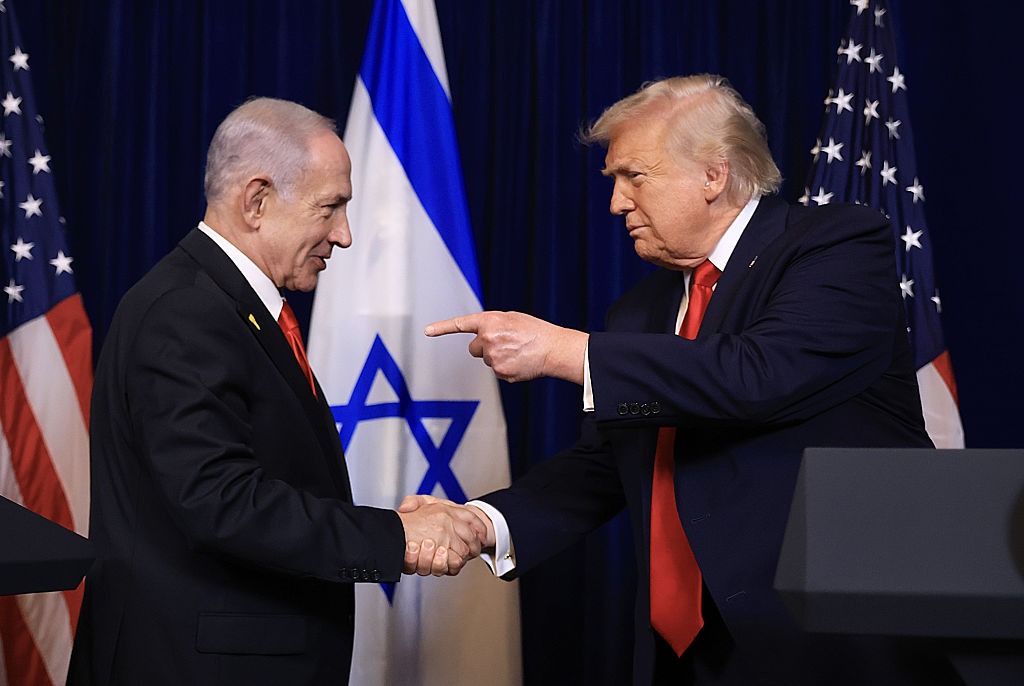
The question is no longer simply what Washington and Jerusalem have achieved together. It is whether they can turn those achievements into lasting security. Pictured: U.S. President Donald Trump shakes hands with Israeli Prime Minister Benjamin Netanyahu during a press conference on December 29, 2025 in Palm Beach, Florida. (Photo by Joe Raedle/Getty Images

Over the past year and a half, the Middle East has undergone dramatic changes. Israel, increasingly encircled for decades by an Iranian “noose of fire” on seven fronts, inflicted severe damage on its enemies’ military capabilities; the United States finally demonstrated its willingness to use military force against the Islamic Republic of Iran, and a US-backed agreement brought home all the Israeli hostages still held by Hamas.

President Donald J. Trump and Israeli Prime Minister Benjamin Netanyahu played central roles in these developments. Their partnership combined America’s diplomatic leverage and military power with Israel’s intelligence capabilities and military operations.

The Middle East, nevertheless, remains far from stable. Hamas continues to resist disarmament, Iran remains a major threat, and Hezbollah’s armed presence in Lebanon continues to undermine the authority of the Lebanese state. The future of Gaza, including who will govern it and who will control its weapons, stands unresolved.

The question is no longer simply what Washington and Jerusalem have achieved together. It is whether they can turn those achievements into lasting security.

One of the most consequential developments was the US-backed Gaza ceasefire agreement reached in October 2025. The agreement ended the period of large-scale fighting and led to the return of all the remaining living Israeli hostages held by Hamas.

For the families who endured months of uncertainty and suffering, the return of their loved ones was an enormous achievement. It also demonstrated the potential of American diplomatic pressure, regional mediation, and Israeli military pressure to produce results that years of negotiations had failed to secure.

Trump’s 20-point plan subsequently provided a framework for a different future for Gaza. It envisioned an end to Hamas’s rule, the disarmament of armed factions, a transitional Palestinian administration, an International Stabilization Force (ISF), and reconstruction.

In January 2026, the Board of Peace was formally launched, with Trump as its chairman. Its mandate was to help oversee the transition and create the conditions for Gaza to be governed without the political or military domination of the terrorist group Hamas.

There has been progress in building the institutional framework. The National Committee for the Administration of Gaza has been established, preparations have been made to recruit and train Palestinian police, and the international community has developed a roadmap for disarmament.

The most difficult tasks, however, remain unfinished.

A report submitted by the Board of Peace to the UN Security Council in May acknowledged that negotiations over the implementation roadmap had not been finalized. The proposed ISF was still preparing for deployment, while the disarmament of Hamas and other armed terrorist factions remains a central obstacle.

Hamas has suffered substantial military loses, but as a political and armed force, it has not disappeared. Its continued presence raises a fundamental question: Can Gaza really have a new beginning while the organization that launched the October 7, 2023 massacre retains the ability to obstruct the transition and launch more massacres — not just of Israelis but of its own citizens and other neighbors?

The answer will determine whether the ceasefire becomes the foundation of a lasting settlement or merely an interval before another round of fighting.

The other historic development was the military confrontation with Iran in June 2025.

Israel, on June 13, 2025, launched Operation Rising Lion, striking Iranian nuclear infrastructure, missile production facilities, air defenses, military headquarters, and senior military commanders. On June 22, the United States struck three Iranian nuclear facilities at Fordow, Natanz, and Isfahan.

The operations demonstrated a level of US-Israeli military coordination with massive implications for regional security. They inflicted damage on important elements of Iran’s military and nuclear infrastructure and demonstrated that Iran’s geographical distance and extensive defensive preparations could not guarantee the protection of its most sensitive facilities.

The main challenge is still to prevent Iran from restoring the capabilities that made it such a serious threat to Israel and other countries in the region. This objective requires sustained intelligence cooperation, effective monitoring, credible deterrence, and a clear response to attempts to rebuild prohibited or threatening capabilities.

The challenge extends beyond Gaza and Iran.

Hezbollah’s decision to build an extensive military infrastructure outside the authority of the Lebanese state has contributed to decades of instability along Israel’s northern border. Hezbollah’s relationship with Iran was what gave the country the means of projecting military power beyond its own territory.

Efforts to strengthen the Lebanese state’s authority and dismantle Hezbollah’s independent military capabilities — as well as those of Iran’s other terrorist proxies, Hamas and the Houthis — remain essential to any durable regional settlement.

A Lebanon in which the rightful government exercises unobstructed control over the country’s armed forces and territory would be in the interests of both Lebanese citizens and their neighbors.

The same principle applies to Gaza. Civilian institutions cannot function effectively when an armed faction retains the power to threaten and overrule them.

The Trump-Netanyahu partnership has also operated against the background of the Abraham Accords, which established diplomatic relations between Israel and several Arab states during Trump’s first administration. These agreements remain an important foundation for the possibility of broader regional cooperation.

Trump and Netanyahu have helped bring about long-sought-after changes in the regional balance of power. Military success and diplomatic breakthroughs, however, are not ends in themselves. Their significance ultimately depends on what follows.

The opportunity is significant, but it is not guaranteed. The achievements of recent months could be weakened, or even reversed, if the remaining challenges are left unresolved.

A ceasefire without disarmament, a transitional administration without operational authority, and military victories without a strategy for the future will leave the region exposed to endless instability.

The task ahead is therefore clear: turn the gains already made into a strategic reality in which Palestinians in Gaza can live under civilian government rather than an armed factional rule; in which Israel’s security is strengthened, and in which Iran and its Middle Eastern allies can no longer threaten its own people or the region in any way.


Bassam Tawil is a Muslim Arab based in the Middle East. His work is made possible through the generous donation of a couple who wish to remain anonymous. Gatestone is most grateful.


Zawartość publikowanych artykułów i materiałów nie reprezentuje poglądów ani opinii Reunion’68,
ani też webmastera Blogu Reunion’68, chyba ze jest to wyraźnie zaznaczone.
Twoje uwagi, linki, własne artykuły lub wiadomości prześlij na adres:
webmaster@reunion68.com


The Hostage-Taker’s Ledger


The Hostage-Taker’s Ledger

Micha Danzig


A woman holds a picture of dead hostage Ran Gvili, as Israelis attend a rally calling for the immediate return of the remains of all hostages held in Gaza, at the Hostages Square in Tel Aviv, Israel, Nov. 29, 2025. Photo: REUTERS/Nir Elias

Three years ago this week, in less than 24 hours, Hamas murdered some 1,200 people in southern Israel and took over 250 hostages into Gaza. Within two weeks, before Israel had sent a single ground unit into the Strip, the charge of “genocide” was already circulating, aimed at the victims rather than the cold-blooded killers.

Brett McGurk has now put on the record what he saw from the other side of the table. As President Biden’s Middle East coordinator, McGurk was the lead American negotiator in every round of hostage talks from October 2023 through January 2025. His new book, Brink, just came out, and he has walked through its account on “Face the Nation” and Dan Senor’s “Call Me Back” podcast.

McGurk served a president who paused shipments of bombs to Israel, and nobody will mistake him for a Netanyahu loyalist. That is why his account matters. It answers the question three years of “ceasefire now” marches never asked: Who kept this war going?

McGurk’s starting point is that Hamas understood what hostages on this scale would buy it. Holding some 250 hostages, most of them civilians, would let a terrorist militia sit at the table as if it were a government. The hostages were the core of its strategy from the first hour.

In the early weeks, Hamas would not even admit it was holding hostages. When talks began, it offered to guarantee the release of only 20, claiming it could not locate the rest without a ceasefire first. Israel knew Hamas held nearly 70 women and children, and freed hostages have since confirmed that Hamas kept careful records of every captive. The claim was a Hamas lie meant to buy a ceasefire on the cheap.

The November 2023 deal brought an eight-day pause and the release of about 100 hostages. According to McGurk, the pause would have continued had Hamas released a group of young women who were part of the deal. Hamas refused. McGurk names Carmel Gat and Eden Yerushalmi among those who should have come home then. Neither ever did.

By the summer of 2024, Hamas was taking five weeks to respond to a single proposal. When it finally answered, it told the world it had accepted the deal. McGurk says that was false, and that the response was loaded with clear poison pills. In round after round in Cairo and Doha, Hamas never agreed to a list of hostages it would release. On Aug. 16, the United States tabled an offer that McGurk estimates went about 80% of the way toward Hamas’s demands, publicly backed by Qatar’s emir and Egypt’s president.

Hamas still hadn’t responded on Aug. 31, when McGurk learned that Israeli troops had found six hostages murdered in a tunnel under Rafah. Hersh Goldberg-Polin, 23, Carmel Gat, 40, and Eden Yerushalmi, 24, were on the list he had been carrying for the deal. Almog Sarusi, 27, Alex Lobanov, 32, and Ori Danino, 25, were murdered alongside them.

In December 2024, with a complete deal in hand, Hamas announced it would release only 12 hostages alive. It then raised its price, demanding 300 Palestinian prisoners serving life sentences, many of them cold-blooded murderers of Israelis and Americans, in exchange for nine sick and wounded captives.

Compare that record with the accusation leveled at Israel since October 2023. Genocide requires intent to destroy a people as such, and in every genocide on record the perpetrators controlled when the killing ended. The Jews could not stop Babi Yar or Treblinka by producing a list of names, and the Tutsis could not end the massacres in Rwanda by laying down their arms.

In Gaza, the reverse was true. McGurk says plainly that the war would not have ended without the hostages coming home. From Oct. 8, 2023, Hamas could have stopped the fighting by returning the captives and surrendering. Instead, it bargained over the living and the dead for more than two years, until the last surviving hostages were released in October 2025.

McGurk also acknowledges the bitter irony: Western pressure on Israel prolonged the very war it was supposed to end. Every public American demand aimed at Jerusalem signaled to Yahya Sinwar that time was on his side, encouraging Hamas to hold out rather than release the hostages. Protesters marched on Israeli embassies, not Qatar’s, though Qatar had direct access to Hamas’s leaders. And campus encampments demanded concessions from Israel rather than the one thing that could have ended the war: Hamas releasing the hostages.

None of this mattered to those pushing the genocide-libel because the charge never grew out of evidence from the war. It came first, before the war had started, and the evidence was gathered to fit it afterward.

That sequence has a long history here. In 1929, Haj Amin al-Husseini’s circle spread the false claim that Jews were plotting against al-Aqsa, and within days rioters in Hebron murdered 67 Jews. Hebron’s Jews had no state, no army, and no “occupation” anyone could point to. Ninety-four years later, Hamas called its massacre the “Al-Aqsa Flood.”

Three years after Oct. 7, the most detailed account of the hostage talks comes from a senior Biden official, not an Israeli spokesman. It shows Hamas dragging babies, grandmothers, and young festivalgoers into tunnels and pricing them like inventory, haggling over who would come home alive and who in a coffin, and murdering captives rather than freeing them.

It also shows a war Hamas could have ended at any time and chose to prolong, fought in civilian attire from homes, schools, and hospitals, while senior Hamas official Mousa Abu Marzouk declared that its tunnels were only built for its “fighters” and that protecting Gaza’s civilians was the job of the UN and Israel.

Hamas kept this macabre ledger in Jewish blood. For three years, its excusers and defenders have tried to hand the bill to the Jews.


Micha Danzig is an attorney, former IDF soldier, and former NYPD officer. He writes widely on Israel, Zionism, antisemitism, and Jewish history. He serves on the board of Herut North America.


Zawartość publikowanych artykułów i materiałów nie reprezentuje poglądów ani opinii Reunion’68,
ani też webmastera Blogu Reunion’68, chyba ze jest to wyraźnie zaznaczone.
Twoje uwagi, linki, własne artykuły lub wiadomości prześlij na adres:
webmaster@reunion68.com