
POLIN: A Light Unto the Nations
By David G. Roskies
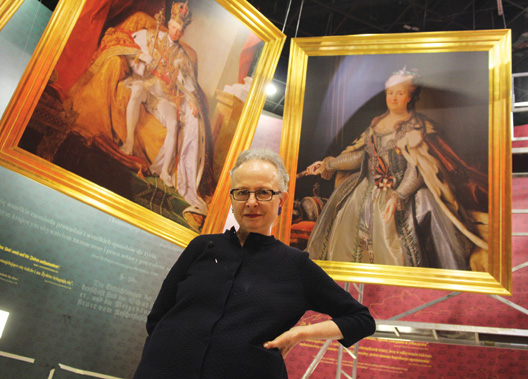
How is it that the largest public building to go up in Poland since that country regained its freedom, the first museum to tell the story of Poland from beginning to end, goes by the name of POLIN? Po lin, or “rest here,” is what the first Jews who arrived in the 10th century are said to have declared. The more official, descriptive name of the shiny new 16,000 square meter building is the Museum of the History of Polish Jews, whose official opening I attended in Warsaw, October 28–30.
The museum began as the brainchild of the director of the Association of the Jewish Historical Institute of Poland, Grażyna Pawlak, who was invited to attend the opening of the United States Holocaust Memorial Museum in 1993. What was needed now, she realized, was not another memorial museum in Poland; Poland itself was a Holocaust memorial. What Poland needed, rather, was a museum dedicated to Jewish life. What followed, over the next 21 years, under the adroit leadership of Jerzy Halbersztadt, was a public-private partnership that eventually included the Ministry of Culture and National Heritage, the city of Warsaw, private foundations, individual philanthropists, both Jewish and Christian, the Republic of Germany, and the Kingdom of Norway. A total of $54 million was raised for the construction of the building and another $43 million for the core exhibition, enormous sums anywhere and unprecedented in the new Poland.
The original designers of the museum had drawn up an “Outline of the Historical Program and Master Plan,” but the time for central planning and familiar stories, neatly broken down into historical periods and punctuated by ideological schisms, had long since passed. More pressing than any academic scruples about master narratives was the fact that such an approach couldn’t possibly succeed in speaking to the museum’s prospective visitors, who would include Poles from high-school age to senior citizens, Israelis and Jews from across the globe, casual foreign tourists, and pilgrimage groups to the death camps.
By the time Barbara Kirshenblatt-Gimblett was appointed to head the Academic Team of the Core Exhibition of the POLIN Museum in 2006, she had already redefined the way museums represented the Jewish past. Where once upon a time, pride of place was given to Torah scrolls and breastplates, spice boxes, Kiddush cups, candelabra, Torah pointers, and other sacred paraphernalia of the Jewish faith, Kirshenblatt-Gimblett curated an exhibition for The Jewish Museum of New York called “Fabric of Jewish Life” that focused exclusively on textiles, most of them produced by women. Where Roman Vishniac, on instructions from his employer, had once selected only those photos of Polish Jews that portrayed them as “persecuted, pious and poor” (as she once told a reporter for Ha’aretz), in Image Before My Eyes: A Photographic History of Jewish Life in Poland, 1864–1939, Kirshenblatt-Gimblett produced a counter-album with Lucjan Dobroszycki that stressed the diversity and urbanity of their subjects. And where once, at the New York World’s Fair in 1939, Jews created a Palestine Pavilion to stake a claim for national sovereignty and to generate foreign investment, now, in the 21st century, Kirshenblatt-Gimblett instructed her team to “think Expo” and create a multimedia narrative exhibition that would demonstrate the centrality of Jews to Polish history—to turn their dimly remembered story, she said, into something you can touch, hear, rub, erase, pull out, disassemble, walk through, climb up, get lost in, and, above all, experience from more than one perspective.
Read more: POLIN: A Light Unto the Nations
twoje uwagi, linki, wlasne artykuly, lub wiadomosci przeslij do: webmaster@reunion68.com