Archives

NGO TO USE AERIAL DRONES TO MAP OUT JEWISH BURIAL SITES ACROSS EUROPE

NGO TO USE AERIAL DRONES TO MAP OUT JEWISH BURIAL SITES ACROSS EUROPE

ZACHARY KEYSER


The effort will be funded by the European Union amid a time of worrying rises in antisemitism across the continent, with many of the recent acts targeting Jewish cemeteries in particular.

DETAILS ON a Jewish grave in Poland. (photo credit: REUTERS)

The European Jewish Cemeteries Initiative (EJCI) plans to use aerial drones to survey 1,500 Jewish cemeteries spanning countries where the Holocaust significantly impacted the attrition of the Jewish population throughout Europe – including Ukraine, Greece, Moldova, Slovakia and Lithuania.

The EJCI, a German-based NGO, is responsible for protecting Jewish burial sites throughout Europe, especially in places where the German-Nazi army attempted to wipe-out existing populations of Jews.

Once discovered, the EJCI will not only map out the burial site locations, but will also erect fences around the locations “so people know there’s a Jewish cemetery [there],” according to EJCI Chief Executive Philip Carmel.

The effort will be funded by the European Union amid a time of worrying rises in antisemitism across the continent, with many of the recent acts targeting Jewish cemeteries in particular.

In the latest incident of a series of antisemitic attacks in European Union, a Jewish cemetery close to Strasbourg was vandalized and some 100 gravestones desecrated and spray-painted with Swastikas.

One of the gravestones was daubed with the words “Black Wolves,” a militant far-right separatist group from the Alsace region, where Quatzenheim is located, which was active in the 1970s and 1980s.

In one attack in 1976, the Black Wolves group set fire to and destroyed the Natzweiler-Struthof Nazi concentration camp located in Alsace.

In December, a Jewish cemetery in the nearby town of Herrlisheim was also desecrated with 37 gravestones spray-painted with Swastikas and other graffiti.

Jewish Agency Chairman Isaac Herzog denounced the desecration of the graves, describing it as “another severe incident that underlines the antisemitism virus attacking Europe and threatening Jews in the streets,” adding “Governments, wake up.”

The attack came as dozens of rallies against antisemitism were set to be staged last Tuesday evening across France in response to a series of high profile antisemitic incidents in France in recent weeks.

The rallies were organized by 14 political parties and took place in as many as French 60 cities.

French President Emmanuel Macron, together with president of the Senate Gérard Larcher and president of the National Assembly Richard Ferrand, went to the Holocaust Memorial to “express their solidarity with the Jewish community in France” and to “reaffirm their commitment to the values of the Republic and their common determination never to give in to hatred and violence,” L’Express reported.

Last Friday evening, teenagers shot a Jewish man with an air-rifle outside a synagogue in the Paris suburb of Saracelle, lightly injuring him.

A couple weeks ago, “Yellow Vest” protesters hurled antisemitic abuse at French-Jewish philosopher Alain Finkielkraut, while a tree planted in memorial of Ilan Halimi, who was brutally murdered in 2006, was chopped down ahead of a memorial event for him in Paris.

And a government report released last week found that antisemitic attacks had spiked by 74 percent in 2018 over the previous year.

To complete the initiative, the EJCI will be requesting volunteers from each of the designated countries to assist in the effort to fully map out Jewish burial sites across Europe throughout the year, and will employ separate volunteers to help maintain the sites after the survey initiative is complete.

Jeremy Sharon contributed to this report.


Zawartość publikowanych artykułów i materiałów nie reprezentuje poglądów ani opinii Reunion’68,
ani też webmastera Blogu Reunion’68, chyba ze jest to wyraźnie zaznaczone.
Twoje uwagi, linki, własne artykuły lub wiadomości prześlij na adres:
webmaster@reunion68.com


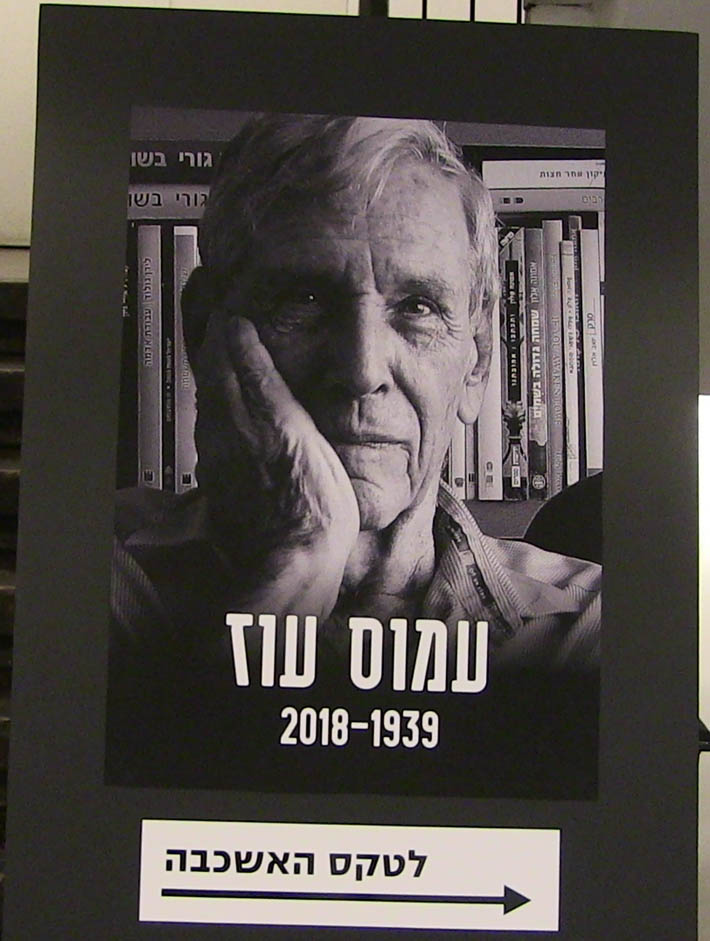
Goodbye to Amos Oz

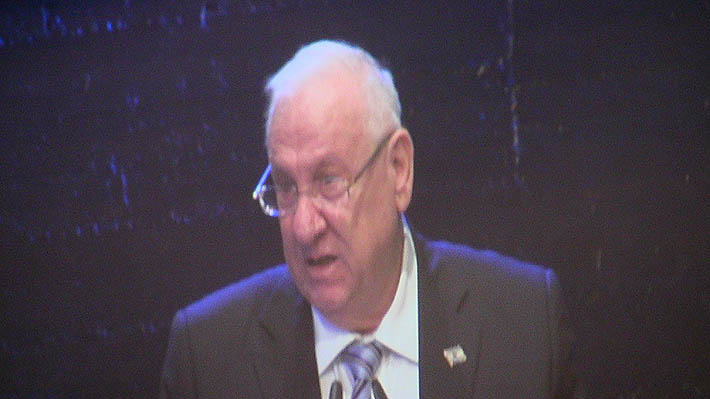
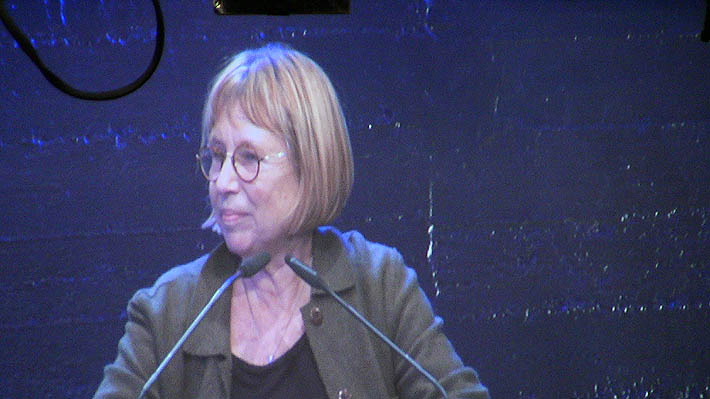
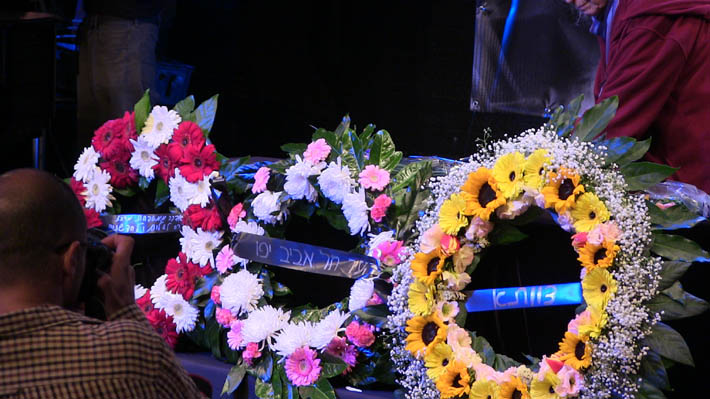
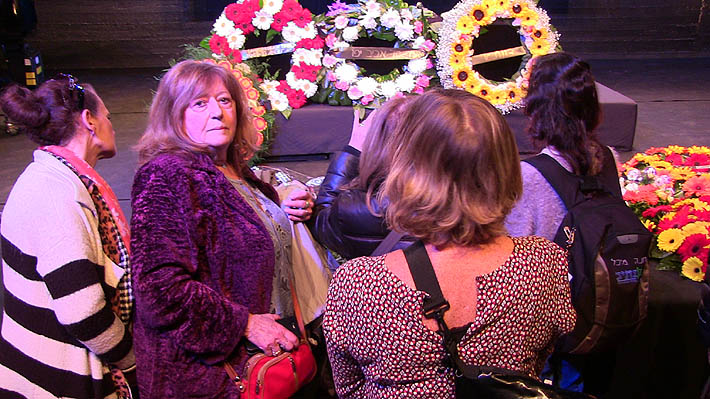
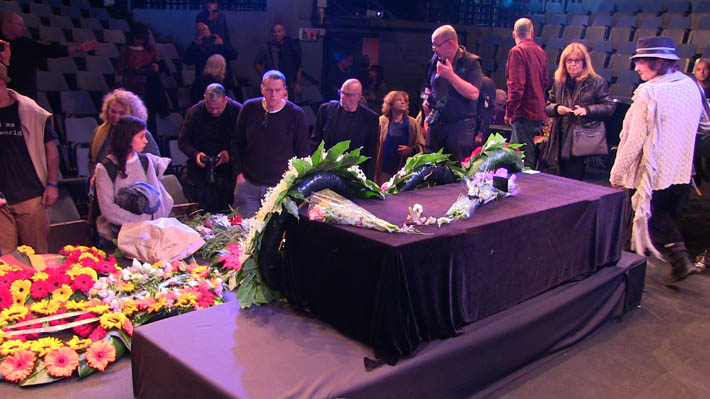
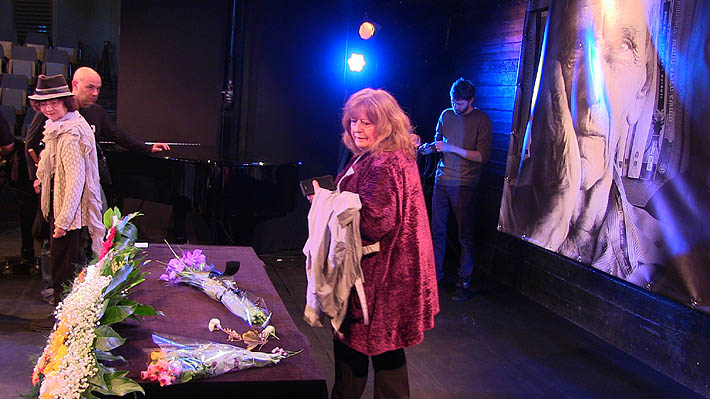
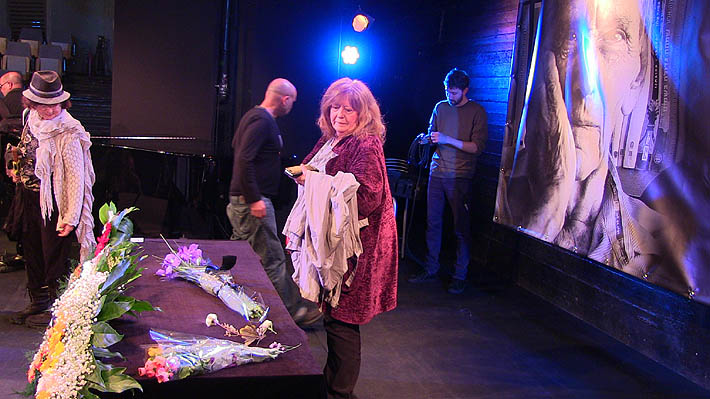
Goodbye to Amos Oz – Tel Aviv 2018-12-31

WK


Reuven Rivlin

Fania Oz


Zawartość publikowanych artykułów i materiałów nie reprezentuje poglądów ani opinii Reunion’68,
ani też webmastera Blogu Reunion’68, chyba ze jest to wyraźnie zaznaczone.
Twoje uwagi, linki, własne artykuły lub wiadomości prześlij na adres:
webmaster@reunion68.com


Jan Hartman: Bronię Urbana

Studio OpiniiJan Hartman: Bronię Urbana

Jan Hartman


Jan Hartman

Wprasie pojawiły się jednocześnie dwie aktualne wiadomości na temat Jerzego Urbana. Pierwsza wręcz bulwersująca – otóż po kilkuletnim procesie sędzia Rafał Stępniak z Sądu Rejonowego na Mokotowie skazał Urbana na horrendalną grzywnę 120 tys. zł (trzykrotność tego, co zażądał prokurator) za opublikowanie w 2012 r. w „Nie” wizerunku Jezusa (nawiązującego do ikonografii Najświętszego Serca Jezusa) ze zdziwioną miną.

Nawet jeśli uznać, że twarz Jezusa z Nazaretu jest symbolem religijnym i przedmiotem kultu, to z całą pewnością przekształcenie wizerunku Jezusa w sposób, który nie uwłacza godności uwidocznionej osoby (jakkolwiek sąd twierdzi, że Jezus z „Nie” jest mało inteligentny…), nie jest żadną obrazą ani bluźnierstwem. […]

Zresztą kontekst rysunku bardzo dobrze go uzasadniał. Trudno przypuszczać, by Jezus z Nazaretu (jeśli tylko istniał takowy i faktycznie uważał się za wysłannika Boga), zważywszy na przypisywane mu poglądy, nie zdziwiłby się na wieść, że jego wyznawcy utworzyli imperium o strukturze monarchii absolutnej, z królewską władzą papieży, i to w dodatku imperium prowadzące krwawe wojny i… prześladujące współwyznawców religii wyznawanej przez Jezusa oraz jego współplemieńców, czyli Żydów.

Wolno mieć pogląd przeciwny i z pewnością nie powinno się za to karać, lecz tak samo nie wolno karać nikogo za wyrażenie przypuszczenia, iż hipotetyczny Jezus w hipotetycznej sytuacji powzięcia informacji o Kościele katolickim bardzo by się zdziwił. Ja zresztą tego poglądu akurat nie podzielam – sądzę, że wpadłby w gniew podobny do tego, który okazał w Świątyni, wypędzając z niej kupców. […]

Sąd swoim wyrokiem dał dowód nie tylko kompletnego niezrozumienia przepisu kodeksu karnego (art. 196 kk) mówiącego o obrazie uczuć religijnych, lecz przede wszystkim nieopanowanego fanatyzmu religijnego i serwilizmu politycznego wobec Watykanu i rządzącej Polską partii katolickiej. Wyrok przynosi wstyd polskiemu wymiarowi sprawiedliwości, który w ostatnim czasie zapisał wszak kilka pięknych kart w swej historii, broniąc niezawisłości sędziowskiej przed zakusami autorytarnego narodowo-katolickiego reżimu.

Drugi powód, dla którego mówi się dziś dużo o Jerzym Urbanie, to jego wypowiedź z wywiadu udzielonego pewnej dziennikarce przed premierą filmu „Kler”. Urban wypowiedział się przeciwko tej odmianie antyklerykalizmu, który dobrze życzy Kościołowi bądź w swej hipokryzji i tchórzostwie za takowy się podaje.

Urban powiedział m.in., że chcąc dla Kościoła jak najgorzej, chciałby też, żeby wszyscy księża okazali się pedofilami. Popełnił błąd i w tym punkcie przyłączam się do krytyków jego wypowiedzi – z pedofilii bowiem nie wolno sobie żartować. Po prostu przez szacunek dla ofiar. Co do meritum zaś, to nie tylko wypada z Urbanem się zgodzić, lecz i podziękować mu, że jako jeden z niewielu upomina się w przestrzeni publicznej o prawo do bycia nie tylko niekatolikiem, lecz antykatolikiem, nie tylko krytykiem Kościoła z pozycji dobrze mu życzących i troszczących się o jego dobro, lecz również krytykiem Kościoła i katolicyzmu po prostu.

Czymś żenującym jest panujący w polskim życiu społecznym dogmat, że wolno krytykować Kościół tylko dla jego dobra, a więc „konstruktywnie”. A niby to dlaczego? […] A czy od ateisty można oczekiwać czegoś poza gniewem i wzgardą, gdy słyszą lekkie tam kościelne aluzyjki, że ateista stoi moralnie niżej niż katolik?

A tak przy okazji, to mój pogląd jest taki, że jeśli ktoś naprawdę wierzy w Boga, bałby się tego Boga, chodząc do Kościoła, który nakazuje oddawać cześć boską człowiekowi i przypisującego Bogu ludzkie cechy, jak osobowość, a nawet uczucia. I mam prawdo do takiego zdania, tak jak inni mają prawo twierdzić, że Bóg jest absolutnie jeden i troisty, absolutnie bezcielesny, lecz przebywający ze swym ciałem w niebie itp. Na to przez pokolenia walczyło się ze sprzysiężonymi siłami feudalizmu i katolicyzmu o wolność słowa i opinii, a także wolność religijną, żeby dziś każdy mógł otwarcie i bezpiecznie być katolikiem lub antykatolikiem. Ale tego najwyraźniej jeszcze Polska nie pojmuje. Może dzięki Urbanowi zacznie pojmować, że katolicyzm nie jest nietykalny i poza krytyką?

Gdyby w stanie wojennym, gdy wraz z milionami Polaków oglądałem Urbana kłamiącego w sprawie Jerzego Popiełuszki w reżimowej telewizji, ktoś powiedział mi, że po latach zostanę jego znajomym, żywiącym do niego sympatię i szacunek, pomyślałbym, że zwariował. Wszak „gdyby Urban nosił turban…” itd. Nie usprawiedliwiam ówczesnych wyborów politycznych Urbana, choć jestem w stanie je zrozumieć i nie mam wątpliwości, że prowadząc pionierską w naszym kraju działalność mającą na celu śledzenie ciężkich nadużyć i demoralizacji kleru oraz informowanie o tym opinii publicznej, z nawiązką odpokutował za swoje dawne kłamstwa.

W długim życiu Jerzego Urbana okres służby dla Jaruzelskiego jest tylko jednym z kilku, a pozostałe – działalność dziennikarska, za którą bywał w PRL szykanowany, oraz wydawanie tygodnika „Nie” – były przecież chwalebne i społecznie pożyteczne. Słusznie powiada Urban w inkryminowanym wywiadzie, że jego pismo „Nie” przygotowało grunt pod „Kler”. Tak, bez Urbana, Palikota i kilku innych bylibyśmy dziś jedynie podnóżkiem Watykanu, a rozbestwienie kleru nie miałoby żadnych ograniczeń i hamulców.[…]

Jeśli ktoś uważa piętnowanie złodziejstwa, korupcji, rozwiązłości, pijaństwa i pedofilii wśród kleru – a tym zajmuje się od wielu lat Jerzy Urban – za niegodziwe, złośliwe, przesadne, agresywne i Bóg wie, jakie jeszcze, to niechaj lepiej uważa, bo jak wybroni się przed zarzutem, że staje się w ten sposób wspólnikiem przestępców i oprawców, a wzgardzicielem ich ofiar?

Jerzy Urban ma wiele na sumieniu i jeszcze większe tytuły do chwały. Wiele kłamał, lecz nie tyle co współcześni politycy wiadomych „opcji”. Przyjęty w Polsce powszechnie zwyczaj opluwania Urbana i brzydzenia się nim brzydzi mnie po stokroć bardziej niż sam Urban ze swoimi kłamstwami z czasów stanu wojennego oraz obscenicznymi dowcipami.W tym odruchu awersji do Urbana nie ma nic poza obłudą i stadnym resentymentem. A kto zna Urbana z jego dorobku dziennikarskiego, a zwłaszcza ten, kto zna go osobiście, w każdym znanym mi przypadku ceni go za inteligencję i talent.

Ja też znam Urbana osobiście i mogę powiedzieć, że jest człowiekiem niezwykle miłym, uprzejmym i skromnym. A więc nie tylko inteligentnym, bo to akurat wiedzą nawet jego zagorzali wrogowie. Swoją drogą cieszę się, że rzecznicy rządów PiS, z pewnością prześcigający Urbana w cynizmie i zakłamaniu, tak bardzo nie dorównują mu intelektem. Z pewnością w takim wypadku byłoby nam trudniej obalić ten reżim. …]


Jan Hartman

Blog Autora w portalu Polityka.pl
Tamże pełny tekst
Skróty i wytłuszczenia – redakcja Studia Opinii


Zawartość publikowanych artykułów i materiałów nie reprezentuje poglądów ani opinii Reunion’68,
ani też webmastera Blogu Reunion’68, chyba ze jest to wyraźnie zaznaczone.
Twoje uwagi, linki, własne artykuły lub wiadomości prześlij na adres:
webmaster@reunion68.com


Totalitarian physics & moral threshing


Totalitarian physics & moral threshing

Jacob Howland


Vasily Grossman

On the thirtieth anniversary of the publication of Vasily Grossman’s great anti-Soviet novel Life and Fate.

This year marks the thirtieth anniversary of the first publication in the Soviet Union of Vasily Grossman’s Life and Fate, a nine-hundred-page novel of life under Stalin. This was a small posthumous triumph for the author. The kgb had confiscated the manuscript in 1961, and Grossman—who wrote to Khrushchev asking, “What is the point of me being physically free when the book I dedicated my life to is arrested?”—was told that it could not be published in the ussr for another two hundred years. Depressed and suffering from stomach cancer, he died in 1964.

The censors knew what they were doing. Like Arthur Koestler’s Darkness at Noon, Life and Fate depicts Communism and Fascism as ideological mirror-images, two quarreling heads on one great monster. The manuscript made it out of the ussr on smuggled microfilm in the late 1970s, and appeared in English in Robert Chandler’s 1985 Harper & Row translation (reissued by New York Review Books in 2006). Although the Soviet Union’s collapse was still a few years off, Life and Fate is far too great to be quickly absorbed, and Grossman’s book was swept under in the wave of historical forgetfulness that followed the Cold War. Immediately after the collapse, Francis Fukuyama’s more-celebrated book descried The End of History; ironically, its Hegelian presentation of liberal democracy as the culmination of the Universal History of mankind was a réchauffé of the work of Alexandre Kojève, a Russian-born self-avowed Stalinist posthumously exposed in 1999 as a Soviet spy. Since then History has marched on, trampling memory underfoot. Chandler justly remarks that Life and Fate is “the true War and Peace” of the twentieth century, “the most complete portrait of Stalinist Russia we have or are ever likely to have.” Those who have read both books will agree that the comparison honors Tolstoy no less than Grossman. But most American readers still know next to nothing about Grossman’s masterwork.

Life and Fate is a massive literary fusion of poetry and mathematics, narrative and scientific observation. Multiple stories of struggle and suffering—a rich accumulation of significant data about the human condition in the age of ideology—are punctuated by Tolstoyan passages of philosophical reflection on the inner meaning of these imaginatively generated phenomena. The book centers on Hitler’s invasion of the ussr and the smashing of “two hammers . . . each composed of millions of tons of metal and flesh” at the Battle of Stalingrad, events whose shock waves the narrative registers with seismographic sensitivity as they disrupt and volatilize hundreds of interconnected lives across an entire continent.

In one of the book’s first chapters, Grossman describes a firestorm unleashed by the Luftwaffe bombing of fuel tanks:

The life that had reigned hundreds of millions of years before, the terrible life of the primeval monsters, had broken out of its deep tombs; howling and roaring, stamping its huge feet, it was devouring everything round about. The fire rose thousands of feet, carrying with it clouds of vaporized oil that exploded into flame only high in the sky. The mass of flame was so vast that the surrounding whirlwind was unable to bring enough oxygen to the burning molecules of hydrocarbon; a black, swaying vault separated the starry sky of autumn from the burning earth. It was terrible to look up and see a black firmament streaming with oil.

The columns of flame and smoke looked at one moment like living beings seized by horror and fury, at another moment like quivering poplars and aspens. Like women with long, streaming hair, the black clouds and red flames joined together in a wild dance.

Only an eyewitness—Grossman reported from Stalingrad for the newspaper Red Star—could provide such particular details. Only a great writer could compose such an intensely lyrical apocalypsis: Life, chemically transformed inside the earth into combustible matter, rages and consumes itself in a vast, murderous vortex. Tens of millions of souls haunt these flames, including Grossman’s mother, shot over a pit with the other Jews of Berdichev, Ukraine. Here is the deep mystery at the heart of Life and Fate, and of our time: how the industrial lethality of totalitarianism gestated within, and broke free from, the soil and sediment of human life.

Early in Life and Fate, two Soviet commanders under fire seem to be on the verge of beginning “the one conversation that really mattered—about the meaning of Stalingrad.” That particular conversation fails to occur; the book as a whole is that conversation. It is a teeming and tumultuous literary cosmos, and at its center is the problem of the relationship between organic spontaneity and freedom (Life) and mechanical, ineluctable social forces (Fate).

Quantum theory offers an illuminating analogy for this relationship, but from a strictly inorganic viewpoint. What an individual photon will do when it strikes a reflective surface cannot be predicted; it may go straight through the surface or bounce off it in any number of directions. In the aggregate, however, photons obey the laws of classical optics; governed by statistical probabilities, the path of light is for all practical purposes entirely predictable. The comparable predictability of human behavior on a large scale, “the principle of quantum politics,” forms the basis of a totalitarian physics. Probability theory underlies the mass social phenomena with which alone the State reckons, as well as the crude, ideological group-forms—Party, peasant, bourgeois; Russian, Ukrainian, Jew—it imposes on the concrete relations of irreducibly unique human beings.

Physics in fact furnishes a rich fund of images in Life and Fate. Viktor Shtrum, the book’s central character, struggles to work out the mathematics of the disintegration of atomic nuclei; Grossman’s narrative, densely populated with characters displaced by enormous acts of aggression, simultaneously records a kind of massive nuclear reaction. Like energized, destabilized atoms, individuals violently collide, clump together, split apart, and experience various degrees of psychological fission. A kindly German governess is denounced by a Russian neighbor who covets her room. A Jewish doctor in a Ukrainian town occupied by the Wehrmacht finds her door smashed and women arguing over her furniture. An old Bolshevik in the Gulag suffers a crisis of political faith when he hesitates to inform on criminals who filch a long nail from the camp tool shop and drive it through another inmate’s ear into his brain. A Jewish commissar is made to “frown, twitch, and turn away” on seeing the look of a Jewish airman he has publicly reprimanded for “nationalist prejudices” when he defends himself against anti-Semitism. A comrade of Trotsky’s learns in the Lubyanka prison “how a man could be split apart” by the State he had helped to found. A pitiless Party secretary is “overwhelmed by a helpless tenderness, an unreasoning love” on taking leave of his wife and children; “their life, which had seemed one, had suddenly split apart.” The particulars are all unique, but the same basic phenomena of behavior and feeling—the observable patterns of a social and psychological physics—recur repeatedly throughout the book.
recommended by: Leon Rozenbaum

Readers will pause to reflect on a strange remark that turns out to be located at the mathematical center of Life and Fate as reckoned by parts and chapters. On his way to Berlin to report on the construction of a gas chamber and ovens, the SS Commandant Liss recalls Mostovskoy, a Bolshevik prisoner he had tried to convince of the essential identity of Hitlerism and Stalinism: “What an interesting old man! Yes, once you get inside the nucleus of the atom, the forces of attraction begin to act on you as powerfully as the centrifugal forces.” It is no coincidence that the core of Grossman’s narrative is a zone of intense industrial negativity. For the totalitarian State is something like an extremely heavy metal, and its nucleus—the point where all ideological, technological, and administrative forces converge and achieve maximum concentration—is a death camp.

It is not for nothing that Liss calls Mostovskoy “Teacher.” Hitler’s vast concentrationary universe—42,500 ghettos and camps had been identified as of 2013—plagiarizes the Gulag, the prison archipelago begun by Lenin and finished by Stalin. Liss’s gas chamber/crematory complex is designed by a Professor Stahlgang (Steel Corridor), an echo of Stalin (Man of Steel) and of the trains and railways that incessantly fed the camps of Poland and Siberia. In the Nazi camps, the exhausted slaves that Primo Levi describes as “empty inside . . . like the slough of certain insects one finds on the banks of swamps” were called Muselmänner. In the Soviet ones they were called dokhodyagi, a term derived from dokhodit, “to reach” or “to attain”: these extinguished souls had at last come to the end of the road of socialism. But Hitler’s trains went further, to the very last stop on the line. While the Gulag’s millions died of exposure, starvation, and overwork on the frozen tundra, the Germans of the Third Reich, “a people moved by the most progressive of philosophies,” addressed the problem of the enemies of the State with real entrepreneurial innovation. Stahlgang’s streamlined factory is built to fulfill all production quotas, “transforming life itself, and all forms of energy pertaining to it, into inorganic matter” through a process that combined the principles of “the ordinary industrial hydro-turbine . . . with those of the slaughter-house and the garbage incineration unit.”

This is not all. For the Annihilation Camp at the center of Life and Fate (the operational abstraction of the word Vernichtungslager is stunning) is the scene of a perverse Last Supper, a ghastly photographic negative of the biblical original:

A small surprise had been laid for Eichmann and Liss during their tour of inspection. In the middle of the gas chamber, the engineers had laid a small table with hors d’oeuvres and wine. Reineke invited Eichmann and Liss to sit down.

Eichmann laughed at this charming idea and said: “With the greatest of pleasure.” . . .

“Well, gentlemen,” said Eichmann, “I call that excellent ham!”

Adolf Eichmann’s little Jewish joke is more than a demonic obscenity. Jesus agrees with the Hebrew God who calls himself El Shaddai, “God of Breasts”: man does not live by bread alone. The biblical God nourishes soul and body alike—literally, in the case of the communion wafer. Totalitarianism reverses this relationship. Like some primitive, malformed Titan, the State, Nietzsche’s “coldest of all cold monsters,” feeds on human lives.

Mass murder and cannibalism are intimately connected in the history of the ussr and the Third Reich. Stalin used famine as a targeted political weapon, killing roughly five million Ukrainians in the Holodomor of 1932–33; some victims resorted to anthropophagy. Nor is Eichmann’s gas-chamber meal a farfetched invention. Ukrainian witnesses interviewed by Father Patrick Desbois in The Holocaust by Bullets repeatedly testified that the men of the Einsatzgruppen banqueted next to the pits where Jews were being shot. Desbois also learned from a Polish peasant in Belzec that the SSrequisitioned farm machinery used to separate husks from grains. Enslaved Jews had to turn the handles of the machines, not to sort wheat or barley, but to ventilate the ashes of their cremated fellows.

Images of ravenous, grinding machines and fierce, voracious beasts are woven throughout Life and Fate, sometimes in subtle ways. Soviet soldiers wait at Stalingrad “to be eaten,” chewed up by “the iron teeth of the German offensive.” Flames “flickered like tongues from the mouths of mortars.” Liss’s gas chamber seems to have “broken free of its creators . . . feeling its own concrete hunger, secreting toxins, masticating with its steel jaws, beginning the long process of digestion.” David, a Jewish boy caught in the Nazi dragnet, recalls a picture book in which a wolf’s “green eyes” and “red jaw” are just visible in a dark forest near a clearing where a small goat grazes. Viktor refers to Max und Moritz, Wilhelm Busch’s classic illustrated children’s book about naughty boys who are ground into pellets by a farmer and eaten by ducks: human grist for the mill. And a letter to Viktor from his mother, Anna Semyonovna, smuggled out of a Ukrainian ghetto, mentions Alphonse Daudet’s “Les Vieux.” The reader who turns to Daudet’s story finds in it many funny and poignant things, including an orphan haltingly mouthing a passage in which the Church Father Irenaeus cries out “ ‘I am the wheat of the Lord; I must be ground between the teeth of animals.’ . . . Just then two lions jumped on him and devoured him.”

In fact, something like the wheat of the Lord—individual goodness that nourishes the soul even as the body is being ground to “labor-camp dust”—turns out to be the eccentric, living antipode in Life and Fate of the dense gravitational mass of the State. This deep moral truth is brought home by Ikonnikov, a camp inmate who lost faith in Stalin—and then in God—after he witnessed the horrors of collectivization and the execution of twenty thousand Jews. In a written testament that Liss and Mostovskoy regard with contempt, Ikonnikov offers an organic characterization of the process described in the analogy of quantum politics. The world is ruled by abstract concepts of universal Good, capable of producing “greater evil than evil itself.” These strange historical outgrowths are the husks of a discarded human vitality, as inevitable, in Ikonnikov’s view, as the accretion of Christian orthodoxy around the living example of Jesus. Yet kernels of individual goodness and freedom, “hiding in the living darkness of the human heart,” are “scattered throughout life like atoms of radium.” These living kernels, undetectable by political calculations, sprout senseless acts of kindness “outside any system of social or religious good.”

Life and Fate bears out Ikonnikov’s insight. Anna Semyonovna knows what awaits the Jews, but continues to tutor pupils in French and to treat patients for glaucoma and cataracts. She writes from the ghetto that “it’s not so much me visiting the sick as the other way round—that the people are a kind doctor who is healing my soul.” The Soviet soldier and physician Sofya Levinton, “fighting against some powerful force that she found repugnant,” remains silent when the SS calls for doctors and surgeons. With a “feeling of exaltation,” she chooses to die with David, whom she has been feeding and caring for since they were imprisoned in a goods wagon. She is a virgin, but her last living thought as she clings to the boy in the gas chamber testifies to the inner generativity of love: “I’ve become a mother.” Grekov, a captain in an outpost surrounded by Germans, saves the life of Krymov, a commissar who intends to have him shot for anti-Soviet attitudes. “There’s something good in your eyes,” Grekov tells Krymov. “But you’ve suffered a lot.” These private acts of kindness are in one sense entirely futile: all of these men and women are doomed. Yet Ikonnikov, who condemns himself to death when he refuses to help build extermination facilities, maintains that “dumb, blind love,” as “powerless as dew” before Fate, is nothing less than “man’s meaning.”

People everywhere in Life and Fate are fed into a steel hopper of tremendous social forces. The State is unconcerned with whether any particular individual resists or cooperates with these forces; all are in any case effectively governed. That is the fundamental truth of totalitarian physics. But there is deeper truth: the moral truth of freedom, of the “inflammable peat” of the soul. In Grossman’s book, the encounter of existing individuals and unalterable circumstances, of freedom and necessity, ultimately reveals itself to be a process of moral threshing. And no writer observes and registers this process more perspicuously than he.

At Stalingrad, a Soviet artillery barrage blasts soil into the air; “these clouds of earth then passed through the sieve of gravity, the heavier lumps falling straight to the ground, the dust rising into the sky.” Gravity separates totally disintegrated matter from clumps of earth that retain mass and density in spite of the explosion; the atomized particles are sucked up by “the cruel sky, the sky of ice and fire”—an image of the pitiless abstraction of the State—while the clods are drawn toward the earth. Here is how a former Chekist describes an Arctic construction project that cost the lives of ten thousand prisoners:

You should have seen the columns of zeks marching to work. In dead silence. The blue and green of the Northern Lights above them, ice and snow all round them, and the roar of the dark ocean. There’s power for you.

In Grossman’s anthropomorphic and almost pantheistic vision, even plants and animals are disturbed and afflicted by the “terrible frozen abyss” that hangs overhead. Trees at a northern airfield shake in the night, “frightened by a bad dream.” Spruce and birch saplings, cut off from the sun by the forest canopy, freeze to death “in the twilight of penal servitude.” Soldiers tell of dogs who ignore Russian aircraft but run at the sound of German ones, and of flocks of starlings that perfectly mimic the whistle of bullets. A cat is scalded after its owner is arrested; another, a thin stray with “weepy eyes” that David feeds from a tin, is disposed of by a neighbor who finds it disgusting. But other animals share a precious measure of warmth with human beings. A kitten, “half-paralyzed” by artillery fire, drags itself from a pile of rags so that it may die near kind Katya, the radio operator. Novikov, a battle-hardened tank corps commander, keeps a chipmunk and a hedgehog in his quarters, and David treasures a cocoon in a matchbox, releasing the chrysalis that emerges from it right before he is sucked into the gas chamber. Simple kindness draws rich human grain toward the life-giving earth, separating it from the empty husks that ride the frozen wind.

The hard reality of combat also separates wheat from chaff in Life and Fate. Operation Barbarossa mobilized the largest invading force in history (one hundred and fifty divisions of four million Axis soldiers), and culminated in the greatest and most terrible battle ever fought. Nowhere was the uselessness of the State, of commissars, security officials, and Party bureaucrats, more evident than at Stalingrad. The inexperienced Nyeudobnov is given a generalship only because of his status in the Party and the nkvd. Left briefly in command by Novikov (whom he actually outranks), he realizes with horror that “here at the front, the terrible rage of the State, before which millions of people bowed down and trembled, was of no effect”; were the Germans to appear, “it would be no good threatening to dismiss them from their posts or accusing them of conspiring with enemies of the people.” Stalingrad was a socio-physical experiment in which an enormous quantity of ideological and administrative mass simply evaporated; formerly a “million tons of granite,” the State at the moment of crisis weighed less than a desiccated leaf.

“The soul of wartime Stalingrad was freedom,” Grossman writes. We see this freedom in the soldiers’ open mockery of Krymov, assigned to a surrounded outpost so that he may deliver ideological indoctrination to the besieged combatants and write reports about them. (The certainty of being turned to dust by German steel must have had a liberating effect on them.) We see it most of all in the incalculable power of spontaneously united individuals:

For all the vast forces involved, the German attacks had still not led to a decisive victory. Some of the Russian regiments now only numbered a few dozen soldiers; it was these few men, bearing all the weight of the terrible fighting, who confused the calculations of the Germans.

The Germans were simply unable to believe that all their attacks were being borne by a handful of men. They thought the Soviet reserves were being brought up in order to reinforce the defence.

Because the Germans erroneously assumed that the reserves had already been deployed, they were entirely unprepared for the lightning-fast encirclement they suffered in the final Soviet offensive. The “true strategists” of the offensive were not generals, but scouts, sappers, plotters, gunners, and snipers: free patriots “with their backs to the Volga who fought off Paulus’s divisions.” Victory was achieved not by a State collective abstractly conceived and imposed from above, but—for once!—by a true social collective, an organic brotherhood of workers. It was achieved by the Soviet people.

But freedom—Life—is only one part of the meaning of Stalingrad. Hegel saw the cunning of Reason even in the Terror of the French Revolution, the paradigm of all modern ideological revolutions; History’s abandonment and sacrifice of vast multitudes of individuals and peoples was in fact a necessary means of universal advancement, a hard husk that protected the idea of freedom until it was ready to sprout into the living actuality of human existence. Stalingrad fits this picture only partially. The Soviet victory meant that the peoples of Nazi-occupied Europe would be liberated from ideological tyranny. Yet the final defeat of Hitler cut off only one of the monster’s two heads—and anyway, both grow back. Stalingrad also saved Stalin, which meant that the peoples of Eastern Europe and the northern half of the Korean peninsula would be shoveled into the maw of Communism. And it fed an ugly Russian nationalism that picked out fresh targets of State oppression, including Tartars and Jews—the very people Vladimir Putin blamed for alleged interference in the 2016 election, dismissing them as “not even Russian . . . just with Russian passports.” The meaning of Stalingrad was in these respects a grotesque reversal of Hegel:

The remorseless cunning of History, however, lay still more deeply hidden. Freedom engendered the Russian victory. Freedom was the apparent aim of the war. But the sly fingers of History changed this: freedom became simply a way of waging the war, a means to an end.

In Life and Fate, the atomic State undergoes a kind of fission. The sheaf splits open; golden kernels spill out and sprout in ruined buildings and bomb craters. Three Soviet generals sit together in silence after the great battle ends, feeling “only human feelings”; these few minutes of silence—of happiness and sadness, love and humility—are “the finest of their lives.” In exile in Kazan, a city on the Volga, Viktor engages in intense conversations about politics and literature with a Muslim translator of Dante and Homer and a historian who speaks with the fearless “logic of truth.” Refreshed by the exhilaration and terror of speaking his mind, Viktor suddenly achieves a theoretical breakthrough, the most important scientific discovery of his life. His theory of atomic decay, which arises in “absolute freedom” from “the free play of thought,” is “bread, bread, black bread” for the soul.

But these communities of freedom and goodness are as ephemeral as any fleeting isotope produced in a nuclear reaction. When Viktor returns to Moscow, he is persecuted by detractors who regard his theoretical work as an anti-Soviet piece of “Talmudic abstraction,” and his Jewish laboratory assistants are fired. In Stalingrad, the victorious State’s cannibalization of the victorious people commences while the guns are still hot. Colonel Novikov keeps Stalin waiting for eight minutes past the time he was to launch his tanks in the final Soviet offensive; exercising “the right to think twice before you send men to their death,” he delays so that the artillery will have time to clear out some enemy batteries. The attack succeeds without the loss of a single tank, and he is heartily and sincerely congratulated by General Nyeudobnov and Commissar Getmanov. That night, Getmanov asks Nyeudobnov to review his report denouncing Novikov for delaying, “at the start of a crucial operation, the operation to decide the outcome of the Great Patriotic War.” The steel City of Stalin rises anew on the ground of freedom: “Here, ten years later, was constructed a vast dam, one of the largest hydro-electric power stations in the world—the product of the forced labor of thousands of prisoners.”

Strangely, Novikov has his first good sleep in weeks the night after he receives the dreaded summons from Moscow. Viktor’s experience is equally strange. A phone call from Stalin saves him from persecution and catapults him into a position of great privilege. But while he had previously “been full of thoughts about life, truth and freedom, about God,” he now teems with “petty anxieties, trivial irritations and thoughts that were emptier than the husks of sunflower seeds.” And when, “unable to refuse candies and cookies,” he sacrifices his inner freedom by signing his name to a letter denouncing two doctors on trumped-up charges of poisoning Maxim Gorky (Grossman signed a similar letter in 1952, when Jewish doctors were accused of plotting to murder Stalin), he realizes that “Everything in the world was insignificant compared to what he had lost. Everything in the world is insignificant compared to the truth and purity of one small man—even the empire stretching from the Black Sea to the Pacific Ocean, even science itself.”

Vasily Grossman came to know History as more than a philosophical concept. It stormed through his homeland, seizing people by the millions and crushing them underfoot, and he smelled its foul breath in the stench of corpses. That experience brought home a fundamental truth that our willfully abstract and increasingly ideological age seems hell-bent on forgetting:

Human groupings have one main purpose: to assert everyone’s right to be different, to be special, to think, feel and live in his or her own way. People join together in order to win or defend this right. But this is where a terrible, fateful error is born: the belief that these groupings in the name of a race, a God, a party or a State are the very purpose of life and not simply a means to an end. No! The only true and lasting meaning of the struggle for life lies in the individual, in his modest peculiarities and in his right to these peculiarities.

One passage in Life and Fate is eerily prescient. Grossman imagines a “machine of future ages and millennia” capable of recreating the whole range of human emotions and thoughts: “But the surface of the whole earth will be too small to accommodate this machine—this machine whose dimensions and weight will continually increase as it attempts to reproduce the peculiarities of mind and soul of an average, inconspicuous human being.” This is a prophetic warning for our age of big data and digital surveillance, an age in which the once-vital liberal democracies of the West find themselves littered with hollow institutions surrounded by thick administrative husks.

The struggle of Life and Fate in the twenty-first century will determine whether Grossman’s waking nightmare will come to pass.


Jacob Howland’s writing includes Glaucon’s Fate: History, Myth, and Character in Plato’s Republic, forthcoming from Paul Dry Books.


Zawartość publikowanych artykułów i materiałów nie reprezentuje poglądów ani opinii Reunion’68,
ani też webmastera Blogu Reunion’68, chyba ze jest to wyraźnie zaznaczone.
Twoje uwagi, linki, własne artykuły lub wiadomości prześlij na adres:
webmaster@reunion68.com


Peereliada, czyli krótki kurs historii dla młodszych i zaawansowanych (cz.3)

Peereliada, czyli krótki kurs historii dla młodszych i zaawansowanych (cz.3)

Joanna Szczęsna
21 listopada 2001


do (cz. 1) / do (cz. 2)

J.Sz.: Towarzysz Gomułka nieustannie dostarczał Szpotowi tematu.

J.L.: Poświęconej milenijnym obchodom, a właściwie walce czerwonych z reakcyjnym klerem, opery “Targowica” Szpot, jak wielu swych dzieł, nigdy nie ukończył. Ale są tam niezapomniane fragmenty, jak oratorium Gnoma śpiewane przez więźniów pod batutą naczelnika:

Jan Lityński

“To nie ranne wstają zorze,
jeno wstał gospodarz nasz,
ponad ziemie, ponad morze
rzuca blaski jasna twarz!
Uroczysty, promienisty,
pewnie nowe ma pomysły,
pewnie miał proroczy sen,
jak podwyżkę zrobić cen.
Jaki rześki, jaki świeży
wstał z pościeli dziś nasz wódz!
Do KC prędziutko bieży,
by rządzenia podjąć trud”.

I najciekawszy wątek:

“I już niskie czoło marszczy,
by do pracy zmusić mózg.
Słychać odgłos sapki starczej,
słychać wody w mózgu plusk”.

W 1964 roku Gomułka miał niecałe 60 lat. Ale socjalizm to system starczy, gerontokracja. Mimo że dziś 59-letni polityk nie jest uważany za starego, w tamtych czasach system wydobywał ze swych przywódców ich starcze cechy. I tak w Marcu na starego Gomułkę parły młode partyjne kadry, które chciały wreszcie zmiany, żeby dorwać się do władzy.

Wtem genialny pomysł błyska:

“To śmiertelność jest zbyt niska.
Ach, od dawna tom już czuł!
Krzywa zgonów idzie w dół!”

J.Sz.: Te zmartwienia głowy państwa, te pomysły – jakbyśmy widzieli Gnoma, który się z tym zmaga.

“Teraz rzecz się prostą staje,
że zbyt wolno wymierają,
teraz mamy jasny cel:
więcej zgonów w PRL!”

I ten fantastyczny pomysł budowy krematorium na Tysiąclecie.

Mówiliśmy tu już o talencie profetycznym Szpota. Otóż w “Targowicy” pisze o nim tak, jakby go już nie było: “Czy w ogóle jest Gnom?/ Czy pozory to są,/ Czy to nie jest po prostu nasz wymysł?”. W pisanym przed strajkami 1976 roku wierszu rzuca: “Pod pomruk mas chcesz tańczyć tango Comparsita?/ jeżeli tańczyć już, to tylko karmaniolę”.

J.L.: Szpot odgadywał, wyprzedzał wypadki poprzez analizę rzeczywistości. Miał trafienia niekiedy zaskakujące dla niego samego, jak choćby “Gnomiadę”, którą pisać zaczął na miesiąc przed upadkiem Gnoma. I pamiętam, w listopadzie 1970 roku Szpot przychodził, opowiadał, cytował fragmenty “Gnomiady”. Pamiętam, że wszyscy naciskają tam na Gomułkę, by odszedł. On najpierw zgadza się odejść, a potem na posiedzeniu KC mówi: “Nie, nie, nie, nie odejdę”. I ten zamysł poematu zniszczył Grudzień, zniszczyła rzeczywistość.

J.Sz.: Ale pozostał olśniewający w swej prostocie początek: “W Konstancinie, na tarasie/ siedzi Gnom i uśmiecha się”.

J.L.: Niestety, “Gnomiada” się nie rozwija, Szpot jej nie skończył. Pozostał jednak niesamowity autobiograficzny wstęp, pierwszy liryczny kawałek Szpota, gdzie mickiewiczowską frazą przyznaje, że nawet on miał w Październiku jakieś nadzieje, chciał wierzyć w zmiany.

“Ach, prawda, można być Gęgaczem jeszcze,
lecz ja w tym gronie nie bardzo się mieszczę.
Gdybym był Gęgacz, Gęgacz, jak się patrzy,
z małpią zręcznością wdrapałbym się na krzyż,
ale pluszowy, bo to ważne przecie
wisieć na krzyżu, który cię nie gniecie”.

J.Sz.: Cały Szpot. Nie może znieść Gnoma, ale i opozycja go mierzi. Uważa, że idiotyzm systemu najłatwiej opisać przez Gnoma.

“Gnom – to jest właśnie temat moich dumań godny!
Gnom tupiący nogami, to znowu pogodny,
Gnom liczący wytrwale komy i procenty,
Gnom swą misją dziejową ogromnie przejęty,
Gnom – gospodarz wspaniały, Gnom – narodu ociec,
Gnom – mąż stanu, Gnom – mędrzec (…)”

J.L.: W pierwszej wersji wstępu do “Gnomiady” było: “Już mi kostucha wlazła do wątroby”. Potem zmienił na: “Wychlana wóda zżera mi wątrobę”. U Szpota wszystko rozgrywa się wokół wódki. On sam lubił mawiać: “Nalej sobie, wzmocnij się”.

Po upadku Gnoma Szpot był w złej formie, upijał się, robił awantury. Pojawiło się takie gęgackie gadanie, że Szpot mógł żyć tylko jako anty-Gnom. Ale kiedyś przyszedł do mnie i pokazał rękopis bez jednej poprawki. Niestety, maszynistka, której daliśmy “Carycę” do przepisania, zniszczyła go ze strachu.

J.Sz.: Patrz, a ja myślałam, że Szpot w ogóle nie zapisywał swoich tekstów, że on je układał w głowie.

J.L.: Potrafił tworzyć na poczekaniu. Któregoś dnia byliśmy w kawiarni ZLP i nagle usłyszałem:

“Gdzie dawniej Gaworskiego ucho
prężyło mężnie się jak drut,
dzisiaj ponuro, drętwo, głucho
i nie zagląda tu nawet Put”

…czyli Putrament. Trochę tej ulotnej twórczości Szpota przetrwało. Pamiętam, poszliśmy na proces poznańskiego Teatru Ósmego Dnia. Jego członkowie, złapani w autobusie bez biletu, zostali pobici przez kontrolerów. Przysłuchiwaliśmy się rozprawie, a następnego dnia Szpot zadzwonił do mnie i mówi: “Obudziłem się rano i odkryłem, że jest mi dobrze”. Po czym wyrecytował:

“Choć moc kłopotów mam na głowie,
choć życie moje jest bez celu,
szczęśliwy jednak jestem, bowiem
nie jestem sędzią w PRL-u”.

J.Sz.: A pamiętasz, jak była przyjmowana “Caryca”?

J.L.: Początkowo było wiele narzekania, że to nie to, że nie dorównuje wcześniejszym utworom. Później znalazła fanatycznych wielbicieli.

“Przed lustrem wdzięczy się Caryca,
własna uroda ją zachwyca.
To gęstych brwi unosi chaszcze,
to swych podbródków sześć pogłaszcze,
to delikatnym ruchem dłoni
poprawi bujnych włosów sploty,
to w głaz swych niezgłębionej toni
zatopi wzor pełen tęsknoty,
to znów rozchyli ust pąkowie
i ticho: “Kak krasiwa!” powie”.

Szpot po prostu musiał znaleźć postać godną opisu. Po Gnomie nie mógł przecież opisywać Sztygara, czyli Gierka, ani tych małych partyjnych kreatur i złodziei. Mała stabilizacja epoki gierkowskiej nie była ciekawa. To było przed KOR-em, gęgacze trochę się buntowali, ale jakoś współżyli z systemem, nie było czego opisywać. Dlatego Szpot przeszedł do centrali, wziął się za Breżniewa, dając przy okazji przenikliwy opis epoki detente.

“Bo nic nie wzrusza tak Zachodu,
jak szum frazesów o wolności.
Możesz pół świata zakuć w dyby,
strzelać w tył głowy, łamać kości,
ale bredź przy tym o ludzkości,
o Lepszym Jutrze, Wielkim Świcie,
a wyjdziesz na tym znakomicie!
Wot Gitler, kakoj to durak!
On się przechwalał zbrodnią swoją!
A mudriec to by zdiełał tak:
Nu czto, że gdzieś koncłagry stoją?
Nu czto, że dymią krematoria?
Taż w nich przetapia się historia,
niewoli topią się okowy,
powstaje sprawiedliwszy świat,
rodzi się typ człowieka nowy!”

J.Sz.: Ten nowy typ człowieka to przecież wypisz, wymaluj może być “Towarzysz Szmaciak”…

J.L.: Szmaciak to wynik lektury komunikatów KOR-u, “Biuletynu Informacyjnego” i “Trybuny Ludu”. To bodaj najważniejszy utwór Szpota. Pierwszy fragment powstał spontanicznie, tuż po wypadkach czerwcowych w 1976 roku w Radomiu.

J.Sz.: Początek poematu, który – jak mówisz – spłynął mu spod pióra, znakomicie wpada w ucho, więc zacytuję go “prawie z pamięci”:

“Straszny miał dzień towarzysz Szmaciak.
Ach, wprost odchodził od rozumu
kiedy uciekać musiał w gaciach
ścigany wyzwiskami tłumu.
Zewsząd sypały się kamienie,
boleśnie bijąc go w siedzenie.
Na szczęście było – jak już wiecie –
tajemne przejście w komitecie.
Jeszcze ze strachu nie ochłonął,
a za nim już komitet płonął i płonął w jego gabinecie
największy porno-zbiór w powiecie.

J.L.: Ciąg dalszy “Szmaciaka” rodził się już w bólach. I nawet przez chwilę wyglądało, że może podzieli los innych niedokończonych utworów. W “Szmaciaku” po raz pierwszy Szpot opisał całą historię od początku do końca. I to zarówno w planie społecznym: mamy tu historię PZPR, z analizą narodzin moczaryzmu, a też antysemityzmu wewnątrz partii. Jak i osobistym: czytamy więc o Szmaciakowym dzieciństwie, o tym, jak był szmalcownikiem, sutenerem, UB-ekiem, wreszcie sekretarzem powiatowym. Co też zresztą jest charakterystyczne dla Szpota, bo powiatów już wtedy nie było, ale on opisywał Polskę powiatową. PRL był dla niego rzeczywistością powiatową.

W “Szmaciaku” dał epicki, panoramiczny obraz przemian komunizmu poststalinowskiego. Widzimy tam dwa typy ludzkie: jeden to stary, zatwardziały komuch, który wypychany jest przez nową komunistyczną generację. I drugi – to jajogłowi. Zaś przewrót polega na tym, że wygrywa chamskie pokolenie. I Szpot opisuje w “Szmaciaku” tę przemianę, kiedy to starzy aparatczycy wypychani są przez młode pokolenie. Szpot sygnalizuje też pojawienie się generacji Kwaśniewskich.

Ciekawe, że taką samą obserwację znajdujemy u Aleksandra Wata w “Moim wieku”, tyle że dotyczy to lat 20. i 30. Komuniści z lat 20. to byli ideowcy z błyskiem w oku. W latach 30. natomiast są to już aparatczycy wykładający zimno swoje racje. Trzeba przy tym pamiętać, że Wat wykrywa tę mentalność wśród ludzi, którzy siedzą w więzieniu.

J.Sz.: W tym samym czasie co “Szmaciak” powstawała “Bania”.

J.L.: “Bania w Paryżu” to kolejny niedokończony utwór Szpota. Kiedy rzeczywistość nie podążała w tym kierunku, w którym przewidywał, on wtedy porzucał swoje dzieło. Nie z lenistwa czy twórczej niemocy. Rezygnacja była u niego świadomym zamysłem. Gdyby dokończył “Banię”, mógłby to być poemat na miarę ” Oniegina”, tyle że bez obcego Szpotowi sentymentalizmu.

“Bania” to reakcja na głupotę zachodniej lewicowości. Szpot pokazuje tu starcie polskiego lewicowego myślenia z zachodnim, które jest prokomunistyczne, podczas gdy polskie – anty.

J.Sz.: Bohaterem wprowadzającym do poematu jest Jan Józef Lipski, ps. Kaczynos, który jedzie do Paryża szukać sojuszników w walce o socjalizm z ludzką twarzą. Wygłasza tam referat o Marii Konopnickiej.

J.L.: Szpot był wyjątkowo niesprawiedliwy dla Jana Józefa, bo drażnił go jego sentymentalizm. Wbrew tej postaci, którą Szpot stworzył, Jan Józef był człowiekiem dowcipnym, z dystansem do wielu spraw, czego Szpot wyraźnie nie doceniał.

J.Sz.: Myślę, że najbardziej niesprawiedliwy był Szpot dla Andrzeja Mandaliana, dobrego poety i tłumacza, któremu powierzył “arię cichego poety”, dając do zrozumienia, że to pracownik resortu.

J.L.: Rzeczywiście, Mandalianowi wypomina się ten wiersz z czasów stalinowskich, w którym Dzierżyński rozmawia z Majorem i w którym “szósty rok już nie śpi bezpieka”. Potem rzeczywiście zachowywał się niezwykle przyzwoicie, tak że wypominano z kolei Szpotowi jego bezwzględność. W pierwszej wersji pisał o Mandalianie po nazwisku, potem to zmienił.

J.Sz.: Zmienił na gorzej.

J.L.: No nie wiem, Szpot zrobił ze Strzeleckiego Strzelczykowskiego, z Wilhelmiego Wilhelminiego i od razu mamy do czynienia z postacią literacką . Zauważ zresztą, że nie odmawia Mandalianowi talentu.

“Gdy pulomiot pluł w borach,
gdy się cień snuł po torach
i faszysta podnosił łeb świński,
gdy jesiennym wieczorem
z towarzyszem majorem
konferował towarzysz Dzierżyński”

J.Sz.: Bohaterów “Bani”, a jest ich legion, łączy osoba Madame Bonja prowadzącej bujne życie seksualne. Pamiętasz, że “Bania” ze swymi scenami erotycznymi wywoływała zażenowanie słuchaczy?

J.L.: No tak, ale Aleksander Fredro, do którego zresztą Szpot się odwołuje, też wywoływał zażenowanie u współczesnych. Szpot zawsze miał tendencję, żeby świntuszyć, opisywać ostre sceny seksualne.

J.Sz.: Muszę powiedzieć, że mnie akurat te różne obscena nie rażą, zwłaszcza jak są zabawne. Mój ulubiony kawałek o wizycie Bonja u psychoanalityka:

“Pytał, czy śnią jej się ołówki,
a jej się śniły zeppeliny!
Na jawie zaś nie symboliczny,
ale realny jej się marzył
phallus zupełnie gigantyczny,
jak u rosyjskich marynarzy,”
którzy nim ciągną parowozy,
gdy transport utrudniają mrozy”.

J.L.: W “Bani” rzeczywiście Szpot osiąga apogeum w świntuszeniu. Tam są pojedyncze sceny, fragmenty, których nie połączył z resztą poematu żadną treścią, żadną konferansjerką. A są to sceny erotyczne.

Janusz Szpotański

J.Sz.: We wstępie do “Bani w Paryżu” znalazły się wątki autobiograficzne. To był już drugi, liryczny wtręt u Szpota.

“Jak większości Polaków, marzeniem mym – Paryż.
Jakże chętnie bym prysnął kiedyś na wagary
nad Sekwanę! Lecz sroga socjalizmu szkoła
zawsze niewczesny zamiar udaremnić zdoła. (…)
– Chociaż wziął mnie tu w kraju Gnom na krótki łańcuch,
nie przeszkodzi fantazji mojej w dzikim tańcu.
Gdy mi z kraju nie dają wyjechać legalnie,
ja znajdę się w Paryżu, by tak rzec, mentalnie”.

J.Sz.: Kiedy w 1985 roku pierwszy raz wybierałam się do Paryża, Szpot opowiadał mi, gdzie można zjeść wspaniałe, tanie arabskie buły z mięsem. To była cudna epicka opowieść o tym, jak przeżyć za psi grosz, za 4 franki dziennie.

J.L.: Szpot był wielkim teoretykiem i praktykiem szkoły przeżycia za grosze. Przecież on w tym PRL-u nigdy nie miał stałych dochodów i utrzymywał się z jakichś dorywczych, nisko płatnych robótek.

Pamiętam, jak był oburzony na polskie pieniądze. Miał znakomitą historię pod tytułem “rozmienisz stówę – śmierć stówy”. Jeszcze góral jakoś się trzyma, ale jak go rozmienić na stówy, też widać koniec. Opowiadał, jakim był królem życia, kiedy w latach 50. miał 30 złotych. Ponieważ całe życie nie miał pieniędzy, więc musiał wymyślać, jak przeżyć za to, co ma.

J.Sz.: Na szczęście miał kilka zaprzyjaźnionych domów, gdzie bywał na obiadach i kolacjach. W pewnym okresie był to dom Twój i Twojej ówczesnej żony, Ani Dodziuk.

J.L.: Właśnie, jednym ze sposobów na przeżycie było pieczeniarzenie u przyjaciół. Szpot zwracał to oczywiście w dwójnasób i trójnasób, ponieważ obcowanie z nim było intelektualną ucztą. Szpot miał takich przyjaciół-wielbicieli zarówno w gęgu, jak i poza nim. No więc Lipscy, Matuszewscy, Marta Miklaszewska, późniejsza żona Jana Olszewskiego, dalej – Róża i Andrzej Platerowie, póki nie wyemigrowali, wpisując do papierów: “Żydzi pochodzenia polskiego”. Andrzej Plater tak o tym śpiewał:

“Siku siku, zgnijesz w nocniku bolszewiku
A ja z Żydami złoty interes będę miał.
To nie ohyda, że Plater podał się za Żyda
i miast z dziadami jedzie wojować z Arabami”.

W połowie lat 70. taką osobą ważną dla Szpota stał się Antoni Libera. Robili razem tłumaczenia, później pisali libretto do opery opartej na “Austerii” Juliana Stryjkowskiego, do której muzykę miał robić Penderecki. Antoni był najbliższym przyjacielem Szpota, jedynym bodaj, którego ten uważał za duchowego i intelektualnego partnera.

J.Sz.: Pamiętasz Szpota z czasu Okrągłego Stołu?

J.L.: Nie, za to doskonale pamiętam go z okresu karnawału 1980-1981. Był niesamowicie rozhecowany, a jednocześnie patrzył trzeźwo. Zaproszono go jako gościa na zjazd “Solidarności”. Kiedy zaprezentowano kandydatów na przewodniczącego, załamał się. “Jasiu – mówił – jesteśmy we władzy czterech bezmózgowców”. Bardzo go interesował Wałęsa. Nazywał go “Wąsy” i kiedy Wałęsa robił coś głupiego, mówił: “To największa kompromitacja wąsów w historii”. W podwójnym znaczeniu: wąsy jako Wałęsa, i wąsy jako wąsy.

J.Sz.: Widzę tu kawałek dedykowany Tobie: “Szmaciak w mundurze czyli wojna pcimska” – Jasiowi Lityńskiemu, żeby się nie nudził w ukryciu.

J.L.: Jeśli popatrzy się chrono-logicznie na utwory Szpota, to są one kolejnymi zamknięciami PRL-u. I za każdym razem jakiś Szmaciak wychodzi z nich zwycięsko. Jakiekolwiek by były meandry historii, Szmaciak zawsze jest górą. To taka fatalistyczna wersja dziejów PRL-u. Dedykowana mi wojna pcimska kończy się tym, że Szmaciak wraca na polityczną scenę. Szpot miał słuch absolutny, kiedy go czytam – słyszę na przykład wypowiedzi starych towarzyszy z trybuny sejmowej:

“Owszem, przegięto nieraz pałę,
ale zasługi tyż niemałe
w minionym mieli my okresie,
totyż wydaje słusznym mnie się,
aby nie tolerować dłużej
krytyki, która wrogom służy.
Że był niesłuszny kult jednostki,
wyciągniem z tego słuszne wnioski
i zmienim politykę rolną,
lecz ludzi krzywdzić nam nie wolno!”

W “Szmaciaku” jest jeszcze jeden genialny kawałek, który pasuje świetnie do naszej obecnej rzeczywistości. Myślę o “wielkiej teorii dojenia”:

“W systemie centralnego planu
prosta dojenia jest technika,
bez żadnych bowiem ograniczeń
można tu doić robotnika.
Nad tym, jak doi się centralnie
przez plany, normy, płace, ceny,
nie trzeba wcale się rozwodzić,
bo wszyscy to dokładnie wiemy.
Lecz w tym tkwi całej rzeczy sedno
doić dla góry to jest jedno,
a drugie: “No, kochani moi,
dla siebie trzeba tyż podoić!
Nie po to znieślim kult jednostki,
by bogaciły się jednostki,
zaś równość na tym się zasadza,
aby doiła wszelka władza!” (…)
Rurka jest głowa i zna życie,
wie, że by doić należycie,
trzeba się włączyć bez wahania
w centralny system planowania.
Jako tłocząco-ssącą pompę
widzą ten system jego oczy,
która jak gigantyczne serce
pompuje z dołu, z góry tłoczy.
Z dołu ssie pompa ludzką pracę
bardzo zachłannie, metodycznie,
by ją przerobić w swych komorach
na płace oraz inwestycje. (…)
Rurka od dawna snuł marzenia,
aby w centralną sieć dojenia,
gdzieś w plątaninie rur i rurek
malutki zamontować kurek. (…)
Lecz oto karta się odwraca:
do Pcimia go przyzywa Szmaciak.
Tu Rurka, mając w ręku wszystko:
kumpli, zaplecze, stanowisko –
plus swoje własne dobre chęci,
nareszcie w system kranik wkręcił”.

J.Sz.: Uważasz, że po napisaniu tego Szpot mógł złamać pióro?

J.L.: Uważam, że są w “Szmaciaku” kapitalne kawałki, które nie straciły nic na aktualności. Jak choćby ten:

“W tropieniu przestępstw gospodarczych
tak poniósł go szlachetny zapał,
że się dopiero opamiętał,
gdy się za własną rękę złapał”.

J.Sz.: Spotykałeś się ze Szpotem w ostatnich latach?

J.L.: Rzadko. Szpot zgorzkniał, choć ciągle był uroczy. Rozczarowała go nowa rzeczywistość, a najbardziej denerwowało go bratanie się z czerwonym. Coś było takiego w nim jak u Zbigniewa Herberta: tam gdzie zaczynała się polityka – polityczne układy, kompromisy, dogadywania się – tam zaczynało go mierzić. Dlatego stał się łatwym łupem prawicy. Jakiś czas temu “Życie” opublikowało rozmowę-rzekę z nim Cezarego Michalskiego i Macieja Nowickiego. Ci chłopcy chcieli wyłapać od niego jak najwięcej antykomunizmu. Ale Szpot w gruncie rzeczy nie był antykomunistą. Był antytezą komunizmu. Był jednym z jego najwybitniejszych analityków i opisywaczy.


Zawartość publikowanych artykułów i materiałów nie reprezentuje poglądów ani opinii Reunion’68,
ani też webmastera Blogu Reunion’68, chyba ze jest to wyraźnie zaznaczone.
Twoje uwagi, linki, własne artykuły lub wiadomości prześlij na adres:
webmaster@reunion68.com