Archives

Strefa Gazy: Przejście graniczne z Egiptem w Rafah otwarte. Na razie tylko częściowo

Przejście graniczne z Egiptem w Rafah. (Fot. REUTERS/Stringer)


Strefa Gazy: Przejście graniczne z Egiptem w Rafah otwarte. Na razie tylko częściowo

Marta Urzędowska


W poniedziałek 2 lutego po wielomiesięcznej przerwie otwarto przejście graniczne między Strefą Gazy a Egiptem w Rafah. Może nim przechodzić niewielka liczba osób, wyłącznie poruszających się pieszo. Przejście nie będzie służyło dostarczaniu pomocy humanitarnej.

Pierwsze osoby przeszły przez przejście w Rafah w poniedziałek rano. W pierwszym dniu otwarcia przejścia zgodę na przekroczenie granicy z Egiptem dostało 59 Palestyńczyków.

Każdego dnia w obie strony będzie mogło przejść kilkadziesiąt osób. Przez przejście w Rafah nie będzie wpuszczana pomoc humanitarna dla mieszkańców Gazy ani towary komercyjne.

Porządku na przejściu będą pilnować cywilni obserwatorzy z Unii Europejskiej i urzędnicy z Autonomii Palestyńskiej. Izraelska armia będzie przeprowadzać kontrole bezpieczeństwa, choć nie na samym przejściu. Strona egipska będzie przekazywać Izraelczykom każdego dnia listę chętnych do przejścia w obie strony, a izraelskie władze będą ją zatwierdzać.

Otwarcie przejścia w Rafah jest jednym z punktów porozumienia pokojowego 

Przejście w Rafah zostało otwarte po trwającej ponad półtora roku przerwie. Izraelczycy zamknęli je w maju 2024 r., kiedy przejęli palestyńską stronę granicy w wyniku działań wojennych prowadzonych w Gazie. Wcześniej Rafah było głównym przejściem, przez które Palestyńczycy mogli opuszczać Gazę, a pomoc humanitarna – docierać do enklawy. Przejście otwarto na kilka tygodni w styczniu ubiegłego roku, podczas tymczasowego zawieszenia broni pomiędzy Izraelem i Hamasem, jednak wyłącznie dla Palestyńczyków opuszczających enklawę.

W październiku ubiegłego roku udało się zawrzeć rozejm, który trwa do dziś. Otwarcie przejścia w Rafah jest jednym z punktów porozumienia pokojowego. Wcześniej w ramach jego pierwszej fazy Hamas oddał ostatnich zakładników, a izraelska armia wycofała się z połowy enklawy. 

Na razie nie udało się wypracować kolejnych faz rozejmu, które miałyby doprowadzić do rozbrojenia Hamasu i wycofania się izraelskich żołnierzy z Gazy, a później także do rozmieszczenia na miejscu międzynarodowych sił pokojowych i odbudowy enklawy.

Choć Izraelczycy zapowiadali od grudnia, że otworzą Rafah, ostateczną decyzję odkładali do czasu, aż terroryści oddali ciało ostatniego zabitego zakładnika. W ub. tygodniu izraelska armia potwierdziła, że odzyskała szczątki policjanta, Rana Gviliego, które były pochowane na cmentarzu na północy Gazy.

20 tys. Palestyńczyków czeka na wyjazd w celach medycznych

Jak wskazują organizacje pomocowe, wypuszczanie z Gazy kilkudziesięciu osób dziennie to o wiele za mało. W tej chwili, jak szacuje ONZ, ok. 20 tys. rannych i chorych Palestyńczyków, wśród nich 4 tys. dzieci, czeka na wyjazd na leczenie – wiele miejscowych szpitali i przychodni zostało zniszczonych w czasie wojny, na miejscu brakuje leków i sprzętu medycznego. Izrael zabronił też działać w Gazie kluczowej organizacji medycznej, która świadczyła tam pomoc – “Lekarzom bez Granic”. Izraelskie władze tłumaczą, że mogą w niej pracować terroryści.

Na razie izraelskie władze pozwolą wyjeżdżać 50 pacjentom dziennie, przy czym każdemu może towarzyszyć dwóch krewnych. Tylko te osoby będą mogły wrócić później do Gazy, mimo że enklawę w pierwszych miesiącach wojny opuściły dziesiątki tysięcy osób. Wpuszczania do Gazy Palestyńczyków, którzy wyjechali, domaga się od Izraela Kair.

Wyjazd chorych i rannych z terenów kontrolowanych przez Hamas będzie nadzorować Światowa Organizacja Zdrowia. Będą oni przewożeni autobusami przez tereny, na których stacjonują Izraelczycy, aż do Rafah.

Choć w Gazie obowiązuje rozejm, sytuacja jest daleka od spokoju. W ostatnią sobotę w izraelskich nalotach zginęło co najmniej 26 osób, wśród nich kilkoro dzieci. Izraelska armia wyjaśnia, że zaatakowała z powodu naruszania przez terrorystów warunków rozejmu w rejonie Rafah, a celem byli wyłącznie członkowie Hamasu.


Redagowała Ludmiła Anannikova


Zawartość publikowanych artykułów i materiałów nie reprezentuje poglądów ani opinii Reunion’68,
ani też webmastera Blogu Reunion’68, chyba ze jest to wyraźnie zaznaczone.
Twoje uwagi, linki, własne artykuły lub wiadomości prześlij na adres:
webmaster@reunion68.com


Trump shouldn’t fall into the Iran negotiations trap


Trump shouldn’t fall into the Iran negotiations trap

Jonathan S. Tobin


Tehran’s Islamist despots can’t be trusted to abide by agreements. Throwing them a lifeline, which they will use to go on spreading death and terror, would be a major blunder.

U.S. President Donald Trump delivers remarks at the America Business Forum Miami at the Kaseya Center in Miami, Fla., Nov. 5, 2025. Credit: Molly Riley/White House.

President Donald Trump was re-elected to the presidency to drain the swamp in Washington, push back the tide of illegal immigration and roll back the dead hand of toxic woke leftism in American government and society. He wasn’t returned to the White House to enact regime change in Iran or anywhere else. Those two basic truths are the foundation of any argument on behalf of the United States not getting actively involved in the effort to topple the Islamists theocrats in Tehran.

Still, there’s another angle from which to consider that question.

Whatever else was on his agenda or that of his voters, it is equally true that the second Trump administration was not summoned into existence to re-enact the failed foreign policy of former President Barack Obama. And that’s the main thing for the president and his team to remember as they engage in negotiations this week with Iran.

The Islamist regime is sending senior officials to Turkey, where they plan to meet with the president’s special envoy to the Middle East, Steve Witkoff, as well as his son-in-law and informal adviser, Jared Kushner. The United States says that a whole range of issues, including Iran’s nuclear program, missiles and terrorism, is on the table. The Iranians say they want only to discuss the nuclear issue.

Obama’s Iran folly

But that is a formula for Iran to do what it has always done with Western, and especially American, envoys who are desperate for a deal with the mullahs: prevaricate and string the diplomats along until they give up or give in to Tehran’s demands.

That’s what happened to Obama’s Secretary of State John Kerry, who arrived at talks with Iran in 2013 with a strong hand backed by global sanctions that had shaken a regime that was tottering due to domestic unrest. Over the course of the next two years, Kerry abandoned Obama’s demands and campaign promises to end Iran’s nuclear program and to end its role as the world’s leading state sponsor of terror. The result was the 2015 Iran nuclear deal that actually guaranteed that the country would eventually get a nuclear weapon, rather than preventing it from building or acquiring one.

It rescued the Islamist theocrats from the predicament that they had created at home and flooded it with billions in cash used to suppress dissent at home and spread terror around the Middle East.

That’s exactly what Iranian Supreme Leader Ayatollah Ali Khamenei is hoping will happen again in talks with Trump’s team. It comes at a time when his government has been shaken by massive protests in the past few weeks, which have been suppressed by the murder of as many as 30,000 protesters. Khamenei knows he needs a lifeline. He knows that a repeat of last summer’s joint Israeli-American air campaign aimed at weakening the regime’s ability to project terror abroad might be the spark that finally blows up the Islamist government. A deal right now with Washington will ensure that it survives and lives to fight the “great Satan”—ironically, the United States, the same entity that may give it a lifeline—and Israel, the “little Satan.

That would be bad enough. But the spectacle of repeating the pattern of Obama’s appeasement of Iran by repudiating his promises to the Iranian people that “help is on the way” would be a disaster for Trump’s foreign policy and embolden foes around the globe.

Members of the Iranian Jewish community in Holon, in central Israel, hold a demonstration in support of people and protesters in Iran, Jan. 24, 2026. Photo by Erik Marmor/Flash90.

A ‘red line’ precedent

It would also seem to be a repeat of another Obama fiasco. Obama backed off on his 2012 threat to Syrian President Bashar Assad, saying if the despot were to use chemical weapons against his own people, then it would cross a “red line” and ensure a U.S. military response. Nothing came of that; it was another milepost on the road to American decline. By punting on the threat and offshoring the job of dealing with the problem to Russia, Obama threw away American credibility, handing Tehran and its allies a huge and undeserved victory for its plans for regional hegemony.

For the same thing to happen to Trump would be an even greater disaster since his foreign-policy successes have been based on the fact that foreign adversaries and allies have been reluctant to test his mettle in a confrontation. If, under pressure from critics on the far right and far left who oppose a strong stance against Iran, Trump wilts, then no one will or should take his threats seriously again.

It’s entirely true that Trump and the American people would prefer to avoid using military force against Iran, as well as have zero interest in fighting a land war there or engaging in “nation-building.” Washington won’t repeat President George W. Bush’s mistaken policies that landed America and its troops in an Iraqi quagmire. But neither can Trump afford to demonstrate weakness just at the moment when he needs to project strength if he is to deal with this and other ongoing difficulties, like ending the war in Ukraine.

Witkoff and Kushner’s hubris

The dilemma here is partly the trap that talking with an insincere negotiating partner always provides. Trump, Witkoff and Kushner all believe themselves to be master negotiators because of their past work in real estate, coupled with the administration’s successes during the president’s first term, such as brokering the Abraham Accords between Israel and four Muslim-majority countries.

Yet they have already signaled that, like Kerry, they are far too eager for a deal with a regime that is at its best and most lethal when it is pretending to be reaching an agreement with the United States.

The problem, however, transcends the hubris that Witkoff and Kushner will pack in the bags they take to Istanbul. It is also about how to define the Trump approach to foreign policy.

“America First” means viewing the world through a realist prism rather than one determined by fantasies about a rapprochement with people whose main goal is to destroy the West. It also means overturning the conventional wisdom of the D.C. establishment about the value of appeasing the Islamist terror regime and ensuring that it is not allowed to use its oil wealth, nuclear program or its terrorist forces to destabilize the Mideast. And it means helping those who are aiding American foreign-policy goals without necessarily doing all the fighting for them.

Far from an isolationist creed, Trump’s vision is one that is essentially about projecting and embodying American strength abroad. That’s in direct contrast with the sort of weakness that led to the outbreak of wars in the Middle East and Ukraine in the four years Biden was warming Trump’s seat in the Oval Office.

That’s why Trump joined Israel’s attack on Iran’s nuclear program last June and inflicted the sort of damage that makes it unlikely that they will be able to use it to achieve their dream of regional hegemony.

And it’s also why Trump ought not to fall into the trap of negotiations with Iran just at the moment when a decisive push against them, both via sanctions and strategic strikes, might enable the Iranian people to overthrow the regime that has murdered and oppressed them for the last 47 years.

It’s not just that everyone knows that no deal with Iran could be verified by independent monitors of either its media or that the regime could be trusted to keep. They’ve cheated on the nuclear pact they made with Obama and virtually every other deal the regime has signed since the Islamist movement toppled the Shah of Iran in 1979.

Making Trump a lame duck

So, if Trump backs down on anything less than a change in the fundamental character of the Iranian regime and its transformation into a reasonable neighbor rather than the home base for terrorism, the damage he’ll be doing to himself will be as great as it is to the Iranian people’s hopes for a governmental alternative.

Few presidents have more at stake in maintaining their reputations than those who can’t be trifled with or bested in a negotiation. Surrendering to Iran will inevitably lead to surrendering to Hamas in Gaza. It would also end any hope of concluding Russia’s war with Ukraine on terms the West can live with or deterring global power grabs by an empowered China. It would also impair his ability to act for the rest of his term in office, which is still three full years.

We can’t know what the ultimate outcome of a U.S. or a joint U.S.-Israel attack on Iran looks like or what all the consequences of such a policy would be. But we do know that failing to follow through on his threats would make Trump a lame duck on foreign policy and pin on him the responsibility for future massacres of Iranians by their Islamist tyrants. That’s a price the president simply cannot afford.


Jonathan S. Tobin is editor-in-chief of the Jewish News Syndicate, a senior contributor for The Federalist, a columnist for Newsweek and a contributor to many other publications. He covers the American political scene, foreign policy, the U.S.-Israel relationship, Middle East diplomacy, the Jewish world and the arts. He hosts the JNS “Think Twice” podcast, both the weekly video program and the “Jonathan Tobin Daily” program, which are available on all major audio platforms and YouTube. Previously, he was executive editor, then senior online editor and chief political blogger, for Commentary magazine. Before that, he was editor-in-chief of The Jewish Exponent in Philadelphia and editor of the Connecticut Jewish Ledger. He has won more than 60 awards for commentary, art criticism and other writing. He appears regularly on television, commenting on politics and foreign policy. Born in New York City, he studied history at Columbia University.


Zawartość publikowanych artykułów i materiałów nie reprezentuje poglądów ani opinii Reunion’68,
ani też webmastera Blogu Reunion’68, chyba ze jest to wyraźnie zaznaczone.
Twoje uwagi, linki, własne artykuły lub wiadomości prześlij na adres:
webmaster@reunion68.com


Steven Spielberg Reaches EGOT Status After Winning First Grammy Award


Steven Spielberg Reaches EGOT Status After Winning First Grammy Award

Shiryn Ghermezian


Steven Spielberg. Photo: BANG Showbiz via Reuters

Steven Spielberg officially became an EGOT winner on Sunday night after winning a Grammy for producing the “Music by John Williams” documentary that won in the best music film category.

The Jewish filmmaker took home his first Grammy win during a non-televised ceremony that took place before the main awards show. This was also the first year that he was nominated for a Grammy.

Spielberg is the 22nd person to have won an Emmy, Grammy, Oscar, and Tony in their careers. That list includes Rita Moreno, Audrey Hepburn, Mel Brooks, Elton John, Whoopi Goldberg, John Legend, Andrew Lloyd Webber, Jennifer Hudson, Viola Davis, and composers Marvin Hamlisch, Richard Rodgers, and Alan Menken.

Spielberg is also reportedly the ninth Jewish person to reach EGOT status. The most recent Jewish person to secure the EGOT title before Spielberg was songwriter Benj Pasek in 2024.

Spielberg previously won four Emmys, for “The Pacific,” “Band of Brothers,” “Steven Spielberg Presents: A Pinky & The Brain Christmas,” and “Steven Spielberg Presents Taken.” He has three Oscars, including two for “Schindler’s List” and one for “Saving Private Ryan,” and a Tony award for producing the Broadway show “A Strange Loop.”

“Music by John Williams” is about the famed composer and conductor who has had 54 Oscar nominations and five wins. He has composed music for film franchises — such as “Star Wars,” “Home Alone,” “Jurassic Park,” “Harry Potter,” and “Indiana Jones” — as well as other iconic films and television shows including “Gilligan’s Island,” “Schindler’s List,” “Jaws,” “E.T.: The Extra-Terrestrial,” and “Saving Private Ryan.”

Spielberg may win another Oscar this year since he is a producer on “Hamnet,” which is nominated in the best picture category.


Zawartość publikowanych artykułów i materiałów nie reprezentuje poglądów ani opinii Reunion’68,
ani też webmastera Blogu Reunion’68, chyba ze jest to wyraźnie zaznaczone.
Twoje uwagi, linki, własne artykuły lub wiadomości prześlij na adres:
webmaster@reunion68.com


Żydowski biblista Isaac Kalimi o antysemityzmie Marcina Lutra


Żydowski biblista Isaac Kalimi o antysemityzmie Marcina Lutra

Stanisław Obirek


Tę mała książeczkę przeczytałem jednym tchem. O chrześcijańskim antysemityzmie wiem sporo, a przygotowując się do naszych rozmów z Arturem Nowakiem dowiedziałem się jeszcze więcej. Nie miałem jednak świadomości jak ważnym ogniwem w rozwoju i utwierdzeniu chrześcijańskiej nienawiści do Żydów i judaizmu odegrał jeden z głównych reformatorów zachodniego chrześcijaństwa. Owszem na temat Lutra i luteranizmu istnieje obszerna biblioteka książek, wiele z nich jest też dostępnych w polskim tłumaczeniu. Rocznica 500-lecia wystąpienia Lutra w 2017 roku przyniosła nową falą tych publikacji, jednak dominował w nich, uzasadniony zresztą, podziw dla jego odwagi i bezkompromisowości w walce ze skompromitowanym papiestwem. Pokazały się też publikacje (głównie polskich autorów) odgrzewające stare antyluterańskie uprzedzenia i ostrzegające przed protestantyzacją katolicyzmu. To jednak egzotyka na którą nie warto zwracać w ogóle uwagi, bo więcej mówi o ignorancji i zacietrzewieniu autorów tych publikacji niż o historii czy samym Lutrze.

Jednak antysemityzm Lutra został taktownie przemilczany zarówno przez jego apologetów jak i przeciwników (którzy akurat w tym aspekcie byliby zmuszeni go pochwalić, bo nierzadko sami są antysemitami). I to w kontekście apologetycznej recepcji niemieckiego reformatora (do której włączyli się również papieże, najpierw w 1983 Jan Paweł II, a w 2017 Franciszek) należy odczytać skromną rozmiarami, ale doniosłą w treści książkę Isaaca Kalimi’ego opublikowaną przez prestiżowe wydawnictwo Routledge w 2025 roku. Jej tytuł „Martin Luther, Jews, and Judaism. A Re-Examination” (Marcin Luter, Żydzi i judaizm. Ponowna analiza) doskonale oddaje jej treść. Nim jednak o książce pozwolę sobie kilka słów powiedzieć o jej autorze.

Otóż Isaac Kalimi urodził się w 1952 roku w Iranie, ale większość swojego życia zawodowego spędził w Izraelu, USA i Europie Zachodniej, głównie w Niemczech. Zdobył stopień doktora na Uniwersytecie Hebrajskim w Jerozolimie, gdzie później także wykładał. Isaac Kalimi jest obecnie profesorem na Uniwersytecie Johannesa Gutenberga w Moguncji, jest także starszym pracownikiem badawczym na Uniwersytecie Chicagowskim (USA). Jego prace naukowe koncentrują się na literaturze biblijnej, historiografii starożytnego Bliskiego Wschodu, historii Izraela i Żydów oraz metodologii studiów biblijnych i judaistycznych. Jest autorem ponad 30 książek, a cały jego dorobek naukowy i dydaktyczny znacząco wpłynął na rozwój badań biblijnych, czyniąc go jednym z najbardziej cenionych ekspertów w swojej dziedzinie. W polskim przekładzie są dostępne dwie jego książki, „Spór o Biblię. Żydowskie tradycje, heterodoksje i polemiki. Od Świątyni przez Talmud do współczesności” oraz „Starożytny Historyk Izraelski. Studium o Kronikarzu, jego epoce, miejscu działalności i dziele„. W pierwszej z nich Kalimi przedstawia różnorodne interpretacje i kontrowersje związane z Biblią, głównie w tradycji żydowskiej. Analizując żydowskie źródła od okresu Drugiej Świątyni po późne średniowiecze i początek nowożytności, ukazuje, jak badania nad Biblią wypełniały pustkę po zniszczeniu Drugiej Świątyni i wpływały na historię żydowskiego życia. Spór o Biblię to w istocie fascynująca narracja o relacjach między trzema religiami Abrahamowymi – judaizmem, chrześcijaństwem i islamem. Jednak najcenniejszym wkładem autora jest ukazanie jak dalece chrześcijańska interpretacja Biblii Hebrajskiej była próbą jej zawłaszczenia do własnych apologetycznych celów. Rozpoczęło się to już w pierwszych wiekach pod piórem Ojców Kościoła, jednak punktem kulminacyjnym tego zawłaszczania była działalność translatorska, kaznodziejska i teologiczna Marcina Lutra (1483-1546).

I to właśnie Lutrowi poświęcił swoje najnowsze dzieło Isaac Kalimi. Książka „Martin Luther, Jews, and Judaism. A Re-Examination” analizuje stosunek Marcina Lutra do Żydów i judaizmu, uwzględniając jego podejście w kontekście historycznym, religijnym, teologicznym i kulturowym późnego średniowiecza w Europie. W trakcie swojej kariery, zwłaszcza w późniejszym okresie, Luter wielokrotnie wypowiadał się w sposób zjadliwy i pisał agresywne antysemickie traktaty. Analizując te wypowiedzi i pisma, autor książki twierdzi, że postawy Lutra nie można usprawiedliwić jako reakcji na problemy rodzinne, zdrowotne lub związane z wiekiem, ani jako integralnej części ówczesnych norm społecznych. Autor argumentuje, że judeofobia Lutra miała swoje źródło w lekturze Starego i Nowego Testamentu oraz w chrześcijańskiej tradycji antyżydowskiej, edukacji i fundamentalnym teologicznym światopoglądzie na temat Żydów i judaizmu, który postanowił wzmocnić. Inne omawiane czynniki to obawy Lutra przed trwającym wpływem intelektualnym Żydów i „żydowską mocą magiczną”, a także jego głębokie rozczarowanie odrzuceniem przez Żydów jego nowo zreformowanego Kościoła. Książka, przedstawiająca nieocenioną perspektywę na stanowisko Marcina Lutra, powinna trafić do badaczy religii, teologii, historii, antysemityzmu i stosunków żydowsko-chrześcijańskich.

Książka składa się z wprowadzenia, sześciu rozdziałów i wniosków końcowych. Najpierw mowa jest o postrzeganie Żydów i judaizmu przez Lutra oraz jego „judeofilia”. Jego domniemana życzliwość do Żydów słusznie została wzięta w cudzysłów, gdyż wczesny okres działalności reformatora łączył się z nadzieją ich nawrócenia na jego wersję zreformowanego chrześcijaństwa. Gdy jego nadzieje okazały się płonne, ta pozorna życzliwość przerodziła się w żywiołową niechęć przechodzącą stopniowo w pogardę i nienawiść. Stąd w kolejnych rozdziałach mowa jest przede wszystkim o judeofobii Lutra, jej przyczynach i wskazanie na kluczowe hasło „Krzyż, albo wygnanie i śmierć” pozwalające rozumieć judeofobię Lutra. W ostatnich trzech rozdziałach Kalimi omawia dodatkowe czynniki judeofobii Lutra i jej podstawy. Ostatni rozdział omawia wpływ judeofobii Lutra na późniejsze pokolenia, zwłaszcza w Niemczech. Kulminacją tej swoistej Wirkungsgeschichte (historii oddziaływania) jest oczywiście wielki renesans antysemickich idei Lutra w okresie nazizmu, a właściwie już od końca wieku XIX gdy narodził się antysemityzm i wyrazistych cechach rasistowskich.

Na koniec powiedzmy to jasno. Martin Luter zajmował się tematem „Żydzi i judaizm” przez całe swoje życie, od najwcześniejszych dzieł aż po ostatnie. Głównym kontekstem jego zainteresowania tym tematem była interpretacja Pisma Świętego, szczególnie w licznych i obszernych wykładach na temat ksiąg Starego Testamentu, począwszy od „Dictata supra Psalterium”, jego pierwszego wykładu na temat Psalmów (1513‒1515), aż po „Wykład na temat Księgi Rodzaju” (1535‒1545). Ponadto napisał kilka traktatów na temat tego, jak społeczeństwo chrześcijańskie powinno odnosić się do Żydów żyjących pośród chrześcijan. Najważniejsze to „Jezus Chrystus urodził się Żydem” (1523) przez wielu uznawane za wyraz jego judeofilii, i „O Żydach i ich kłamstwach” (1543) najbardziej zjadliwy antysemicki paszkwil. Pisma te były jednak w dużej mierze również dziełami egzegetycznymi. Ogólnie rzecz biorąc, stosunek Lutra do Żydów i judaizmu charakteryzuje się jednocześnie ciągłością i radykalną zmianą. Ciągłość jest oczywista w jego teologicznych wypowiedziach na temat judaizmu, które opierały się na pewnej hermeneutyce Starego Testamentu skoncentrowanej na mesjańskim charakterze misji Jezusa Chrystusa. Zmiana dotyczyła jego wymagań dotyczących traktowania współczesnych Żydów, które we wcześniejszych latach były zgodne z jego koncepcją dwóch królestw, podczas gdy w późniejszych czasach powrócił do tradycyjnego ideału corpus Christianum. Zmiana ta doprowadziła do sprzecznych interpretacji jego wypowiedzi na ten temat w ciągu historii. Książka Isaaca Kalimi’ego usuwa wszelkie dwuznaczności i niedopowiedzenia. Marcin Luter od początku był antysemitą, a jego nienawiść do Żydów z upływem lat jedynie się wzmacniała.


Stanisław Obirek – (ur. 21 sierpnia 1956 w Tomaszowie Lubelskim) – teolog,historyk, antropolog kultury, profesor nauk humanistycznych, profesor zwyczajny Uniwersytetu Warszawskiego, były jezuita.


Zawartość publikowanych artykułów i materiałów nie reprezentuje poglądów ani opinii Reunion’68,
ani też webmastera Blogu Reunion’68, chyba ze jest to wyraźnie zaznaczone.
Twoje uwagi, linki, własne artykuły lub wiadomości prześlij na adres:
webmaster@reunion68.com


Can Bari Weiss save the mainstream media from woke journalists?


Can Bari Weiss save the mainstream media from woke journalists?

Jonathan S. Tobin


The “Free Press” founder is under fire for attempting to steer “CBS News” back toward the center. Those who think their job is to indoctrinate audiences will never forgive her.
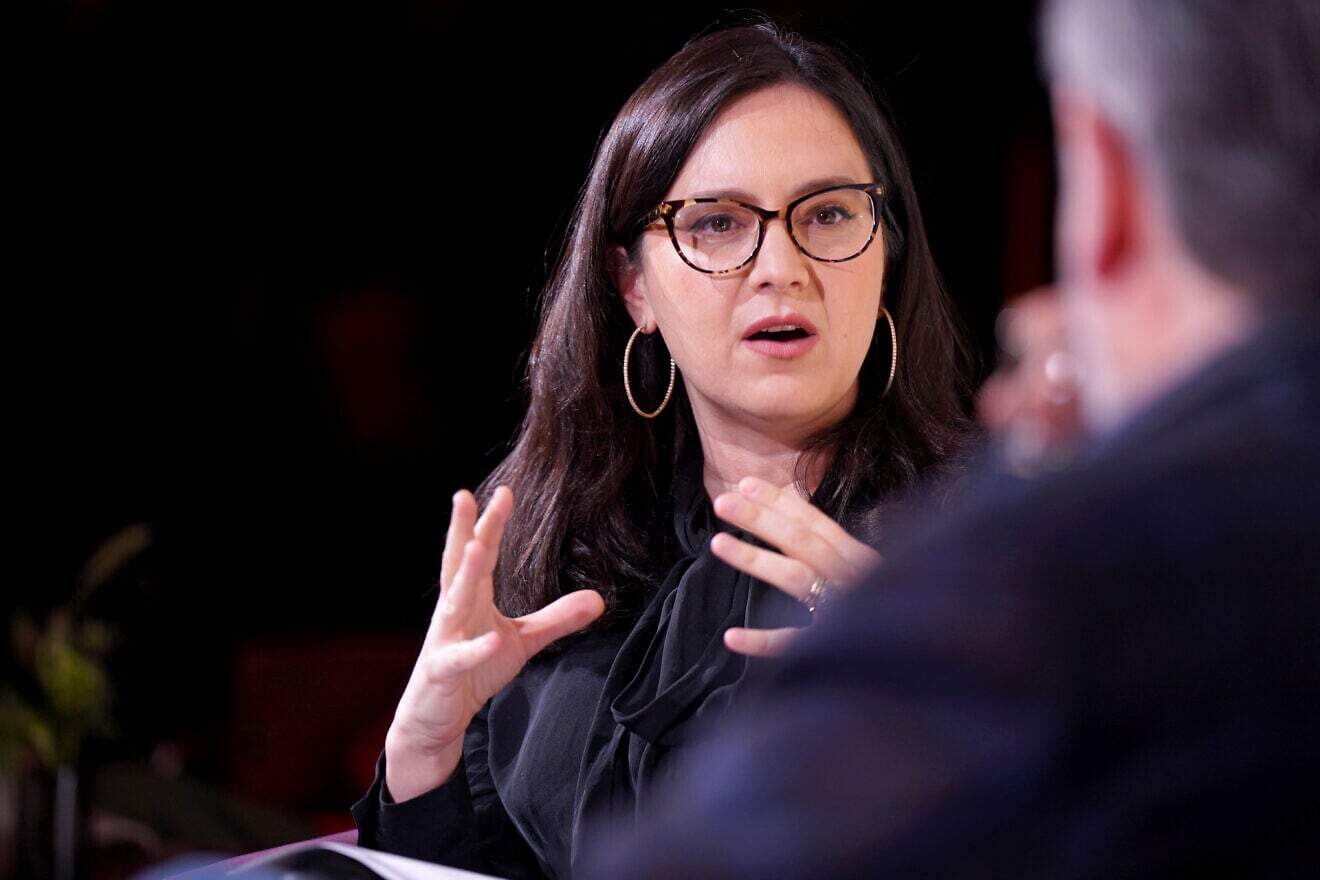
Journalist Bari Weiss hosts Sen. Ted Cruz (R-Texas) on on “The Free Press” podcast, “Honestly with Bari Weiss,” presented by Uber and X in Washington, D.C., Jan. 18, 2025. Photo by Leigh Vogel/Getty Images for Uber, X and “The Free Press.”

How does a rigidly ideological institution out of touch with mainstream opinion and laboring under the burden of its declining appeal and finances react to efforts to bring it back to the mainstream? It fights like hell to do everything to smear and sabotage the efforts of those trying to save it.

That’s the story of what is happening at CBS News in a nutshell.

Bari Weiss, 41, has been under fire since being named editor-in-chief of CBS News in October. Since then, she’s been the subject of withering criticism in a snide profile published in The New Yorker (titled “Inside Bari Weiss’s Hostile Takeover of CBS News”) and a host of other stories published elsewhere in liberal media, in which scores of anonymous disgruntled CBS News employees have been quoted depicting her as an ignorant, biased wrecking ball, determined to destroy a great institution.

No more a ‘Tiffany Network’

She’s been tasked with the job of leading CBS News from a position as the least-watched broadcast news outlet back to relevance. That won’t be easy, given that the outfit she was given command of has seemed at times to best represent the damage that progressive ideology has done to journalism.

The staff of CBS News is probably no more rigidly left-wing than that of NBC, ABC, The New York Times, The Washington Post or any other pillar of corporate media. But it has continued to act as if it is still “The Tiffany Network.” That was the nickname it got during the heyday of early television in the 1950s and ’60s, when giants like Edward R. Murrow, Walter Cronkite and others established it as the most prestigious television news outlet. At the heart of that reputation was the notion of its objectivity and reliability that Cronkite helped create with his sober, knowledgeable demeanor, even if he and everyone else at CBS leaned to the left politically.

The problem is that no one really believes that myth about the current version of CBS or any of the other liberal outlets that similarly still pretend to be practitioners of down-the-middle journalism. Like the rest of what is still considered the mainstream media, CBS has become a bastion of ideological liberalism in which dissenting views are rarely, if ever, heard.

Challenging Ta-Nehisi Coates

A key moment for CBS came in September 2024, when author Ta-Nehisi Coates was interviewed on its morning show to discuss his latest book, The Message. It’s an appalling leftist diatribe that, among other things, described his 10-day visit to “Palestine” (by which he meant Israel, and Judea and Samaria) and his false assertion that Israel is an “apartheid” state that resembles the Jim Crow South. Added to that is his belief that it should be destroyed. Though the book was published a year after the Hamas-led Palestinian terror attacks in southern Israel on Oct. 7, 2023, it never once mentioned the words terrorism or Hamas.

Coates had been treated like royalty, and his screed went largely unchallenged throughout his book tour. But that morning, Tony Dokoupil, one of the CBS morning hosts, mildly challenged Coates on the extremist nature of his writing, as well as his unwillingness to even try to listen or take into account other points of view other than his pre-existing prejudice against the Jewish state. For that offense, Dokoupil was roundly denounced by many fellow CBS staffers and forced to apologize in a struggle session-like meeting. In tapes of leaked internal meetings, executives said Dokoupil’s decision to challenge rather than fawn upon Coates didn’t meet their journalistic “standards.”

Dokoupil’s temerity went against the grain for most members of the mainstream media press. They are not only overwhelmingly liberal and opposed to President Donald Trump. They have been indoctrinated in the toxic myths of critical race theory, intersectionality and settler-colonialism that label Israel and Jews as “white” oppressors in the elite schools where most of them were educated. Like Coates, they, too, are uninterested in even pretending to be objective and have long since replaced journalism with ideologically motivated activism. That explains why most of the corporate media, like Coates, mimicked Hamas propaganda since Oct. 7.

That’s also why any idea that these outlets could be turned around and made to return to what used to pass for journalistic standards seemed like fantasy. Indeed, the Times not only has fully surrendered to woke politics; that is now part of its business plan, as it has monetized its ideological rigidity by appealing solely to the credentialed elites that now dominate the political left.

But it’s a business plan that wouldn’t work for a broadcast network like CBS. By definition, it must appeal—as it used to in its salad days when Murrow and Cronkite hosted the day’s news on camera—to broader audiences that cut across all demographic boundaries to get the ratings that would make it successful again.

The Coates-Dokoupil confrontation would be remembered when, after a corporate shake-up, ownership of the network changed hands.

Salvaging a declining network

In 2025, Paramount Global, the parent company of CBS, merged with Skydance Media, a company controlled by David Ellison, the son of billionaire Larry Ellison, founder of the Oracle technology company. As part of the process by which he won regulatory approval for the merger, Ellison promised that he would promulgate “a diversity of viewpoints from across the political and ideological spectrum.”

That was considered by some a nod to the Trump administration. But it turned out that Ellison meant it. And he proved it by tapping Weiss as editor-in-chief of the news division while also purchasing The Free Press for a staggering $150 million (instantly making Weiss a rich woman), which was folded into the same corporate umbrella as CBS.

In many ways, she is the ideal person to attempt to salvage a network mired in a historic slump, sitting in last place in the ratings wars among broadcast networks. She has a glittering résumé, including stops at The Wall Street Journal and The New York Times, before she exhibited her unmatched entrepreneurial talent by founding The Free Press in 2021, which quickly assumed a position as one of the most interesting independent outlets in the media sphere.

In the bifurcated American landscape of the 21st century where virtually everything seems to fall under the category of right-wing or left-wing, Weiss is hard to characterize neatly. She is neither. She’s a centrist who has been skeptical of President Donald Trump while also appalled by the dead hand of woke leftist ideology. She’s also a proud Jew and a supporter of the State of Israel. At the same time, she’s a gay, married woman with two children and who holds liberal views on social issues that don’t fit the stereotype of a traditional conservative.

In contemporary journalism, that still marks her as an exponent of ideas that the overwhelming majority of people who work for mainstream media despise.

Weiss had first gained notoriety as a pro-Israel activist when she was a student at Columbia University. She celebrated her bat mitzvah at Tree of Life*Or L’Simcha Synagogue in the heavily Jewish Squirrel Hill neighborhood of Pittsburgh, where a mass shooting during Shabbat-morning services in October 2018 left 11 worshippers dead. It became the entry point for How to Fight Antisemitism, a book published in 2019.

She became a symbol of the problem with contemporary journalism after she resigned from the Times in 2020. It happened following a disgraceful scandal when the editor of the opinion section was fired for publishing a piece by Sen. Tom Cotton (R-Ark.), in which he advocated for the use of federal troops to put down violent riots by Black Live Matters supporters. The leftist-dominated newsroom of the Times revolted over the idea that their newspaper had published a view that they disagreed with.

In her published letter of resignation, Weiss said the paper was run by a mob on Twitter that had been harassing her because of her willingness to write and champion articles that challenged their assumptions. She not unreasonably came to the conclusion that, given the publishers’ acquiescence to this state of affairs, staying and fighting was futile.

So she started her own popular Substack, which eventually morphed into The Free Press run by her; her journalist wife, Nellie Bowles; and her younger sister, Suzy. It became a beacon of independent thinking that challenged the shibboleths of right and left, but because it wasn’t rigidly woke has been considered conservative by liberals.

A promotion for Dokoupil

Ellison has given her the power to transform CBS into an outlet that could be considered watchable by persons other than those who are ideological leftists. As a novice to broadcast news after a long run in print and online journalism, as well as someone who was parachuted into the leadership of the organization against the will of its employees, Weiss has encountered the sort of hostility that would intimidate a less determined person. But in her characteristically bold style, she has plunged ahead, albeit with a target on her back.

Unsurprisingly, the same newsroom that was ready to pillory Dokoupil is outraged because Weiss named him to sit in Cronkite’s old chair as the anchor of the network’s nightly news program. They were also angered by her decision to bring on other non-liberal voices, like historian Niall Ferguson and podcast host Coleman Hughes, as regular commentators.

A recent decision to hold a segment on a prison in El Salvador, where illegal immigrants deported from the United States were sent, that was scheduled to run on the network’s “60 Minutes” news magazine show, turned into a major kerfuffle. The notion that asking the producers to do more reporting, including interviews with Trump administration officials, was controversial would, in any other context, be considered absurd. The same is true for her reported skepticism about the network’s DEI-like “Race and Culture” standards commissars. But every move that Weiss makes is interpreted by liberal critics as evidence that she is a right-wing hack and that Ellison is forcing the network to appease Trump to pay for the merger approval.

As someone who has never shied away from the spotlight and who has been on an astonishing ascent to the heights of her profession at a very young age, it’s understandable that Weiss would be the focus of the drama at CBS. But the importance of what is happening there far transcends her personal story. The question of whether she succeeds or fails in her current position will speak volumes about whether or not just CBS but the mainstream media as a whole can be rescued.

Partly, this is a business story. As Weiss told CBS staffers in a town hall meeting, unless they are able to speak to a broader audience than the narrow segment that exists on the left, their future as a platform is in doubt. If they don’t change, as Weiss put it, they are “toast.” The same is probably true of NBC and ABC, as well as any other liberal outlet that hasn’t found a way to monetize its ideological stance in the long run.

At a moment when institutions have become bastions of left-wing ideology, there seemed little hope that the network could be reimagined in a way that would lead them back to the center of American discourse. But Ellison’s decision to put Weiss in charge of CBS is an opportunity that provides a blueprint for how that might happen.

If it does, it will happen with virtually all of the existing staff there kicking and screaming—and with other liberals decrying it as merely corporate appeasement of Trump.

The idea that on Weiss’s watch, CBS has become an outlet for Trump is ludicrous. But that’s the point about the current culture of American journalism. Any deviation from leftist orthodoxy, like the Times publishing a critic of BLM riots or someone challenging the antisemitic rants of Ta-Nehisi Coates, is considered not merely wrong but an expression of heresy that is indistinguishable from fascism.

Left-wing resistance and antisemitism

It is also significant that all of the criticisms of Ellison and Weiss are linked to the issue of Israel and Jewishness. The stories trashing them never fail to note that they are Jewish, support Israel and concerned about antisemitism. The Free Press’s stand opposing the horrors that took place on Oct. 7, taking a dim view of Hamas propaganda and a willingness to treat Israel’s existence as not up for debate was viewed by the people who ran Weiss out of the Times—and wished to do the same to Dokoupil (whose children from his first marriage live in Israel with their mother) at CBS—is evidence that it was a reactionary and racist outlet. The fact that she has also been attacked by right-wing Israel-hater Tucker Carlson, the former Fox News host now platforming Holocaust deniers and neo-Nazis on his podcast, illustrates how the extremes unite in their Jew-hatred.

At stake is more than just the career of Weiss or whether American society will reject the surge of antisemitism enabled by the mainstream media that has happened post-Oct. 7. It is also linked to the future of American democracy, which is already being damaged by a bifurcated media environment in which most citizens no longer read, listen or watch the same media (if they pay any attention to the news at all). As a result, they confront every issue with not just different perspectives, but dissimilar sets of facts and treat any disagreement with their pre-existing opinions as unacceptable. This is the reason why our discourse has become so extreme and intolerant of differences.

Given the uniformity of views among most of the people with jobs at elite journalistic outlets, it’s far from clear that Weiss can succeed. The opprobrium being rained down on her from other mainstream media is part of a campaign that seeks to make an example of her so as to deter other corporate owners from trying the same thing. 

Still, that’s the key to understanding why her struggles at CBS have garnered so much attention. If Weiss can push CBS back to the center, the same can happen elsewhere. That will outrage the left while not pleasing many on the right, who are just as interested in avoiding views that challenge their ideas as their counterparts on the other end of the political spectrum. But it will likely make for a healthier society and political system, as well as one which will be less friendly to the sort of woke antisemitism that is routine in mainstream outlets today.
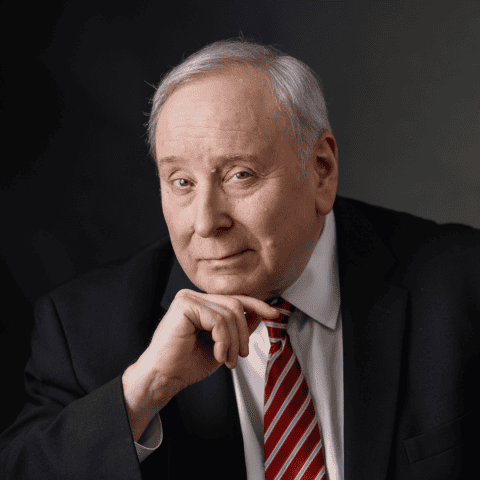

Jonathan S. Tobin is editor-in-chief of the Jewish News Syndicate, a senior contributor for The Federalist, a columnist for Newsweek and a contributor to many other publications. He covers the American political scene, foreign policy, the U.S.-Israel relationship, Middle East diplomacy, the Jewish world and the arts. He hosts the JNS “Think Twice” podcast, both the weekly video program and the “Jonathan Tobin Daily” program, which are available on all major audio platforms and YouTube. Previously, he was executive editor, then senior online editor and chief political blogger, for Commentary magazine. Before that, he was editor-in-chief of The Jewish Exponent in Philadelphia and editor of the Connecticut Jewish Ledger. He has won more than 60 awards for commentary, art criticism and other writing. He appears regularly on television, commenting on politics and foreign policy. Born in New York City, he studied history at Columbia University.


Zawartość publikowanych artykułów i materiałów nie reprezentuje poglądów ani opinii Reunion’68,
ani też webmastera Blogu Reunion’68, chyba ze jest to wyraźnie zaznaczone.
Twoje uwagi, linki, własne artykuły lub wiadomości prześlij na adres:
webmaster@reunion68.com