
Archives

Zmarł Aldrich H. Ames – uznawany za największego zdrajcę w historii CIA


Zmarł Aldrich H. Ames – uznawany za największego zdrajcę w historii CIA

Z Nowego Jorku Andrzej Dobrowolski (PAP)
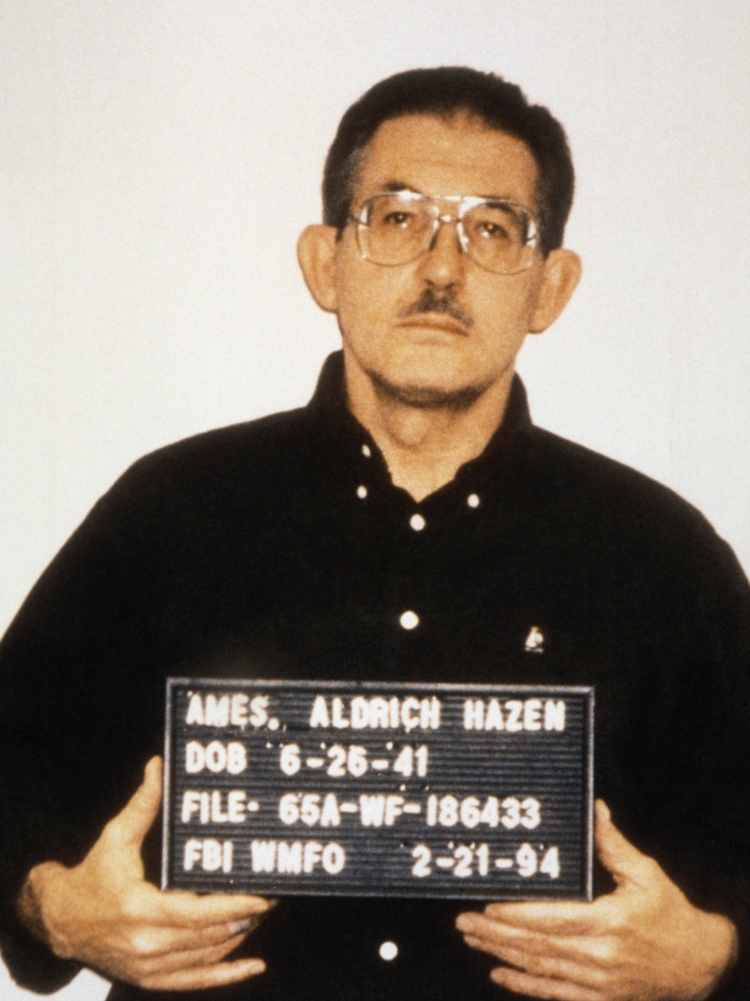

Aldrich H. Ames/Źródło: en.wikipedia

W wieku 84 lat w więzieniu federalnym w Maryland zmarł Aldrich H. Ames – funkcjonariusz CIA uznawany za najbardziej szkodliwego zdrajcę w historii agencji. Sam przyznał, że głównym motywem jego działania były pieniądze.

Jak podkreślił we wtorek „Washington Post”, szpiegostwo Amesa na rzecz ZSRR, a później Rosji, doprowadziło do dekonspiracji niemal wszystkich agentów CIA i służb sojuszniczych działających w Związku Sowieckim oraz krajach Układu Warszawskiego. Według władz USA jego działalność spowodowała śmierć co najmniej 10 osób oraz doprowadziła do zniszczenia setek operacji wywiadowczych.

Ames zmarł w poniedziałek. Jak wielokrotnie powtarzał, do zdrady pchnęła go chęć zysku. – Problemy finansowe, natychmiastowe i ciągłe – wyznał podczas przesłuchań.

Od 1985 roku szpieg przekazywał Moskwie nazwiska agentów, szczegóły operacji oraz „ogromną liczbę informacji o polityce zagranicznej, obronnej i bezpieczeństwa Stanów Zjednoczonych”. W zamian otrzymał ponad milion dolarów w gotówce, a obiecano mu co najmniej kolejne dwa miliony oraz nieruchomość w Rosji. Już przy pierwszym kontakcie z ambasadą sowiecką w Waszyngtonie zainkasował 50 tys. dolarów za ujawnienie tożsamości dwóch agentów.

Według waszyngtońskiego dziennika Ames argumentował, że pieniądze nie były jedynym powodem, dla którego potrafił usprawiedliwić swoje czyny przed samym sobą. Podczas rozmowy z dziennikarzami „WP” w więzieniu w Aleksandrii, w stanie Wirginia, przeprowadzonej dziewięć tygodni po aresztowaniu, przypisał swoją gotowość do popełnienia zbrodni – która według prokuratorów „spowodowała śmierć ludzi” – specyficznej mentalności, ukształtowanej na długo przed rozpoczęciem współpracy z Sowietami.

Jego kariera w wywiadzie i kontrwywiadzie trwała łącznie 31 lat. Pod przykrywką urzędnika Departamentu Stanu w rzeczywistości pracował dla CIA. Według „WP” Ames był wyraźnie dumny z wagi informacji, które oferował Moskwie.

– Osobom w byłym Związku Sowieckim i innych miejscach, które mogły ucierpieć w wyniku moich działań, wyrażam najgłębsze współczucie, a nawet empatię – oświadczył cynicznie.

Twierdził, że podwójne życie wymusiło na nim rozdzielenie myślenia na dwie odrębne sfery.

– Mam skłonność do wkładania takich spraw do oddzielnych pudełek, odizolowania uczuć i myśli. Czułem, że sprzedając tych ludzi, wystawiam na ten sam los samego siebie – odparł, pytany o to, jak mógł zdradzić kraj i narazić współpracowników na śmierć.

„Washington Post” podkreślił, że Ames do końca minimalizował znaczenie wyrządzonych szkód. – Te wojny szpiegów to poboczny spektakl, który nie miał realnego wpływu na nasze kluczowe interesy bezpieczeństwa – ocenił.

W momencie rozpoczynania szpiegowskiego procederu Ames był w trakcie rozwodu z pierwszą żoną, Nancy Segebarth (również pracowniczką CIA), i wiązał się z Marią del Rosario Casas, która później została jego żoną. Podczas ogłoszenia wyroku w 1994 roku Rosario nie kryła emocji, płacząc na sali sądowej.

Ames został skazany na dożywocie bez możliwości ubiegania się o zwolnienie warunkowe. Rosario, oskarżona o współudział, otrzymała wyrok pięciu lat więzienia. Po czterech latach wyszła na wolność i wróciła do syna w Kolumbii.


Zawartość publikowanych artykułów i materiałów nie reprezentuje poglądów ani opinii Reunion’68,
ani też webmastera Blogu Reunion’68, chyba ze jest to wyraźnie zaznaczone.
Twoje uwagi, linki, własne artykuły lub wiadomości prześlij na adres:
webmaster@reunion68.com



Mamdani’s ‘Affordability’ Grift


Mamdani’s ‘Affordability’ Grift

Armin Rosen


Nothing’s getting cheaper, folks

New York mayoral candidate Zohran Mamdani holds up a campaign shirt as he prepares to board the subway on March 24, 2025 in New York City / Michael M. Santiago/Getty Images

For many Americans, the issue of greatest salience has nothing to do with the Middle East, the groyper menace, or Jeffrey Epstein. Rather, it has to do with the reasonable concern that they soon won’t be able to afford the life they’re currently living.

The University of Michigan’s Index of Consumer Sentiment is at its lowest level since the inflation summer of 2022 and is currently three-tenths of a percentage point away from its 50-year nadir. Some theorize that we are now in a “K-shaped economy … with confidence declining among consumers making an annual income of less than $75,000, but consumers earning more than $200,000 a year more upbeat,” according to a Reuters report from last month. It is high earners that are keeping the economy on stable footing, but these represent a minority of Americans: Some 80% of the country lives in households that make less than $200,000 a year.

Affordability is rapidly becoming the country’s major political watchword. In recent days, President Donald Trump has removed the tariffs he earlier imposed on more than 200 imported food items and assured an annual summit of McDonald’s executives and franchisees that his administration would tackle the country’s high cost of living. In giving a speech on affordability at a gathering of leaders of the downmarket fast-food industry—a sector famously sensitive to spending changes among America’s unwealthy majority—Trump is picking up the major themes of Zohran Mamdani’s winning mayoral campaign in New York earlier this month.

As a result of their sincere belief in an embittered caricature of their socio-economic predicament, the Mamdanians probably just voted for an even more warped and expensive rental market.

American city-dwellers are especially justified in fearing the economy is about to collapse on them. The all-item urban consumer price index has climbed from 262 in January 2021 to 324 this past September, with the primary residence rent index rising from 344 to 438 over the same period, according to the Federal Reserve Bank of St. Louis. One possible takeaway from Zohran’s leap from backbencher state assemblyman to mayor of New York City is that voters tend to reward the one person in an election who makes a good enough show of honestly caring about their real-life concerns, regardless of the substance of the policies on offer. This fantastic ability to buck the limits of the current politics in identifying and articulating a deeply felt problem, joined to almost slapstick inadequacy at solving the problem in question, is an obvious common point between Mamdani and Trump. In fact, the president has already said he is looking forward to eventually meeting the incoming socialist mayor of his hometown.

Mamdani’s centerpiece affordability proposal is additional rent control in what’s already perhaps the most regulated major rental market in America, “freeze the rent” being the “hope and change” of the 2025 New York mayoral vote. But in a new essay for The Free Press, author and Manhattan property manager Matt Miller elucidates the dangers of populist affordability politics. As Miller explains, even pre-Mamdani, New York laws limited monthly rent increases on regulated units to “between 1/144th and 1/180th of what you spend on improvements … and only on the first $30,000 or $50,000 of costs,” meaning it takes 12 to 15 years for a landlord to recuperate the expense of bringing a unit back to market. As a result, some 50,000 rent-controlled New York City apartments are now empty, a whopping 2.5% of the rental stock in a city with a 1.2% vacancy rate—and this is before Mamdani’s promised freeze on regulated rents makes it even harder for building operators to stay above water. Miller used the example of a recently deceased Manhattan tenant to show the near impossibility of bringing rent-regulated units back online, even now, before Mamdani’s been sworn in:

For existing tenants, rents on stabilized units rise according to the annual increases allowed by the city’s Rent Guidelines Board. In 1984, my tenant’s rent was $300.15 a month. When he died in 2021, he was paying $880.53 a month. Typically, studios in that area can rent for $3,000, even with pretty basic renovations.

According to the board, the average cost to operate an apartment in a rent-stabilized Manhattan building built before 1974 was $1,560 a month, not including mortgage payments. Rounding for simplicity’s sake and assuming that I did $50,000 of renovations, that maximum legal rent on this apartment would only increase to about $1,230. After all the work was done, I would still be upside down each month on that apartment.

Since New York property owners usually have both regulated and unregulated units in their portfolios—sometimes in the same building—tenants in those $3,000-a-month nonregulated units effectively subsidize the rent-controlled tenants, who are locked into spectacular deals for the entirety of their lives and their children’s lives. Roughly half of the city’s rental supply is under some form of rent control, and though losing mayoral candidate Andrew Cuomo never got around to mentioning it during the campaign, one person’s rent freeze is necessarily another person’s rent hike.

The people living under rent control aren’t safe from its consequences either. If operating a regulated residential building is no longer profitable, owners will either bring units offline or sell their buildings to institutions that can wait out the Mamdani era, like investment banks or private equity concerns. The result will be an illiquid rental market in which it will be more difficult for New Yorkers to find new housing when they want it or require it. Meanwhile, the quality of the regulated housing stock will deteriorate as landlords lose the financial ability or the motivation to maintain their buildings. It’s not as if an unregulated $4,000-a-month New York apartment is especially luxurious. You could find your magical 600 square feet on a postcard block in Prospect Heights and still go to bed each night wondering when in the early morning that clanging heating system installed in the 1910s is going to wake you up.

Affordability mania risks creating a politics of resentment, made even more toxic by the reality and urgency of the issue itself. In New York, Mamdani voters believed their man could shift the costs of city life from their own pockets to New York’s allegedly thieving class of owners and landlords, demons who care only about profiting off of the stolen dreams of their renters. As a result of their sincere belief in this embittered caricature of their socio-economic predicament, the Mamdanians probably just voted for an even more warped and expensive rental market.

Mamdani’s affordability politics also pits somewhat arbitrarily assigned groups of renters against one another. As Miller hints, one of the more perverse things about New York rent control is that it isn’t really needs-tested: His rent-stabilized tenants have included “classical pianists, opera singers, writers, [and] politicians,” as well as “a carousel of deadbeats, tech bros, people who bring home different ‘dates’ each night of the week, and a Venezuelan political activist.” None of these people sound like they’re grifting the system—but they did enjoy a privilege that not every New Yorker has. Under the banner of “freeze the rent,” Mamdani promised to lock in the existing advantages of people lucky enough to currently live in a rent-controlled apartment, while subjecting nonregulated renters to an even more distorted market. The latter category of New Yorker might want to start looking for options elsewhere. Maybe Argentina?

According to a March article in Reason magazine, President Javier Milei’s elimination of sweeping rent-control laws resulted in a near-instant 180% increase in the number of Buenos Aires rentals listed on the country’s leading online real-estate portal, as well as in a fall in inflation-adjusted rents and a decrease in renters stuck in “short-term workarounds.” Many New Yorkers know the special hell of having to move every 18 months through no particular fault of their own, with life in the city always in danger of becoming an unending slog of short-term workarounds. Could rent control be to blame for that, too? Sadly, this is a question our new mayor was more or less elected not to ask.


Armin Rosen is a staff writer for Tablet Magazine.


Zawartość publikowanych artykułów i materiałów nie reprezentuje poglądów ani opinii Reunion’68,
ani też webmastera Blogu Reunion’68, chyba ze jest to wyraźnie zaznaczone.
Twoje uwagi, linki, własne artykuły lub wiadomości prześlij na adres:
webmaster@reunion68.com


Greta Thunberg’s Terrorist Friends


Greta Thunberg’s Terrorist Friends

Moshe Phillips


Greta Thunberg and UN special rapporteur Francesca Albanese in an embrace with a Hamas terrorist in the artwork “Human Shields” by AleXsandro Palombo. Photo: Provided

In late December, perennial protester Greta Thunberg was arrested in London while holding a sign that read, “I SUPPORT PALESTINE ACTION PRISONERS” and “I OPPOSE GENOCIDE.”

Thunberg was quickly released and was later seen at another protest that evening, where she was reportedly shouting, “support the hunger strikers.” Palestine Action radicals began a hunger strike in jail on November 2.

News reports did little to explain what Palestine Action is and what crimes their extremists had committed.

Far too many in the UK have also seemed eager to give Palestine Action a pass. This has led to serious frustration from those who have taken the time to understand what Palestine Action is really all about.

For example, Security Minister Dan Jarvis stated the following to the House of Commons on September 8:

Some of those holding placards in support of Palestine Action may not know the extent of its activities. It has conducted an escalating campaign involving intimidation and sustained criminal damage, including to Britain’s national security infrastructure. Some of its attacks have involved the use of weapons, resulting in alleged violence and serious injuries to individuals. Palestine Action’s members have been charged with violent disorder, grievous bodily harm with intent, actual bodily harm, criminal damage and aggravated burglary — charges that include, in the assessment of the independent Crown Prosecution Service, a terrorism connection.

A June news report from the London Telegraph stated that “members of the organisation were ‘spreading intifada,’ an Arabic word for uprising. This week, The Telegraph revealed that Palestine Action was plotting to target RAF bases across the country in a wave of attacks.”

Palestine Action knows exactly what it means when they say “spreading intifada.” During a now notorious Palestine Action attack on police during a 2024 break-in, one Palestine Action militant hit a female police sergeant named Kate Evans with a sledgehammer in the back, causing a severe spinal injury. A second policeman, named Aaron Buxton, was also hit with a sledgehammer.

Greta Thunberg’s blood libel that Israel is committing genocide also needs addressing. The lie on her sign is a fabrication that Palestine Action extremists traffic in. The Palestine Action website also features Holocaust inversion, which is a particularly disgusting form of Jew-hatred that falsely portrays Israel and Jews as Nazis, diminishes the historical nature of the Holocaust, and spreads the blood libel that Israel is committing genocide.

Kamran Ahmed is prominently featured on the Palestine Action website, and is in a British jail for reportedly causing over $1.3 million in damage at an Israeli company’s research facility in South Gloucestershire in August 2024 after committing an illegal break-in. Palestine Action portrays its terrorism and property destruction as necessary to stop what they label as Israeli war crimes. The Palestine Action site quotes Ahmed as saying, “You spit on the face of Anne Frank, who wished someone would put a halt to that genocide (Holocaust).”

Palestine Action and Kamran Ahmed did not develop their Holocaust denial on their own. Palestinian Authority President Mahmoud Abbas was a key initiator of Holocaust distortion, Holocaust inversion, and Holocaust denial in the Arab world.

In 2022, German Chancellor Olaf Scholz sharply criticized Abbas after he claimed that Israel had committed “50 Holocausts.” Scholz stated that he was “disgusted by the outrageous remarks” and that “for us Germans, in particular, any relativisation of the singularity of the Holocaust is intolerable and unacceptable.” Going further, Scholz said, “I condemn any attempt to deny the crimes of the Holocaust.”

From Mahmoud Abbas’ Holocaust distortion to Greta Thunberg’s reckless endorsement, influential figures are lending cover to a movement that thrives on violence and lies. Palestine Action’s activists are not victims or “political prisoners” — they are criminals, and they are exactly where they belong: in jail. Excusing their actions only rewards Jew-hatred and undermines the rule of law.


Moshe Phillips is national chairman of Americans For A Safe Israel, AFSI, (www.AFSI.org), a leading pro-Israel advocacy and education organization.


Zawartość publikowanych artykułów i materiałów nie reprezentuje poglądów ani opinii Reunion’68,
ani też webmastera Blogu Reunion’68, chyba ze jest to wyraźnie zaznaczone.
Twoje uwagi, linki, własne artykuły lub wiadomości prześlij na adres:
webmaster@reunion68.com


Po masakrze w Bondi. Australijski stan chce uznać antyizraelskie hasło za mowę nienawiści

Krewni jednej z ofiar masowej strzelaniny, która miała miejsce w niedzielę podczas obchodów żydowskiego święta na plaży Bondi w Sydney w Australii, 16 grudnia 2025 r. (Fot. REUTERS/Hollie Adams)


Po masakrze w Bondi. Australijski stan chce uznać antyizraelskie hasło za mowę nienawiści

Michał Kokot


Jedno z wezwań, którymi posługują się środowiska antyizraelskie, ma zostać wpisane do kodeksu karnego w stanie Nowa Południowa Walia. Tydzień temu dwóch islamistów zastrzeliło tam 15 osób.

Na Bondi, najsłynniejszej plaży Australii, w ubiegłą niedzielę (14.12) dwóch mężczyzn (ojciec i syn) zastrzeliło 15 osób i raniło kolejnych 39 podczas festiwalu żydowskiego. Sprawcy mieli, zdaniem policji, inspirować się Państwem Islamskim. Ich najmłodsza ofiara miała 10 lat.

Była to największa masakra od 1996 roku. Wówczas uzbrojony sprawca w Port Arthur na Tasmanii zabił 35 osób i ranił 24. Australia dyskutowała wtedy o ograniczeniu dostępu do broni, skupując w ramach ogólnokrajowego programu tysiące ich sztuk.

Podobne działania władze podejmują teraz, tłumacząc to “walką z ekstremizmem”. 

Chris Minns, premier Nowej Południowej Walii, wzywa do powołania komisji królewskiej w sprawie ataku. Zapowiada na przyszły tydzień zwołanie parlamentu stanowego, by uchwalić surowsze przepisy dotyczące mowy nienawiści i ograniczenia dostępu do broni palnej. Potwierdził, że będzie chciał, aby hasło „globalizuj intifadę” zostało sklasyfikowane jako element mowy nienawiści. 

Sugeruje też zaostrzenie przepisów w sprawie zgromadzeń publicznych, by Australia mogła cieszyć się „spokojnym latem”. 

Australijczycy czczą pamięć ofiar strzelaniny

W niedzielę (21.12) cały kraj będzie obchodzić dzień żałoby narodowej, który o godz. 18:47 czasu lokalnego zostanie uczczony minutą ciszy. Tego dnia wszystkie flagi zostaną opuszczone do połowy masztów, a Australijczycy zostaną poproszeni o zapalenie świeczek w oknach, aby uczcić pamięć ofiar. 

To chwila, w której będziemy mogli zastanowić się i potwierdzić, że nienawiść i przemoc nigdy nie będą definiować nas jako Australijczyków

– powiedział Anthony Albanese, premier Australii. 

W sobotę (19.12) tysiąc australijskich ratowników wodnych utworzyło łańcuch, zwracając się w stronę oceanu. Setki pływaków i surferów (sport, którego dzieci w Australii uczą się od najmłodszych lat szkolnych) wypłynęło na wodę przed plażę Bondi, tworząc ogromny krąg i oddając cześć ofiarom strzelaniny. 

Rekordowa ilość broni palnej w Australii

Rząd ogłosił narodowy plan skupowania broni, podobny do tego, jaki został ogłoszony przed trzydziestoma laty po ataku w Port Arthur. Setki tysięcy sztuk broni mają zostać najpierw odkupione, a następnie zniszczone przez władze federalne, jak i stanowe. Rozważane jest również zaostrzenie prawa do jej posiadania.

Sprawcy ataku w Bondi mieli zarejestrowanych sześć sztuk broni palnej. W całym kraju są dzisiaj cztery miliony zarejestrowanych sztuk broni palnej  – więcej niż podczas masakry w 1996 roku.


Redagował Michał Olszewski


Zawartość publikowanych artykułów i materiałów nie reprezentuje poglądów ani opinii Reunion’68,
ani też webmastera Blogu Reunion’68, chyba ze jest to wyraźnie zaznaczone.
Twoje uwagi, linki, własne artykuły lub wiadomości prześlij na adres:
webmaster@reunion68.com


Mamdani Called ‘Tone-Deaf’ After Deleting Posts About Combating Antisemitism on First Day in Office as NYC Mayor


Mamdani Called ‘Tone-Deaf’ After Deleting Posts About Combating Antisemitism on First Day in Office as NYC Mayor

Shiryn Ghermezian


New York City Mayor Zohran Mamdani delivers a speech during his inauguration ceremony in New York City, US, Jan. 1, 2026. Photo: REUTERS/Kylie Cooper

Newly inaugurated New York City Mayor Zohran Mamdani is facing backlash from a Jewish nonprofit organization for removing some social media posts about the city’s fight against antisemitism from the official mayoral account on X.

The National Jewish Advocacy Center (NJAC) called it “tone-deaf” and “shameful” that Mamdani, 34, deleted two X posts that were uploaded by his predecessor Eric Adams’ administration hours before the new mayor was sworn in and took over the account on Thursday.

On Wednesday morning, during his last day in office, Adams posted on City Hall’s official mayoral X account a thread of three posts that discuss the city’s “first-ever municipal report” on efforts to combat antisemitism. Adams said the “bold” and “detailed” report is a “blueprint for 2026.”

On Thursday, after Mamdani took office and control of the account, two posts within the thread were removed and a notice was written that said: “This Post was deleted by the Post author.” The final post in the thread that was not deleted reads: “This administration put the tools into place to protect Jewish New Yorkers and fight hate. We’re calling on every elected official to do the same.”

A member of the far-left Democratic Socialists of America, Mamdani is the first Muslim to be New York City’s mayor and the city’s first mayor to be sworn in using a Quran. A supporter of boycotting all entities tied to Israel, he has repeatedly refused to recognize Israel’s right to exist as a Jewish state; routinely accused Israel of “apartheid” and “genocide”; and refused to clearly condemn the phrase “globalize the intifada,” which has been used to call for violence against Jews and Israelis worldwide.

“It is difficult to overstate how disturbing it is that one of your very first acts as Mayor of New York City, on your very first day in office, was to delete official @NYCMayor tweets addressing the protection of Jewish New Yorkers,” NJAC began by saying in a letter on Thursday that was addressed to Mamdani. The letter was shared on social media by the nonprofit organization’s director Mark Goldfeder. It was sent to Mamdani, Department of Investigation Commissioner Jocelyn Strauber, and the Conflicts of Interest Board Executive Director Carolyn Miller, according to the Goldfeder.

“At a moment of unprecedented antisemitic intimidation, violence, and exclusion in the city, the decision to erase official statements affirming the safety and protection of Jews is not merely tone-deaf, it is shameful,” the letter further stated. “It sends a message, whether intended or not, that Jewish New Yorkers are uniquely underserving of continuity, clarity, or reassurance from their own government.”

The letter also noted that deleting posts from the mayoral X account without first preserving them in the City’s official archive may violate both state law as well as the New York City Charter, since all social media posts from that account are considered part of official public record. The Jewish organization demanded that Mamdani “restore or reissue” a clear statement affirming the city’s commitment to protecting Jewish New Yorkers “not as a favor, but as a fundamental obligation of office.”

“Even if they were archived, the choice to delete statements specifically addressing Jewish safety on Day One invites scrutiny and erodes public trust,” the letter explained. “Selective removal of official statements concerning the protection of Jewish New Yorkers – particularly if comparable statements regarding other communities were retained – raises concerns of viewpoint discrimination and unequal treatment, and risks eroding constitutional norms that require government neutrality and equal concern for all protected groups.”

“New York City’s mayoralty is an institution, not a social-media account to be curated for convenience or optics. The record matters, the law matters, and the safety and dignity of Jewish New Yorker’s most certainly matter,” the letter stated in conclusion. “Your first days in office will define your administration. This is not how that definition should begin.”

Mamdani spokesperson Dora Pekec told the New York Post the deleted posts are being archived and were not singled out because of their content.

“The mayor’s team has begun archiving posts from the @NYCMAYOR account that were published by the previous administration, in chronological order,” Pekec said in a statement. “This ongoing process is administrative in nature and is not based on the content of the posts. The mayor remains steadfast in his commitment to root out the scourge of antisemitism in our city and will deliver on his commitment to renewing the Mayor’s Office to Combat Antisemitism and increasing funding for the Office for the Prevention of Hate Crimes by 800 percent.”

Hours after taking office, Mamdani formally revoked all executive orders issued by the previous administration since Sept. 26, 2024, when Adams was indicted for corruption, charges of which have since been dismissed. As part of Mamdani’s move, he tossed out the city’s adoption of the International Holocaust Remembrance Alliance’s (IHRA) definition of antisemitism. However, Mamdani announced the same day that he will keep the Mayor’s Office to Combat Antisemitism, which was recently created by Adams.

“That is an issue that we take very seriously, and as part of the commitment that we’ve made to Jewish New Yorkers, to not only protect them, but to celebrate and cherish them,” he said on Thursday.


Zawartość publikowanych artykułów i materiałów nie reprezentuje poglądów ani opinii Reunion’68,
ani też webmastera Blogu Reunion’68, chyba ze jest to wyraźnie zaznaczone.
Twoje uwagi, linki, własne artykuły lub wiadomości prześlij na adres:
webmaster@reunion68.com