
Archives

Izrael wypędza kilkadziesiąt organizacji wspierających Palestyńczyków. Tłumaczy się bezpieczeństwem


Izrael wypędza kilkadziesiąt organizacji wspierających Palestyńczyków. Tłumaczy się bezpieczeństwem

Marta Urzędowska


Palestyńska kobieta zbiera wodę w pobliżu gruzów budynków mieszkalnych zniszczonych podczas wojny, w sylwestra w Dżabalii, na północy Strefy Gazy, 31 grudnia 2025 r. (Fot. REUTERS/Mahmoud Issa)

Władze Izraela cofnęły licencje 37 organizacjom pomocowym, w tym Lekarzom Bez Granic, CARE i Norwegian Refugee Council.

O swojej decyzji izraelskie władze poinformowały we wtorek (30.12). Tłumaczą, że odbierają licencje 37 organizacjom, w tym najlepszym światowym specom od pomagania, bo nie spełniają wymogów wynikających z nowych izraelskich zasad rejestracji.

Wśród organizacji, którym Izraelczycy zakazują dziś pomagać w Strefie Gazy i na Zachodnim Brzegu są tacy giganci światowej pomocy humanitarnej jak Lekarze bez Granic, ActionAid, Norwegian Refugee Council, CARE, czy International Rescue Committee.

Izraelczycy o zawieszeniu działalności organizacji pomocowych: Bez wpływu

Choć od dekad skutecznie wspierają ofiary wojen i katastrof na całym świecie, Izrael dziś zawiesza im licencje na pracę na terenach palestyńskich, co oznacza, że 1 stycznia mają przestać działać, a do początku marca muszą całkowicie wynieść się z tych terenów.

Izraelskie ministerstwo ds. diaspory, które odpowiada za rejestracje NGO’sów, wyjaśnia, dlaczego wymienione organizacje straciły licencje. „Powodem ich zawieszenia jest odmowa dostarczenia kompletnych i możliwych do zweryfikowania informacji dotyczących ich pracowników – czytamy w oświadczeniu resortu. – A to kluczowe, by zapobiegać infiltracji terrorystów w struktury pomocy humanitarnej” – dodają Izraelczycy.

Hesham Badawi, Palestyńczyk, niesie szczątki transporterów opancerzonych obok zniszczonych budynków po izraelskich działaniach wojskowych w mieście Gaza, 25 listopada 2025 r. Fot. REUTERS/Dawoud Abu Alkas

Jednocześnie ministerstwo zapewnia, że nowe zasady nie wpłyną na dostarczanie pomocy humanitarnej Palestyńczykom, bo będzie ona nadal płynęła „sprawdzonymi i zatwierdzonymi kanałami”, w tym – za pośrednictwem agend ONZ i innych organizacji, które nie straciły licencji.

– Nasz przekaz jest jasny: chętnie przyjmujemy pomoc humanitarną. Ale nie wykorzystywanie humanitarnych ram przez terrorystów – kwituje w oświadczeniu szef resortu Amichai Chikli.

Mieszkańcy Gazy rozpaczliwie potrzebują pomocy. Koczują w namiotach, nie mają opieki medycznej

Decyzja uderzy w mieszkańców Strefy Gazy, gdzie trwa kruchy rozejm przerywający dwuletnią krwawą wojnę Izraela z Hamasem. Mieszkańcy Gazy nadal koczują w namiotach mimo zimna i deszczu, bo większość budynków w Gazie została zniszczona przez izraelską armię.

Nadal pozostają też niedożywieni, bo po dwóch latach dramatycznych ograniczeń w dostarczaniu pomocy, Izraelczycy konsekwentnie wpuszczają jej za mało, a – jak przekonują eksperci od pomagania – walka ze skutkami głodu i niedożywienia, szczególnie w przypadku dzieci, potrwa latami. Na początku grudnia eksperci ONZ informowali, że choć nastąpiła poprawa w poziomie dostarczania jedzenia do Gazy, nadal co najmniej 100 tys. osób jest w „katastrofalnej” sytuacji.

Palestyńczycy mają też mocno ograniczone dostęp do pomocy medycznej, bo większość szpitali i przychodni została zniszczona w czasie wojny.

Protestują MSZ krajów pochodzenia: Izraelskie przepisy nie do przyjęcia

Decyzja o cofnięciu licencji została ostro skrytykowana przez ministerstwa spraw zagranicznych dziesięciu krajów, z których pochodzą organizacje. We wspólnym oświadczeniu szefowie dyplomacji Wielkiej Brytanii, Francji, Kanady, Danii, Finlandii, Islandii, Japonii, Norwegii, Szwecji i Szwajcarii oburzają się, że nowe zasady wprowadzone przez Izraelczyków są

„restrykcyjne” i „niemożliwe do zaakceptowania”.

Dodają, że wymuszone zamknięcie operacji tak wielu organizacji będzie miało „bardzo poważny wpływ na dostęp do podstawowych usług, w tym do opieki zdrowotnej”.

Przypominają, że sytuacja humanitarna w Strefie Gazy pozostaje „katastrofalna” i wzywają Izrael, by wycofał się ze swojej decyzji i umożliwił organizacjom działanie w „stały i przewidywalny sposób”.

„Jakiekolwiek próby utrudniania im działalności są nie do przyjęcia. Bez ich pomocy sprostanie potrzebom mieszkańców na taką skalę będzie niemożliwe” – dodają.

Lekarze bez Granic w oświadczeniu wydanym we wtorek protestują przeciwko izraelskiej decyzji. „Będzie miała katastrofalne konsekwencje dla Palestyńczyków – alarmują, dodając, że w tej chwili ich organizacja zapewnia 20 proc. łóżek szpitalnych w Gazie i bezpieczny poród jednej trzeciej dzieci.

Izraelski Cogat, agencja rządowa kontrolująca granice z Gazą, odpowiada, że to przesada, bo organizacje, które z końcem grudnia tracą licencje, w niewielkim stopniu pomagają Palestyńczykom. „Decyzja rządu nie oznacza żadnego zmniejszenia pomocy humanitarnej wpuszczanej do Gazy” – przekonuje agencja.

Forum skupiające NGO’sy: Izraelski system mętny i upolityczniony

Oficjalnie licencję na pomaganie Palestyńczykom, można stracić zatrudniając osoby, które odmawiają Izraelowi prawa do istnienia jako państwo żydowskie i demokratyczne; zaprzeczają, że miał miejsce Holocaust albo, że Hamas jesienią 2023 r. zaatakował Izrael; wspierają walkę z Izraelem; promują antyizraelskie kampanie; wzywają do bojkotowania Izraela albo popierają ściganie Izraelczyków w zagranicznych lub międzynarodowych sądach.

Humanitarny Zespół ds. Okupowanych Terenów Palestyńskich, czyli forum skupiające agendy ONZ i ponad dwieście miejscowych i międzynarodowych organizacji pomocowych, ostrzega, że nowy system „fundamentalnie naraża” działania NGO’sów w Gazie i na Zachodnim Brzegu.

„Opiera się na mętnych, arbitralnych i mocno upolitycznionych kryteriach i narzuca wymogi, których organizacje humanitarne nie mogą spełnić bez naruszania swoich prawnych zobowiązań albo rezygnowania z zasad świadczenia pomocy humanitarnej” – brzmi oświadczenie zespołu.

Izraelczycy nie pierwszy raz oskarżają organizacje pomocowe o konszachty z terrorystami. W czasie wojny w Gazie wielokrotnie formułowały podobne oskarżenia pod adresem agend ONZ i innych organizacji, w tym Lekarzy bez Granic.


Redagowała Alicja Lehmann


Zawartość publikowanych artykułów i materiałów nie reprezentuje poglądów ani opinii Reunion’68,
ani też webmastera Blogu Reunion’68, chyba ze jest to wyraźnie zaznaczone.
Twoje uwagi, linki, własne artykuły lub wiadomości prześlij na adres:
webmaster@reunion68.com


Israel, Leading Jewish Groups Blast Mamdani for Scrapping Executive Orders Created to Fight Antisemitism


Israel, Leading Jewish Groups Blast Mamdani for Scrapping Executive Orders Created to Fight Antisemitism

Corey Walker


New York City mayor-elect Zohran Mamdani holds a press conference at the Unisphere in the Queens borough of New York City, US, Nov. 5, 2025. Photo: REUTERS/Kylie Cooper

The Israeli government and leading US Jewish groups sharply criticized newly inaugurated New York City Mayor Zohran Mamdani after he used his first day in office on Thursday to revoke a series of executive orders enacted by his predecessor to combat antisemitism, arguing the moves have weakened protections for Jews.

Among the most controversial actions was Mamdani’s decision to revoke New York City’s adoption of the International Holocaust Remembrance Alliance’s (IHRA) working definition of antisemitism, a framework widely used by governments and law enforcement to identify contemporary antisemitic behavior, including some forms of anti-Zionist rhetoric.

Israel’s Foreign Ministry lambasted the move as an invitation for intensified bigotry against Jewish New Yorkers.

“On his very first day as New York City mayor, Mamdani shows his true face: He scraps the IHRA definition of antisemitism and lifts restrictions on boycotting Israel. This isn’t leadership. It’s antisemitic gasoline on an open fire,” the ministry posted on social media on Friday.

IHRA — an intergovernmental organization comprising dozens of countries including the US and Israel — adopted the “working definition” of antisemitism in 2016. Since then, the definition has been widely accepted by Jewish groups and lawmakers across the political spectrum, and it is now used by hundreds of governing institutions, including the US State Department, European Union, and United Nations,

According to the definition, antisemitism “is a certain perception of Jews, which may be expressed as hatred toward Jews. Rhetorical and physical manifestations of antisemitism are directed toward Jewish or non-Jewish individuals and/or their property, toward Jewish community institutions and religious facilities.” It provides 11 specific, contemporary examples of antisemitism in public life, the media, schools, the workplace, and in the religious sphere. Beyond classic antisemitic behavior associated with the likes of the medieval period and Nazi Germany, the examples include denial of the Holocaust and newer forms of antisemitism targeting Israel such as demonizing the Jewish state, denying its right to exist, and holding it to standards not expected of any other democratic state.

The definition could have been problematic for Mamdani, a far-left democratic socialist and avowed anti-Zionist who has made anti-Israel activism a cornerstone of his political career and been widely accused of promoting antisemitic rhetoric. A supporter of boycotting all entities tied to Israel, he has repeatedly refused to recognize Israel’s right to exist as a Jewish state; routinely accused Israel of “apartheid” and “genocide”; and refused to clearly condemn the phrase “globalize the intifada,” which has been used to call for violence against Jews and Israelis worldwide.

Leading members of the Jewish community in New York have expressed alarm about Mamdani’s electoral victory, fearing what may come in a city already experiencing a surge in antisemitic hate crimes.

Beyond the IHRA definition, Mamdani also nullified an order that opposed the campaign to boycott Israel. The boycott, divestment, and sanctions (BDS) movement, which Mamdani openly supports, seeks to isolate Israel from the international community as a step toward its eventual elimination. Leaders of the movement have repeatedly stated their goal is to destroy the world’s only Jewish state.

Mamdani further revoked a directive for the New York City Police Department (NYPD) to review protests near synagogues following contentious demonstrations outside Jewish institutions last year. However, a subsequent executive order from Mamdani included similar instructions to police. The new mayor also committed to continuing the work of the Mayor’s Office to Combat Antisemitism, which was established last year.

In November, hundreds of people amassed outside a prominent New York City synagogue and clamored for violence against Jews. Mamdani issued a statement which “discouraged” the extreme rhetoric used by the protesters but did not unequivocally condemn the harassment of Jews outside their own house of worship. Mamdani’s office notably also criticized the synagogue, with his team describing the event inside as a “violation of international law.” The protesters were harassing those attending an event being held by Nefesh B’Nefesh, a Zionist organization that helps Jews immigrate to Israel, at Park East Synagogue in Manhattan.

The rollbacks were part of a broader action by Mamdani to revoke all executive orders issued by his predecessor, former Mayor Eric Adams, since Sept. 26, 2024, when Adams was indicted for corruption, charges of which have since been dismissed. Mamdani’s office has framed the move as an administrative reset rather than a targeted policy shift, saying the new mayor sought to begin his term with a clean slate.

Leading Jewish groups, including the two main community organizations in New York, rebuked Mamdani for his first steps as mayor.

“Mayor Mamdani pledged to build an inclusive New York and combat all forms of hate, including antisemitism. But when the new administration hit reset on many of Mayor Adams’ executive orders, it reversed two significant protections against antisemitism: the city’s adoption of IHRA and critical protections against the [BDS] movement against the State of Israel,” the statement read.

“While we welcome Mayor Mamdani’s executive order seeking to better protect houses of worship, and his continuation of the Mayor’s Office to Combat Antisemitism, our community will be looking for clear and sustained leadership that demonstrates a serious commitment to confronting antisemitism and ensures that the powers of the mayor’s office are used to promote safety and unity, not to advance divisive efforts such as BDS,” the statement continued. “Singling out Israel for sanctions is not the way to make Jewish New Yorkers feel included and safe, and will undermine any words to that effect. Bringing New Yorkers together and building broad coalitions will be foundational to the mayor’s ability to advance a more inclusive New York. ”

The statement was signed by the UJA-Federation of New York, the Jewish Community Relations Council of New York, the Anti-Defamation League’s office covering New York and New Jersey, the American Jewish Committee’s New York office, the New York Board of Rabbis, Agudath Israel of America, and the Orthodox Union.

Adams also criticized Mamdani’s reversals, saying they dismantle safeguards put in place following a surge in antisemitic incidents.

“@NYCMayor promised a New Era and unity today. This isn’t new. And it isn’t unity,” Adams posted on social media. “I’ve been clear: I will be vocal in defending our Jewish brothers and sisters, just as they stood up for African Americans during the civil rights era.”

New York City is home to the world’s largest Jewish population outside Israel, and its mayor traditionally plays an influential role in US–Israel relations and global Jewish affairs.

Mamdani assumed office amid an alarming surge in antisemitic hate crimes across New York City over the last two years, following the Palestinian terrorist group Hamas’s Oct. 7, 2023, massacre across southern Israel.

Jews were targeted in the majority (54 percent) of all hate crimes perpetrated in New York City in 2024, according to data issued by the NYPD. A new report released on Wednesday by the Mayor’s Office to Combat Antisemitism noted that figure rose to a staggering 62 percent in the first quarter of this year, despite Jewish New Yorkers comprising just 11 percent of the city’s population.

A Sienna Research Institute poll released in early November revealed that a whopping 72 percent of Jewish New Yorkers believe that Mamdani will be “bad” for the city. A mere 18 percent hold a favorable view of Mamdani. Conversely, 67 percent view him unfavorably.


Zawartość publikowanych artykułów i materiałów nie reprezentuje poglądów ani opinii Reunion’68,
ani też webmastera Blogu Reunion’68, chyba ze jest to wyraźnie zaznaczone.
Twoje uwagi, linki, własne artykuły lub wiadomości prześlij na adres:
webmaster@reunion68.com


Amnesty w końcu uznała ofiary izraelskie, a media odwróciły wzrok


Amnesty w końcu uznała ofiary izraelskie, a media odwróciły wzrok

Sharon Lev


  • Ponad dwa lata po masakrze z 7 października i po bezpodstawnym oskarżeniu Izraela o ludobójstwo, Amnesty International opublikowała raport na temat zbrodni Hamasu: morderstw, brania zakładników i przemocy seksualnej, do których doszło tamtego dnia.
  • Amnesty celowo opóźniła publikację raportu, obawiając się, że uznanie zbrodni popełnionych na Izraelczykach mogłoby wpłynąć na międzynarodową opinię o Izraelu.
  • Główne media, które wcześniej szeroko nagłaśniały oskarżenie o ludobójstwo, niemal całkowicie zignorowały spóźniony raport o izraelskich ofiarach, odsłaniając tym samym schemat wybiórczego informowania, który zniekształca obraz wojny.

Dwa lata. Tyle czasu potrzebowała Amnesty International — jedna z rzekomo czołowych organizacji praw człowieka na świecie — by formalnie uznać w raporcie, że 7 października 2023 roku Hamas popełnił potworne zbrodnie przeciwko narodowi żydowskiemu i państwu Izrael.

To są fakty, których Żydzi nie potrzebowali, by zostały odkryte przez Amnesty. Masowe morderstwa, przemoc seksualna, branie zakładników i brutalność były dokumentowane na bieżąco. Dowody istniały. Istniały świadectwa. Zbrodnie były niepodważalne i powinny zostać natychmiast nagłośnione przez każdą organizację, która twierdzi, że broni praw człowieka.

Zamiast tego Amnesty obrała inną drogę. Od samego początku przedstawiała Izrael jako głównego agresora, jednocześnie marginalizując, umniejszając lub odwlekając uznanie zbrodni popełnionych na Izraelczykach.

Co gorsza, zaledwie rok po masakrze Amnesty opublikowała raport, w którym oskarżyła Izrael o ludobójstwo. Aby dojść do takiego wniosku, organizacja naciągnęła i wypaczyła definicję ludobójstwa, jednocześnie ostentacyjnie unikając poważnego rozliczenia się z tym, ilu terrorystów Hamasu zginęło w trakcie walk. Efektem nie był rzetelny raport o prawach człowieka, lecz dokument skrojony pod z góry założoną narrację.

Dla Amnesty International dowody miały mniejsze znaczenie niż utrzymanie fałszywej narracji o ludobójstwie. Gdy pojawiły się niepodważalne dowody na zbrodnie przeciwko ludzkości popełnione 7 października, organizacja wybrała milczenie. Powód był oczywisty: uznanie tych zbrodni naruszyłoby starannie skonstruowaną narrację mającą na celu odebranie Izraelowi współczucia ze strony społeczności międzynarodowej.

Raport opisujący zbrodnie Hamasu miał pierwotnie zostać opublikowany we wrześniu 2025 roku. Jego publikację opóźniono z powodu sprzeciwu wewnątrz samej Amnesty, gdzie – według doniesień – krytycy argumentowali, że nawet spóźnione uznanie zbrodni Hamasu mogłoby przynieść Izraelowi korzyść w opinii publicznej, zwłaszcza w kontekście trwających negocjacji dotyczących zawieszenia broni.

Amnesty International przedstawia się jako bezstronna organizacja humanitarna, której misją jest obrona wszystkich ofiar naruszeń praw człowieka. Tymczasem ten przypadek ujawnia, że wewnętrzne gry polityczne przeważyły nad tą misją. Ofiary izraelskie zostały uznane dopiero wtedy, gdy można to było odpowiednio zaplanować i skontrolować, by nie zakłócić preferowanej narracji. Taka wybiórcza kalkulacja moralna jeszcze bardziej podważa już i tak wątpliwą wiarygodność i deklarowaną bezstronność organizacji.

Nawet mimo opóźnienia, sam fakt, że znacząca organizacja praw człowieka w końcu udokumentowała zbrodnie popełnione na Izraelczykach, powinien był sam w sobie stać się ważną wiadomością.

Tymczasem wiele z tych samych mediów, które z zapałem nagłaśniały głęboko wadliwy raport Amnesty o ludobójstwie rzekomo popełnionym przez Izrael, pozostało w zdumiewającym milczeniu wobec raportu dokumentującego zbrodnie przeciwko ludzkości popełnione na Izraelczykach 7 października. Ten kontrast jest trudny do zignorowania – i mówi wiele o tym, które ofiary są uznawane za godne uwagi, a które nie.

Główne redakcje, w tym CNN, BBC, The Washington Post i Associated Press, nie odnotowały nowego raportu Amnesty International, mimo że rok wcześniej natychmiastowo nagłośniły jej oskarżenie Izraela o ludobójstwo. Ta dysproporcja ujawnia, jak wybiórczo te media korzystają z materiałów tej samej organizacji – promując te treści, które wpisują się w preferowaną narrację i ignorując te, które ją komplikują.

Gdyby media, które tak chętnie promowały wadliwy raport o ludobójstwie, trzymały się podstawowych standardów dziennikarstwa, poddałyby go rygorystycznej analizie i wytknęłyby nadużycia definicji ludobójstwa. W minimalnym zakresie powinny również poinformować o dokumentacji dotyczącej izraelskich ofiar. Ich odmowa zrobienia tego opowiada niepokojącą historię – taką, w której decyzje redakcyjne decydują nie tylko o tym, jakie historie są opowiadane, ale także o tym, które ofiary w ogóle mogą istnieć.

Gdy organizacje praw człowieka i redakcje zaczynają decydować, czyje cierpienie zasługuje na uznanie – i kiedy to uznanie jest udzielane tylko wtedy, gdy jest politycznie wygodne – są nieuczciwe nie tylko w kwestii jednego raportu. Niszczą zaufanie publiczne, wyjaławiają zasady, których rzekomo bronią, i zamieniają język praw człowieka w narzędzie wybiórczego wymazywania.


Link do oryginału: https://honestreporting.com/amnesty-finally-acknowledged-israeli-victims-and-the-media-looked-away/?utm_source=substack&;utm_medium=email

Honest Reporting, 16 grudnia 2025


Zawartość publikowanych artykułów i materiałów nie reprezentuje poglądów ani opinii Reunion’68,
ani też webmastera Blogu Reunion’68, chyba ze jest to wyraźnie zaznaczone.
Twoje uwagi, linki, własne artykuły lub wiadomości prześlij na adres:
webmaster@reunion68.com


Israel emerged from war ‘stronger than ever,’ Netanyahu says at JNS event in Florida


Israel emerged from war ‘stronger than ever,’ Netanyahu says at JNS event in Florida

JNS Staff


“Members of the Jewish community of the United States, the last thing you should do before antisemitic attacks,” the Israeli prime minister said, “is lower your head and seek cover.”

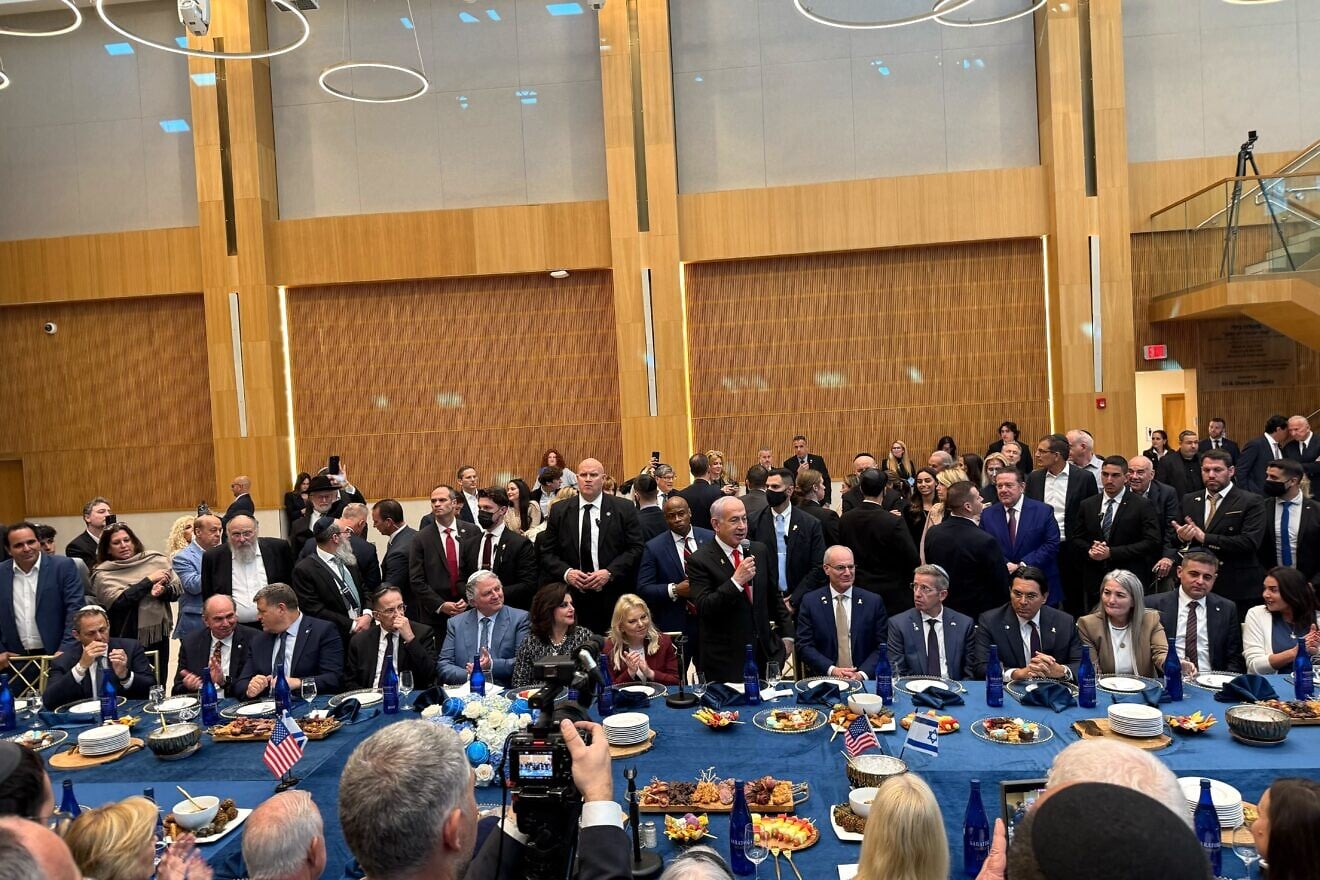
Israeli Prime Minister Benjamin Netanyahu at a reception as part of a JNS event, in which he addressed hundreds of people in Surfside, Fla., Dec. 31, 2025. Photo by Andrew Bernard.

More than two years after Hamas attacked the Jewish state on Oct. 7, “Israel has come out of this war stronger than ever before,” Israeli Prime Minister Benjamin Netanyahu told attendees of a JNS event in Surfside, Fla., which drew hundreds of people on New Year’s Eve.

“Stronger than ever before economically. What does strong mean? Well, we just signed a $37 billion gas deal,” Netanyahu said at the Shul of Bal Harbour, a Chabad congregation. “That’s strong. We just had Nvidia—they decided to have a massive investment in Israel, and we welcome it.”

The Israeli premier told attendees that the Jewish state made alliances and peace with strong countries.

“We have opened up opportunities for peace that have never existed before. In the first term of President Trump’s office, we did the Abraham Accords that brought four historic peace accords with four Arab states,” he said. “We’re committed to do more.”

“It’s peace through strength,” he said. “It’s prosperity through strength.”

Netanyahu spoke for about 15 minutes at the hour-long event. Sens. Ashley Moody (R-Fla.) and Bernie Moreno (R-Ohio) and Jay Collins, the Florida lieutenant governor, spoke after the prime minister. Alex Traiman, the CEO of JNS, was one of the speakers who introduced the prime minister.

Danny Danon, Israeli ambassador to the United Nations in New York, and Ofir Akunis, consul general of Israel in New York, also attended, as did Yechiel Leiter, Israeli ambassador to the United States, and Reps. Randy Fine (R-Fla.) and Carlos Giménez (R-Fla.).

Leo Terrell, who leads the U.S. Justice Department’s task force on Jew-hatred, and Yehuda Kaploun, a rabbi whom the U.S. Senate recently confirmed as the U.S. special envoy to monitor and combat antisemitism, also attended.

Netanyahu told the audience that it is important to be firm in the face of Jew-hatred.

“I say to you, members of the Jewish community of the United States, the last thing you should do before antisemitic attacks, as they attack you—the last thing you should do is lower your head and seek cover,” he said. “That’s not what you should do. You should stand up and be counted. You should fight back.”

The prime minister said that Jews ought to attack their attackers.

“You should delegitimize your delegitimizers,” he said. “Nobody will fight for you more than you fight for yourself.”

“When Israel is strong, others want to partner with us. You stand up and be counted, and you will see the difference,” he said. “Don’t be afraid.”

“Don’t cower. Don’t lower your head,” he added. “Speak up. Stand up. Fight back. That’s the important thing: fight, fight, fight. And then shall win, win, win with God’s help.”

The event drew intense security, with helicopters, police boats, Miami-Dade police officers and the U.S. Secret Service protecting attendees.

Netanyahu told the audience that the tragedy of Jewish history is being “exiled from our land.”

“We lost strength, unity and resolve, and the consequences were horrific,” he said. “We were expelled from land to land, we suffered pogroms, we suffered massacres, culminating in the greatest massacre of them all—the Holocaust, in which a third of our people were lost.”

“I say to the entire world: Never again,” he said. “Never again was last year, in which we demonstrated to the would-be destroyers of Israel, we shall destroy you. You shall not destroy us.”

“Never again is next year and never again is forever,” he said. 

Netanyahu also addressed the body of the last remaining hostage in Gaza, Ran Gvili.

“We shall return him and we’re working on it right now,” the prime minister said. “He shall be back. The first one in, last one out, but he’ll be back.”

Netanyahu told attendees that on the second day of the war, he said that Israel would change the face of the Middle East.

“It was the bravery of our soldiers, the resolute stance of our people and the correct decisions that we took in the government that changed the face of battle and changed the face of the Middle East,” he said.

He also cited the “friendship of the United States and the support of a president like no other: President Donald J. Trump.”

“I appreciated the fact that at the beginning stages of the war President Biden came to us well. But President Trump has been unflinching, consistent. He never wavers,” Netanyahu said. “His gut, his heart—we don’t say ‘gut,’ we say his kishkes—his instinctive support for the State of Israel, his understanding of what is right and what is just.”

“That’s been there from day one, and we have shown what happens when the president of the United States and the prime minister of Israel have no daylight between them: Wonderful things. Wondrous things can happen,” he said.


Zawartość publikowanych artykułów i materiałów nie reprezentuje poglądów ani opinii Reunion’68,
ani też webmastera Blogu Reunion’68, chyba ze jest to wyraźnie zaznaczone.
Twoje uwagi, linki, własne artykuły lub wiadomości prześlij na adres:
webmaster@reunion68.com

Venezuela’s Interim Leader: US Capture of Maduro Has ‘Zionist Undertones’


Venezuela’s Interim Leader: US Capture of Maduro Has ‘Zionist Undertones’

Ailin Vilches Arguello


Vice President Delcy Rodriguez attends her swearing in ceremony as Venezuela’s interim president at the National Assembly, after the US launched a strike on the country and captured President Nicolas Maduro and his wife Cilia Flores, in Caracas, Venezuela, Jan. 5, 2026. Photo: REUTERS/Leonardo Fernandez Viloria

Venezuela’s interim leader appeared to accuse Israel or Jewry more broadly of being behind a US military operation that struck state infrastructure and captured Venezuelan President Nicolás Maduro and First Lady Cilia Flores, echoing a familiar pattern of invoking antisemitic tropes during periods of domestic instability.

“Governments around the world are simply shocked that the Bolivarian Republic of Venezuela is the victim and target of an attack of this nature, which undoubtedly has Zionist undertones,” Vice President and Oil Minister Delcy Rodríguez said in a televised speech on Sunday. “It is truly shameful.”

Rodríguez, 56, was formally sworn in on Monday as the country’s interim president. She demanded the “immediate release” of Maduro and his wife following their capture by US military forces on Saturday, arguing that the arrests were made under false pretenses as part of a broader effort to impose regime change and seize the country’s natural resources.

Maduro and his wife were flown to New York City, where they appeared in federal court on Monday facing drug-trafficking and other criminal charges. Both pleaded not guilty, and the next court date was set for March 17.

Maduro, who is accused of overseeing a cocaine-trafficking network that partnered with several violent groups in Latin America, faces criminal counts for narco-terrorism, cocaine importation conspiracy, and possession of machine guns and destructive devices.

Amid long-standing tensions between Israel and Venezuela, Israeli Prime Minister Benjamin Netanyahu welcomed Maduro’s ouster and praised US President Donald Trump over the operation.

“Congratulations, President [Trump] for your bold and historic leadership on behalf of freedom and justice,” the Israeli leader wrote in a post on X. “I salute your decisive resolve and the brilliant action of your brave soldiers.”

Israeli Foreign Minister Gideon Saar also praised the US operation, saying, “Israel stands alongside the freedom-loving Venezuelan people, who have suffered under Maduro’s illegal tyranny.”

Rodríguez’s remarks echoed a long history of antisemitic statements by Maduro and other Venezuelan officials, who have consistently taken a strong anti-Israel stance. 

Maduro has previously claimed that “Zionists” were facilitating Venezuela’s takeover as the United States intensified its recent military campaign targeting drug trafficking and “narco-terrorist” networks near the country.

“There are those who want to hand this country over to the devils — you know who, right? The far-right Zionists want to hand this country over to the devils,” Maduro said during a televised speech in November.

In 2024, Maduro also blamed “international Zionism” for the large-scale anti-government protests that erupted across the country following the presidential elections, in which he claimed victory amid widespread claims of fraud.

The Venezuelan leader has a long history of antisemitic rhetoric, falsely claiming that Netanyahu isn’t an “authentic Jew,” accusing Israel of seeking to dominate Central Asia and the Middle East and to control the US, and repeatedly praising Hamas and other terrorist groups as “freedom fighters.”

Hamas has strongly condemned the US operation in Venezuela, calling it a “grave violation of international law” and an “assault on the sovereignty of an independent state.”

“This aggression represents a continuation of America’s unjust policies and interference, which are driven by its imperial ambitions,” the Palestinian terrorist group said in a statement on Saturday.

“Such US policies have plunged several nations into conflicts posing a direct threat to international peace and security,” the statement read. 

Venezuela cut diplomatic ties with Israel in 2009 under then-President Hugo Chávez, and the two countries have had no formal relations since then.


Zawartość publikowanych artykułów i materiałów nie reprezentuje poglądów ani opinii Reunion’68,
ani też webmastera Blogu Reunion’68, chyba ze jest to wyraźnie zaznaczone.
Twoje uwagi, linki, własne artykuły lub wiadomości prześlij na adres:
webmaster@reunion68.com