
Archives

Israel prepares for scenario of huge immigration wave


Israel prepares for scenario of huge immigration wave

JNS Staff


There are “possible warnings” of riots against the Jewish community in Western nations, said the Aliyah and Integration Ministry director general.

Israel drilled a scenario of a massive wave of immigration of Jews in the face of an emergency, Nov. 28, 2025. Photo by Elisha Henkin.

Israel’s Aliyah and Integration Ministry and National Emergency Authority conducted a strategic exercise on Nov. 27 simulating a scenario in which a massive wave of immigration of Jews takes place in a short period of time.

The exercise comes on the backdrop of growing concerns about the global rise of antisemitism or situations where large Diaspora populations would not receive the protection of local authorities if their countries were to collapse.

The simulation was held at the National College for Israeli Resilience in Ramla in central Israel, and included representatives from government ministries, NGOs and essential organizations that work with the Aliyah and Integration Ministry in routine and emergency situations, the ministry said in a statement.

The exercise practiced the absorption process for tens of thousands of immigrants arriving in Israel at a rate of some 800 people per day.

The ministry’s director general, Avichai Kahana, told Walla News that “The scenario we are practicing today is not apocalyptic or extreme. It’s a scenario that could happen in two months’ time.

“When the war between Russia and Ukraine broke out, the State of Israel was not prepared to absorb those who arrived—we saw this in every aspect. Therefore, we want to be ready,” he was cited as saying.

He added that Israel is monitoring Jewish communities in the Diaspora, as it was taking this scenario very seriously, which “could happen sooner than we think.”

Kahana laid out two possible scenarios that could lead to massive waves of immigration. The first, he said, would involve a terrorist attack against the Jewish community in a Western country. He noted that in some countries, Israel already has “possible warnings” that in one night, riots will break and Jews will want to pack up and leave immediately, according to Walla News.

The second scenario, Kahana continued, “involves a coup in a certain country, where the authorities can no longer protect the community. We are drilling something in the middle,” he added.

Regarding the evacuation from the country of origin, the ministry stated that the exercise addressed readiness in terms of food, medical care and evacuation routes. One proposed solution involved assistance from Jewish businesspeople, doctors, food companies and pharmaceutical companies.

The simulation presented immediate options for housing: 300 available apartments in absorption centers and 500 more in dedicated housing complexes. These require furnishing and equipment, which the Jewish Agency can supply at a basic level, the ministry said.

Beyond this limited housing stock, the exercise concluded that preparations must be made for hotel accommodations through immediate tenders at special rates set by the Ministry of Tourism. Additionally, fully equipped residential units in kibbutzim and moshavim could be prepared, the ministry added in the statement.

Minister of Aliyah and Integration Ofir Sofer was quoted as saying: “This is a scenario that could certainly materialize, in light of the sharp rise in antisemitism in many countries, and we must be prepared. Blessed immigration to Israel has continued in significant numbers since Oct. 7, [2023], and we cannot ignore the possibility that extreme future events may lead to sudden and massive immigration. In such a case, Israel must be ready to provide optimal absorption in all areas: housing, employment, education and more.”


Zawartość publikowanych artykułów i materiałów nie reprezentuje poglądów ani opinii Reunion’68,
ani też webmastera Blogu Reunion’68, chyba ze jest to wyraźnie zaznaczone.
Twoje uwagi, linki, własne artykuły lub wiadomości prześlij na adres:
webmaster@reunion68.com


Qatar, Turkey Try to Circumvent Hamas Disarmament as Terror Group Escalates Crackdown in Gaza


Qatar, Turkey Try to Circumvent Hamas Disarmament as Terror Group Escalates Crackdown in Gaza

Ailin Vilches Arguello


Palestinians walk past the rubble of destroyed buildings, amid a ceasefire between Israel and Hamas, in Jabalia, northern Gaza Strip, November 6, 2025. Photo: REUTERS/Mahmoud Issa

As the United States pushes for the second phase of President Donald Trump’s Gaza ceasefire to begin, Israel is warning that Qatar and Turkey are trying to shield Hamas from disarmament as the Palestinian terrorist group seeks to reassert control over the war-torn enclave.

Qatar and Turkey have proposed alternatives to a central provision of Trump’s peace plan, according to Israeli media reports. Rather than requiring Hamas to disarm, Qatari and Turkish officials have pushed for the Islamist group either to hand over its weapons to the Palestinian Authority or place them in secure storage under international oversight.

As part of this plan, Qatar and Turkey are reportedly advocating a two‑year grace period during which Hamas could legally retain its weapons.

However, Israeli officials have rejected these options as unacceptable, arguing they would allow the terrorist group to maintain its influence in Gaza, which Hamas has ruled for nearly two decades.

Israel has made clear it will allow Hamas just a few months to give up its weapons, warning it will act unilaterally if the group is not disarmed promptly.

Turkey and Qatar, both longtime backers of Hamas, have been trying to expand their roles in Gaza’s post-war reconstruction, which experts have warned could potentially strengthen Hamas’s terrorist infrastructure.

Israeli officials have repeatedly rejected any Turkish or Qatari involvement in post-war Gaza.

The first stage of Trump’s peace plan, which took effect in October, included Hamas releasing all the remaining hostages, both living and deceased, who were kidnapped by Hamas-led Palestinian terrorists during their Oct. 7, 2023, invasion of and massacre across southern Israel. In exchange, Israel released thousands of Palestinian prisoners and detainees, including many convicted terrorists serving life sentences, and partially withdrew its military forces in Gaza to a newly drawn “Yellow Line,” roughly dividing the enclave between east and west.

Currently, the Israeli military controls 53 percent of Gaza’s territory, and Hamas has moved to reestablish control over the other 47 percent. However, the vast majority of the Gazan population is located in the Hamas-controlled half, where the Islamist group has been imposing a brutal crackdown.

The second stage of the US plan is supposed to install an interim administrative authority — a so-called “technocratic government” — deploy an International Stabilization Force — a multinational force meant to take over security in Gaza — and begin the demilitarization of Hamas.

As the international community works to implement phase two of the ceasefire deal, Qatar and Turkey are now insisting that Israel must withdraw from Gaza before Hamas can disarm — a demand Jerusalem vehemently opposes, warning it would give the terrorist group time to reassert full control over its half of Gaza and remove any incentive to disarm later on.

On Saturday, Qatari Prime Minister Mohammed bin Abdulrahman Al Thani said the international community has only achieved a “pause” in fighting, but not a full ceasefire, stressing that Israel would need to withdraw from the entire enclave to make it possible.

“A ceasefire cannot be completed unless there is a full withdrawal of the Israeli forces, there is stability back in Gaza [and] people can go in and out, which is not the case today,” Al Thani said during a press conference.

The Qatari leader also said that the mediating countries, including Turkey, Egypt, and the US, are “getting together in order to force the way forward for the next phase.”

However, Al Thani emphasized Qatar considers phase two to be “temporary,” arguing that addressing the immediate situation in Gaza alone is insufficient without tackling what he described as the underlying causes of the conflict.

“This conflict is not only about Gaza, but also the West Bank. It’s about the rights of the Palestinians for their state,” he said. “We are hoping that we can work together with the US administration to achieve this vision.”

According to the ceasefire plan, the Israeli army is required to withdraw further as the disarmament process unfolds. However, Israel has made clear that it will not pull back until Hamas disarms and other conditions are met.

“We will not allow Hamas to reestablish itself. We have operational control over extensive parts of the Gaza Strip, and we will remain on those defense lines,” Lt. Gen. Eyal Zamir, chief of staff of the Israel Defense Forces (IDF), said on Sunday. “The Yellow Line is a new border line, serving as a forward defensive line for our communities and a line of operational activity.”

Meanwhile, Turkish Foreign Minister Hakan Fidan said a credible Palestinian civil administration and a vetted, trained police force should be established before Hamas can disarm.

In a press conference, Fidan emphasized that without these conditions, expecting Hamas to disarm is neither “realistic nor doable.”

However, Hamas continues to reject full disarmament, saying the group is only open to storing or freezing its weapons in order to preserve “the Palestinians’ ability to defend themselves.”

“Hamas is willing to discuss these ideas in the context of a ceasefire or long-term truce within a political process that will lead to the establishment of a Palestinian state,” senior Hamas official Basem Naim said in a statement. 

In Gaza, Hamas’s brutal crackdown has continued to escalate dramatically as the terrorist group moves to reassert control over the enclave and consolidate its weakened position.

Following the death of Yasser Abu Shabab, the leader of an armed anti-Hamas Palestinian faction, last week, Hamas has given militants a 10-day ultimatum to surrender in exchange for promises of amnesty, according to Israel’s Channel 12 and reports on social media.

Abu Shabab, a Bedouin tribal leader based in Israeli-held Rafah in southern Gaza, had led one of the most prominent of several small anti-Hamas groups that emerged in the enclave during the war that began more than two years ago. 

He died last week while mediating an internal dispute between families and groups within the militia, dealing a setback to Israeli efforts to support Gazan clans against the ruling Islamist group.

Since the ceasefire took effect two months ago, Hamas has targeted Palestinians who it labeled as “lawbreakers and collaborators with Israel,” sparking widespread clashes and violence as the group moves to seize weapons and eliminate any opposition.

Social media videos widely circulated online show Hamas members brutally beating Palestinians and carrying out public executions of alleged collaborators and rival militia members.


Zawartość publikowanych artykułów i materiałów nie reprezentuje poglądów ani opinii Reunion’68,
ani też webmastera Blogu Reunion’68, chyba ze jest to wyraźnie zaznaczone.
Twoje uwagi, linki, własne artykuły lub wiadomości prześlij na adres:
webmaster@reunion68.com


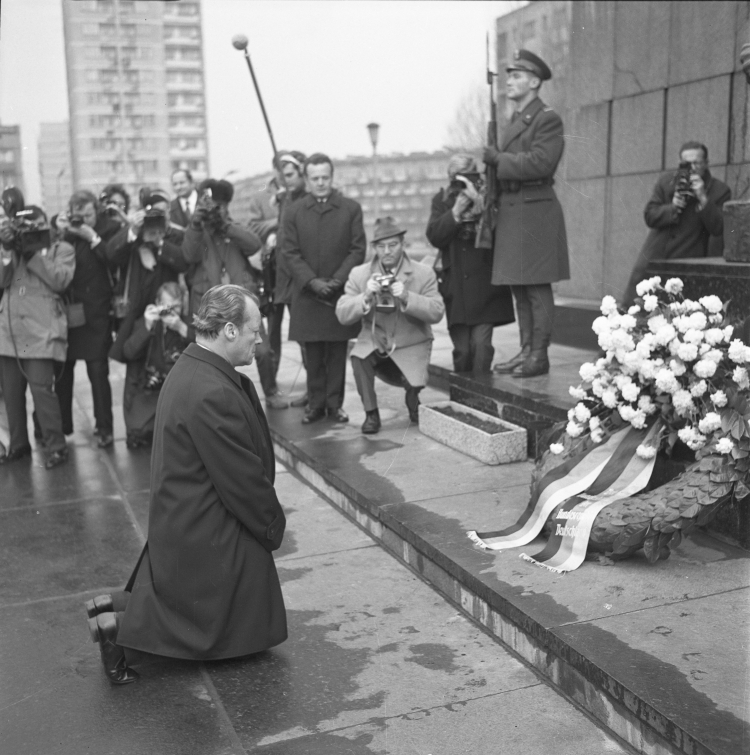
55 lat temu Willy Brandt uklęknął przed Pomnikiem Bohaterów Getta

Warszawa 07.12.1970. Kanclerz Niemieckiej Republiki Federalnej (NRF) Willy Brandt złożył wieniec i ukląkł przed pomnikiem Bohaterów Getta. Fot PAP/Stanisław Czarnogórski


55 lat temu Willy Brandt uklęknął przed Pomnikiem Bohaterów Getta

Anna Kruszyńska (PAP)  


55 lat temu, 7 grudnia 1970 r., kanclerz RFN Willy Brandt uklęknął przed Pomnikiem Bohaterów Getta w Warszawie. Jest to jeden z najbardziej poruszających symboli politycznych współczesnej historii, a zdjęcie klęczącego Brandta obiegło cały świat.

Kanclerz RFN wykonał ten gest w trakcie wizyty związanej z podpisaniem układu z Polską dotyczącego normalizacji stosunków, w którym Bonn po raz pierwszy od zakończenia II wojny światowej uznało polską granicę zachodnią.

– Wizyta Brandta w Warszawie była historyczna, przełomowa. Była to pierwsza wizyta zachodnioniemieckiego szefa rządu w Polsce – a od powstania RFN minęło wtedy już 21 lat. Pamiętajmy, że gdy polityk przyleciał do Warszawy, znalazł się w państwie, z którym RFN nie utrzymywała nawet stosunków dyplomatycznych; to pokazuje skalę problemu – przypomniał w rozmowie z PAP dr Robert Żurek, historyk i członek Zarządu Fundacji „Krzyżowa”.

Brandt przybył do Warszawy, by podpisać układ z PRL, który, jak określił to dr Żurek, „miał zakończyć epokę lodowcową we wzajemnych relacjach”. W układzie tym RFN uznała bowiem granicę na Odrze i Nysie, co stało w sprzeczności z dotychczasową doktryną polityczną Bonn – rewizja granicy była jednym z jej głównych celów.

– Ale na wizytę Brandta należy spojrzeć szerzej niż tylko jako na przełom w relacjach między PRL a RFN. Ona tak naprawdę była punktem zwrotnym w relacjach polsko-niemieckich od połowy XVIII wieku – ocenił historyk. Jak zauważył, wcześniej były to relacje wrogie: Prusy, a potem Niemcy dążyły do realizacji swoich interesów kosztem Polski, nieraz w bardzo brutalny sposób.

– Wizyta Brandta to zerwanie z tą – jak to nazywał nieżyjący już niemiecki historyk, Klaus Zernack – „negatywną polityką wobec Polski”. Po raz pierwszy podjęto poważną próbę dogadania się z Polakami, po raz pierwszy poświęcono własne interesy na rzecz budowy dobrych relacji z Polską – zaznaczył rozmówca PAP.

„Niczego nie planowałem, ale (…) miałem poczucie, że muszę dać wyraz szczególnej pamięci przed Pomnikiem Bohaterów Getta. Na dnie niemieckiej historii, czując na sobie ciężar milionów zamordowanych, uczyniłem to, co czynią ludzie, gdy słowa zawodzą”.

W wizycie widoczne były odwaga i determinacja Brandta oraz jego współpracowników z szeregów koalicji rządzącej – socjaldemokratów i liberałów. Uznanie granicy było dużym ryzykiem politycznym, gdyż społeczeństwo zachodnioniemieckie było w sprawie relacji z Polską mocno podzielone i opozycyjna wtedy CDU mogła ugrać na kontrowersyjnej decyzji Brandta spory kapitał polityczny. Rzeczywiście kanclerza czekały burzliwe dwa lata – dopiero w 1972 r. Bundestag ratyfikował układ, a rząd Brandta ledwie ocalał w procedurze wotum nieufności.

W czasie wizyty Brandta doszło do jeszcze jednego przełomowego wydarzenia. Jak wynika z ówczesnych relacji, władze PRL przed wizytą sugerowały kanclerzowi złożenie wieńca przed Grobem Nieznanego Żołnierza. Uzależnił on jednak zgodę na to od umożliwienia mu udania się pod Pomnik Bohaterów Getta. „Albo oba wieńce, albo żaden” – zanotował szef niemieckiego protokołu dyplomatycznego po konsultacji z urzędem kanclerskim. Polska strona powstrzymała się wówczas od komentarza, pozwalając na złożenie wieńca pod pomnikiem na terenie byłego getta. Komunistyczne władze, nawet po sugestiach niemieckiego MSZ, nie zaproponowały jednak żadnego ceremoniału dyplomatycznego – odegrania hymnów państwowych czy wyłożenia księgi pamiątkowej.

– Najbardziej poruszającym momentem wizyty Brandta było odwiedzenie Pomnika Bohaterów Getta. Kanclerz spontanicznie przyklęknął przed pomnikiem i trwał w tej pozycji kilkadziesiąt sekund – mówił PAP dr Żurek.

„(…) ukląkł ten, który nie musiał, w imieniu wszystkich, którzy powinni byli klęknąć, ale tego nie zrobili.”

Decyzja o uklęknięciu nie była jednak zaplanowana, lecz – jak zapewniał później Brandt – była wynikiem impulsu. W opublikowanych w 1989 r. wspomnieniach tak pisał o swoim geście: „Ciągle pytano mnie, co chciałem przez ten gest wyrazić. Czy może ten gest był zaplanowany? Nie, nie był. (…) Niczego nie planowałem, ale opuszczając pałac w Wilanowie, gdzie mieszkałem, miałem poczucie, że muszę dać wyraz szczególnej pamięci przed Pomnikiem Bohaterów Getta. Na dnie niemieckiej historii, czując na sobie ciężar milionów zamordowanych, uczyniłem to, co czynią ludzie, gdy słowa zawodzą”.

Jednak Brandt nie był osobiście obciążony spuścizną nazizmu, a po dojściu Hitlera do władzy przebywał na emigracji w Norwegii i Szwecji. Wyrażając zatem skruchę przed Pomnikiem Bohaterów Getta, uczynił to w imieniu państwa i narodu niemieckiego. Tygodnik „Der Spiegel” skomentował zachowanie Brandta: „ukląkł ten, który nie musiał, w imieniu wszystkich, którzy powinni byli klęknąć, ale tego nie zrobili”.

W Niemczech Zachodnich gest Brandta przyjęto ambiwalentnie. Znaczna część mediów i opinii publicznej uznała go za przesadzony. – Dopiero z biegiem czasu lepiej zrozumiano i doceniono wagę tego przyklęknięcia, które stało się symbolem nowego, odpowiedzialnego podejścia przez Niemcy do ich historii – zauważył dr Robert Żurek.

Gest kanclerza wywołał również konsternację w Polsce. – Polscy komuniści woleliby, by Brandt równie poruszająco zachował się przed Grobem Nieznanego Żołnierza, tam złożył on jednak jedynie wieniec i ukłonił się. Zachodziło więc podejrzenie, że kanclerz z większym pietyzmem podchodzi do ofiar żydowskich niż polskich, co dla władz PRL mogło być kłopotliwe, zwłaszcza że dwa lata wcześniej urządziły w Polsce antysemicką nagonkę – wskazał dr Żurek.

Sam Brandt w swoich wspomnieniach podkreślał, że żaden z jego polskich partnerów nie nawiązał do tego gestu: „Wywnioskowałem z tego, iż inni także jeszcze nie rozliczyli się z tą częścią historii”. Brandt wspominał też, że rozmówcy polscy pytali, dlaczego nie uklęknął przed Grobem Nieznanego Żołnierza. Oficjalnie bowiem władze polskie ani słowem nie ustosunkowały się do zachowania Brandta. Gest kanclerza całkowicie zignorował I sekretarz PZPR Władysław Gomułka. Premier Józef Cyrankiewicz, sam więzień obozów koncentracyjnych Auschwitz i Mauthausen, jedynie w prywatnej rozmowie w przerwie oficjalnego programu wyraził uznanie dla Brandta.

Konsternację można było także zauważyć w polskich mediach. Jak wspominał Artur Hajnicz, ówczesny redaktor „Życia Warszawy”, w redakcji jego dziennika cenzura skonfiskowała fotografię klęczącego Brandta. Jedyną warszawską gazetą, w której zdjęcie się ukazało, była wychodząca w języku jidisz „Fołksztyme”. Natomiast prasa światowa szeroko relacjonowała uroczystość przed Pomnikiem Bohaterów Getta, a obraz klęczącego Brandta obiegł cały świat.

W Polsce fotografię Willy’ego Brandta zresztą wyretuszowano. Publikowano jej dwie wersje: przedstawiającą Brandta klęczącego przed stojącym na warcie polskim żołnierzem albo skadrowaną w ten sposób, że ukazywała tylko popiersie kanclerza. Dopiero po 1989 r. w polskich podręcznikach historii zaczęto publikować zdjęcie w całości.

Czy Brandt rzeczywiście dzielił obywateli polskich według klucza etnicznego i jednym okazał więcej czci niż innym? – Nawet gdyby tak się stało, byłoby to w jakiś sposób zrozumiałe, gdyż Holokaust był najstraszliwszym elementem nazistowskich zbrodni. Ale prof. Krzysztof Ruchniewicz, który intensywnie badał ten temat, twierdzi, że Brandt chciał uczcić wszystkich obywateli polskich zamordowanych przez Niemców, a uroczystość przy Grobie Nieznanego Żołnierza po prostu miała inny charakter niż przed Pomnikiem Bohaterów Getta – podsumowuje dr Robert Żurek.

6 grudnia 2000 r., w przeddzień 30. rocznicy symbolicznego gestu, kanclerz Niemiec Gerhard Schröder, premier Jerzy Buzek, żona Brandta Brigitte Seebacher-Brandt oraz pisarz Günter Grass uczestniczyli w odsłonięciu Pomnika Willy’ego Brandta w pobliżu Pomnika Bohaterów Getta.


Zawartość publikowanych artykułów i materiałów nie reprezentuje poglądów ani opinii Reunion’68,
ani też webmastera Blogu Reunion’68, chyba ze jest to wyraźnie zaznaczone.
Twoje uwagi, linki, własne artykuły lub wiadomości prześlij na adres:
webmaster@reunion68.com

House foreign affairs panel advances bill to designate Muslim Brotherhood as terrorists


.

House foreign affairs panel advances bill to designate Muslim Brotherhood as terrorists

Andrew Bernard


The committee also voted in favor of legislation to monitor Jew-hatred in Europe and impose sanctions on Iranian clerics calling for the deaths of the U.S. president and Israeli prime minister.

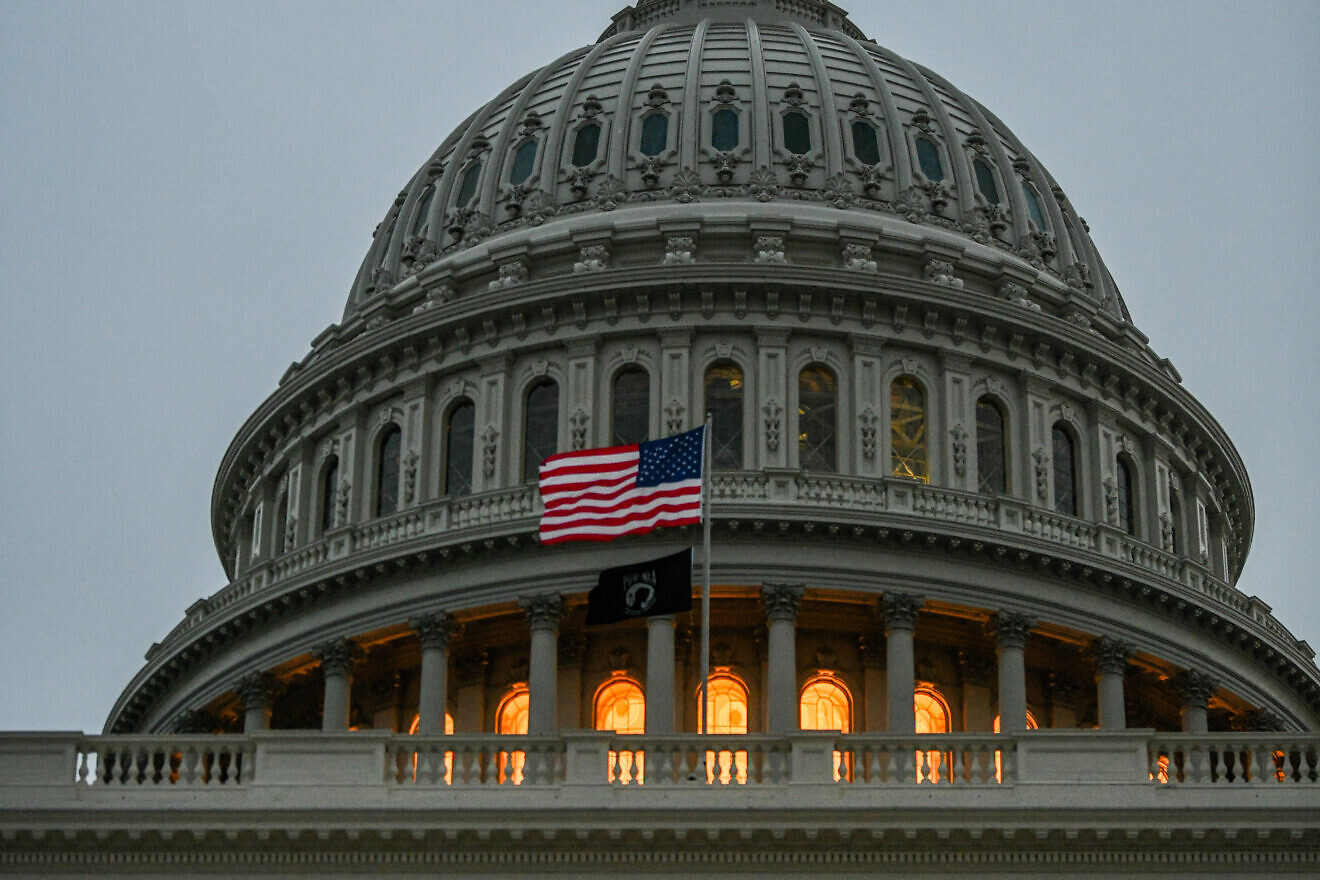
The U.S. Capitol on July 16, 2025. Credit: Arie Leib Abrams/Flash90.

The House Foreign Affairs Committee advanced legislation on Wednesday to require U.S. President Donald Trump to designate the Muslim Brotherhood as a terrorist organization.

The bipartisan bill, introduced by Rep. Mario Diaz-Balart (R-Fla.), passed through the committee with the support of every Republican and about half of the panel’s Democrats, including Reps. Brad Sherman (D-Calif.), Brad Schneider (D-Ill.), Jared Moskowitz (D-Fla.) and George Latimer (D-N.Y.).

Ranking Member Gregory Meeks (D-N.Y.) opposed the legislation, which he said was overly broad and could be used as an excuse to discriminate against Muslims and harm relations with U.S. allies, such as Qatar and Turkey, that support the Brotherhood.

“I am also deeply concerned about the implications that this bill would have domestically,” Meeks said. “Section 2 has sweeping visa prohibitions, which amounts, to me, to be a backdoor Muslim ban. It could subject millions of people, including many Americans, many Muslims who live in my district for example, to arbitrary and subjective determinations based on vague, indirect or tangential affiliations.”

Meeks added that he feared that the law could be used to investigate and prosecute Muslim-Americans and Arab and Muslim civil rights organizations.

Moskowitz, who co-sponsored the bill, said he rejected the idea that designating the Muslim Brotherhood as a terrorist organization amounted to a “Muslim ban.”

“I don’t support a Muslim ban in this country,” Moskowitz said. “I didn’t support it in the first Trump administration, but I do think it is extremely telling that Saudi Arabia, Jordan, the United Arab Emirates and Egypt designated this group a terrorist organization and banned them from their countries.”

“Our allies in the region, who know this group the best, ban them in their own countries,” Moskowitz said. “But for some reason, we can’t get it done. We’ve been trying to do this for like a decade.”

“In my conversations with ambassadors from our allies in this region—they’re surprised we’ve not been able to get it done, quite frankly,” he added.

Founded in 1928 in Egypt as a pan-Islamic revivalist movement, the Muslim Brotherhood has spread across the Sunni Muslim world in the form of local chapters and offshoots, including Hamas, as well as ideologically-inspired fellow-travelling militant groups and political parties, like the ruling Justice and Development Party (AKP) in Turkey.

In November, Trump issued an executive order asking the State and Treasury Departments for recommendations about whether to designate the Brotherhood as a terrorist organization, either in whole or in part.

In response, the Brotherhood, whose leaders are based in Turkey, issued a statement denying responsibility for the actions of its local chapters.

“The Muslim Brotherhood does not operate through ‘branches,’” the group stated. “While independent Brotherhood organizations in some Muslim-majority countries share common Islamic ideological elements, they are fundamentally separate entities that make their own decisions and operate within the law of the countries in which they are present.”

The group’s web materials nonetheless contain extensive material praising Hamas’s former leader Yahya Sinwar as “a noble knight and courageous hero,” who led “the glorious epic of Oct. 7” in murdering more than 1,200 people in southern Israel and taking hundreds more hostage.

During the committee’s debate, Rep. Keith Self (R-Texas), a former army officer who deployed to Egypt, described how that country dealt with the Muslim Brotherhood during the reign of its former president, Hosni Mubarak.

“He had Egyptian armed forces kick down doors and simply shoot who was in the room: Muslim Brotherhood,” Self said.

The committee also unanimously advanced legislation to require the State Department to provide briefings on antisemitism in Europe and to impose additional sanctions on the Houthis in Yemen.

Rep. Darrell Issa (R-Calif.) described how Yemen’s former religious diversity, including a substantial Jewish population, has been shattered under Houthi rule.

“There was a thriving community with synagogues and a tolerance of their people for their fellow man and their fellow Yemenis. That was before the Houthis,” Issa said. “Since that time, they have destroyed the ability to be anything other than what they want you to be. They have imposed Sharia law.” 

“Just as we know Hezbollah is a cancer on the society of Lebanon and anywhere else it touches, the Houthis’ activities have to be dealt with,” he said.

The committee also adopted a bill to impose sanctions on Iranian clerics, who have issued fatwas calling for the deaths of Trump and Israeli Prime Minister Benjamin Netanyahu, and against other Iranian leaders who have plotted to assassinate the two leaders.

Meeks, who supported that bill, said that sanctions were nonetheless an insufficient deterrent to Iranian aggression.

“Congress should be hearing directly from the secretary of state on how he plans to keep the Iranian regime in check at a moment of extreme volatility in the region,” Meeks said. “We need to understand what steps are being taken to ensure that Iran’s massive stockpile of highly enriched uranium remains secure and that the nuclear program does not advance from its current post-12-day-war state.”

“I just can’t pretend that it will fundamentally alter Iran’s trajectory,” he said. “What will make a difference is serious, sustained oversight, credible diplomacy, allied coordination and a whole-of-government strategy that goes beyond simply adding one more sanctions designation to a list.”


Zawartość publikowanych artykułów i materiałów nie reprezentuje poglądów ani opinii Reunion’68,
ani też webmastera Blogu Reunion’68, chyba ze jest to wyraźnie zaznaczone.
Twoje uwagi, linki, własne artykuły lub wiadomości prześlij na adres:
webmaster@reunion68.com
Jerusalem Israel’s ‘rightful capital,’ says Trump on anniversary of city’s recognition


Jerusalem Israel’s ‘rightful capital,’ says Trump on anniversary of city’s recognition

JNS Staff


The city is the “rightful capital that stands at the heart of Israel’s traditions, government and heritage,” said the U.S. president.

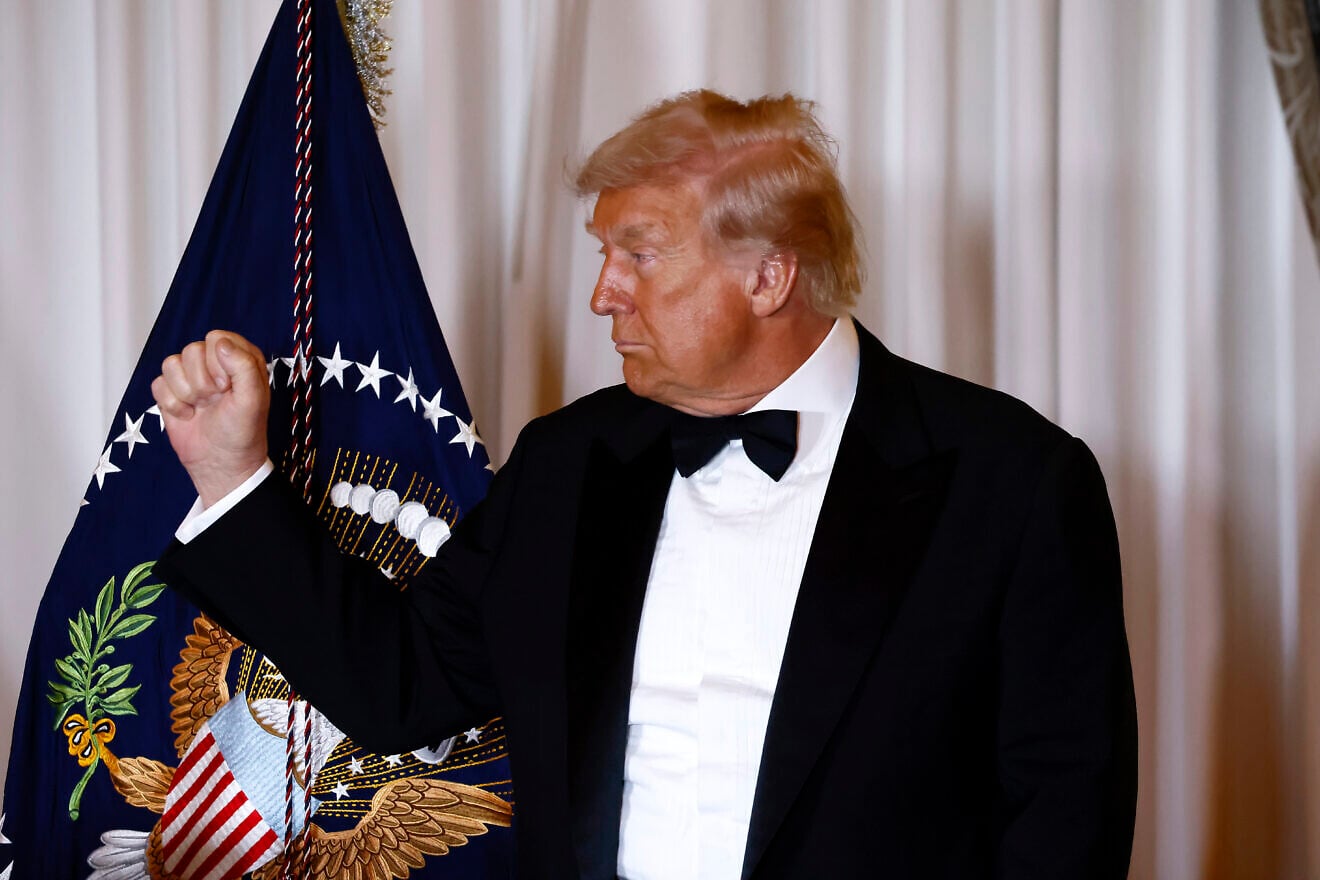
U.S. President Donald Trump attends the 48th Kennedy Center Honors Medallion Reception at the U.S. Department of State on Dec. 6, 2025 in Washington, D.C. Photo by Paul Morigi/Getty Images.

President Donald Trump said on Dec. 6 that his decision on that day in 2017 to recognize Jerusalem as Israel’s capital and to begin the process of moving the U.S. embassy there was “a transformative step forward in the pursuit of peace in the Middle East.”

“Today, eight years later, my administration renews its commitment to ushering in a new era of peace, prosperity and stability in the region and all around the world,” he stated.

“Since the establishment of the modern State of Israel in 1948, Jerusalem has served as its cultural and religious heart and the seat of its government,” the president stated. “However, for decades, weak politicians refused to formally recognize Jerusalem as Israel’s capital, despite Congress voting to support the action, because they believed that moving our embassy would harm the cause of peace in the region,” he continued.

“In recognizing Jerusalem as Israel’s capital and moving our embassy to that beautiful city, we acknowledged the rightful capital that stands at the heart of Israel’s traditions, government and heritage,” he said. “Now we stand on the doorstep of one of the greatest diplomatic achievements in history as a strong, durable and everlasting peace is emerging across the Middle East.”

The “significant peace agreement” that he has led between Israel and Hamas is a “monumental agreement,” which is a “massive leap toward an enduring peace for the Israeli and Palestinian people—one that ensures security, brings stability and offers hope for generations to come,” said Trump.


Zawartość publikowanych artykułów i materiałów nie reprezentuje poglądów ani opinii Reunion’68,
ani też webmastera Blogu Reunion’68, chyba ze jest to wyraźnie zaznaczone.
Twoje uwagi, linki, własne artykuły lub wiadomości prześlij na adres:
webmaster@reunion68.com