Archives

House passes bill to bar, deport Oct. 7 perpetrators


House passes bill to bar, deport Oct. 7 perpetrators

Andrew Bernard


“New laws would be helpful to prevent a future Joe Biden from making a mockery of our sovereignty and reopening our borders,” the bill’s sponsor said.

View of the U.S. Capitol building in Washington, Aug. 25, 2025. Credit: Arie Leib Abrams/Flash90.

The U.S. House of Representatives passed legislation on Monday that would render participants in the Hamas-led Oct. 7 attacks in southern Israel inadmissible to the United States.

The “No Immigration Benefits for Hamas Terrorists Act of 2025,” which Rep. Tom McClintock (R-Calif.) introduced, would amend the Immigration and Nationality Act to bar from the United States “any alien who carried out, participated in, planned, financed, afforded material support to or otherwise facilitated any of the attacks against Israel initiated by Hamas beginning on Oct. 7,” including members of Hamas and Palestinian Islamic Jihad.

The act’s 18 other co-sponsors, all Republicans, include Reps. Joe Wilson (R-S.C.), Claudia Tenney (R-N.Y.) and Ann Wagner (R-Mo.).

Rep. Jamie Raskin (D-Md.) said during floor debate on the bill that Democrats supported the legislation but were opposed to amending the Immigration and Nationality Act directly to cite specific terror acts. Raskin argued that all members of designated Foreign Terrorist Organizations, like Hamas, are already barred from entering the United States.

“To put into perspective just how anomalous this approach is, consider our response to the 9/11 attacks and the aftermath of that catastrophe,” Raskin said. “We revised our immigration laws to overhaul significant parts of our immigration system, and we created the Department of Homeland Security.”

“Even then, we did not amend the Immigration and Naturalization Act to specifically reference the events of Sept. 11, or to bar the individuals involved in the planning or commission of those outrageous terror attacks from entering or remaining in the United States,” he said.

McClintock said that Hamas deserves to join the Nazi Party and the Palestine Liberation Organization as organizations whose members are explicitly barred from immigrating to the United States under law.

“Does anyone seriously argue that we should repeal the sanctions against persons who aided and abetted the Nazis’ Holocaust?” McClintock said. “If not, then why would they oppose extending the same sanctions to the Nazis’ would-be modern-day successors, who just two years ago slaughtered more than 1,200 innocent civilians, including children and infants and the elderly, because they were Jewish?”

McClintock cited the example of Mahmoud Amin Ya’qub al-Muhtadi, a Gaza-born resident of Lafayette, La., who entered the United States in 2024 and whom the U.S. Justice Department charged about a month and a half ago for taking part in the Oct. 7 attacks.

“New laws would be helpful to prevent a future Joe Biden from making a mockery of our sovereignty and reopening our borders to the most violent criminal gangs and cartels and criminals and terrorists on the planet,” McClintock said.

Raskin asked if the new law would apply to Changpeng Zhao, former CEO of the crypto company Binance, who pleaded guilty to laundering money for terrorist organizations, including Hamas, and whom U.S. President Donald Trump pardoned in October.

McClintock said he was unfamiliar with the case.

The bill passed the House by voice vote with no objections and will now proceed to the Senate, which previously failed to take up a previous version of the legislation.


Zawartość publikowanych artykułów i materiałów nie reprezentuje poglądów ani opinii Reunion’68,
ani też webmastera Blogu Reunion’68, chyba ze jest to wyraźnie zaznaczone.
Twoje uwagi, linki, własne artykuły lub wiadomości prześlij na adres:
webmaster@reunion68.com


Nieszczęśliwi, wypasieni i zagubieni

Rysunek: Andrzej Płoski


Nieszczęśliwi, wypasieni i zagubieni

Andrzej Koraszewski


Narzekać trzeba, bo co by to było za życie bez narzekania. W dzieciństwie babcia powtarzała: „Jedz, dzieci w Afryce chodzą głodne”. Nie była to dobra motywacja do połknięcia kolejnej kluski i odroczenia ucieczki na podwórko, gdzie kopanie piłki z kolegami całkowicie eliminowało obraz głodnych dzieci w Afryce czy gdziekolwiek indziej. Współczucie bywa instrumentalne, bywa instynktownym odruchem, ale na ogół altruizm trzyma się mocno za ręce z egoizmem, co czasem okazuje się humanitarne, a czasem zgoła przeciwnie. Belgijski filozof Maarten Boudry w eseju opublikowanym na łamach „Quillette” pisze o niewdzięczności sytych.

Uświadamianie oczywistego faktu, że współcześnie żyjemy w nieporównywalnie lepszych warunkach niż kiedykolwiek ludzie w przeszłości, to dość niewdzięczne zadanie. Słowo „przednówek” z niczym się nie kojarzy, śmierci z głodu zdarzają się gdzieś daleko i nie zawsze wiadomo, czy są rzeczywiste.

Żyjemy w czasach obfitości, co nie znaczy, że bez problemów. Rewolucję przemysłową poprzedziła rewolucja w rolnictwie i nagle tempo innowacji oraz wzrost wydajności zaczął być lawinowy, ale dopiero w ostatnim półwieczu obszary biedy zaczęły się szybko kurczyć. Jak pisze Maarten Boudry:

Gdy jednak ludzie zaczęli żyć coraz dostatniej i przyzwyczajali się do dobrobytu, zaczęli zapominać o nędzy, z jakiej wyrwali się ich przodkowie. W ten sposób narodziło się zjawisko typowo nowoczesne: oddawanie się romantycznym fantazjom o błogosławieństwach prymitywnego, przednowoczesnego życia – nie rezygnując przy tym z wygód i dostatku, które daje nowoczesność.

To kawiarniane marzenie o sielskiej i rozkosznej dzikości bywa również źródłem sławy i dochodów. Rozpieszczeni i przejedzeni uprawiają „turystykę biedy”, piszą powieści i felietony, kręcą filmy, a nawet podejmują heroiczne wysiłki przeżycia kilku dni w prymitywnych warunkach, zabezpieczając się, żeby nie były nazbyt prymitywne i pamiętając, gdzie jest wyjście awaryjne.

Powinniśmy być wdzięczni, że nie rozumiemy biedy, ale problem w tym, że ta ignorancja tworzy podatny grunt dla romantycznych złudzeń. Miliony sytych mieszkańców Zachodu zachwycają się prostotą życia średniowiecznych chłopów (bez smartfonów! warzyw z własnego ogrodu!) lub koczowniczym życiem łowców-zbieraczy (brak dóbr materialnych! życie w harmonii z naturą!). Ci, którzy wychwalają zalety przedprzemysłowego rolnictwa bez nawozów i maszyn, to ci sami, którzy nigdy nie musieli sami żyć w prymitywnych warunkach.

Te fantazje sytych nie są największym problemem – im szybszy rozwój techniki i technologii, im więcej bogactwa i mniej prawdziwej, dramatycznej biedy, tym większy popyt na intelektualistów zawodowo zajmujących się zwalczaniem kapitalizmu. Okazuje się, że gryzienie ręki, która cię karmi, może być zarówno intratne, jak i dostarczać doznań smakowych. Korporacje dostarczą komputerów, na których ci twórcy smażą swoje krytyki, dostarczą platform, na których je rozpowszechniają, kont, na których można gromadzić pieniądze wpłacane przez odbiorców tej krytyki.

W rzeczywistości dobrodziejstwa postępu stają się niezauważalne. Zniknęły choroby, które dziesiątkowały całe populacje, nie ma tamtych dramatów, więc przestajemy wierzyć w szczepionki. Żyjemy coraz dłużej i coraz bezpieczniej, ale trudno przez cały czas odczuwać wdzięczność — światło jest, lodówka działa, grzejniki pracują. To wszystko stało się normą, w której najbardziej irytującą rzeczą okazuje się fakt, że ktoś na tym zarabia. W niektórych częściach świata również pokój jest tak normalny, że trudno sobie wyobrazić czasy, w których wojna była normą. Jednak kiedy dobrobyt jest normą, jego zwalczanie może się okazać niebezpieczną zabawą kapłanów niezadowolenia.

W pewnym sensie jest rzeczą naturalną, że koszmar życia, które dawno temu minęło i które nigdy nie dotknęło nas osobiście, jest dla nas tylko abstrakcją. Gorzej, kiedy tęsknota do utopii zaczyna prowadzić do wkładania kija w szprychy koła postępu.

Również na łamach „Quillette” amerykański politolog, profesor Dustin N. Sharp, pisze o skłonnościach intelektualistów do umiłowania różnych utopijnych idei. Kolejne pokolenia dają się uwodzić marzeniami o absolutnej czystości. Dekoracje się zmieniają, ale absurd i dramat pozostają te same.

To, co zaczęło się jako moda na akademickim marginesie, stało się językiem wspólnym aktywistów i intelektualistów — sposobem moralnego poznania, który traktuje świat społeczny jako rytualnie skalany, a cnotę odnajduje w tropieniu skazy. Dla nowego duchowieństwa lewicy problematyzowanie stało się jedyną uznaną formą pracy intelektualnej i moralnej. Im głębiej zdemaskujesz władzę, tym bliżej łaski jesteś. Największy prestiż przypada tym, którzy potrafią prześledzić mechanizmy dominacji aż po najdrobniejsze elementy życia społecznego. To moralna logika bardziej przystająca do oczyszczania niż do przekonywania.
Problem z tym stylem moralnym nie polega na tym, że dostrzega niesprawiedliwość — lecz na tym, że jej potrzebuje – pisze Dustin N. Sharp.

Orgie oburzenia zastępują dociekania i analizy, udają edukację; indoktrynacja zastępuje informację. Burzenie jest celem, budowanie — przeszkodą i problemem.

Zauważ, że liberalny kapitalizm — jakkolwiek niedoskonały — jednak wydłużył życie ludzi i wydźwignął setki milionów ze skrajnego ubóstwa, a zostaniesz uznany za osobę niepoważną. Przyznaj, że liberalna demokracja potrafi się czasem sama skorygować, a gospodarki rynkowe — mimo licznych wad — żywią i tworzą innowacje, a zostaniesz potraktowany jak rzecznik systemu. Częściowa obrona Zachodu lub „systemu” oznacza w najlepszym razie niedouczenie, w najgorszym — głupotę.

To kusząca oferta: wstąpienia do klubu najmądrzejszych i najbardziej przewidujących. To zaproszenie do religijnej sekty wybranych i najbardziej moralnych.

W świecie, który wydaje się pozbawiony sensu, taki progresywno-aktywistyczny światopogląd przywraca porządek, zamieniając chaos i historię w przejrzystą, binarną narrację. Niewiele opowieści jest równie trwałych — i równie przydatnych politycznie — jak ta, która przedstawia historię jako walkę między czystymi a skażonymi.

Nowością jest tu tylko wykreślenie ze spisu treści istoty nadprzyrodzonej i zastąpienie jej postaciami w gronostajach, reprezentującymi pseudonaukę i przekonującymi, że pojęli istotę wszechrzeczy.

Krytyka zmienia się szybko w teorię, a teoria — w dogmaty, od których odstępstwo jest herezją. Awangarda strzeże czystości i nawraca posiadaczy fałszywej świadomości.
Posiadacze fałszywej świadomości są niesforni, głosują nie tak, jak trzeba, nie rozumieją swoich prawdziwych interesów — prawdę mówiąc, to głupcy i prostacy.

Ta nowoczesna zachodnia lewica nie tylko gardzi maluczkimi. Rewolucyjny romantyzm wymaga zamazania historii, przemilczenia sowieckich gułagów, chińskich ofiar głodu i rewolucji kulturalnej, ludobójstwa Pol Pota, zbrodni lewicy w Afryce i Ameryce Łacińskiej, ukrycia świata, w którym — jak pisze Dustin N. Sharp — „fałszywa świadomość przestaje być błędem, a staje się przestępstwem”.

Te zbrodnie, a zarazem dowody konsekwencji budowania utopii, są zepchnięte na margines jako mało istotne i szkodliwe dla młodych umysłów.

Antidotum na destrukcyjny utopizm to polityka, która akceptuje zwykłą niedoskonałość, ograniczenia ludzkiej natury oraz wartość tradycji, instytucji i wspólnoty jako buforów wobec rozpaczy i chaosu. (Pogrubienie moje A.K.)

Niezależnie, czy utopijne idee przychodzą z lewej, czy z prawej strony, świetliste obietnice prowadzą do przymusu. Niemożność dotarcia do ideału popycha do terroru — psychicznego lub fizycznego, od łagodnego przez ostracyzm do bestialskiego, z obozami resocjalizacyjnymi.

Rewolucyjny romantyzm prawdopodobnie nie zniknie — jest jak narkotyk. Możemy jednak podjąć działania, by dealerami tego narkotyku nie byli nauczyciele naszych dzieci. To poważne wyzwanie, którego nie załatwi za nas ani państwo, ani tym bardziej postępowa awangarda, która rozsiadła się w mediach, w organizacjach rzekomo strzegących praw człowieka, w sztuce, a przede wszystkim w edukacji.


Zawartość publikowanych artykułów i materiałów nie reprezentuje poglądów ani opinii Reunion’68,
ani też webmastera Blogu Reunion’68, chyba ze jest to wyraźnie zaznaczone.
Twoje uwagi, linki, własne artykuły lub wiadomości prześlij na adres:
webmaster@reunion68.com


Why is US envoy to Poland echoing far-Right Holocaust revisionism?


Why is US envoy to Poland echoing far-Right Holocaust revisionism?

Daniel Schatz 11-28-2025 09:00


Echoing the rhetoric of Poland’s far-right nationalist camp, Rose declared that suggesting Poles had any role in the Shoah was “a grotesque falsehood and the equivalent of a blood libel against the Polish people and Polish nation.”

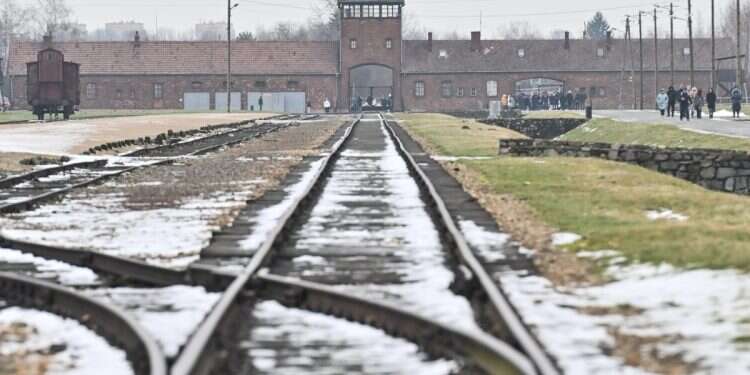
A view of the entrance gate at the former Nazi death camp Auschwitz Birkenau on January 23, 2024 in Oswiecim, Poland | Photo: Omar Marques/Getty Images

The new US ambassador to Poland, Thomas Rose, recently delivered a speech in Warsaw in which he categorically absolved Poland – and by extension the Polish people – of any responsibility whatsoever for the Holocaust. It is difficult to overstate how astonishing such a claim is coming from a senior American diplomat, let alone a Jewish one. Echoing the rhetoric of Poland’s far-right nationalist camp, Rose declared that suggesting Poles had any role in the Shoah was “a grotesque falsehood and the equivalent of a blood libel against the Polish people and Polish nation.”

This astonishing distortion of history coincided with a parallel diplomatic storm. Last week, Yad Vashem published a brief historical note on social media: “Poland was the first country where Jews were forced to wear a distinctive badge in order to isolate them from the surrounding population.” These are uncontested historical facts. Yet the Polish government responded with fury. The Auschwitz-Birkenau State Museum – funded and overseen by the Polish state – accused Yad Vashem of misleading the public by failing to spell out that Nazi Germany, not Polish authorities, issued and enforced the badge decree.
.
Survivors light candles as they pay tribute to the Holocaust victims during the ceremony for the 80th anniversary of the liberation of the Auschwitz camp on January 27, 2025 in Oswiecim, Poland (Photo: Sean Gallup/Getty Images)

The reaction spiraled instantly. Foreign Minister Radosław Sikorski, Prime Minister Donald Tusk, the government’s IPN institute, and the Auschwitz Museum all condemned the post. Warsaw summoned Israel’s ambassador. Officials demanded that Yad Vashem explicitly clarify in the original post itself that Poland was under German occupation, insisting that failure to insert the adjective “occupied” amounted to an attack on the Polish nation. Yad Vashem noted that the linked article clearly explained this context – yet Polish leaders declared the explanation insufficient.

What we are witnessing is not a misunderstanding. It is a symptom of a deeper and more dangerous trend: the systematic re-engineering of Holocaust memory in Eastern Europe, and in Poland most of all.

A fragile national identity and a rigid historical orthodoxy

No serious historian disputes that Nazi Germany planned, implemented, and carried out the genocide of Europe’s Jews. Nor does anyone deny that Poland suffered enormously under occupation. But history is more complicated than national mythmaking allows. As scholars such as Jan Gross, Jan Grabowski, and Barbara Engelking have demonstrated, roughly two-thirds of the Jews in hiding in Poland were betrayed or killed with the direct involvement of Polish citizens. Both realities – German responsibility and local complicity – are true simultaneously.

Yet in contemporary Poland, even acknowledging these parallel truths is treated as heresy. The fury over the Yad Vashem post rests on a brittle premise: that any wartime reference to “Poland” without the word “occupied” is a slander against the nation. In Belgium, France, or the Netherlands, historians are not required to pepper every sentence with “occupied.” Everyone understands the context. But in Poland, this insistence has become almost theological – because it guards a deeper anxiety: that Poles were not only victims, but in some cases victimizers.

Jedwabne and the return of the buried past

Nowhere is this clearer than in the enduring trauma of Jedwabne. On July 10, 1941, hundreds of Jews were murdered in that village by their Polish neighbors – burned alive in a barn while the crowd jeered. For decades, the memorial plaque falsely attributed the massacre to the German occupiers. Villagers knew this was a lie. Only with Jan Gross’s “Neighbors” did the truth become impossible to ignore: the perpetrators were locals, not Nazis. Similar pogroms occurred in nearby towns such as Radziłów, Szczuczyn, and Wąsosz.

The political backlash was swift. By 2018, the Polish parliament passed Article 55A, criminalizing public statements that assert Polish participation in Nazi crimes. Government-aligned groups sued historians Grabowski and Engelking for documenting how Jews in hiding were betrayed by their Polish neighbors. Although higher courts eventually acquitted them, the message was unmistakable: writing honestly about Polish complicity is a dangerous act.

This pattern is not unique to Poland. Hungary’s House of Terror Museum presents the Hungarian nation almost exclusively as a victim, erasing the Hungarian state’s central role in deporting 430,000 Jews to Auschwitz. Across Eastern Europe, governments cloak historical revisionism in the language of patriotism, using museums, curricula, and official rhetoric to transform complex histories into comforting myths.

Rose’s distortion – and Poland’s fury

Distorting Holocaust history corrodes public understanding of the genocide, dishonors its victims, and weakens the moral foundations of the postwar international order. If nations can rewrite their own past – sanitizing collaboration, erasing local antisemitism, and recasting their populations solely as heroic resisters – then the Holocaust becomes not a universal warning, but a political tool.

This is the broader context in which Ambassador Rose’s remarks and the Polish government’s outrage must be understood. Rose adopted a narrative increasingly promoted by Poland’s nationalist right: that any suggestion of Polish involvement in the persecution of Jews is “a grotesque falsehood” and “a blood libel.” Meanwhile, Polish officials erupted over a factual Yad Vashem post – summoning diplomats, demanding edits, and condemning historians – not because the facts were wrong, but because the facts were uncomfortable.

The truth is neither simple nor convenient: Germany committed the genocide, and some Poles helped hunt down their Jewish neighbors. To deny either reality is to deny history itself.


Daniel Schatz holds a doctorate in Political Science, is an author and columnist. He has been a Visiting Scholar at Harvard, Stanford, Georgetown, Columbia University, and the Hebrew University of Jerusalem.


Zawartość publikowanych artykułów i materiałów nie reprezentuje poglądów ani opinii Reunion’68,
ani też webmastera Blogu Reunion’68, chyba ze jest to wyraźnie zaznaczone.
Twoje uwagi, linki, własne artykuły lub wiadomości prześlij na adres:
webmaster@reunion68.com


Pro-Israel Lawyers Challenge UK University Academic’s Boycott of Israeli Scholar


Pro-Israel Lawyers Challenge UK University Academic’s Boycott of Israeli Scholar

Shiryn Ghermezian


The entrance to Hebrew University of Jerusalem’s Mount Scopus campus. Photo: Wikimedia Commons

An association of lawyers who support Israel is demanding the University of East Anglia (UEA), located in Norwich, England, investigate and take disciplinary action against a senior academic who refused to consider an application from a researcher because the latter was from an Israeli university, the group announced on Friday.


Zawartość publikowanych artykułów i materiałów nie reprezentuje poglądów ani opinii Reunion’68,
ani też webmastera Blogu Reunion’68, chyba ze jest to wyraźnie zaznaczone.
Twoje uwagi, linki, własne artykuły lub wiadomości prześlij na adres:
webmaster@reunion68.com


Does it matter that they’re lying about Israel?


Does it matter that they’re lying about Israel?

Jonathan S. Tobin


The blood libels against Israel keep being repeated, even as evidence that the charges of genocide and starvation were untrue continues to pile up.
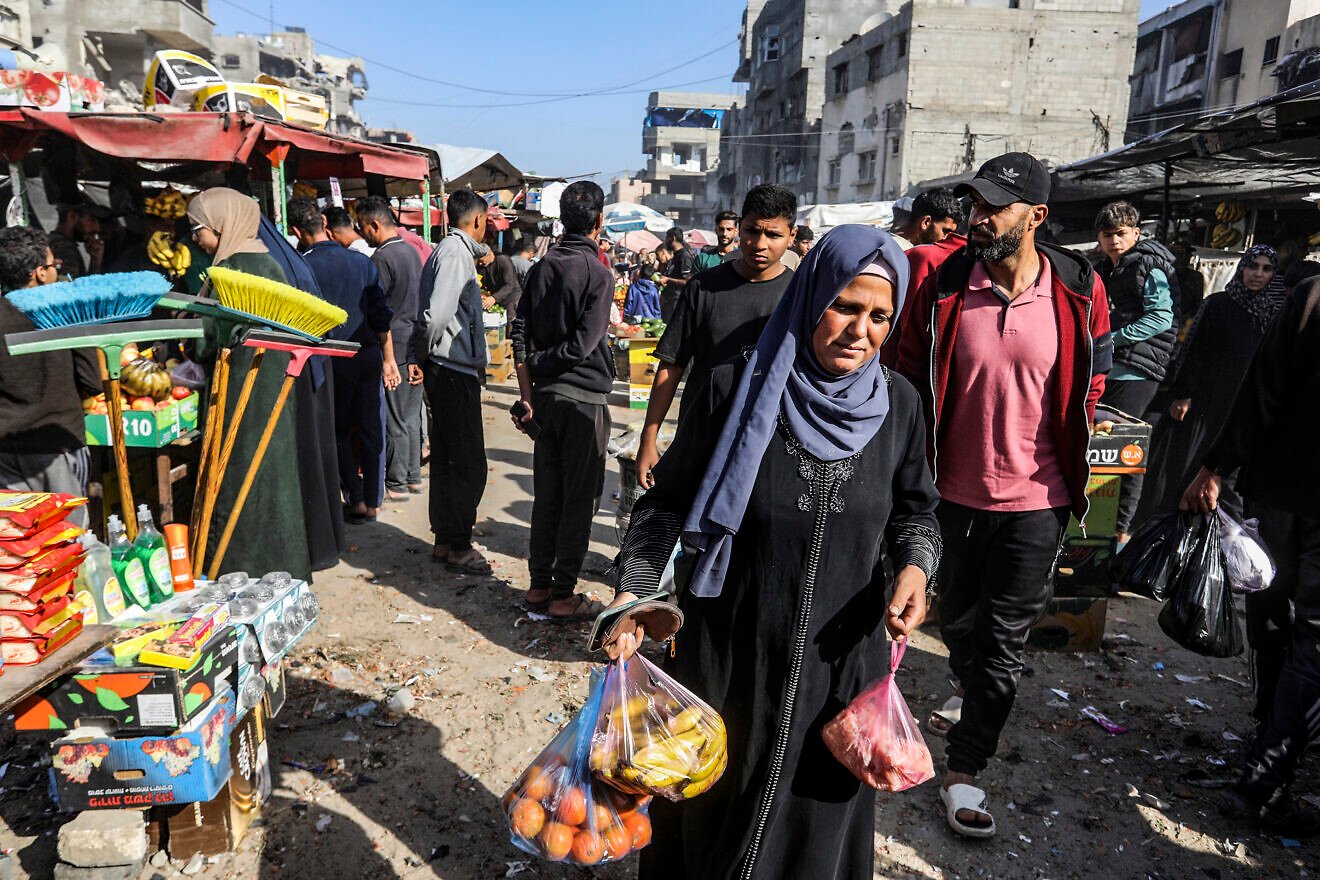
Palestinians shop at a market in Khan Yunis, in the southern Gaza Strip, on Nov. 21, 2025. Photo by Abed Rahim Khatib/Flash90.

A curious thing happened last week in Israel. More than 100 military officers from 20 countries attended an international conference hosted by the Israel Defense Forces. Among them were representatives from countries that had falsely accused the Jewish state of committing war crimes, deliberate starvation or even genocide in Gaza during the war with Hamas that followed the Palestinian terrorist attacks on Israel on Oct. 7, 2023.

While there, they visited the sites of the Oct. 7 massacres and attended briefings about the challenges presented by urban warfare as well as discussions of how the IDF used AI, drones, artillery and medical services for the wounded.

Some nations, like the United Kingdom, whose left-wing government continues in its vitriolic demonization of the Jewish state and has passively accepted the growing mainstreaming of antisemitism in British society, boycotted the event. But others who were just as vociferous in backing up the claims that what Israel had done in Gaza was uniquely awful, such as France and Canada, showed up alongside representatives from friendlier countries like the United States, the Czech Republic and Hungary.

They were accompanied by officers from Germany, Finland, India, Greece, Cyprus, Poland, Austria, Estonia, Japan, Morocco, Romania, Serbia and Slovakia. Many have either joined in the international community’s Israel-bashing, recognized “Palestine” as an independent, albeit still non-existent, country or chose not to stand with Israel during the past two years as it fought for its life against genocidal Islamist terrorists.

They don’t really believe the lies

That Israel has much to teach the world about the use of high-tech and intelligence in warfare, added to its expertise in avoiding civilian casualties and how to deal with emergencies, is nothing new. The Israelis have been sharing their knowledge in these and other topics with other nations for decades. So, in that sense, the military conference wasn’t all that newsworthy.

But it matters because it shows that many of those countries that tacitly or openly endorsed the blood libels against Israel during the course of the war that, at least temporarily, concluded with the ceasefire-hostage release deal brokered by the United States in October, don’t really believe the accusations. If they did, they wouldn’t have been there or subsequently, members of their delegations would have spoken about alleged links between Israeli military tactics and the claims of mass murder.

Except they didn’t. Because those claims don’t exist.

As military experts, like British Col. Richard Kemp and U.S. urban warfare researcher John Spencer have pointed out, the evidence for “genocide,” famine or indiscriminate killings of civilians doesn’t exist because none of it happened. Israel’s army is, in fact, the most moral in the world, with a record in combat with respect to civilian casualties that is superior to that of any other nation.

Israel fought a war in Gaza against a tenacious enemy that had attacked across the border between the Jewish state and the Hamas state (in all but name), committing the largest mass slaughter of Jews since the Holocaust. Hamas deliberately used civilians as human shields and built its fortifications in and around as well as under schools, hospitals and dwellings where ordinary Palestinian Arabs lived. Yet the IDF still fought under rules of engagement that were not only highly restrictive and humane, but also stand in stark contrast to the orgy of murder, rape, torture, kidnapping and wanton destruction that the Palestinians engaged in when they attacked Jewish communities in southern Israel.

As happens in war, a great many Gazans died during the subsequent fighting, others were wounded, and everyone in the area suffered in one way or another. Claims of Palestinian civilian casualties were vastly exaggerated by Hamas propagandists, but despite claims to the contrary, the ratio between civilian and Hamas combatant deaths in Gaza (which Israel-bashers never mention) was roughly one to one. That’s an unprecedentedly low number in the history of urban warfare. And it’s far lower than the number of civilians killed in Iraq by U.S. and allied forces during that Mideast war earlier this century or by Allied armies during World War II.

We can point out that the claims of famine and starvation so prevalent during the past summer simply evaporated once the fighting stopped—and not because of any increase in the supply of food in Gaza. Rather, it’s because, thanks to the ceasefire, Hamas is back in firm control of much of the area, and there is no longer any propaganda value in making false claims about how people are faring under its rule.

The ‘genocide’ narrative

Nevertheless, the narrative about “genocide” and famine continues to be repeated by media outlets like The New York Times, commentators like former Fox News host Tucker Carlson and New York City mayor-elect Zohran Mamdani, who did so live on television during his meeting last week with President Donald Trump.

To his discredit, the president did not contradict Mamdani. But he’s not alone in letting lies like that go unanswered. Much like the false claims that democratic Israel is an “apartheid” state are routinely mouthed by the ignorant, so, too, the lies about genocide have simply become part of the language of contemporary discourse, despite being disconnected from the facts. The lies about Israel blend into Mamdani’s left-wing version of antisemitism. They do the same for Carlson’s right-wing narratives about Zionism being an enemy of Western civilization. That shows that he has gone beyond platforming radical antisemites like the neo-Nazi “groyper” Nick Fuentes to mimicking their hatred.

In the face of the calumnies spewed by officeholders like Mamdani and populist hate-mongers like Carlson, it often seems like the facts don’t matter.

Inconvenient information that debunks the lies about genocide doesn’t matter to ideologies like the myths about race, intersectionality and settler-colonialism in which Jews and Israelis are falsely depicted as “white” oppressors, no matter what they do, and Palestinians are always considered oppressed victims. These toxic ideas are the guiding principles of Mamdani’s public career in much the same way that Carlson’s and Fuentes’s blend of religious-based hate has led them to their obsessive hatred for Israel and the Jews.

Facts and truth are of no use in debating products of the bizarre red-green alliance of Marxism and Islamism that produced Mamdani. The same is true for his right-wing counterparts in spewing hate.

No one is going to persuade Mamdani or Carlson that their information—if indeed their beliefs are actually based on anything other than their ideological obsessions—about Israel is incorrect. Nor will we do so for those chanting for Jewish genocide (“From the river to the sea”) and terrorism against Jews everywhere (“Globalize the intifada”), all the while calling the intended victims of these atrocities “Nazis.” Citing objective facts about the war or the reality of life in democratic Israel or a Palestinian society dominated by Islamist doctrines that are little different from a death cult will simply fall on deaf ears.

Not everyone is listening to the hate-mongers

But something that many friends of Israel can sometimes forget amid the deluge of antisemitic invective hurled at them and their cause is that most Americans aren’t listening to either Mamdani or Carlson, or agreeing with those who refuse to be judgmental about their hate. The vast majority of people in the United States remain distrustful of political extremists and are, when presented with facts, persuadable.

The false charges that are hurled at Israel hurt, especially when, thanks to a biased media, they migrate from the fever swamps of the far left and right to mainstream public discourse. When magnified by the algorithms of social-media platforms like TikTok, they can metastasize into a growing chorus of hate echoed by a generation that relies on such untrustworthy sources for their information about the world. And that is another reason why those outlets, like JNS, that do tell the truth about the conflict, are more important than ever. 

Yet as we saw with last week’s conference in Israel, the vast distance between left-wing or right-wing antisemitic canards rooted in Hamas propaganda and the truth is sometimes very easy to discern.

As infuriating as it can be to have to witness the way blood libels about “genocide” have become commonplace, those falsehoods aren’t strong enough to demolish the reality of Israel. The nation is not perfect, nor are all of its people. But the Jewish state survived the horrors of Oct. 7 and then went on to defeat its Iranian, Hezbollah and Hamas foes, and did so while still preserving its standards and humanity. Those of us who care about it and the truth know who is lying and who is not. We should be equally certain that the Israel Mamdani and Carlson and their various followers wish to destroy will still be standing long after its opponents have passed from the scene.


Jonathan S. Tobin is editor-in-chief of the Jewish News Syndicate, a senior contributor for The Federalist, a columnist for Newsweek and a contributor to many other publications. He covers the American political scene, foreign policy, the U.S.-Israel relationship, Middle East diplomacy, the Jewish world and the arts. He hosts the JNS “Think Twice” podcast, both the weekly video program and the “Jonathan Tobin Daily” program, which are available on all major audio platforms and YouTube. Previously, he was executive editor, then senior online editor and chief political blogger, for Commentary magazine. Before that, he was editor-in-chief of The Jewish Exponent in Philadelphia and editor of the Connecticut Jewish Ledger. He has won more than 60 awards for commentary, art criticism and other writing. He appears regularly on television, commenting on politics and foreign policy. Born in New York City, he studied history at Columbia University.


Zawartość publikowanych artykułów i materiałów nie reprezentuje poglądów ani opinii Reunion’68,
ani też webmastera Blogu Reunion’68, chyba ze jest to wyraźnie zaznaczone.
Twoje uwagi, linki, własne artykuły lub wiadomości prześlij na adres:
webmaster@reunion68.com