Archives

Palestinian Islamic Jihad Said to Be Expanding Military Presence in Syria With Government’s Knowledge


Palestinian Islamic Jihad Said to Be Expanding Military Presence in Syria With Government’s Knowledge

Ailin Vilches Arguello


Terrorists stand during the funeral of two Palestinian Islamic Jihad gunmen who were killed in an Israeli raid, in Jenin refugee camp, in the West Bank on May 10, 2023. Photo: REUTERS/Raneen Sawafta

The Palestinian Islamic Jihad (PIJ) terrorist group is reportedly expanding its military presence in Syria, a move that could put the Syrian government in violation of US conditions for restoring full diplomatic ties and lifting additional economic sanctions

According to Israeli public broadcaster Kan News, PIJ has expanded its military wing — the al-Quds Brigades — within Syria in recent weeks, notably increasing activity in Palestinian refugee camps near Damascus, apparently with the full knowledge of the Syrian government.

Syrian President Ahmed al-Sharaa is said to have appointed an envoy to oversee PIJ’s activities in the country, responsible for facilitating communications between the Palestinian terrorist group and the government, Kan reported.

However, a government security source denied such accusations, saying there is “no intention to allow military operations against Israel,” which borders Syria.

PIJ also denied reports of intensified activity in Syria, saying they are entirely fabricated and intended to provoke hostility against the Palestinian people and their refugee camps.

Following the United States’ recent statements that it does not support Israeli airstrikes in Syria, the embattled Middle Eastern country could now provide a particularly convenient base for PIJ, allowing the group to expand its operations with less risk of Israeli retaliation.

Under the Trump administration, Washington has lifted sanctions on the Syrian government to support the country’s reconstruction efforts and pushed for Damascus to normalize relations with Israel. Earlier this month, US President Donald Trump hosted Sharaa for the first-ever visit by a Syrian president to Washington, DC, vowing to help Syria as the war-ravaged country struggles to come out of decades of international isolation.

To pave the way for the full restoration of US diplomatic relations, deeper economic ties, and the lifting of additional economic sanctions, Washington has set five conditions for the Syrian government, including deporting Palestinian militants, joining the Abraham Accords with Israel, and expelling foreign terrorists.

The government must also help prevent an Islamic State (ISIS) resurgence and take responsibility for detention facilities holding ISIS fighters, supporters, and their families in the northeast.

If the Syrian government is aware of the reported PIJ activity, it risks jeopardizing its relationship with Washington by effectively endorsing the operations of a designated foreign terrorist organization — in open defiance of a key condition for improving bilateral ties.

As Damascus seeks to restore international credibility and strengthen its standing on the global stage, Israeli officials have remained highly cautious of Syria’s new leadership.

Israeli Foreign Minister Gideon Saar has previously described the current Syrian regime as “a jihadist Islamist terror group from Idlib that took Damascus by force.”

He has even warned senior European officials that Hamas and PIJ were operating in Syria to create an additional front against Israel

“We will not compromise the security on our border. Hamas and Palestinian Islamic Jihad are acting in Syria to create another front against Israel there,” the top Israeli diplomat said earlier this year.

According to Hebrew media reports, Defense Minister Israel Katz warned lawmakers in Israel’s parliament, the Knesset, this week that armed groups operating inside Syria, including the Yemen-based Houthis, are considering launching attacks on the Golan Heights, a strategic region on Israel’s northern border previously controlled by Syria.

Hamas, PIJ, and the Houthis are all backed by Iran, which provides the internationally designated terrorist groups with arms and funding.

Israel has consistently vowed to prevent the Syrian government from deploying forces in the country’s southern region, along its northeastern border.

Sharaa, a former al Qaeda commander who until recently was sanctioned by the US as a foreign terrorist with a $10 million bounty on his head, became Syria’s transitional president earlier this year after leading a rebel campaign that ousted long-time Syrian leader Bashar al-Assad, whose brutal and authoritarian Iran-backed rule had strained ties with the Arab world during the nearly 14-year Syrian war.

The collapse of Assad’s regime was the result of an offensive spearheaded by Sharaa’s Islamist Hayat Tahrir al-Sham (HTS) group, a former al Qaeda affiliate.

Following Assad’s fall in December, Israel moved troops into a buffer zone along the Syrian border to secure a military position to prevent terrorists from launching attacks against the Jewish state. 

The previously demilitarized zone in the Golan Heights was established under the 1974 Disengagement of Forces Agreement between Damascus and Jerusalem that ended the Yom Kippur War. However, Israel considered the agreement void after the collapse of Assad’s regime.

Now, Israel and Syria are reportedly in the final stages of months-long negotiations over a security agreement that could establish a joint Israeli, Syrian, and US presence at key strategic locations.

Jerusalem and Damascus have agreed to form a joint Israeli-Syrian-American security committee to oversee developments along their shared border and uphold the terms of a proposed deal.

Al-Sharaa told The Washington Post earlier this month that his government has expelled Iranian and Hezbollah forces from Syria and is ready for a new phase of ties with the United States. However, Syria’s reported knowledge of PIJ activity may be a hurdle as talks between Washington, Damascus, and Jerusalem proceed.

Earlier this year, tensions escalated after heavy fighting broke out in Sweida between local Druze fighters and Syrian regime forces amid reports of atrocities against civilians.

At the time, Israel launched an airstrike campaign to protect the Druze, which officials described as a warning to the country’s new leadership over threats to the minority group. The Druzean Arab minority who practice a religion originally derived from Islam, live in Israel, Syria, and Lebanon. In Israel, many serve in the military and police, including during the war in Gaza.

Jerusalem has pledged to defend the Druze community in Syria with military force if they come under threat — motivated in part by appeals from Israel’s own Druze minority.

But the Syrian government has accused Israel of fueling instability and interfering in its internal affairs, while the new leadership insists it is focused on unifying the country after 14 years of conflict, which began with Assad violently cracking down on anti-government protests in 2011.


Zawartość publikowanych artykułów i materiałów nie reprezentuje poglądów ani opinii Reunion’68,
ani też webmastera Blogu Reunion’68, chyba ze jest to wyraźnie zaznaczone.
Twoje uwagi, linki, własne artykuły lub wiadomości prześlij na adres:
webmaster@reunion68.com
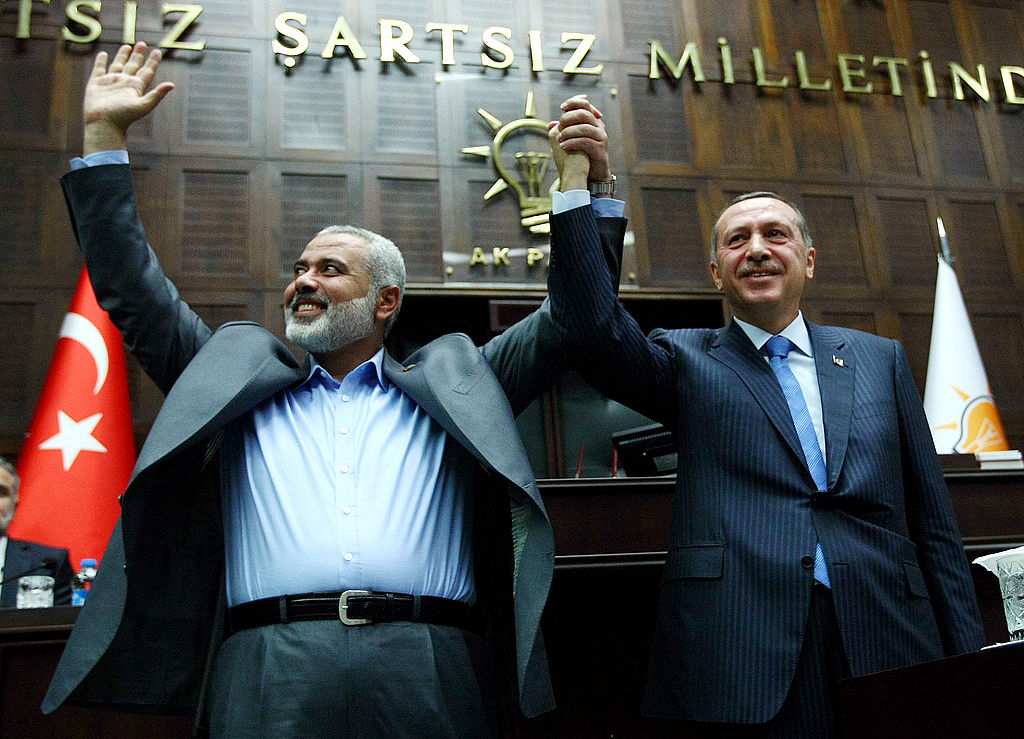
Turcja udaremnia próby Trumpa rozbrojenia Hamasu i zaprowadzenia pokoju na Bliskim Wschodzie

W obliczu rosnących ambicji Turcji i Kataru, by odegrać znaczącą rolę w odbudowie Gazy, perspektywa rozbrojenia Hamasu i przekazania przez niego władzy staje się jeszcze mniej prawdopodobna. Na zdjęciu: Prezydent Turcji Recep Tayyip Erdoğan (po prawej) oddaje hołd ówczesnemu przywódcy Hamasu Ismailowi ​​Haniyehowi w parlamencie w Ankarze, w Turcji, 3 stycznia 2012 r. (Zdjęcie: Adem Altan/AFP via Getty Images)


Turcja udaremnia próby Trumpa rozbrojenia Hamasu i zaprowadzenia pokoju na Bliskim Wschodzie

Con Coughlin
Tłumaczenie: Andrzej Koraszewski


Próby prezydenta Turcji Recepa Tayyipa Erdoğana, by odegrać kluczową rolę w tworzeniu “międzynarodowych sił bezpieczeństwa” dla Gazy, stanowią poważne zagrożenie dla wysiłków prezydenta USA Donalda J. Trumpa zmierzających do rozbrojenia terrorystów z Hamasu i nie wróżą dobrze jego staraniom o pokój na Bliskim Wschodzie.

Jednym z kluczowych postulatów 20-punktowego planu Trumpa na rzecz zakończenia konfliktu w Gazie jest rozbrojenie Hamasu i zakończenie jego szkodliwej kontroli nad Strefą Gazy. Dopiero po spełnieniu tych warunków miałyby się rozpocząć negocjacje na temat trwałego zawieszenia broni i odbudową enklawy w celu osiągnięcia trwałego pokoju po dwóch latach brutalnego konfliktu.

Trump wyraźnie zadeklarował swoje zobowiązanie do usunięcia Hamasu z Gazy, nawet jeśli – jak ma to obecnie miejsce – ta islamistyczna organizacja terrorystyczna nie wykazuje żadnej woli podporządkowania się jego planowi pokojowemu.

W wypowiedziach z początku obowiązywania pierwszego etapu sponsorowanego przez USA zawieszenia broni w Gazie, Trump zagroził przymusowym rozbrojeniem Hamasu, jeśli ten nie zastosuje się do jego warunków. “Jeśli Hamas nie rozbroi się w rozsądnym terminie, my ich rozbroimy” – ostrzegł prezydent.

Tymczasem Hamas, zamiast wykazywać jakąkolwiek gotowość do rezygnacji z władzy w Gazie, wykorzystał zawieszenie broni do ponownego umocnienia swojej kontroli nad częścią terytorium, rozmieszczając tysiące funkcjonariuszy “bezpieczeństwa” i dokonując publicznych egzekucji przeciwników politycznych.

W obliczu rosnących ambicji Turcji i Kataru, by odegrać znaczącą rolę w odbudowie Gazy, perspektywa rozbrojenia Hamasu i przekazania przez niego władzy staje się jeszcze mniej prawdopodobna.

W ramach prób zakończenia walk w Gazie, Trump planuje stworzenie wielonarodowych sił złożonych z krajów muzułmańskich, których zadaniem byłoby utrzymanie porządku na tym obszarze w trakcie negocjacji dotyczących jego przyszłości.

Choć szczegóły działania tych sił w Gazie pozostają niejasne, powszechnie zakłada się, że jednym z ich celów będzie rozbrojenie grup terrorystycznych, takich jak Hamas.

Wiceprezydent USA JD Vance, przemawiając w ubiegłym miesiącu w Izraelu, stwierdził, że to właśnie te siły “przejmą prowadzenie w rozbrajaniu Hamasu”, choć przyznał, że będzie to “proces długotrwały i w dużym stopniu zależny od składu tych sił”.

Król Abdullah II z Jordanii próbował ostrzec Trumpa pod koniec października:

“Mamy nadzieję, że będzie to misja pokojowa, bo jeśli będzie to narzucanie pokoju siłą, nikt nie będzie chciał się w to mieszać… Jeśli będziemy chodzić po Gazie z bronią, to nie jest sytuacja, w którą jakiekolwiek państwo chciałoby się angażować”.

Zakończenie dwudziestoletnich rządów Hamasu nad Gazą uznawane jest za kluczowe dla zapewnienia trwałej stabilizacji regionu. Oprócz znacznego wzmocnienia bezpieczeństwa Izraela na jego południowej granicy, wyzwoliłoby to również palestyńskich cywilów spod opresyjnej władzy islamistycznej organizacji terrorystycznej.

Plan Trumpa może jednak zostać storpedowany przez państwa popierające Hamas, takie jak Turcja i Katar. Erdoğan już zapowiedział, że chce odegrać kluczową rolę w przyszłości Gazy, oferując wysłanie 2000 tureckich żołnierzy do proponowanych sił stabilizacyjnych Trumpa – propozycja ta została jednoznacznie odrzucona przez Izrael. Rzecznik premiera Benjamina Netanjahu oświadczył jasno: “Nie będzie tureckich żołnierzy w Gazie”.

Izrael stanowczo sprzeciwia się obecności tureckich wojsk w Gazie, co jest skutkiem dramatycznego pogorszenia relacji między Jerozolimą a Ankarą po ataku Hamasu na Izrael 7 października 2023 roku. Erdoğan odpowiedział na te wydarzenia, wychwalając Hamas, zawieszając handel z Izraelem i zamykając turecką przestrzeń powietrzną dla izraelskich samolotów.

Erdoğan, który próbuje zastąpić Katar jako głównego pośrednika Hamasu w negocjacjach z USA, oskarżył Izrael o zbrodnie przeciwko ludzkości i niedawno wydał nakazy aresztowania 37 izraelskich urzędników – w tym Netanjahu – pod zarzutem “ludobójstwa” w Gazie.

Od dawna deklaruje również, że “Jerozolima to nasze miasto”. Jeszcze w ubiegłym miesiącu Erdoğan rozmawiał ze swoimi doradcami o konieczności zaatakowania Izraela:

“Nikt już nie może go [Izraela] uratować…” – mówił 6 października.

“Trzeba go zdyscyplinować wojną… Wojna i siła powinny zmusić Izrael do klęknięcia… Choć brzmi to ‘ekstremalnie’, wojna turecko-izraelska jest nieunikniona… Czas Izraela dobiega końca… Jerozolima zostanie wyzwolona! Izrael nie będzie miał wyboru – będzie musiał uklęknąć przed Turcją. To jedyny sposób, by mógł przetrwać… W umyśle człowieka, który po 86 latach ponownie otworzył Hagia Sophię, jest jasno określony plan wyzwolenia Jerozolimy i rozliczenia roku 1917.”

Pomimo gwałtownego sprzeciwu Izraela, Erdoğan liczy na to, że jego dobre relacje z Trumpem skłonią prezydenta USA do zignorowania izraelskich obaw i dopuszczenia Turcji do kluczowej roli w rozmowach o przyszłości Gazy.

Jeśli Trump na to pozwoli, jego próby rozbrojenia Hamasu i osiągnięcia pokoju mogą zostać podważone. Zamiast kończyć udział organizacji terrorystycznej w polityce Gazy, Ankara wzywa Hamas do współpracy z Autonomią Palestyńską w celu utworzenia nowej administracji dla tego terytorium.

Erdoğan stara się również o zakup myśliwców F-35 od USA. Do jakich celów mógłby je wykorzystać? Kongres słusznie zablokował tę transakcję, dopóki Turcja nie pozbędzie się rosyjskiego systemu obrony powietrznej S-400.

Determinacja Erdoğana, by odgrywać czołową rolę w rozmowach o przyszłości Gazy – w tym w planie Trumpa dotyczącym powołania międzynarodowych sił stabilizacyjnych – była wyraźnie widoczna na szczycie liderów muzułmańskich, który odbył się w tym miesiącu w Stambule. W spotkaniu uczestniczyli przedstawiciele Arabii Saudyjskiej, Kataru, Zjednoczonych Emiratów Arabskich, Jordanii, Pakistanu i Indonezji – krajów, które zadeklarowały gotowość wsparcia sił dla Gazy.

Po konferencji minister spraw zagranicznych Turcji Hakan Fidan powiedział dziennikarzom, że Turcja chce jak najszybszego “wewnętrznego palestyńskiego pojednania” między Hamasem a Autonomią Palestyńską (PA), kierowaną przez Mahmuda Abbasa. Fidan przekonywał, że takie pojednanie “wzmocniłoby reprezentację Palestyny w społeczności międzynarodowej”.

Turecka propozycja pogodzenia Hamasu z PA stoi w jawnej sprzeczności z podstawowym założeniem planu pokojowego Trumpa, który wymaga, by organizacja terrorystyczna nie tylko się rozbroiła, ale i całkowicie wycofała z politycznego życia Gazy. Realizacja tureckich postulatów oznaczałaby dla Hamasu ocalenie i umożliwiła mu dalsze realizowanie swojej terrorystycznej agendy.

Administracja Trumpa może uznać tureckie zaangażowanie za niezbędne dla osiągnięcia porozumienia w Gazie. Musi jednak zrozumieć, że jeśli Bliski Wschód ma kiedykolwiek zaznać trwałego pokoju, udział Turcji całkowicie podważy cel Trumpa, jakim jest zmuszenie Hamasu do rozbrojenia.


Con Coughlin jest redaktorem ds. obrony i spraw zagranicznych w “The Telegraph” oraz członkiem zespołu Instytutu Gatestone.


Zawartość publikowanych artykułów i materiałów nie reprezentuje poglądów ani opinii Reunion’68,
ani też webmastera Blogu Reunion’68, chyba ze jest to wyraźnie zaznaczone.
Twoje uwagi, linki, własne artykuły lub wiadomości prześlij na adres:
webmaster@reunion68.com

End of Impunity: Antifa, Public Enemy No. 1


End of Impunity: Antifa, Public Enemy No. 1

Drieu Godefridi


  • The terrorist designation by the US federal government, which is not a slogan, derives from Section 219 of the Immigration and Nationality Act (8 U.S.C. § 1189) and from Executive Order 13224 (2001, Bush). Any foreign organization that threatens the security of US nationals or US national security must be placed on the FTO list and have its assets seized.
  • The criteria are explicit: systematic use of violence, transnational scope, political intent. Antifa meets all three. It is a transnational terrorist organization whose existence much of the mainstream media stubbornly refuse to acknowledge.
  • The State Department leaves no room for ambiguity: “Left-wing terrorism does not enjoy ideological immunity.” Why is there not the same moral clarity in Western Europe?
  • The American decision — neither an ideological crusade nor a publicity stunt — is a proportionate response to proven crimes. The four designated groups are not “radical activists”: they are terrorists who kill, maim and destroy in the name of an outdated totalitarian utopia — or even a not-outdated one — that aligns itself with Islamic jihadists declaring that they would like to take over the planet. Liberal democracies have a duty to defend themselves — without complacency, without naïveté, and with the full rigor of the law.
  • Can we in Europe expect Antifa members to be intercepted in the same manner as drug-trafficking vessels in the Caribbean?

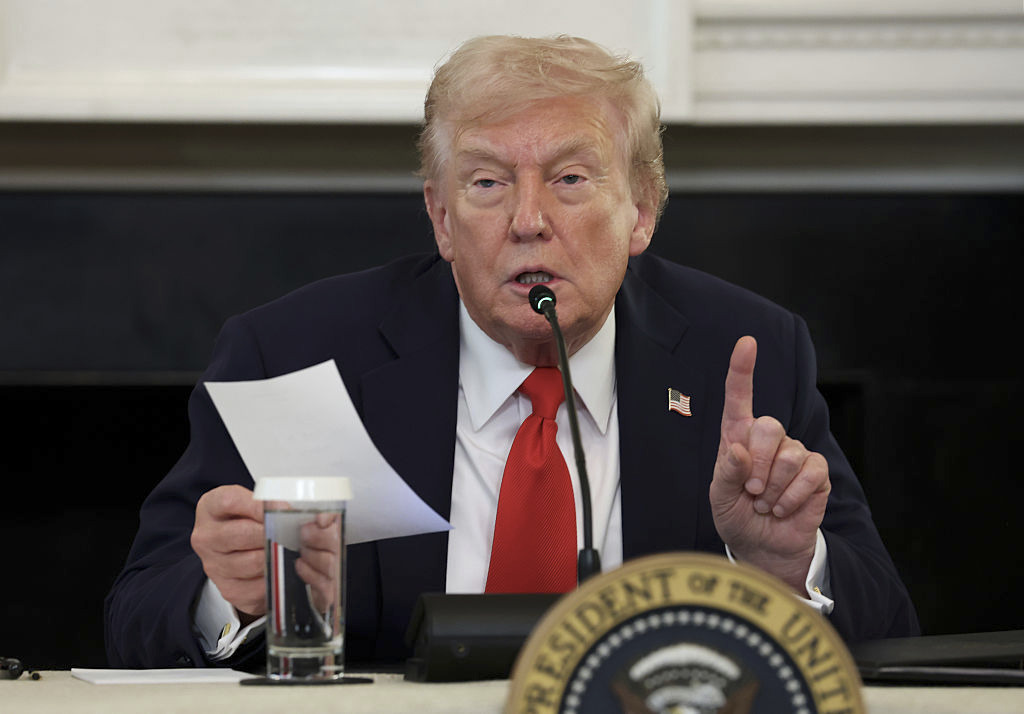
The criteria for designation as a terrorist organization are explicit: systematic use of violence, transnational scope and political intent. Antifa meets all three. It is a transnational terrorist organization whose existence much of the mainstream media stubbornly refuse to acknowledge. Pictured: President Donald Trump at a roundtable discussion about the Antifa organization, in the White House on October 8, 2025 in Washington, DC. (Photo by Anna Moneymaker/Getty Images)

On November 13, 2025, the US State Department added four European terrorist organizations to its list of Foreign Terrorist Organizations (FTOs): Antifa Ost (Germany), the International Revolutionary Front (Italy), Armed Proletarian Justice (Greece) and Revolutionary Class Self-Defense (Greece).

This decision by the US administration was based on overwhelming evidence: knife and hammer attacks, shootings, bombings and the use of improvised explosive devices that targeted civilians, public infrastructure and private businesses.

The move forms part of a wider transatlantic dynamic launched by Hungary. In September 2025, the Hungarian government — after a series of attacks in Budapest in which Antifa Ost torched police vehicles, destroyed shops, and carried out targeted assaults on right-wing activists — designated the group as a terrorist organization. Earlier in September, the US classified Antifa as a domestic terrorist organization.

The attacks in Hungary occurred in February 2023, during the commemoration of “Honor Day,” marking the end of the Second World War. Five coordinated assaults targeted nine individuals perceived as “right-wing activists.” The attackers — fifteen militants, including Germans and Italians — used hammers, telescopic batons, tear gas and brass knuckles. Four of the victims sustained serious injuries: multiple fractures, head trauma and irreversible damage. These actions, which led to arrests in Hungary, Germany and Italy, sparked a diplomatic scandal. The election of Italian citizen Ilaria Salis  allegedly one of the perpetrators of the violent attacks  to the European Parliament in 2024 granted her parliamentary immunity. As a co-author of these despicable acts, she is now funded by the European taxpayer. Salis spent several months in detention in Hungary over her alleged role in the assaults, but after she was elected as an MEP, the parliamentary immunity she gained resulted in her release.

Washington has begun applying the same method it uses against Islamist organizations and drug cartels: shutting these networks out of the American and international financial system, freezing their assets and prosecuting all those who provide logistical or ideological support. The consequences are immediate: any person or entity residing in the United States who materially assists these groups faces penalties of up to 20 years in prison.

Documented Violence, Not Rhetoric

Antifa Ost, based in Leipzig and Berlin, has claimed responsibility for dozens of assaults. These include a hammer attack on a conservative gathering in Saxony and arson at a Bavarian police training center. The International Revolutionary Front, active in Milan and Turin, has circulated manuals on making homemade explosives and has staged ambushes against marches of trade-unions it deems “reformist.” In Greece, two of the organizations designated as FTOs by the State Department operate in tandem: Armed Proletarian Justice claimed responsibility for planting a bomb near the riot police headquarters in Goudi, Greece on December 18, 2023; Revolutionary Class Self-Defense claimed responsibility for two IED attacks targeting the Greece Ministry of Labor (February 3, 2024) and the Hellenic Train offices (April 11, 2025).

These acts were not spontaneous riots but the expression of an explicit doctrine: “strike the class enemy wherever he is found,” a mantra repeated in communiqués posted on encrypted platforms, sometimes relayed by a press that romanticizes violence — provided it is “left-wing.” The phrase “strike the class enemy wherever he is found” appears to echo Marxist-Leninist rhetoric, often used in revolutionary contexts to justify direct action against perceived capitalist or fascist oppressors. While direct, verbatim uses by self-identified Antifa groups are rare in public records (due to their decentralized and sometimes encrypted nature), it has been documented in analyses of their internal doctrines. Below are key examples in the US:

“The border is everywhere. We can attack it anywhere.” (2019). This quote comes from Willem van Spronsen, a self-described Antifa activist who firebombed an ICE detention center in Tacoma, Washington, on July 13, 2019, in an attack that wounded four officers. The full document, titled “I Am Antifa,” calls for armed resistance against “fascist” institutions such as ICE, and frames borders as a capitalist tool of oppression. It was widely circulated in Portland Antifa circles as inspirational propaganda and aligns with calls to strike “enemies” (such as the capital or the state) at any area of vulnerability.

Video from a 2018 Antifa rally, shared on X, where Antifa militants chanted “Anytime, Anyplace, Punch a NAZI In The Face”while carrying signs such as “It Takes Bullet to Bash Fash.” This promotes on-sight violence against perceived class/racial enemies, disavowed by some Democrats but unchallenged broadly.

“On Sight” Retaliation Calls (2020 Portland Homicide Response). After the killing of Patriot Prayer member Aaron Danielson, Antifa Telegram channels, evidently assuming the victim was an ally of the enemy, called for immediate murderous payback against “fash” (fascists). This recommendation, in practice, reflects “strike wherever found“.

“Do Crime” and Economic Disruption Mottos. Antifa’s self-admitted slogan “Do crime” (see Andy Ngo’s 2021 book, Unmasked: Inside Antifa’s Radical Plan to Destroy Democracy) aims to foster chaos for revolution, including strikes at the “heart” of our cities by general disruptions.

The iconography is always the same: black hoods, hammers, Molotov cocktails, anarcho-communist symbols. The image attached to the State Department communiqué — a masked individual holding an iron bar beating a passer-by lying on the ground — is not staged. It corresponds to footage authenticated by Europol and Germany’s Bundeskriminalamt.

A Legal Response, Not an Ideological One

The terrorist designation by the US federal government, which is not a slogan, derives from Section 219 of the Immigration and Nationality Act (8 U.S.C. § 1189) and from Executive Order 13224 (2001, Bush). Any foreign organization that threatens the security of US nationals or US national security must be placed on the FTO list and have its assets seized.

The criteria are explicit: systematic use of violence, transnational scope and political intent. Antifa meets all three. It is a transnational terrorist organization whose existence much of the mainstream media stubbornly refuse to acknowledge.

Some argue that these groups are “anti-fascist,” as though that alone constituted a legal justification for an onslaught. If you want to beat your dog, you might claim it has rabies. Ironically, these groups behave just like the fascists. Historical anti-fascism — the armed resistance to Nazism — bears no resemblance to today’s left, which in 2025 targets moderate democratic politicians, liberal journalists and business owners accused of “capitalist complicity,” while extending sympathy to Islamist terrorism in the name of “convergence of struggle” (see Douglas Murray, The Strange Death of Europe, 2017.) The State Department leaves no room for ambiguity: “Left-wing terrorism does not enjoy ideological immunity.” Why is there not the same moral clarity in Western Europe?

Transatlantic Implications

The shockwave extends far beyond the United States. Antifa is now a legitimate target for every instrument of the rule of law.

The European Union, under pressure from Hungary and Poland, is considering harmonizing its own terrorist list. Financial flows. such as donations via cryptocurrencies, are being tracked by the US Treasury and Germany’s Federal Intelligence Service. German universities where certain Antifa Ost factions openly recruited students have received federal orders to cooperate.

Freedom to Kill, Provided You Are on the Left?

Criticism of capitalism, peaceful protest and the revival of communist fantasies of equal inequality are not what is at issue here. In the United States, the First Amendment stops where material incitement to violence begins — the 1969 Brandenburg v. Ohio precedent. What the State Department’s decision underscores is that murder and hammer attacks are not acceptable free speech, even when committed by “left-wing” militants.

End of Impunity: Antifa, Public Enemy No. 1

The American decision — neither an ideological crusade nor a publicity stunt — is a proportionate response to proven crimes. The four designated groups are not “radical activists”: they are terrorists who kill, maim and destroy in the name of an outdated totalitarian utopia — or even a not-outdated one — that aligns itself with Islamic jihadists declaring that they would like to take over the planet (such as here and here). Liberal democracies have a duty to defend themselves — without complacency, without naïveté, and with the full rigor of the law.

Can we in Europe expect Antifa members to be intercepted in the same manner as drug-trafficking vessels in the Caribbean?


Drieu Godefridi is a jurist (University Saint-Louis, University of Louvain), philosopher (University Saint-Louis, University of Louvain) and PhD in legal theory (Paris IV-Sorbonne). He is an entrepreneur, CEO of a European private education group and director of PAN Medias Group. He is the author of The Green Reich (2020).


Zawartość publikowanych artykułów i materiałów nie reprezentuje poglądów ani opinii Reunion’68,
ani też webmastera Blogu Reunion’68, chyba ze jest to wyraźnie zaznaczone.
Twoje uwagi, linki, własne artykuły lub wiadomości prześlij na adres:
webmaster@reunion68.com


Somaliland Partnership Could Be a ‘Game Changer’ for Israel in Countering Houthis, Experts Say


Somaliland Partnership Could Be a ‘Game Changer’ for Israel in Countering Houthis, Experts Say

Ailin Vilches Arguello


Smoke billows following an Israeli air strike in Sanaa, Yemen, Sept. 10, 2025. Photo: REUTERS/Khaled Abdullah

Israel’s potential partnership with Somaliland could be a “game changer,” boosting the Jewish state’s ability to counter the Yemen-based Houthi terrorist group while offering strategic and geographic advantages amid shifting regional power dynamics, experts assessed.

The Institute for National Security Studies (INSS), a prominent Israeli think tank, released a new report arguing that Somaliland’s strategic position along the Red Sea, its closeness to Houthi-controlled areas in Yemen, and its willingness to work with pro-Western states could make it a key ally for Israel, benefiting both nations amid rising regional volatility.

Somaliland is an unrecognized state in the Horn of Africa, situated on the southern coast of the Gulf of Aden and bordered by Djibouti to the northwest, Ethiopia to the south and west, and Somalia to the east. 

Unlike most other states in the region, Somaliland has relative security, regular elections, and a degree of political stability — qualities that could make it a valuable partner for international allies and a key player in regional cooperation.

“Somaliland’s significance lies in its geostrategic location and in its willingness — as a stable, moderate, and reliable state in a volatile region — to work closely with Western countries,” the INSS report said. 

“Somaliland’s territory could serve as a forward base for multiple missions: intelligence monitoring of the Houthis and their armament efforts; logistical support for Yemen’s legitimate government in its war against them; and a platform for direct operations against the Houthis,” it continued.

The Iran-backed terrorist group has been waging an insurgency in Yemen for the past two decades in a bid to overthrow the Yemeni government. 

Since 2014, the Houthis have controlled a significant portion of the country’s northern territory and areas along the Red Sea, which they captured in the midst of a civil war.

The Yemeni terrorist group began severely disrupting global trade with attacks on shipping in the Red Sea corridor following the Hamas-led invasion of and massacre across southern Israel on Oct.7, 2023, arguing their aggression was a show of support for Palestinians in Gaza.

Since the start of the Israel-Hamas war, Houthi terrorists in Yemen have regularly launched missiles and drone attacks targeting the Jewish state. However, the Iran-backed group has stopped firing in recent weeks, amid the current ceasefire in Gaza.

The Houthi rebels — whose slogan is “death to America, death to Israel, curse the Jews, and victory to Islam” — said they would target all ships heading to Israeli ports, even if they did not pass through the Red Sea.

According to the newly released study, Israel could gain multiple advantages from formal recognition of Somaliland, including a pro-Western partner with substantial mineral resources and a rare foothold of stability along the Red Sea.

Beyond targeting Israel, the Houthis have threatened — and in some cases attacked — US and British ships, prompting both Western allies to carry out multiple retaliatory strikes against Houthi targets in Yemen. The US and the Houthis reached a ceasefire in May that did not include Israel.

“Since the Gulf states, the United States, and Israel have all fought the Houthis in recent years without achieving a decisive outcome, Somaliland’s location — and the possibility of operating from its territory — could be a game changer,” the study noted. 

In the wake of the Oct. 7 atrocities, the Houthis — designated as a terrorist organization by several countries including the US, Saudi Arabia, Malaysia, the United Arab Emirates, Australia, Canada, New Zealand, and Israel — have launched over 200 missiles and 170 attack drones in repeated attacks against the Jewish state.

“Beyond its valuable location, no less important is the fact that Somaliland’s government is eager for broad cooperation with pro-Western states — a combination of willingness and capability,” the report said. 

“Messages from Somaliland indicate that [the country] is prepared to maintain broad security relations with the US, including hosting an American base, and even with Israel,” it continued.

Amid rising tensions in the Red Sea and shifting regional dynamics, the report noted that informal contacts already exist between senior officials of the two states, paving the way for potentially significant formal relations.

At a time when Israel is facing a hostile campaign from some Western and regional actors, Somaliland’s largely pro-Israel public discourse suggests it could serve as a reliable and supportive partner in the region, according to INSS.


Zawartość publikowanych artykułów i materiałów nie reprezentuje poglądów ani opinii Reunion’68,
ani też webmastera Blogu Reunion’68, chyba ze jest to wyraźnie zaznaczone.
Twoje uwagi, linki, własne artykuły lub wiadomości prześlij na adres:
webmaster@reunion68.com


Ankieta, której boi się francuska inteligencja

A French police officer stands guard in front of a synagogue in Sarcelles, a suburb of Paris, on October 11, 2023. Geoffroy Van Der Hasselt/AFP via Getty Images


Ankieta, której boi się francuska inteligencja


Anna Grabowska


We Francji wszystko zaczyna się od sceny, bądź obrazu, które powinny wywoływać moralne oburzenie, a tymczasem stały się szarą codziennością. Przed szkołą żydowską stoi radiowóz. Obok – barierki, czasem żołnierz lub policjant z bronią. W środku dzieci mają lekcje matematyki, historii, literatury. Na zewnątrz państwo próbuje zablokować to, czego społeczeństwo nie potrafi już kontrolować – nienawiść, która wymknęła się spod fasady republikańskich i wyperfumowanych sloganów. Widok ten nie jest ani środkiem ostrożności, ani świętem czujności państwa. To dowód porażki. Bo jeśli szkoła musi wyglądać jak placówka dyplomatyczna w Kabulu, to nie jest zwykła ostrożność, to kapitulacja przed rzeczywistością, którą Francja woli przemilczeć. To wszystko odbywa się w kraju, który lubi o sobie mówić, że jest latarnią praw człowieka. Tymczasem ta latarnia świeci wybiórczo, oświetla deklaracje polityków, a pogrąża w cieniu fakty stojące tuż pod ich drzwiami. Jednym z tych faktów jest policja, która musi zabezpieczać szkoły żydowskie, bo inaczej mogłoby dojść do tragedii. Wszyscy wiedzą, że to konieczność. Nikt nie udaje, że to normalne.

Właśnie w tym momencie Ministerstwo Szkolnictwa Wyższego postanawia zrobić coś, co w normalnym kraju byłoby oczywistością – zapytać uniwersytety o poziom antysemityzmu. IFOP przygotowuje kwestionariusz, czterdzieści cztery pytania, które miały ujawnić skalę uprzedzeń, lęków, nadużyć, mowy nienawiści. Miało być prosto, zobaczyć i zmierzyć rzeczywistość, na którą brakuje odwagi by dostrzec ją gołym okiem. I wtedy wybuchła panika. Nie u skrajnych aktywistów, nie na marginesie. Wybuchła na uniwersytetach – tych samych, które od lat deklarują, że ich etosem jest “odwaga intelektualna” i “szczerość debaty”. Środowisko, które powinno być pierwsze na barykadach w obronie prawdy, dostało ataku moralnej histerii na widok ankiety. Nagle wszyscy mówią jednym chórem: to “inwigilacja i zamach na wolność akademicką”, to “sondaż polityczny”. France Universités odmówiło jej przekazania. Związki zawodowe wzywają do bojkotu. Pojawiają się dramatyczne apele o “naruszenie neutralności”. A przecież najbardziej krzyczą ci, którzy od miesięcy powtarzają, że antysemityzm nie jest problemem.

Dlaczego się aż tak boją? Bo boją się prawdy. Bo wiedzą, że test, który miał odsłonić rzeczywistość, stał się zagrożeniem nie dla wolności, lecz dla pozorów.

Uniwersytety nie boją się metodologii. One boją się wyniku. Bo wynik byłby katastrofalny. SPCJ i CRIF alarmują od miesięcy: od 7 października liczba aktów antysemityzmu we Francji wystrzeliła – o ponad 1 600 incydentów w ciągu roku. Najwięcej od dekad. W szkołach laickich prawie połowa incydentów dotyczy Żydów, choć stanowią mniej niż jeden procent populacji. W przestrzeni publicznej dochodzi do pobić, obelg, zastraszeń, gróźb, a w jednym z najcięższych przypadków – do gwałtu motywowanego nienawiścią. A w tym samym czasie uniwersytety, te same, które pouczają świat o “prawach mniejszości”, bronią się przed samym pomysłem, że ktoś mógłby zmierzyć ich własny wkład w tę nienawiść. To nie jest przypadek. To jest europejska tradycja. Kontynuacja wielowiekowej elegancji, z jaką kontynent racjonalizował nienawiść do Żydów. Europa od wieków wypracowała subtelną sztukę nazywania antysemityzmu “kulturą”, “religią”, “dyskursem”. Voltaire pisał o Żydach jako “najpodlejszym i najbardziej chciwym narodzie”. Proudhon chciał ich “deportować albo zgładzić”. Maurras marzył o Europie “bez ani jednego Żyda”. Heidegger oskarżał ich o “rachunkową machinację nowoczesności”. Picasso, tak, nawet on, w okupowanym Paryżu rzucał: “Żydzi są jak trawa – mnożą się wszędzie”. To nie są marginalni głupcy. To są świętości europejskiej kultury. Nikt im nie zarzucał “braku neutralności”. Ich nienawiść była elegancko opakowana, traktowana jak ozdobny motyw, część kulturowego pejzażu.

A gdy Bernanos pisał, że “Hitler zhańbił antysemityzm”, brzmiało to tak, jakby mówił o pięknej, starej tradycji, którą dopiero nazizm zepsuł. Europejska mentalność w pigułce: nienawiść była “dopuszczalna”, dopóki pozostawała salonowa. Dopóki nie zamieniła się w obóz śmierci. Dopóki można było nią błyszczeć w literackich frazach.

Dzisiaj widzę dokładnie ten sam mechanizm, tylko w nowej dekoracji. Nikt oficjalnie nie powie: “Żydzi są podli”. Zamiast tego mówi się: “Izrael jest kolonizatorem”. Nikt nie powie: “nienawidzę Żydów”. Zamiast tego mówi się: “walczę z syjonizmem”. To jest ta sama nienawiść, tylko przefiltrowana przez akademicką poprawność. Ta sama przemoc, opakowana w słowo “solidarność”. Dokładnie ta sama tradycja, ubrana w nowe hasła.

W tym czasie dzieci wracają z zajęć sportowych, z kina, z transportu publicznego i słyszą, że są “brudnymi Żydami”. Dwunastoletnią dziewczynkę w Courbevoie gwałcą nieletni, policja potwierdza motyw antysemicki. W Lyonie pobity zostaje czternastolatek, bo “wygląda żydowsko”. Rodziny zdejmują z framug mezuzy, bo boją się, że ich drzwi staną się obiektem ataku. W Val-de-Marne zerwano mezuzy z kilku mieszkań i zdewastowano całe piętro. Patrick Zachmann fotografuje puste framugi po mezuzach – rany na ścianach, ślady strachu. To jest prawdziwa twarz problemu. Nie abstrakcyjne definicje, nie akademickie analizy, nie wielkie słowa z debat telewizyjnych. Prawda stoi na chodniku: framuga bez mezuzy, radiowóz przed szkołą, pobite dziecko. To jest rzeczywistość, którą uniwersytety próbują zasłonić własnym lękiem. Laickość nie chroni przed nienawiścią. Reguluje symbole. Nienawiści symbole nie są potrzebne. Wystarczy twarz, nazwisko, akcent, podejrzenie. We współczesnej Francji nie trzeba nosić gwiazdy Dawida, by stać się celem. Wystarczy, że ktoś pomyśli: “on wygląda jak Żyd”.

I tu koło się domyka: uniwersytety nie chcą ankiety, ponieważ wiedzą, że nie są niewinne. Wiedzą, że ich własne środowisko stało się przestrzenią, w której antysemityzm uchodzi za “polityczną postawę”. Wiedzą, że prawda pociągnęłaby ich do odpowiedzialności. I wreszcie – wiedzą, że musieliby przestać udawać.

Dlatego zamiast stanąć po stronie ofiar, stają po stronie własnego komfortu. Dlatego wolą krzyczeć o “zagrożeniu dla wolności”, niż przyznać, że ich milczenie ma swoją cenę. To właśnie jest sedno: nie metodologiczne spory, nie neutralność. I żadna troska o prywatność. Tylko strach przed lustrem. Europa od wieków ma z nim problem. Zawsze łatwiej było jej wskazać Żyda jako winnego, niż spojrzeć na siebie. I dziś jest dokładnie tak samo.

Bo jeśli państwo musi chronić żydowskie dzieci karabinami, a uniwersytety muszą chronić siebie przed prawdą, to tylko jedna strona obnaża rzeczywistość. I nie są to uniwersytety.


Źródła:

https://www.crif.org/…/crif-rapport-annuel-du-spcj-les

https://www.spcj.org/…/chiffres-de-l-antis%C3%A9mitisme

https://www.senat.fr/questions/base/2025/qSEQ250203097.html

https://www.ifop.com/…/analyse-radiographie

https://www.lepoint.fr/…/l-antisemitisme-en-france-une

https://www.lemonde.fr/…/inside-france-s-jewish

https://www.rfi.fr/…/20240415-france-ups-security-at

https://www.lemonde.fr/…/antisemitisme-des-actes

https://www.middleeasteye.net/live-blog/live-blog-update/french-university-union-calls-withdrawal-biased-antisemitism-survey?fid=550417&;nid=430463&topic=Israel%27s%20genocide%20in%20Gaza

https://jewishjournal.com/…/neighbor-of-paris-synagogue

https://revues.droz.org/…/download/RHP_2.4_505-522/pdf


Anna Grabowska 
– urodzona i mieszkająca we Francji wspaniała syjonistka z solidnymi polskimi i żydowskimi korzeniami. Autorka udzieliła pozwolenia na publikację niektórych wpisów z jej Facebooka w „Listach z naszego sadu”.


Zawartość publikowanych artykułów i materiałów nie reprezentuje poglądów ani opinii Reunion’68,
ani też webmastera Blogu Reunion’68, chyba ze jest to wyraźnie zaznaczone.
Twoje uwagi, linki, własne artykuły lub wiadomości prześlij na adres:
webmaster@reunion68.com