Archives

Equal Rights Started with Abraham and Sarah


Equal Rights Started with Abraham and Sarah

Pini Dunner


A Torah scroll. Photo: RabbiSacks.org.

Few revolutions have shouted louder about equality — or practiced it more selectively — than the French Revolution. As Alexis de Tocqueville later observed in his study of that turbulent era, “The French nation is prepared to tolerate … those practices and principles that flatter its desire for equality, while they are in fact the tools of despotism.”

In 1789, the streets of Paris rang with the cries of LibertéÉgalitéFraternité! It sounded like the dawn of a new moral age, born out of years of indulgent corruption and indifference by the French king and his aristocratic associates. 

The Declaration of the Rights of Man and of the Citizen was hailed by its revolutionary authors as humanity’s most perfect charter of freedom. Except — as soon became painfully clear — the word “man” in the title meant quite literally only men; women were barred from becoming citizens.

To be clear, this didn’t land well. Thousands of women, including the fearsome fishmarket Poissards, all fiercely loyal to the Revolution, had marched to Versailles from Paris in October 1789, demanding bread and justice. As they gathered outside, they presented a petition calling for full equality. The newly formed National Assembly simply ignored it.

A few brave voices did try to challenge the exclusion of women. The philosopher Nicolas de Condorcet and the feminist pioneer Etta Palm d’Aelders appealed to the National Assembly to grant women the same civil and political rights as men. 

Condorcet put it bluntly: “He who votes against the rights of another — whatever that person’s religion, color, or sex — has henceforth repudiated his own.” But for all its lofty rhetoric, the Revolution had its limits. Their pleas were dismissed, and the march for “equality” rolled on without half the population.

Then, in 1791, Olympe de Gouges, the scandalous playwright and flamboyant pamphleteer, decided to expose the absurdity of the Revolution’s double standard. She published the satirically pointed Declaration of the Rights of Woman and of the Female Citizen, a transparent rewrite of the men-only manifesto. 

“Woman is born free and remains equal to man in rights,” she declared. With biting sarcasm, she observed that women could be guillotined for opinions they weren’t even allowed to express: “If woman has the right to mount the scaffold, she must equally have the right to mount the rostrum.” 

Her audacity sealed her fate. Two years later, the Revolution that had promised equality sent her to the guillotine.

The man behind this extraordinary hypocrisy was Maximilien Robespierre, known to all — without a trace of irony — as “The Incorruptible.” He had begun as a fierce opponent of capital punishment, denouncing it as inhumane and unworthy of a civilized nation. 

But as the Revolution gathered pace, Robespierre enthusiastically embraced the guillotine. First, the king and queen were executed, then anyone deemed a “traitor to the Revolution” — many of them his former allies. The erstwhile champion of virtue became its most zealous executioner, reduced to a despotic murderer. 

His “Reign of Terror” descended into the “Great Terror” until, inevitably, Robespierre himself was dragged to the very guillotine he had glorified. The Revolution he had championed finally devoured its own moral prophet.

Every age has its Robespierres — people who loudly preach justice and identify threats, while in reality serving only themselves. The faces have changed, but the pattern remains. Today, they come dressed for television and curated for social media, but they are the same moral frauds who, in every generation, manufacture enemies and thrive on paranoia. 

Tucker Carlson thunders about freedom but gushes over autocrats and neo-Nazis. Candace Owens rails against victimhood even as she builds a brand based on grievance. Dave Smith claims to defend the oppressed although he finds every excuse for his favored oppressors. 

At the other end of the spectrum, Zohran Mamdani and AOC deliver moral lectures while refusing to condemn the chant “Globalize the Intifada,” while Cenk Uygur and Hasan Piker livestream moral outrage for millions, though their moral clarity seems to blur significantly whenever the topic is Hamas.

This week, it hit me just how differently morality is projected in the narratives of the Torah compared to the modern moral code shaped by the ideals of the French Revolution. At the beginning of Parshat Chayei Sarah, Abraham mourns Sarah, his equal partner in every way. 

The passage opens with an unusually phrased verse (Gen. 23:1): “And the life of Sarah was one hundred years, and twenty years, and seven years — these were the years of Sarah’s life.” Rashi observes that the repetitive phrasing means all of Sarah’s years were equally good — not because her life was easy, but because her faith, integrity, and moral strength remained constant.

More importantly, Abraham’s reaction to her death — and the Torah’s deliberate framing of her life — make it clear that Sarah was not some kind of footnote to Abraham’s mission. She was his full partner, his equal in every respect. 

The Midrash teaches that the beautiful hymn Eishet Chayil — the “Woman of Valor” (Prov. 31:10–31) — was originally composed by Abraham as a eulogy for Sarah. One line captures her essence perfectly: “She opens her mouth with wisdom, and the teaching of kindness is on her tongue.” Sarah was no passive companion; she was a voice of insight, a moral compass, and a spiritual equal. 

Together, Abraham and Sarah launched a true revolution — the most revolutionary idea in human history: that God exists, and that all human beings are created equal b’tzelem Elokim, in the image of God. Long before France even dreamed of equality, Abraham and Sarah lived it.

The contrast with Ephron the Hittite — the antihero of Chayei Sarah — could not be more striking. When Abraham asks to buy a burial plot for Sarah, Ephron’s reply sounds magnanimous: he insists Abraham take the land for free. But once the crowd disperses, his true colors emerge. “What is four hundred shekels between friends?” he says with faux humility — while shamelessly gouging Abraham. 

Ephron’s civility and generosity are pure theater. Beneath the polished manners lies greed and hypocrisy. Like Robespierre’s “virtue,” Ephron’s altruism was all performance. When the mask came off, what lay beneath was ugly.

Abraham and Sarah’s model could not be more different. Their virtue was real. They lived their principles. Their tent was open to all, and their respect for each other sincere. It was Sarah’s wisdom, in fact, that shaped the destiny of their family. 

God tells Abraham, “Whatever Sarah tells you, listen to her voice” (Gen. 21:12). In that single line, God affirmed what the French Revolution never could — that true justice rests not on dominance, but on moral partnership.

And when Abraham eulogized Sarah, he didn’t speak of liberty, equality, or fraternity. He spoke of kindness, faith, and valor — qualities that endure long after slogans fade. Robespierre’s Revolution ended in blood and betrayal. Abraham and Sarah’s Revolution endures in blessing. So much for the “Rights of Man.” 

The real Revolution didn’t begin in Paris in 1789, but in Hebron three millennia earlier — when a man and a woman stood together as equals before God.


The author is a rabbi in Beverly Hills, California.


Zawartość publikowanych artykułów i materiałów nie reprezentuje poglądów ani opinii Reunion’68,
ani też webmastera Blogu Reunion’68, chyba ze jest to wyraźnie zaznaczone.
Twoje uwagi, linki, własne artykuły lub wiadomości prześlij na adres:
webmaster@reunion68.com

Trump’s UN victory is a path to a stalemate in Gaza


Trump’s UN victory is a path to a stalemate in Gaza

Jonathan S. Tobin


Though Palestinian statehood remains a non-starter, the U.S. scheme is likely to result in part of the coastal enclave remaining in the hands of Hamas, not usher in an era of peace.

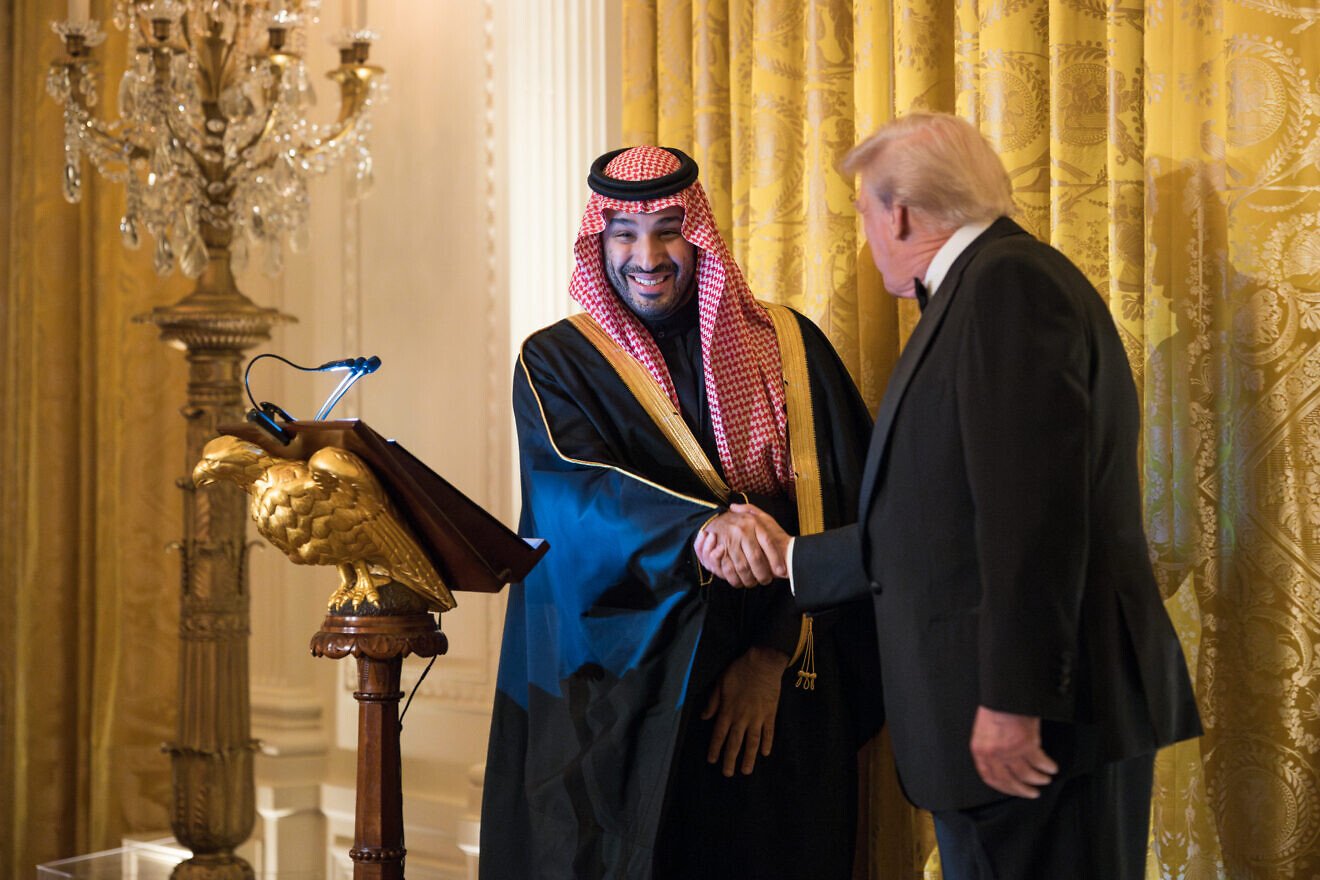
U.S. President Donald Trump welcomes Crown Prince and Prime Minister Mohammed bin Salman Al Saud of Saudi Arabia, delivering remarks at a dinner held in his honor, at the White House, Nov. 18, 2025. Credit: Andrea Hanks/White House.

President Donald Trump got his way at the U.N. Security Council on Monday when it approved his 20-point plan for the future of the Gaza Strip. The resolution endorsed the deal that secured a ceasefire in the war that followed the Hamas-led Palestinian Arab terrorist attacks in Israel on Oct. 7, 2023. With Russia and China abstaining rather than vetoing the measure, Trump received the world body’s endorsement for, among other points, the creation of an International Stabilization Force to police Gaza and a Board of Peace to govern it.

The president celebrated the vote in typically hyperbolic fashion, declaring: “This will go down as one of the biggest approvals in the history of the United Nations, will lead to further peace all over the world, and is a moment of true historic proportion.”

Trump is also pleased with the closer relations that he has achieved with Saudi Arabia. The kingdom’s de facto leader, Crown Prince Muhammad bin Salman (known as MBS), arrived in Washington the next day for friendly meetings with Trump, discussing, among other things, a major arms sale, and then a gala state dinner where memories of the hostility of the Biden administration toward Riyadh and its royal family were officially buried.

But the notion that Trump’s effort to end the war in Gaza will lead to the Saudis joining the Abraham Accords and recognizing Israel could be as fanciful as the chances that Trump’s plan will succeed in transforming Gaza into a prosperous and peaceful place.

Magical thinking

Had the Security Council rejected the scheme, it would have embarrassed the White House and undermined efforts to maintain the ceasefire-hostage release deal that proved a triumph for American diplomacy. The notion that this is going to lead to peace there or anywhere else, however, isn’t just overoptimistic. It’s divorced from reality.

The truth is that despite the optimism coming out of Washington about what will happen in Gaza, it’s already painfully obvious that the Trump plan, which now has the U.N.’s seal of approval, isn’t going to achieve the two things that might give peace a chance: the disarmament of Hamas and its surrender of those parts in the Strip where it is still in control.

That’s not what we’re hearing from the administration.

The president and the members of his foreign-policy team continue to insist that Hamas will disarm. They say that one way or the other, the agreement’s utopian scheme for Gaza’s reconstruction, which also hinges on assembling an entirely mythical civil service of non-political Palestinian technocrats, is going to be implemented.

It may be premature to give up on the plan. After all, the ceasefire went into effect only five weeks ago. The United States has been able to get Indonesia to commit to send troops to join the Gaza force while a number of other nations, including Azerbaijan, Pakistan, Turkey, Egypt, Qatar, the United Arab Emirates, Jordan, Saudi Arabia, Malaysia, Cyprus, Australia, Canada and France, have expressed interest in also participating in some way or helping to finance the scheme.

Still, it’s hard to imagine any of them being willing to do what is necessary to disarm Hamas and evict it from the Strip. None of them wants to be accused of acting as collaborators with the Jewish state. Nor are they likely to be willing to absorb the inevitable casualty toll that goes with seeking to root terrorists out of their remaining tunnel strongholds. To assume otherwise is magical thinking.

And far from preparing to give up, Hamas and its terrorist allies have used the last several weeks since the shooting stopped to dig in even deeper in those parts of Gaza, including Gaza City, that remain under their control.

And that is the basic conundrum that those celebrating with Trump need to acknowledge.

Only Israel has the will or the ability to defeat Hamas. Trump sometimes talks as if he is prepared to give Israeli Prime Minister Benjamin Netanyahu the green light to finish off the terror group. But doing so would blow up the ceasefire and erase Washington’s diplomatic achievement, sending all the countries that have endorsed the Mideast plan running for cover. And that includes his good friend MBS. And so, for all of his tough talk, the threats made by Trump about ensuring Hamas’s surrender are ringing hollow.

Nor is it certain that Netanyahu’s own stirring pledge that his government is still committed to the complete defeat of Hamas is credible. One basic fact of Israel’s current security dilemma is that Jerusalem will be reluctant to cross Trump by restarting the war in Gaza without his express permission.

If so, what happens next?

The most likely scenario is that the so-called “yellow line,” which divides the part of Gaza occupied by Israel after a partial withdrawal from the front line at the time of the ceasefire from the portion now held by Hamas, may well become a permanent addition to the lexicon of the Middle East.

On one side of the line, the U.S.-backed reconstruction plan will, as Washington has already signaled, probably begin to be implemented. And on the other, Hamas will reconstitute the terror state that existed throughout all of Gaza before Oct. 7.

The good news is that compared to the situation prior to the attack on Israel, this scenario is one in which Hamas’s ability to fulfill its vows to go on killing Jews—let alone repeat the Oct. 7 attacks again and again—will be greatly diminished.

The bad news is that it falls far short of achieving one of the two goals of Israel’s post-Oct. 7 war: eradicating Hamas. At best, it merely puts Israel in a somewhat stronger position the next time Hamas is built up enough to resume the fighting.

Nor should we expect that the situation will go smoothly in the non-Hamas-controlled part of Gaza. Palestinians are likely exhausted from the price they were made to pay for supporting Hamas’s continued commitment to destroying Israel and achieving the genocide of Israelis. But the expectation that ordinary civilians will be eager to support a non-Hamas government and the U.S. reconstruction effort is wishful thinking. They will also be under great pressure to back a guerrilla campaign against both the Israelis and anyone else sent there to keep the peace.

‘No’ to a Palestinian state

Like other elements of the plan, such as the unspecified reform of the Palestinian Authority that governs Judea and Samaria as a prerequisite for them participating in the reconstruction of Gaza, the belief that moderate Arab and Muslim governments will sacrifice blood or treasure to ensure the end of Hamas remains a fantasy.

This is not a prescription for peace, but rather, one for a new stalemate between Israel and the United States on one side, with Hamas, which can still count on support from Iran as well as America’s Turkish and Qatari frenemies, on the other.

Does this mean, as some Israelis fear, that what will sooner or later unfold is a scenario in which an independent Palestinian Arab state in Gaza will eventually become a reality? Probably not.

There is language in both the 20-point plan that Netanyahu signed off on several weeks ago, which the Security Council resolution is based on, that speaks of a theoretical future in which a Palestinian state might be created there.

It says that after an unspecified reform of the P.A., and after Gaza is rebuilt and rid of terrorists, “the conditions may finally be in place for a credible pathway to Palestinian self-determination and statehood, which we recognize as the aspiration of the Palestinian people.”

That will be interpreted by some as a legally binding obligation to create such a state. Indeed, far-left Israelis and American Jews—like the leaders of the left-wing J Street lobby—are, as they told The New York Times, already fantasizing about Trump imposing a Palestinian state in Gaza, and then doing the same in Judea and Samaria, empowering the same groups that threaten Israel.

None of that is going to happen.

Great expectations

The acceptance of Hamas remaining in part of Gaza, as it was before Oct. 7, may be as close to a state as the Palestinians will get. No Israeli government—whether headed by Netanyahu or one of his political opponents—will accept the creation of a sovereign government in any part of Gaza that might have the ability to threaten or invade the Jewish state as the Hamas state did on Oct. 7. And the achievement of the conditions placed on Palestinian statehood in the Trump plan is a possibility so far-fetched as to render it more a matter of science fiction than a policy proposal.

Like past generations of Palestinian leaders, the criminals running Hamas and their corrupt counterparts that lead the Fatah Party (which controls the P.A.) remain unwilling and unable to accept statehood under any conditions but Israel’s elimination. As was true in 1948, 1967, 1993, 2000 and 2008, and any other time when they could have compromised and received a state, their only goal remains Israel’s destruction. They don’t want a state next to Israel. They want one instead of it—and that is something they can never have.

Nor should Americans or Israelis be entirely sanguine about Trump’s optimism about relations with the Saudis.

As much as Trump is right to try and cultivate this alliance, he ought to be listening to Netanyahu and conditioning any major upgrade of Riyadh’s war-making capacity, such as selling it greater numbers of the same high-tech F-35 Jets tht Israel has, on its willingness to make peace with Israel.

The administration’s “America First” foreign-policy goals include creating a situation where the Saudis will join with the Israelis to oppose Iran and safeguard the West’s interests in the Middle East while the U.S. pivots to Asia to deal with the threat from China.

However, the belief that MBS is interested in exchanging his country’s current close under-the-table relationship with Israel for one involving open recognition, normalization, and the exchange of ambassadors and embassies—as was true for those who joined the 2020 Abraham Accords—has little foundation. He wants Israel and the United States to act as counterweights to the threat that the Saudis still face from Iran, even after its defeat in the 12-day war it fought with Israel and the Americans last summer.

But his moderation has its limits. And, as guardian of the holy Islamic cities of Mecca and Medina, even MBS is always going to worry more about angering the Islamist fundamentalists that are part of his nation’s governing elite than he will about pleasing Trump or the Israelis.

Neither peace nor nightmare

All of which means that the American plan is neither a pathway to peace nor the nightmare scenario that some on the Israeli right fear it will turn out to be. Sadly, the enormous sacrifices made by Israelis during the two years after Oct. 7 will, barring a dramatic and unlikely acceptance by Trump that his peace plan is a flop, turn out to have not achieved the removal of the deadly threat to their nation.

Still, by gaining the release of the last hostages being held by Hamas, Trump again earned the gratitude of Israelis. It’s also true that thanks to the successes achieved by the Israel Defense Forces in the war, as well as Trump’s commitment to smashing the Iranian nuclear program, the current strategic equation in Gaza and the region is one in which Israel has been strengthened since Oct. 7, while its enemies are weaker.

But unless the president is ready to let the war begin again, his plan is looking as if it is just one more waystation on the road to the inevitable next round of fighting between democratic Israel and genocidal Palestinian Islamists.


Jonathan S. Tobin is editor-in-chief of the Jewish News Syndicate, a senior contributor for The Federalist, a columnist for Newsweek and a contributor to many other publications. He covers the American political scene, foreign policy, the U.S.-Israel relationship, Middle East diplomacy, the Jewish world and the arts. He hosts the JNS “Think Twice” podcast, both the weekly video program and the “Jonathan Tobin Daily” program, which are available on all major audio platforms and YouTube. Previously, he was executive editor, then senior online editor and chief political blogger, for Commentary magazine. Before that, he was editor-in-chief of The Jewish Exponent in Philadelphia and editor of the Connecticut Jewish Ledger. He has won more than 60 awards for commentary, art criticism and other writing. He appears regularly on television, commenting on politics and foreign policy. Born in New York City, he studied history at Columbia University.


Zawartość publikowanych artykułów i materiałów nie reprezentuje poglądów ani opinii Reunion’68,
ani też webmastera Blogu Reunion’68, chyba ze jest to wyraźnie zaznaczone.
Twoje uwagi, linki, własne artykuły lub wiadomości prześlij na adres:
webmaster@reunion68.com


MKiDN ws. licytacji w Niemczech: wystąpimy o zwrot obiektów, które powinny wrócić do Polski

Fot. PAP/Radek Pietruszka


MKiDN ws. licytacji w Niemczech: wystąpimy o zwrot obiektów, które powinny wrócić do Polski

ksi/ dki/ mow/ sza/ zzp/ amac/


MKiDN poinformowało PAP, że wystąpi o zwrot wszystkich obiektów wystawionych na licytację w niemieckim domu aukcyjnym, a które powinny wrócić do Polski. Własnością Skarbu Państwa są te, które były wyposażeniem lub częścią dokumentacji obozu oraz te, które zostały z kraju wywiezione nielegalnie – wyjaśniono.

Niemiecki dom aukcyjny anulował licytację pamiątek i dokumentów po więźniach niemieckich nazistowskich obozów koncentracyjnych w Auschwitz i Majdanku oraz ofiar zbrodni katyńskiej dokonanej przez sowietów. Zareagowały MSZ i MKiDN; działań domagał się też Pałac Prezydencki. Aukcja liczącej 623 artefakty prywatnej kolekcji „System terroru część II 1933-1945” miała się odbyć w poniedziałek w Domu Aukcyjnym Felzmann w Neuss. W wyniku reakcji polskich władz licytacja została anulowana.

„Podjęliśmy błędną decyzję, ubolewamy, jeśli zraniliśmy osoby dotknięte nazistowskim terrorem lub ich bliskich” – przekazał w poniedziałek w komunikacie prasowym Dom Aukcyjny Felzmann.

Dom aukcyjny spod Duesseldorfu wyjaśnił, że zdecydował się na odwołanie aukcji po krytyce, jaka na niego spadła. „Jesteśmy świadomi, że przy ocenie zgłoszenia przedmiotów do licytacji podjęliśmy błędną decyzję i ubolewamy, jeśli tym samym zraniliśmy uczucia osób dotkniętych nazistowskim terrorem lub ich bliskich” – przekazał.

Według oświadczenia dokumenty i przedmioty zostały przekazane na aukcję częściowo przez potomków ofiar. Część pochodziła natomiast z prywatnej kolekcji. „Zgodnie z naszą wiedzą wszystkie przedmioty z tej kolekcji zostały nabyte na otwartym rynku w sposób uczciwy” – napisali przedstawiciele domu aukcyjnego.

Jak dodali, „decyzja, by oddać te artykuły do sprzedaży, nie została przez nas podjęta”. „Uważamy jednak, również po prawnej analizie, że nie jest to nieuczciwe, jeśli ludzie decydują się na sprzedaż” – zaznaczyli.

Poproszony przez PAP o odniesienie się do sprawy odwołanej licytacji pamiątek ofiar drugiej wojny światowej urząd prezydenta RFN Franka-Waltera Steinmeiera ograniczył się do stwierdzenia, że aukcja została odwołana. – Prezydent federalny nie wypowiada się na ten temat – przekazał PAP w poniedziałek rzecznik prezydenta Alessandro Peduto.

MKiDN w przesłanym PAP w poniedziałek stanowisku podkreśliło, że było w stałym kontakcie z Ministerstwem Spraw Zagranicznych. Jak napisano, „tak bulwersująca sprawa wymaga szybkich reakcji i skuteczności, możliwych jedynie w ramach międzyresortowej koordynacji działań”.

„Resort kultury wystosował pismo do ambasadora Polski w Berlinie – pana Jana Tombińskiego – z prośbą o natychmiastowe podjęcie wszelkich działań zmierzających do wstrzymania aukcji. W piśmie tym informowaliśmy ambasadora, że ministerstwo natychmiast podejmie działania, które pozwolą wyjaśnić proweniencję tych obiektów, jednak najważniejszym zadaniem w tej chwili jest niedopuszczenie do ich sprzedaży. Współpraca resortu kultury z MSZ oraz interwencja ambasadora w porozumieniu z właściwymi instytucjami na miejscu doprowadziły do anulowania aukcji” – przypomniano.

Zaznaczono, że MKiDN pozostaje w stałym kontakcie z ambasadorem, który pozyskuje od domu aukcyjnego szczegółowe informacje o wystawionych obiektach.

„Na podstawie tych informacji ministerstwo ustali ich pochodzenie i tożsamość. Wystąpimy o zwrot wszystkich obiektów, które powinny wrócić do Polski. Własnością Skarbu Państwa są te obiekty, które były wyposażeniem lub częścią dokumentacji obozu oraz te, które zostały z kraju wywiezione nielegalnie. Wszystkie świadectwa i dokumenty wystawione przez Dom Aukcyjny Felzmann zostaną zbadane indywidualnie – zaznaczono.

Oceniono, że „w tak oburzających przypadkach bardzo ważna jest szybka reakcja instytucji, społeczności i władz krajowych i międzynarodowych”. „Ważne, żeby tę sytuację wykorzystać do dyskusji o szczególnym charakterze świadectw wojennych oraz moralnym wymiarze handlu tymi świadectwami” – dodano.

Do sprawy odniósł się ambasador Niemiec Miguel Berger, pisząc na X, że „z zadowoleniem przyjmuje odwołanie tej aukcji”. „Nigdy nie powinna była się ona odbyć. Nie wolno handlować dokumentami i przedmiotami osobistymi ofiar nazizmu” – dodał. Jednak w pierwszej wersji wpisu, Berger zamiast o „dokumentach i przedmiotach osobistych” napisał, że “nie należy handlować pamiątkami”.

Między innymi do tych słów odniósł się w poniedziałek podczas konferencji prasowej b. wiceszef MSZ i pełnomocnik rządu PiS ds. odszkodowań za straty wojenne, europoseł Arkadiusz Mularczyk. – Polska musi aktywnie walczyć o prawdę, musi aktywnie domagać się sprawiedliwości w relacjach z Niemcami. W przeciwnym przypadku jesteśmy świadkami sytuacji, w której dzieci, wnukowie, niemieckich zbrodniarzy (…) sprzedają na aukcjach w internecie zrabowane rzeczy z naszego kraju – podkreślił Mularczyk.

– Albo ta kwestia będzie uregulowana i rząd obecny podejmie działania, albo będziemy świadkami rewizji historycznej przez Niemców. (…) Wzywamy (ambasadora Niemiec – PAP) do tego, żeby sam podał się do dymisji lub żeby minister spraw zagranicznych Radosław Sikorski uznał, że jego dalsza misja w Polsce jest niecelowa – zaznaczył europoseł.

Jak poinformowała gazeta „Frankfurter Allgemeine Zeitung”, na liście obiektów przeznaczonych do sprzedaży znajdował się m.in.: list więźnia z Auschwitz „o bardzo niskim numerze” do adresata w Krakowie. Cena wywoławcza – 500 euro. Diagnozę lekarską z obozu koncentracyjnego Dachau dotyczącą przymusowej sterylizacji więźnia wyceniono na 400 euro. Karta z kartoteki Gestapo z informacją o egzekucji żydowskiego więźnia w getcie Mackheim w lipcu 1942 r. ma cenę wywoławczą 350 euro. W katalogu znajduje się też antyżydowski plakat propagandowy oraz gwiazda Dawida z obozu Buchenwald, a także list z akwarelą namalowaną przez Bronisława Czecha, polskiego narciarza i trzykrotnego olimpijczyka zamordowanego w Auschwitz.

Katalog zawierał także ponad 20 materiałów dotyczących więźniów obozu koncentracyjnego na Majdanku – poinformowała PAP rzeczniczka Państwowego Muzeum na Majdanku Agnieszka Kowalczyk-Nowak. Z kolei Urząd do Spraw Kombatantów i Osób Represjonowanych (UdSKiOR) przekazał, że Dom Aukcyjny Felzmann miał wystawić na sprzedaż także pamiątki związane z ofiarami zbrodni katyńskiej, a wśród nich znalazły się m.in. telegram jeńca Umińskiego z obozu w Starobielsku oraz koperta listu jeńca Jana Leszczyńskiego z obozu w Ostaszkowie.

W odpowiedzi na pytanie „FAZ”, Dom Aukcyjny oświadczył, że prywatni kolekcjonerzy prowadzą intensywne badania i przyczyniają się do pogłębiania wiedzy historycznej. Ich działalność służy zachowaniu pamięci, a nie handlowaniu cierpieniem. Redakcja gazety przypomniała, że pierwsza część prywatnej kolekcji została sprzedana sześć lat temu. Kupcy dokumentów znajdują się między innymi w Ameryce. (PAP)


Zawartość publikowanych artykułów i materiałów nie reprezentuje poglądów ani opinii Reunion’68,
ani też webmastera Blogu Reunion’68, chyba ze jest to wyraźnie zaznaczone.
Twoje uwagi, linki, własne artykuły lub wiadomości prześlij na adres:
webmaster@reunion68.com


Trump presses Riyadh to normalize ties with Israel: report


Trump presses Riyadh to normalize ties with Israel: report

JNS Staff


The U.S. president told Mohammed bin Salman he wants progress on a deal ahead of the crown prince’s visit to the White House

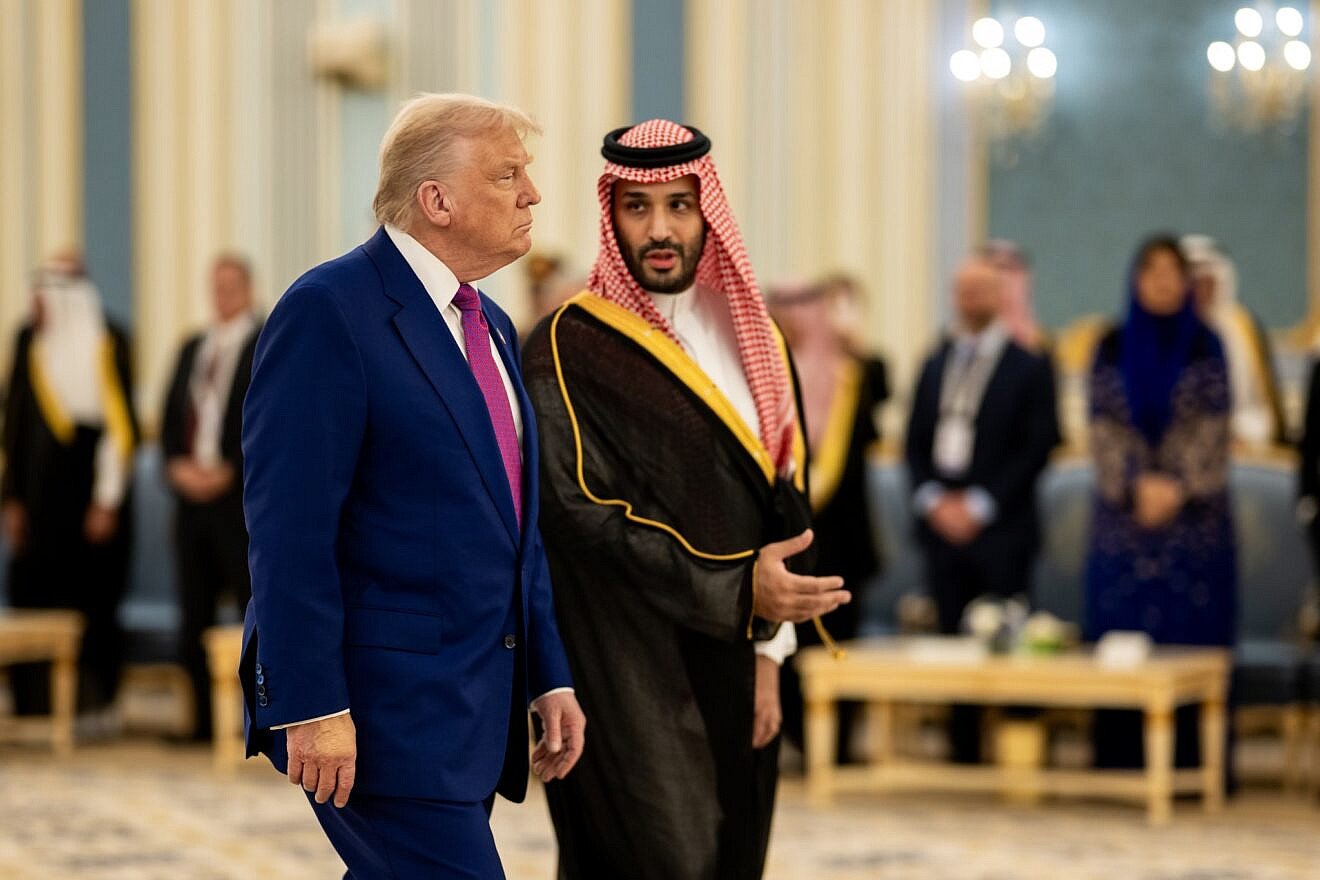
U.S. President Donald Trump and Saudi Crown Prince Mohammed bin Salman Al Saud, also known as MBS, at the Royal Court Palace in Riyadh, Saudi Arabia, May 13, 2025. Photo by Daniel Torok/White House.

U.S. President Donald Trump told Saudi Crown Prince Mohammed bin Salman that he expects the kingdom to normalize ties with Jerusalem now that Washington brokered a ceasefire in Gaza, Axios reported on Thursday.

The conversation took place over the phone last month, following the Gaza peace summit that was held in Sharm El Sheikh, Egypt, on Oct. 13, two U.S. officials were cited as saying under condition of anonymity.

Prince Mohammed is scheduled to meet with Trump in the White House on Tuesday, and the normalization issue is expected to be raised in the talks.

Trump is also expected to pledge a defense pact with the Saudis, although not for a full-fledged treaty, the report continued.

“Our message to the Saudis is: ‘We did all the things you asked for. Now, there are things President Trump wants, like normalization with Israel. So how are you guys going to move now in this direction?’” Axios quoted a senior U.S. official as saying.

However, the issue of a Palestinian state remains a large obstacle to formal relations between Israel and Saudi Arabia.

The Saudis are reportedly demanding an “irreversible path” toward statehood that would be part of a normalization deal, which the government in Jerusalem strongly opposes.

According to the report, the Trump administration views the Gaza ceasefire and potential Palestinian Authority reforms as creating conditions for “a credible pathway to Palestinian self-determination and statehood, which we recognize as the aspiration of the Palestinian people.”

Trump’s advisers are urging Israeli Prime Minister Benjamin Netanyahu to “look at the bigger picture” of a peace deal with Riyadh, attainable by going through with Trump’s peace plan.

On Saturday evening, Culture and Sports Minister Miki Zohar tweeted in Hebrew that normalization with Saudi is “Israel’s top national interest and will change the future of the Middle East for generations to come.”

He added that a deal must uphold “the principles vital to Israel without recognizing a Palestinian state that would endanger our security.
“Israel as a security superpower operating together with the Gulf powers—that is the great nightmare of Israel’s enemies,” Zohar wrote.

Earlier this month, the Israel Hayom newspaper reported that Israel and Saudi Arabia were expected to begin direct negotiations to lay the groundwork for establishing normalization, with mediation and support from the United States.

The talks were to involve Trump adviser and son-in-law Jared Kushner, Israeli Strategic Affairs Minister Ron Dermer and a small Israeli team, Saudi Ambassador to Washington Reema bint Bandar Al Saud and Prince Mohammed’s close advisers.

Dermer resigned from his position as minister on Nov. 11, effective Nov. 13, but he will remain involved in efforts to expand the Abraham Accords, and he will operate as a special envoy for Netanyahu.


Zawartość publikowanych artykułów i materiałów nie reprezentuje poglądów ani opinii Reunion’68,
ani też webmastera Blogu Reunion’68, chyba ze jest to wyraźnie zaznaczone.
Twoje uwagi, linki, własne artykuły lub wiadomości prześlij na adres:
webmaster@reunion68.com

Co, moim zdaniem, trzeba zrobić.Teraz – ani chwili później.


Co, moim zdaniem, trzeba zrobić.Teraz – ani chwili później.

Phyllis Chesler


Dym wydobywa się z wież World Trade Center po tym, jak 11 września 2001 r. zostały one trafione przez dwa porwane samoloty w ataku terrorystycznym (Getty)

Na początku XXI wieku „w pośród ciemnego znalazłam się lasu, albowiem z prostej zbłąkałam się ścieżki”. Jednak w przeciwieństwie do Dantego, który przeszedł przez Czyściec i Raj, dla mnie to właśnie utrata prostego szlaku pozwoliła odnaleźć właściwą drogę. To, co się działo, było dla mnie zupełnie jasne.

I tak zaczęłam pisać o nowej formie Holokaustu, która już się rozpoczęła. Pisałam o roli, jaką Wielkie Kłamstwa odegrały zarówno w chrześcijańskich, jak i muzułmańskich pogromach antyżydowskich, a potem w Shoah. Inne głosy również się odzywały. Na przykład: Bruce Bawer, Nonie Darwish, Steve Emerson, Oriana Fallaci, Richard Landes, Douglas Murray, Daniel Pipes, Robert Spencer, Ibn Warraq, Bat Ye’or. Wszyscy ponieśliśmy za to cenę – ale to nie jest ważne.

Wciąż powtarzałam, że znów jest dosłownie kilka minut przed północą. A zachodni akademicy, inteligencja (to nie zawsze jest to samo), nasi „postępowcy”, nasze feministki, celebryci, a także tak zwana społeczność międzynarodowa – wszyscy oni, niczym naziści, przyłączyli się do permanentnej islamskiej wojny przeciwko Żydom – i przeciwko Zachodowi.

Jak ktoś może być tak ślepy, by nie chcieć widzieć?

Były przecież te wszystkie porwania samolotów przez arabskich islamistów i Palestyńczyków, począwszy od 1969 roku. Pamiętacie mocno gloryfikowaną Leilę Khaled z Ludowego Frontu Wyzwolenia Palestyny? Te nieustające, ciągłe ataki terrorystyczne Palestyńczyków na Żydów i na państwo żydowskie? Nigdy, przenigdy nie zapomnę o porwaniu, torturowaniu i zamordowaniu izraelskich sportowców podczas Igrzysk Olimpijskich w Monachium w 1972 roku, ani o porażce niemieckich służb w uratowaniu ofiar i zatrzymaniu terrorystów. Pamiętam też coraz liczniejsze rezolucje ONZ potępiające Izrael, które zaczęły się piętrzyć od lat 70.

Nigdy też nie zapomnę zamachów bombowych na synagogi dokonanych przez arabskich terrorystów w Europie – w latach 80. stałam w Paryżu, Rzymie i Wiedniu, widząc ochronę policyjną, której te miejsca wymagały. Kto dziś pamięta zamach bombowy na amerykańskie koszary marines w 1983 roku, przeprowadzony przez Hezbollah, irańskiego pełnomocnika w Libanie? Pamiętacie Żyda-Amerykanina, Leona Klinghoffera, który w 1985 roku został zamordowany na pokładzie statku przez tę samą grupę – FFLP?

W moim bardzo przejrzystym „ciemnym lesie” nie mogłam pojąć, dlaczego tak wielu ludzi, szczególnie lewicowych  Żydów oraz nadmiernie wykształconych mieszkańców Zachodu, nie dostrzegało, że islamiści wypowiedzieli wojnę wszystkim niewiernym – zwłaszcza Żydom – a także sobie nawzajem? Toczenie wojen było trwałym sposobem życia dla największych imperialistów w dziejach – fundamentalistycznych, fanatycznych muzułmanów.

Bliżej domu: zamach na rabina Meira Kahane’a, który miał miejsce trzydzieści lat temu, w 1990 roku, dziś jest upamiętniany na Brooklynie. Jego zabójca, urodzony w Egipcie Sayid El-Nossair, ostatecznie przyznał się do winy, ale wtedy nie został skazany za morderstwo. I co? Jeden z dwóch jego wspólników został później skazany za udział w próbie zamachu bombowego na World Trade Center w 1993 roku. A wiecie co jeszcze? Ten sam człowiek – Omar Abdel-Rahman – planował uwolnienie El-Nossaira z więzienia Attica za pomocą ciężarówki z ładunkami wybuchowymi. Ta fala nie zatrzymała się ani na moment. Pamiętacie islamskie morderstwo młodego, amerykańskiego ucznia jesziwy, Ariego Halberstama, na Moście Brooklińskim w 1994 roku, którego dokonał urodzony w Libanie Rashid Baz?

W XXI wieku wojna była już w pełni realna. Pamiętacie 11 września? Pamiętacie al-Kaidę? Pamiętacie sfilmowaną dekapitację amerykańskiego, żydowskiego dziennikarza Daniela Pearla w Karaczi w 2002 roku? Tych ataków terrorystycznych ze strony Arabów, muzułmanów i Palestyńczyków jest zbyt wiele, by je wszystkie wymieniać. Lista jest tak długa, że można przy niej oszaleć.

Nie ufam Wikipedii, ale zamiast powtarzać ich listę islamskich ataków terrorystycznych na świecie i w USA, proszę zajrzyjcie sami do tego zestawienia w Wikipedii.

Ponieważ widziałam to wszystko wcześnie, po raz pierwszy mogłam publikować swoje poglądy wyłącznie w mediach żydowskich i konserwatywnych – nigdy więcej w mediach lewicowo-liberalnych, gdzie kiedyś byłam bardzo modna. Zawsze będę dumna z nowego domu, jaki moja twórczość dla mnie znalazła.

Żydzi mają teraz następujące opcje. Jak niedawno zasugerował Benjamin Kerstein, autor Self Defense. A Jewish Manifesto: możemy udawać – znów – że to wszystko się nie dzieje, że możemy to przeczekać, trzymać się na uboczu, uchodzić za „ocalałych”, mówić że są ważniejsze sprawy niż Izrael i judaizm – i że Izrael jest daleki od ideału. (A Hamas?) Możemy też uciec, na przykład wyjechać z Nowego Jorku, gdy burmistrzem zostanie Zohran Mamdani. Albo możemy stanąć do walki.

Oto, co myślę: Żydzi nie powinni już więcej przekazywać ani centa wszystkim tym wielkim organizacjom żydowskim, które tak źle nam służyły, a których głównymi priorytetami są ich własne emerytury, wygórowane pensje i przywileje podróżnicze. Zauważcie, jak wiele z nich nagle obiecuje „monitorować” szalejący antysemityzm, który całkowicie ogarnął świat. Zobaczcie, jak po raz pierwszy zaczynają zauważać, że zarówno lewica, jak i prawica, są antysyjonistycznie antysemickie. Niektóre z nich nieśmiało zaczynają brać pod uwagę rolę, jaką odegrały pieniądze z Iranu, Kataru i od Sorosa w rozkwicie nienawiści do Żydów. Zaczynają powoli dostrzegać, że wojna arabsko-palestyńska nie dotyczy terytorium ani „okupacji”, lecz jest po prostu starą, religijną wojną. Mój przyjaciel i kolega, dr Mordechaj Kedar, wybitny izraelski arabista, wiedział to od dawna.

Więc oto, co jeszcze myślę:

Po raz pierwszy rozumiem jeszcze lepiej, dlaczego Żydzi nie opuścili Niemiec na początku – przynajmniej gdy jeszcze mogli. Jak dziadkowie mogą zostawić swoje dzieci i wnuki? Jak starsi ludzie mogą porzucić swoich lekarzy? Jak można zostawić swoje domy, firmy, społeczności, by uciekać w nieznane? Jak pisarka może całkowicie porzucić swój język i dawny świat? Stefan Zweig nie potrafił tego zrobić. Popełnił samobójstwo w Brazylii.

Więc myślę też i o tym:

Rozważam, byśmy wszyscy, każdy z nas, zaczęli tworzyć grupy skupione na samoobronie, wzajemnym wsparciu i polityce edukacyjnej dla żydowskich dzieci. Byłabym szczęśliwa, gdyby te pomysły zostały również przyjęte i rozwijane przez naszych chrześcijańskich, sikhijskich, hinduskich i ateistycznych sojuszników – tu i na całym świecie. W przypadku Żydów – mimo że jesteśmy przerażająco podzieleni w tylu sprawach – bardzo chciałabym, żebyśmy spróbowali zjednoczyć się przynajmniej w jednej kwestii: przetrwania. Tak, tutaj – w Nowym Jorku, w Stanach Zjednoczonych, w Europie i w Izraelu. To powinna być całkowicie dobrowolna organizacja, ale o zasięgu ogólnokrajowym.

Mam nadzieję, że nie będziemy musieli czekać na żadnego Mesjasza, by przyniósł pokój. Ona/on/oni nigdy nie przyjdą, jeśli najpierw sami nie zrobimy chociaż tyle.


Link do oryginału: https://substack.com/home/post/p-178447076

Phyllis Chesler – Emerytowana profesor psychologii, znana amerykańska feministka, autorka wielu książek, w tym An American Bride in Kabul i A Politically Incorrect Feminist.   


Zawartość publikowanych artykułów i materiałów nie reprezentuje poglądów ani opinii Reunion’68,
ani też webmastera Blogu Reunion’68, chyba ze jest to wyraźnie zaznaczone.
Twoje uwagi, linki, własne artykuły lub wiadomości prześlij na adres:
webmaster@reunion68.com